Sound, Light, and the Brain
Sound, Light, and the Brain — an illustrated science story, set in Germany. 10 illustrated pages, free to read on Wonder Science.
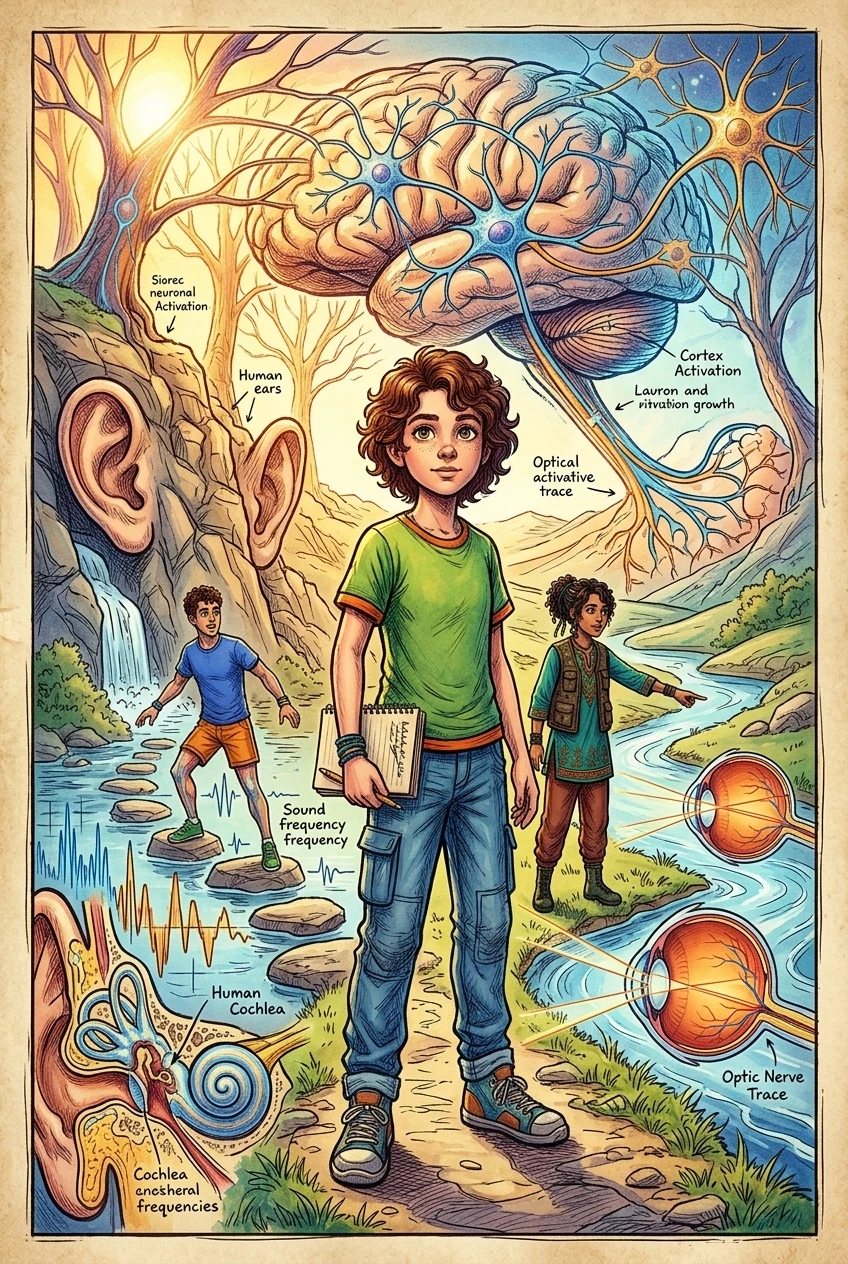
Page 1
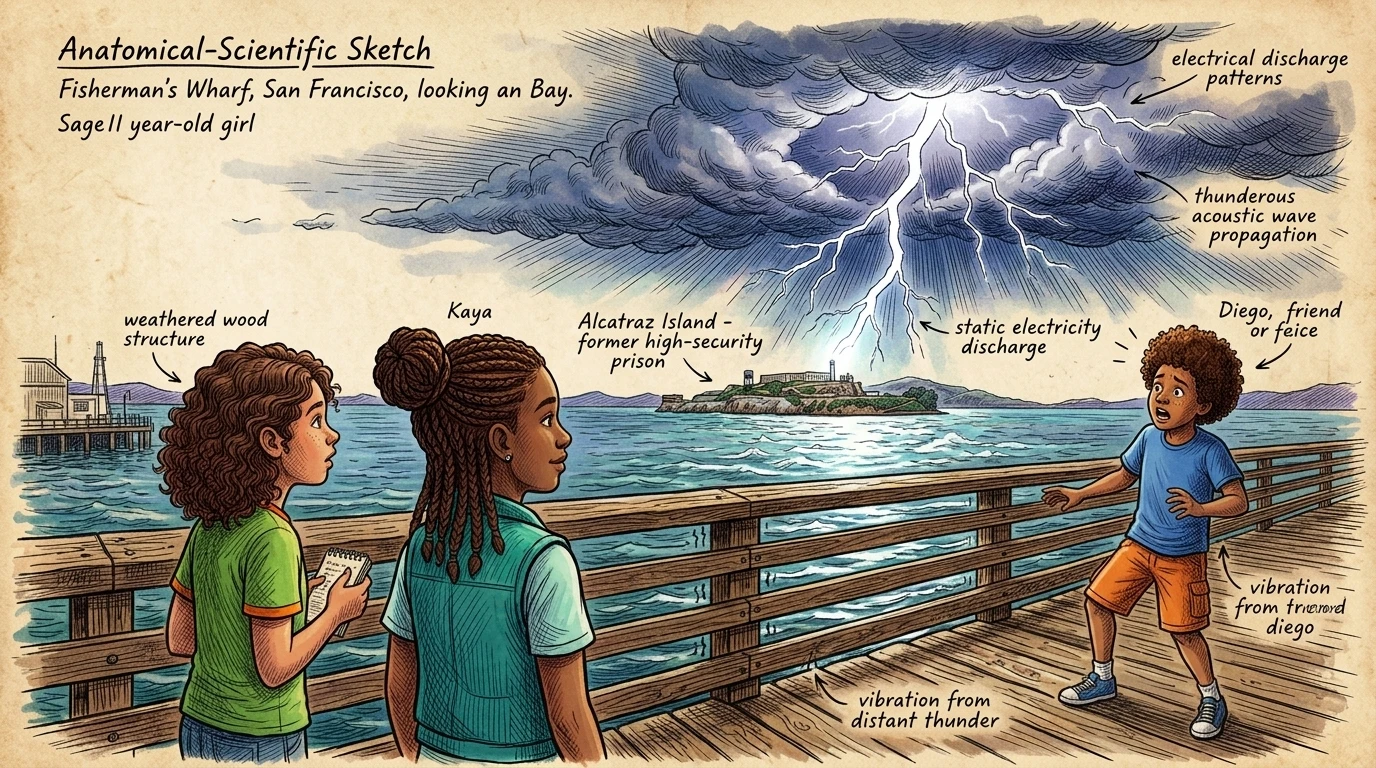
From their spot at Fisherman's Wharf, Sage, Diego, and Kaya watched the storm roll in over the bay. Suddenly, a jagged line of white light silently split the dark clouds over Alcatraz. Several seconds later, a deep, rumbling growl of thunder finally reached them, shaking the wooden pier. "Whoa!" Diego shouted, jumping back. "Why is the sound always late to the party?"
Page 2
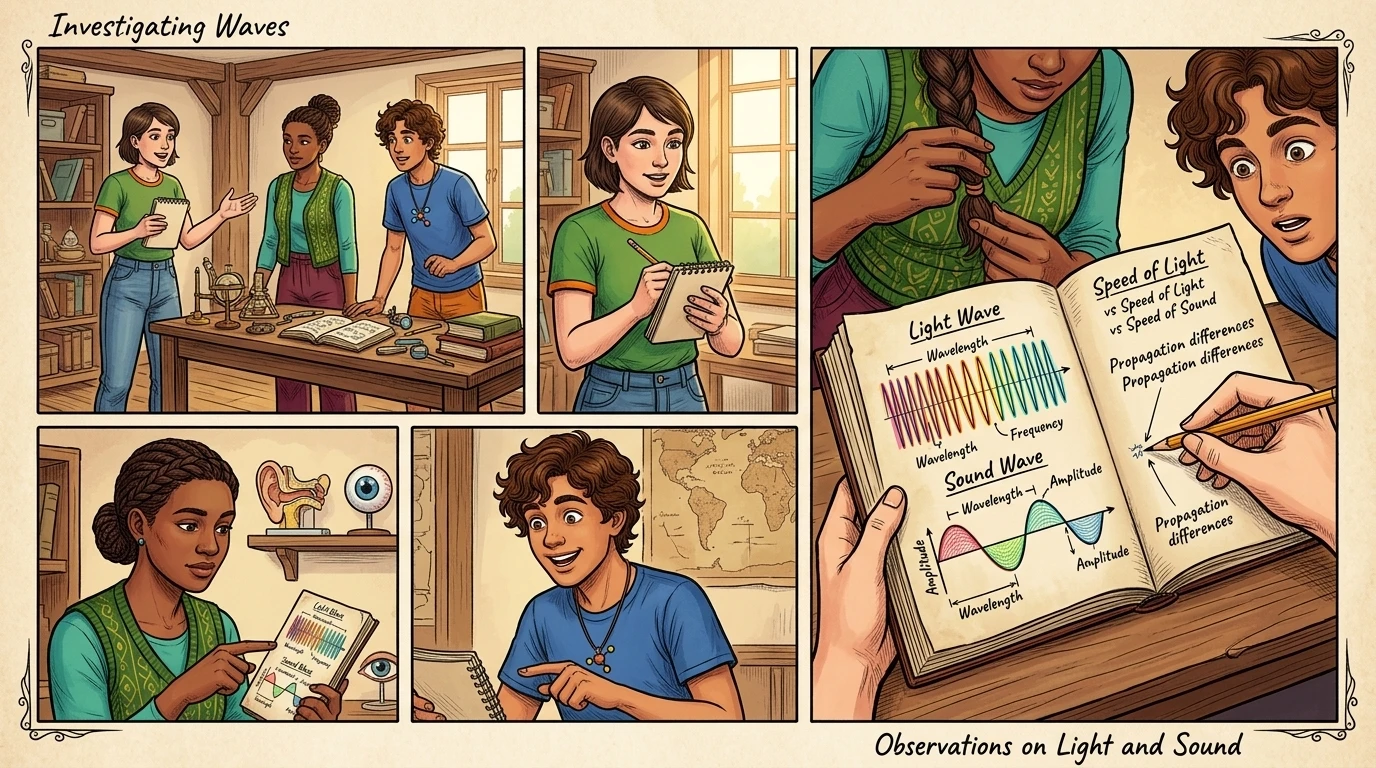
"Light is just faster, I guess?" Kaya suggested, pulling her braid over her shoulder. Sage flipped open her small notebook. "I was just reading about this! A scientist named Hermann von Helmholtz studied how our eyes and ears don't always get the message at the same time." Diego leaned in, curious. "So it's not magic, it's a delivery delay?"
Page 3
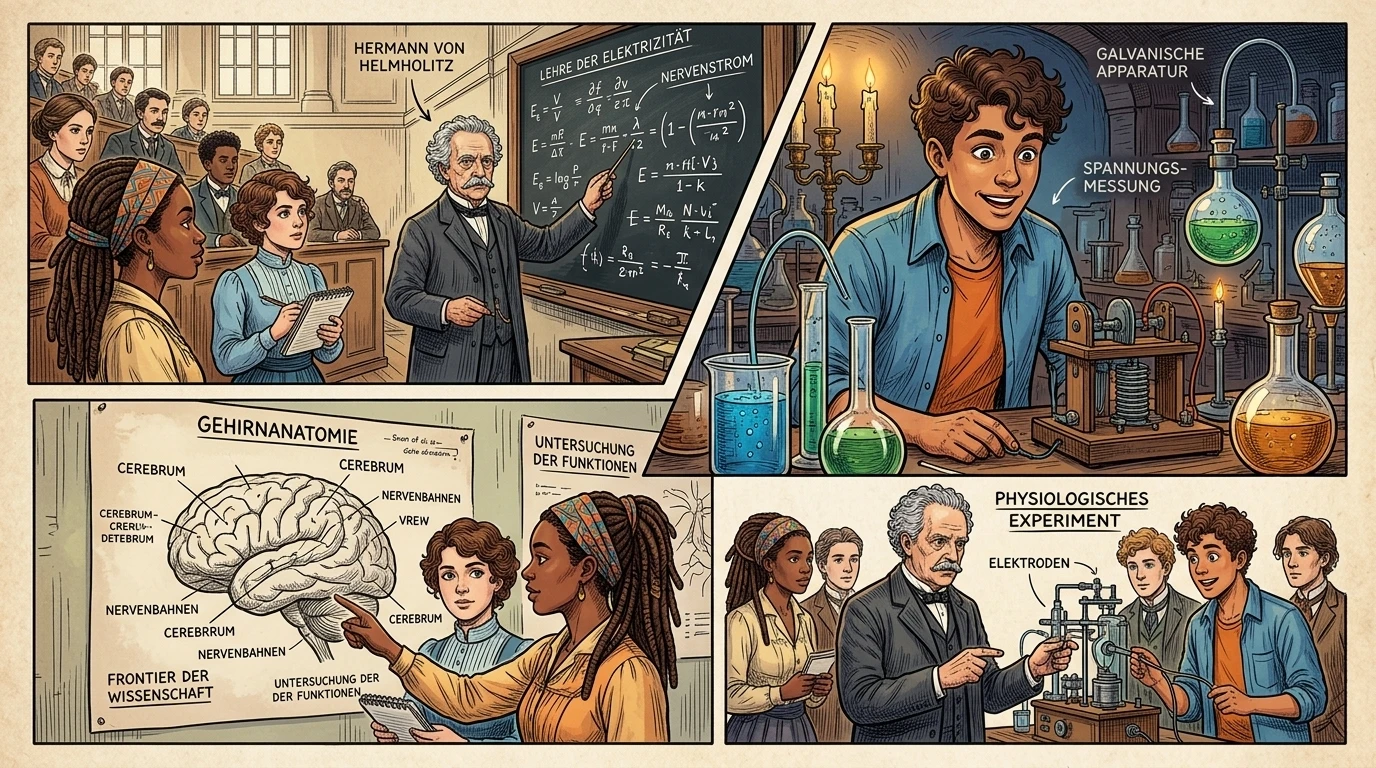
To understand the delay, we have to travel back to the 1800s in Germany, a time buzzing with new ideas. In university halls and candlelit laboratories, scientists were asking huge questions. They weren't just discovering things about the world, but about how our own bodies perceive it. For them, the human brain was the most exciting frontier of all.
Page 4
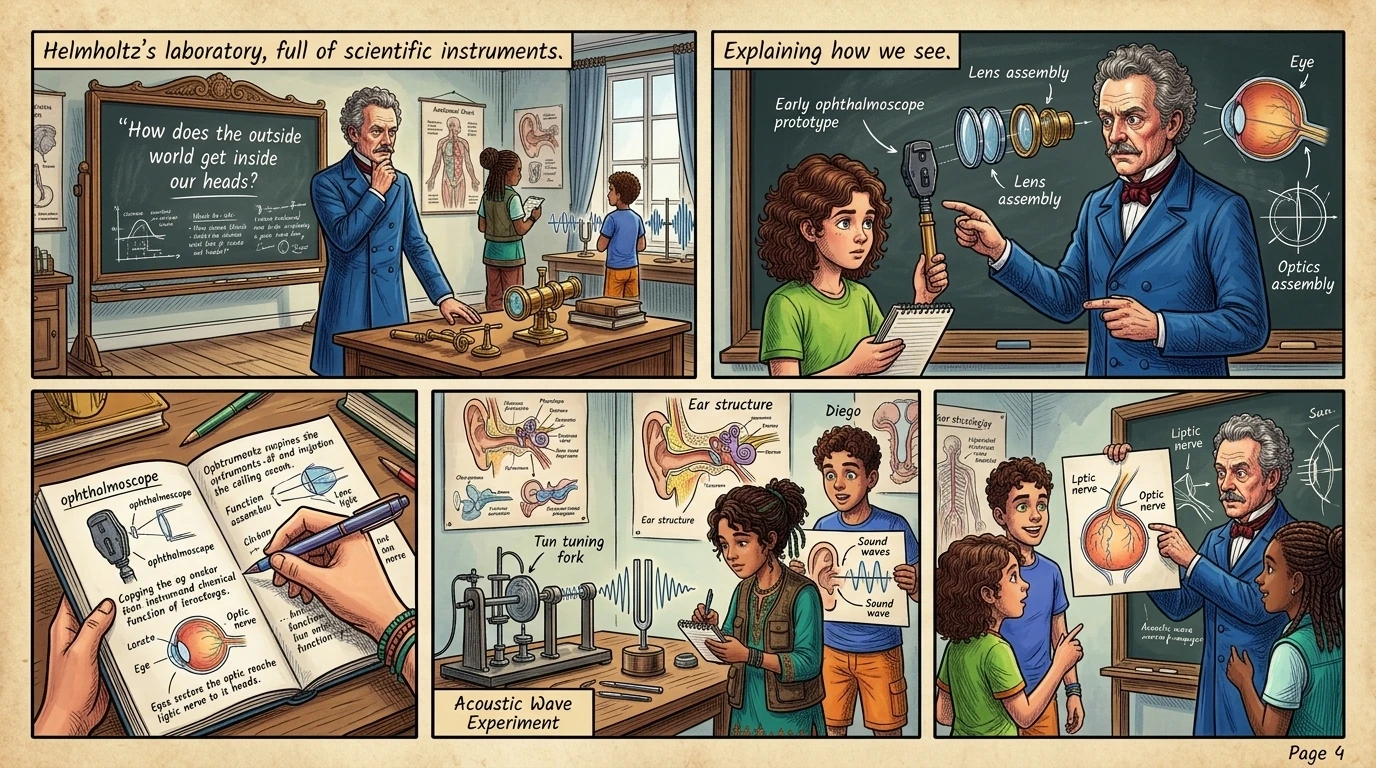
One of the most curious people of that era was Hermann von Helmholtz. He wasn't just a physicist who studied energy and waves; he was also a physician who was fascinated by the eye and the ear. He wanted to know the answer to a simple question: How does the outside world get inside our heads? He suspected the answer was a story of pure physics.
Page 5
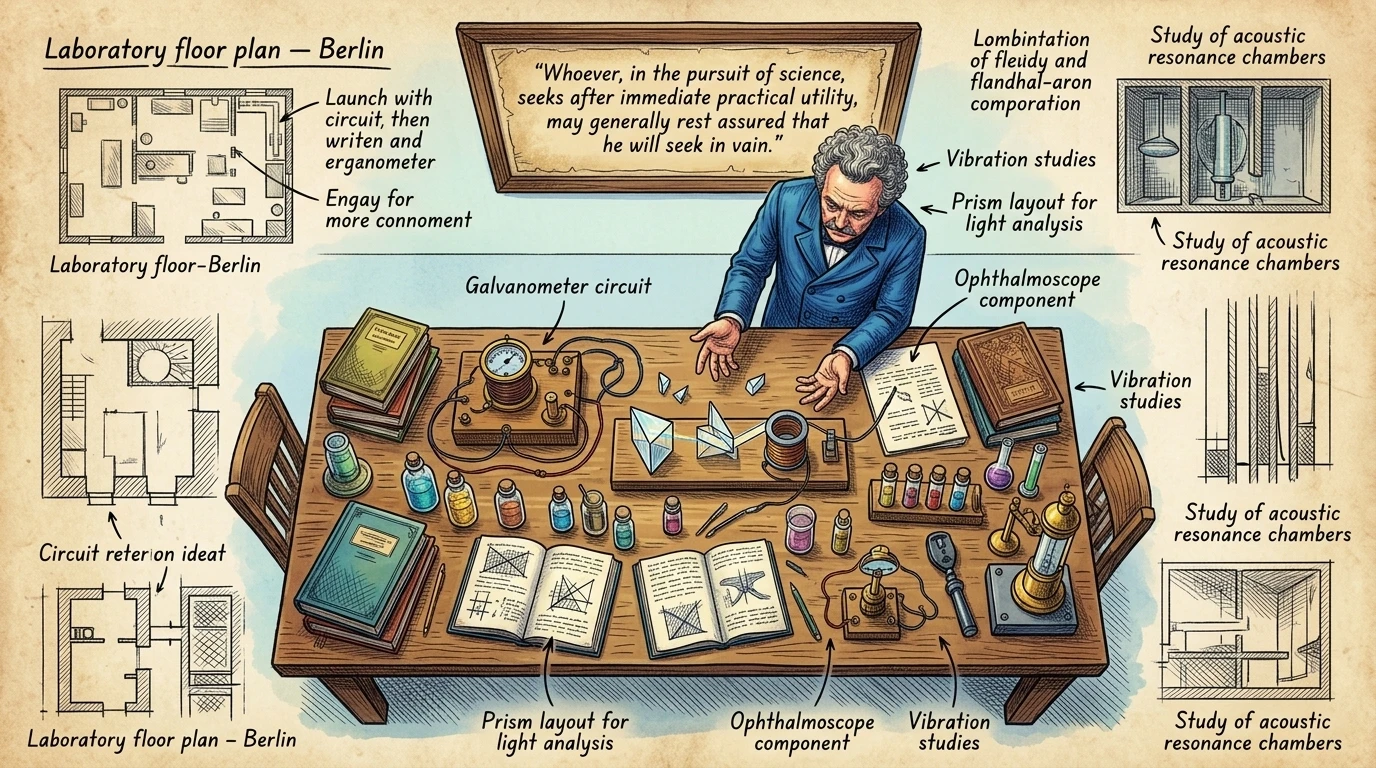
Helmholtz knew that the biggest discoveries often came from asking simple questions. He once told a colleague, "Whoever, in the pursuit of science, seeks after immediate practical utility, may generally rest assured that he will seek in vain." He believed true understanding came from curiosity, not from just trying to invent something useful. The invention would follow the understanding.
Page 6
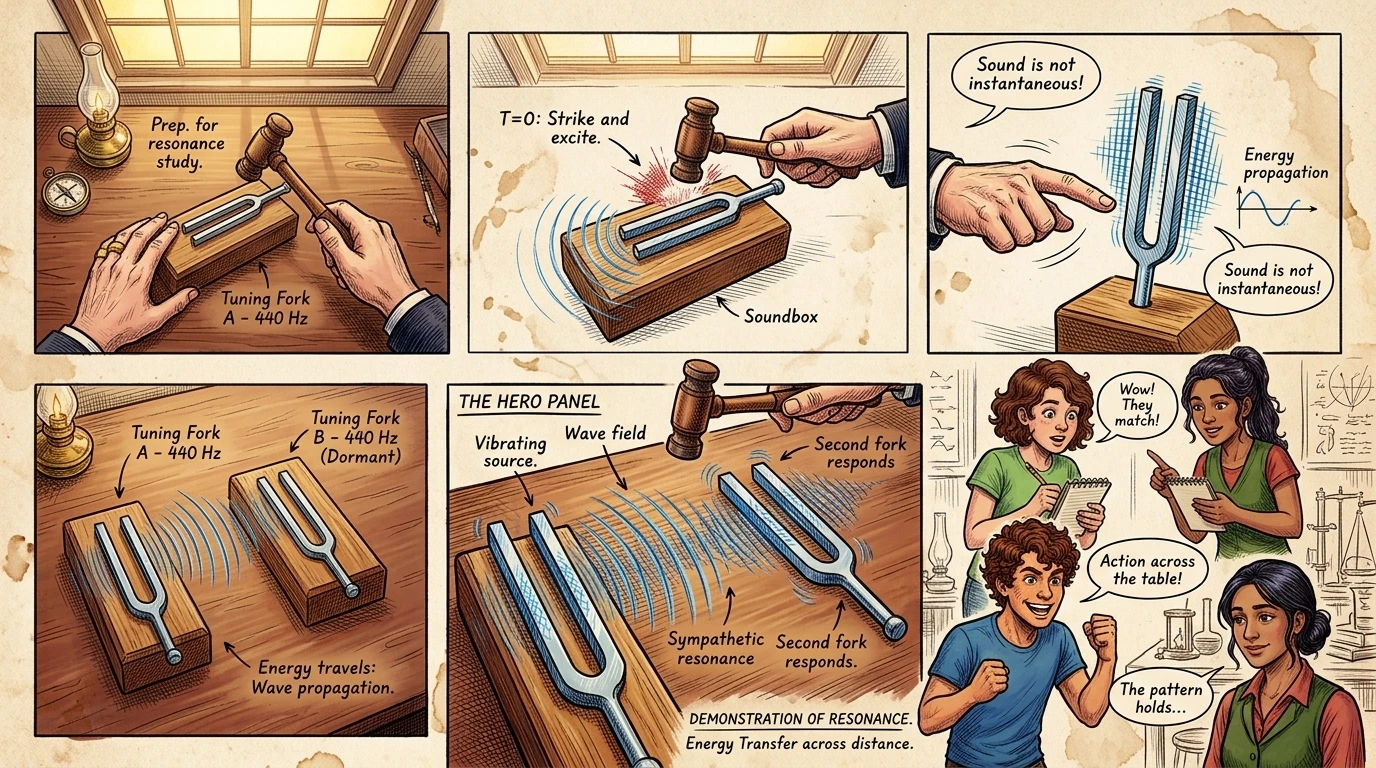
He performed a famous experiment using tuning forks to show that sound was a physical vibration moving through the air. When he struck one fork, its vibrations traveled invisibly across the room and made a second fork, tuned to the exact same note, begin to vibrate on its own. "You see?" he would exclaim. "Sound is not instantaneous! It is a wave that must travel!"
Page 7
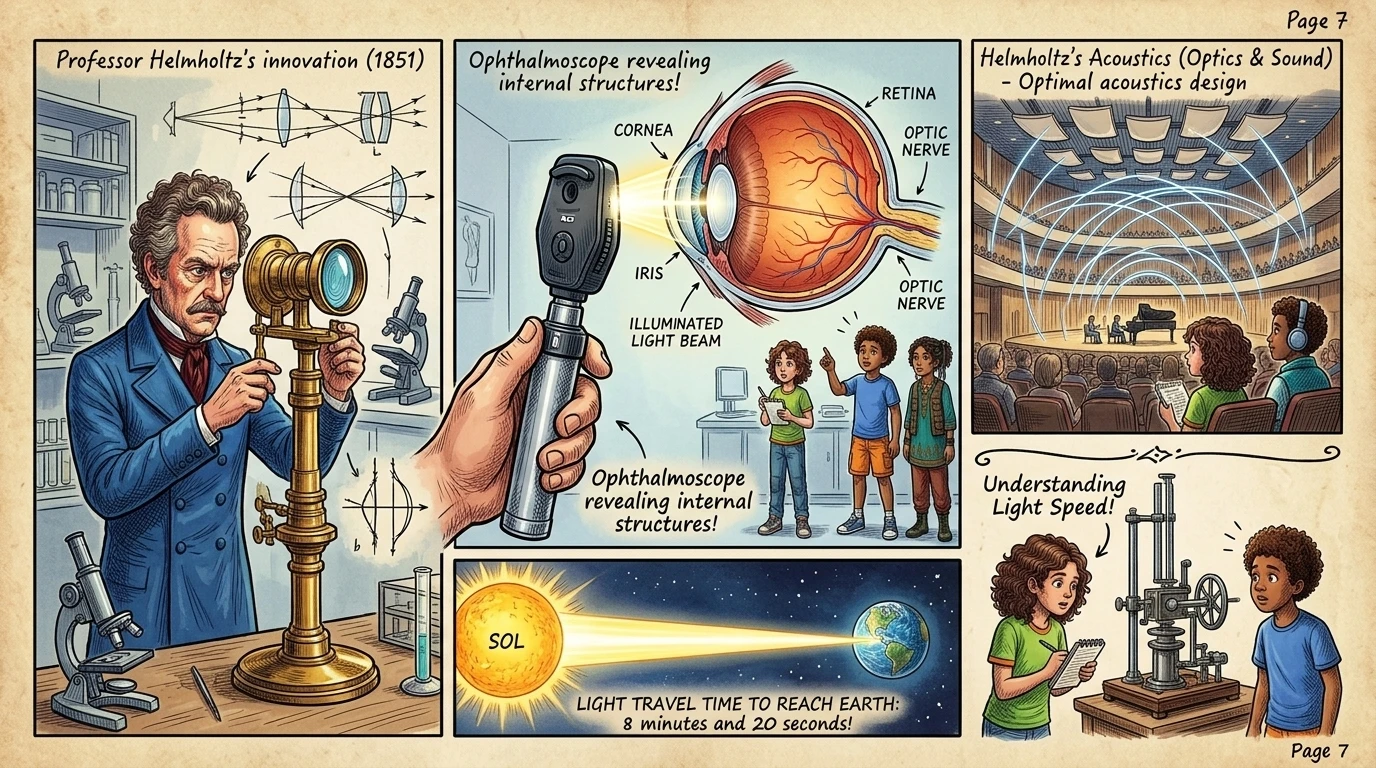
That simple idea changed everything, leading to the science of acoustics, the design of concert halls, and even modern headphones. By studying light, he invented the ophthalmoscope, allowing doctors to see inside the human eye for the first time. It reminds you how fast light is—the light from our Sun takes 8 minutes and 20 seconds just to reach Earth!
Page 8
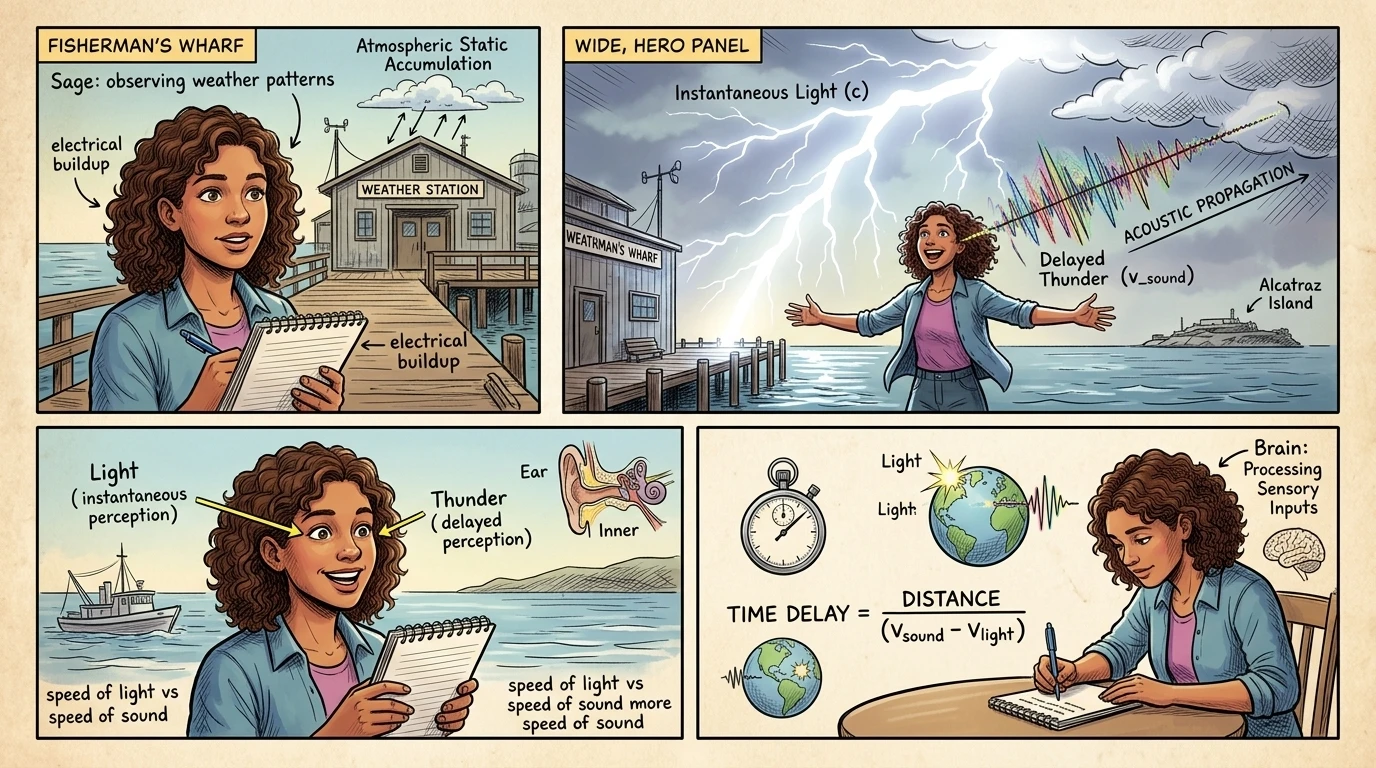
Back at the pier, another, louder crack of thunder finally boomed overhead. "I get it now!" Sage shouted over the noise, her face lit with understanding. "Light is the fastest thing in the universe, but sound is just a vibration moving through the air. We saw the lightning instantly, but we had to wait for the sound wave to travel all the way from that cloud to our ears!"
Page 9
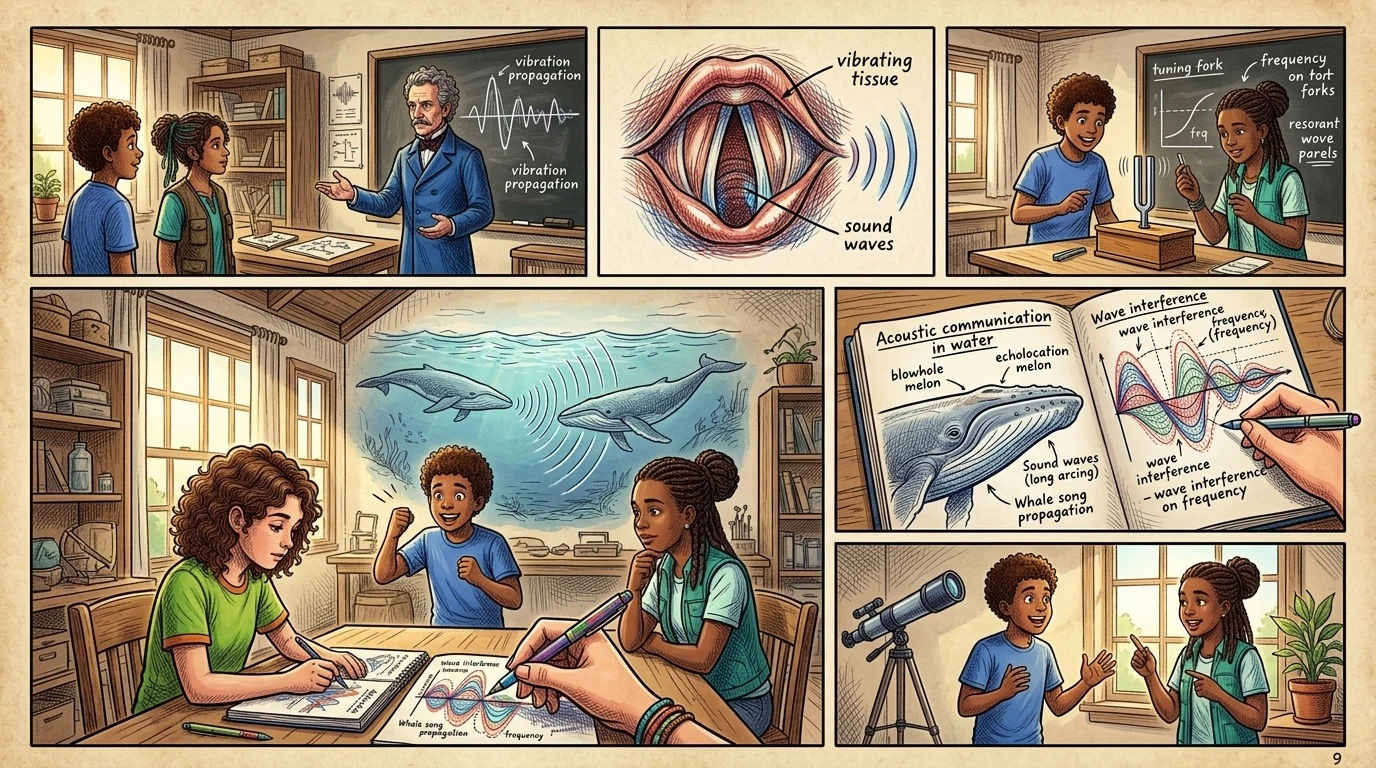
"Oh! Like when you see a baseball player hit the ball from the bleachers, but you hear the crack a second later!" Diego exclaimed. "Or an echo in a tunnel!" added Kaya. "Exactly!" Sage said, sketching a wave in her notebook. "And sound travels over four times faster in water, which is how whales can talk across huge distances of the ocean."
Page 10
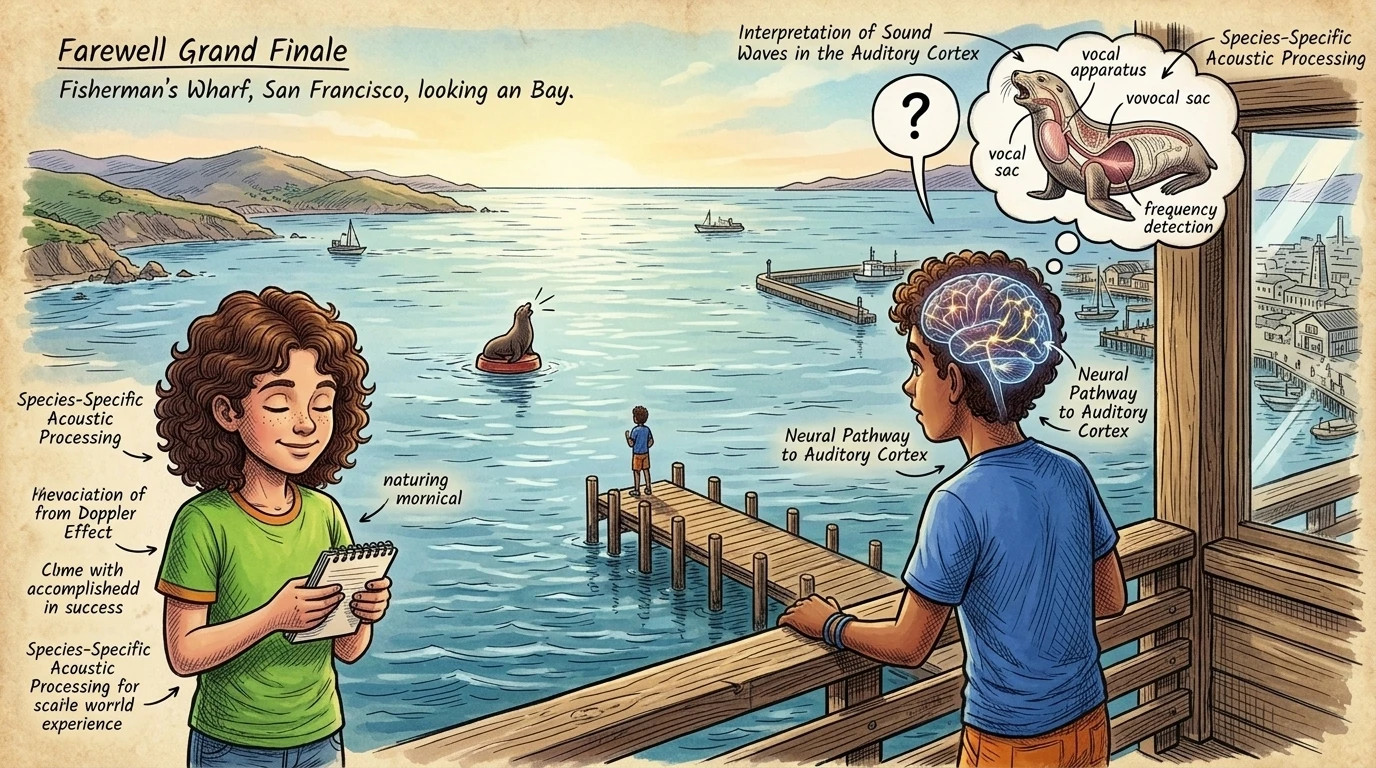
Sage smiled, closing her notebook. "So, light and sound are different messages, arriving at different speeds, and our amazing brain is what puts the whole story together for us." Diego watched a sea lion bark on a distant dock. "Okay, but how does our brain know that one sound wave means 'thunder' and another one means 'help'?"
About this story
- Location: Germany
- Audience: kids (ages 6–12)
Read Wonder Science on your phone
Wonder Science is available on Android. Get Wonder Science on Google Play.