Sergei Korolev
Sergei Korolev — an illustrated science story, set in Global. 10 illustrated pages, free to read on Wonder Science.
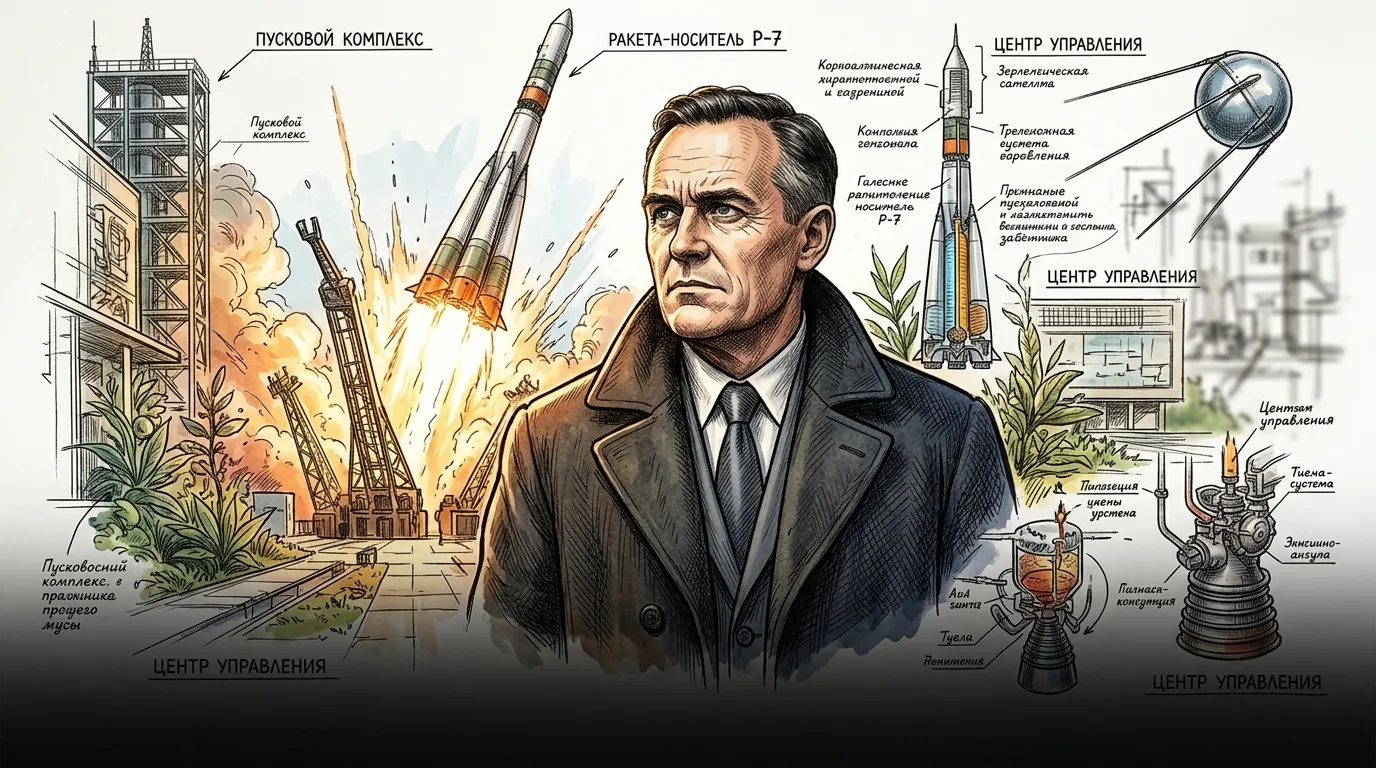
Page 1
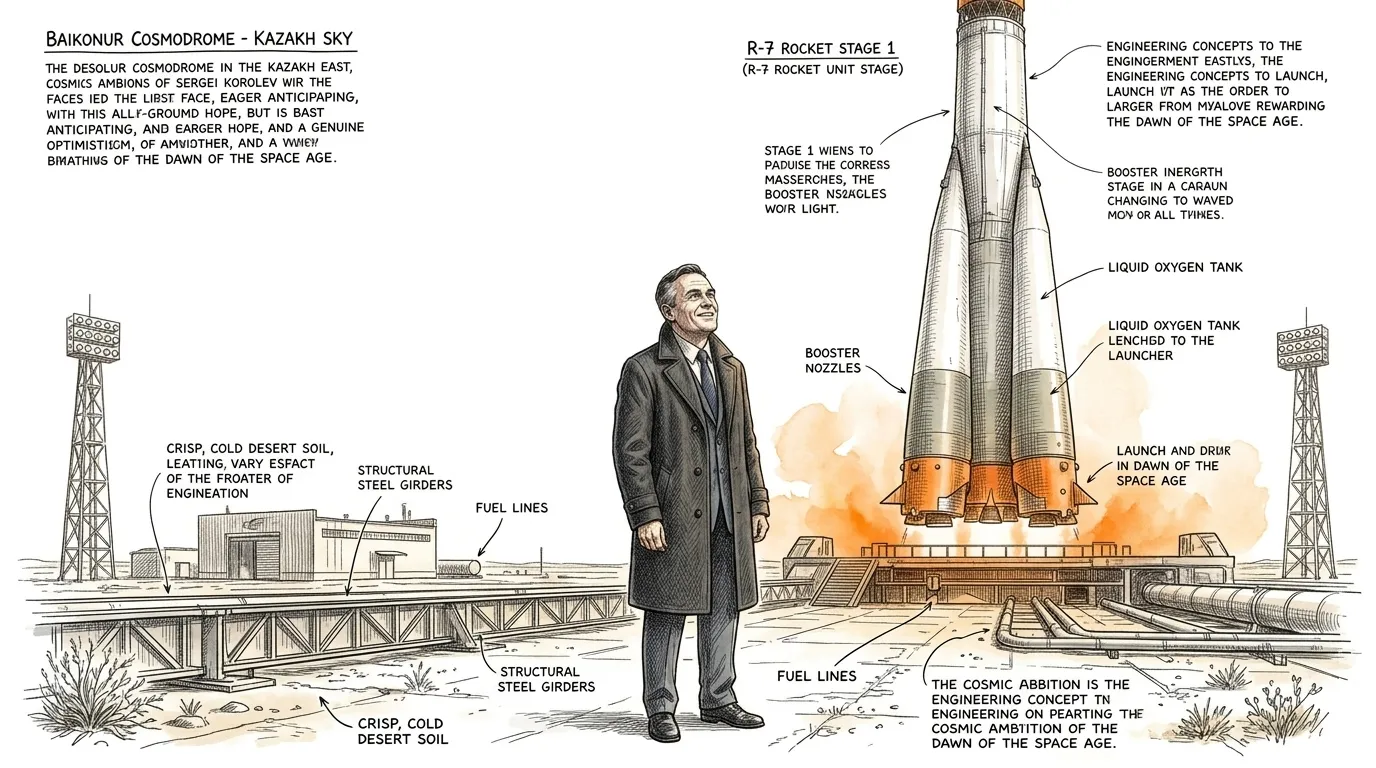
At the desolate launch site of Baikonur Cosmodrome, a monumental event was unfolding, poised to redefine humanity's place in the cosmos. Beneath the cold, vast sky of the Kazakh steppe, the towering R-7 rocket, a repurposed intercontinental ballistic missile, stood testament to years of clandestine toil. Among the tense engineers and officers, one figure stood out: Sergei Korolev, the Chief Designer, his gaze fixed on the gargantuan vehicle, a mixture of profound hope and immense pressure etched onto his face. The air crackled with anticipation, a collective breath held, as the countdown to humanity's inaugural voyage into orbital space began. At 19:28 UTC on October 4, 1957, a roar ripped through the night, announcing the dawn of the Space Age.
Page 2
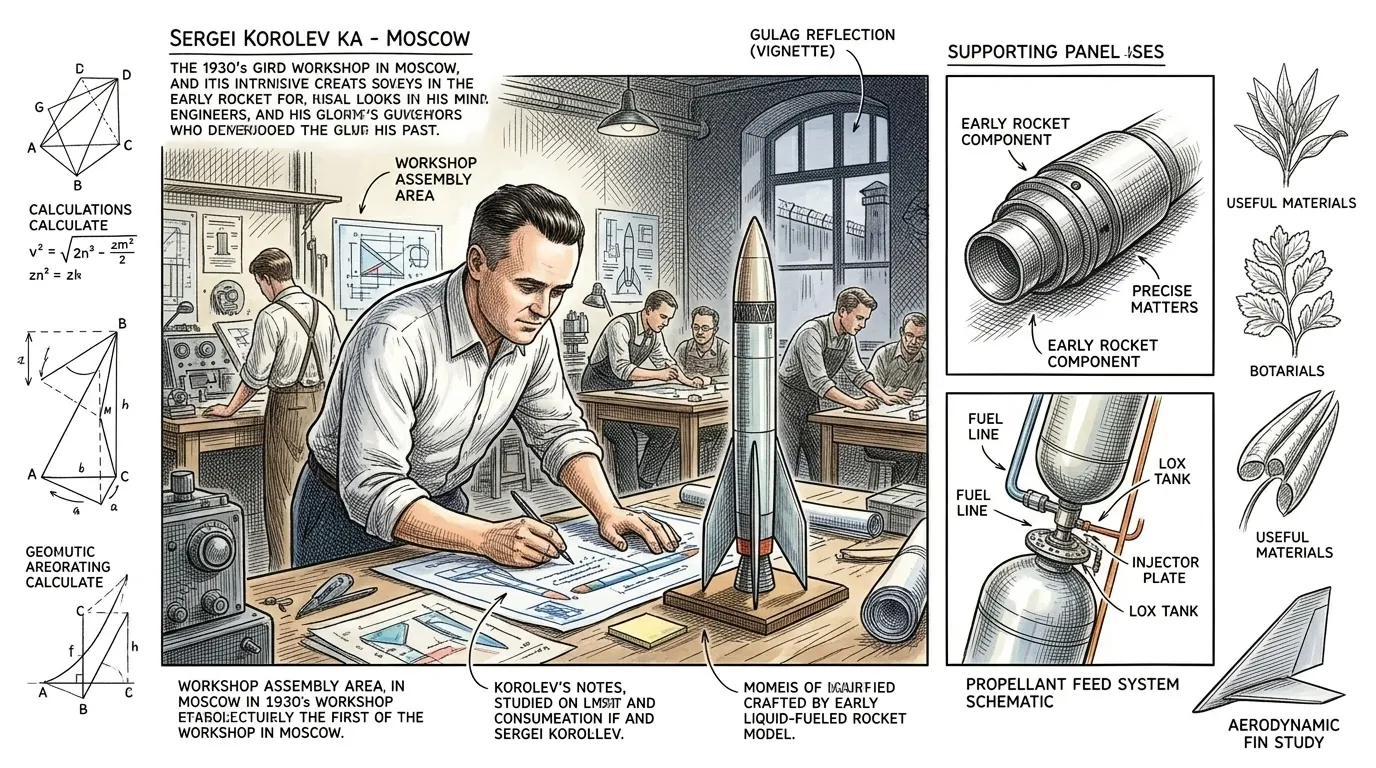
Sergei Korolev's journey to this pivotal moment began decades earlier, fueled by a lifelong fascination with flight and the radical potential of rocket propulsion. Born in 1907, his early career was steeped in aviation design, but his true calling emerged with the nascent field of rocketry in the 1930s. He founded the Group for the Study of Reactive Motion (GIRD) in Moscow, experimenting with liquid-fueled rockets, a pursuit considered visionary yet dangerously unorthodox. However, the tumultuous political climate of Stalin's Soviet Union cast a long shadow, leading to his unjust arrest and imprisonment in the Gulag, a period where his very survival was a daily struggle, yet his vision for space never wavered.
Page 3
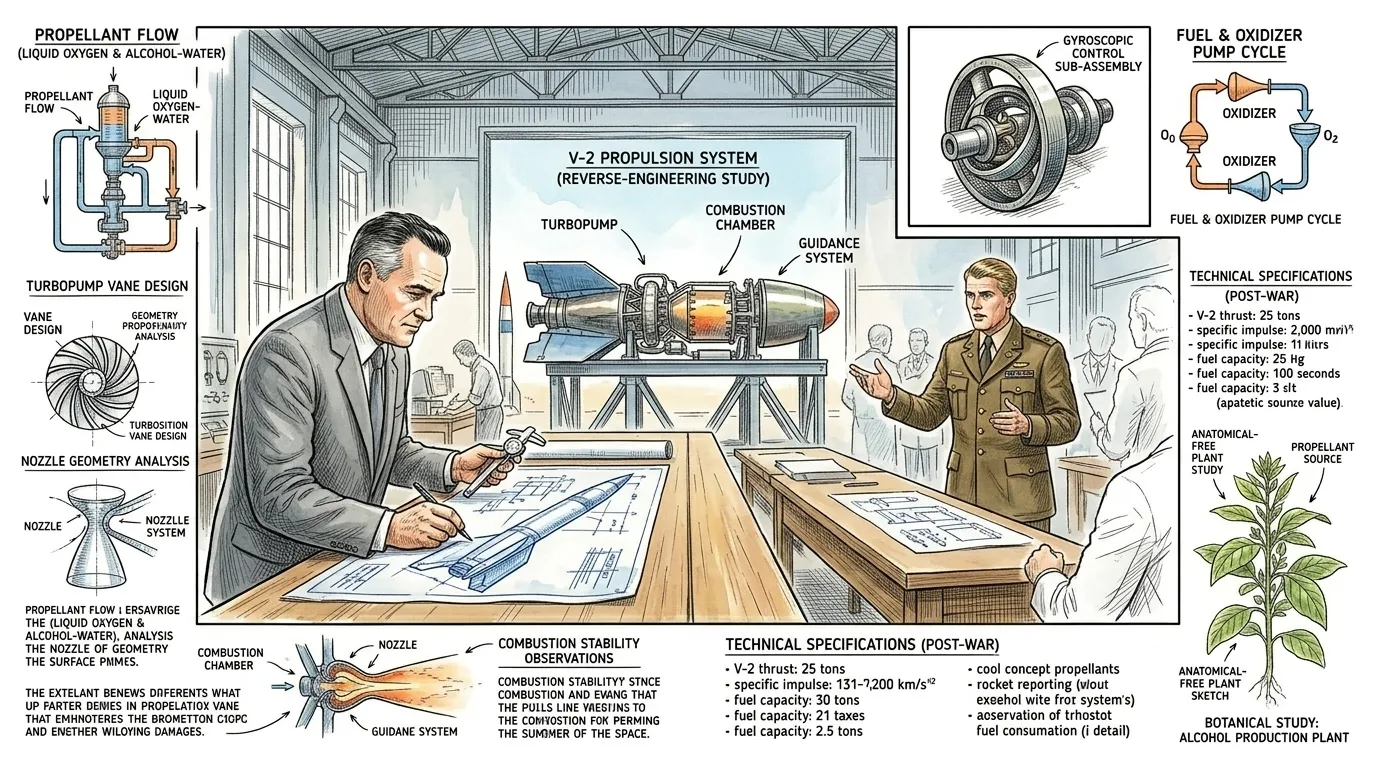
The end of World War II dramatically accelerated rocket development, as both the Soviet Union and the United States scrambled to acquire German V-2 rocket technology and, crucially, the German scientists who developed it, including Wernher von Braun. Korolev, released from the Gulag, was thrust into the heart of this post-war arms race. His immediate task: reverse-engineer and improve upon the V-2, transforming it into a reliable long-range ballistic missile capable of delivering a nuclear warhead. This strategic imperative would unwittingly lay the groundwork for a far grander ambition, an ambition that Korolev harbored even amidst the demands of military applications.
Page 4
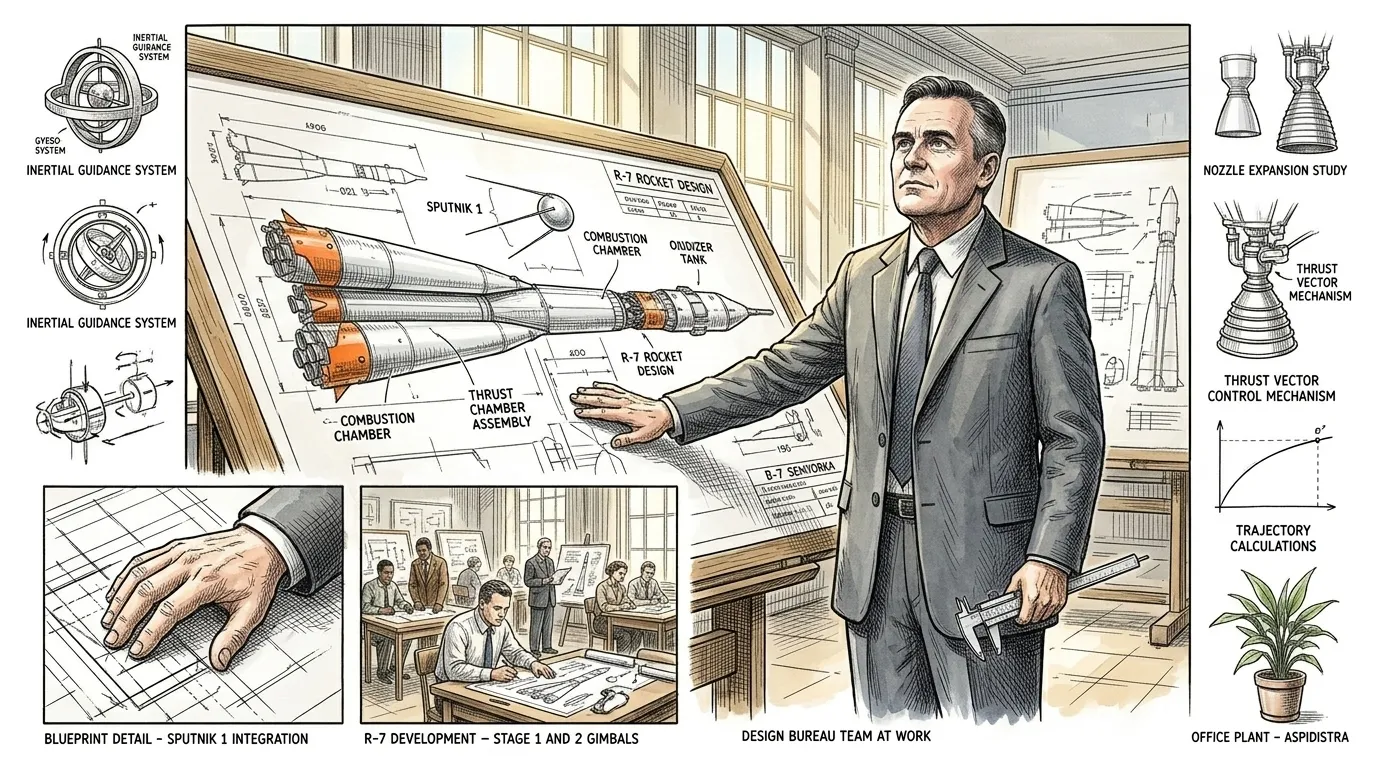
Korolev's masterpiece, the R-7 Semyorka, was born from this intense development. Designed primarily as an intercontinental ballistic missile, it possessed unparalleled power and range for its time. Yet, Korolev envisioned more than just a weapon; he saw a vehicle capable of reaching Earth orbit. He championed the idea of launching a satellite, recognizing its immense scientific and propaganda potential. Despite initial skepticism and bureaucratic hurdles from the military, who prioritized missile production, Korolev persistently argued for a space mission, ultimately securing permission to adapt the R-7 for the launch of a 'simple satellite' – Sputnik 1.
Page 5
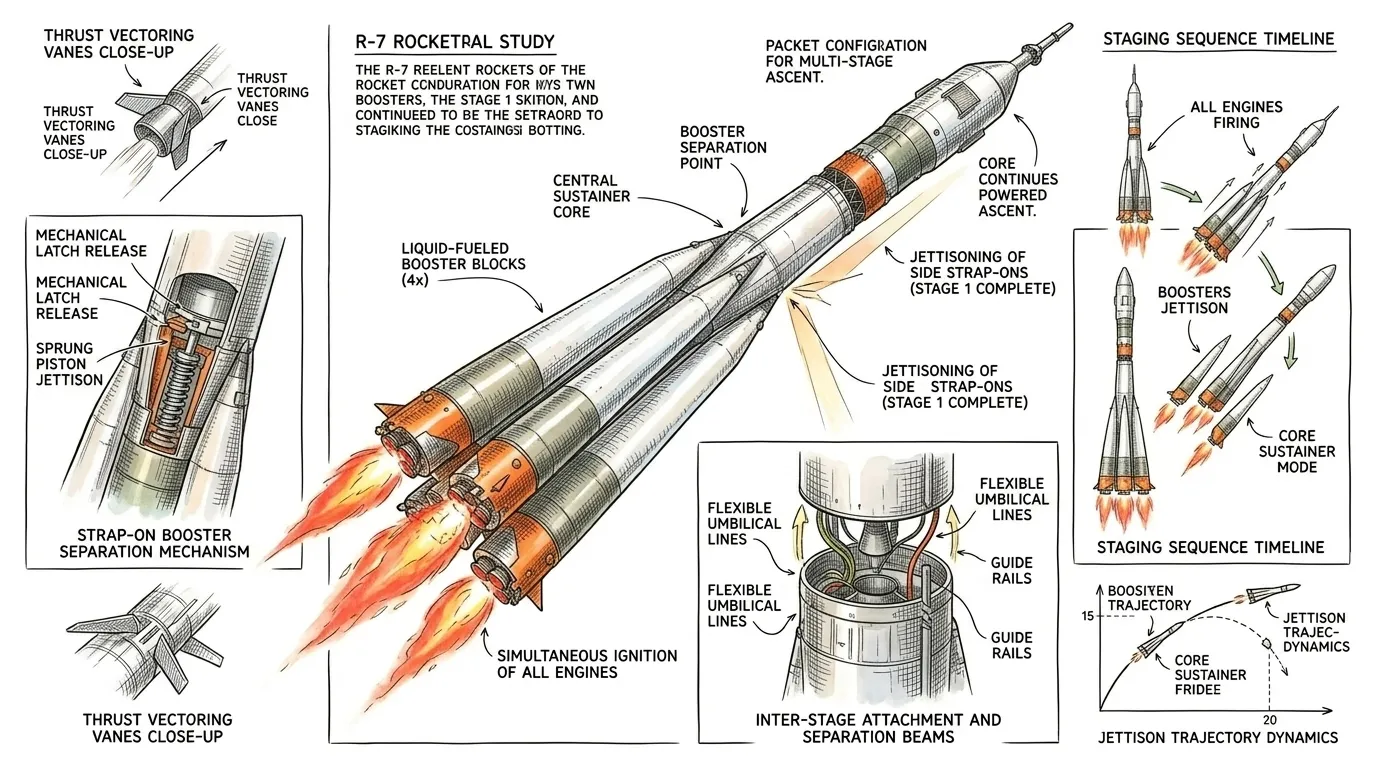
The R-7's sheer power stemmed from its innovative 'packet' design, a revolutionary multi-stage configuration conceived by Korolev's team. Instead of stacking stages vertically like conventional rockets, the R-7 featured a central core surrounded by four liquid-fueled booster blocks. All five engines ignited simultaneously at launch, providing an incredible initial thrust. This synchronized ignition, followed by the jettisoning of the four boosters as they ran out of fuel, minimized structural weight early in flight, allowing the central core to continue propelling the payload to orbital velocity. This was a critical solution to the challenge of escaping Earth's formidable gravitational pull.
Page 6
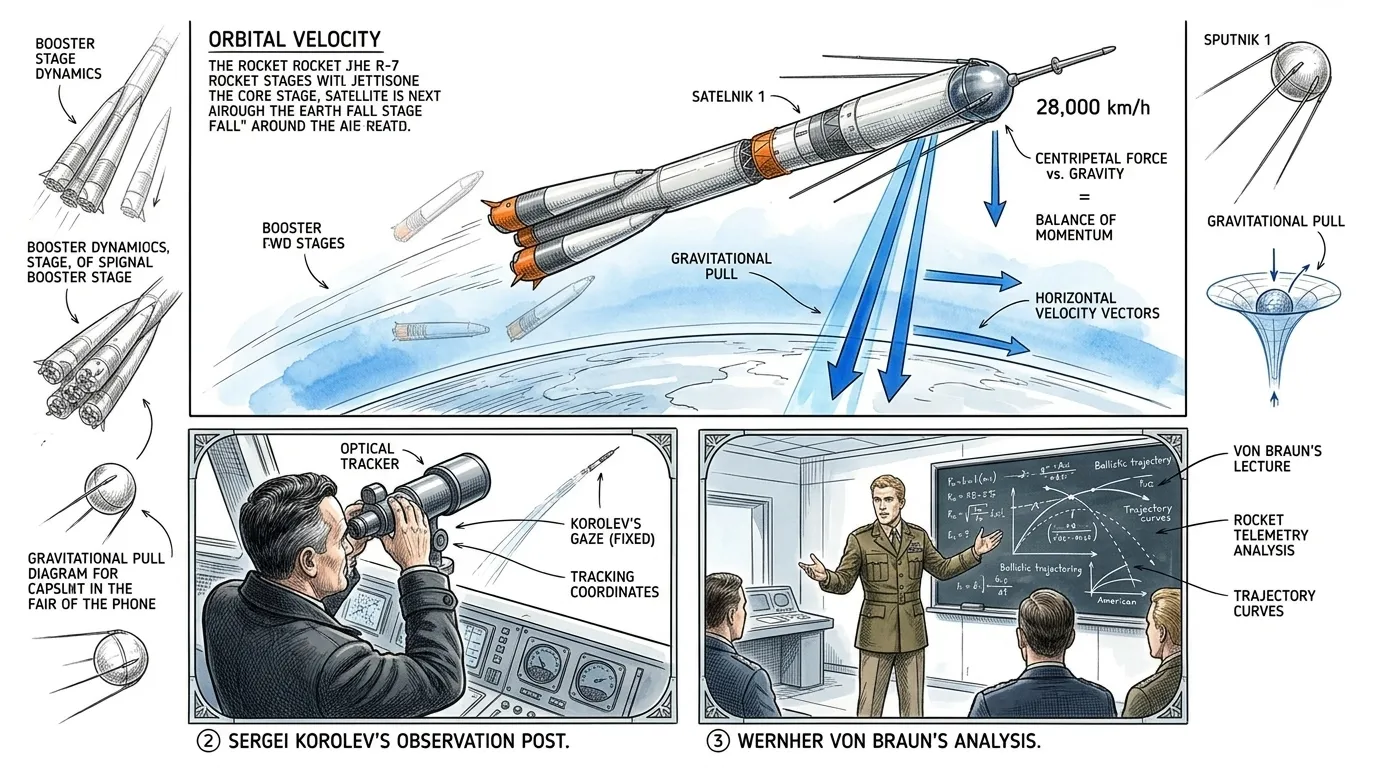
Launching a rocket is only half the battle; the true marvel lies in achieving orbital velocity. As the R-7 ascended, shedding its boosters, the central core continued to fire, pushing Sputnik 1 higher and faster. To achieve orbit, an object doesn't simply need to go 'up'; it needs to achieve a horizontal speed so immense that as it falls towards Earth, the curvature of the planet continually falls away beneath it. For Sputnik, this meant reaching approximately 28,000 kilometers per hour. At this precise speed and altitude, the satellite would continuously 'fall' around the Earth, never quite hitting the ground, perpetually suspended in a delicate balance between gravity and momentum.
Page 7
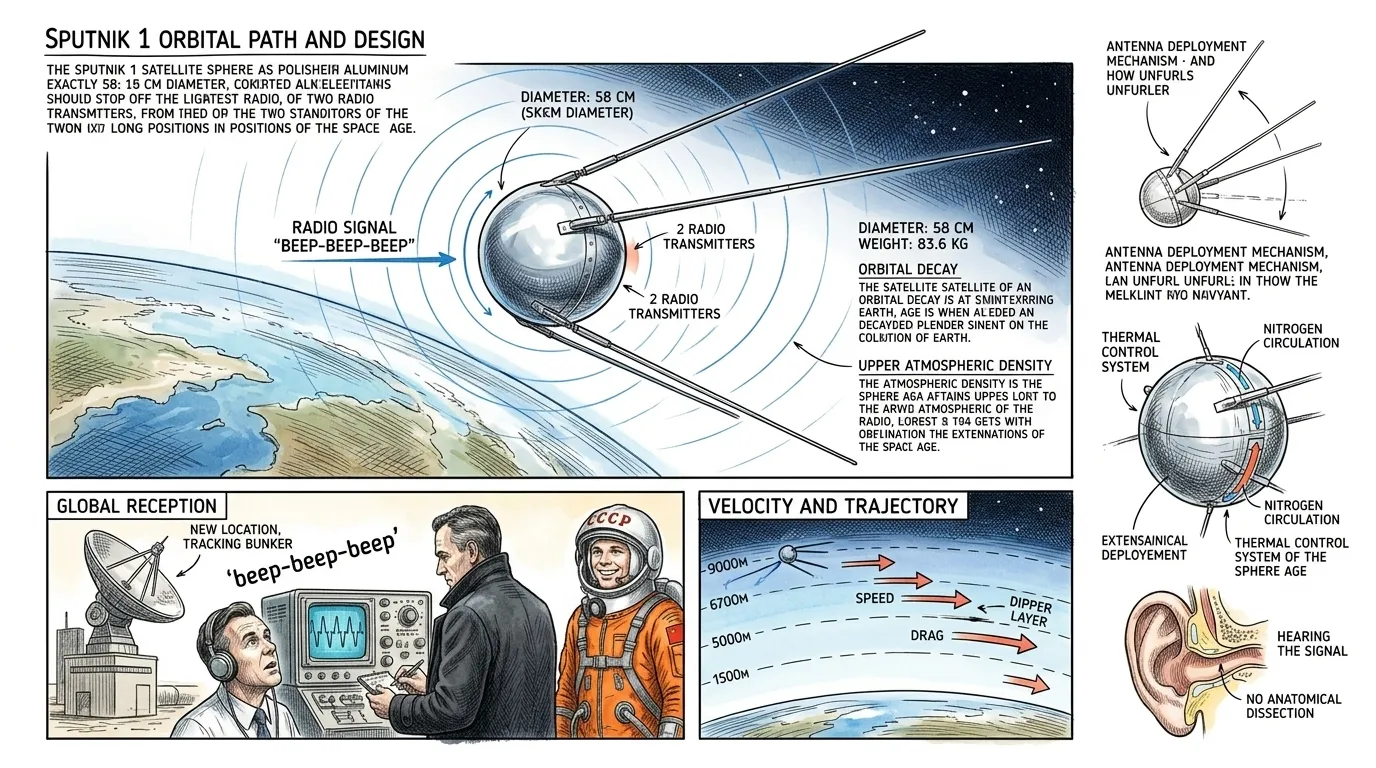
Sputnik 1 itself was remarkably simple: a polished aluminum sphere, 58 centimeters in diameter, weighing 83.6 kilograms, equipped with four external whip antennas and two radio transmitters. Its sole mission was to broadcast a continuous 'beep-beep-beep' signal on two frequencies, allowing amateur radio operators worldwide to track it. This humble beacon, however, carried profound scientific significance. By observing its orbital decay, scientists could deduce the density of Earth's upper atmosphere, a crucial piece of data for future space missions. Its success proved that an object could indeed remain in orbit, opening the door to a new era of space science and exploration.
Page 8
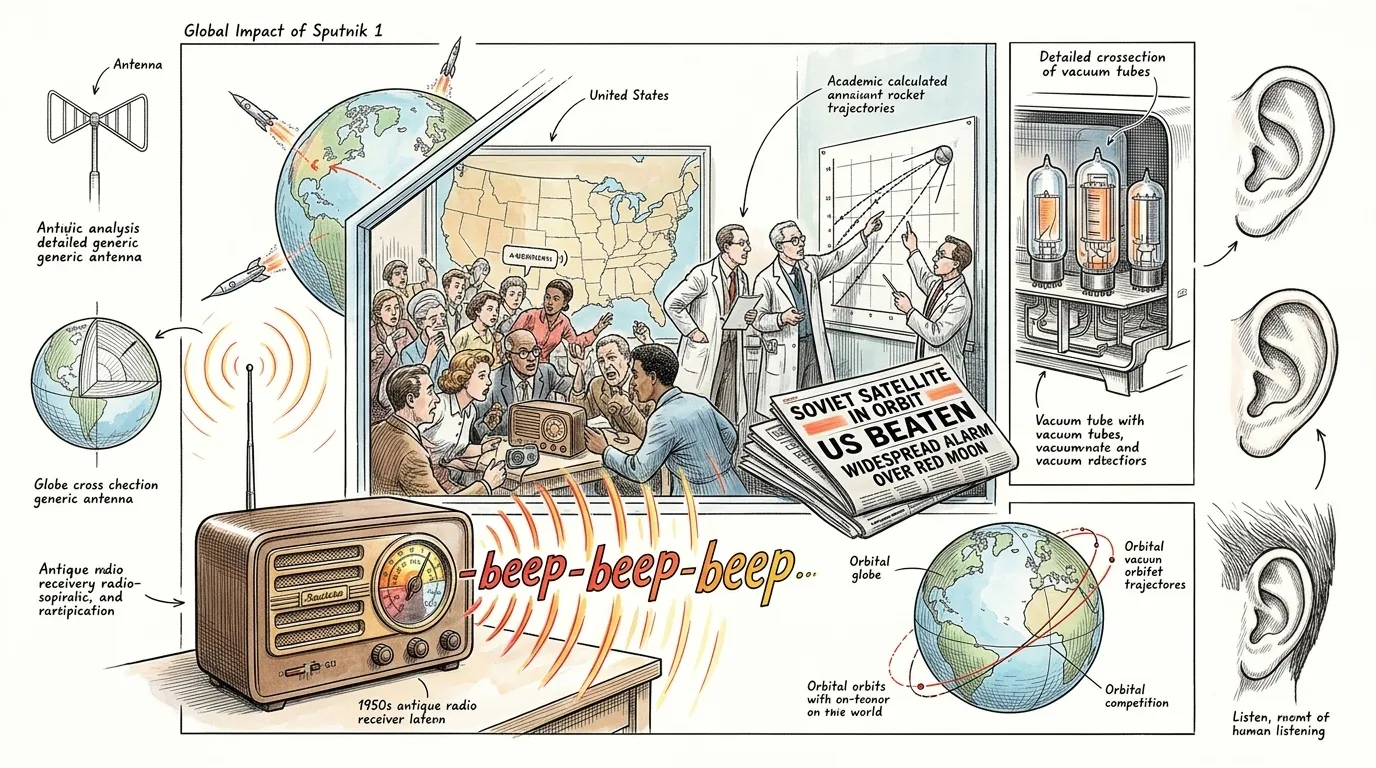
The 'beep' heard from Sputnik 1 reverberated far beyond scientific circles; it sent shockwaves across the globe, particularly in the United States, sparking what became known as the 'Sputnik Crisis.' Suddenly, the Soviet Union's technological prowess seemed to eclipse that of the West, triggering widespread alarm and a reevaluation of scientific and educational priorities. This single launch ignited the Space Race, a fierce competition that would drive unprecedented advancements in rocketry, computing, and material science. It directly led to the establishment of NASA in 1958 and propelled the world into an era where space exploration became a symbol of national power and ingenuity.
Page 9
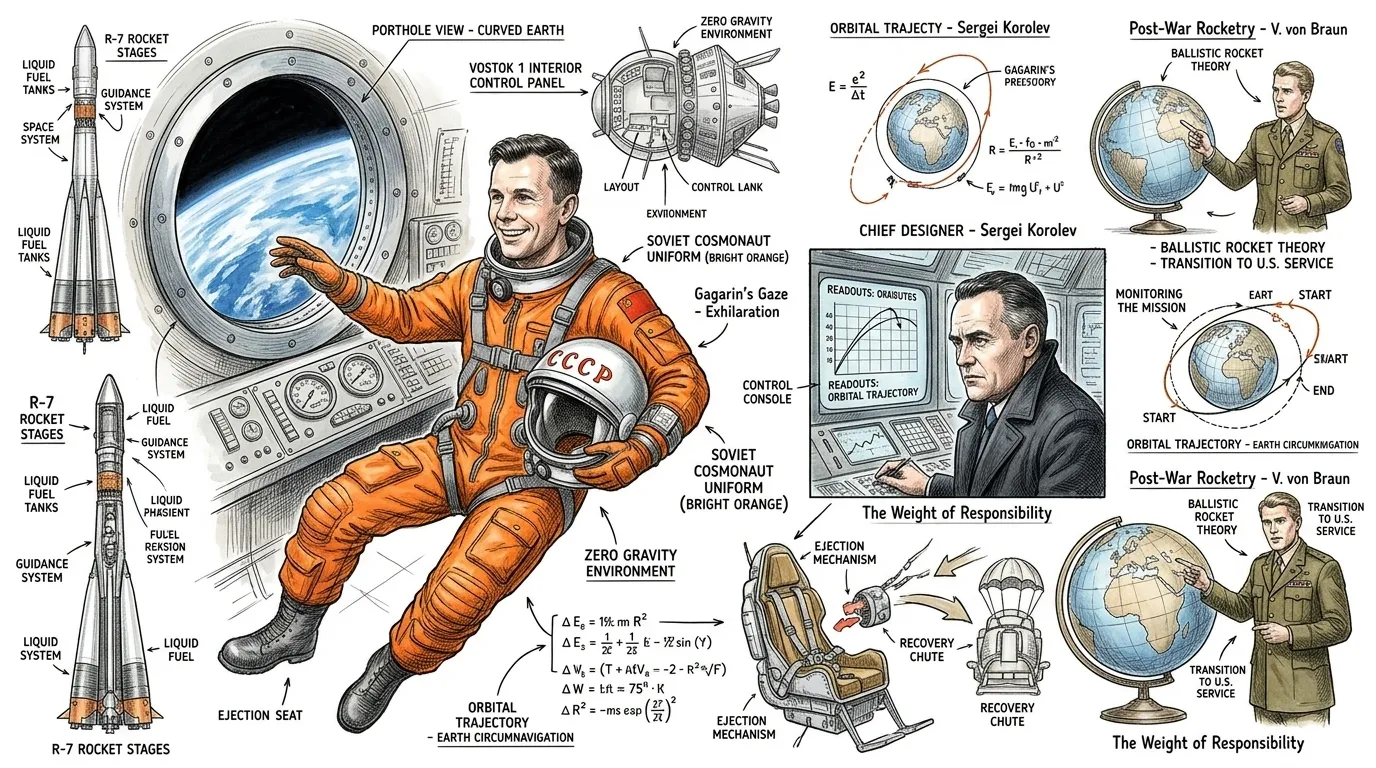
Building on Sputnik's triumph, Korolev's ambition soared even higher: to send a human into space. Under immense pressure and secrecy, his team swiftly developed the Vostok program. This culminated on April 12, 1961, when Yuri Gagarin, aboard Vostok 1, became the first human to orbit Earth. It was a monumental achievement, solidifying the Soviet Union's lead in the Space Race and etching Korolev's legacy even deeper into history, though his identity as the 'Chief Designer' remained a state secret. This mission proved human endurance in space and set the stage for all future manned missions, from Mercury to Apollo, and beyond.
Page 10
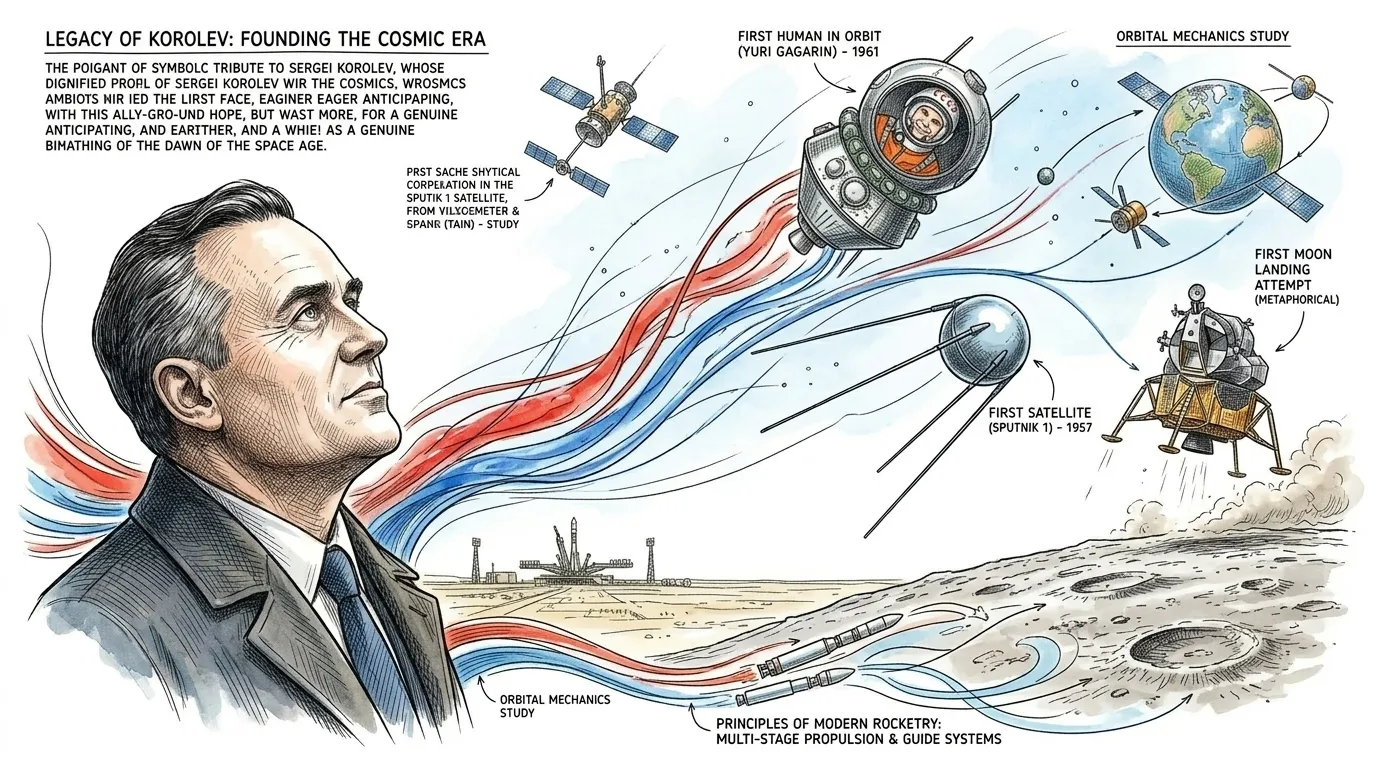
Sergei Korolev, known only as the 'Chief Designer' during his lifetime due to state secrecy, died in 1966. His death, kept secret for two days, robbed the Soviet space program of its visionary leader at a critical juncture in the lunar race. Yet, his engineering brilliance and relentless drive laid the fundamental groundwork for all subsequent space exploration. From the first satellite to the first human in orbit, and the early steps towards the Moon, Korolev's designs and methodologies established the principles that still guide modern rocketry and space missions. His contributions resonate in every satellite beaming data, every human venturing beyond Earth, and every dream of exploring new frontiers.
About this story
- Location: Global
- Audience: general readers
Read Wonder Science on your phone
Wonder Science is available on Android. Get Wonder Science on Google Play.