Sau Lan Wu
Sau Lan Wu — an illustrated science story, set in Global. 10 illustrated pages, free to read on Wonder Science.
Page 1
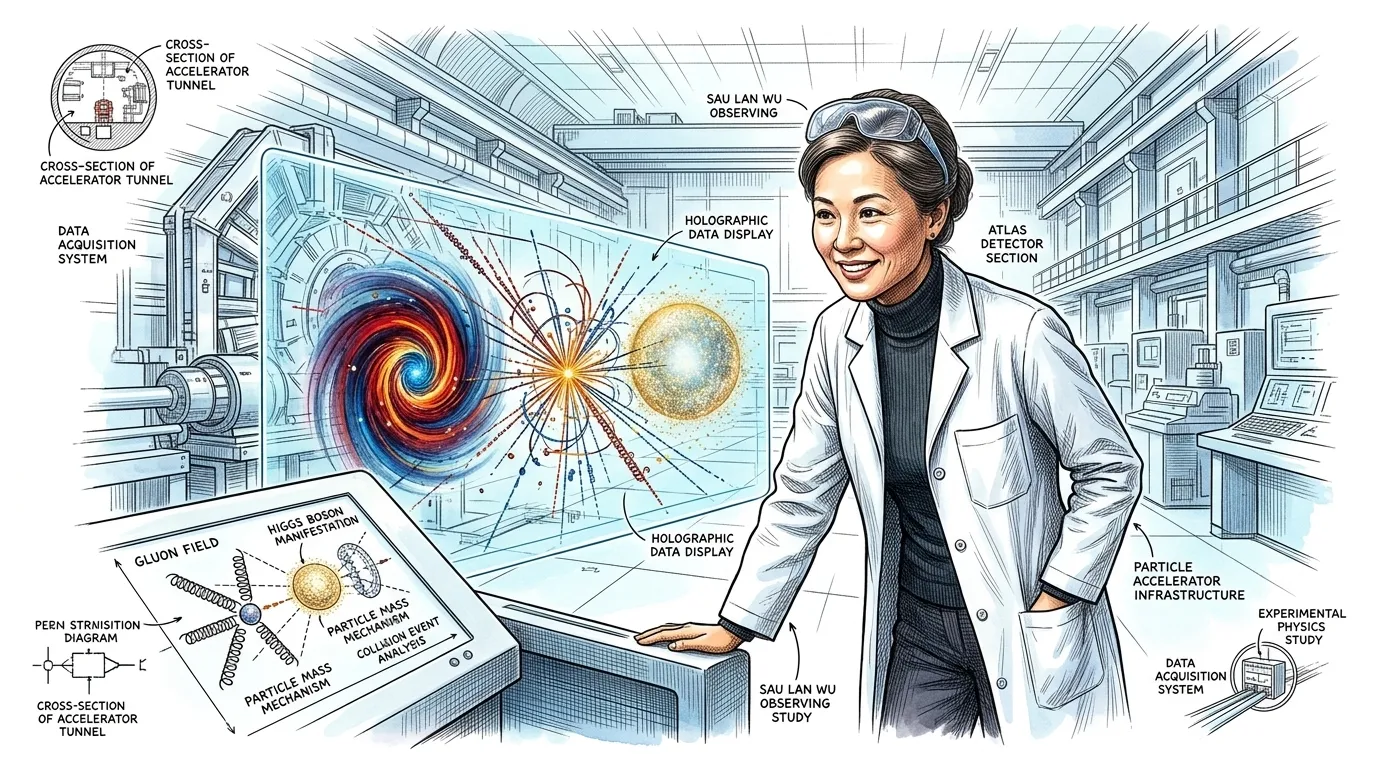
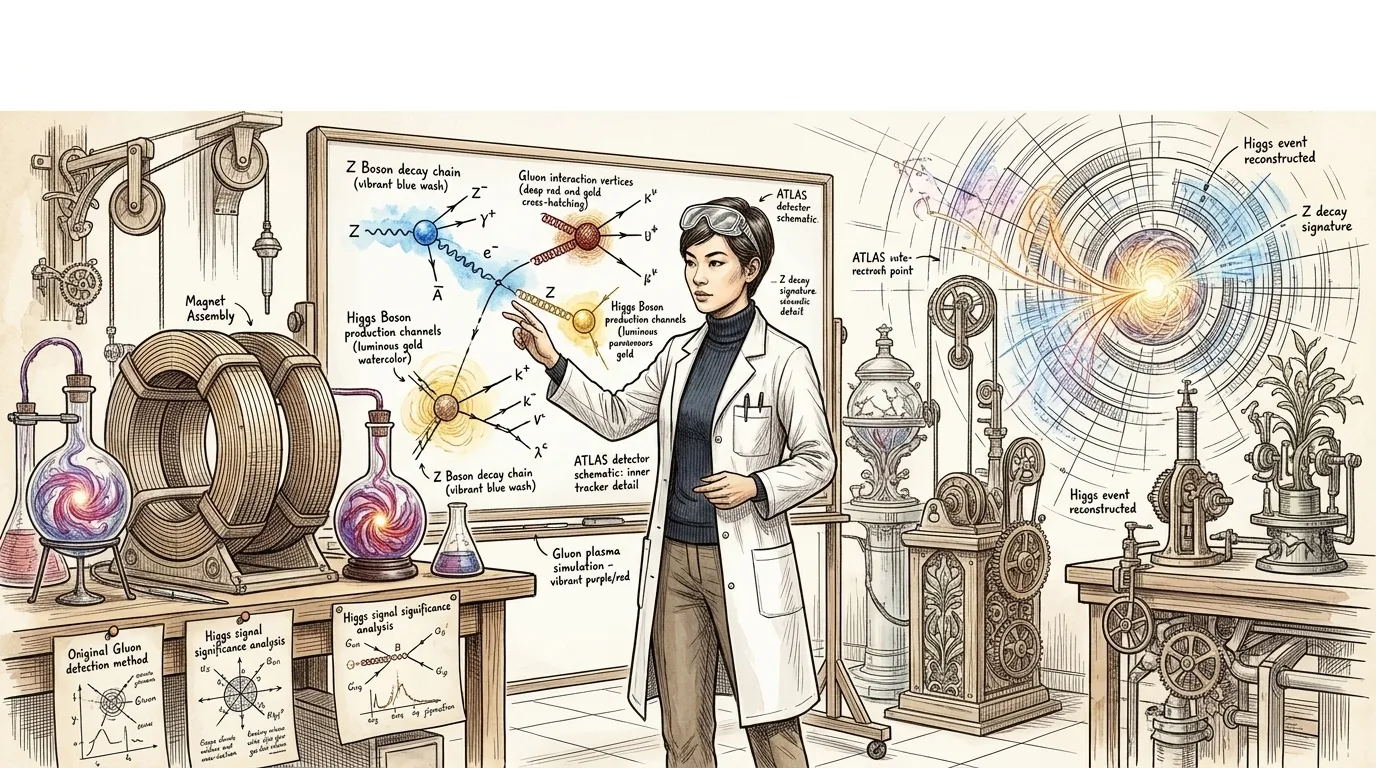
At the European Organization for Nuclear Research, CERN, beneath the Swiss-French border, monumental scientific endeavors unfold. Here, in the late 1970s and early 2010s, two of the most profound discoveries in particle physics reshaped our understanding of the universe. Dr. Sau Lan Wu, an experimental particle physicist, stood at the forefront of both, meticulously analyzing the debris of cosmic collisions. Her work helped confirm the existence of the gluon, the carrier of the strong nuclear force, and later played a critical role in the landmark discovery of the Higgs boson, unveiling the mechanism that gives fundamental particles mass.
Page 2
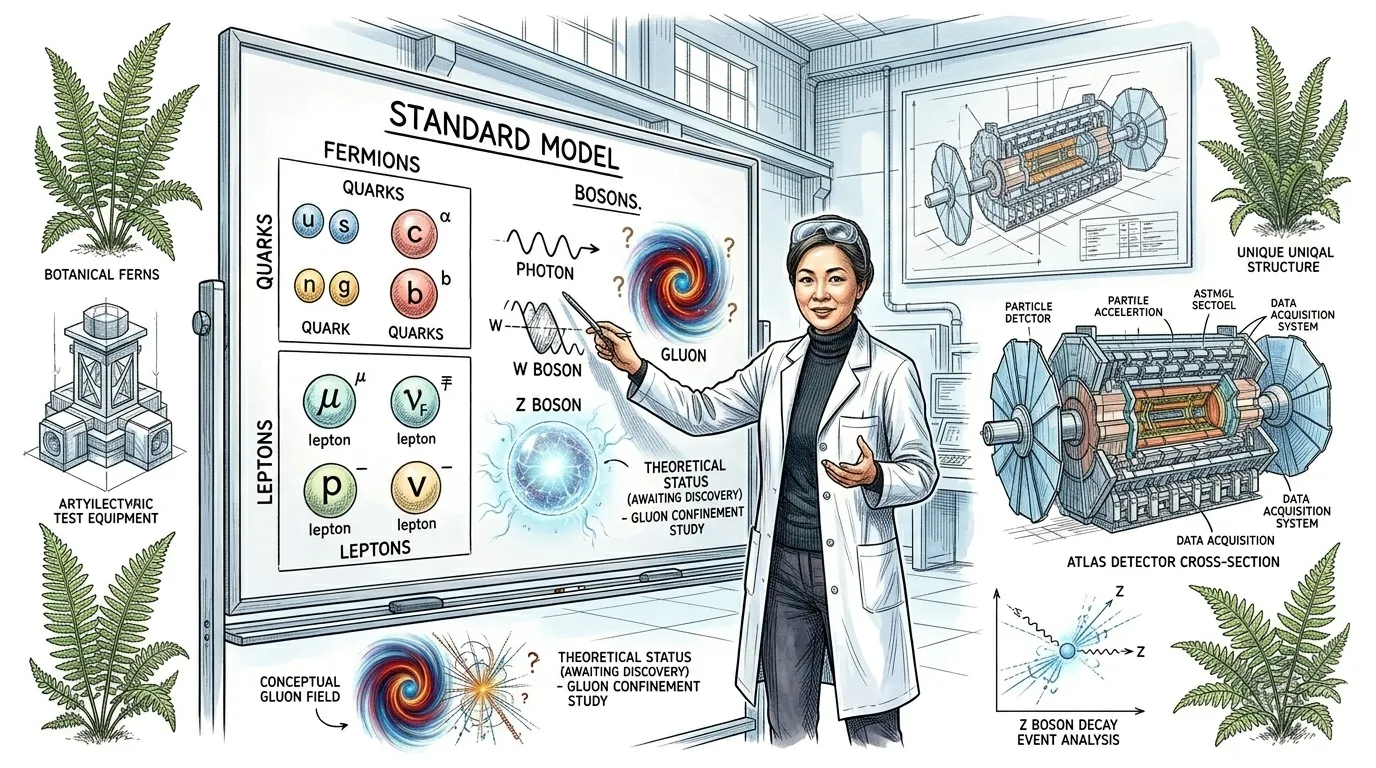
To comprehend Dr. Wu's impact, one must first grasp the Standard Model of particle physics. This theory describes the fundamental particles and forces that govern matter, acting as the universe's most successful blueprint. It categorizes matter into fermions—quarks (building blocks of protons and neutrons) and leptons (like electrons)—and forces into bosons: photons for electromagnetism, W and Z bosons for the weak nuclear force, and the as-yet-undiscovered gluon for the strong nuclear force. The Standard Model was a triumph, yet it contained glaring omissions that tantalized physicists for decades.
Page 3
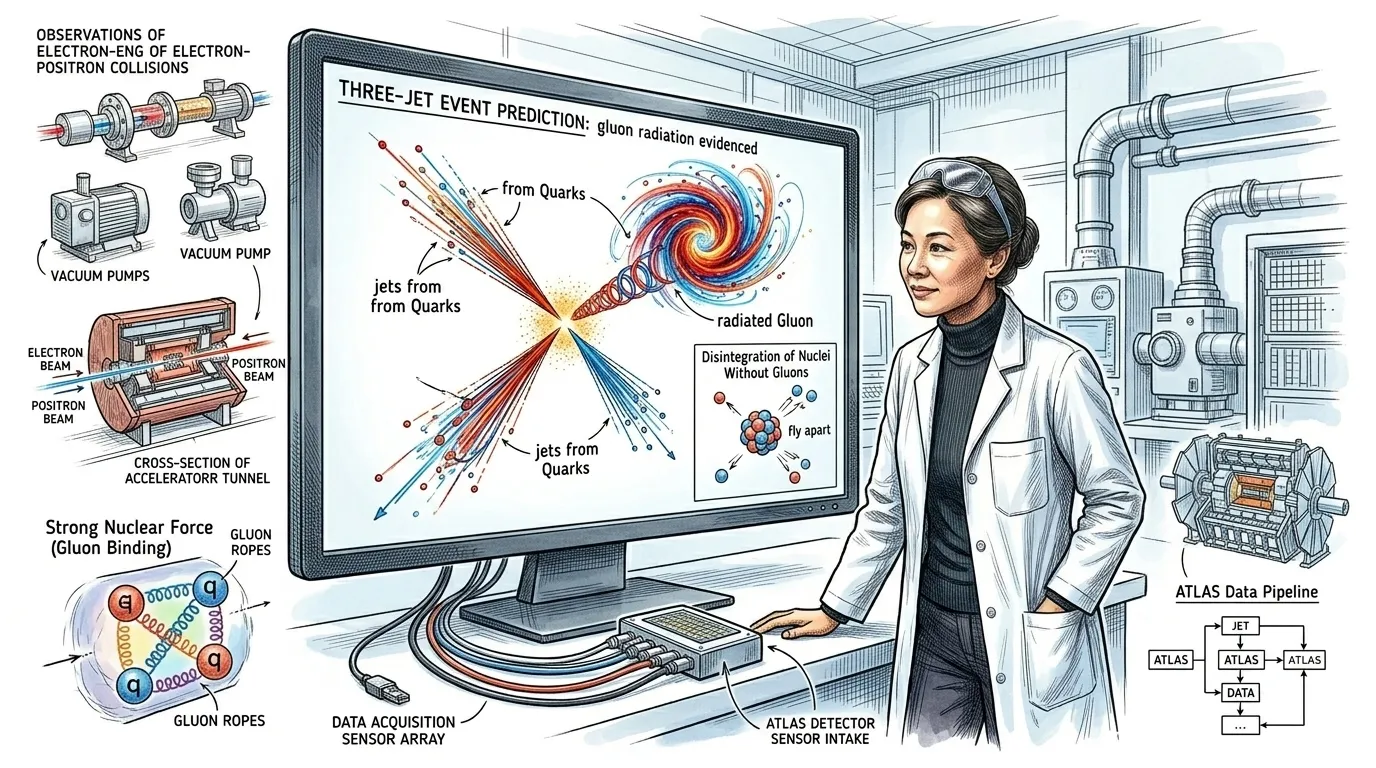
One of the Standard Model's missing pieces in the late 1970s was the gluon, the theoretical particle responsible for the strong nuclear force, which binds quarks together within protons and neutrons. Without gluons, atomic nuclei would simply fly apart. Detecting gluons posed an immense challenge because they, unlike photons, never exist in isolation; they are confined within hadrons, the composite particles they bind. Physicists hypothesized that high-energy electron-positron collisions might produce distinctive 'three-jet' events, where two jets of particles came from quarks and a third from a radiated gluon.
Page 4
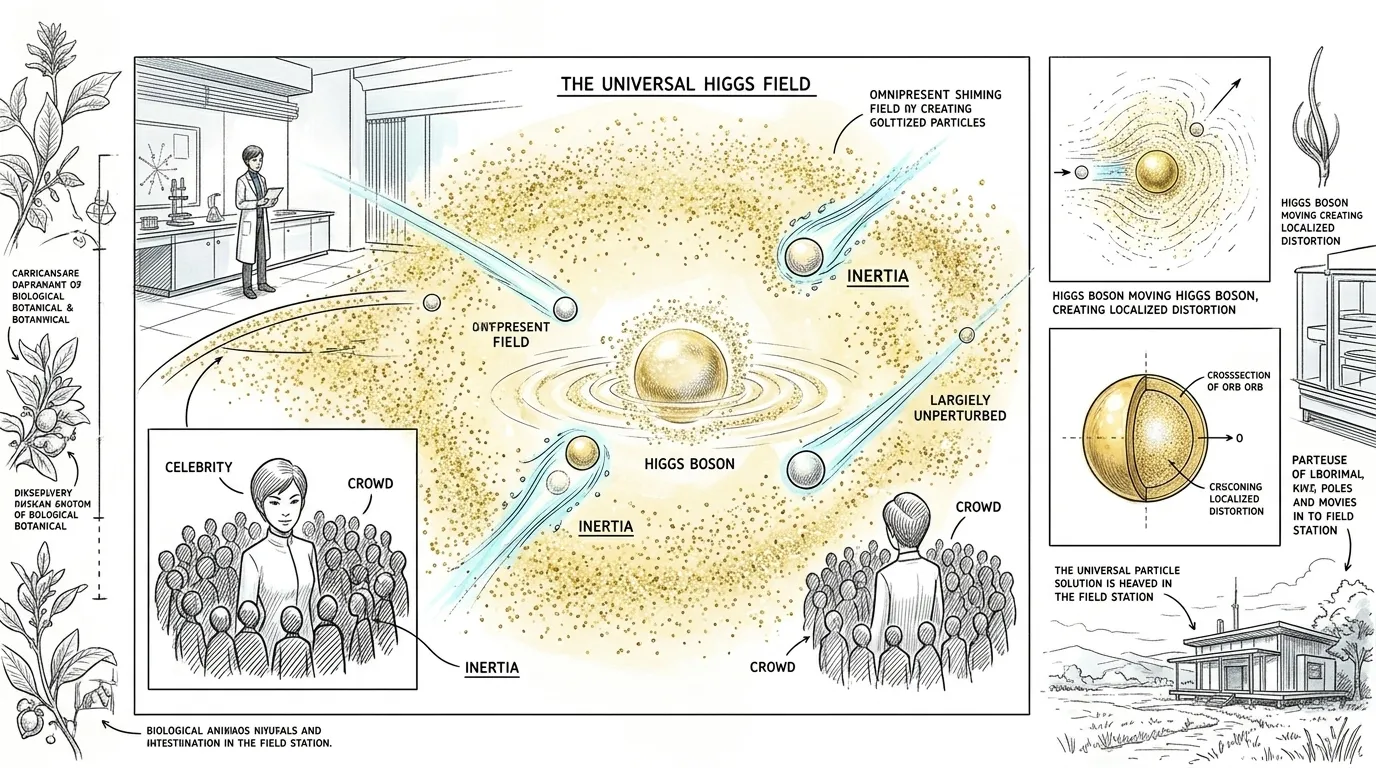
Decades after the gluon's confirmation, an even greater enigma persisted: the origin of mass itself. The Standard Model stipulated that all fundamental particles should be massless, yet we know electrons and quarks possess mass. This profound discrepancy led to the theoretical proposition of the Higgs field and its associated particle, the Higgs boson. It was posited that particles acquire mass by interacting with this omnipresent field, much like a celebrity trying to walk through a crowded room. This 'Higgs mechanism' became the final, elusive puzzle piece.
Page 5
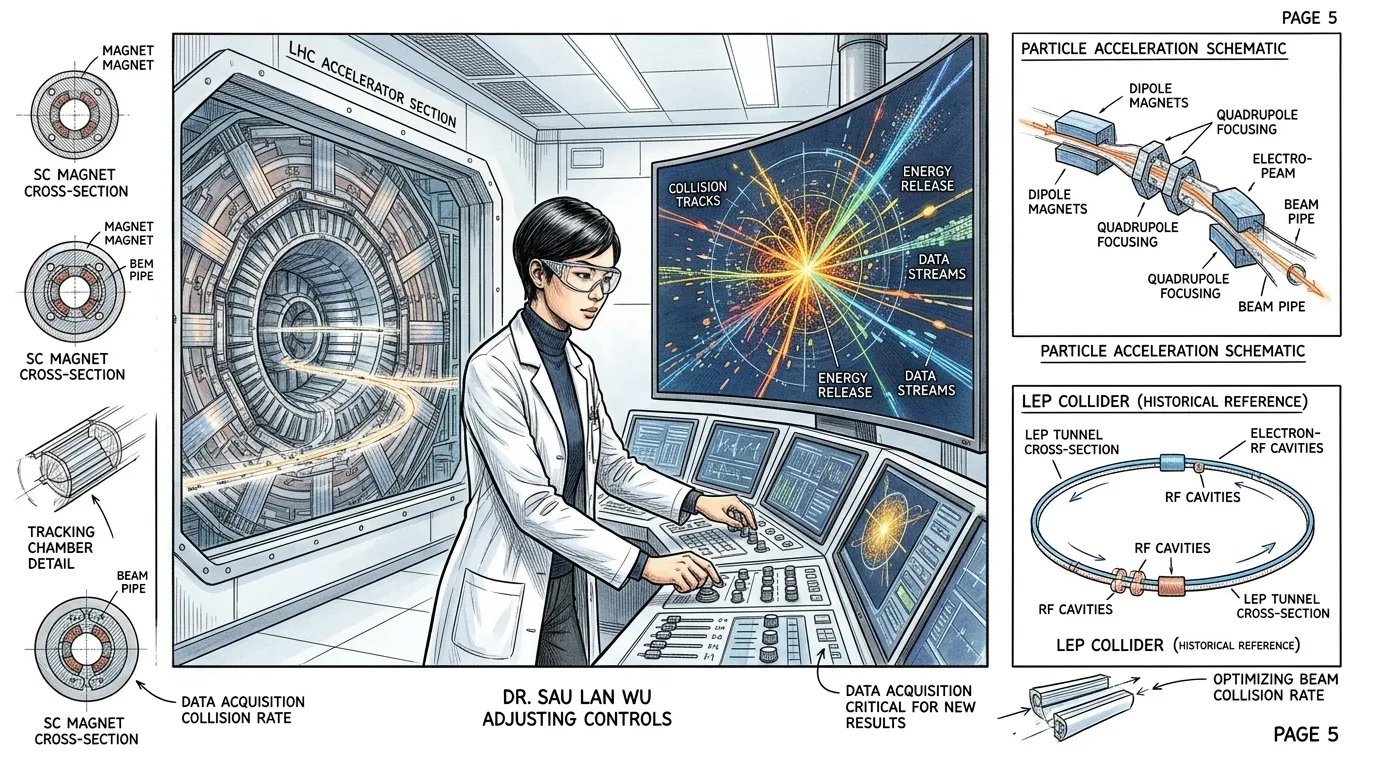
Solving these fundamental mysteries required instruments of unprecedented power: particle accelerators like CERN's Large Electron-Positron (LEP) collider, and later, the Large Hadron Collider (LHC). These colossal machines propel particles to nearly the speed of light before smashing them together. The energy released in these collisions momentarily recreates conditions akin to the early universe, allowing physicists to observe the fleeting existence of new particles. Sau Lan Wu's expertise in designing and analyzing detector experiments at both LEP and LHC was indispensable to the search for fundamental particles.
Page 6
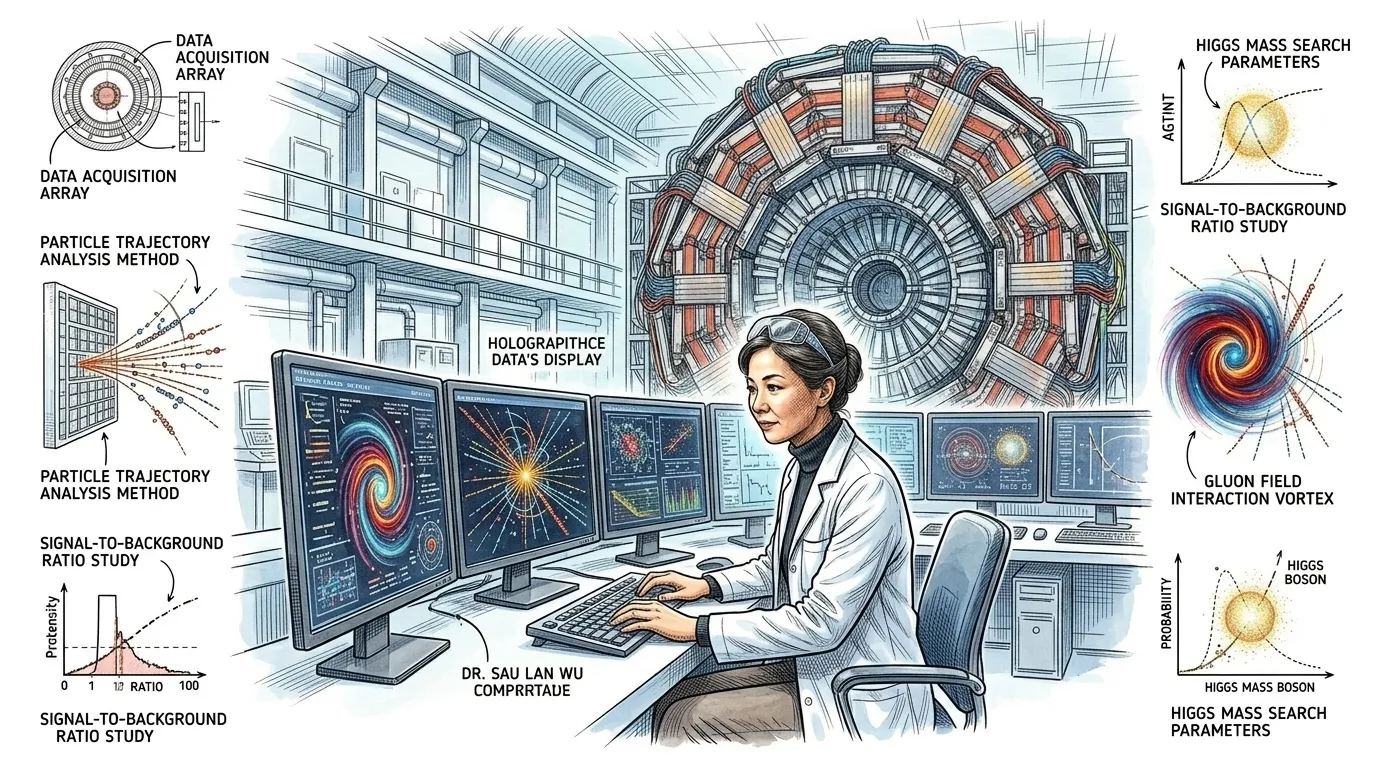
At the heart of any particle accelerator experiment lies the detector. ATLAS, one of the LHC's massive detectors, is a complex, multi-layered instrument designed to record every detail of particle collisions. It tracks the trajectories of charged particles, measures their energy, and identifies their type. When particles collide, they decay into a shower of new particles, some stable, others incredibly short-lived. Sau Lan Wu and her teams meticulously sifted through petabytes of raw data, looking for the specific 'signatures'—unique patterns of decay products—that would betray the presence of a gluon or a Higgs boson, a monumental analytical challenge.
Page 7
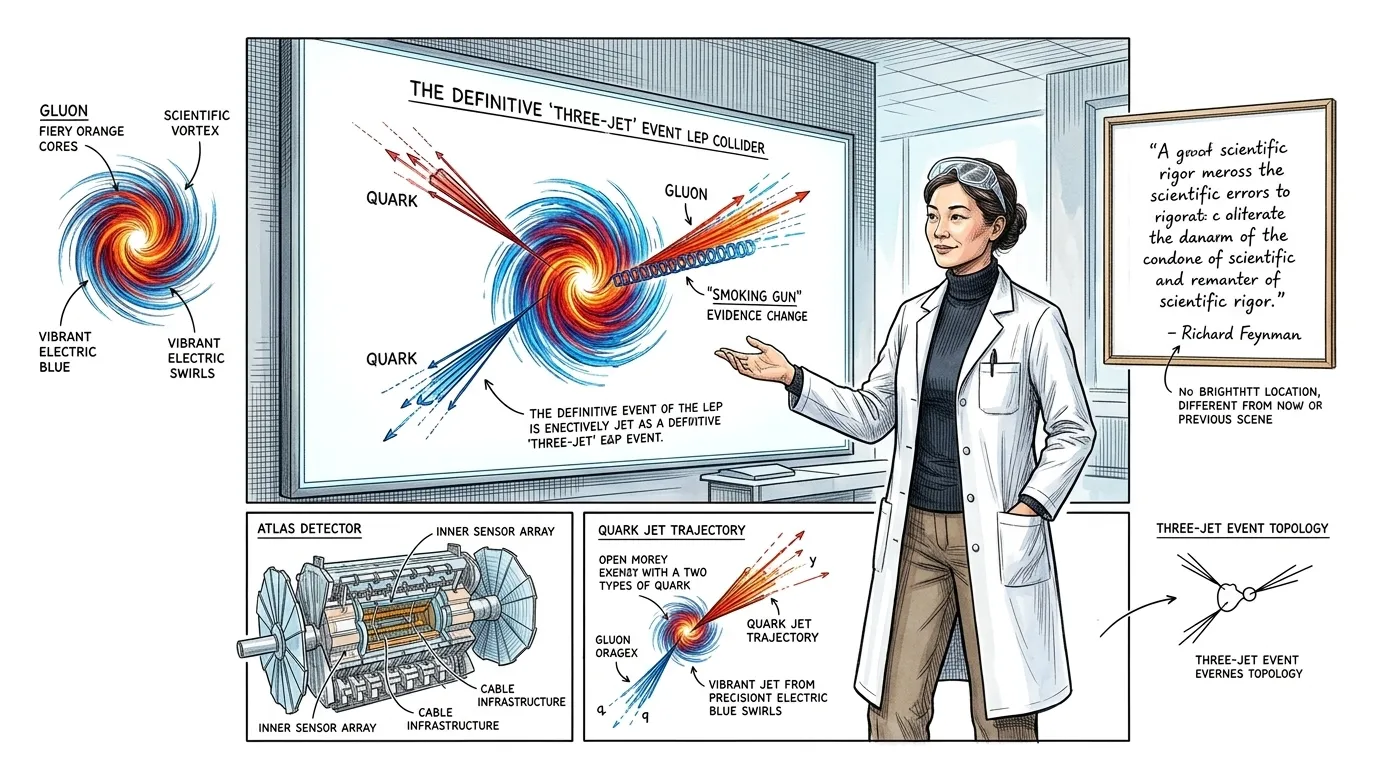
The search for the gluon culminated in 1979 at the LEP collider. Dr. Wu, working with the TASSO experiment, was instrumental in identifying the crucial 'three-jet' events predicted by theory. These events, distinct from the expected two-jet quark production, provided the smoking gun evidence for the gluon's existence. It was a pivotal confirmation of quantum chromodynamics, the theory of the strong force. This discovery cemented the Standard Model's framework and provided profound insights into how matter itself is held together. As the renowned physicist Richard Feynman once remarked about scientific progress, 'The first principle is that you must not fool yourself—and you are the easiest person to fool.' This rigor was essential to Wu's work.
Page 8
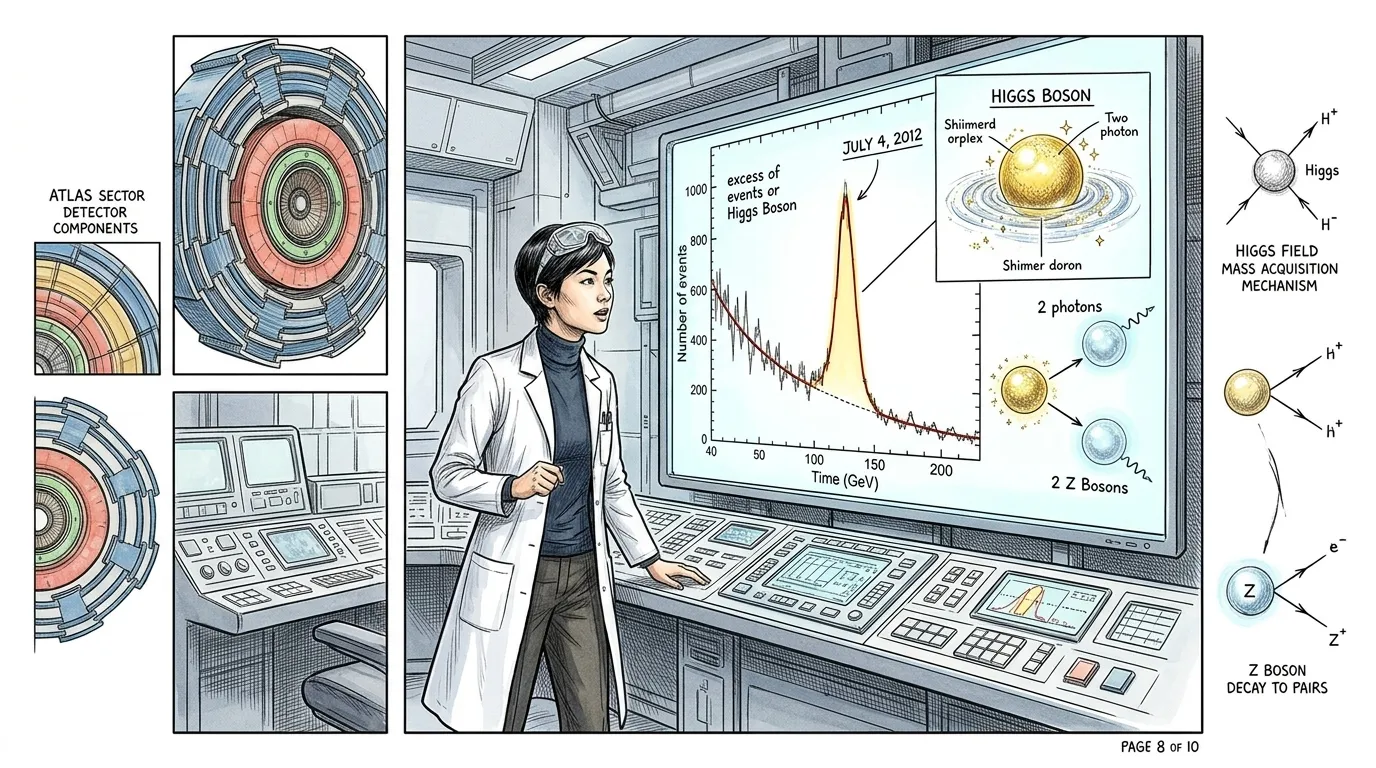
Decades later, Sau Lan Wu again played a central role in the monumental search for the Higgs boson at the Large Hadron Collider. Her team's work, particularly within the ATLAS experiment, focused on specific decay channels of the Higgs, like its decay into two photons or two Z bosons. The data required unprecedented statistical rigor. After years of sifting through trillions of collisions, a persistent excess of events appeared at a mass around 125 GeV, consistently across independent experiments (ATLAS and CMS). On July 4, 2012, CERN announced the discovery of a new particle consistent with the long-sought Higgs boson.
Page 9
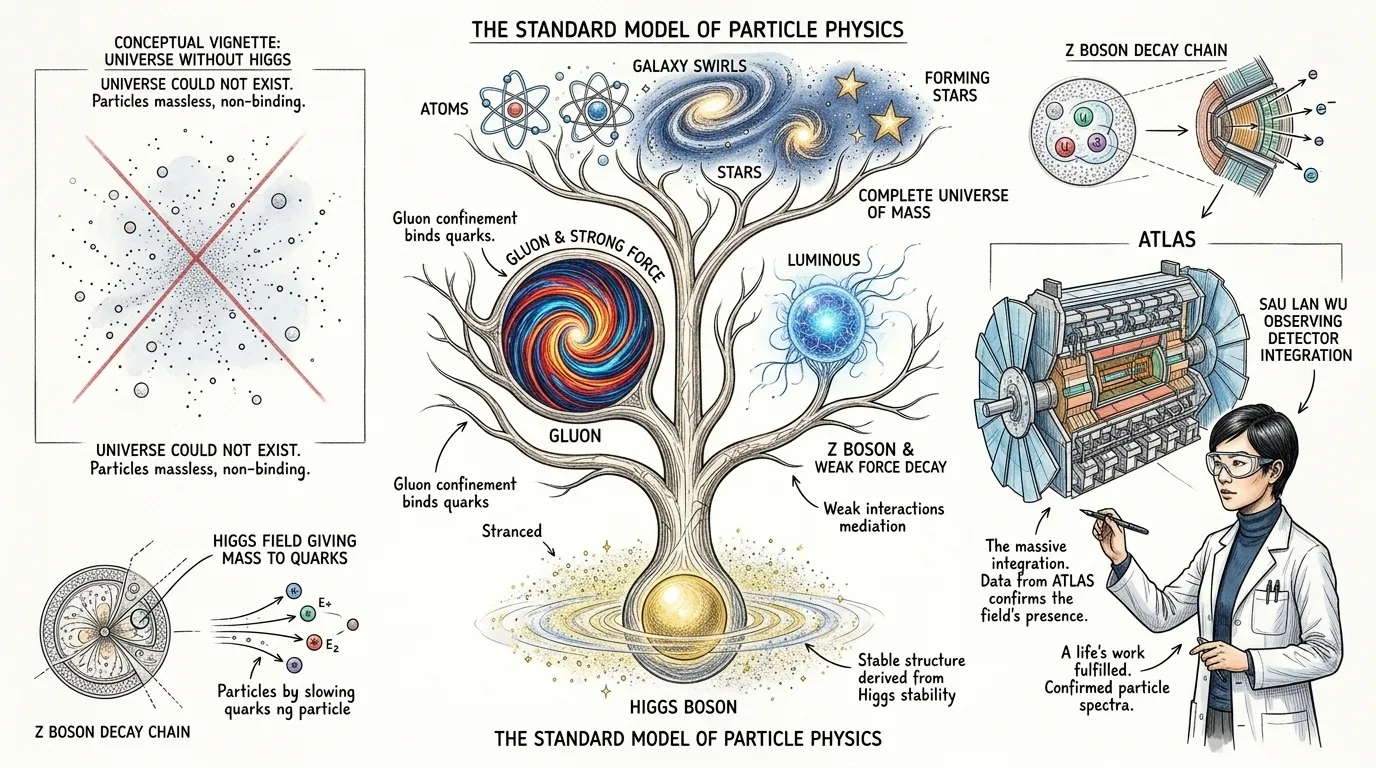
The discovery of the Higgs boson was not merely finding a new particle; it was the final, foundational pillar of the Standard Model. It validated decades of theoretical predictions and offered profound insight into the mechanism of mass, revolutionizing our understanding of elementary particles. Without the Higgs mechanism, fundamental particles would be massless, and the universe as we know it—with atoms, stars, and galaxies—could not exist. This discovery completed our picture of the fundamental forces and particles that make up the cosmos, profoundly deepening scientific knowledge.
Page 10
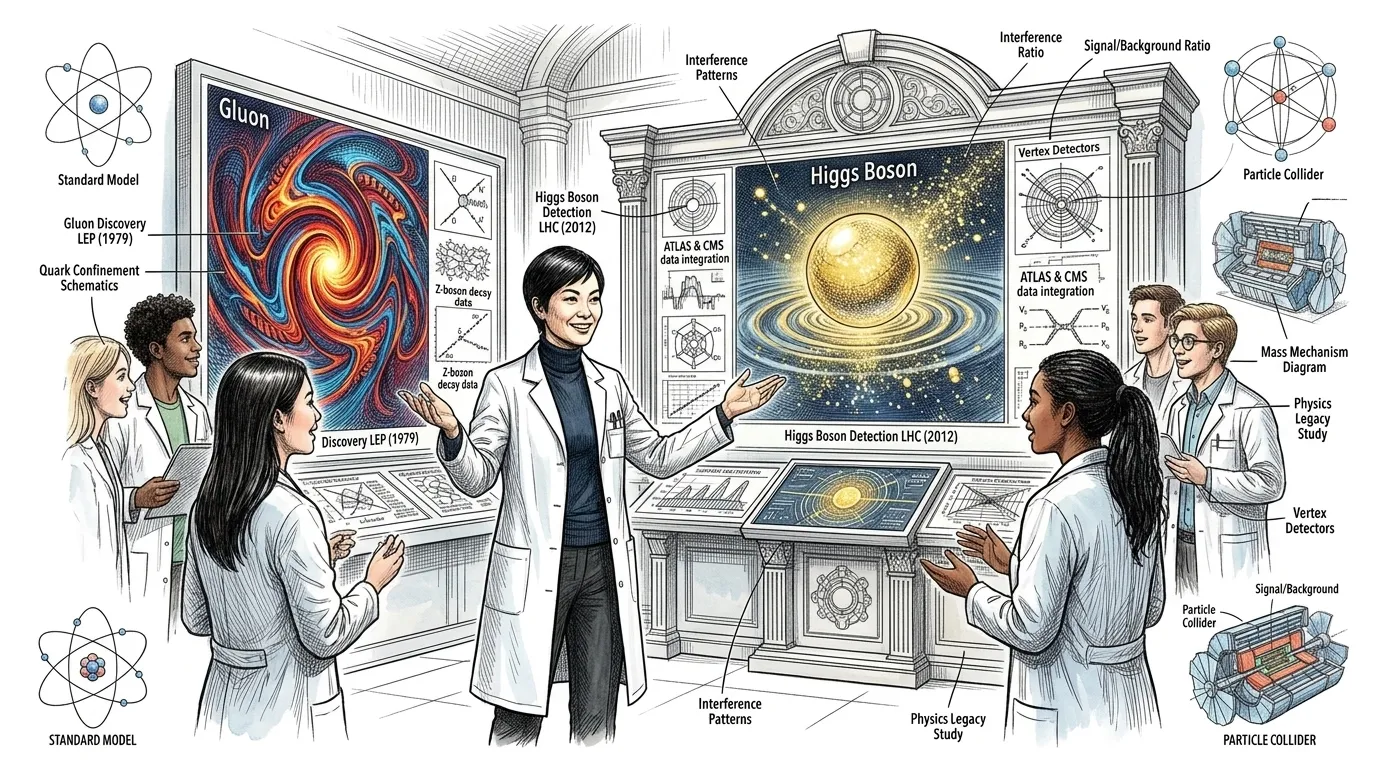
Sau Lan Wu's career spans fifty years of groundbreaking experimental particle physics, marked by an unwavering dedication to unraveling the universe's most fundamental secrets. From her crucial contributions to the gluon's discovery at LEP to her pivotal role in the Higgs boson's detection at LHC, she has left an indelible mark on scientific understanding. Her work not only confirmed theoretical predictions but also pushed the boundaries of detector technology and data analysis, inspiring generations of physicists. The legacy of Dr. Wu extends beyond these discoveries, serving as a powerful testament to the impact of perseverance, intellectual rigor, and collaborative spirit in scientific endeavor.
About this story
- Location: Global
- Audience: general readers
Read Wonder Science on your phone
Wonder Science is available on Android. Get Wonder Science on Google Play.