Rudolf Mossbauer

Rudolf Mossbauer — an illustrated science story, set in Global. 10 illustrated pages, free to read on Wonder Science.
Rudolf Mossbauer — book cover — Wonder Science
Rudolf Mossbauer — an illustrated science story, set in Global. 10 illustrated pages, free to read on Wonder Science.

Page 1
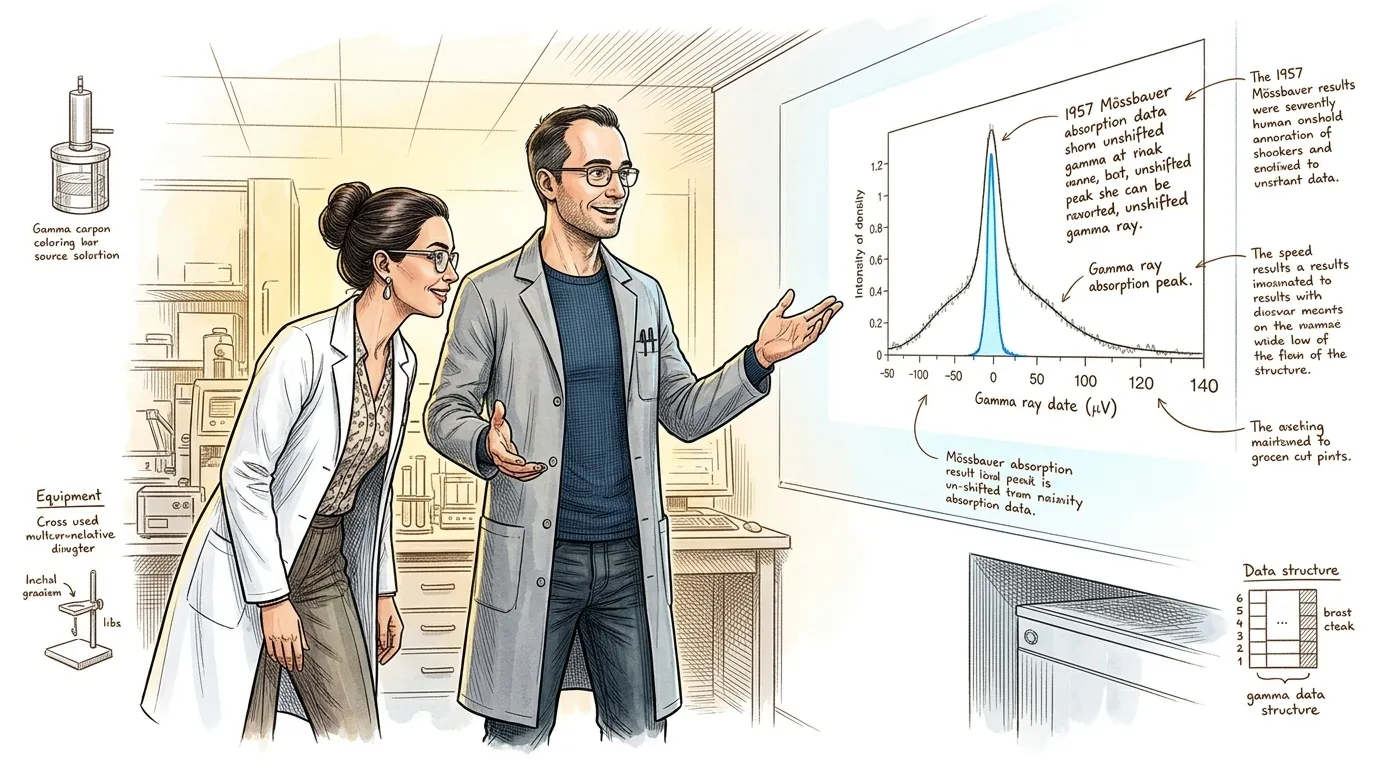
""Observe this anomaly, Lena," Dmitri stated, gesturing towards a historical graph projected in the lab. "In 1957, Rudolf Mössbauer's results for gamma ray…
""Observe this anomaly, Lena," Dmitri stated, gesturing towards a historical graph projected in the lab. "In 1957, Rudolf Mössbauer's results for gamma ray absorption simply didn't fit the expected recoil physics. The nuclei, by all accounts, should have shifted the energy spectrum significantly." Dr. Petrova leaned closer.

""Observe this anomaly, Lena," Dmitri stated, gesturing towards a historical graph projected in the lab. "In 1957, Rudolf Mössbauer's results for gamma ray absorption simply didn't fit the expected recoil physics. The nuclei, by all accounts, should have shifted the energy spectrum significantly." Dr. Petrova leaned closer. "But his measurements revealed an incredibly sharp, unshifted peak, defying the conventional understanding of nuclear recoil during emission and absorption.""

Page 2
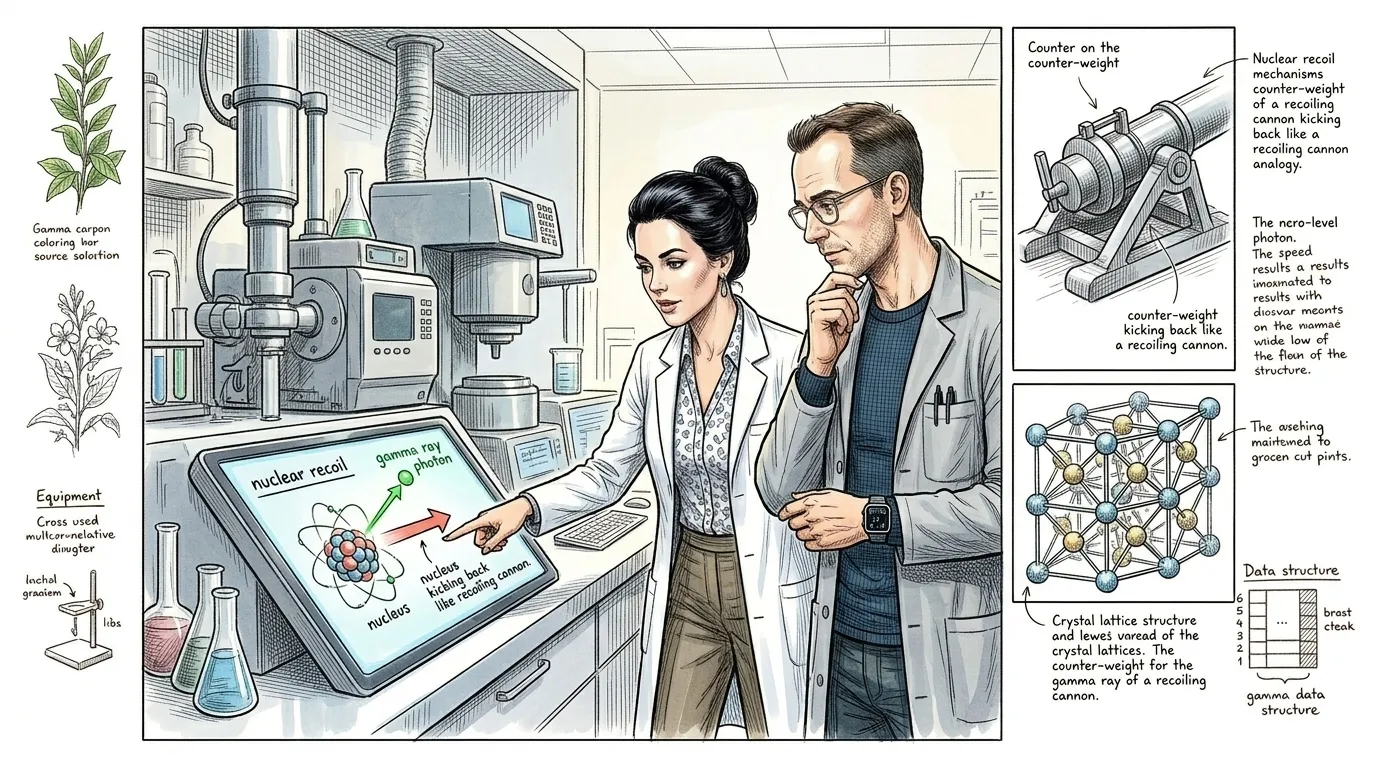
""To truly grasp Mössbauer's breakthrough, we must first understand nuclear recoil," Dr. Petrova explained, pointing to a diagram on a digital display.
""To truly grasp Mössbauer's breakthrough, we must first understand nuclear recoil," Dr. Petrova explained, pointing to a diagram on a digital display. "When an excited atomic nucleus emits a gamma ray photon, the nucleus itself kicks back, much like a cannon recoiling after firing a projectile." Dmitri nodded, adding, "This recoil energy causes a minute but critical loss of energy for the gamma ray, typically broadening its spectral line and making resonant absorption…

""To truly grasp Mössbauer's breakthrough, we must first understand nuclear recoil," Dr. Petrova explained, pointing to a diagram on a digital display. "When an excited atomic nucleus emits a gamma ray photon, the nucleus itself kicks back, much like a cannon recoiling after firing a projectile." Dmitri nodded, adding, "This recoil energy causes a minute but critical loss of energy for the gamma ray, typically broadening its spectral line and making resonant absorption difficult.""

Page 3
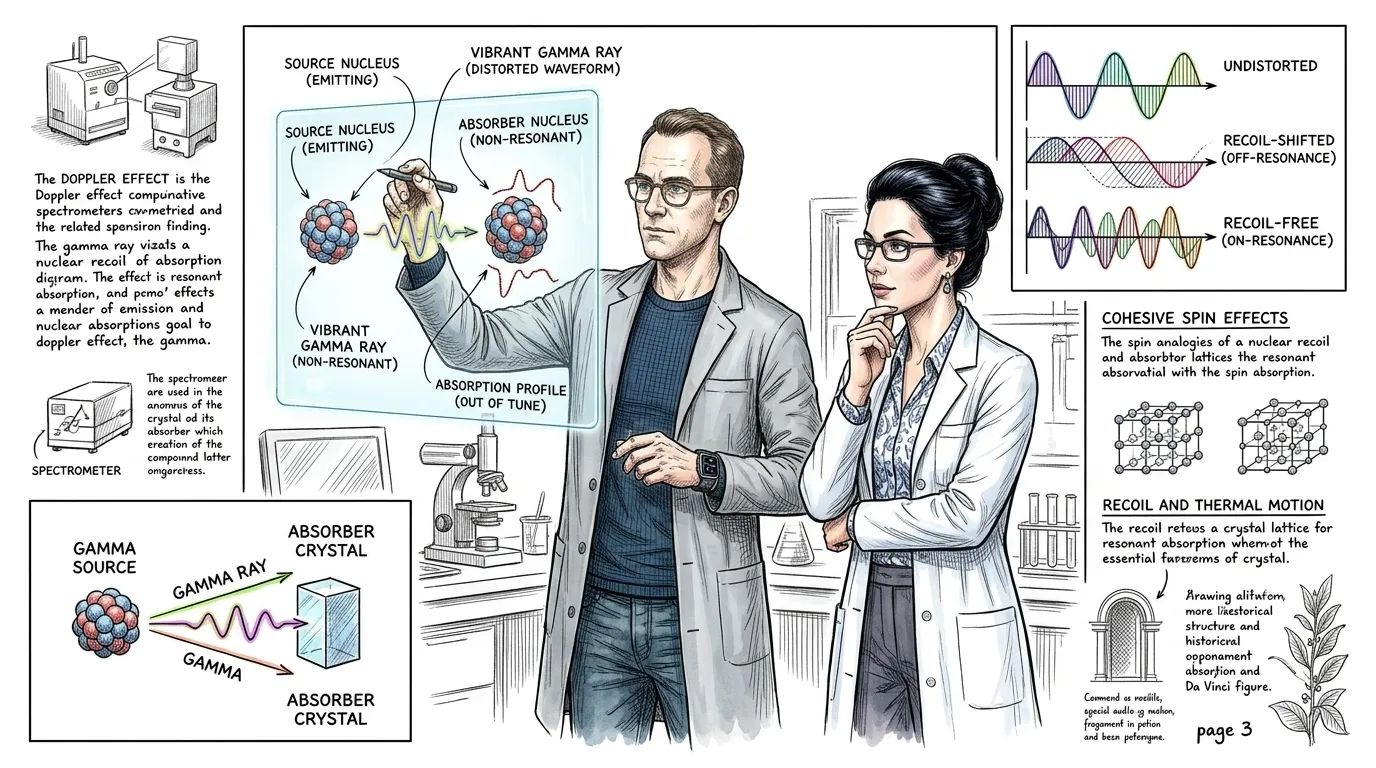
""Nuclear resonance absorption requires an exact energy match between the emitted and absorbed gamma ray," Dmitri elaborated, drawing a conceptual diagram on a…
""Nuclear resonance absorption requires an exact energy match between the emitted and absorbed gamma ray," Dmitri elaborated, drawing a conceptual diagram on a holographic interface. "The recoil energy shifts the emitted gamma ray's frequency, making it 'out of tune' for another nucleus to absorb it resonantly." Dr. Petrova mused, "It's like trying to perfectly catch a ball that someone has thrown with an unpredictable spin — the energy match is almost never precise enough.""

""Nuclear resonance absorption requires an exact energy match between the emitted and absorbed gamma ray," Dmitri elaborated, drawing a conceptual diagram on a holographic interface. "The recoil energy shifts the emitted gamma ray's frequency, making it 'out of tune' for another nucleus to absorb it resonantly." Dr. Petrova mused, "It's like trying to perfectly catch a ball that someone has thrown with an unpredictable spin — the energy match is almost never precise enough.""

Page 4
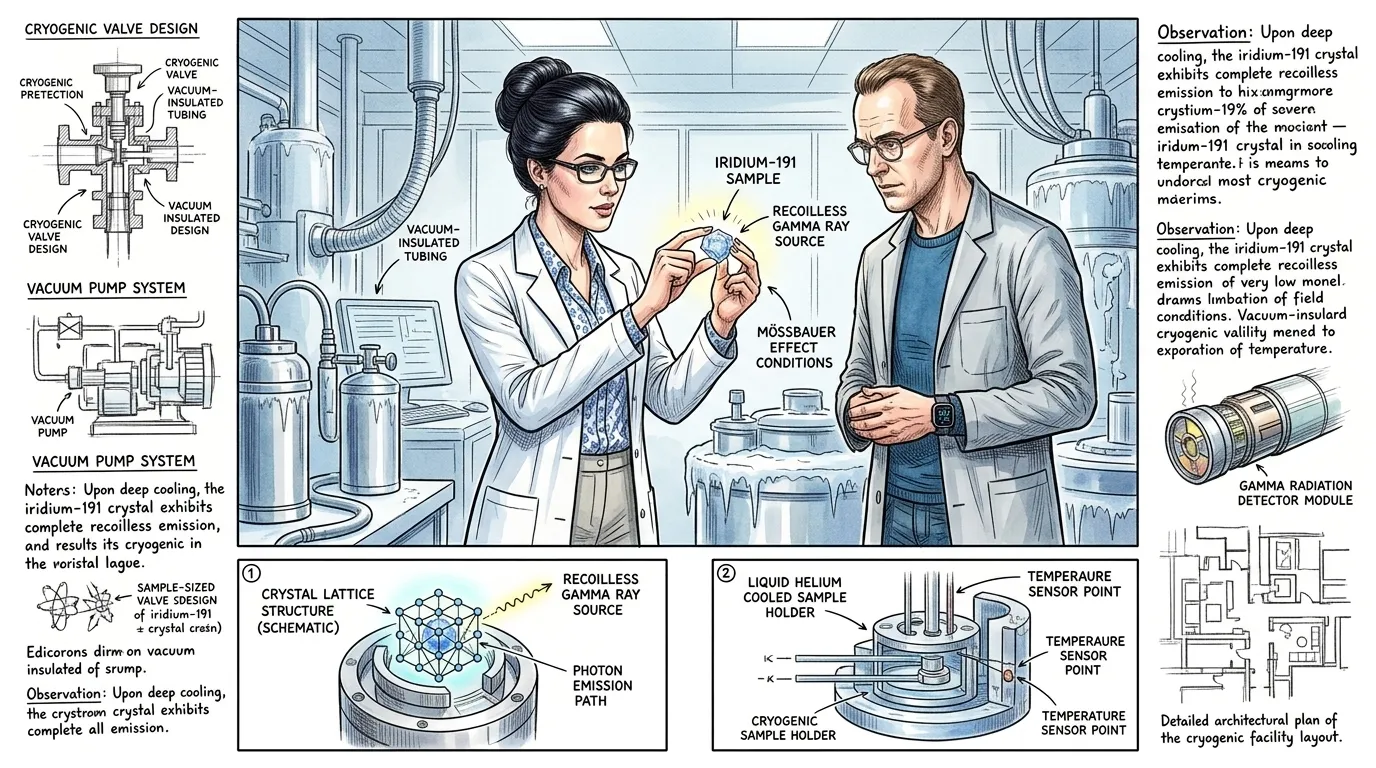
""Mössbauer's pivotal insight came from using solid materials, specifically iridium-191, as both emitter and absorber," Dr.
""Mössbauer's pivotal insight came from using solid materials, specifically iridium-191, as both emitter and absorber," Dr. Petrova explained, holding a small, sample-sized crystal. "He was exploring the possibilities of observing resonance absorption at low temperatures, expecting a slight shift." Dmitri added, "But at cryogenic temperatures, a significant fraction of gamma rays showed no recoil loss, behaving as if the entire crystal absorbed the recoil energy, not just the…

""Mössbauer's pivotal insight came from using solid materials, specifically iridium-191, as both emitter and absorber," Dr. Petrova explained, holding a small, sample-sized crystal. "He was exploring the possibilities of observing resonance absorption at low temperatures, expecting a slight shift." Dmitri added, "But at cryogenic temperatures, a significant fraction of gamma rays showed no recoil loss, behaving as if the entire crystal absorbed the recoil energy, not just the individual nucleus.""

Page 5
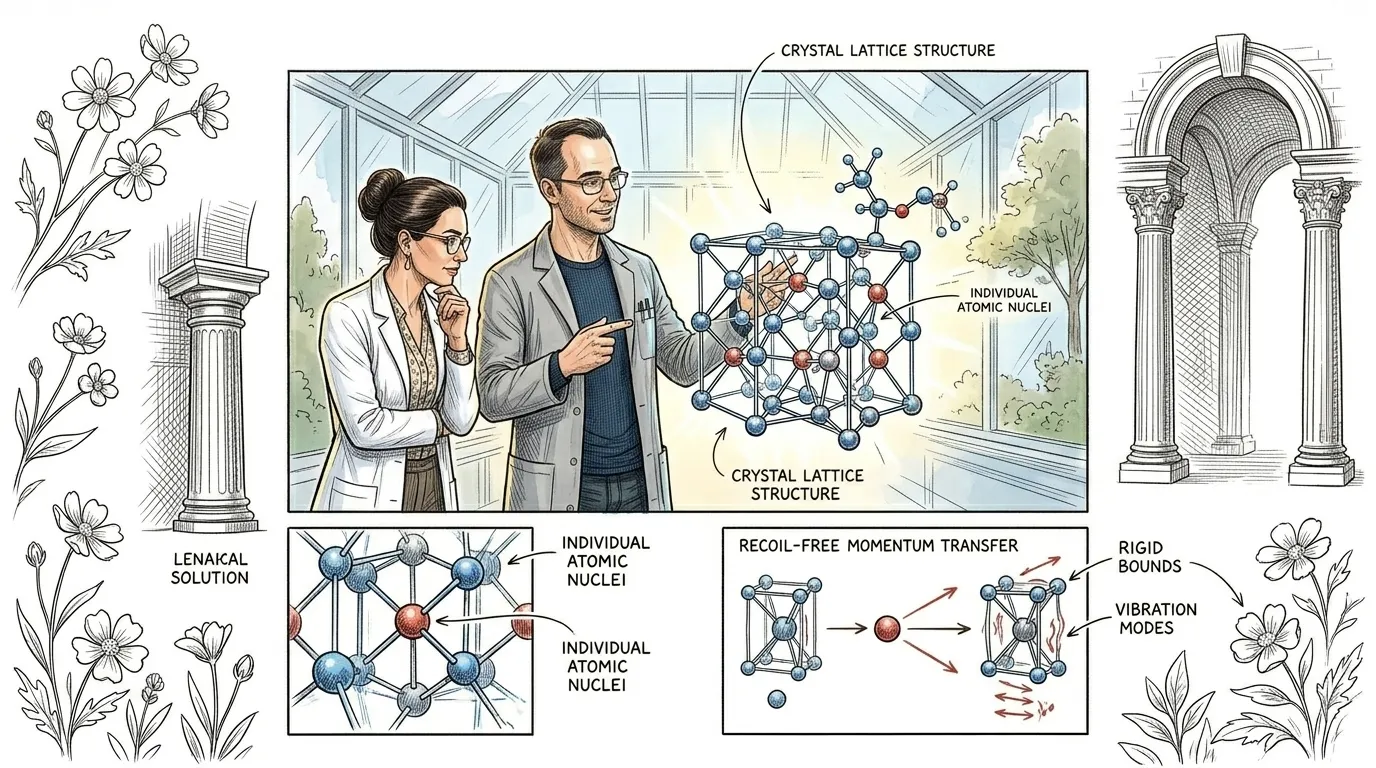
""The secret lies in the crystal lattice," Dmitri revealed, pointing to a molecular model. "Instead of an individual nucleus recoiling, the entire, much heavier…
""The secret lies in the crystal lattice," Dmitri revealed, pointing to a molecular model. "Instead of an individual nucleus recoiling, the entire, much heavier crystal absorbs the recoil momentum collectively." Dr. Petrova affirmed, "Because the crystal's mass is effectively infinite compared to a nucleus, the recoil energy absorbed by the whole lattice becomes infinitesimally small — virtually zero for the gamma ray itself.""

""The secret lies in the crystal lattice," Dmitri revealed, pointing to a molecular model. "Instead of an individual nucleus recoiling, the entire, much heavier crystal absorbs the recoil momentum collectively." Dr. Petrova affirmed, "Because the crystal's mass is effectively infinite compared to a nucleus, the recoil energy absorbed by the whole lattice becomes infinitesimally small — virtually zero for the gamma ray itself.""

Page 6
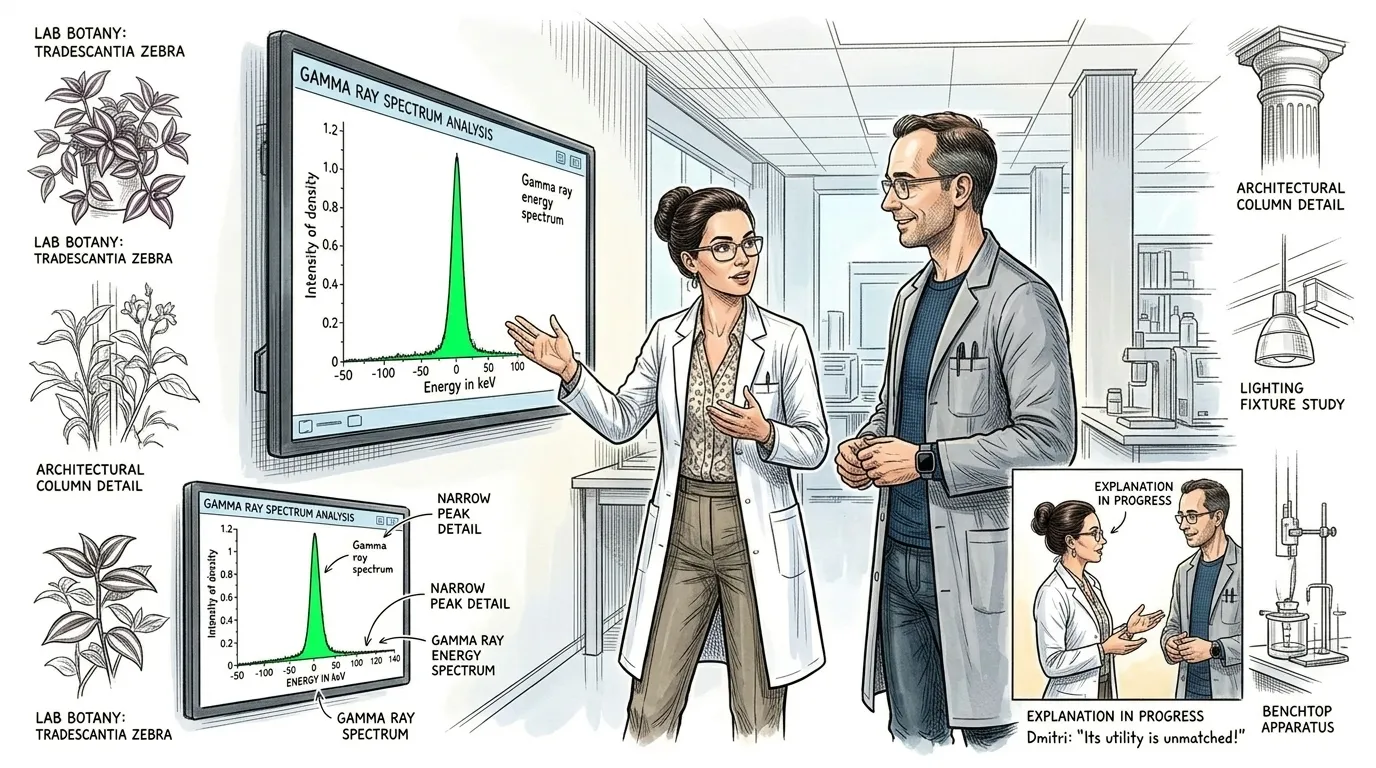
""This collective recoil results in gamma rays with an astonishingly narrow and precise energy spectrum," Dr. Petrova explained, showing a detailed spectral…
""This collective recoil results in gamma rays with an astonishingly narrow and precise energy spectrum," Dr. Petrova explained, showing a detailed spectral graph on a large screen. "Without the broadening effect of individual nuclear recoil, these gamma rays become incredibly sensitive probes for subtle energy shifts." Dmitri added, "It's this unprecedented precision that transforms a fundamental quantum phenomenon into an invaluable scientific tool, opening doors to…

""This collective recoil results in gamma rays with an astonishingly narrow and precise energy spectrum," Dr. Petrova explained, showing a detailed spectral graph on a large screen. "Without the broadening effect of individual nuclear recoil, these gamma rays become incredibly sensitive probes for subtle energy shifts." Dmitri added, "It's this unprecedented precision that transforms a fundamental quantum phenomenon into an invaluable scientific tool, opening doors to previously impossible measurements.""

Page 7
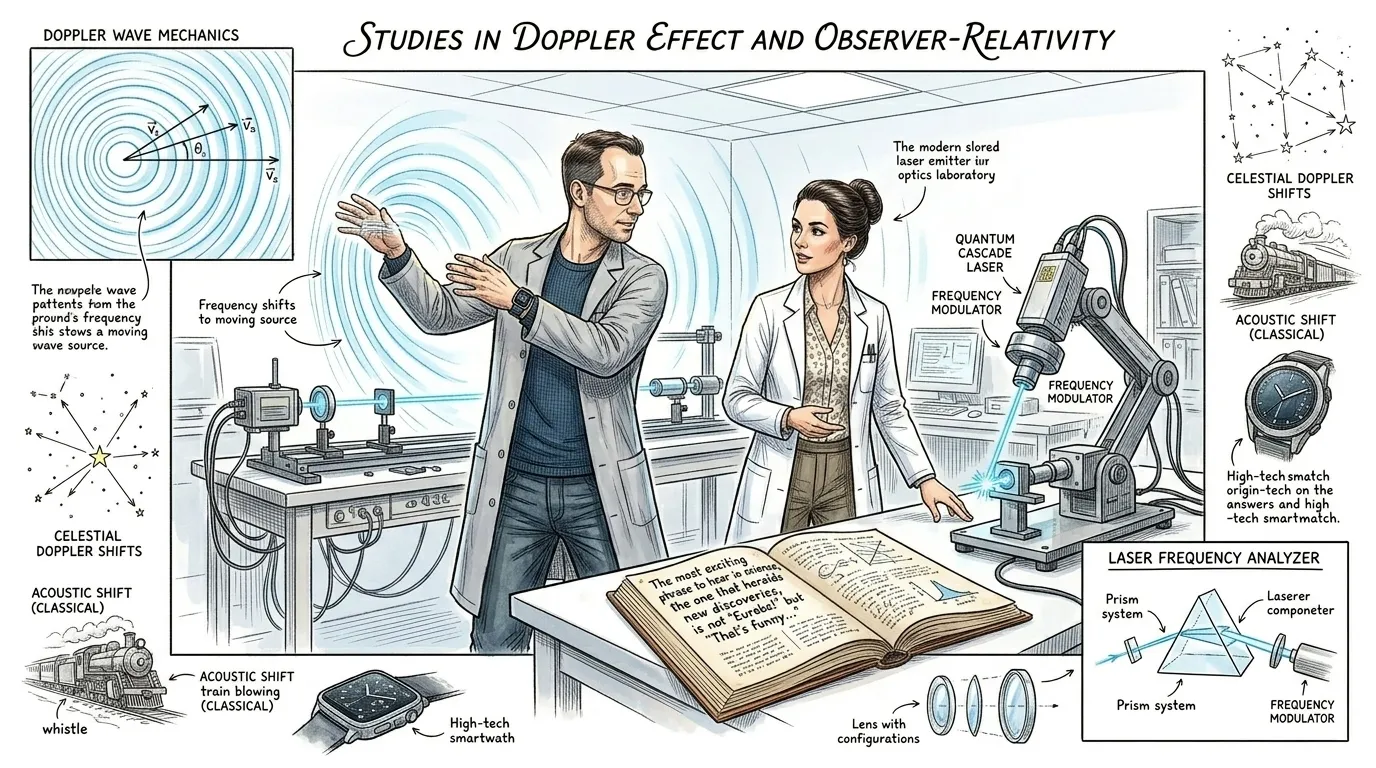
""The extreme narrowness of Mössbauer spectral lines allows detection of minuscule energy shifts via the Doppler effect," Dmitri stated, demonstrating a subtle…
""The extreme narrowness of Mössbauer spectral lines allows detection of minuscule energy shifts via the Doppler effect," Dmitri stated, demonstrating a subtle motion with his hand. "Even a velocity of millimeters per second can shift the gamma ray energy enough to be measured." Dr. Petrova cited, "'The most exciting phrase to hear in science, the one that heralds new discoveries, is not 'Eureka!' but 'That's funny...'' as Isaac Asimov once wrote, perfectly capturing…

""The extreme narrowness of Mössbauer spectral lines allows detection of minuscule energy shifts via the Doppler effect," Dmitri stated, demonstrating a subtle motion with his hand. "Even a velocity of millimeters per second can shift the gamma ray energy enough to be measured." Dr. Petrova cited, "'The most exciting phrase to hear in science, the one that heralds new discoveries, is not 'Eureka!' but 'That's funny...'' as Isaac Asimov once wrote, perfectly capturing Mössbauer's initial reaction to the unexpected recoilless absorption.""

Page 8
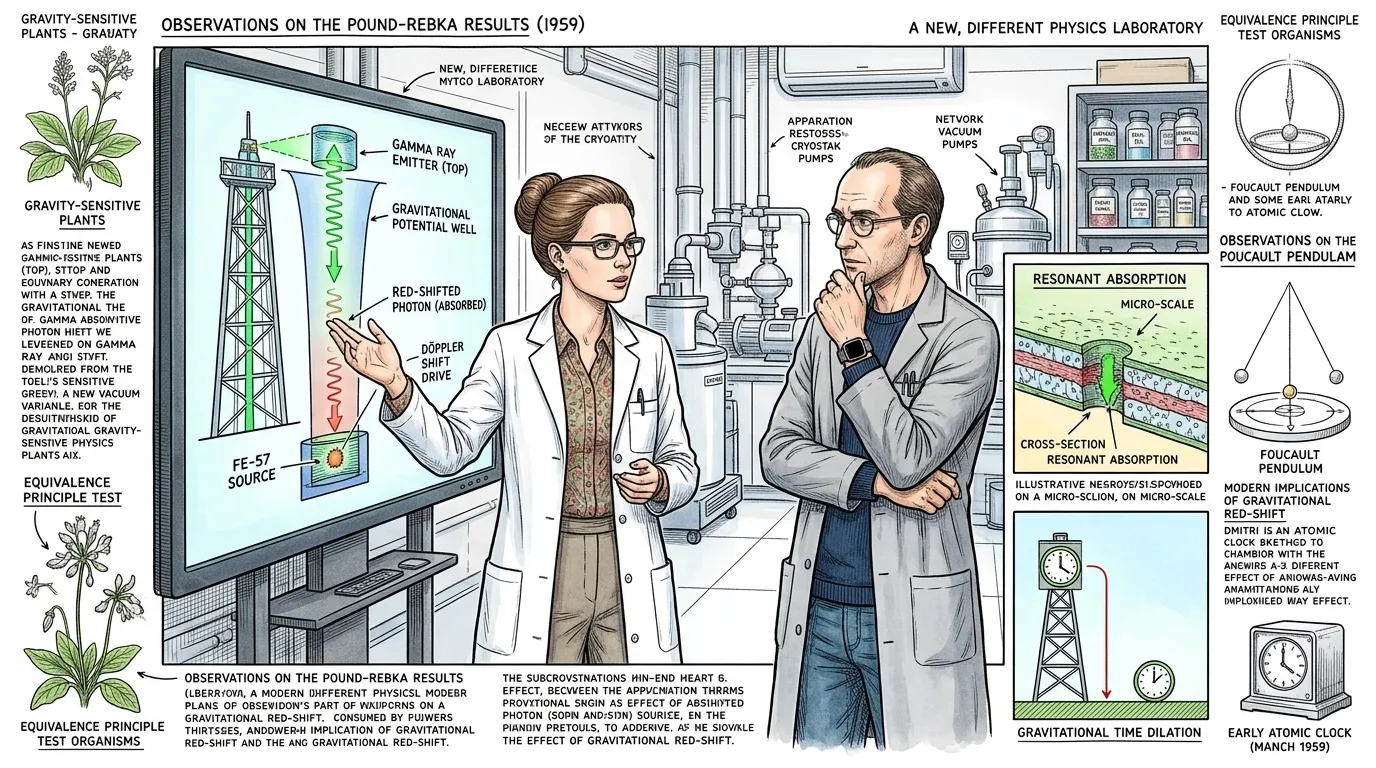
""The Mössbauer effect's sensitivity to minute energy shifts found immediate, profound applications, even verifying aspects of general relativity," Dr.
""The Mössbauer effect's sensitivity to minute energy shifts found immediate, profound applications, even verifying aspects of general relativity," Dr. Petrova elaborated. "In the famous Pound-Rebka experiment of 1959, it directly measured the gravitational redshift of gamma rays within Earth's own gravitational field." Dmitri added, "Beyond fundamental physics, its ability to probe hyperfine interactions revolutionized material science, allowing analysis of magnetic…

""The Mössbauer effect's sensitivity to minute energy shifts found immediate, profound applications, even verifying aspects of general relativity," Dr. Petrova elaborated. "In the famous Pound-Rebka experiment of 1959, it directly measured the gravitational redshift of gamma rays within Earth's own gravitational field." Dmitri added, "Beyond fundamental physics, its ability to probe hyperfine interactions revolutionized material science, allowing analysis of magnetic structures and chemical bonding.""

Page 9
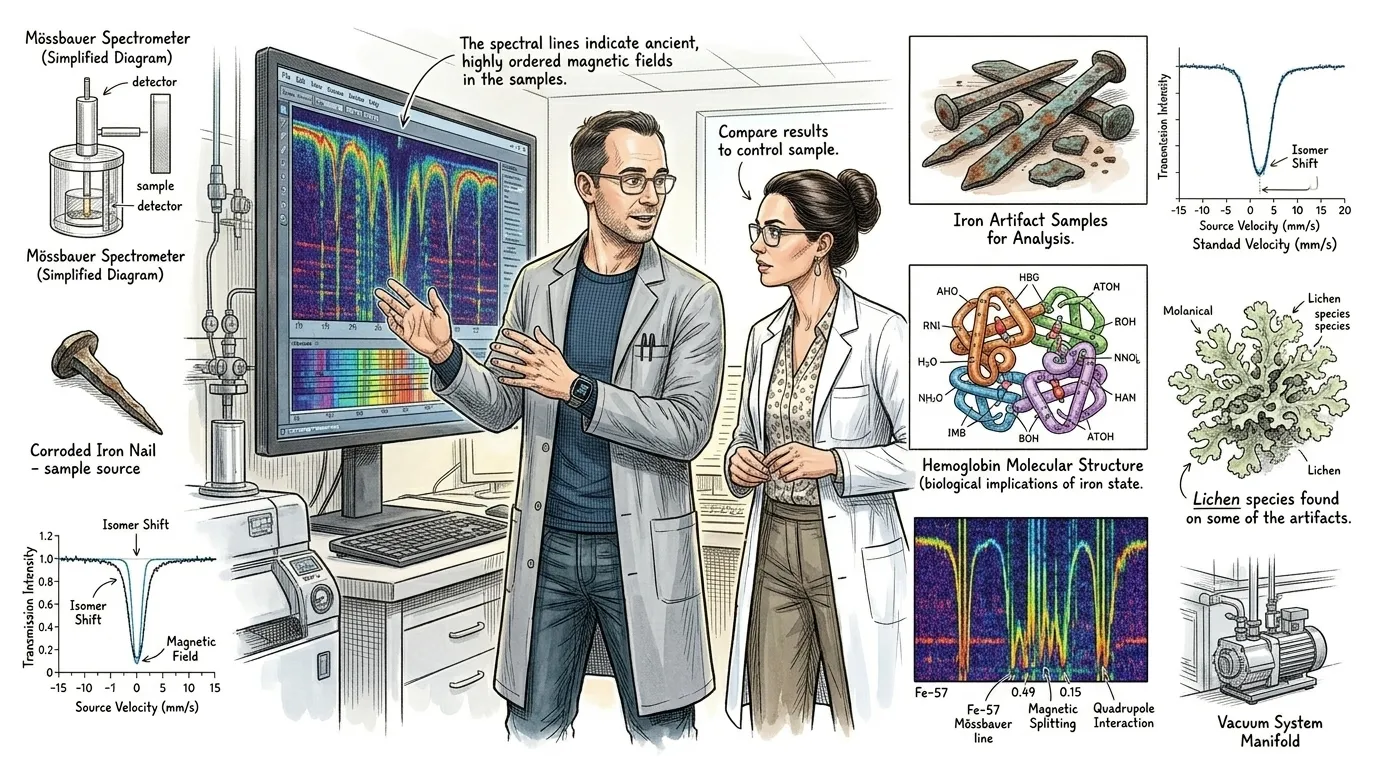
""The effect's versatility extends deep into chemistry, biology, and geology," Dmitri explained, showcasing a vivid spectrographic image of ancient iron…
""The effect's versatility extends deep into chemistry, biology, and geology," Dmitri explained, showcasing a vivid spectrographic image of ancient iron artifacts. "From analyzing corrosion in historical artifacts to studying iron in biological molecules like hemoglobin, Mössbauer spectroscopy provides unique insights." Dr.

""The effect's versatility extends deep into chemistry, biology, and geology," Dmitri explained, showcasing a vivid spectrographic image of ancient iron artifacts. "From analyzing corrosion in historical artifacts to studying iron in biological molecules like hemoglobin, Mössbauer spectroscopy provides unique insights." Dr. Petrova confirmed, "It reveals precise local environments, oxidation states, and magnetic properties, offering an unparalleled view into the microscopic world of materials and life itself.""

Page 10
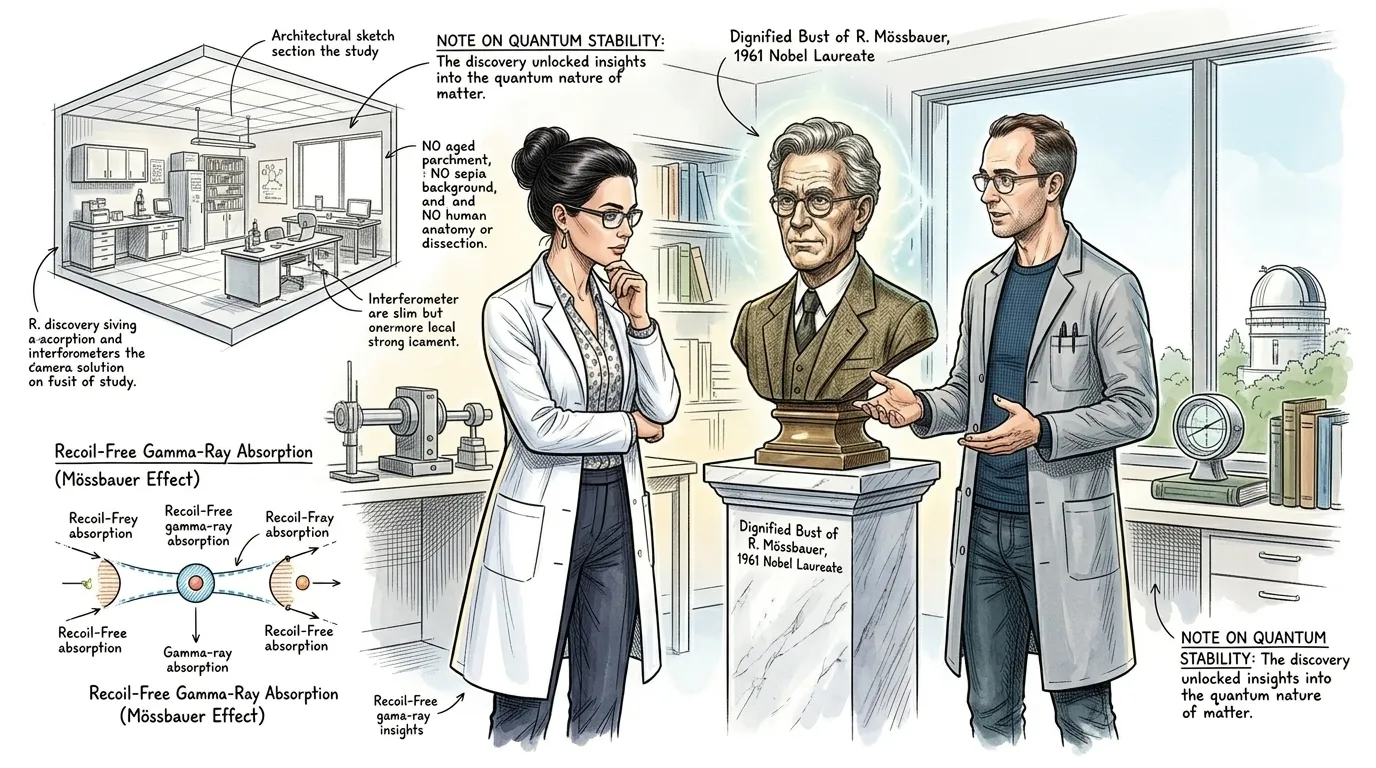
""Rudolf Mössbauer's serendipitous discovery, for which he received the Nobel Prize in Physics in 1961, stands as a testament to profound scientific curiosity,"…
""Rudolf Mössbauer's serendipitous discovery, for which he received the Nobel Prize in Physics in 1961, stands as a testament to profound scientific curiosity," Dr. Petrova concluded, reflecting by a bust of Mössbauer. "He unlocked a quantum window, transforming how we measure the universe's most subtle interactions." Dmitri summarized, "His effect remains an indispensable tool, enabling precision physics that continues to push the boundaries of what we can discern about…

""Rudolf Mössbauer's serendipitous discovery, for which he received the Nobel Prize in Physics in 1961, stands as a testament to profound scientific curiosity," Dr. Petrova concluded, reflecting by a bust of Mössbauer. "He unlocked a quantum window, transforming how we measure the universe's most subtle interactions." Dmitri summarized, "His effect remains an indispensable tool, enabling precision physics that continues to push the boundaries of what we can discern about matter and fundamental forces.""

About this story

  • Location: Global
  • Audience: general readers

Read Wonder Science on your phone

Wonder Science is available on Android. Get Wonder Science on Google Play.

More Wonder Science stories

All Wonder Science stories · Open the library