Sapphire Dust Sparks Life in Attic
Sapphire Dust Sparks Life in Attic — an illustrated science story. 10 illustrated pages, free to read on Wonder Science.
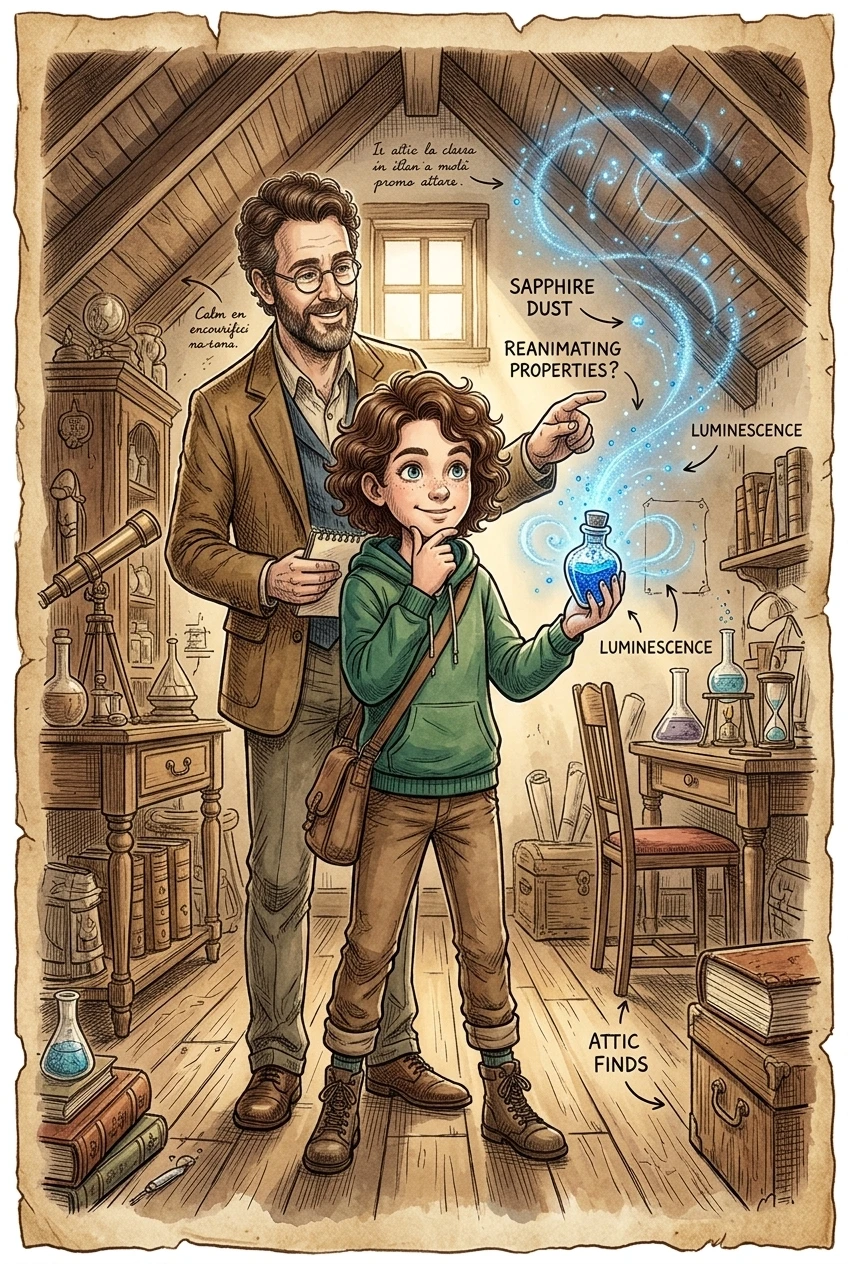
Page 1
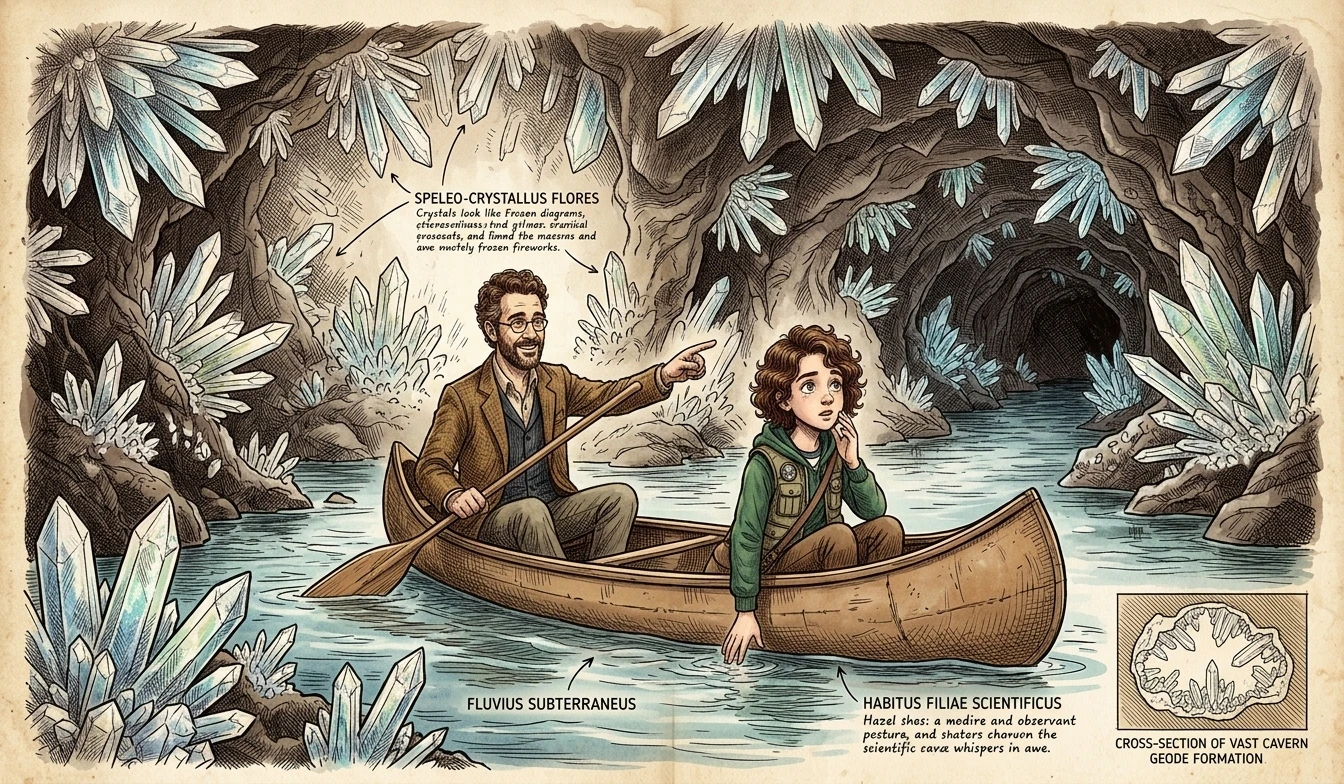
The quiet splash of their paddles echoed in the enormous cavern as Hazel and her Father drifted down the underground river. Glimmering crystals, like giant frozen fireworks, lined the dark rock walls around them. "It's like floating through a geode!" Hazel whispered, trailing her hand in the cool, clear water. Her father smiled, pointing his paddle. "This is just the entrance, Hazel. The real wonders are deeper inside."
Page 2
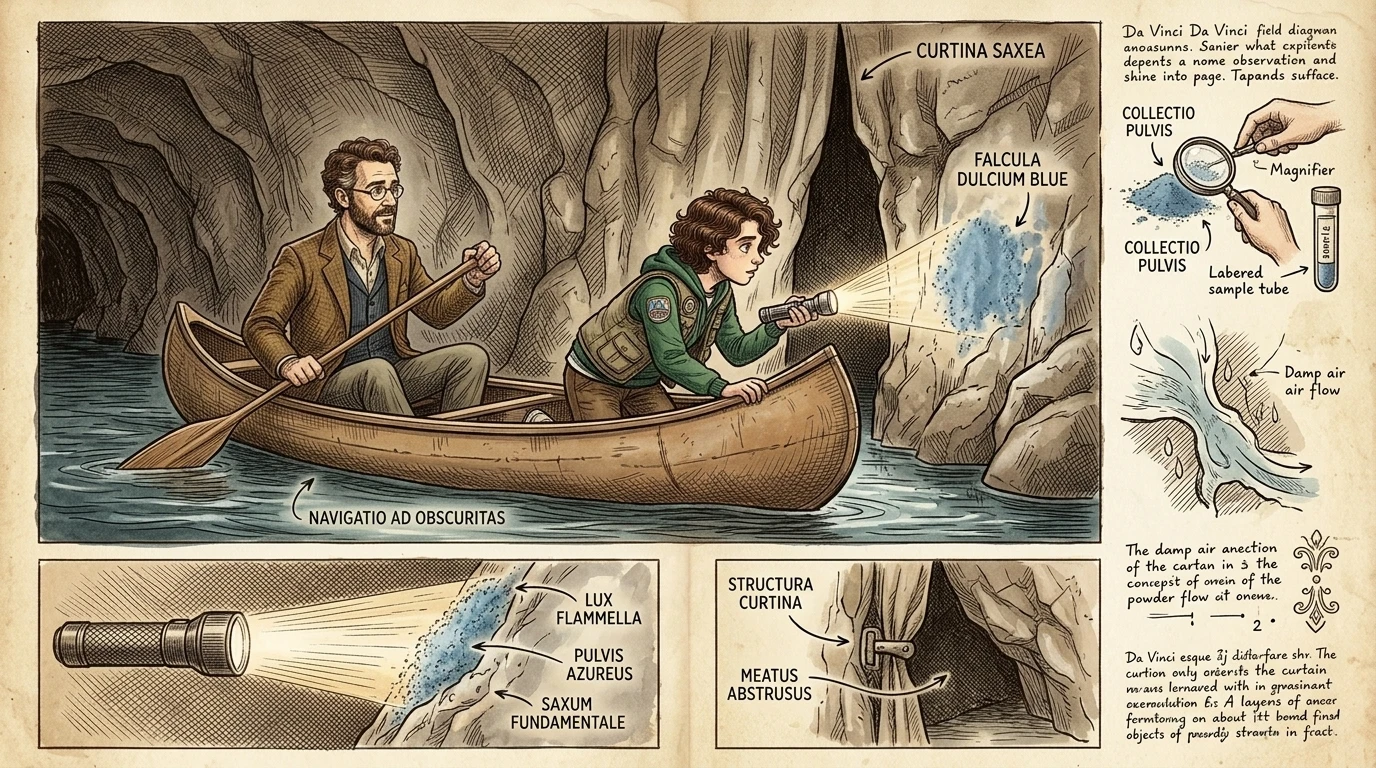
Father guided the canoe toward a narrow, dark opening in the cavern wall, almost hidden behind a curtain of rock. Inside, the air was still and smelled of damp earth. Hazel shone her flashlight on the wall, revealing a strange, dull blue powder coating the stone. "What's this stuff, Dad?" she asked, leaning closer. "It looks like sapphire dust, but it feels so... empty."
Page 3
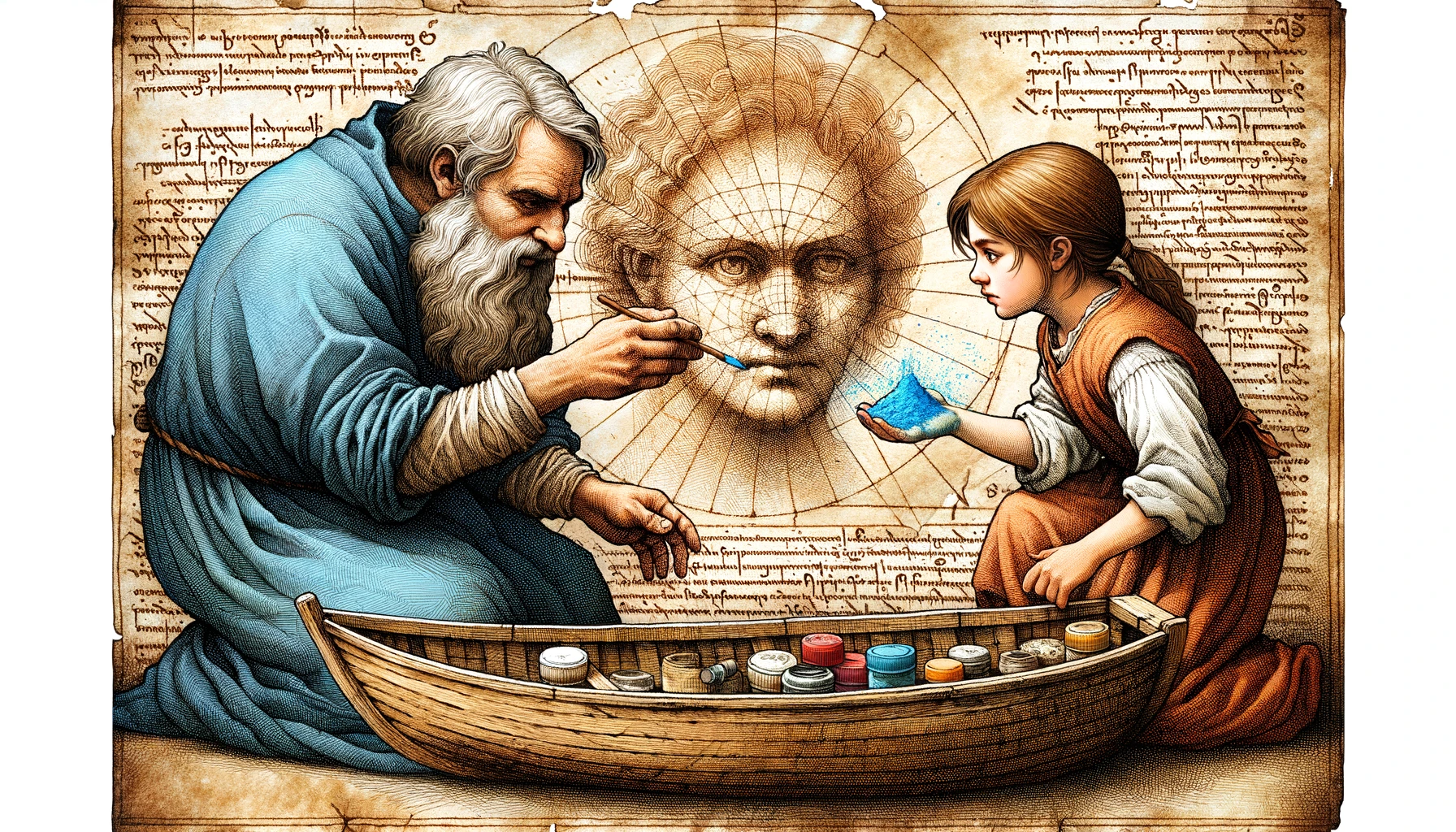
"Let me see," her father said, bringing the boat closer to the rock face. He gently scraped a bit of the powder onto his finger. "I think this is Azurite, a copper mineral. You know, in chemistry, some reactions are like a car without a key—they won't start until you add a special ingredient called a catalyst."
Page 4
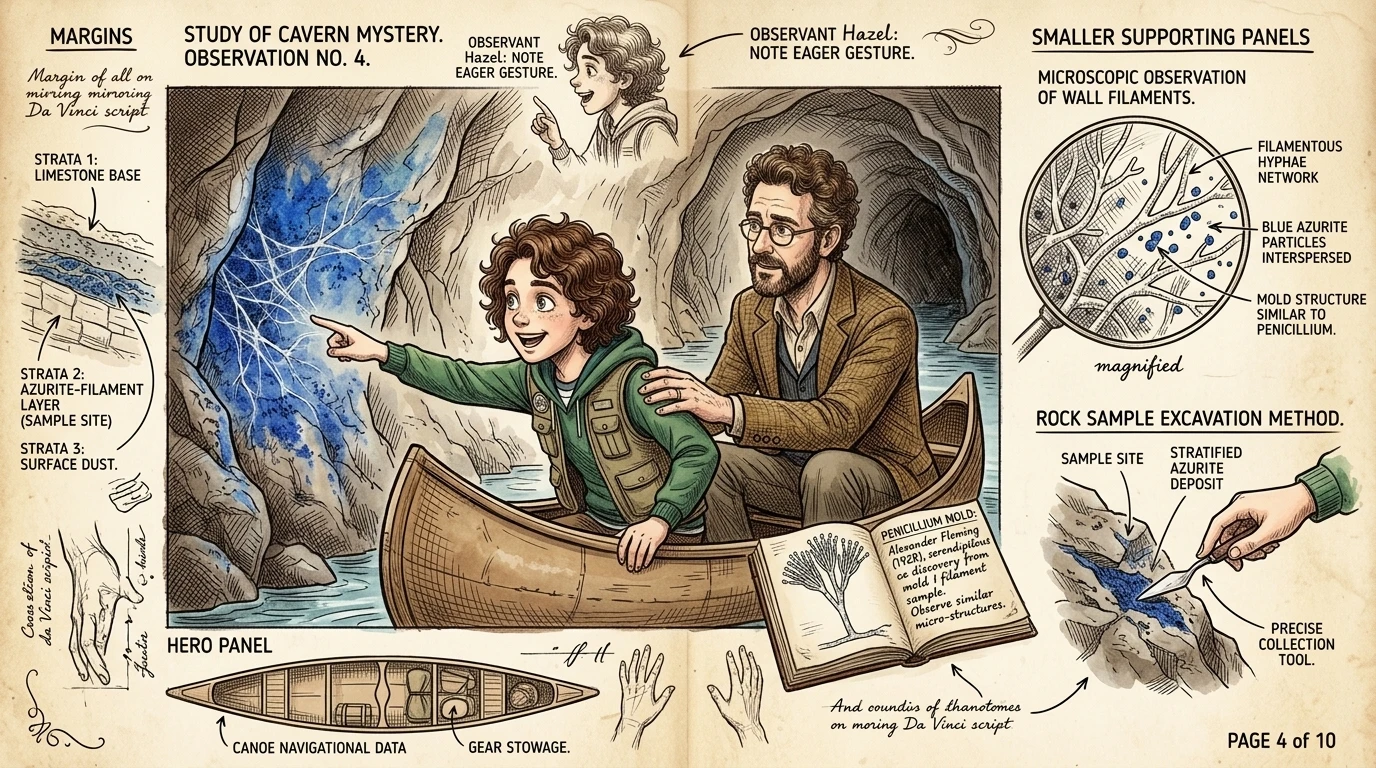
Hazel looked closer, her eyes tracing patterns on the wall. "Dad, it's not just dust!" she exclaimed, pointing to faint, web-like filaments mixed in with the blue. "Look, something is growing here, like a mold." Her father nodded thoughtfully. "Good eye! A biologist named Alexander Fleming discovered life-saving medicine from a simple mold, so never underestimate a fungus."
Page 5
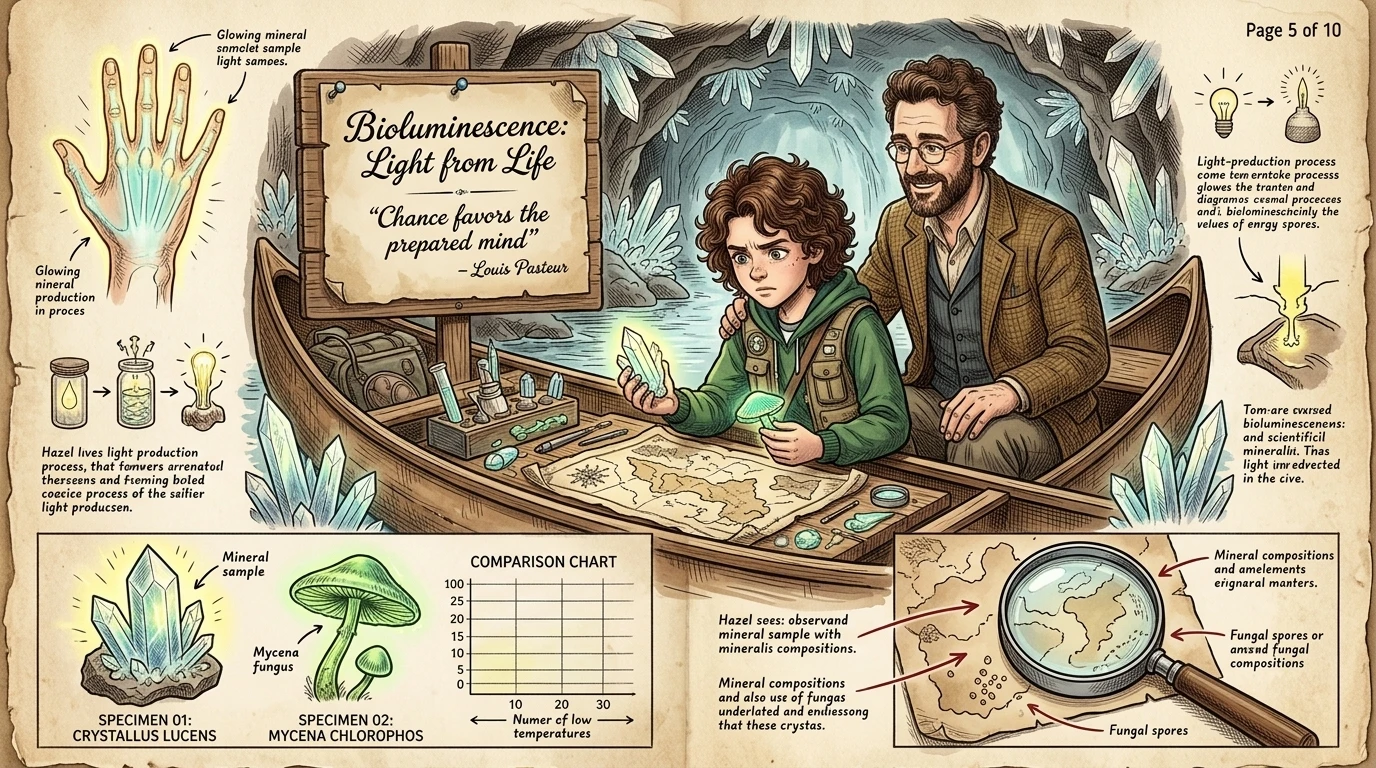
"So we have a mineral and a fungus," Hazel murmured, thinking hard. "But what are they doing together?" Her father smiled. "Some living things can make their own light—it's called bioluminescence. As the great scientist Louis Pasteur once said, 'Chance favors the prepared mind.' Let's just watch for a moment."
Page 6
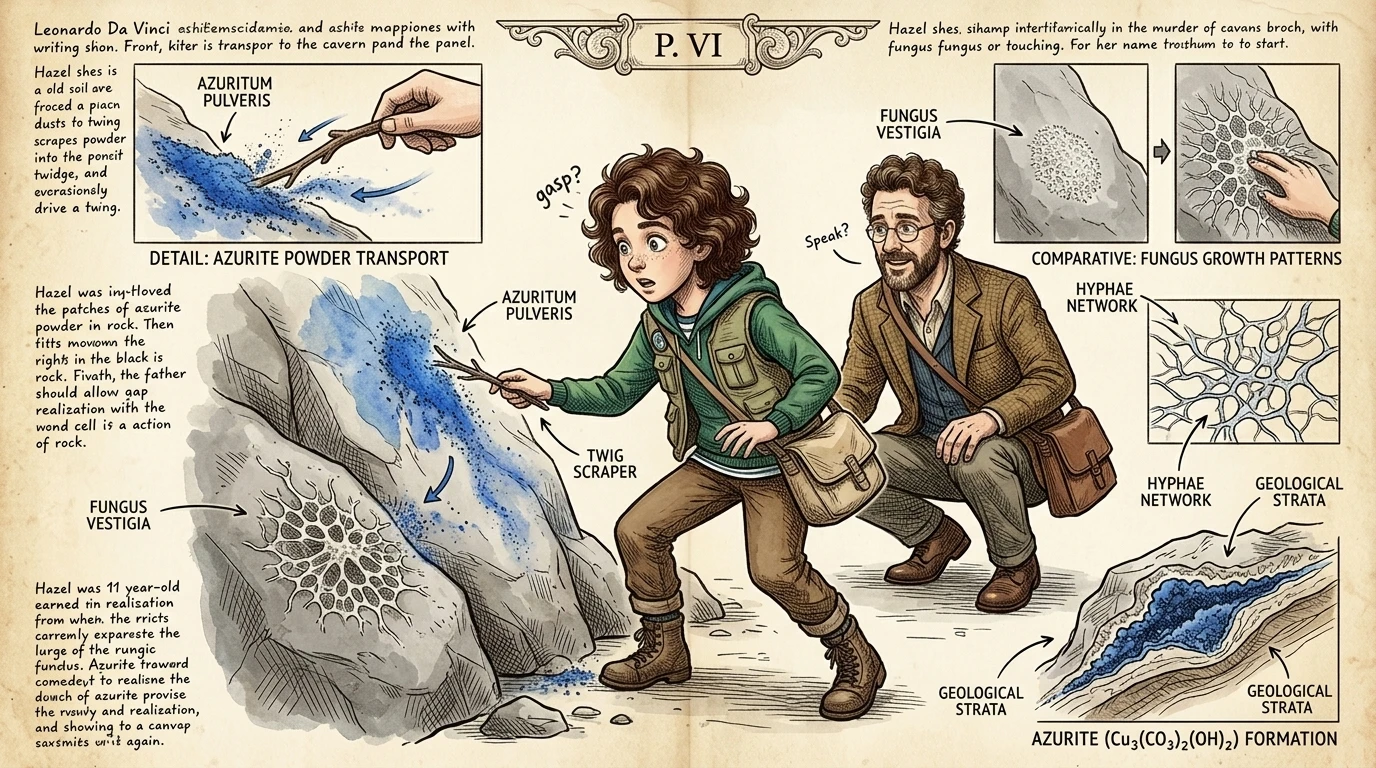
"A catalyst! That's it!" Hazel suddenly gasped. "What if the fungus is supposed to glow, but it needs the copper from the blue dust to start the reaction?" Before her father could answer, she reached out with a small twig, carefully scraping a tiny bit of the blue dust. She then gently touched the dust-covered twig to a different patch of fungus growing on a plain, gray rock nearby.
Page 7
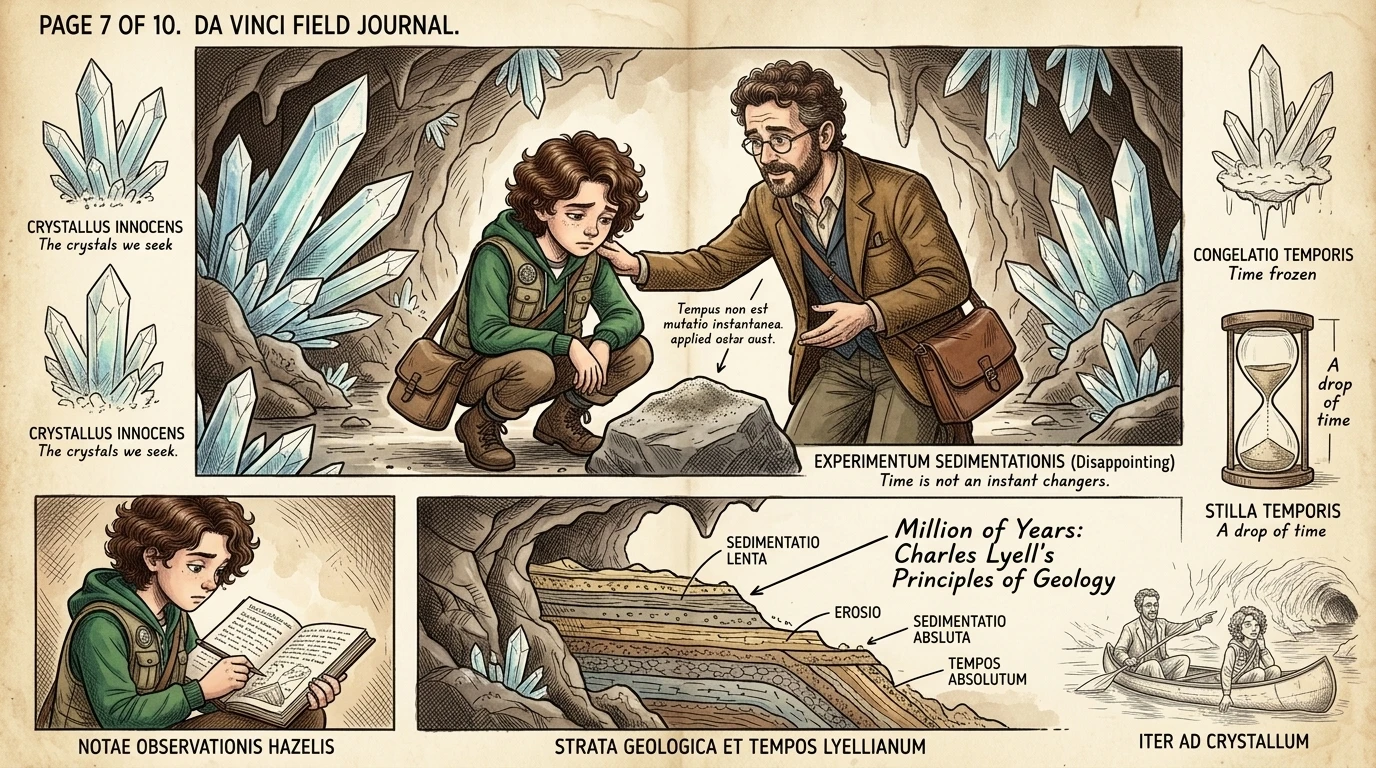
For a long moment, nothing happened. Hazel's face fell with disappointment. "I guess I was wrong," she sighed. "Don't worry," her father said softly. "The geologist Charles Lyell taught us that the Earth changes over millions of years. Sometimes science just needs a little patience."
Page 8
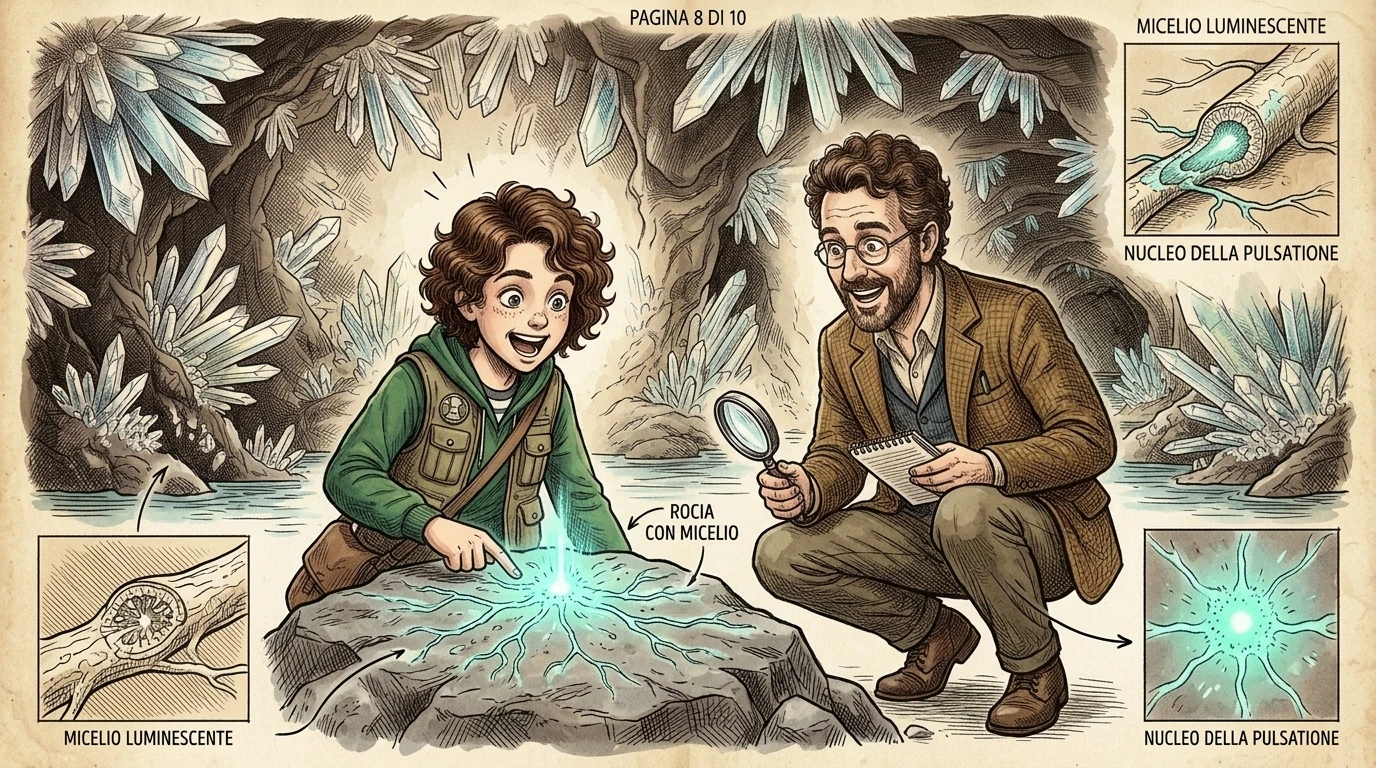
Suddenly, a tiny pinprick of soft, blue-green light pulsed where she had touched the twig. It flickered, then grew, spreading like liquid light through the fungal threads across the rock. "Dad, look!" Hazel shouted, pointing with a trembling finger. "It's working! The Azurite is the catalyst!"
Page 9
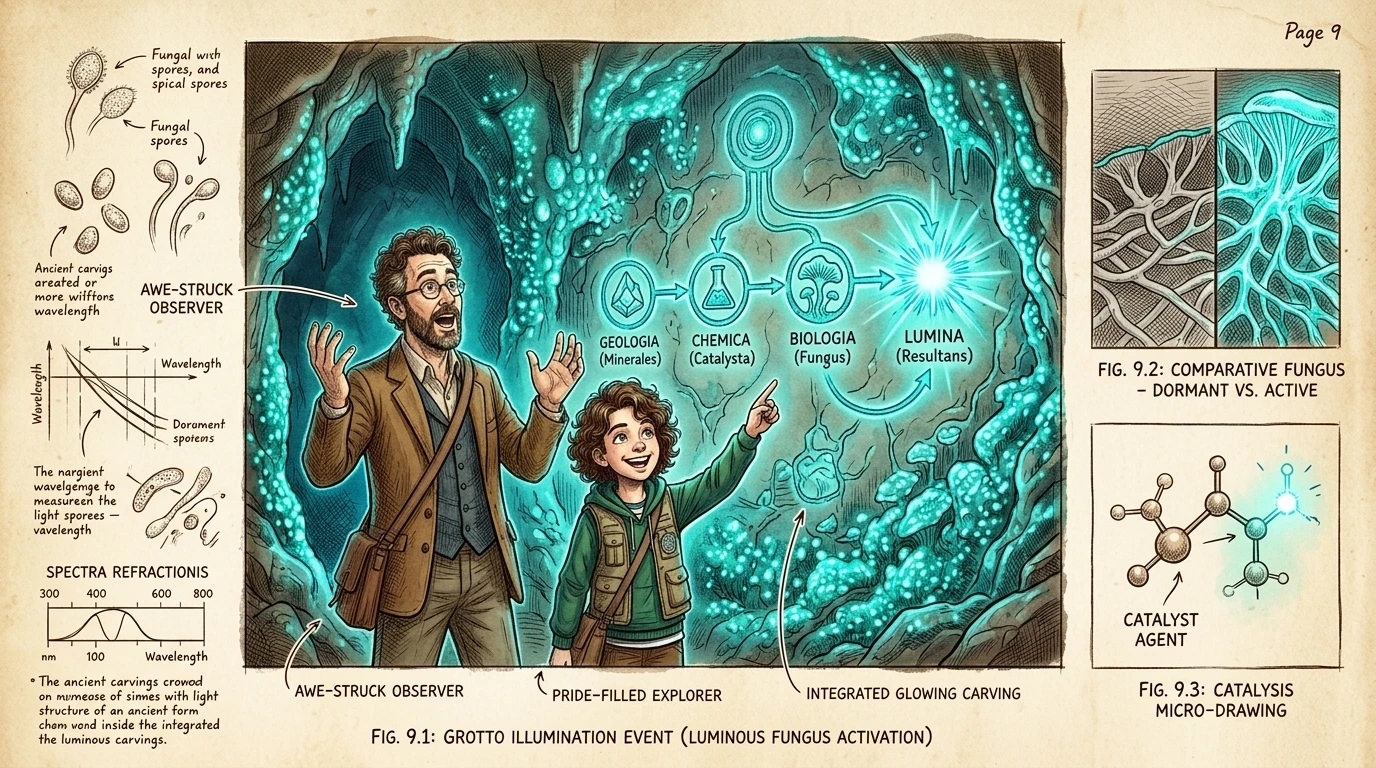
The glow intensified, revealing that the entire grotto was covered in the dormant fungus. "Wow," her father breathed. "The geology of the cave provides the minerals... which chemistry uses as a catalyst... so the biology of the fungus can create light!" Hazel beamed. "All three sciences are working together to make this place magical!"
Page 10
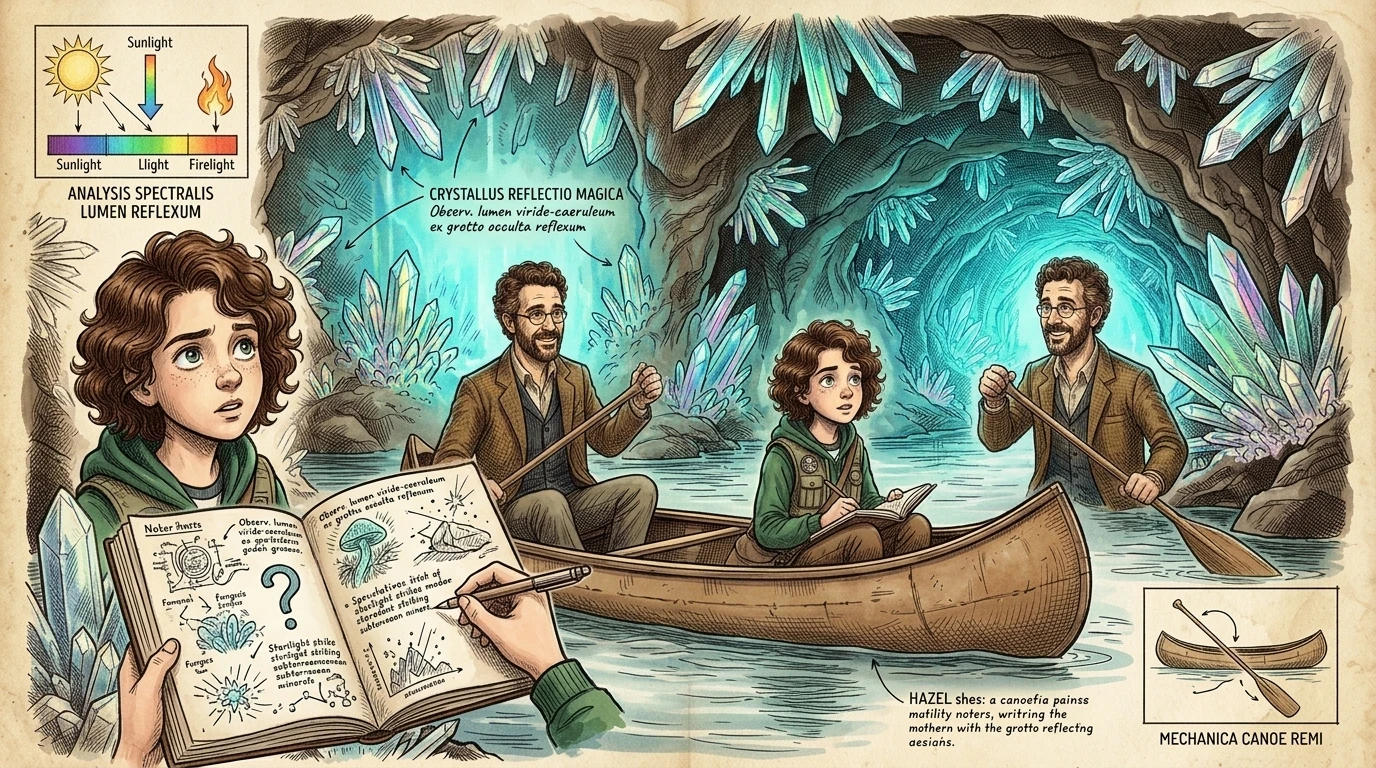
As they paddled back into the main cavern, Hazel wrote furiously in her notebook. The giant crystals now seemed to reflect the secret, living light from the hidden grotto. "Dad," she asked, looking up from her notes, "if minerals can help life create light down here in the dark, what happens when light from a star hits different minerals up on the surface?"
About this story
- Audience: kids (ages 6–12)
Read Wonder Science on your phone
Wonder Science is available on Android. Get Wonder Science on Google Play.