Sally Ride
Sally Ride — an illustrated science story, set in Global. 10 illustrated pages, free to read on Wonder Science.
Page 1
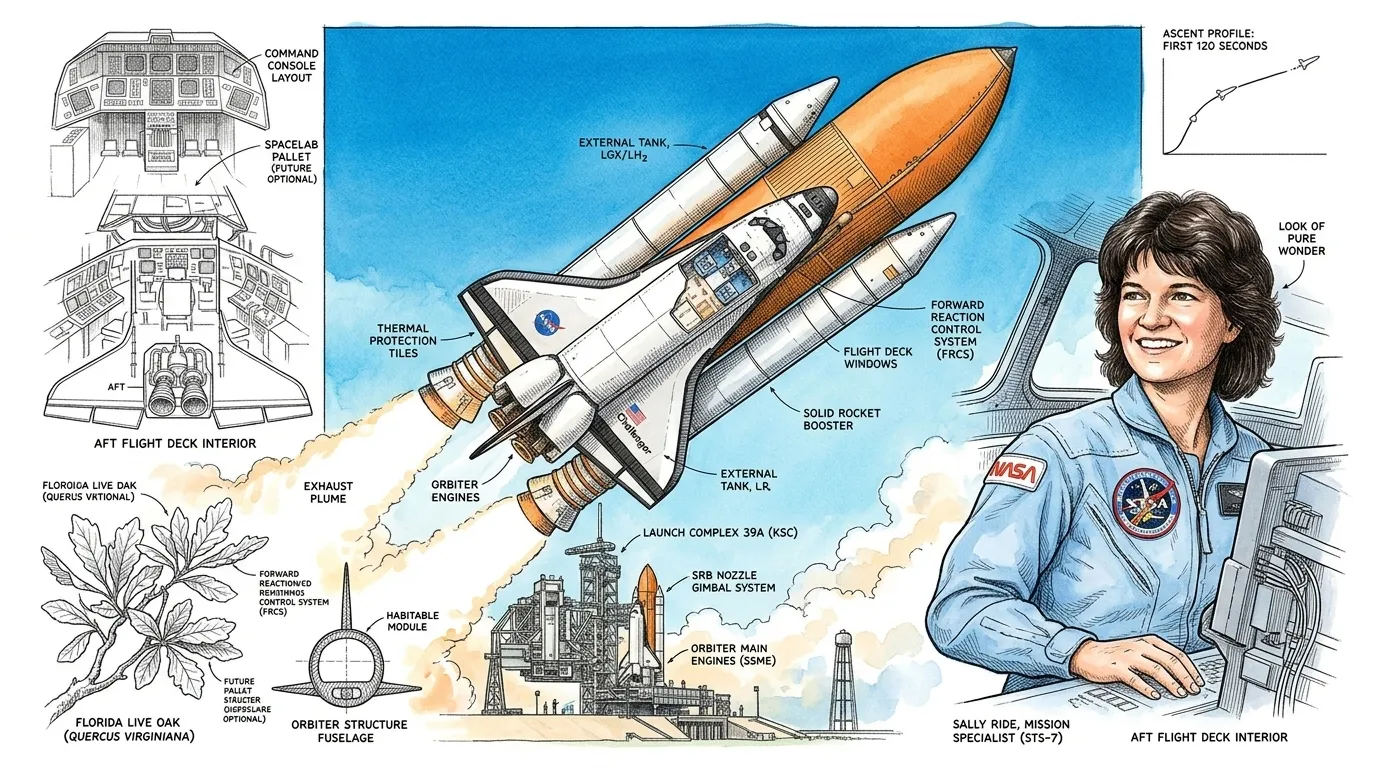
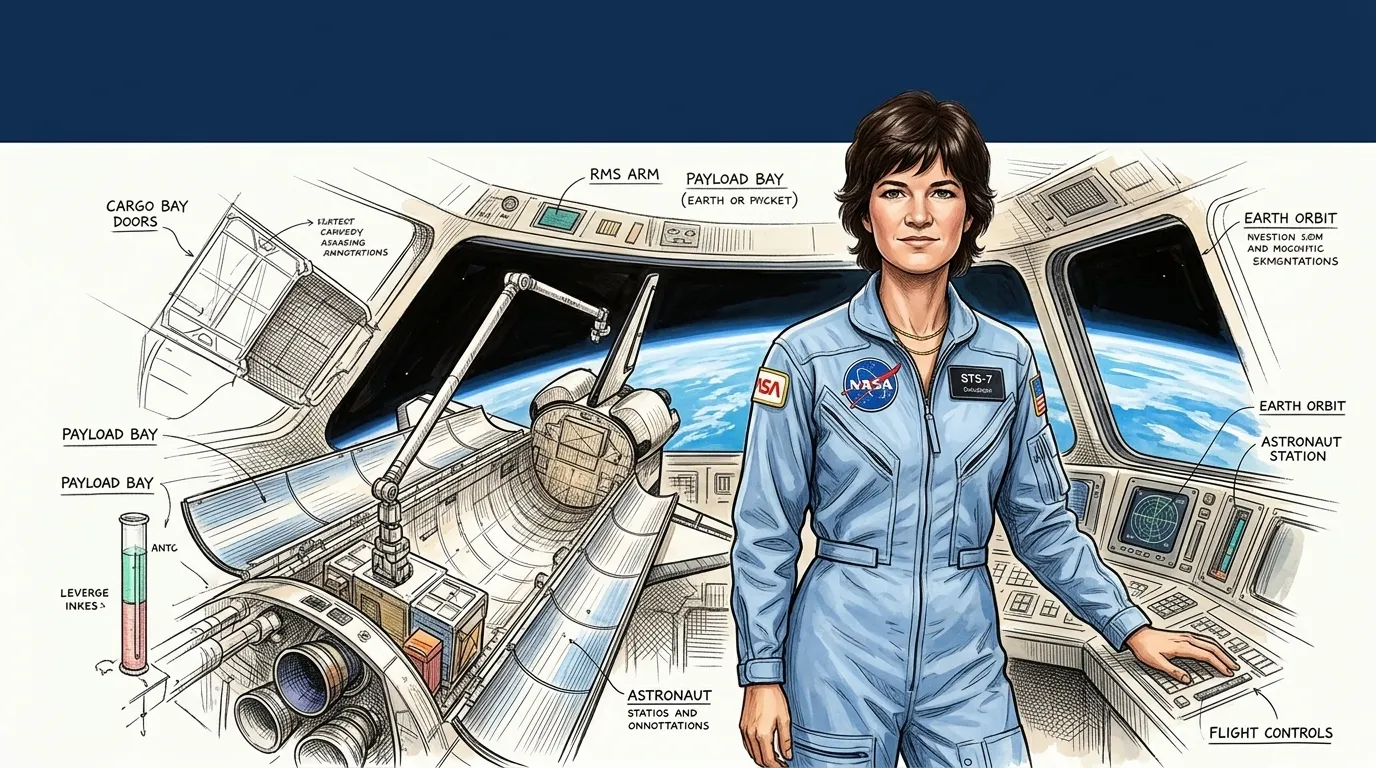
At precisely 7:46 AM Eastern Daylight Time on June 18, 1983, a thunderous roar erupted from Launch Complex 39A at Kennedy Space Center, Florida. Against the cerulean sky, the Space Shuttle Challenger, carrying mission STS-7, began its ascent. Aboard that majestic craft was Dr. Sally Ride, a physicist and the first American woman to venture into the vacuum of space, fundamentally altering the trajectory of human exploration and inspiring a generation.
Page 2
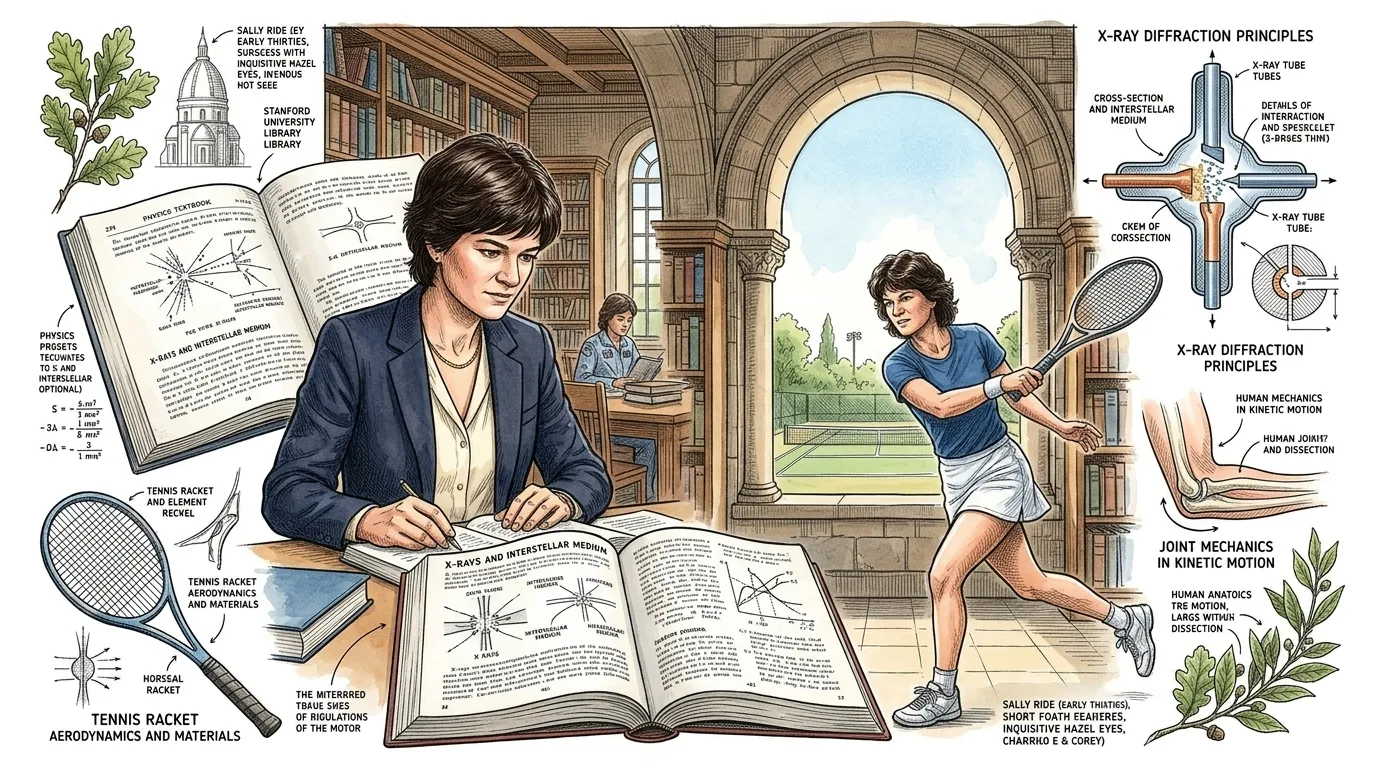
Before etching her name in the cosmos, Sally Ride was a formidable scholar, earning a Ph.D. in physics from Stanford University. Her dissertation focused on the interaction of X-rays with the interstellar medium, a field demanding rigorous analytical thinking and a profound understanding of the universe's fundamental forces. This intellectual foundation, combined with a remarkable athletic prowess—she was a nationally ranked tennis player—provided the unique blend of skills NASA sought as it opened its astronaut corps to women and minorities in 1978.
Page 3
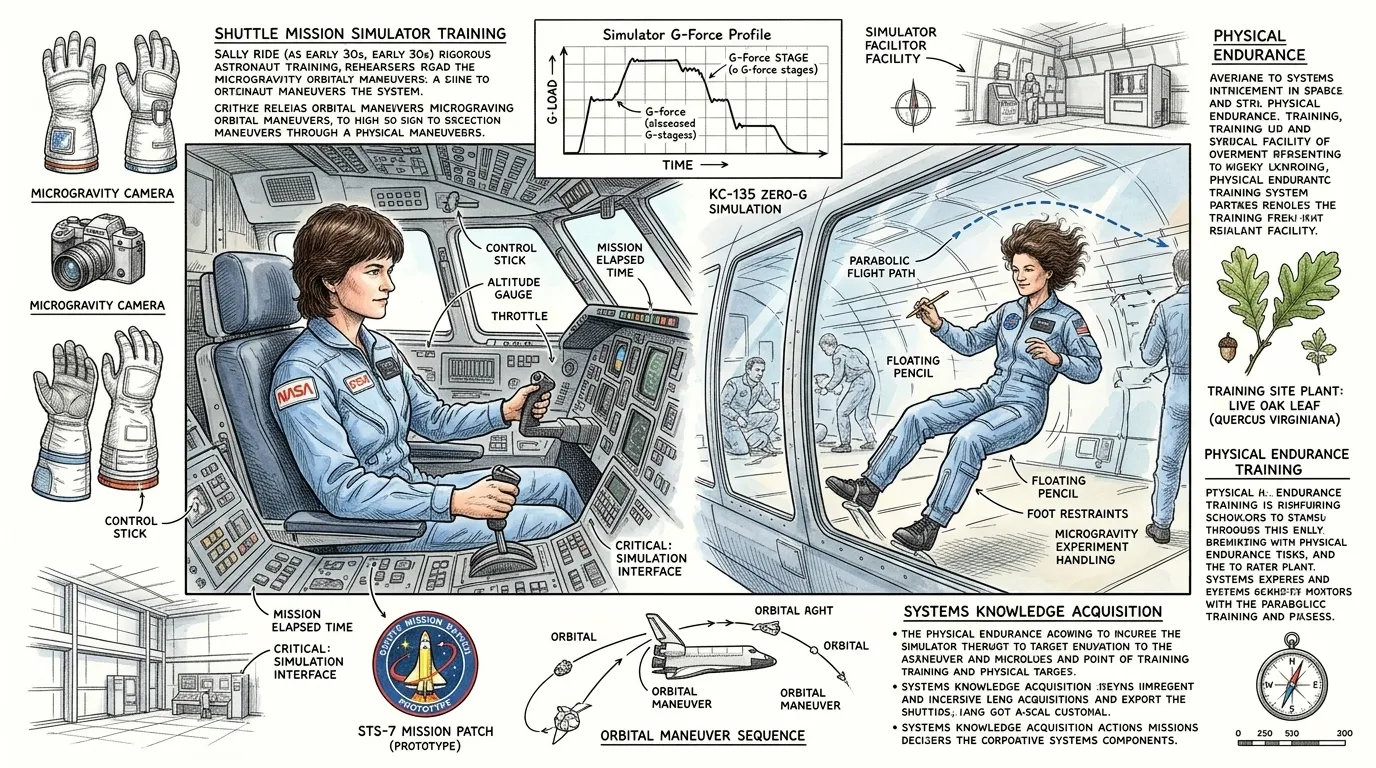
Becoming an astronaut meant enduring a training regimen of unparalleled intensity, a blend of advanced theoretical instruction and practical simulation. Ride, along with five other women in the 1978 class, faced skepticism from some quarters, but their performance quickly dispelled doubt. Hours were spent in the Shuttle Mission Simulator, rehearsing every contingency, from launch aborts to intricate orbital maneuvers, meticulously preparing for the unforgiving environment of space. The 'Vomit Comet,' a KC-135 aircraft flying parabolic arcs, provided fleeting but vital moments of microgravity experience.
Page 4
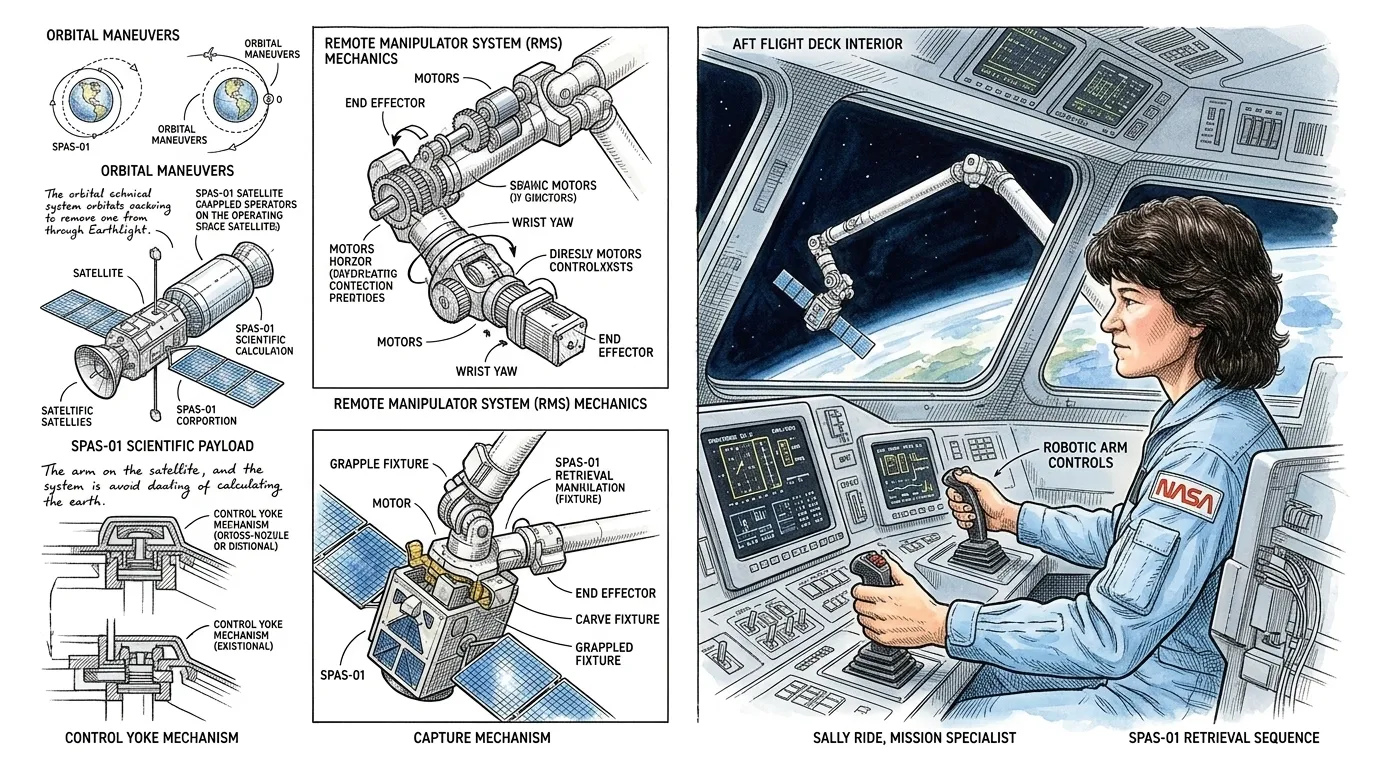
The STS-7 mission marked the seventh flight of the Space Shuttle Program and the second for the Orbiter Challenger. Its primary objectives were ambitious, including the deployment of two communications satellites and a groundbreaking experiment to deploy and retrieve a scientific satellite using the Shuttle's Robotic Arm, a complex maneuver requiring extraordinary precision. Sally Ride was instrumental in developing the 'Challenger's' robotic arm procedure and would become the first person to operate the arm to retrieve a satellite in space, showcasing her technical mastery and critical role in the mission's success.
Page 5
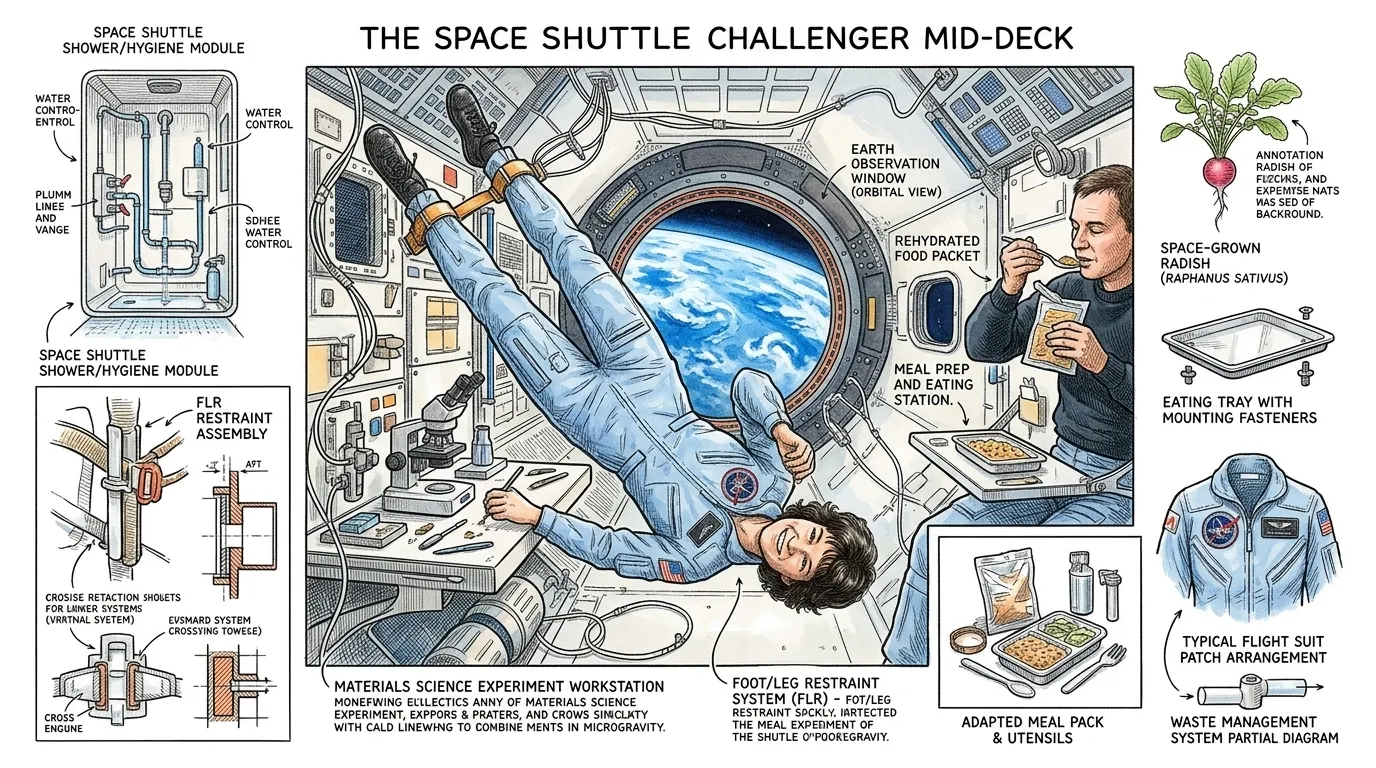
Life aboard the Space Shuttle was a masterclass in adaptation. In the constant state of microgravity, simple tasks became complex dances, demanding new physical strategies. Personal hygiene, eating, and even sleeping required specialized equipment and techniques. Yet, amidst these challenges, the crew transformed their environment into a functional laboratory, conducting experiments in materials science, biology, and Earth observation. The beauty of the Earth unfolding below, a blue marble against the infinite black, provided a constant, breathtaking backdrop to their scientific endeavors.
Page 6
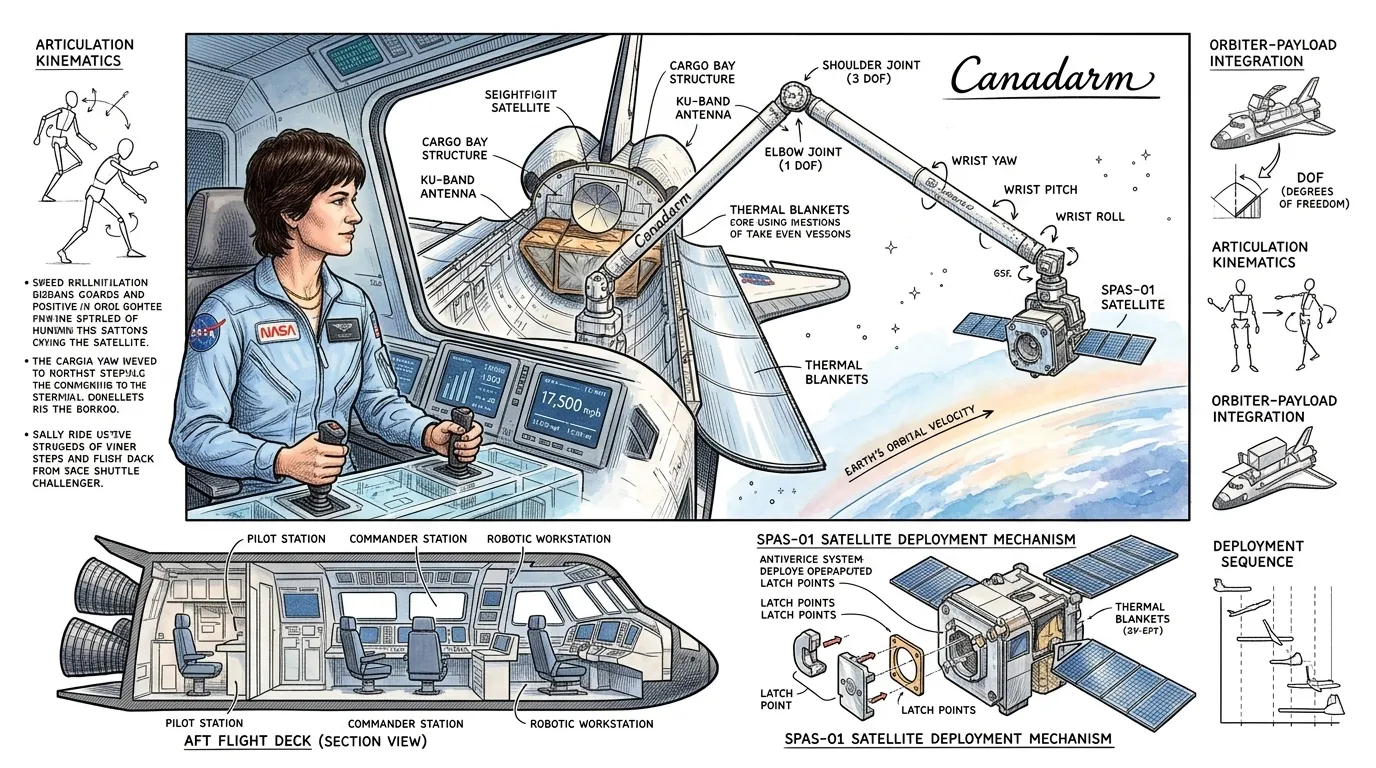
A cornerstone of the STS-7 mission was the deployment and retrieval of the SPAS-01 satellite using the Shuttle's 50-foot-long robotic arm, the Canadarm. This sophisticated manipulator, designed by Canadian engineers, allowed astronauts to interact with objects outside the orbiter without risky spacewalks. Sally Ride's skill in operating this complex mechanism was critical, guiding the massive arm with precise, nuanced movements to capture the free-flying satellite, a delicate ballet performed at 17,500 miles per hour, 160 miles above Earth.
Page 7
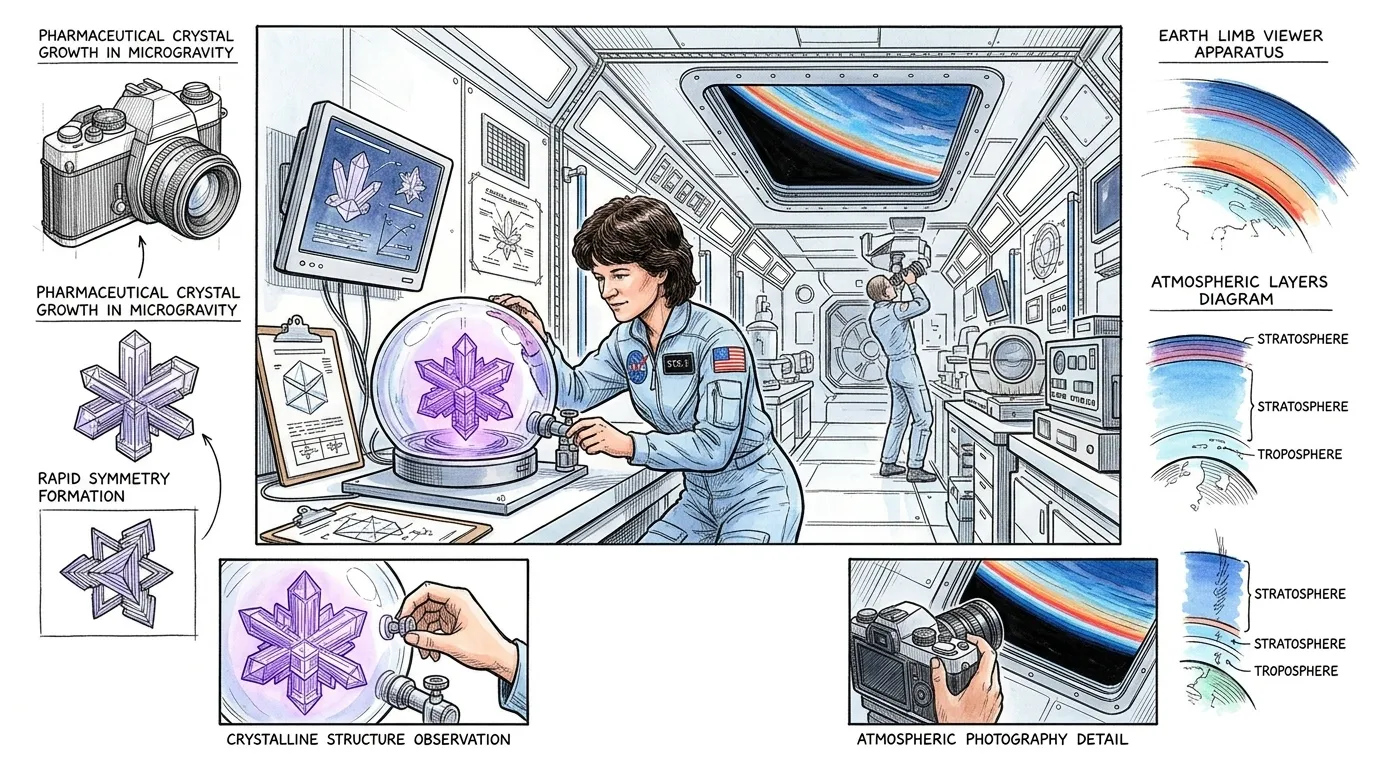
Beyond the dramatic spectacle of satellite maneuvers, STS-7 yielded valuable scientific data across multiple disciplines. From her unique vantage point, Sally Ride and her crew conducted Earth observations, capturing high-resolution photography and studying atmospheric phenomena. They also oversaw pharmaceutical processing experiments designed to create purer crystalline structures in microgravity, potentially leading to new medical breakthroughs. Each orbit provided new insights, reinforcing the invaluable role of human presence in space for scientific inquiry.
Page 8
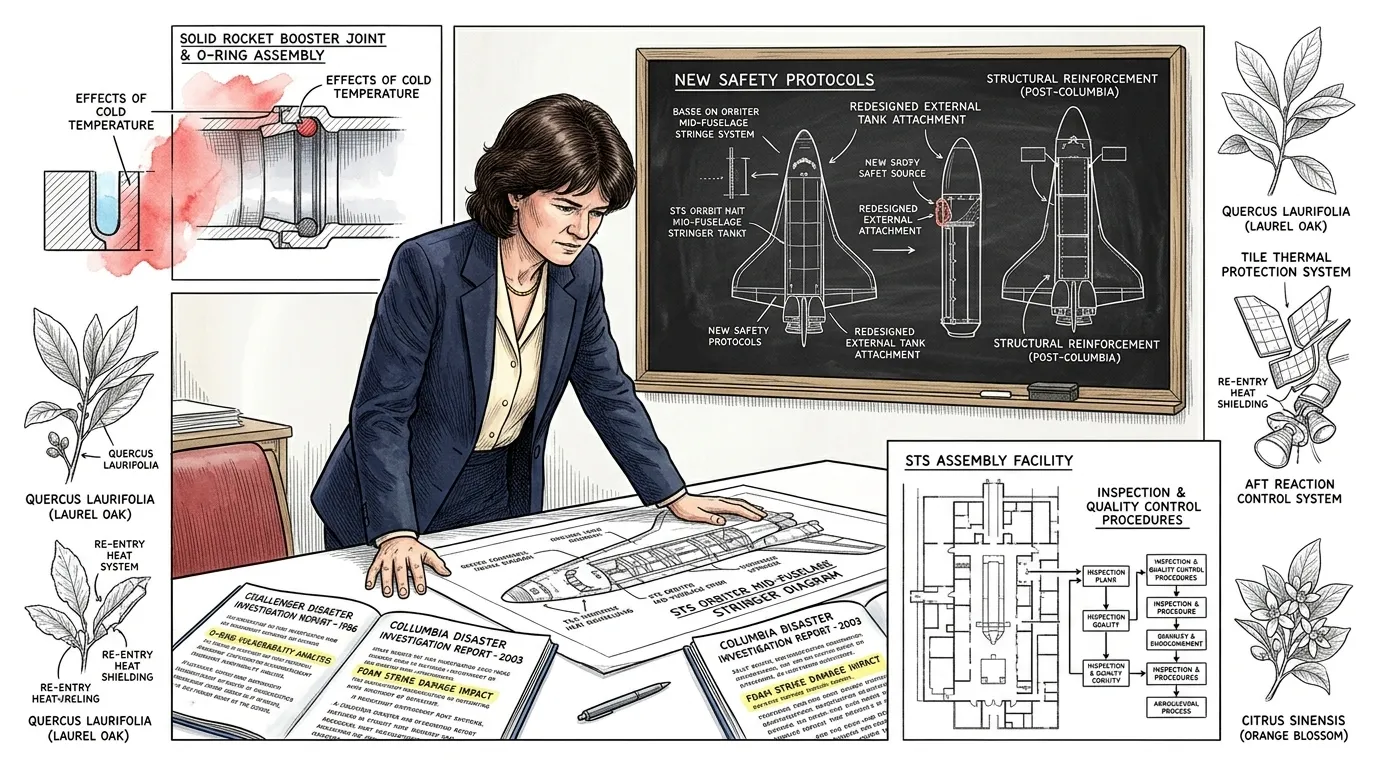
After her two historic missions, Sally Ride's impact extended far beyond the confines of orbit. She became a powerful voice for scientific integrity and safety within NASA. Most notably, she served on the presidential commissions that investigated both the Challenger disaster in 1986 and the Columbia disaster in 2003. Her scientific acumen and unflinching commitment to truth were pivotal in identifying the root causes of these tragedies, fundamentally reshaping NASA's safety protocols and engineering culture.
Page 9
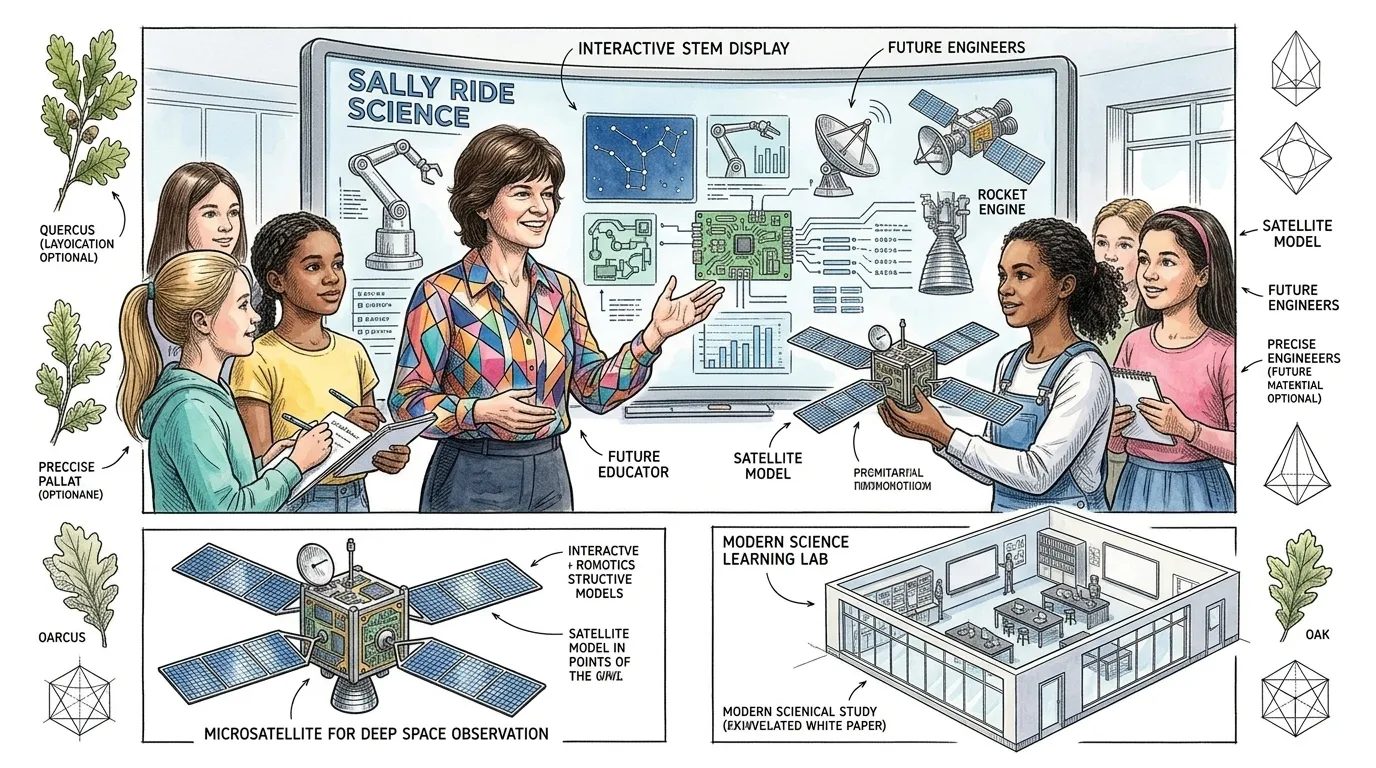
Recognizing the profound lack of women in science and engineering, Sally Ride dedicated her post-NASA career to inspiring the next generation. In 2001, she co-founded Sally Ride Science, an organization focused on promoting STEM literacy and encouraging girls and young women to pursue careers in science, technology, engineering, and mathematics. Her vision was to make science engaging and accessible, dismantling barriers and ensuring that talent, regardless of gender, could find its path to discovery.
Page 10
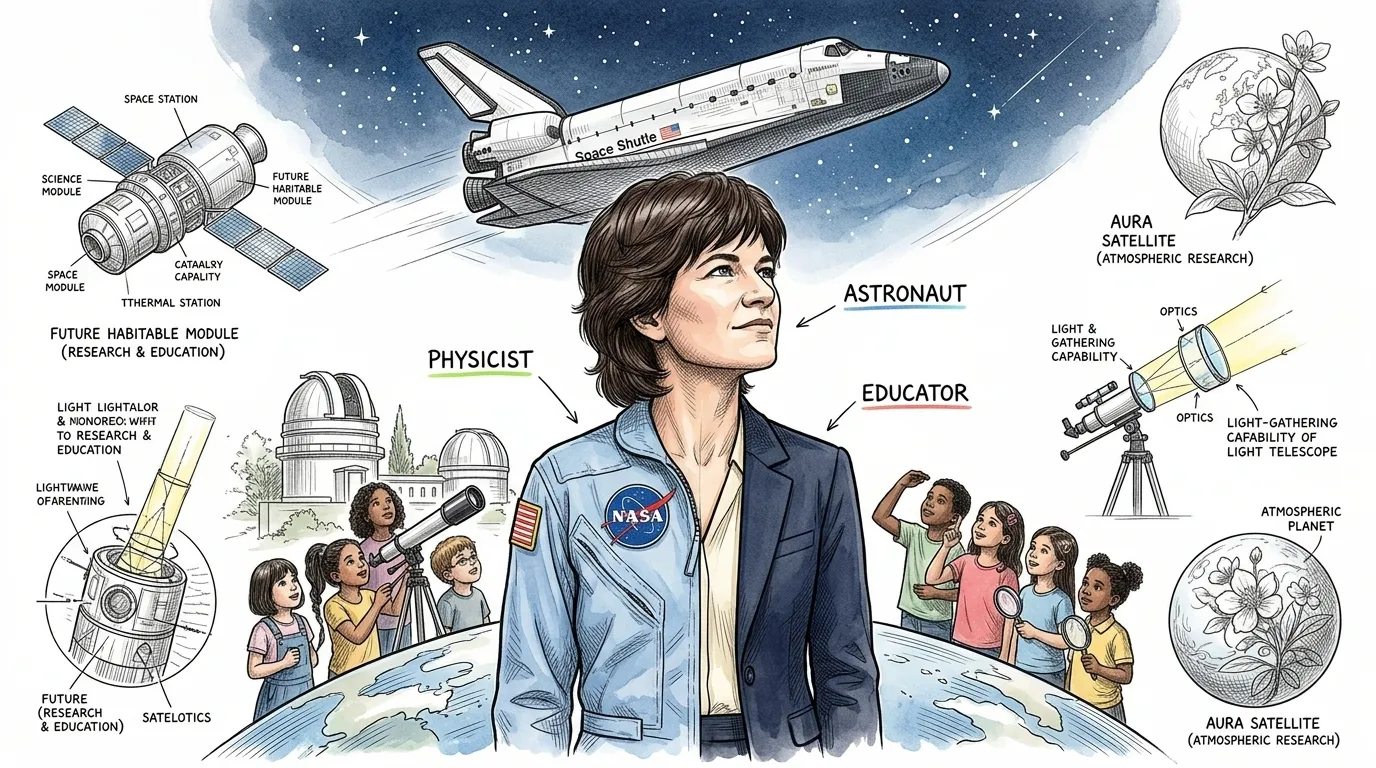
Sally Ride's legacy is multifaceted: a pioneer who broke barriers in space, a steadfast advocate for safety and scientific integrity, and an enduring champion for STEM education. Her journey from physicist to astronaut, and then to an inspirational educator, continues to resonate globally. She proved that the sky was not the limit, and her work ensured that countless others would look to the stars, not just with wonder, but with the conviction that they, too, could reach them.
About this story
- Location: Global
- Audience: general readers
Read Wonder Science on your phone
Wonder Science is available on Android. Get Wonder Science on Google Play.