Santiago Ramon y Cajal
Santiago Ramon y Cajal — an illustrated science story, set in Global. 10 illustrated pages, free to read on Wonder Science.
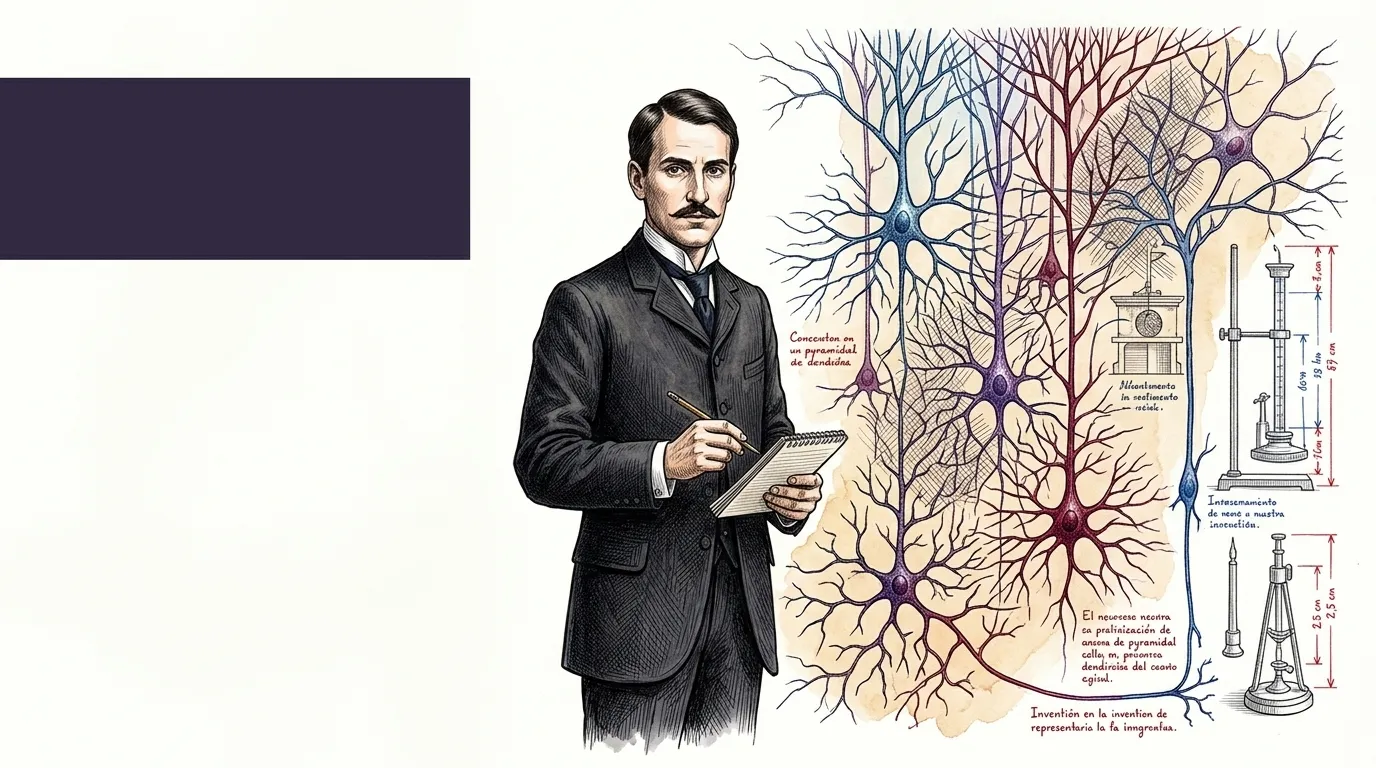
Page 1
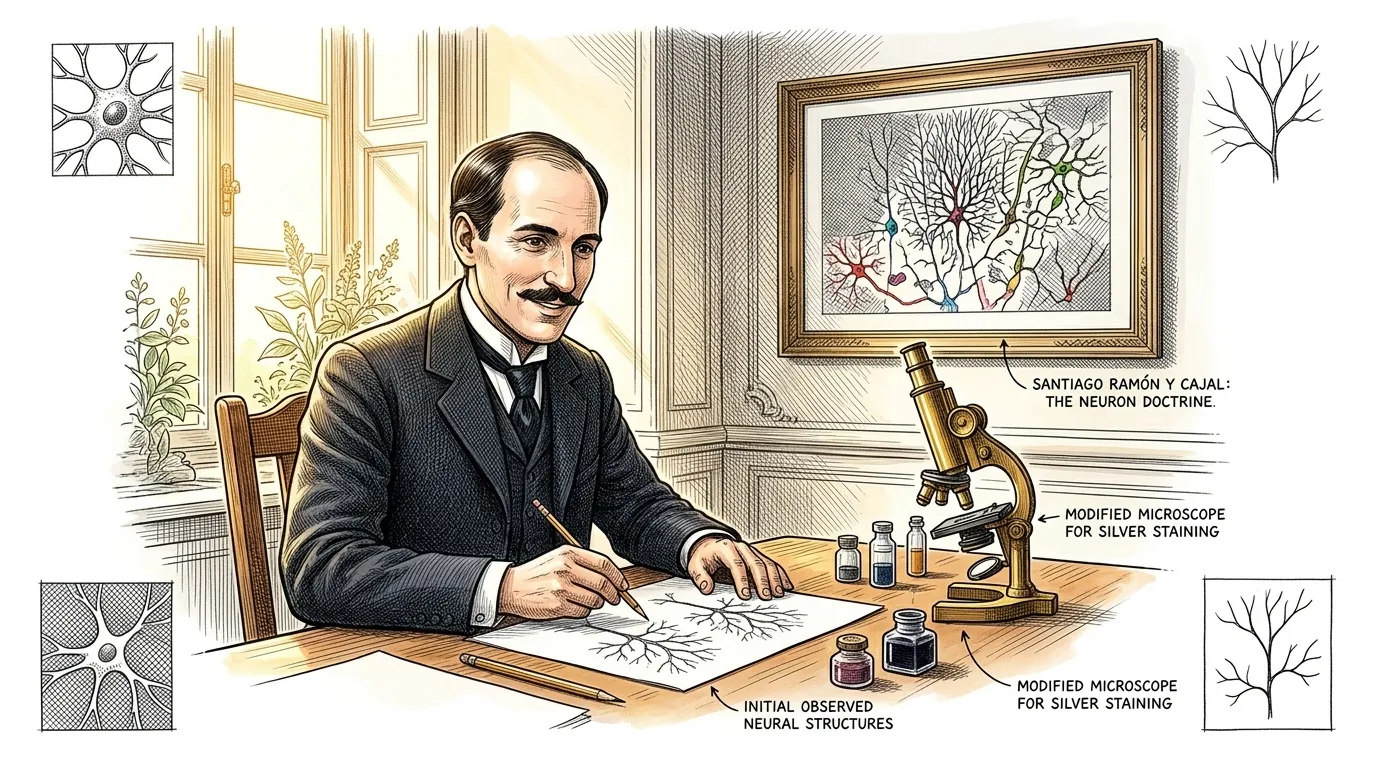
In the late 19th century, the intricate landscape of the brain remained largely an enigma, a dense, inscrutable jungle beneath the skull. Conventional wisdom struggled to grasp how its countless components orchestrated thought and sensation. It was a Spanish anatomist, Santiago Ramón y Cajal, who, through relentless observation and extraordinary artistic skill, would illuminate this neural labyrinth, revealing its fundamental architecture and forever changing our understanding of life itself.\n\n Fact: Santiago Ramón y Cajal: The Neuron Doctrine
Page 2
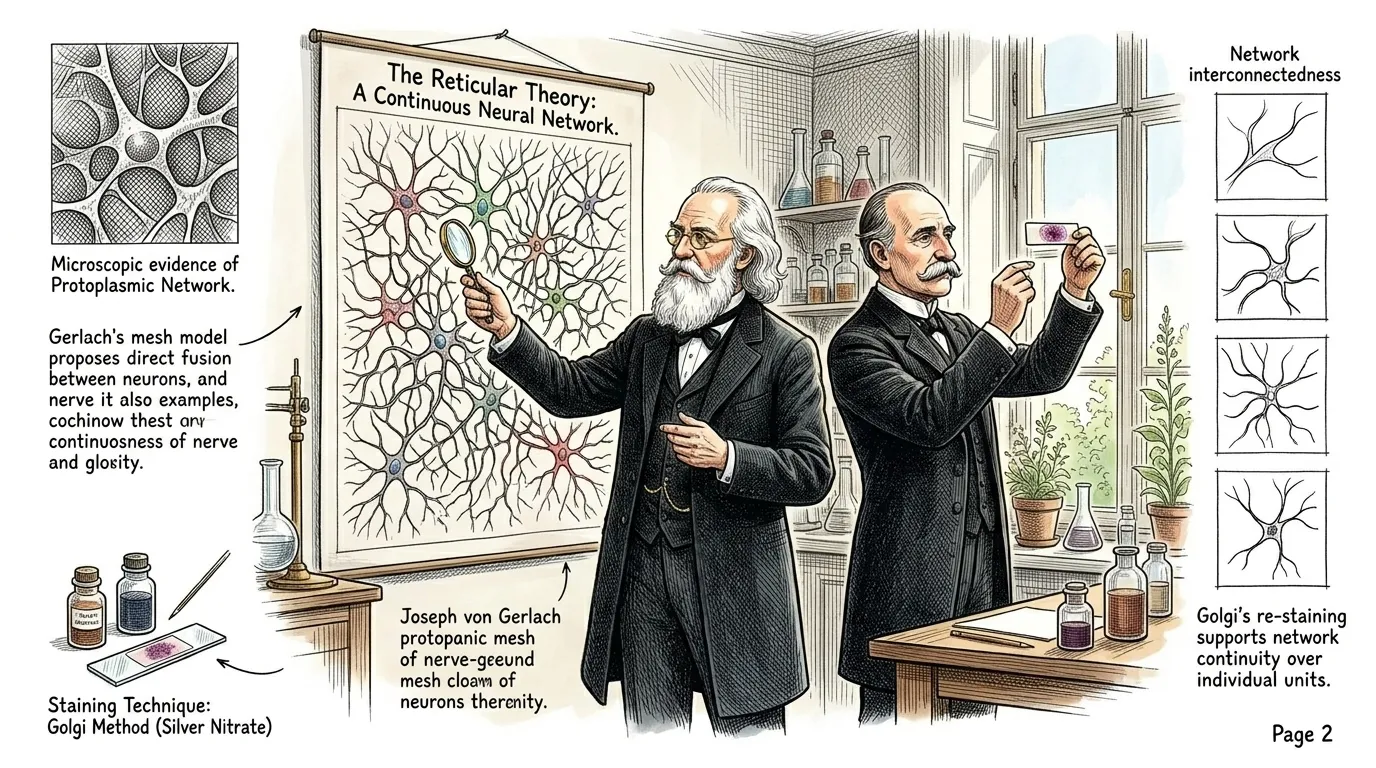
Before Cajal's insights, the prevailing scientific consensus, championed by eminent figures like Joseph von Gerlach and even the staining method's inventor, Camillo Golgi, posited a 'reticular theory.' This hypothesis suggested that the nervous system was a vast, continuous network—a protoplasmic mesh where nerve fibers fused into an inseparable syncytium. To many, this felt intuitive; how else could such rapid, coordinated communication occur across the entire organism? The sheer density of neural tissue made discerning individual units an almost insurmountable challenge.\n\n Fact: The Reticular Theory: A Continuous Neural Network
Page 3
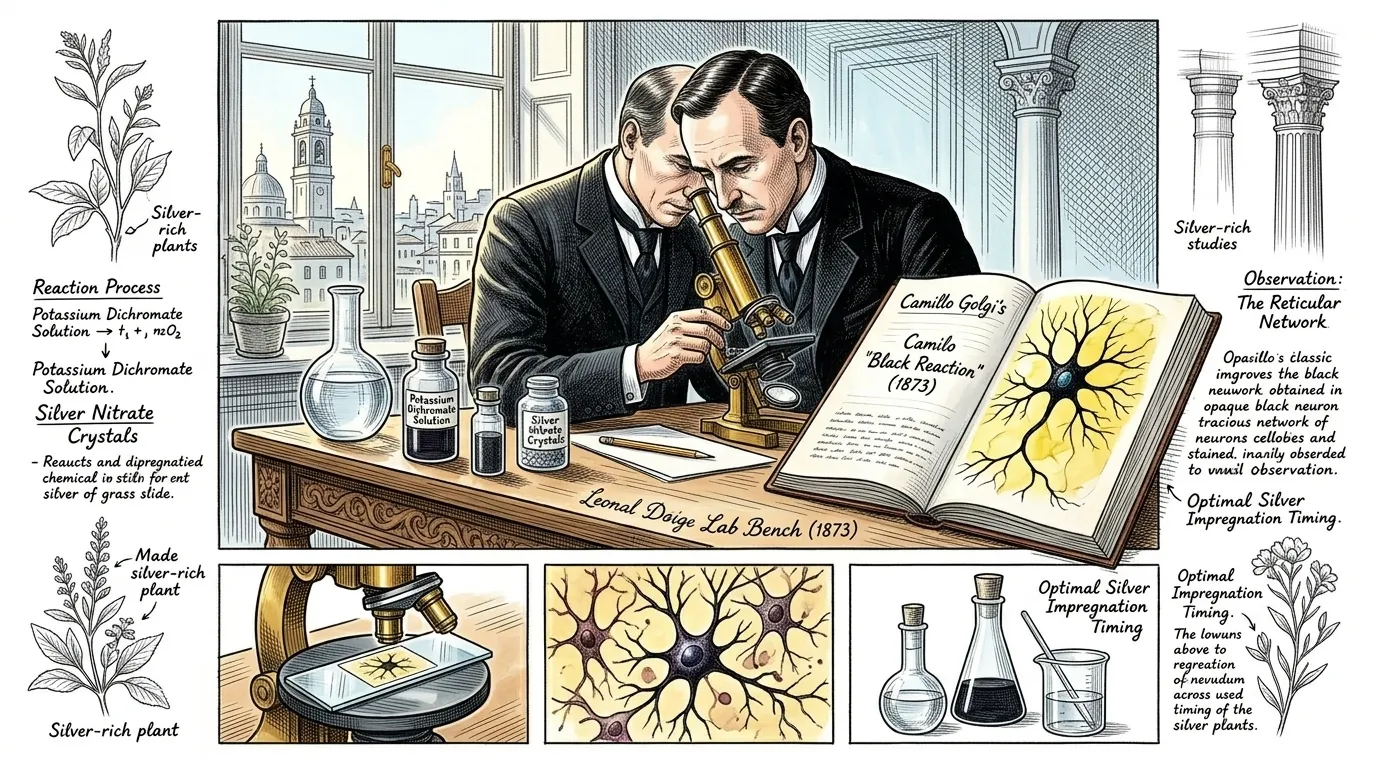
The breakthrough in visualizing neural tissue came not from a theory, but from an accidental discovery in 1873 by Italian physician Camillo Golgi. His 'reazione nera,' or 'black reaction,' involved treating nervous tissue with potassium dichromate and silver nitrate. Miraculously, this process would randomly stain only a tiny fraction of cells, rendering their entire structure – dendrites, cell body, and axon – opaque black against a translucent yellow background. Paradoxically, Golgi himself remained a staunch advocate for the reticular theory, interpreting his own stained images as evidence of a continuous network.\n\n Fact: Camillo Golgi's 'Black Reaction' (1873)
Page 4
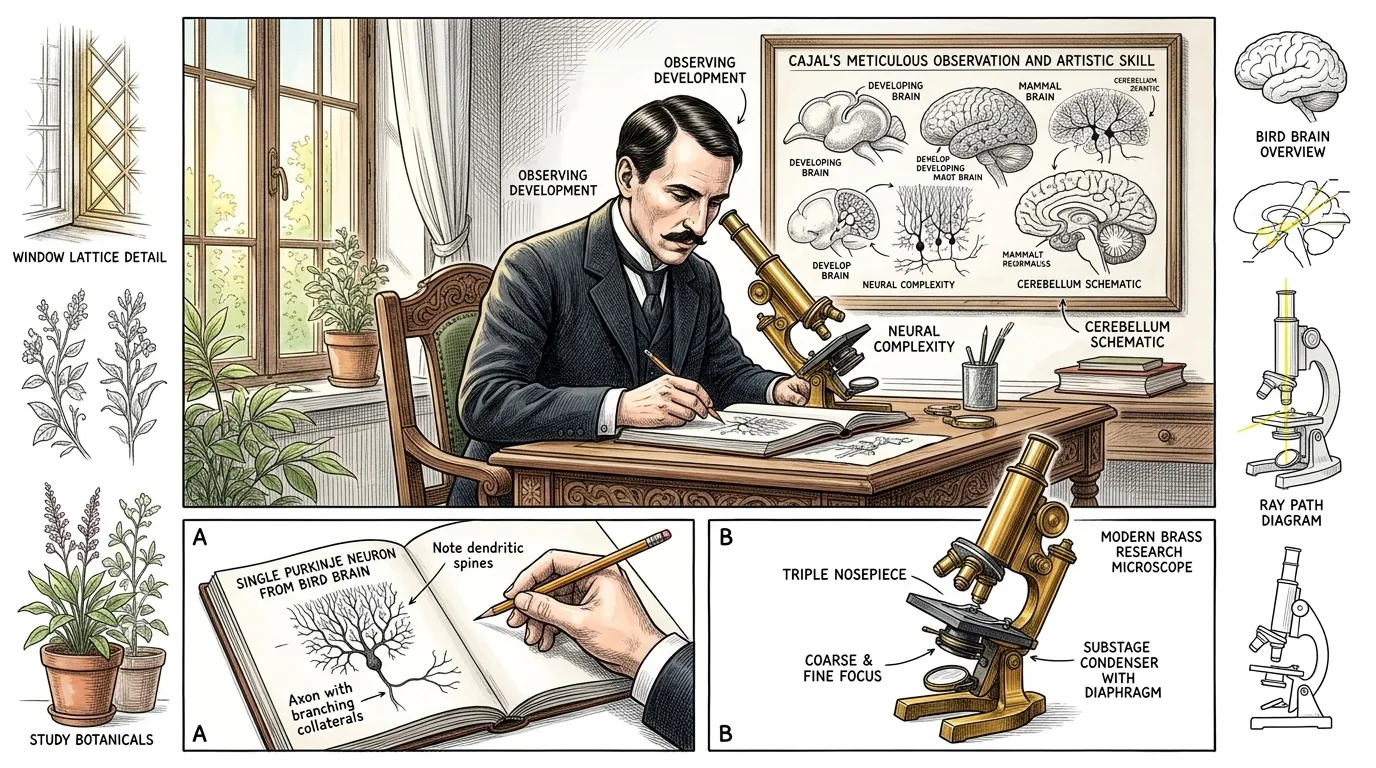
It was Cajal's unique blend of artistic talent and scientific rigor that transformed Golgi's method from a mere staining technique into a tool for revolutionary discovery. Armed with an improved version of the 'black reaction,' Cajal dedicated himself to meticulously examining neural tissue from various animals, particularly the developing brains of birds and young mammals. He reasoned that in nascent stages of development, neurons would be less densely packed, making their individual structures and connections clearer. His unwavering gaze and unparalleled observational patience led him to patterns Golgi had overlooked.\n\n Fact: Cajal's Meticulous Observation and Artistic Skill
Page 5
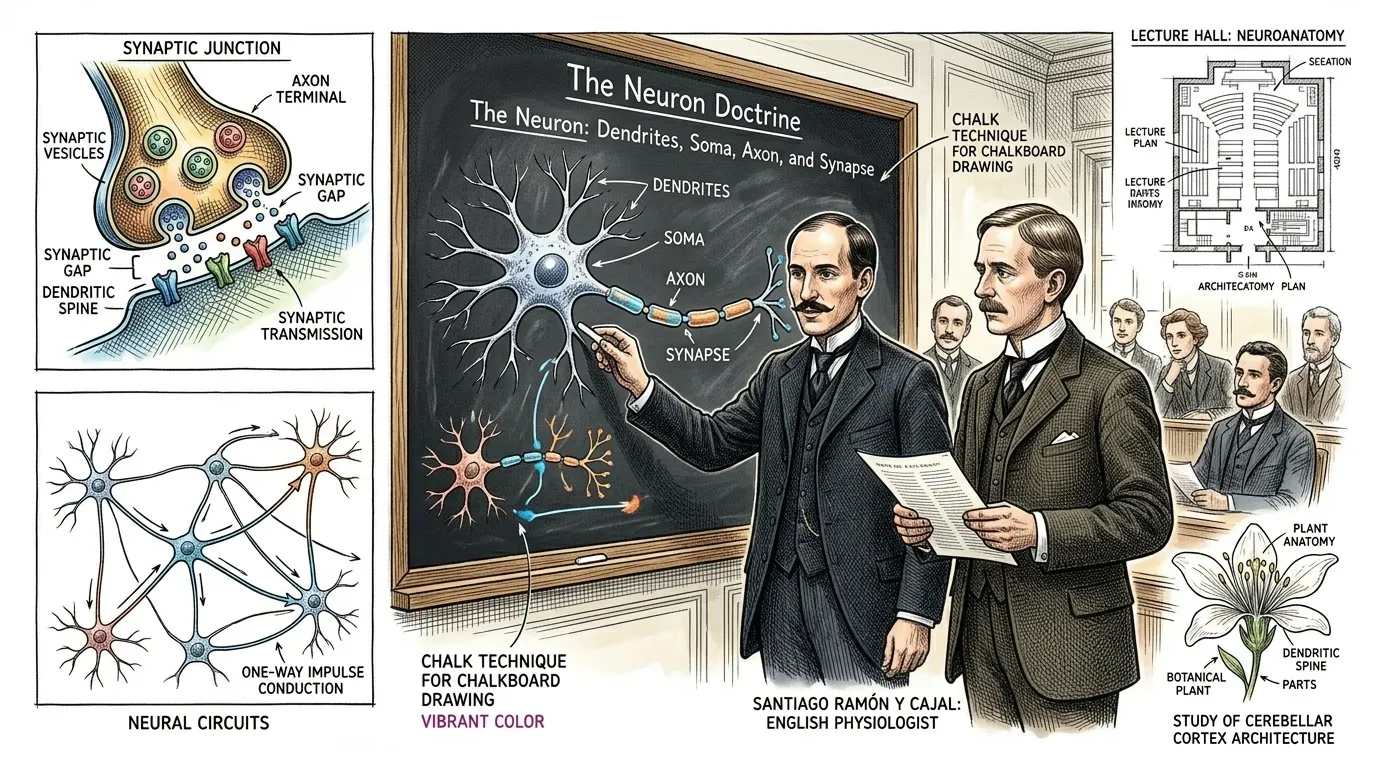
Cajal's exhaustive observations led him to an inescapable conclusion: the nervous system was not a continuous net, but comprised discrete, independent cells he termed neurons. Each neuron possessed a polarized structure: dendrites acted as receivers of signals, the cell body integrated these inputs, and a single axon transmitted outgoing impulses to other neurons. Crucially, Cajal deduced that communication between neurons occurred across infinitesimal gaps, which would later be named 'synapses' by Charles Sherrington, solidifying the 'neuron doctrine' as the foundational principle of neurobiology.\n\n Fact: The Neuron: Dendrites, Soma, Axon, and Synapse
Page 6
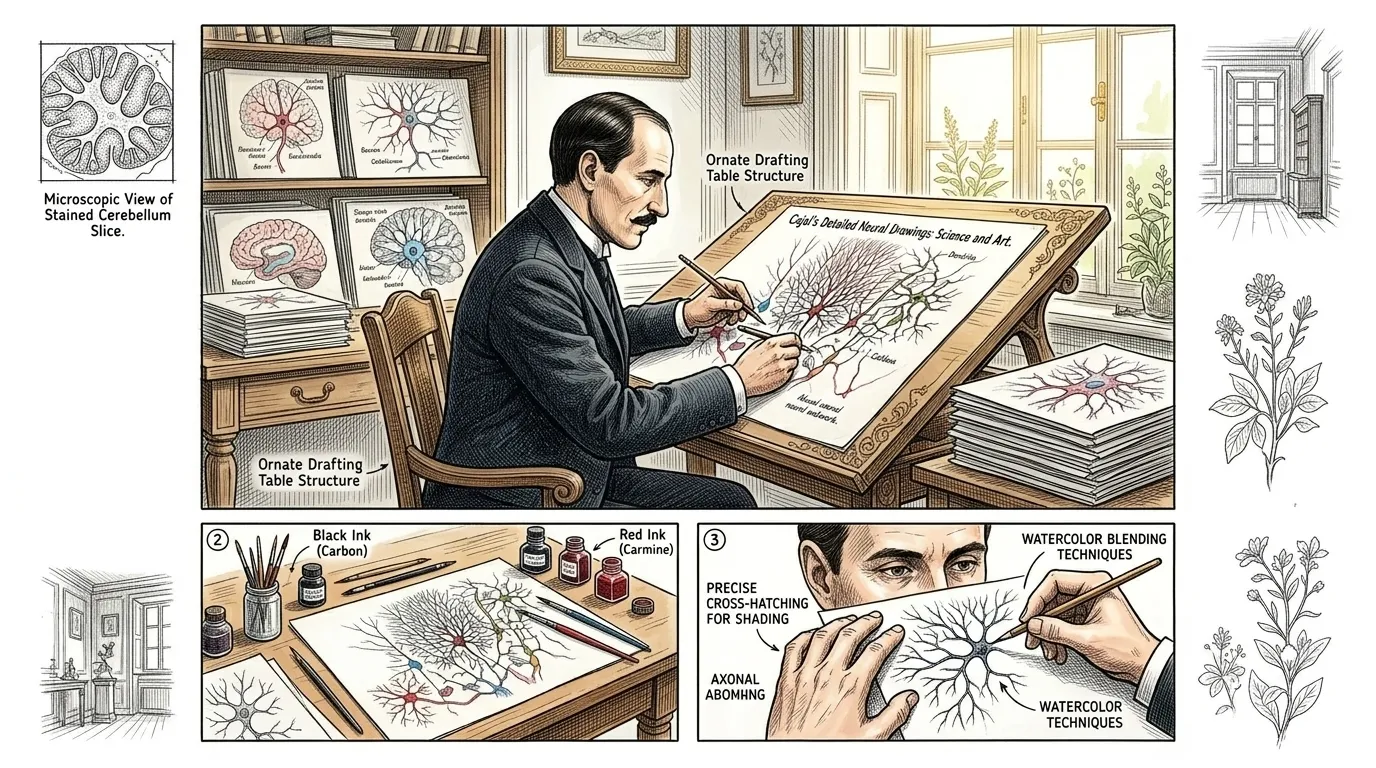
Cajal's profound insights were inextricably linked to his exceptional artistic talent. Unable to rely on photography to capture the intricate three-dimensional complexity of the nervous system as he saw it under the microscope, he translated his observations into hundreds of meticulously rendered drawings. These illustrations, more than mere records, were interpretations — they distilled the essential structure and connectivity, highlighting critical details and pathways that elucidated function. His visual language was so clear and persuasive that it became the definitive representation of the neuron doctrine, influencing generations of neuroscientists.\n\n Fact: Cajal's Detailed Neural Drawings: Science and Art
Page 7
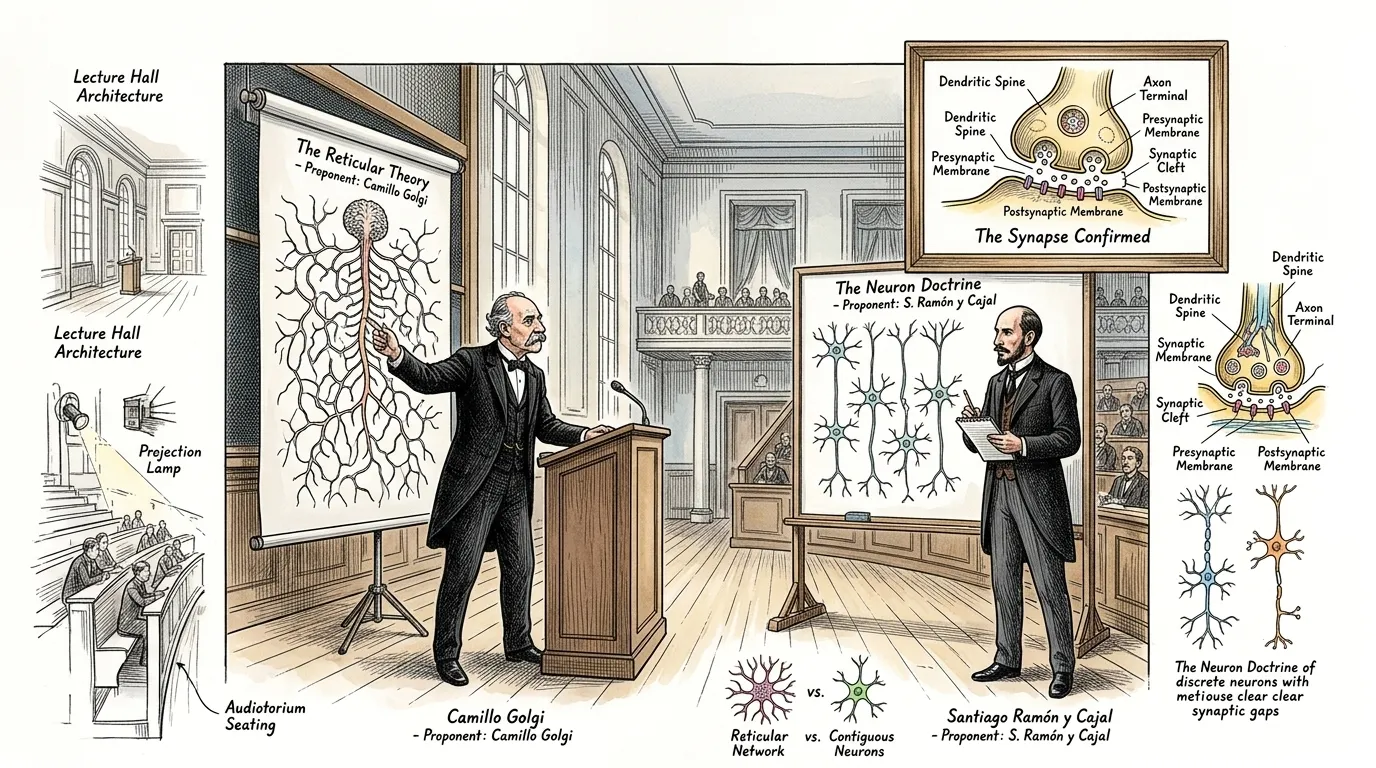
The neuron doctrine faced significant opposition, particularly from Camillo Golgi himself, who steadfastly defended his reticular theory. The debate was fierce, often personal, and underscored the difficulty of interpreting microscopic evidence. However, Cajal's hypothesis gained traction as more researchers replicated his findings and newer techniques provided corroborating evidence. Ultimately, the advent of electron microscopy in the mid-20th century provided irrefutable proof of synaptic gaps, finally settling the century-long debate and definitively confirming Cajal's vision of discrete neural cells.\n\n Fact: Reticular Theory vs. Neuron Doctrine: The Synapse Confirmed
Page 8
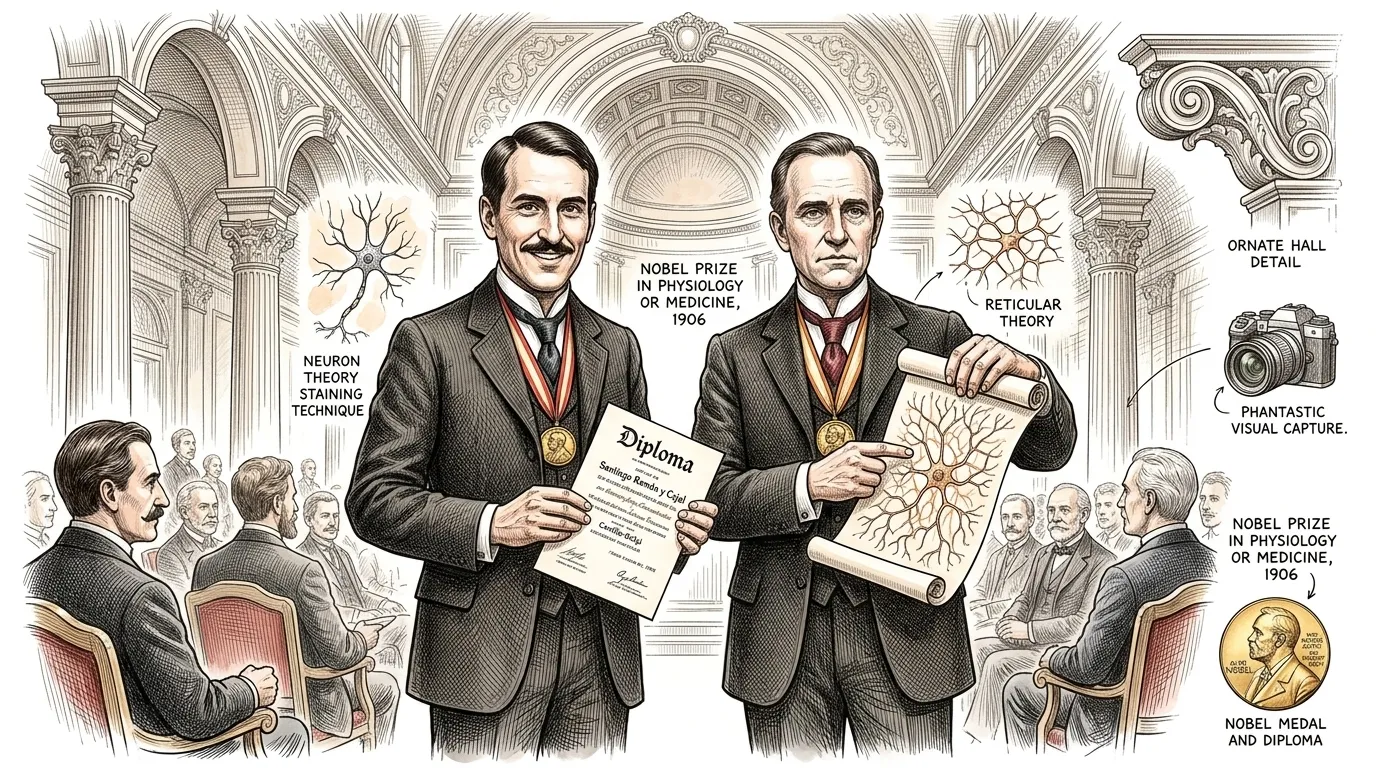
In 1906, the Nobel Committee awarded Santiago Ramón y Cajal and Camillo Golgi the Nobel Prize in Physiology or Medicine 'in recognition of their work on the structure of the nervous system.' It was a shared honor that highlighted the profound impact of Golgi's staining technique while acknowledging the revolutionary insights of Cajal's interpretation. Even at the Nobel banquet, their scientific differences remained, with Golgi using his acceptance speech to reiterate his belief in the reticular theory, a poignant testament to the deeply held convictions and the nature of scientific progress.\n\n Fact: Nobel Prize in Physiology or Medicine, 1906
Page 9
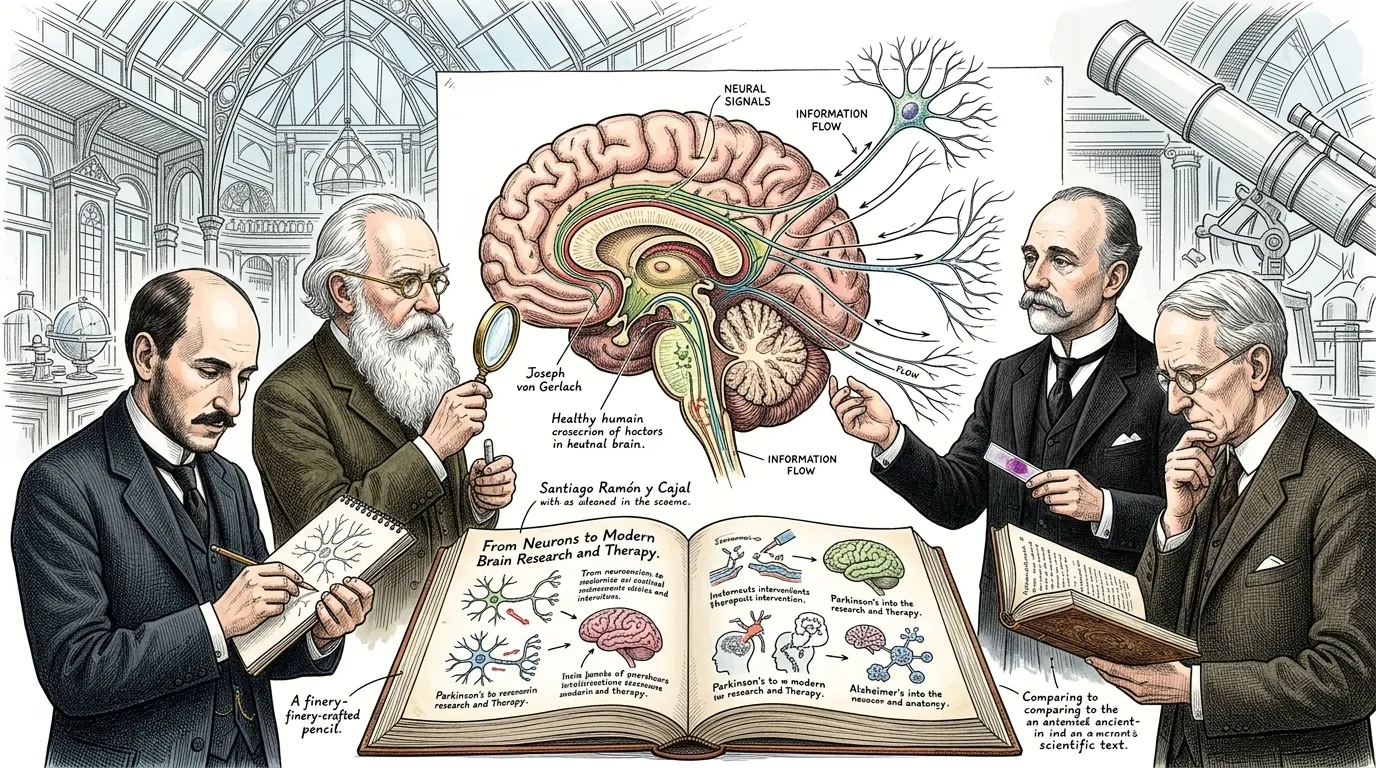
The neuron doctrine, established by Cajal, swiftly became the bedrock of modern neuroscience. This fundamental understanding — that the brain is composed of discrete, communicating cells — enabled scientists to move beyond mere description to understanding function. It paved the way for explaining how information is processed, stored, and retrieved. Every major advance in neurology, from understanding neurotransmission to mapping neural circuits, stands firmly on the foundation Cajal laid, making sense of disorders like Parkinson's or Alzheimer's and inspiring avenues for therapy and intervention.\n\n Fact: From Neurons to Modern Brain Research and Therapy
Page 10
Santiago Ramón y Cajal, often hailed as the 'father of modern neuroscience,' bequeathed a legacy that transcends mere biological facts. His vision transformed the chaotic tangles of the nervous system into an elegant, understandable architecture of individual units working in concert. From the development of new drugs for neurological diseases to the mapping of consciousness itself, every inquiry into the brain's mysteries begins with Cajal's fundamental insight. His work remains a powerful testament to the transformative power of meticulous observation, artistic representation, and intellectual courage in challenging established paradigms.\n\n Fact: Cajal's Enduring Impact on Medicine, Technology, and Human Understanding
About this story
- Location: Global
- Audience: general readers
Read Wonder Science on your phone
Wonder Science is available on Android. Get Wonder Science on Google Play.