Rita Colwell
Rita Colwell — an illustrated science story, set in Global. 10 illustrated pages, free to read on Wonder Science.
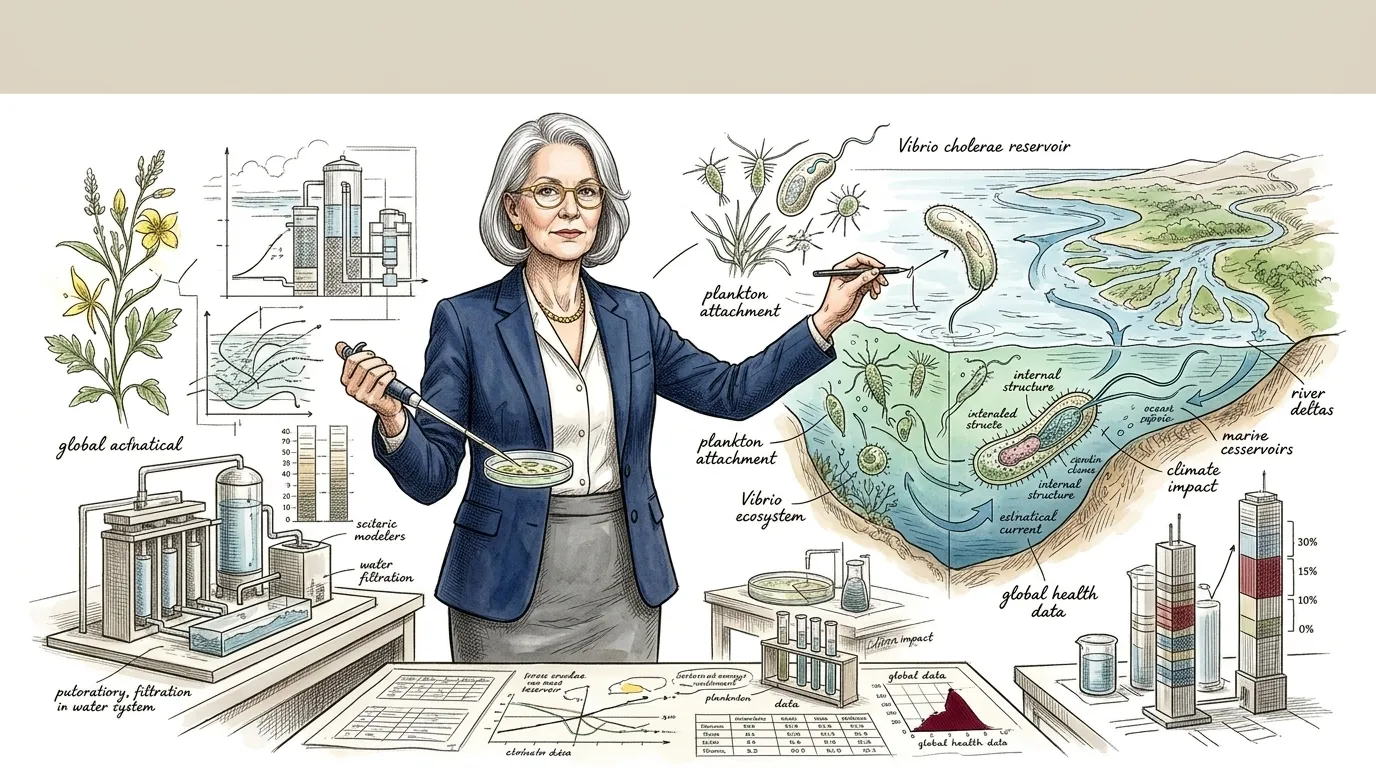
Page 1
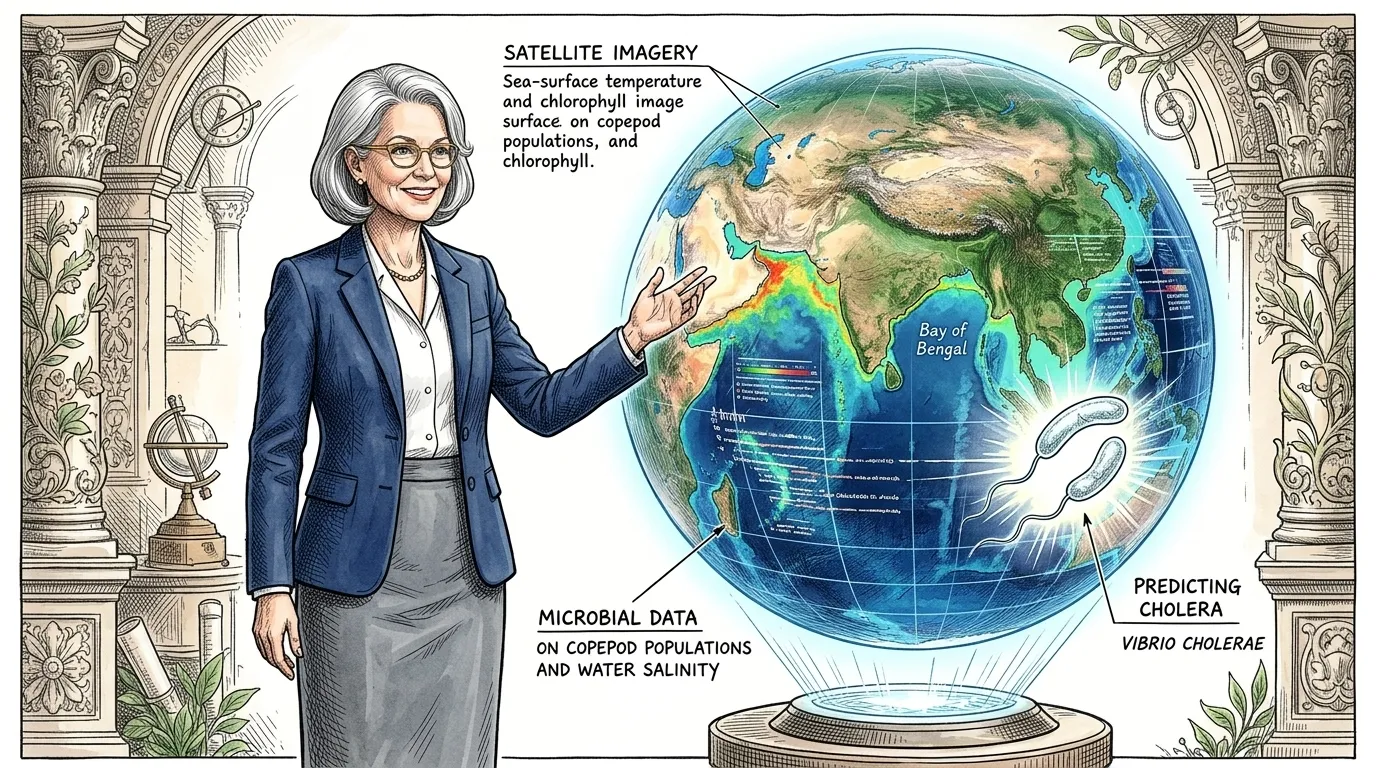
The year is 1999. In the command center of the National Science Foundation, a visionary leader stood at the nexus of biology, technology, and public health. Dr. Rita Colwell, the first woman to direct the NSF, was pioneering a radical approach to one of humanity's oldest scourges: cholera. Before her, disease tracking was largely reactive, a race against the clock to contain outbreaks already in motion. Colwell's paradigm-shifting insight linked the microscopic world of bacteria to the macroscopic view from space, transforming epidemiology from hindsight to foresight. As Dr. Colwell once articulated, 'What we found was that the bacteria, Vibrio cholerae, were associated with copepods, which in turn feed on phytoplankton. So it was a link right back to the environment.' This profound connection, between the smallest marine organisms and deadly human infections, would reshape global public health strategies, moving from mitigation to prediction.
Fact: Rita Colwell, NSF Director, 1999. Satellite imagery and microbial data converge. Bay of Bengal. Predicting Cholera.
Page 2
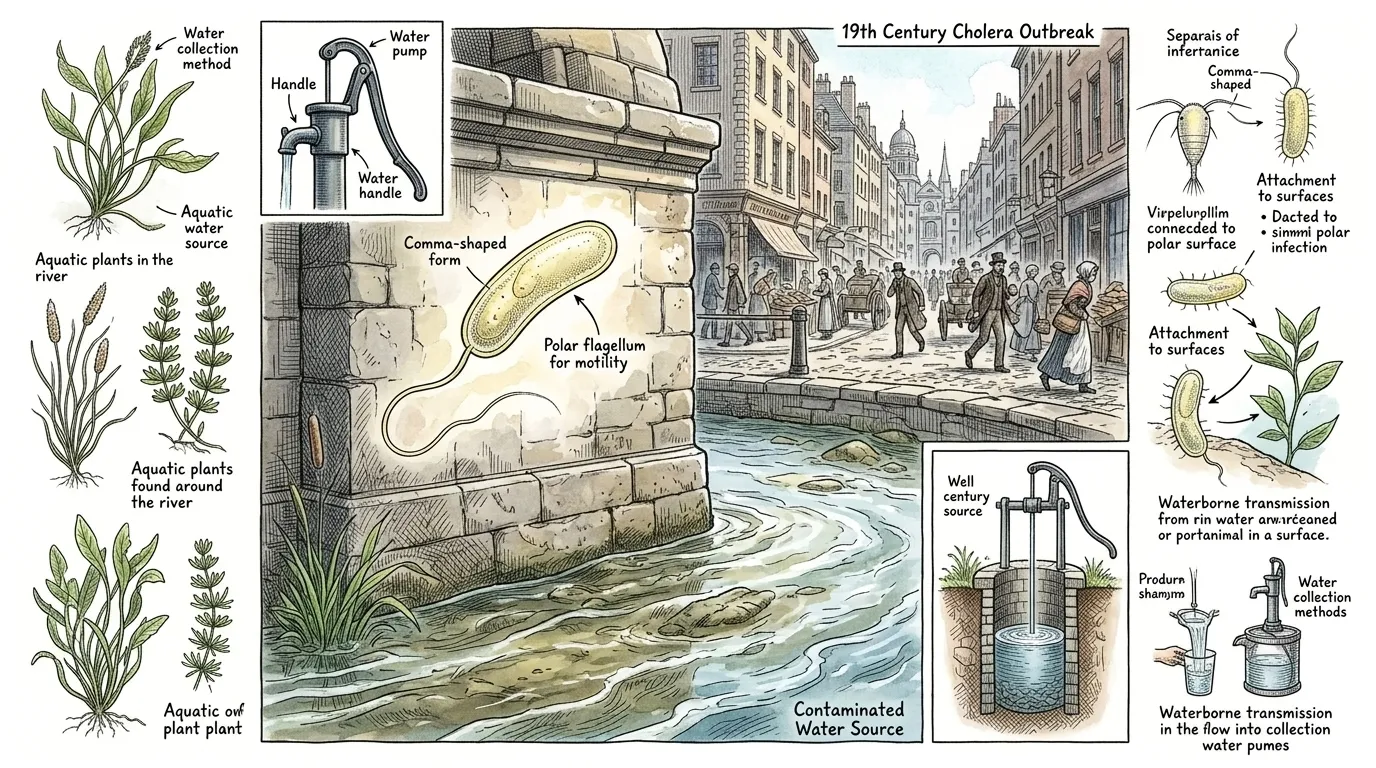
For centuries, cholera remained a terrifying, relentless killer. Its sudden, devastating outbreaks swept through populations, claiming millions of lives, particularly in regions with inadequate sanitation and contaminated water supplies. Early theories attributed its spread to 'bad air' or miasma, but the true culprit, Vibrio cholerae, a comma-shaped bacterium, eluded precise understanding. Its rapid onset and severe dehydration made it a formidable public health challenge, historically leading to chaotic quarantines and widespread panic. The sheer scale of its devastation in the 19th century alone underscored humanity's vulnerability to waterborne pathogens.
Fact: 19th Century Cholera Outbreak. Vibrio cholerae bacterium. Contaminated water source.
Page 3
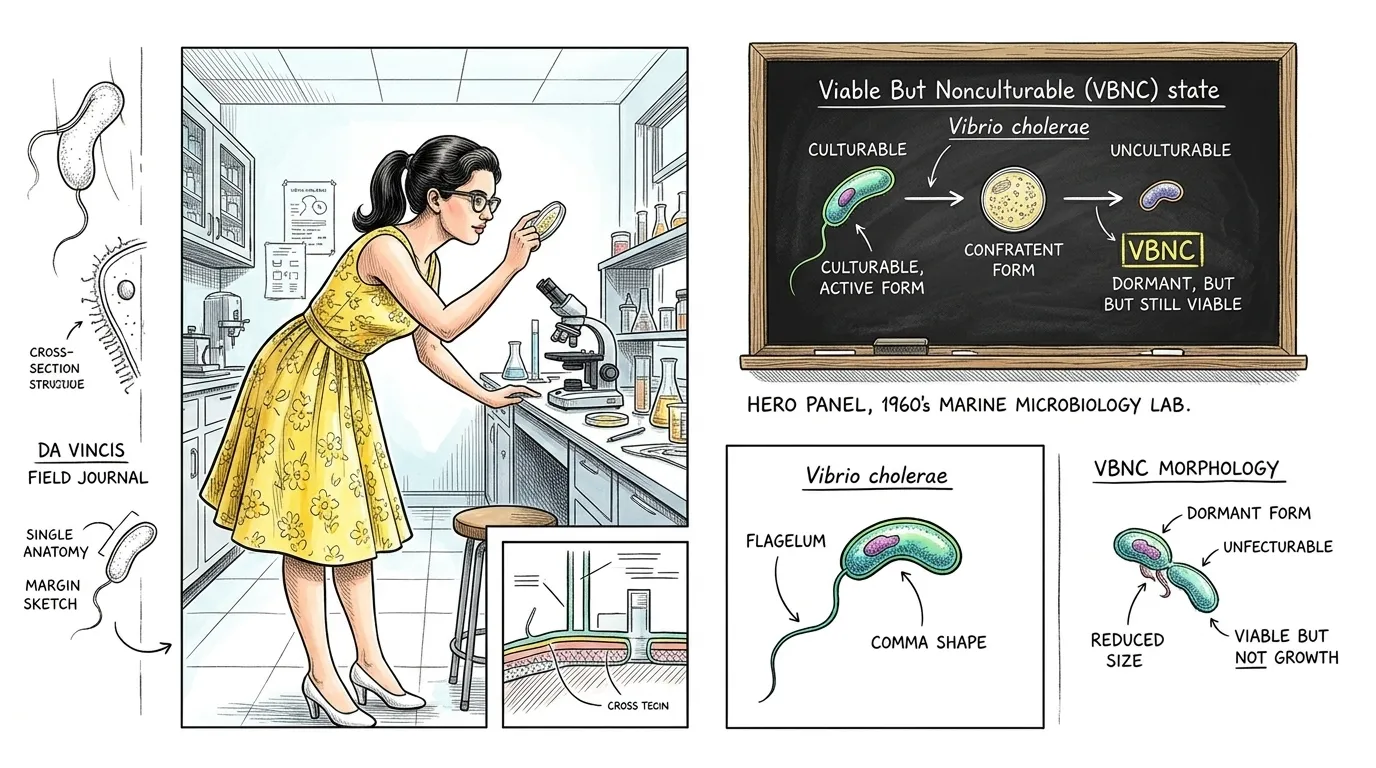
Born in 1934, Rita Colwell entered a scientific world where women faced significant barriers. Undeterred, her fascination with the hidden life in water propelled her into microbiology. She earned her Ph.D. in marine microbiology from the University of Washington in 1961, embarking on a career dedicated to understanding aquatic ecosystems. Early in her research, Colwell became captivated by the perplexing behavior of Vibrio cholerae — how it could vanish from water samples, seemingly disappearing, only to re-emerge later with deadly force. This led her to challenge the prevailing dogma that bacteria simply died in adverse conditions, proposing instead a state of dormancy, a 'viable but nonculturable' (VBNC) state, where they remained alive but undetectable by standard lab methods. This was a profoundly counter-intuitive idea at the time.
Fact: Dr. Rita Colwell, 1960s. Marine Microbiology Lab. Viable But Nonculturable (VBNC) state of Vibrio cholerae.
Page 4
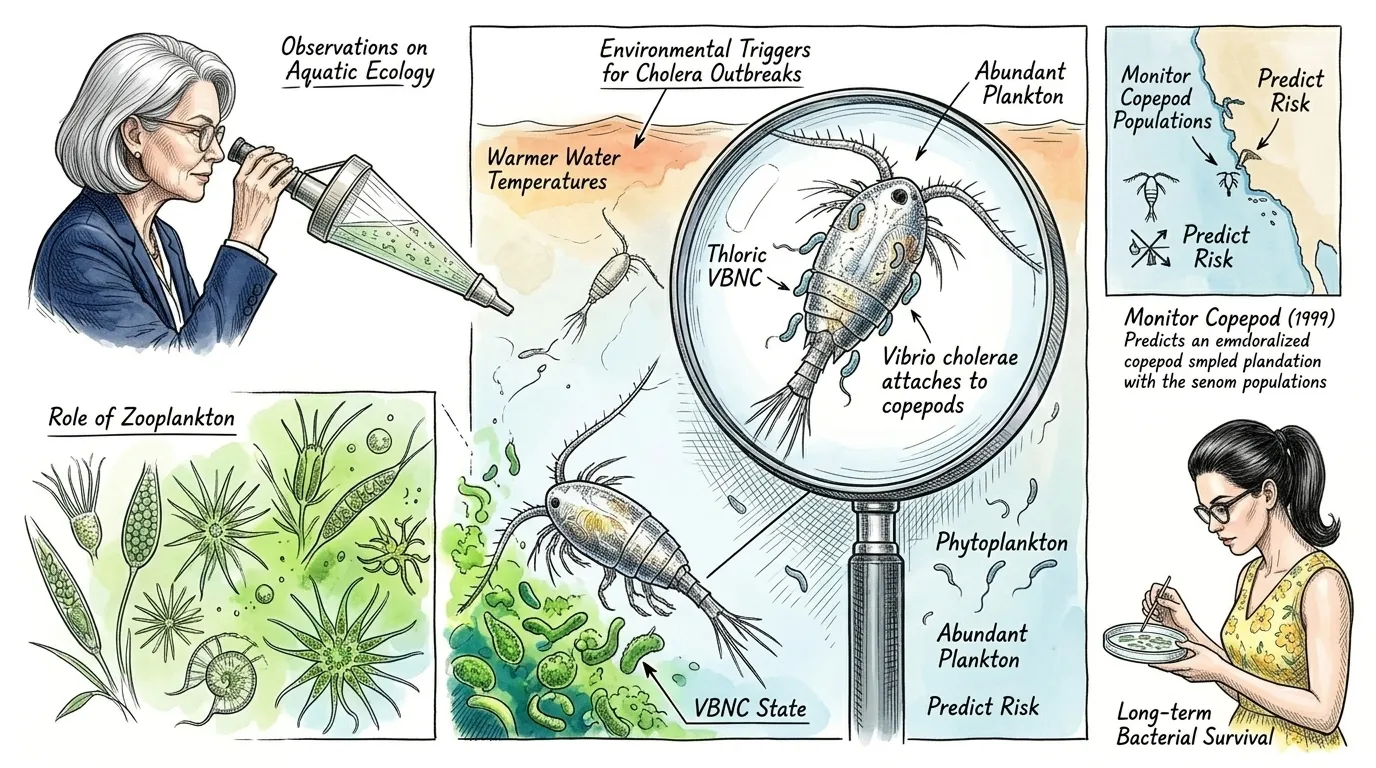
Colwell's theory of the 'viable but nonculturable' state was a game-changer. It meant that traditional plate cultures, which relied on bacteria growing in a lab, were missing a crucial part of the cholera story. Vibrio cholerae, she discovered, wasn't merely surviving; it was adapting. These bacteria could attach themselves to tiny marine copepods, minute crustaceans that graze on phytoplankton, and enter a dormant state, persisting in aquatic environments for extended periods. When conditions became favorable—like warmer water temperatures and abundant plankton—they would 'wake up,' become culturable again, and rapidly multiply, initiating new outbreaks. This ecological connection between bacteria, zooplankton, and phytoplankton became the cornerstone of her groundbreaking predictive model.
Fact: VBNC State. Vibrio cholerae attaches to copepods. Copepods feed on phytoplankton. Environmental triggers for cholera outbreaks.
Page 5
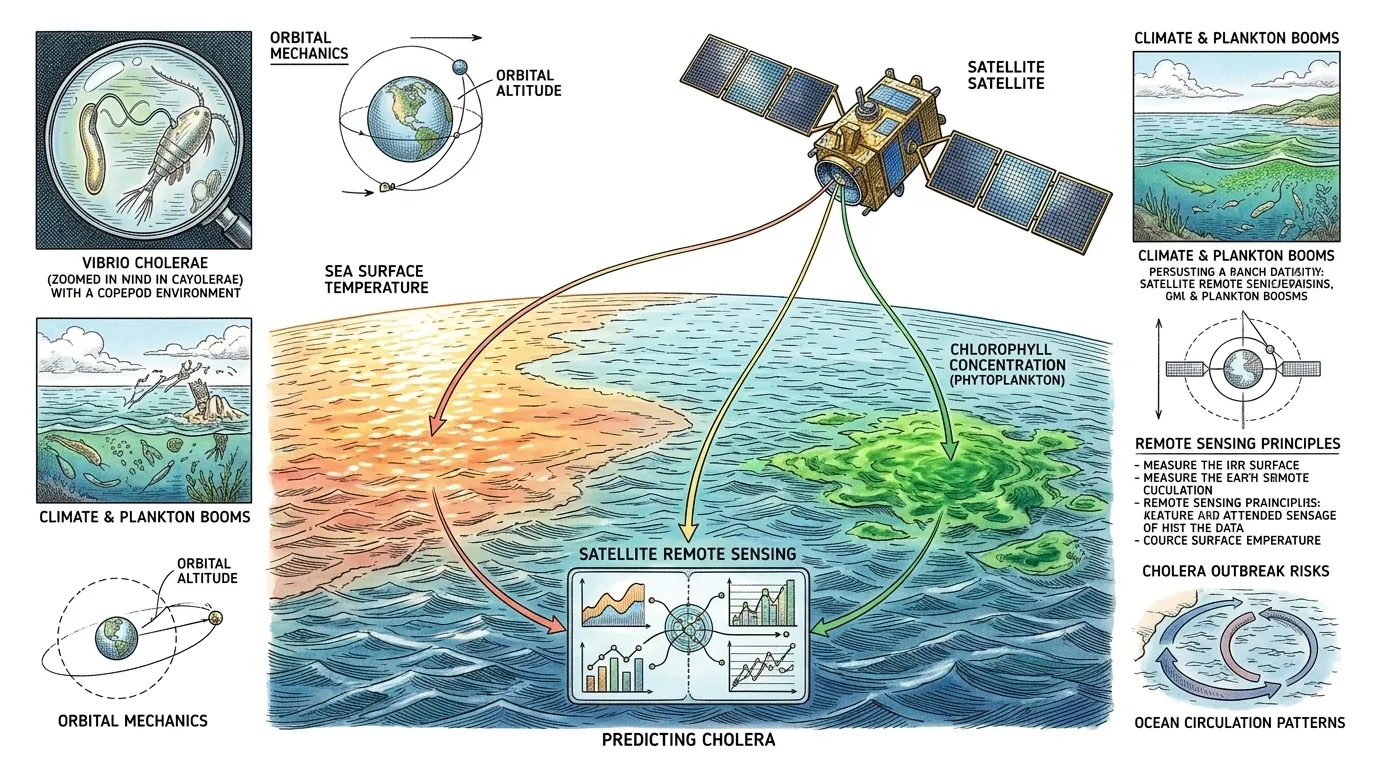
The realization that Vibrio cholerae's life cycle was intrinsically linked to marine ecology, particularly the abundance of phytoplankton and the surface temperature of the water, sparked another revolutionary idea. If these environmental factors could be monitored from afar, could cholera outbreaks be predicted? This question led Colwell to collaborate with oceanographers and remote sensing specialists. They turned to satellite imagery, an emerging technology capable of tracking sea surface temperatures, chlorophyll concentrations (an indicator of phytoplankton blooms), and sea surface height across vast ocean expanses. This interdisciplinary leap connected isolated outbreaks to global climate patterns, transforming the scale of epidemiological surveillance. It was a fusion of microbiology and astrophysics, a truly unprecedented scientific endeavor.
Fact: Satellite Remote Sensing. Sea Surface Temperature. Chlorophyll Concentration (Phytoplankton). Data Streams. Predicting Cholera.
Page 6
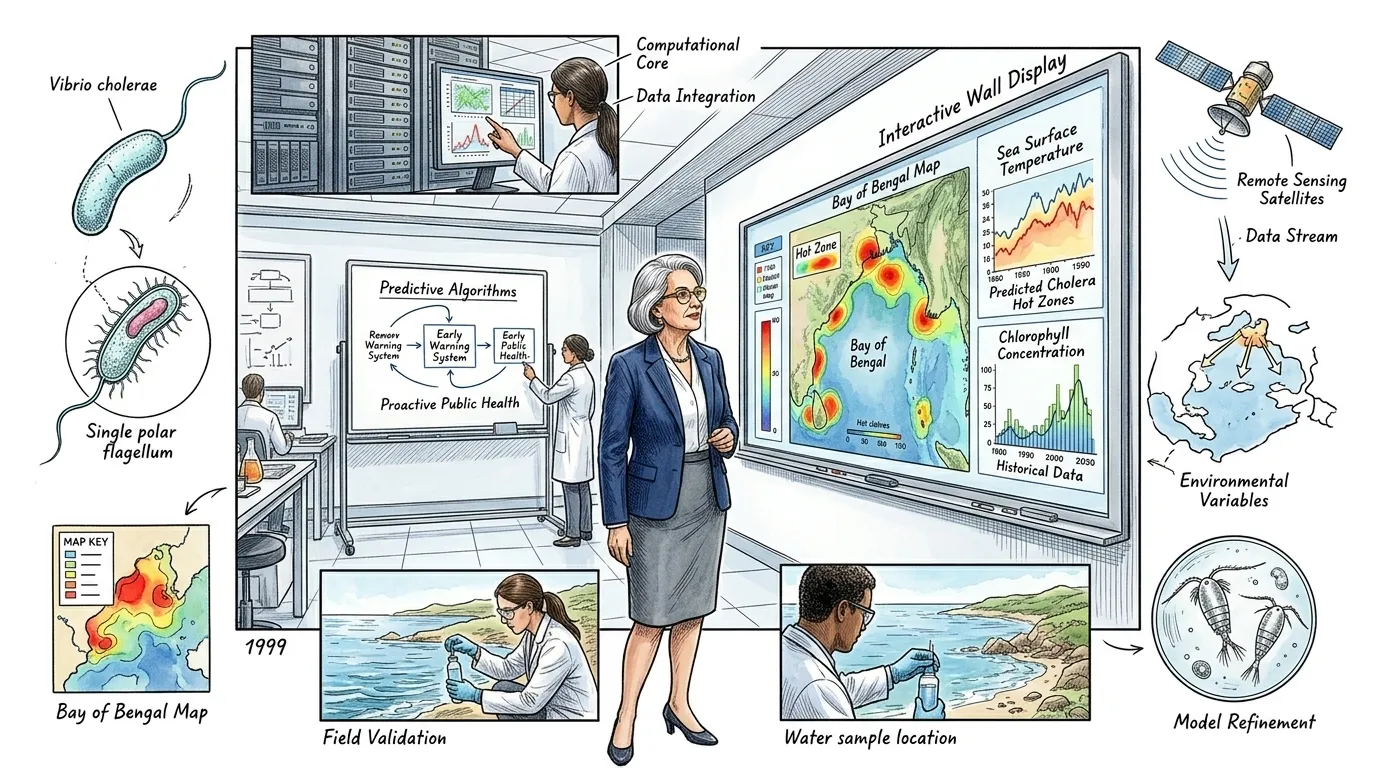
The intricate dance between satellite data and epidemiological insight began to take concrete form. Colwell's team developed sophisticated algorithms that correlated satellite-derived environmental parameters – sea surface temperature, chlorophyll concentration, and even sea surface height, which can indicate water stratification – with historical cholera outbreaks. This allowed them to identify 'hot zones' and 'hot times' where conditions were ripe for the bacterium to flourish and trigger an epidemic. Their model wasn't about tracking existing disease; it was about predicting where and when future outbreaks were likely to occur, often weeks or even months in advance. This afforded public health officials a critical window for intervention, moving from reactive responses to proactive preparedness, a monumental shift in disease control.
Fact: Predictive Algorithms. Sea Surface Temperature & Cholera Correlation. Chlorophyll & Phytoplankton Blooms. Early Warning System. Proactive Public Health.
Page 7
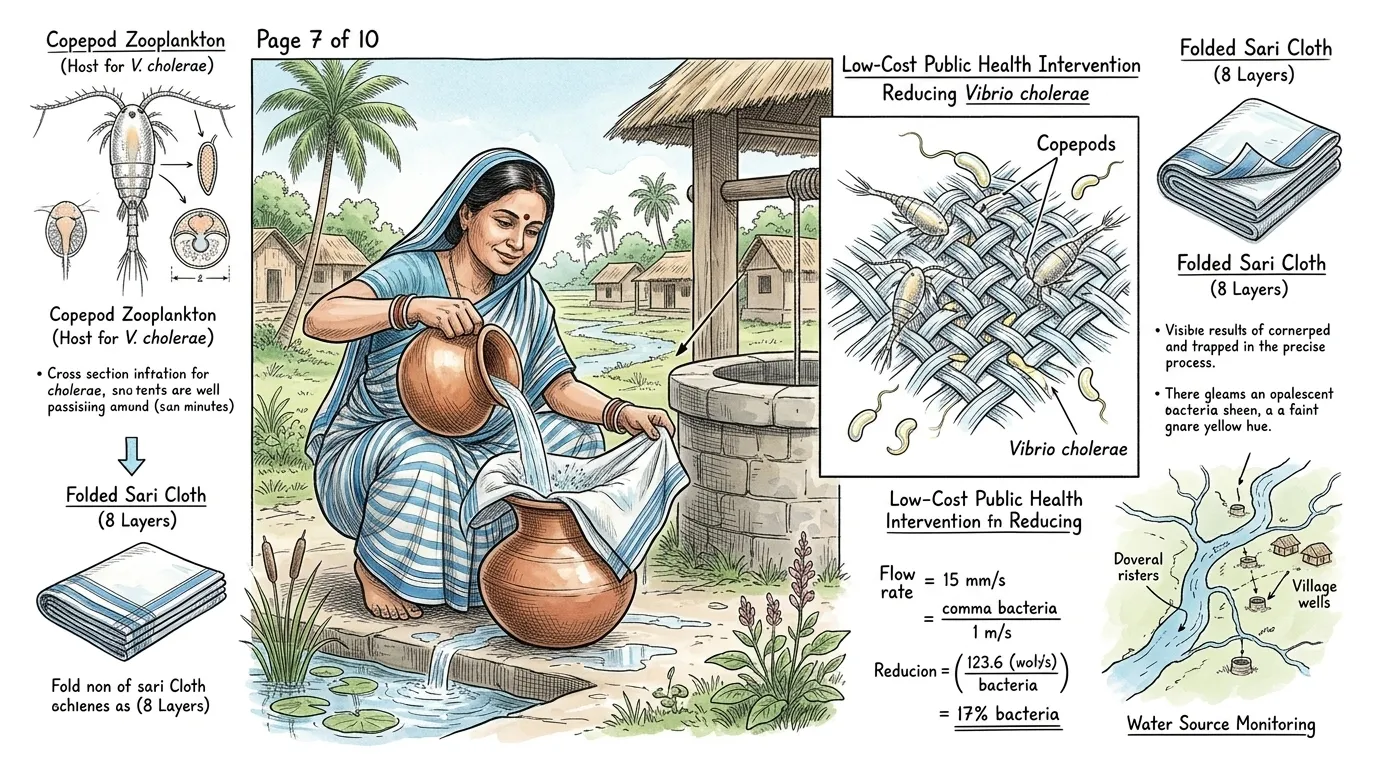
Beyond prediction, Colwell's work also led to remarkably simple yet effective interventions. Understanding the strong association between Vibrio cholerae and copepods, which are tiny, almost invisible to the naked eye, a solution emerged: filtering water. Even a simple sari cloth, folded multiple times, could effectively filter out the copepods – and thus a significant portion of the cholera bacteria – from drinking water. This low-cost, readily available method proved to be a powerful tool for reducing cholera incidence in rural communities, particularly in regions like Bangladesh. It was a testament to Colwell's holistic approach, combining cutting-edge satellite technology with traditional knowledge and accessible public health measures, demonstrating that profound scientific understanding can yield both high-tech and incredibly practical solutions.
Fact: Sari Cloth Filtration. Removing Copepods. Reducing Vibrio cholerae. Low-Cost Public Health Intervention. Rural Bangladesh.
Page 8
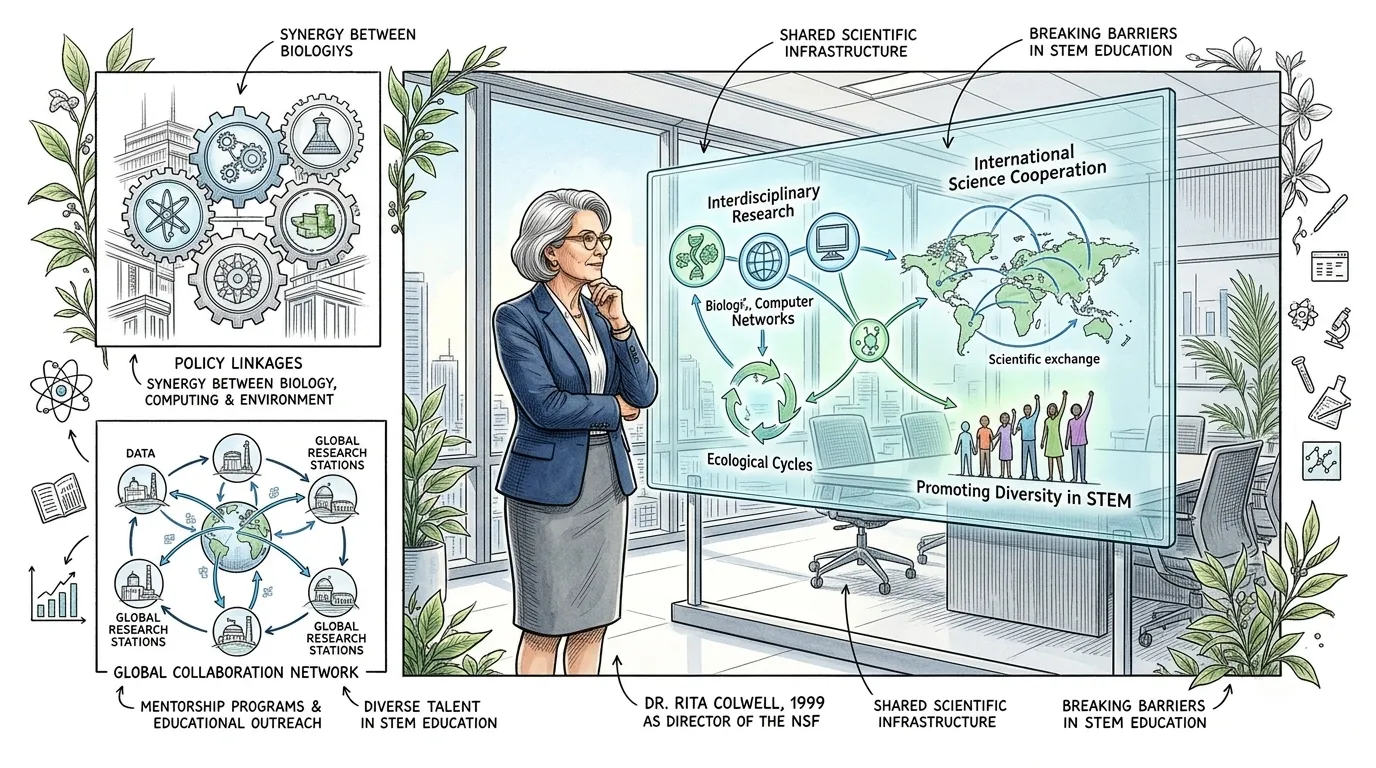
Dr. Rita Colwell's career transcended microbial ecology. As the 11th Director of the National Science Foundation from 1998 to 2004, she championed interdisciplinary research and international scientific cooperation, foresightedly recognizing that the greatest challenges of the 21st century would require blending fields like biology, computing, and environmental science. Her tenure saw significant investments in nanotechnology, bioinformatics, and environmental research, shaping the trajectory of American science for decades. She became a vocal advocate for increasing the participation of women and underrepresented minorities in science and engineering, ensuring that the scientific pipeline reflected the diverse talent needed to tackle complex global issues. Her impact extended far beyond her groundbreaking cholera research, leaving an indelible mark on scientific policy and administration.
Fact: Dr. Rita Colwell, NSF Director. Championing Interdisciplinary Research. International Science Cooperation. Promoting Diversity in STEM.
Page 9
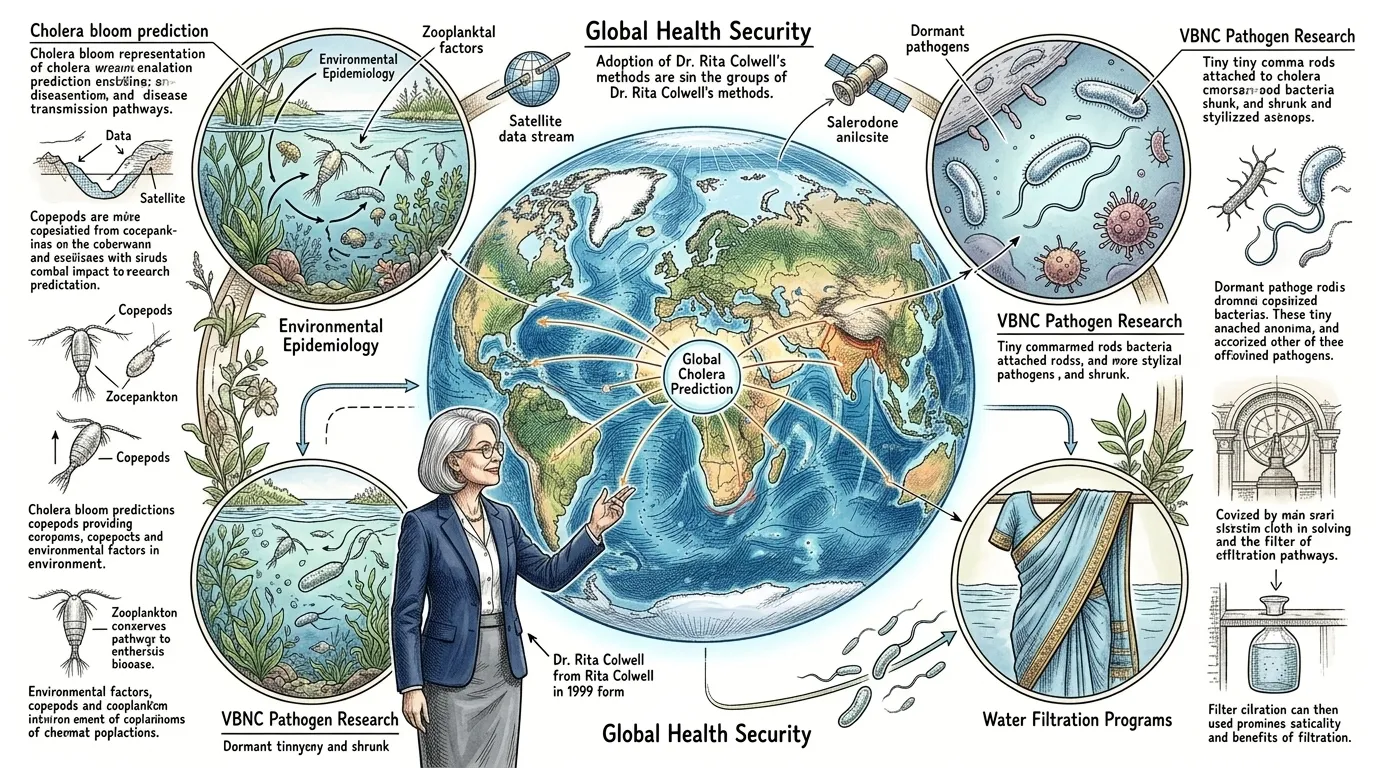
Colwell's work continues to resonate globally. Her methods for cholera prediction using satellite data have been adopted and refined by health organizations worldwide, enhancing preparedness in vulnerable regions. Moreover, her pioneering interdisciplinary approach inspired new fields of environmental epidemiology, demonstrating how understanding complex ecological systems is paramount to global health security. The concept of the viable but nonculturable state now informs research into other pathogens, challenging traditional microbiology and pushing the boundaries of detection. Her legacy is a testament to the power of scientific curiosity, persistence, and the courage to challenge established norms, forging new pathways for understanding and mitigating disease in an interconnected world.
Fact: Global Cholera Prediction. Environmental Epidemiology. VBNC Pathogen Research. Water Filtration Programs. Global Health Security.
Page 10
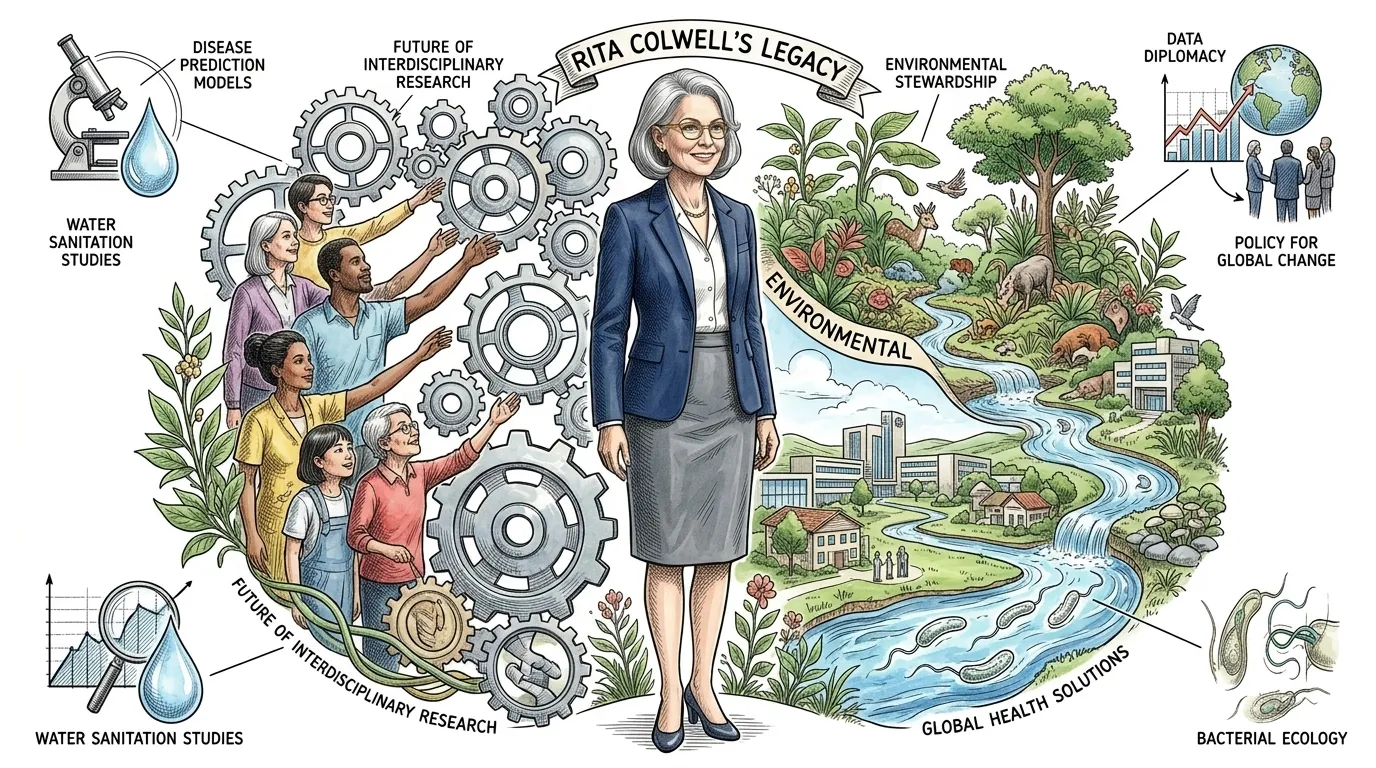
Dr. Rita Colwell's contributions to science are not just historical milestones but living blueprints for future research. Her relentless pursuit of understanding the unseen world of microbes, her daring embrace of satellite technology, and her unwavering advocacy for inclusivity have carved a path for generations to follow. She demonstrated that solving complex problems requires looking beyond disciplinary boundaries and fostering a global community of innovators. The ongoing fight against infectious diseases, the imperative of environmental stewardship, and the continuous quest for scientific equity all bear the imprint of her extraordinary vision. Rita Colwell stands as a testament to how one individual, driven by curiosity and courage, can profoundly alter humanity's relationship with its environment and its own health, inspiring a new era of proactive and interconnected science.
Fact: Rita Colwell's Legacy. Future of Interdisciplinary Research. Global Health Solutions. Environmental Stewardship. Scientific Equity and Innovation.
About this story
- Location: Global
- Audience: general readers
Questions and answers
Read Wonder Science on your phone
Wonder Science is available on Android. Get Wonder Science on Google Play.