Rainer Weiss

Rainer Weiss — an illustrated science story, set in Global. 10 illustrated pages, free to read on Wonder Science.
Rainer Weiss — book cover — Wonder Science
Rainer Weiss — an illustrated science story, set in Global. 10 illustrated pages, free to read on Wonder Science.

Page 1
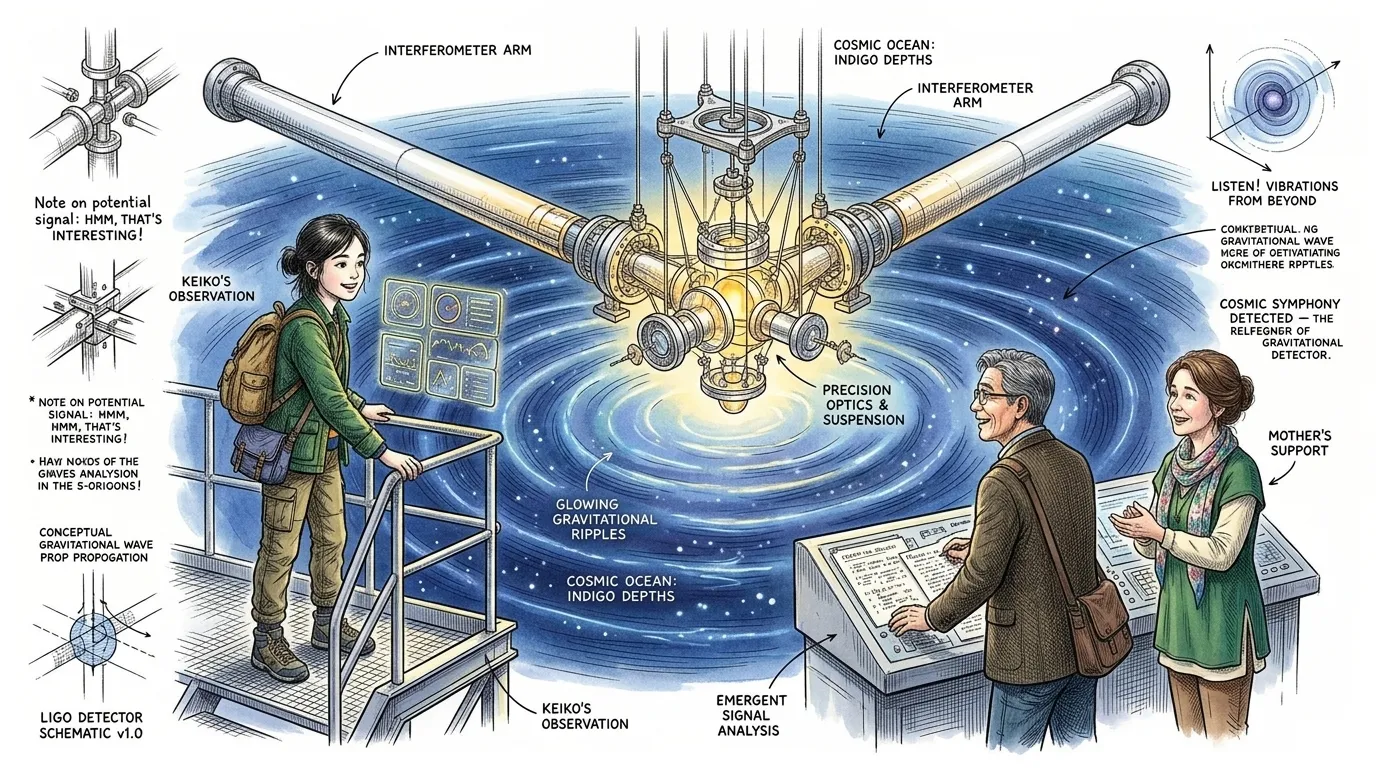
Imagine the universe is a vast ocean, and we are trying to listen for the faintest ripples on its surface. That's what Rainer Weiss dedicated his life to.
Imagine the universe is a vast ocean, and we are trying to listen for the faintest ripples on its surface. That's what Rainer Weiss dedicated his life to. These ripples, called gravitational waves, are like echoes from the most violent events in the cosmos.\n\n Fact: Introduction to the concept of gravitational waves and LIGO.

Imagine the universe is a vast ocean, and we are trying to listen for the faintest ripples on its surface. That's what Rainer Weiss dedicated his life to. These ripples, called gravitational waves, are like echoes from the most violent events in the cosmos.\n\n Fact: Introduction to the concept of gravitational waves and LIGO.

Page 2

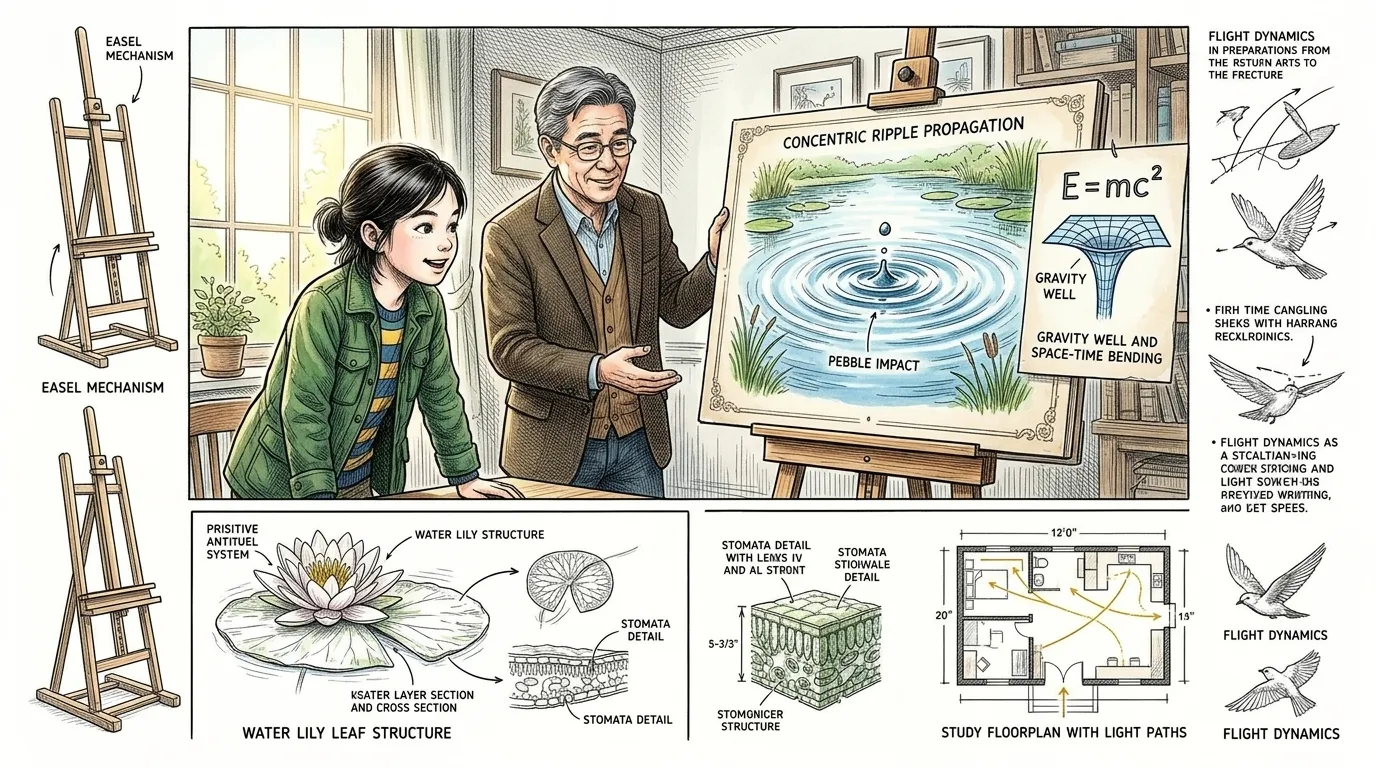
What are gravitational waves? Imagine dropping a pebble into a still pond. The ripples that spread out are similar to what happens when massive objects like…
What are gravitational waves? Imagine dropping a pebble into a still pond. The ripples that spread out are similar to what happens when massive objects like black holes accelerate through space. Albert Einstein predicted these waves over a century ago in his theory of general relativity.\n\n"Keiko, looking at her father: "Dad, Einstein predicted these waves, but they're so tiny, how can we even detect them?""\n\n Fact: Explanation of gravitational waves and Einstein's…

What are gravitational waves? Imagine dropping a pebble into a still pond. The ripples that spread out are similar to what happens when massive objects like black holes accelerate through space. Albert Einstein predicted these waves over a century ago in his theory of general relativity.\n\n"Keiko, looking at her father: "Dad, Einstein predicted these waves, but they're so tiny, how can we even detect them?""\n\n Fact: Explanation of gravitational waves and Einstein's prediction.

Page 3
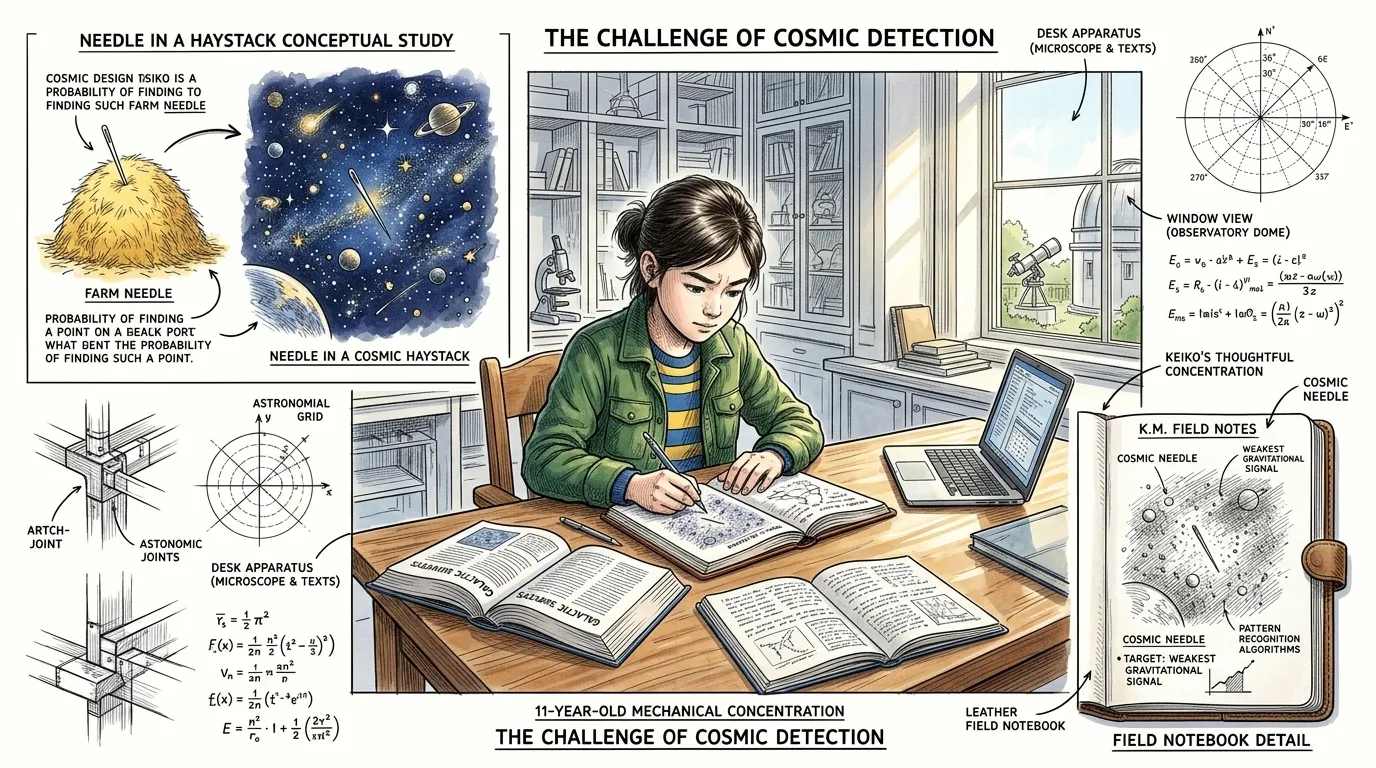
Rainer Weiss was fascinated by the challenge. He knew that detecting these waves would be like measuring the distance to the nearest star with an accuracy…
Rainer Weiss was fascinated by the challenge. He knew that detecting these waves would be like measuring the distance to the nearest star with an accuracy smaller than the width of a human hair! He needed a way to measure incredibly tiny changes in distance.\n\n"Keiko, writing in her notebook: "It's like trying to find a needle in a cosmic haystack!""\n\n Fact: Challenge of detecting gravitational waves.

Rainer Weiss was fascinated by the challenge. He knew that detecting these waves would be like measuring the distance to the nearest star with an accuracy smaller than the width of a human hair! He needed a way to measure incredibly tiny changes in distance.\n\n"Keiko, writing in her notebook: "It's like trying to find a needle in a cosmic haystack!""\n\n Fact: Challenge of detecting gravitational waves.

Page 4
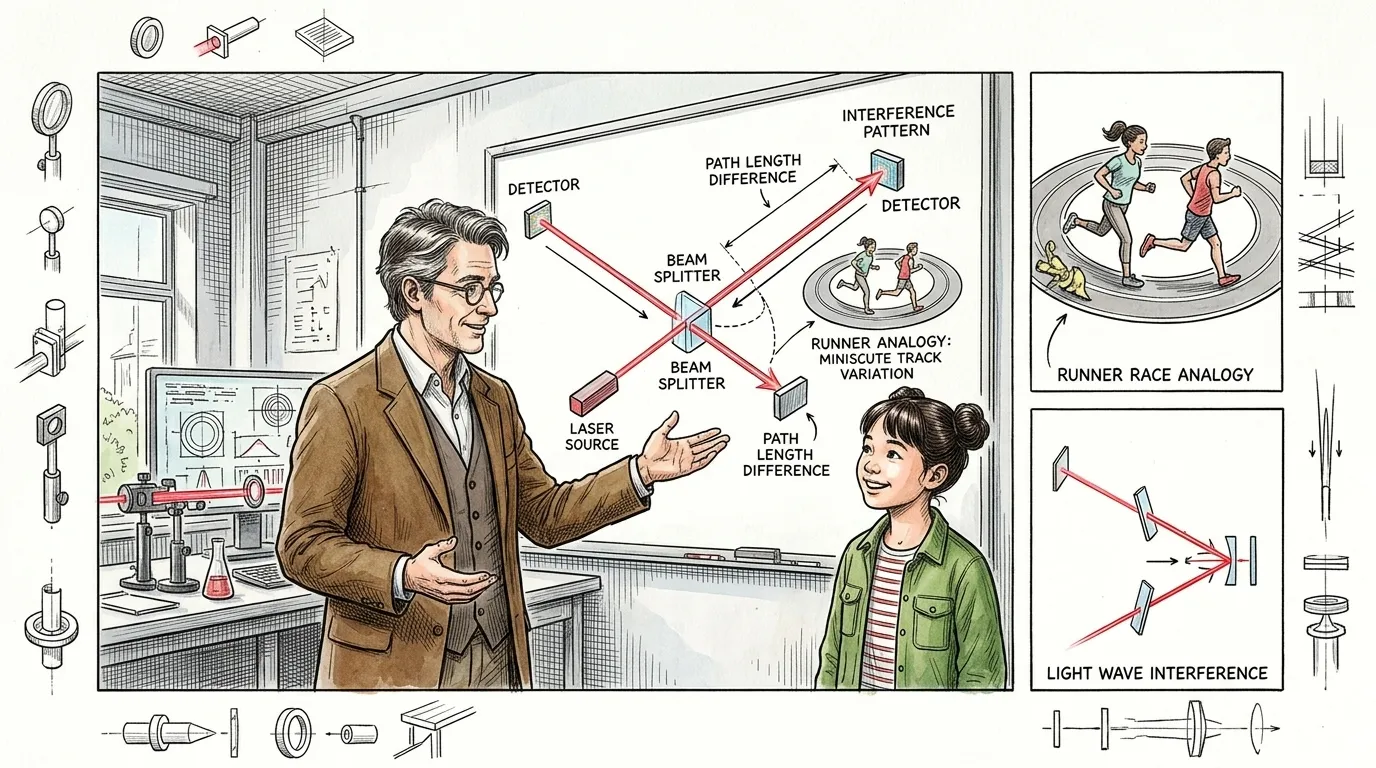
His idea? Build an interferometer, a device that splits a laser beam into two paths, each traveling down a long arm. If a gravitational wave passes through, it…
His idea? Build an interferometer, a device that splits a laser beam into two paths, each traveling down a long arm. If a gravitational wave passes through, it will slightly change the length of the arms, causing the laser beams to interfere with each other. This interference can then be detected.\n\n"Father: "Think of it like two runners racing to the finish line, Keiko.

His idea? Build an interferometer, a device that splits a laser beam into two paths, each traveling down a long arm. If a gravitational wave passes through, it will slightly change the length of the arms, causing the laser beams to interfere with each other. This interference can then be detected.\n\n"Father: "Think of it like two runners racing to the finish line, Keiko. A tiny change in the length of the track will change who wins the race!""\n\n Fact: Explanation of how an interferometer works.

Page 5
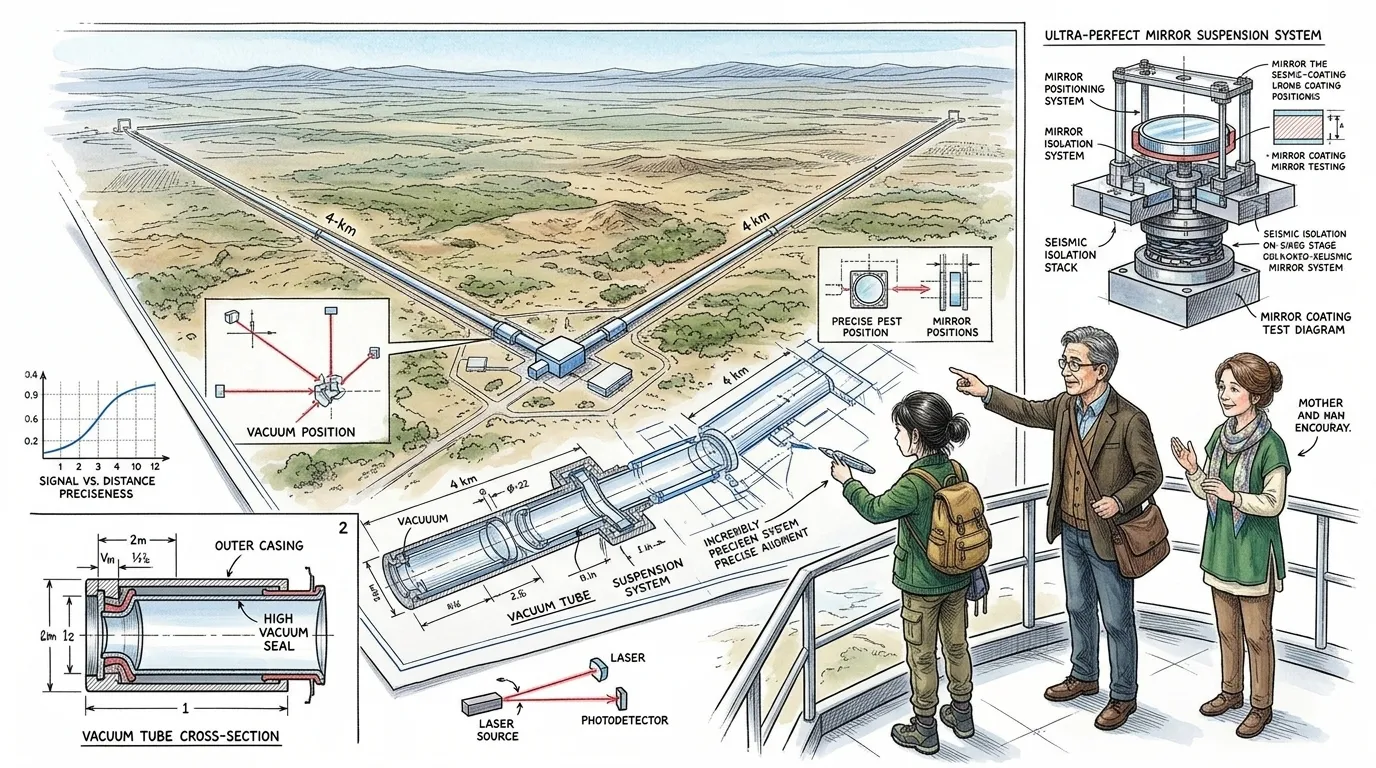
Building LIGO was a monumental task. Each arm was 4 kilometers long! The mirrors had to be so perfect that they would change the shape of the Earth less than…
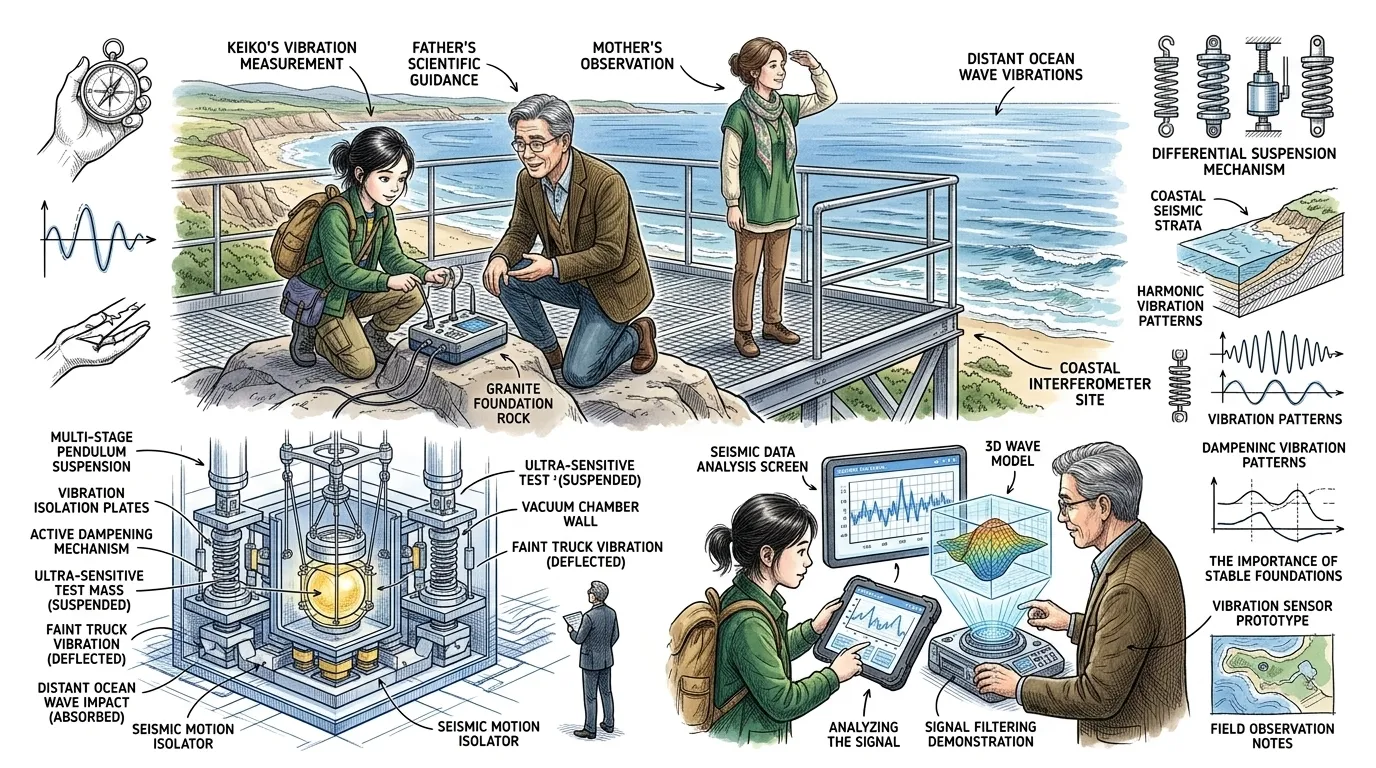
Building LIGO was a monumental task. Each arm was 4 kilometers long! The mirrors had to be so perfect that they would change the shape of the Earth less than the ripples on a cup of coffee. The entire system had to be isolated from vibrations, like trucks driving by and even the motion of the ocean.\n\n Fact: Scale and precision required for LIGO.

Building LIGO was a monumental task. Each arm was 4 kilometers long! The mirrors had to be so perfect that they would change the shape of the Earth less than the ripples on a cup of coffee. The entire system had to be isolated from vibrations, like trucks driving by and even the motion of the ocean.\n\n Fact: Scale and precision required for LIGO.

Page 6
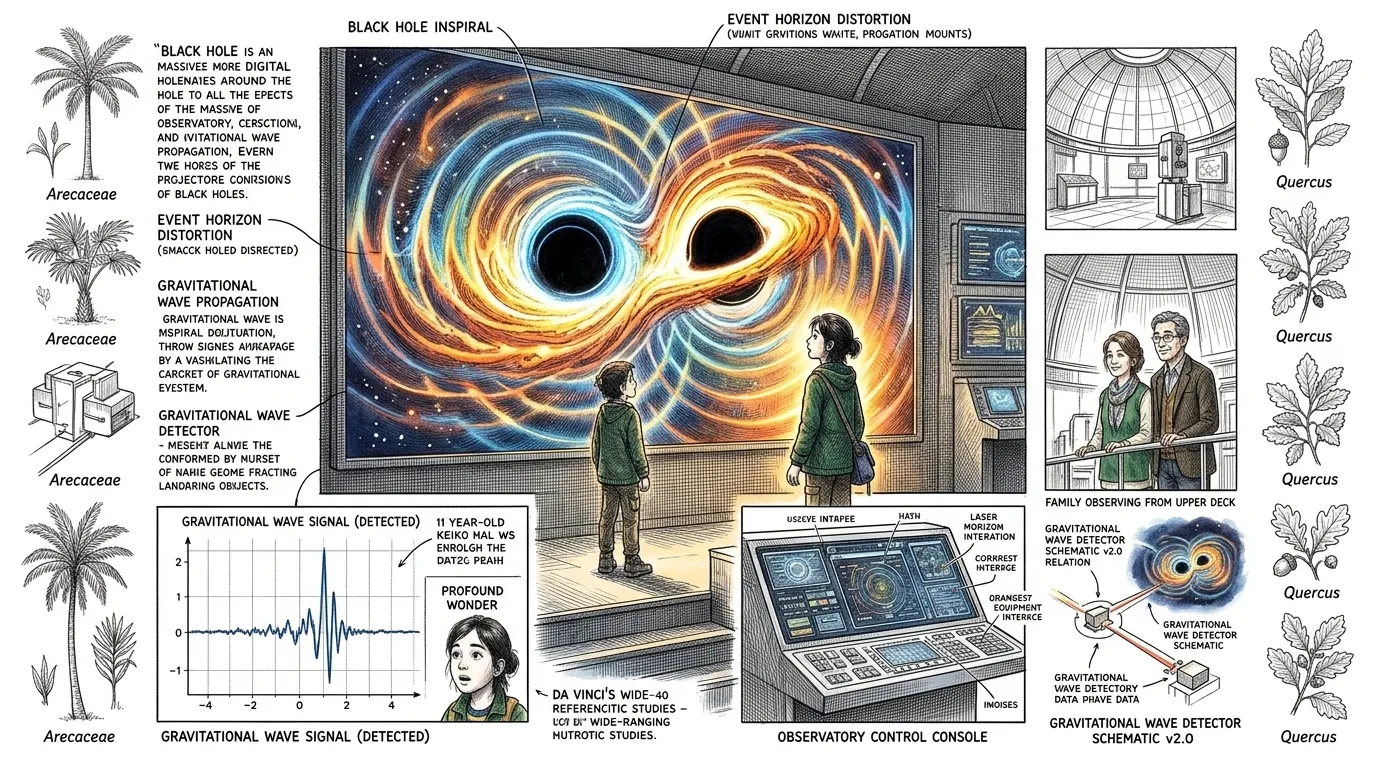
After decades of hard work, LIGO was finally ready. In September 2015, a signal arrived. It was faint, but unmistakable.
After decades of hard work, LIGO was finally ready. In September 2015, a signal arrived. It was faint, but unmistakable. Two black holes, each about 30 times the mass of the Sun, had collided 1.3 billion light-years away! The energy released was greater than the light of all the stars in the observable universe.\n\n"Keiko: "Wow, that's like, bigger than anything I can imagine!""\n\n Fact: Detection of the first gravitational wave.

After decades of hard work, LIGO was finally ready. In September 2015, a signal arrived. It was faint, but unmistakable. Two black holes, each about 30 times the mass of the Sun, had collided 1.3 billion light-years away! The energy released was greater than the light of all the stars in the observable universe.\n\n"Keiko: "Wow, that's like, bigger than anything I can imagine!""\n\n Fact: Detection of the first gravitational wave.

Page 7
The signal matched Einstein's predictions perfectly, confirming his theory of general relativity in a new and profound way.
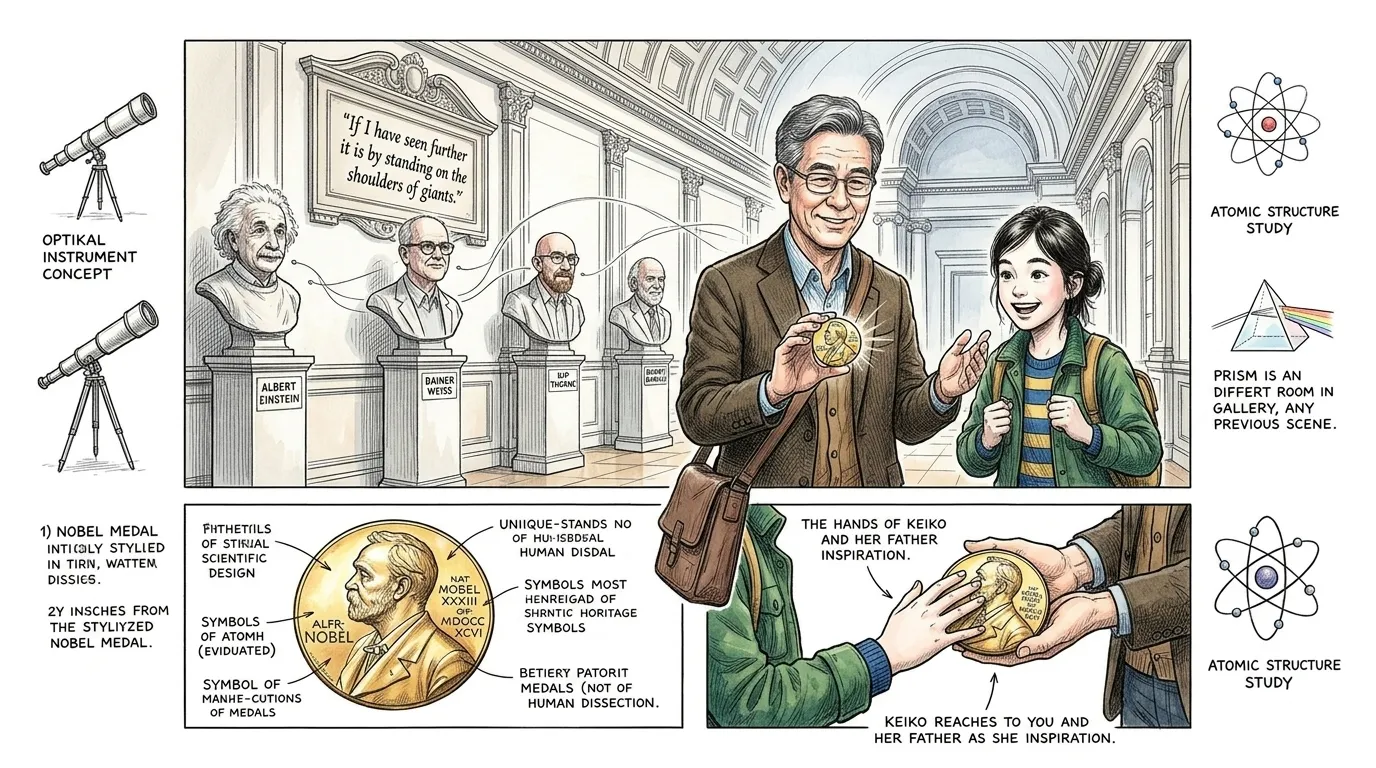
The signal matched Einstein's predictions perfectly, confirming his theory of general relativity in a new and profound way. Weiss and his colleagues, Kip Thorne and Barry Barish, were awarded the Nobel Prize in Physics in 2017 for their groundbreaking work.\n\n"Father: "As Isaac Newton famously said, 'If I have seen further it is by standing on the shoulders of giants.' These scientists built on Einstein's work to achieve something truly incredible!""\n\n Fact: Nobel Prize…

The signal matched Einstein's predictions perfectly, confirming his theory of general relativity in a new and profound way. Weiss and his colleagues, Kip Thorne and Barry Barish, were awarded the Nobel Prize in Physics in 2017 for their groundbreaking work.\n\n"Father: "As Isaac Newton famously said, 'If I have seen further it is by standing on the shoulders of giants.' These scientists built on Einstein's work to achieve something truly incredible!""\n\n Fact: Nobel Prize awarded to Weiss, Thorne, and Barish.

Page 8
The discovery of gravitational waves opened a new window into the universe. We can now 'see' events that are invisible to telescopes, like the collision of…
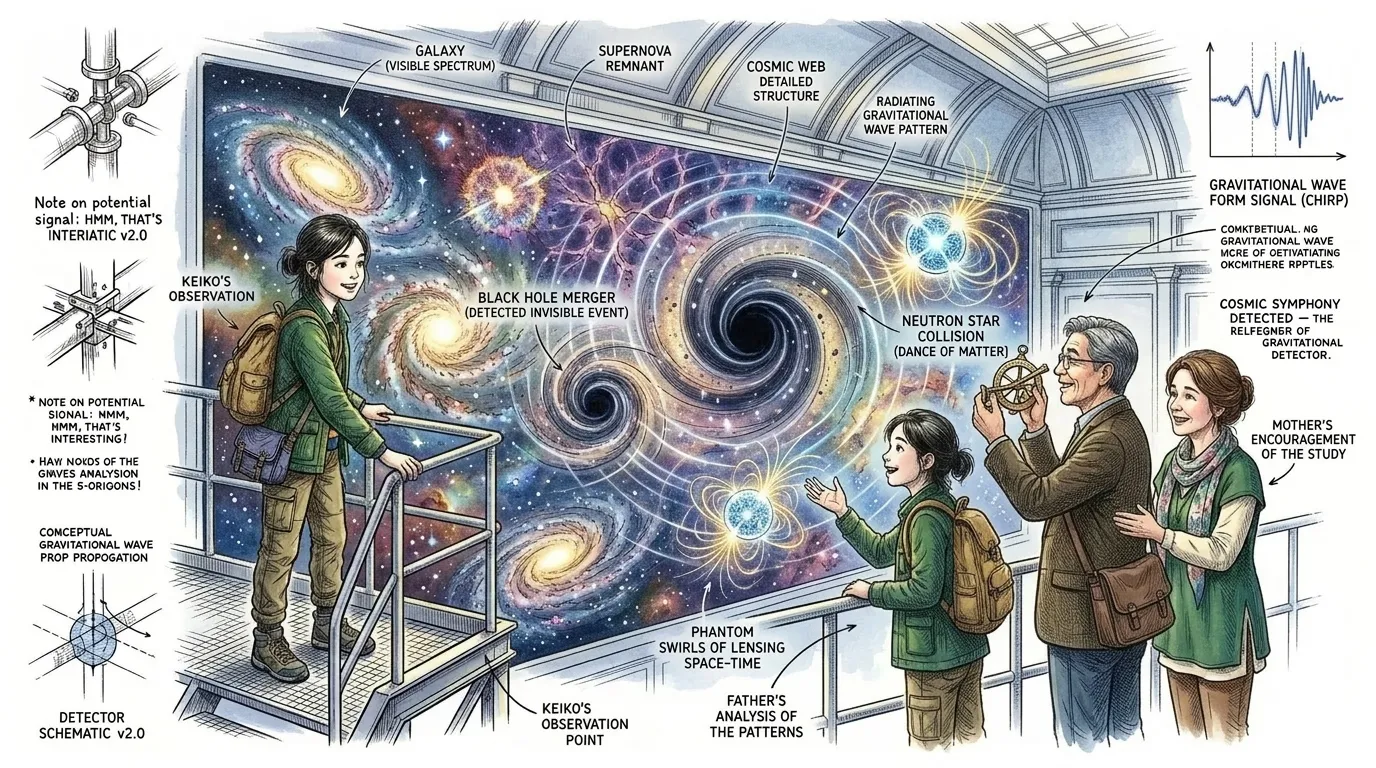
The discovery of gravitational waves opened a new window into the universe. We can now 'see' events that are invisible to telescopes, like the collision of black holes and neutron stars. This helps us understand the formation of galaxies and the nature of gravity itself.\n\n"Keiko: "So, it's like having a brand-new superpower for exploring the universe?""\n\n Fact: Impact of gravitational wave detection on astronomy.

The discovery of gravitational waves opened a new window into the universe. We can now 'see' events that are invisible to telescopes, like the collision of black holes and neutron stars. This helps us understand the formation of galaxies and the nature of gravity itself.\n\n"Keiko: "So, it's like having a brand-new superpower for exploring the universe?""\n\n Fact: Impact of gravitational wave detection on astronomy.

Page 9
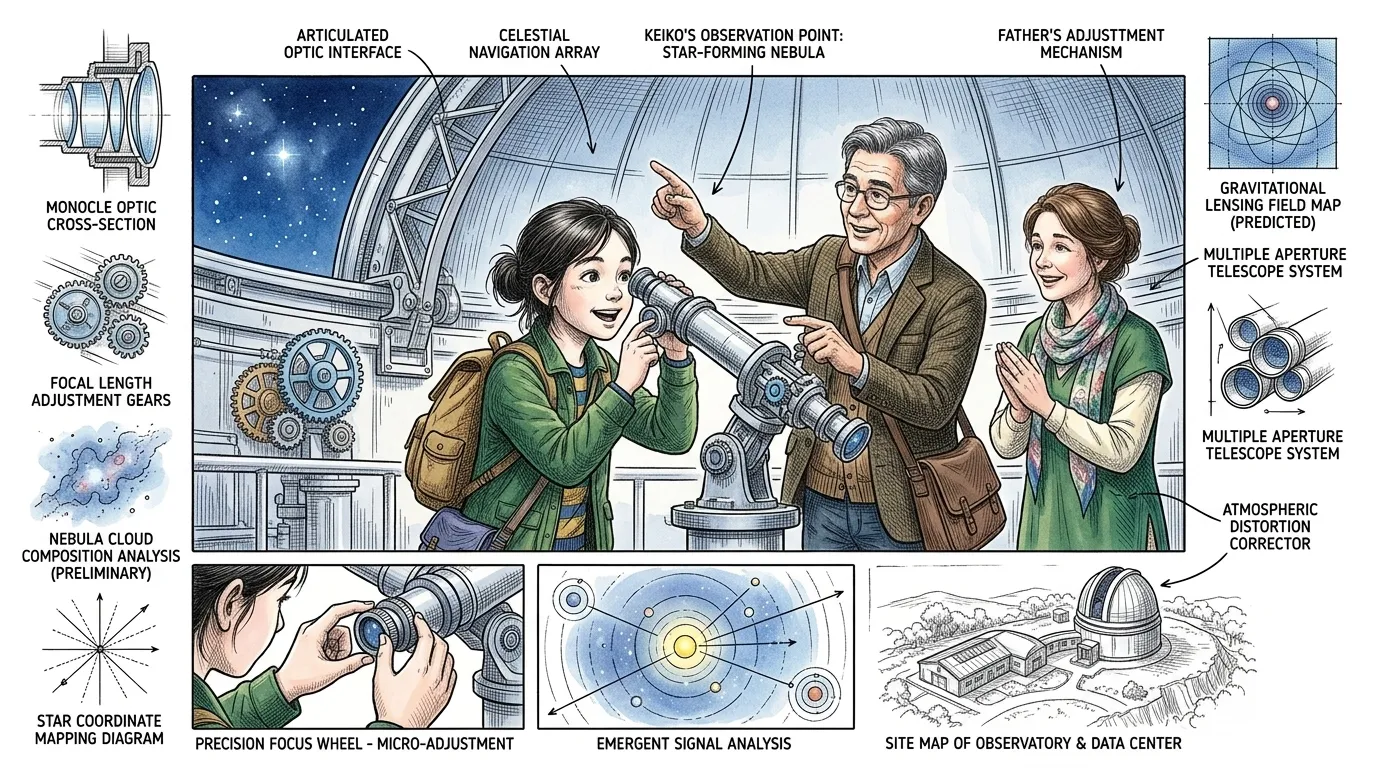
LIGO continues to detect gravitational waves, revealing more and more about the universe. Scientists are working on even more sensitive detectors that will…
LIGO continues to detect gravitational waves, revealing more and more about the universe. Scientists are working on even more sensitive detectors that will allow us to probe deeper into space and time. Who knows what amazing discoveries await us?\n\n Fact: Future of gravitational wave astronomy.

LIGO continues to detect gravitational waves, revealing more and more about the universe. Scientists are working on even more sensitive detectors that will allow us to probe deeper into space and time. Who knows what amazing discoveries await us?\n\n Fact: Future of gravitational wave astronomy.

Page 10
Rainer Weiss's work reminds us that even the faintest signals can reveal the most profound truths about the universe. His dedication to precision and his…
Rainer Weiss's work reminds us that even the faintest signals can reveal the most profound truths about the universe. His dedication to precision and his unwavering curiosity have changed the way we see the cosmos forever.\n\n"Keiko: "Thanks to him, we can now listen to the universe!""\n\n Fact: Legacy of Rainer Weiss and the future of gravitational wave research.

Rainer Weiss's work reminds us that even the faintest signals can reveal the most profound truths about the universe. His dedication to precision and his unwavering curiosity have changed the way we see the cosmos forever.\n\n"Keiko: "Thanks to him, we can now listen to the universe!""\n\n Fact: Legacy of Rainer Weiss and the future of gravitational wave research.

About this story

  • Location: Global
  • Audience: kids (ages 6–12)

Read Wonder Science on your phone

Wonder Science is available on Android. Get Wonder Science on Google Play.

More Wonder Science stories

All Wonder Science stories · Open the library