Paul Ehrlich
Paul Ehrlich — an illustrated science story, set in Global. 10 illustrated pages, free to read on Wonder Science.
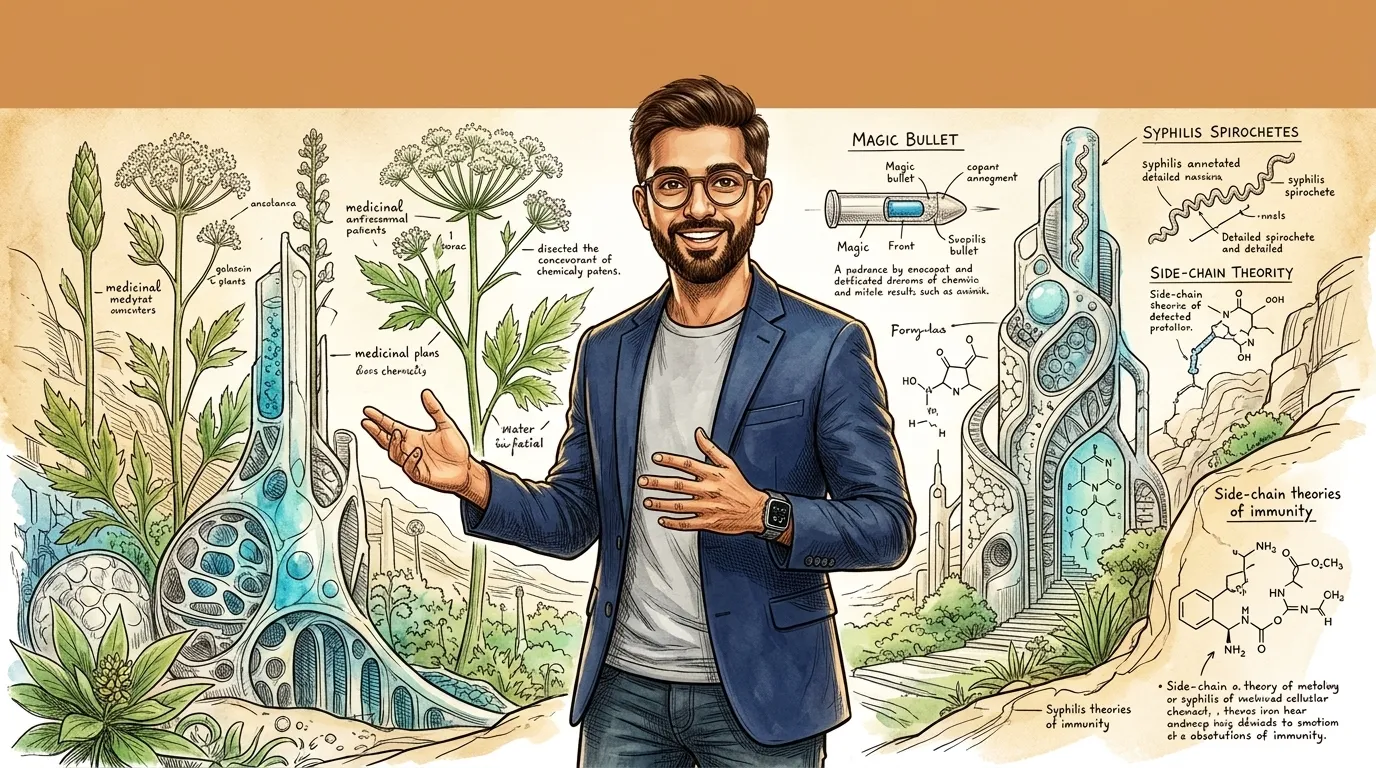
Page 1
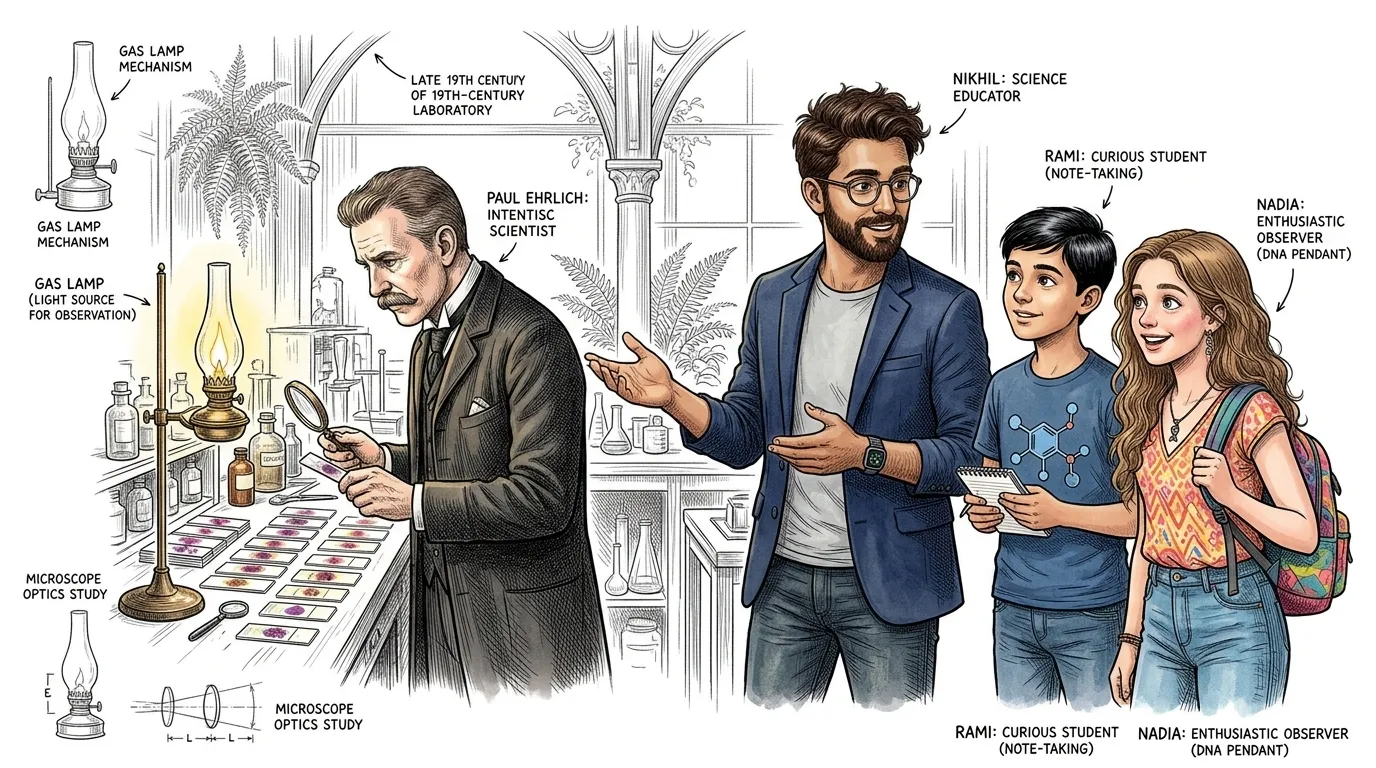
Deep within a bustling late 19th-century German laboratory, the air hums with anticipation and the faint scent of chemicals. Paul Ehrlich, a man of intense focus, meticulously examines rows of stained microscope slides, each representing countless hours of relentless experimentation. He is not just looking at cells; he is searching for a revolution in medicine, a way to precisely target disease without harming the human body itself.
"'This, Rami and Nadia,' Nikhil explained softly, gesturing to a flickering gas lamp illuminating the scene, 'is where a truly world-changing idea took root: the 'magic bullet.' Dr. Ehrlich believed we could find a chemical key for every disease's lock.'"
Page 2
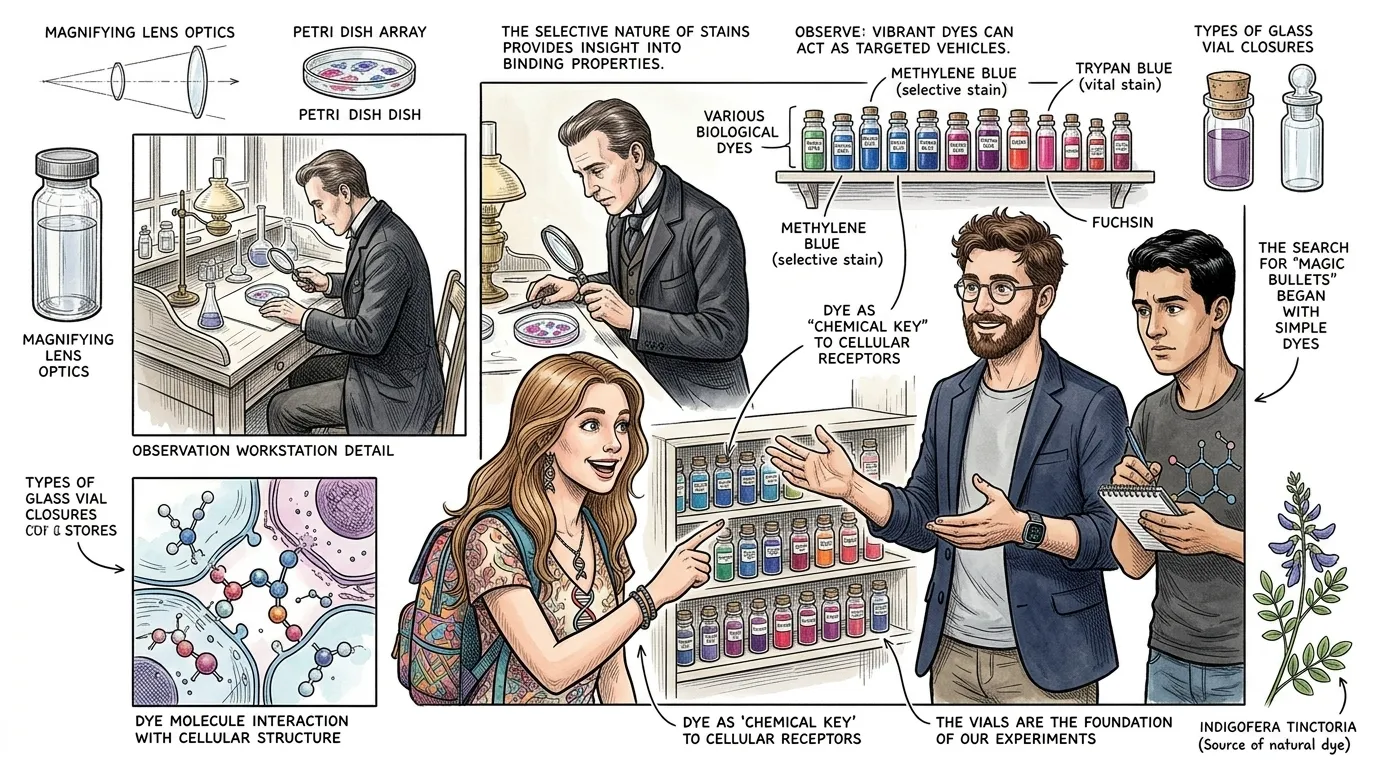
Ehrlich's early career was dominated by a fascinating obsession: dyes. He observed how certain dyes would selectively stain bacteria and specific cells in tissues, while leaving others untouched. This wasn't just aesthetic; it was a profound hint at a deeper biological principle. If a dye could 'choose' its target, could a drug do the same?
"'Look at all these colors!' Nadia exclaimed, her eyes wide as she pointed to a shelf filled with small, labeled vials. 'Why would he collect so many different dyes, Nikhil?' Nikhil smiled. 'He wasn't collecting art, Nadia. He was collecting clues! Each of these dyes, with its unique chemical shape, could attach to specific parts of cells, much like a key fits only one lock. This was the first hint of 'selective toxicity' – the idea that a substance could harm one type of cell, like a disease germ, without hurting healthy cells.'"
Page 3
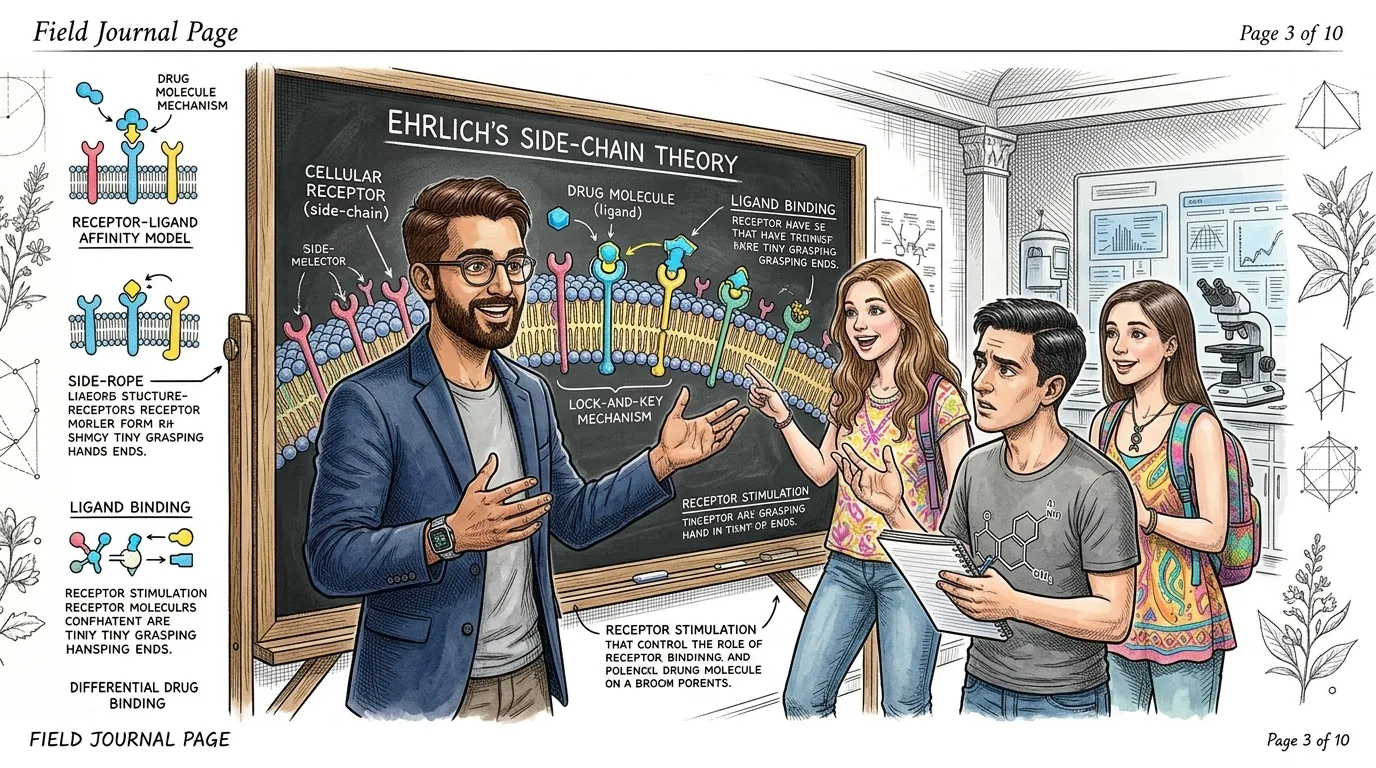
From observing dyes, Ehrlich developed his groundbreaking 'side-chain theory.' He proposed that cells possess specific chemical structures, or 'side-chains,' which act as receptors. These receptors could bind to foreign substances like toxins or, crucially, therapeutic compounds. It was a molecular lock-and-key mechanism long before DNA's structure was known.
"'So, the disease cell has a special lock that only a very specific key can open?' Rami asked, his brow furrowed in concentration. 'Exactly, Rami!' Nikhil affirmed, gesturing towards a complex diagram. 'Dr. Ehrlich realized that if we could design the perfect chemical 'key'—a drug—it would only unlock and destroy the disease, leaving healthy cells untouched. He imagined these 'side-chains' on cells that acted like tiny hands, grasping onto specific molecules.'"
Page 4
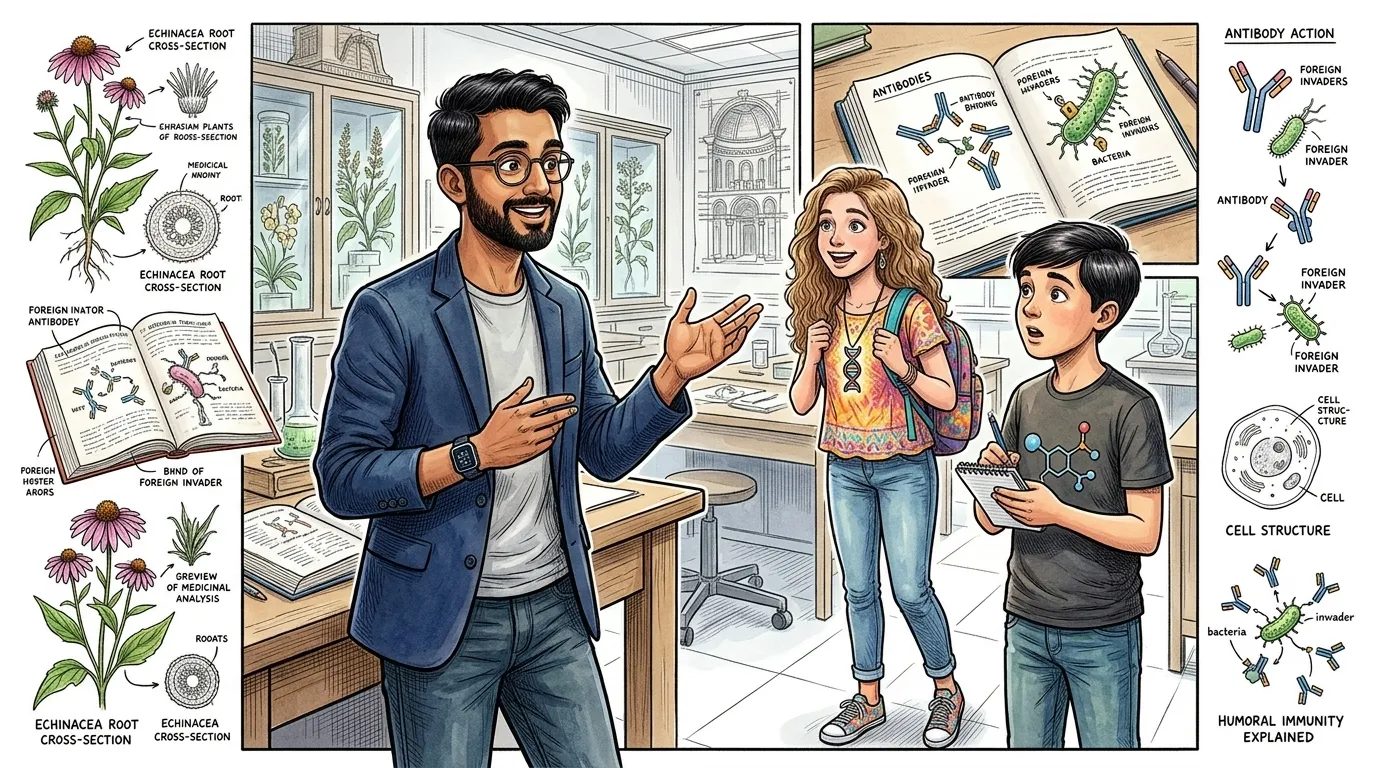
Ehrlich extended his side-chain theory to explain the body's natural defenses: immunity. He proposed that when the body encounters a foreign invader, like bacteria or toxins, certain cells produce specialized 'side-chains'—which we now call antibodies—that specifically bind to and neutralize the threat. He saw the immune system as an intricate chemical arsenal.
"'So our bodies are already making their own 'magic bullets'?' Nadia asked, amazed. 'Even without a doctor giving us medicine?' Nikhil nodded. 'Precisely, Nadia. Ehrlich realized the same 'lock and key' principle applied to our immune system. When a germ enters our body, our cells create specific antibodies, like tiny, customized defenders, to latch onto and neutralize that exact germ. It was a revelation for understanding how we fight illness naturally!'"
Page 5
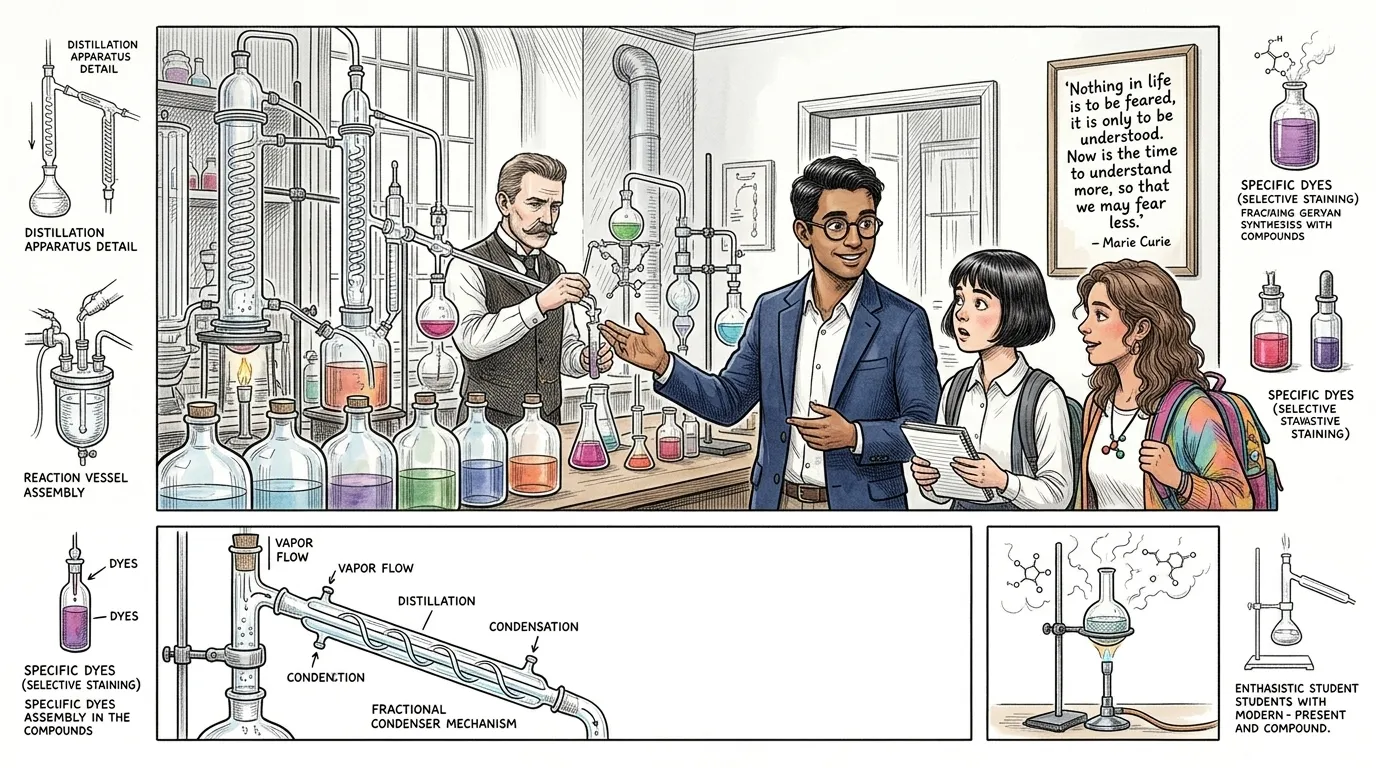
Equipped with his theories, Ehrlich embarked on a daunting quest: to synthesize artificial 'magic bullets' in the laboratory. This wasn't about finding a natural cure; it was about designing a chemical weapon specifically against a disease. It meant synthesizing, testing, and often discarding hundreds, even thousands, of compounds—a monumental undertaking of chemical trial-and-error.
"'It must have taken so much patience to try so many things!' Rami observed, his eyes wide as he looked at endless rows of chemical flasks. Nikhil nodded seriously. 'Absolutely, Rami. Dr. Ehrlich's team worked tirelessly, sometimes synthesizing a new compound every day for years. As Marie Curie, another brilliant scientist, once said, 'Nothing in life is to be feared, it is only to be understood. Now is the time to understand more, so that we may fear less.' Ehrlich embodied that, relentlessly trying to understand how to overcome diseases like syphilis.'"
Page 6
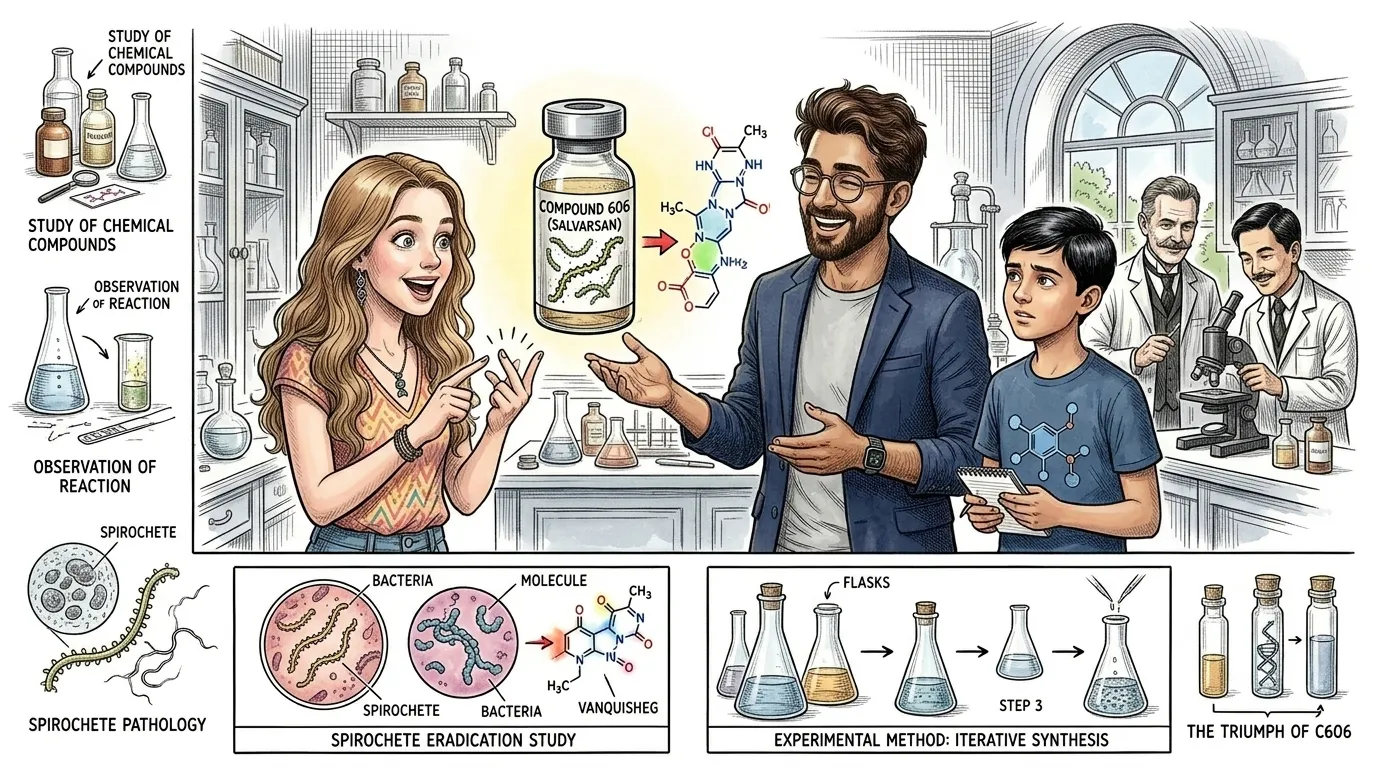
After 605 failed attempts, each one a dead end, Ehrlich and his assistant, Sahachiro Hata, finally found success. Compound 606, an arsenic-based organic compound, proved remarkably effective against the spirochete bacteria that caused syphilis, while being relatively safe for the host. It was a monumental achievement: the first synthetically produced drug specifically designed to target and destroy a pathogen.
"'Six hundred and six tries!' Nadia gasped, counting on her fingers. 'That's so many! I would have given up!' Nikhil chuckled. 'That's the spirit of true discovery, Nadia. They didn't give up! Imagine the joy when Compound 606 finally worked, first in animals, then in humans. It was a triumph of persistence, a true 'magic bullet' that changed medicine forever. They named the drug Salvarsan.'"
Page 7
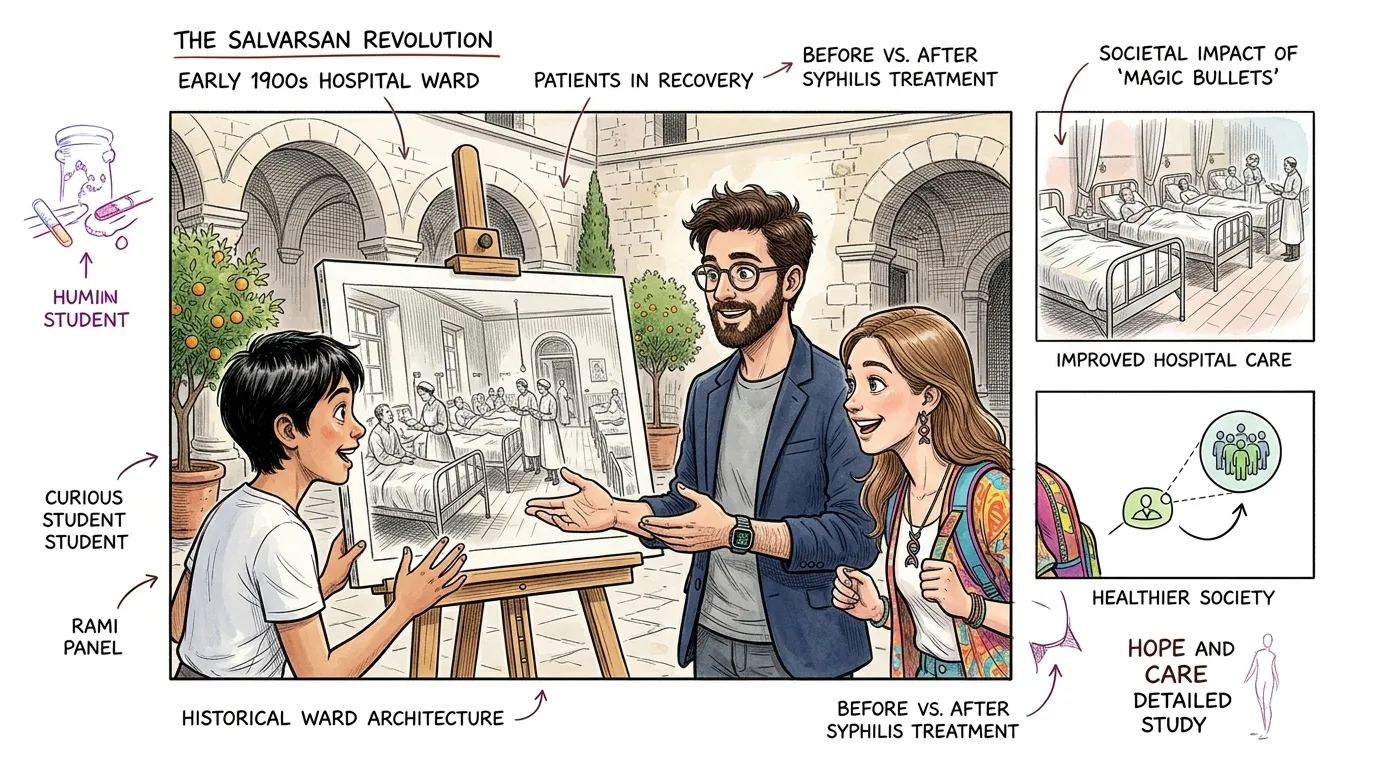
The introduction of Salvarsan in 1910 marked the dawn of modern chemotherapy. For the first time, physicians had a potent chemical weapon against a devastating infectious disease, transforming the lives of countless patients. Ehrlich's work ushered in an era where scientists could rationally design drugs rather than solely relying on natural remedies or serendipitous discoveries.
"'So many people must have been helped!' Rami exclaimed, looking at a historical photo of a hospital ward. Nikhil nodded. 'Indeed, Rami. Before Salvarsan, syphilis was a terrifying, often incurable disease with devastating effects. This drug offered hope and a real chance at recovery. It proved that Ehrlich's 'magic bullet' idea wasn't just a theory; it was a powerful reality that could save lives.'"
Page 8
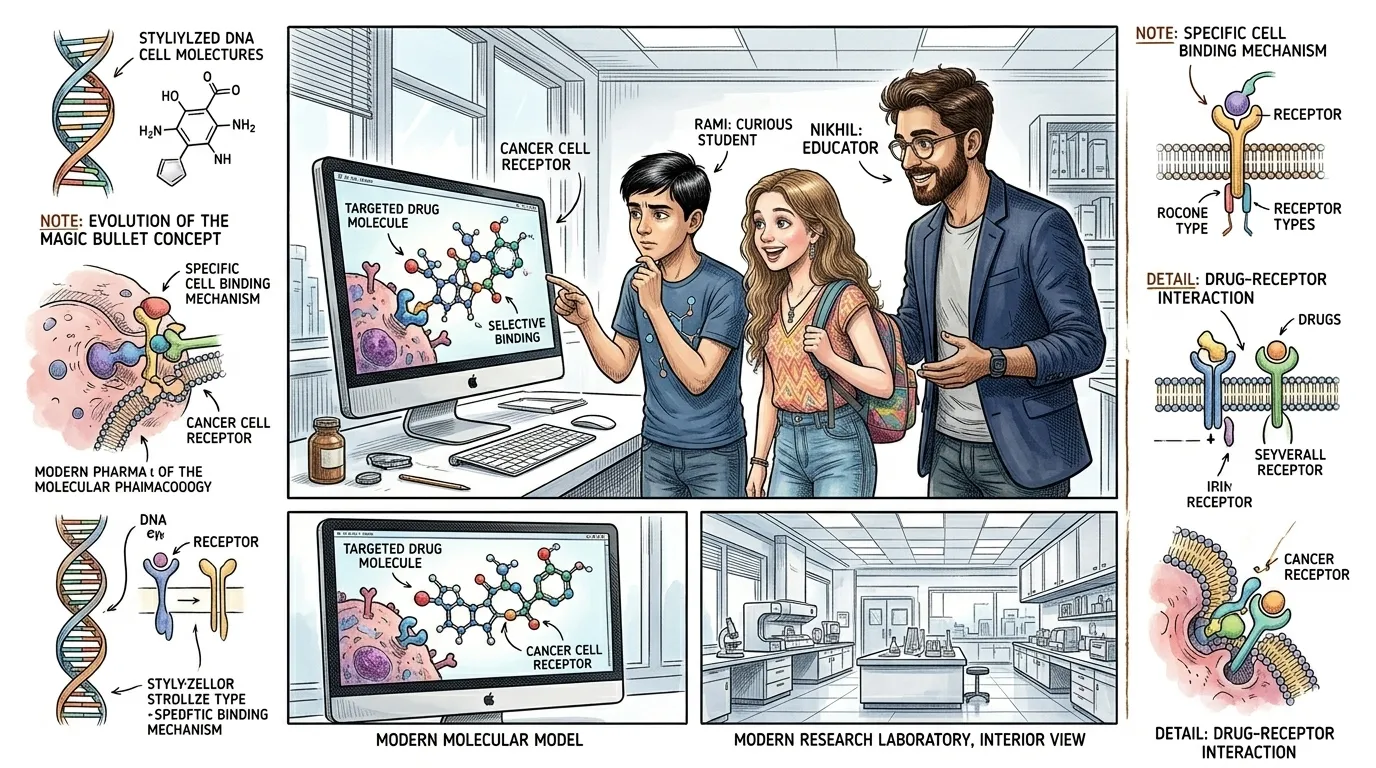
Ehrlich's fundamental concept of selective toxicity—designing compounds that target specific disease components while sparing healthy tissues—became the bedrock of all subsequent chemotherapy. From antibiotics to anti-cancer drugs, modern medicine owes a profound debt to his pioneering vision. The search for the perfect 'magic bullet' continues, but now with vastly more sophisticated tools.
"'It's still about finding those special 'keys' for the 'locks,' isn't it?' Rami asked, pointing to a complex molecule on a computer screen. 'Yes!' Nadia chimed in, excitedly. 'Like Dr. Ehrlich's colorful keys, but super-sized and super-smart, aimed at just one lock!' Nikhil beamed. 'Precisely, Nadia! Today, we use targeted therapies, immunotherapies, and even gene therapies all built on Ehrlich's foundational idea. We're still refining the 'magic bullet' concept for diseases like cancer, making drugs that specifically seek out and destroy only the harmful cells.'"
Page 9
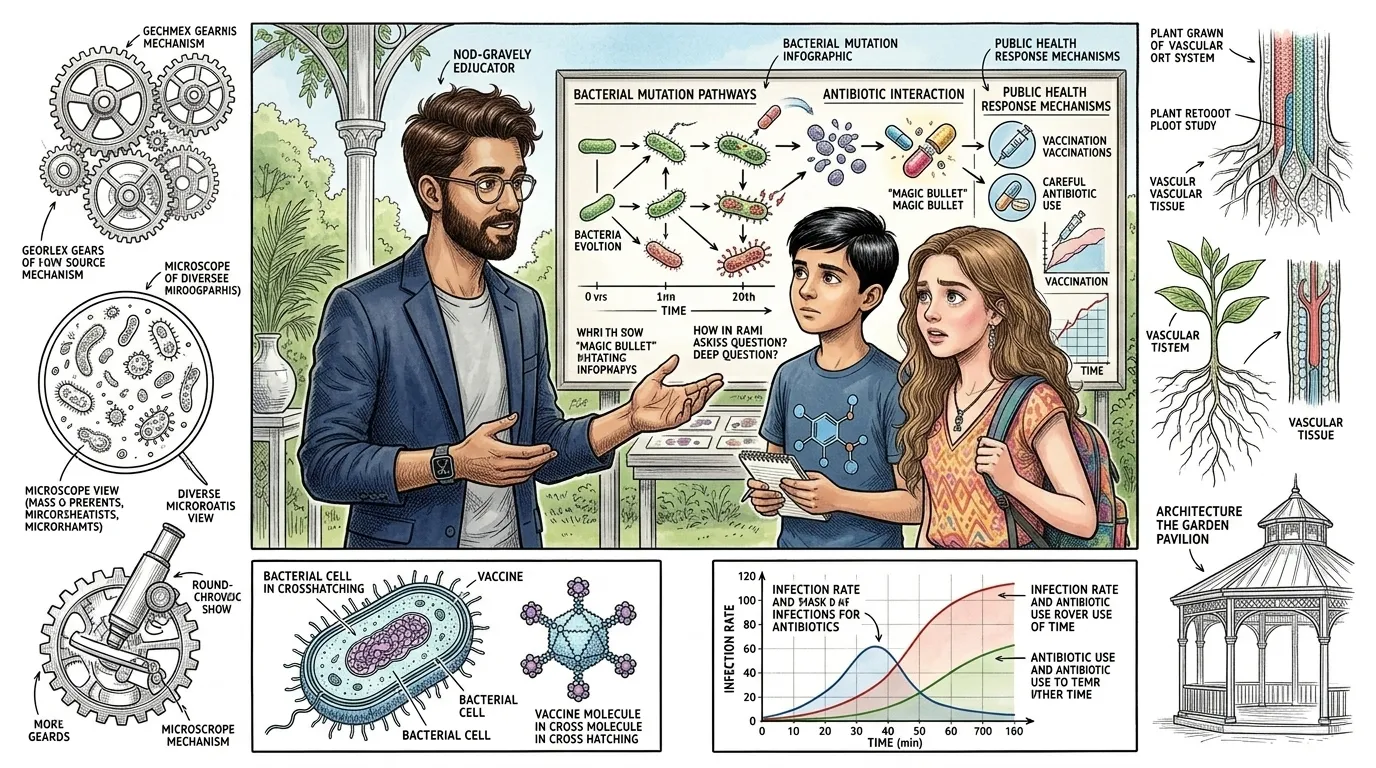
Ehrlich's work also had far-reaching implications for other scientific domains. His understanding of specific cellular interactions paved the way for advances in genetics and molecular biology. The rise of drug resistance, a direct consequence of evolutionary pressure on pathogens, highlighted the need for continuous research and informed public health strategies, a complex interplay of biology and societal action.
"'What happens if the germs learn to fight back against the 'magic bullet'?' Rami asked, suddenly serious. Nikhil nodded. 'That's a very important question, Rami. Just like living things adapt, bacteria and viruses can evolve to resist our drugs. This is why we need new drugs constantly, and why public health campaigns, like vaccinations and careful use of antibiotics, are so important. It's a continuous race between medicine and evolution.'"
Page 10
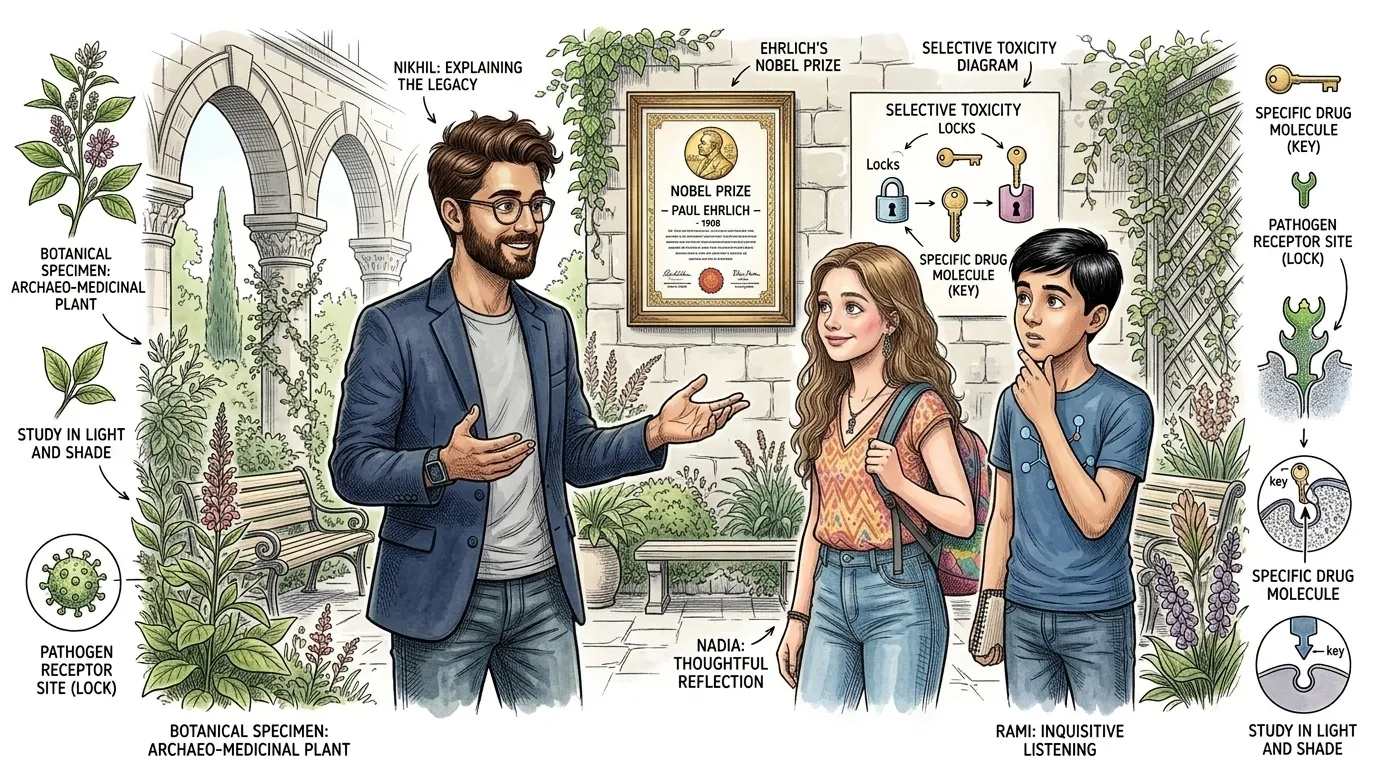
Paul Ehrlich, a Nobel laureate, left an indelible mark on medicine. His conceptual framework—the idea of selective toxicity and the 'magic bullet'—remains a guiding principle in pharmacology. His relentless pursuit of chemical solutions for biological problems laid the groundwork for an entirely new therapeutic paradigm, forever changing how humanity combats disease and inspiring generations of scientists to continue the quest for increasingly precise and effective treatments.
"'It's amazing how one idea, like the 'magic bullet,' can change so much, even today,' Nadia said, looking thoughtful. Nikhil smiled. 'That's the power of scientific vision, Nadia. Ehrlich's curiosity about how dyes stained cells led to breakthroughs in immunology, chemotherapy, and public health. His legacy is a constant reminder that understanding the smallest interactions can have the biggest impact on human health.'"
About this story
- Location: Global
- Audience: general readers
Questions and answers
Read Wonder Science on your phone
Wonder Science is available on Android. Get Wonder Science on Google Play.