Nicolaas Bloembergen
Nicolaas Bloembergen — an illustrated science story, set in Global. 10 illustrated pages, free to read on Wonder Science.
Page 1
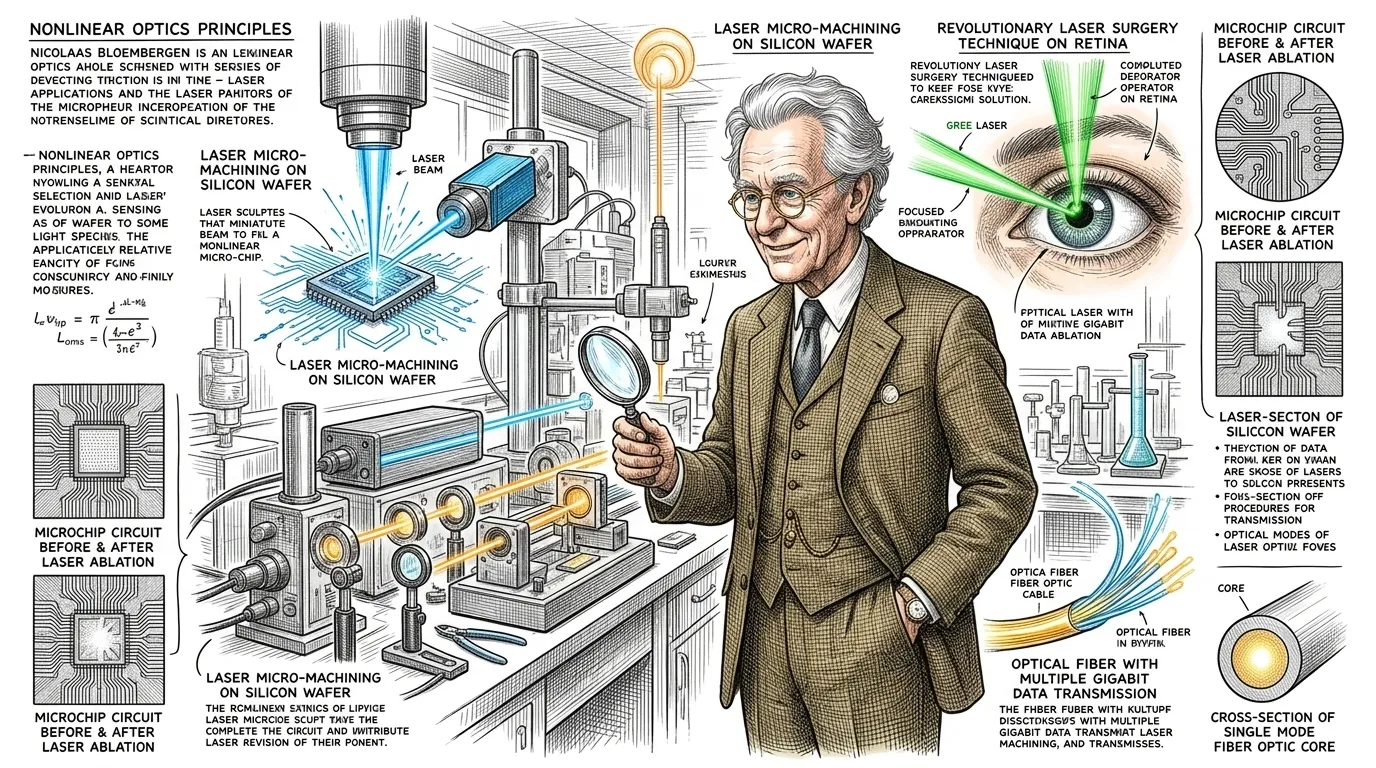
Across industries and scientific frontiers, lasers have fundamentally reshaped our world, delivering unparalleled precision and immense power. From sculpting microelectronics to enabling advanced medical procedures, these concentrated beams of light perform feats once considered impossible. Yet, the full potential of light only emerged when scientists began to understand its most intense, non-linear interactions with matter, a field profoundly shaped by the pioneering work of Nicolaas Bloembergen.
Page 2
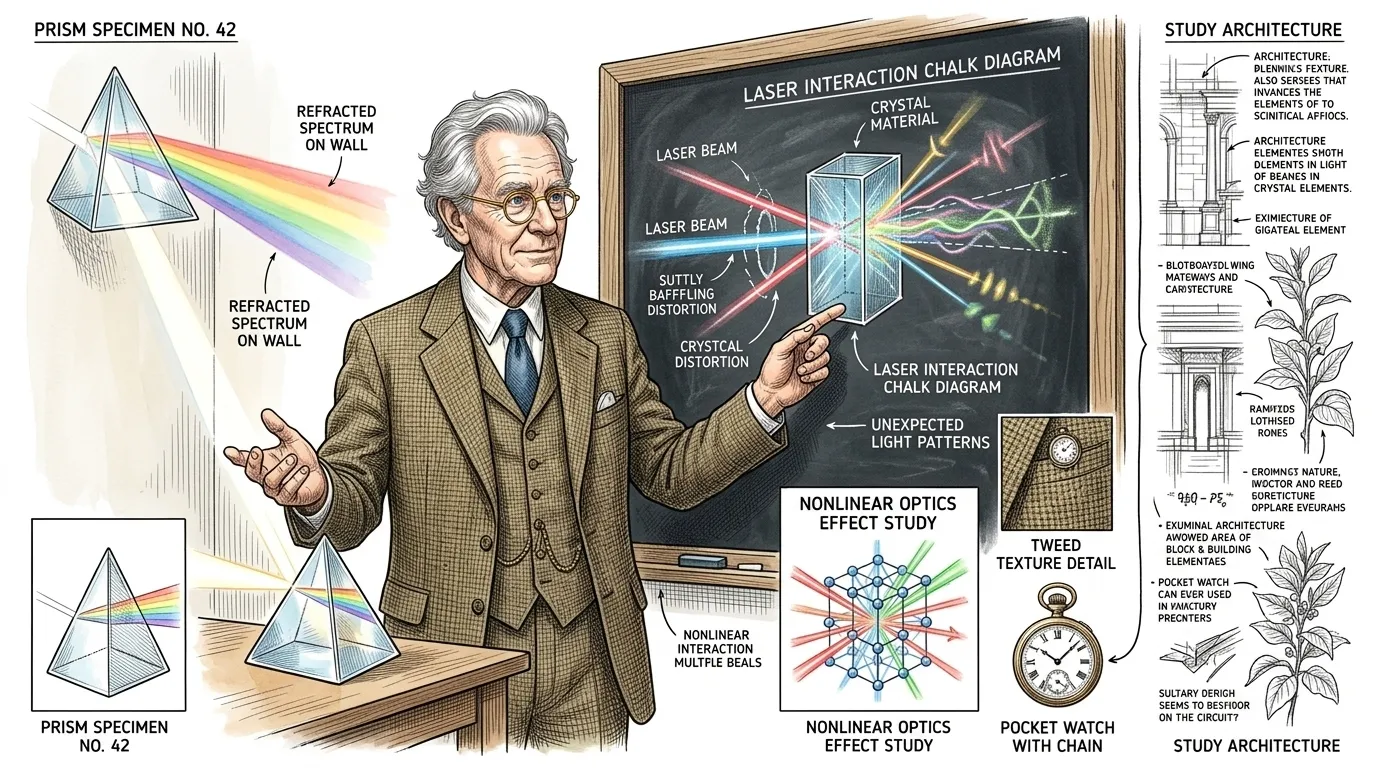
For centuries, the behavior of light was largely understood through classical linear optics, where light waves pass through materials without fundamentally altering their properties. A prism, for instance, splits white light into a rainbow, but the light itself doesn't change the glass. However, as laser technology provided incredibly intense light sources, physicists began to observe baffling new phenomena, signaling a departure from these familiar linear rules.
Page 3
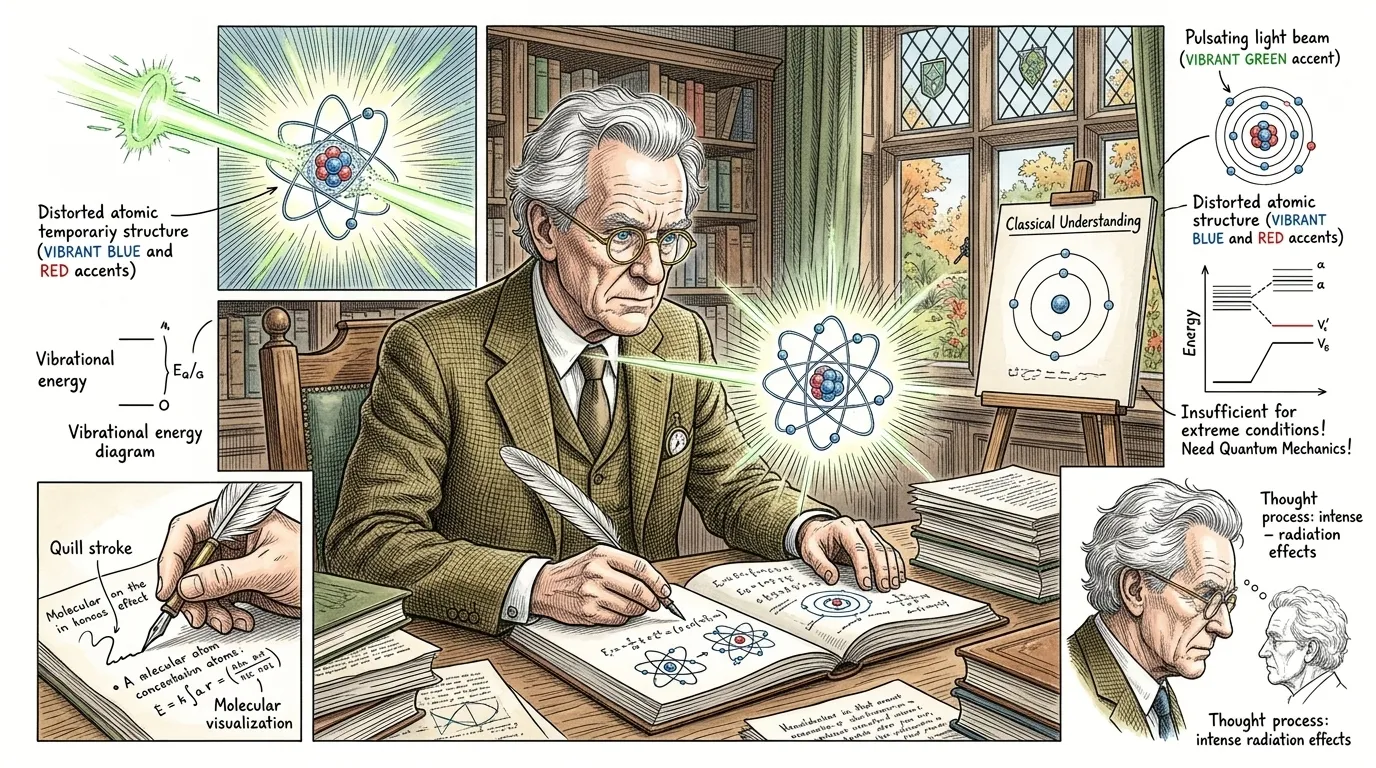
The challenge was profound: how do materials respond when bombarded with light so powerful it can temporarily alter their atomic structure? Standard theories of light-matter interaction simply didn't apply to these extreme conditions. Nicolaas Bloembergen, a Dutch-American physicist, recognized that a new, quantum mechanical framework was necessary to describe these complex, high-intensity interactions, pushing beyond the limits of classical understanding.
Page 4
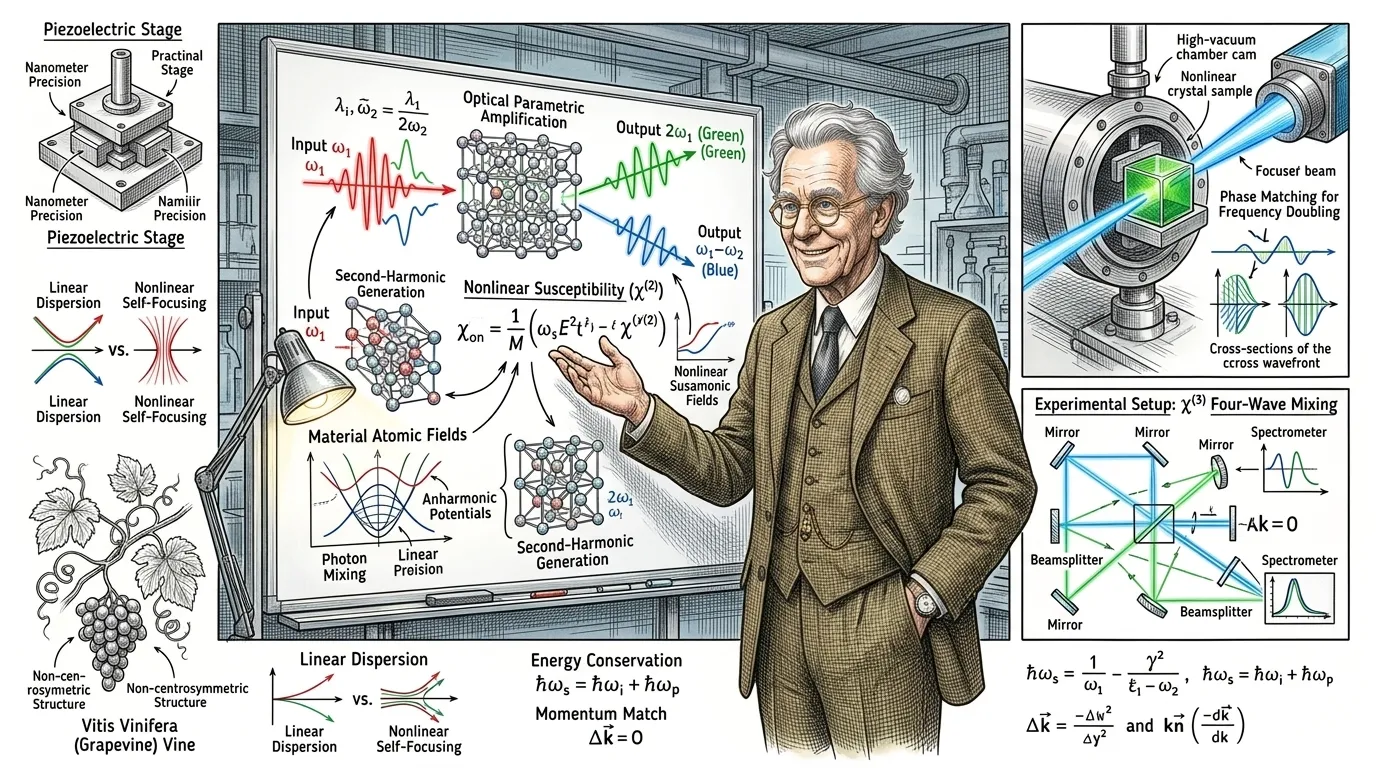
Bloembergen developed a comprehensive quantum theory, introducing the concept of a 'nonlinear susceptibility' to explain how materials respond to intense light. His framework accounted for the creation of new frequencies and other optical distortions that occur when the electric field of light becomes comparable to the atomic fields within a material. This groundbreaking work provided the theoretical bedrock for the entire field of non-linear optics, predicting phenomena previously unimagined.
Page 5
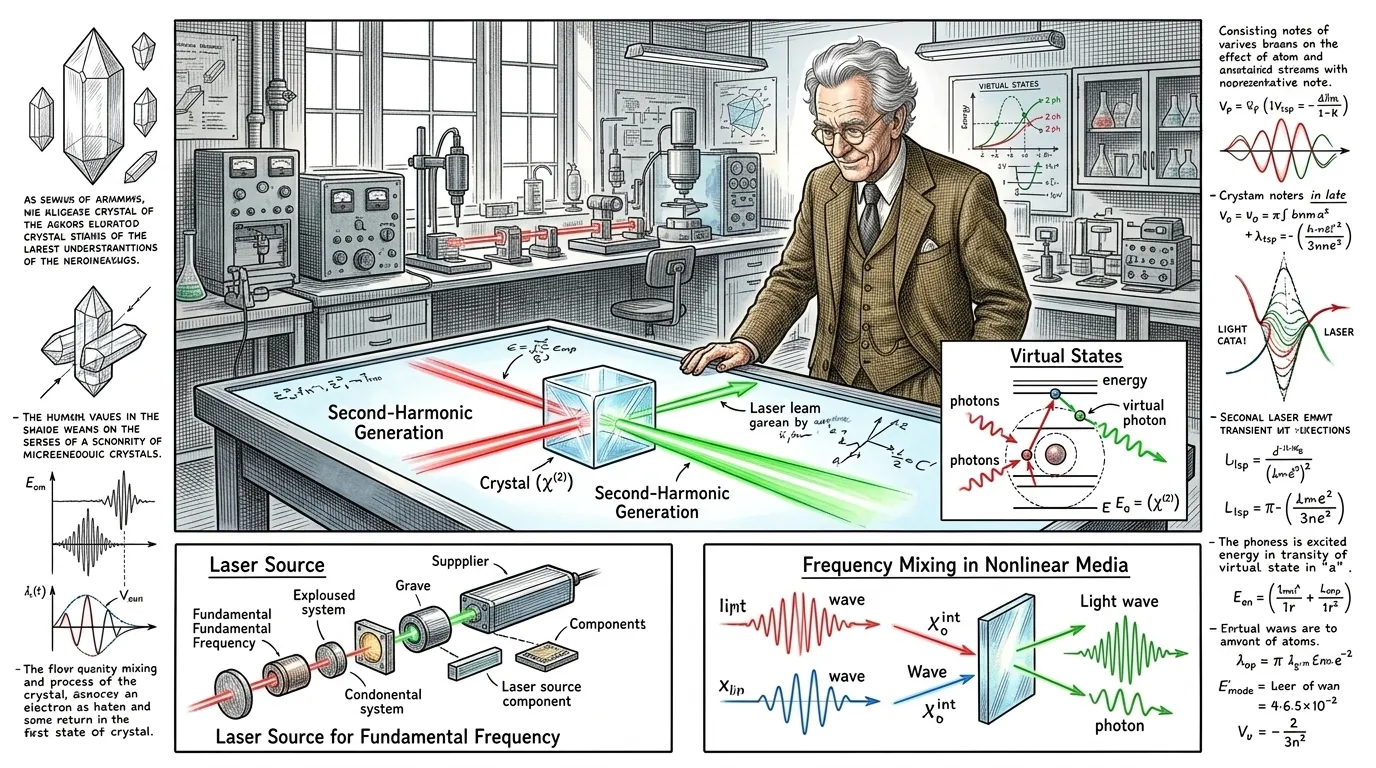
A key insight from Bloembergen's theory was the role of 'virtual states'—transient, unobservable energy levels atoms briefly occupy when perturbed by intense light. These virtual states allow for multi-photon interactions, where multiple photons can be absorbed simultaneously or new photons are created at different frequencies. This explains phenomena like second-harmonic generation, where an intense laser beam passing through certain crystals can literally double its frequency, transforming red light into green light.
Page 6
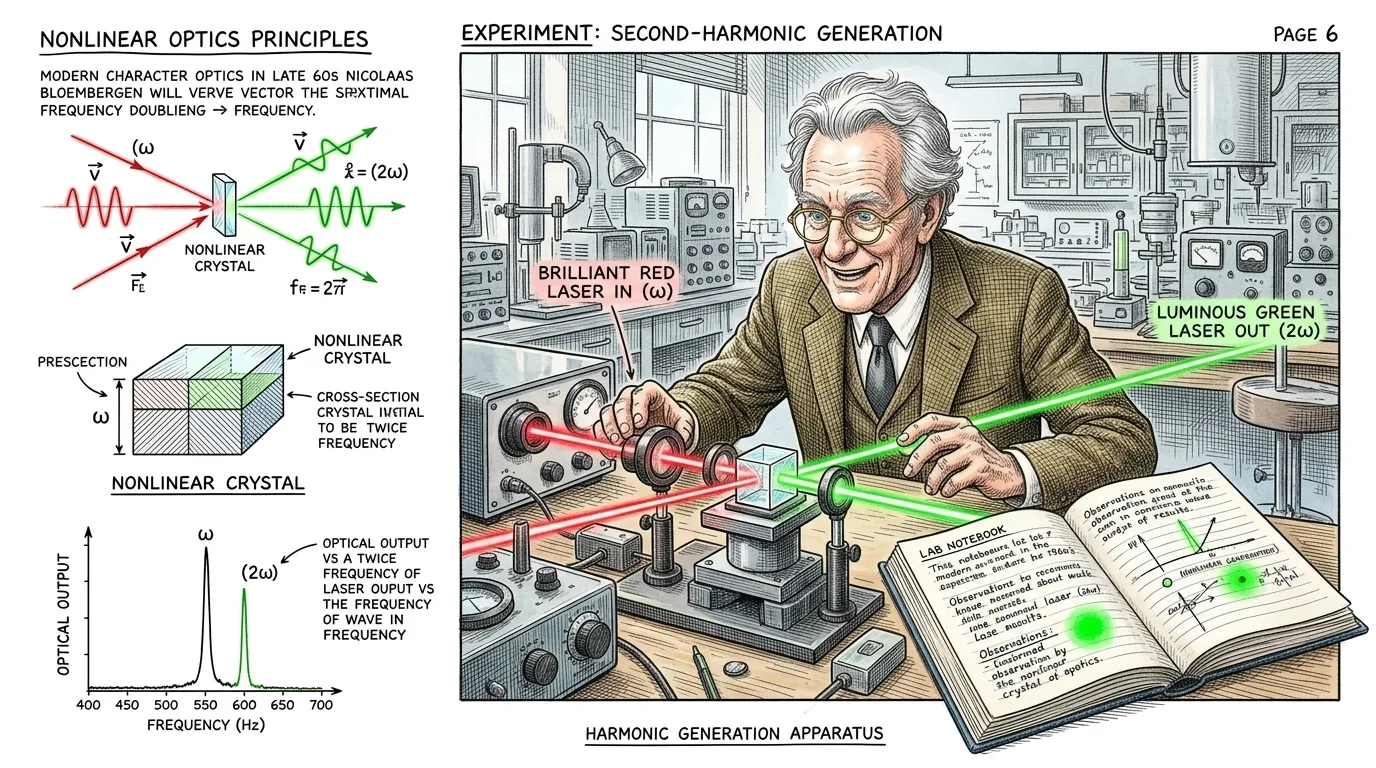
Bloembergen's theoretical predictions were swiftly confirmed by experiments, most notably the demonstration of second-harmonic generation by his team and others in the early 1960s. Observing a laser's frequency double in a crystal was a stunning validation, proving that light could indeed profoundly change its nature through interaction with matter. This ushered in a new era of experimental optics, actively seeking and manipulating these complex light-matter transformations.
Page 7
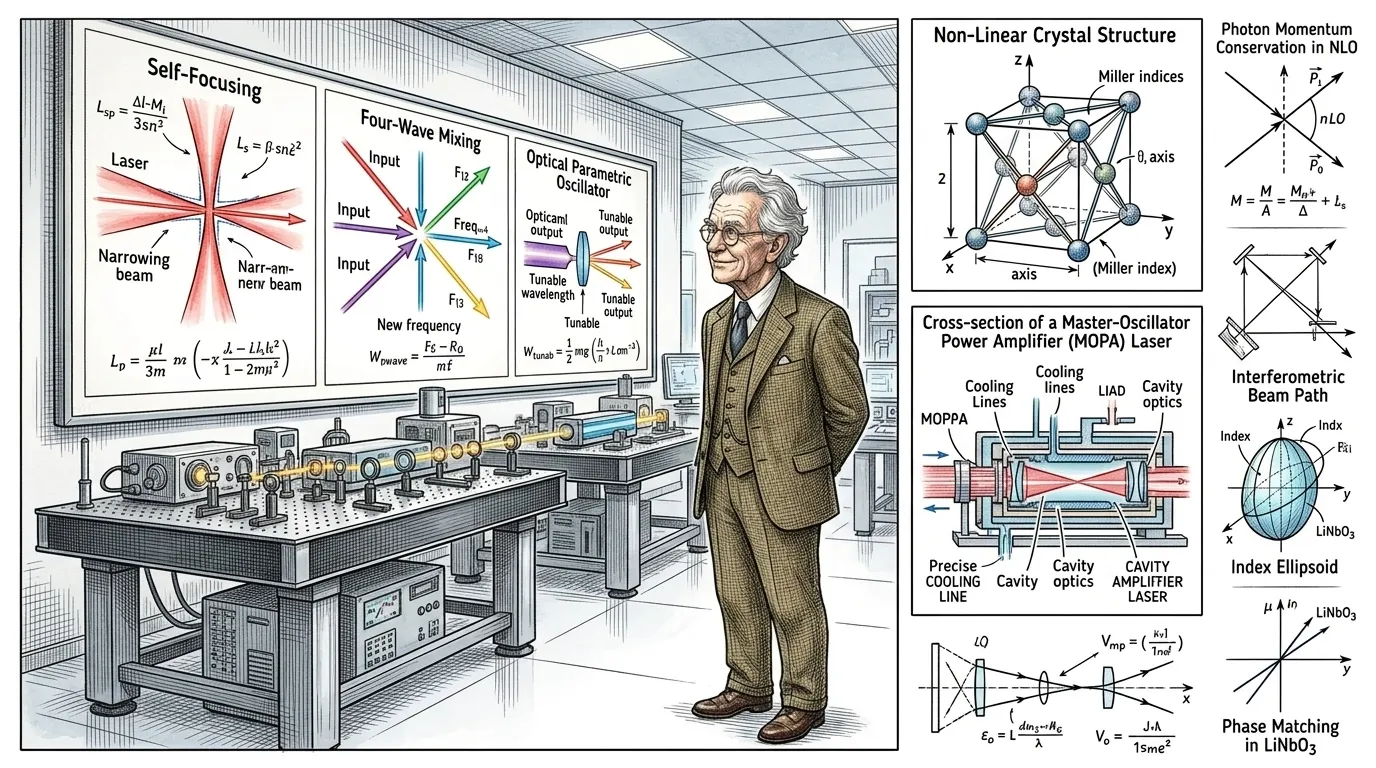
Bloembergen's work extended far beyond frequency doubling, laying the groundwork for understanding a myriad of other non-linear optical effects. These include self-focusing, where an intense laser beam can literally narrow itself as it propagates; four-wave mixing, which allows the creation of new frequencies from multiple input beams; and optical parametric oscillation, enabling tunable laser sources. His theoretical framework became the key to unlocking an entire spectrum of light manipulation capabilities.
Page 8
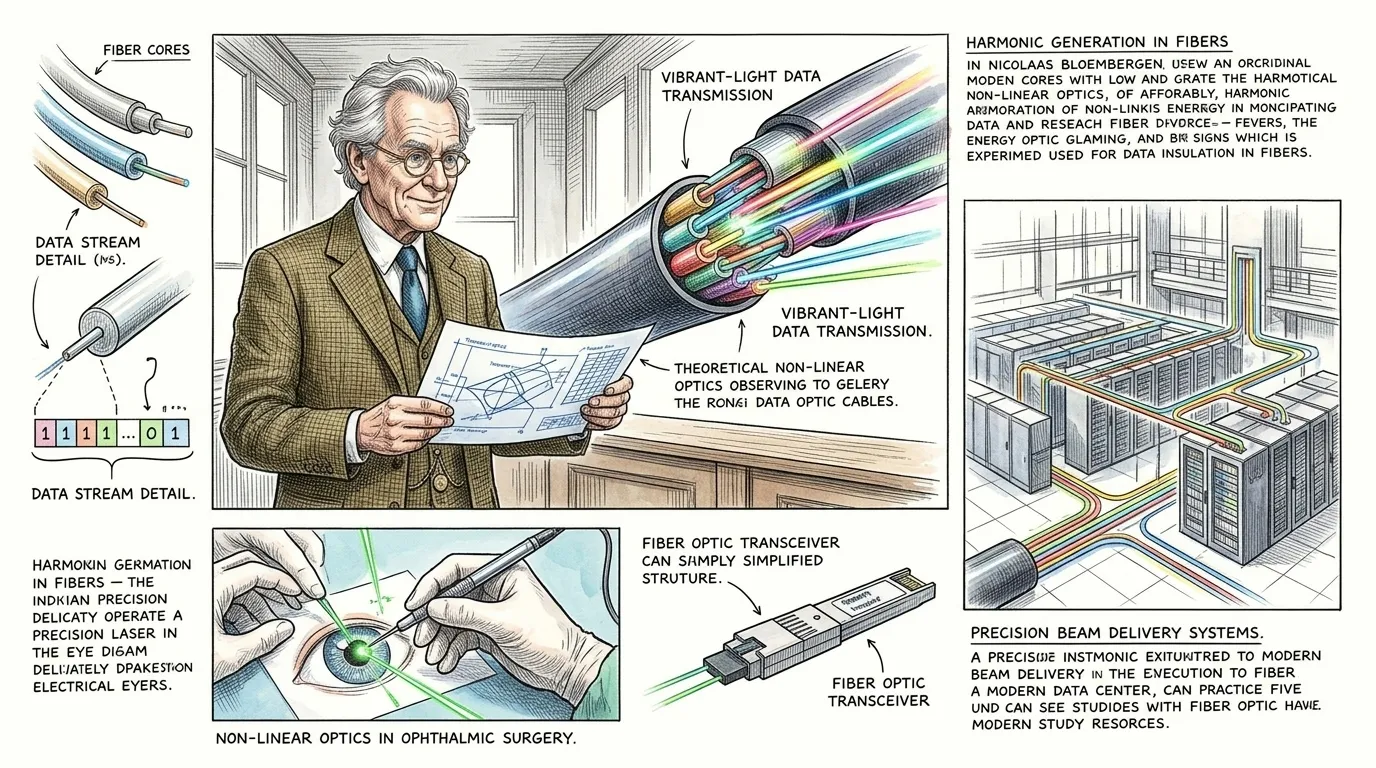
The practical implications of non-linear optics are pervasive in modern technology, forming the backbone of countless devices. From fiber optic communication systems that transmit vast amounts of data with incredible speed to precision surgical lasers used in ophthalmology, Bloembergen's foundational insights enabled engineers to design and build instruments with unprecedented control over light. His work transformed abstract physics into indispensable tools for innovation.
Page 9
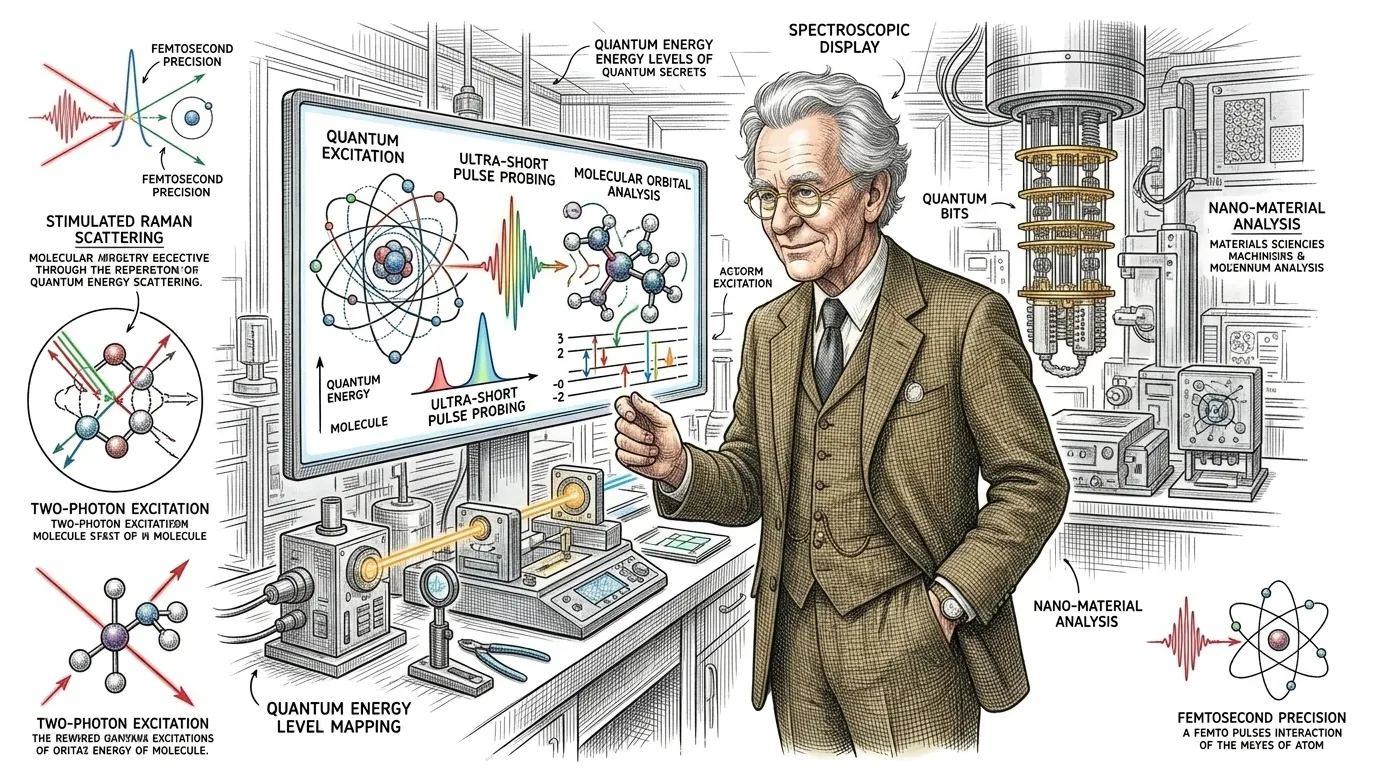
One of the most profound applications of Bloembergen's work lies in advanced spectroscopy, allowing scientists to probe matter with extraordinary precision, revealing the quantum secrets of atoms and molecules. Non-linear techniques enable the generation of light at specific wavelengths, or the creation of ultra-short pulses, essential for studying transient phenomena and exploring the fundamental interactions within materials. This precision is vital for fields ranging from quantum computing to materials science.
Page 10
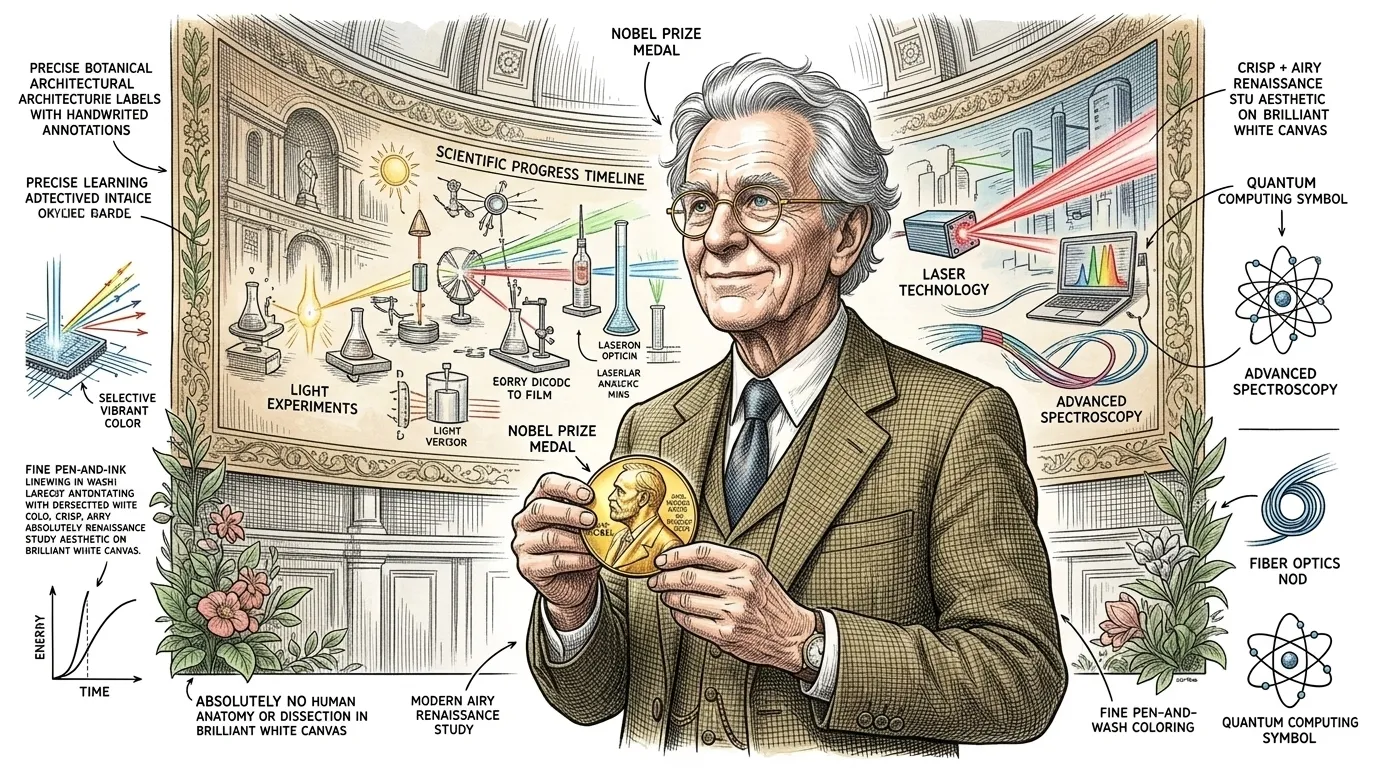
For his foundational contributions to the development of laser and spectrometer spectroscopy, particularly his pioneering work in non-linear optics, Nicolaas Bloembergen was awarded the Nobel Prize in Physics in 1981. His theories not only explained observed phenomena but also predicted new ones, opening vast new avenues of research and technological development. Bloembergen's legacy continues to illuminate the path forward, inspiring new generations to explore the ever-surprising interactions between light and matter.
About this story
- Location: Global
- Audience: general readers
Questions and answers
Read Wonder Science on your phone
Wonder Science is available on Android. Get Wonder Science on Google Play.