Faithful John
A servant's promise, a forbidden door, and the price of saving a king three times over
Page 1
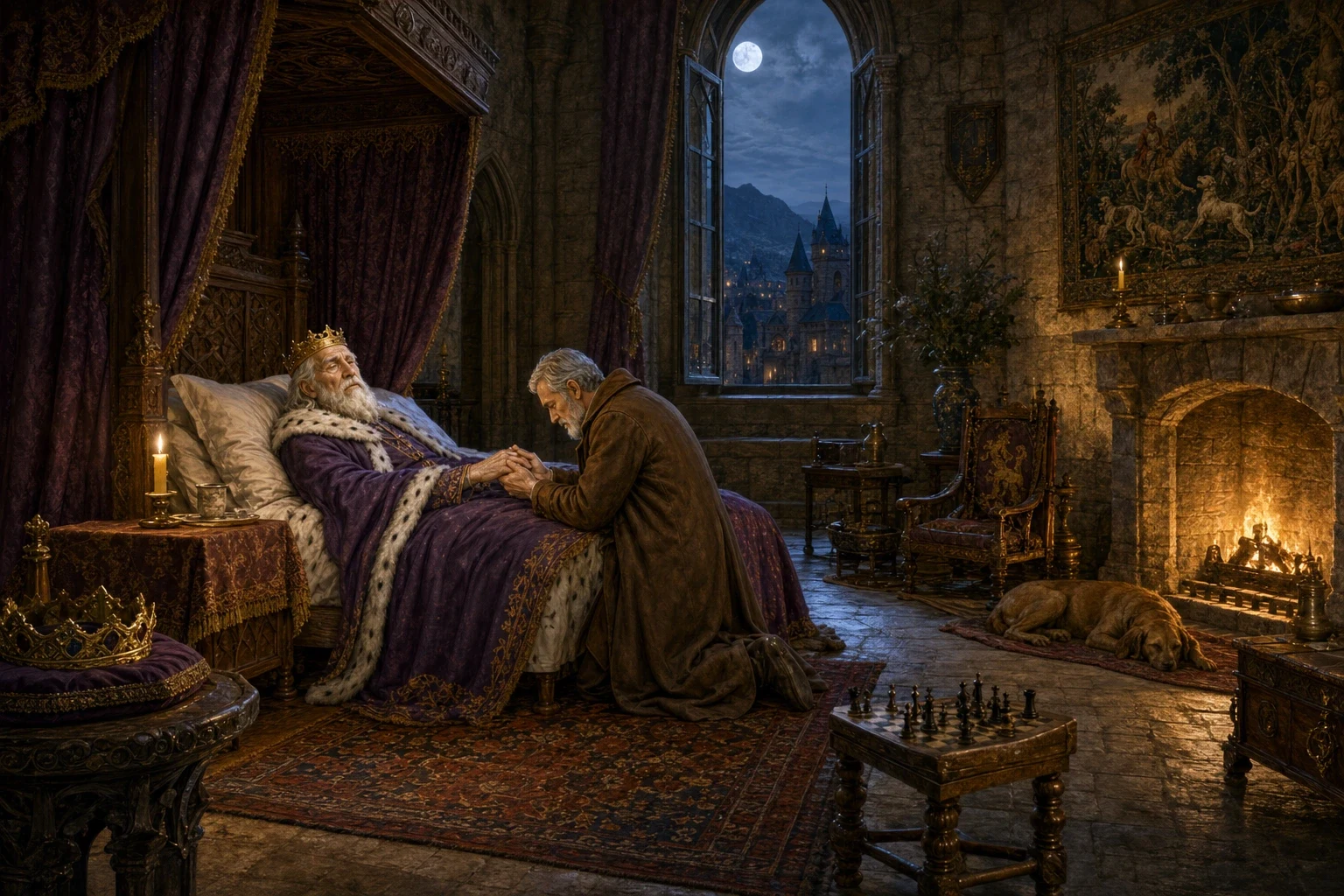
In a kingdom long ago, an old king lay dying in his high stone castle, and the only person he trusted to call to his bedside was Faithful John, who had served him his whole long life. The old king took John's hand and said that before he died he needed one promise. John was to care for the young prince as if he were his own son, and show him anything in the castle he wished to see — but never the last room at the end of the long gallery, the one with the golden curtain across its door. Behind that curtain hung the portrait of the Princess of the Golden Roof, and if the boy ever looked upon her face, the old king said, he would love her so much and so dangerously that it would carry him into terrible peril. John promised with his whole heart, and the old king closed his eyes at peace. Before the sun rose again, he had died, and the kingdom belonged to his son.
Page 2
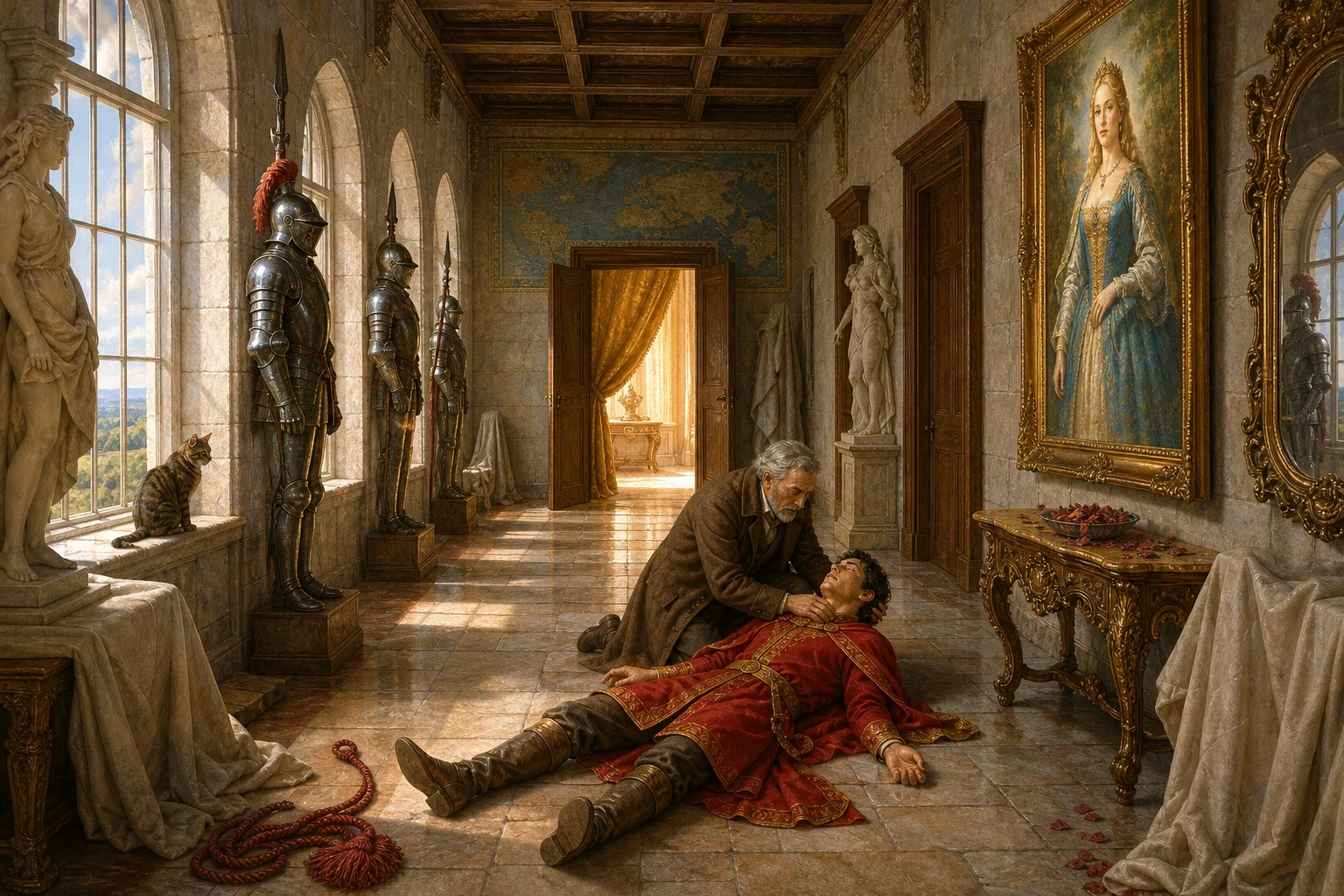
Faithful John kept his promise. Day after day he walked the new young king through the castle, showing him golden crowns studded with jewels, suits of silver armor, rooms full of statues and painted ceilings, until at last there was only one door left in the long gallery — a door with a golden curtain drawn across it. The young king asked why they never opened it. John tried to lead him past it three times, but the young king would not be put off, and at last John, weeping, drew back the curtain and turned the key. Inside, hanging on the wall, was a portrait so beautiful that the young king could hardly breathe — a princess with golden hair, dressed in gold and blue — and the moment he saw her face he loved her so suddenly and so violently that he fell to the floor in a faint. John caught him before his head struck the stone and knelt over him, frightened, waiting for him to wake.
Page 3
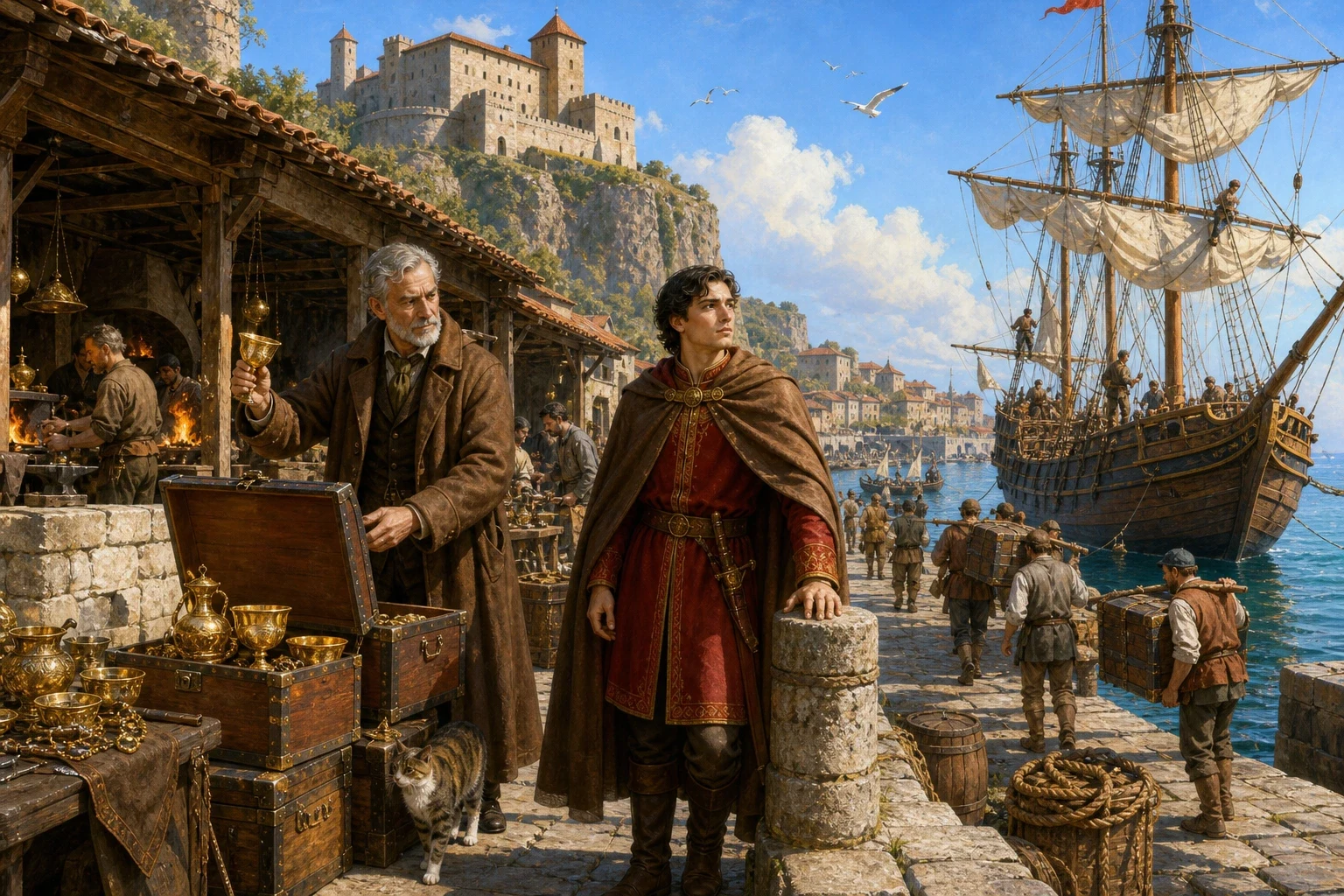
Faithful John could see only one way to win such a princess. He remembered she loved nothing in the world so much as gold, and told the young king his plan: they would have goldsmiths make cups, bowls, chains and rings, each more beautiful than the last, load them onto a ship, and sail to her country disguised as merchants, not as a king and his servant. The young king agreed to anything that might bring him closer to her. For days the castle's finest goldsmiths hammered at their benches, and the harbor below the castle filled with chests of shining gold work, carried down on the shoulders of porters and stowed below the deck of a tall ship. Faithful John checked every chest himself before it was lowered into the hold, while the young king paced the dock, too impatient to sit still, watching the sails being readied for the voyage that would either win him the princess or lose him everything.
Page 4
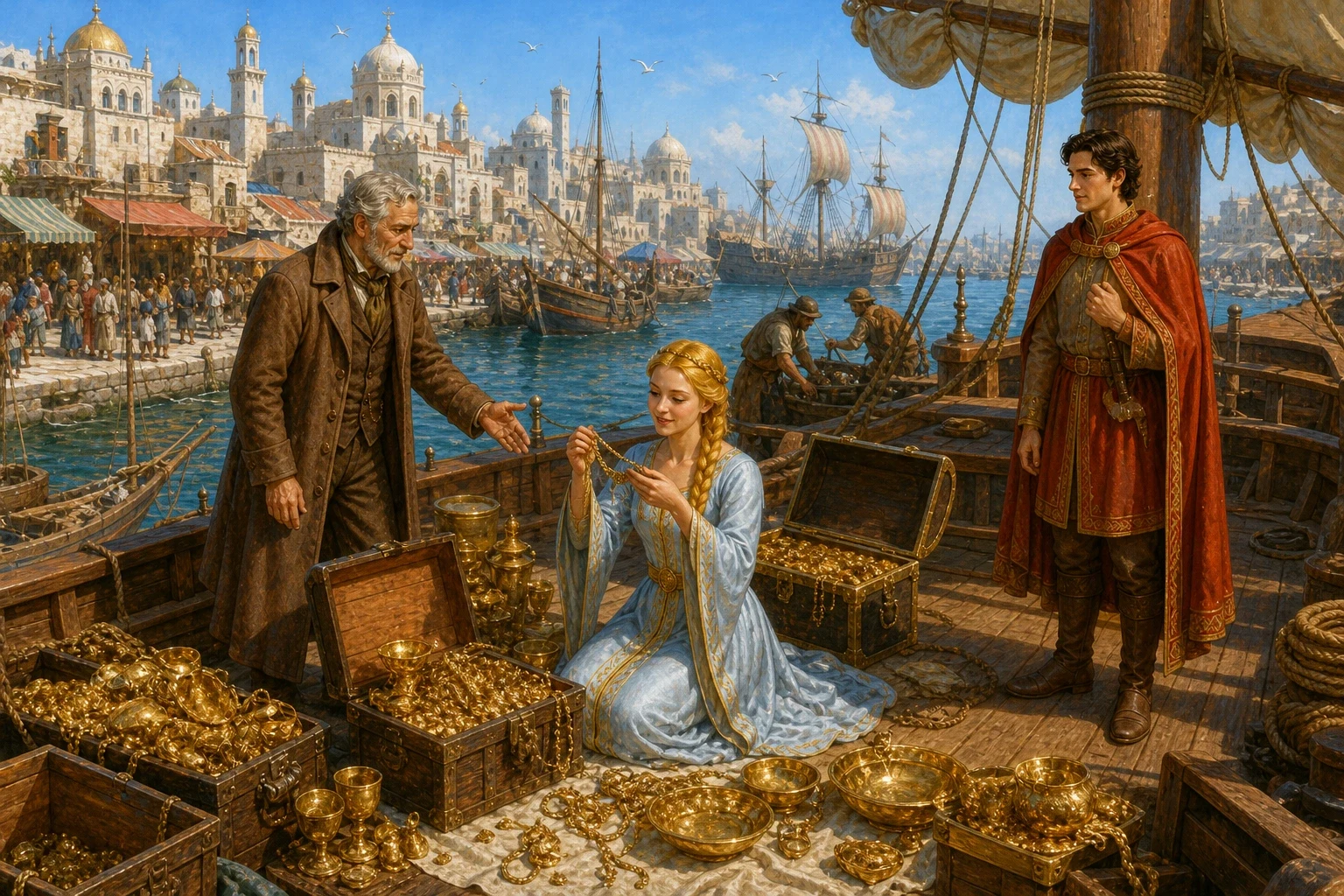
At last the ship reached the princess's country and dropped anchor in her harbor. Faithful John went ashore alone, carrying one golden cup so beautifully made that word of it spread through the city within a day. Before long, word reached the princess herself, and she sent for the merchant to see more of his wares. John showed her cup after cup, chain after chain, each more wonderful than the last, until she declared she must see everything that remained aboard the ship, for there was too much to carry to the palace. She came down to the harbor herself, stepped onto the ship to see the rest of the treasure spread on the deck, and was so delighted by it that she did not notice, until the very last chest was opened, that the sailors had quietly raised the anchor, and the ship was already moving, the shore falling away behind her and the open sea ahead.
Page 5
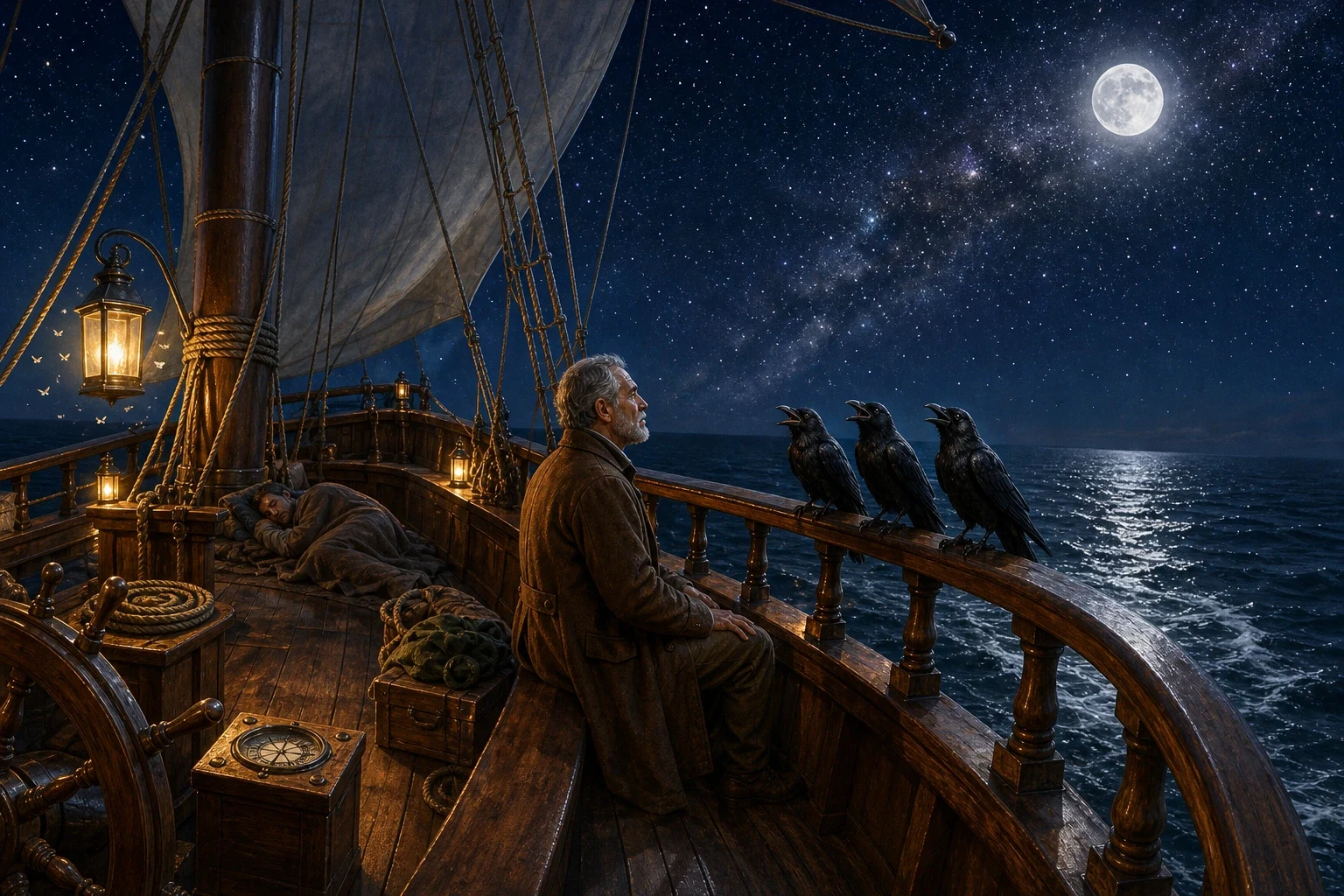
Out on the open sea, the princess discovered the ship was moving and grew frightened, until the young king came to her and told her the truth — that he had loved her the moment he saw her portrait, and crossed the sea only to ask for her hand. She found she did not mind so very much after all, and before the voyage was over she had agreed to marry him. One clear night, while the young king and princess slept below, Faithful John sat alone at the bow, watching the stars, when three ravens came flying low over the water and settled nearby. They did not know he understood the speech of birds. The first raven spoke of three terrible dangers still waiting for the young king at home, and said that whoever warned him of them — and told him why — would turn to stone from the feet upward. Faithful John listened to every word, and from that moment he knew exactly what it would cost him.
Page 6
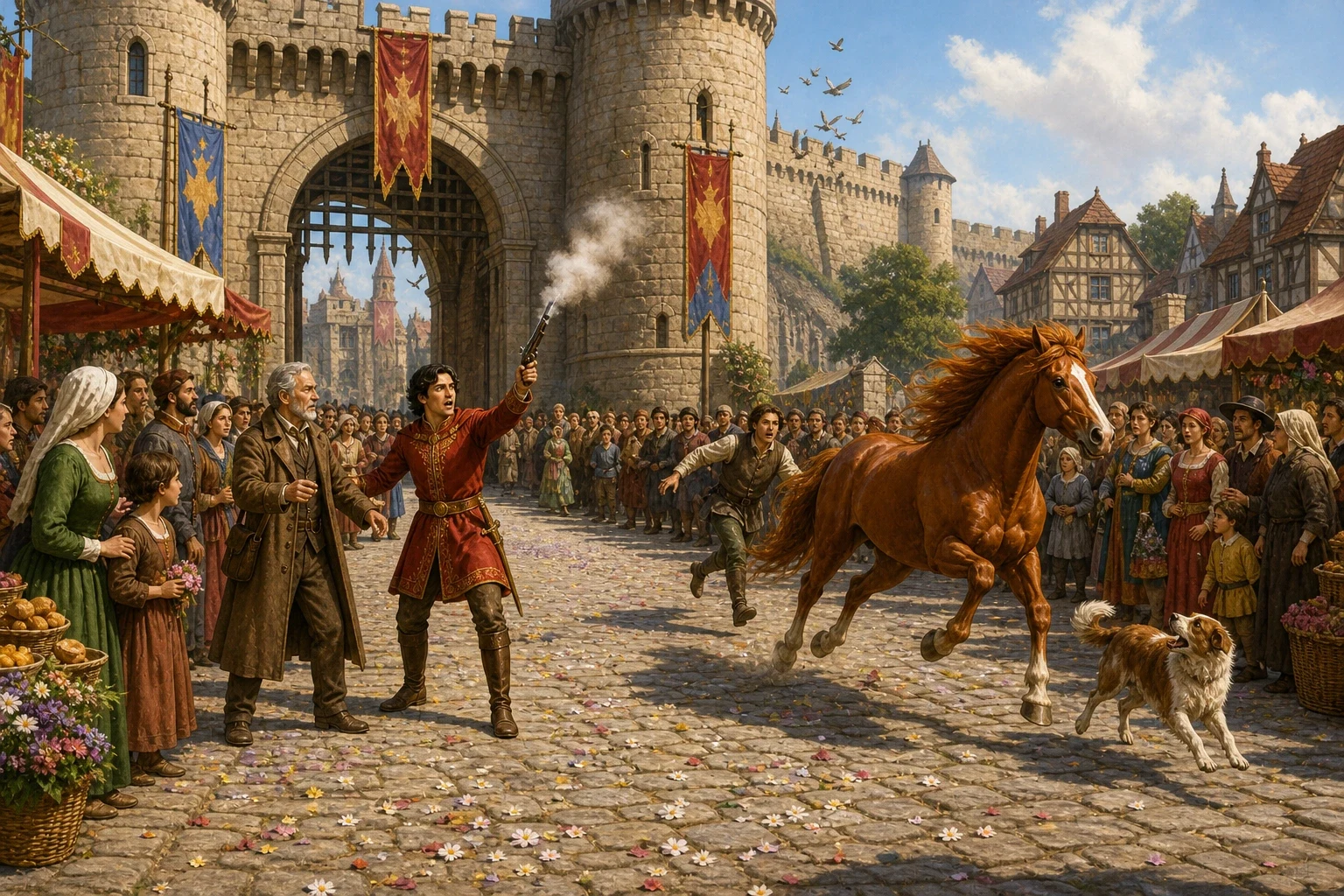
When the ship reached home at last, the whole kingdom turned out to welcome their young king and his new bride. A magnificent chestnut-red horse was led out for the king to ride into the city, so fine that everyone admired it — but Faithful John remembered the ravens' warning: if the king ever mounted that horse, it would fly away with him and he would never be seen again. Before the king could put his foot in the stirrup, John snatched a musket from a guard and fired it into the air, sending the horse bolting off over the fields, never to be seen again. The young king was furious at losing such a beautiful animal for no reason he could see, and the crowd murmured against John, but John said only that he had done it for good reason, and begged the king to trust him a little longer. The king, remembering how faithfully John had always served his father, swallowed his anger and said nothing more.
Page 7
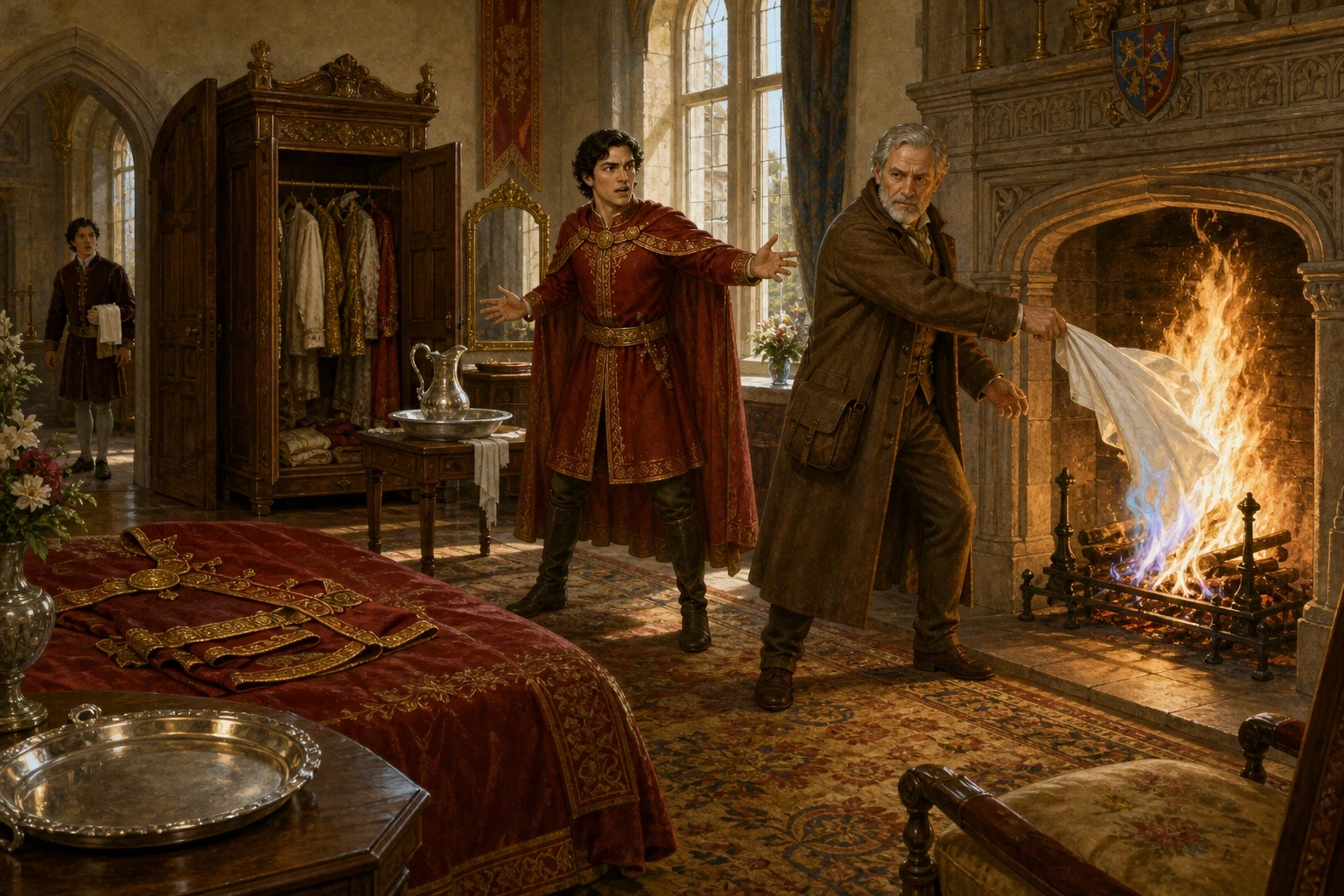
The day of the wedding came, and the castle was full of music and preparation. While the young king was dressing in his chamber, a servant brought in a wedding shirt of fine white cloth, folded on a silver tray, for the king to wear to the feast. But Faithful John remembered the ravens' second warning: the shirt was not what it seemed, but was made of sulfur and pitch, and if the king ever put it on, it would burn him terribly. Before the king could lift it from the tray, John snatched the shirt out of his hands and threw it straight into the fireplace, where it caught at once and burned away to nothing in a rush of blue flame. The young king stared at him in disbelief and anger, certain now that his old servant had lost his senses, ruining his wedding shirt on his very wedding day for no reason at all — but once again John begged him only to trust a little longer, and once again the king held his temper.
Page 8
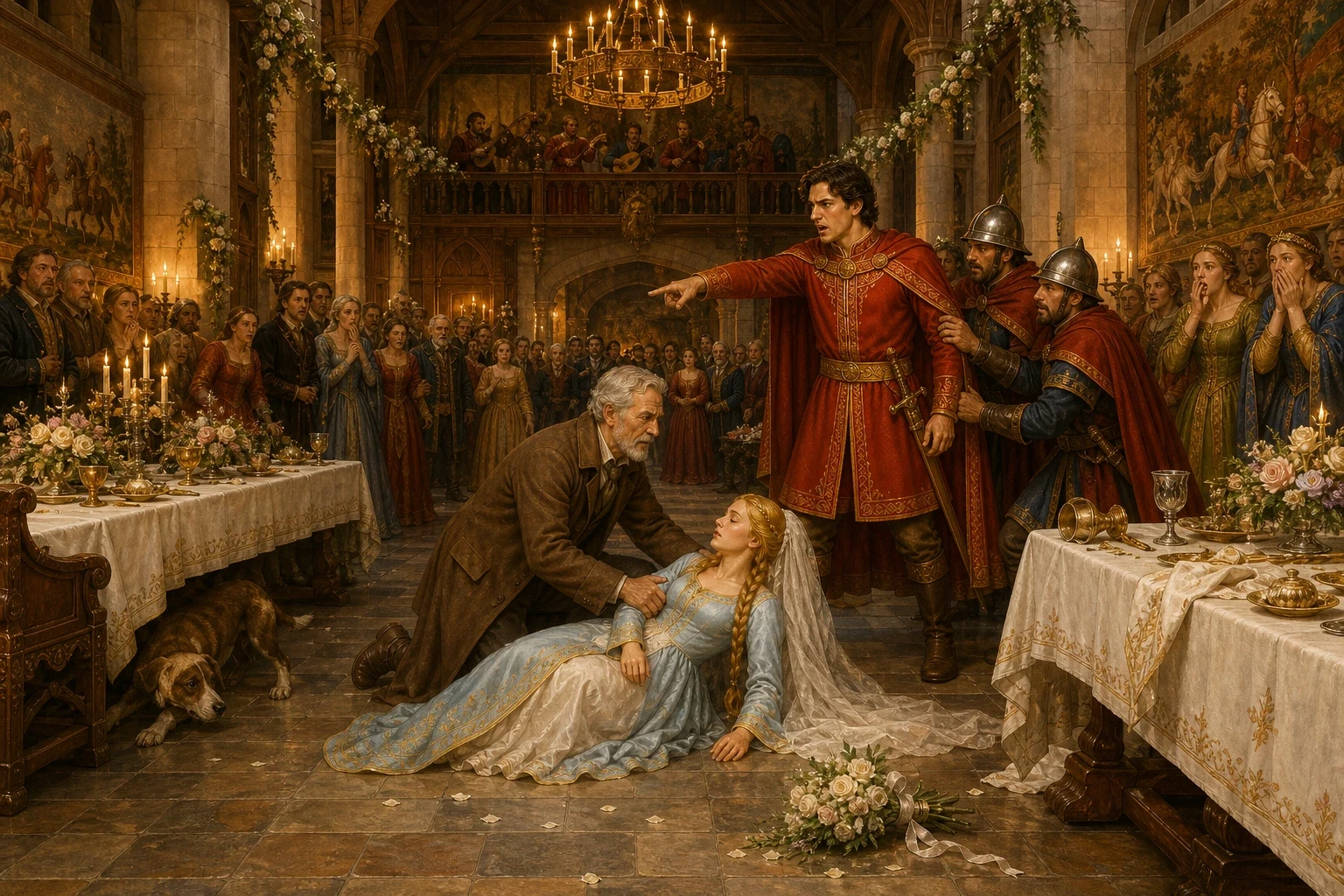
That evening the great hall was filled with music, candlelight and dancing, and the young king led his new queen out for the very first dance of their wedding feast. But just as the dance began, the queen turned pale, swayed, and fell to the floor as if she were dead. A horrified silence fell over the hall. Faithful John remembered the ravens' third and worst warning, and knew there was only one way to save her — he knelt beside her at once, drew three drops of blood from her arm, and spat them away before anyone understood what he was doing. The moment he did, color came back into her cheeks and she opened her eyes, alive and well. But the young king, seeing only his servant kneeling over his bride with blood on his hands, flew into a rage no explanation could reach, and ordered the guards to take Faithful John away and put him to death, deaf to every word John tried to say in his own defense.
Page 9
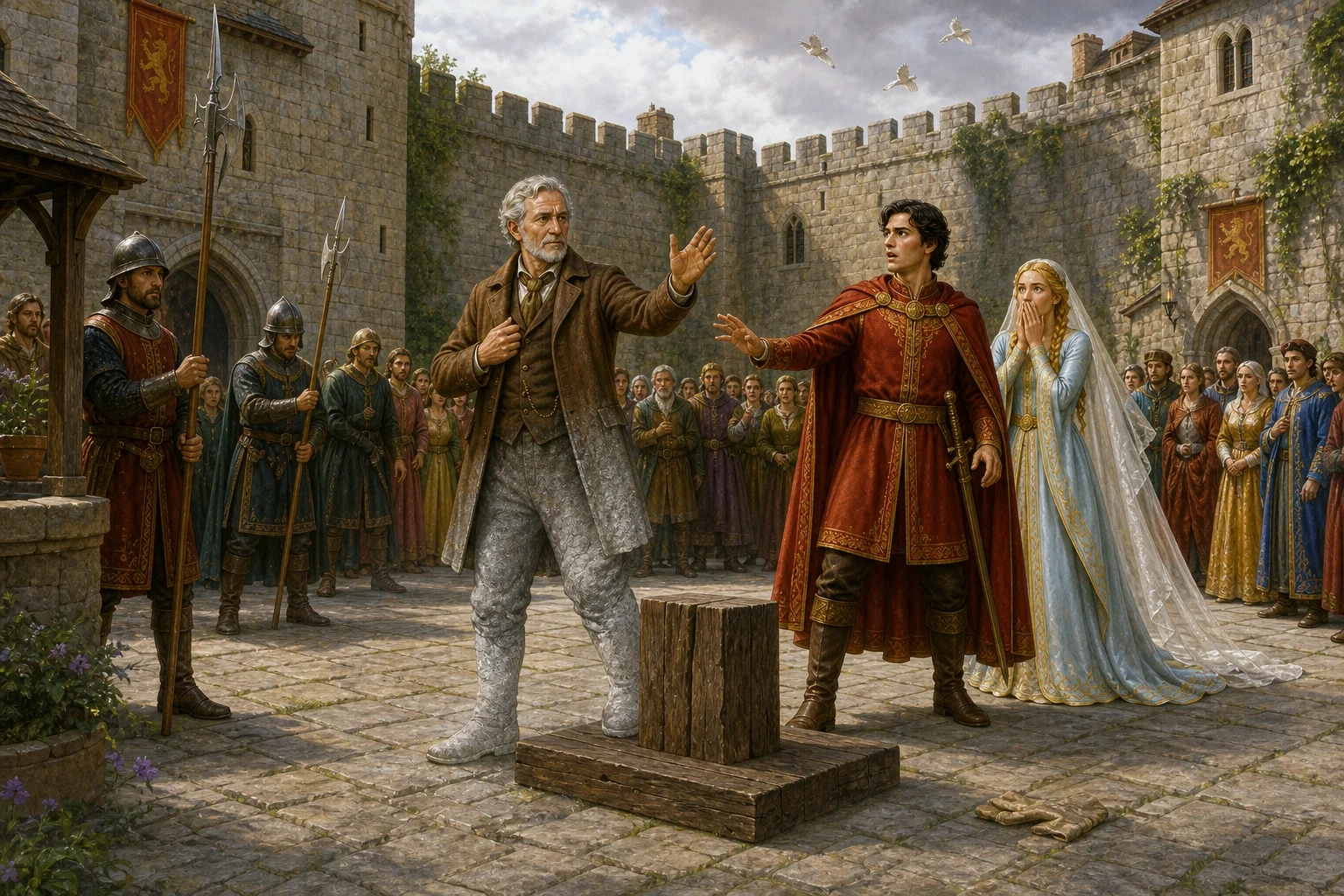
Faithful John was led out to the castle's inner courtyard to be put to death, and as the guards brought him to the block, he asked the king for one last favor — permission to speak before the end. The king, still shaking with anger, allowed it. So John told him everything: of the three ravens on the ship, and the chestnut horse that would have carried him away forever, and the burning shirt that would have destroyed him, and the poison that would have taken the queen's life at the start of the dance. As he finished telling of the horse, his legs turned to cold grey stone. As he finished telling of the shirt, the stone crept up to his heart. And as he finished telling of the queen, and of the price he had always known he would pay for saving her, Faithful John turned entirely to stone, standing upright in the courtyard, silent forever — just as the king understood, far too late, everything his truest servant had done for him.
Page 10
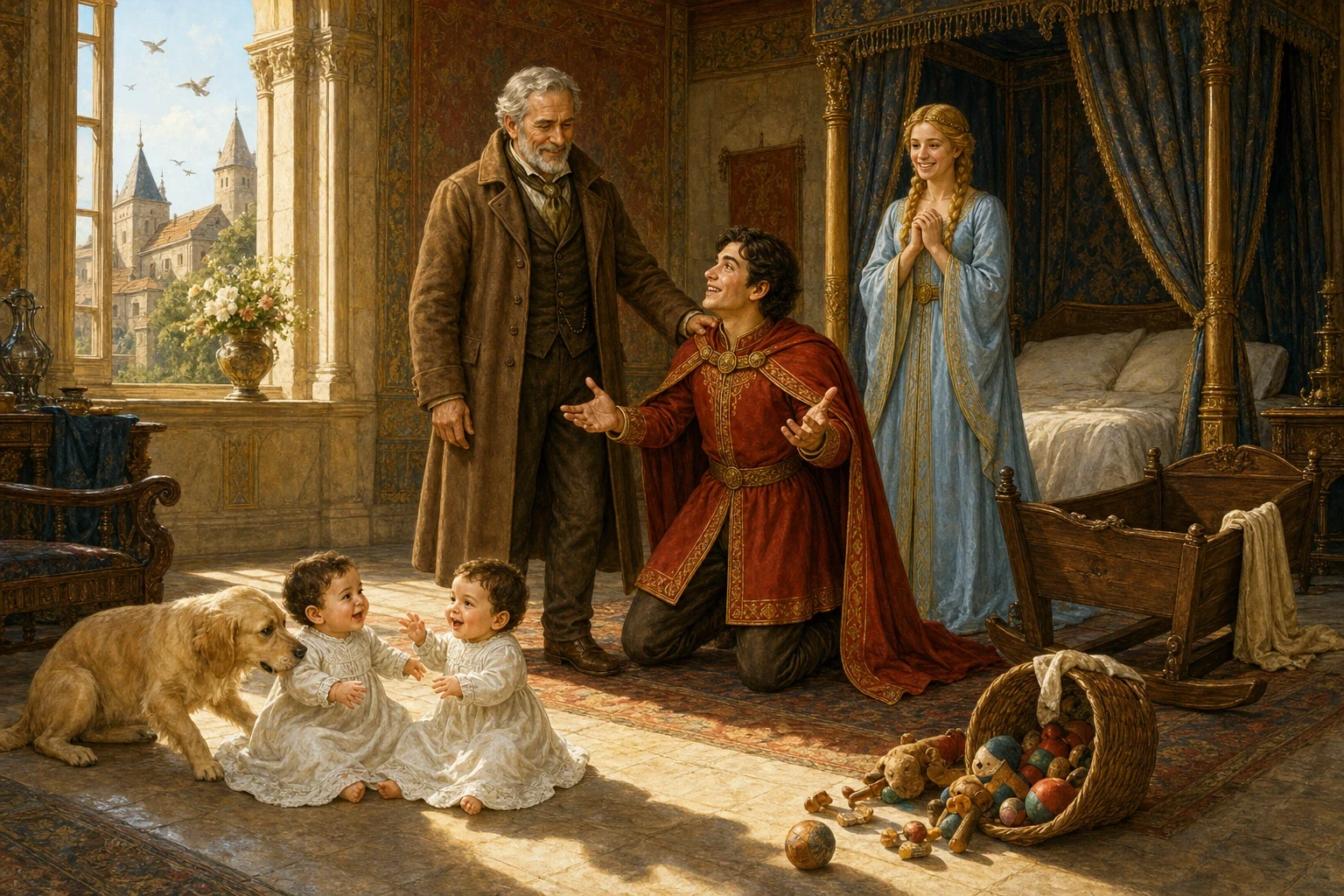
Years passed. The king and queen had two small twin sons, and still the king kept the stone figure of Faithful John standing beside his own bed, and grieved over it every day. One afternoon, while the queen was away at church with the children's nurse, the king sat alone with the statue and said aloud that he would give anything in the world to have his old friend back — even, he said without truly meaning it, his own two sons. At once the statue spoke. It told him there was indeed a way, but a terrible one, and the king, loving John more than he had ever understood until that moment, chose to pay it. What happened next happened quickly, and was undone just as quickly: and when the queen came home from church, she found her husband weeping with joy, Faithful John standing beside him alive and warm once more, and her two small sons laughing and playing at his feet exactly as they always had, without a mark on them.
About this story
- Audience: kids (ages 6–12)
Read Wonder Tales on your phone
Wonder Tales is available on Android. Get Wonder Tales on Google Play.