Momotaro, the Peach Boy
A boy found inside a peach, three companions won with a dumpling, and the island of the ogres
Page 1
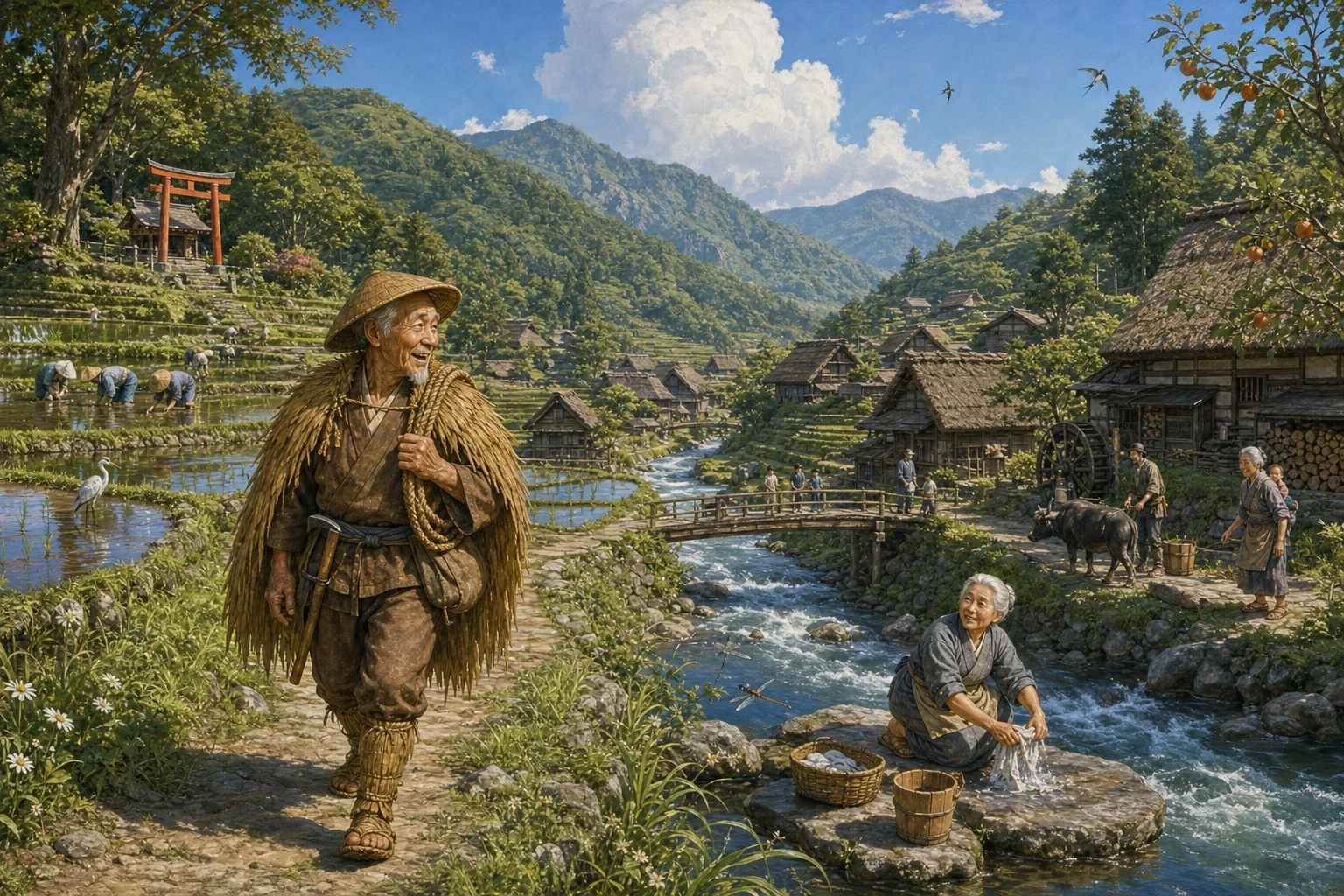
Long ago in Japan, in a valley between green mountains, there was a village of thatched houses with a river running past it, and above the village the paddy fields climbed the hillside in steps like a staircase. In the last house lived an old man and an old woman who had been married for fifty years and had no children at all. They were poor, and they were perfectly happy, and only one thing was missing, and they had long ago stopped talking about it. Every morning the old man took his bill-hook and his rope and went up the mountain to cut firewood, and every morning the old woman took her basket of washing down to the river. They did this for so many years that the path up and the path down were both worn smooth. And then on one particular morning in early summer, the old woman knelt on her usual flat stone at the water's edge, and something came floating down the river toward her.
Page 2
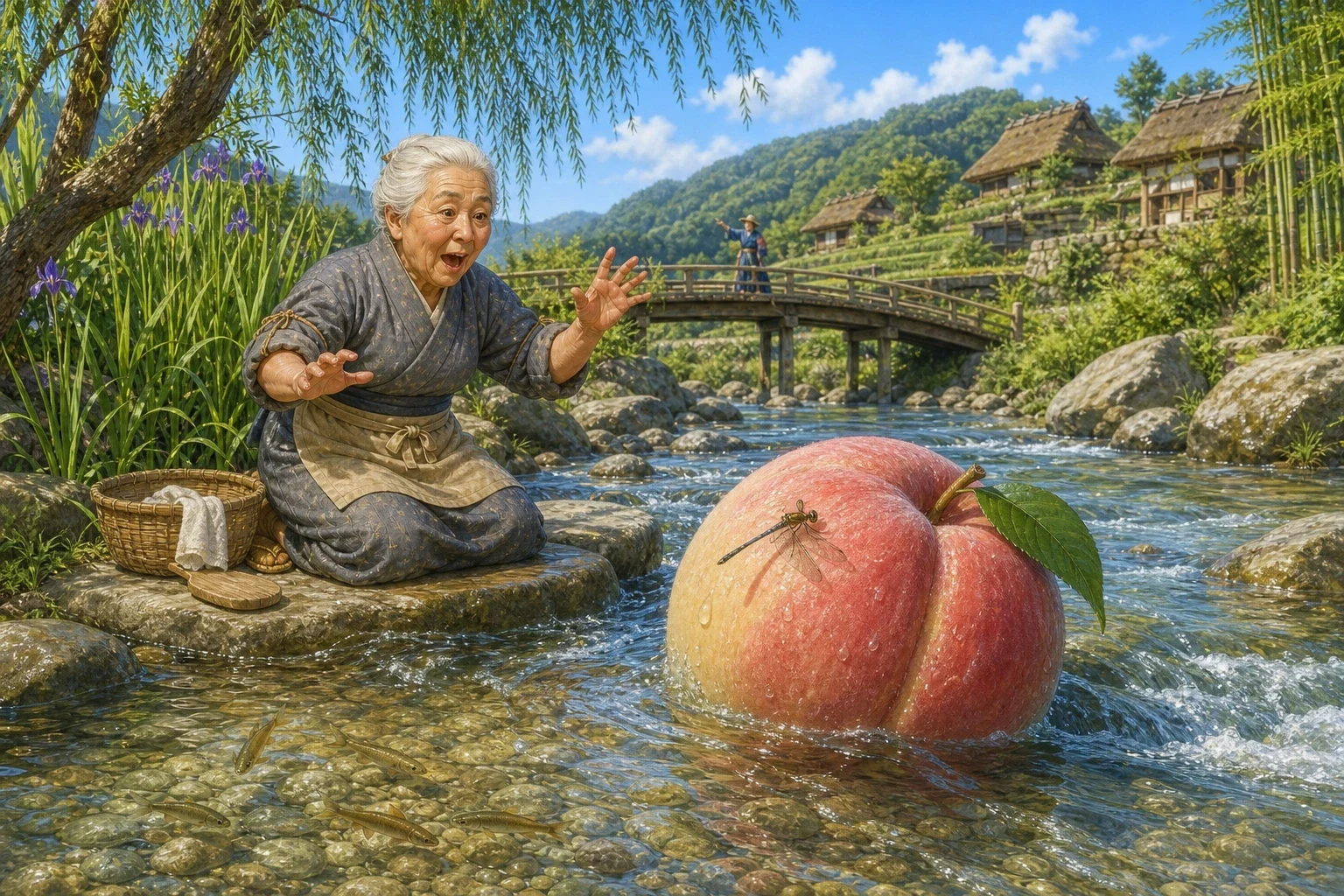
It was a peach. But it was a peach the size of a water barrel, pink and gold and perfect, turning slowly over and over as it came down the current, and it was much too big to be real. The old woman sat back on her heels and watched it come. It passed the bridge, and it passed the willow, and then — instead of going on downstream, as any peach in the world would have done — it turned, quite deliberately, and came in to the bank and bumped gently against her washing stone and stopped there. The old woman looked at it for a long moment. Then she said, out loud, that it would be a terrible waste to leave it, and she got both arms round it and rolled it up the bank, and carried it home in her washing basket with her back aching and her face split in a grin, thinking about what her husband was going to say when he came down the mountain and found a peach the size of a barrel sitting in the middle of the kitchen floor.
Page 3
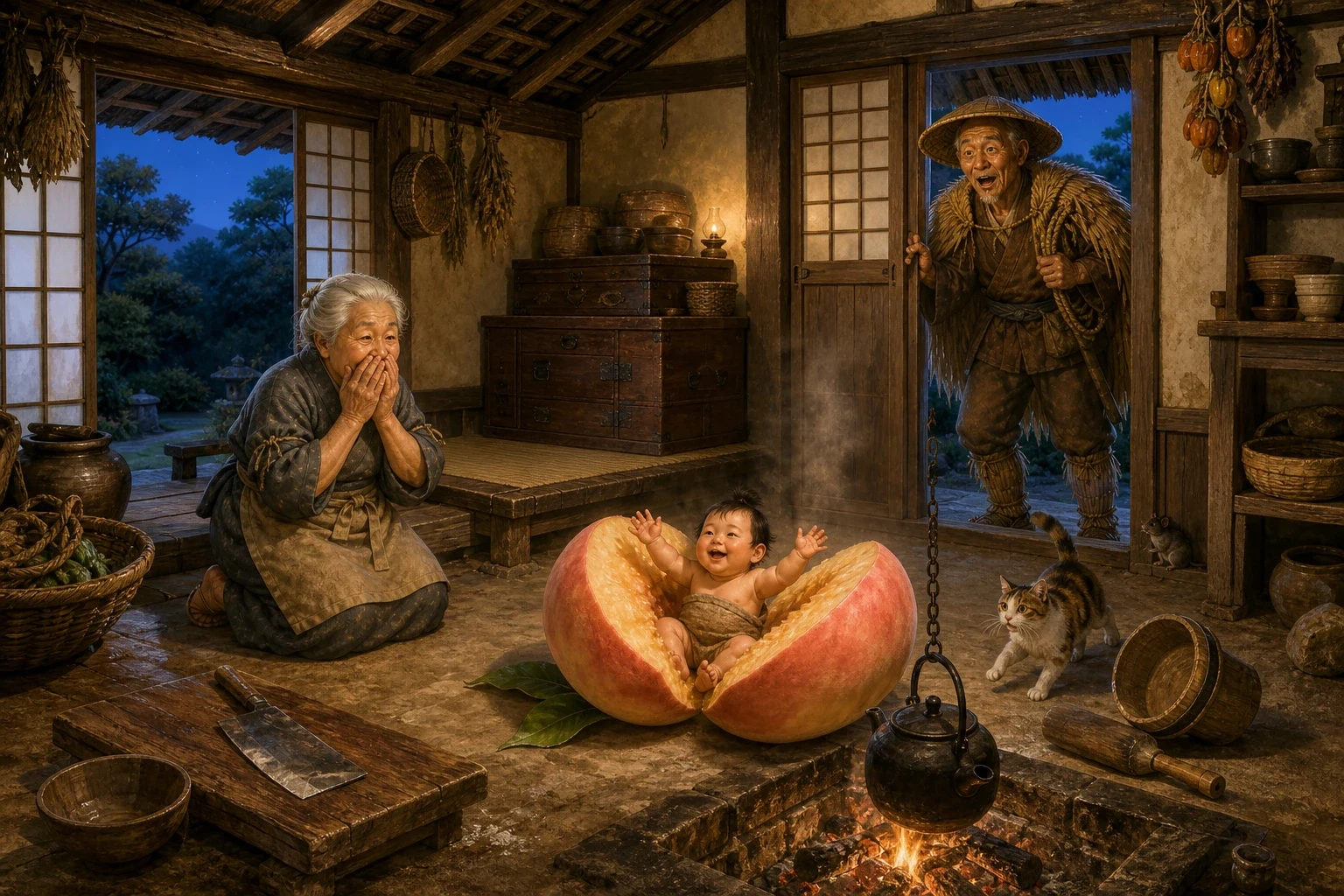
The old man came down the mountain at dusk and stopped dead in the doorway, which was exactly what his wife had been hoping for. They got the big knife and set the peach on the floor between them to cut it open — and before the blade had touched it, the peach split cleanly down its cleft all by itself, and inside, sitting up in the pink flesh of it, was a baby boy, round and brown and perfectly well, looking up at the two of them with great dark interested eyes. He was not frightened in the slightest. He laughed. The old woman sat down on the floor. The old man dropped the knife. And after a long silence they agreed, in the way that people agree about things that have already been decided for them, that a child who arrives inside a peach was plainly sent, and that they would call him Momotaro, which means Peach Boy, and that there was no more to be said about it.
Page 4
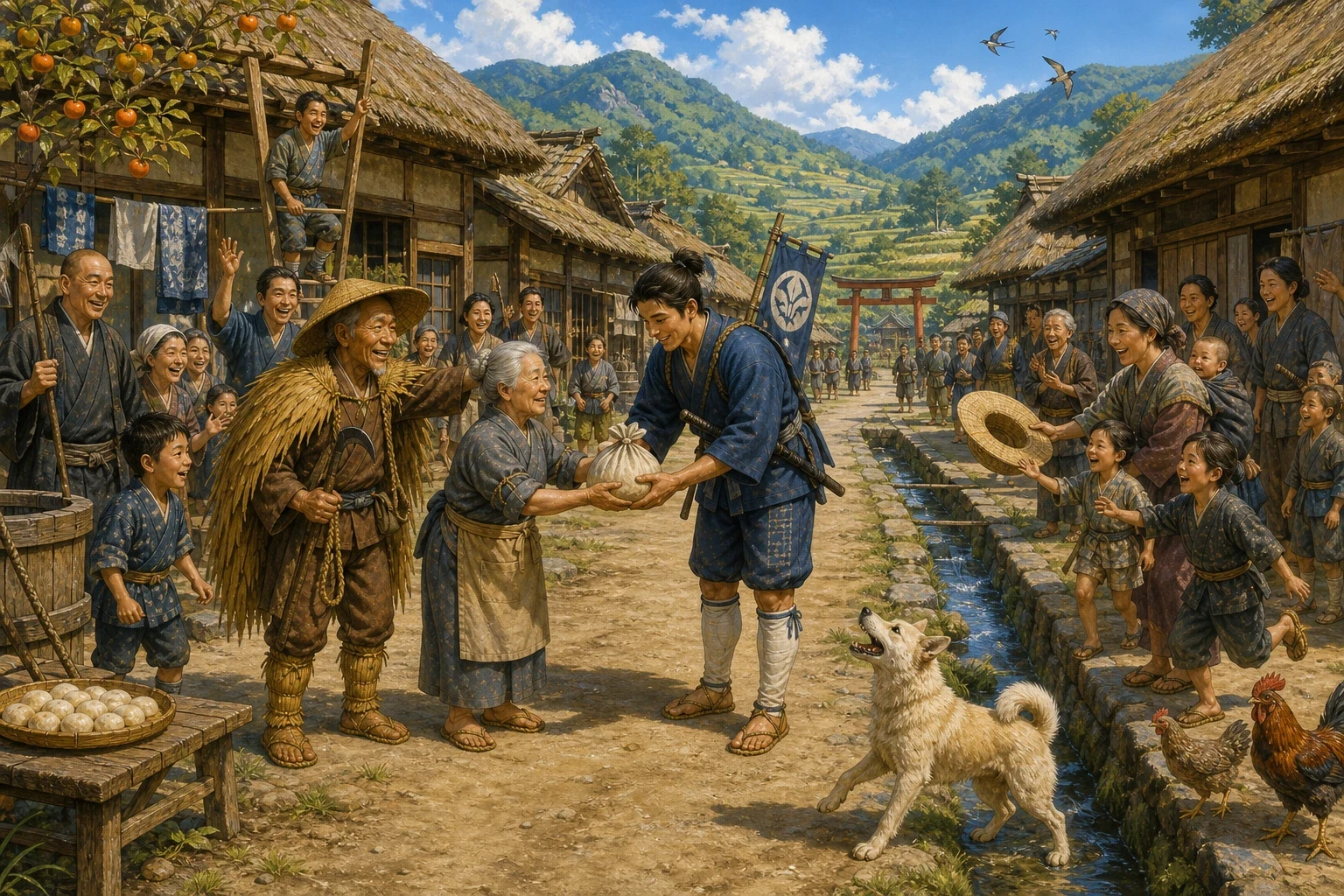
Momotaro grew. He grew faster and stronger than anybody in the valley, and by the time he was eighteen he could carry more firewood than two men and was still the most good-natured person in the village. And in those days the valley had a trouble: out on an island in the sea there lived the oni — the ogres — who came across every year in boats and took whatever they wanted, rice and cloth and lacquer and coin, and nobody could stop them. So one morning Momotaro knelt down in front of the old man and the old woman and said that he was going to Onigashima, the island of the ogres, to put a stop to it. They did not argue. The old woman went straight to the kitchen and made him a bag of kibi dango — the little round millet dumplings she had made for him all his life, and the best in Japan — and the old man gave him a banner for his back, and the whole village came out into the street to see him off.
Page 5
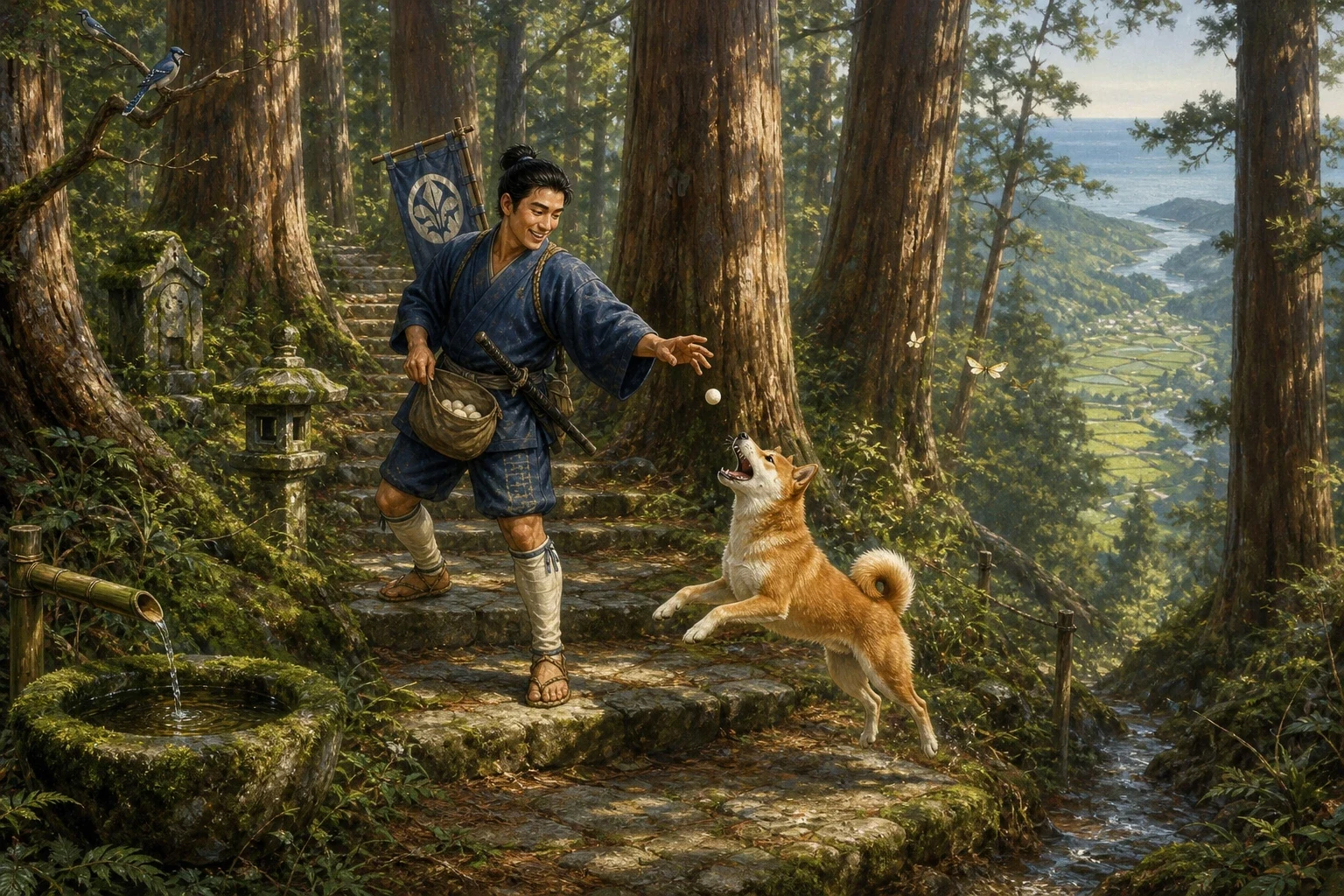
The road went up out of the valley into the mountains, under tall cedars with moss on their roots, and at a bend in the path a dog came out of the undergrowth and stood in his way. It was a sturdy cream-and-russet dog with a curled tail, and it barked at him twice and then asked, extremely rudely, what he had in that bag. Momotaro said it was kibi dango, the best in Japan, and that the dog could have one if it would come with him to Onigashima and help him deal with the ogres. The dog thought about this for exactly as long as it takes a dog to smell a dumpling. Then it ate one, and shook itself, and fell in at his left heel, and that was the whole negotiation. They went on up the mountain together, and the dog talked the entire way, mostly about the ogres, whom it disliked on principle.
Page 6
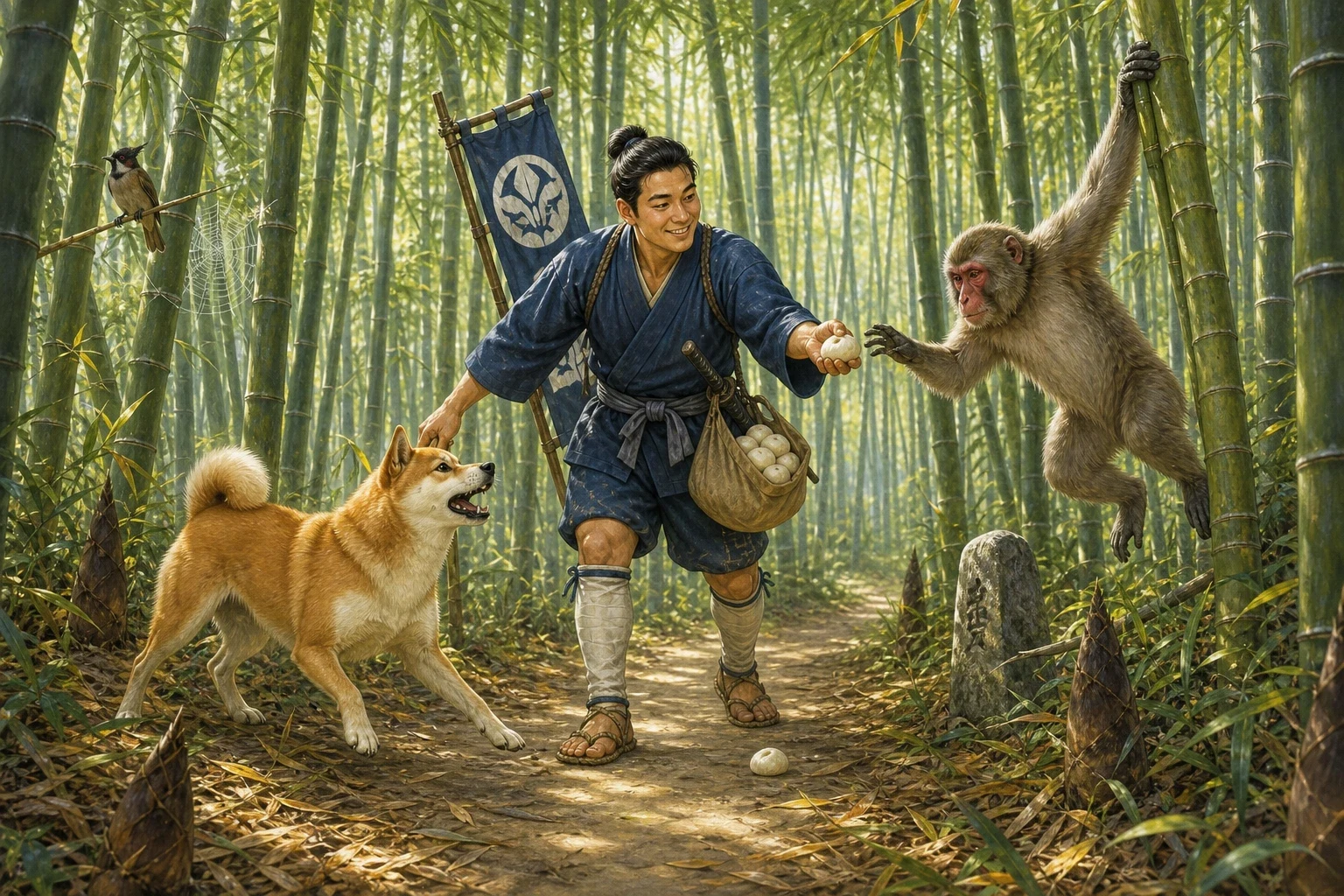
Over the mountain the path came down into a bamboo forest, where everything was green and striped and the light came through like water, and there a monkey dropped out of the stems and landed on the path in front of them. The dog's hair went up at once, and the monkey bared its teeth back, and for a moment there was going to be a fight about nothing at all. Momotaro simply stepped between them and gave them a dumpling each, and told them that anybody who was coming to Onigashima with him would have to put up with everybody else who was coming to Onigashima with him. The monkey ate its dumpling in four bites and said that the ogres had stolen a whole year of its forest's peaches, and that it was coming. It went up onto the path ahead and travelled by swinging from the bamboo, which annoyed the dog very much and made it go faster.
Page 7
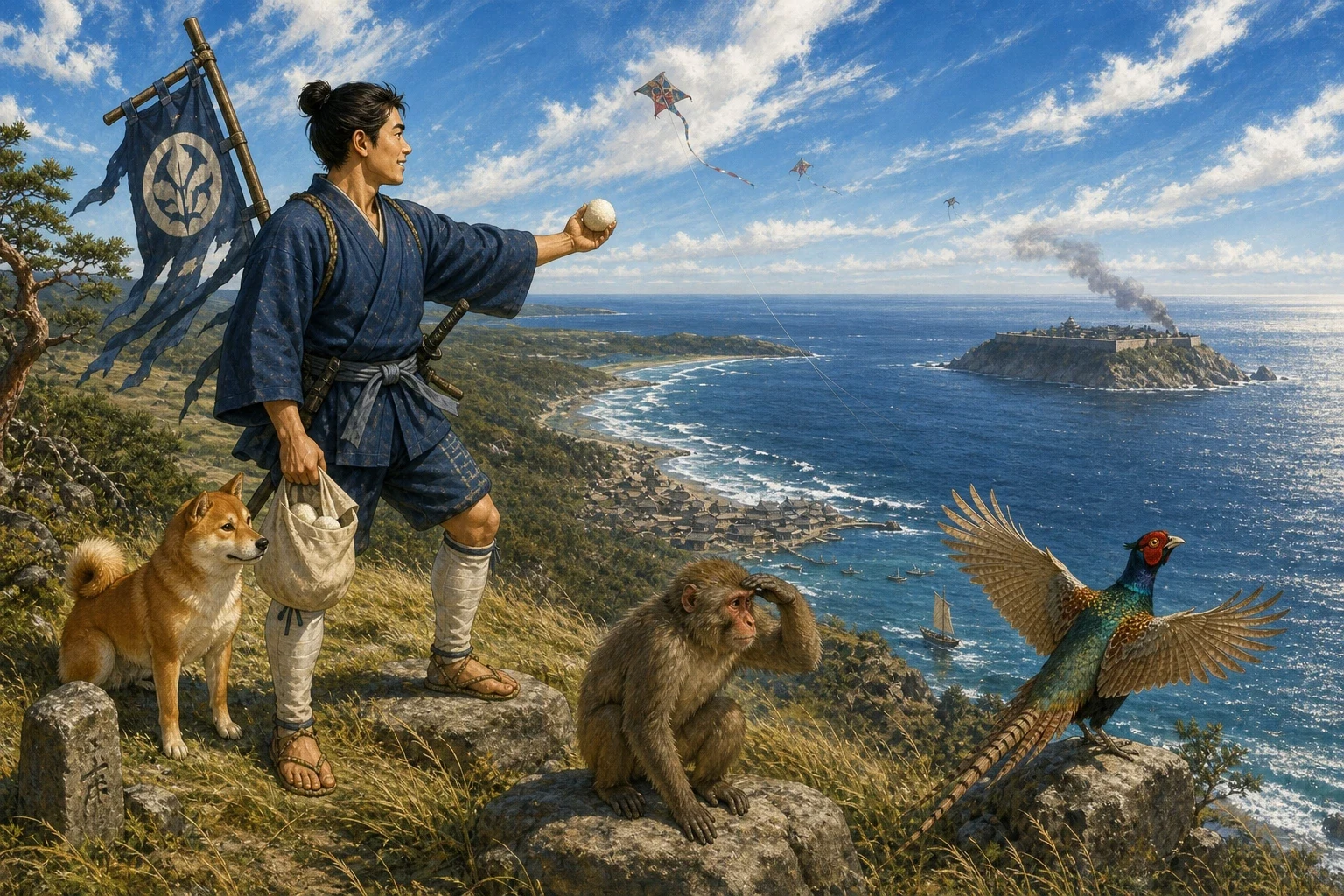
The bamboo ended, and the path climbed one more time, and then there was nothing above them but grass and wind — and below them, a very long way below, the sea. It went out blue and glittering to the edge of the sky, and far out on it, small and dark and unmistakable, was an island with a cliff on one side and a smudge of smoke above it. Onigashima. While the three of them stood looking at it, a pheasant came out of the grass with a whirr like a dropped bundle of sticks and landed on a rock, green and copper and extremely pleased with itself, and asked what was in the bag. It got a dumpling. It said it could fly over a wall and tell them what was on the other side, which nobody else in the party could do, and that it was therefore the most useful member of the expedition. The dog disagreed. They argued all the way down to the shore.
Page 8
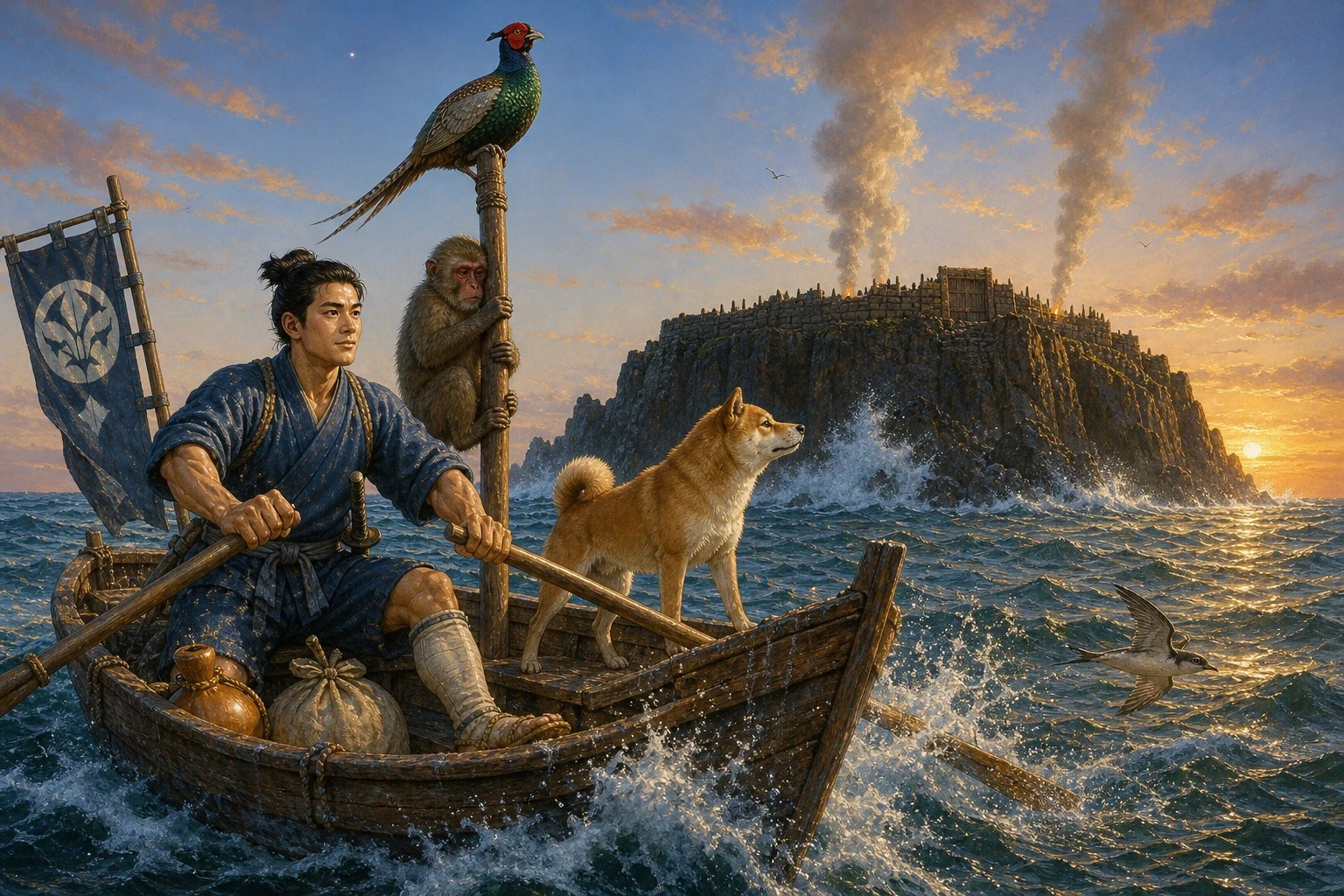
The fishermen on the shore would not take them, because no fisherman in his right mind went anywhere near that island, but one of them lent Momotaro a boat and told him not to bring it back broken. So they went out on the tide at first light — a young man rowing, a dog in the bow with its nose up, a monkey clinging to the mast and complaining about the motion, and a pheasant up in the rigging looking ahead. It took all day. The sea got bigger the further out they went, and the green coast of Japan sank away behind them until there was nothing anywhere but water. And then the island came up out of it ahead of them: black rock, a wall of great stones along the ridge, a gate studded with iron, and behind the gate, drifting up into a perfectly clear evening sky, the smoke of a great many cooking fires.
Page 9
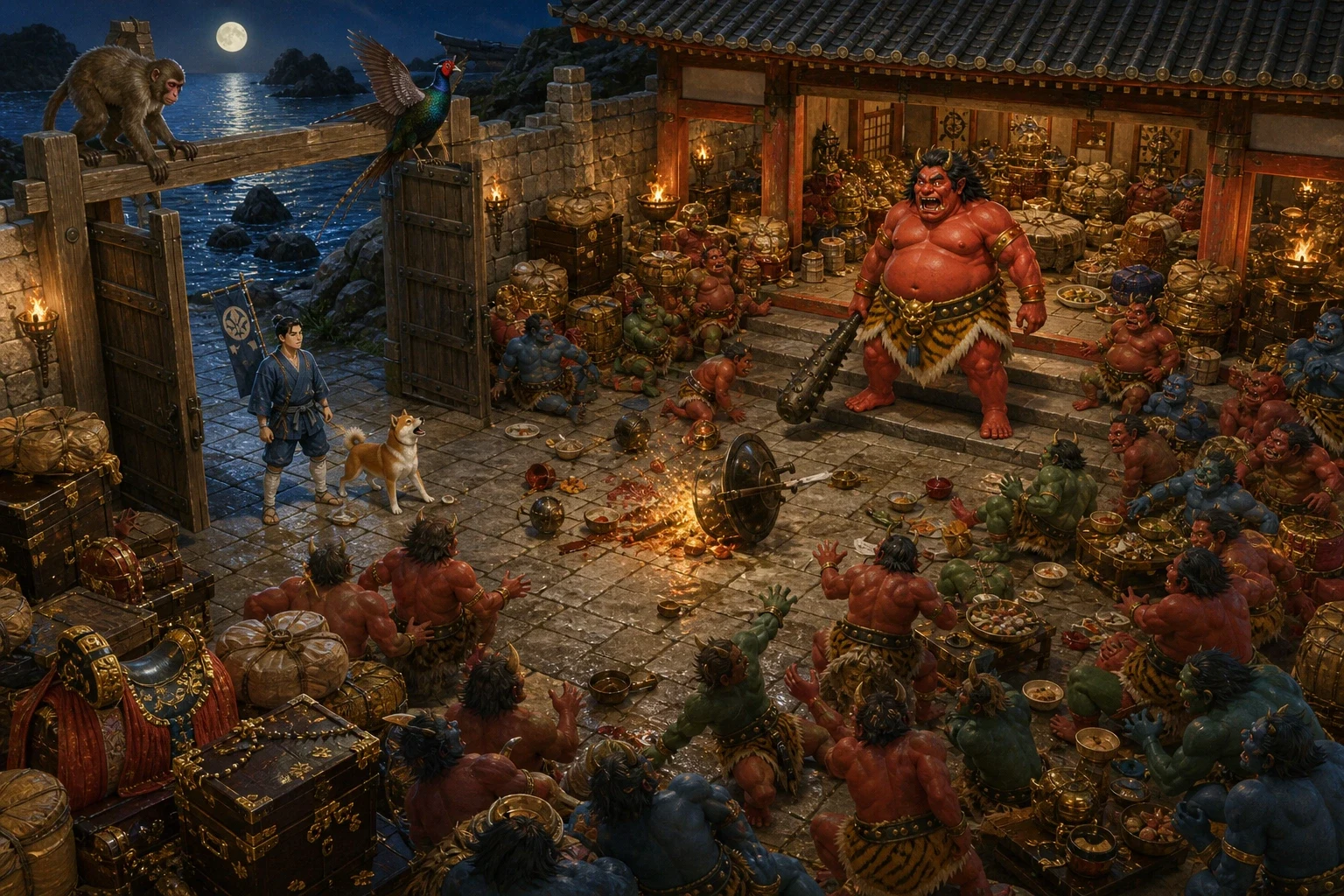
They went up the rocks in the dark. The pheasant flew over the wall and came back and said there were about a hundred of them and the gate was barred on the inside with one beam. The monkey went over, dropped into the courtyard, and lifted the beam out of its brackets as neatly as taking a lid off a pot. And then the dog put its head back and barked — one tremendous bark that went round the stone walls and came back doubled — and the gate swung wide, and Momotaro walked into the middle of the ogres' own courtyard with his banner on his back and said, in a perfectly ordinary voice, that they were going to give everything back. There were a hundred oni and one of him. The Ogre King stood up off his seat with his iron club in his hand and roared. And Momotaro, who had not drawn his sword and did not, looked up at him and asked him how many of his hundred he thought would still be here in the morning if he started something tonight.
Page 10
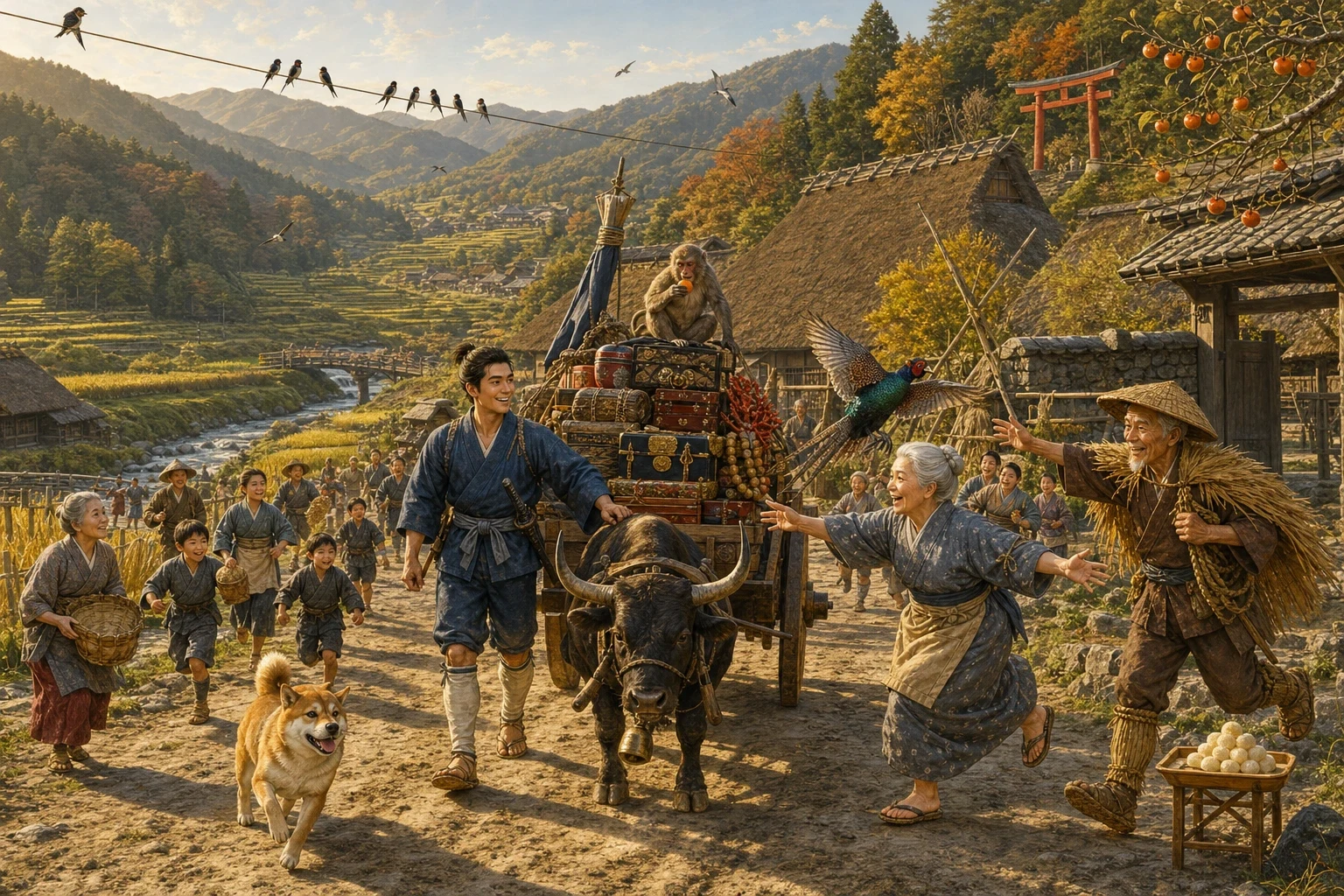
Nobody fought. The Ogre King put his club down on the flagstones, which is the only sensible thing he did in the whole of his life, and the oni spent the rest of that night carrying their stolen goods down to the boats and loading them, and swore on the gate of their own fortress never to cross the water again — and they never did, and the sea around that island was a great deal quieter afterwards. Momotaro took the treasure back. Not to his own house: he went up the coast and along the valleys and gave every village its own things, and only what was left at the end — and it was still a cartload — came home over the mountain. The old man and the old woman were at the gate, because they had been at the gate every evening for four months. The dog stayed. The monkey stayed, mostly in the persimmon tree. The pheasant went back to the ridge but came down to the village whenever there was millet, and told everybody who would listen that the entire thing had been its own idea.
About this story
- Audience: kids (ages 6–12)
Read Wonder Tales on your phone
Wonder Tales is available on Android. Get Wonder Tales on Google Play.