The Lion and the Mouse
A small kindness that nobody thought would ever be needed
Page 1
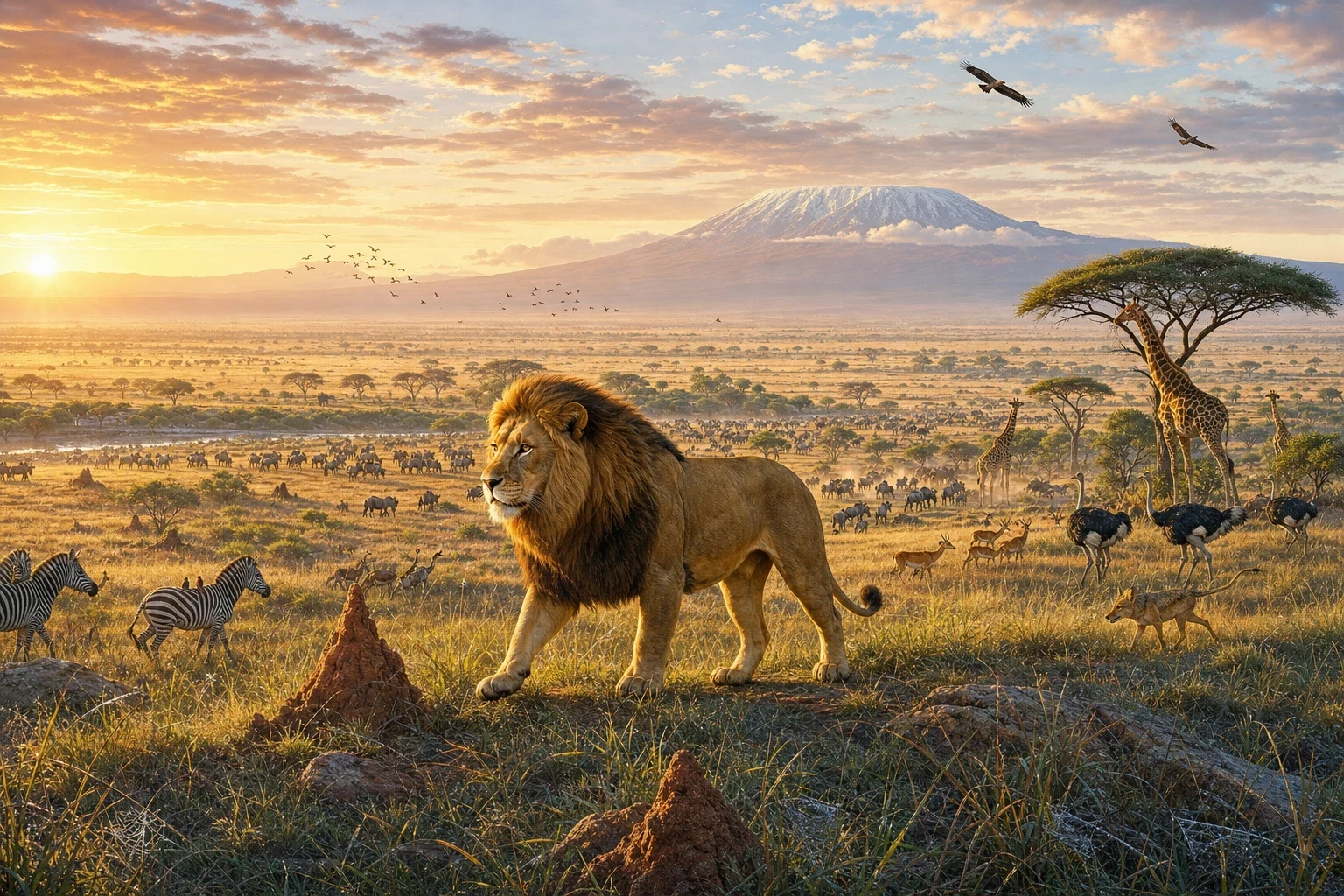
There is a plain in Africa so wide that from the middle of it you cannot see the end of it in any direction, only grass, and flat-topped thorn trees, and far away a blue mountain with a flat white top. In the mornings the whole of it moves: zebra and wildebeest in their thousands going down to the water, giraffe walking through the thorn trees with their heads above them, birds going up in clouds off the grass. And the biggest thing on that plain, and the one that everything else kept an eye on, was a lion — an enormous dark-maned male who walked wherever he liked, slept wherever he liked, and had never in his whole life had to think twice about anything. This story is about him and about a mouse, which is the sort of thing that only happens on a very big plain.
Page 2
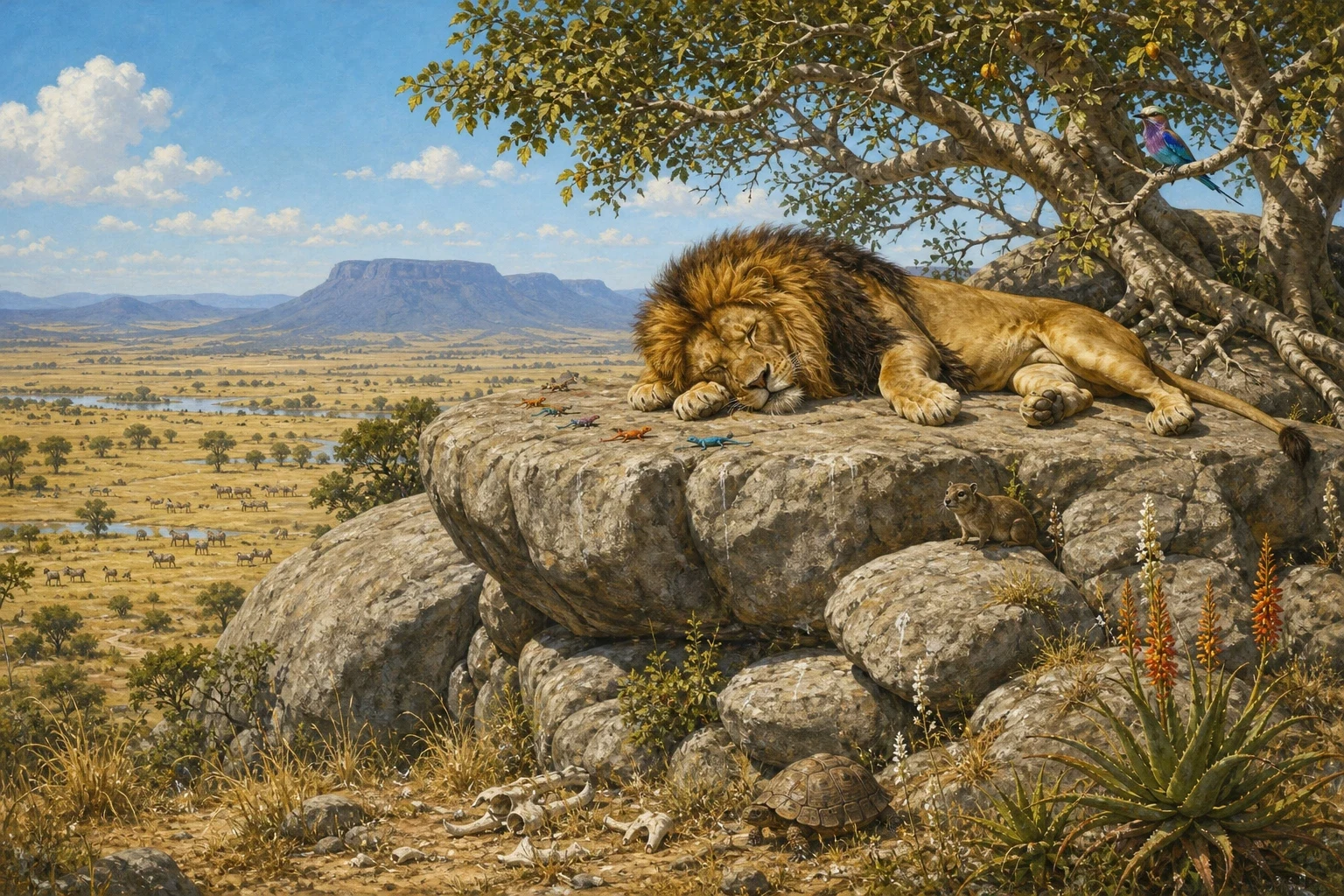
In the middle of that plain there is an outcrop of rock, a heap of great grey boulders with fig trees growing out of the cracks, and the top of it is flat and smooth and holds the heat of the day. It was the lion's favourite place in the whole country. He went up there most afternoons, and he was up there on this particular one — stretched out full length on the warm stone with all four paws loose and his chin on his forelegs, so deeply asleep that the lizards had come back out and were sunning themselves two feet from his nose.
Page 3
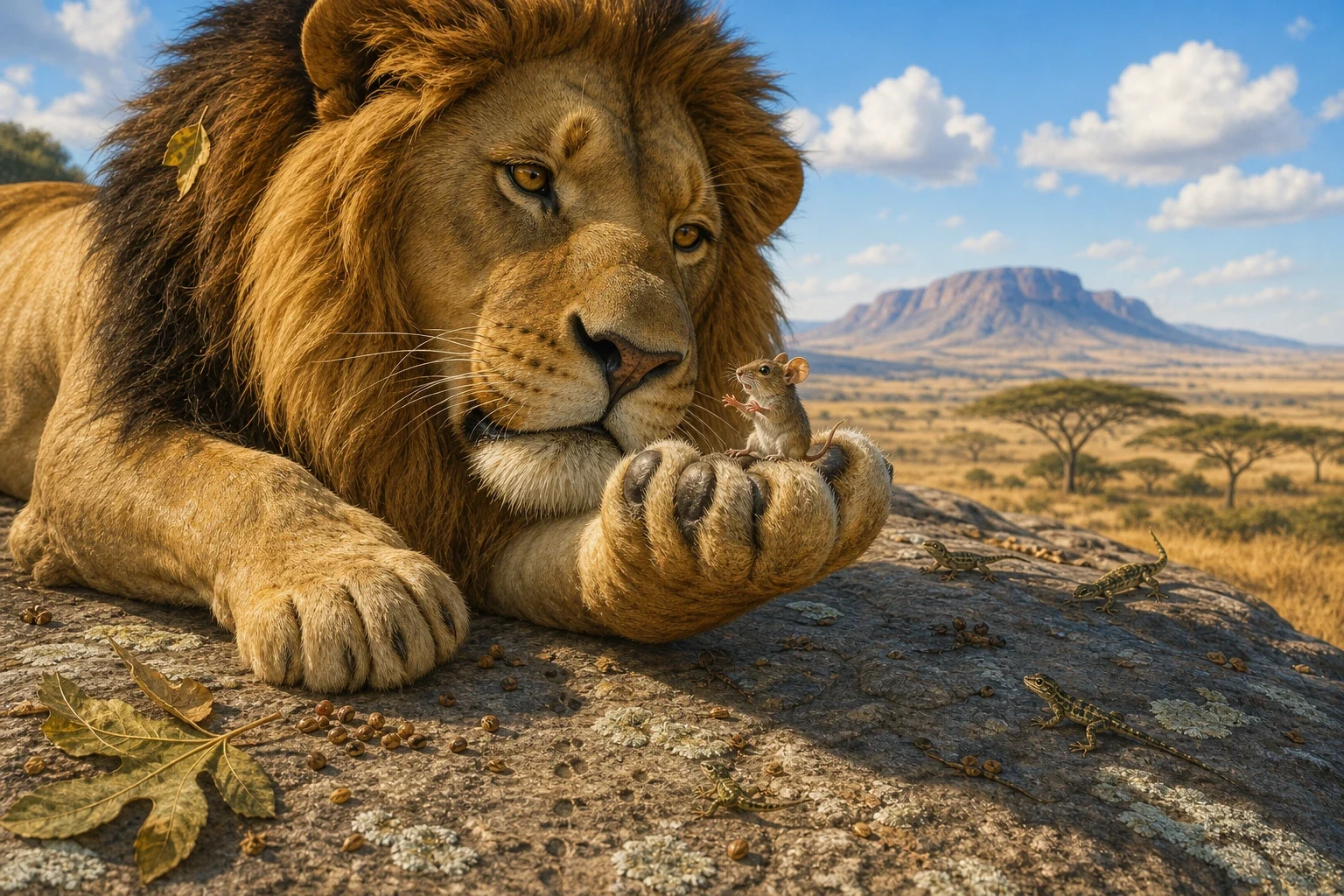
A mouse came out of the grass at the bottom of the rock and up the side of it, looking for fig seeds, and he was going so fast and paying so little attention that he ran straight across the lion's forepaw and on up over his shoulder before he had the slightest idea what he was standing on. He realised halfway across the mane. He stopped dead. And underneath him, very slowly, the whole landscape began to get up. One enormous paw came over and closed round him — not hard, just closed — and he was lifted into the air in front of two amber eyes the size of saucers, and a voice he could feel through his feet asked him what, exactly, he thought he was doing.
Page 4
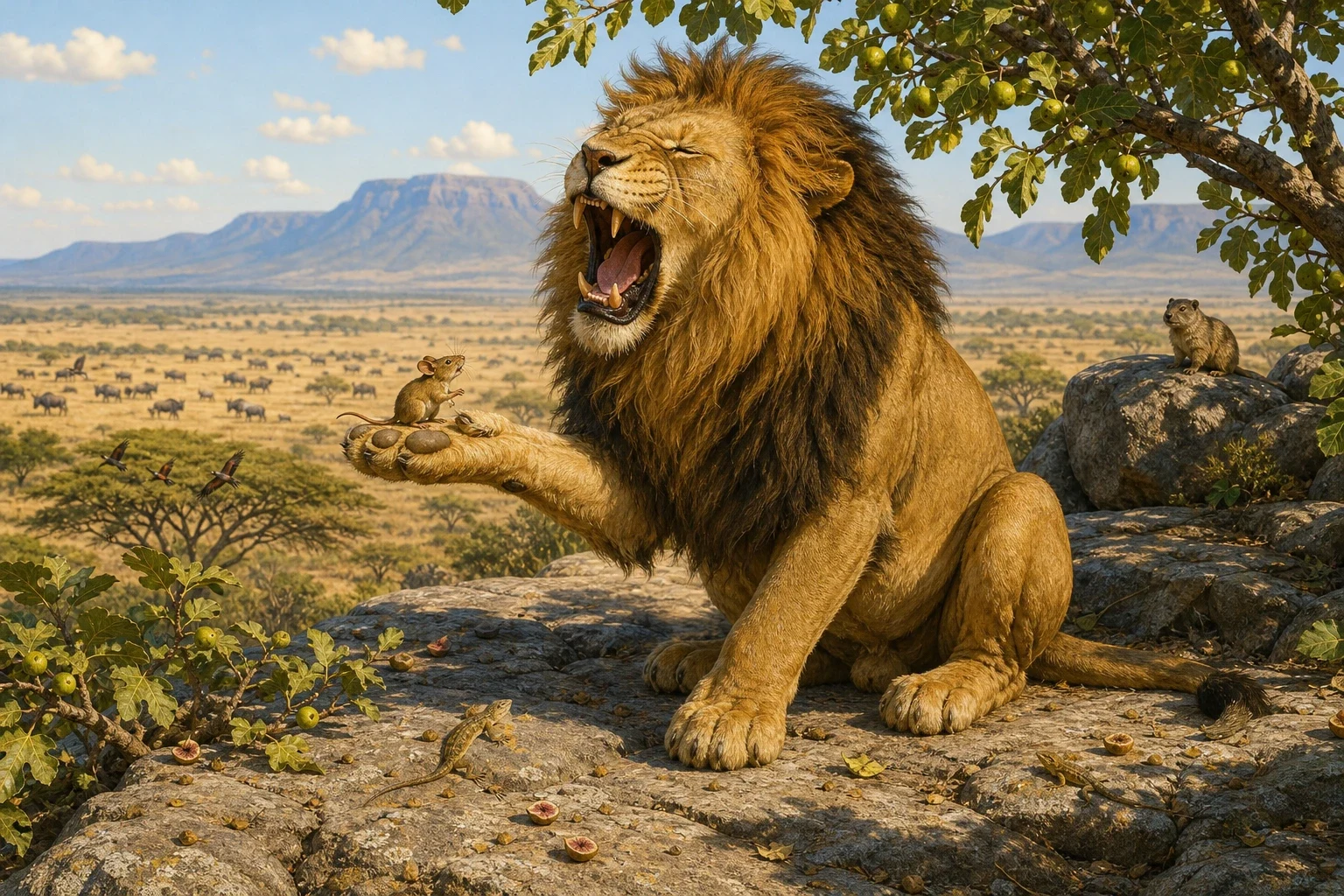
The mouse, who could not run and could not hide and had nothing at all to bargain with, did the only thing left to him, which was to talk. He said he was extremely sorry. He said he had not been looking where he was going, which was true. He said that he was not worth eating and would not even be noticed, which was also true. And then — because he had got to the end of what was true and was still being held in the air — he said that if the lion let him go, he would never forget it, and that one day he would do the lion a good turn in return. There was a long pause. And then the lion laughed. He laughed so hard that the mouse had to hold on to his paw. The idea of a mouse the length of a thumb ever being of any use at all to the largest animal on that plain was the funniest thing that had happened to him in years — and he was in such a good mood about it that he opened his paw and let the mouse go.
Page 5
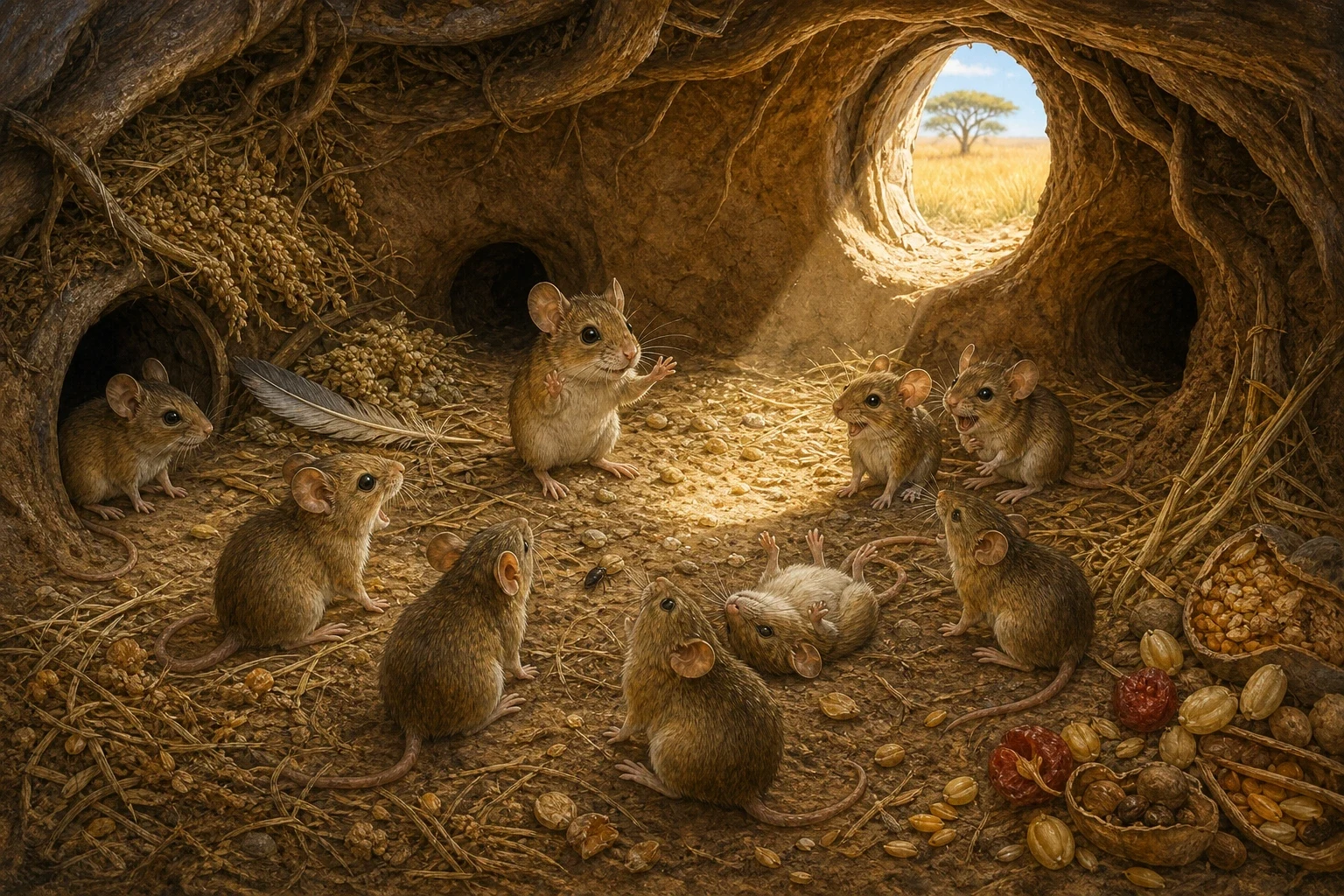
The mouse went down that rock faster than he had come up it and across the open grass in one run and did not stop until he was underneath the big baobab tree, in the hollow under its roots where he and a great many of his relations lived. And there, when he had got his breath back and his heart had stopped doing what it was doing, he told them. He told them that he had been caught by a lion. He told them that he had been held in a paw in the air. And then — because he was a mouse and could not help himself — he told them that he had promised the lion a good turn in return, and that the lion had laughed. All the other mice laughed too. They laughed for a week. It became the family joke, and they were still making it at him months later, and the mouse took it all in good part, because he could see perfectly well how funny it was.
Page 6
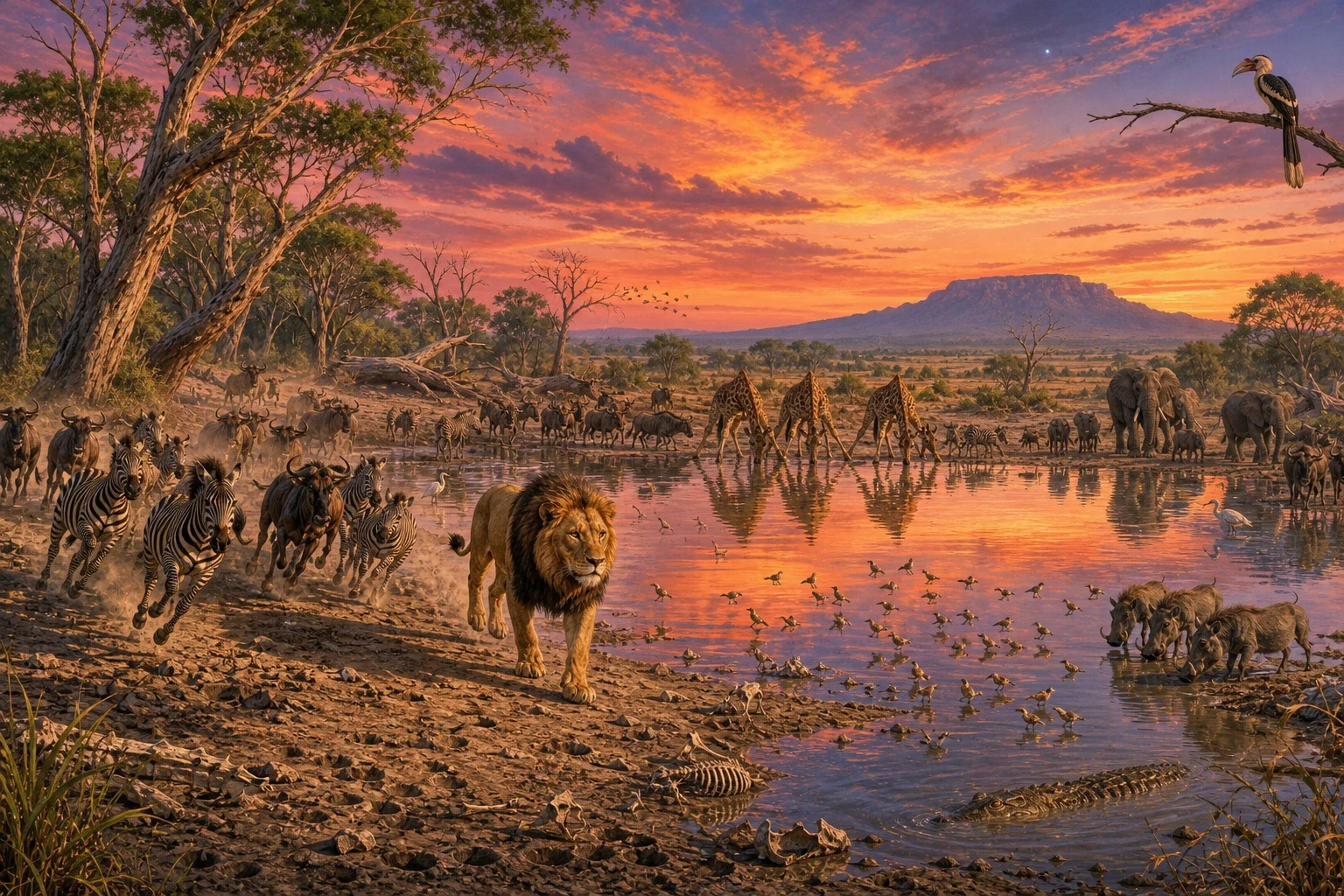
The seasons went round. The grass went yellow and then brown, and the waterholes on that plain got smaller and smaller until there was only one of them worth the name, down among the fever trees at the bend of the dry river. Everything on the plain came there at dusk, because there was nowhere else — zebra and giraffe and elephant and warthog, all of them standing in the shallows together in the last of the light, nervous and thirsty and keeping an eye on each other. And when the lion came down the bank they all moved aside for him and he did not even look at them, and he drank, and went away into the long grass to lie up for the night. He had forgotten the mouse completely. He had forgotten him within the hour.
Page 7
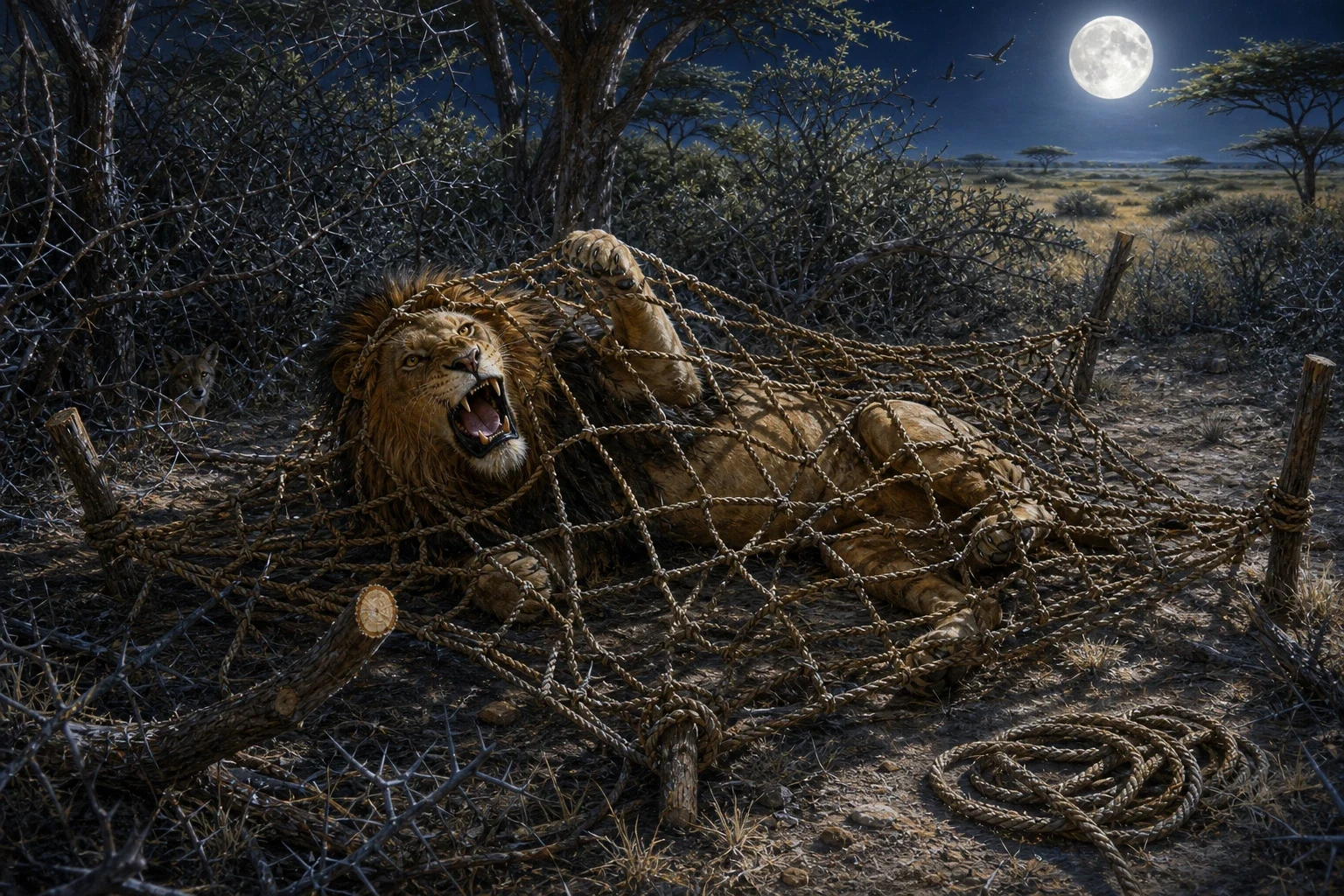
In the night he went through a thicket of thorn he had gone through a hundred times before, and hunters had been there that afternoon. They had hung a net of heavy rope between the trees and staked it down, and the lion walked into it in the dark at full stride and the whole thing came down over him. He fought it. He fought it for an hour and he was enormously strong, and it made no difference at all, because a rope net is not something you can be strong at — the harder he pulled, the tighter every knot in it drew. By the middle of the night he was lying still on his side in the middle of it, tangled from his mane to his back legs, not hurt anywhere and not able to move, and he knew that the men would come back at sunrise. So he put his head up and he roared, which was the only thing left that he could do; and the sound of it went out across that whole plain and woke everything on it.
Page 8
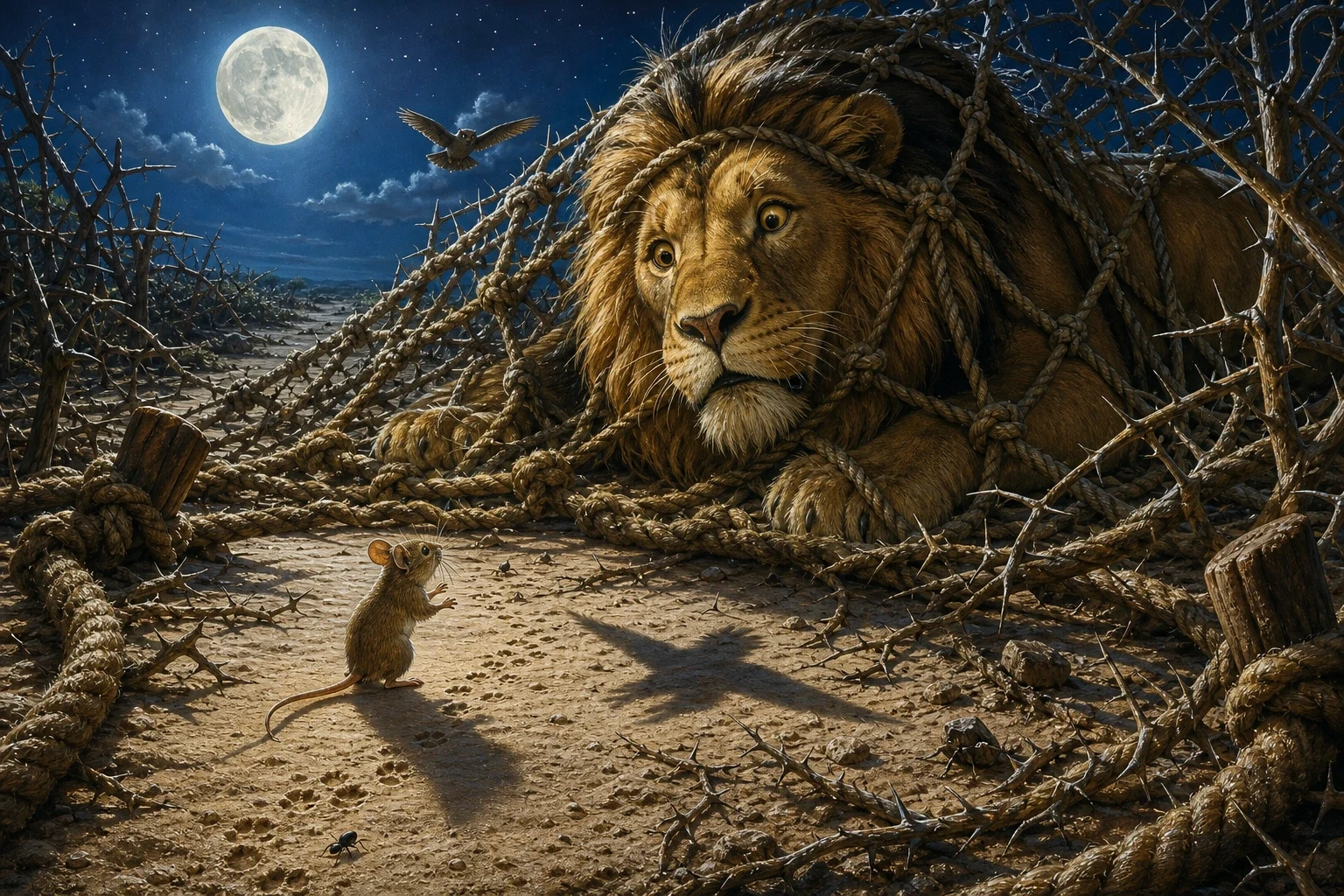
Every animal on that plain heard the roar and every single one of them went the other way, which is the sensible thing to do and which is what they had all been doing their whole lives. One did not. Under the baobab tree, the mouse put his head out of the burrow and listened to it, and knew exactly whose voice that was, and then had an argument with himself in the dark for about four minutes. Then he came out and ran. He ran a mile and a half across open ground in the moonlight, which for a mouse is a very long way and a very dangerous one, with owls out; and he came into the thorn thicket at about two in the morning, and stopped at the edge of the ropes, and looked up at what was lying in them — and said, in a small polite voice, that he had come about the good turn.
Page 9
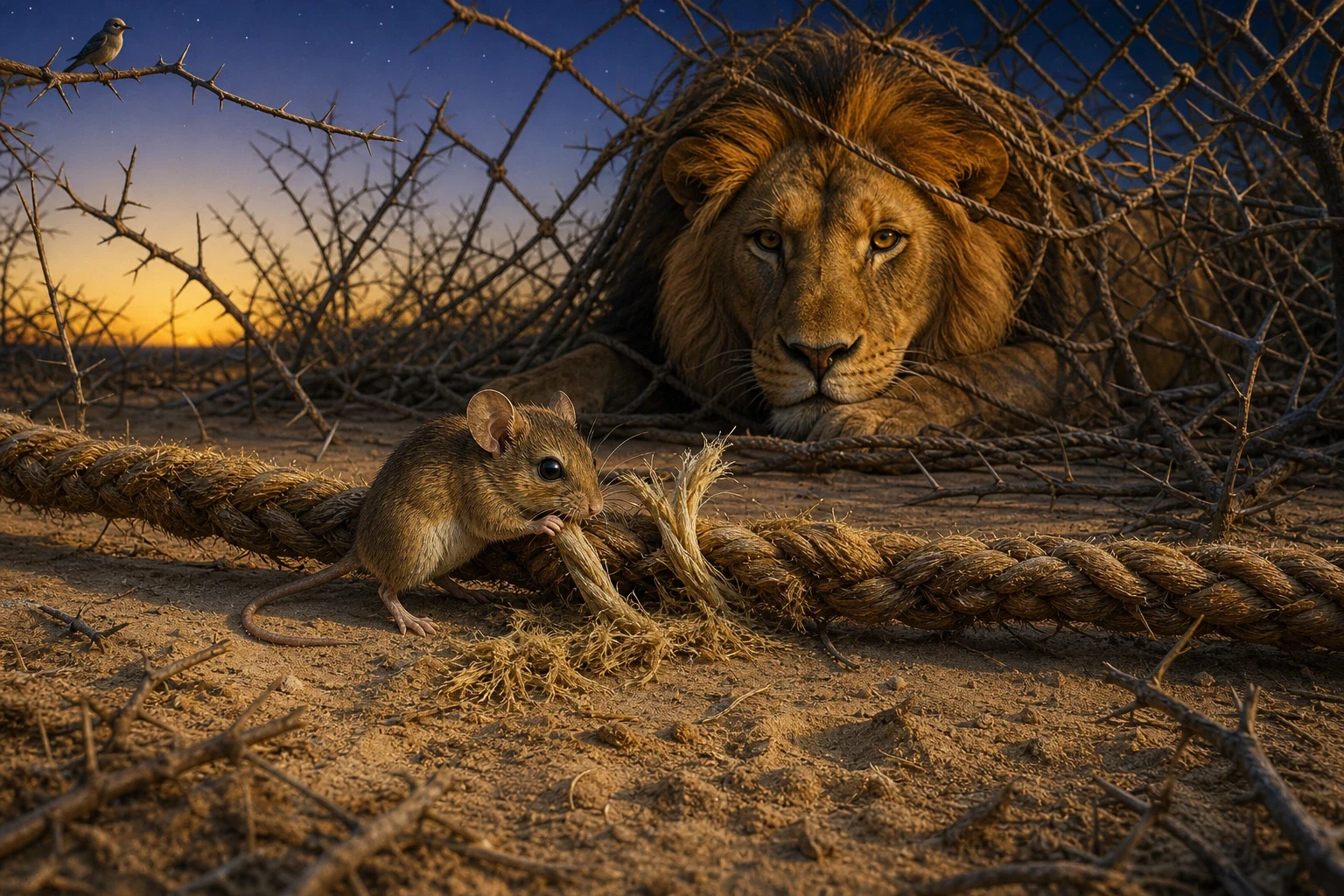
He started on the rope across the lion's shoulder, because that was the one holding everything else. It was thicker than he was. He took it in his front feet and set his teeth in it and began to cut, the way a mouse cuts anything, in small fast strokes with the whole of his head — and the first strand went, and then the second, and then he had to stop and rest, and then he went on. It took him the rest of the night. He cut through that rope, and then the one under the lion's foreleg, and then two more across his back, and by the time the sky was going grey over the thorn trees the whole net had gone slack. The lion put one paw through it and pushed, and it came away like a cobweb.
Page 10
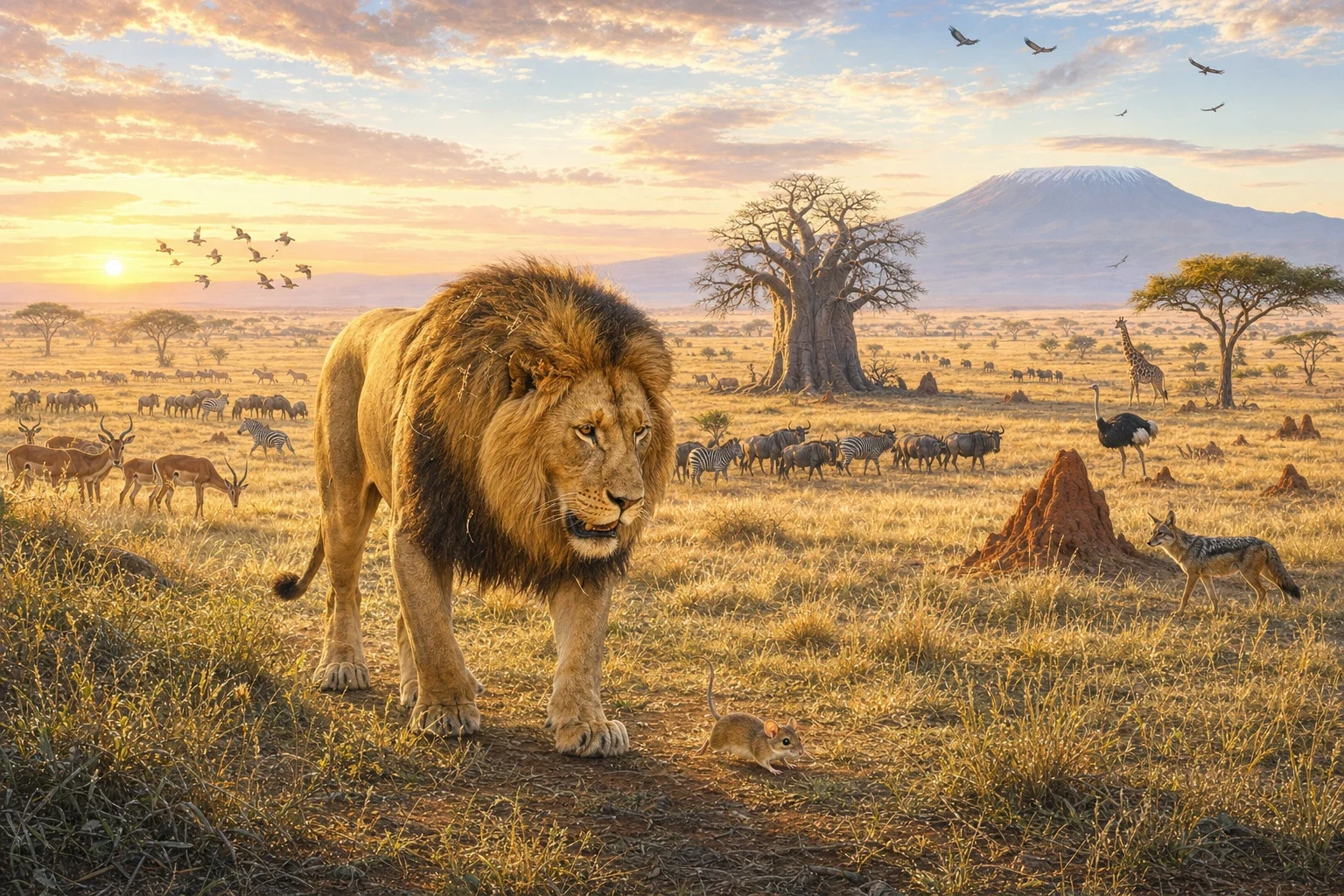
They came out of the thorn thicket together into the first of the sun, the largest animal on that plain and one of the smallest, and they went across the open grass side by side — very slowly, because one of them had to stop every so often and wait. And the lion said, when they got to the baobab tree, that he had laughed at the mouse, and that he had been wrong to; that he had thought a small creature could never be of any use to a great one; and that he would not think that again as long as he lived. Then he lay down in the shade and slept for a day and a half. And the mouse went down into the burrow under the roots and told his family where he had been — and nobody in that family ever laughed at him about it again.
About this story
- Audience: kids (ages 6–12)
Read Wonder Tales on your phone
Wonder Tales is available on Android. Get Wonder Tales on Google Play.