Why Anaximenes Chose Air as the Fundamental Element of the Cosmos
Discover why the ancient Greek philosopher Anaximenes proposed air as the primary substance from which all things originate.
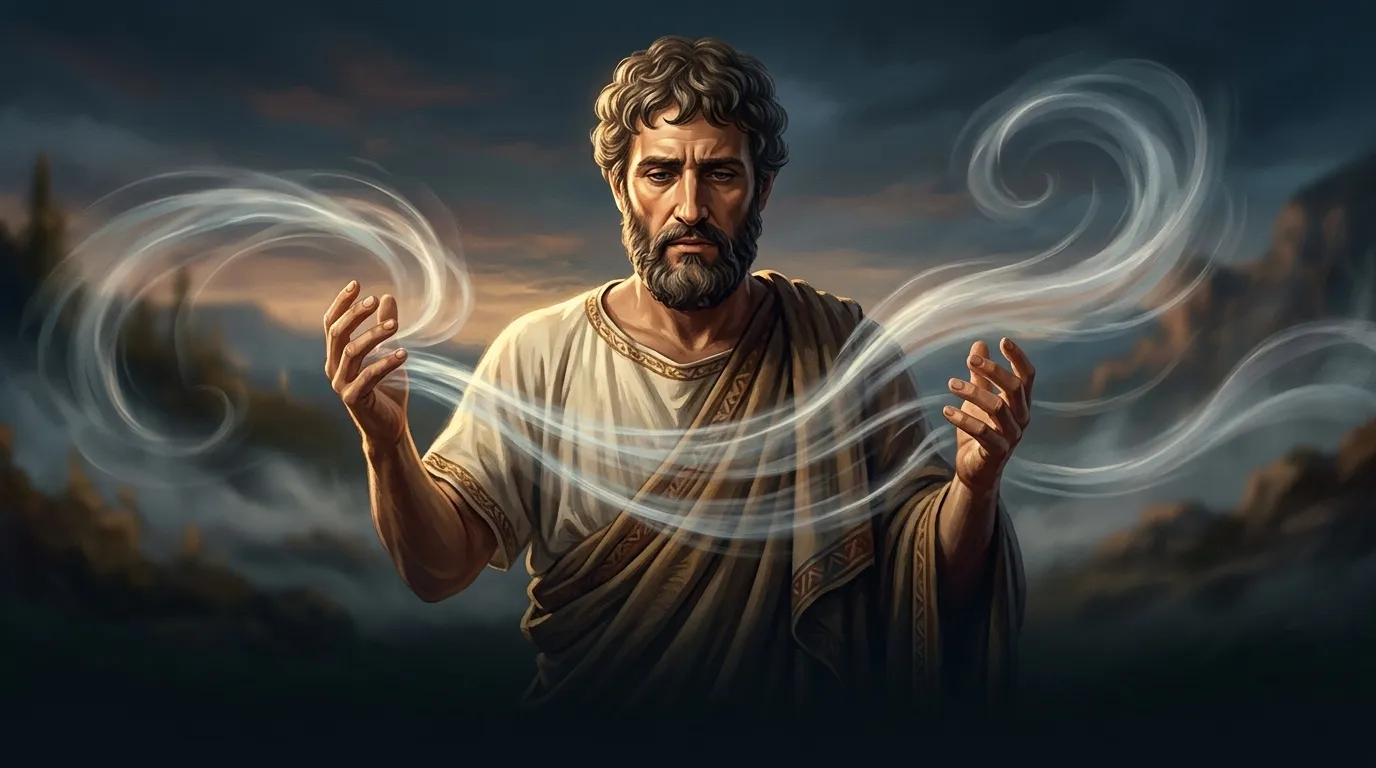
Many people associate early Greek philosophers with grand, sweeping theories about the universe. One such figure, Anaximenes of Miletus, is often remembered for his unique choice of air as the fundamental substance of the cosmos. This idea might seem strange to us today, but for Anaximenes, it was a logical step that explained the world around him in a coherent way, building on the ideas of his predecessors.
The general understanding is that Anaximenes picked air because it was easily observable and could be transformed into other states. He saw it as a dynamic element, capable of change and movement, which made it a suitable candidate for the arche, or first principle, from which everything else derived.
Common Beliefs About Anaximenes' Choice of Air
When we consider why Anaximenes chose air, several common ideas come to mind:
- He believed air was the most fundamental element because it was invisible yet essential for life.
- Anaximenes observed air transforming into other substances through rarefaction and condensation.
- He thought air was infinite and eternal, much like the apeiron his teacher Anaximander proposed.
- Air was seen as a divine substance, akin to the soul or breath.
Air as the Breath of Life and the Divine
One prominent belief is that Anaximenes saw air as the very essence of life, much like the human breath. In ancient Greek thought, the breath (psyche) was often associated with the soul and life force. This connection made air seem not just a physical substance but also a vital, animating principle. For Anaximenes, this meant that if air was what gave life to living beings, it could also be the fundamental principle that animated the entire cosmos. It was an omnipresent force, always moving and always present, even when unseen. You can explore more about these ancient ideas in Wonder Philosophy.
Just as our soul, being air, holds us together, so breath and air enclose the whole cosmos.
Transformation Through Rarefaction and Condensation
Anaximenes' most significant contribution, and a key reason for his choice, was his theory of how air could transform into other elements. He proposed two processes: rarefaction and condensation. When air becomes more spread out (rarefied), it becomes fire. When it becomes more compressed (condensed), it first becomes wind, then cloud, then water, then earth, and finally stones. This provided a mechanistic explanation for the diversity of matter from a single underlying substance. Unlike earlier philosophers who simply stated that one element transformed into another, Anaximenes offered a plausible, observable process for these changes. This made his theory more empirically grounded for his time. Understanding these early scientific thoughts helps us grasp the origins of natural philosophy, as discussed in many articles on early thinkers.
What Is Worth Remembering About Anaximenes' Air?
Anaximenes' choice of air as the arche was not arbitrary. It was a sophisticated attempt to explain the world based on observation, analogy, and a desire for a single, unifying principle. He built upon the ideas of his predecessors, like Thales' water and Anaximander's apeiron, by proposing a substance that was both tangible and capable of explaining change through a clear, physical mechanism. His focus on rarefaction and condensation marked an important step towards a more scientific approach to understanding the natural world, even if his specific conclusions are now outdated.
Frequently Asked Questions
What was the 'arche' for Anaximenes' predecessors?
Thales, another Milesian philosopher, believed water was the arche. Anaximander, Anaximenes' teacher, proposed the apeiron, an indefinite, boundless substance, as the fundamental principle.
How did Anaximenes' theory differ from Anaximander's?
Anaximander's apeiron was an abstract concept, an indefinite substance that couldn't be directly observed. Anaximenes, on the other hand, chose a concrete, observable element—air—and proposed a clear mechanism (rarefaction and condensation) for how it transformed into other substances.
Did Anaximenes believe in gods?
While Anaximenes attributed divine qualities to air, seeing it as the animating force of the cosmos, he was primarily a natural philosopher seeking a physical explanation for the universe. His concept of divinity was intertwined with the natural world rather than separate from it, aligning with early Greek philosophical traditions.