Who are the big four of Russian literature?
The 'big four' of Russian literature are widely considered to be Fyodor Dostoevsky, Leo Tolstoy, Ivan Turgenev, and Alexander Pushkin.
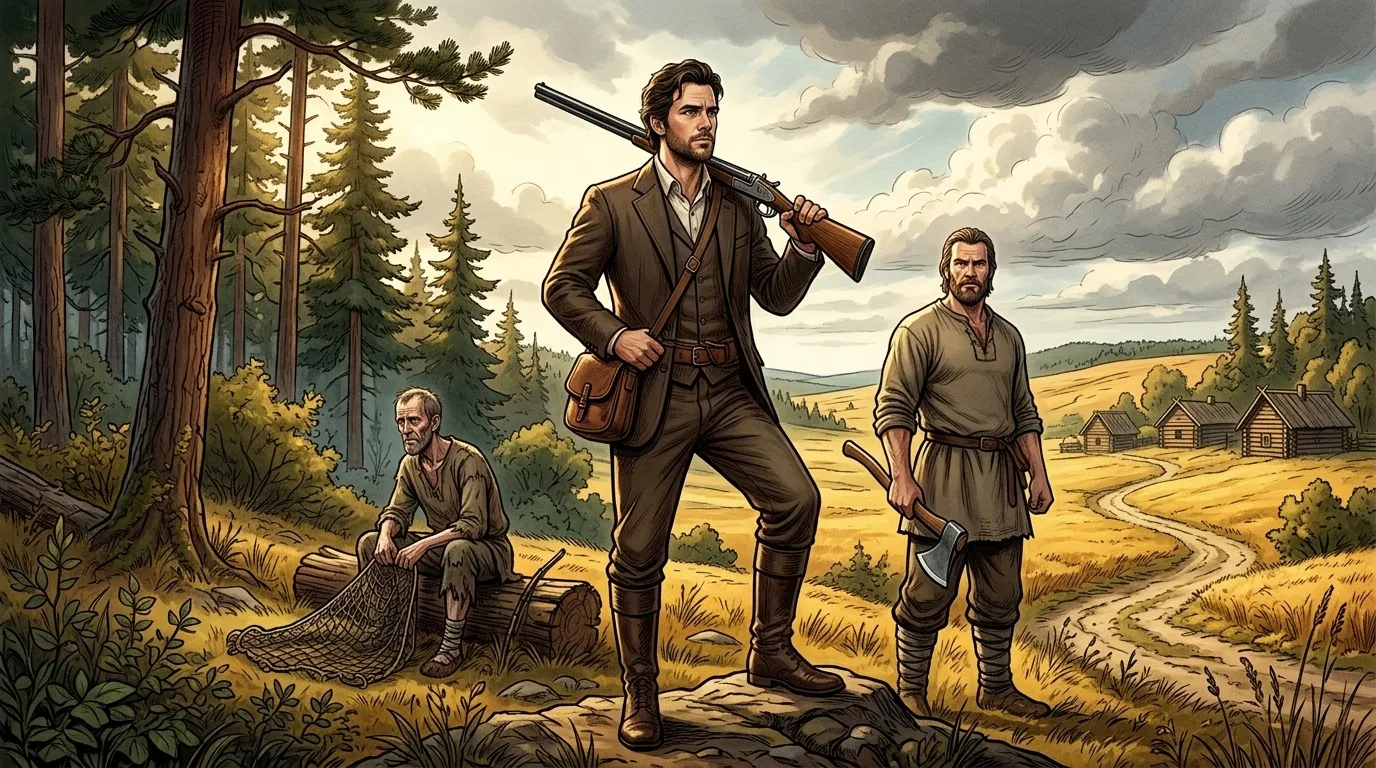
Russian literature, with its profound psychological insights and sweeping narratives, stands as a titan in world culture. For newcomers, understanding its vast landscape can be daunting, but a good starting point is to identify its most influential figures. The 'big four' of Russian literature are widely considered to be Fyodor Dostoevsky, Leo Tolstoy, Ivan Turgenev, and Alexander Pushkin. These authors, through their groundbreaking works, shaped the very fabric of Russian identity and left an indelible mark on global literary traditions, exploring themes of morality, society, and the human condition with unparalleled depth.
- Alexander Pushkin
- Mikhail Lermontov
- Ivan Turgenev
- Fyodor Dostoevsky
- Leo Tolstoy
The Russian novel, in particular, is a phenomenon that transcends national boundaries, speaking to universal truths.
Alexander Pushkin: The Father of Modern Russian Literature
Alexander Pushkin (1799–1837) is often celebrated as the founder of modern Russian literature and the developer of the modern Russian literary language. Before Pushkin, Russian writing often imitated Western European styles. He infused the language with native Russian idioms and created a flexible, expressive style that influenced generations. His novel in verse, Eugene Onegin, is a cornerstone of Russian realism, introducing the 'superfluous man' character type who is intelligent and capable but fails to find purpose in life. Pushkin's work marked a decisive break from the sentimentalism and classicism of earlier periods, paving the way for the rich psychological realism that would define later Russian novels.
Mikhail Lermontov: A Hero of Our Time
Following closely on Pushkin's heels, Mikhail Lermontov (1814–1841) further developed the themes of the 'superfluous man' and romantic individualism. While Pushkin established a new literary language, Lermontov delved deeper into the complexities of the Russian soul, often with a darker, more cynical edge. His seminal novel, A Hero of Our Time, is a pioneering work of psychological realism. It is narrated by different characters, offering multiple perspectives on the enigmatic protagonist, Pechorin, a young, disillusioned officer. This innovative narrative structure and the profound exploration of a character's inner life were new to Russian literature, expanding on Pushkin's more external focus.

Ivan Turgenev: A Sportsman's Sketches and Fathers and Sons
Ivan Turgenev (1818–1883) brought a more refined, lyrical prose to Russian literature, often focusing on the lives of the intelligentsia and the nuanced relationships between generations. While Pushkin and Lermontov introduced iconic character types, Turgenev excelled at depicting the social and political currents of his time, particularly the clash between traditional and reformist ideas. His collection A Sportsman's Sketches offered sympathetic portrayals of serfs, influencing public opinion against serfdom. Later, Fathers and Sons famously introduced the concept of 'nihilism' into the Russian lexicon, describing a new generation's rejection of established values. Turgenev's work is characterized by its elegant style and its examination of societal changes, differentiating it from the more intense psychological dramas of Dostoevsky or the epic scope of Tolstoy. Readers can explore his nuanced character studies in First Love as well.
Fyodor Dostoevsky: Demons (The Possessed)
Fyodor Dostoevsky (1821–1881) is unmatched in his exploration of the darkest corners of the human psyche, often grappling with profound philosophical and religious questions. While Turgenev depicted social conflicts, Dostoevsky plunged into the moral and spiritual struggles of individuals, often in extreme circumstances. His novels are known for their intricate plots, intense emotional depth, and polyphonic narrative style, where multiple viewpoints and ideologies clash. Demons (The Possessed), for instance, is a searing critique of radical political movements, examining the destructive consequences of ideological extremism. Dostoevsky's work expanded Russian literature's scope to include deep theological debates and the tormented inner lives of characters, a dimension less central to his predecessors. You can delve into his complex narratives and philosophical inquiries through Demons (The Possessed) and other works available in the Wonder Novels collection.

Leo Tolstoy: Childhood, Boyhood, Youth
Leo Tolstoy (1828–1910) is celebrated for his epic scope, moral earnestness, and unparalleled realism in depicting human experience. While Dostoevsky explored psychological extremes, Tolstoy focused on the everyday lives of ordinary people and the grand sweep of history, often with a didactic purpose. His early autobiographical trilogy, Childhood, Boyhood, Youth, offers a vivid portrayal of a young man's development and reflections on society. This work, like his later masterpieces, showcases Tolstoy's meticulous attention to detail and his ability to capture the nuances of human emotion and societal interaction. Tolstoy's unique contribution was his development of a 'moral realism,' where the inner lives of characters are intricately linked to their ethical choices and spiritual journeys, presented on an often vast canvas. His influence on the novel as an art form is immense, demonstrating how personal experience can illuminate universal truths. For those interested in classic literature, many of these influential works, including Childhood, Boyhood, Youth, are available to explore through WonderBooks' collection of illustrated stories.
Frequently Asked Questions
Why are these four considered the 'big four'?
These four authors are collectively recognized for their immense literary output, their groundbreaking contributions to the Russian language and narrative forms, and their profound impact on world literature. They each introduced new themes, styles, and character types that defined the golden age of Russian prose.
Are there other important Russian authors besides these four?
Absolutely. While Pushkin, Turgenev, Dostoevsky, and Tolstoy form a core, many other significant figures contributed to Russian literature, such as Nikolai Gogol, Anton Chekhov, and Maxim Gorky. Their works are also essential for a comprehensive understanding of the tradition.
Did Russian literature influence other national literatures?
Yes, Russian literature had a profound and lasting impact on writers globally. Its deep psychological insights, philosophical explorations, and innovative narrative techniques influenced authors from the French existentialists to American novelists, helping to shape the course of 20th-century literature.