Childhood, Boyhood, Youth — Leo Tolstoy
Childhood, Boyhood, Youth — Leo Tolstoy — an illustrated literature story. 10 illustrated pages, free to read on Wonder Novels.
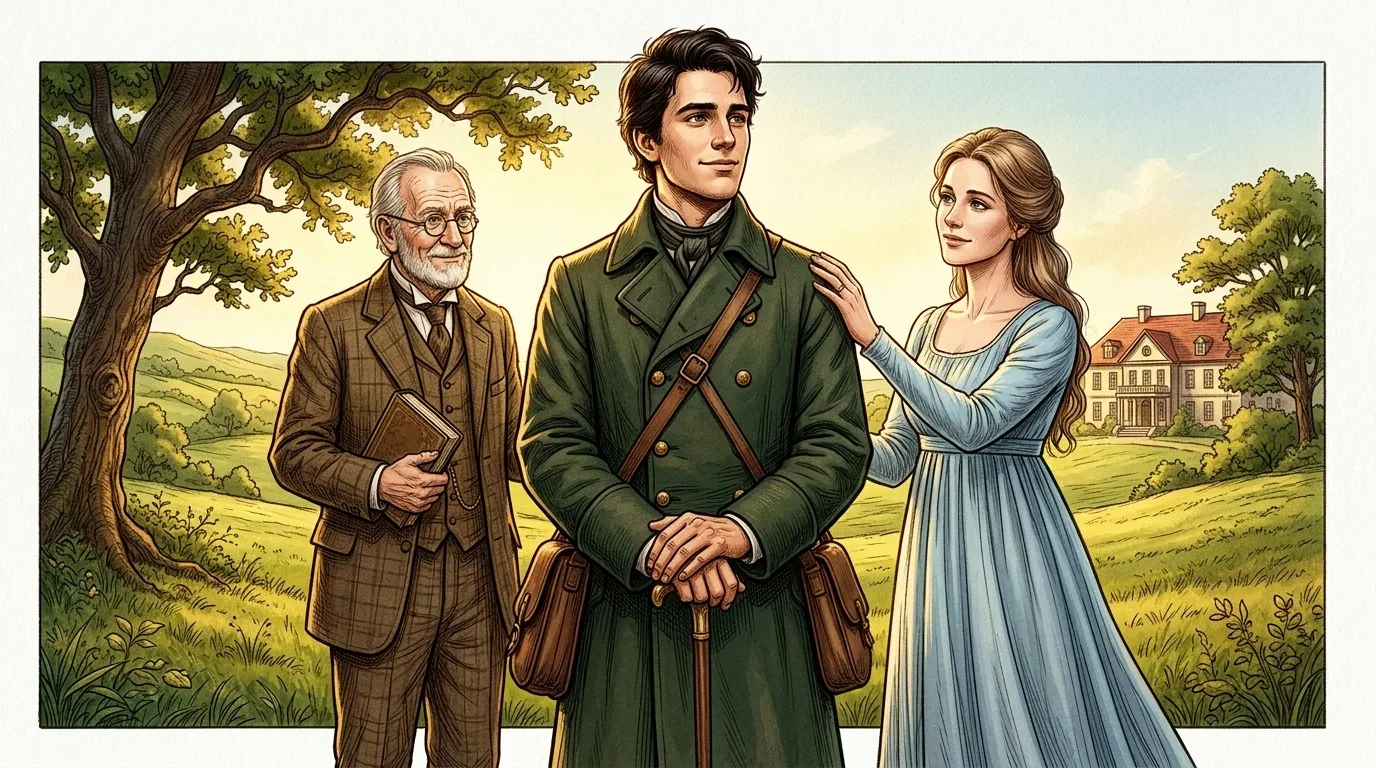
Page 1
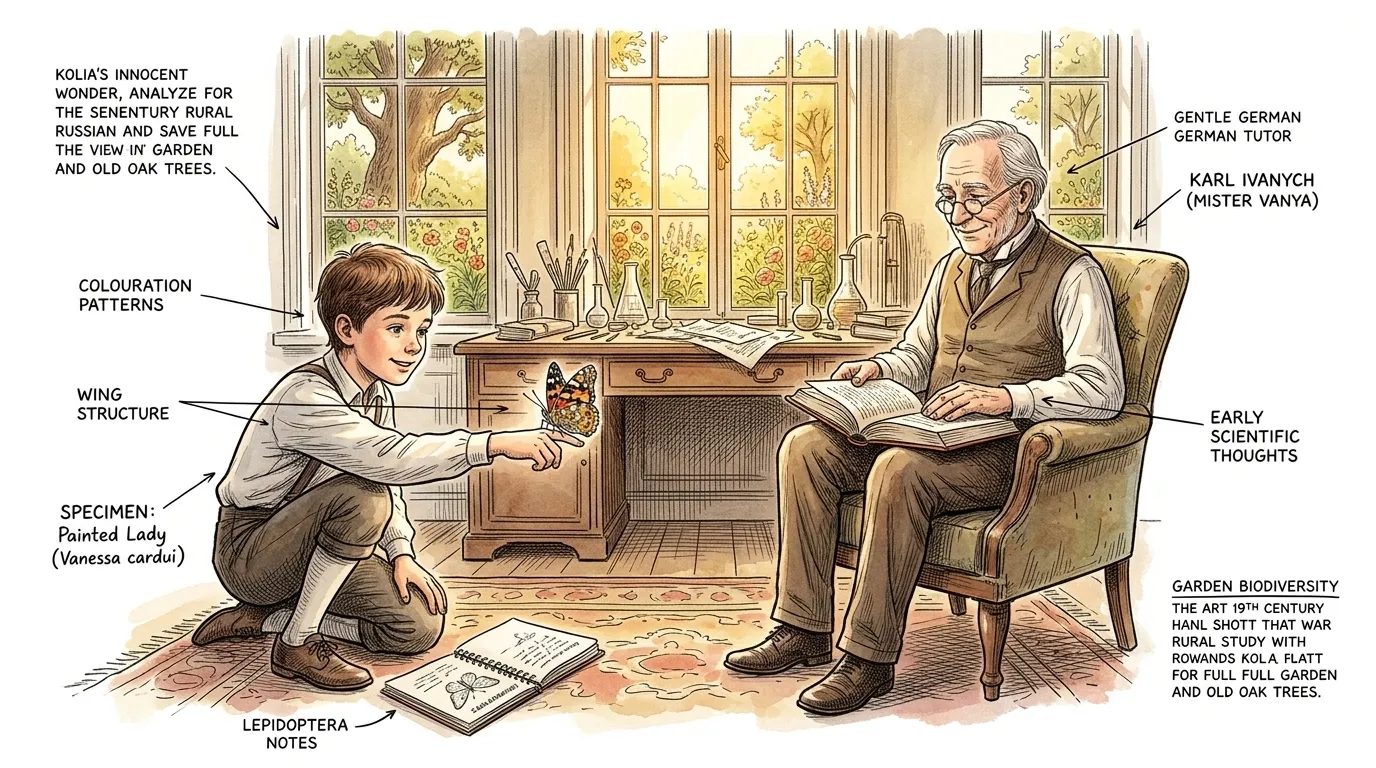
️ Literary Fact: Tolstoy begins 'Childhood' by immersing the reader in the innocent, sensory world of young Nikolay (Kolia), establishing a tone of gentle reminiscence and highlighting the early influences of his tutor, Mister Vanya. The initial scene is designed to evoke a strong sense of security and nascent curiosity, typical of a privileged upbringing in rural Russia during the 19th century.
Page 2
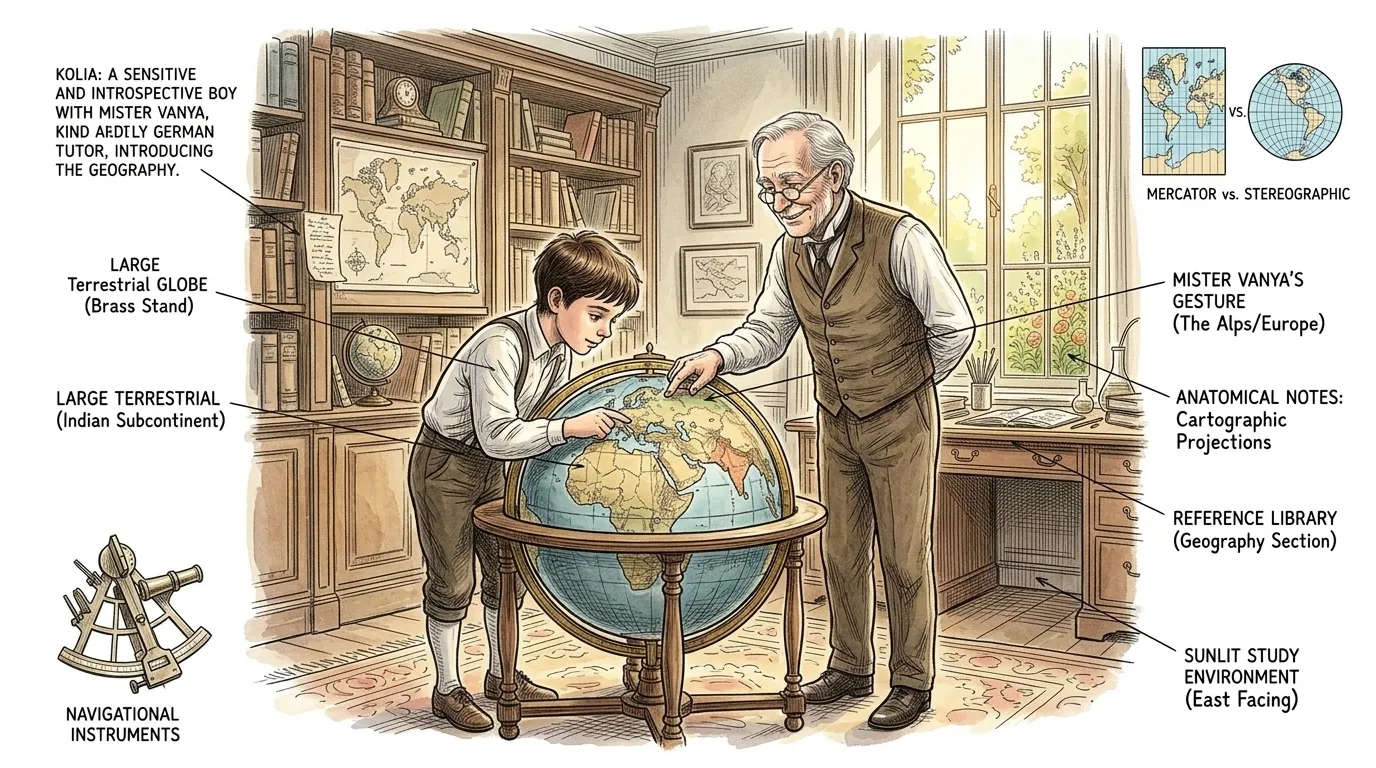
️ Literary Fact: This page captures Kolia's early education, a pivotal period where his intellectual curiosity is sparked. Mister Vanya, a figure of gentle wisdom, introduces him to geography and philosophy, subtly laying the groundwork for Kolia's later introspective journey. The detail of the globe underscores the expansion of Kolia's world beyond his immediate surroundings.
Page 3
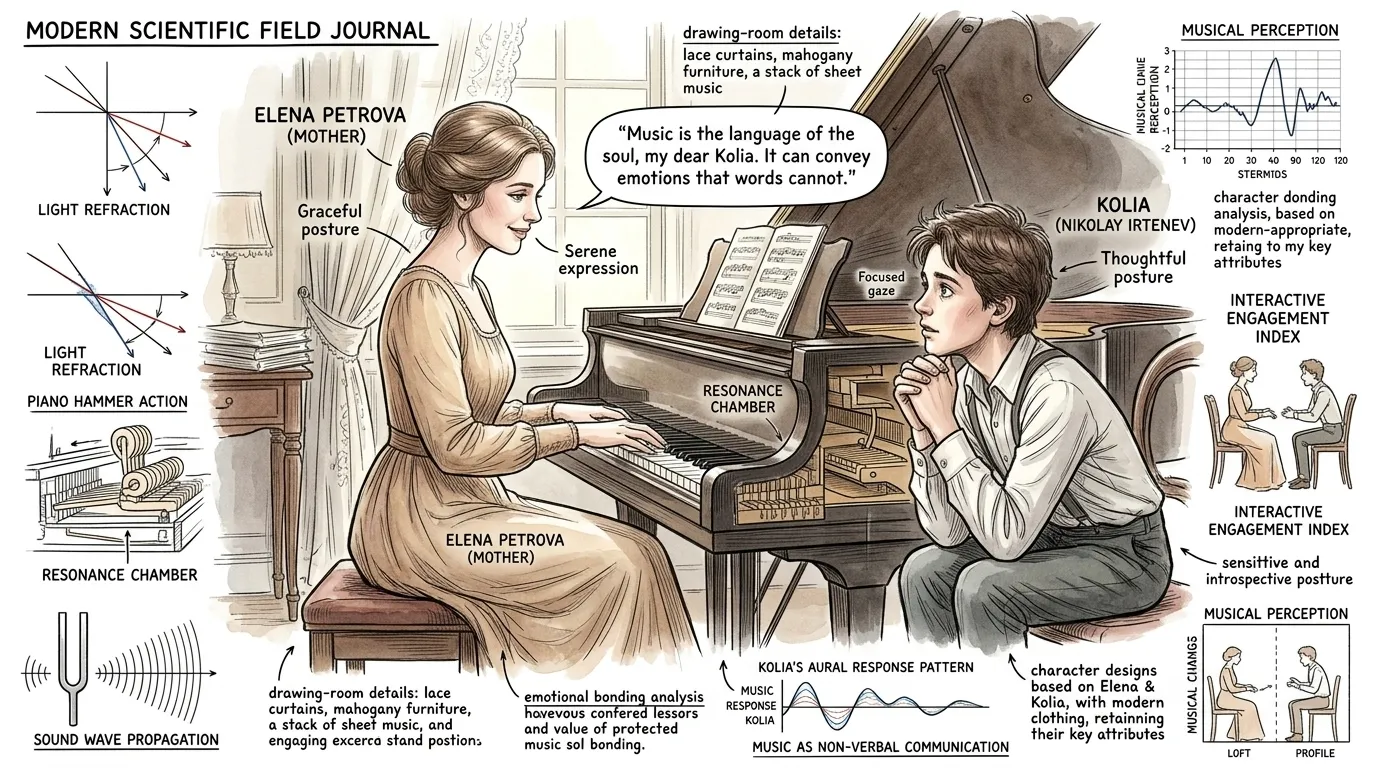
️ Literary Fact: This poignant moment highlights the profound influence of Kolia's mother, Elena Petrova. Her discussion of music as 'the language of the soul' serves as a crucial thematic setup, foreshadowing how this understanding will later become a source of comfort and philosophical insight for Kolia, demonstrating the lasting power of early emotional and intellectual imprints.
Page 4
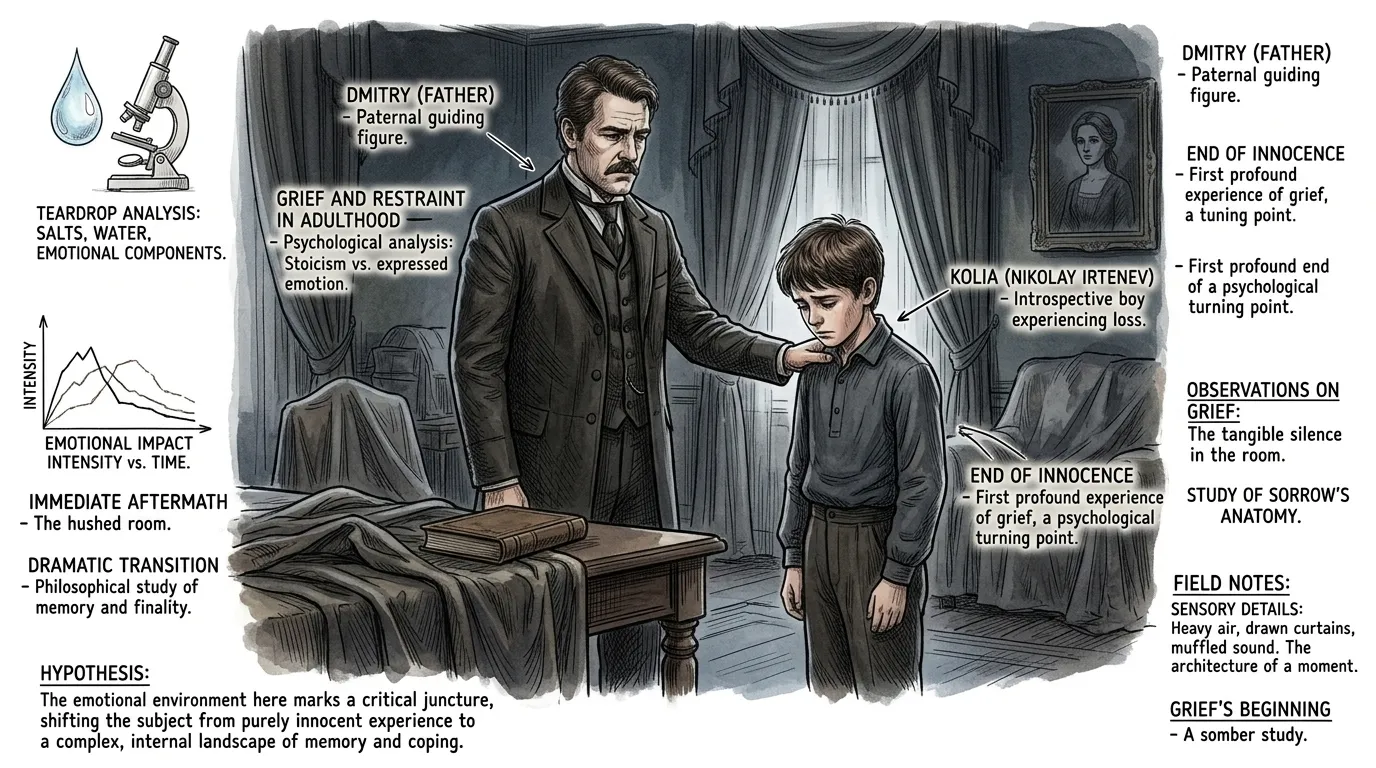
️ Literary Fact: The death of Kolia's mother marks a significant turning point, transitioning from the idyllic 'Childhood' to the more challenging 'Boyhood.' This scene captures the immediate aftermath of grief, emphasizing Dmitry's stoic sorrow and Kolia's nascent understanding of profound loss, signaling the end of his unblemished early years and the introduction of suffering.
Page 5
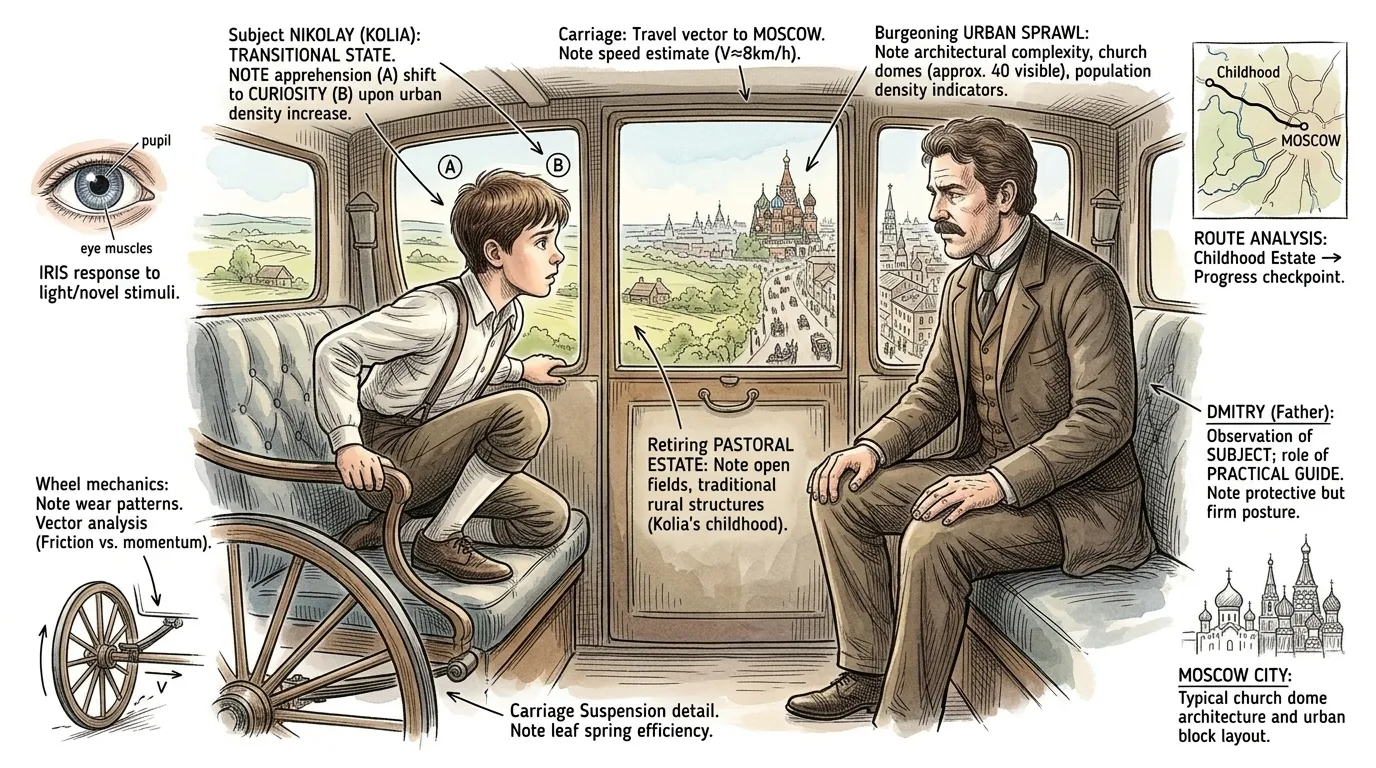
️ Literary Fact: The journey to Moscow symbolizes a literal and metaphorical transition for Kolia. It marks the shift from the sheltered, pastoral world of his childhood to the complex, social landscape of city life. This event initiates Kolia's exposure to a broader society and the challenges of self-discovery beyond familial comfort, a core theme in Tolstoy's work.
Page 6
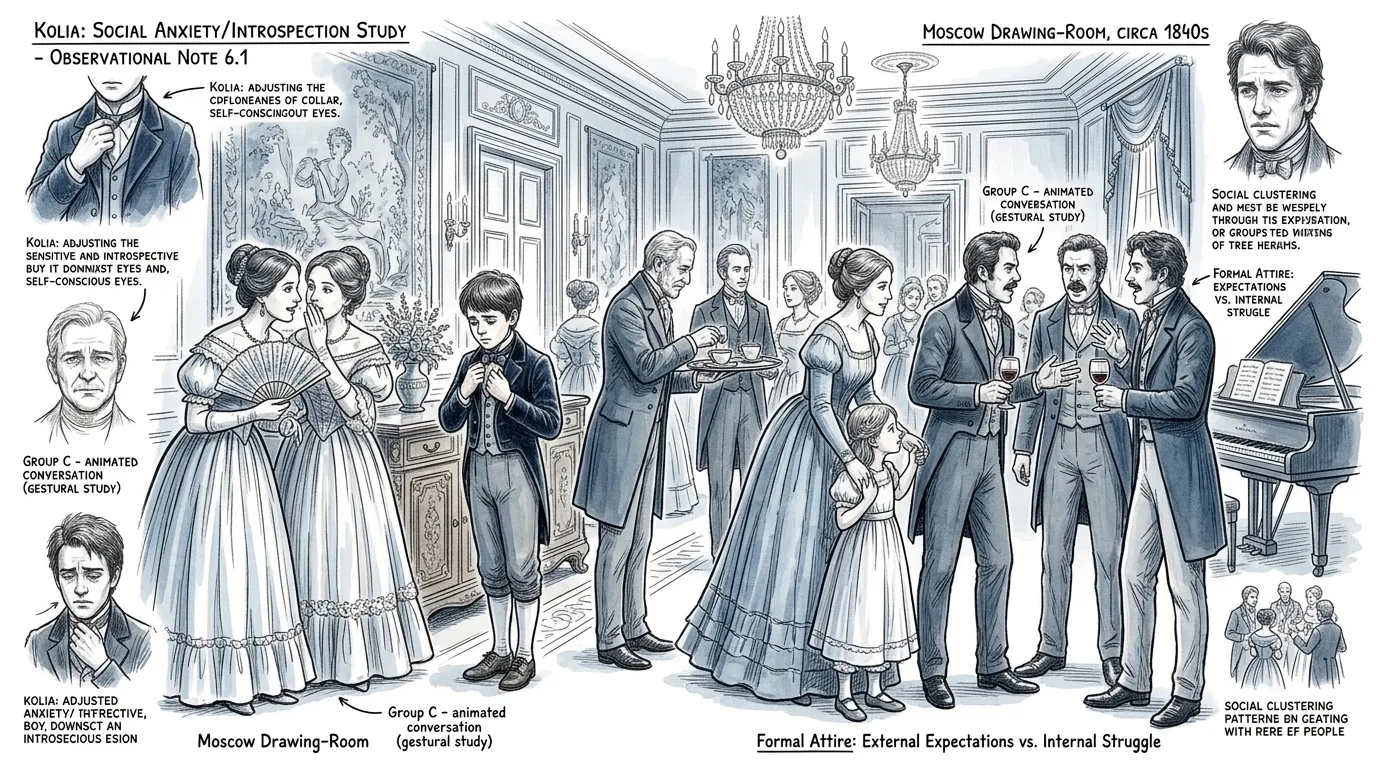
️ Literary Fact: This scene vividly portrays Kolia's struggle with social integration and self-consciousness in his new Moscow environment. The formality of the drawing-room and the superficial interactions contrast sharply with the emotional depth of his earlier life, highlighting the growing pains of boyhood and his developing introspective nature as he grapples with external expectations.
Page 7
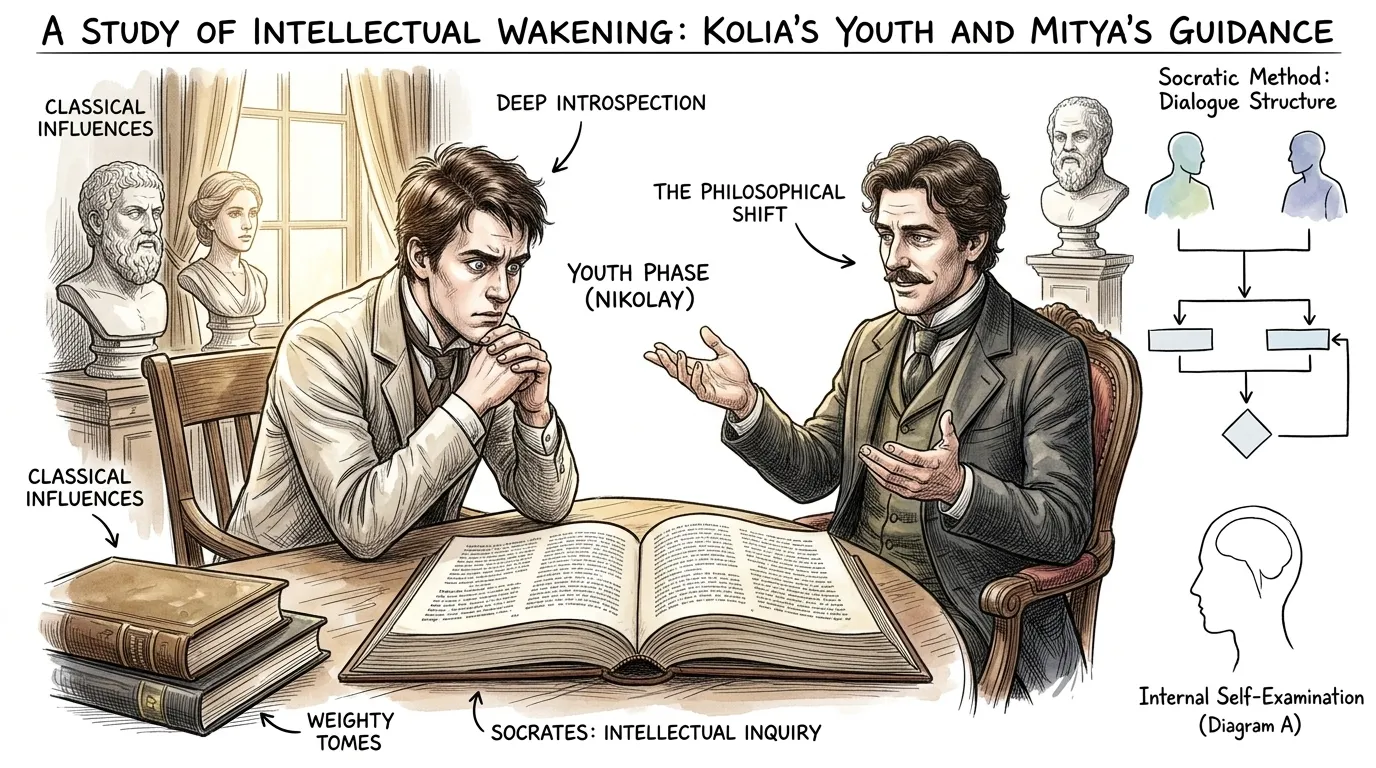
️ Literary Fact: The introduction of Mitya and their philosophical discussions marks Kolia's 'Youth' phase, characterized by profound introspection and the questioning of life's meaning. Mitya's reference to Socrates—'The unexamined life is not worth living'—serves as a crucial intellectual anchor, emphasizing the theme of self-discovery and the importance of intellectual inquiry in Kolia's maturation, aligning with Tolstoy's own philosophical leanings.
Page 8
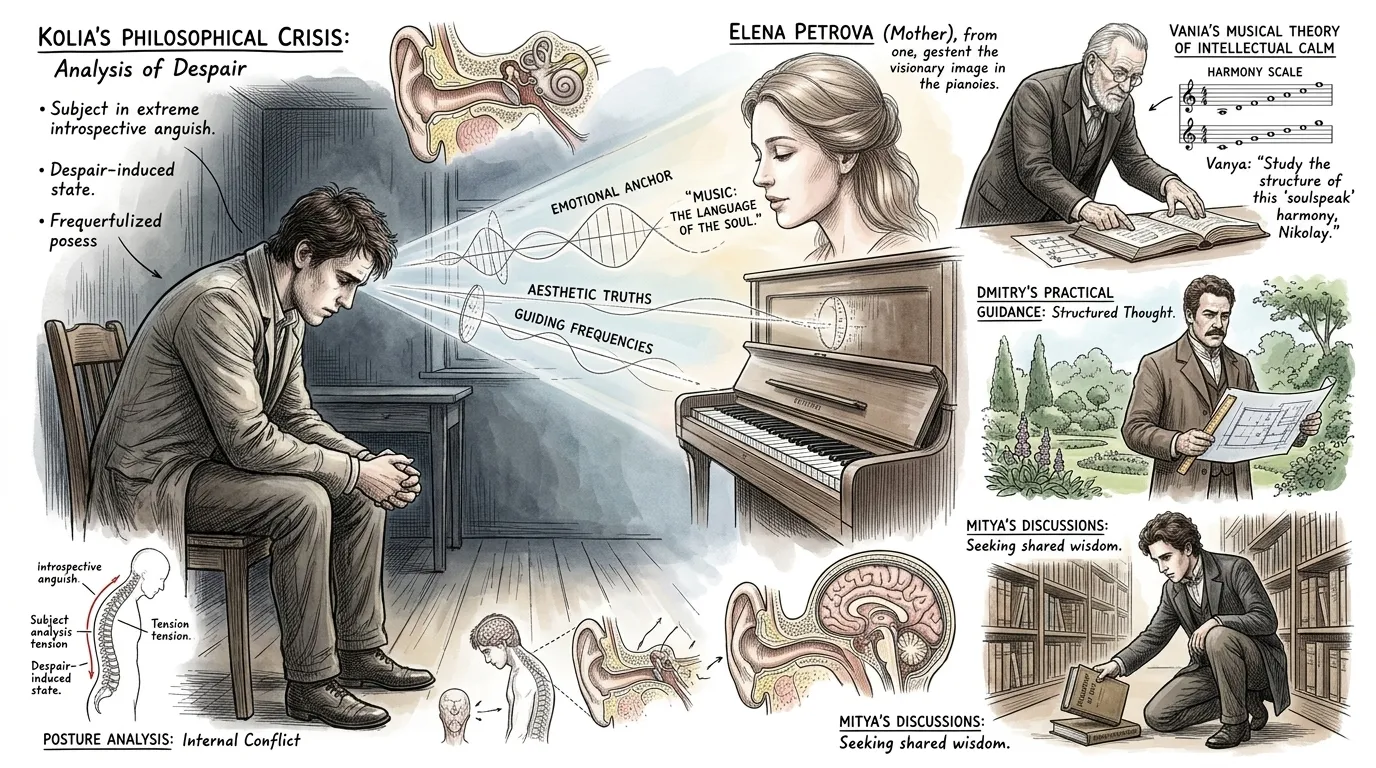
️ Literary Fact: This scene represents a major climax of Kolia's internal journey, a moment of profound philosophical crisis. The return of his mother's words about music as the 'language of the soul' provides the payoff for the earlier setup (Page 3). This memory serves not as a complete solution, but as a vital anchor, guiding him back from despair to a place where emotional and aesthetic truths can offer a different kind of wisdom, a distinctly Tolstoyan emphasis on inner life.
Page 9
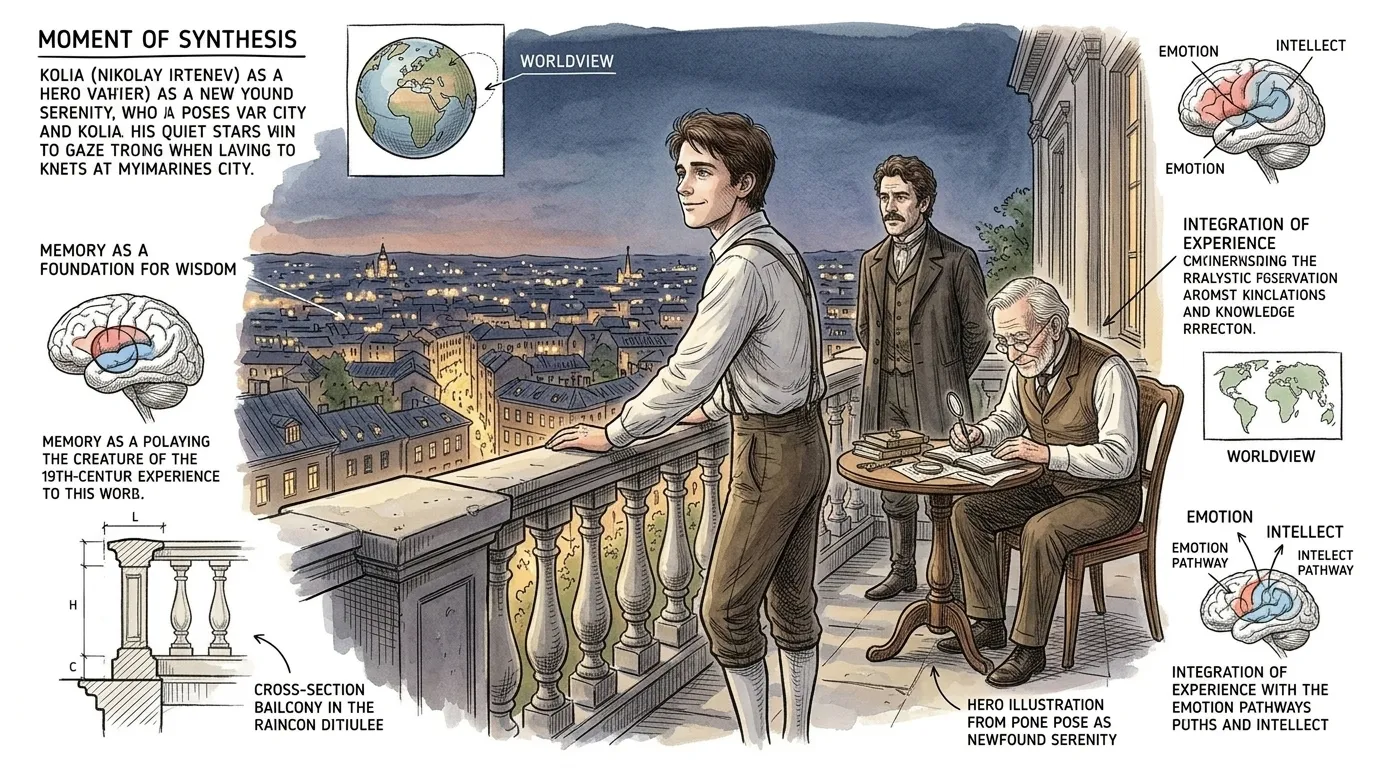
️ Literary Fact: Following his moment of crisis, Kolia finds a new perspective. This scene depicts a shift from intellectual torment to a more integrated, accepting understanding of life's complexities. The imagery of twilight and city lights reflects a synthesis of his inner and outer worlds, suggesting that wisdom is not merely intellectual, but also a product of emotional experience and memory, a hallmark of Tolstoy's nuanced exploration of human development.
Page 10
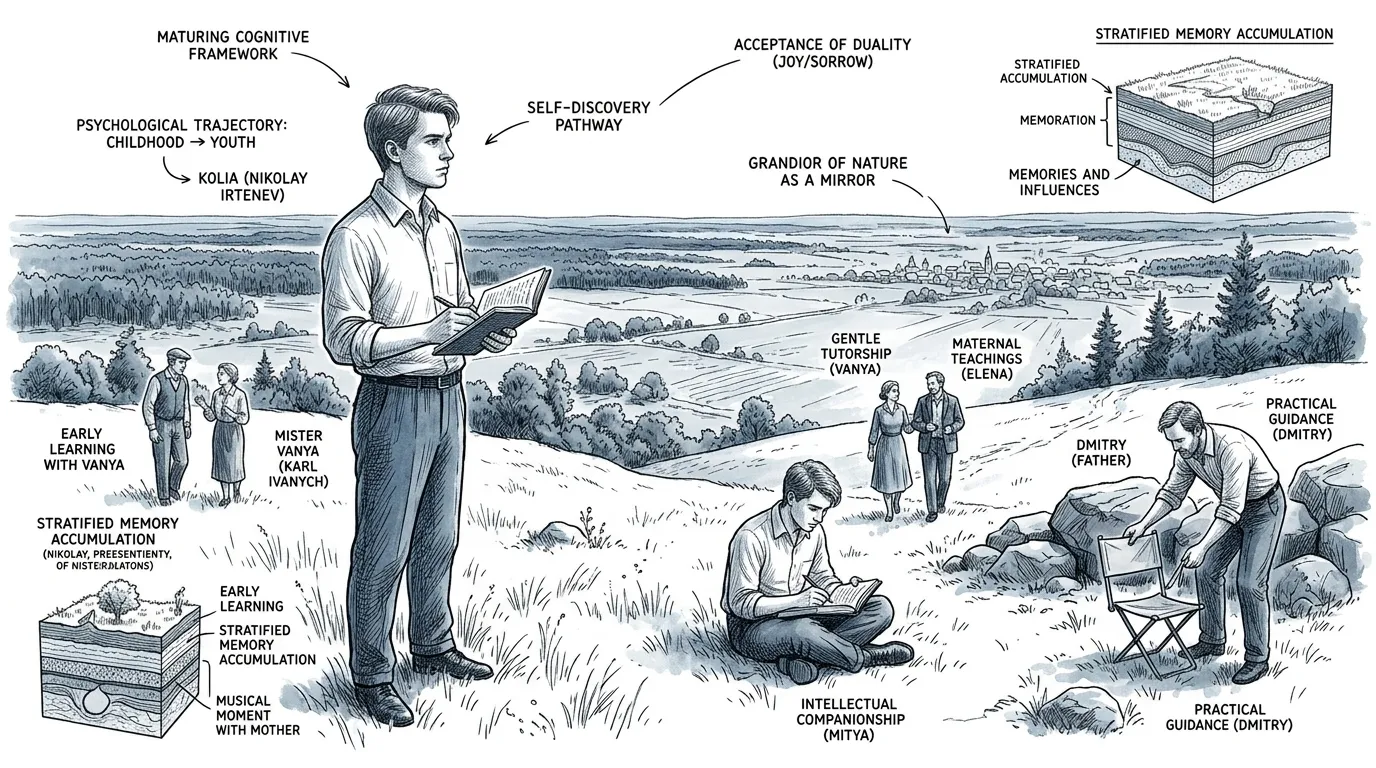
️ Literary Fact: The final page brings Kolia to the threshold of full adulthood, reflecting on the complete arc of his childhood, boyhood, and youth. His contemplation on the hill, amidst the vastness of nature, signifies his personal growth and a mature acceptance of life's complexities. This ending aligns with Tolstoy's profound philosophical outlook, where the soul's journey and self-discovery are continuous processes, shaped by both joy and suffering, looking forward with quiet resolve.
About this story
- Audience: general readers
Questions and answers
Questions and answers about Childhood, Boyhood, Youth — Leo Tolstoy
Read Wonder Novels on your phone
Wonder Novels is available on Android. Get Wonder Novels on Google Play.