What are examples of turning points in history?
Turning points are moments that fundamentally alter the course of human events, shaping societies and futures.

History is not a smooth, continuous flow; it is marked by sudden shifts, profound innovations, and pivotal decisions that redirect the entire stream of human experience. These moments, often called turning points, can be technological breakthroughs, major discoveries, or transformative cultural movements. One such profound shift was the invention of the printing press, which dramatically changed how information was disseminated and consumed across the globe.
- The development of agriculture, leading to settled societies.
- The invention of the wheel, revolutionizing transport and labor.
- The rise of major religions, shaping moral and ethical frameworks.
- The Age of Exploration, connecting disparate parts of the world.
- The Industrial Revolution, fundamentally changing production and daily life.
The printing press, once set in motion, was not just a machine; it was a catalyst for revolutions in thought, science, and politics.
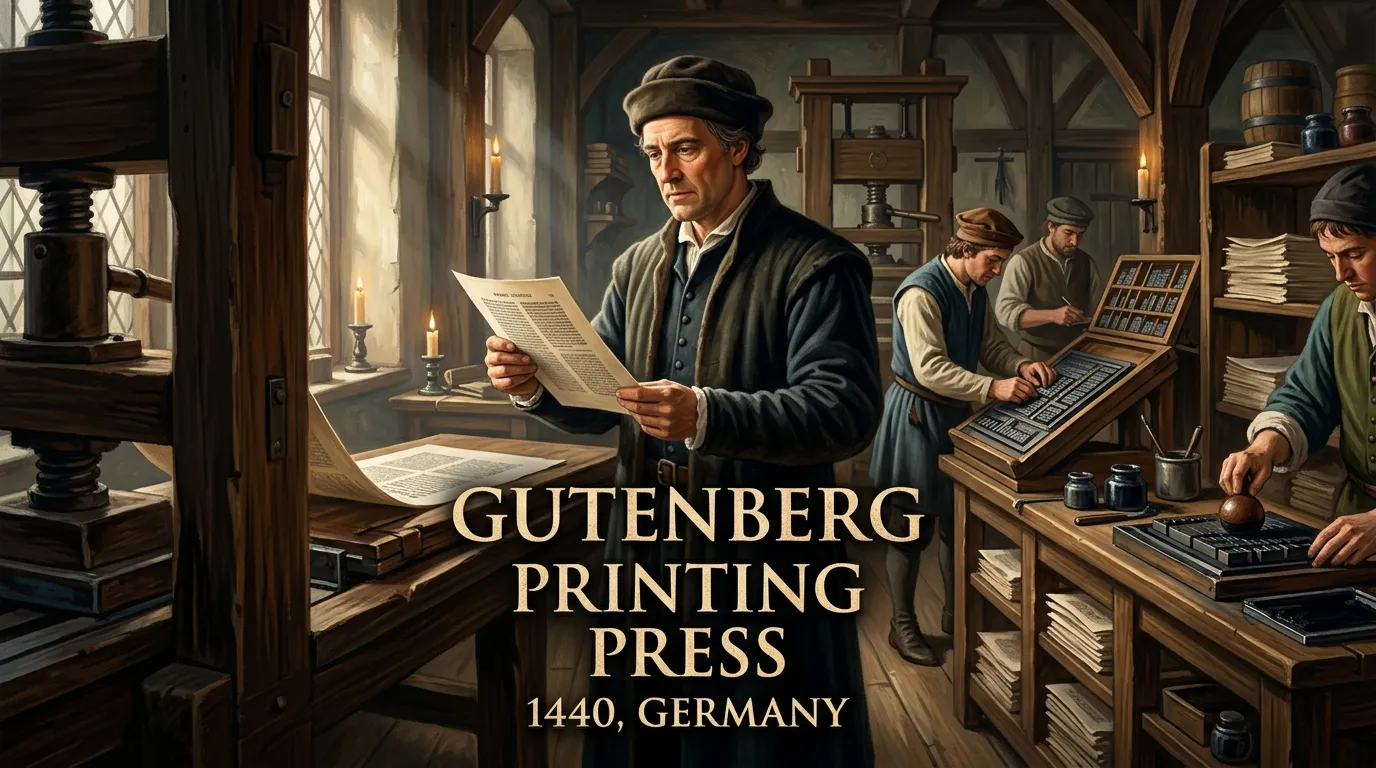
The Invention of the Gutenberg Printing Press (1440) - Germany
Before the 15th century, books were copied by hand, a slow and expensive process that limited literacy to a small elite. Johannes Gutenberg's invention of movable type around 1440 in Mainz, Germany, changed everything. This innovation allowed for the rapid and relatively inexpensive production of books, making knowledge accessible to a much broader population. This single invention is often credited with kickstarting the Renaissance and the Reformation, fundamentally altering the intellectual landscape of Europe and, subsequently, the world. The impact was so profound that it led directly to widespread literacy and the sharing of ideas on an unprecedented scale, paving the way for scientific advancements and democratic thought. You can learn more about this transformative period in our story, The Invention of the Gutenberg Printing Press (1440) - Germany.
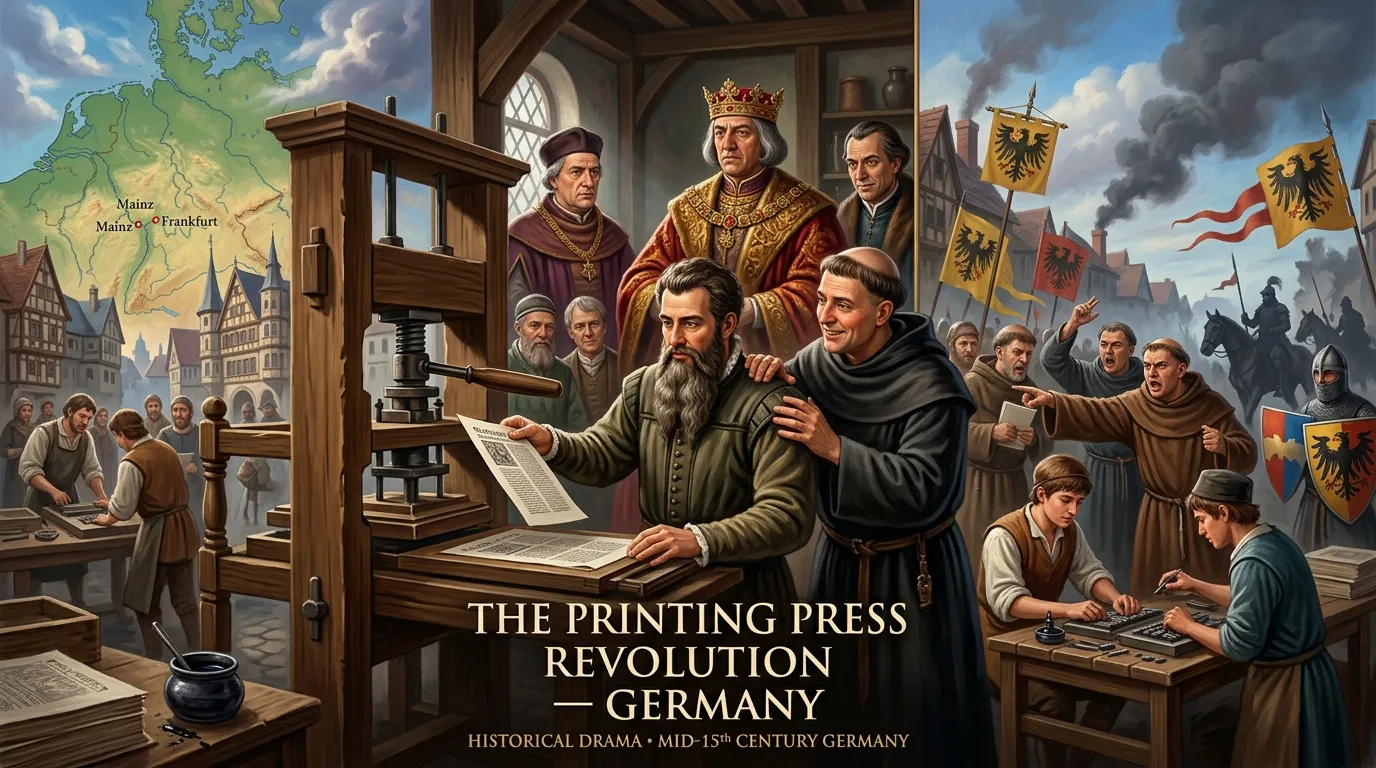
The Printing Press Revolution — Germany
The immediate aftermath of the printing press was a revolution in itself. Within decades, millions of books were printed across Europe. This explosion of information challenged existing authorities, both religious and secular. Martin Luther's Ninety-five Theses, for example, were rapidly disseminated thanks to the printing press, fueling the Protestant Reformation. The ability to mass-produce texts meant that ideas could spread quickly, creating a more informed public and encouraging critical thinking. This shift from an oral and manuscript culture to a print culture was a profound turning point, influencing everything from education to governance. The story The Printing Press Revolution — Germany explores how this invention reshaped society and thought.
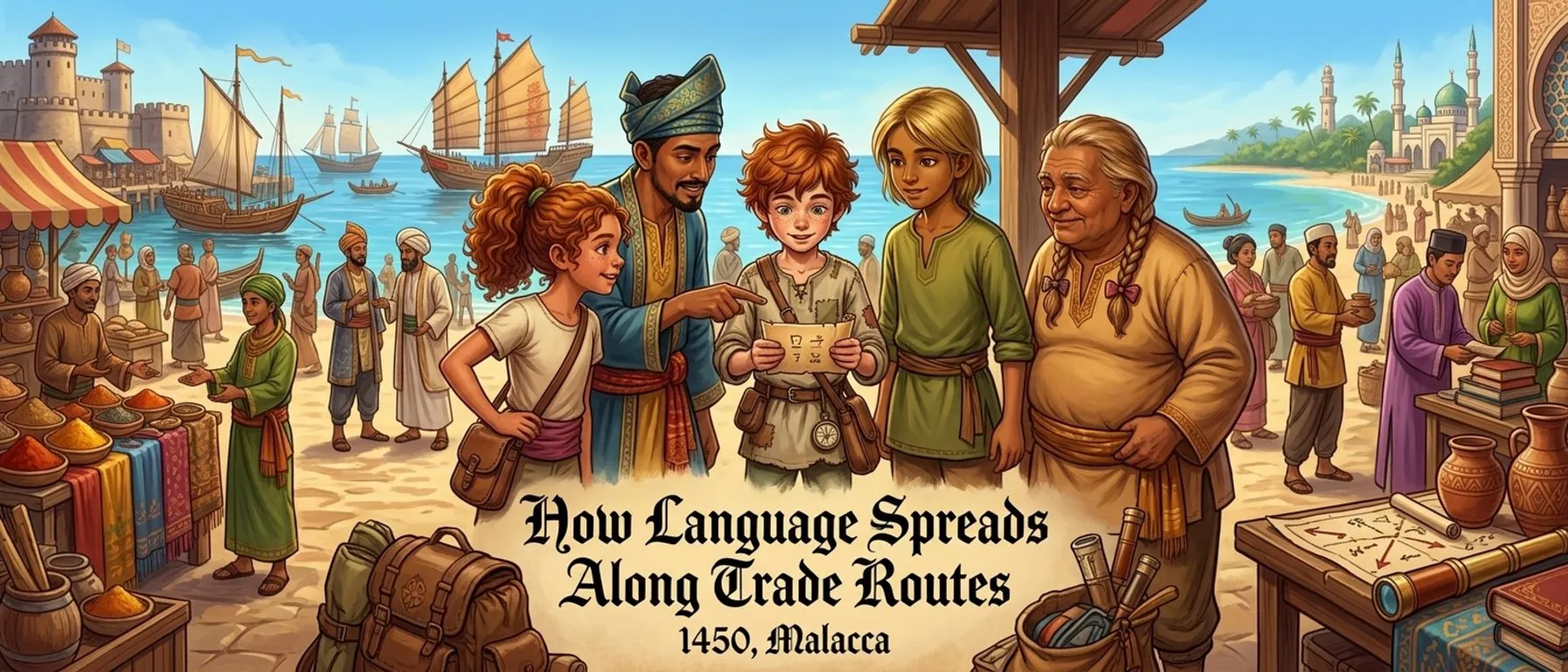
How Language Spreads Along Trade Routes (1450, Malacca)
While the printing press revolutionized the spread of written language, the broader movement of people and goods also played a crucial role in linguistic evolution. Just as printed materials carried new ideas, trade routes facilitated the exchange of languages and cultures. The year 1450, coinciding with the early impact of the printing press, also highlights the bustling port of Malacca, a key hub where merchants from across Asia and beyond converged. This interaction led to the blending and borrowing of words, phrases, and even grammatical structures. Understanding how language spreads along trade routes illustrates another facet of global interconnectedness, showing how fundamental shifts aren't always about a single invention but also about the dynamic interplay of human activity. This period marked a time when global communication was rapidly accelerating, both through new technologies and established human networks.
The Renaissance Begins in Florence (1410, Florence)
The printing press did not occur in a vacuum; it amplified and accelerated a cultural movement already underway: the Renaissance. Beginning in Florence around 1410, this period marked a renewed interest in classical art, literature, and philosophy. The intellectual ferment of the Renaissance provided fertile ground for the widespread dissemination of printed materials. Scholars and artists rediscovered ancient texts, and new ideas about humanism and individualism began to flourish. The printing press made these rediscovered texts and new philosophical works available to a wider audience, solidifying the Renaissance as a major turning point in Western history, leading to an explosion of creativity and knowledge. The story The Renaissance Begins in Florence details the origins of this pivotal era.
The Interconnectedness of Historical Turning Points
The invention of the printing press serves as a prime example of how a single innovation can trigger a cascade of profound changes, reshaping societies, economies, and intellectual life. It highlights that true turning points often don't stand alone but are deeply intertwined with other historical currents, such as existing trade networks or burgeoning cultural movements like the Renaissance. These moments demonstrate humanity's capacity for innovation and adaptation, and how our past continues to influence our present. Exploring these pivotal events helps us understand the complex fabric of history and the forces that drive human progress. To delve deeper into other foundational moments, consider exploring stories in the Wonder History library, such as Göbekli Tepe: The Oldest Temple on Earth or How Alexander the Great Marched East, to see how different types of turning points shaped the world.
Frequently Asked Questions
Are all turning points positive for humanity?
Not necessarily. While many turning points bring about progress or increased knowledge, they can also lead to conflict, displacement, or the decline of certain cultures. The impact of a turning point is often complex and can have both positive and negative consequences depending on the perspective and the long-term outcomes.
How do historians identify a turning point?
Historians typically identify a turning point by looking for events or developments that cause a significant and lasting shift in a society's trajectory, often affecting multiple aspects like politics, economy, culture, or technology. The impact must be profound enough to alter subsequent historical developments in a fundamental way.
Can a turning point be a gradual process rather than a single event?
Yes, absolutely. While some turning points are discrete events, like a battle or an invention, others are long-term processes that slowly accumulate change until a fundamental shift occurs. The Agricultural Revolution, for instance, unfolded over thousands of years but was undeniably a monumental turning point for human civilization.