Unpacking the Enduring Significance of Angkor Wat
Angkor Wat is far more than just an old temple. Its history, art, and meaning continue to fascinate and inform us.
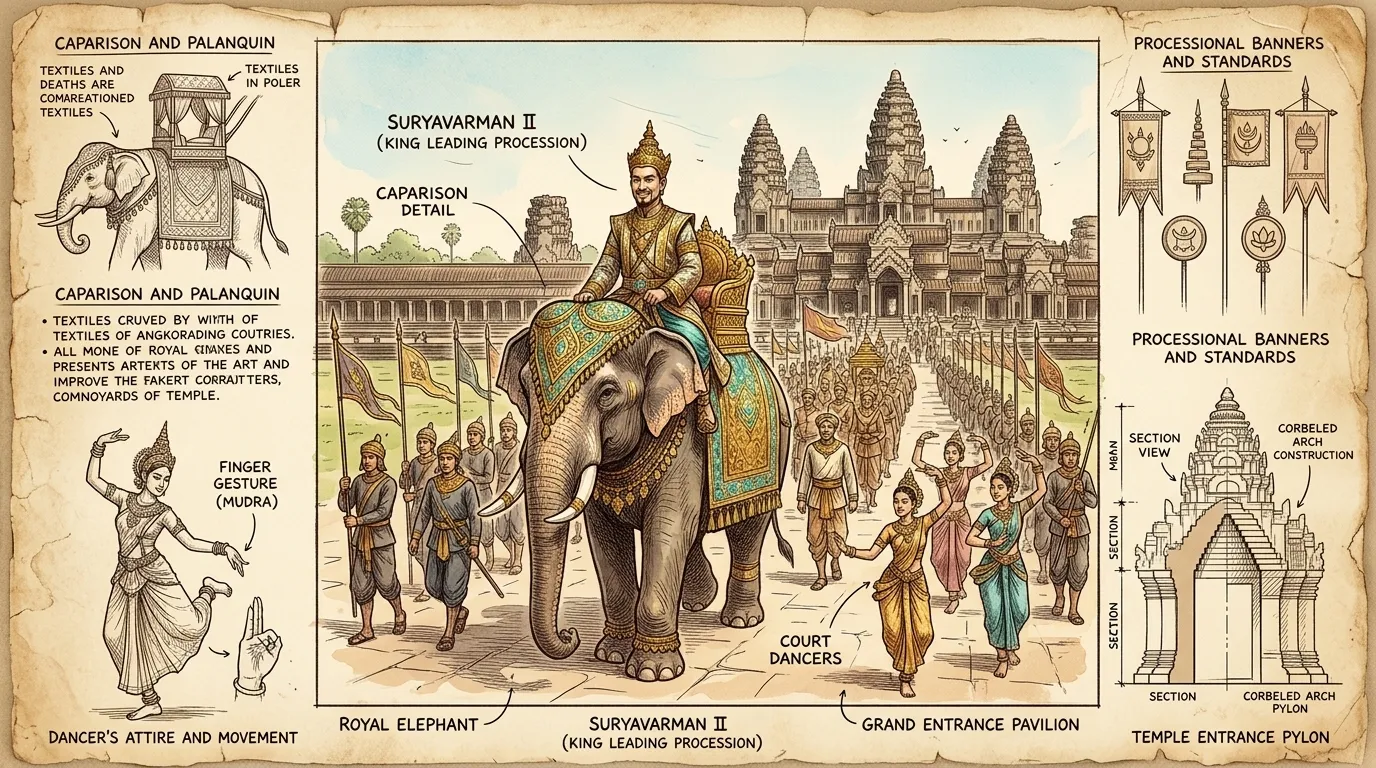
For many, Angkor Wat conjures images of a sprawling, ancient temple complex rising majestically from the Cambodian jungle. It's often seen as a symbol of a lost civilization, a place of immense beauty and spiritual power. People marvel at its scale and the intricate carvings, wondering about the people who built it and the secrets it holds. This iconic site has captured imaginations for centuries, drawing visitors from across the globe to witness its grandeur.
- Angkor Wat was built by aliens or a lost, advanced civilization.
- It was primarily a tomb for a king.
- The complex was abandoned suddenly and mysteriously.
- Its purpose was solely religious, dedicated to a single deity.
Was Angkor Wat Built by Aliens?
The idea that Angkor Wat, or any other massive ancient structure, was built by extraterrestrial beings or a technologically superior 'lost' civilization is a popular notion in some circles. However, archaeological and historical evidence firmly attributes its construction to the Khmer Empire. The intricate carvings, advanced hydraulic systems, and precise alignment of the temples are testaments to the sophisticated engineering, astronomical knowledge, and artistic skill of the Khmer people. While their methods were incredibly advanced for their time, they were entirely human. Detailed records and inscriptions, as well as the progression of architectural styles seen in other Khmer temples, demonstrate a clear and continuous development of their building techniques over centuries. Exploring the history of ancient civilizations can reveal much about human ingenuity, even without extraterrestrial intervention. You can find many articles on ancient history at [/en/articles].
More Than Just a Royal Tomb
It's a common belief that Angkor Wat was built solely as a mausoleum for King Suryavarman II, who commissioned its construction in the 12th century. While it certainly served as his state temple and likely housed his remains or a memorial to him, its function was far more encompassing. Angkor Wat was a microcosm of the Hindu universe, designed to reflect Mount Meru, the mythical home of the devas (gods). It was a place of worship dedicated initially to the Hindu deity Vishnu, and later adapted for Buddhist practices. The vast bas-reliefs depict not only scenes from Hindu epics but also historical events and daily life, serving as both religious instruction and historical record. Its layout and iconography were deeply symbolic, meant to ensure the king's divine right to rule and to secure the prosperity of his kingdom.
The past is never dead. It's not even past.
The Gradual Transition, Not Sudden Abandonment
The idea of a sudden, mysterious abandonment of Angkor Wat and the entire Khmer capital of Angkor is a persistent myth. While the city of Angkor did eventually decline, it was a gradual process, not an abrupt desertion. Factors such as changing trade routes, environmental challenges like shifting monsoon patterns affecting the complex irrigation systems, and ongoing conflicts with neighboring kingdoms contributed to the decline. The capital eventually moved to Phnom Penh, but Angkor Wat itself was never truly abandoned. It transitioned from a Hindu temple to a Buddhist site, and Buddhist monks continued to reside there and maintain it through the centuries. Its remote location and the encroaching jungle did lead to periods of less intensive use, but it remained a place of pilgrimage and worship.
Why Angkor Wat Continues to Matter
Angkor Wat's importance lies in its multifaceted role as a masterpiece of Khmer architecture and art, a significant religious site, and a powerful symbol of Cambodian national identity. It offers invaluable insights into the religious, political, and social structures of the Khmer Empire. Its intricate carvings, sophisticated engineering, and astronomical alignments speak volumes about the capabilities of ancient civilizations. Beyond its historical and artistic value, it remains a living monument, a place of spiritual significance and a source of wonder that continues to inspire. Discovering more about the cultural heritage of different regions can be a rewarding journey, perhaps through exploring the WonderArts library.