Machu Picchu (Cusco, Peru — c. 1450)
Machu Picchu (Cusco, Peru — c. 1450) — an illustrated arts story, set in Global. 10 illustrated pages, free to read on Wonder Arts.
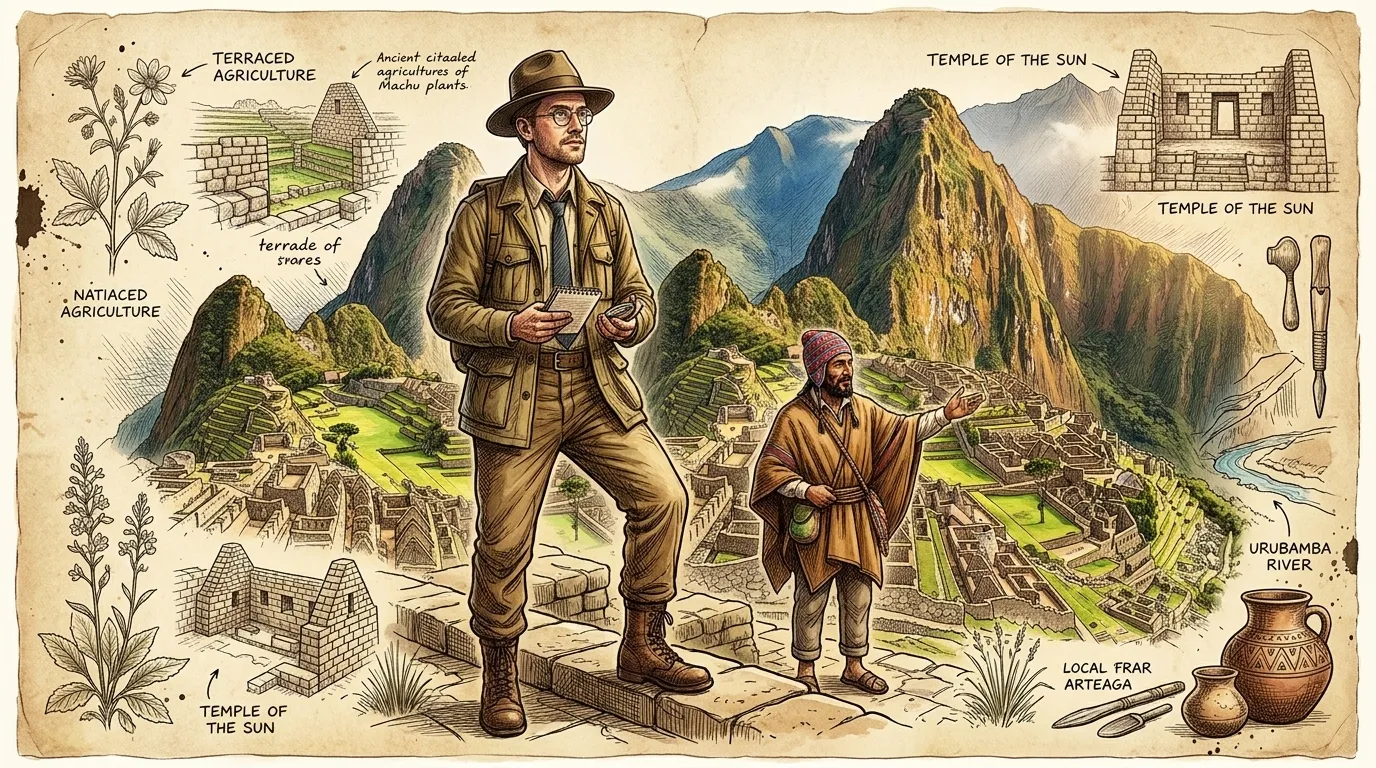
Page 1
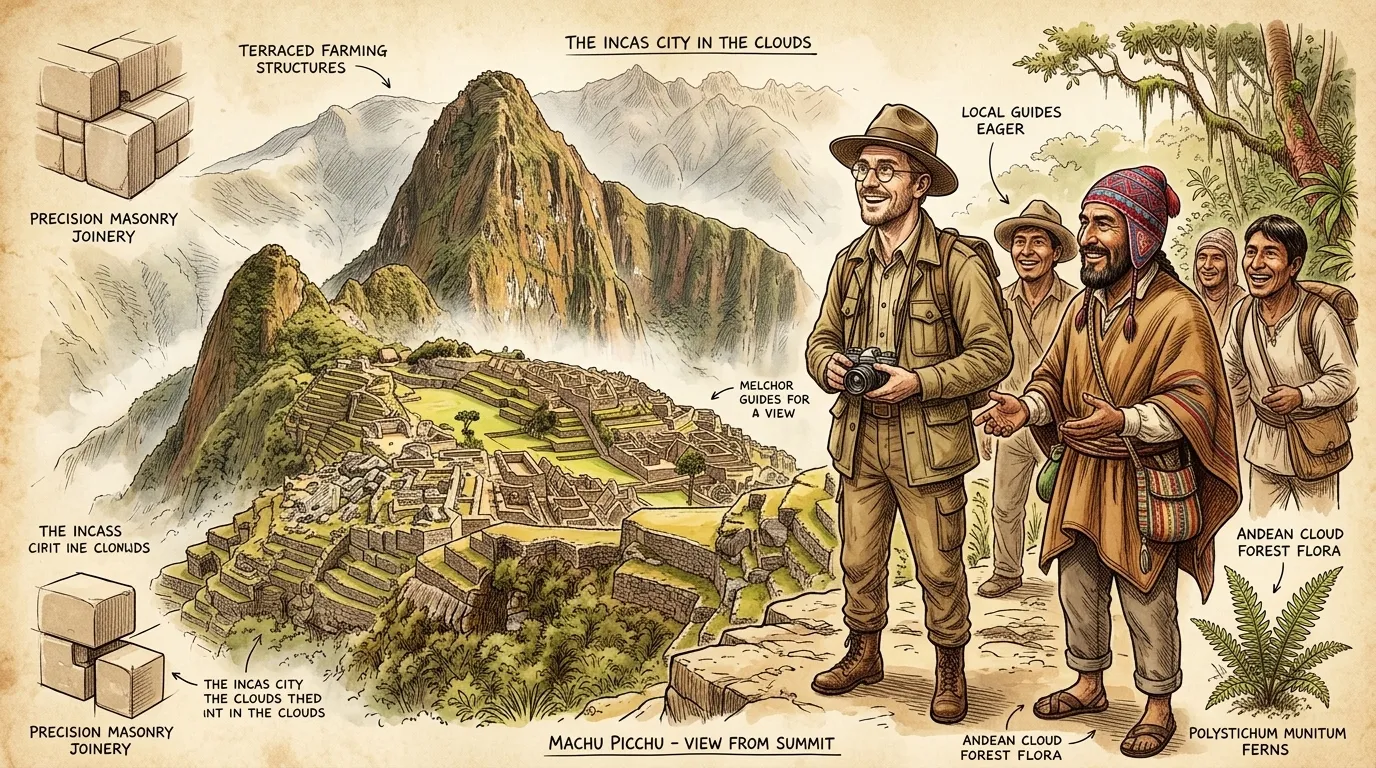
The year is 1912. American historian Hiram Bingham stands on the precipice overlooking Machu Picchu, the lost city of the Incas. The walls and terraces, shrouded in mist and reclaimed by the jungle, whisper tales of a forgotten civilization. Bingham, armed with his camera and a team of local guides, marvels at the intricate stonework and the city's strategic placement amidst the Andes. This rediscovered marvel, measuring roughly 8 square kilometers, would rewrite history and solidify Bingham's legacy.
""This is more extraordinary than I could have imagined," Bingham exclaims to his team. "A testament to ingenuity, truly a 'city in the clouds.'""
Art Fact: Machu Picchu, rediscovered by Hiram Bingham in 1911, is believed to have been a royal estate or religious retreat built around 1450 AD. Its purpose and abandonment remain subjects of debate.
Page 2
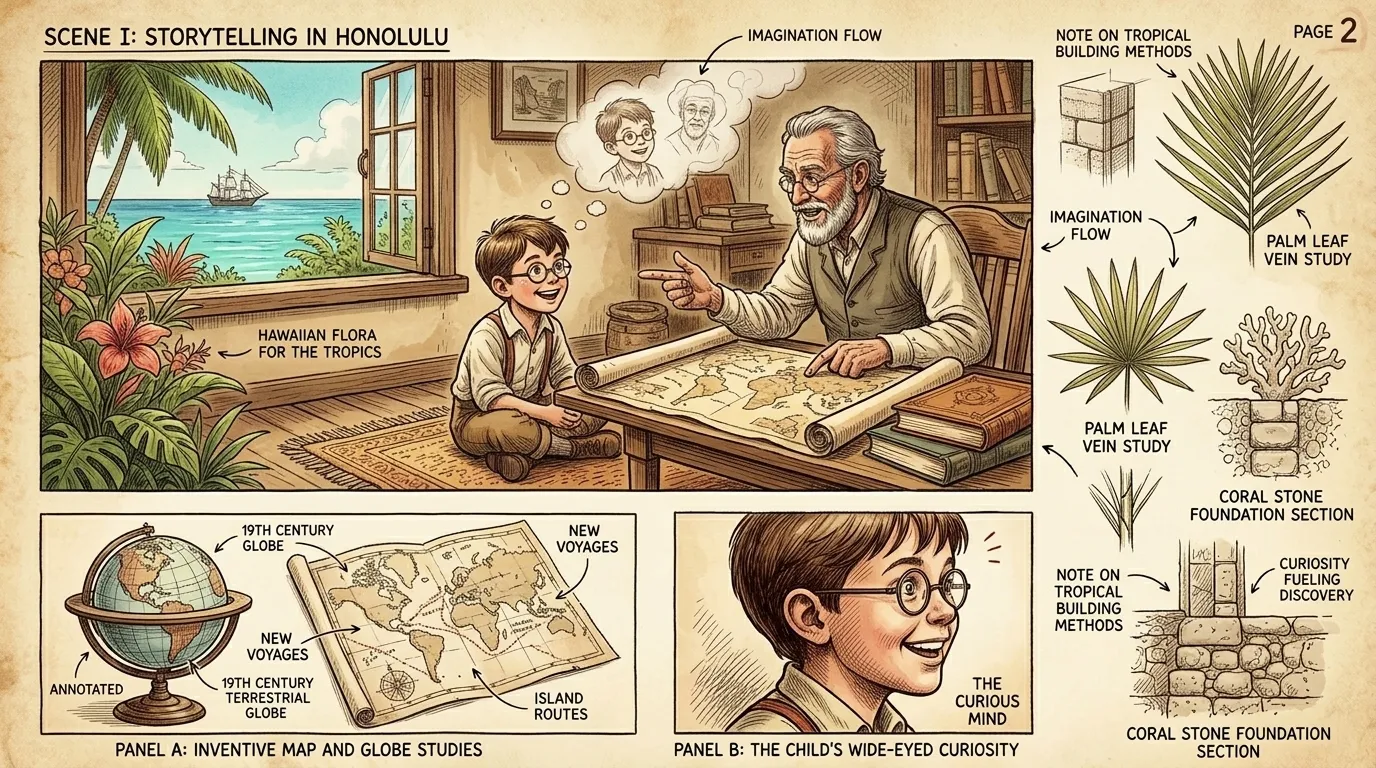
Hiram Bingham's path to Machu Picchu began far from the Andes, in the tropical paradise of Honolulu. As a child, he reveled in stories of missionaries and far-off lands, his imagination fueled by tales of adventure and discovery. His grandfather, Hiram Bingham I, was among the first Christian missionaries to Hawaii. This exposure instilled in young Bingham a thirst for exploration and a profound respect for different cultures. This early influence instilled the value of curiosity and respect for cultures.
"Hiram's mother remarked, "You have your grandfather's adventurous spirit!""
Art Fact: Hiram Bingham III was born in Honolulu, Hawaii, in 1875, to missionary parents. His early life steeped in religious and cultural influences shaped his later interests.
Page 3
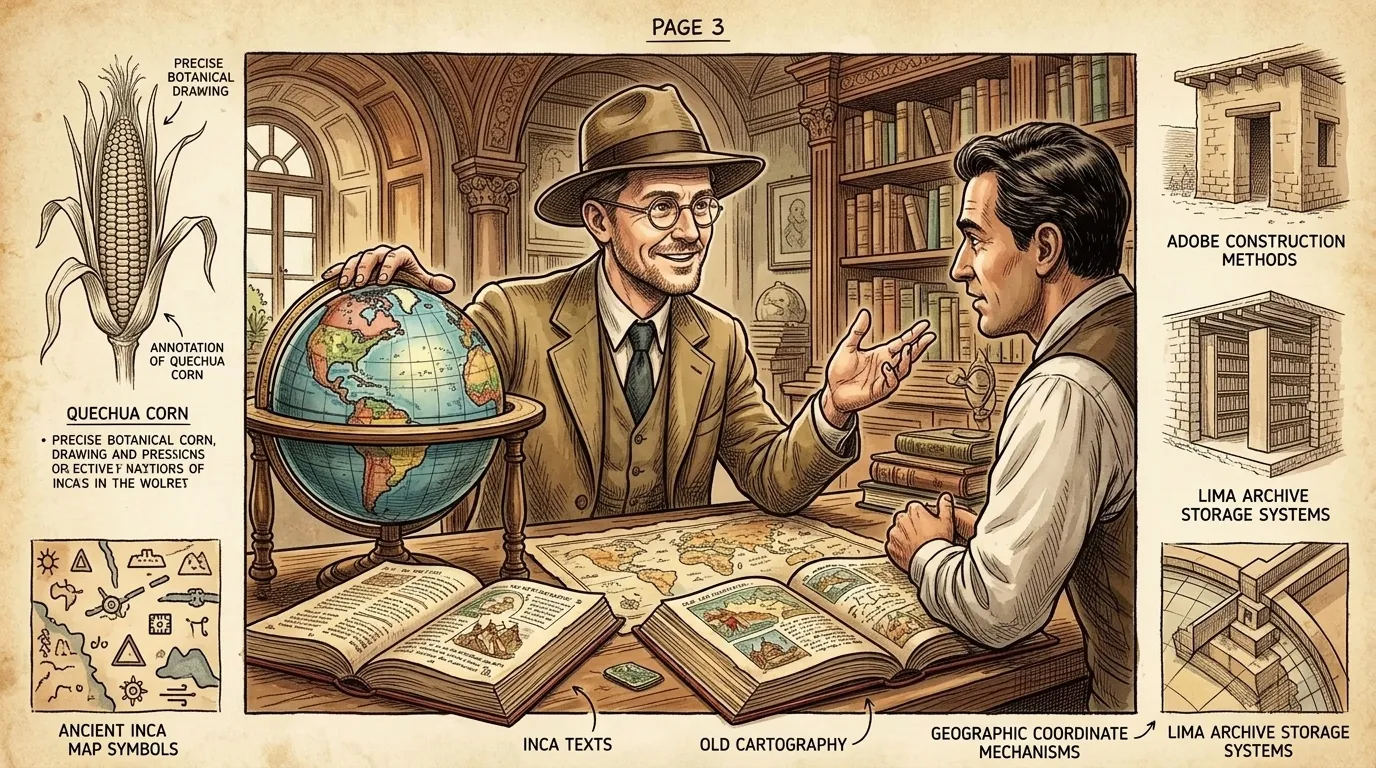
Years later, Bingham, now a professor at Yale University, found himself increasingly drawn to the history of South America. While teaching Latin American history, he became captivated by the accounts of lost cities and forgotten empires. The writings of Prescott and Stephens ignited a flame, and he began to formulate a plan to seek them out, driven by the notion that knowledge is an unending quest. "It is the mark of an educated mind to be able to entertain a thought without accepting it," he says, recalling the Greek philosopher Aristotle.
""The lost cities of the Incas beckon," Bingham muses to a colleague. "There is more to South America than we currently understand.""
Art Fact: Bingham's academic career at Yale fueled his passion for South American history, leading him to organize and lead expeditions in search of lost Inca cities.
Page 4
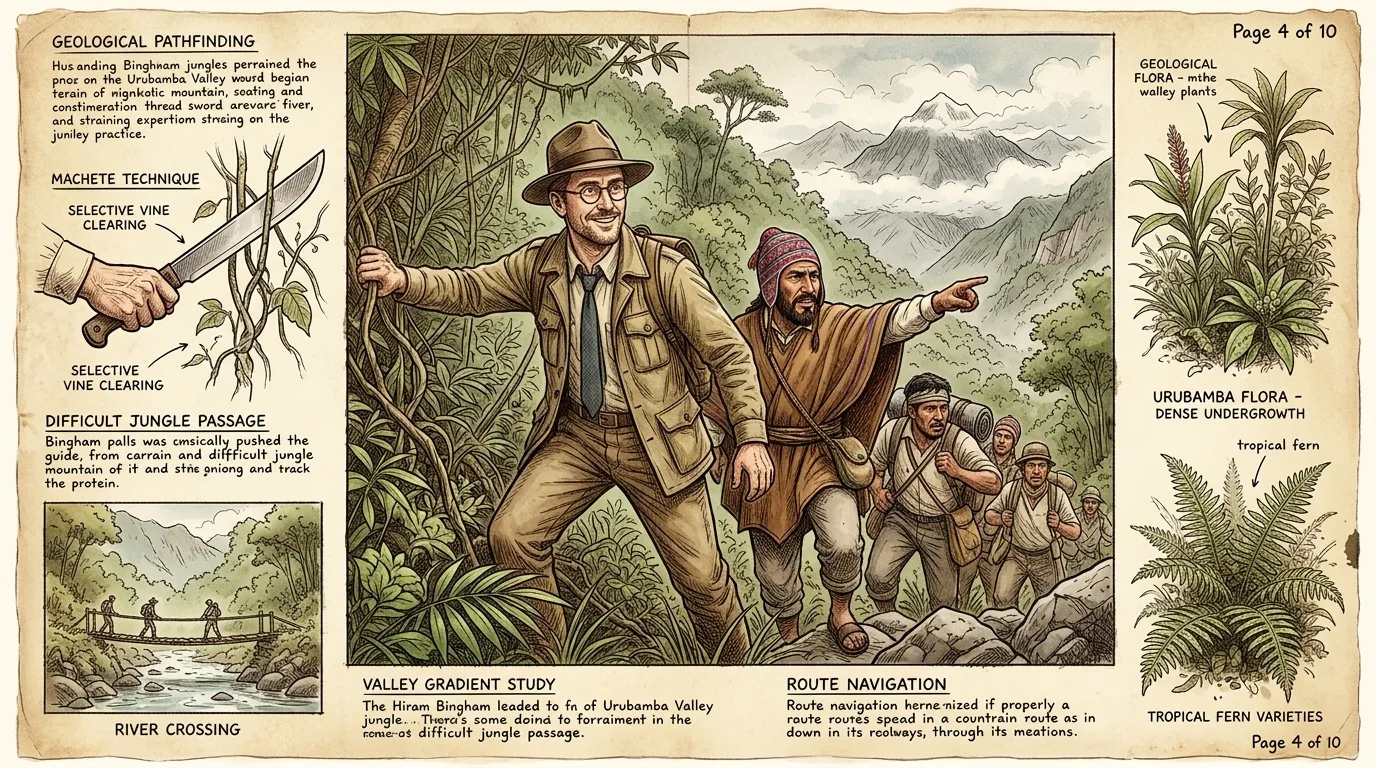
Bingham secures funding and assembles a team for his first expedition to the Urubamba Valley in Peru. The journey is arduous, traversing treacherous terrain and battling dense jungle. Local guides prove indispensable, sharing their knowledge of the landscape and its hidden secrets. Bingham faced challenges head-on. The determination to explore was insurmountable.
"A local guide warns, "The mountains can be unforgiving, señor. But they also hold wonders.""
Art Fact: The 1911 Yale Peruvian Expedition, led by Bingham, aimed to explore and document unexplored regions of Peru, specifically searching for the last Inca capital.
Page 5
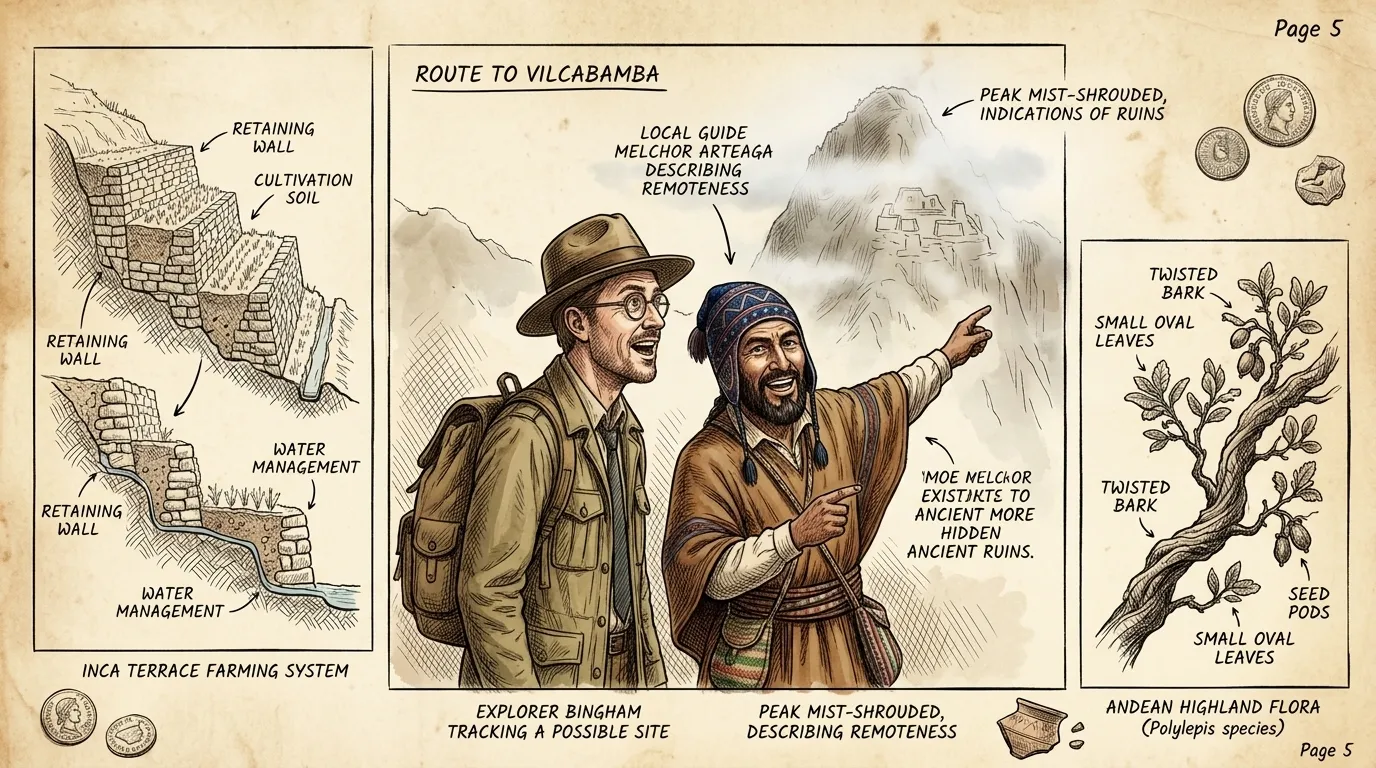
A local farmer named Melchor Arteaga tells Bingham about ruins on a mountain ridge. Arteaga offers to guide Bingham to the site. Bingham listens intently, a glimmer of excitement in his eyes. He sensed opportunity and knew this could be his greatest discovery.
""Señor, there are old walls high on that mountain," Arteaga explains, pointing towards a distant peak. "The locals call it Machu Picchu.""
Art Fact: Melchor Arteaga was the local farmer who first guided Hiram Bingham to the ruins of Machu Picchu in 1911, providing crucial information about its existence.
Page 6
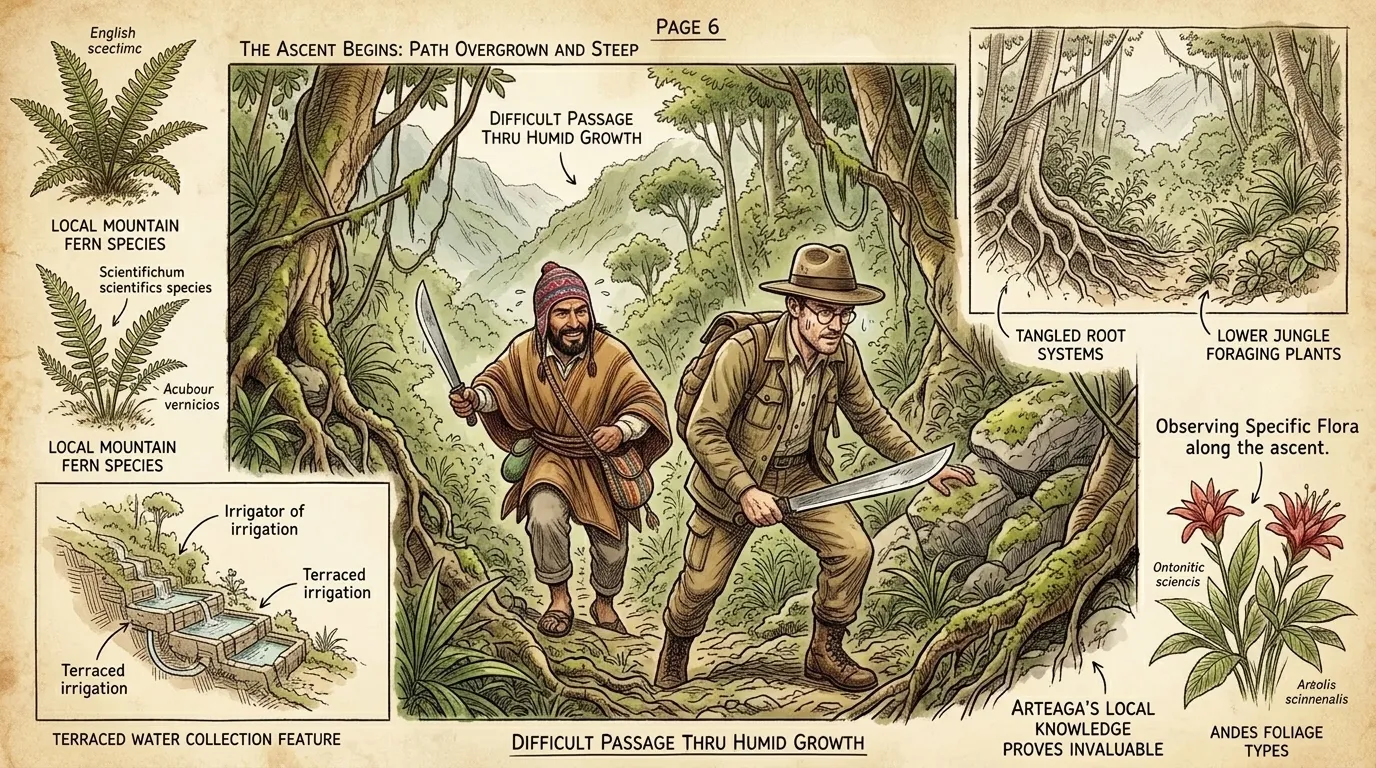
The ascent to Machu Picchu is grueling, a steep and winding path through dense vegetation. Bingham and Arteaga hack their way through the undergrowth, the air thick with humidity. Each step upward brings them closer to the unknown, the anticipation building with every breath. Bingham felt history under his feet with each step.
""Almost there, señor," Arteaga encourages, wiping sweat from his brow. "The view from the top is worth the effort.""
Art Fact: The climb to Machu Picchu was challenging, requiring perseverance and the assistance of local guides to navigate the difficult terrain.
Page 7
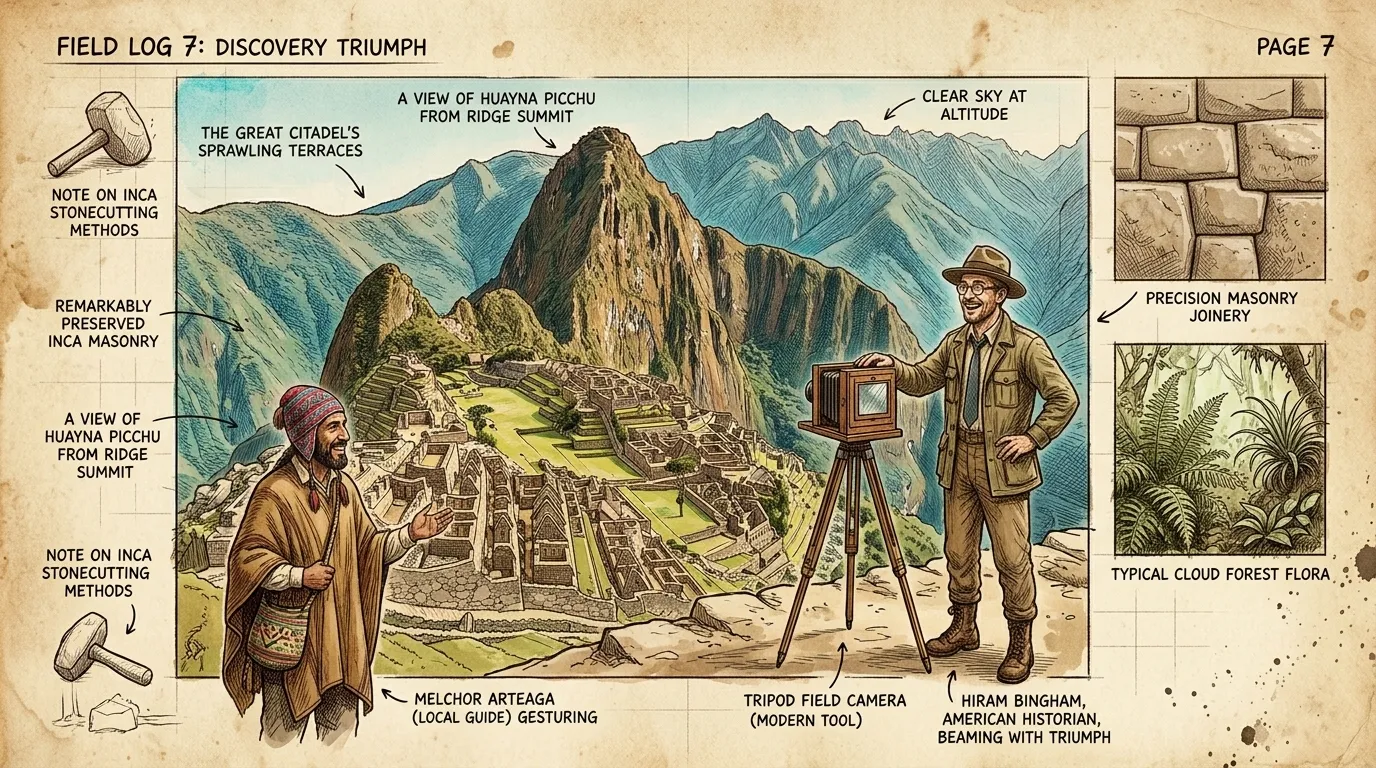
Reaching the summit, Bingham is met with a breathtaking sight: the ruins of Machu Picchu, spread across the mountain ridge. The city's intricate stonework, its terraces and temples, are remarkably preserved, a testament to the ingenuity of the Inca civilization. The lost city unfolded before him.
""In the midst of the great ruins are those of temples, palaces, and public buildings," Bingham would later write, in awe of the discovery."
Art Fact: Machu Picchu's discovery captivated the world, providing invaluable insights into Inca architecture, engineering, and social organization.
Page 8
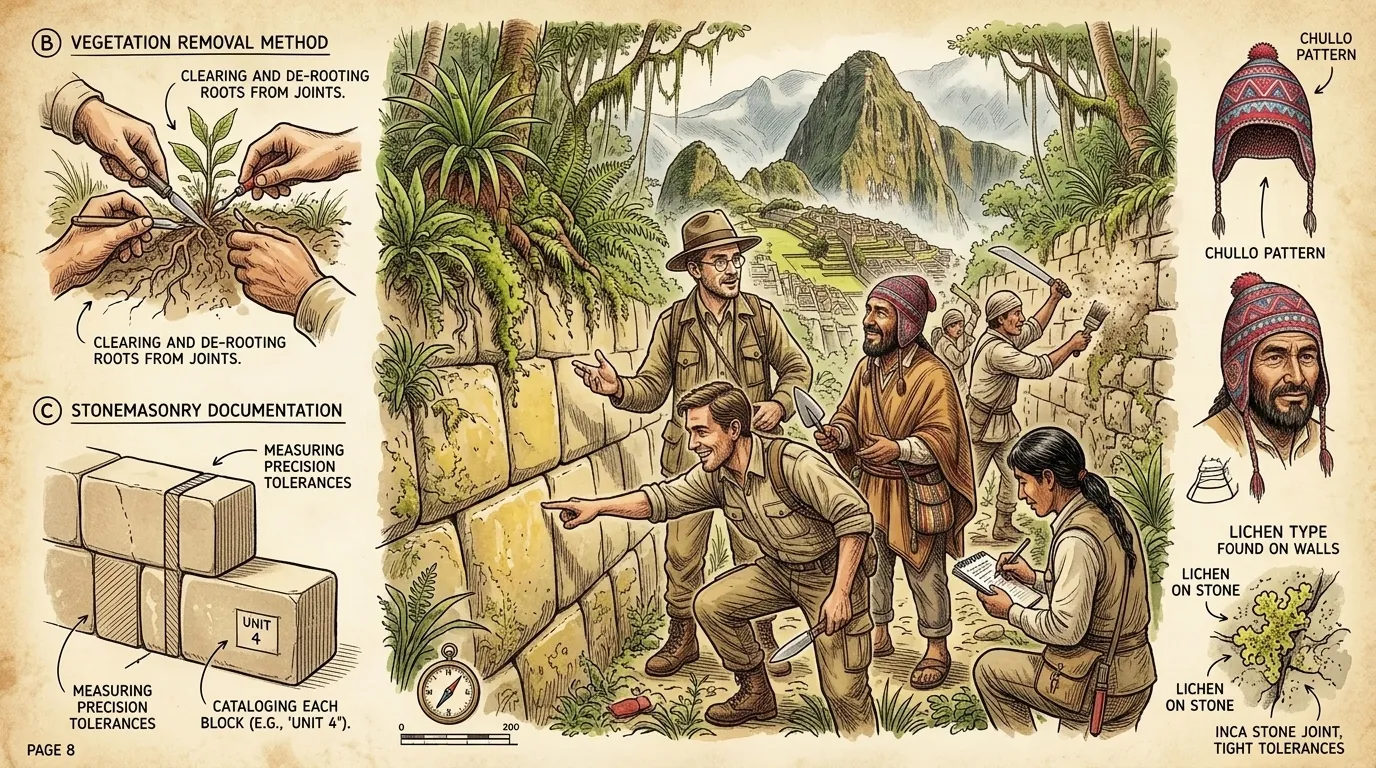
Bingham and his team begin the painstaking process of clearing the ruins, documenting their findings, and mapping the city's layout. Artefacts are carefully collected and cataloged, each one a piece of the puzzle that reveals the story of Machu Picchu. The work was slow and careful.
"A team member exclaims, "Look at the precision of this stonework! They were masters of their craft.""
Art Fact: The excavation of Machu Picchu yielded numerous artifacts, including pottery, tools, and skeletal remains, providing clues about the daily life and customs of its inhabitants.
Page 9
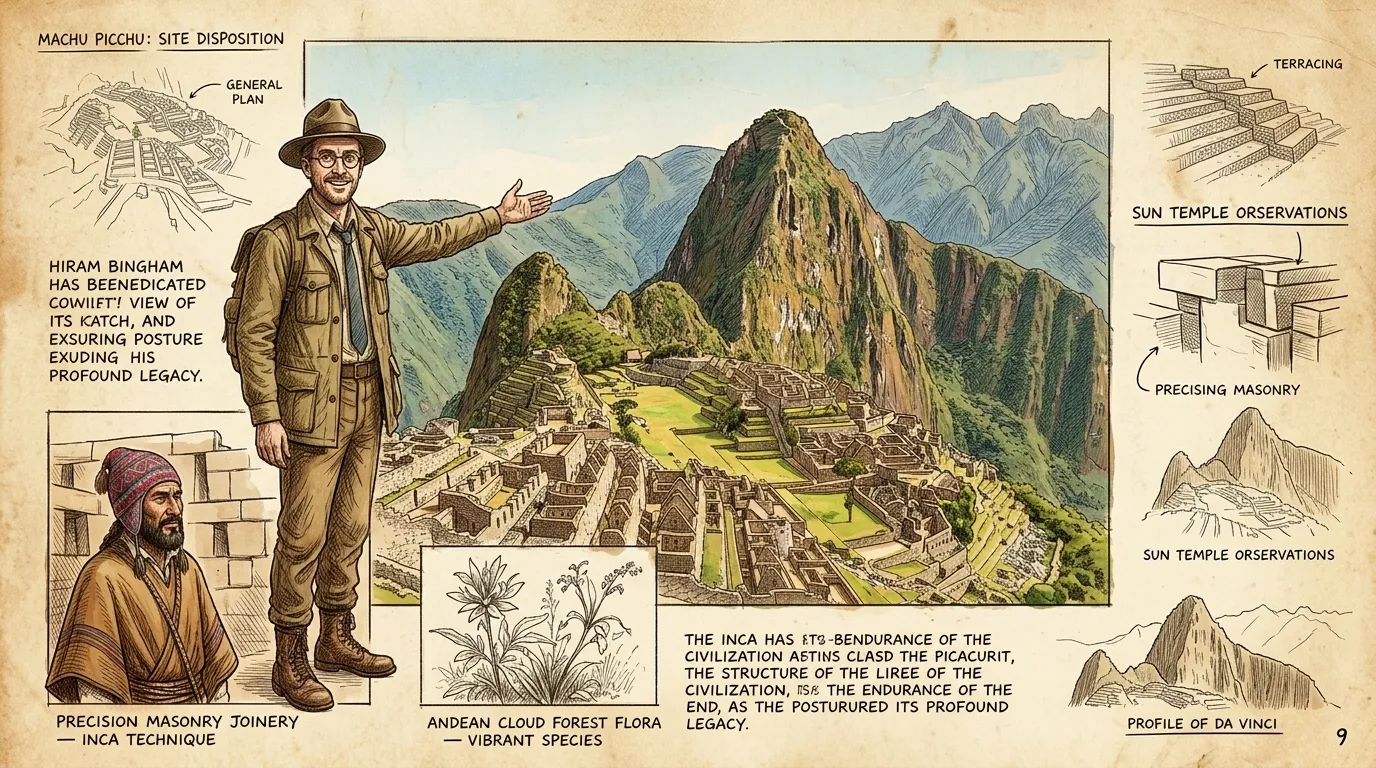
Bingham's discovery of Machu Picchu brought the Inca civilization back into the spotlight, inspiring countless scholars and adventurers. While questions still linger about the city's purpose and abandonment, its enduring mystery continues to captivate the world. Machu Picchu's story is far from over. The discoveries continue to bring the world together.
""The world will never forget this place," Bingham declares, his voice filled with conviction. "It is a testament to the enduring spirit of humanity.""
Art Fact: Machu Picchu was declared a UNESCO World Heritage Site in 1983 and remains one of the most visited and celebrated archaeological sites in the world.
Page 10
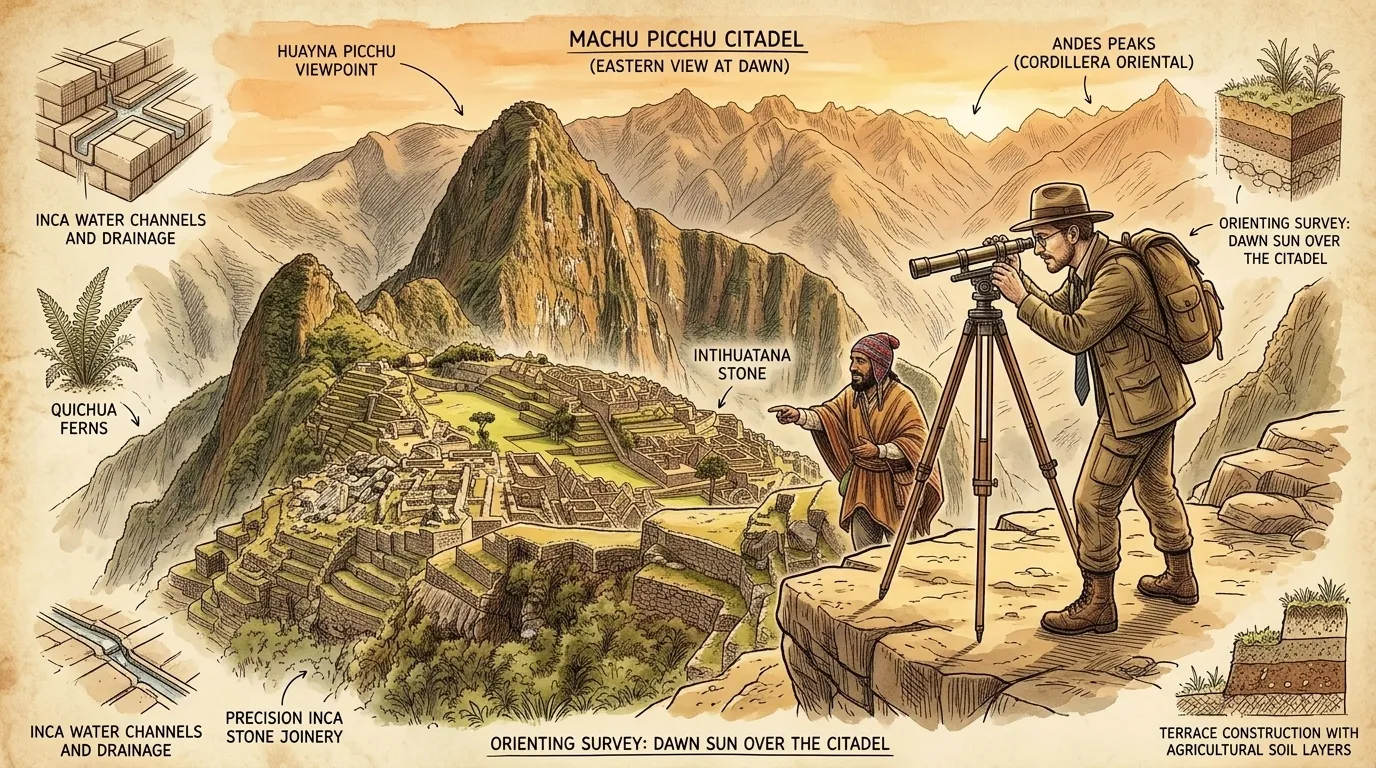
Today, Machu Picchu stands as a symbol of Inca ingenuity and resilience, a testament to a civilization that thrived in the face of adversity. The echoes of its past resonate through its stones, reminding us of the enduring power of human creativity and the importance of preserving our shared history. As the great Nelson Mandela said, "Education is the most powerful weapon which you can use to change the world," and Machu Picchu continues to educate generations about the Incas.
"A modern visitor remarks, "It's like stepping back in time. The Incas were true visionaries.""
Art Fact: Machu Picchu's legacy extends beyond its architectural and historical significance; it represents the enduring power of human creativity and the importance of preserving our shared cultural heritage.
About this story
- Location: Global
- Audience: general readers
Questions and answers
Questions and answers about Machu Picchu (Cusco, Peru — c. 1450)
Read Wonder Arts on your phone
Wonder Arts is available on Android. Get Wonder Arts on Google Play.