Mona Lisa — Leonardo da Vinci

Mona Lisa — Leonardo da Vinci — an illustrated arts story, set in Global. 10 illustrated pages, free to read on Wonder Arts.

Mona Lisa — Leonardo da Vinci — book cover — Wonder Arts
Mona Lisa — Leonardo da Vinci — an illustrated arts story, set in Global. 10 illustrated pages, free to read on Wonder Arts.

Page 1

Art Fact: The Mona Lisa, also known as La Gioconda, is an oil-on-poplar panel painting by Leonardo da Vinci. It is believed to be a portrait of Lisa del…
Art Fact: The Mona Lisa, also known as La Gioconda, is an oil-on-poplar panel painting by Leonardo da Vinci. It is believed to be a portrait of Lisa del Giocondo, the wife of Florentine merchant Francesco del Giocondo.

Art Fact: The Mona Lisa, also known as La Gioconda, is an oil-on-poplar panel painting by Leonardo da Vinci. It is believed to be a portrait of Lisa del Giocondo, the wife of Florentine merchant Francesco del Giocondo.

Page 2

Art Fact: Leonardo da Vinci (1452-1519) was a true Renaissance man, excelling as a painter, sculptor, architect, scientist, inventor, and more.
Art Fact: Leonardo da Vinci (1452-1519) was a true Renaissance man, excelling as a painter, sculptor, architect, scientist, inventor, and more. His notebooks reveal a mind constantly seeking knowledge and understanding.

Art Fact: Leonardo da Vinci (1452-1519) was a true Renaissance man, excelling as a painter, sculptor, architect, scientist, inventor, and more. His notebooks reveal a mind constantly seeking knowledge and understanding.

Page 3
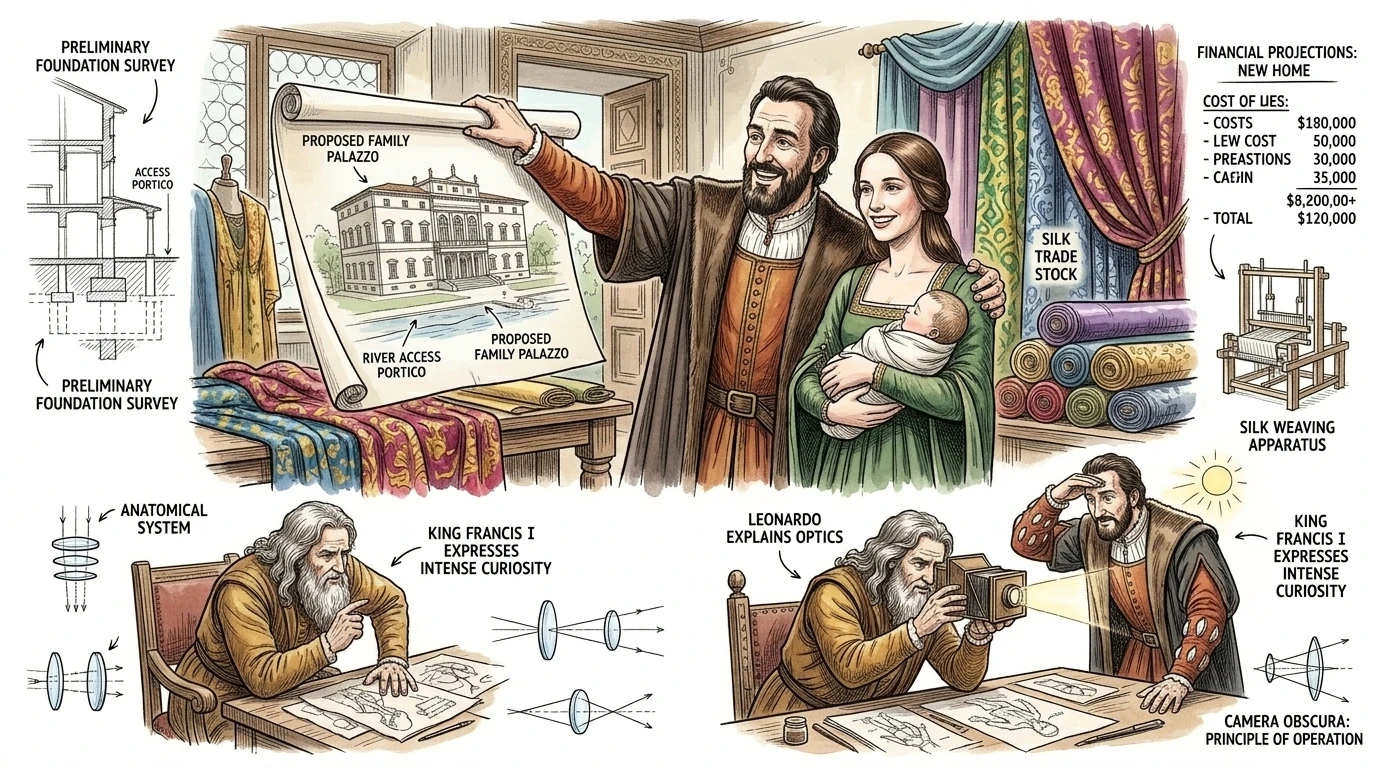
Art Fact: Francesco del Giocondo was a prosperous Florentine silk merchant. The commission of Lisa's portrait was likely intended to commemorate either the…
Art Fact: Francesco del Giocondo was a prosperous Florentine silk merchant. The commission of Lisa's portrait was likely intended to commemorate either the purchase of a family home or the birth of their second son, Andrea.

Art Fact: Francesco del Giocondo was a prosperous Florentine silk merchant. The commission of Lisa's portrait was likely intended to commemorate either the purchase of a family home or the birth of their second son, Andrea.

Page 4
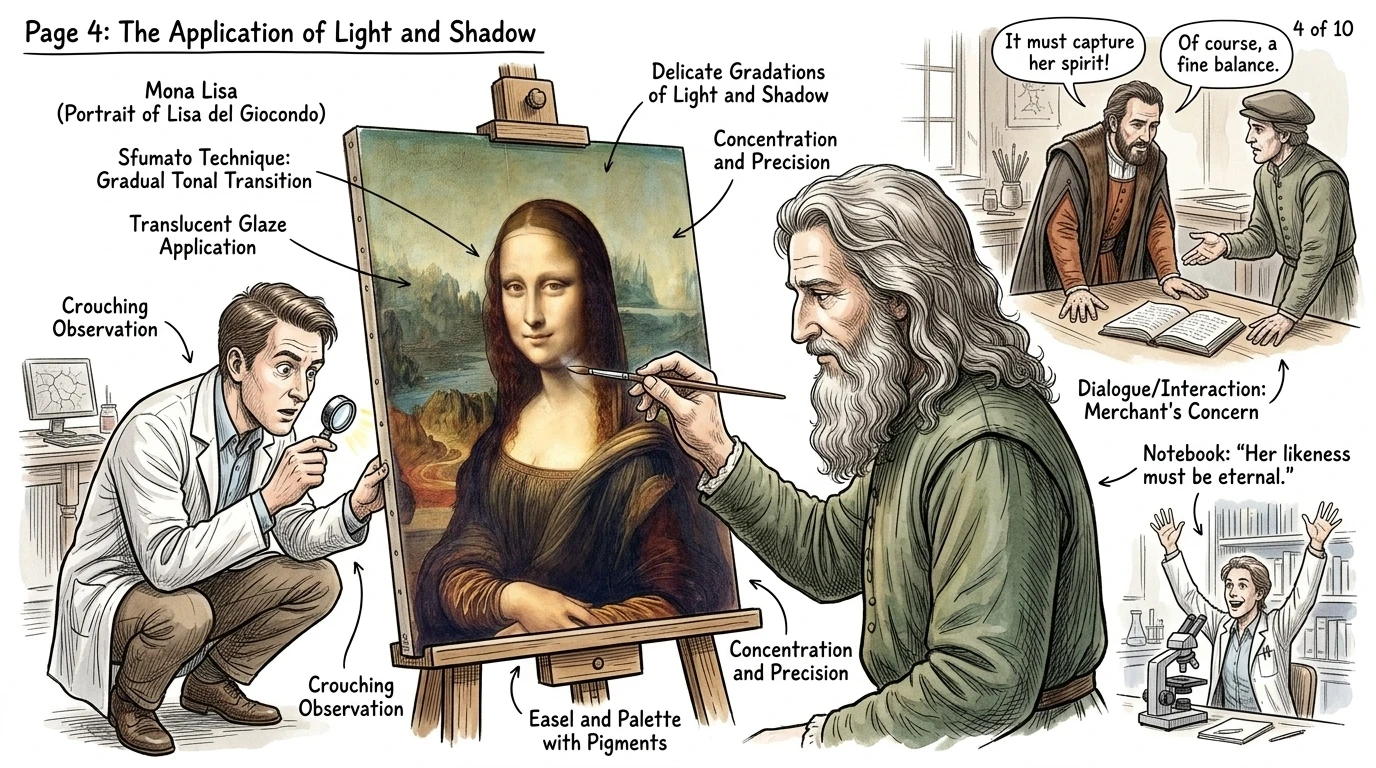
Art Fact: Sfumato, meaning 'smoky' in Italian, is a painting technique that uses subtle gradations of light and shadow to create a soft, hazy effect.
Art Fact: Sfumato, meaning 'smoky' in Italian, is a painting technique that uses subtle gradations of light and shadow to create a soft, hazy effect. Leonardo da Vinci was a master of this technique.

Art Fact: Sfumato, meaning 'smoky' in Italian, is a painting technique that uses subtle gradations of light and shadow to create a soft, hazy effect. Leonardo da Vinci was a master of this technique.

Page 5
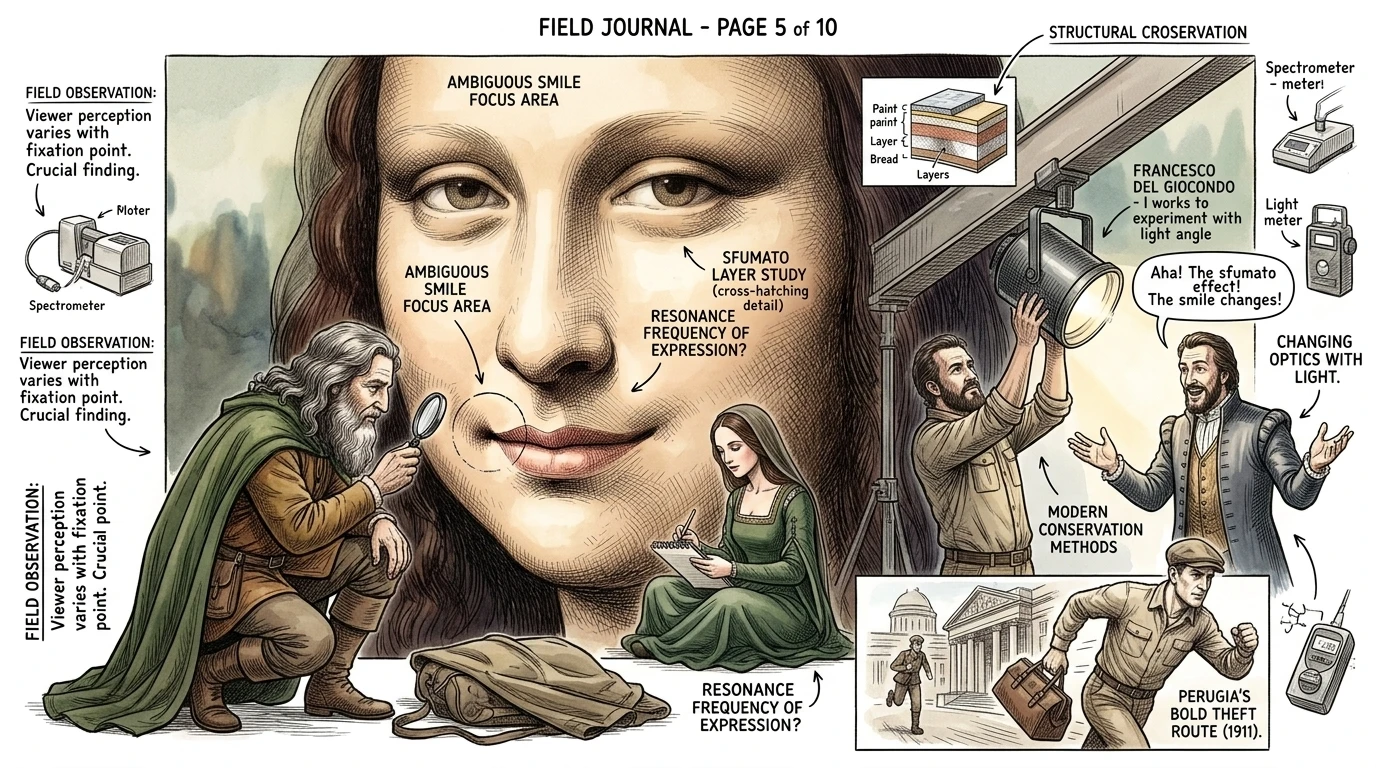
Art Fact: The Mona Lisa's smile is one of the most debated aspects of the painting. Its subtle and ambiguous nature has led to countless interpretations and…
Art Fact: The Mona Lisa's smile is one of the most debated aspects of the painting. Its subtle and ambiguous nature has led to countless interpretations and theories.

Art Fact: The Mona Lisa's smile is one of the most debated aspects of the painting. Its subtle and ambiguous nature has led to countless interpretations and theories.

Page 6
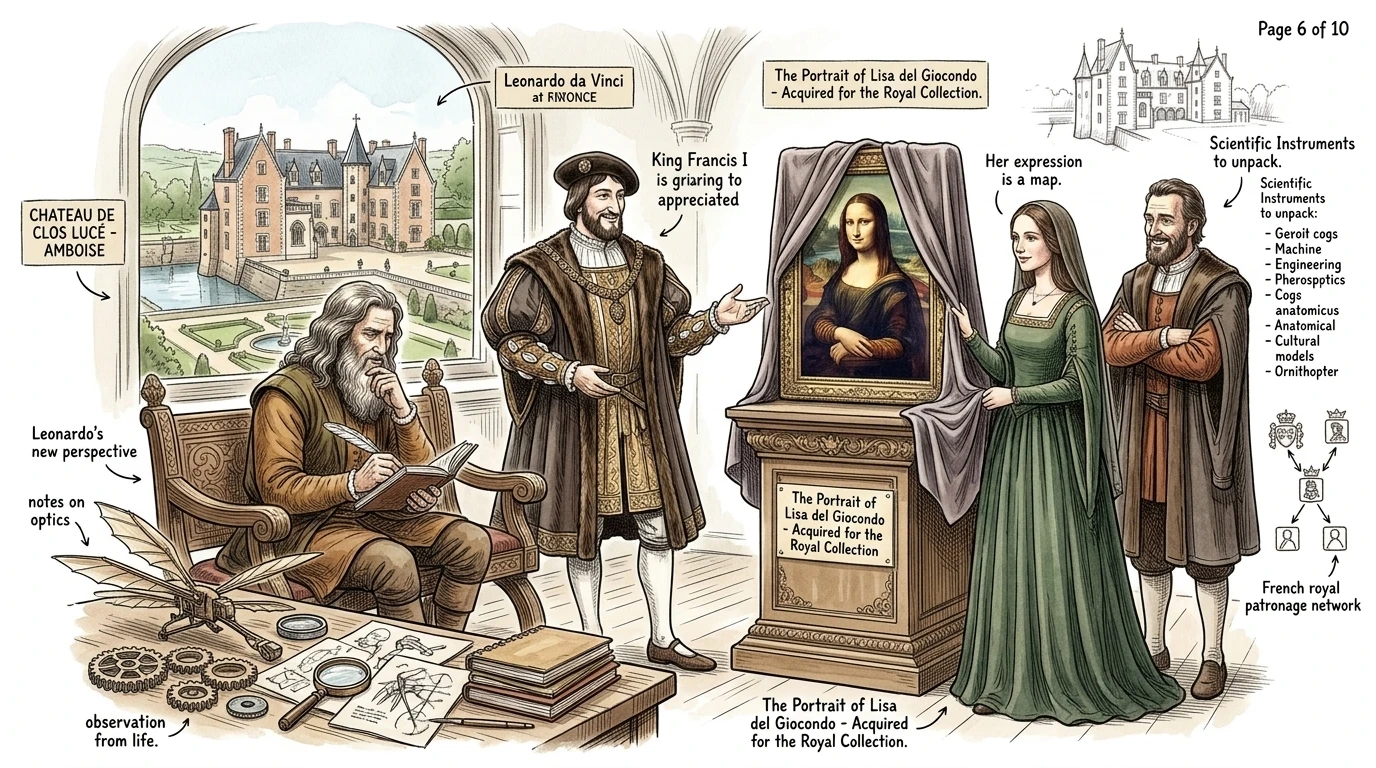
Art Fact: Leonardo da Vinci spent the last years of his life in France, under the patronage of King Francis I. The Mona Lisa remained with him until his death…
Art Fact: Leonardo da Vinci spent the last years of his life in France, under the patronage of King Francis I. The Mona Lisa remained with him until his death in 1519.

Art Fact: Leonardo da Vinci spent the last years of his life in France, under the patronage of King Francis I. The Mona Lisa remained with him until his death in 1519.

Page 7
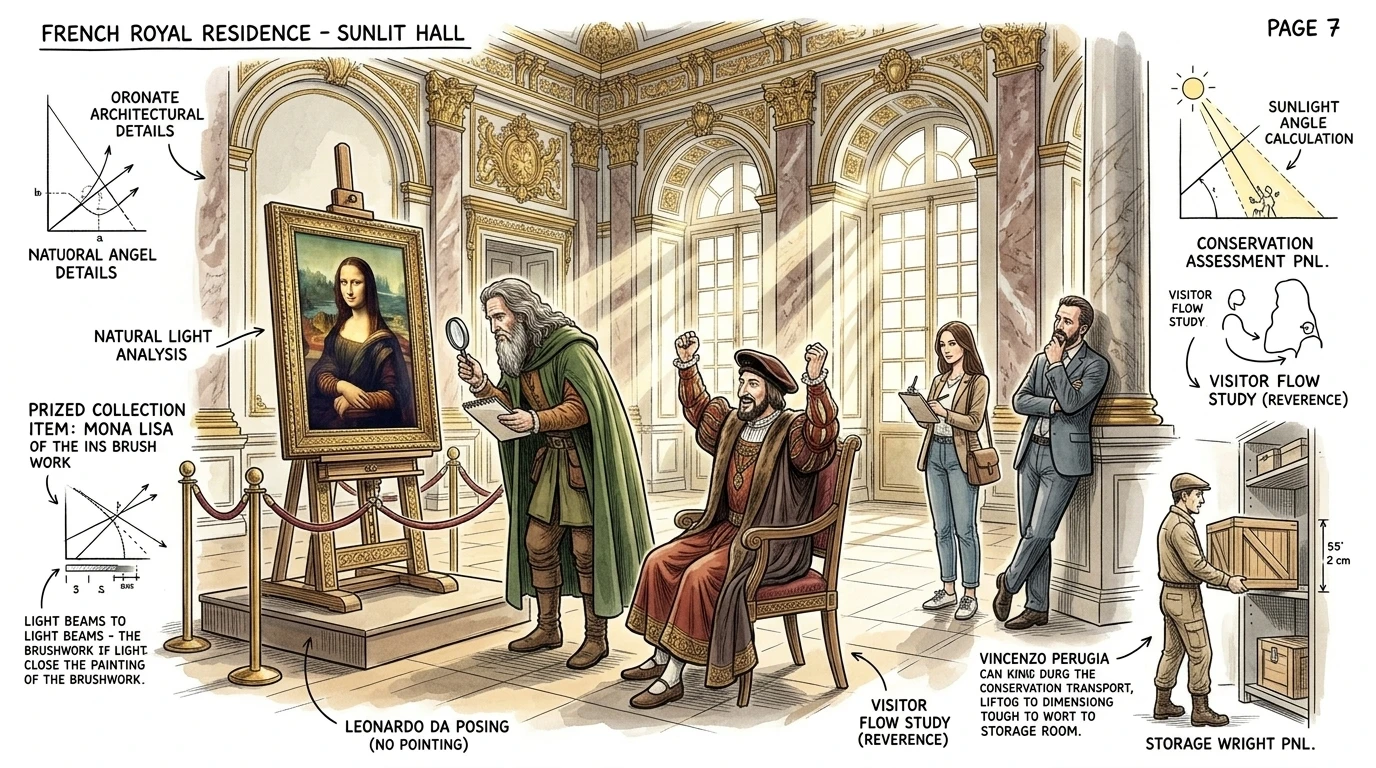
Art Fact: The Mona Lisa became part of the French royal collection after Leonardo da Vinci's death. It was displayed in various royal residences, including the…
Art Fact: The Mona Lisa became part of the French royal collection after Leonardo da Vinci's death. It was displayed in various royal residences, including the Palace of Fontainebleau and the Palace of Versailles.

Art Fact: The Mona Lisa became part of the French royal collection after Leonardo da Vinci's death. It was displayed in various royal residences, including the Palace of Fontainebleau and the Palace of Versailles.

Page 8
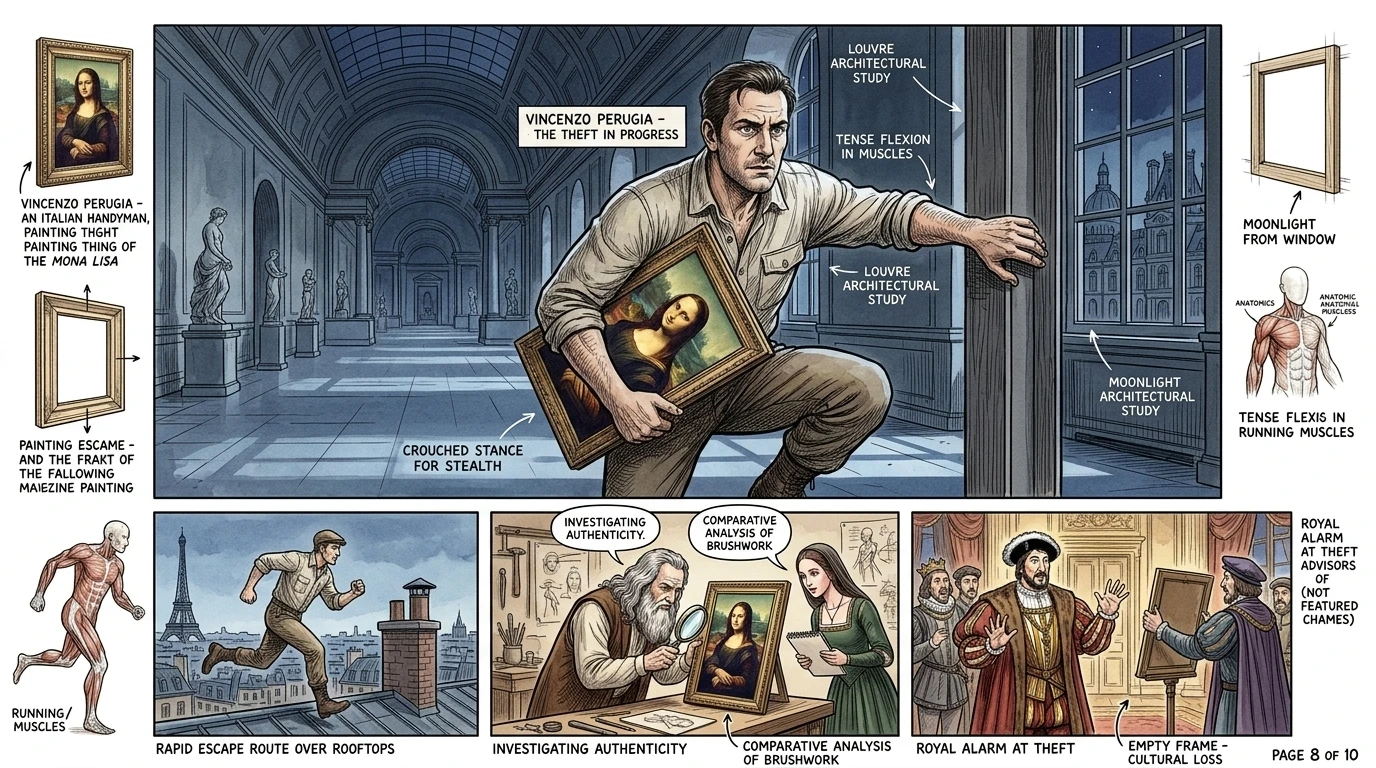
Art Fact: The theft of the Mona Lisa in 1911 made international headlines and significantly increased the painting's fame.
Art Fact: The theft of the Mona Lisa in 1911 made international headlines and significantly increased the painting's fame. The painting was recovered two years later in Florence.

Art Fact: The theft of the Mona Lisa in 1911 made international headlines and significantly increased the painting's fame. The painting was recovered two years later in Florence.

Page 9

Art Fact: The Mona Lisa's theft and subsequent recovery cemented its place as one of the most famous and recognizable works of art in the world.

Art Fact: The Mona Lisa's theft and subsequent recovery cemented its place as one of the most famous and recognizable works of art in the world.

Page 10

Art Fact: The Mona Lisa's enduring appeal lies in its combination of artistic mastery, historical intrigue, and the timeless mystery of its subject's smile.

Art Fact: The Mona Lisa's enduring appeal lies in its combination of artistic mastery, historical intrigue, and the timeless mystery of its subject's smile.

About this story

  • Location: Global
  • Audience: general readers

Questions and answers

Questions and answers about Mona Lisa — Leonardo da Vinci

Read Wonder Arts on your phone

Wonder Arts is available on Android. Get Wonder Arts on Google Play.

More Wonder Arts stories

All Wonder Arts stories · Open the library