The Mona Lisa — Paris, France — 1503–1519
The Mona Lisa — Paris, France — 1503–1519 — an illustrated arts story, set in France. 10 illustrated pages, free to read on Wonder Arts.
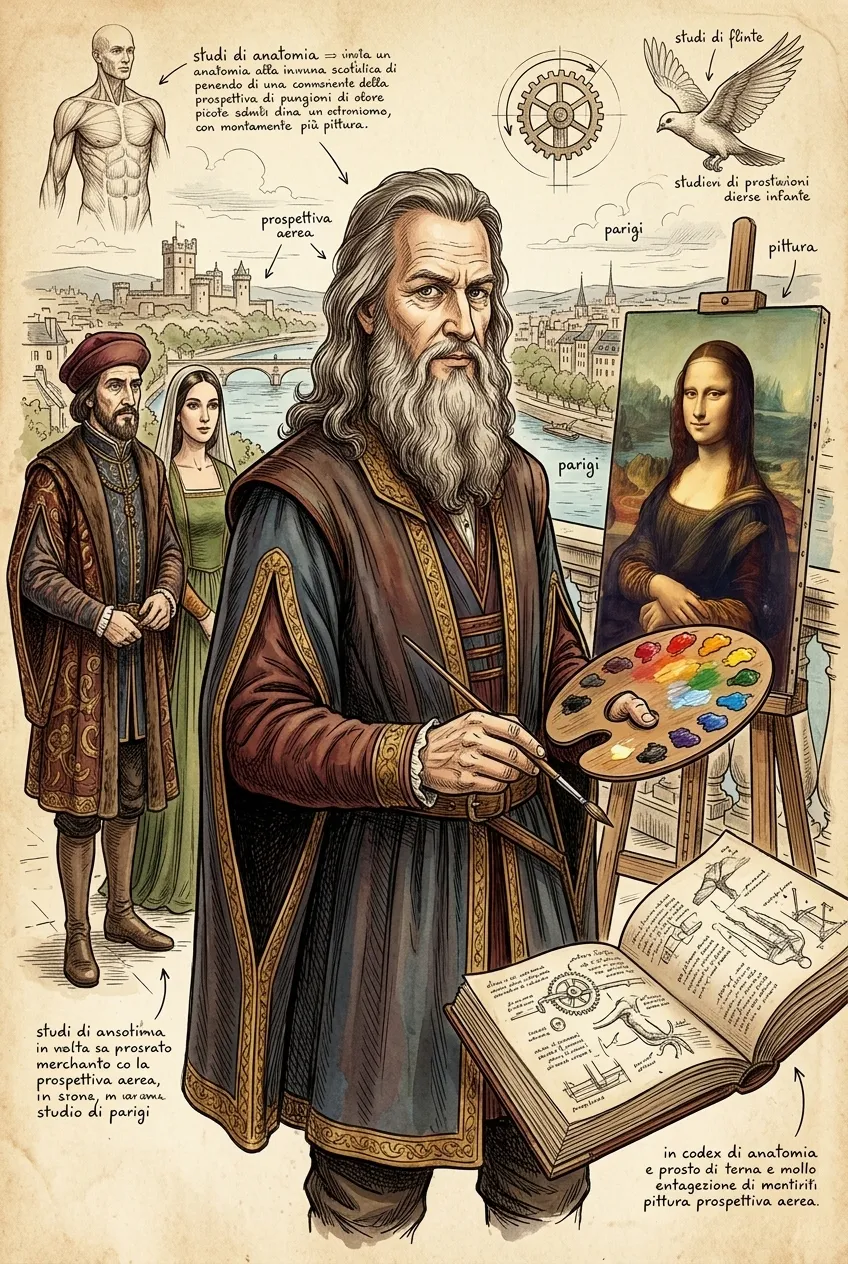
Page 1
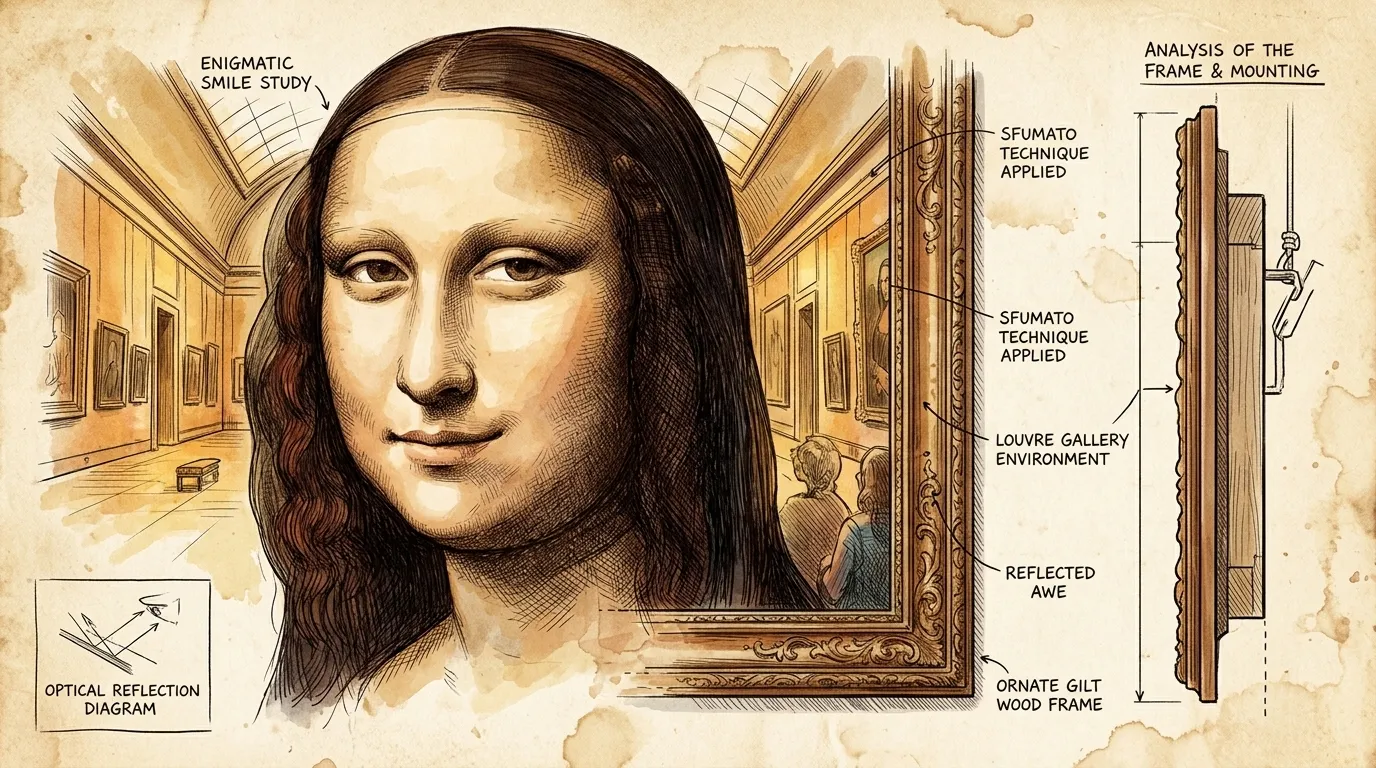
In the Louvre Museum, Paris, hangs the most famous painting in the world: Leonardo da Vinci's 'Mona Lisa.' Painted between 1503 and 1517, this 77 x 53 cm oil on poplar panel is priceless. But its artistic worth isn't the only reason for its fame; the 'Mona Lisa' has been stolen, hidden, and endlessly analyzed, its enigmatic smile continuing to captivate viewers centuries after its creation.
Art Fact: The Mona Lisa has been the subject of countless studies and interpretations, with its fame growing exponentially in the 20th century due to its theft and subsequent recovery.
Page 2
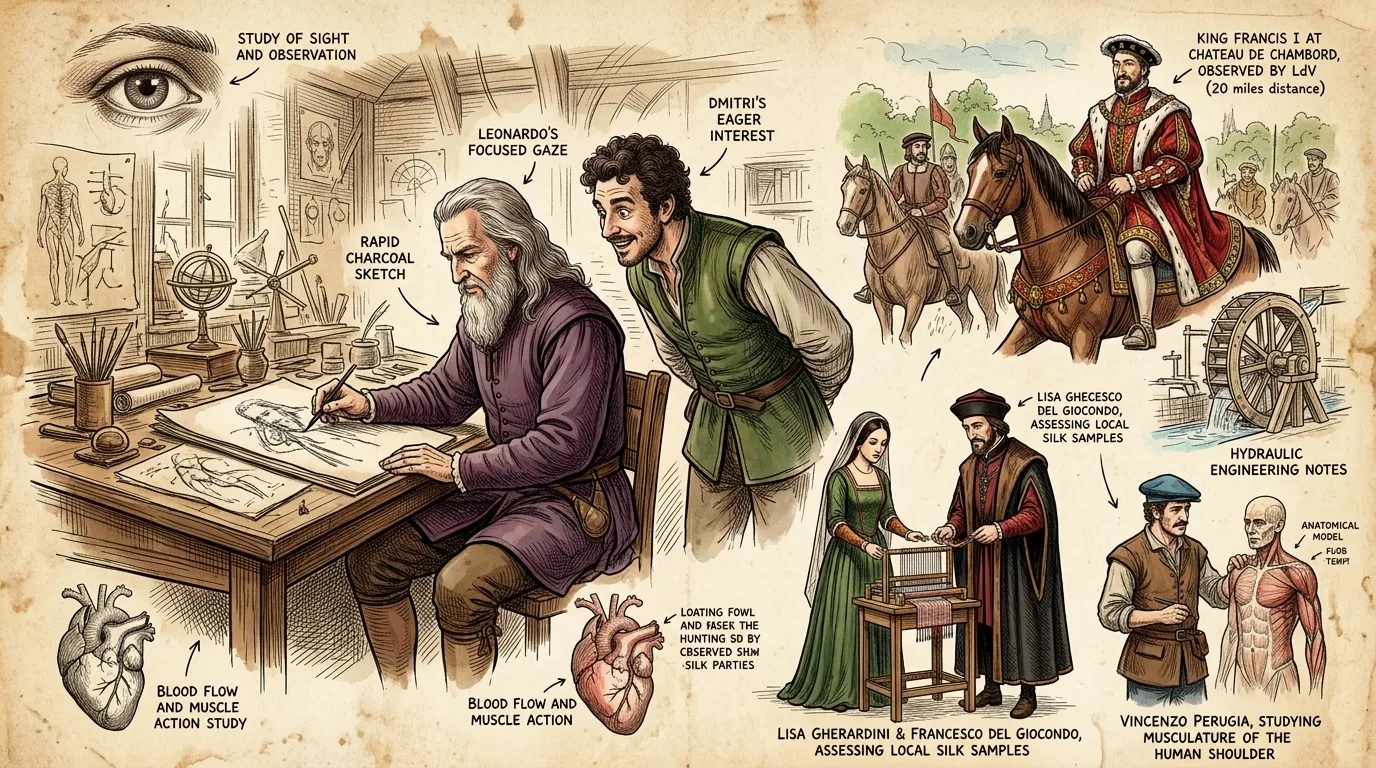
Leonardo, a true Renaissance man, worked tirelessly in his Florentine workshop. His days were a mix of scientific study, engineering inventions, and artistic pursuits. 'Art is never finished, only abandoned,' he often said, quoting his own belief that perfection was an unattainable goal. Dmitri watched, wide-eyed, as Leonardo sketched rapidly in charcoal, the idea for a new portrait taking shape.
"Leonardo, what are you drawing?"
Art Fact: Leonardo da Vinci's workshop was a hub of artistic and scientific innovation, reflecting the interdisciplinary nature of Renaissance thought.
Page 3
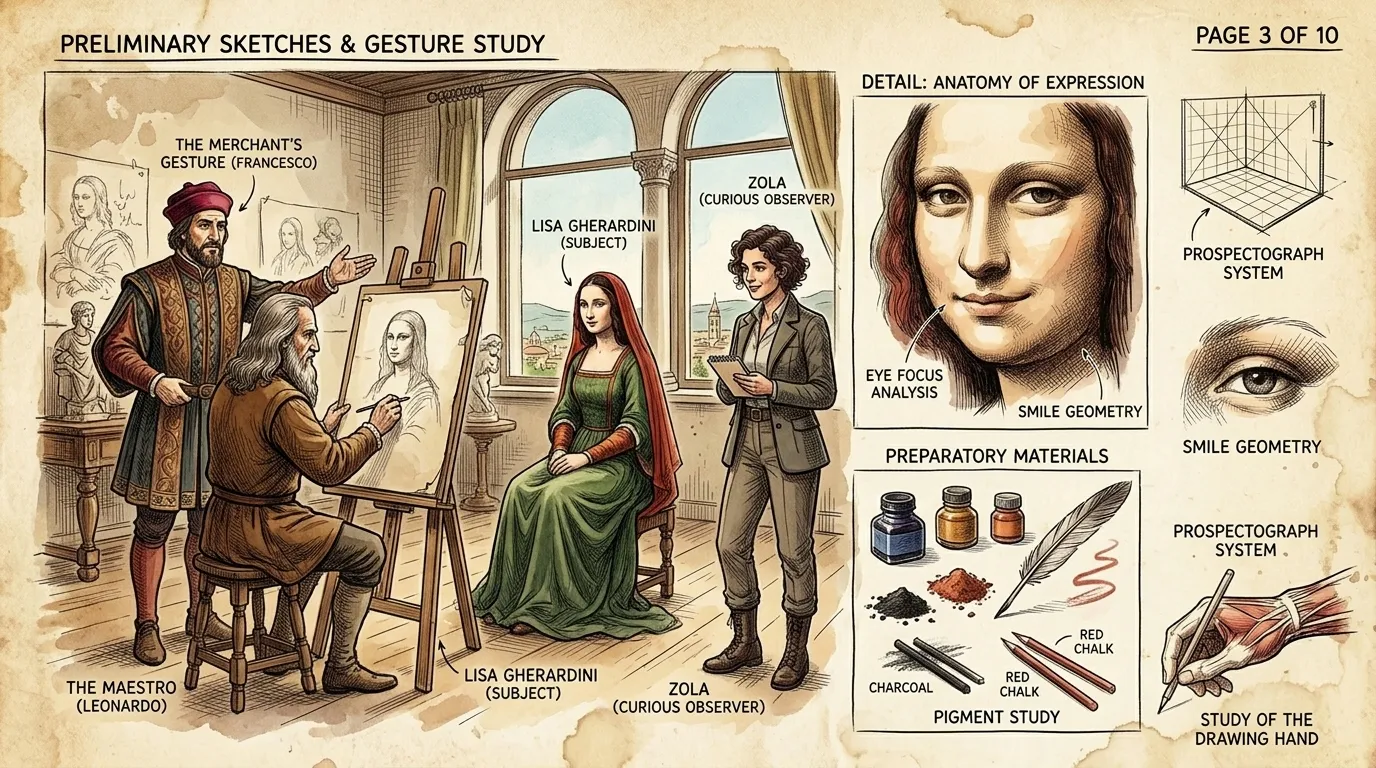
It was Francesco del Giocondo, a wealthy Florentine merchant, who commissioned Leonardo to paint a portrait of his wife, Lisa Gherardini. Leonardo, always meticulous, began with numerous preparatory sketches, carefully studying Lisa's features and bone structure. He sought to capture not just her likeness, but her very essence. 'The greatest deception men suffer is from their own opinions,' Leonardo murmured, recalling words of wisdom.
"'Do you think you can capture her spirit, Leonardo?' Zola asked, watching him work."
Art Fact: Francesco del Giocondo's commission of his wife's portrait marked a significant event in art history, though the exact reasons for the commission remain debated.
Page 4
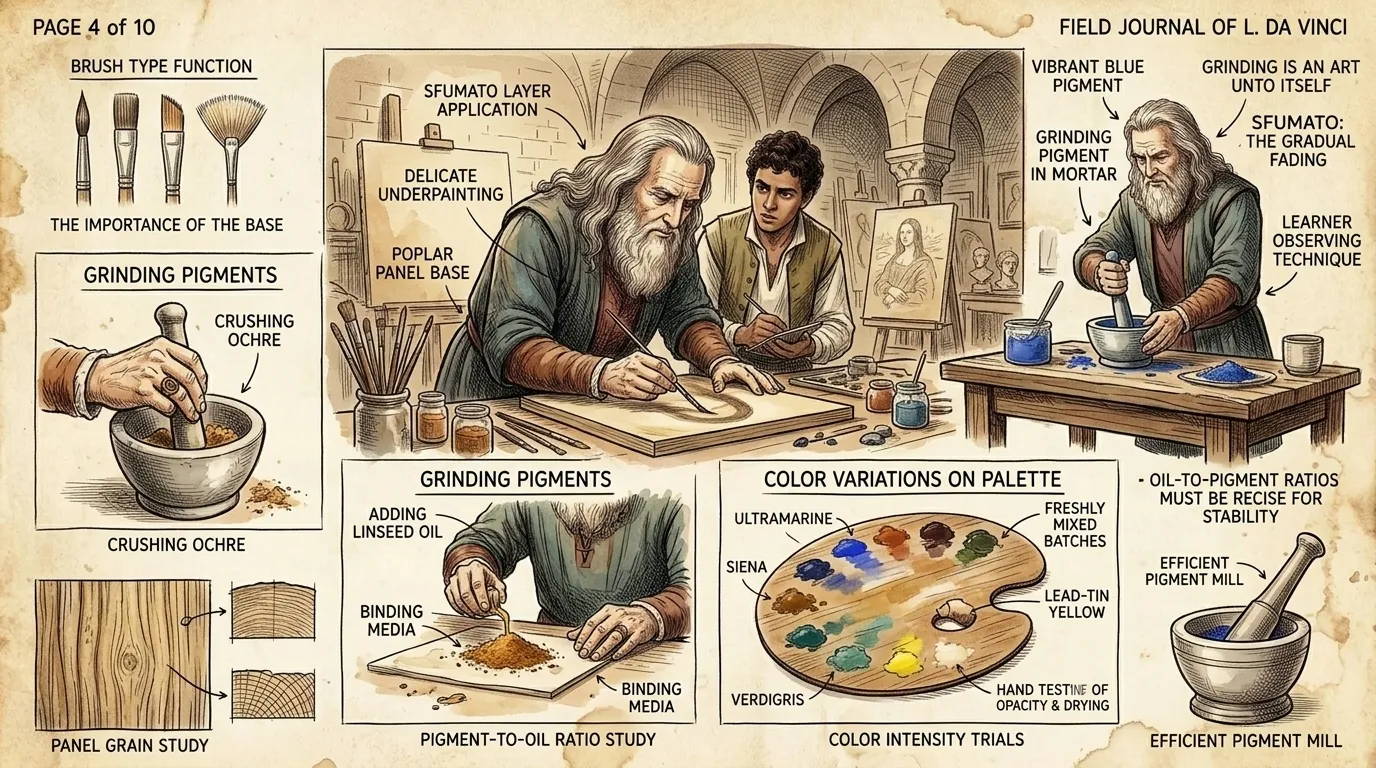
Leonardo began with a thin underpainting, using delicate layers of sfumato to create subtle gradations of light and shadow. He mixed his own paints, grinding pigments with oil and carefully controlling the consistency. 'Details make perfection, and perfection is not a detail,' he muttered, a saying he had learned, carefully applying each layer to the poplar panel. Yousef watched him carefully, wanting to learn all that he could.
"Master Leonardo, what colors are you using?"
Art Fact: Leonardo's sfumato technique, characterized by delicate gradations of light and shadow, was revolutionary in its ability to create a sense of depth and realism.
Page 5
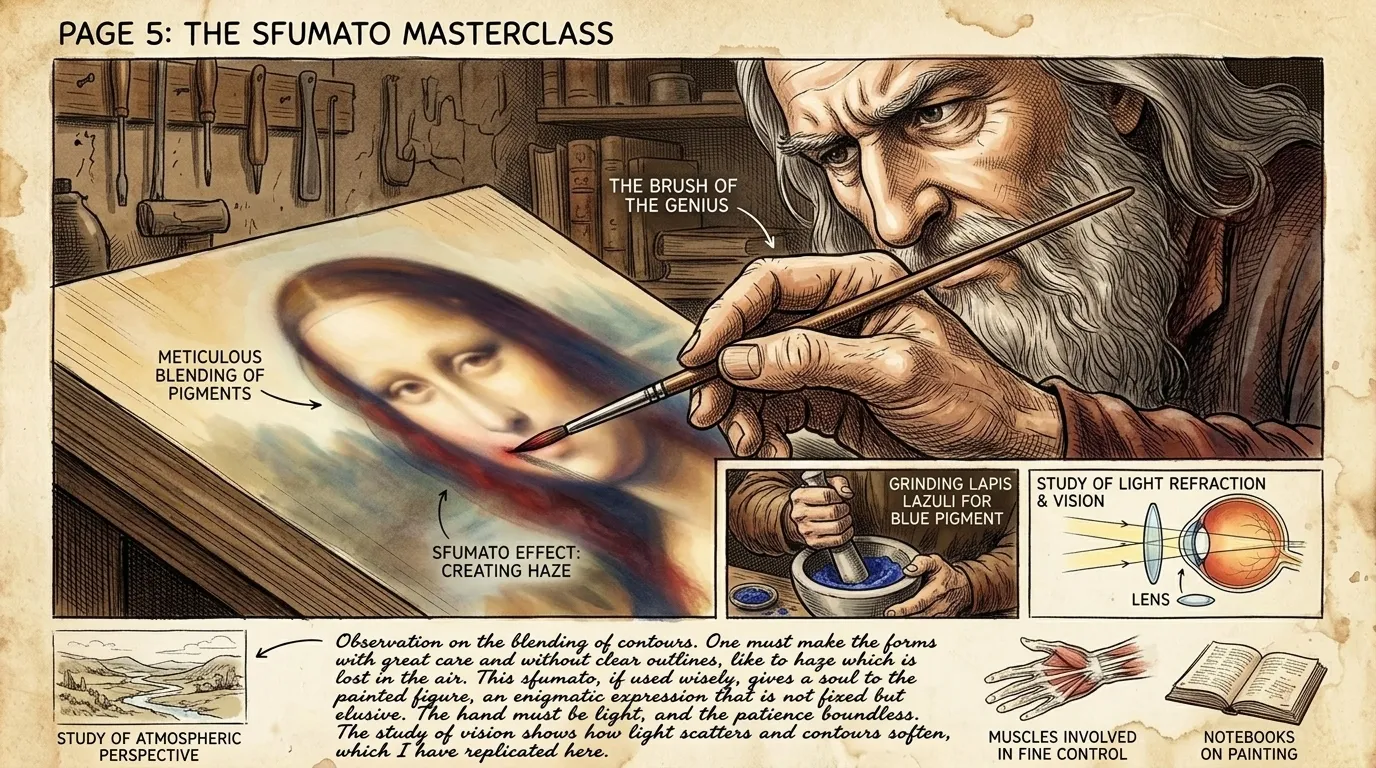
The sfumato technique demanded incredible patience, as each layer of paint had to be almost translucent. Leonardo meticulously blended the colors, creating a soft, hazy effect that blurred the edges and softened the features. He believed that this technique captured the elusive nature of human expression. 'There are three classes of people: those who see, those who see when they are shown, those who do not see,' he whispered, focusing intensely on his work.
"It looks so soft, Master Leonardo! How do you do that?"
Art Fact: The sfumato technique involved applying numerous translucent layers of paint, sometimes as thin as a single molecule, to create a sense of depth and atmosphere.
Page 6
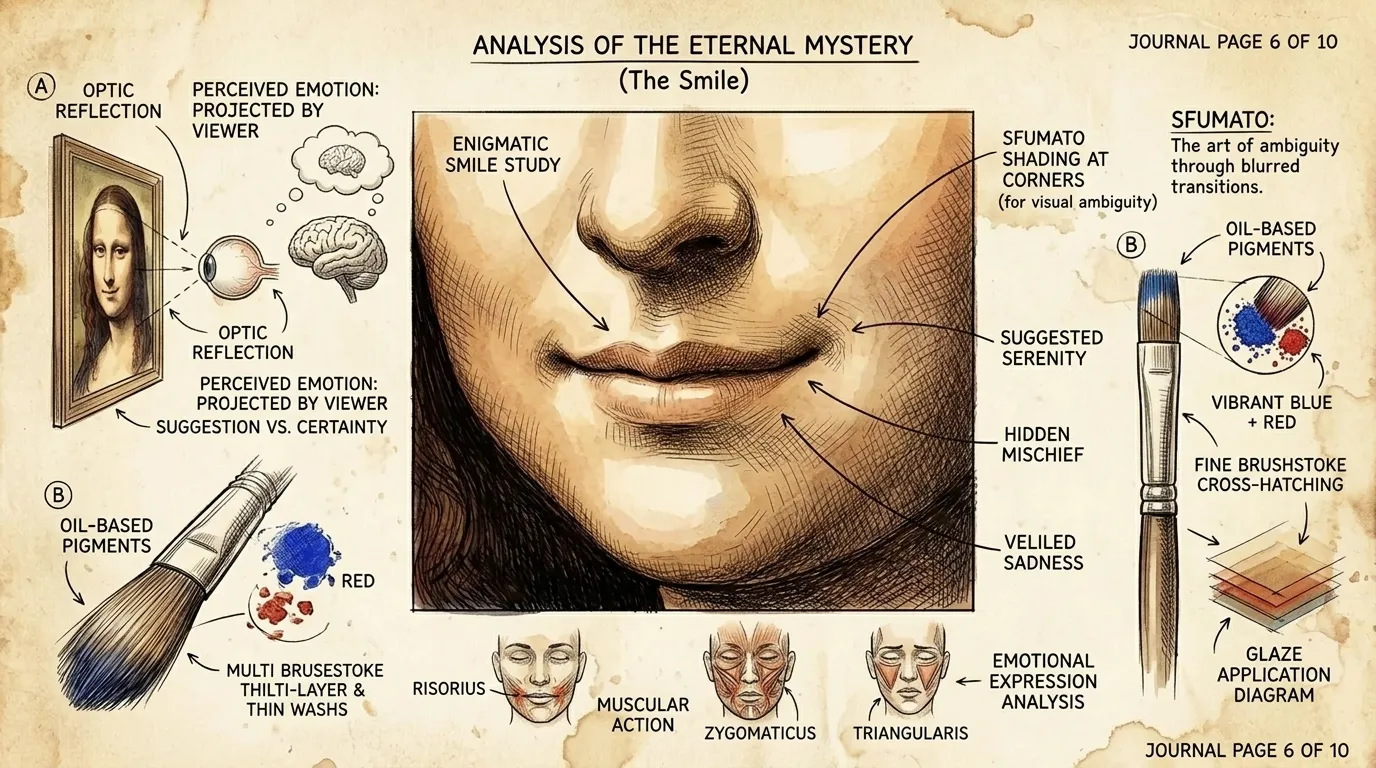
It was the 'Mona Lisa's' smile that truly captivated viewers. Some saw serenity, others a hint of mischief, and still others a profound sadness. Leonardo deliberately left the expression ambiguous, allowing each viewer to project their own emotions onto the painting. The smile became the painting's most discussed feature.
"'That smile... what does it mean, Master Leonardo?'"
Art Fact: The Mona Lisa's smile has been the subject of endless debate and interpretation, contributing significantly to the painting's allure.
Page 7
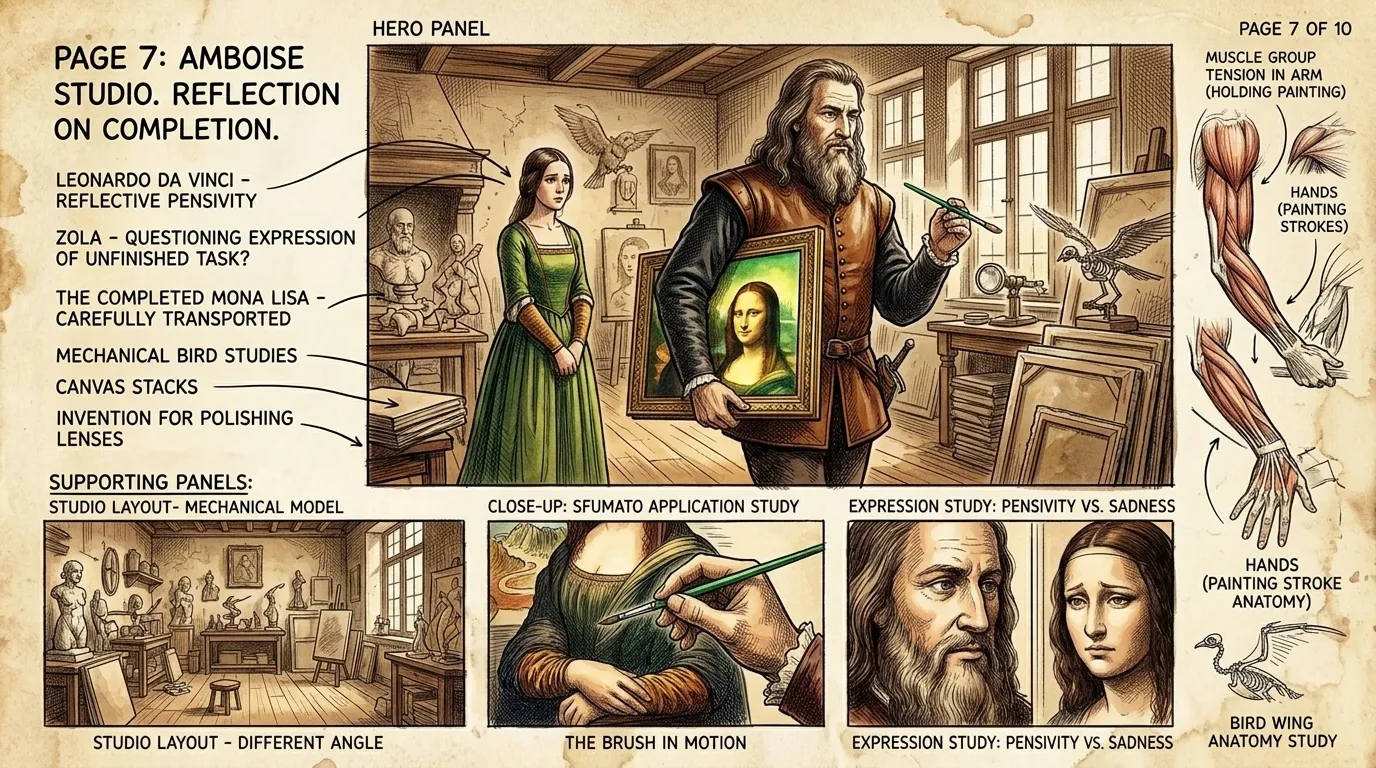
Leonardo never truly finished the 'Mona Lisa.' He carried it with him for years, adding subtle touches and refinements, but never delivering it to Francesco del Giocondo. Some historians believe he was simply too attached to the painting to let it go. 'Nothing can be loved or hated unless it is first understood,' he said, thinking deeply about how much time and effort he put into the painting. Zola wondered if anyone would ever truly understand the Mona Lisa.
"'Will you ever finish her, Leonardo?' Zola asked sadly."
Art Fact: Leonardo's habit of carrying the Mona Lisa with him throughout his travels underscores his deep personal connection to the artwork.
Page 8
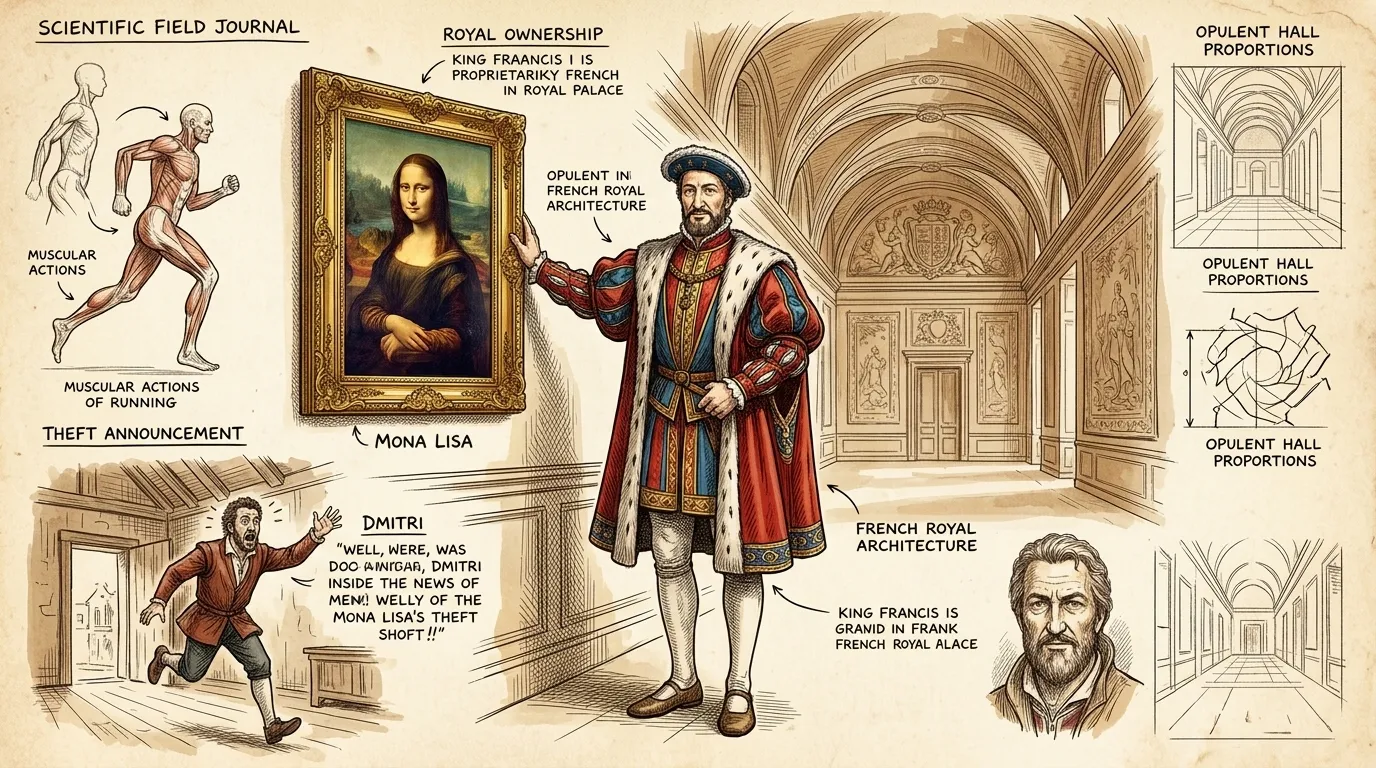
After Leonardo's death in France in 1519, the 'Mona Lisa' entered the collection of King Francis I. It remained in the French royal collection for centuries, gracing the walls of various palaces. During the French Revolution, it was briefly hung in Napoleon's bedroom. But the painting was not always secured.
"'Did you hear? They stole the Mona Lisa!' Dmitri exclaimed, running inside."
Art Fact: The Mona Lisa's entry into the French royal collection marked the beginning of its long and storied history in France.
Page 9
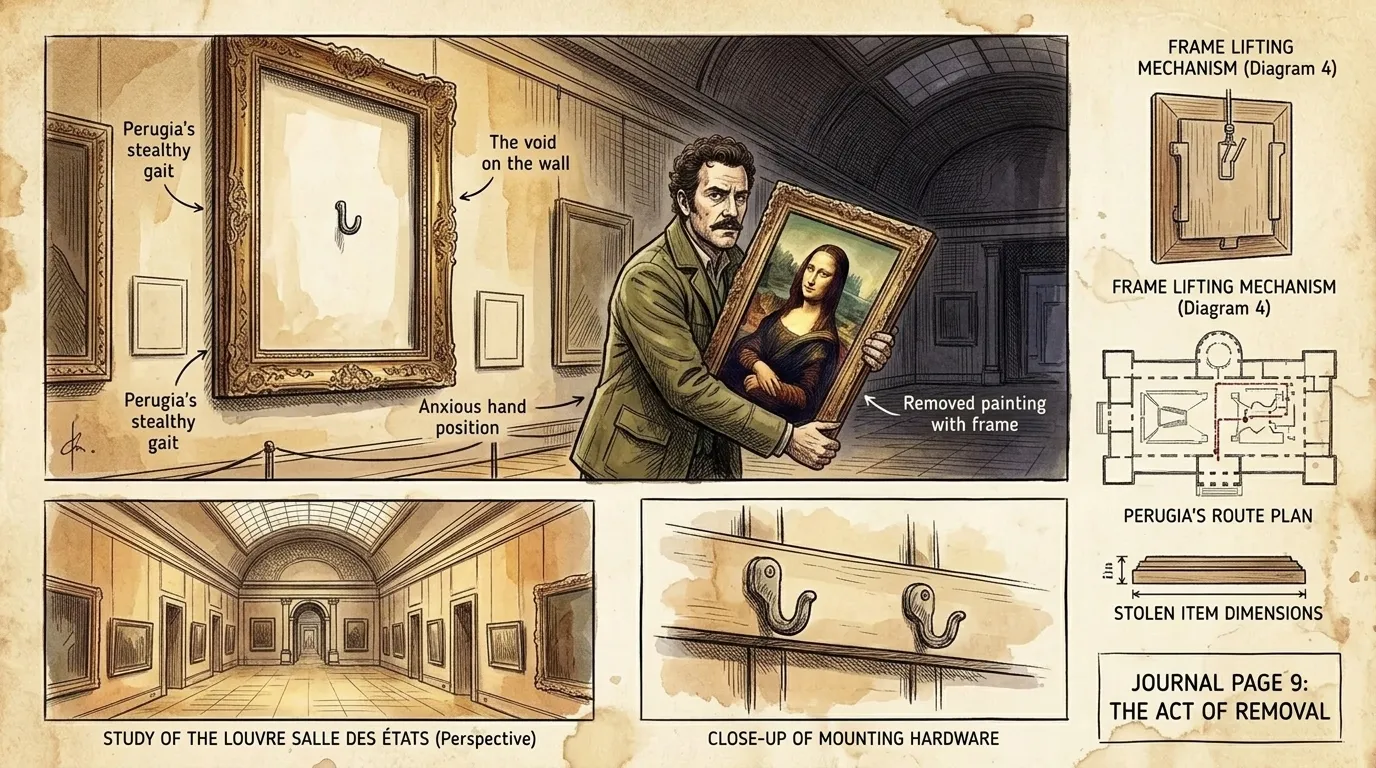
In 1911, the 'Mona Lisa' was stolen from the Louvre by an Italian patriot, Vincenzo Perugia, who believed it rightfully belonged in Italy. The theft made headlines worldwide, and the painting remained missing for two years. The world mourned its loss. It was a dark period for the Louvre.
"The Louvre... It feels so empty without her!"
Art Fact: The 1911 theft of the Mona Lisa remains one of the most audacious art heists in history, capturing the world's attention and highlighting the painting's immense cultural significance.
Page 10
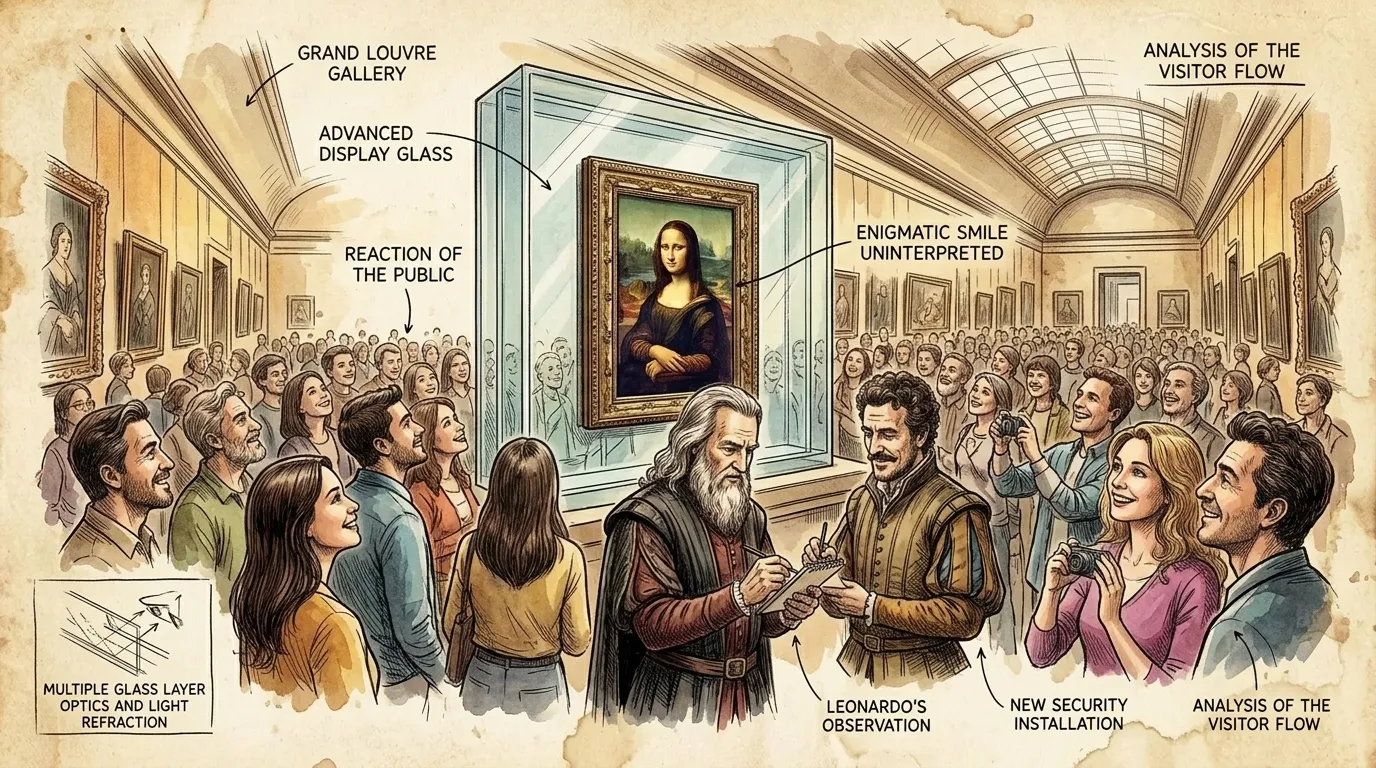
Today, the 'Mona Lisa' remains in the Louvre, a symbol of artistic genius and enduring mystery. Protected by layers of security, it continues to draw millions of visitors each year. Its smile still eludes definitive interpretation, ensuring that its legacy will endure for generations to come. The mysteries surrounding it run deep.
Art Fact: The Mona Lisa's enduring fame lies not only in its artistic merit but also in its ability to provoke endless questions and interpretations, ensuring its continued relevance in the cultural landscape.
About this story
- Location: France
- Audience: general readers
Read Wonder Arts on your phone
Wonder Arts is available on Android. Get Wonder Arts on Google Play.
More Wonder Arts stories
- The Monk by the Sea by Caspar David Friedrich (Germany — 1810)
- The Night Café by Vincent van Gogh (Arles, France — 1888)
- The Night Watch — Amsterdam, Netherlands — 1642
- The Night Watch by Rembrandt van Rijn (Amsterdam, Netherlands — 1642)
- The Nightmare by Henry Fuseli (London, UK — 1781)
- The Origin of the World by Gustave Courbet (France — 1866)