The Monk by the Sea by Caspar David Friedrich (Germany — 1810)
The Monk by the Sea by Caspar David Friedrich (Germany — 1810) — an illustrated arts story, set in Germany. 10 illustrated pages, free to read on Wonder Arts.
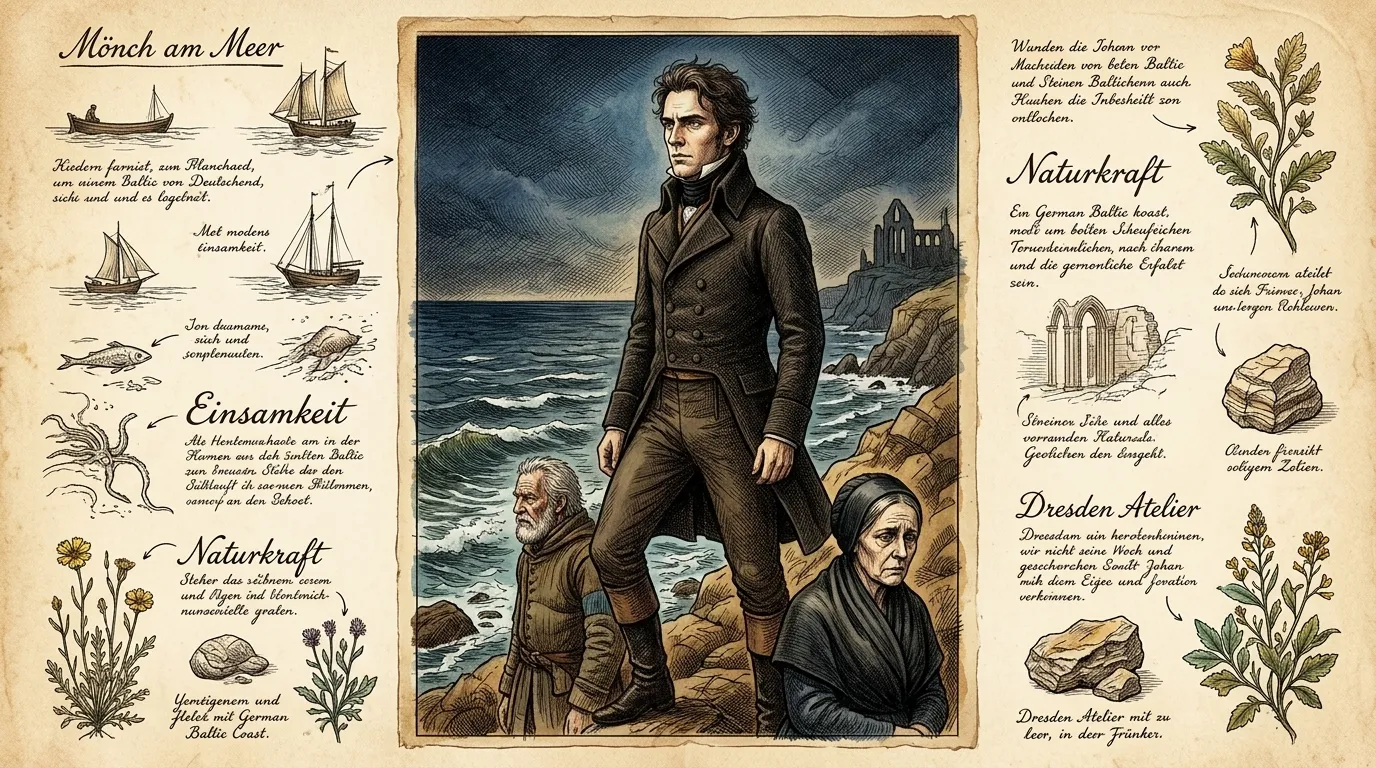
Page 1
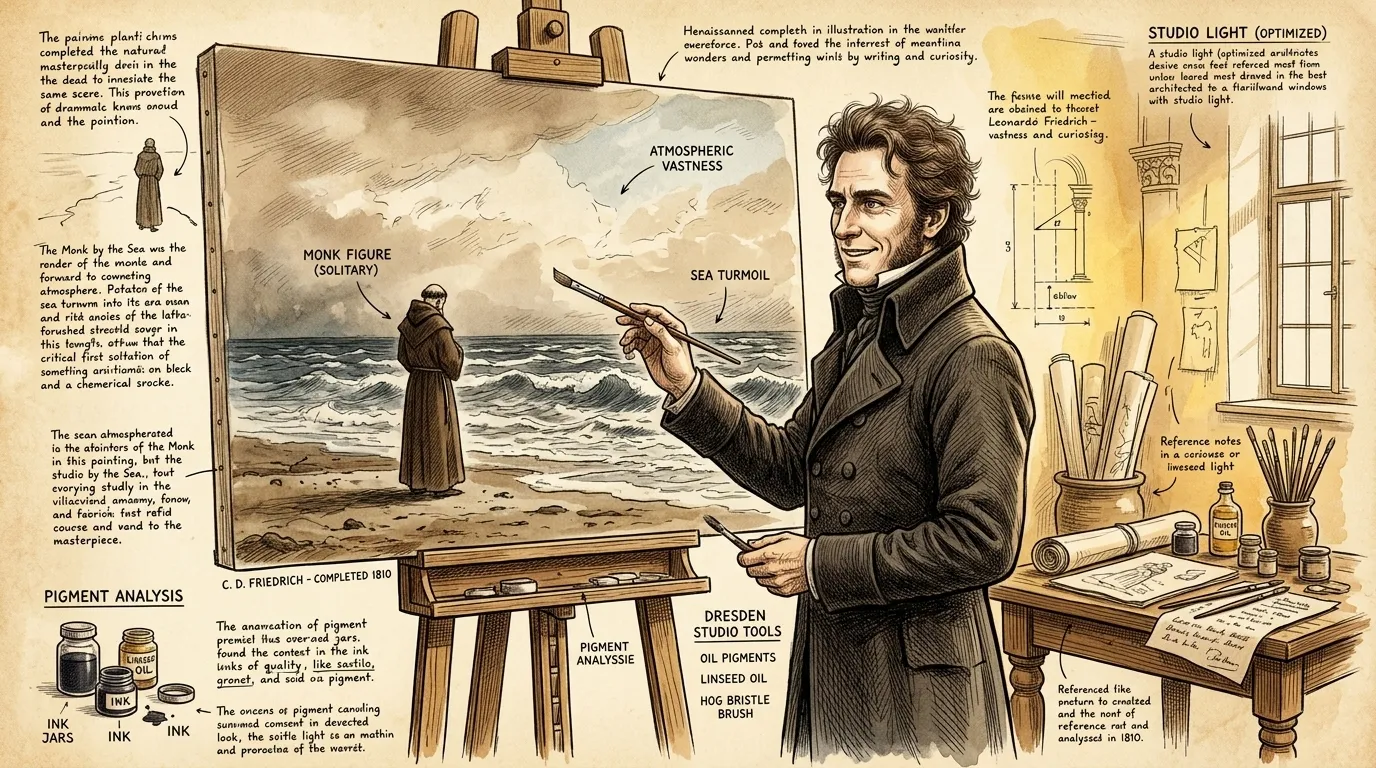
Caspar David Friedrich stands before his completed masterpiece, 'The Monk by the Sea,' in his Dresden studio, 1810. Measuring 110 171.5 cm, the painting is currently housed in the Alte Nationalgalerie, Berlin. What appears a simple scene of nature belies the revolutionary artistic statement within.
"Friedrich murmurs to himself, his eyes fixed on the canvas, "'I have to create that which I see before me,' as Goethe would say, but what if what I see is not just a landscape, but a feeling, a soul laid bare?""
Art Fact: 'The Monk by the Sea' sparked controversy for its stark simplicity and emotional intensity, challenging traditional landscape painting conventions.
Page 2
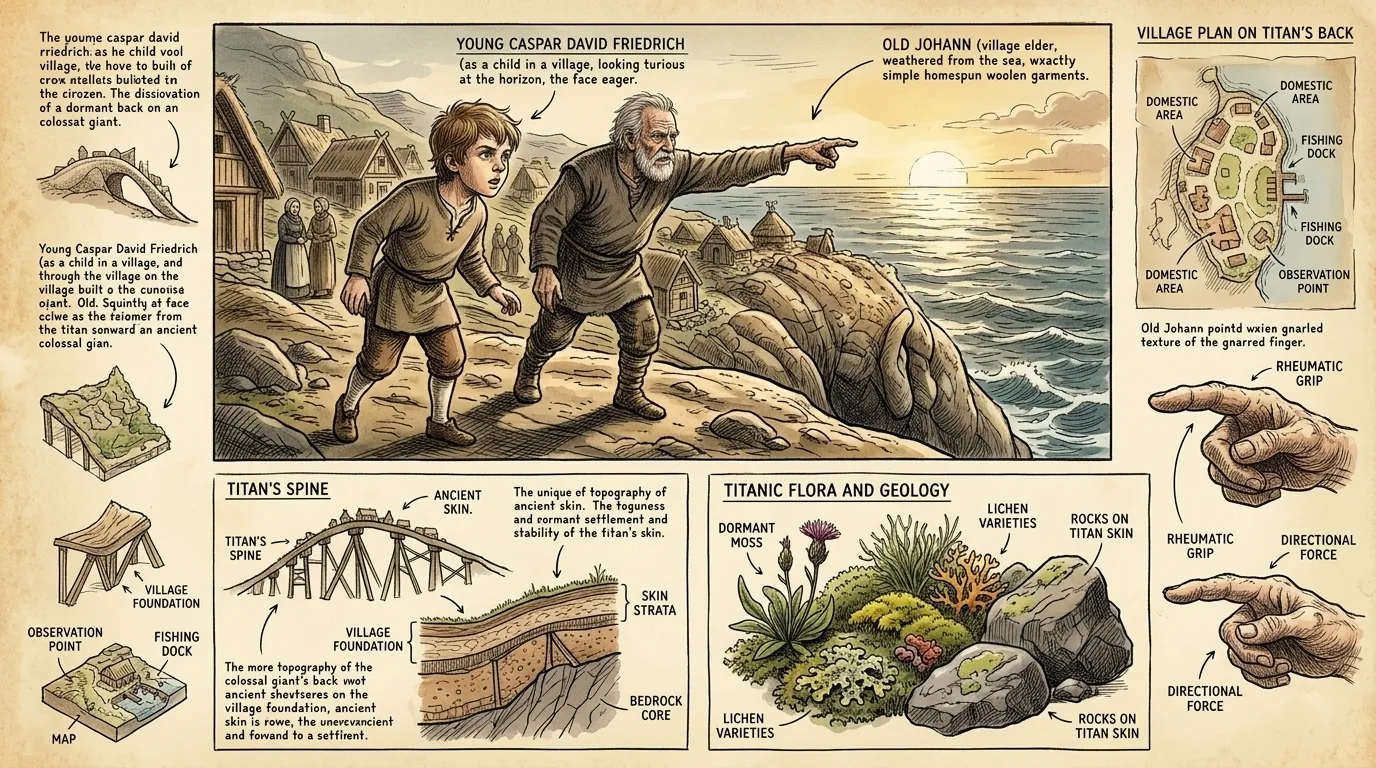
Young Caspar explores the village, built precariously on the back of a dormant giant. The villagers live their lives, unaware of the titan beneath them. He watches as the sun sets, casting long shadows that mimic the vastness of the sea he would later paint.
"Old Johann, the village elder, points to the horizon. "They say the giant dreams of the sea, lad. That's why our waves are so restless." Caspar squints. "Restless like my heart, Johann.""
Art Fact: The unique topography of the village, a constant reminder of nature's immense power, profoundly impacted Friedrich's artistic vision.
Page 3
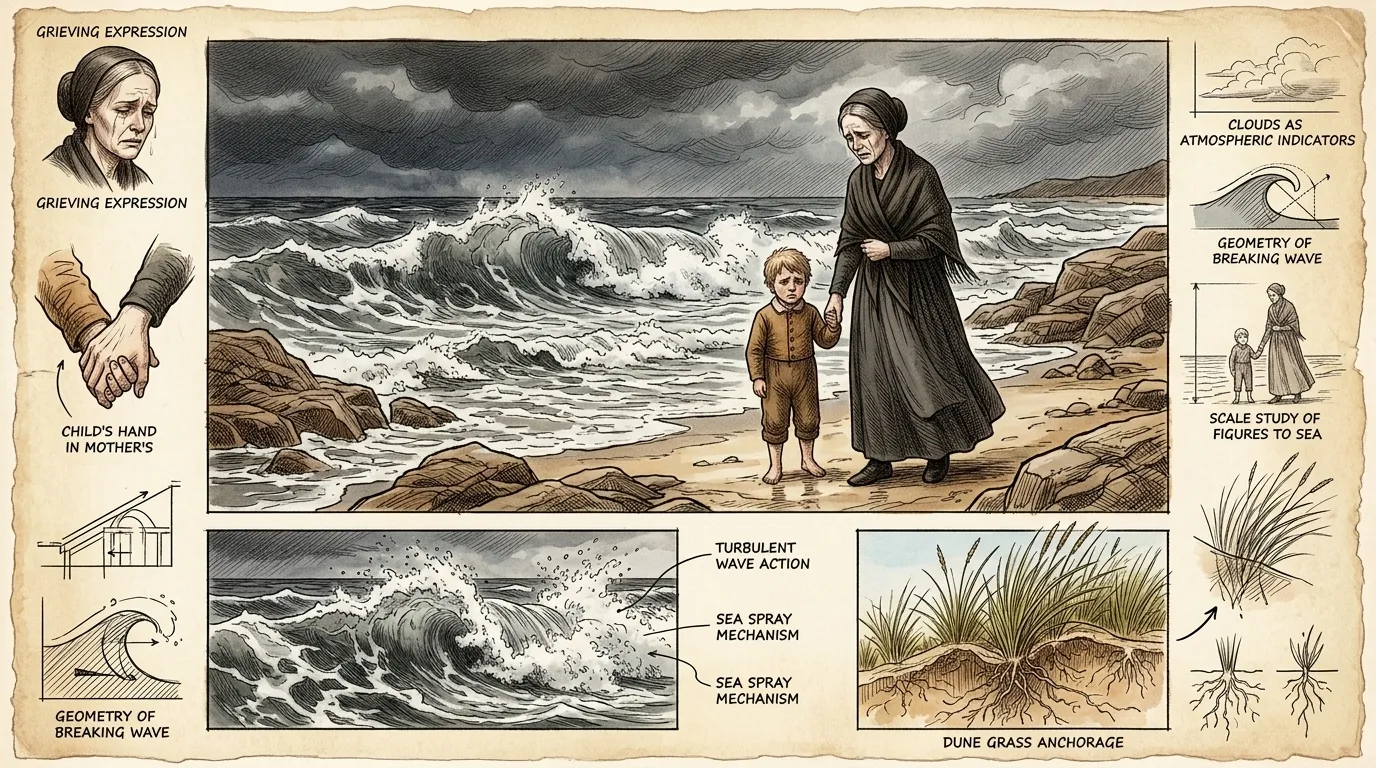
Friedrich's brother drowns in the Baltic Sea, a tragedy that haunts him. The vast, unforgiving ocean becomes a symbol of loss and the insignificance of human life in the face of nature's power. The sea and the lone monk standing on the shore encapsulate that despair.
"His mother, her face etched with sorrow, clutches young Caspar's hand. "'The sea gives and the sea takes away,'" she sobs, "'It's an abyss we can never truly understand.'""
Art Fact: The loss of his brother became a recurring theme in Friedrich's art, reflecting his preoccupation with mortality and the sublime power of nature.
Page 4
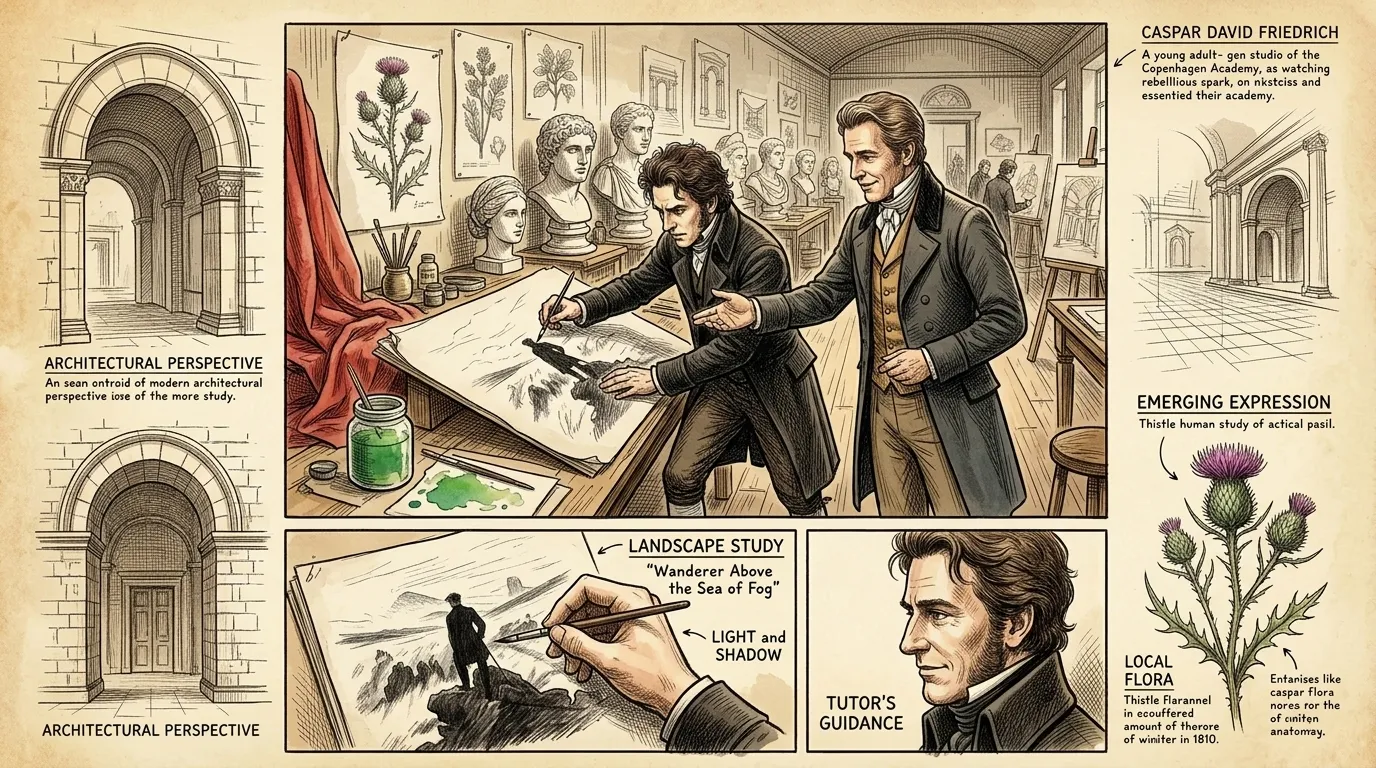
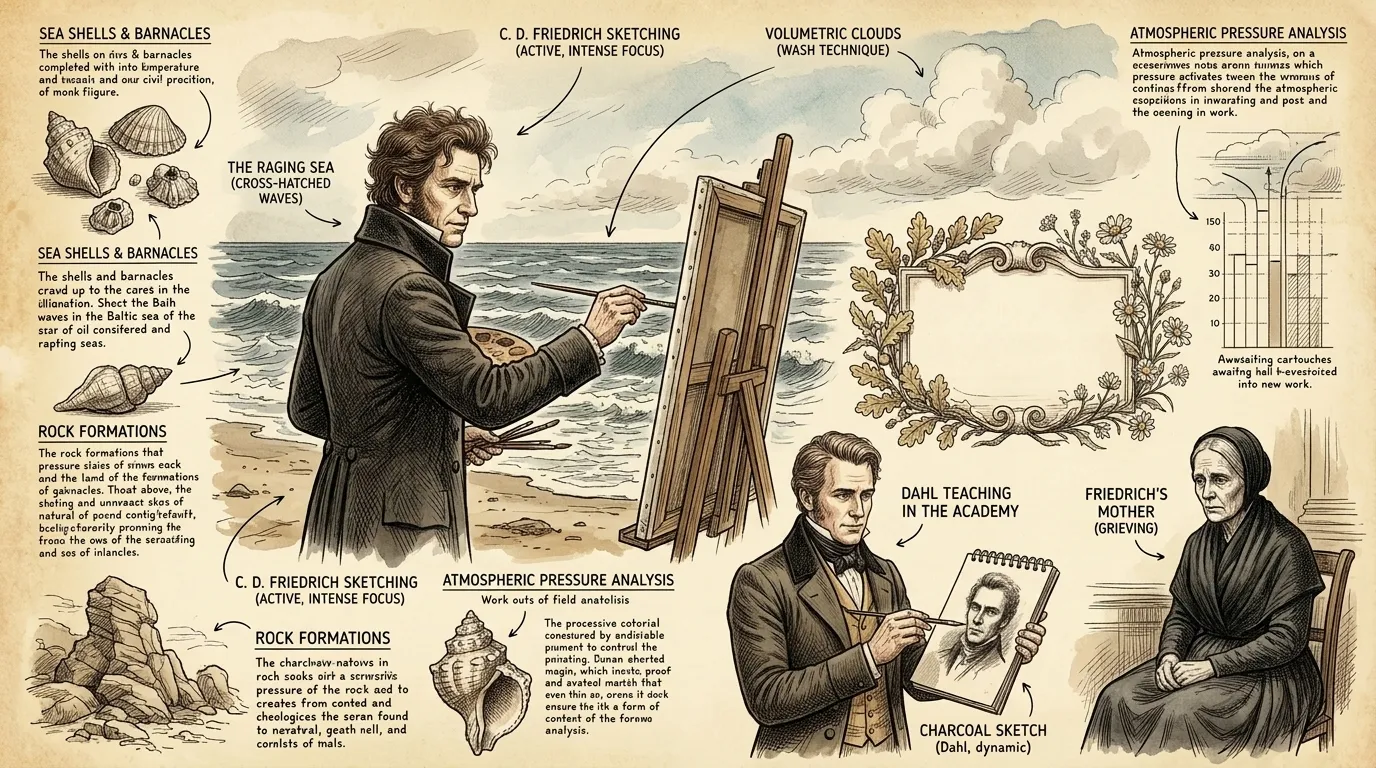
At the Copenhagen Academy, Friedrich hones his skills but chafes against the rigid rules of classical art. He seeks a more personal, expressive approach to landscape painting. His tutor, Johan Christian Dahl, encourages him to find his own path.
"Dahl says to the young Friedrich, sketching with charcoal, "'Be faithful to your own taste, because few things are so well worth having,' as the writer Charles Baudelaire advised. Don't simply copy, Friedrich, feel!""
Art Fact: Friedrich's training at the Copenhagen Academy provided a foundation for his technical skill, but his restless spirit sought a more profound form of artistic expression.
Page 5
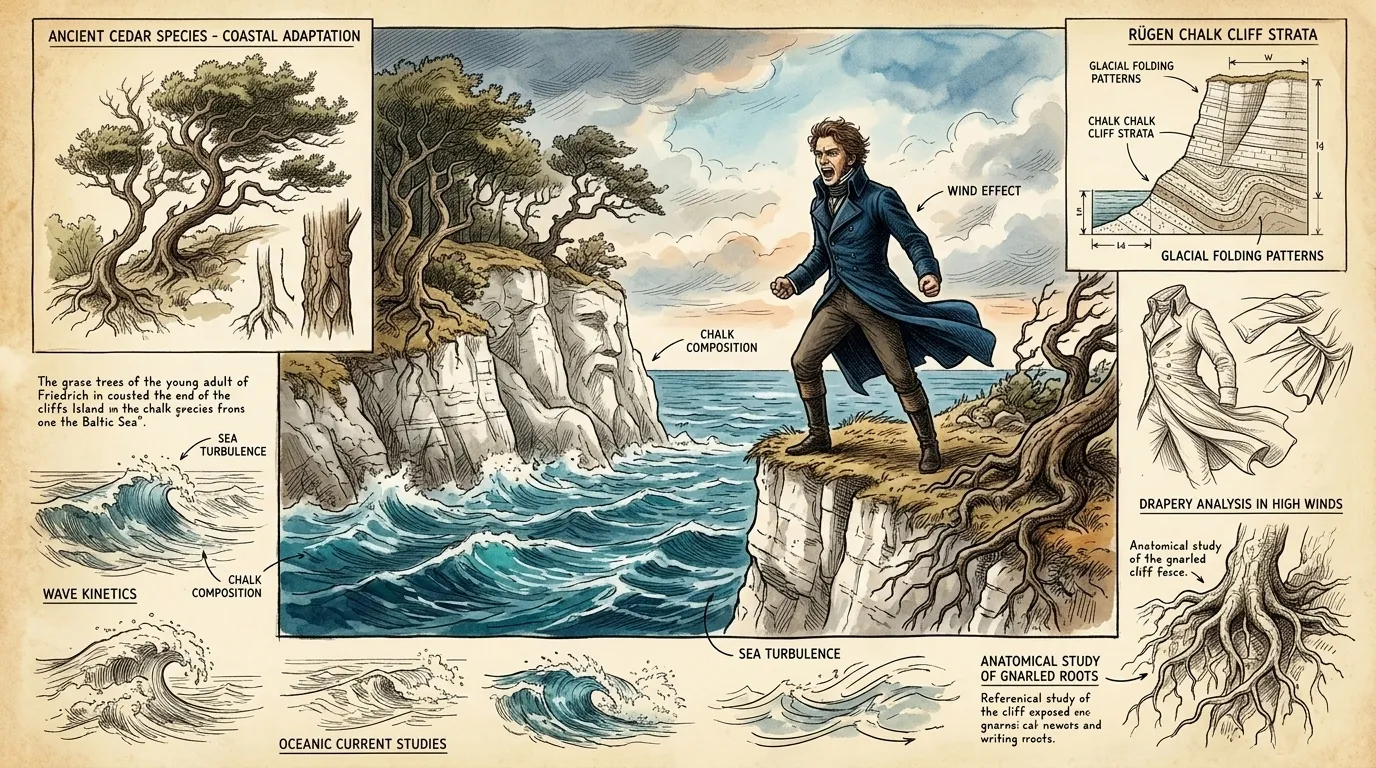
Friedrich discovers the dramatic landscapes of Rügen Island on the Baltic coast. The chalk cliffs, windswept trees, and endless sea ignite his imagination and become a source of endless inspiration. It echoes the village built on the giant.
""This land," he exclaims, standing on the precipice of the chalk cliffs, "'Is not the domain of the wise; wise men don't go there,' as a great thinker, Ralph Waldo Emerson, once wrote. It is a land of feeling, of raw emotion!""
Art Fact: Rügen Island's stark beauty and dramatic coastline became a defining element in Friedrich's artistic vocabulary.
Page 6
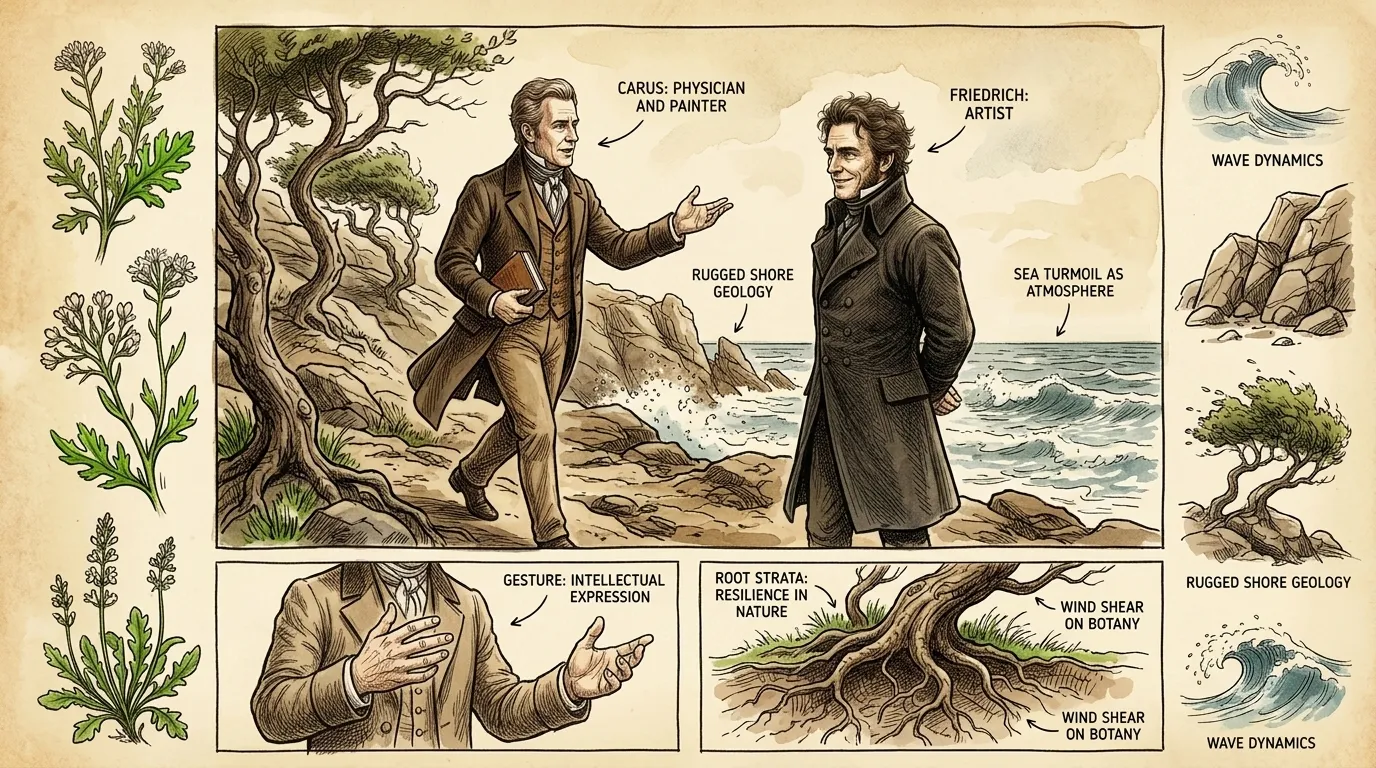
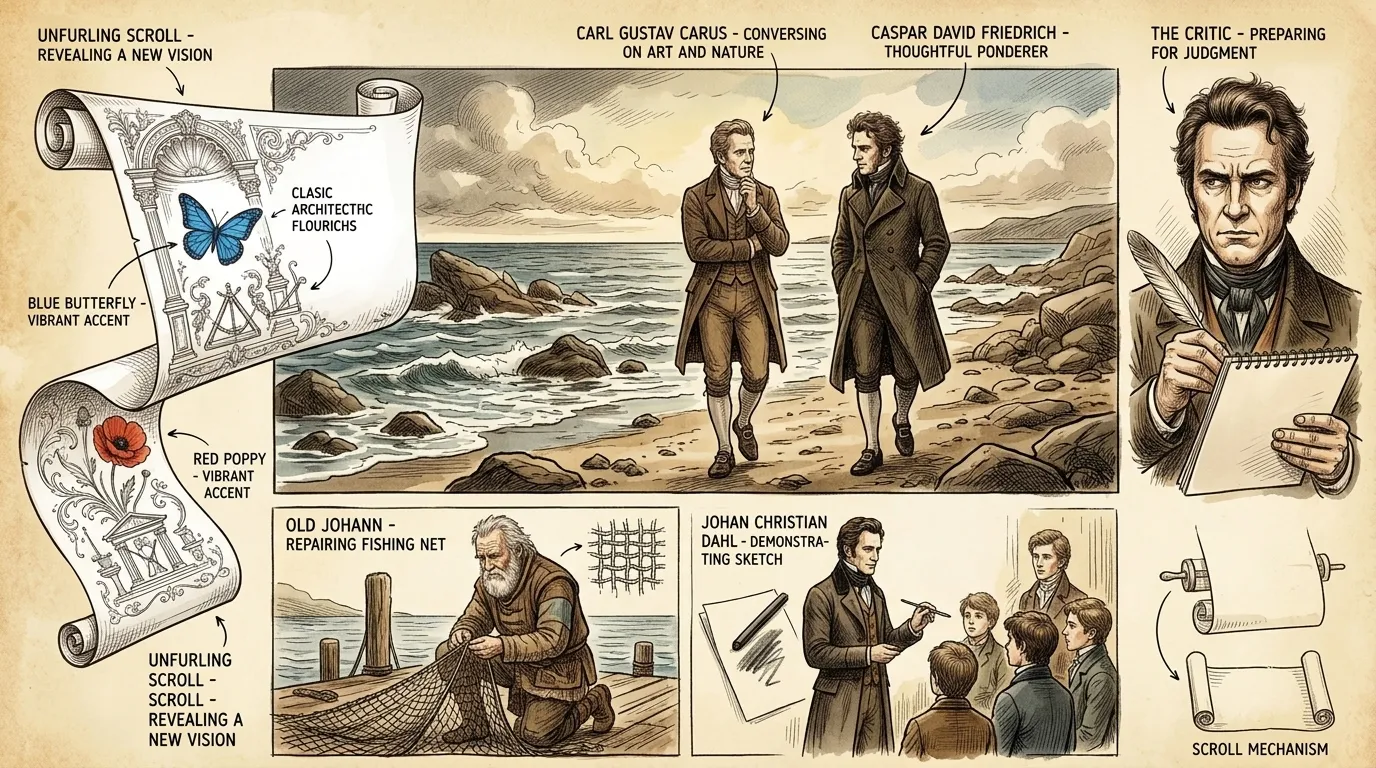
Friedrich encounters Carl Gustav Carus, a physician and amateur painter, who becomes a friend and intellectual companion. They discuss the relationship between art, nature, and the human soul. The human and natural worlds.
"Carus, pacing along the shore, proclaims, "'Art does not reproduce the visible; rather, it makes visible,' as Paul Klee wisely said. Your monk, Friedrich, he is not just a man, but a reflection of the soul's yearning for the infinite.""
Art Fact: The intellectual and artistic exchange between Friedrich and Carus deepened Friedrich's understanding of his own artistic vision.
Page 7
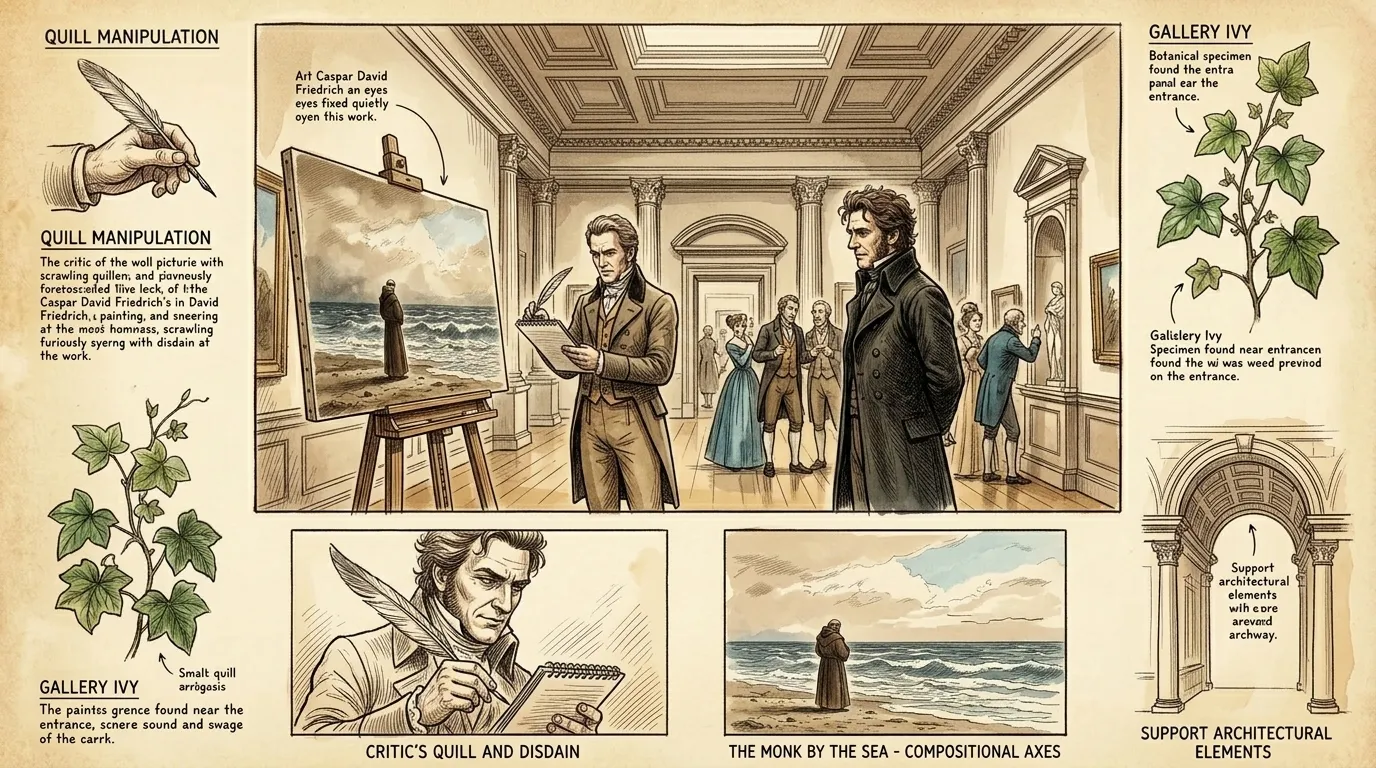
Friedrich's paintings, including 'The Monk by the Sea,' are met with mixed reactions. Some critics praise his originality, while others deride his stark simplicity and perceived lack of skill. Some see nothing in it.
"A critic, quill in hand, sneers, "'The painting is nothing more than a bleak expanse! It is an emotional wasteland!'" Friedrich sighs. "'Every portrait that is painted with feeling is a portrait of the artist, not of the sitter,' Oscar Wilde once said. They see only emptiness because that is what they bring with them.""
Art Fact: The controversial reception of Friedrich's art solidified his reputation as a radical and unconventional artist.
Page 8
Page 9
Page 10
About this story
- Location: Germany
- Audience: general readers
Read Wonder Arts on your phone
Wonder Arts is available on Android. Get Wonder Arts on Google Play.
More Wonder Arts stories
- The Night Café by Vincent van Gogh (Arles, France — 1888)
- The Night Watch — Amsterdam, Netherlands — 1642
- The Night Watch by Rembrandt van Rijn (Amsterdam, Netherlands — 1642)
- The Nightmare by Henry Fuseli (London, UK — 1781)
- The Origin of the World by Gustave Courbet (France — 1866)
- The Oxbow by Thomas Cole (USA — 1836)