The Night Café by Vincent van Gogh (Arles, France — 1888)
The Night Café by Vincent van Gogh (Arles, France — 1888) — an illustrated arts story, set in France. 10 illustrated pages, free to read on Wonder Arts.
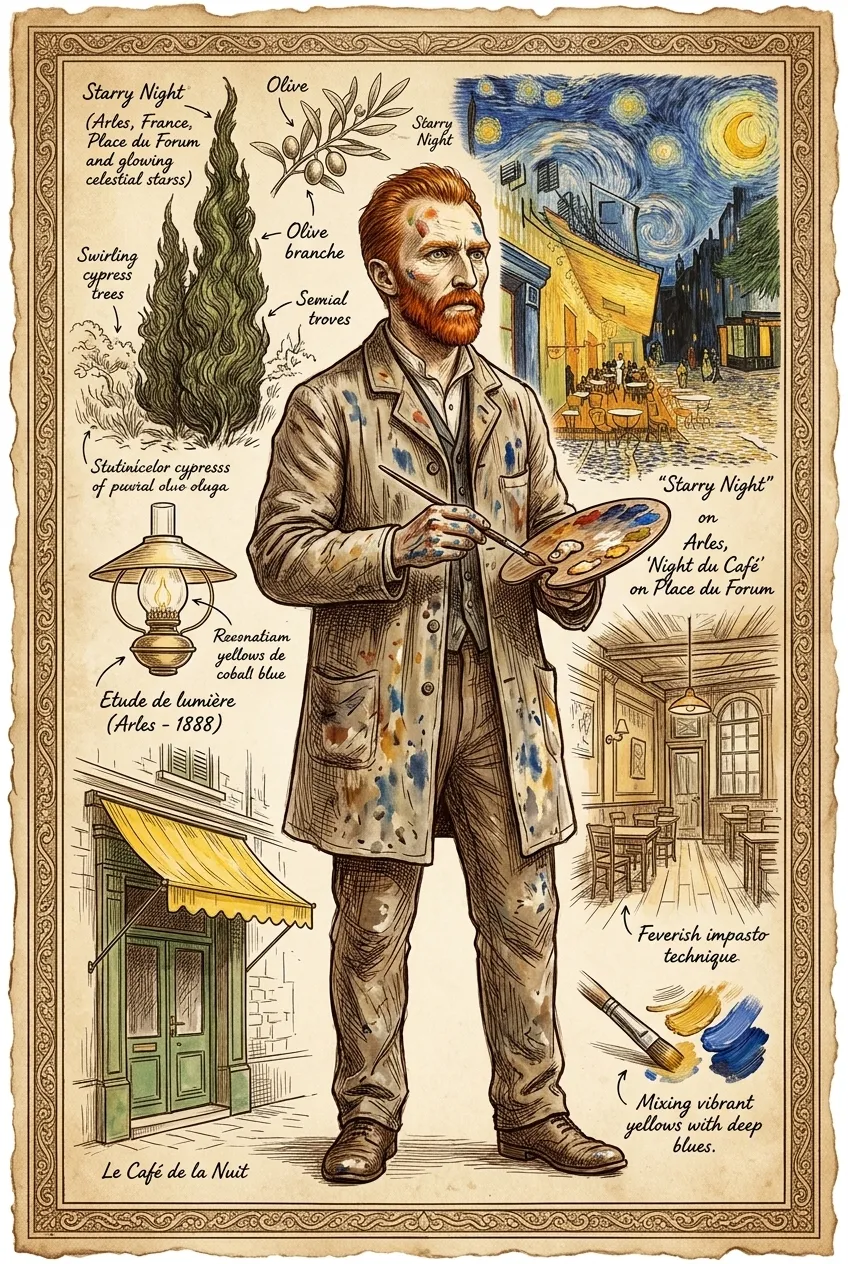
Page 1
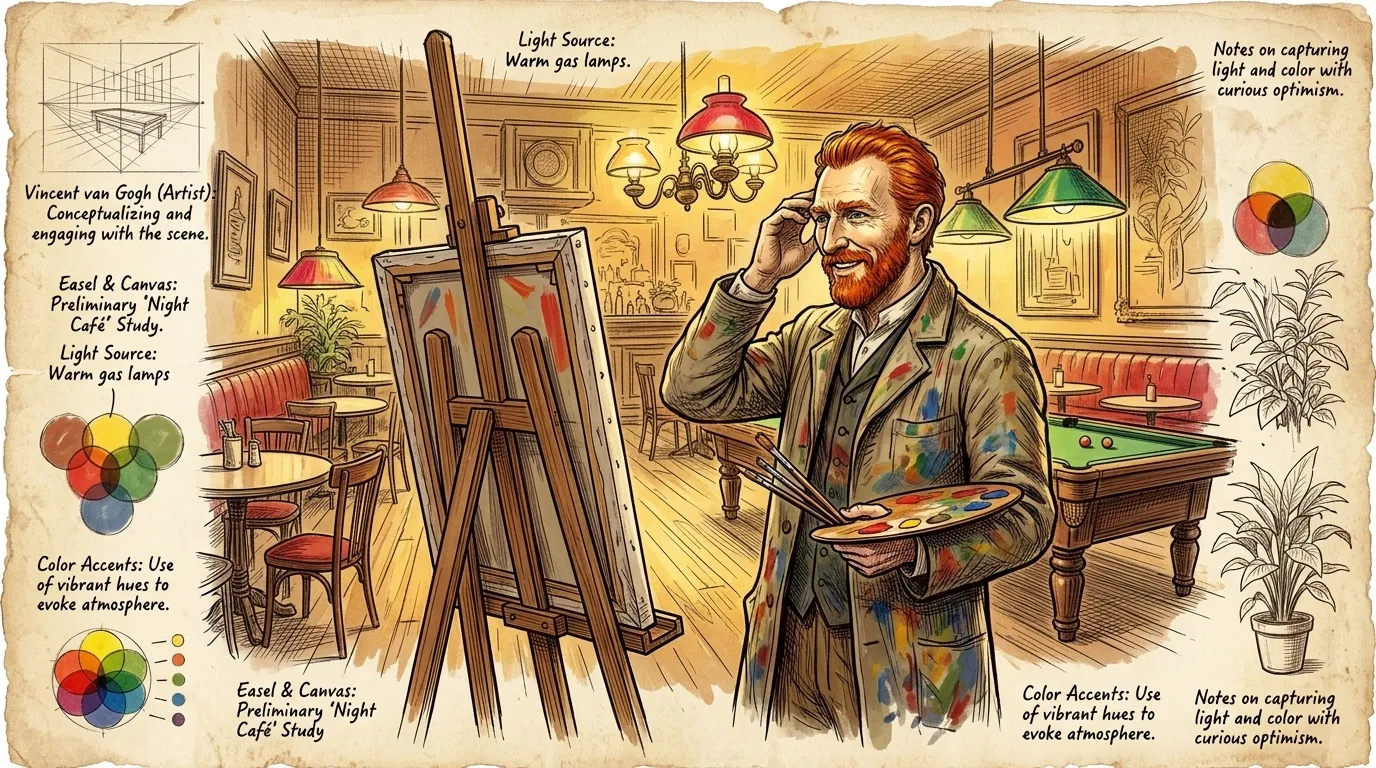
In Arles, 1888, Vincent van Gogh stood before his canvas, 'The Night Café,' a painting now residing at Yale University Art Gallery. Its bold colors and unsettling atmosphere captured a place where, as he said, one could ruin oneself. The painting, measuring 27.6 inches high and 35 inches wide, was more than just a café; it was a confession of the artist's tormented soul, a space teeming with a palpable sense of despair and loneliness.
"Van Gogh muttered to himself, 'Is this what it feels like to be on the verge of madness?' He grabbed his head with both hands; paint was smeared across his forehead."
Art Fact: The Night Café's composition is deliberately jarring, using contrasting colors to evoke tension. The painting's psychological impact is as significant as its artistic technique.
Page 2
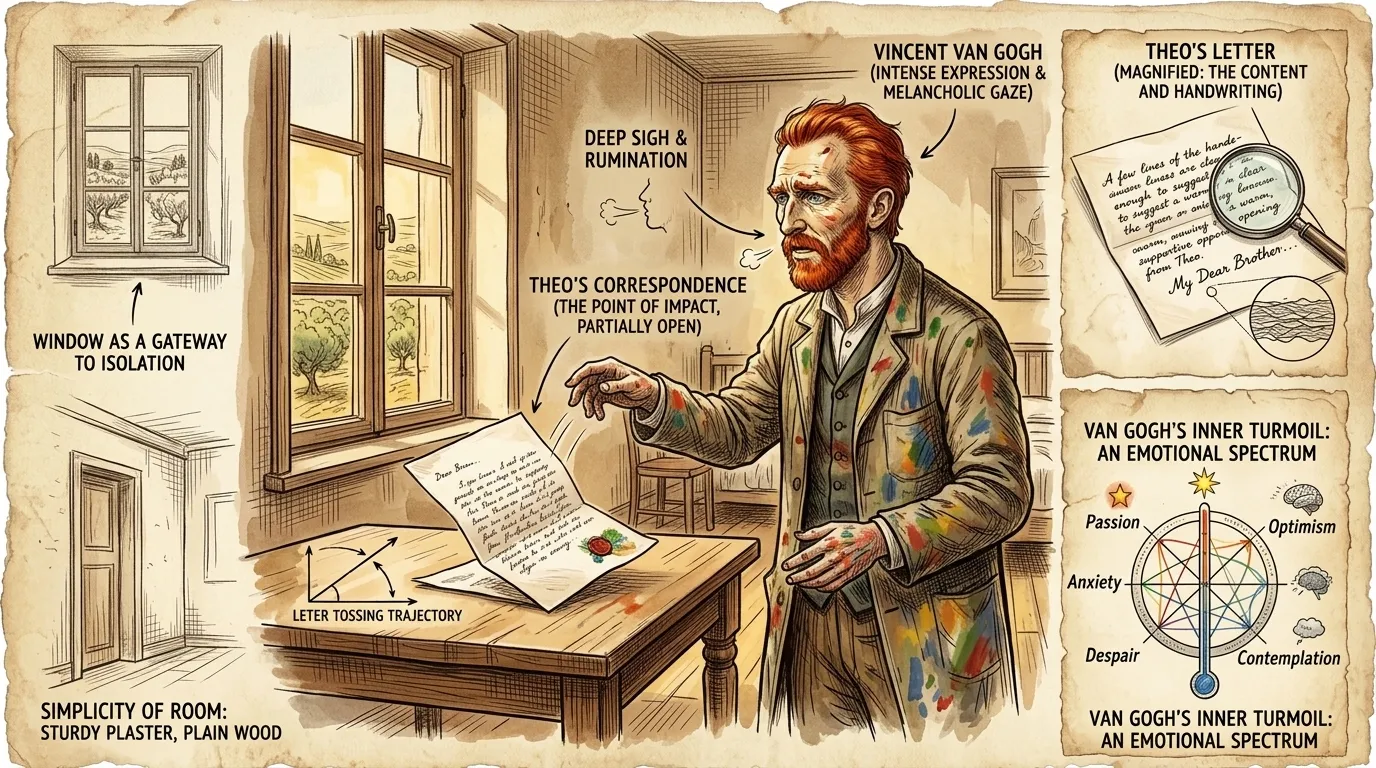
A letter arrived from Theo, Vincent's brother and confidant. Theo's words, while supportive, hinted at his own financial struggles and the limited prospects for Vincent's art. It was a blow that deepened Van Gogh's sense of isolation and fueled his artistic fire. He sighed, tossing the letter onto a nearby table.
""'The artist,' as Oscar Wilde said, 'is the creator of beautiful things.' But what if no one sees the beauty, Theo? What if they only see madness?" Van Gogh mumbled to himself, staring out the window."
Art Fact: Theo van Gogh provided Vincent with both emotional and financial support throughout his life. His letters offer invaluable insights into Vincent's state of mind.
Page 3
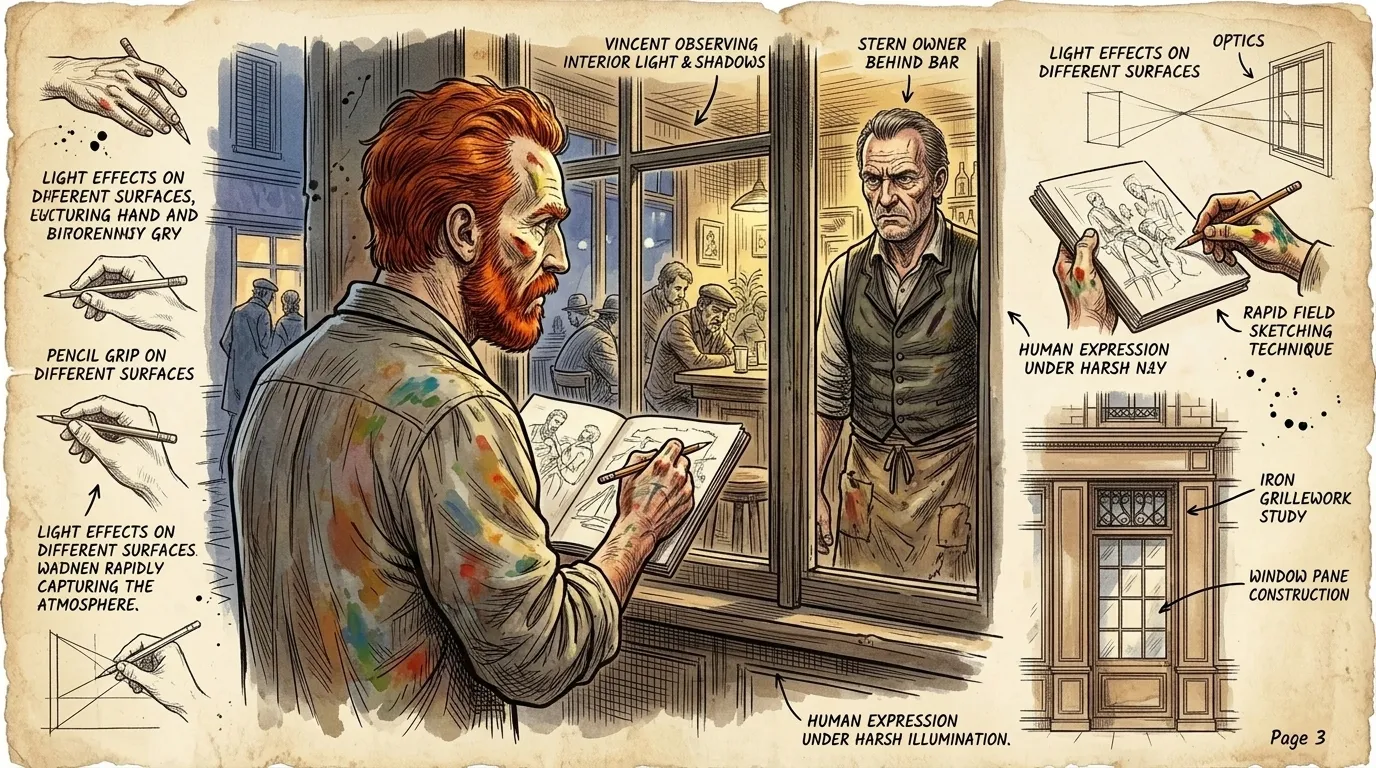
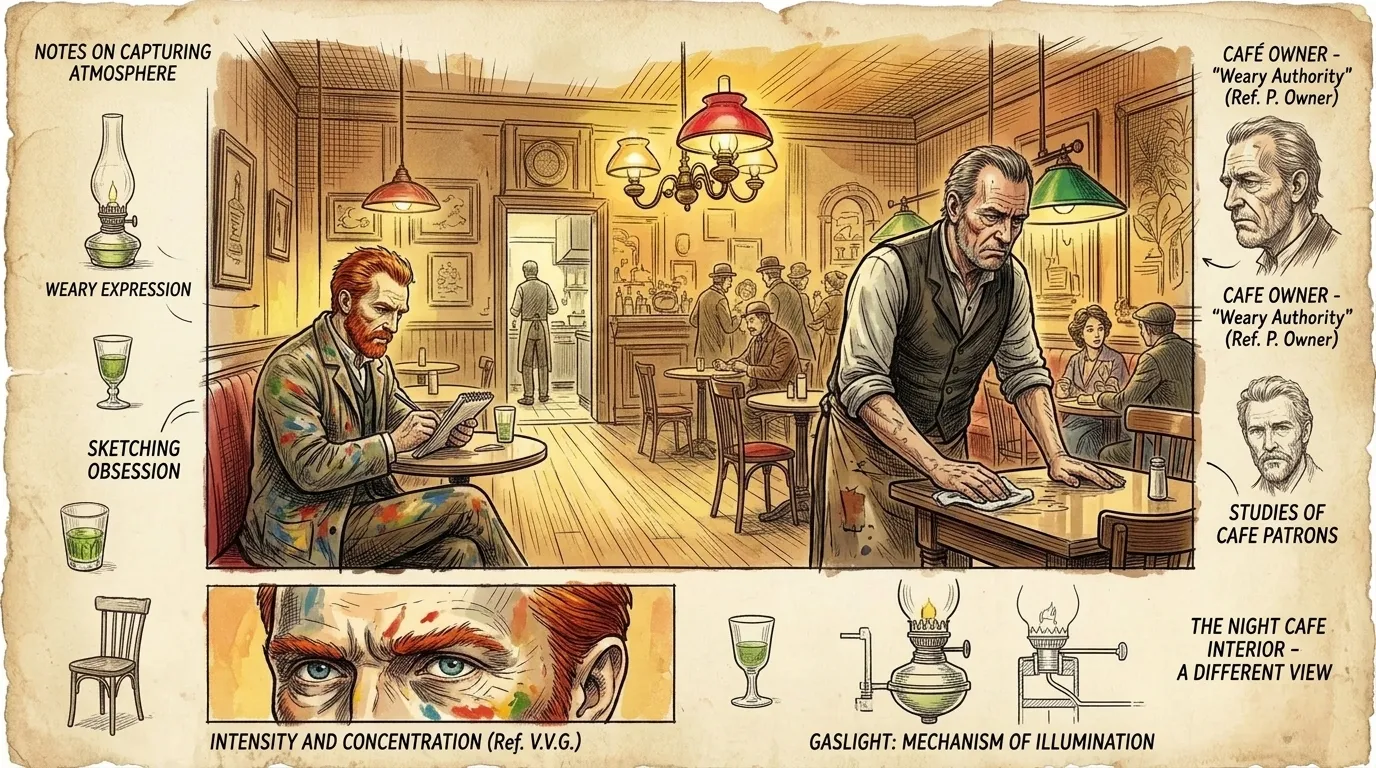
Van Gogh found himself drawn to the local night café, a place of refuge for the lonely and the lost. The harsh lighting and the weary patrons became subjects of intense fascination. As he looked into the café, he began drawing the people at the tables in his notebook, sketching rapidly.
""This place... it's a haven for souls adrift," Van Gogh murmured, sketching rapidly. He looked at the café owner. "And for that, it is a great place to study and find great beauty within human form.""
Art Fact: Van Gogh sought to capture the raw reality of life, often focusing on subjects considered unappealing by other artists.
Page 4
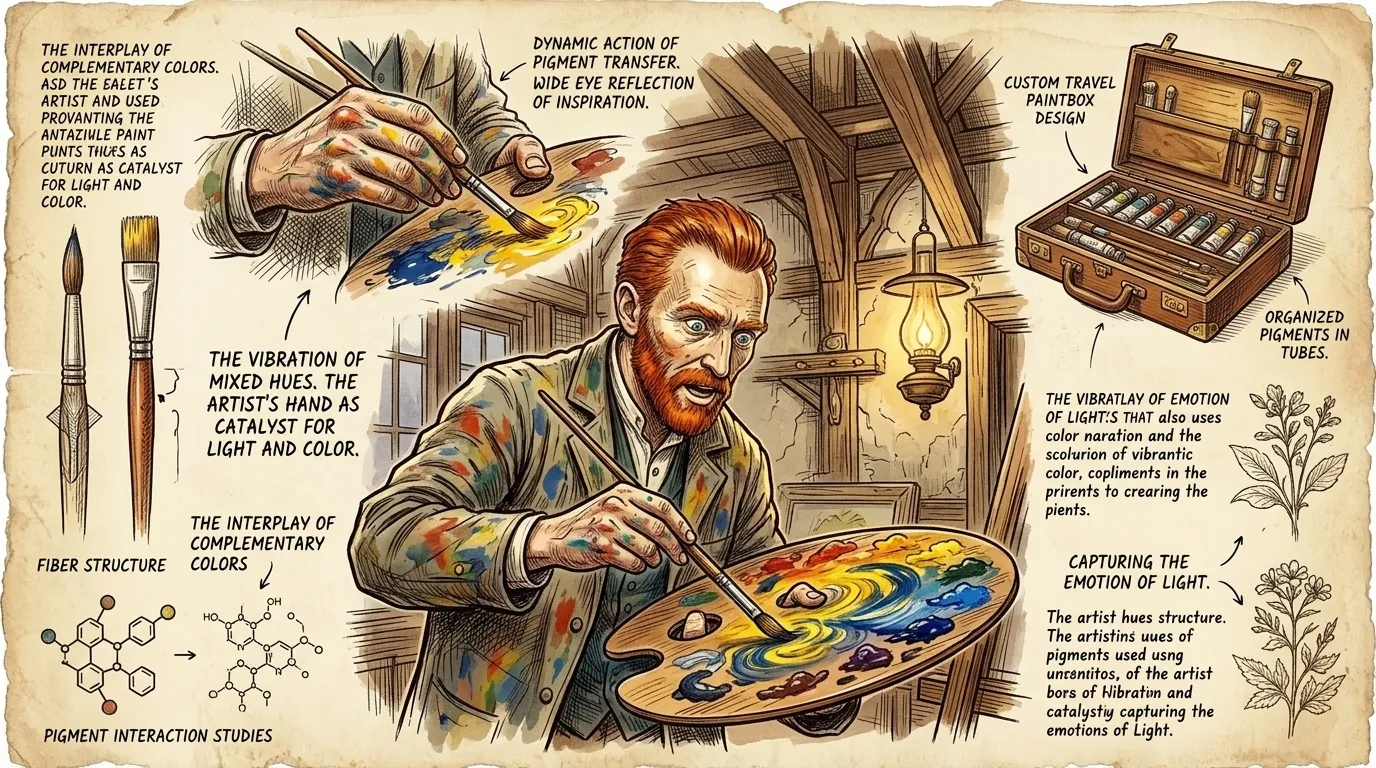
One evening, while observing the café, Van Gogh had a revelation about color. He began to see how contrasting shades could evoke powerful emotions. The vibrant yellows of the gas lamps against the deep blues of the night sky sparked a new direction in his work. He mixed his paints, eyes widening as he began to see new patterns forming as he brushed his art.
""I see it now!" Van Gogh exclaimed, mixing his paints with feverish energy. "As Monet said, 'Color is my day-long obsession, joy and torment.' Yes, it is all in the blending!""
Art Fact: Van Gogh's use of color was highly symbolic, often reflecting his emotional state. Yellow, in particular, held both positive and negative connotations for him.
Page 5
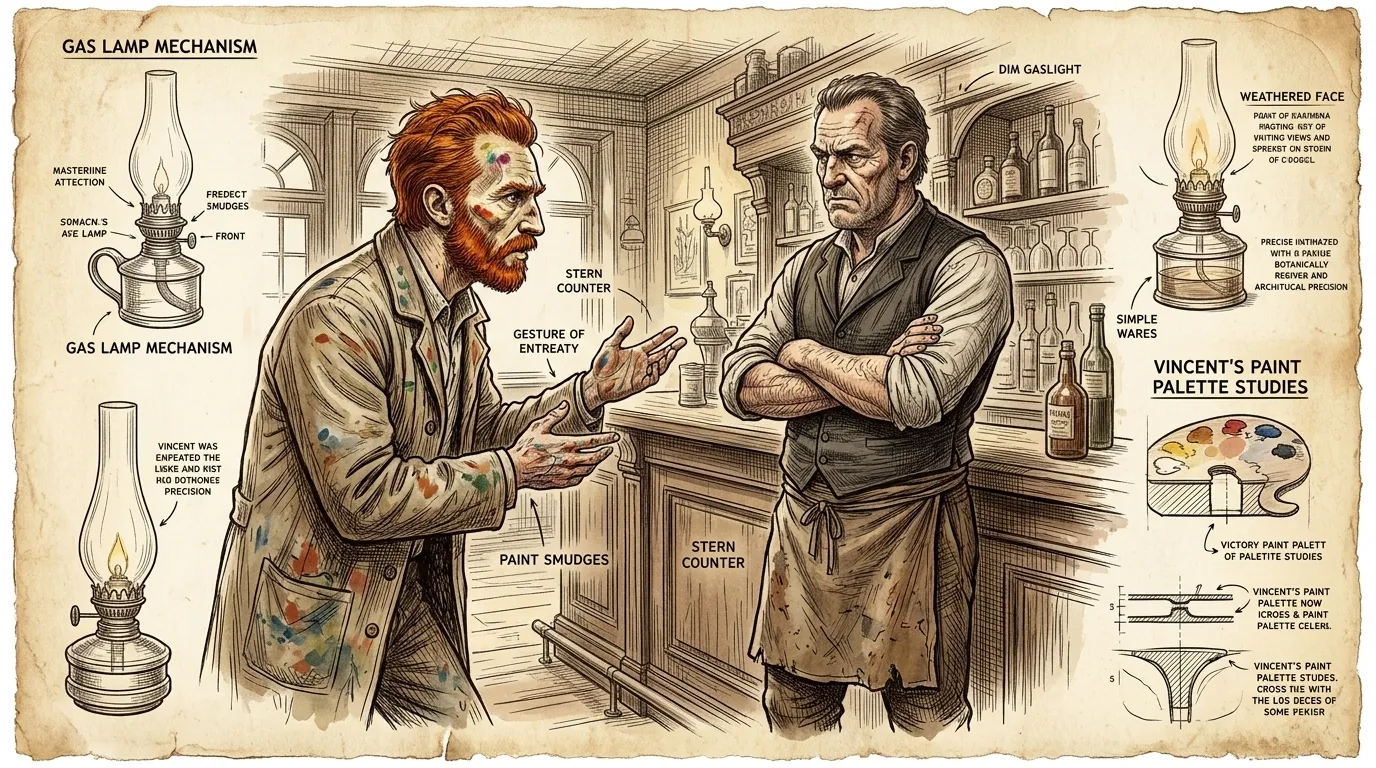
The café owner, a stern and imposing figure, became a central subject in Van Gogh's developing composition. His presence exuded a sense of weary authority, a man hardened by life's struggles. It was he who ran the café where Vincent spent many nights.
"Van Gogh approached the café owner cautiously. "Monsieur," he began, "your face tells a story of a thousand sleepless nights. May I paint your portrait? As Plato said, 'Beauty lies in the eyes of the beholder.' Your eyes are very striking.""
Art Fact: The figures in 'The Night Café' are often interpreted as symbols of human isolation and despair.
Page 6
Page 7
Page 8
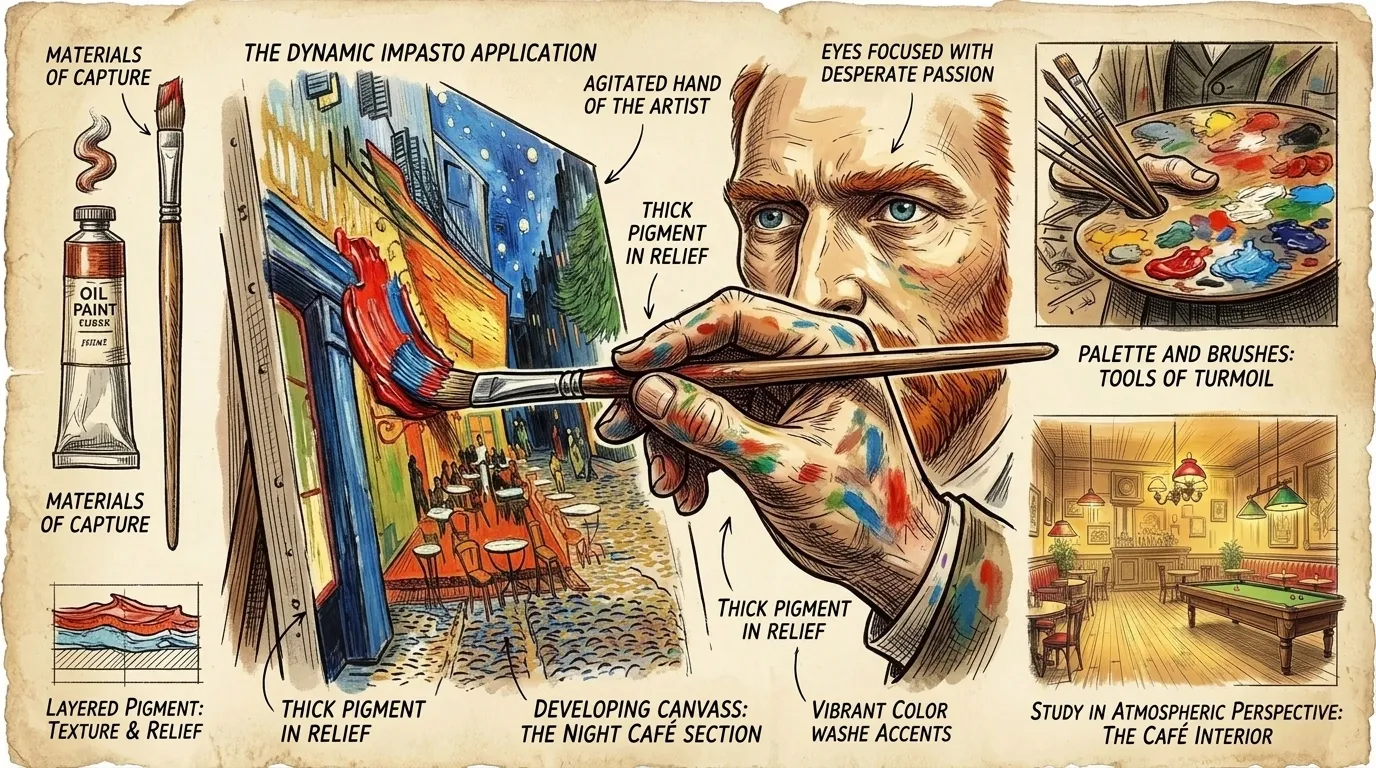
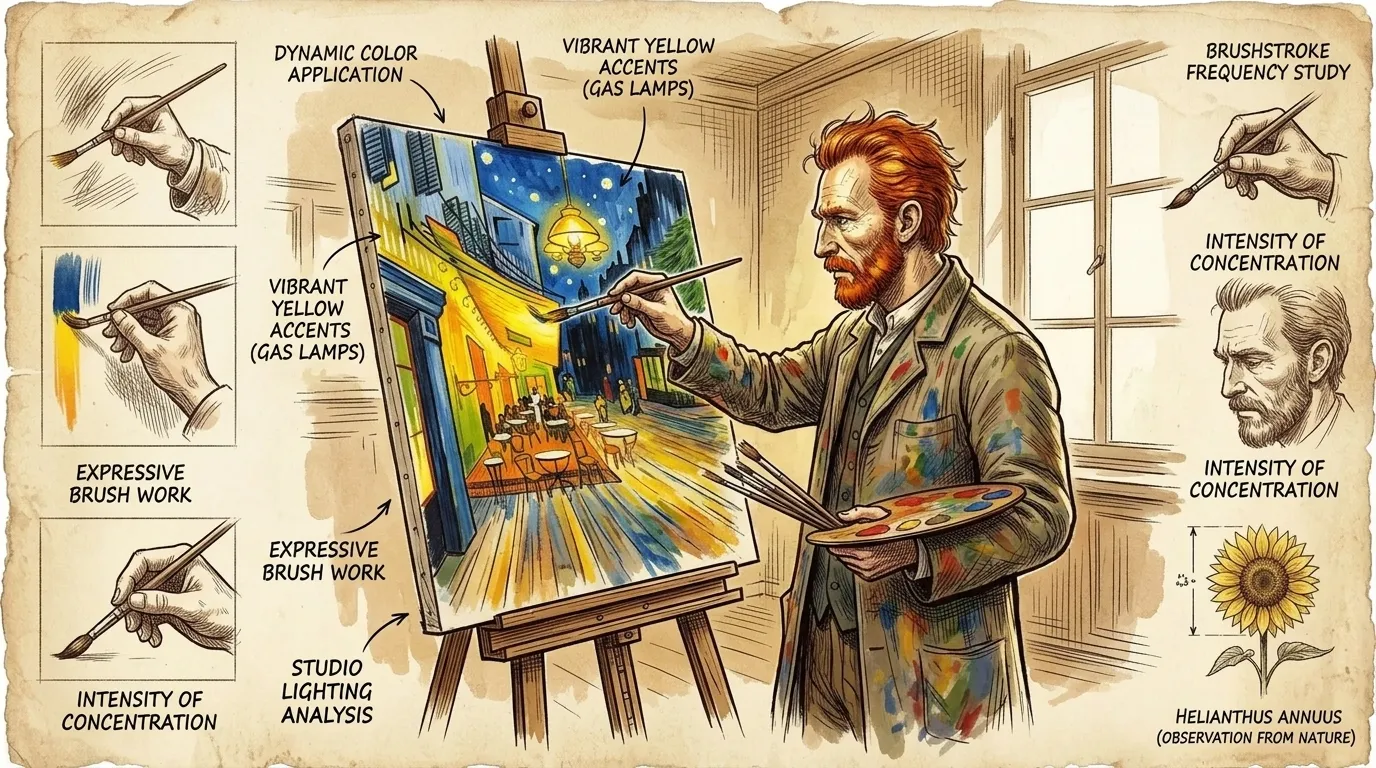
The thick, impasto brushstrokes added another layer of intensity to the painting. Each stroke seemed to convey Van Gogh's agitated state of mind, a physical manifestation of his inner turmoil.
""The brush must dance to the rhythm of my despair!" Van Gogh said passionately. "As Rodin said, 'Art is the suppression of all human feelings.'""
Art Fact: Van Gogh's impasto technique is a hallmark of his expressionistic style, conveying a raw and visceral sense of emotion.
Page 9
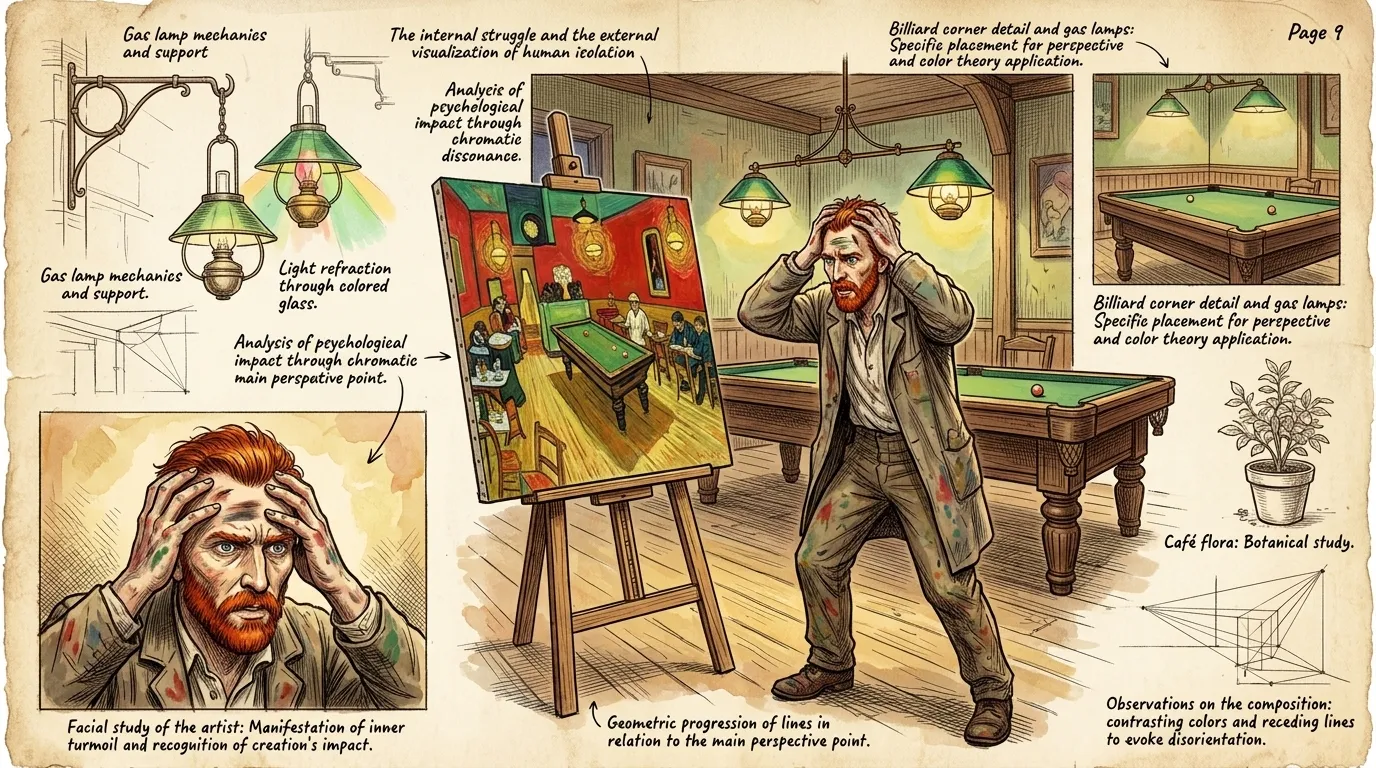
Finally, 'The Night Café' was complete. Van Gogh stood back to survey his creation, a painting that revealed the dark depths of his soul. It was a confession, a cry for help rendered in color and form.
"He looks at his painting and grabs his head with both hands, overwhelmed by its impact and what it reveals about his inner state. As he touches his forehead, he smudges paint across it. "It is me... staring back at me!""
Art Fact: 'The Night Café' is considered one of Van Gogh's most important works, capturing the intensity of his emotional and psychological state.
Page 10
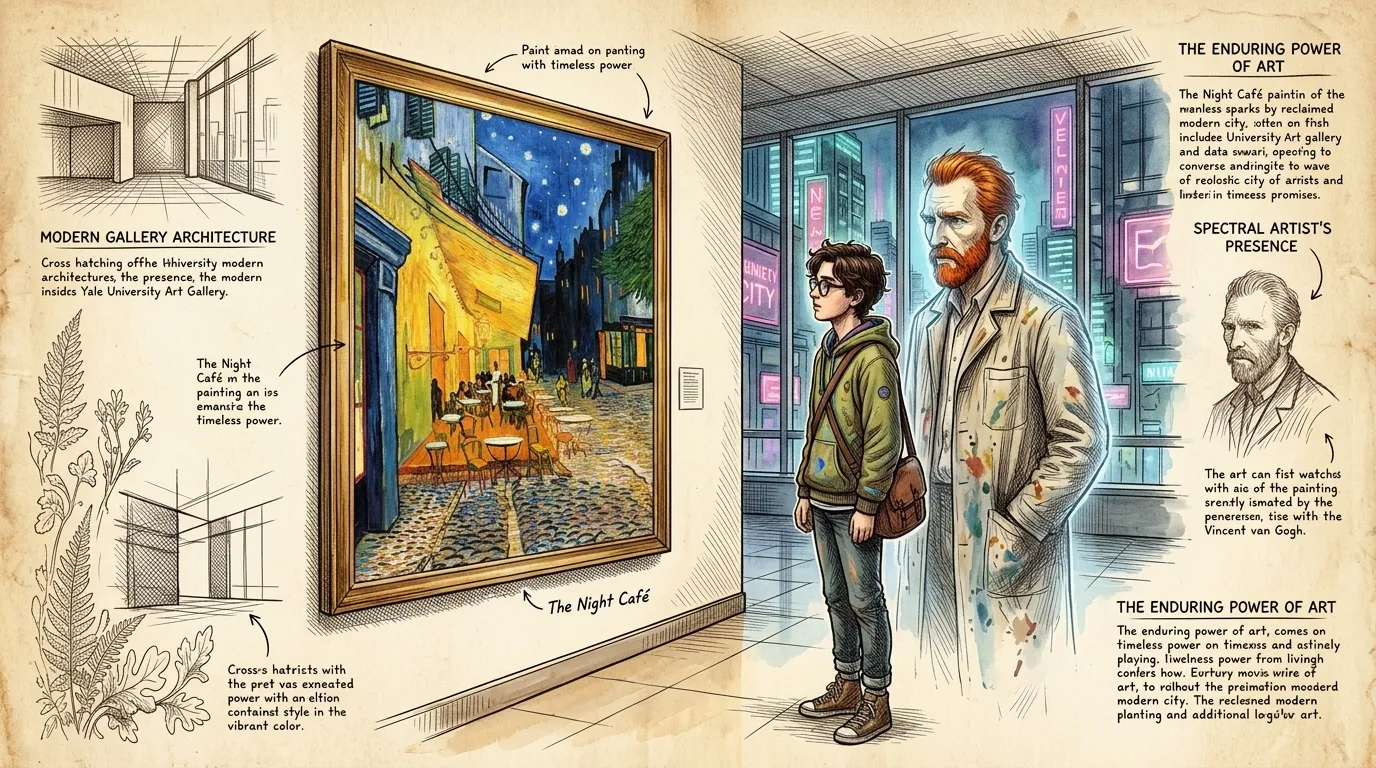
Today, 'The Night Café' continues to resonate with viewers, its power undiminished by time. The painting serves as a testament to Van Gogh's genius and the enduring power of art to express the deepest human emotions. It's in Yale University Art Gallery for all to admire.
"Van Gogh's ghostly silhouette watches over a modern art student as he looks, transfixed by the vivid colors of The Night Café. The painting looks out over the museum as the neon reclaimed city shines through the windows. Van Gogh is a legend forevermore."
Art Fact: Van Gogh's influence on modern art is undeniable, and 'The Night Café' remains one of his most iconic and influential works. The painting speaks to the timeless human experience of loneliness and despair.
About this story
- Location: France
- Audience: general readers
Read Wonder Arts on your phone
Wonder Arts is available on Android. Get Wonder Arts on Google Play.