Mona Lisa
Mona Lisa — an illustrated arts story, set in Global. 10 illustrated pages, free to read on Wonder Arts.

Page 1
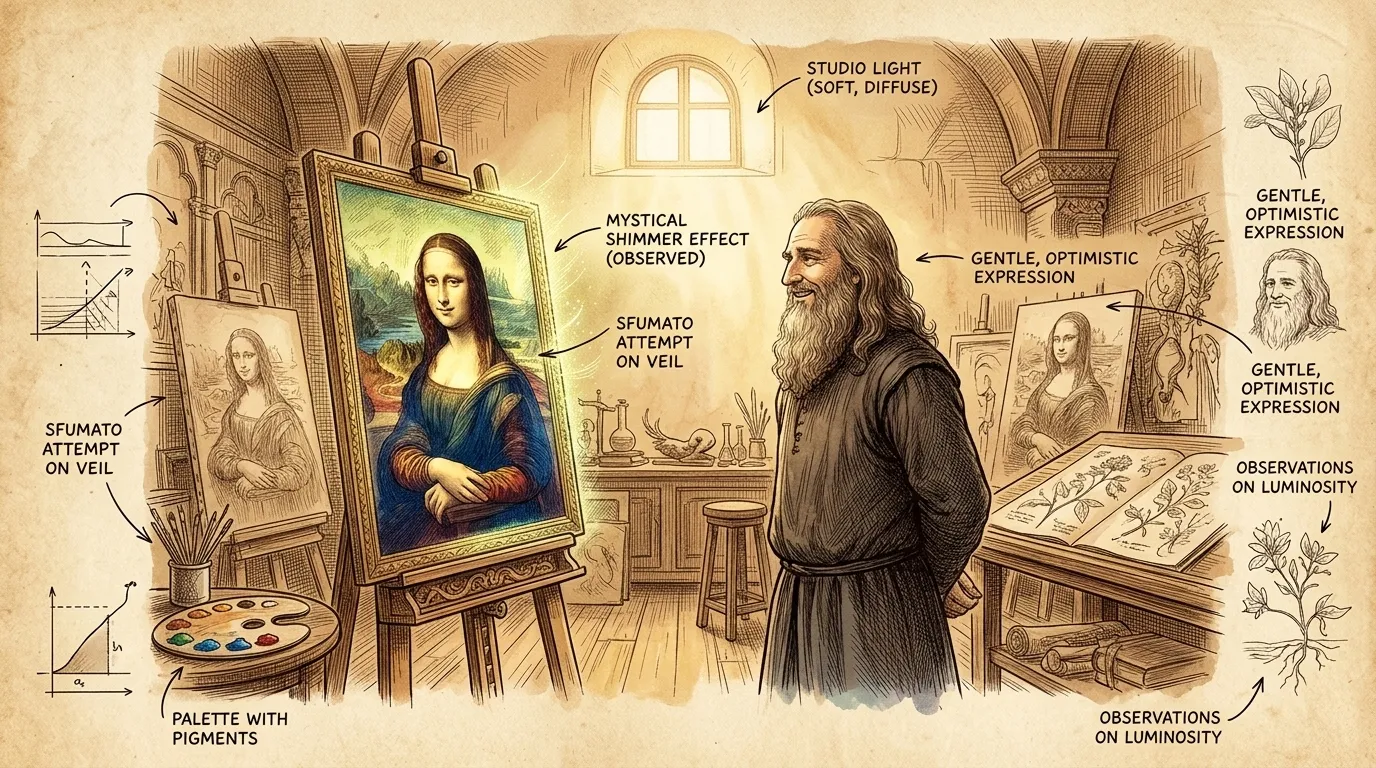
Amidst the whispers of the Florentine Renaissance, a masterpiece emerged from the hands of a polymath, destined to become the most recognized artwork in human history. Leonardo da Vinci, the undisputed genius, had captured more than a likeness; he had imbued a wooden panel with an essence of life itself, a gaze that would follow generations.
""She lives," Leonardo murmured, his voice a low thrum in the quiet studio. "The very air around her breathes with her presence.""
Art Fact: Artist: Leonardo da Vinci
Artwork: Mona Lisa (La Gioconda)
Year: c. 1503-1506
Location: Florence, Italy, now at the Musée du Louvre, Paris
Medium: Oil on poplar panel
Dimensions: 77 cm x 53 cm (30 in x 21 in)
Extraordinary Fact: The painting's estimated insured value is over 860 million, making it the most valuable painting in the world.
Page 2
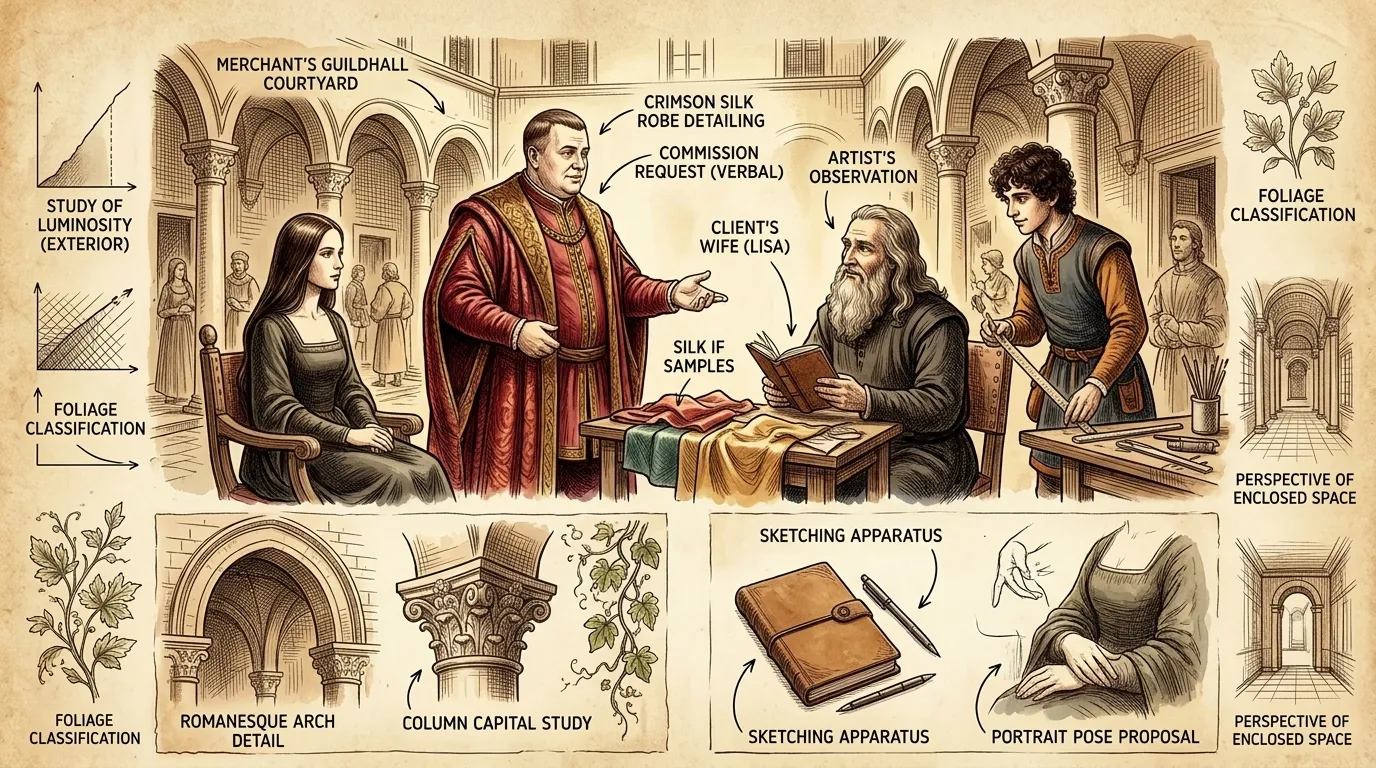
Florence, 1503. The city hummed with commerce and artistic ambition. Francesco del Giocondo, a prosperous silk merchant, sought a portrait of his wife, Lisa Gherardini, to celebrate their new home and the birth of their second son. The commission arrived at a pivotal moment for Leonardo, who, despite his fame, often struggled to complete projects, his restless mind always chasing new inquiries.
""Maestro Leonardo," Francesco del Giocondo, a portly man in luxurious crimson robes, stated, "my wife, Lisa, requires a likeness. One befitting her grace and our family's standing." Leonardo, sketching in a leather-bound notebook, looked up. "A likeness, you say? What truly lies beneath the surface, Messer Giocondo, is the enduring challenge.""
Art Fact: Francesco del Giocondo, a wealthy Florentine merchant, commissioned the portrait of his wife, Lisa Gherardini, to commemorate their new home and the birth of their second son. The commission was likely initiated in 1503.
Page 3
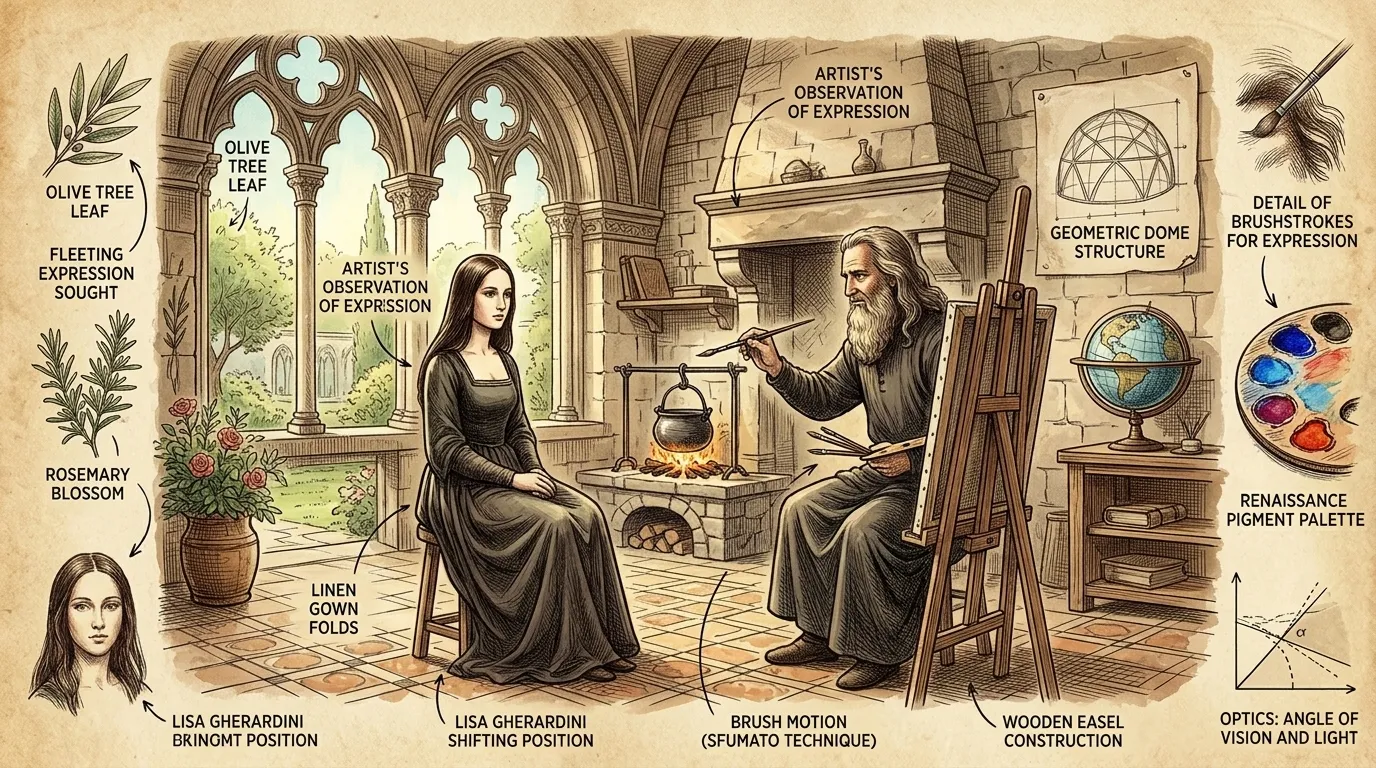
The early sittings began, but Lisa Gherardini proved a reserved subject. Leonardo found her composure a fascinating enigma, her expressions subtle and fleeting. Traditional portraiture, with its rigid poses and direct gazes, seemed inadequate for capturing the nuanced vitality he sought. He began to explore subtle shifts in light and shadow, to suggest rather than define emotion.
""Hold that thought, Signora Lisa," Leonardo instructed gently, his brow furrowed as he observed her. "The light catches a fleeting expression, a hint of amusement. These are the threads of true feeling." Lisa Gherardini, a young woman in her early 20s, dressed in a dark gown, shifted slightly on her stool. "Maestro, one might wonder if you seek a ghost more than a portrait.""
Art Fact: Early sittings likely involved conventional poses, which Leonardo soon found insufficient for capturing the complex psychological depth he envisioned. He started to move beyond simple likeness, searching for the 'motion of the mind'.
Page 4

Leonardo's mind was not confined to the studio. His studies of geology and hydraulics, his fascination with the flow of water and the erosion of mountains, deeply influenced the atmospheric landscape that would become integral to the Mona Lisa. This fantastical, almost otherworldly background was not merely scenery; it was a psychological extension of the sitter, a dreamscape born of the artist's boundless curiosity.
"Observing the turbulent Arno River, Leonardo mused aloud, "Nature is the supreme teacher, revealing how forms melt into air, how light scatters through moisture. A face is but a landscape of bone and spirit." His apprentice, Salai, a young man with curly hair, simply nodded. "Such vastness, Maestro. Will a portrait truly contain it?""
Art Fact: Leonardo's profound scientific studies of geology, cartography, and meteorology, particularly his observations of the Arno River valley, informed the ethereal, almost fantastical landscape in the Mona Lisa, grounding it in natural phenomena while elevating it to a symbolic realm.
Page 5
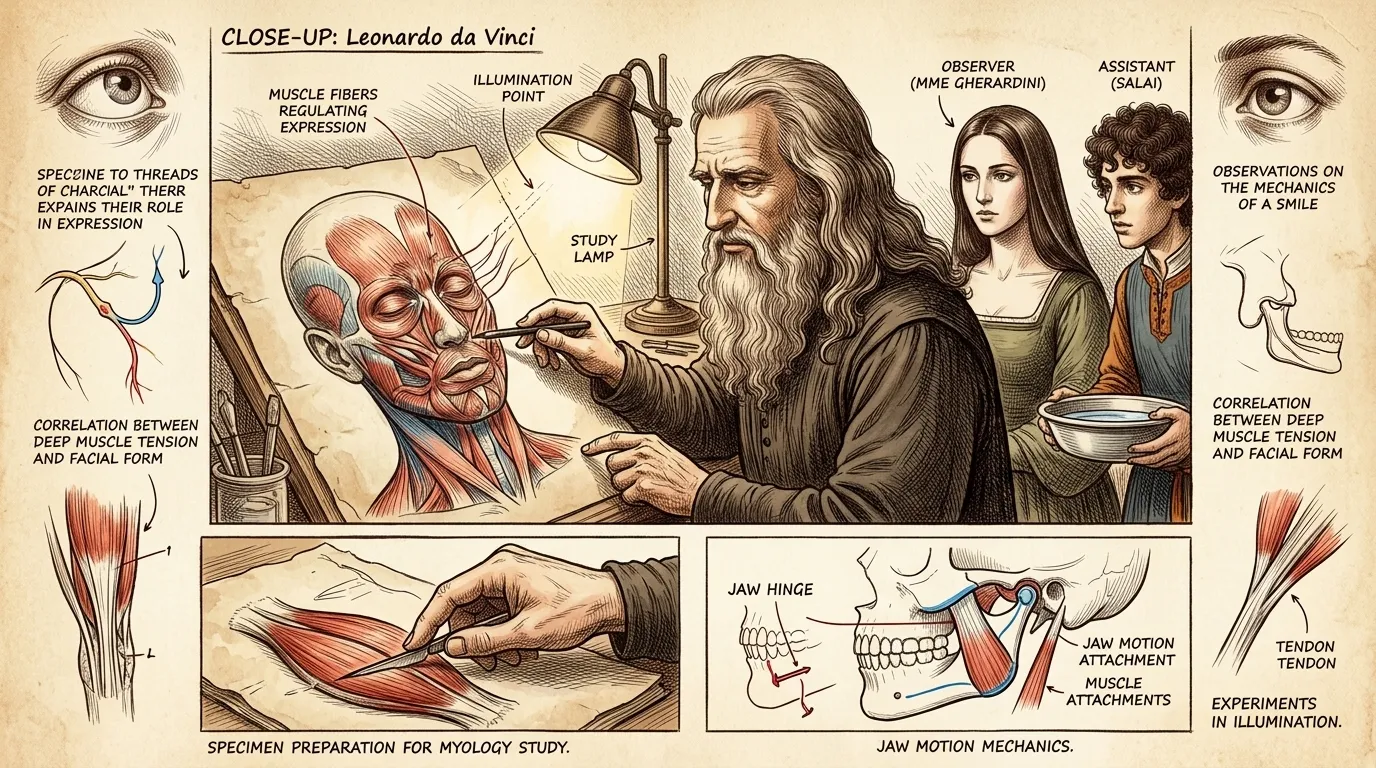
To truly capture the 'living' face, Leonardo delved into human anatomy with an unprecedented intensity. He dissected cadavers, sketching the intricate musculature of the face, understanding how each muscle contributed to expression. This scientific rigor, combined with his artistic vision, allowed him to render the subtle contractions that form a smile, imbuing it with a startling realism that few contemporaries could achieve.
"Leaning over a detailed anatomical drawing, Leonardo explained to an unseen assistant, "Observe these delicate threads, these muscles that pull the lip, that crease the eye. The slight tension here, the relaxation there—this is the secret to a smile that dances on the edge of perception." He pointed with a charcoal stick. "As the great Roman architect Vitruvius declared, 'For without symmetry and proportion, no temple can have a regular plan.' And so it is with the human face.""
Art Fact: Leonardo's extensive anatomical studies, particularly of the human head and its musculature, were foundational to his ability to render such lifelike and psychologically complex expressions. His understanding of how muscles create smiles, frowns, and gazes was unparalleled.
Page 6
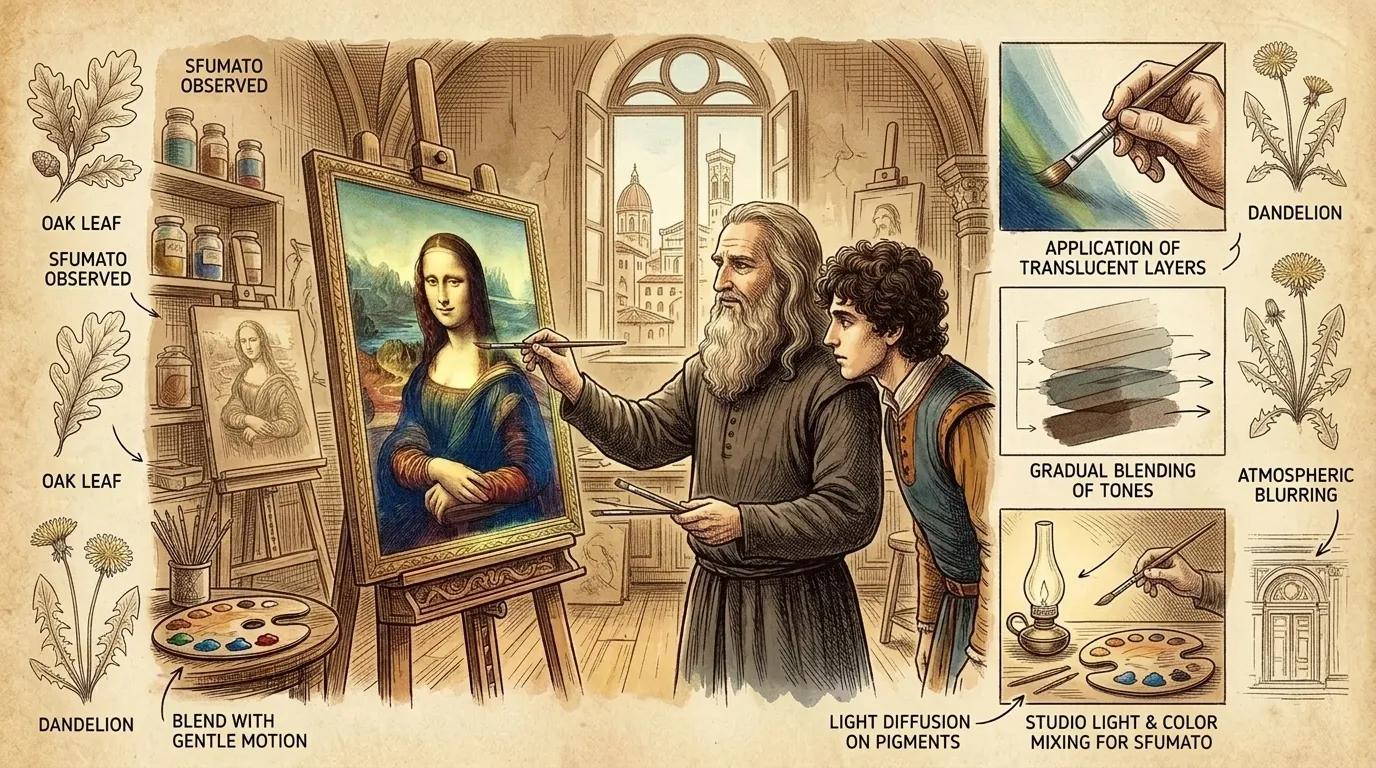
The true genius of the Mona Lisa lies in Leonardo's revolutionary use of sfumato, a technique of applying translucent layers of oil paint so finely blended that colors and tones melt into one another without discernible lines. This created an atmospheric haze, blurring the outlines, especially around the eyes and mouth, allowing for an ambiguity that makes the smile seem to shift, to appear and disappear depending on the viewer's angle and imagination.
""No harsh lines, Messer Salai," Leonardo instructed, his brush moving with almost imperceptible delicacy over the panel. "The eye must wonder where one tone ends and another begins. This blurring... this 'sfumato,' it is the very breath of life itself, capturing what words cannot." Salai, observing intently, whispered, "It is as if she is veiled, yet revealed simultaneously.""
Art Fact: Sfumato, from the Italian 'sfumare' meaning 'to vanish like smoke,' was Leonardo's signature technique. By applying dozens of translucent glazes, he achieved a soft, smoky effect that blurred contours, making the Mona Lisa's expression famously ambiguous and alive.
Page 7
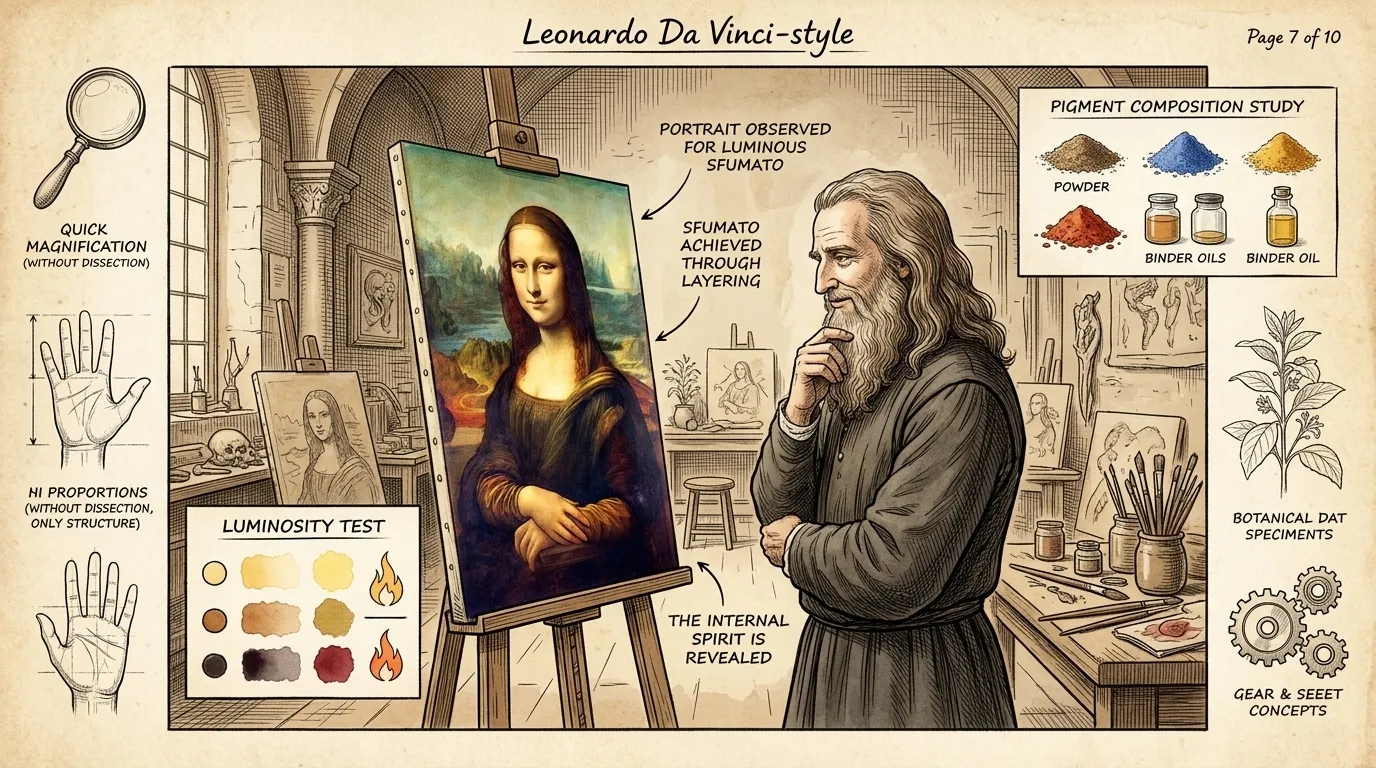
The sfumato technique, applied with surgical precision, transformed the Mona Lisa from a mere portrait into a profound psychological study. The eyes, rendered with astonishing depth and luminosity, seem to follow the viewer, while the corners of the mouth hint at a perpetual, yet unreadable, inner world. This mastery of human expression made the painting transcend traditional portraiture, inviting endless interpretation.
"Standing back from the almost finished canvas, Leonardo pondered, "It is not merely what is seen, but what is felt. The mind fills the gaps, imagines the unspoken. This is the true power of art—to mirror the soul." He then smiled faintly. "As the philosopher Plato taught, 'The unexamined life is not worth living.' And so, an unexamined face holds no truth.""
Art Fact: Leonardo's nuanced application of sfumato, particularly around the eyes and mouth, created an optical illusion where Lisa's smile seems to shift and disappear, engaging the viewer's subconscious and fostering an unparalleled sense of psychological depth and mystery.
Page 8
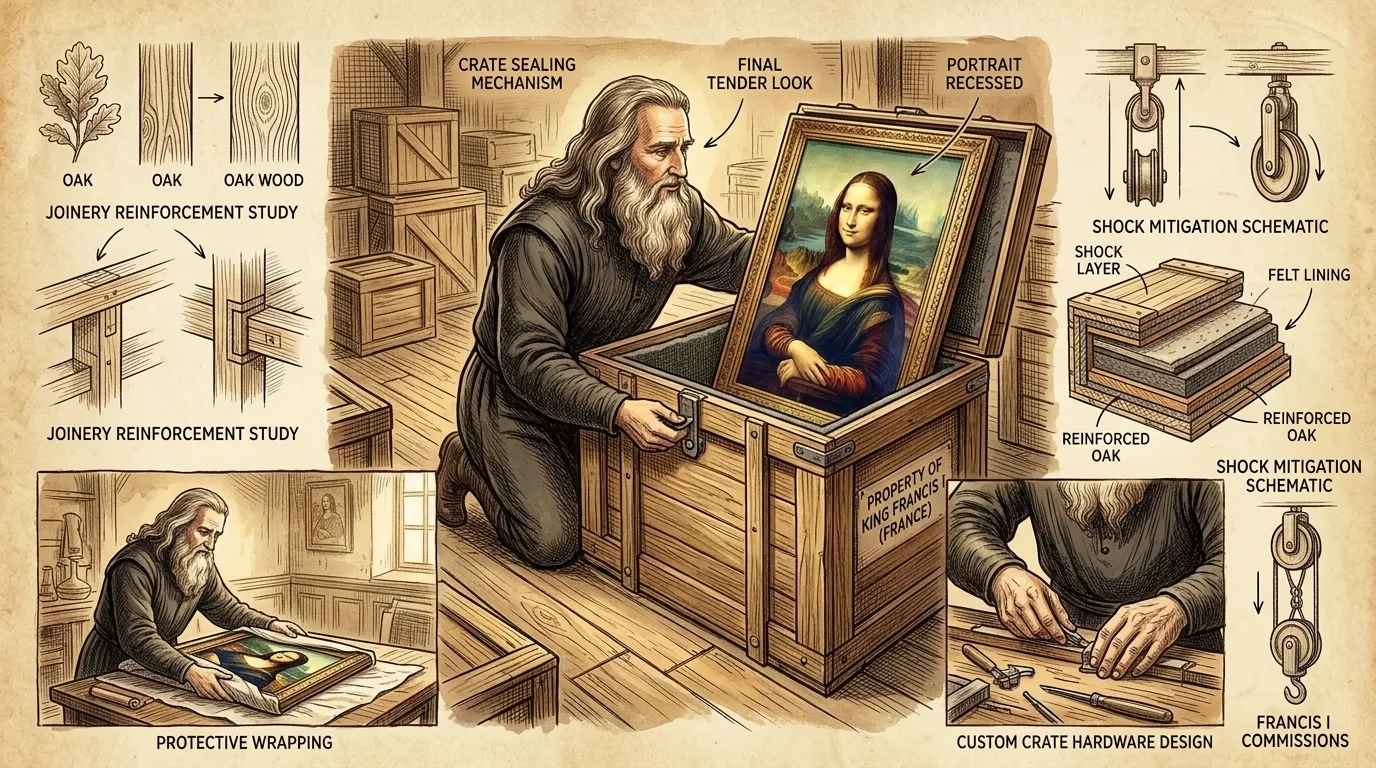
Leonardo spent years on the Mona Lisa, refining every detail, unsatisfied with anything less than perfection. He carried the portrait with him when he left Florence for Milan, and later to France, never quite considering it 'finished.' This meticulous, almost obsessive dedication to capturing the elusive quality of human life in paint, perfected through his innovative sfumato technique, ultimately gave the world a masterpiece unlike any other.
"As he carefully packed the Mona Lisa for transport, Leonardo reflected, "This painting, this gentlewoman, has taught me more than any fresco. To capture the spirit, one must observe without end, and paint without haste." He secured the final latch on the wooden crate. "The journey continues, for both of us.""
Art Fact: Leonardo took the Mona Lisa with him to France in 1516 when he accepted patronage from King Francis I, demonstrating his deep personal connection to the work and his continued refinement of it over many years. It was never formally delivered to the Giocondo family.
Page 9
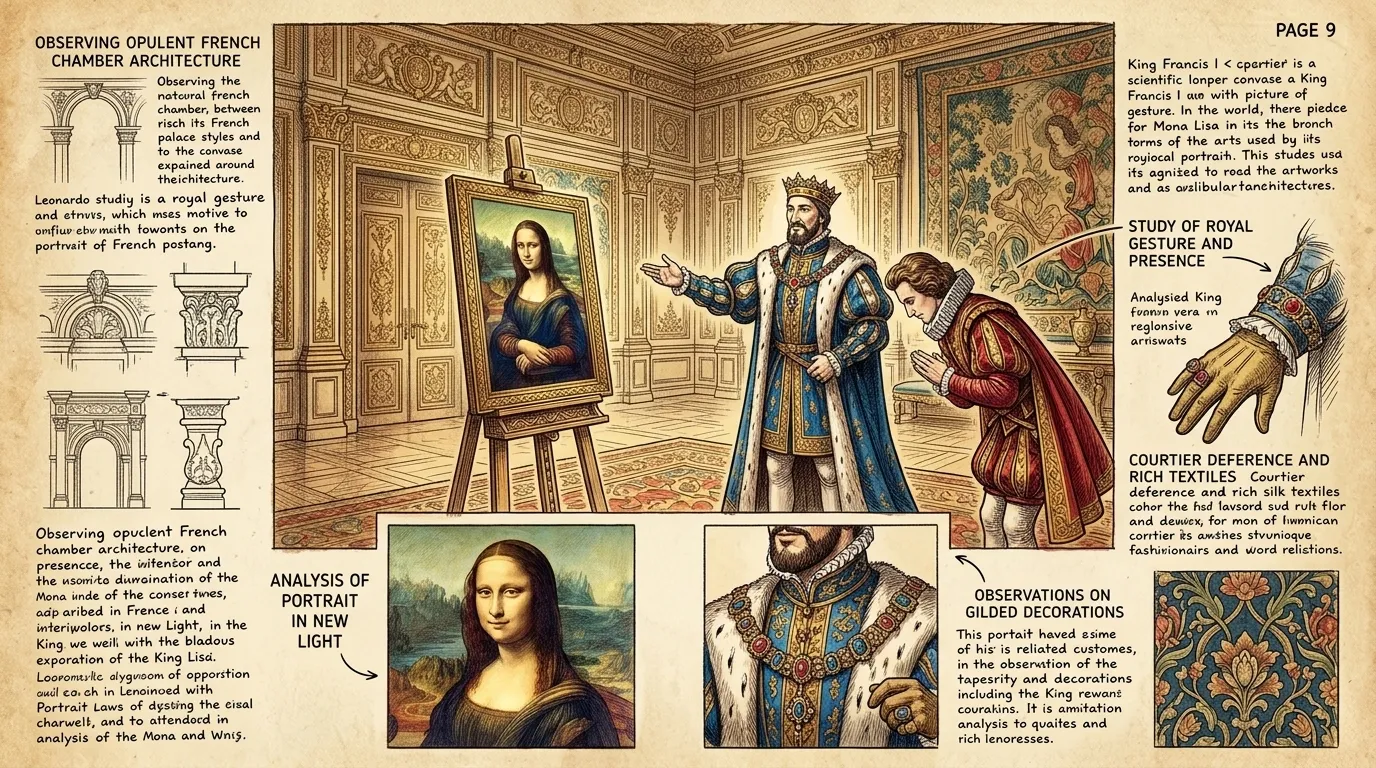
Upon Leonardo's death in 1519, the Mona Lisa became part of King Francis I's personal collection, adorning palaces across France, from Fontainebleau to Versailles. It was admired by royalty and courtiers, a treasured jewel within the French crown. Its journey from a Florentine merchant's commission to a symbol of royal power marked the beginning of its public fascination.
"King Francis I, a regal figure in opulent attire, gestured towards the portrait, "Maestro Leonardo bequeathed this treasure to me. Truly, her beauty transcends all measure, a marvel even amongst my collection." A nearby courtier, clad in rich silks, bowed. "Your Majesty's taste is impeccable. She possesses a living quality unmatched by any other portrait.""
Art Fact: After Leonardo's death, King Francis I acquired the Mona Lisa for his collection, paying 4,000 écus. The painting moved between various royal residences, including Fontainebleau and Versailles, becoming a prized possession of the French monarchy.
Page 10
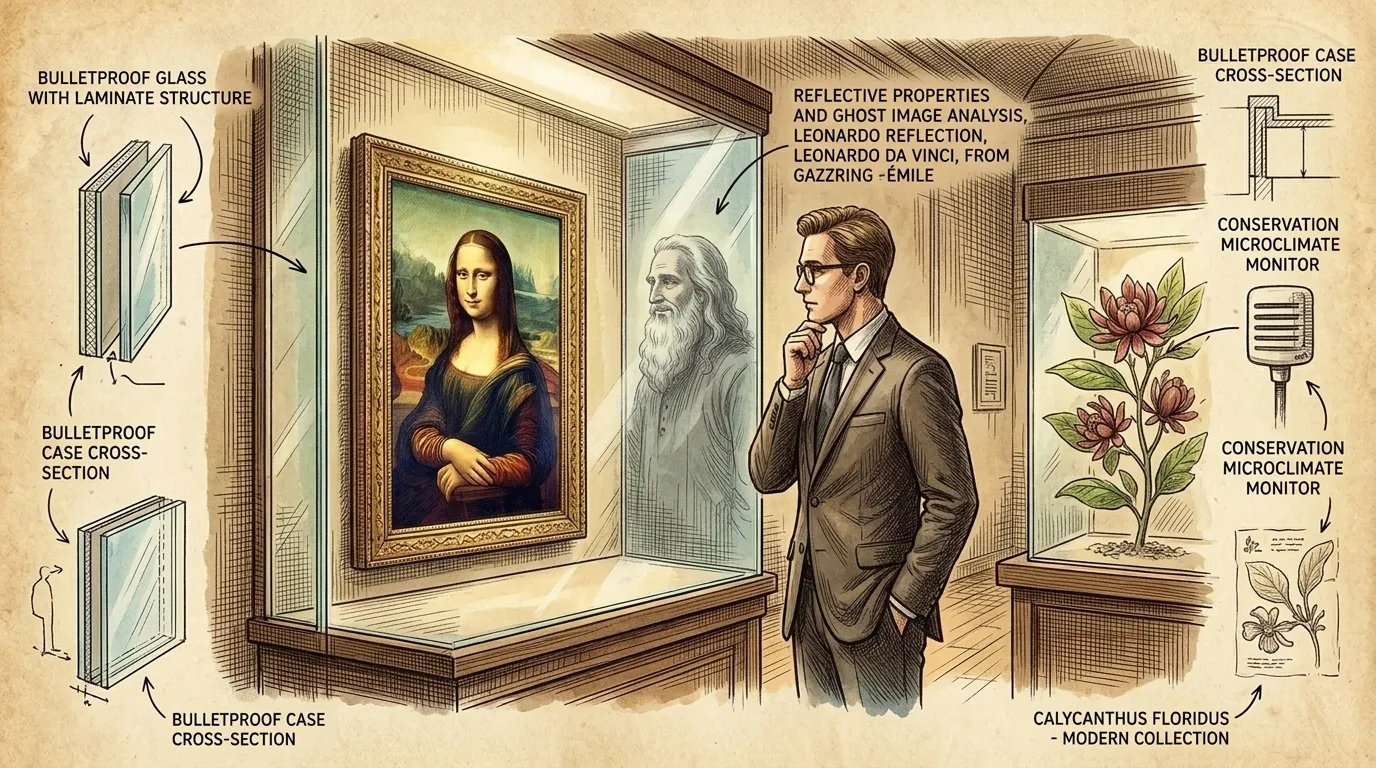
Centuries later, the Mona Lisa remains an unparalleled icon, captivating millions. Her enigmatic smile has inspired countless artists, writers, and musicians, transcending the canvas to permeate global culture. She endured theft, war, and political upheaval, emerging always as a symbol of enduring artistic genius and the boundless human capacity for wonder. Leonardo's meticulous study of light, form, and the human spirit ensured her immortality.
""What is it about her?" a modern curator, Dr. Émile Laurent, wonders softly, standing before the bulletproof glass, a ghost of Leonardo's silhouette reflected beside him. "Is it the sfumato, the gaze, the untold story? Or is it simply, as Leonardo himself knew, that 'where the spirit does not work with the hand there is no art'?""
Art Fact: The Mona Lisa's fame surged after its dramatic theft from the Louvre in 1911 by Vincenzo Peruggia and its subsequent recovery. Today, it is visited by nearly 10 million people annually, inspiring endless fascination, scholarship, and artistic homage. Its cultural impact spans fine art, popular culture, and psychology, a testament to Leonardo's timeless genius.
About this story
- Location: Global
- Audience: general readers
Questions and answers
Read Wonder Arts on your phone
Wonder Arts is available on Android. Get Wonder Arts on Google Play.