Medici Lions by Flaminio Vacca (Florence, Italy — 1598)
Medici Lions by Flaminio Vacca (Florence, Italy — 1598) — an illustrated arts story, set in Italy. 10 illustrated pages, free to read on Wonder Arts.

Page 1
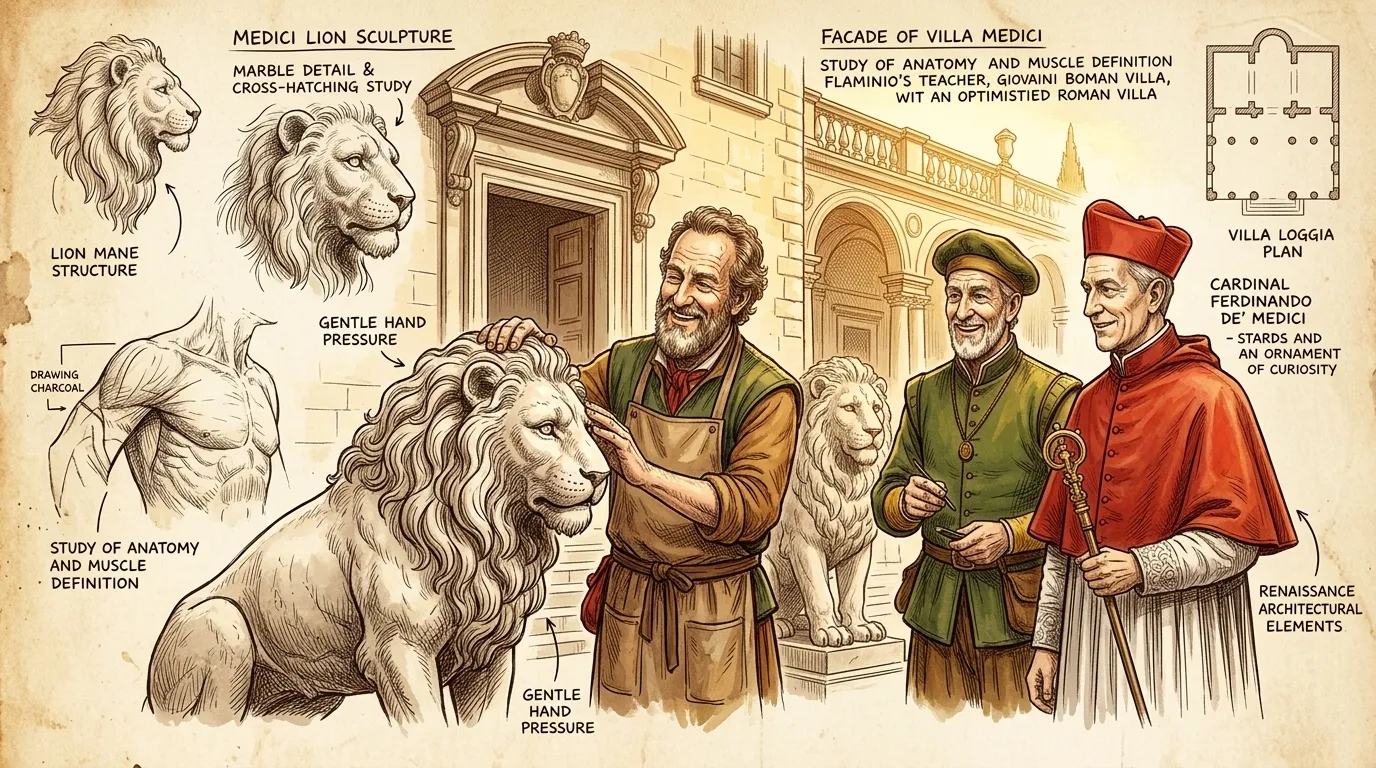
Flaminio Vacca, his face etched with pride and years of painstaking labor, gazes upon his masterpiece. The Medici lions, symbols of Florentine power and majesty, stand sentinel. Completed in 1598, these marble guardians, each over 9 feet long, soon adorned the Villa Medici in Rome. The realism is breathtaking, the muscles taut, the gaze regal.
"Vacca murmurs, stroking the lion's mane: "'Sculpture is the art of the intelligence,' as Auguste Rodin would say centuries from now. Let these lions speak of Florence, of strength, of enduring beauty.""
Art Fact: The Medici lions are among the most iconic sculptures of the late Renaissance, embodying power and civic pride. One pair resides in Florence at the Loggia dei Lanzi; the other in Rome at the Villa Medici.
Page 2
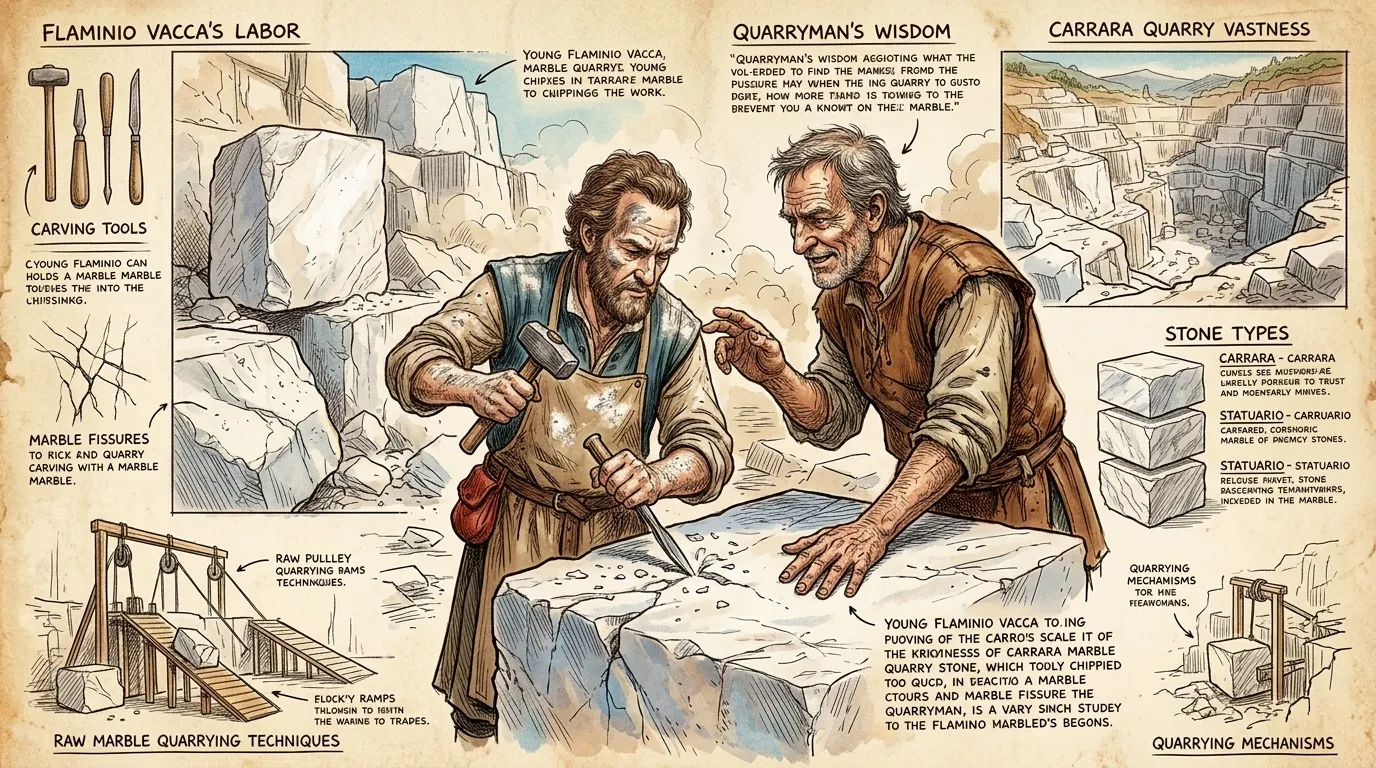
Young Flaminio, barely a man, toils in the Carrara quarries. The air is thick with marble dust, the sun beating down relentlessly. He learns the language of stone, the subtle shifts in grain, the hidden imperfections. A seasoned quarryman shares a secret: each block holds a spirit, waiting to be released.
""Remember, boy," the quarryman coughs, spitting dust, "'The greatest glory in living lies not in never falling, but in rising every time we fall,' as that Mandela fellow will say one day. This stone is stubborn, but so must you be!""
Art Fact: Carrara marble, prized for its purity and durability, has been the sculptor's choice since ancient Rome.
Page 3
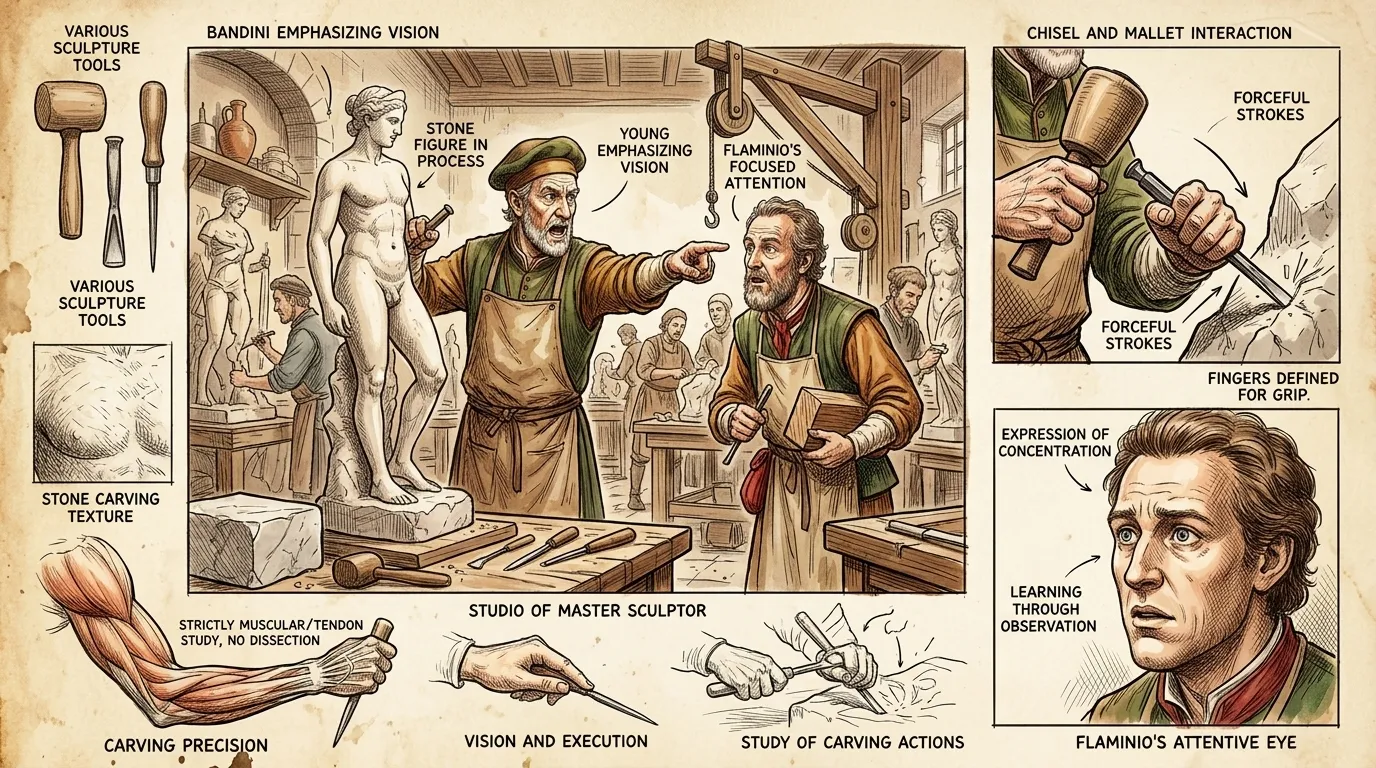
Florence. The bustling workshop of Giovanni Bandini. Flaminio apprentices, watching the master carve with breathtaking speed and precision. Bandini shapes flesh from stone, evokes emotion with a flick of his wrist. The young sculptor realizes that skill is not enough; one needs vision.
"Bandini, his voice booming, stops carving and points his chisel at Flaminio. "'The artist is nothing without the gift, but the gift is nothing without work,' as Émile Zola wisely noted. Watch, boy, truly see what the stone wants to be!""
Art Fact: Giovanni Bandini, also known as Giovanni dall'Opera, was a prominent Florentine sculptor known for his Mannerist style.
Page 4
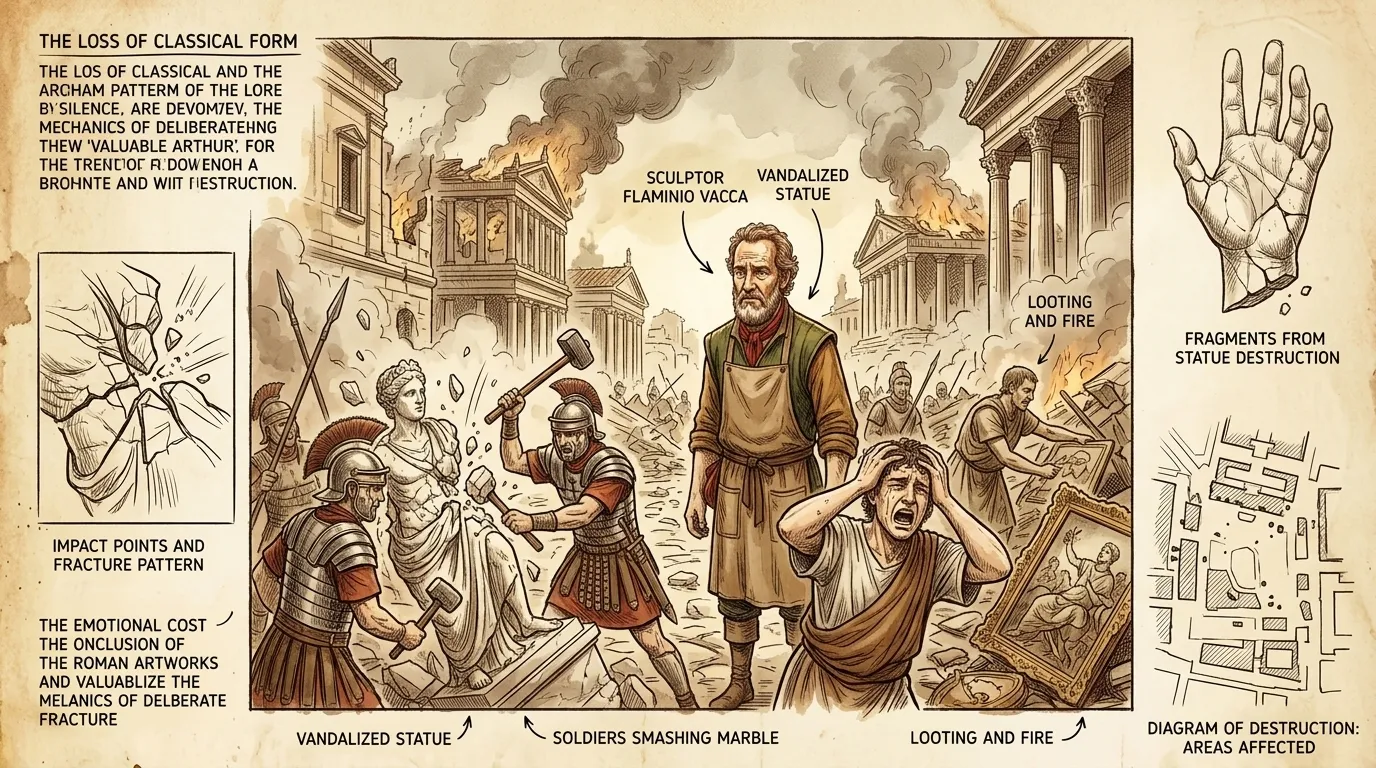
The Sack of Rome in 1527. Violence erupts; chaos engulfs the city. Flaminio witnesses destruction, the wanton desecration of beauty. He sees statues smashed, churches looted, lives shattered. Rome's vulnerability teaches him the fragility of civilization and the importance of preserving its ideals.
"A Roman citizen cries out, watching soldiers deface a statue: "'The world is a dangerous place to live; not because of the people who are evil, but because of the people who don't do anything about it!' Einstein said that, and it rings true now more than ever!""
Art Fact: The Sack of Rome was a pivotal event in the Italian Renaissance, marking the end of Rome's golden age and leaving a lasting scar on the city.
Page 5
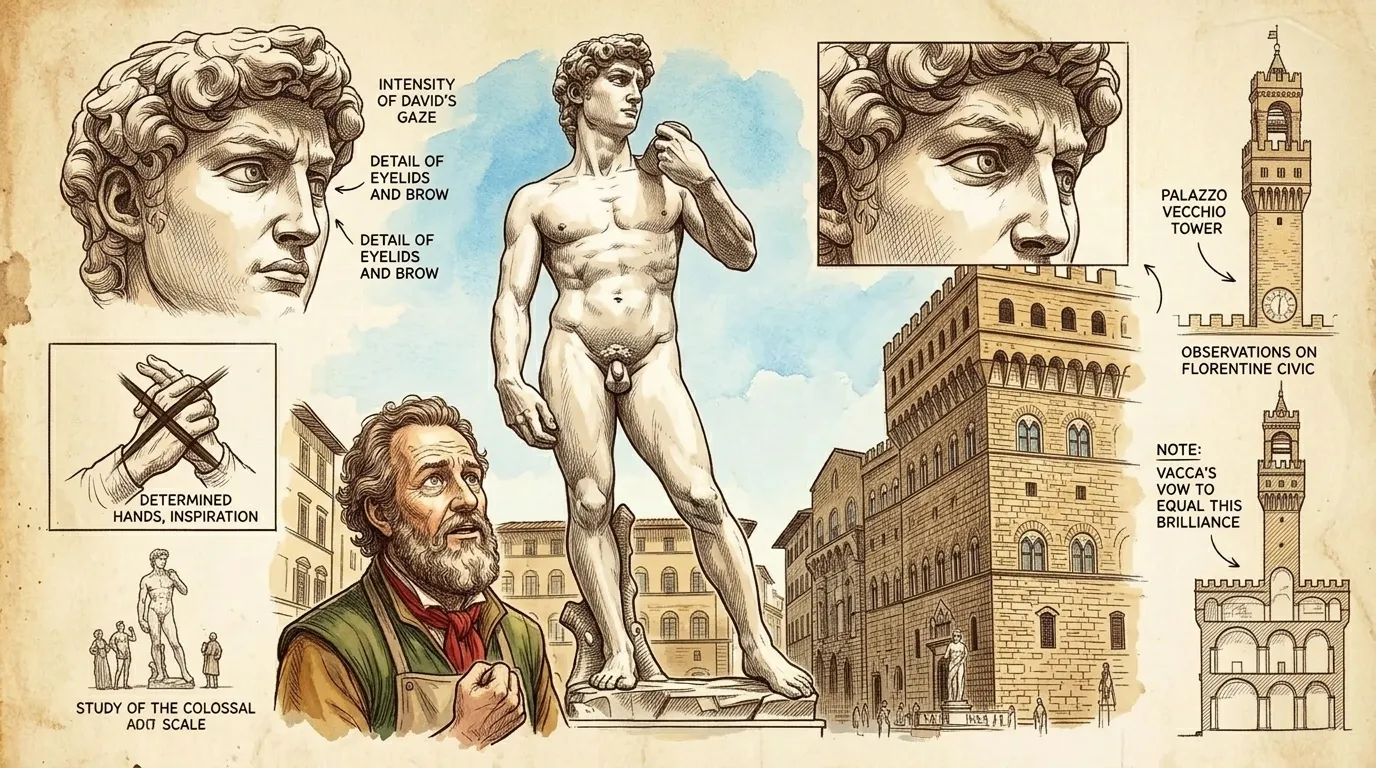
Flaminio gazes up at Michelangelo's David. The colossal statue embodies strength, defiance, and Florentine spirit. It is a challenge, an inspiration, a benchmark. The young sculptor vows to create works that capture the same power, the same sense of awe.
""To think," Flaminio whispers to himself, his eyes wide with admiration, "'Every block of stone has a statue inside it and it is the task of the sculptor to discover it,' as Michelangelo himself said. I must find the statues within myself, too!""
Art Fact: Michelangelo's David is a symbol of Florentine republicanism and one of the most celebrated sculptures in the world.
Page 6
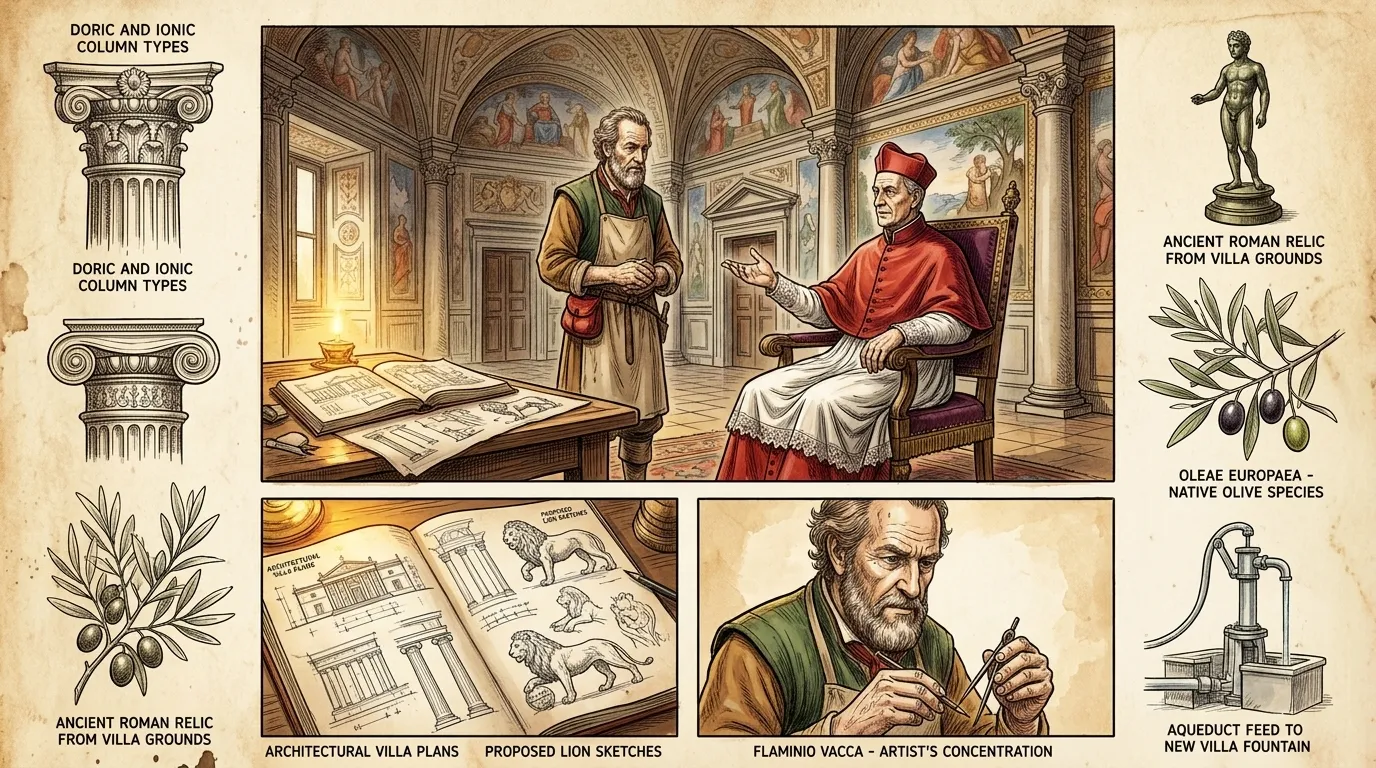
Cardinal Ferdinando de' Medici, a powerful and discerning patron, commissions Flaminio to create sculptures for his Roman villa. The cardinal envisions lions, symbols of Medici power and protectors of his domain. Vacca understands the weight of this commission, the opportunity to secure his legacy.
"Cardinal de' Medici states, gesturing expansively, "Vacca, 'The true work of art is but a shadow of the divine perfection,' as Michelangelo also knew. Create lions worthy of Rome, worthy of the Medici!""
Art Fact: Cardinal Ferdinando de' Medici, later Grand Duke of Tuscany, was a prominent patron of the arts and sciences.
Page 7
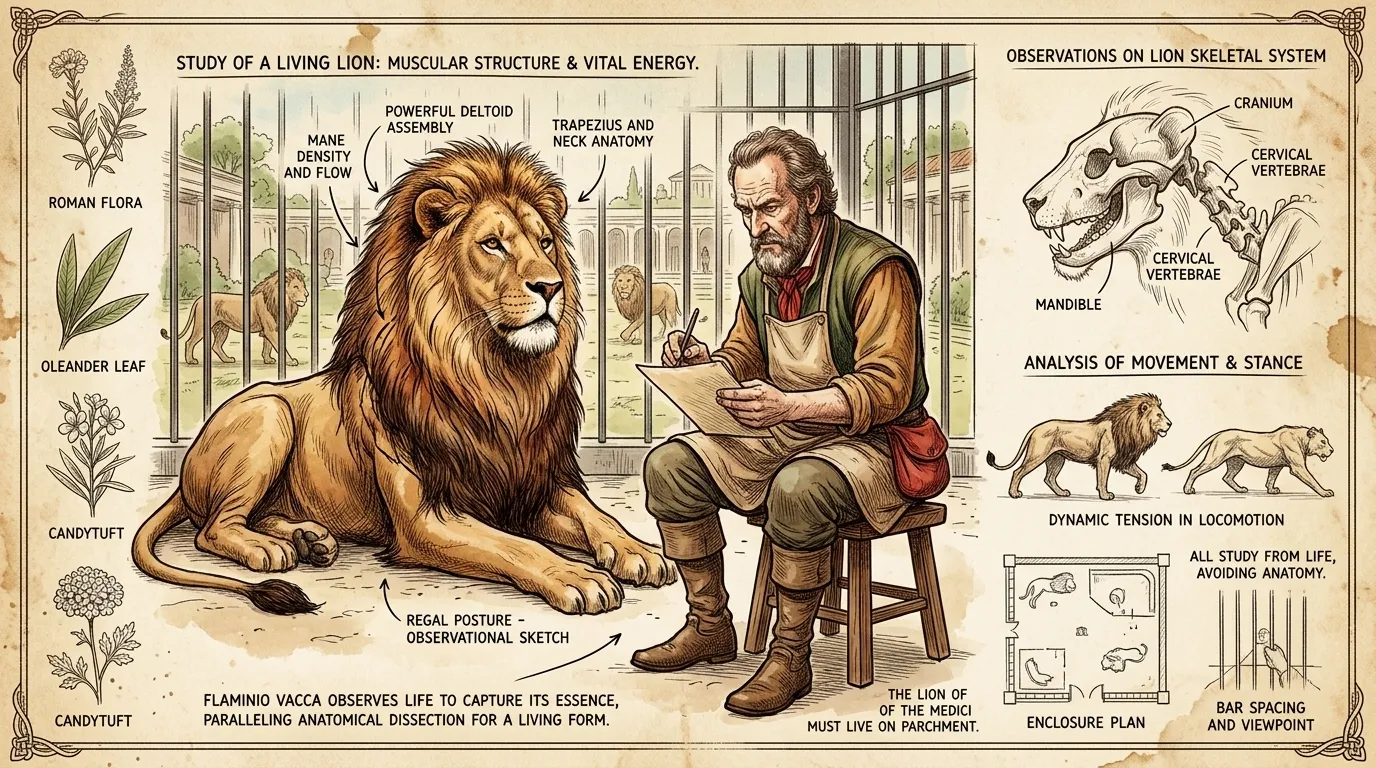
Flaminio studies animal anatomy, sketching lions in the Roman zoo. He dissects carcasses, learning the intricacies of muscle and bone. He seeks to understand the power, the grace, the very essence of these magnificent creatures.
"Flaminio mutters to himself, sketching furiously, "'The only source of knowledge is experience,' Einstein will teach us one day. I must feel the lion's power in its bones, its muscles, its very breath!""
Art Fact: Renaissance artists often studied anatomy through dissection to achieve greater realism in their work.
Page 8
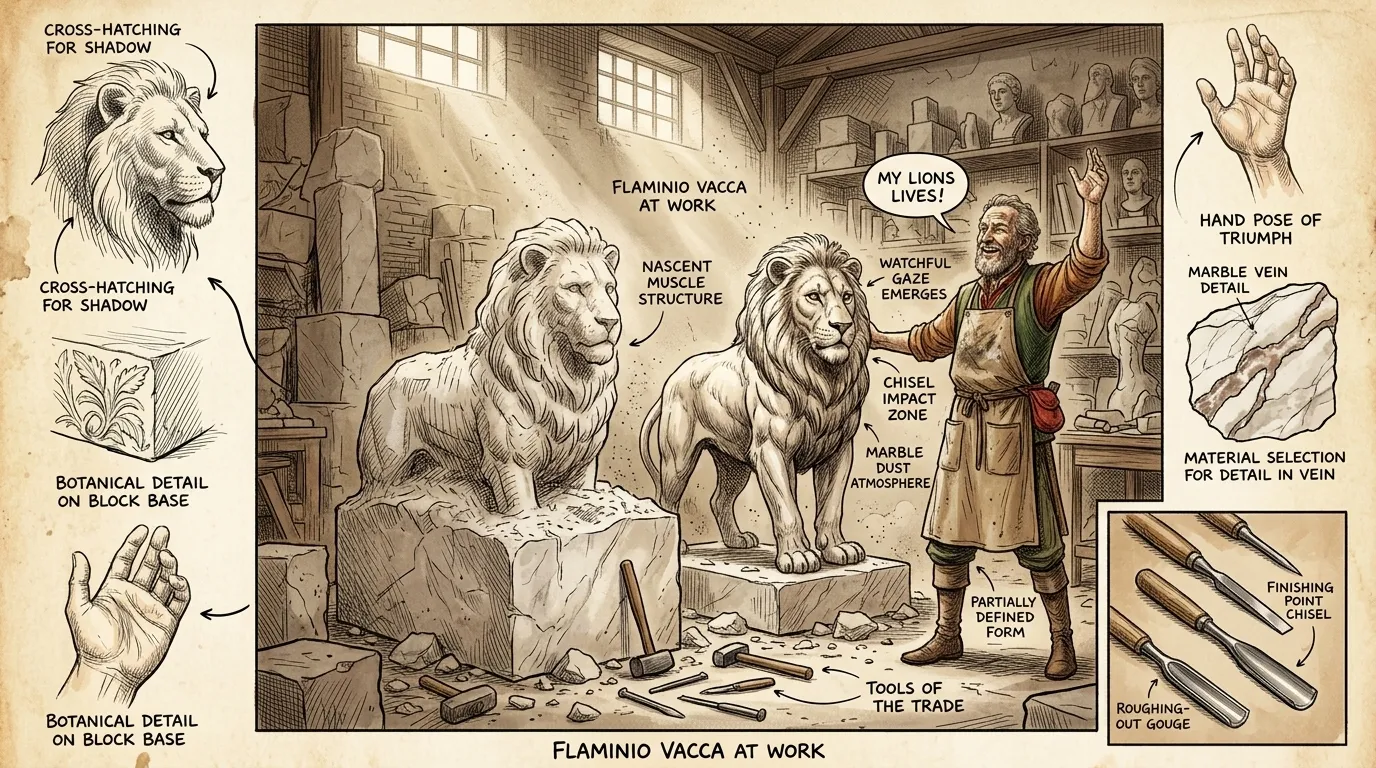
The marble yields. Slowly, painstakingly, the lions emerge from the stone. Flaminio shapes their muscles, defines their features, imbues them with life. He seeks to capture not just their physical form, but also their spirit: their strength, their pride, their watchful gaze.
"Flaminio, covered in marble dust, exclaims, stepping back to admire his progress, "'Great things are done by a series of small things brought together,' as Van Gogh knew. Each strike of the chisel brings them closer to life!""
Art Fact: The creation of a marble sculpture was a laborious and time-consuming process, requiring immense skill and dedication.
Page 9
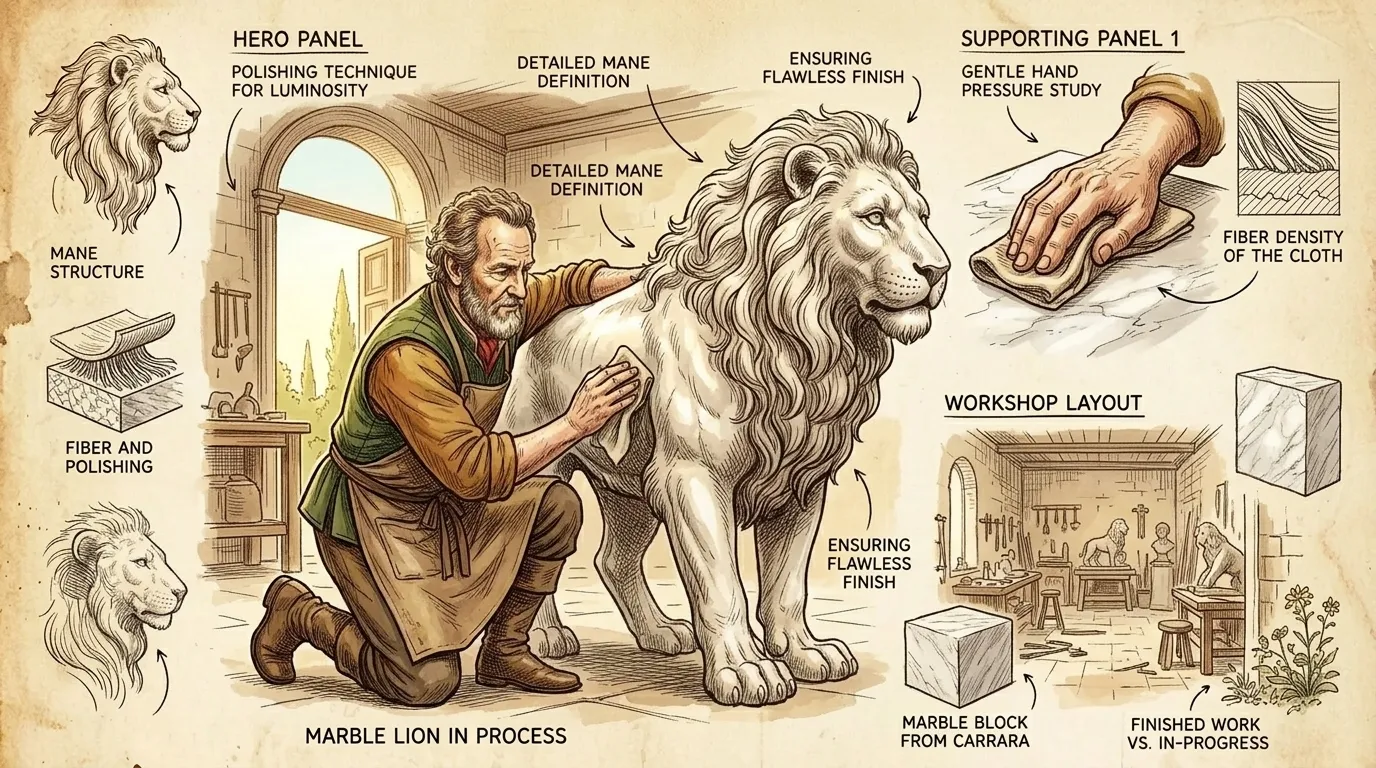
Weeks turn into months. Flaminio polishes the lions, refining every detail. He seeks perfection, a flawless surface that reflects the light and reveals the beauty of the marble. He knows that these sculptures will be judged by generations to come.
"Vacca says softly, smoothing the marble's surface, "'Details are not details. They make the design,' Charles Eames knew it well. It's the sum of tiny perfections that will leave the biggest legacy.""
Art Fact: The final polishing of a sculpture was crucial to achieving the desired effect of luminosity and realism.
Page 10
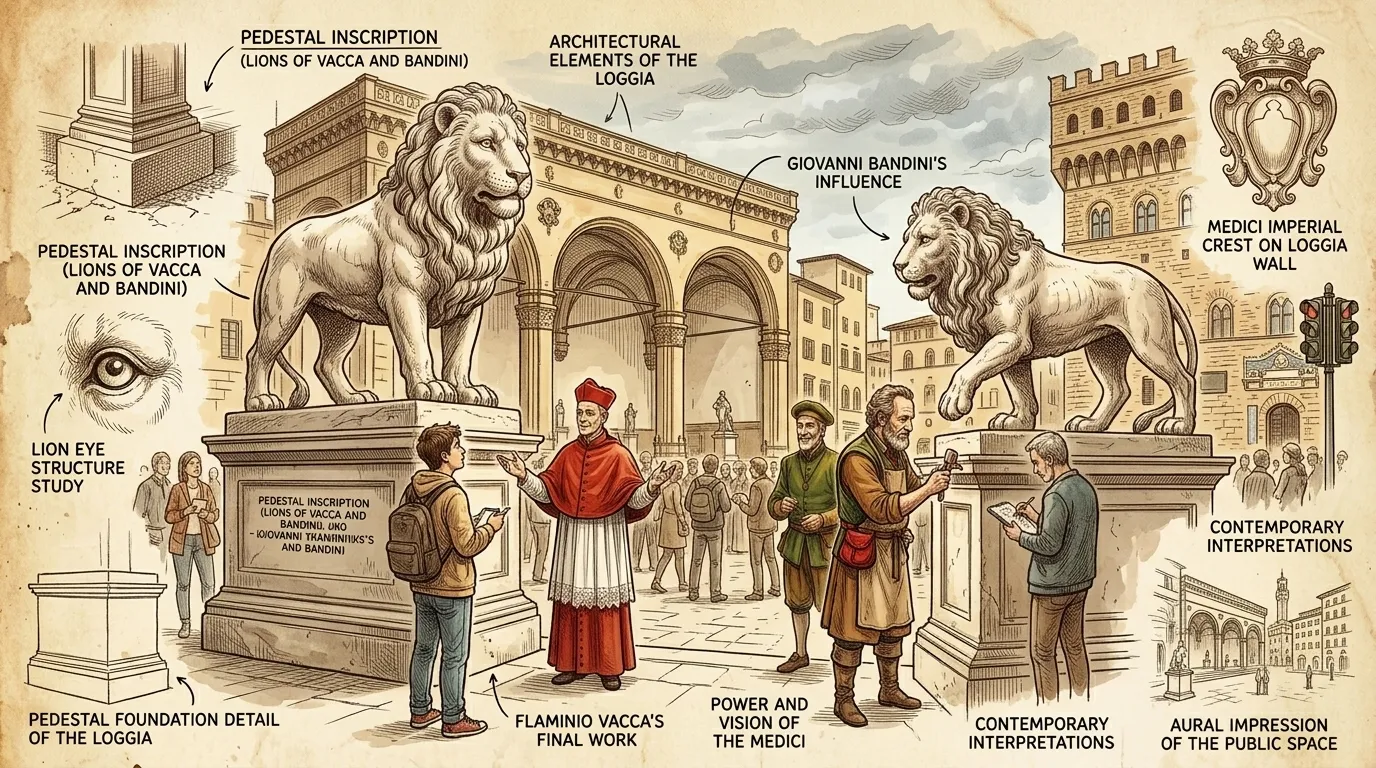
Centuries pass. The Medici lions stand guard in Florence and Rome. They have witnessed triumphs and tragedies, wars and revolutions. They are a testament to Florentine power, to artistic genius, to the enduring beauty of classical ideals. Flaminio Vacca's vision lives on.
"A modern art student remarks, studying the lions: "'The beauty of art is that it speaks to you,' said Italian philosopher and art critic Gillo Dorfles. The Medici Lions still roar power through the ages!""
Art Fact: Flaminio Vacca's Medici lions continue to inspire awe and admiration, serving as enduring symbols of Florentine artistic achievement and Renaissance ideals.
About this story
- Location: Italy
- Audience: general readers
Questions and answers
Questions and answers about Medici Lions by Flaminio Vacca (Florence, Italy — 1598)
Read Wonder Arts on your phone
Wonder Arts is available on Android. Get Wonder Arts on Google Play.