Mont Sainte-Victoire by Paul Cézanne (France — 1887)
Mont Sainte-Victoire by Paul Cézanne (France — 1887) — an illustrated arts story, set in France. 10 illustrated pages, free to read on Wonder Arts.
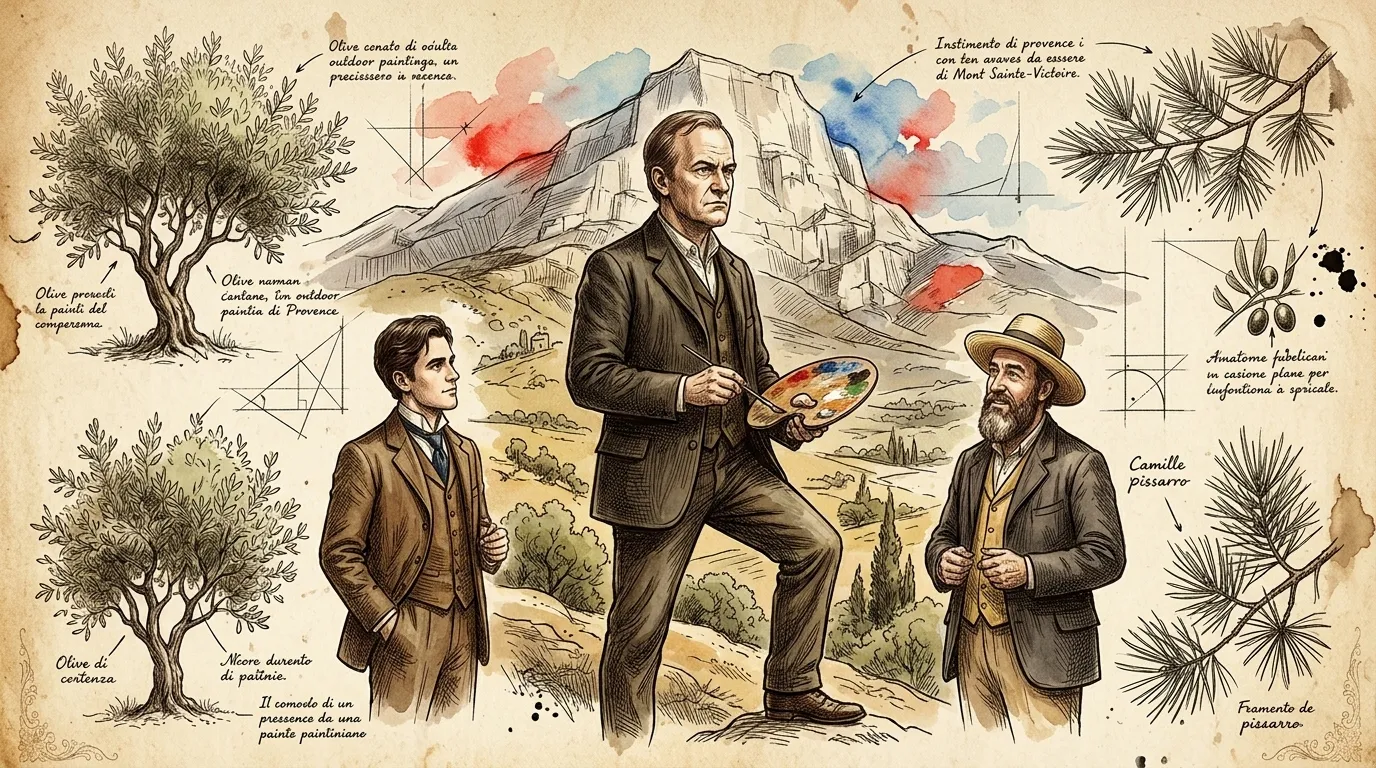
Page 1
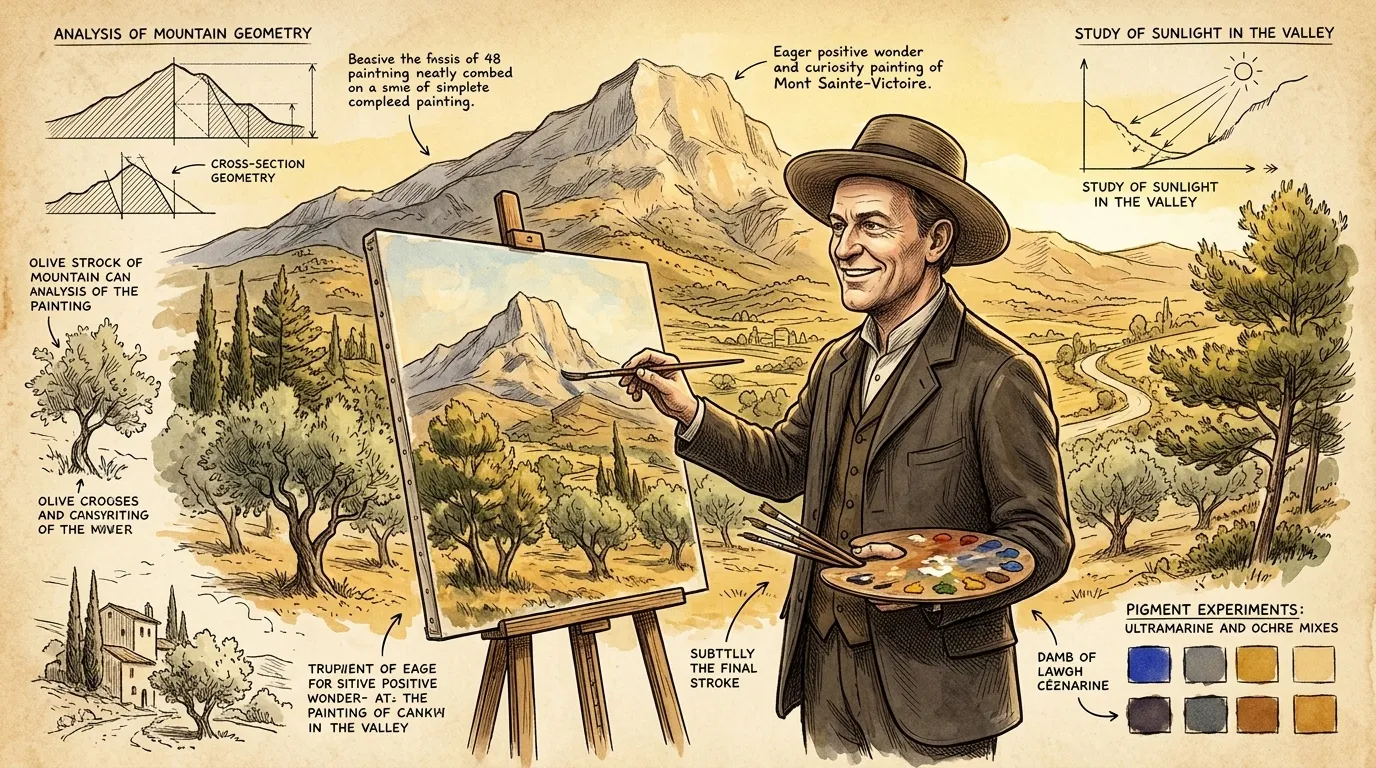
A silence falls over the vast, sun-drenched landscape of Provence as Paul Cézanne, aged 48, gazes upon his completed masterpiece. The mountain, Mont Sainte-Victoire, looms behind him, eternal and majestic, just as he rendered it. This particular vista, captured in 1887, reveals the very soul of the landscape he sought to understand.
"'It is the same mountain, yet entirely new,' Cézanne muttered, his voice raspy, a faint smile playing on his lips. 'I paint it as I feel it, not as I see it with the mere eye.'"
Art Fact: Paul Cézanne's 'Mont Sainte-Victoire' from 1887 is an oil on canvas, measuring 67 92 cm. It is a pivotal work housed in the Courtauld Gallery, London. This painting is one of his most celebrated interpretations of the mountain, demonstrating his revolutionary approach to landscape painting through structural simplification and systematic brushstrokes, influencing generations of artists.
Page 2
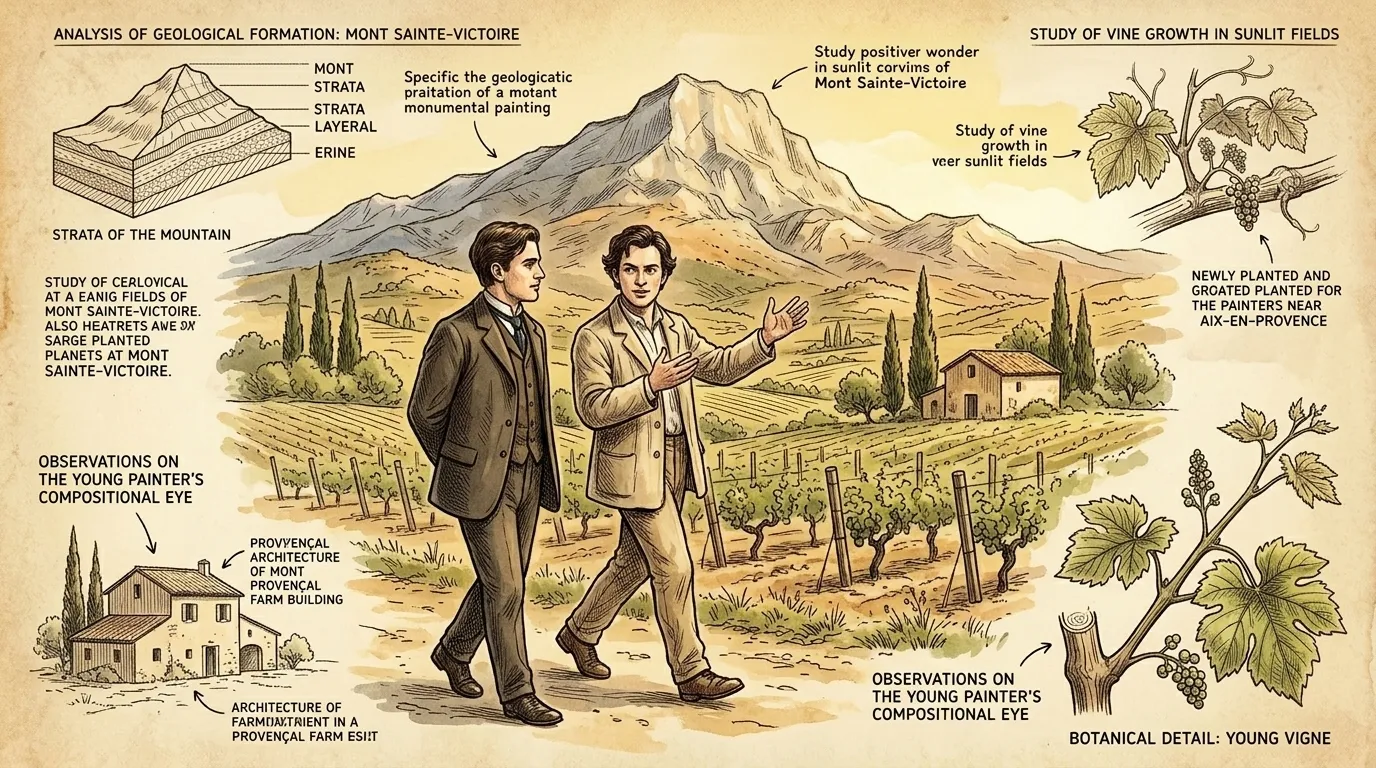
Long before the definitive 1887 canvas, Cézanne's fascination with Mont Sainte-Victoire began in childhood. The mountain was a constant backdrop to his early life in Aix-en-Provence, a silent observer to his youthful dreams and rebellious spirit. Even then, its monumental presence stirred something deep within him.
"'That mountain... it calls to me,' a young Cézanne confided to his friend, Émile Zola, as they walked through the fields. 'It is more than rock; it is a feeling, a challenge.'"
Art Fact: Paul Cézanne (1839-1906) spent much of his life in Aix-en-Provence, France, where Mont Sainte-Victoire was a ubiquitous presence. His friendship with writer Émile Zola, which began in childhood, was profoundly influential, sharing dreams of artistic and literary rebellion against academic traditions.
Page 3
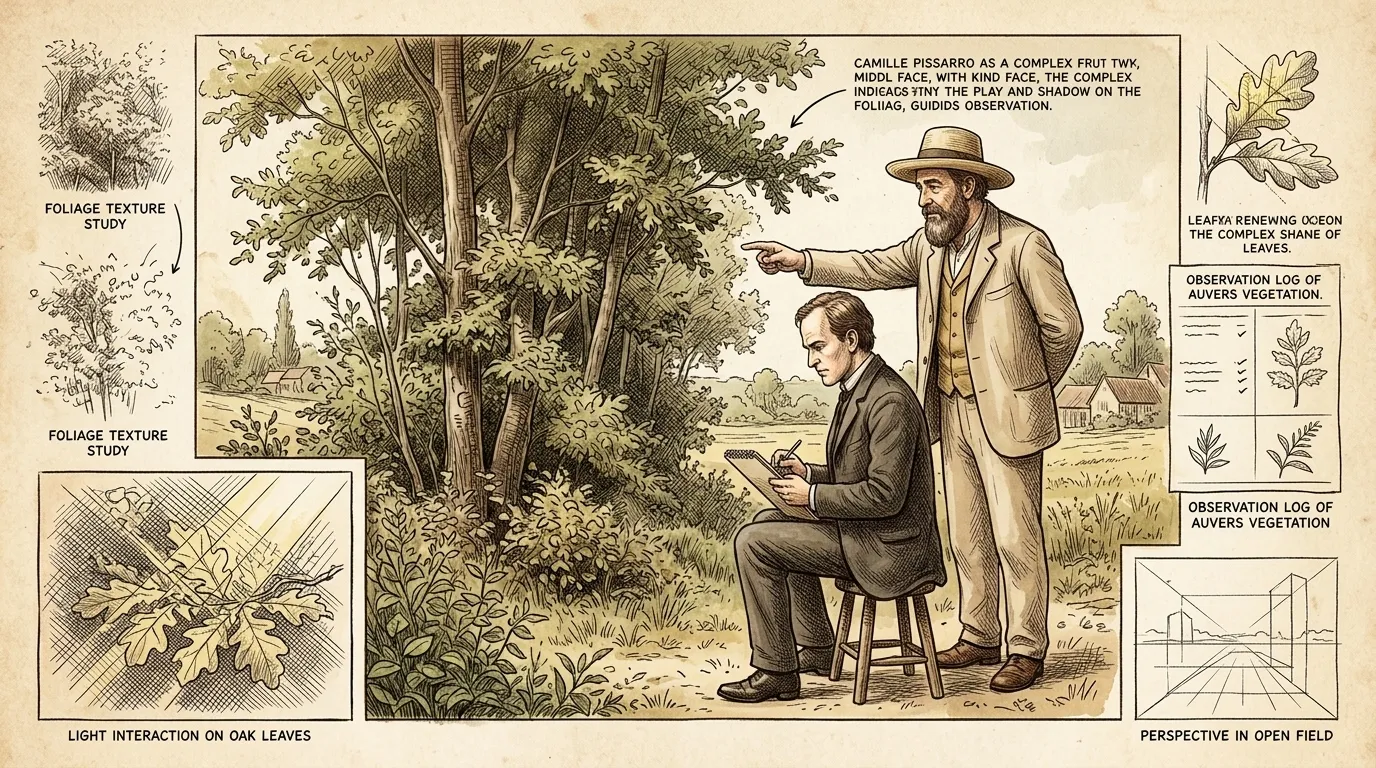
In the early 1870s, Cézanne found a mentor in Camille Pissarro, a fellow Impressionist, whose patient guidance in Auvers-sur-Oise and Pontoise proved invaluable. Pissarro encouraged Cézanne to paint outdoors, directly from nature, a practice that fundamentally reshaped his approach to landscape and color.
"'Forget the academies, Paul,' Pissarro advised gently, his voice calm amidst the rustling leaves. 'Observe, truly observe, how the light builds form, how the colors intermingle.'"
Art Fact: Camille Pissarro (1830-1903) was a foundational figure of Impressionism and a crucial mentor to Cézanne during his formative years in the 1870s. Pissarro's emphasis on direct observation and the rendering of transient light effects from nature had a lasting impact on Cézanne's developing style.
Page 4
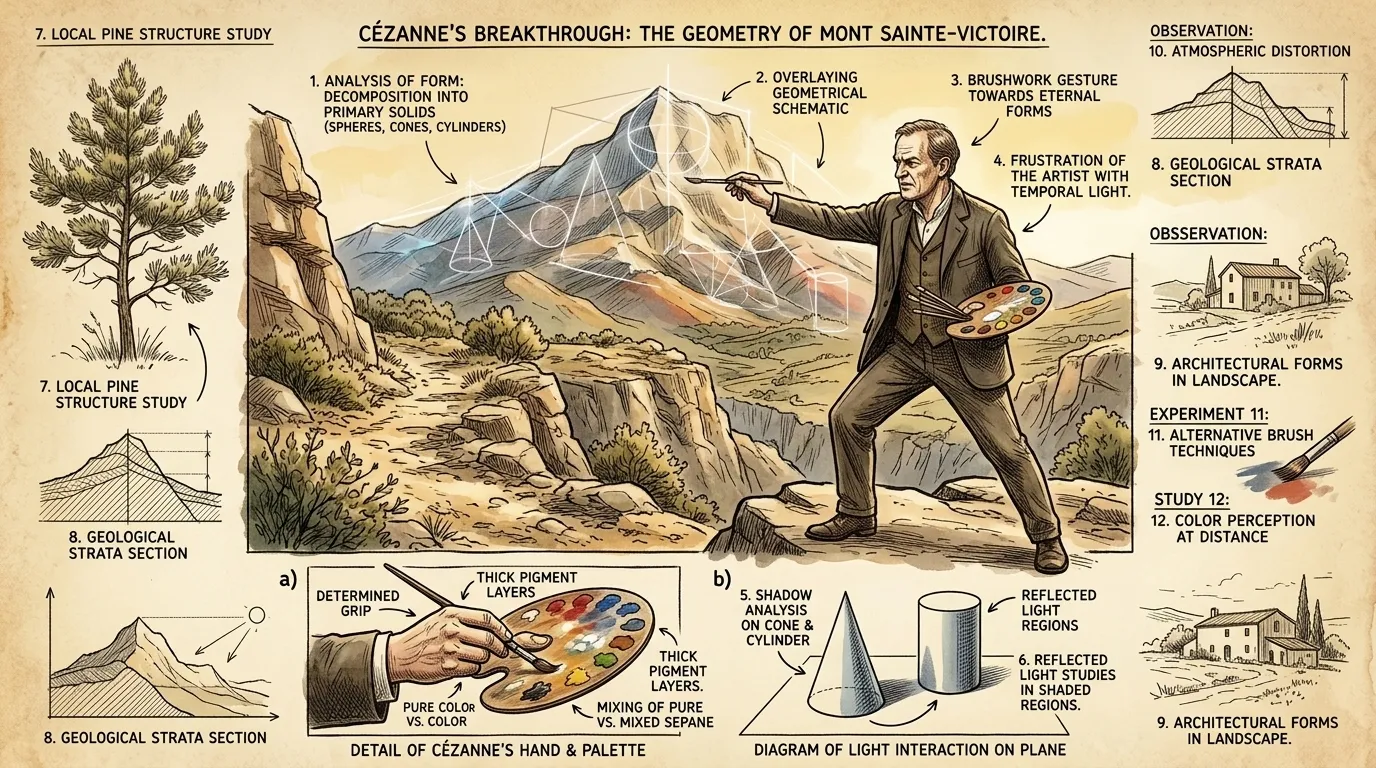
Cézanne struggled to reconcile the fleeting effects of Impressionism with his desire for permanence and structure. He began to see the world not as a flat surface, but as an arrangement of geometric forms. This conceptual shift, a profound intellectual breakthrough, would become the hallmark of his unique style.
"'I want to make of Impressionism something solid and durable, like the art of the museums!' Cézanne declared, his voice filled with frustration and ambition, as he gestured towards the mountain."
Art Fact: Cézanne's famous quote, 'I want to make of Impressionism something solid and durable, like the art of the museums,' encapsulates his artistic mission. He sought to imbue the Impressionists' focus on light and color with a sense of lasting form and volume, seeing nature in terms of geometric solids like spheres, cones, and cylinders.
Page 5
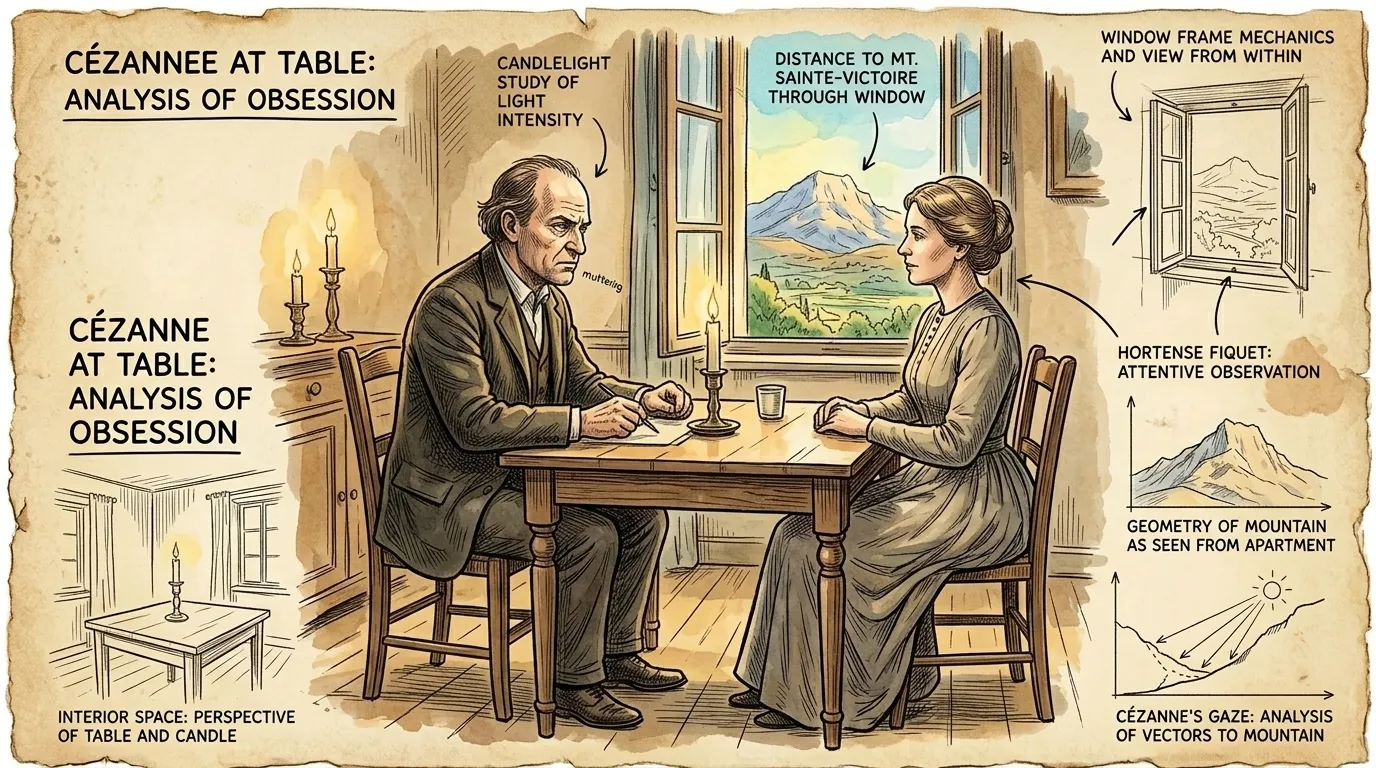
Cézanne's unconventional style often met with misunderstanding and ridicule from the Parisian art establishment. Retreating to Provence, he embraced a life of relative isolation, finding solace and unwavering inspiration in the familiar landscapes around Aix. This solitude allowed him to pursue his radical artistic vision unhindered.
"'Let them laugh in Paris,' Cézanne muttered to his wife, Hortense Fiquet, as they dined simply. 'Here, with my mountain, I can truly paint what I believe.'"
Art Fact: Cézanne married Marie-Hortense Fiquet in 1886, after a long and often turbulent relationship. While she often served as his model, her quiet support allowed him the space to continue his radical artistic experiments, often in relative obscurity, away from the critical gaze of the Parisian art world.
Page 6
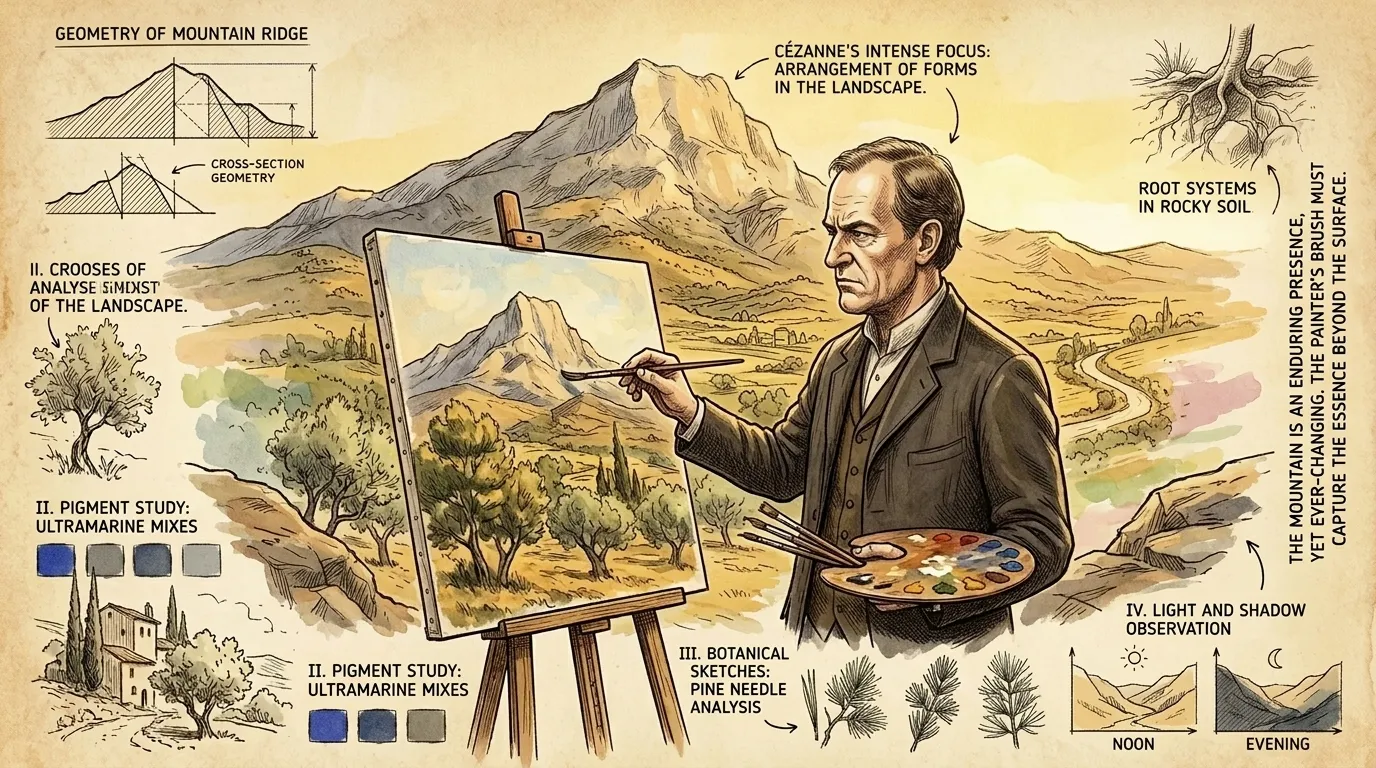
Cézanne's repeated studies of Mont Sainte-Victoire were not mere repetitions, but a deepening exploration of its essence. Each canvas became a distillation of his sensory experience, capturing not just its appearance at a single moment, but its enduring presence through the changing light and seasons. He was painting time itself.
"'One must paint with the conviction of nature, with the weight of its antiquity,' Cézanne proclaimed to himself, his brush moving with a fervent intensity."
Art Fact: Cézanne painted Mont Sainte-Victoire over 60 times in oils and watercolors. These numerous depictions reflect his relentless pursuit of capturing the mountain's enduring 'construction' and the way light articulates form, a process he called 'realizing his sensations' before nature.
Page 7
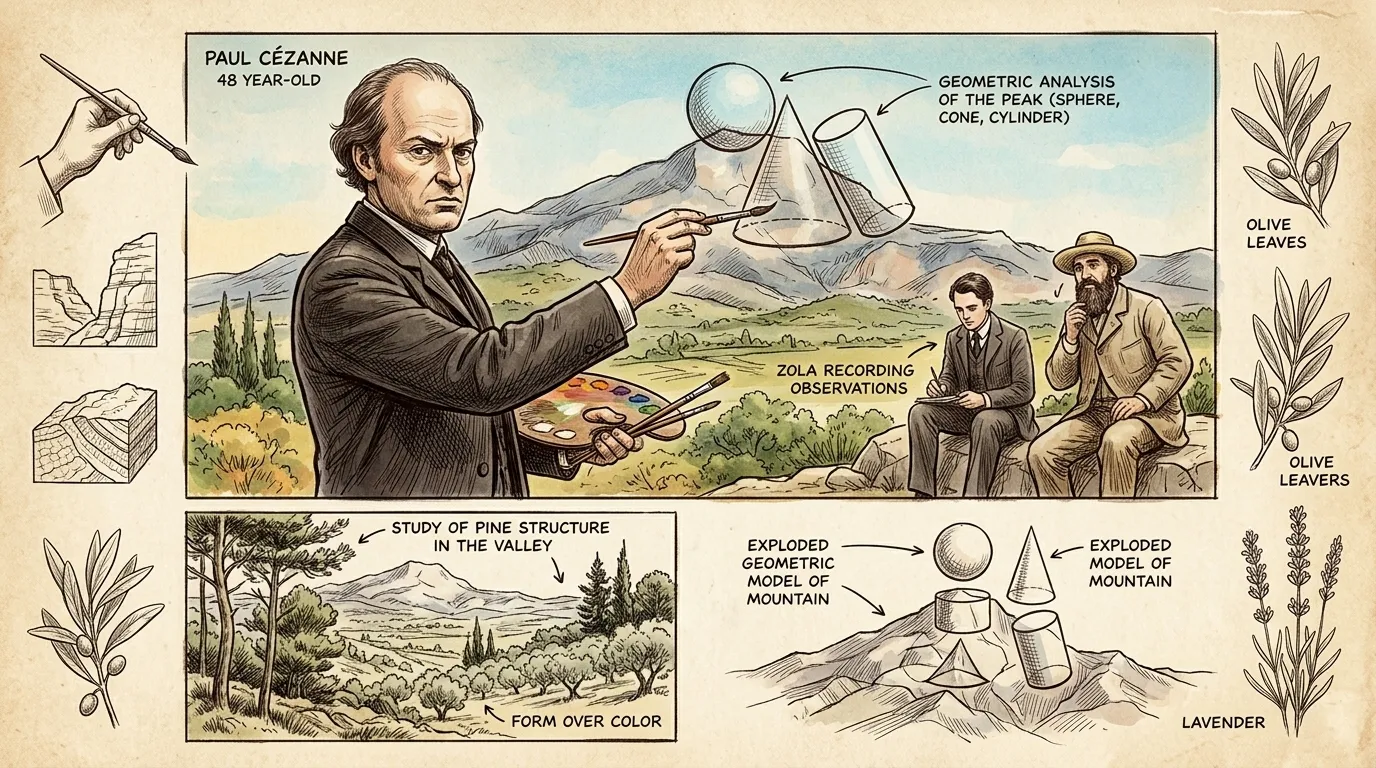
In the mid-1880s, Cézanne's unique vision solidified. He no longer sought to merely copy nature but to interpret its underlying order. He simplified forms into their fundamental geometric shapes, using color and distinct brushstrokes to build volume and create a profound sense of depth and solidity on the two-dimensional surface.
"'Everything in nature is modeled on the sphere, the cone, and the cylinder,' Cézanne explained, tracing shapes in the air with his hand. 'One must learn to paint these simple forms.'"
Art Fact: Cézanne's famous dictum about nature being modeled on geometric forms became a cornerstone of his artistic philosophy and a precursor to Cubism. This systematic approach to seeing and rendering the world allowed him to create a sense of monumental structure and depth without relying on traditional perspective.
Page 8
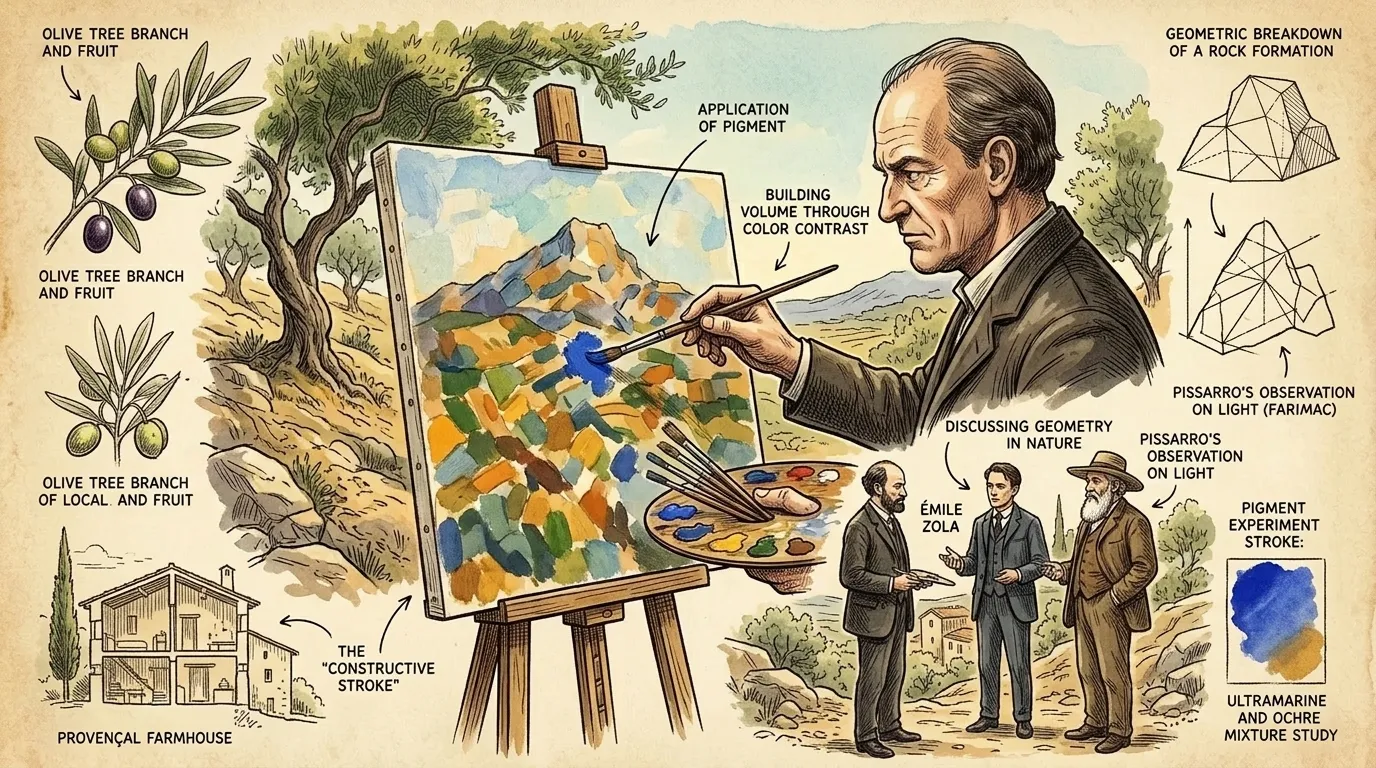
The 1887 Mont Sainte-Victoire represents a culmination of years of intense study. Cézanne applied paint in distinct, almost mosaic-like patches, each color contributing to the overall structure and light. He didn't just color forms; he built them from within, using the interplay of warm and cool tones to create atmospheric recession and solid mass.
"'When color is richest, form is fullest,' Cézanne asserted, dabbing a vibrant blue onto the canvas. 'There are no outlines, only contrasts.'"
Art Fact: Cézanne's method of 'modeling with color' was revolutionary. He abandoned traditional chiaroscuro (light and shadow) for building forms through juxtaposed patches of color, where warm colors advance and cool colors recede, creating both volume and spatial depth. This technique would profoundly influence future modernist movements.
Page 9
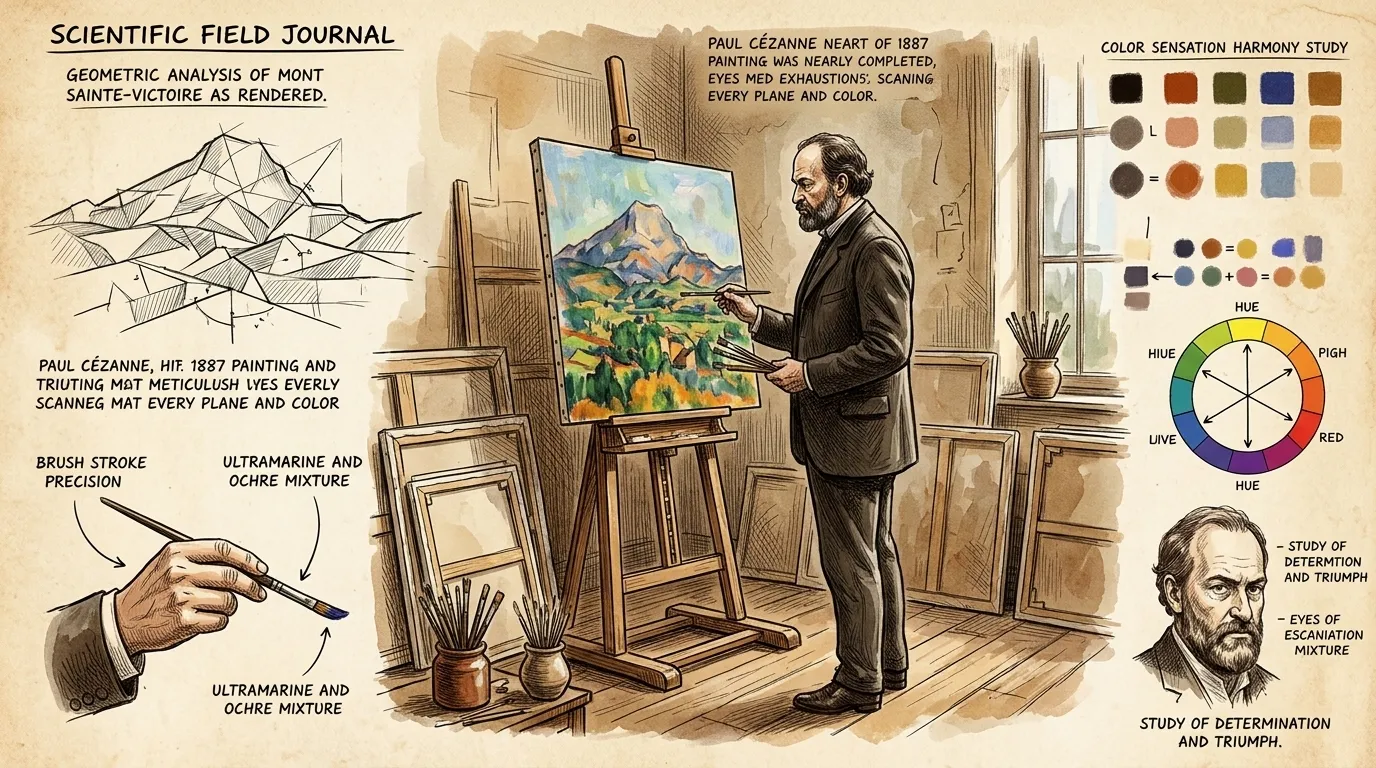
As the 1887 canvas neared completion, Cézanne spent countless hours alone with it, refining every plane, every patch of color. He was not merely depicting a mountain; he was revealing his profound 'petite sensation' – his unique, deeply personal experience of the landscape. The painting was a testament to his independence, a final, defiant statement.
"'It is not finished until I have found my own truth in it,' Cézanne whispered, his eyes scanning the canvas with a mixture of exhaustion and triumph."
Art Fact: Cézanne often worked on paintings for years, revisiting them repeatedly until he felt they had achieved a synthesis of vision and execution. His 'petite sensation' was his unique, deeply personal perception of reality, which he strove to translate onto canvas through his rigorous, systematic painting process.
Page 10
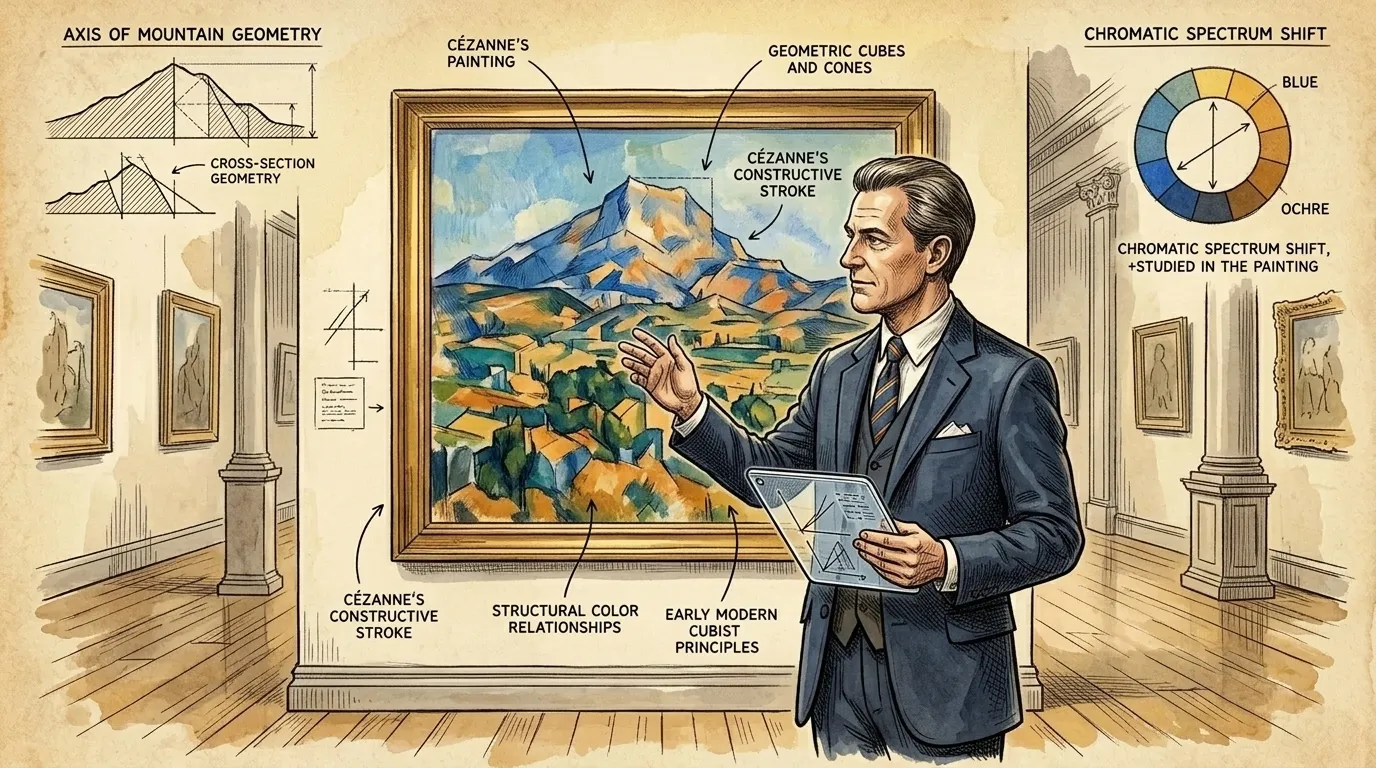
Today, Cézanne's Mont Sainte-Victoire from 1887 stands as a monument to his relentless pursuit of truth in art. It shattered conventions, paving the way for Cubism and subsequent modernist movements. The mountain, forever captured in his distinctive style, continues to resonate, challenging viewers to see not just nature, but the very act of seeing itself.
"'He didn't just paint what he saw; he painted what he thought, what he felt, about the very structure of the world,' an art historian mused, standing before the canvas."
Art Fact: Cézanne's 'Mont Sainte-Victoire' is celebrated worldwide for its groundbreaking approach to form and color. It deeply influenced artists like Pablo Picasso and Georges Braque, who credited Cézanne as 'the father of us all' for his foundational contributions to Cubism and modern art. Its presence in the Courtauld Gallery ensures its ongoing study and admiration.
About this story
- Location: France
- Audience: general readers
Questions and answers
Questions and answers about Mont Sainte-Victoire by Paul Cézanne (France — 1887)
Read Wonder Arts on your phone
Wonder Arts is available on Android. Get Wonder Arts on Google Play.