Nocturnes by Frédéric Chopin (Paris, France — 1830s)
Nocturnes by Frédéric Chopin (Paris, France — 1830s) — an illustrated arts story, set in France. 10 illustrated pages, free to read on Wonder Arts.
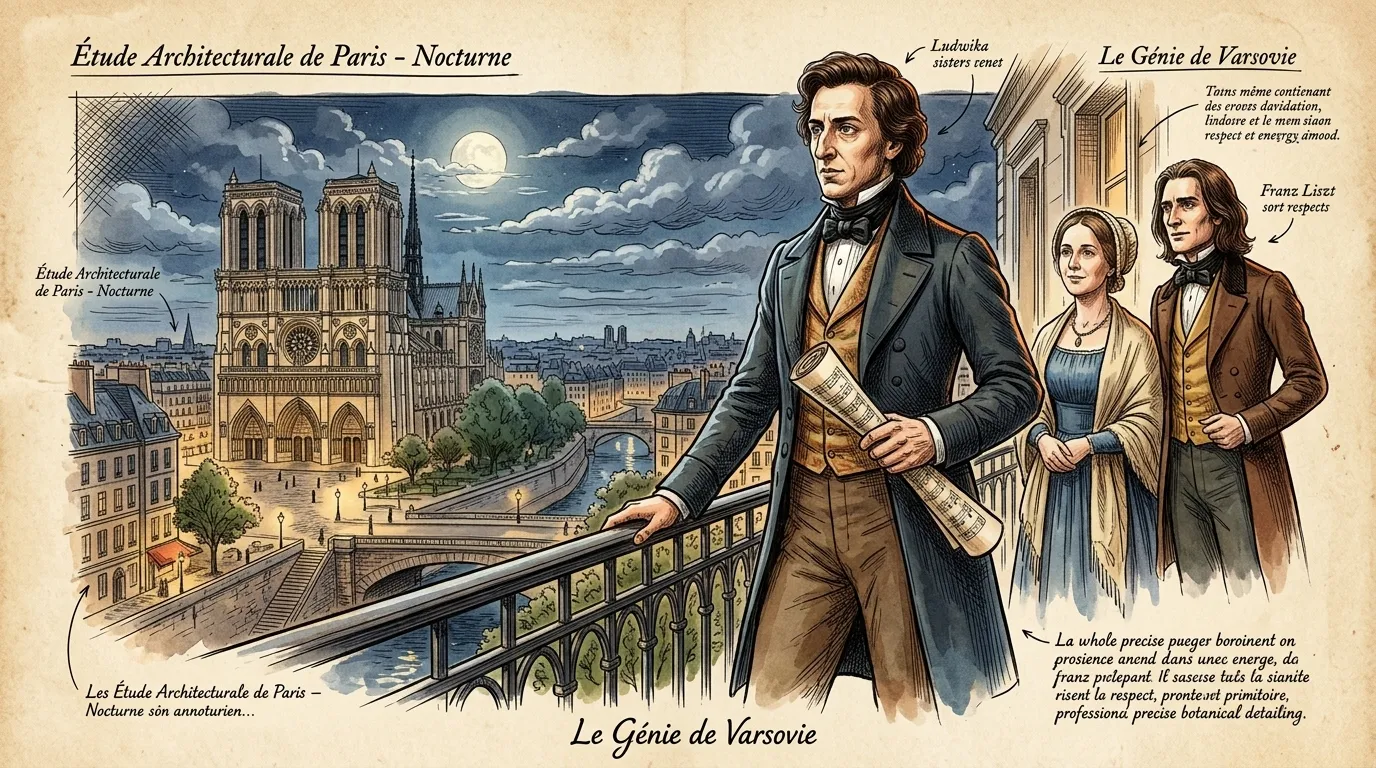
Page 1
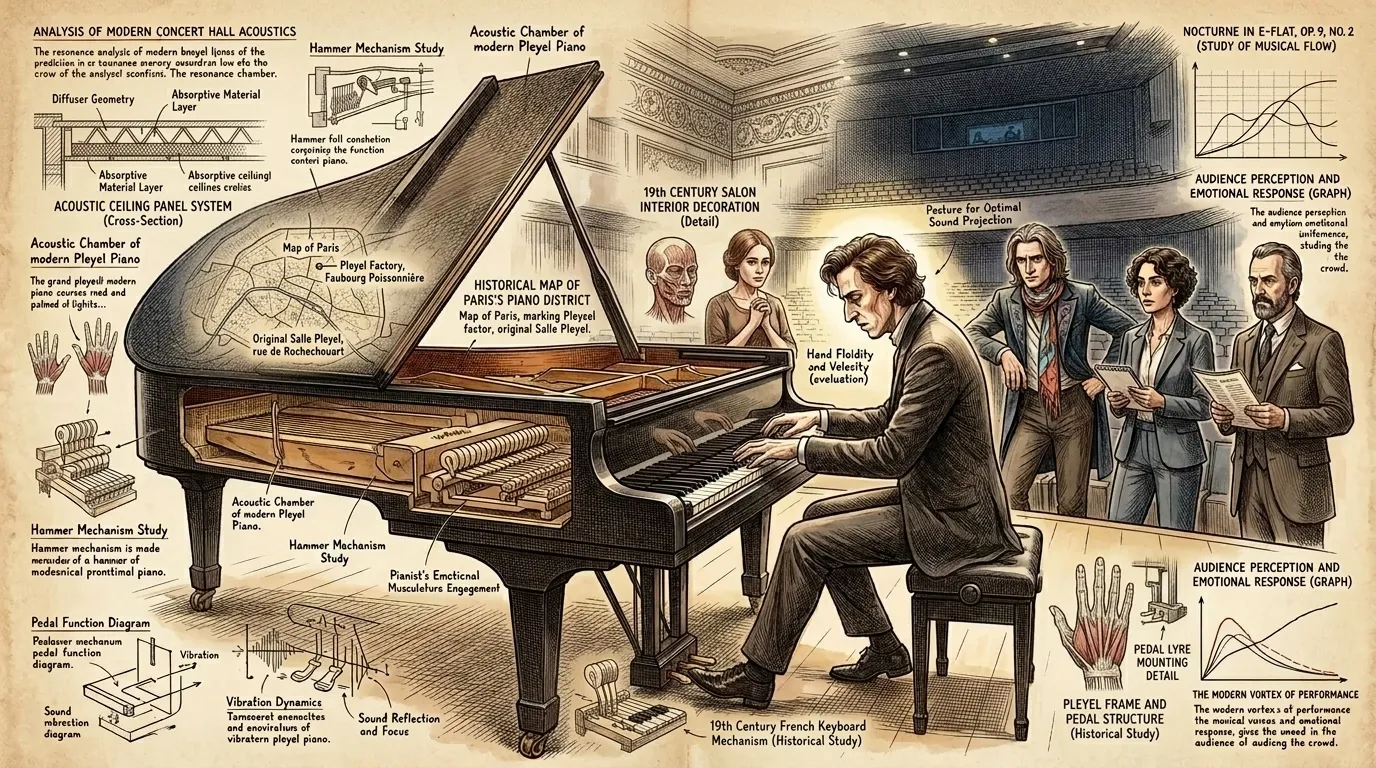
Amidst the gilded salons of 1830s Paris, a quiet revolution was unfolding, not on canvas, but on the eighty-eight keys of a piano. Here stands Frédéric Chopin, a composer whose delicate frame belied the colossal emotional landscape within his music, a man who saw melodies where others heard only noise.
"'They said it was merely salon music,' Chopin mused softly, his gaze fixed on the intricate score, 'but I found in it the echoes of a universal sorrow, a tender intimacy.'"
Art Fact: Frédéric Chopin's Nocturnes, published between 1830 and 1846, comprise 21 solo piano pieces. These short, lyrical compositions redefined the genre, elevating it from simple salon pieces into profound vehicles for personal expression. They are celebrated for their expressive melodies, rich harmonies, and emotional depth, reflecting Chopin's Polish soul fused with Parisian elegance. The most famous include the Nocturne in E-flat Major, Op. 9, No. 2, and the Nocturne in C-sharp Minor, Op. posth. They are foundational works in the Romantic piano repertoire.
Page 2
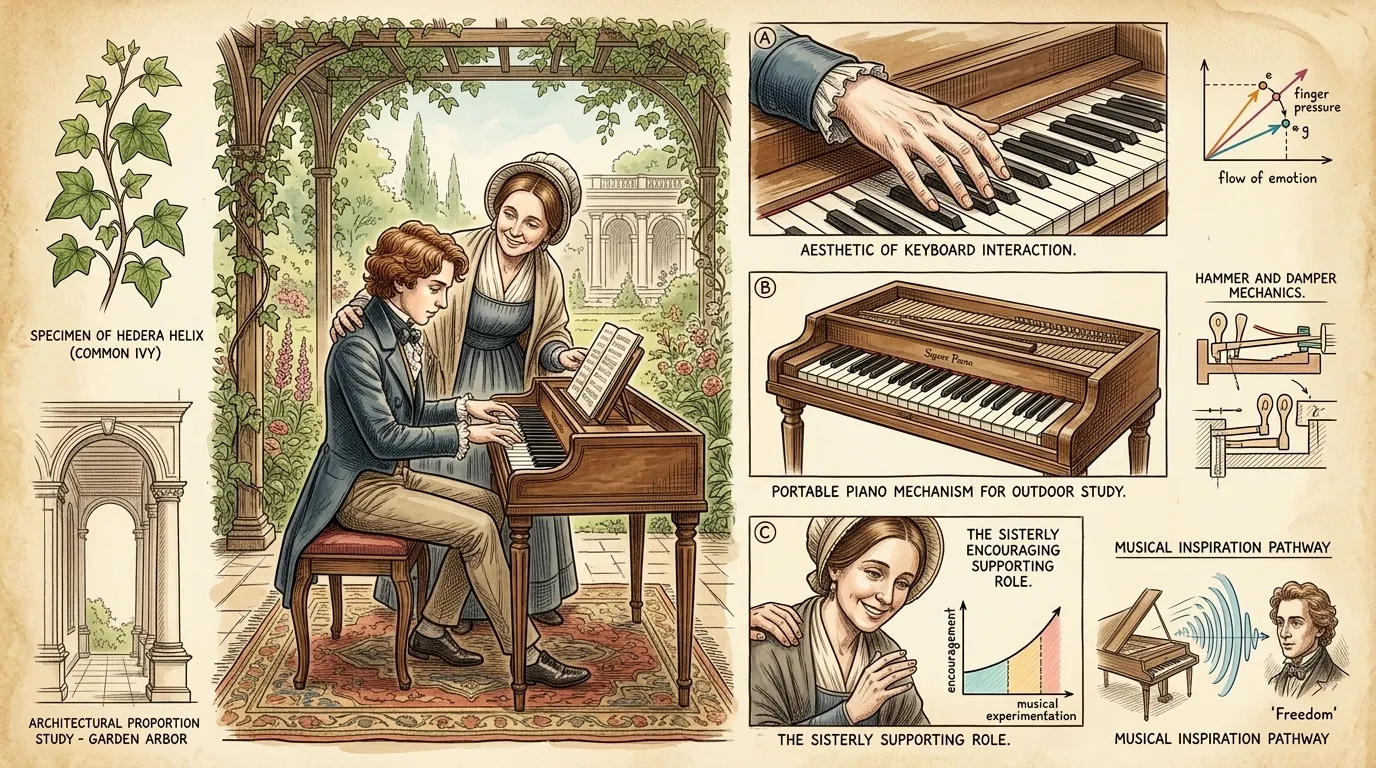
Long before Paris, in the vibrant, yearning heart of Warsaw, a young Fryderyk was already a prodigy, his fingers dancing across the keys, seeking not just notes, but stories. His early improvisations were audacious, challenging the staid classical forms he was taught.
"'My teacher, Józef Elsner, always emphasized structure,' young Fryderyk, a slender 12-year-old boy with pale skin and curly auburn hair, told his older sister Ludwika. 'But doesn't the heart sometimes yearn for freedom, for melodies that drift like dreams?'"
Page 3

Chopin arrived in Paris in 1831, a city brimming with artistic energy and political unrest. It was a dizzying world of salons, opera houses, and intellectual discourse, a place that felt both exhilarating and overwhelmingly complex, a visitor bringing nothing but riddles to his Polish soul.
"'This city, it is a grand, intricate machine,' Chopin, now a slender man in his early 20s with pale skin and curly auburn hair, remarked to a fellow émigré, 'every corner a new melody, every conversation a symphony. Yet, where is my own voice in this clamor?'"
Page 4
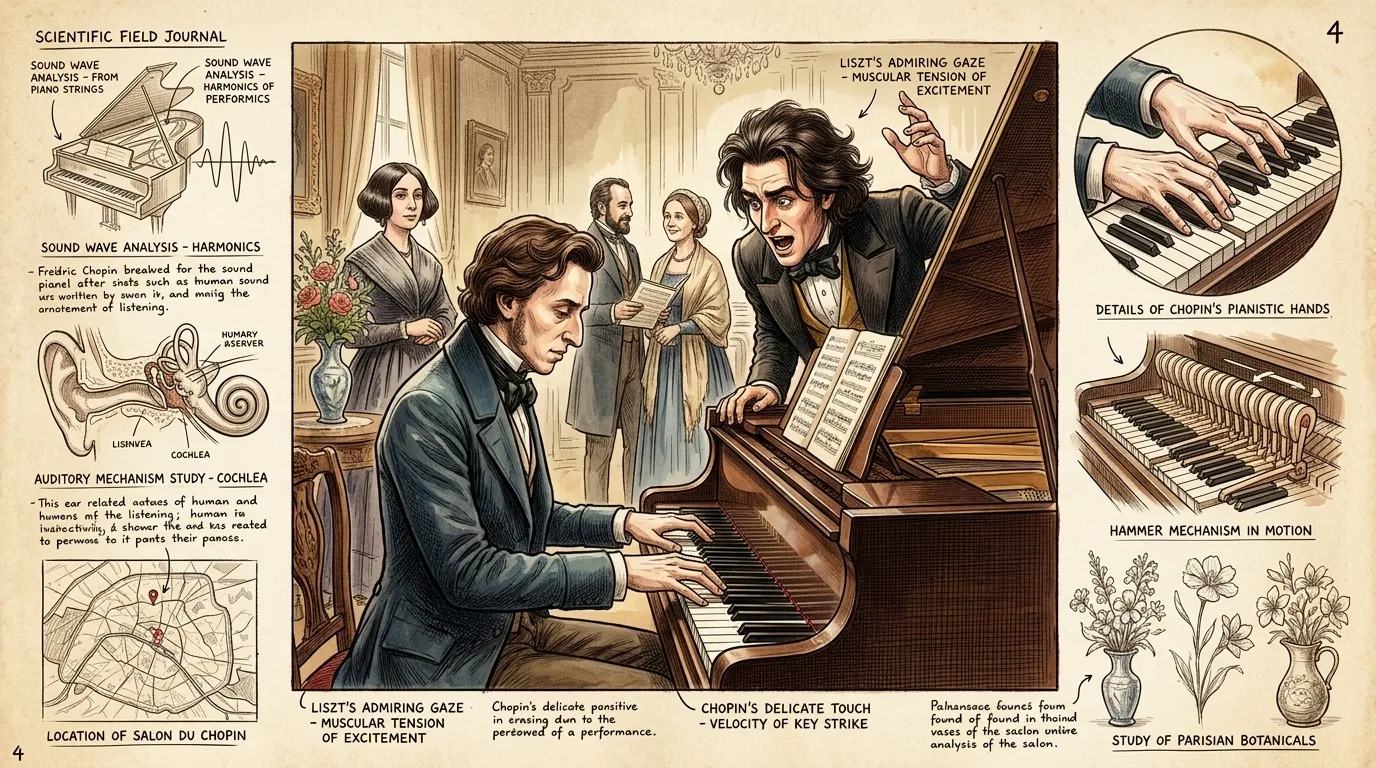
Parisian society, though initially daunting, quickly embraced Chopin. He shunned the grand concert halls for the intimacy of the salons, where his delicate touch and profound expressiveness captivated a discerning audience. Here, he encountered Franz Liszt, a virtuoso whose flamboyance contrasted sharply with Chopin's introspection.
"'Your fingers, Frédéric,' Franz Liszt, a charismatic man in his early 20s with a dramatic shock of dark hair, exclaimed after a performance, 'they weave spells! Such poetry, where others merely strike notes. Truly, 'Music begins where words leave off,' as Heinrich Heine wisely said.'"
Page 5
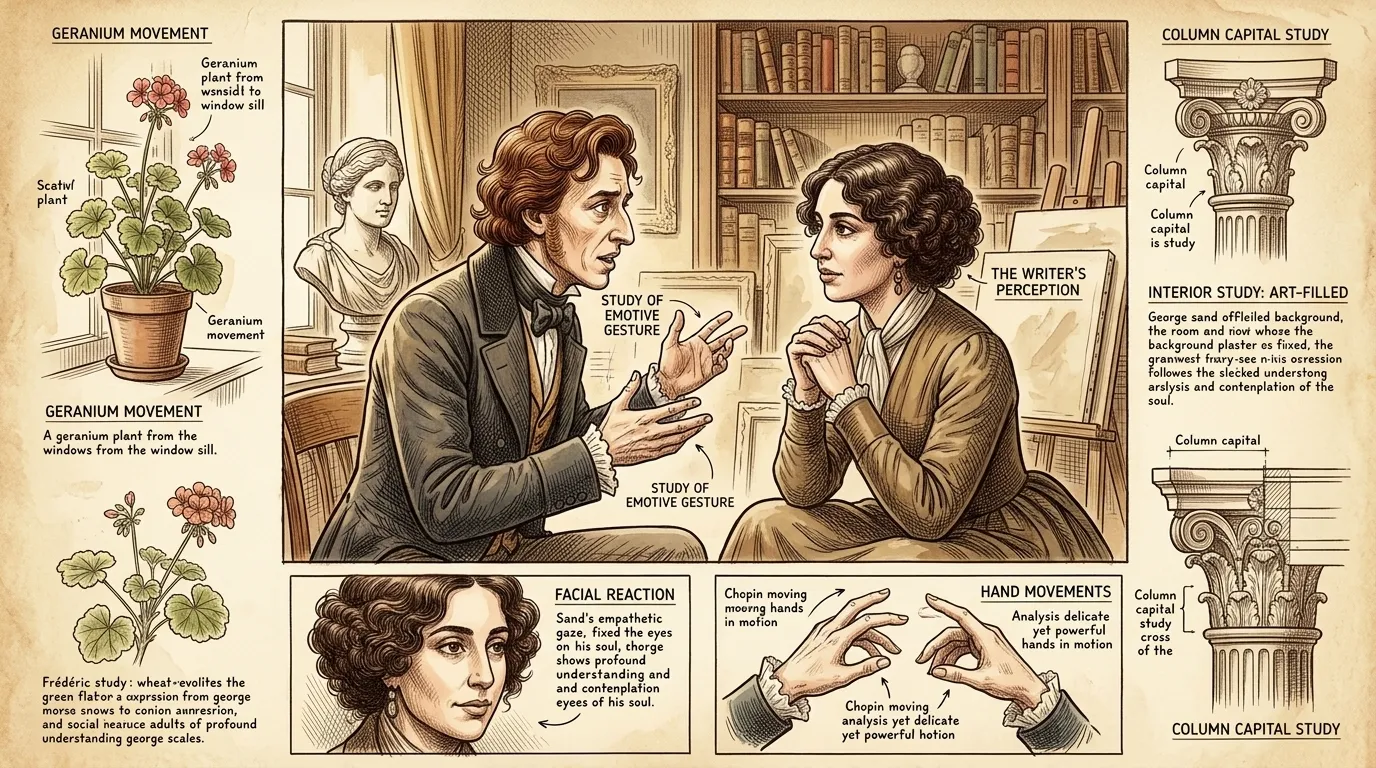
In 1836, Chopin met Aurore Dupin, better known as the novelist George Sand, a woman as unconventional and bold as he was reserved. Their tempestuous relationship brought both profound inspiration and immense personal strain, shaping the emotional landscape of his later Nocturnes.
"'Aurore understands the tempest within my soul,' Chopin, a slender man in his late 20s with pale skin and curly auburn hair, confessed to his friend Eugène Delacroix. 'She sees the shadows in my light, the fire beneath the ice, urging me to express them without reserve.'"
Page 6
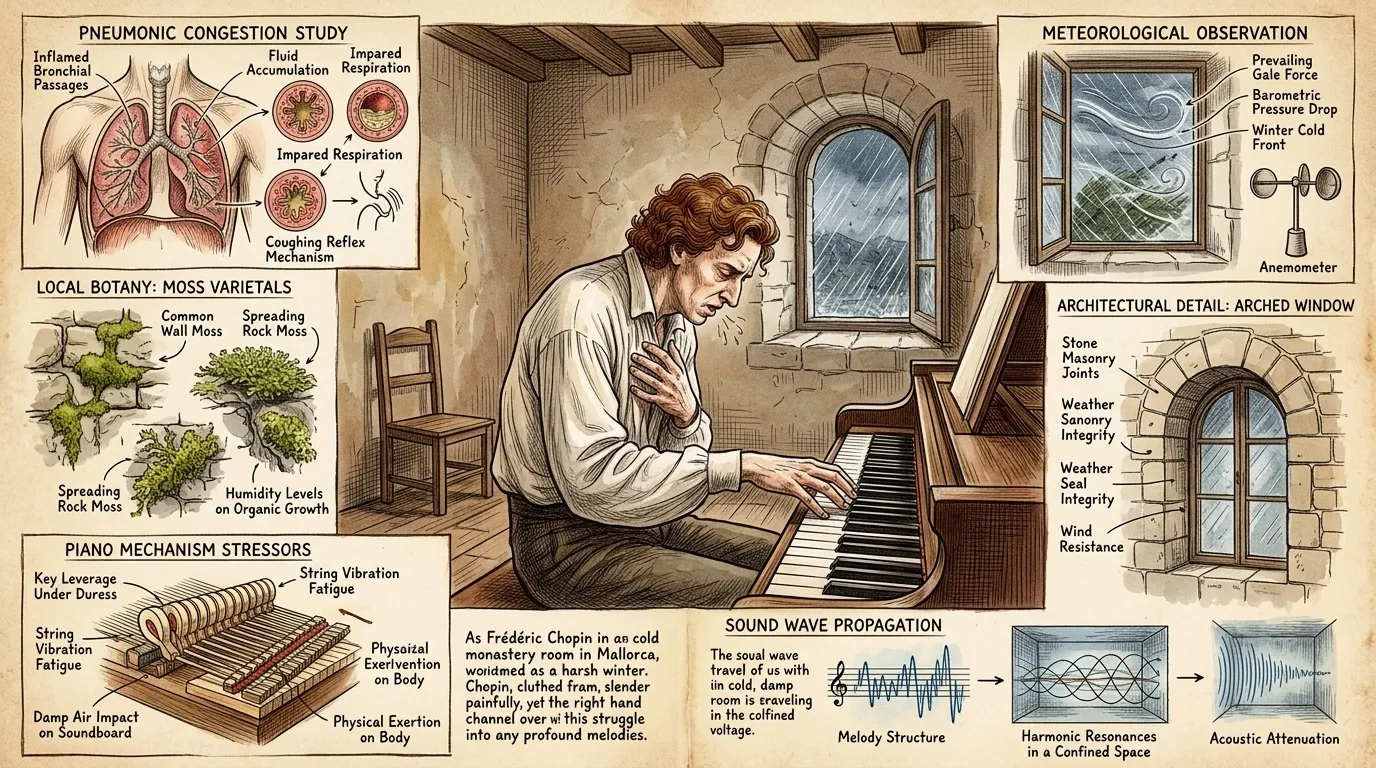
The infamous winter of 1838-39 in Mallorca, spent in a desolate monastery with George Sand and her children, became a crucible for Chopin's art. Battling severe tuberculosis and the island's harsh conditions, he poured his suffering into his music, creating some of his most profound Nocturnes.
"'The storms outside seem to mirror the storms within,' Chopin, frail and pale, a slender man in his late 20s with curly auburn hair, coughed, clutching his chest. 'Yet, from this desolation, a new kind of beauty emerges, stark and true, a melody only the heart can truly hear.'"
Page 7
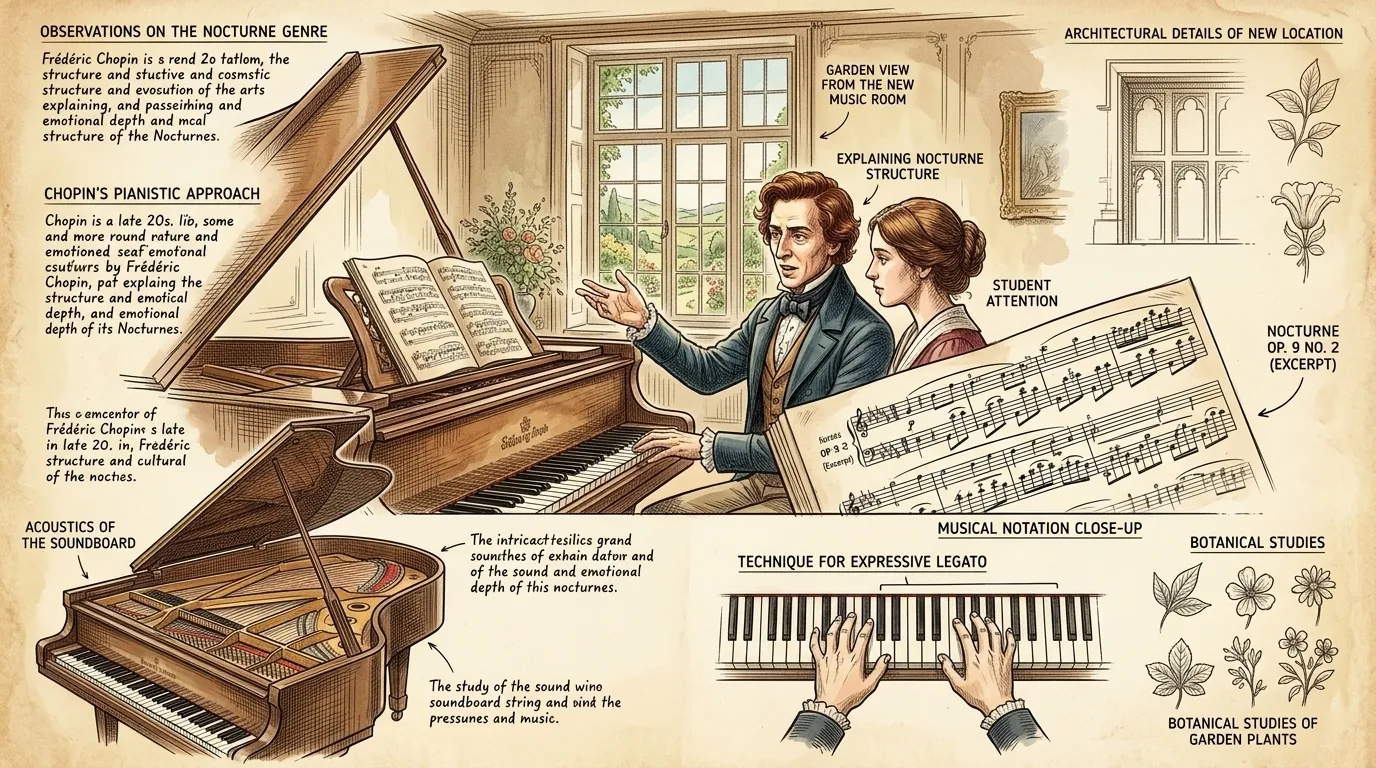
Chopin consciously diverged from the simpler Nocturnes of John Field, whose work had first inspired the genre. He infused his own compositions with operatic bel canto lyricism, daring chromaticism, and a structural complexity that transformed them from mere mood pieces into miniature dramas of the soul.
"'Field's Nocturnes are charming, like pleasant dreams,' Chopin, a slender man in his late 20s with pale skin and curly auburn hair, explained to a student, his hand gesturing over a score. 'But a true Nocturne, it must also encompass the nightmares, the passions, the deepest longings of the human heart.'"
Page 8
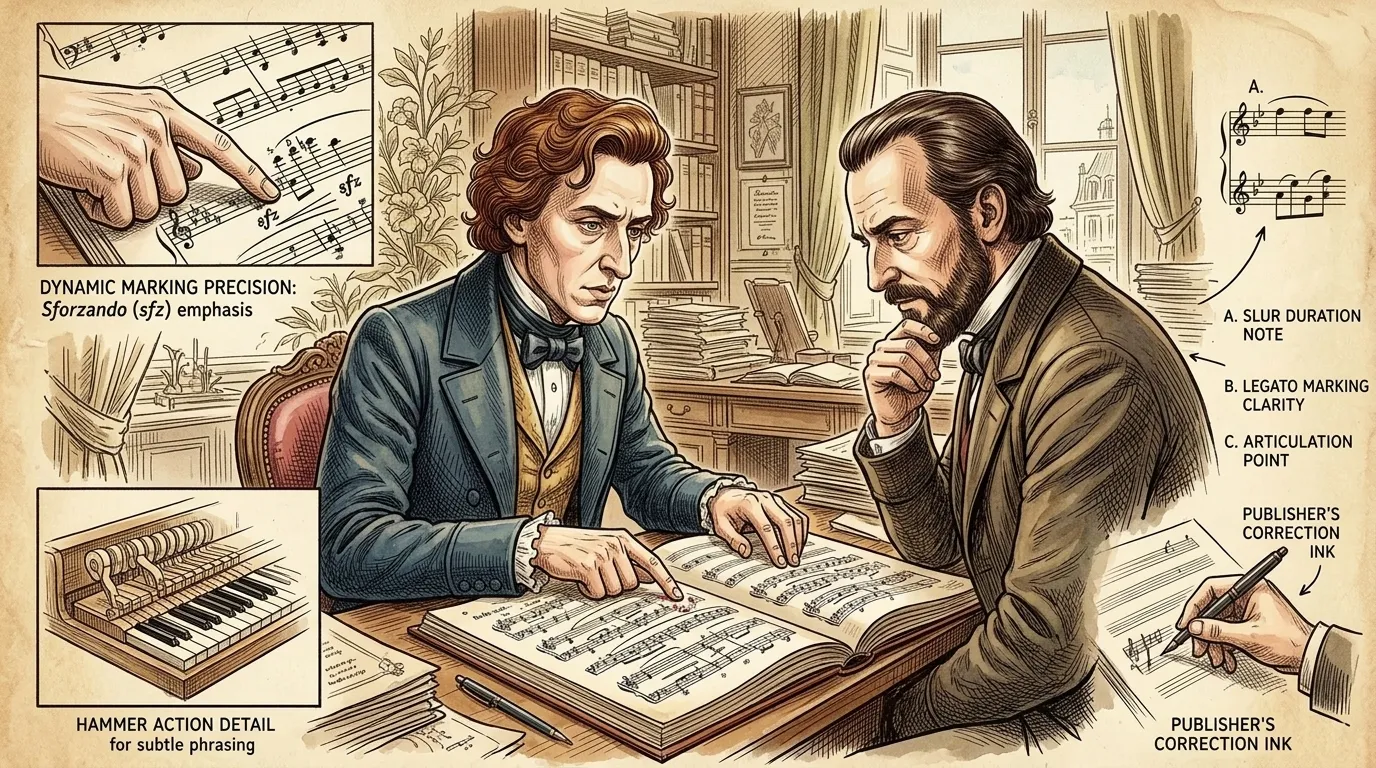
For Chopin, the published score was as crucial as the performance. He worked meticulously with his publishers, particularly Maurice Schlesinger, to ensure every note, every dynamic marking, every nuance of articulation was perfectly rendered, a testament to his exacting standards and 'creative method that solves problems differently.'
"'A misplaced accent, a forgotten slur,' Chopin, a slender man in his early 30s with pale skin and curly auburn hair, insisted to Schlesinger, tapping the score with a slender finger, 'can utterly change the soul of the music! Remember that beautiful harmonic suspension from my early improvisations? It demands this exact notation!'"
Page 9
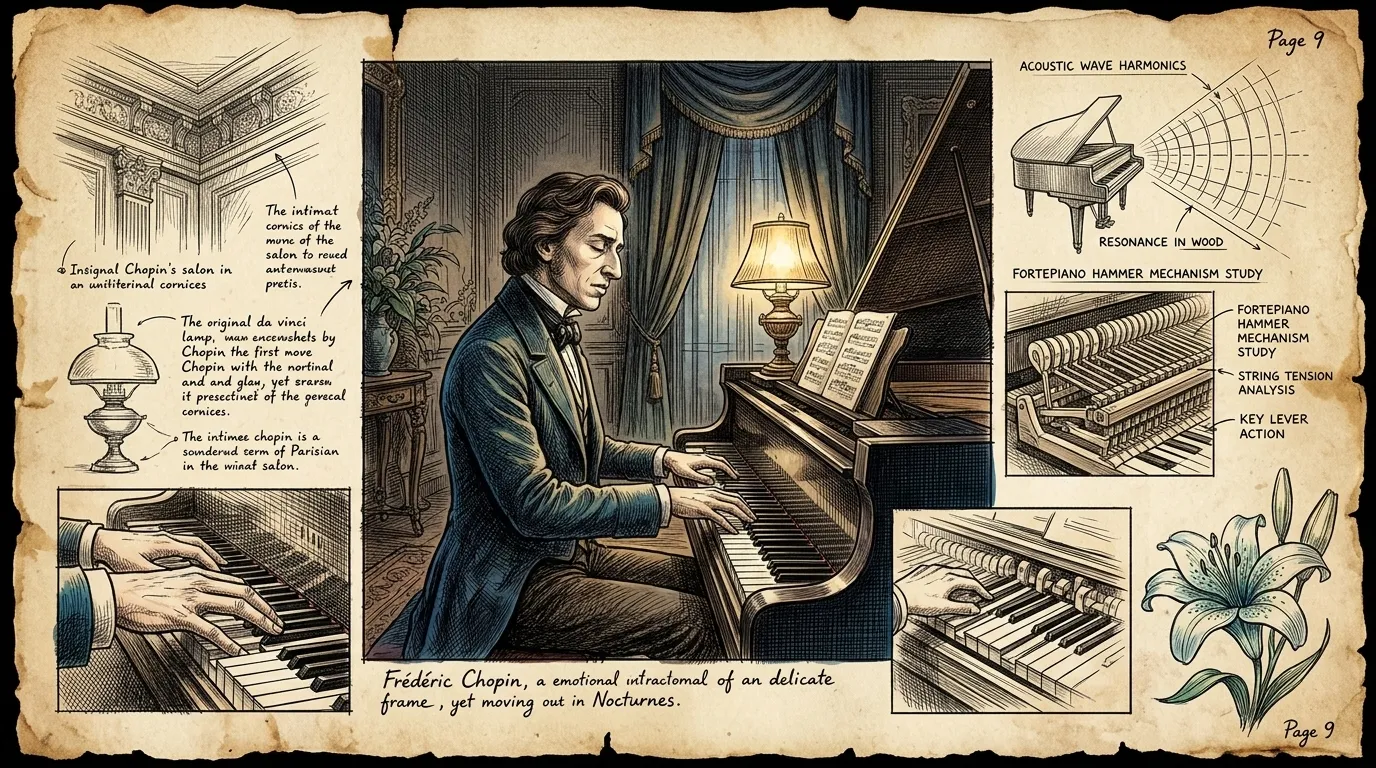
Though increasingly weakened by illness, Chopin's late performances of his Nocturnes in Paris and London were moments of sublime beauty and profound emotional power. Audiences were spellbound by the sheer depth he brought to the instrument, his music a poignant farewell.
"'It felt as if he was playing not just notes, but his very soul,' a critic wrote after his London concert, 'each phrase a breath, each pause a sigh, echoing the profound truth of his being.'"
Page 10
Frédéric Chopin passed away in 1849, but his Nocturnes live on, an eternal testament to his genius. They continue to be performed in concert halls across the globe, inspiring generations of pianists, composers, and listeners, their delicate melodies carrying the profound weight of a deeply felt human experience across centuries.
"'To truly play Chopin,' a contemporary pianist reflects, 'is to surrender to the music, to become a vessel for his exquisite sorrow and his boundless hope. He gave us not just notes, but a language for the inexpressible.'"
About this story
- Location: France
- Audience: general readers
Questions and answers
Questions and answers about Nocturnes by Frédéric Chopin (Paris, France — 1830s)
Read Wonder Arts on your phone
Wonder Arts is available on Android. Get Wonder Arts on Google Play.