Palace of Versailles (Versailles, France — 1661–1715)
Palace of Versailles (Versailles, France — 1661–1715) — an illustrated arts story, set in France. 10 illustrated pages, free to read on Wonder Arts.
Page 1

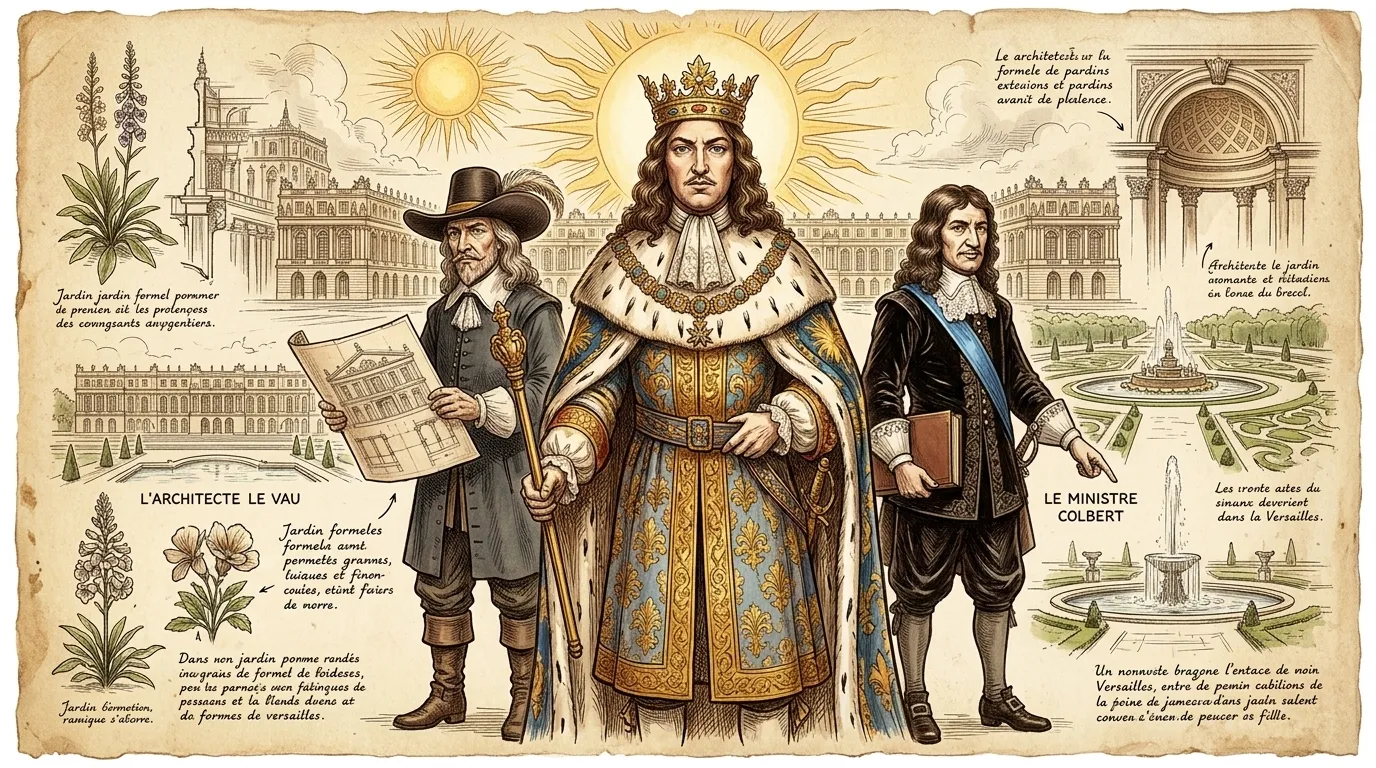
Louis XIV, the Sun King, surveyed his completed Palace of Versailles, a symbol of absolute power and artistic grandeur. The palace, begun in 1661 and expanded over decades, stands as a testament to Baroque architecture and French ambition. Covering 67,000 square meters with over 700 rooms, its construction nearly bankrupted France. Legend states the Hall of Mirrors alone cost more than the Louvre.
"Louis XIV murmured, barely audible, "L'État, c'est moi. The State, it is I.' A grand palace for a grand France!" His breath fogged in the cold air of the unheated hall."
Art Fact: The Palace of Versailles' Hall of Mirrors is 73 meters long and features 357 mirrors. It served as a pathway for royal processions and diplomatic events.
Page 2

The architect Louis Le Vau, tasked with transforming Louis XIII's hunting lodge into a palace, paced the grounds. His initial designs were ambitious, but the scale of the king's vision demanded more. André Le Nôtre's landscaping was already reshaping the surrounding forests into formal gardens.
"Le Vau turned to Le Nôtre, saying, "André, the king desires a palace, not merely a grand house. We must think on a scale unseen before, a total work of art." Le Nôtre replied, "Indeed, Louis. The gardens must echo the palace, reflecting his glory to the heavens.""
Art Fact: Louis Le Vau's original plans involved encasing Louis XIII's existing hunting lodge within the expanded palace structure.
Page 3

Jean-Baptiste Colbert, the Minister of Finance, reviewed the palace's accounts with mounting concern. The sheer expense threatened to cripple the French economy. Yet, defying the king was unthinkable. He sought new avenues for revenue, determined to fund Louis's grand vision.
""'A penny saved is a penny earned,'" Colbert muttered, quoting Benjamin Franklin, a man not yet born, his words reaching through time in a twist of fate. "But how can one save when the king's ambition knows no bounds? The gardens, the fountains, the art... It is endless.""
Art Fact: Jean-Baptiste Colbert implemented mercantilist policies to increase France's wealth and fund the Palace of Versailles.
Page 4

The sculptor Jean-Baptiste Tuby oversaw the casting of the Apollo Fountain, a central feature of the Versailles gardens. The bronze figures of Apollo rising from the sea, pulled by four horses, were meant to symbolize Louis XIV's role as the Sun King. The immense scale of the sculpture required innovative casting techniques.
"Tuby shouts to his assistants, "Careful with the molten bronze! This is not merely metal we pour; it is the very image of the king's glory!" An assistant shouts back, "The molds are ready, Monsieur Tuby!""
Art Fact: The Apollo Fountain depicts the sun god emerging from the sea, a metaphor for Louis XIV's reign.
Page 5

Charles Le Brun, the First Painter to the King, directed the decoration of the Hall of Mirrors. He envisioned a space where light and reflection would create a dazzling effect. The paintings on the ceiling glorified Louis XIV's reign, while the mirrors reflected the beauty of the gardens outside.
"Le Brun instructed his artists, "The light must dance! Each mirror, each brushstroke, must amplify the king's magnificence!" An artist responds, "But Monsieur Le Brun, how can we capture such boundless ambition on canvas?""
Art Fact: The Hall of Mirrors was designed to impress visiting dignitaries and showcase French artistic skill.
Page 6

The engineer Arnold de Ville struggled with the immense challenge of supplying water to the fountains of Versailles. The existing sources were insufficient, requiring the construction of the Machine de Marly, a complex system of pumps and aqueducts.
"De Ville explained to his team, "We must find a way to elevate water to power these fountains! The glory of the King is at stake." One of his team members inquired, "But Monsieur, is this possible with the technology of this time?"
Art Fact: The Machine de Marly was one of the most complex engineering projects of the 17th century, designed to supply water to the fountains of Versailles.
Page 7

Versailles became the center of French court life under Louis XIV. Elaborate ceremonies, balls, and theatrical performances were held to impress foreign dignitaries and reinforce the king's authority. The palace was a stage for power, where every detail was carefully orchestrated.
"Louis XIV observed a rehearsal for a court ballet, commenting, "Everything at Versailles must be perfect. From the gardens to the dances, all must reflect the grandeur of France!" A courtier added, "Indeed, Sire. Your magnificence is beyond compare!""
Art Fact: Versailles became a symbol of absolute monarchy under Louis XIV, where court life was meticulously controlled.
Page 8

As the palace neared completion, Louis XIV reflected on the immense effort and expense that had gone into its creation. Versailles was not merely a residence; it was a statement of French power and artistic achievement, though costly to the nation.
"Looking out at the completed palace, Louis murmured, 'Great power involves great responsibility.' 'For there is no greatness without a mixture of madness,' as Aristotle said long ago, a wisdom of centuries brought here by a whim of time."
Art Fact: The Palace of Versailles solidified Louis XIV's image as the Sun King and a symbol of absolute power.
Page 9

Years after Louis XIV's death, the French Revolution cast a long shadow over Versailles. The palace, once a symbol of royal extravagance, was stormed by revolutionaries. The monarchy's excesses became a rallying cry for change.
"A revolutionary declared, "This palace is a monument to tyranny! It must be seized for the people!" Another replied, "It's a symbol of the old regime. We can not ignore this extravagance""
Art Fact: The storming of Versailles was a pivotal moment in the French Revolution, symbolizing the overthrow of the monarchy.
Page 10
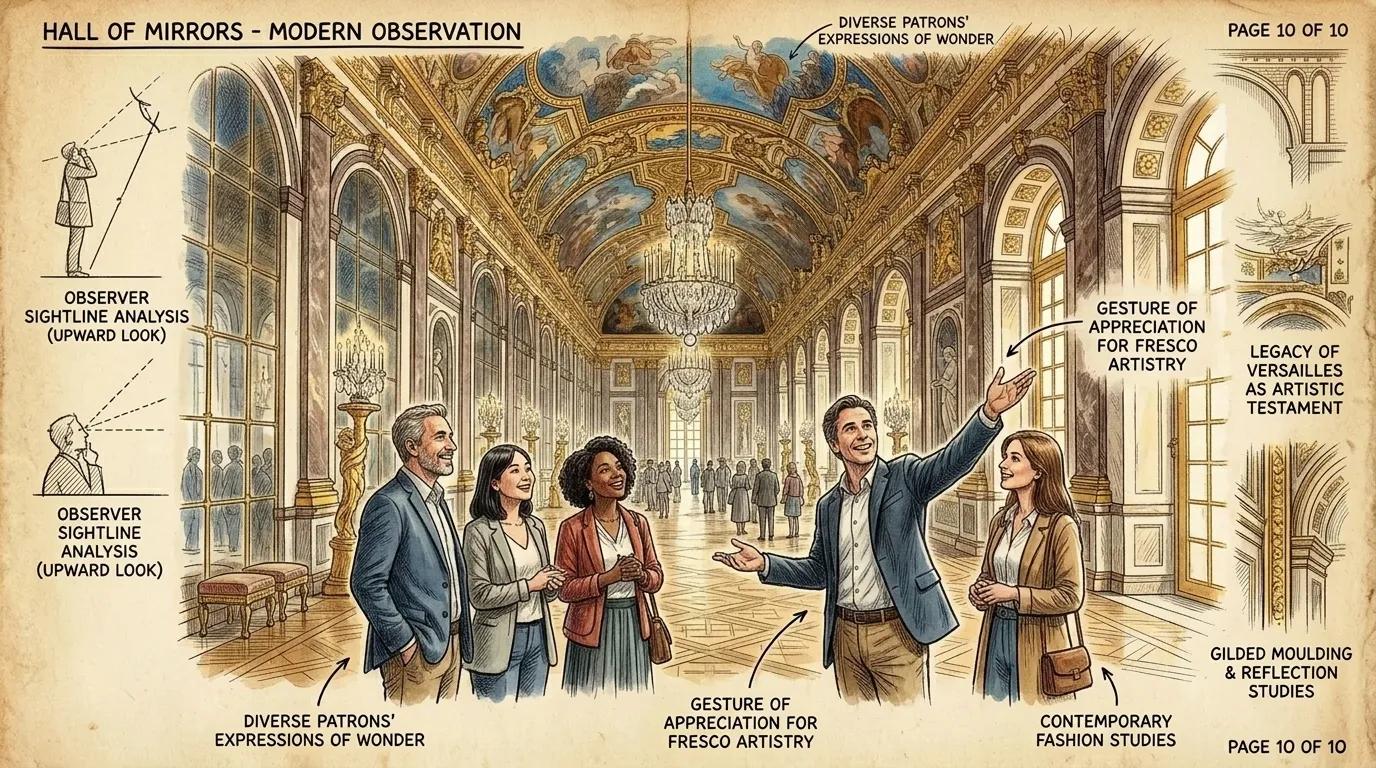
Today, the Palace of Versailles stands as a UNESCO World Heritage site, attracting millions of visitors each year. The echoes of Louis XIV's ambition still resonate within its walls. Artists, historians, and dreamers are forever changed by experiencing Versailles and the grandeur that lies within.
"A museum visitor remarked, "Versailles is more than just a palace; it is a testament to human creativity and the enduring power of art. What a legacy he has left!""
Art Fact: Versailles is a UNESCO World Heritage site and one of the most visited cultural attractions in France. Its legacy endures because its beauty and artistry can be enjoyed for generations.
About this story
- Location: France
- Audience: general readers
Questions and answers
Questions and answers about Palace of Versailles (Versailles, France — 1661–1715)
Read Wonder Arts on your phone
Wonder Arts is available on Android. Get Wonder Arts on Google Play.
More Wonder Arts stories
- Parthenon (Athens, Greece — 432 BC)
- Pauline Bonaparte as Venus Victrix by Antonio Canova (Rome, Italy — 1805)
- Peacock Throne by Shah Jahan (Delhi, India — 1628)
- Perseus with the Head of Medusa by Benvenuto Cellini (Florence, Italy — 1554)
- Petra (Ma'an, Jordan — c. 5th Century BC)
- Pietà by Michelangelo (Vatican City, Rome — 1499)