Pauline Bonaparte as Venus Victrix by Antonio Canova (Rome, Italy — 1805)
Pauline Bonaparte as Venus Victrix by Antonio Canova (Rome, Italy — 1805) — an illustrated arts story, set in Italy. 10 illustrated pages, free to read on Wonder Arts.
Page 1
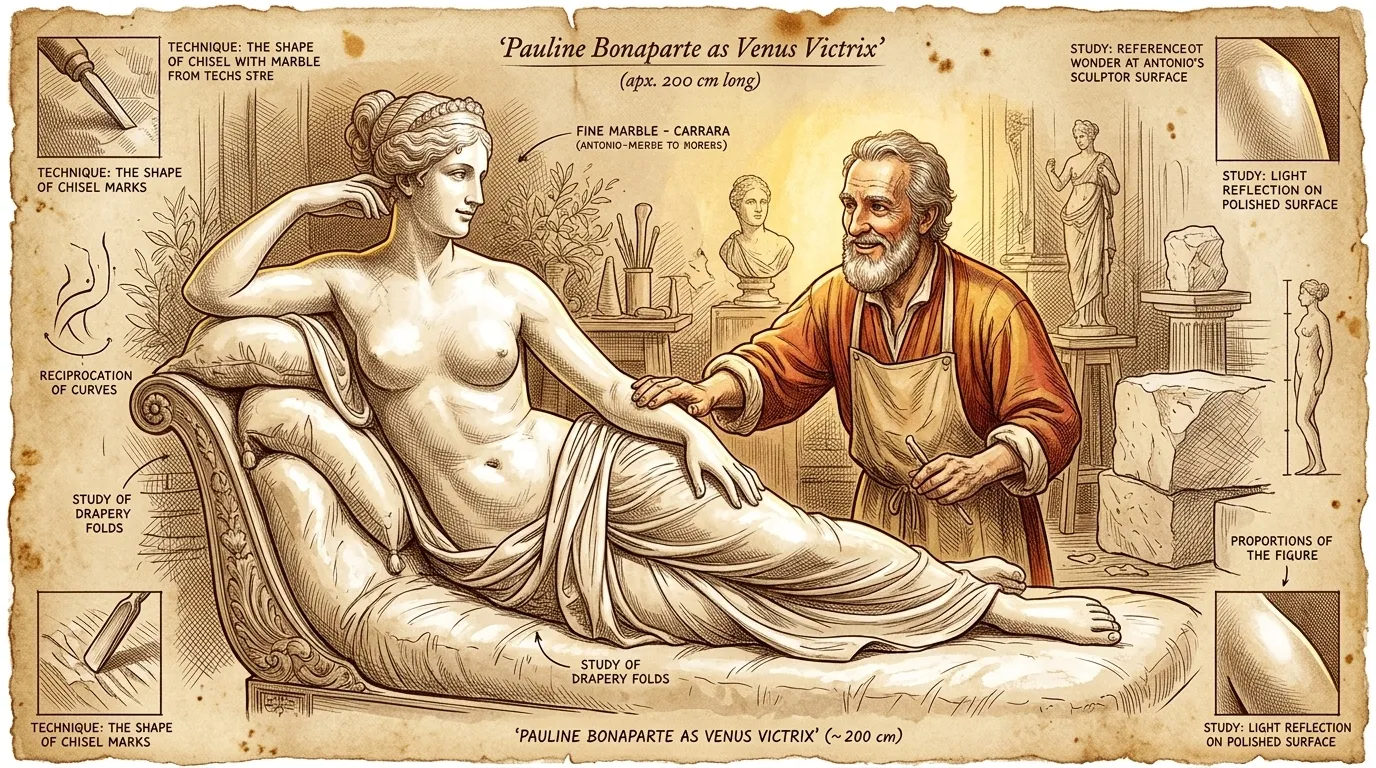
Antonio Canova stands before his masterpiece, 'Pauline Bonaparte as Venus Victrix,' completed in 1805. The marble gleams, a testament to years of meticulous work. This life-sized sculpture, measuring 200 cm long, currently resides in the Galleria Borghese in Rome. Its creation caused a stir, not only for Pauline's semi-nude portrayal but also for the audacious blend of classical idealism with contemporary portraiture.
"Canova sighs, running a hand over the cool marble. 'To capture her likeness and elevate her to a goddess... a delicate balance indeed,' he murmurs to himself, the lone sound in the studio."
Art Fact: The sculpture's creation was controversial due to Pauline Bonaparte's status and the revealing nature of the work.
Page 2
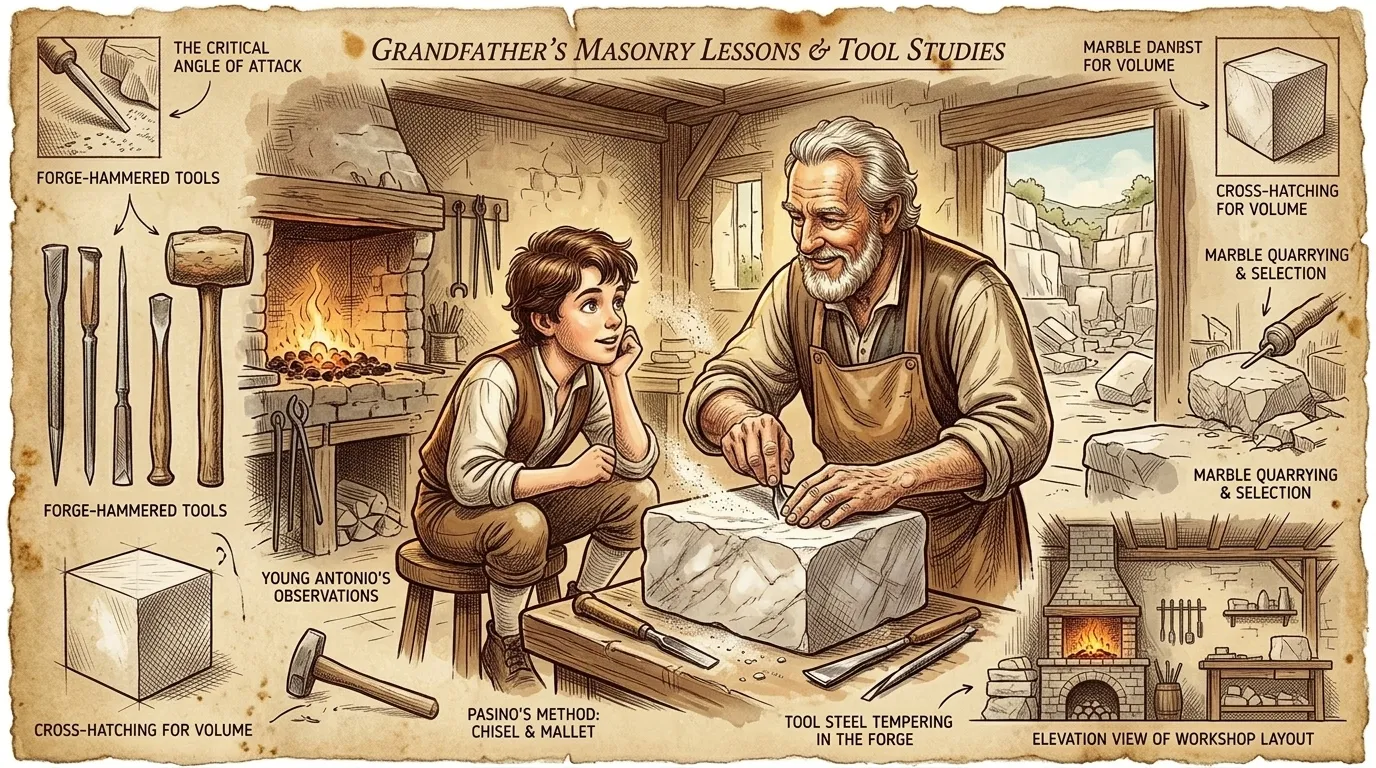
Canova, a young boy in Possagno, watches intently as his grandfather, Pasino Canova, a stonemason, shapes a block of marble. Pasino's hands, weathered and strong, move with practiced ease. This early exposure to the craft ignites a passion within the boy, a love for form and the potential hidden within the stone.
"Pasino smiles, noticing Antonio's rapt attention. 'The marble speaks to you, Antonio,' he says, his voice raspy. 'You must listen to its whispers. As Leonardo da Vinci said: 'He who does not value life does not deserve it.' Every stone has a story, boy."
Art Fact: Antonio Canova's grandfather, Pasino Canova, was a stonemason who played a crucial role in fostering his early artistic talent.
Page 3
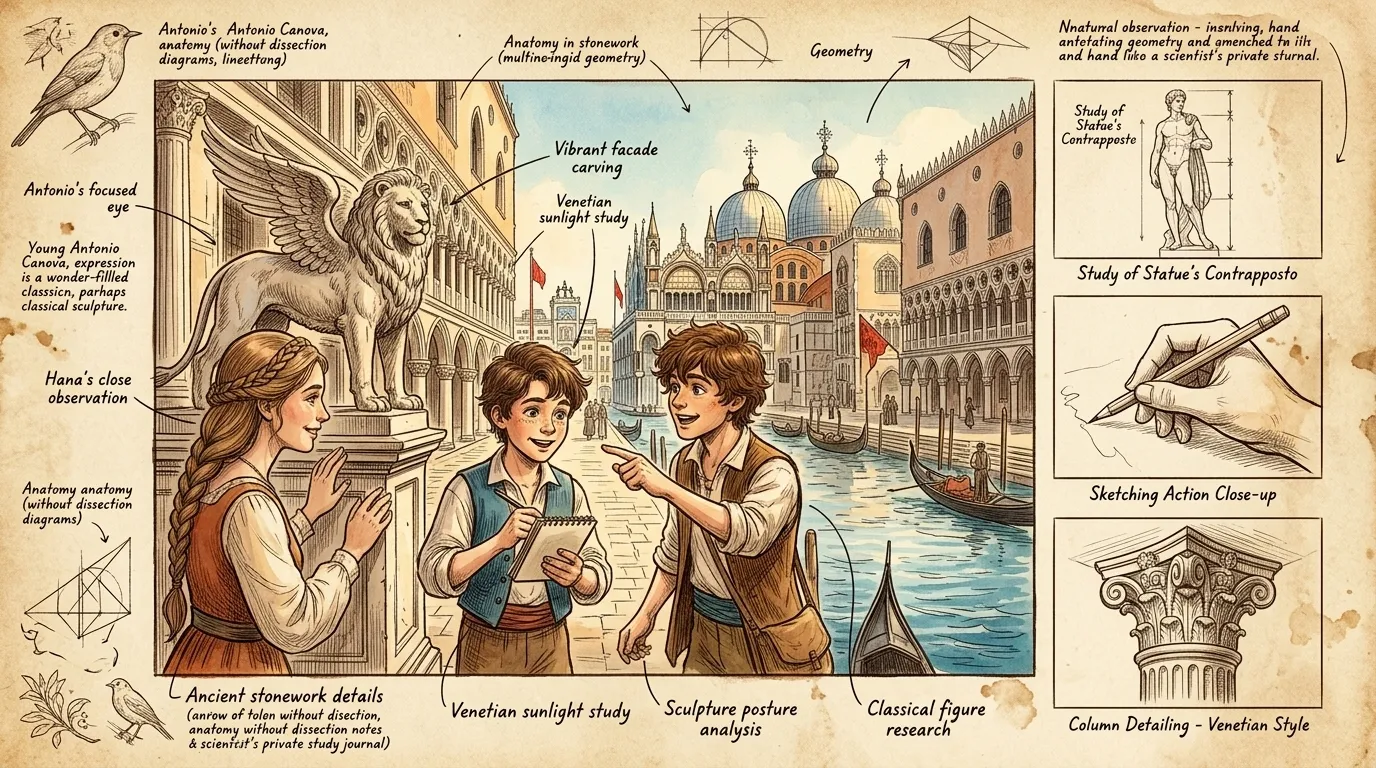
In Venice, a young Canova is mesmerized by the classical sculptures adorning the city's palazzi. He spends hours sketching these masterpieces, studying their proportions and lines. The Doge's Palace, the Rialto Bridge—every corner of Venice is a source of inspiration.
"A fellow student, Mirko, leans in, his eyes wide with excitement. 'Look at that statue, Hana! Its so cool.' Hana scoffed. 'It is cool. As Michelangelo said, 'I saw the angel in the marble and carved until I set him free.''"
Art Fact: Venice, with its rich artistic heritage, profoundly influenced Canova's artistic development.
Page 4
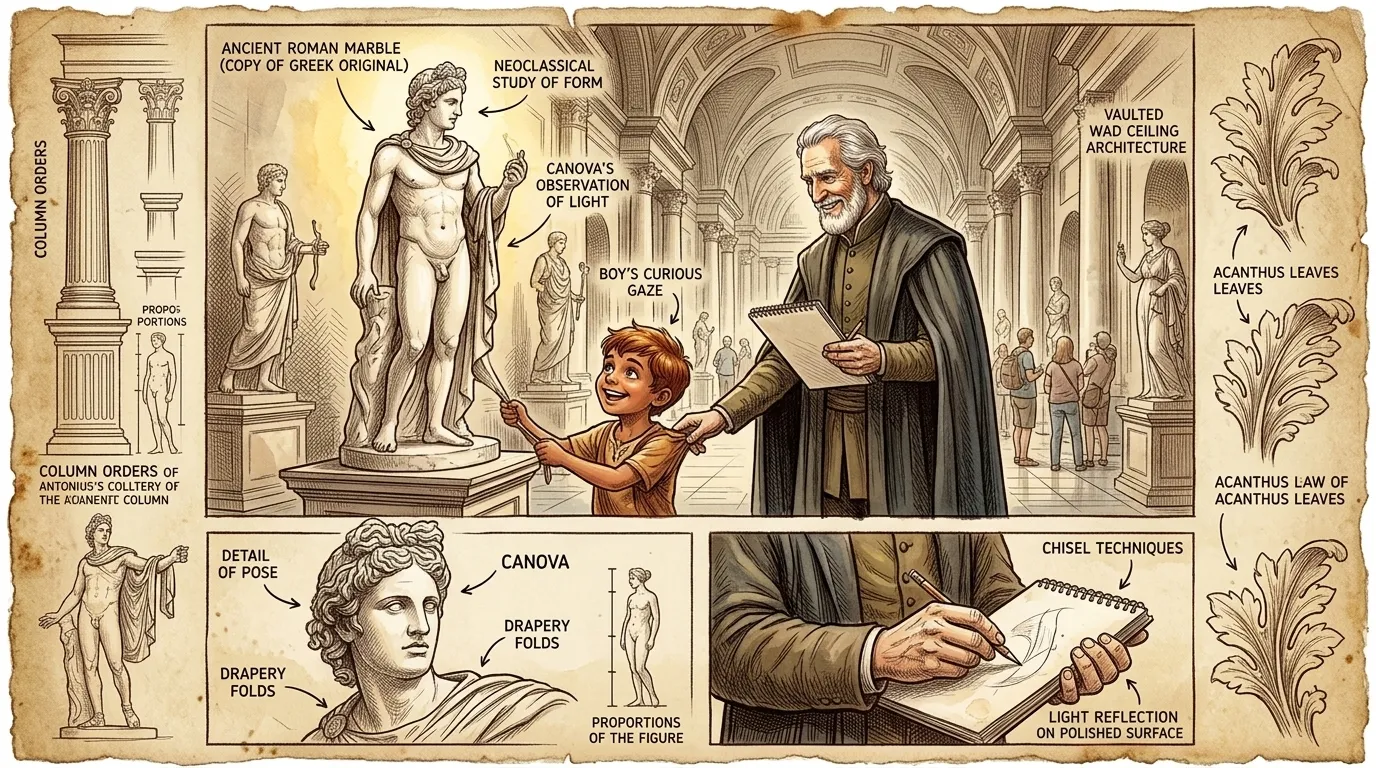
Canova arrives in Rome, eager to immerse himself in the city's classical heritage. He studies the ancient sculptures, drawing inspiration from their timeless beauty. The Vatican Museums become his classroom, and the works of Michelangelo and Raphael his teachers.
"Arjun, a curious 7-year-old male, small and wiry, with light brown skin with warm undertones and short wavy auburn hair with copper glints, tugs at Canova's sleeve. 'What do you think of all this stuff, Canova?'. 'The Vatican is like a treasure chest. The sculpture inspires me, like it inspired Shakespeare when he wrote, 'The web of our life is of a mingled yarn, good and ill together.'"
Art Fact: Canova's arrival in Rome marked a turning point in his career, exposing him to the city's rich classical heritage.
Page 5
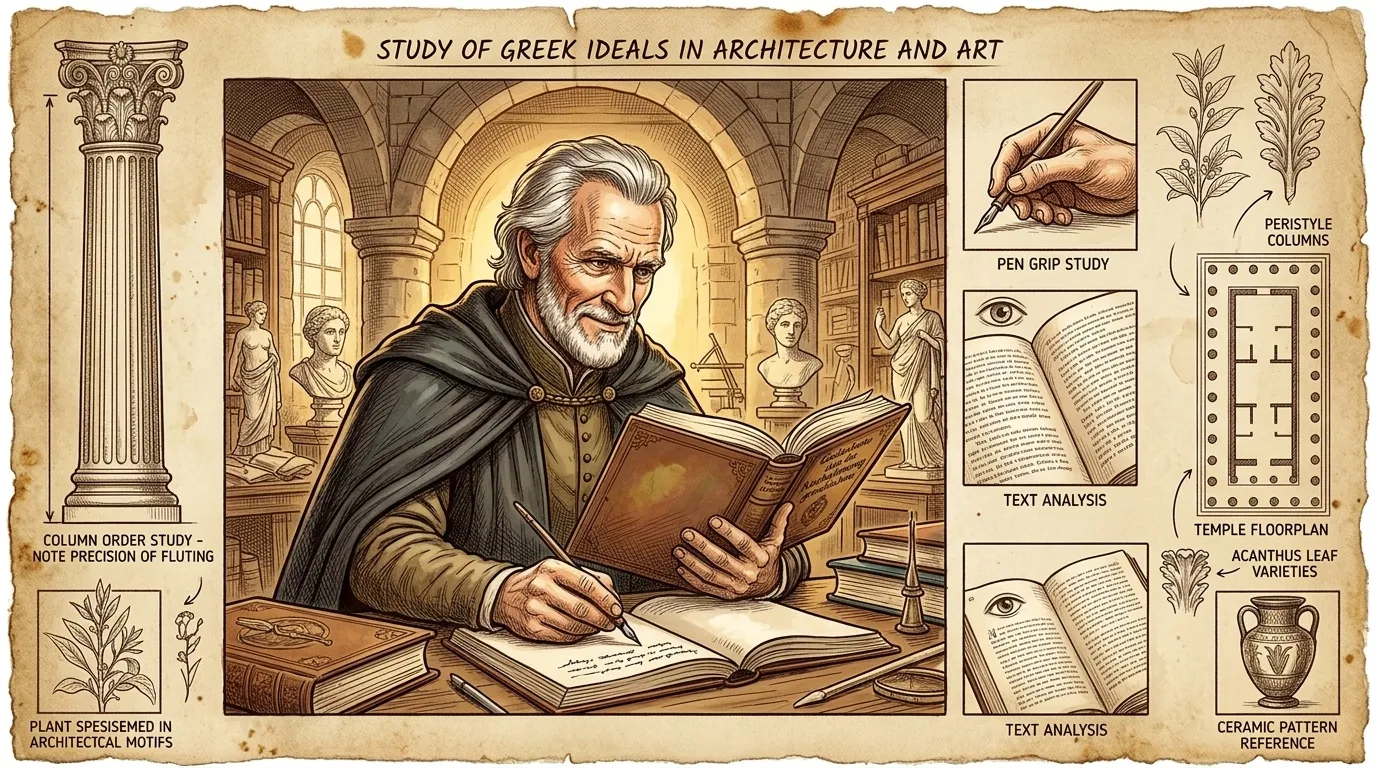
Canova encounters the writings of Johann Joachim Winckelmann, the father of modern art history. Winckelmann's emphasis on the imitation of classical ideals deeply resonates with Canova, shaping his artistic philosophy. Winckelmann's concept of 'noble simplicity and quiet grandeur' becomes Canova's guiding principle.
"Canova pores over Winckelmann's writings, his brow furrowed in concentration. 'To capture the essence of classical beauty... a noble pursuit indeed,' he mutters. 'As Winckelmann himself said, 'The only way for us to become great, perhaps inimitable, is to imitate the ancients.'"
Art Fact: Johann Joachim Winckelmann's writings had a profound influence on Canova's artistic philosophy, particularly his emphasis on the imitation of classical ideals.
Page 6
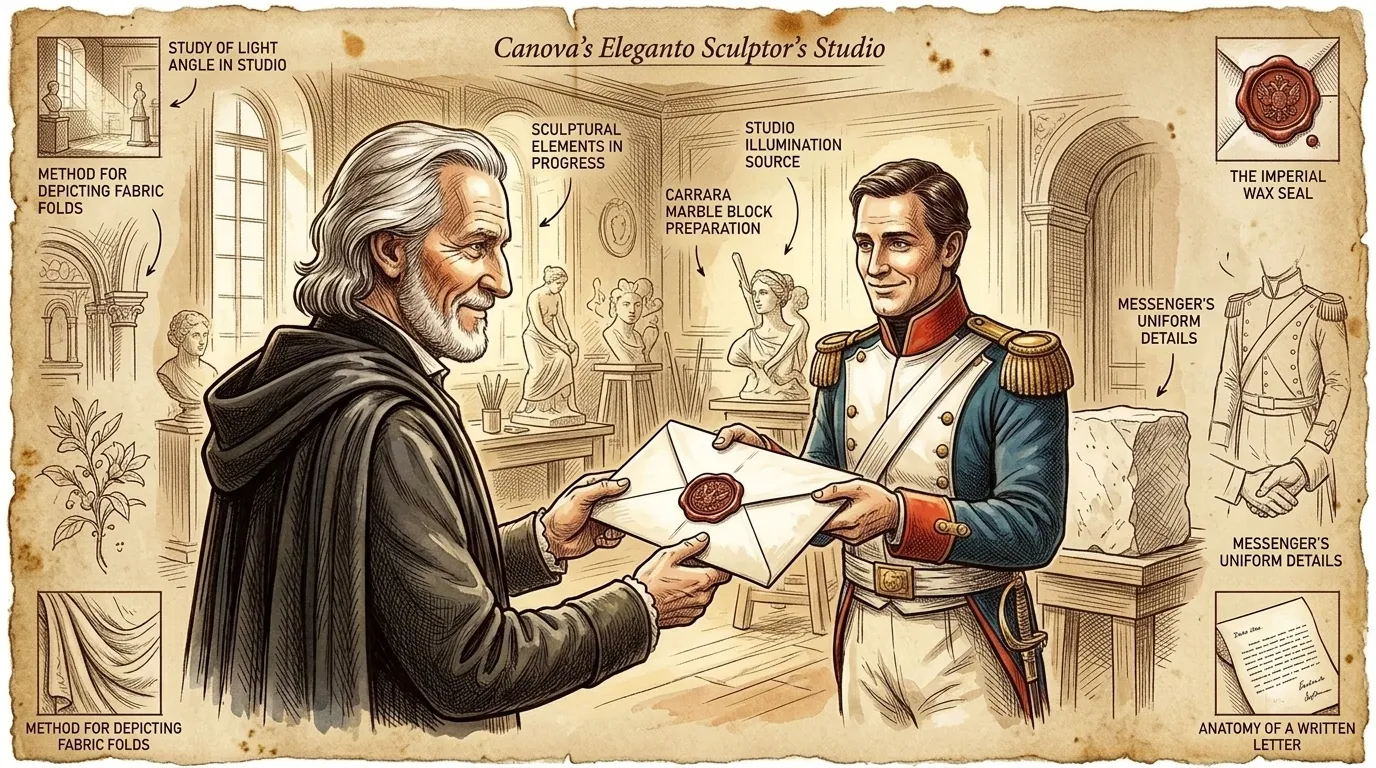
Canova receives a commission from Napoleon Bonaparte to create a sculpture of his sister, Pauline. The commission is a prestigious opportunity, but also a daunting challenge. Canova must capture Pauline's likeness while elevating her to the level of a classical goddess.
"A messenger delivers the commission to Canova. 'The Emperor requests a sculpture of his sister, Pauline,' the messenger says, handing Canova a sealed letter. 'It is a great honor, but also a great responsibility.' Canova sighs. 'As Julius Caesar said, 'The die is cast.' I must find a way to balance the demands of the commission with my artistic vision.'"
Art Fact: The commission from Napoleon Bonaparte to create a sculpture of his sister, Pauline, was a significant moment in Canova's career.
Page 7
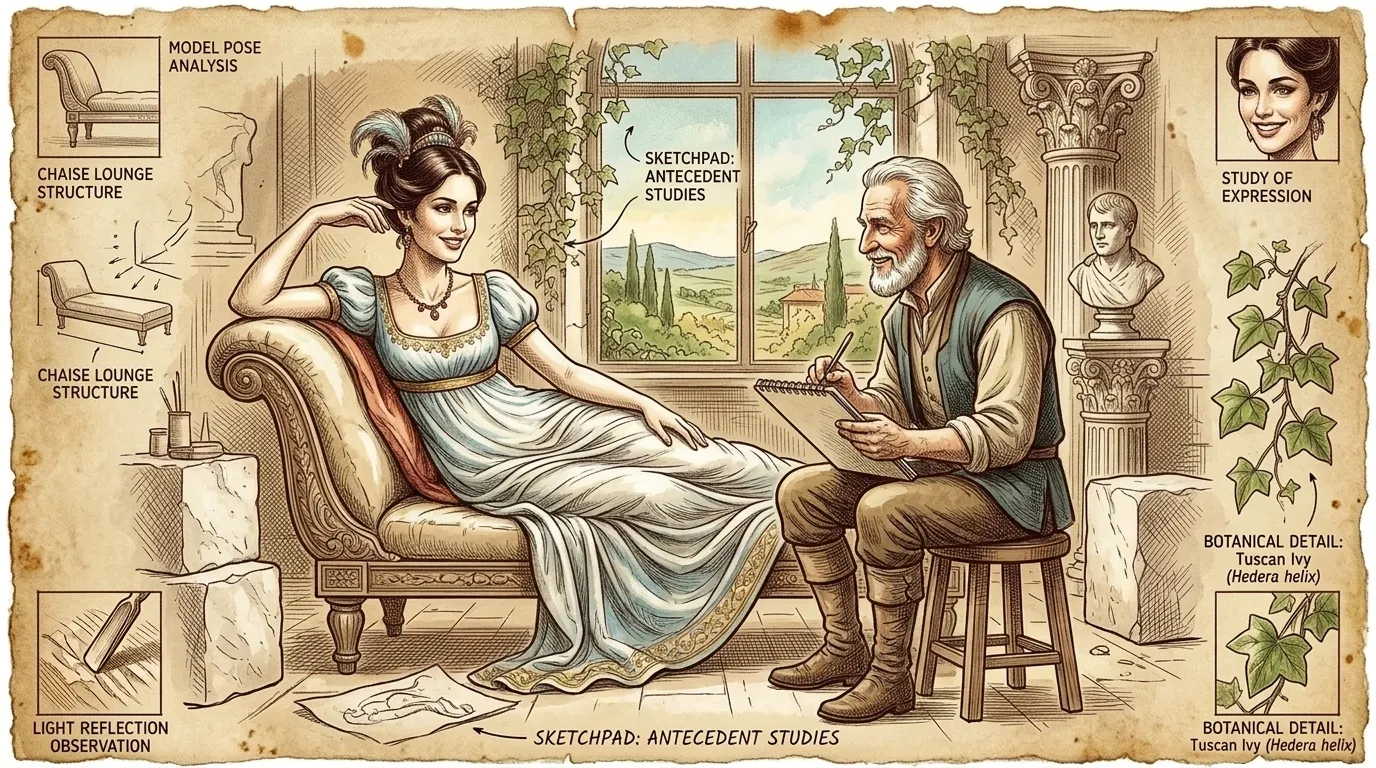
Pauline Bonaparte arrives at Canova's studio for the first sitting. Her beauty is undeniable, but her personality is complex. Canova studies her features, seeking to capture both her physical likeness and her inner spirit. They settle on the pose of Venus Victrix, a symbol of victory and beauty.
"Canova instructs Pauline on the pose. 'I see Venus in you, Pauline,' he says, sketching rapidly. 'But as Sophocles wrote: 'I must not cling to what is no longer true, in order to be safe.' So let us embrace the modern while honoring the ancient."
Art Fact: The decision to portray Pauline Bonaparte as Venus Victrix was a bold choice that blended classical idealism with contemporary portraiture.
Page 8
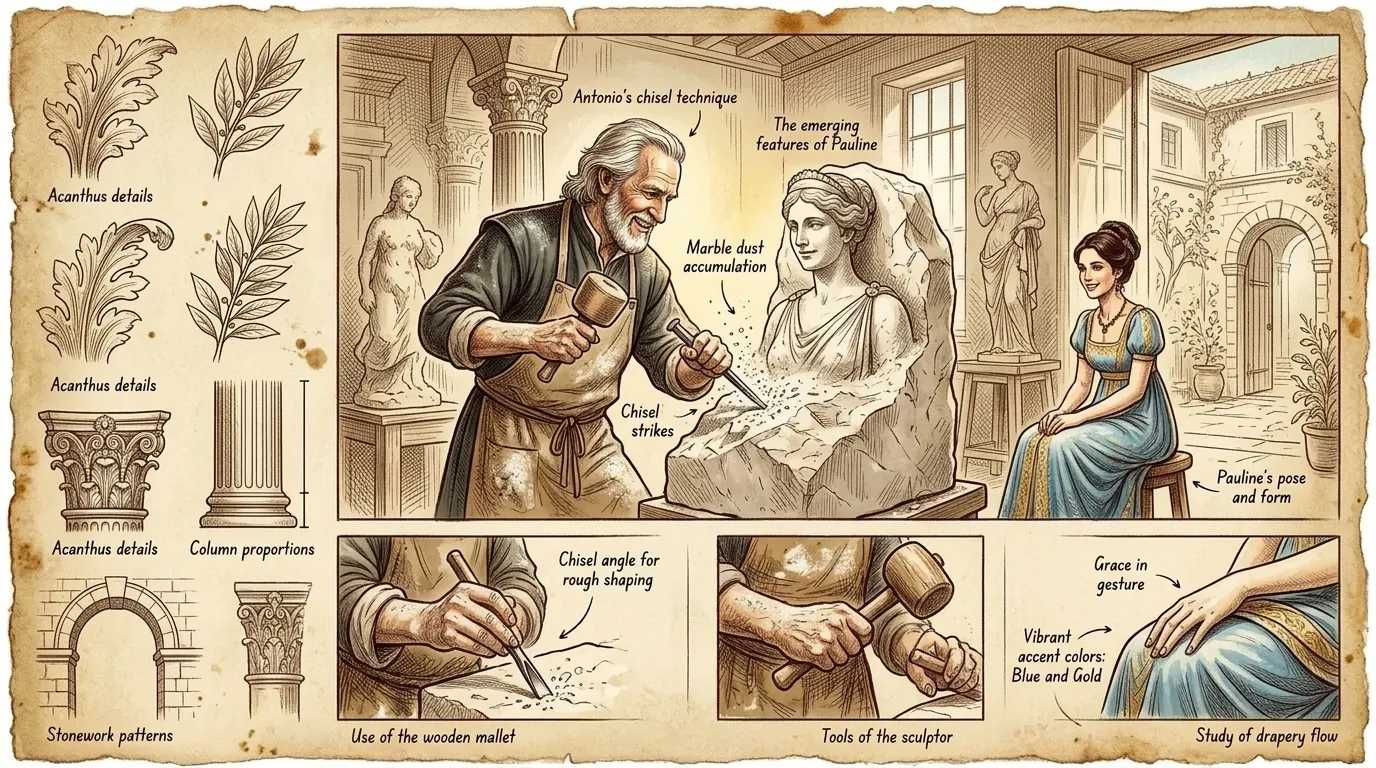
Canova begins to sculpt the marble, his chisels moving with precision and skill. He works tirelessly, day and night, driven by a desire to create a masterpiece. Slowly, Pauline's likeness emerges from the stone, transformed into the goddess Venus.
"Canova chips away at the marble, his brow furrowed in concentration. 'As Michelangelo says, 'Every block of stone has a statue inside it and it is the task of the sculptor to discover it'. But is hard work!"
Art Fact: Canova's meticulous craftsmanship and dedication to his art were essential to the creation of 'Pauline Bonaparte as Venus Victrix.'
Page 9
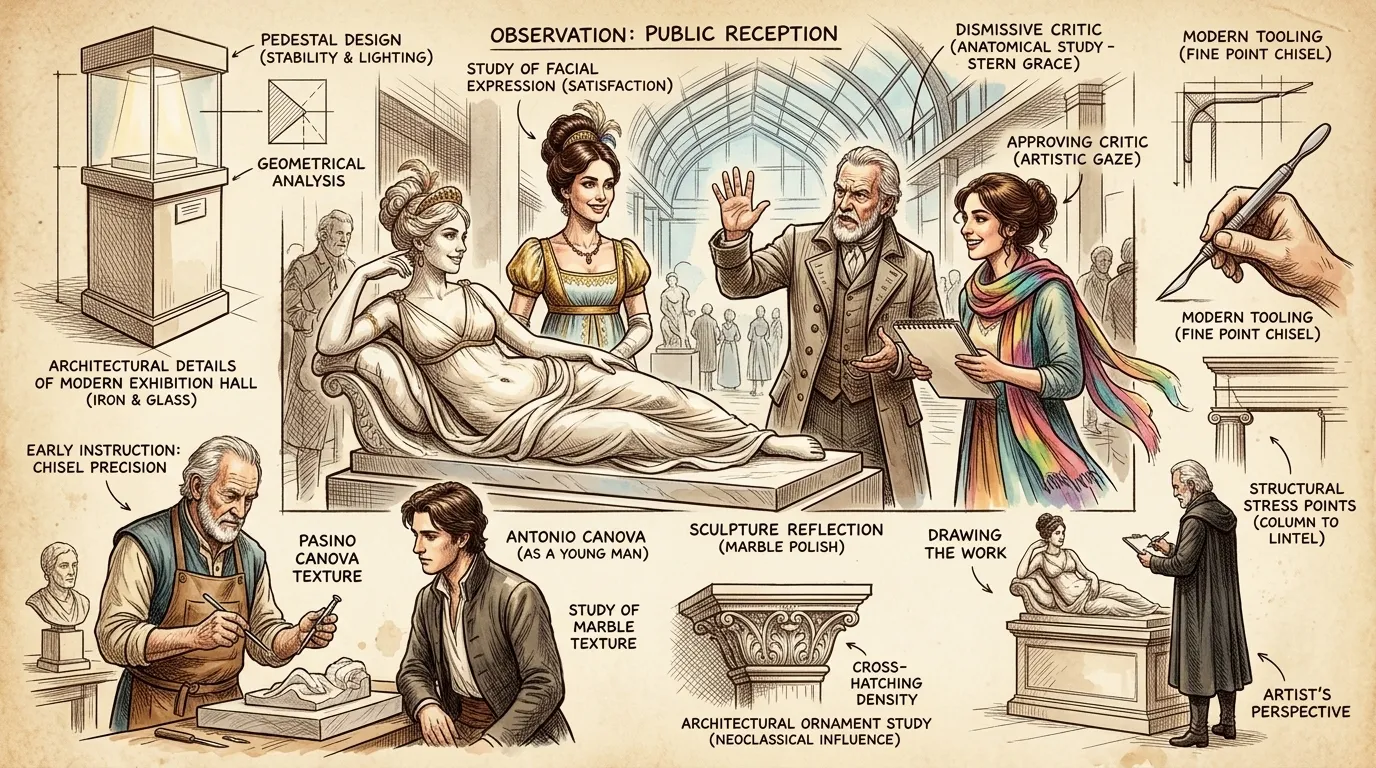
The completed sculpture is unveiled to the public, causing a sensation. Some critics praise Canova's skill and artistry, while others condemn the revealing nature of the work. Pauline herself is pleased with the sculpture, recognizing its beauty and power.
"Two critics discuss the sculpture. 'Canova has captured Pauline's beauty perfectly,' one says. 'But it is too revealing!' The other disagrees. 'As Oscar Wilde said, 'There is no such thing as a moral or an immoral book. Books are well written, or badly written. That is all.'"
Art Fact: The unveiling of 'Pauline Bonaparte as Venus Victrix' caused a public sensation, generating both praise and controversy.
Page 10
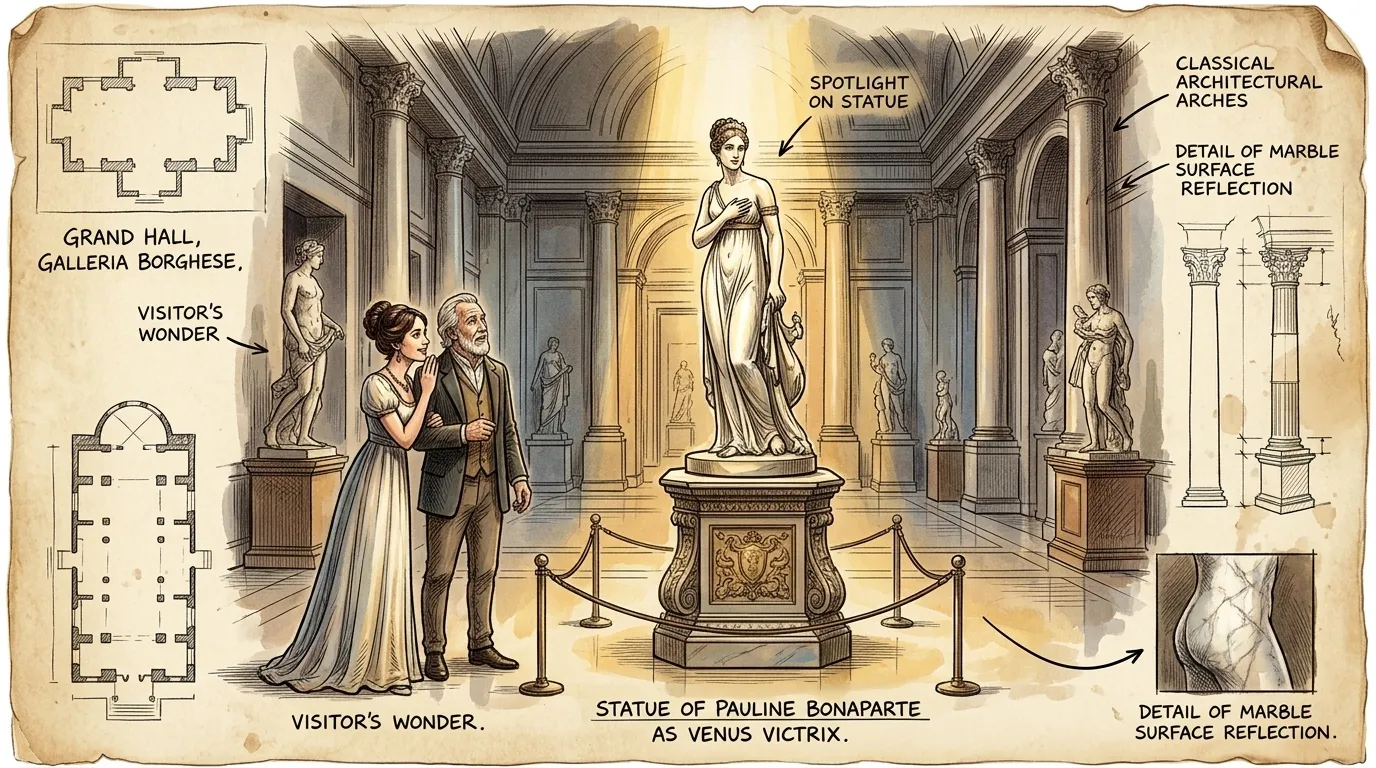
Today, 'Pauline Bonaparte as Venus Victrix' continues to captivate visitors at the Galleria Borghese in Rome. The sculpture stands as a testament to Canova's genius and Pauline's enduring beauty. It reminds us that art can transcend time, inspiring awe and wonder in generations to come. Canova's spirit lives on, his legacy etched in marble. As Michelangelo said, 'If people knew how hard I worked to get my mastery, it wouldn't seem so wonderful at all.'
"A visitor whispers, gazing at the sculpture in awe. 'It's breathtaking,' she says to her companion. 'A timeless masterpiece.'"
Art Fact: 'Pauline Bonaparte as Venus Victrix' remains a popular attraction at the Galleria Borghese in Rome, a testament to Canova's artistic genius and the enduring appeal of classical beauty.
About this story
- Location: Italy
- Audience: kids (ages 6–12)
Questions and answers
Read Wonder Arts on your phone
Wonder Arts is available on Android and iPhone and iPad. Get Wonder Arts on Google Play · Get Wonder Arts on the App Store.
More Wonder Arts stories
- Peacock Throne by Shah Jahan (Delhi, India — 1628)
- Perseus with the Head of Medusa by Benvenuto Cellini (Florence, Italy — 1554)
- Petra (Ma'an, Jordan — c. 5th Century BC)
- Pietà by Michelangelo (Vatican City, Rome — 1499)
- Ploughing in the Nivernais by Rosa Bonheur (France — 1849)
- Pointillism by Georges Seurat (Paris, France — 1886)