Niagara by Frederic Edwin Church (USA — 1857)
Niagara by Frederic Edwin Church (USA — 1857) — an illustrated arts story, set in United States. 10 illustrated pages, free to read on Wonder Arts.
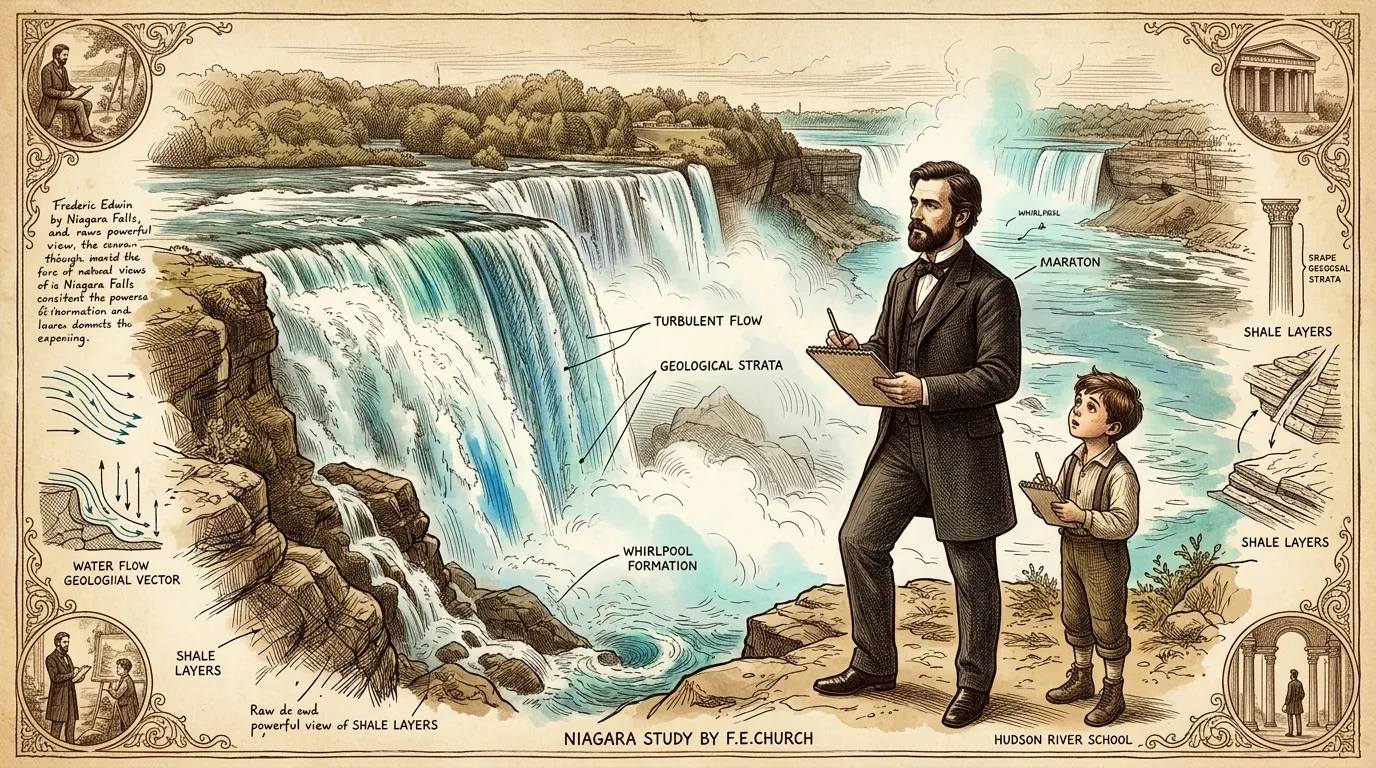
Page 1
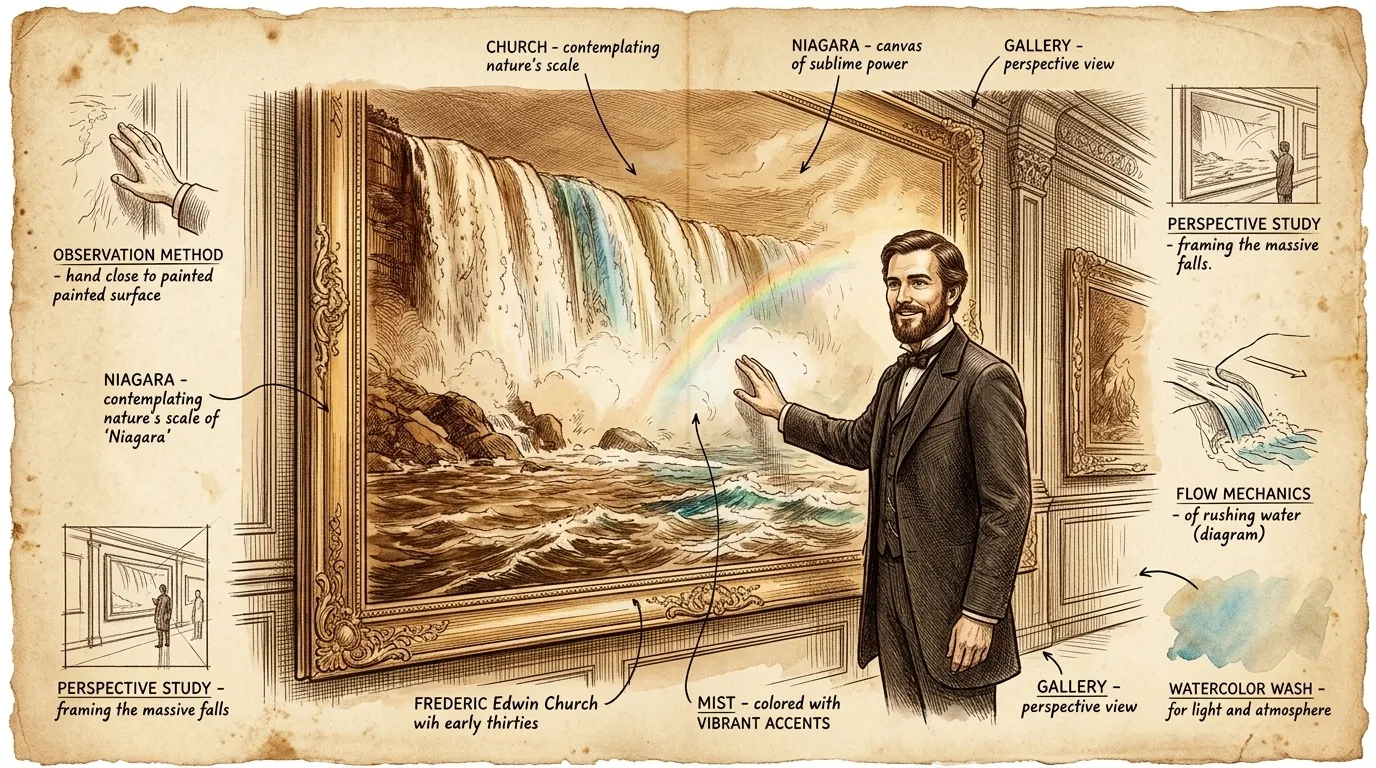
Frederic Edwin Church, a leading figure of the Hudson River School, stands before his monumental canvas, 'Niagara.' Completed in 1857, this painting captured the raw power and sublime beauty of the falls like never before. The painting, currently residing in the collection of the National Gallery of Scotland, measures an impressive 42 1/2 x 90 1/2 inches. One particularly striking detail: Church intentionally omitted any human presence in the immediate foreground to amplify the viewer's sense of awe and vulnerability before nature's grandeur.
"Church murmurs, almost to himself, "'Study nature, love nature, stay close to nature. It will never fail you.' The words of Frank Lloyd Wright echo in my mind as I behold this vista. This cascade of water, it is a testament to the enduring power of the natural world.""
Art Fact: 'Niagara' (1857) by Frederic Edwin Church. Oil on canvas, 42 1/2 x 90 1/2 inches. Currently at the National Gallery of Scotland.
Page 2
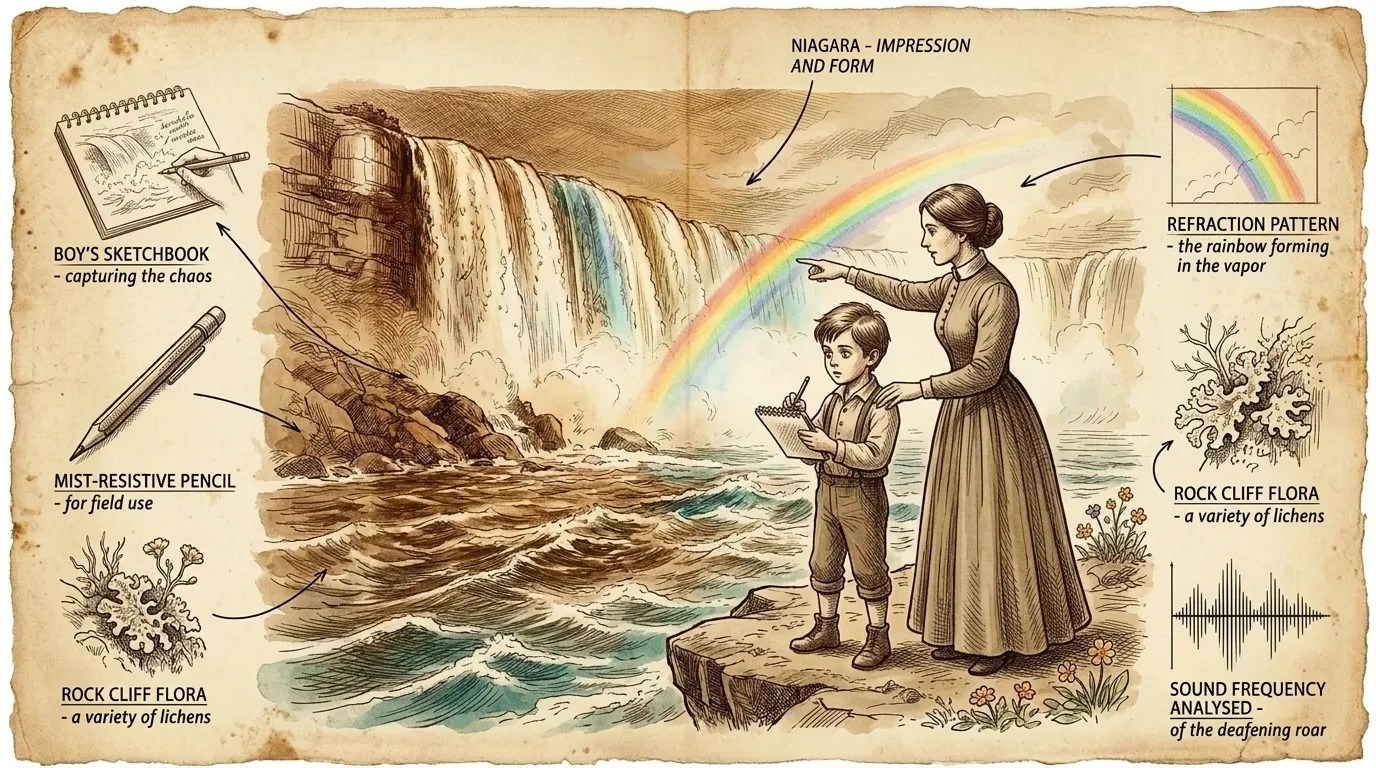
Young Frederic, barely a boy, visits Niagara Falls for the first time. The sheer magnitude of the spectacle leaves an indelible mark on his imagination. He clutches a small sketchbook, trying to capture the scene before him. His mother, beside him, points out the rainbow forming in the mist.
"Frederic's mother exclaims, "Look, Frederic! A rainbow! Isn't it magnificent?" Frederic, eyes wide with wonder, replies, "It's... it's like a dream, Mama! I must draw it. I have to remember every detail!" He scribbles furiously in his sketchbook."
Art Fact: Church's childhood experiences at Niagara Falls greatly influenced his later artistic vision.
Page 3
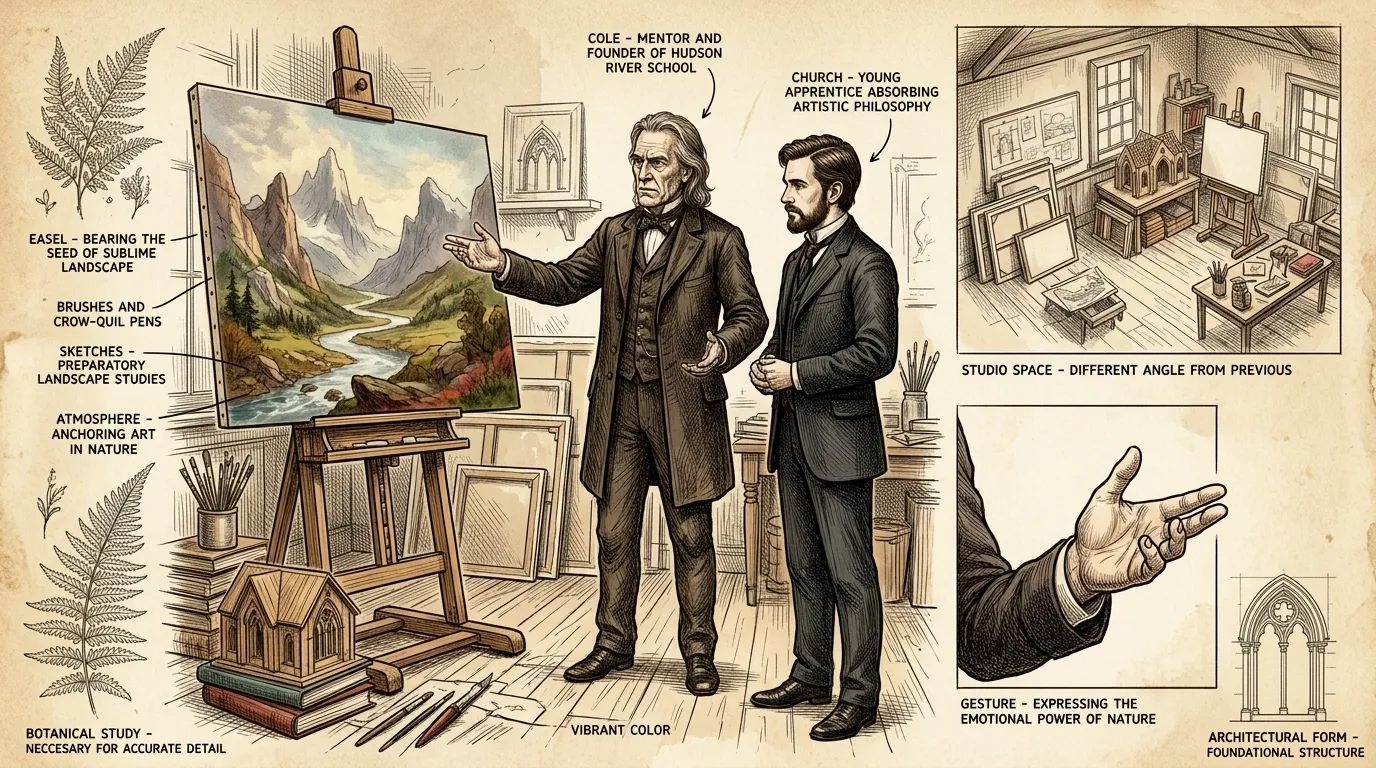
Years later, Frederic is a young man, apprenticed to Thomas Cole, the founder of the Hudson River School. Cole emphasizes the importance of conveying not just the appearance of nature, but its spiritual essence. He gestures towards a landscape painting, explaining his philosophy.
"Cole says sternly but kindly, "Frederic, a painting must do more than just depict. It must evoke. As Aristotle said, 'The aim of art is to represent not the outward appearance of things, but their inward significance.' Remember that, young man. Remember it always." Frederic nods, absorbing his mentor's words. "Yes, Mr. Cole. I understand.""
Art Fact: Thomas Cole's teachings shaped Church's approach to landscape painting, emphasizing the sublime and spiritual aspects of nature.
Page 4
Page 5
Page 6
Page 7
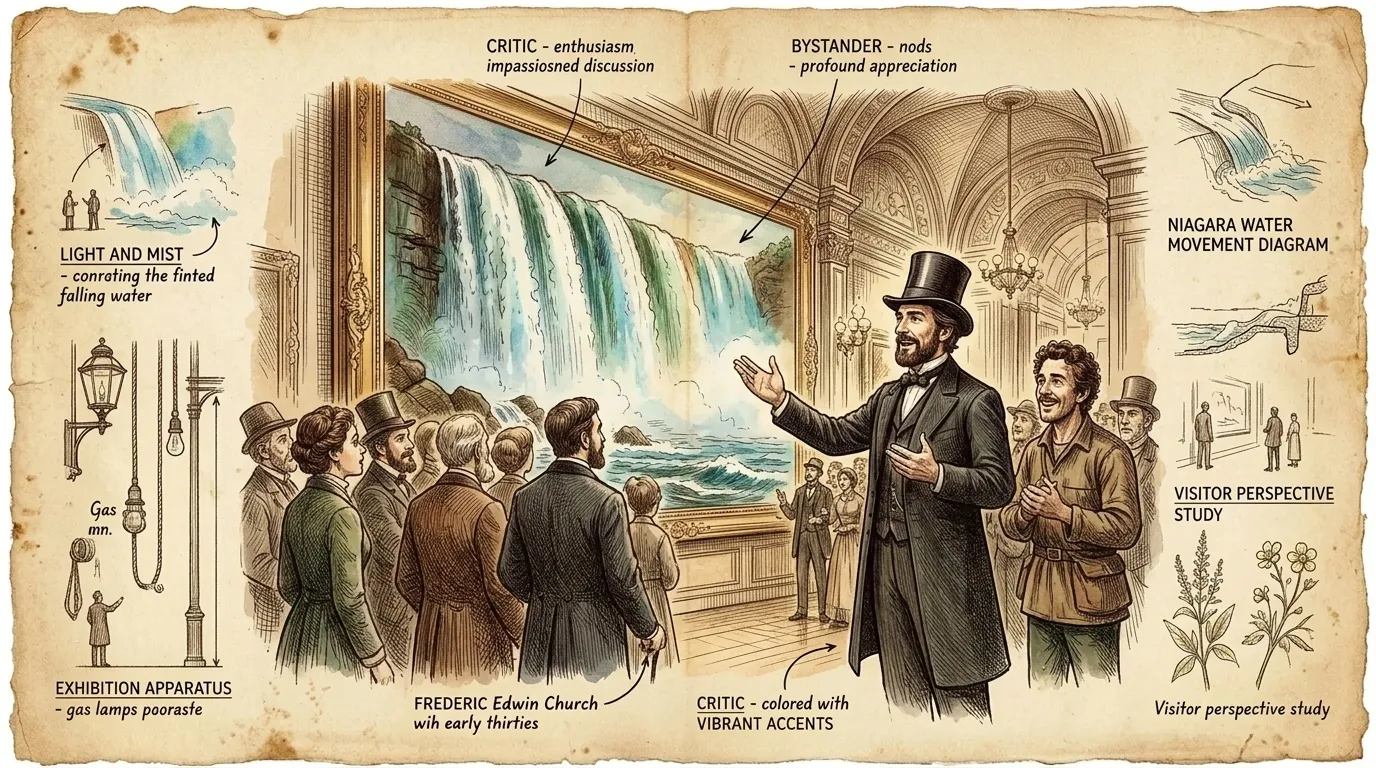
'Niagara' is unveiled to the public, creating a sensation. Crowds flock to see the painting, mesmerized by its realism and grandeur. Critics hail Church as a master of landscape painting. The painting tours the United States and England, further solidifying Church's reputation.
"A critic exclaims, "This is more than just a painting, it's an experience! Church has captured the very soul of Niagara. It is as if I can hear the roar and feel the spray!" A bystander nods, murmuring, "Magnificent... absolutely magnificent.""
Art Fact: 'Niagara' was an immediate public and critical success, cementing Church's place as a leading artist of his time.
Page 8
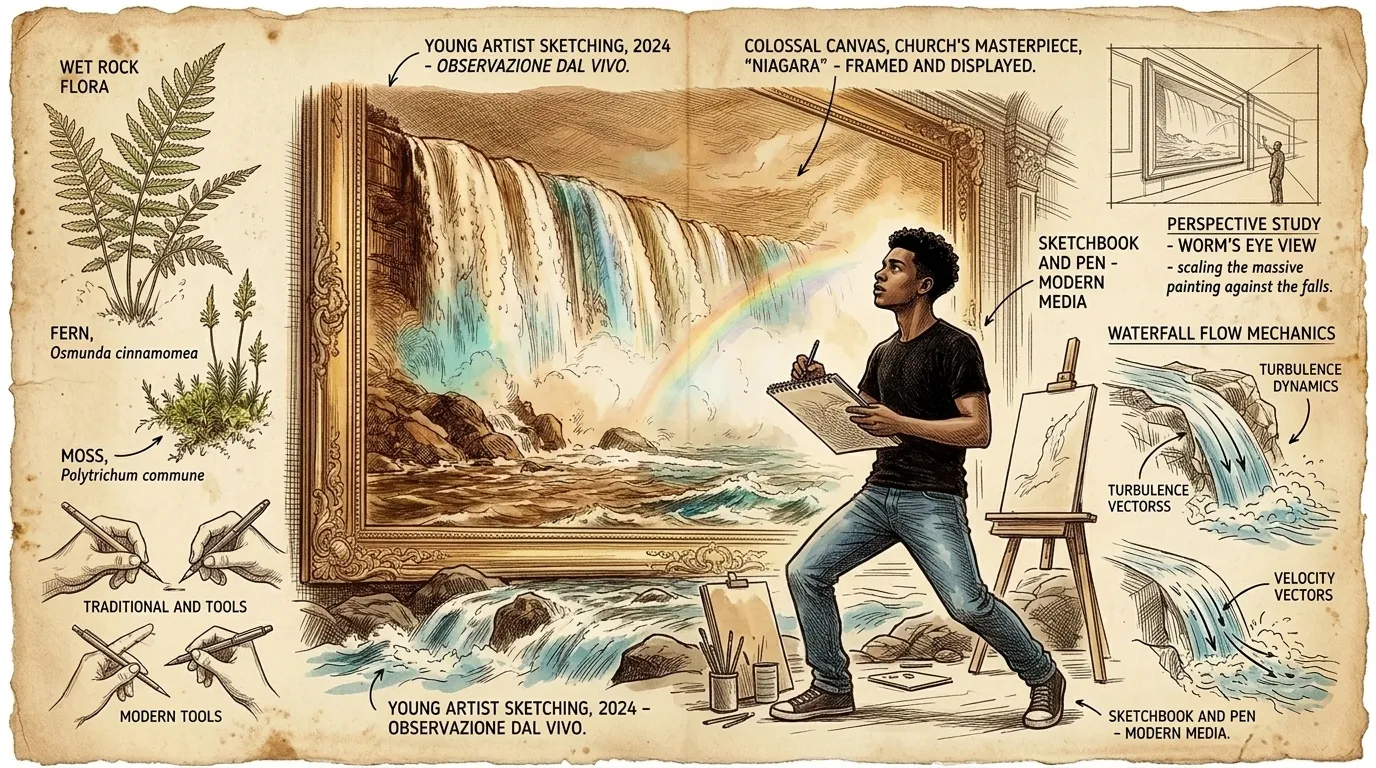
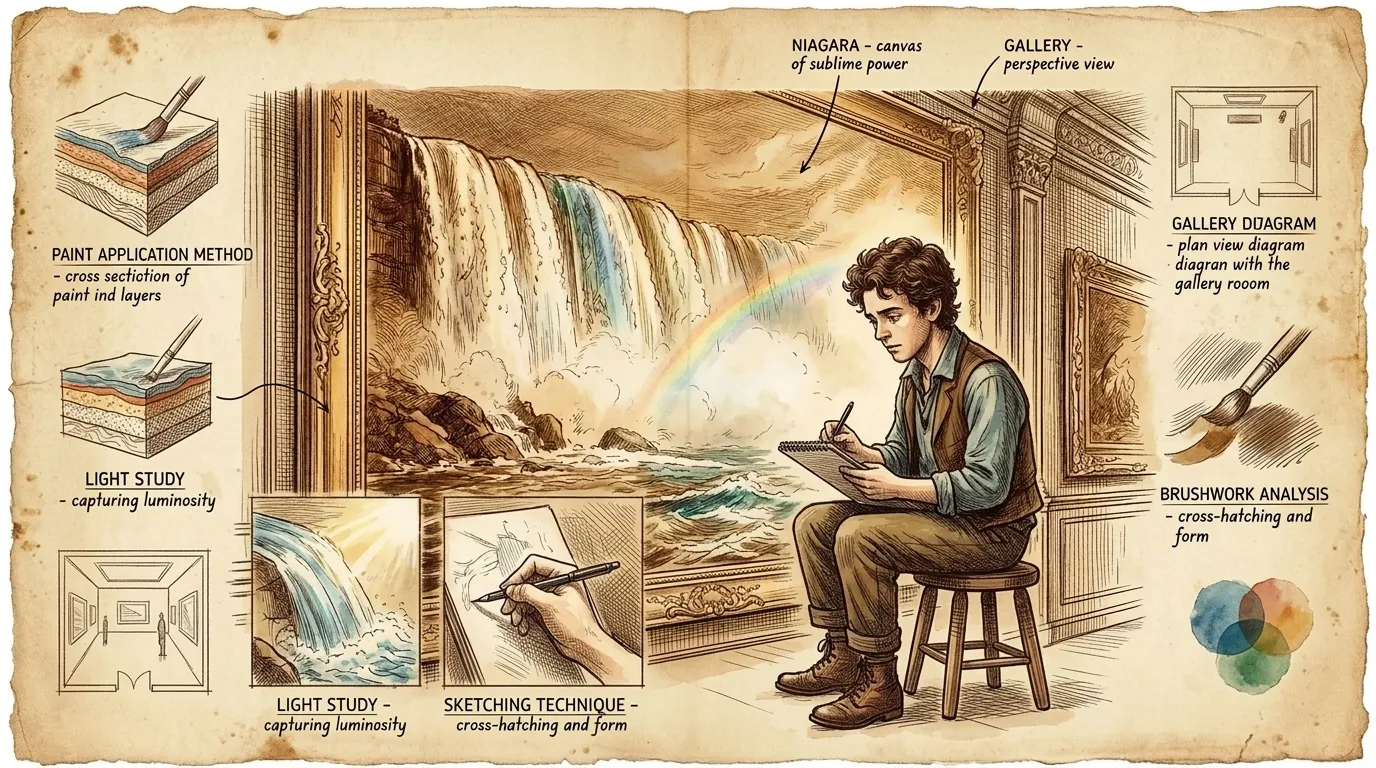
Years pass, and 'Niagara' remains an iconic image of the American landscape. Its power to inspire awe and wonder endures. Artists continue to be influenced by Church's mastery of realism and his ability to convey the sublime in nature.
"A young artist, sketching before the painting, muses, "The way he captures the light... it's breathtaking. I hope that I can create something that evokes such feeling.""
Art Fact: Church's 'Niagara' has had a lasting impact on American art and continues to inspire awe in viewers.
Page 9
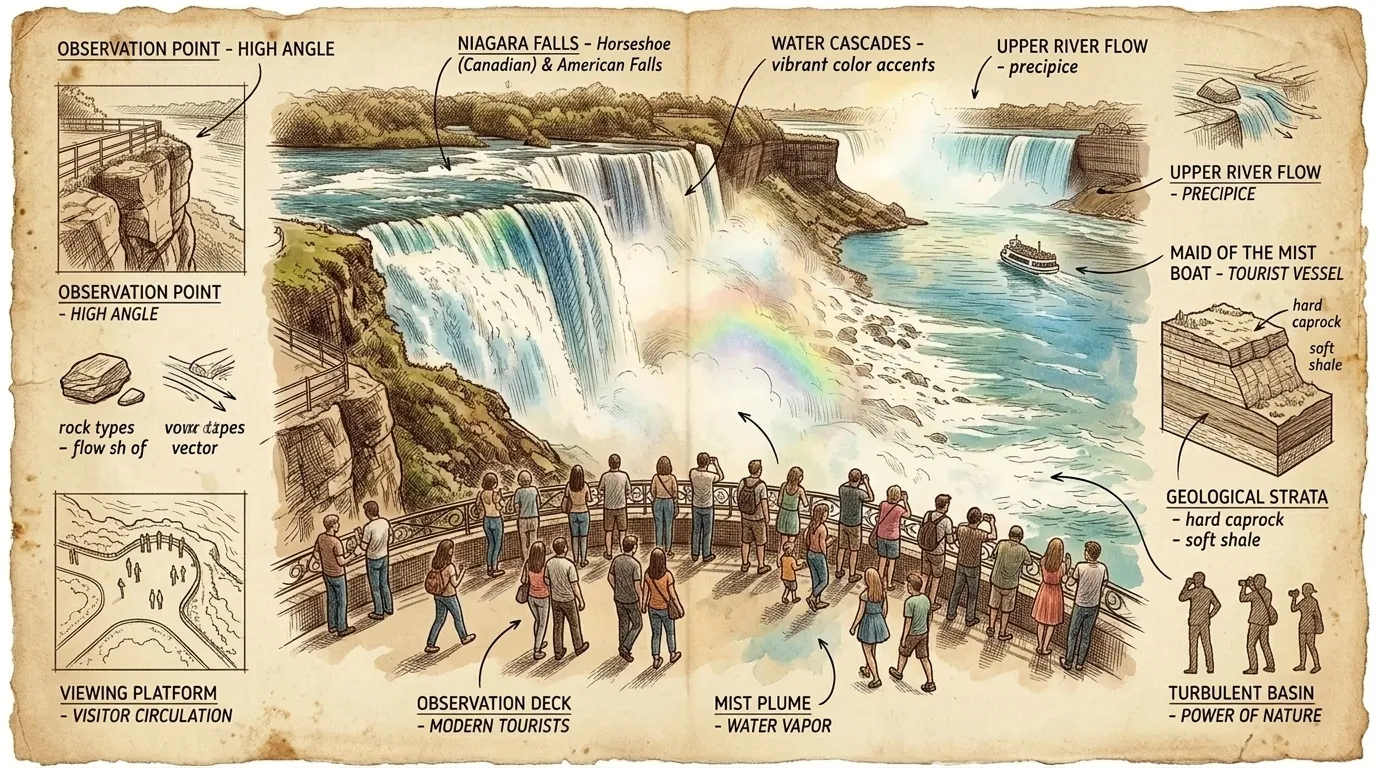
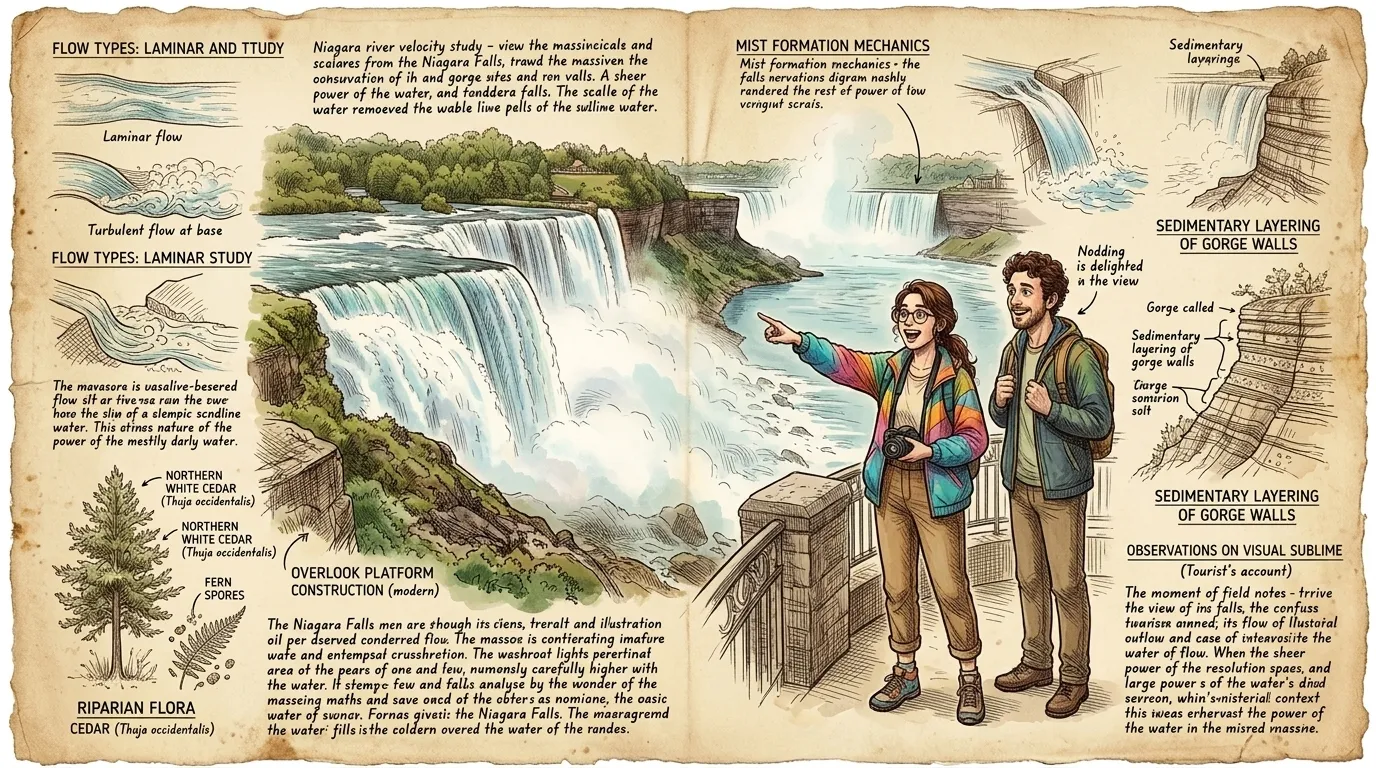
Today, visitors still flock to Niagara Falls, drawn by its majestic beauty. They stand in the same spot where Church stood, marveling at the sight that inspired his masterpiece. His painting helps them to see the falls with new eyes, appreciating its timeless appeal.
"A tourist exclaims, "It's even more incredible than the painting! Church captured the essence, but nothing can truly compare to seeing it in person." Her friend nods, "It's like stepping into history... into art.""
Art Fact: Niagara Falls remains a popular tourist destination, inspiring awe and wonder in visitors from around the world.
Page 10
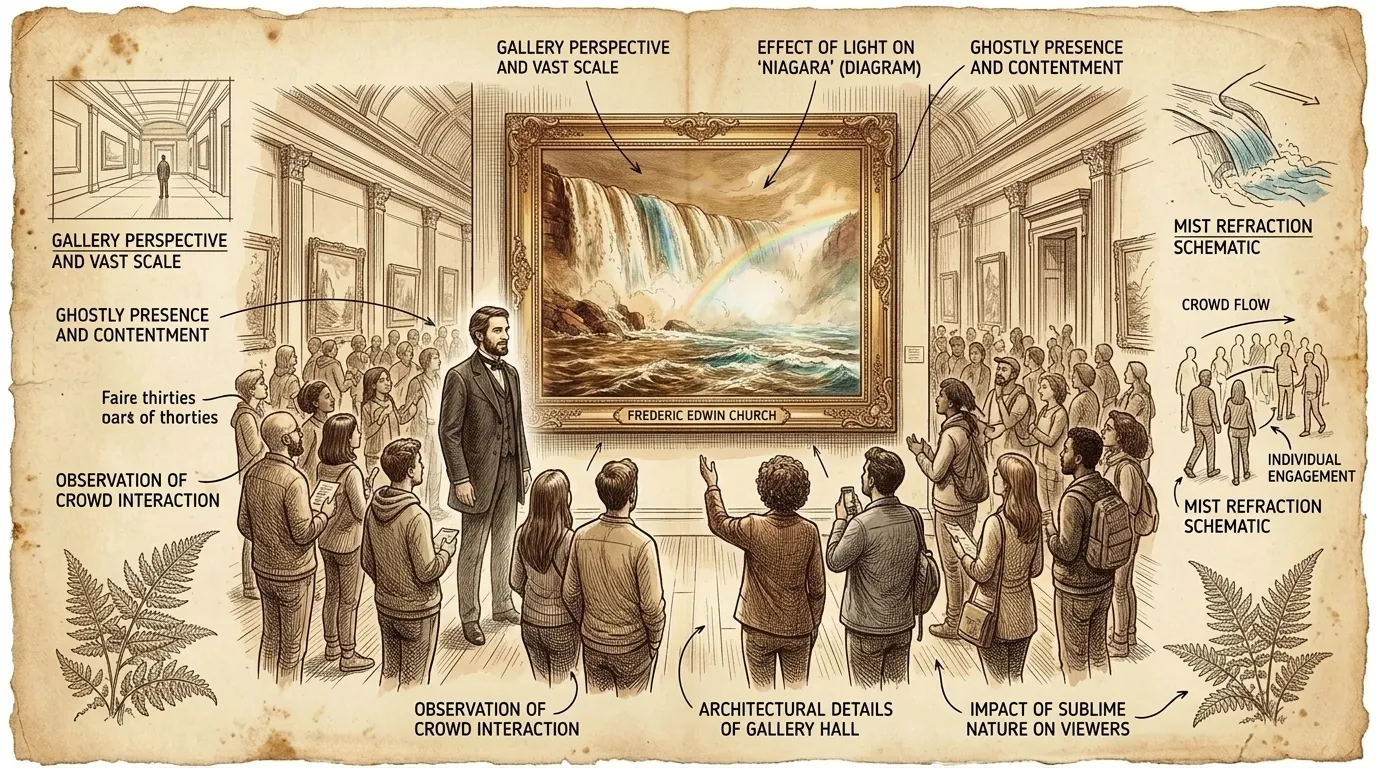
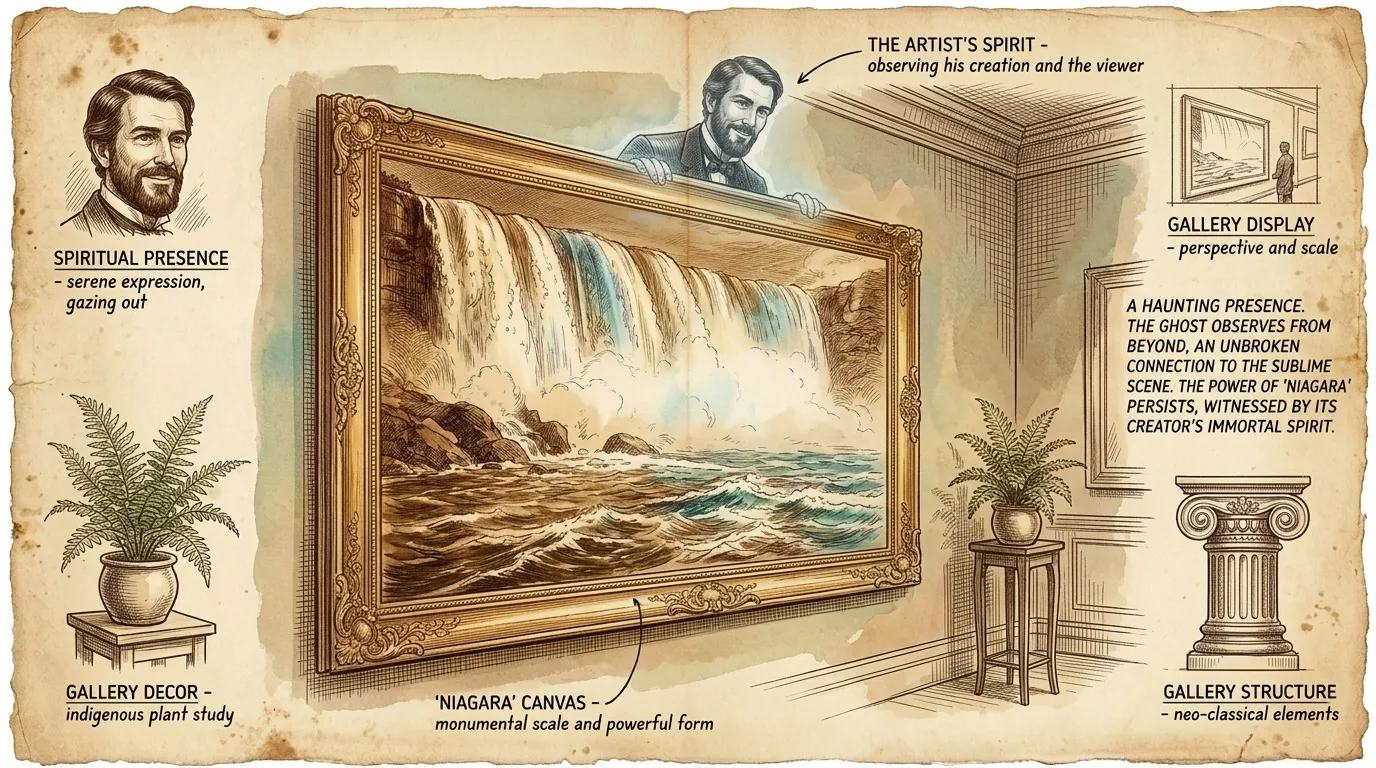
Frederic Edwin Church's 'Niagara' endures as a testament to the power of art to capture the beauty and grandeur of nature. His vision continues to inspire generations, reminding us of the importance of preserving our natural wonders. He painted with his soul so that others may see what he feels.
"Frederic Edwin Church's ghost peers from over his painting and whispers, "'The best and most beautiful things in the world cannot be seen or even touched - they must be felt with the heart.' Helen Keller said that, and that's how I painted Niagara. I had to feel its soul before I could show it to the world.""
Art Fact: Frederic Edwin Church's 'Niagara' is a timeless masterpiece that celebrates the power and beauty of nature.
About this story
- Location: United States
- Audience: general readers
Questions and answers
Questions and answers about Niagara by Frederic Edwin Church (USA — 1857)
Read Wonder Arts on your phone
Wonder Arts is available on Android. Get Wonder Arts on Google Play.