A Cavalier by Frans Hals (Australia — 1624)
A Cavalier by Frans Hals (Australia — 1624) — an illustrated arts story, set in Australia. 10 illustrated pages, free to read on Wonder Arts.

Page 1
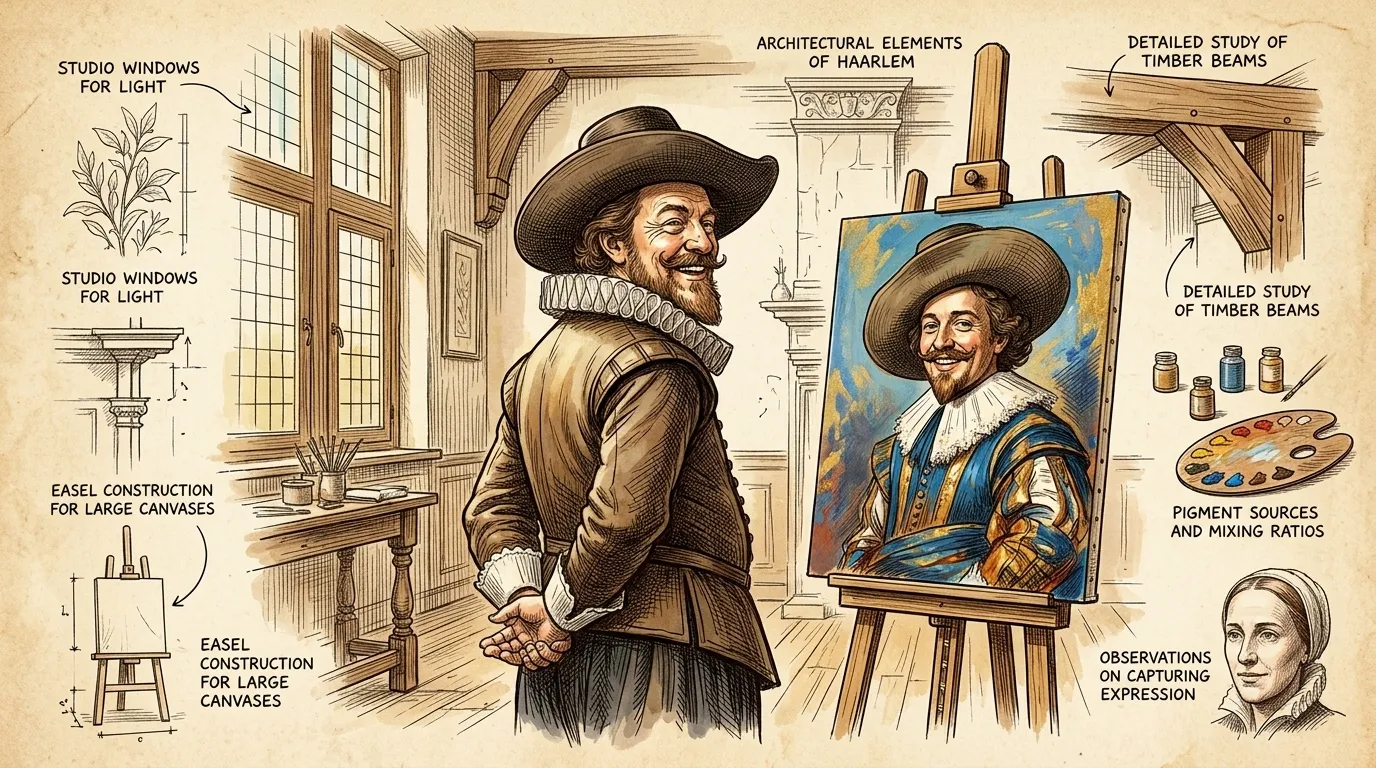
In the vibrant Dutch city of Haarlem, 1624, Frans Hals stood before his newly completed painting, 'The Cavalier'. The canvas measured 99 x 82.5 cm, a striking portrayal of a jovial man. The painting's captivating realism and spirited energy belied the struggles Hals faced in securing consistent patronage. Little did he know, this masterpiece, now residing in the Wallace Collection, London, would be celebrated for centuries to come.
""Here he is, the jovial cavalier!" Hals exclaimed to himself, stepping back to admire his work. "May his smile bring joy for generations to come!""
Art Fact: Frans Hals' 'The Cavalier' is renowned for its lively brushwork and captures a sense of spontaneous joy.
Page 2
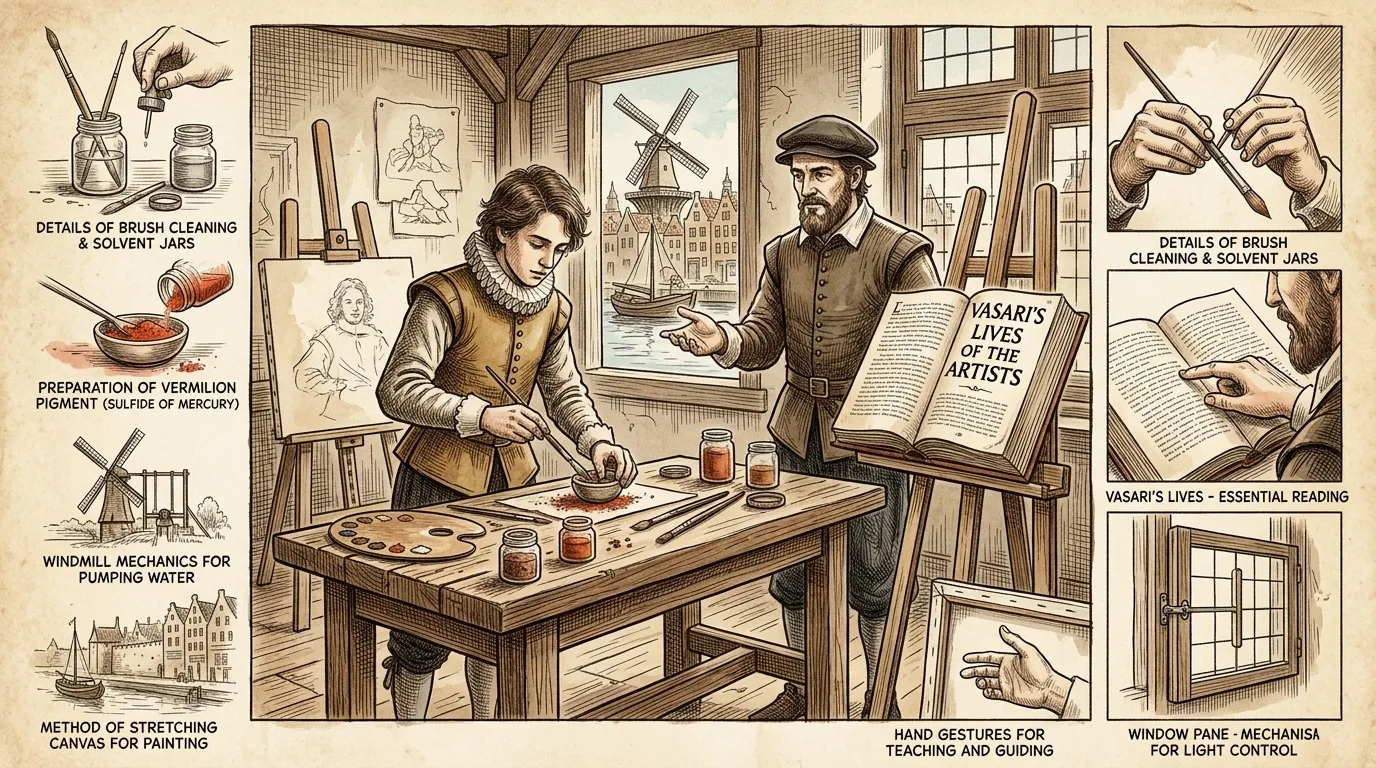
Young Frans, barely a teenager, toiled as an apprentice under Karel van Mander, a painter and biographer. Van Mander, a master of the Mannerist style, imparted technical skills, but more importantly, exposed Hals to the lives of artists, their triumphs and tribulations. These stories ignited a fire in Frans, fostering a deep respect for the artistic life.
""Frans, remember this," Van Mander said, gesturing towards a worn copy of Vasari's 'Lives of the Artists'. "An artist's life is not one of ease, but of passion and perseverance.""
Art Fact: Karel van Mander's tutelage provided Hals with a foundation in artistic technique and a deep appreciation for art history.
Page 3
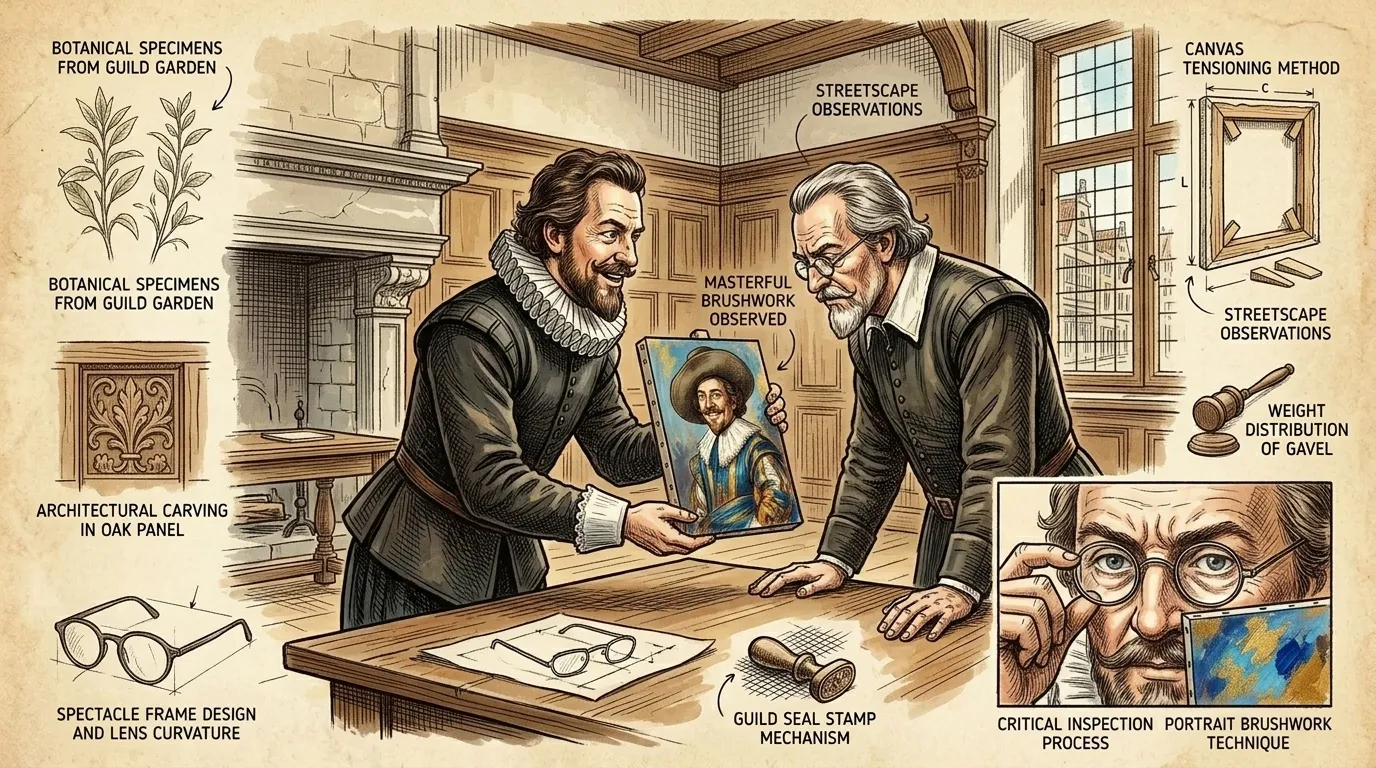
Securing membership in the Haarlem Guild of Saint Luke was crucial for Frans. It offered him legal protection, status, and access to commissions. The guild's strict standards pushed him to hone his skills further. He learned to navigate the complex politics of the art world.
""To become a master, you must prove your skill," a stern-faced guild master said, examining Frans' submitted painting. "Your brushwork is promising, but your understanding of anatomy needs improvement.""
Art Fact: The Haarlem Guild of Saint Luke played a significant role in regulating the art market and maintaining artistic standards in Haarlem.
Page 4
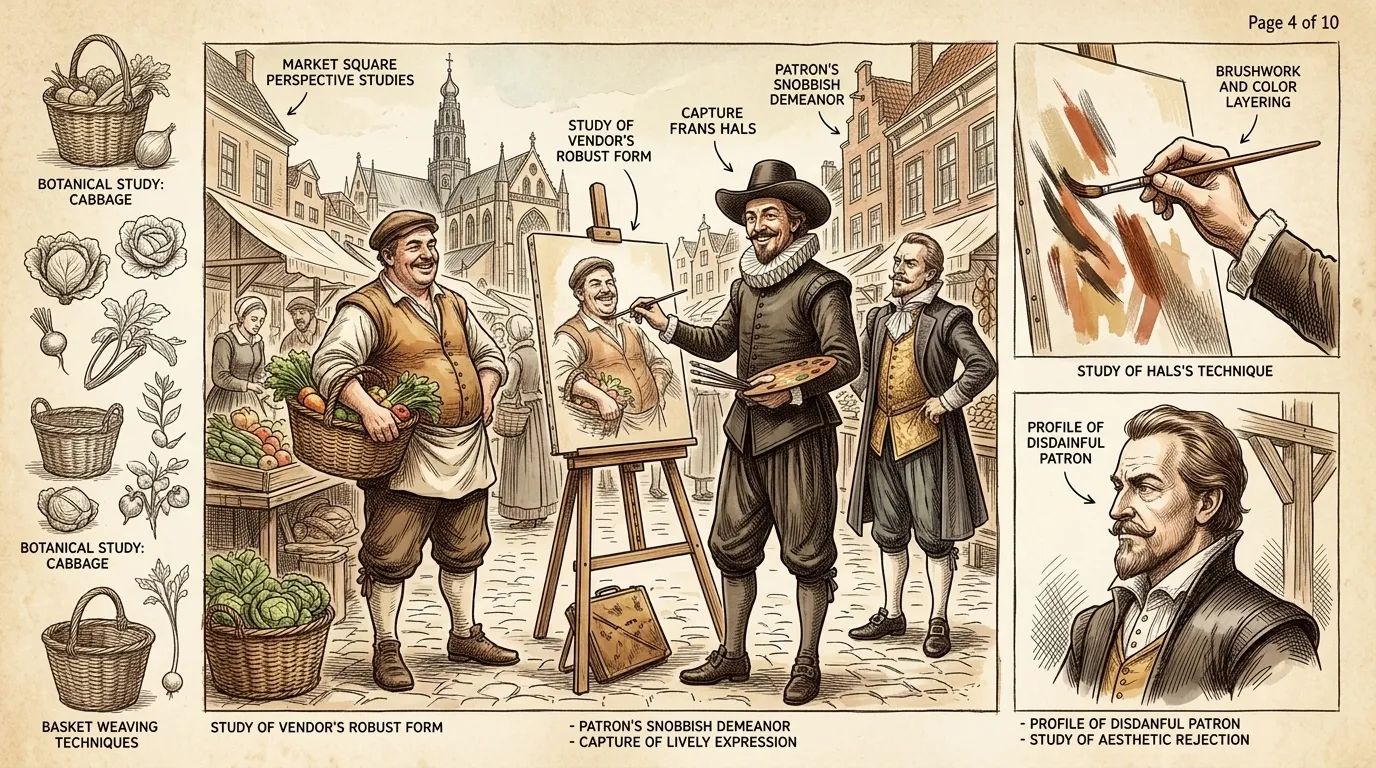
Hals found his true calling in painting portraits, not of wealthy merchants or nobles, but of ordinary people – militiamen, tavern keepers, and market vendors. He saw beauty and character in their faces, capturing their spirit with his dynamic brushstrokes. These portraits, unlike stiff, formal depictions, radiated life and energy.
""Why paint those commoners?" a wealthy patron scoffed. Hals retorted, "Because in their faces, I see the true spirit of Haarlem!""
Art Fact: Hals' focus on painting the common people distinguished him from many of his contemporaries who primarily served aristocratic patrons.
Page 5
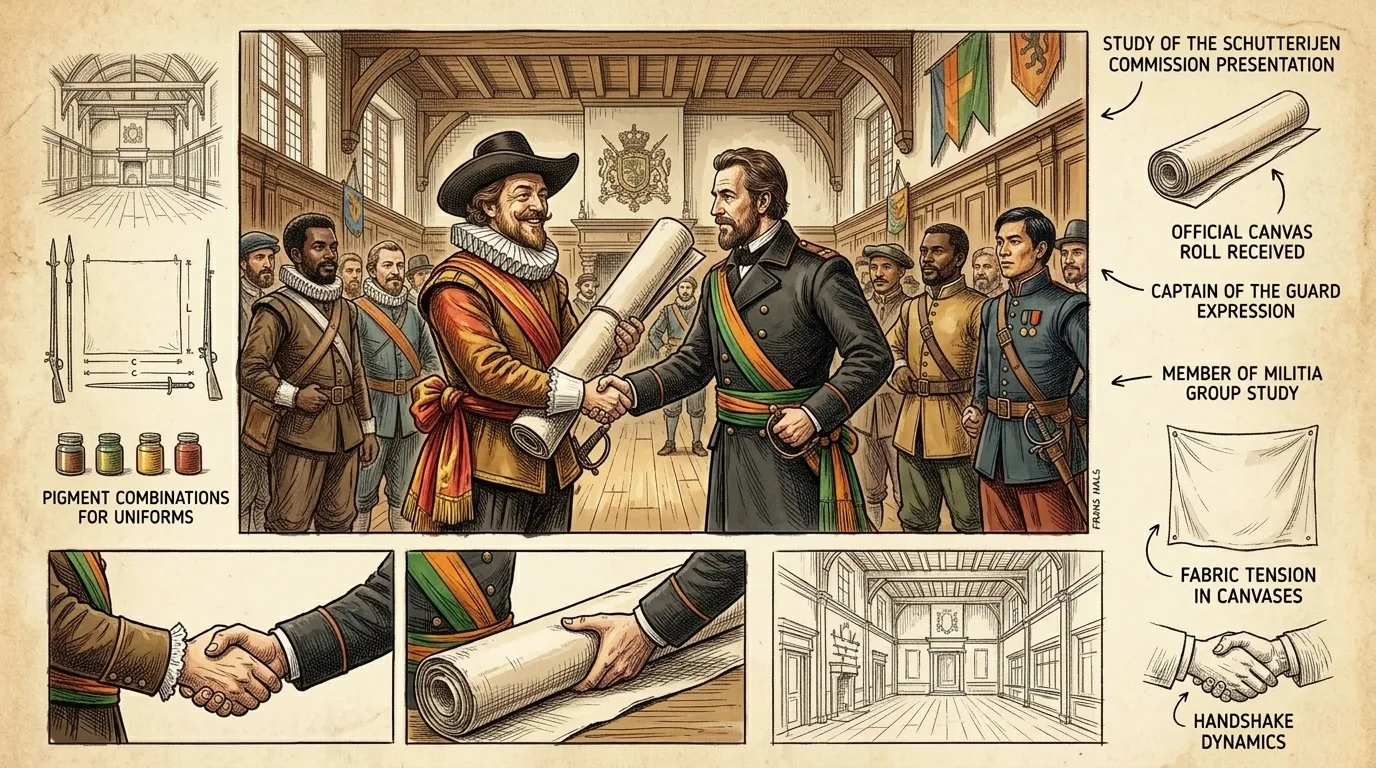
The Schutterijen, or militia companies, were powerful and influential in Haarlem. Securing commissions to paint their group portraits was a major breakthrough for Hals. These large-scale works showcased his ability to capture individual personalities within a collective setting.
""Master Hals, can you capture our strength and camaraderie?" the captain of the militia asked. Hals replied, "Indeed! Each man's spirit shall shine through!""
Art Fact: Hals' group portraits of militia companies are among his most celebrated works, showcasing his skill in depicting individual personalities within a collective setting.
Page 6
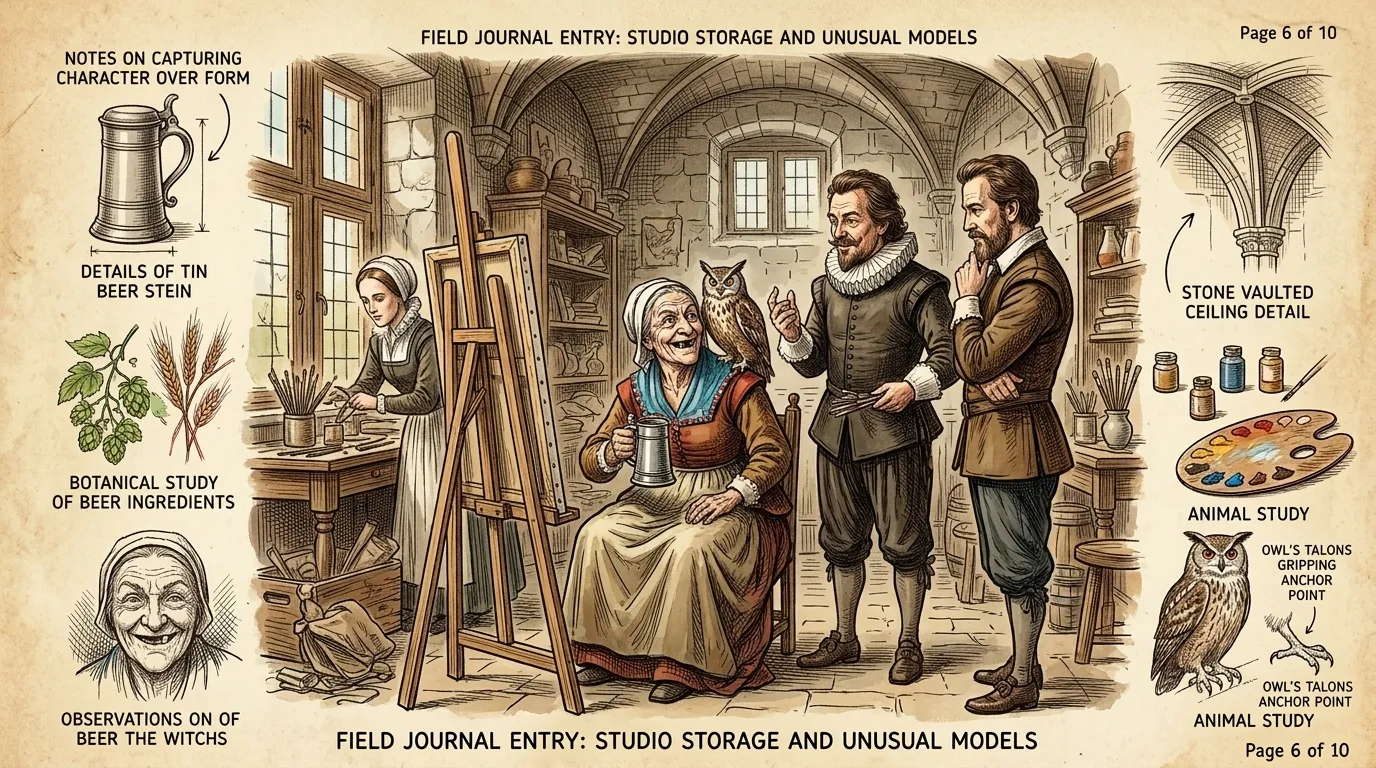
One of Hals' most enigmatic paintings is 'Malle Babbe,' a portrait of an old woman with a wide, toothless grin, holding a beer stein, and an owl perched on her shoulder. The painting's raw energy and unconventional subject matter have intrigued art historians for generations. Some believe Malle Babbe was a real woman, possibly a resident of a local asylum.
""She's mad, they say," Hals remarked to a fellow artist, referring to Malle Babbe. "But in her madness, there is a certain truth, a raw honesty that I find captivating.""
Art Fact: 'Malle Babbe' is admired for its unique subject and loose brushstrokes.
Page 7
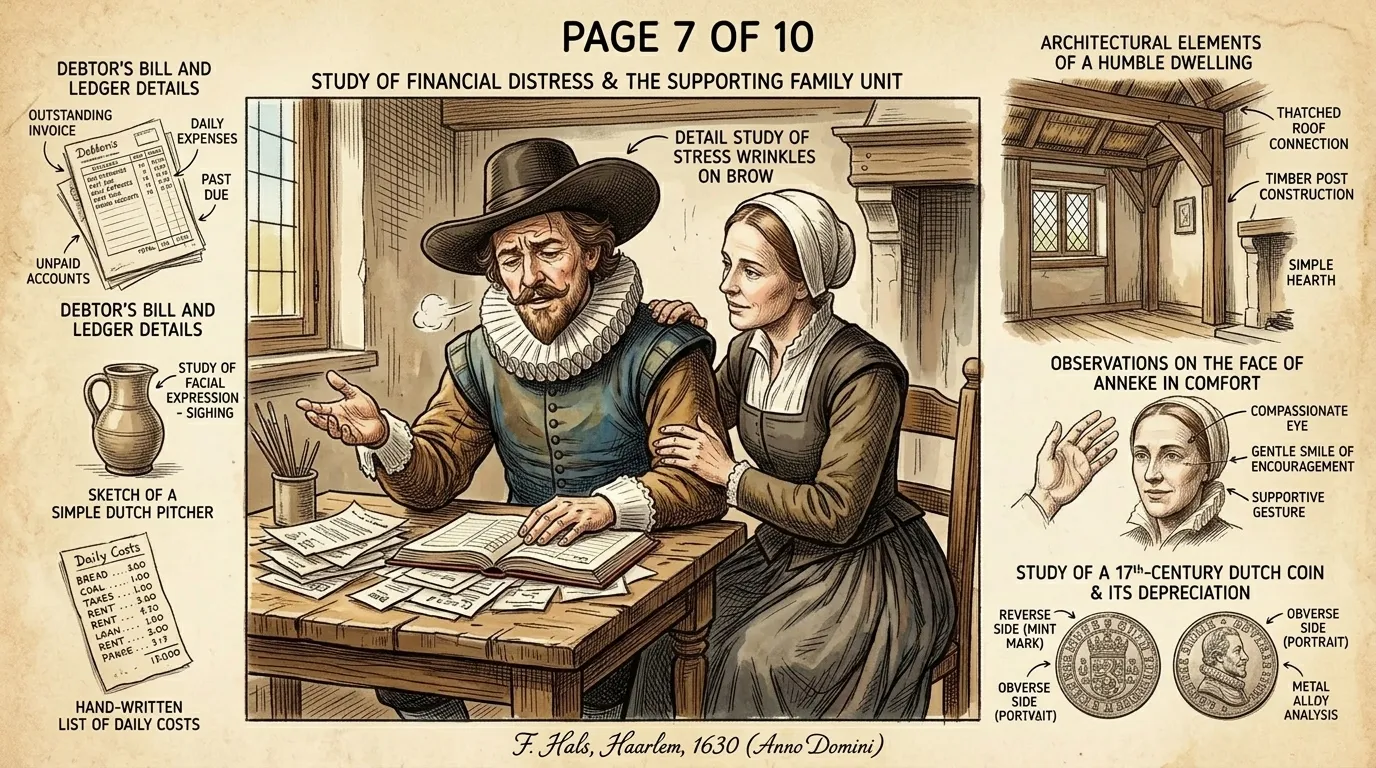
Despite his artistic success, Hals struggled with finances throughout his life. He often faced debts and lawsuits. In 1662, at the age of 80, he received a subsidy from the city of Haarlem, a testament to his enduring talent and his contribution to the city's cultural identity.
""'Neither a borrower nor a lender be,' Polonius advises in Shakespeare's Hamlet," Hals sighed to his wife, Anneke. "Easier said than done when the bills are piling up!""
Art Fact: Despite his artistic success, Hals faced financial difficulties throughout his life, highlighting the precarious nature of the artist's existence.
Page 8
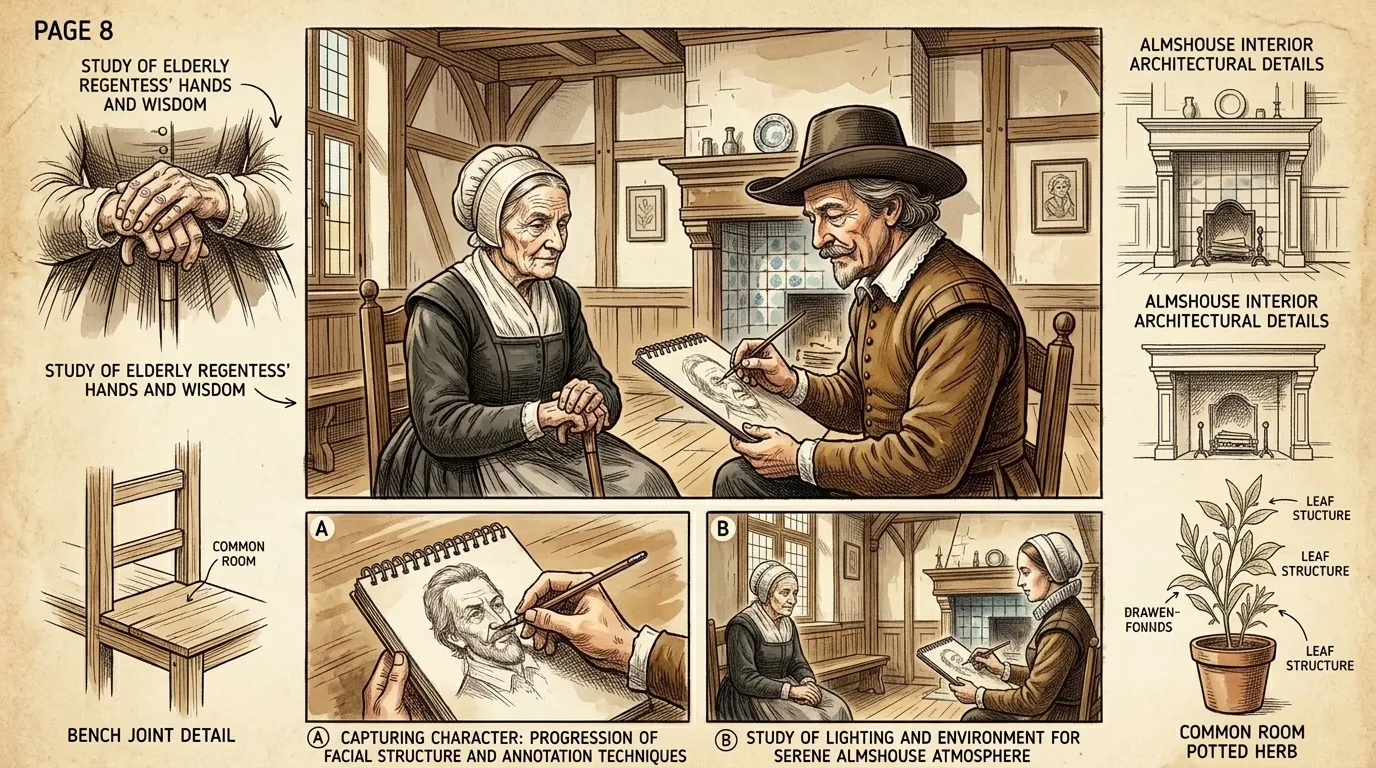
In his later years, Hals' style became even more expressive and his brushwork looser. His portraits of the governors and regentesses of the Old Men's Almshouse are masterpieces of psychological insight, revealing the character and humanity of his subjects with remarkable sensitivity.
""The wrinkles, the weariness, the wisdom..." Hals murmured, studying the face of an elderly regentess. "These are the stories I must capture.""
Art Fact: Hals' late works are celebrated for their expressive brushwork and profound psychological insight.
Page 9
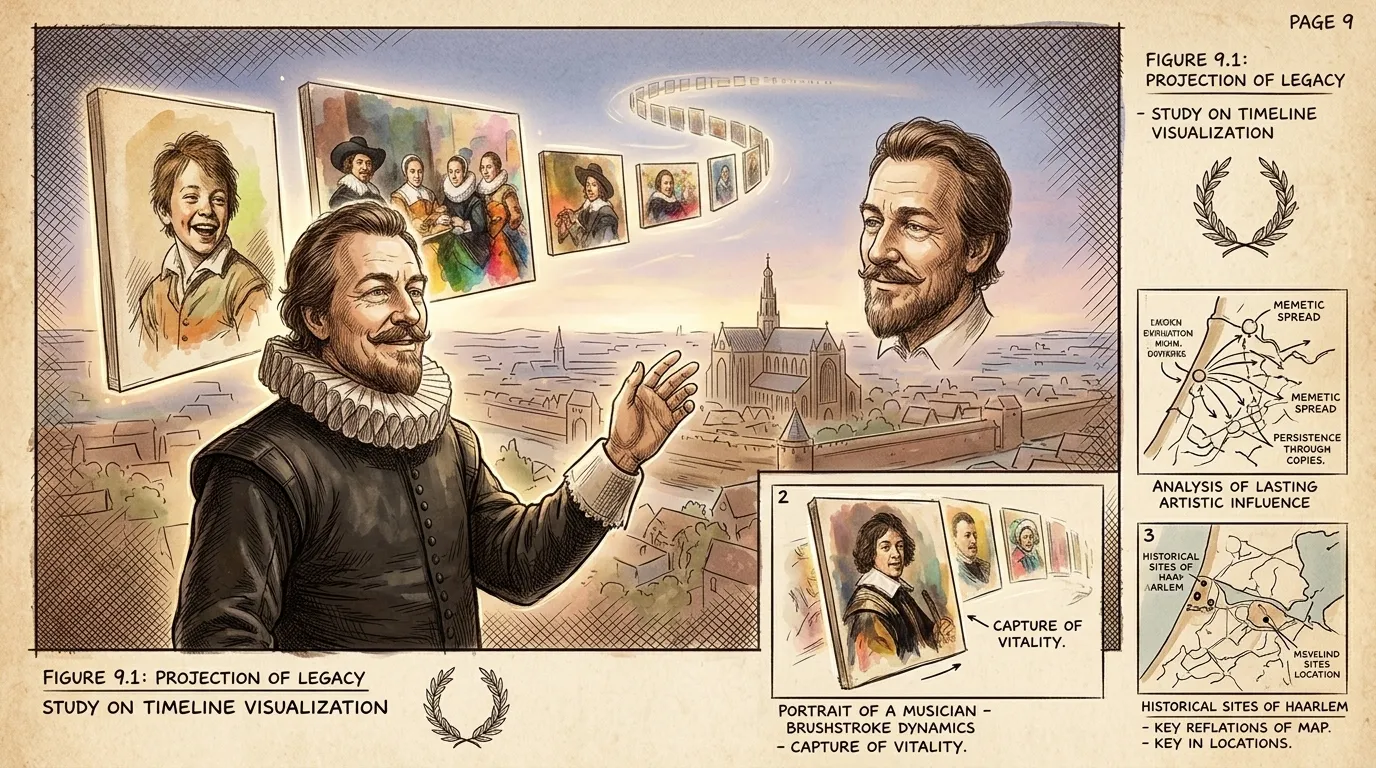
Frans Hals died in 1666, leaving behind a legacy of remarkable portraits that continue to inspire and captivate viewers today. His influence can be seen in the works of later artists such as Édouard Manet and Vincent van Gogh, who admired his lively brushwork and his ability to capture the essence of human character.
""Though I am gone," Hals declared, knowing it was his time, "my paintings will speak for me!""
Art Fact: Hals left behind a legacy of paintings that inspired and moved millions. His ability to make people feel has lived on through the ages.
Page 10
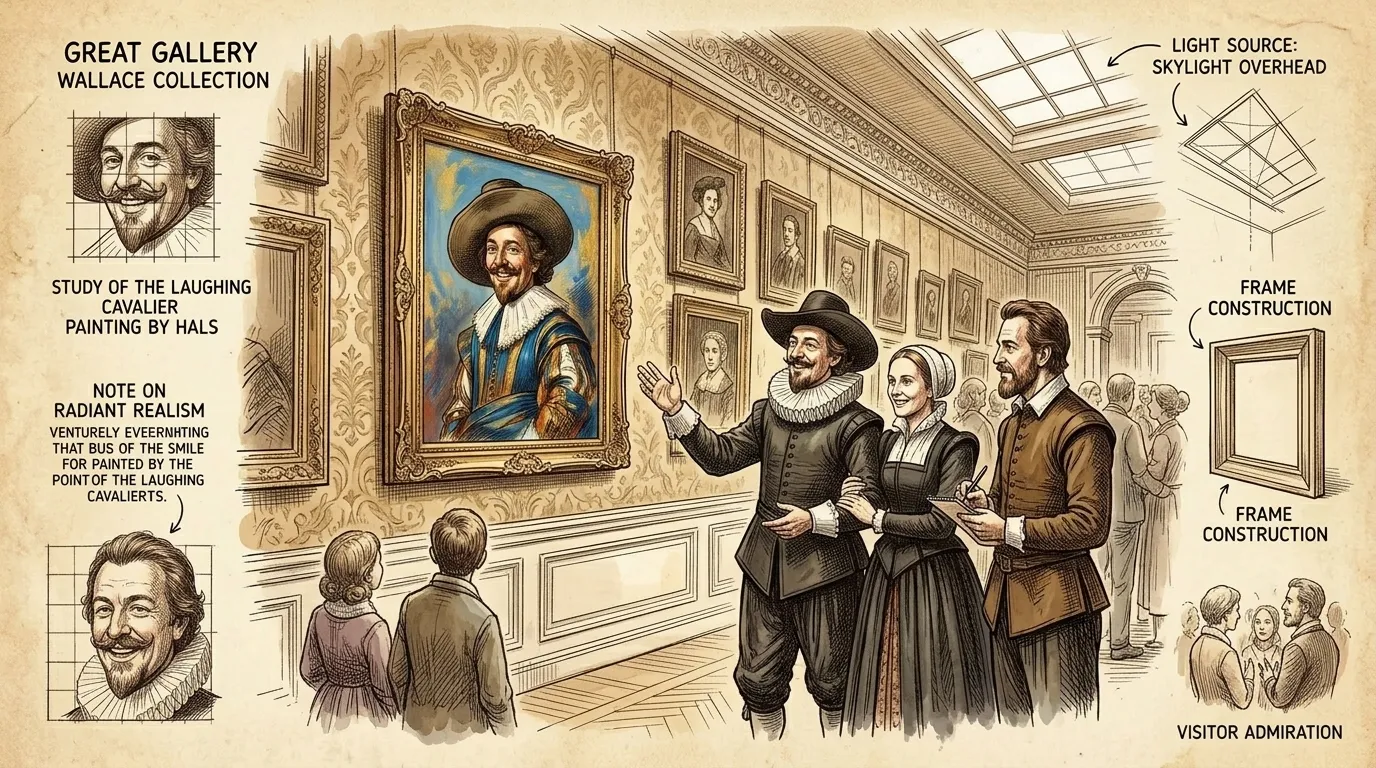
Centuries after his death, Frans Hals' 'The Cavalier' continues to enchant visitors at the Wallace Collection. The painting's vibrant energy and the subject's infectious smile transcend time and cultural barriers. His lively brushstrokes and ability to capture fleeting expressions have cemented his place as one of the greatest portrait painters of the Dutch Golden Age.
"Why does Hals endure? Because, as Vincent van Gogh observed, Hals truly possessed "the power of life, the wild dash in the brush.""
Art Fact: Hals's work lives on.
About this story
- Location: Australia
- Audience: general readers
Questions and answers
Questions and answers about A Cavalier by Frans Hals (Australia — 1624)
Read Wonder Arts on your phone
Wonder Arts is available on Android. Get Wonder Arts on Google Play.
More Wonder Arts stories
- A Sunday on La Grande Jatte by Georges Seurat (Paris, France — 1884)
- Abbey in the Oakwood by Caspar David Friedrich (Germany — 1810)
- Abstract Expressionism by Jackson Pollock (New York, USA — 1940s)
- Al-Azhar Mosque (Cairo, Egypt — 972)
- American Gothic by Grant Wood (Chicago, USA — 1930)
- Angkor Wat (Cambodia — 1150)