American Gothic by Grant Wood (Chicago, USA — 1930)
American Gothic by Grant Wood (Chicago, USA — 1930) — an illustrated arts story, set in United States. 10 illustrated pages, free to read on Wonder Arts.
Page 1
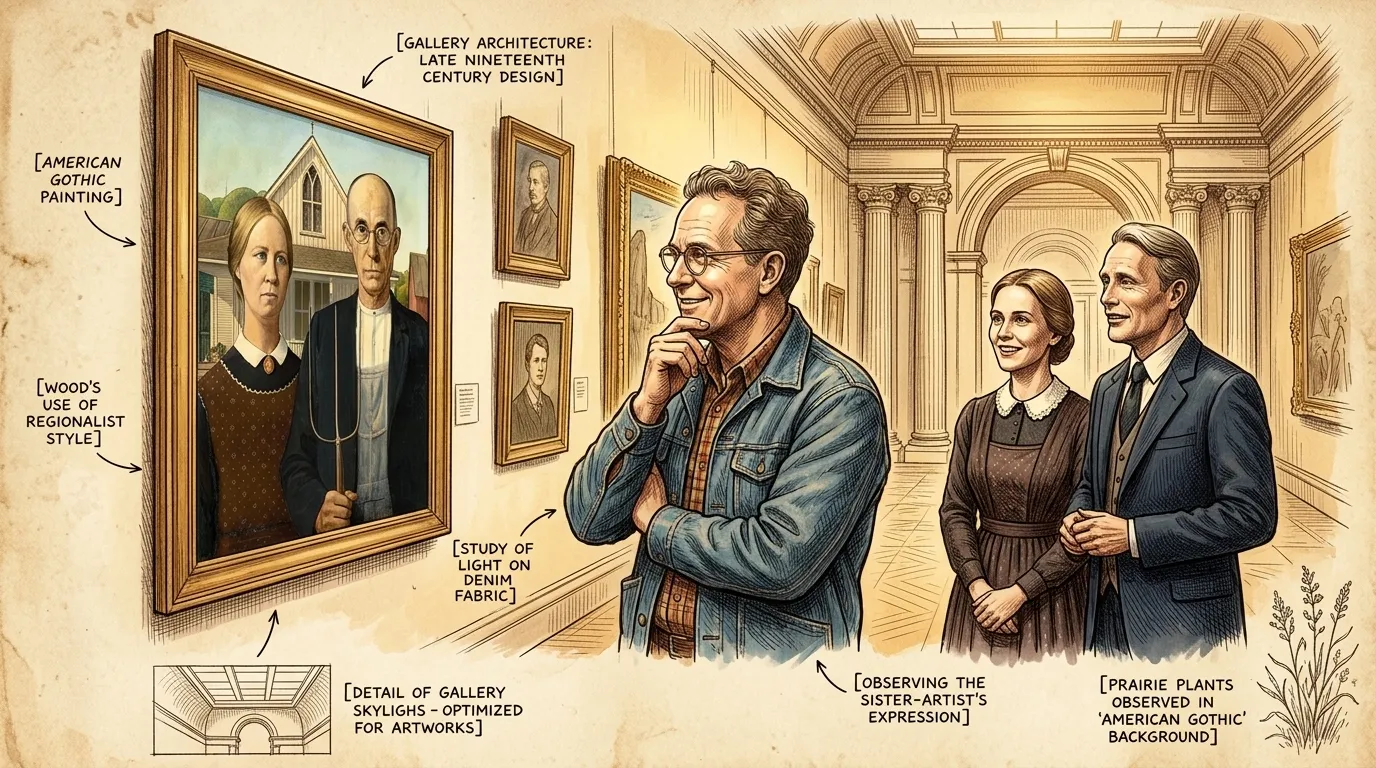
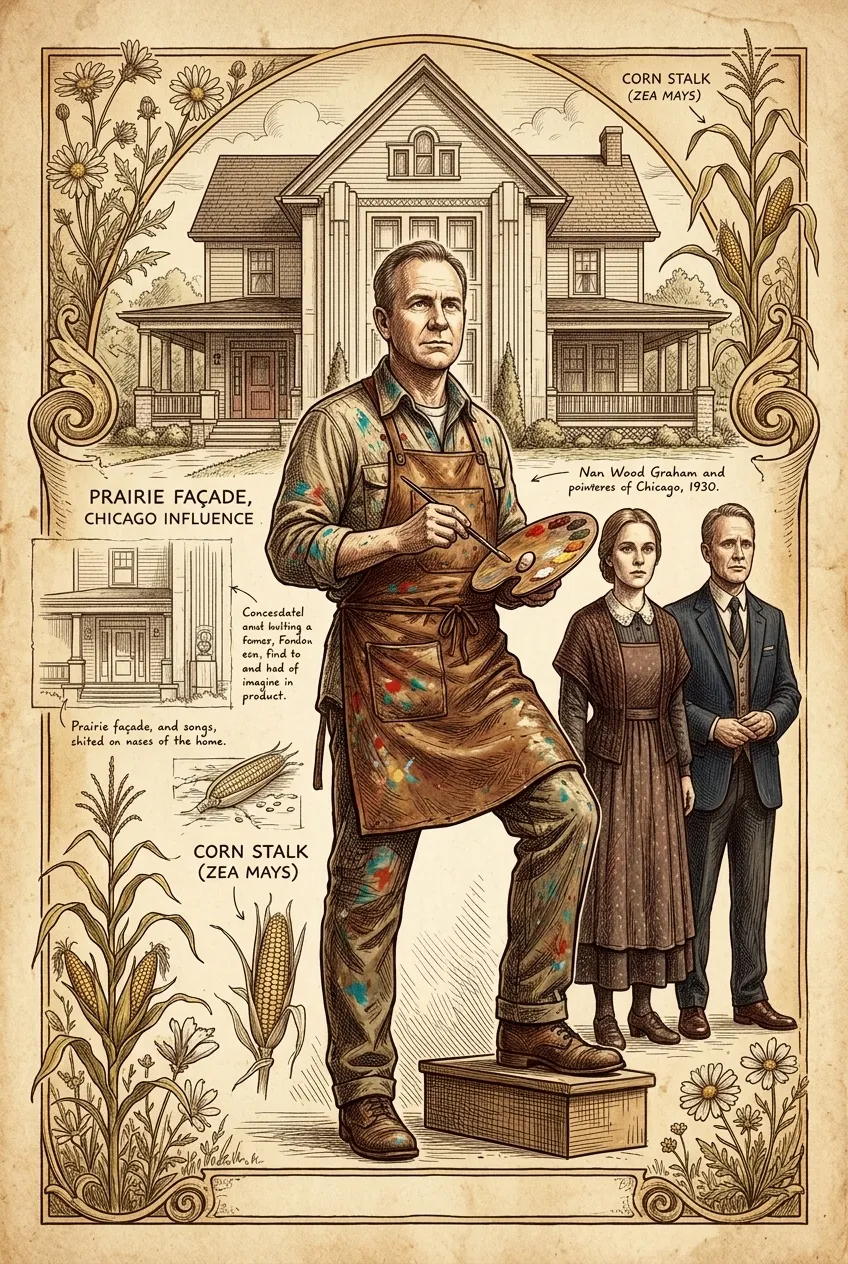
Grant Wood, the Midwestern painter, stood before his most recognizable work, "American Gothic." Completed in 1930, the painting now resides in the Art Institute of Chicago. Its stark depiction of rural life has intrigued and confounded viewers for nearly a century. But few know the story of the model he found, one of Wood's sisters, Nan Wood Graham. Its value has been estimated at tens of millions of dollars, reflecting its iconic status in American art.
""It's finished," Wood murmured, his breath catching in his throat. "A true portrait of the American spirit, I hope.""
Art Fact: American Gothic, Grant Wood's most famous painting, is a 76.2 cm 65.3 cm oil on beaverboard masterpiece, currently held by the Art Institute of Chicago.
Page 2
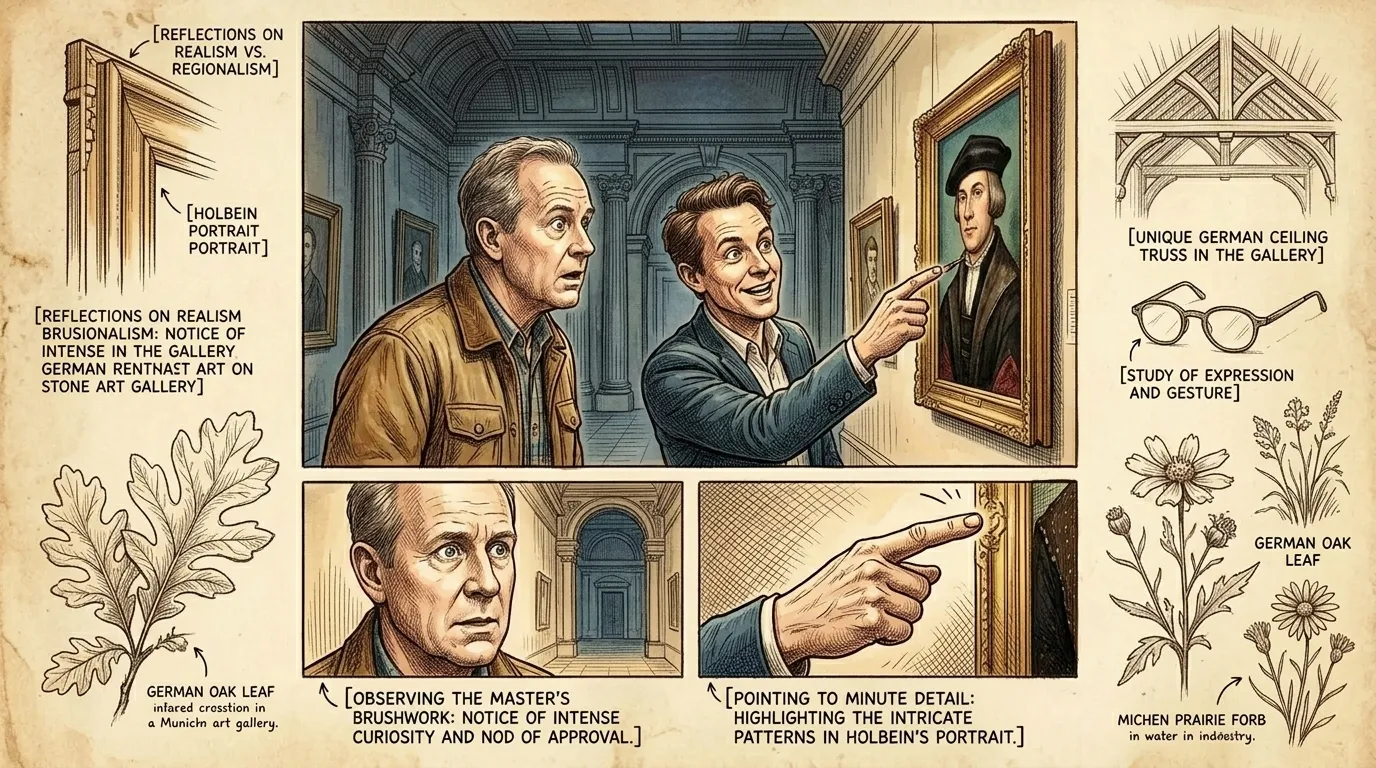
In 1928, Wood traveled to Munich, Germany. This journey would profoundly impact his artistic style. It was there he encountered the works of the Flemish and German masters. Their precise realism and meticulous detail inspired him to abandon his earlier Impressionistic style in favor of a more sharply defined approach.
""Look at this precision, Grant," Marvin Cone, fellow painter and friend, exclaimed, pointing to a Holbein portrait. "The way they capture every detail... it's almost photographic!" Wood nodded, captivated. "It's a world away from what we've been doing.""
Art Fact: Wood's time in Europe, particularly his exposure to German New Objectivity, shaped his later Realist style.
Page 3
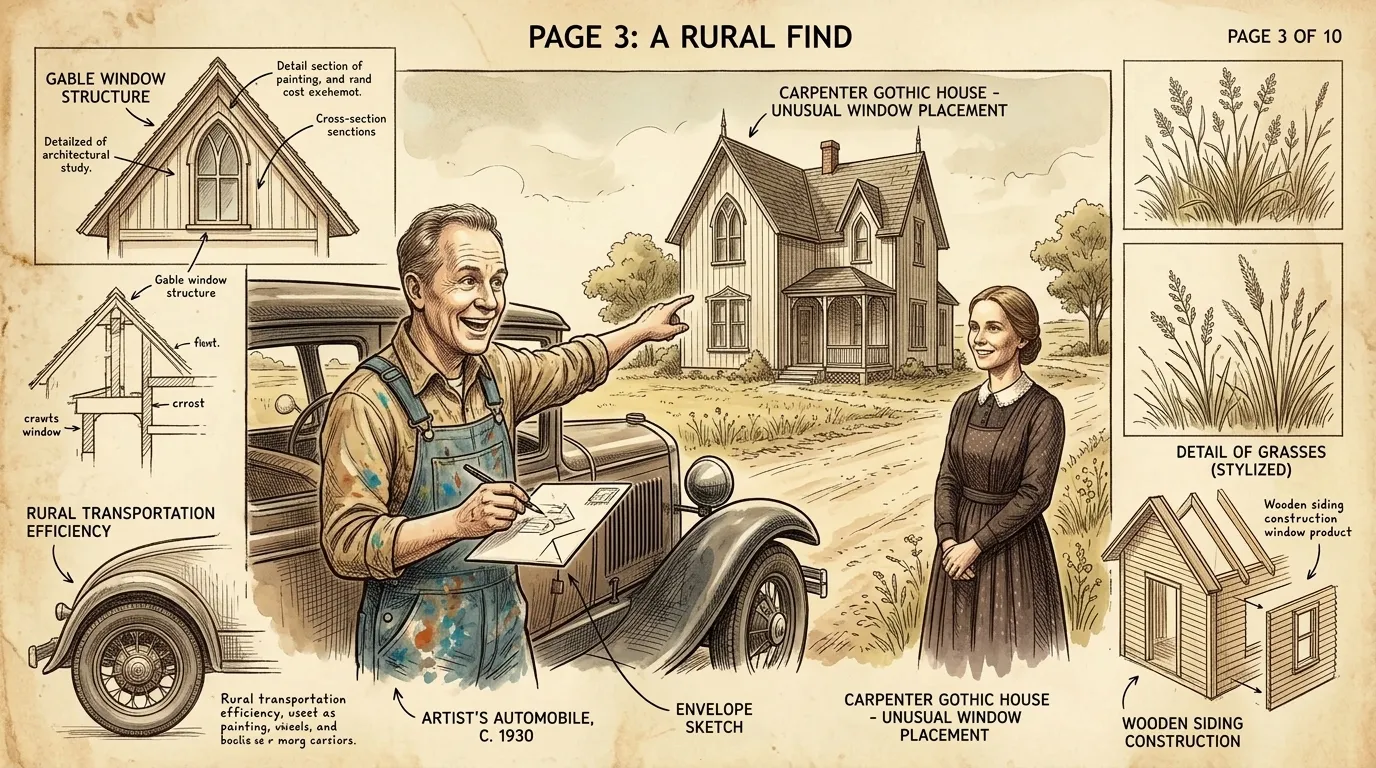
Back in Iowa, Wood drove through the town of Eldon. There, he spotted a small Carpenter Gothic style house with an unusually placed window. He immediately sketched it on an envelope, declaring it the perfect backdrop for a portrait of what he termed 'the kind of people I fancy should live in that house'. The house still stands today.
""That's it!" Wood exclaimed, pulling over his car. "That house... it's exactly what I've been searching for!" His sister, Nan, looked at him, bemused. "Just a little white house, Grant. What's so special about it?""
Art Fact: The Dibble House in Eldon, Iowa, provided the architectural inspiration for 'American Gothic'.
Page 4
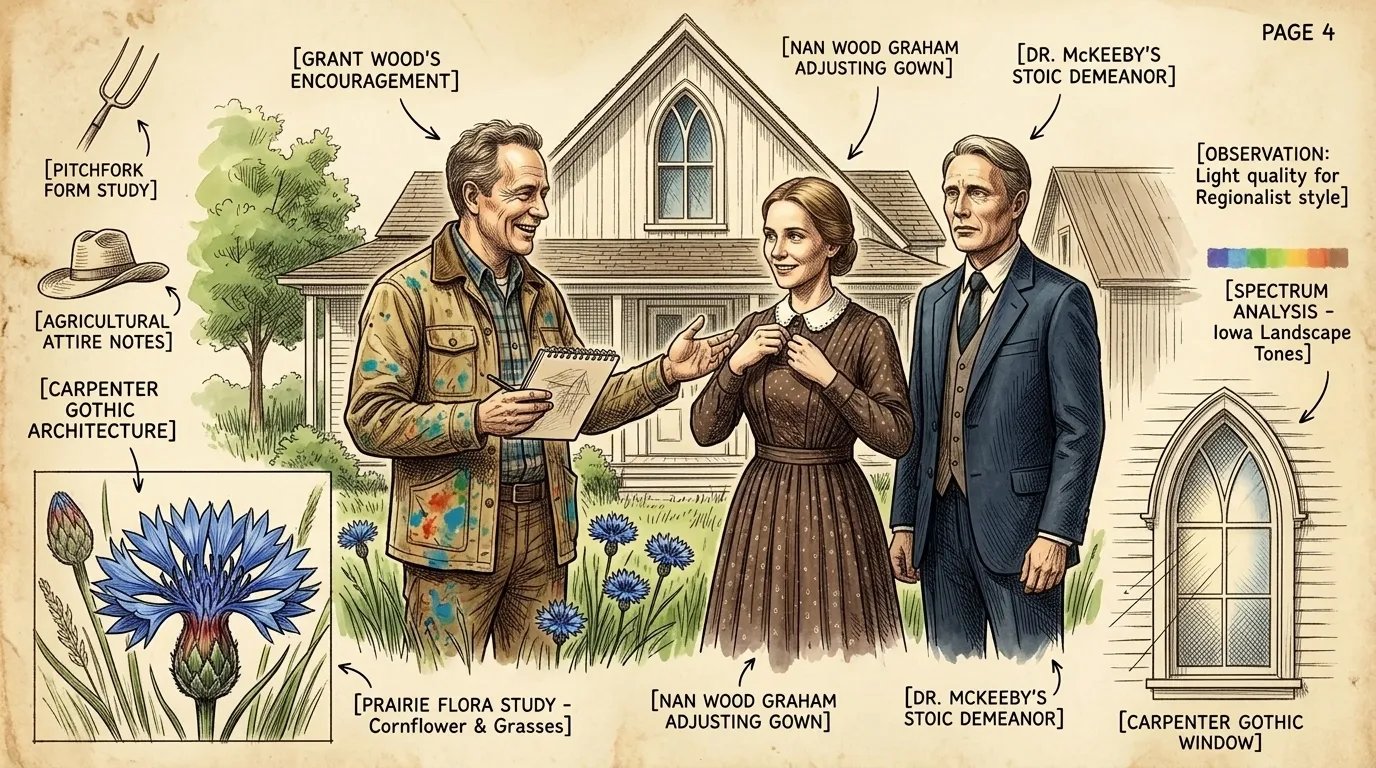
Unable to find local farmers who fit his vision, Wood turned to his sister, Nan Wood Graham, and his dentist, Dr. Byron McKeeby. He convinced them to pose in front of the Eldon house. Nan, in a colonial print dress, and Dr. McKeeby, stoic and severe, became the iconic figures of 'American Gothic'.
""Grant, are you sure about this?" Nan asked, adjusting her dress. "I feel ridiculous in this getup!" Wood chuckled. "Nonsense, Nan. You're perfect. And Dr. McKeeby, your stern expression is exactly what I need.""
Art Fact: Nan Wood Graham and Dr. Byron McKeeby were the models for the figures in 'American Gothic'.
Page 5
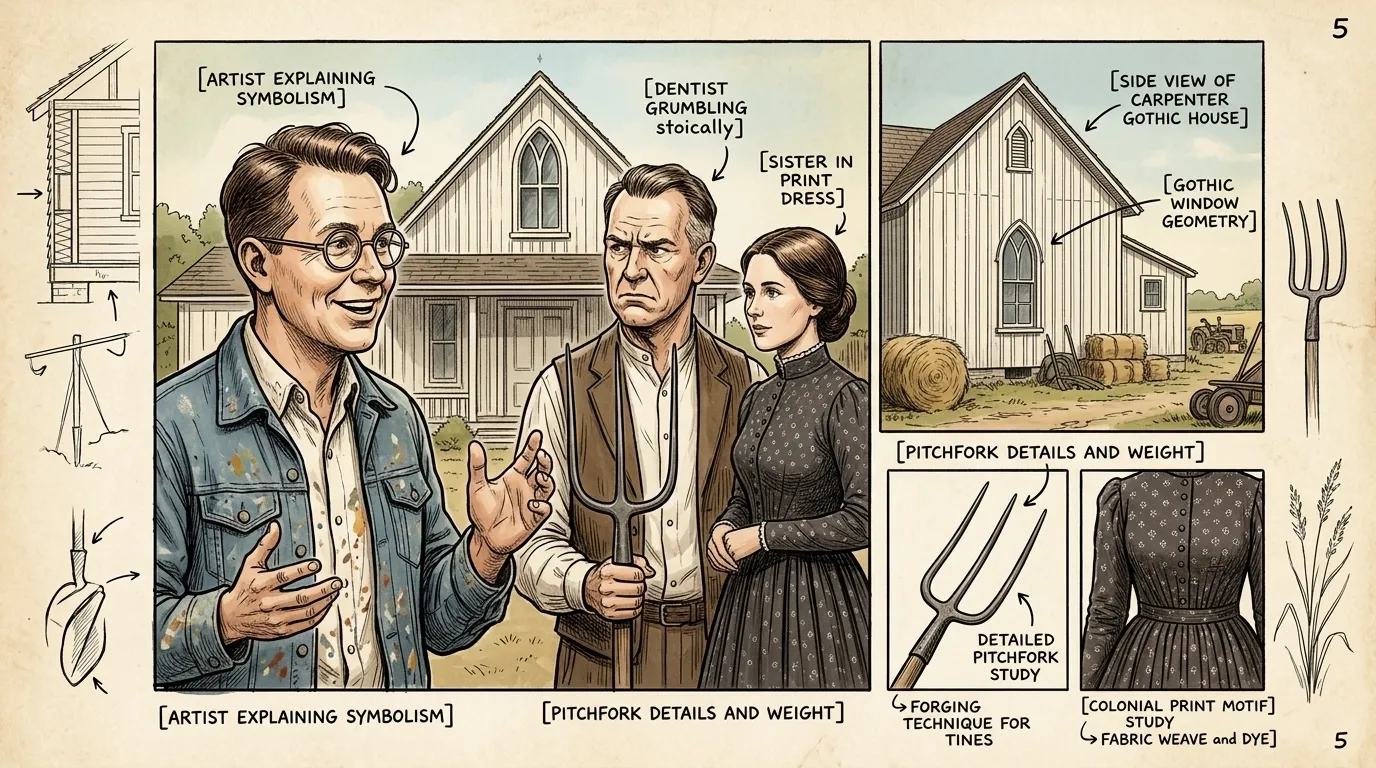
The props in 'American Gothic' were meticulously chosen. The pitchfork, borrowed from a local farmer, symbolized the hard work and agrarian nature of the Midwestern spirit. Nan's colonial print dress was a nod to the past. It combined to create a deliberate statement about American identity and values.
""This pitchfork is rather heavy, Grant," Dr. McKeeby grumbled, shifting his weight. Wood smiled. "It represents the backbone of our nation, Doctor. The honest labor that built this country." He added, turning to his sister, Nan, "And your dress, sister, a perfect embodiment of our colonial heritage""
Art Fact: The pitchfork and the colonial print dress are key symbolic elements in 'American Gothic,' representing labor and heritage.
Page 6
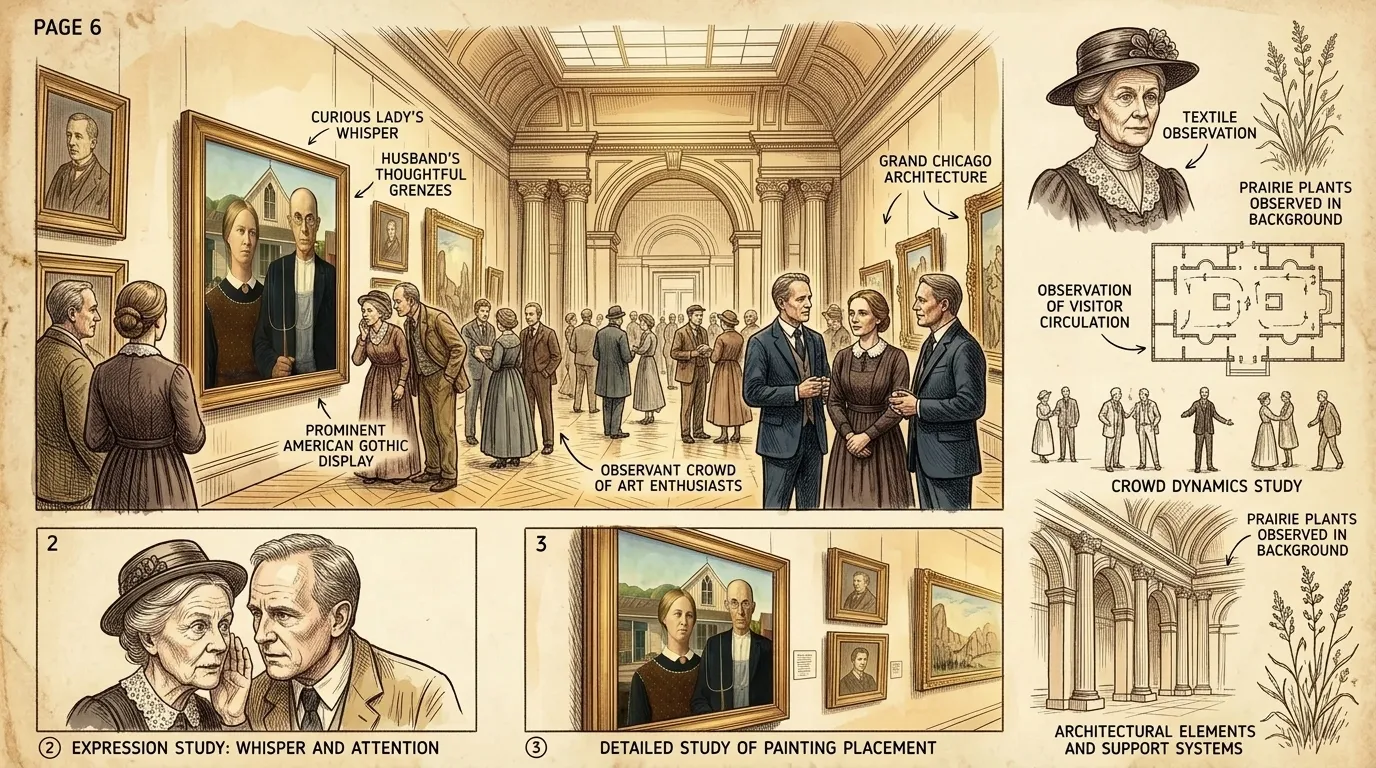
When 'American Gothic' was first exhibited at the Art Institute of Chicago, it caused a stir. Some Iowans were offended, interpreting the painting as a satirical depiction of rural life. Others, however, recognized its powerful statement about the American spirit. Despite the initial controversy, the painting won a bronze medal and a 300 prize.
"Hey, look at this painting! Isn't that suppose to be us folks from Iowa? What a load of garbage! That painter Wood think we are stupid or something?" The elderly lady whispered to her husband, as they stood in the Art Institute of Chicago."
Art Fact: 'American Gothic' generated both controversy and acclaim upon its initial exhibition in 1930.
Page 7
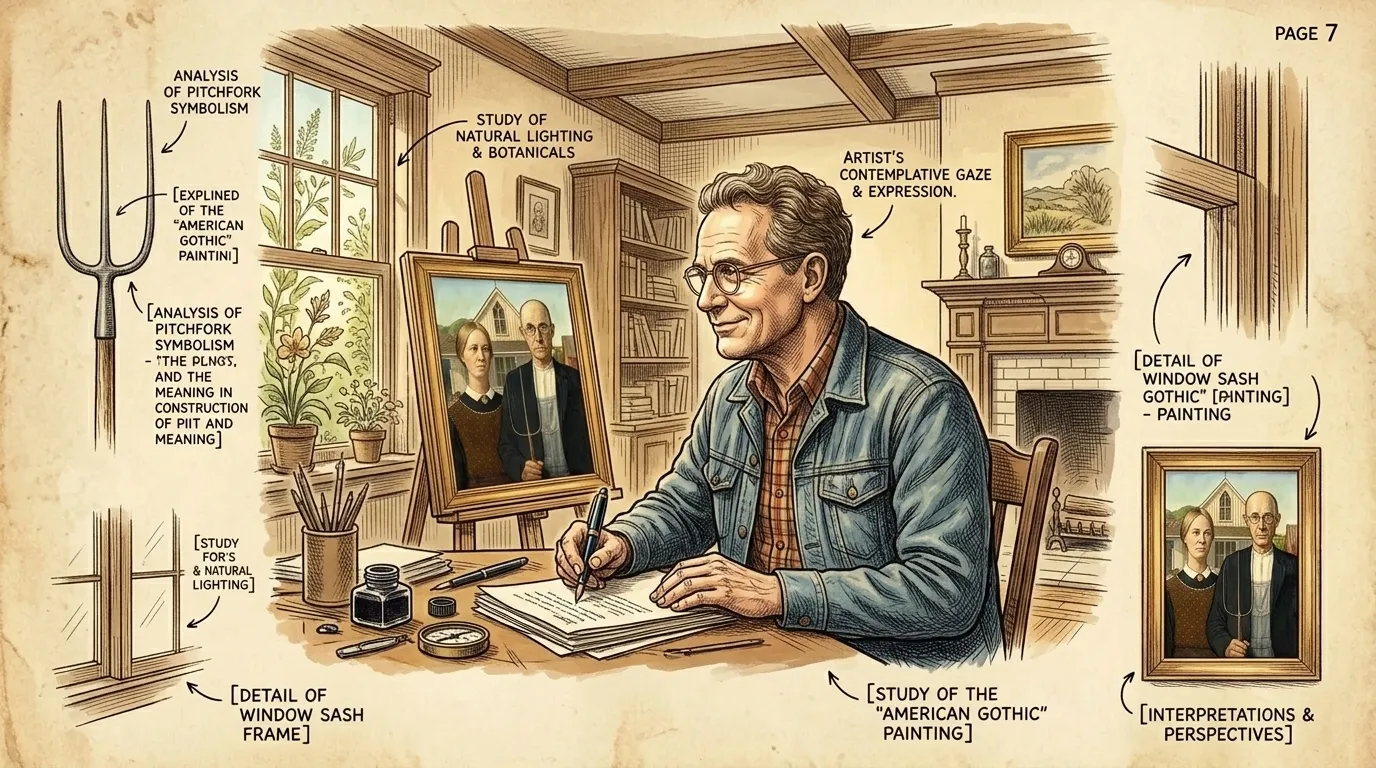
Over time, 'American Gothic' has been interpreted in countless ways. Some see it as a celebration of traditional American values, while others view it as a critique of rural conservatism. Regardless of interpretation, the painting's enduring power lies in its ability to provoke thought and spark dialogue about American identity.
""It's funny, isn't it?" Wood later mused. "How a simple painting can mean so many different things to so many different people. As Shakespeare said, 'There is nothing either good or bad, but thinking makes it so.' I merely presented what I saw. What people choose to see in it, that's their story.""
Art Fact: The enduring power of 'American Gothic' stems from its ambiguous nature, allowing for diverse interpretations.
Page 8
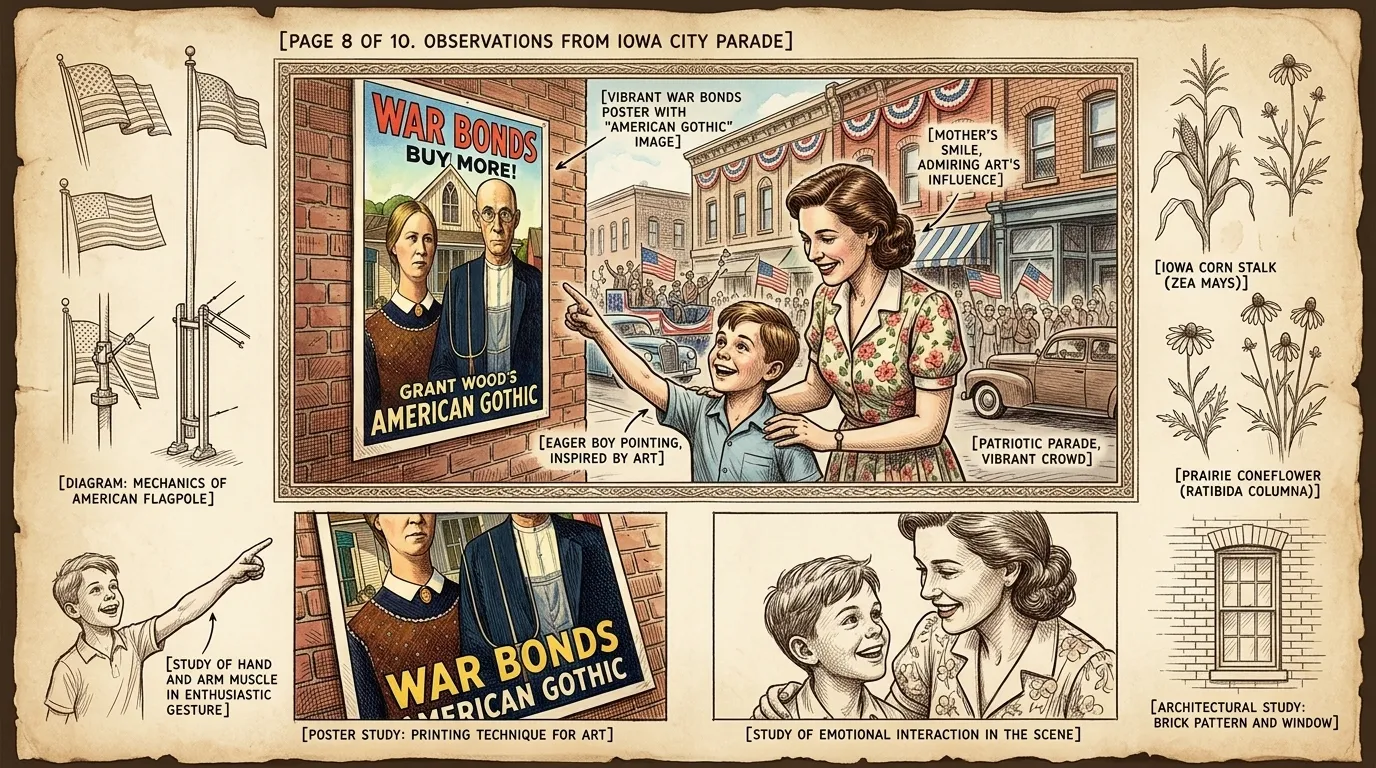
During World War II, 'American Gothic' became a symbol of American resilience and determination. It was widely reproduced on war bonds posters and patriotic advertisements. The painting's depiction of simple, hardworking Americans resonated with a nation fighting for its values.
""Look, Mother, it's them. The folks with the pitchfork! They are fighting for our liberty," the young boy shouted to his mother as they walked by a poster of 'American Gothic' during a parade in Iowa City. The poster was for War Bonds. "Yes, son, we are all in this together.""
Art Fact: 'American Gothic' became a symbol of American resilience during World War II.
Page 9
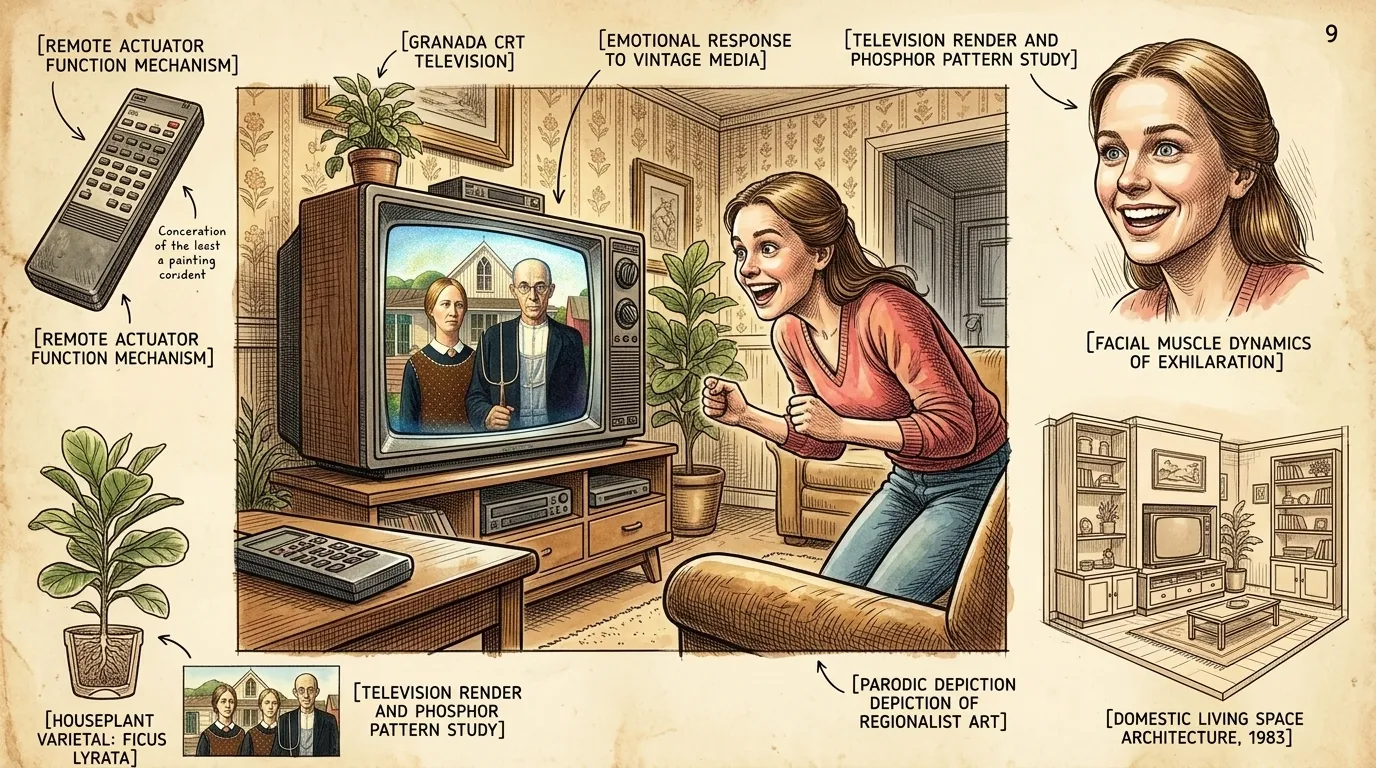
Over the decades, 'American Gothic' has been parodied and referenced in countless films, television shows, and advertisements. Its image has become deeply ingrained in the popular imagination, a shorthand for Americana and Midwestern values. From The Rocky Horror Picture Show to countless cereal boxes, the painting has proved its place in pop culture.
""Wow, look! It's from that cool scary movie," a young woman yelled out while watching "The Rocky Horror Picture Show" on a grainy television set in the early 80's. "Let's do the Time Warp, again!""
Art Fact: 'American Gothic' has become a pop culture icon, parodied and referenced in countless media.
Page 10
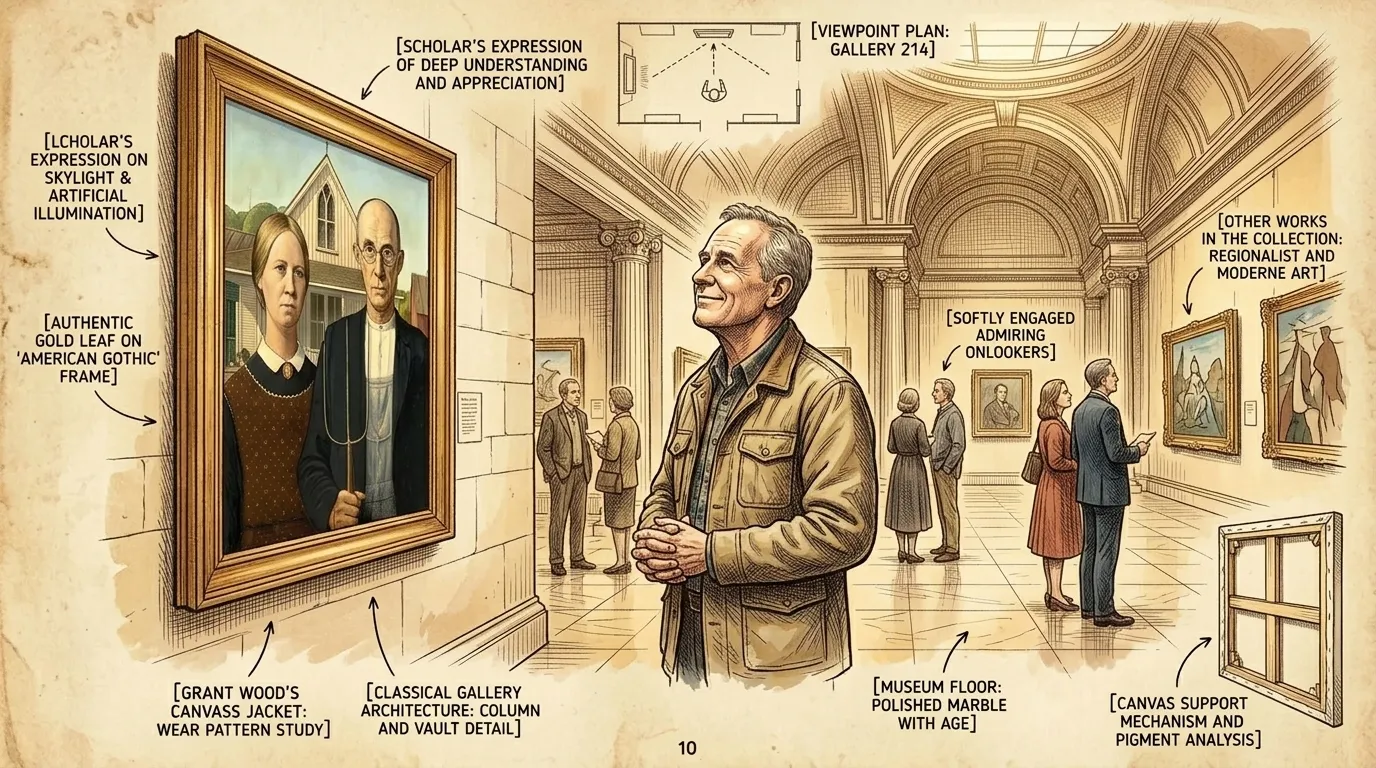
Today, 'American Gothic' remains one of the most recognizable and beloved paintings in American art. Its stark realism, iconic figures, and enduring symbolism continue to captivate viewers. The painting has stood the test of time. Grant Wood's vision endures, a testament to the power of simple, honest storytelling through art.
""It is a masterpiece. A window into the American soul," said a scholar, quietly. His words echoed the sentiments of generations who had come before."
Art Fact: 'American Gothic' continues to resonate with audiences today, solidifying Grant Wood's legacy as a master of American Realism.
About this story
- Location: United States
- Audience: general readers
Questions and answers
Questions and answers about American Gothic by Grant Wood (Chicago, USA — 1930)
Read Wonder Arts on your phone
Wonder Arts is available on Android. Get Wonder Arts on Google Play.