Art Nouveau by Victor Horta (Brussels, Belgium — 1893)
Art Nouveau by Victor Horta (Brussels, Belgium — 1893) — an illustrated arts story, set in Global. 10 illustrated pages, free to read on Wonder Arts.
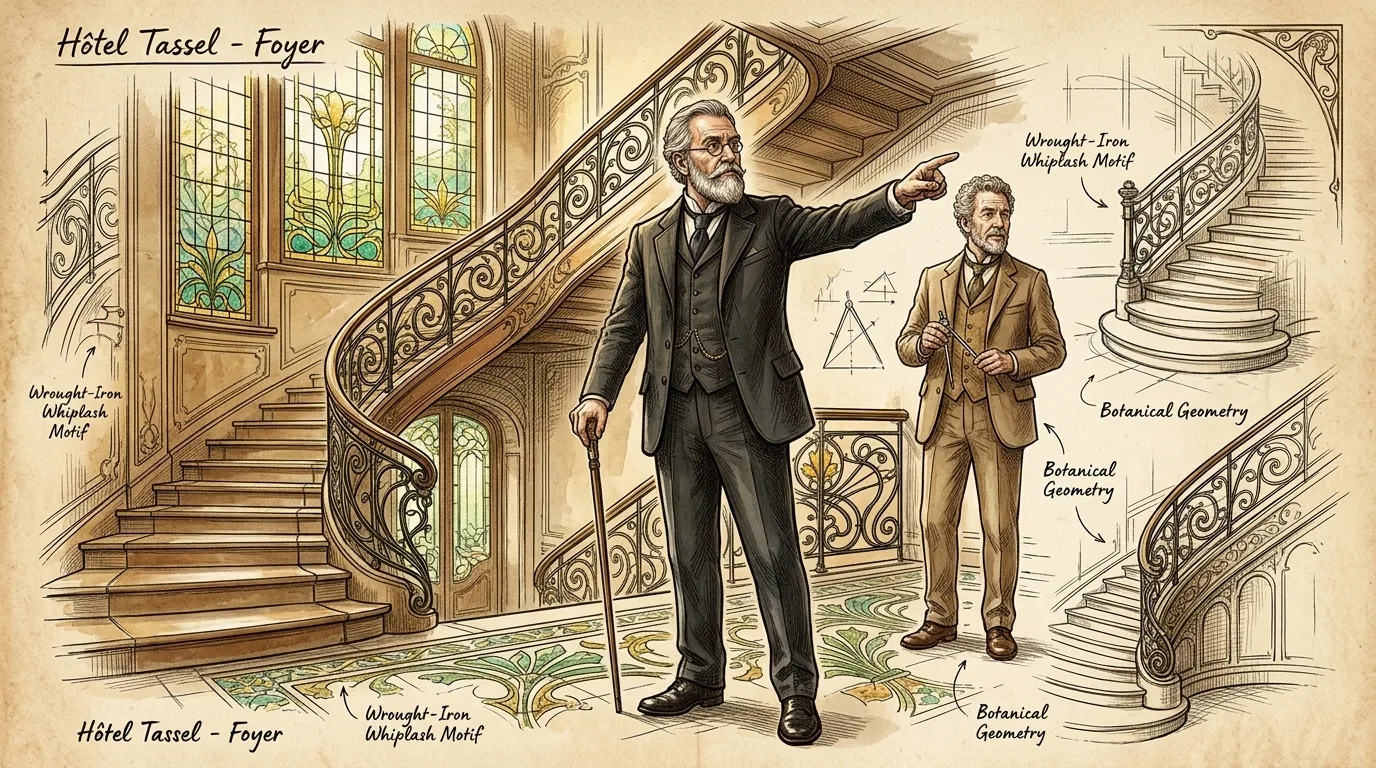
Page 1
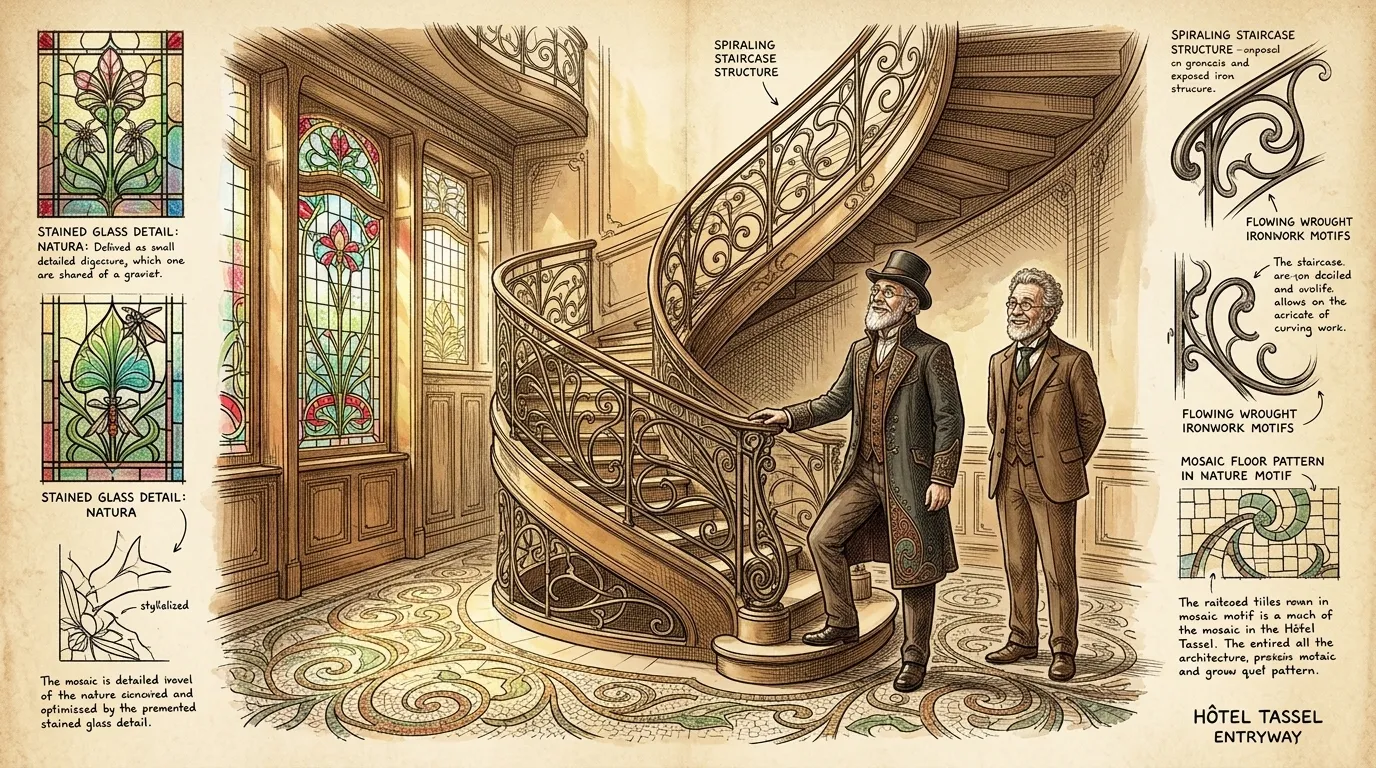
Victor Horta stands proudly before the Hôtel Tassel's staircase, completed in Brussels in 1893. This townhouse, with its revolutionary interior, marked the true birth of Art Nouveau in architecture. The flowing, organic lines, inspired by nature, are visible in the wrought iron, mosaics, and stained glass. It measures 26 meters in height, with a width of 7 meters. One of the most striking features of the Hôtel Tassel is its innovative use of exposed ironwork, which was previously concealed in buildings.
""This house...it breathes!" Horta exclaims to himself, running a hand along the spiraling iron banister. "Finally, a building that reflects the beauty of nature, not the constraints of tradition.""
Art Fact: Hôtel Tassel, completed in 1893, is considered the first true Art Nouveau building. Horta's innovative use of exposed ironwork was revolutionary for its time.
Page 2
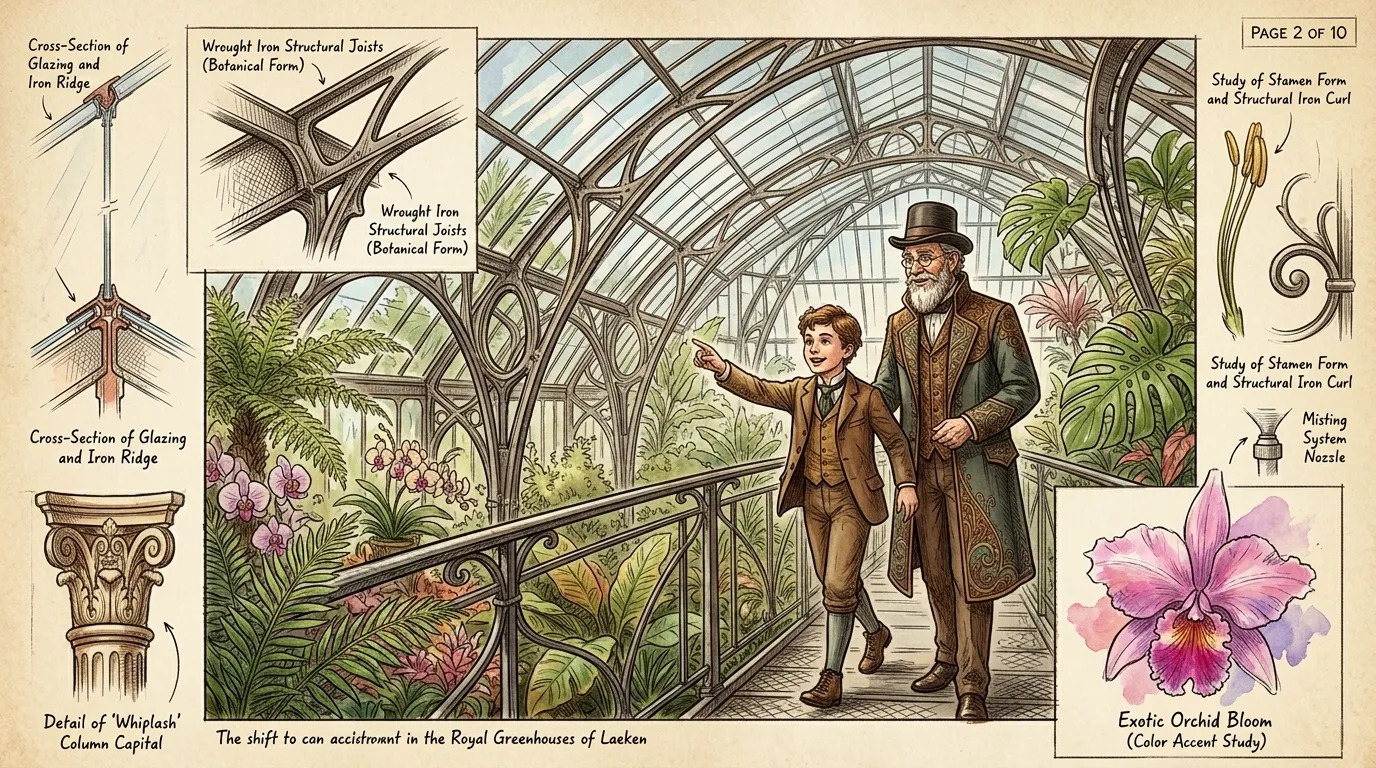
Young Victor, barely a teenager, wanders through the Royal Greenhouses of Laeken. The intricate iron framework supporting the glass panels sparks his imagination. The greenhouses were commissioned by King Leopold II in 1874. He was fascinated by the structure of the plants and how they could be both functional and beautiful.
""Look at how the iron supports the glass, mimicking the veins in a leaf," Victor says to his father, his voice filled with wonder. "It's strong, yet delicate.""
Art Fact: The Royal Greenhouses of Laeken were a significant source of inspiration for Horta, influencing his use of iron and glass in architecture.
Page 3
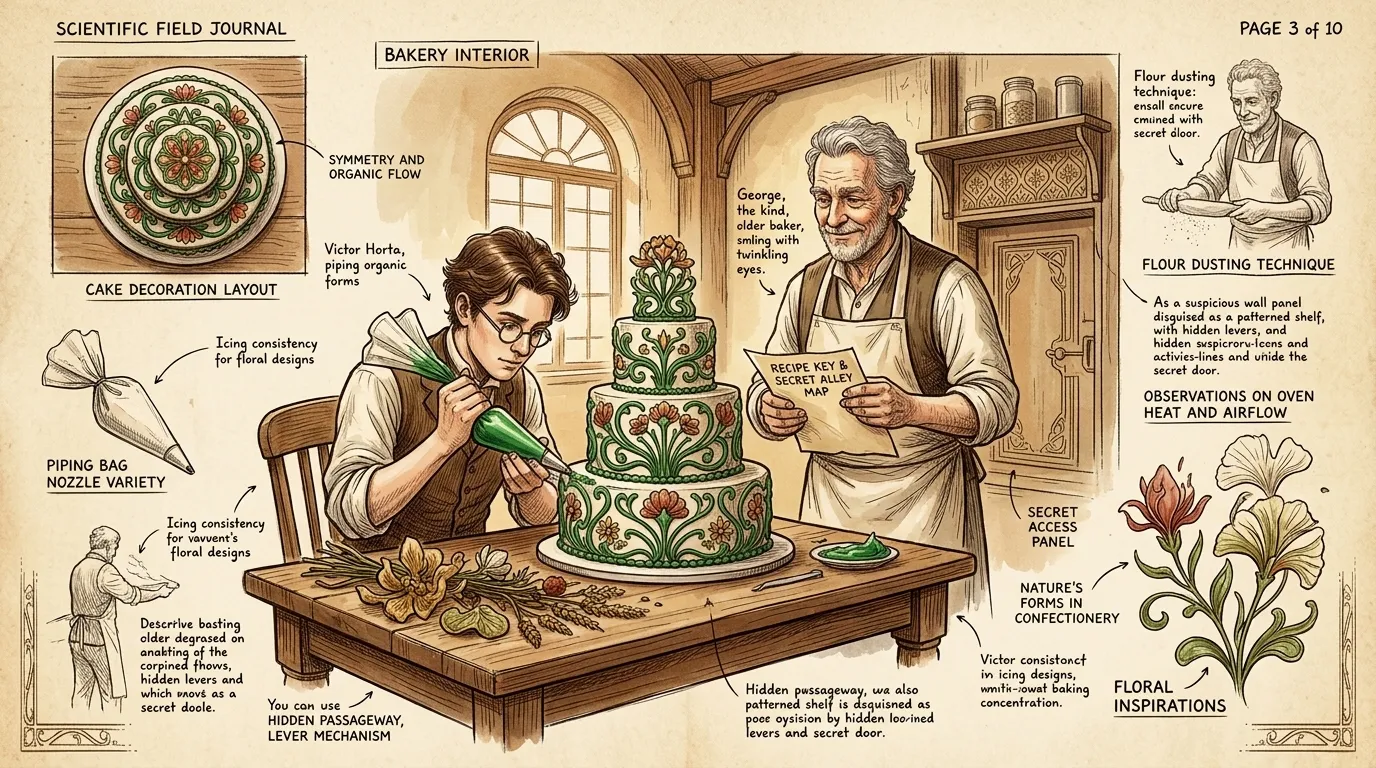
Victor is apprenticed to a baker in Brussels where intricate floral designs icing cakes becomes an obsession. He meticulously recreates forms into icing motifs, and realizes that the baker, a kind man named George, secretly uses his recipes to activate secret doors to the other side of Brussels. He also realizes he can use what he knows about nature and incorporate it with his trade
""Remember what Leonardo da Vinci said, Victor, 'Study the science of art. Study the art of science. Develop your senses. Especially learn how to see. Realize that everything connects to everything else,'" the baker says, his eyes twinkling. "There are always secret doors we can find if we look hard enough,""
Art Fact: Horta's early apprenticeship in baking provided him with an understanding of craftsmanship and design, which influenced his later architectural work.
Page 4
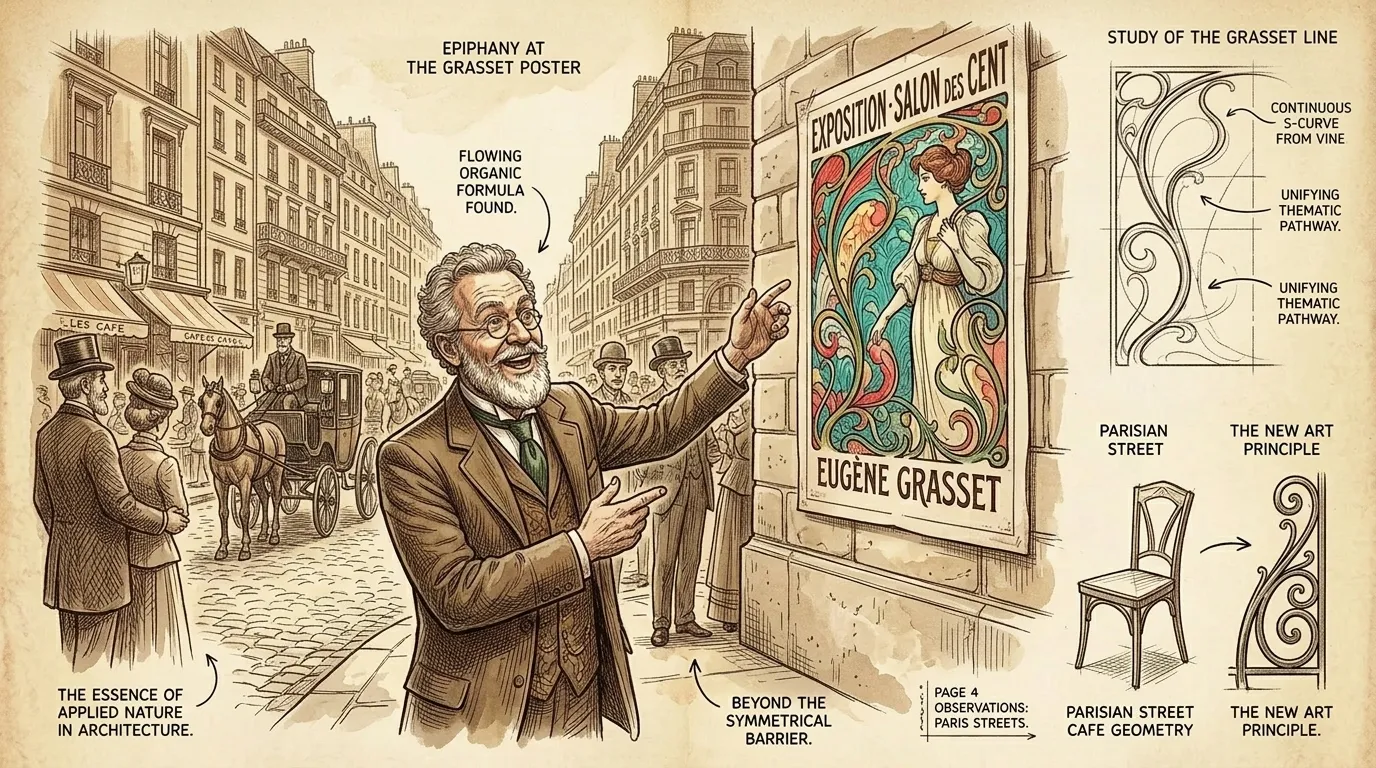
Horta visits Paris and sees Eugène Grasset's poster design. He feels as if he had been struck by lightning. Horta says the flowing lines and organic motifs, in 1888, were exactly what he believed architecture should be.
""This is it!" Horta exclaims, pointing at the poster. "Grasset understands. Art must embrace nature, not reject it!""
Art Fact: Eugène Grasset was a Swiss-French decorative artist who was a pioneer of Art Nouveau design.
Page 5
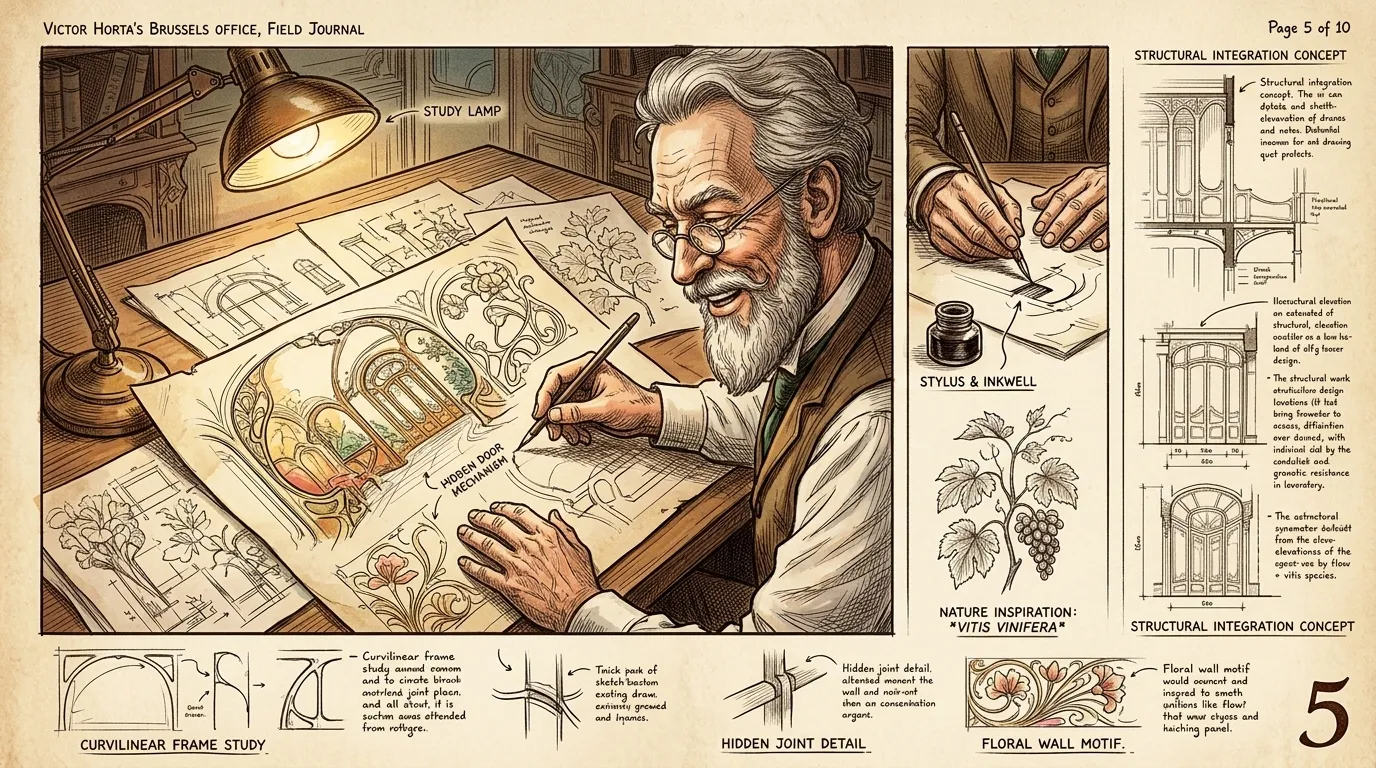
Back in Brussels, Horta experiments with interior design, creating flowing, interconnected spaces that defy traditional room layouts. This also allows him to play with the floral patterns to enter hidden doors
""Walls should not be barriers, but guides," Horta declares, sketching furiously. "They should flow like water, creating a sense of unity and movement.""
Art Fact: Horta's innovative approach to interior design revolutionized the concept of living spaces.
Page 6
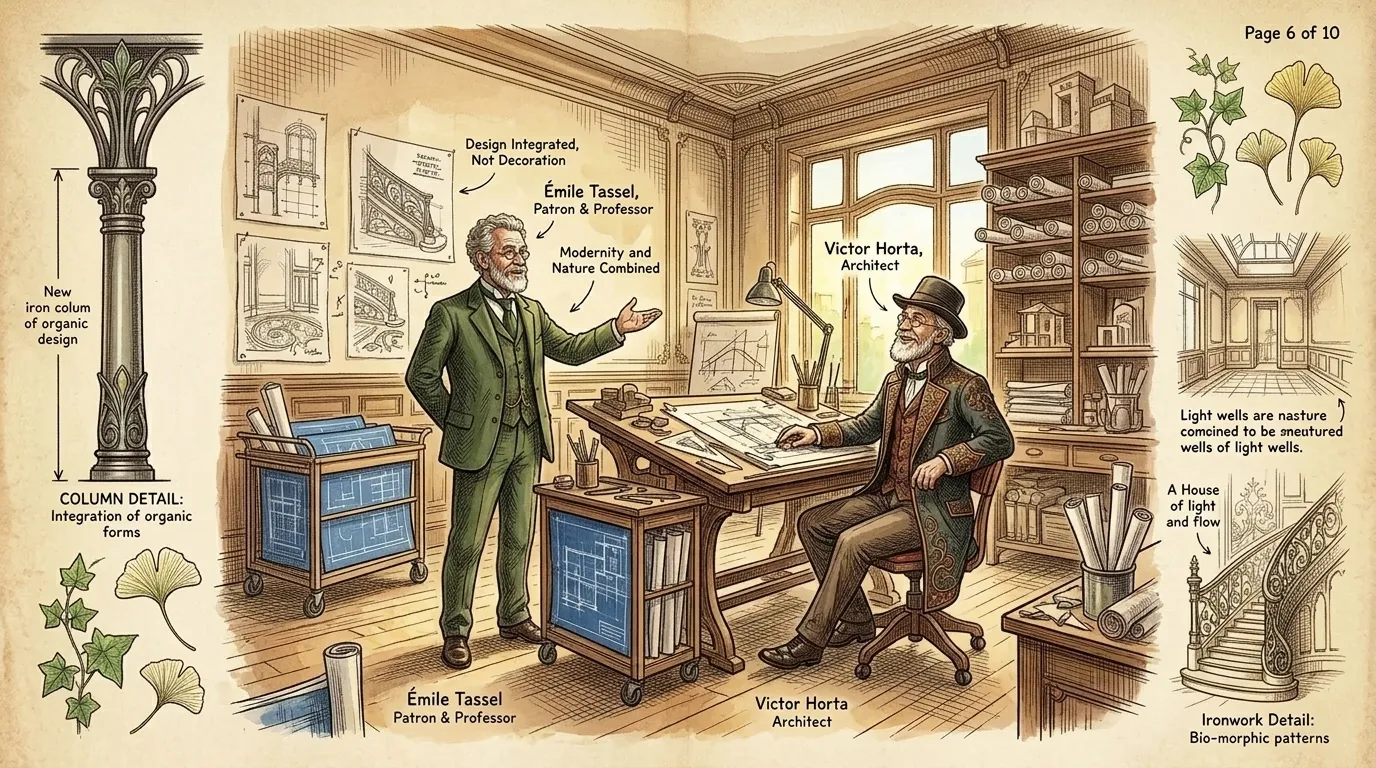
Émile Tassel, a professor of descriptive geometry at the Université Libre de Bruxelles, walks into Horta's office with a challenge. Tassel states that he wants the house to celebrate modernity and nature. He is interested in the integration of the design into the walls, not simply as decoration.
""Horta, I want a house that is unlike any other," Tassel says, his voice firm. "A house that embraces the future, while honoring the beauty of the natural world.""
Art Fact: Émile Tassel was an early patron of Art Nouveau architecture and played a key role in the development of Horta's style.
Page 7
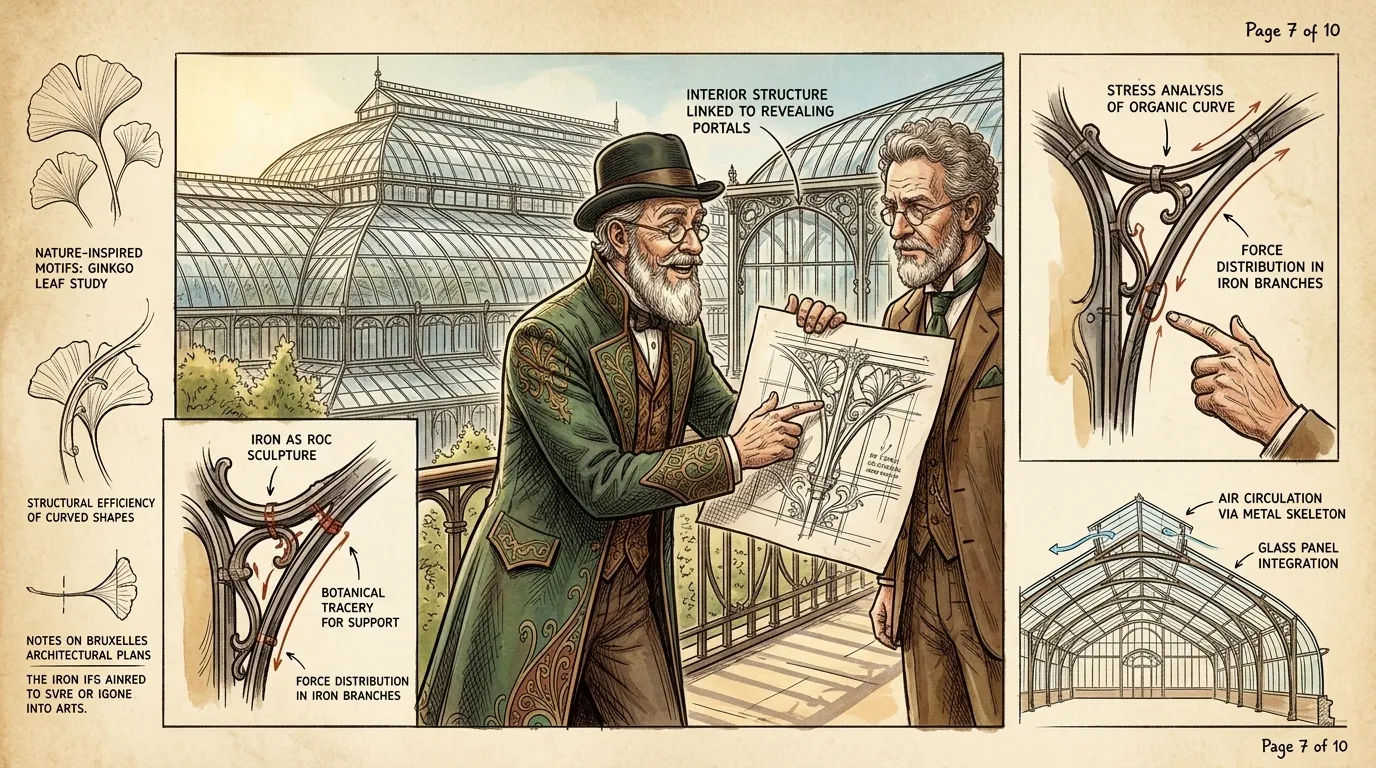
Horta champions the use of exposed ironwork, transforming a utilitarian material into a decorative element. He believes that this would also help the people go through a secret portal the baker has told him about in the Royal Greenhouses.
""Iron is not merely a structural element; it is an opportunity for art," Horta argues, showing Tassel a sketch. "We can mold it, shape it, and transform it into something beautiful.""
Art Fact: Horta's use of exposed ironwork was a defining characteristic of Art Nouveau architecture.
Page 8
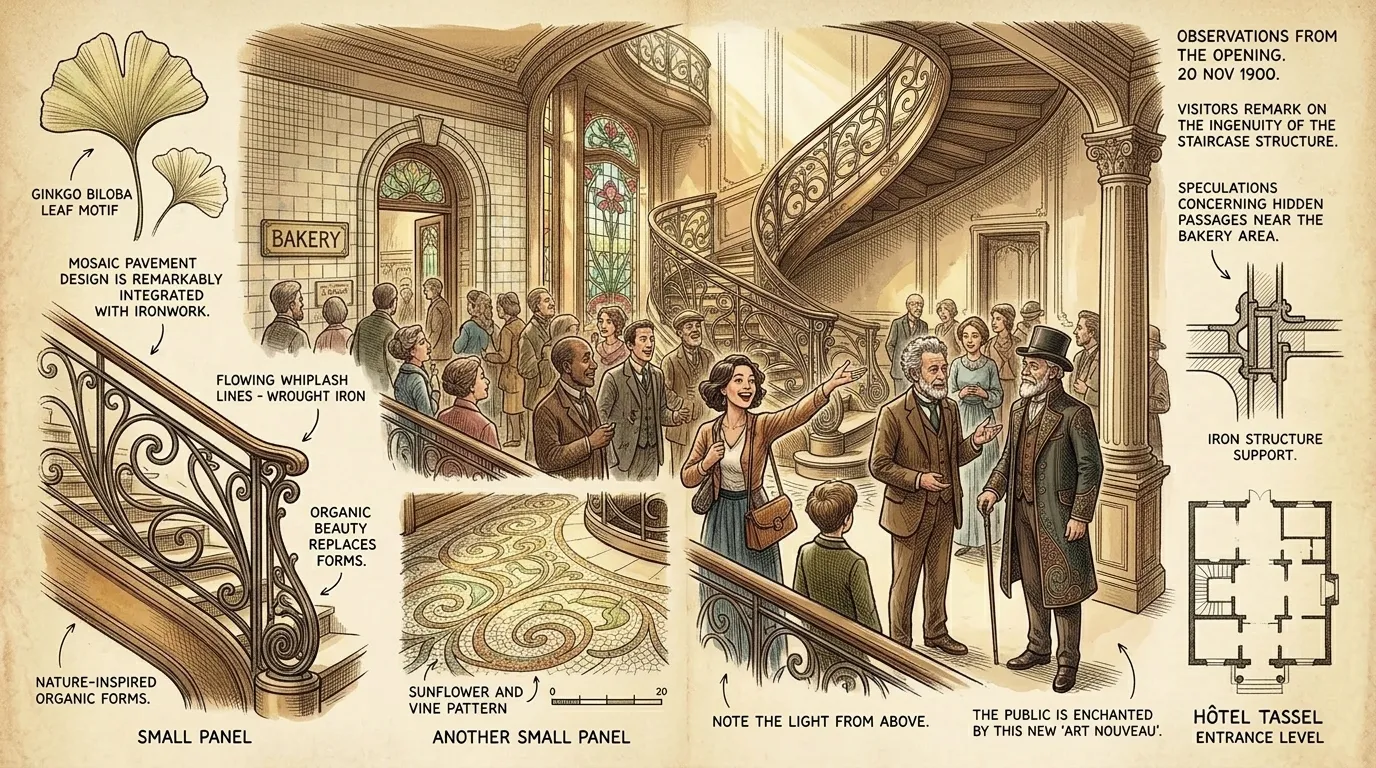
Tassel's house opens and transforms Belgian architecture. The house, with its flowing lines and nature-inspired design, becomes a symbol of Art Nouveau. The bakery business goes up because people find out about the hidden doors. Everyone wants to see what is beyond the secret door.
""This is more than just a house; it's a work of art!" a visitor exclaims, admiring the staircase. "Horta has created something truly extraordinary!""
Art Fact: The Hôtel Tassel was an immediate sensation and helped to popularize Art Nouveau architecture throughout Europe.
Page 9
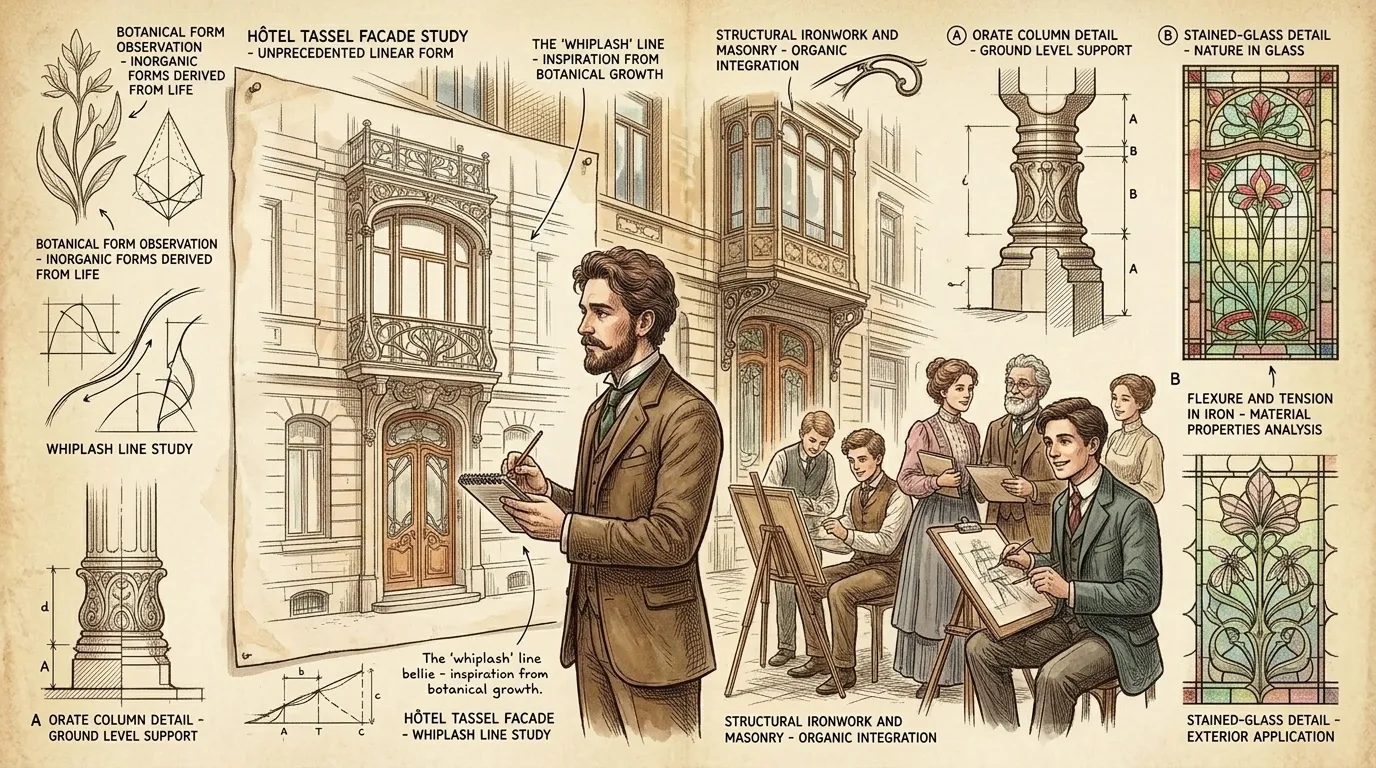
Horta's Art Nouveau style influences architects and designers across the globe. His work inspires a new generation of artists to embrace nature and modernity. Brussels is proud of its heritage.
""Horta showed us that architecture can be both functional and beautiful," a young architect says, studying the Hôtel Tassel. "He dared to break with tradition and create something truly unique.""
Art Fact: Horta's legacy continues to inspire architects and designers today.
Page 10
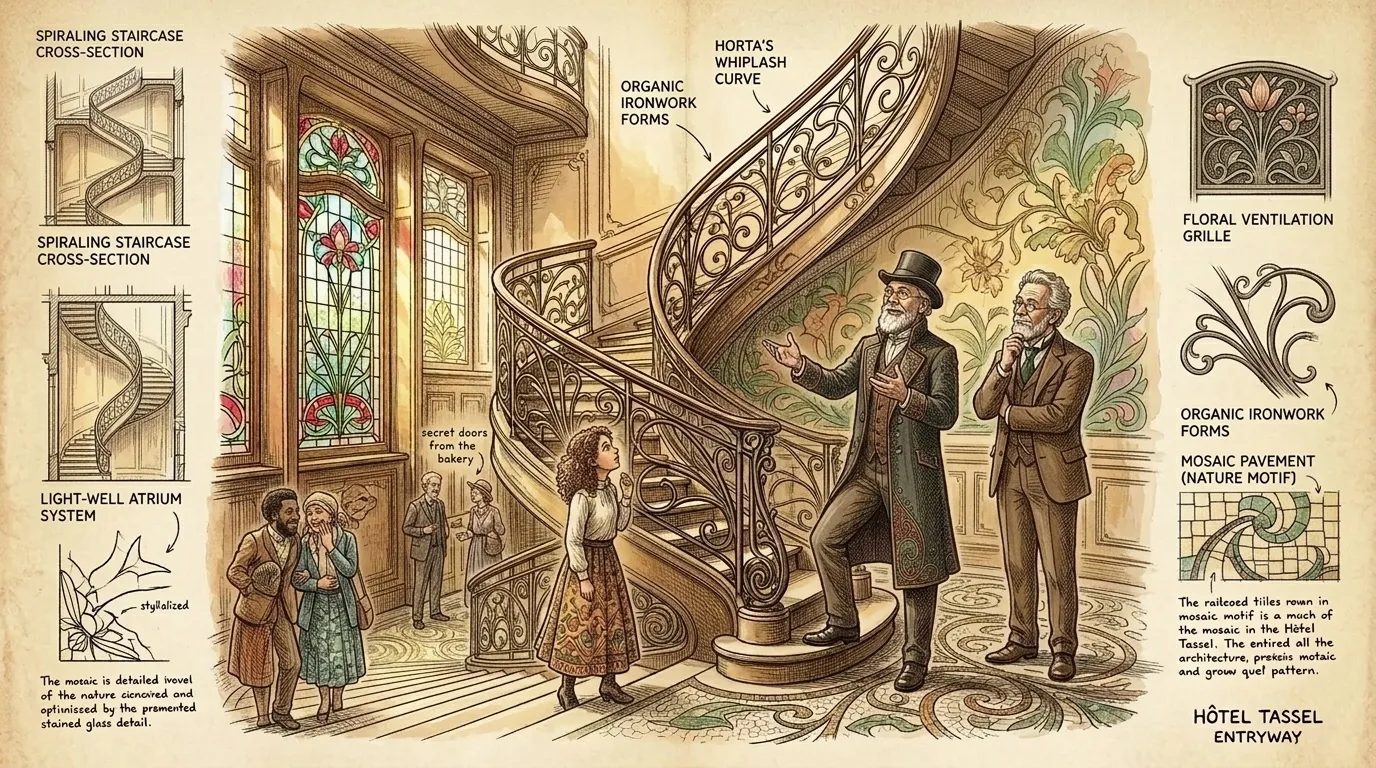
The Hôtel Tassel stands as a monument to Horta's vision, a place that brings visitors from around the world. The secrets that came from the bakery are talked about every night during tourist season. It is a reminder of the power of art to transform the world. 'The details are not the details. They make the design,' according to Charles Eames, which helps us understand Horta.
""To think, all this started with the simple beauty of a flower," remarks a young woman, gazing at the staircase. "Horta saw what others missed.""
Art Fact: The Hôtel Tassel remains a testament to Horta's innovative vision and the enduring power of Art Nouveau design.
About this story
- Location: Global
- Audience: general readers
Questions and answers
Questions and answers about Art Nouveau by Victor Horta (Brussels, Belgium — 1893)
Read Wonder Arts on your phone
Wonder Arts is available on Android. Get Wonder Arts on Google Play.
More Wonder Arts stories
- Ashmolean Museum (Oxford, UK — 1683)
- Bacchus by Michelangelo (Florence, Italy — 1497)
- Bal du moulin de la Galette by Pierre-Auguste Renoir (Paris, France — 1876)
- Barberini Faun by Greek artist (Munich, Germany — c. 220 BC)
- Barbizon School by Rousseau (France — c. 1830)
- Baroque Emerges by Caravaggio (Rome, Italy — c. 1600)