Baroque Emerges by Caravaggio (Rome, Italy — c. 1600)

Baroque Emerges by Caravaggio (Rome, Italy — c. 1600) — an illustrated arts story, set in Italy. 10 illustrated pages, free to read on Wonder Arts.
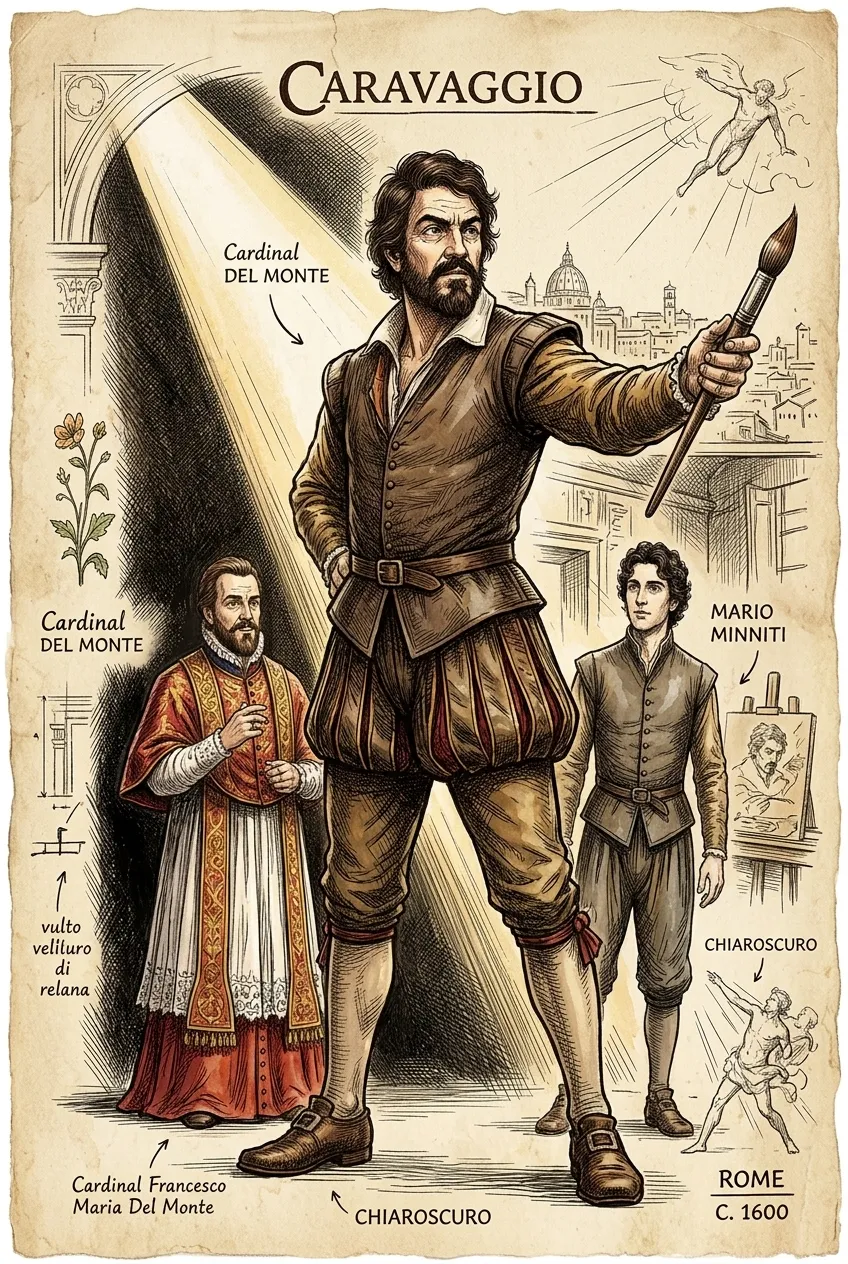
Baroque Emerges by Caravaggio (Rome, Italy — c. 1600) — book cover — Wonder Arts
Baroque Emerges by Caravaggio (Rome, Italy — c. 1600) — an illustrated arts story, set in Italy. 10 illustrated pages, free to read on Wonder Arts.

Page 1
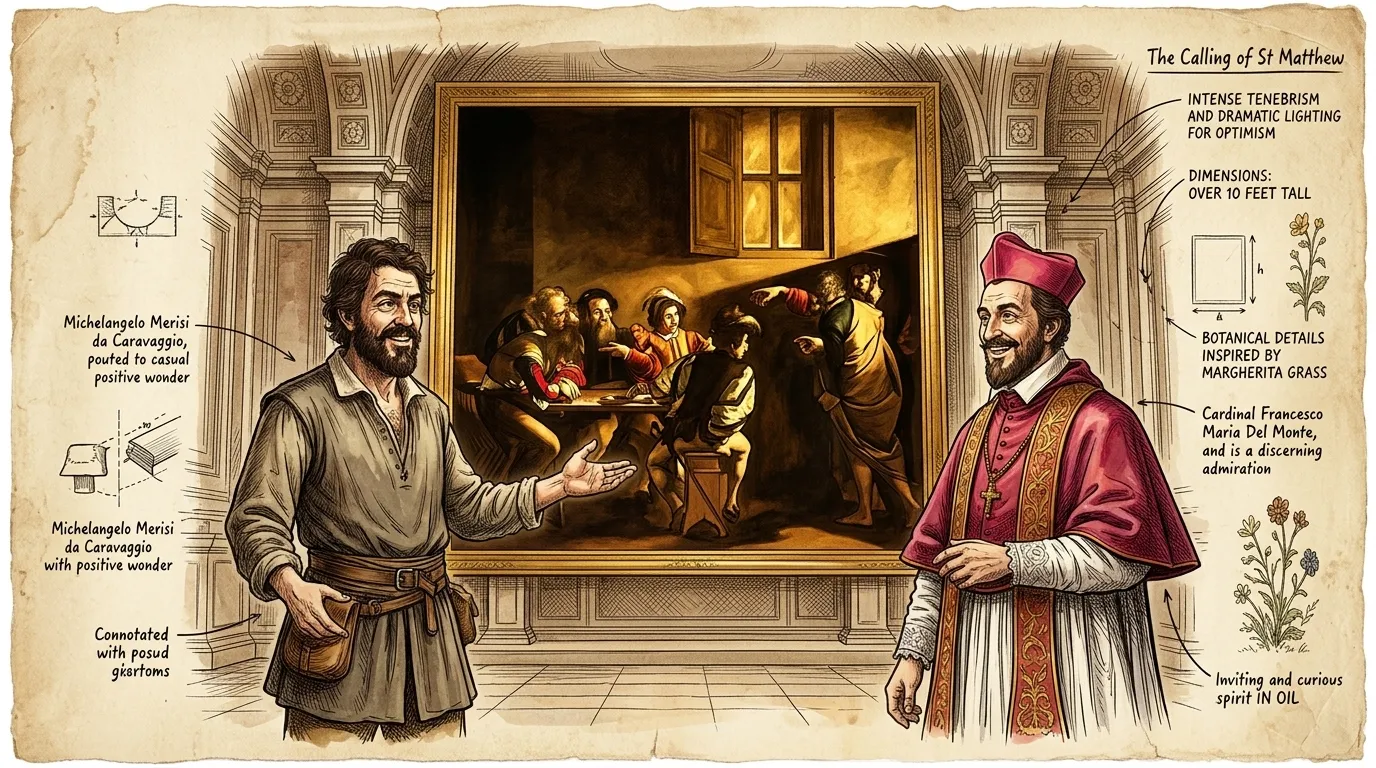
Michelangelo Merisi da Caravaggio, standing before his masterpiece 'The Calling of St Matthew,' a painting that would forever alter the course of art.
Michelangelo Merisi da Caravaggio, standing before his masterpiece 'The Calling of St Matthew,' a painting that would forever alter the course of art. Completed around 1600, the painting hangs in the Contarelli Chapel of San Luigi dei Francesi in Rome. Its dimensions are approximately 322 x 340 cm. One extraordinary fact: its revolutionary use of tenebrism—dramatic contrasts of light and dark—shocked and captivated audiences. "The light... it speaks louder than any sermon.

Michelangelo Merisi da Caravaggio, standing before his masterpiece 'The Calling of St Matthew,' a painting that would forever alter the course of art. Completed around 1600, the painting hangs in the Contarelli Chapel of San Luigi dei Francesi in Rome. Its dimensions are approximately 322 x 340 cm. One extraordinary fact: its revolutionary use of tenebrism—dramatic contrasts of light and dark—shocked and captivated audiences.

"The light... it speaks louder than any sermon. Can you feel the call, Cardinal Del Monte?"

Art Fact: The Calling of St Matthew, c. 1600

Page 2
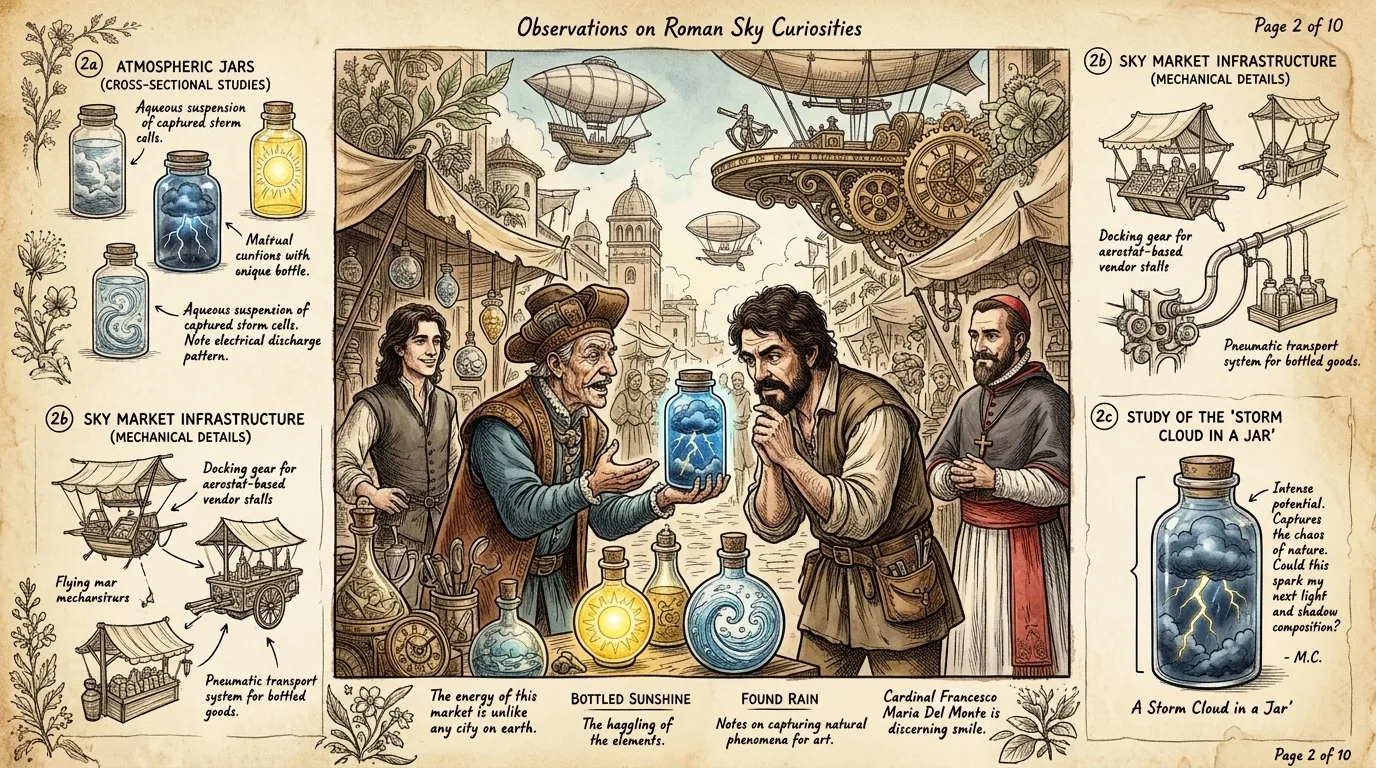
Caravaggio, struggling to find his place in the Roman art world, wandered through the bustling sky market, a place where merchants traded in bottled sunshine…
Caravaggio, struggling to find his place in the Roman art world, wandered through the bustling sky market, a place where merchants traded in bottled sunshine and captured rain. He noticed a merchant haggling over the price of a 'Storm Cloud in a Jar'. This strange interaction gave him an idea. He thought, perhaps the power of light and darkness can reveal truth. "Look, Maestro, this merchant bottles lightning.

Caravaggio, struggling to find his place in the Roman art world, wandered through the bustling sky market, a place where merchants traded in bottled sunshine and captured rain. He noticed a merchant haggling over the price of a 'Storm Cloud in a Jar'. This strange interaction gave him an idea. He thought, perhaps the power of light and darkness can reveal truth.

"Look, Maestro, this merchant bottles lightning. What more could you ask for inspiration!"

Art Fact: The sky market was Rome's chaotic heart.

Page 3
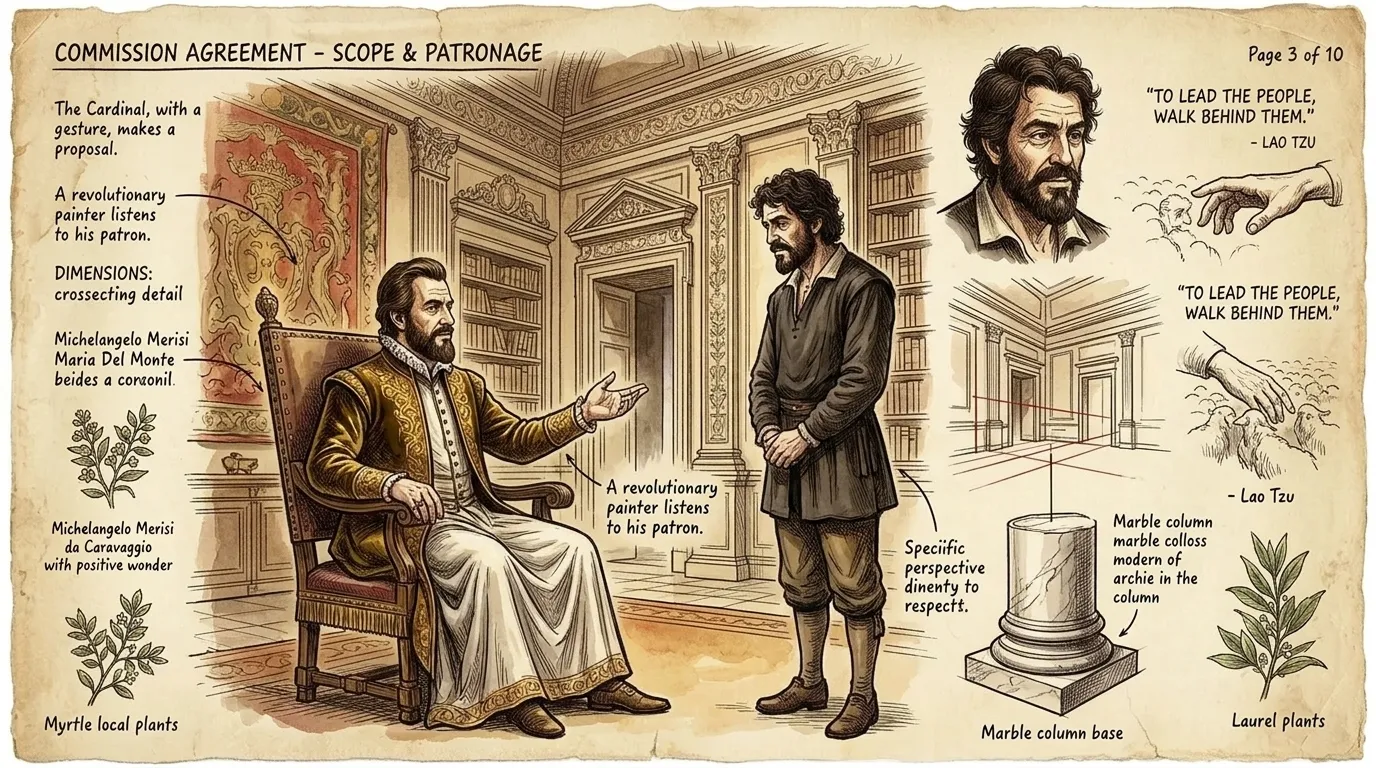
Cardinal Francesco Maria Del Monte, a discerning patron of the arts, beckoned Caravaggio to his opulent chambers. He explained the commission: three paintings…
Cardinal Francesco Maria Del Monte, a discerning patron of the arts, beckoned Caravaggio to his opulent chambers. He explained the commission: three paintings for the Contarelli Chapel, depicting the life of St. Matthew. "Remember," the Cardinal warned, "'The journey of a thousand miles begins with a single step,' as Lao Tzu said.

Cardinal Francesco Maria Del Monte, a discerning patron of the arts, beckoned Caravaggio to his opulent chambers. He explained the commission: three paintings for the Contarelli Chapel, depicting the life of St. Matthew. "Remember," the Cardinal warned, "'The journey of a thousand miles begins with a single step,' as Lao Tzu said. Let each brushstroke be deliberate, each shadow profound."

"Caravaggio, your talent is undeniable, but can you capture the divine in such a mortal scene?"

Art Fact: Cardinal Del Monte was a key supporter.

Page 4

Mario Minniti, Caravaggio's close friend and frequent model, expressed his reservations about posing as St. Matthew. He confessed that he did not see himself as…
Mario Minniti, Caravaggio's close friend and frequent model, expressed his reservations about posing as St. Matthew. He confessed that he did not see himself as a saint. Caravaggio, undeterred, reassured him that he did not need to be pious, but simply real. "Realism is the key to a masterpiece Mario!" "Caravaggio, I am no saint! Are you sure I'm the right model?" Art Fact: Mario Minniti was a crucial collaborator.

Mario Minniti, Caravaggio's close friend and frequent model, expressed his reservations about posing as St. Matthew. He confessed that he did not see himself as a saint. Caravaggio, undeterred, reassured him that he did not need to be pious, but simply real. "Realism is the key to a masterpiece Mario!"

"Caravaggio, I am no saint! Are you sure I'm the right model?"

Art Fact: Mario Minniti was a crucial collaborator.

Page 5
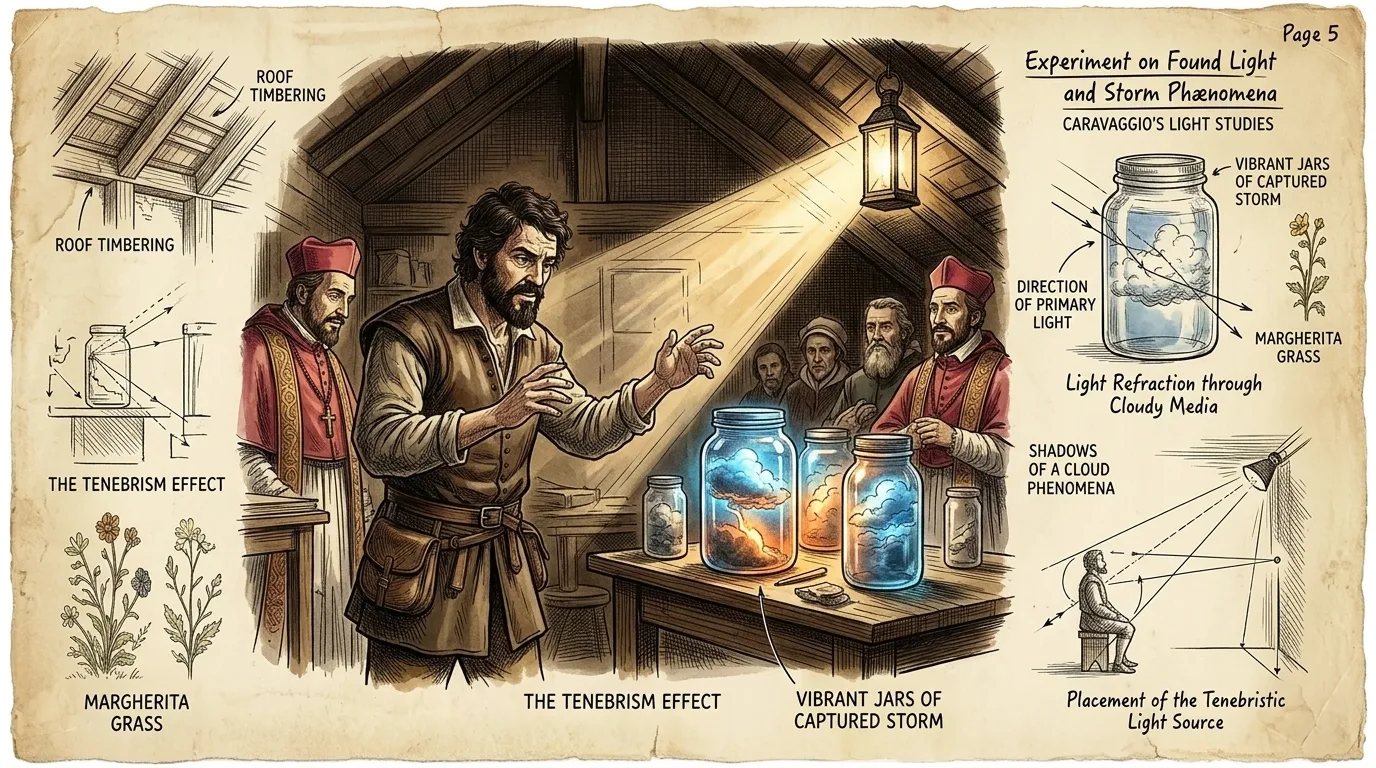
Caravaggio experimented with dramatic lighting, using a single source of light to illuminate his subjects and plunge the background into deep shadow.
Caravaggio experimented with dramatic lighting, using a single source of light to illuminate his subjects and plunge the background into deep shadow. He realized that darkness was just as important as light in creating depth and emotion. He studied the bottled storms. He felt, this is exactly how the light must work! "The light... It must pierce the darkness, just as divine grace pierces the soul." Art Fact: Caravaggio mastered the art of tenebrism.

Caravaggio experimented with dramatic lighting, using a single source of light to illuminate his subjects and plunge the background into deep shadow. He realized that darkness was just as important as light in creating depth and emotion. He studied the bottled storms. He felt, this is exactly how the light must work!

"The light... It must pierce the darkness, just as divine grace pierces the soul."

Art Fact: Caravaggio mastered the art of tenebrism.

Page 6
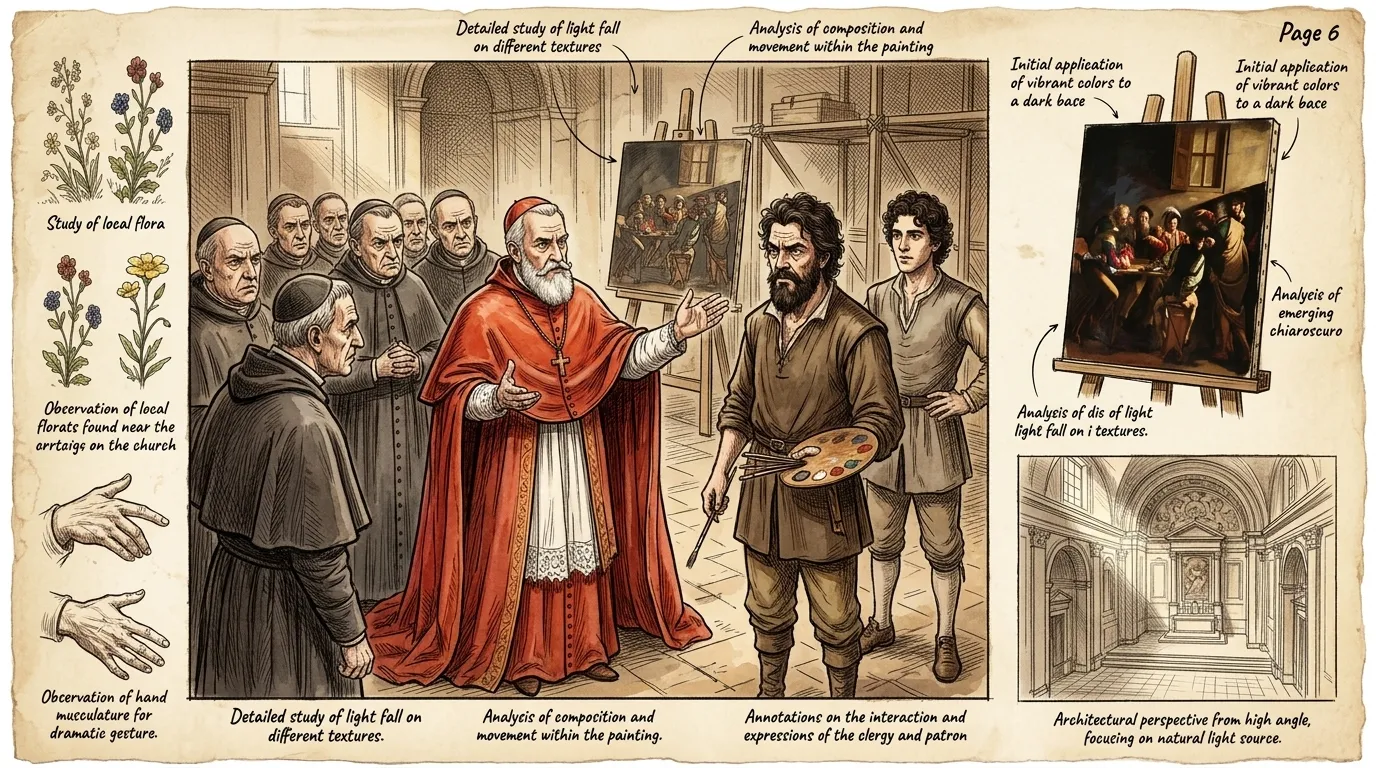
The clergy of San Luigi dei Francesi, initially skeptical of Caravaggio's unconventional style, scrutinized his progress with concern.
The clergy of San Luigi dei Francesi, initially skeptical of Caravaggio's unconventional style, scrutinized his progress with concern. They questioned his use of commoners as models and his stark, realistic portrayal of religious figures. But Cardinal Del Monte defended the artist. "Cardinal, his realism is unsettling. Are we sure he captures the sanctity of St. Matthew?" Art Fact: The clergy doubted Caravaggio's vision.

The clergy of San Luigi dei Francesi, initially skeptical of Caravaggio's unconventional style, scrutinized his progress with concern. They questioned his use of commoners as models and his stark, realistic portrayal of religious figures. But Cardinal Del Monte defended the artist.

"Cardinal, his realism is unsettling. Are we sure he captures the sanctity of St. Matthew?"

Art Fact: The clergy doubted Caravaggio's vision.

Page 7
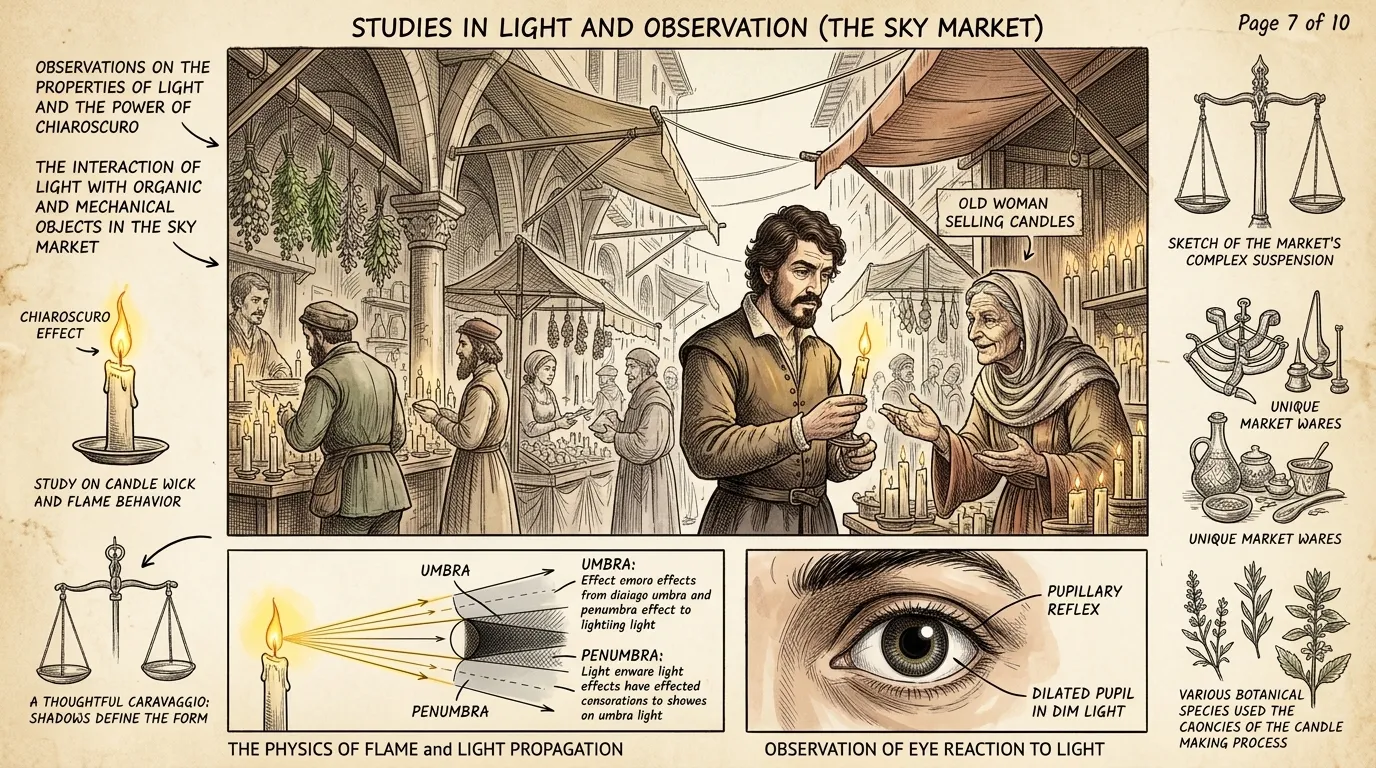
Caravaggio, seeking inspiration, found himself drawn back to the sky market. This time, he saw an old woman selling candles.
Caravaggio, seeking inspiration, found himself drawn back to the sky market. This time, he saw an old woman selling candles. She told him a story of a blind man who, upon regaining his sight, saw the world anew, overwhelmed by the power of light. It reminded him, the light must guide you. "The light, young man, it reveals what darkness conceals. But it also shows what we choose not to see." Art Fact: Inspiration came from unexpected places.

Caravaggio, seeking inspiration, found himself drawn back to the sky market. This time, he saw an old woman selling candles. She told him a story of a blind man who, upon regaining his sight, saw the world anew, overwhelmed by the power of light. It reminded him, the light must guide you.

"The light, young man, it reveals what darkness conceals. But it also shows what we choose not to see."

Art Fact: Inspiration came from unexpected places.

Page 8
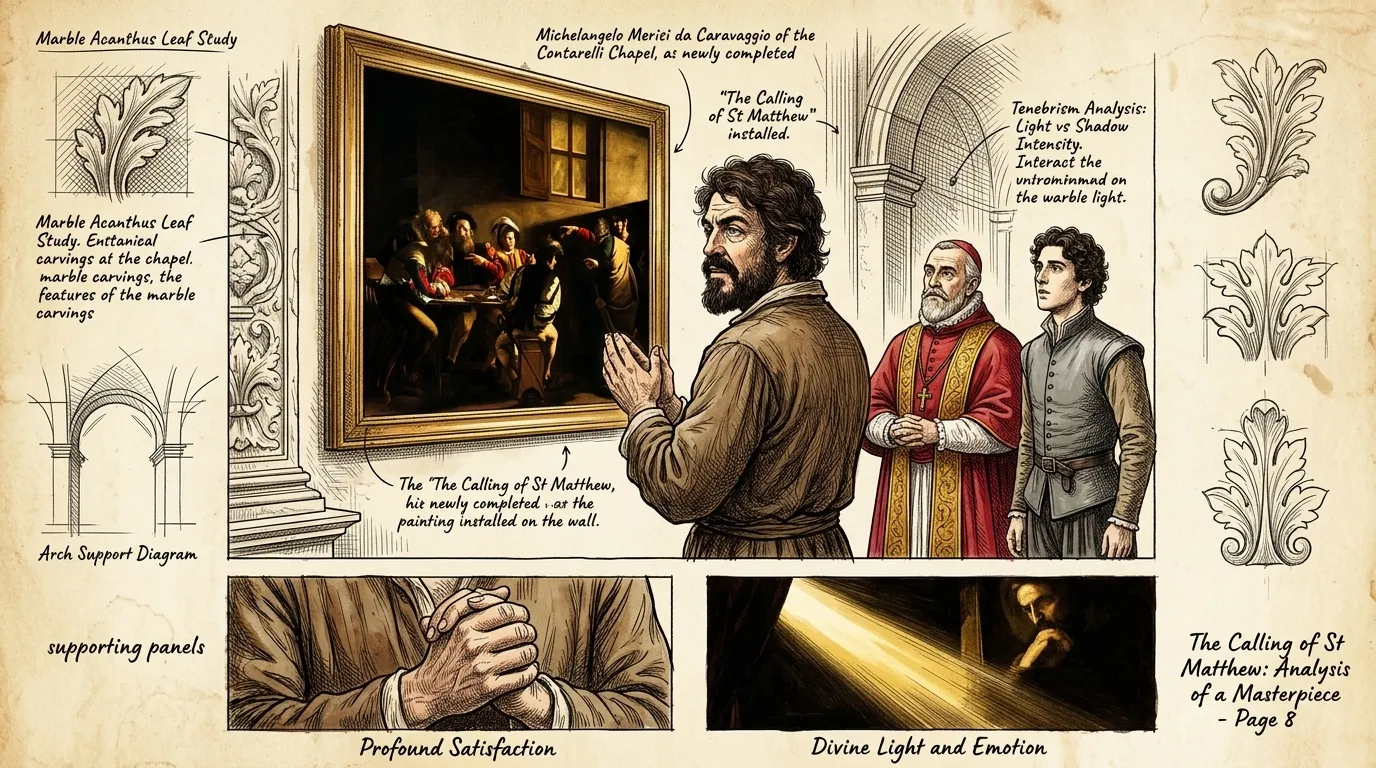
After months of intense work, 'The Calling of St Matthew' was finally complete. Caravaggio stepped back, admiring his creation.
After months of intense work, 'The Calling of St Matthew' was finally complete. Caravaggio stepped back, admiring his creation. The dramatic light, the realistic figures, the raw emotion—it was all there. He felt the spark of divinity. It felt like the bottles of weather finally unleashing their force. "It is finished. The light has spoken." Art Fact: The masterpiece was finally unveiled.

After months of intense work, 'The Calling of St Matthew' was finally complete. Caravaggio stepped back, admiring his creation. The dramatic light, the realistic figures, the raw emotion—it was all there. He felt the spark of divinity. It felt like the bottles of weather finally unleashing their force.

"It is finished. The light has spoken."

Art Fact: The masterpiece was finally unveiled.

Page 9
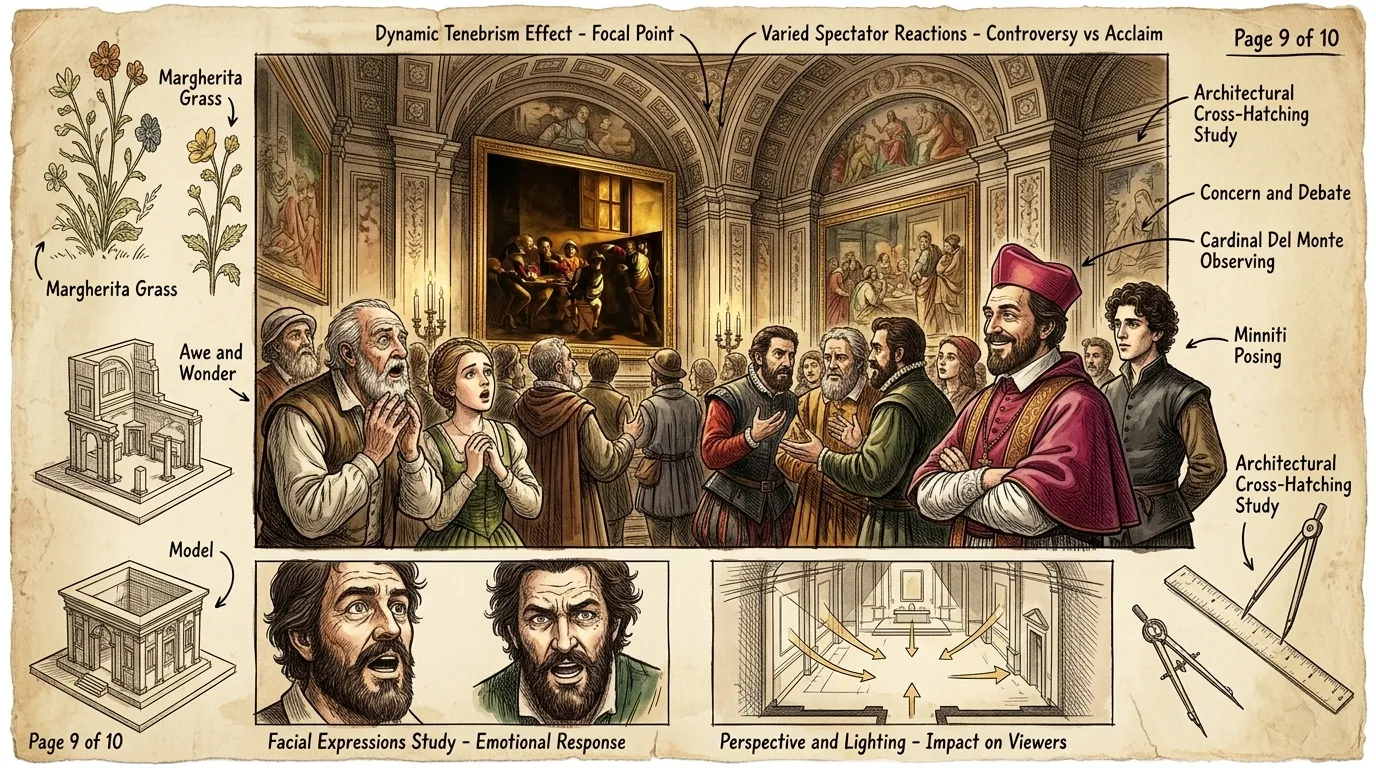
The unveiling of 'The Calling of St Matthew' ignited a firestorm of controversy and acclaim. Some praised its realism and emotional power, while others…
The unveiling of 'The Calling of St Matthew' ignited a firestorm of controversy and acclaim. Some praised its realism and emotional power, while others condemned its lack of traditional religious iconography. Despite the criticism, Caravaggio's revolutionary style paved the way for the Baroque movement, forever changing the course of art. "Caravaggio's vision is bold and unapologetic.

The unveiling of 'The Calling of St Matthew' ignited a firestorm of controversy and acclaim. Some praised its realism and emotional power, while others condemned its lack of traditional religious iconography. Despite the criticism, Caravaggio's revolutionary style paved the way for the Baroque movement, forever changing the course of art.

"Caravaggio's vision is bold and unapologetic. He has ushered in a new era of artistic expression!"

Art Fact: Caravaggio's work sparked a revolution.

Page 10
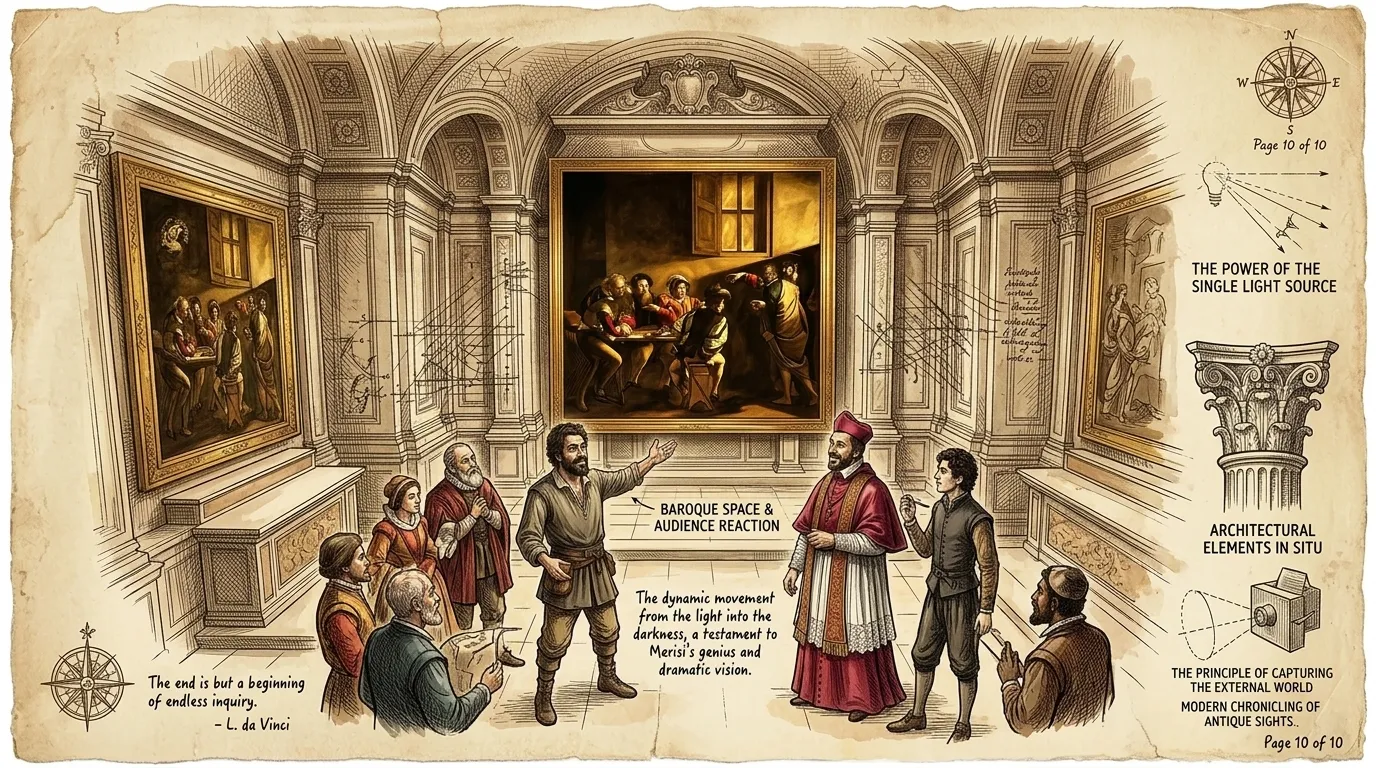
Centuries later, 'The Calling of St Matthew' continues to captivate audiences, its dramatic light and raw emotion resonating with viewers from all walks of…
Centuries later, 'The Calling of St Matthew' continues to captivate audiences, its dramatic light and raw emotion resonating with viewers from all walks of life. It hangs in the Contarelli Chapel, a testament to Caravaggio's enduring genius. Caravaggio's spirit still lives. As Leonardo da Vinci once said, 'Art is never finished, only abandoned.' His influence is eternal. Art Fact: Caravaggio's genius endures through time.

Centuries later, 'The Calling of St Matthew' continues to captivate audiences, its dramatic light and raw emotion resonating with viewers from all walks of life. It hangs in the Contarelli Chapel, a testament to Caravaggio's enduring genius. Caravaggio's spirit still lives. As Leonardo da Vinci once said, 'Art is never finished, only abandoned.' His influence is eternal.

Art Fact: Caravaggio's genius endures through time.

About this story

  • Location: Italy
  • Audience: general readers

Questions and answers

Questions and answers about Baroque Emerges by Caravaggio (Rome, Italy — c. 1600)

Read Wonder Arts on your phone

Wonder Arts is available on Android. Get Wonder Arts on Google Play.

More Wonder Arts stories

All Wonder Arts stories · Open the library