Brooklyn Bridge (New York City, USA — 1883)
Brooklyn Bridge (New York City, USA — 1883) — an illustrated arts story, set in United States. 10 illustrated pages, free to read on Wonder Arts.
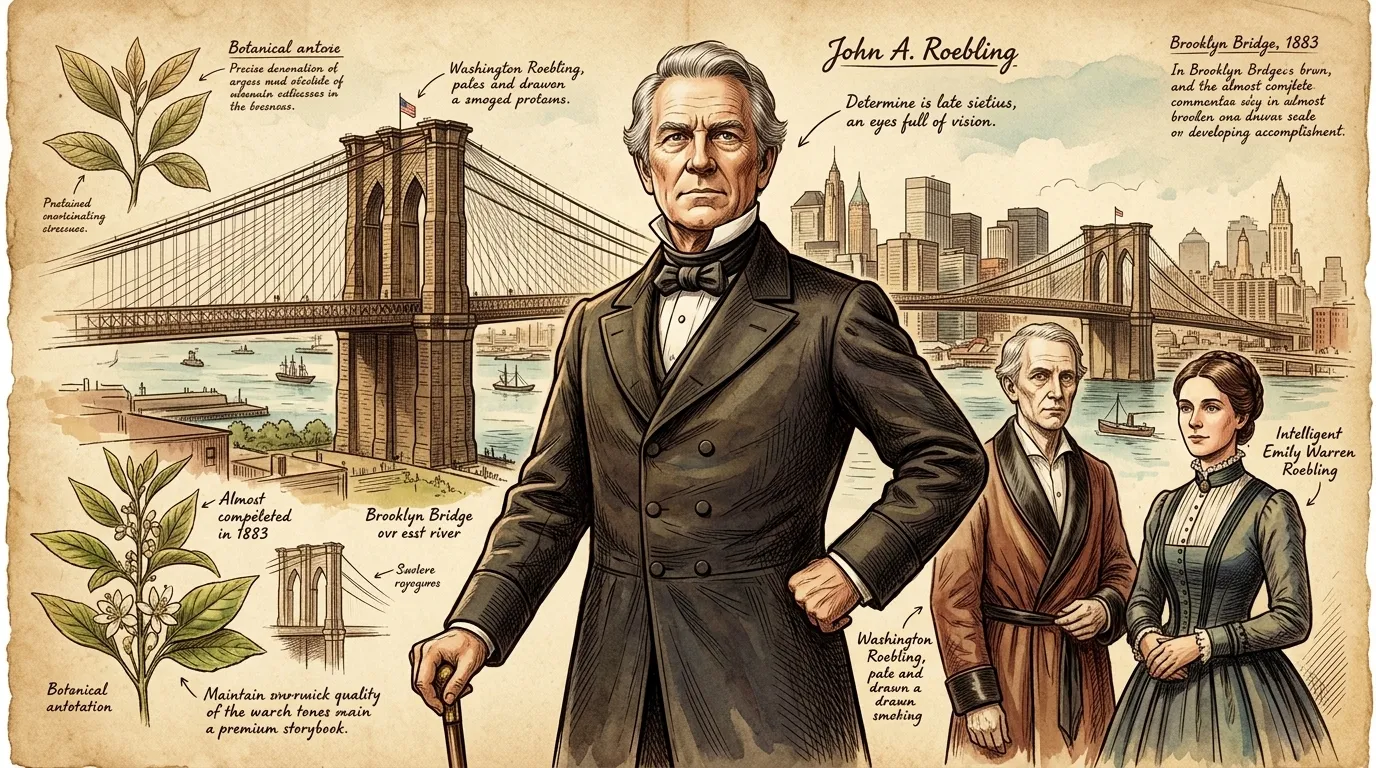
Page 1
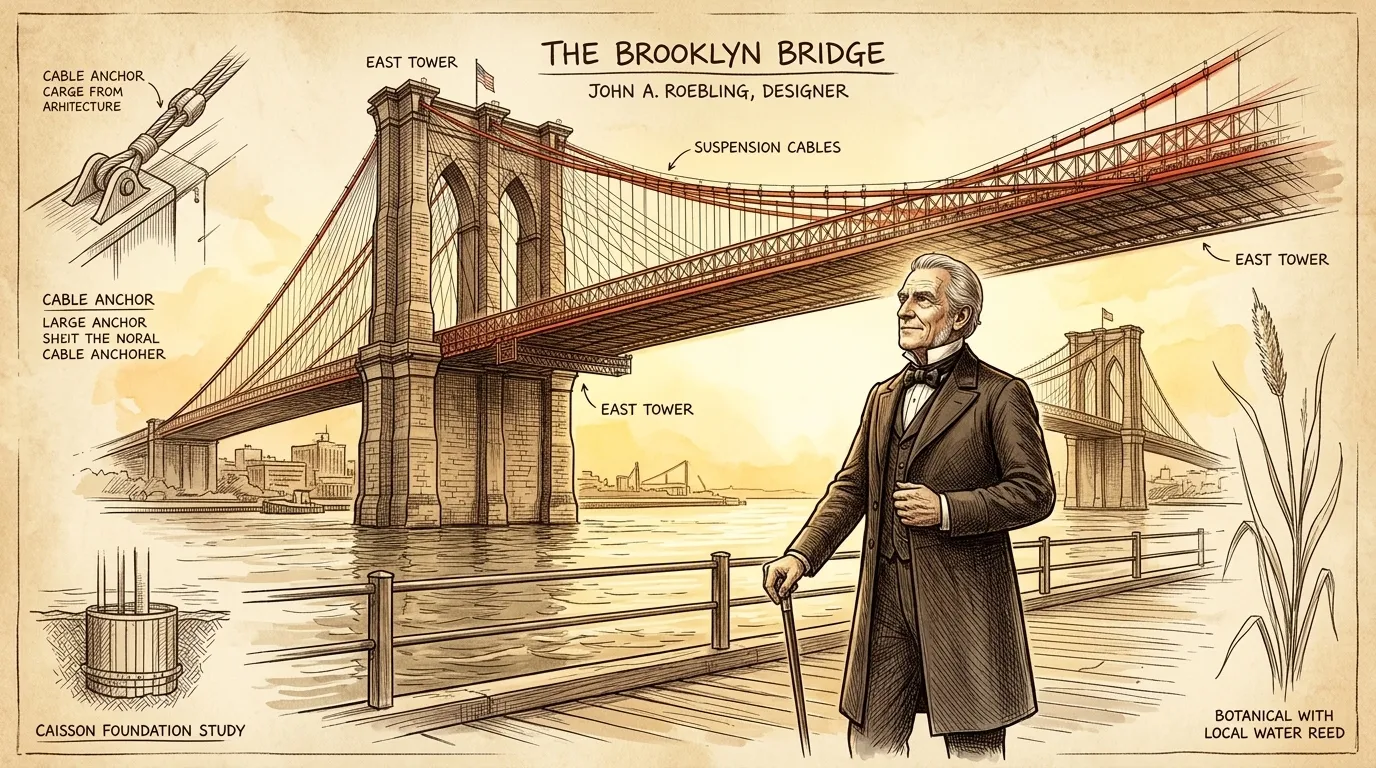
John A. Roebling, the visionary engineer, stood before his nearly completed masterpiece, the Brooklyn Bridge, in 1883. The bridge, a marvel of 19th-century engineering, stretched majestically across the East River. Its total length measured 5,989 feet, with a main span of 1,595 feet. A lesser-known fact: Roebling's original design included lavish Gothic arches at the bridge's entrances, but these were deemed too expensive and ultimately scrapped.
"Roebling murmured, almost to himself, "A testament to human ingenuity, a symbol of progress.""
Art Fact: The Brooklyn Bridge took 14 years to construct, a symbol of American industrial might.
Page 2
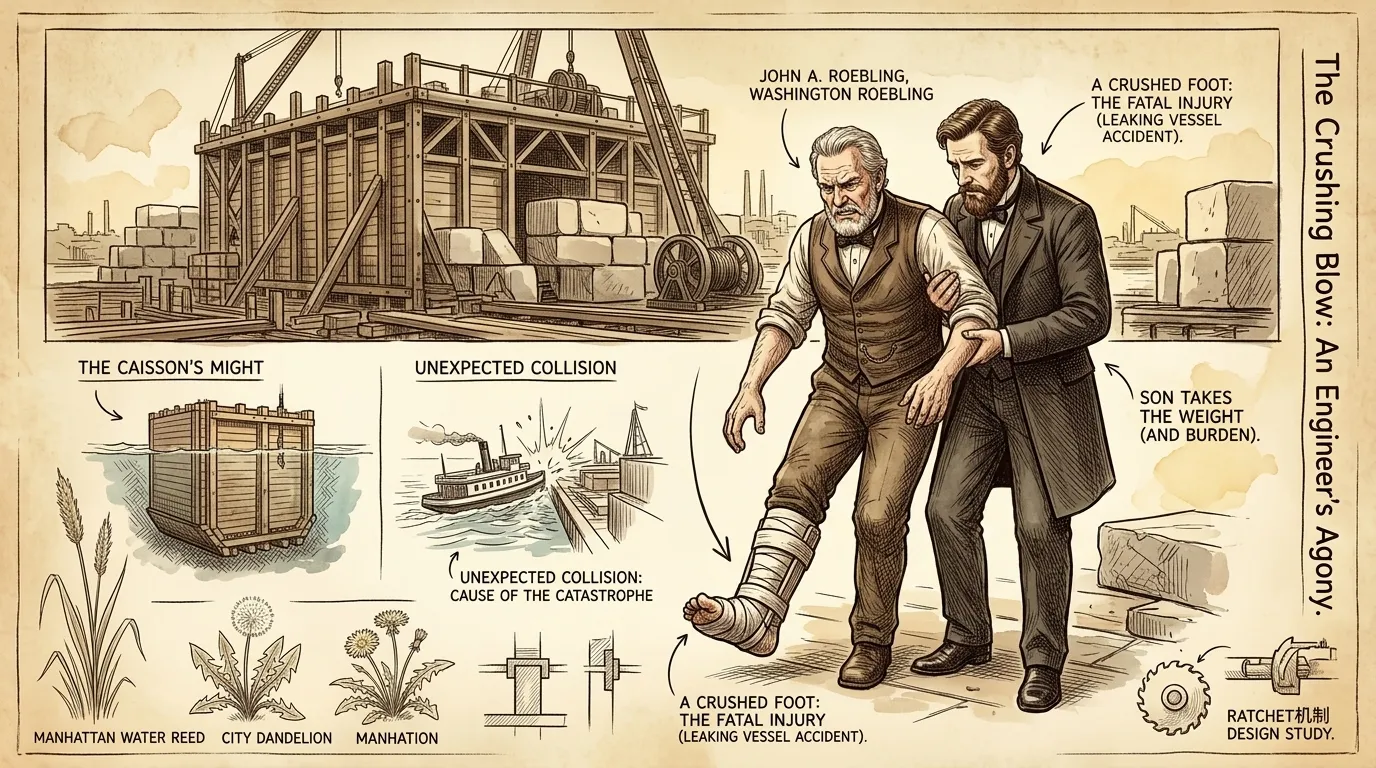
The year was 1869. Construction had barely begun when tragedy struck. John A. Roebling, surveying the site, suffered a horrific accident. A ferry crushed his foot, leading to amputation and, ultimately, a fatal tetanus infection. His son, Washington Roebling, a young engineer in his early thirties, was thrust into the daunting position of chief engineer.
"John Roebling, grimacing in pain, said to his son, "Washington, promise me you'll see it through. This bridge... it must be built!""
Art Fact: John A. Roebling's untimely death cast a long shadow over the project from the very beginning.
Page 3
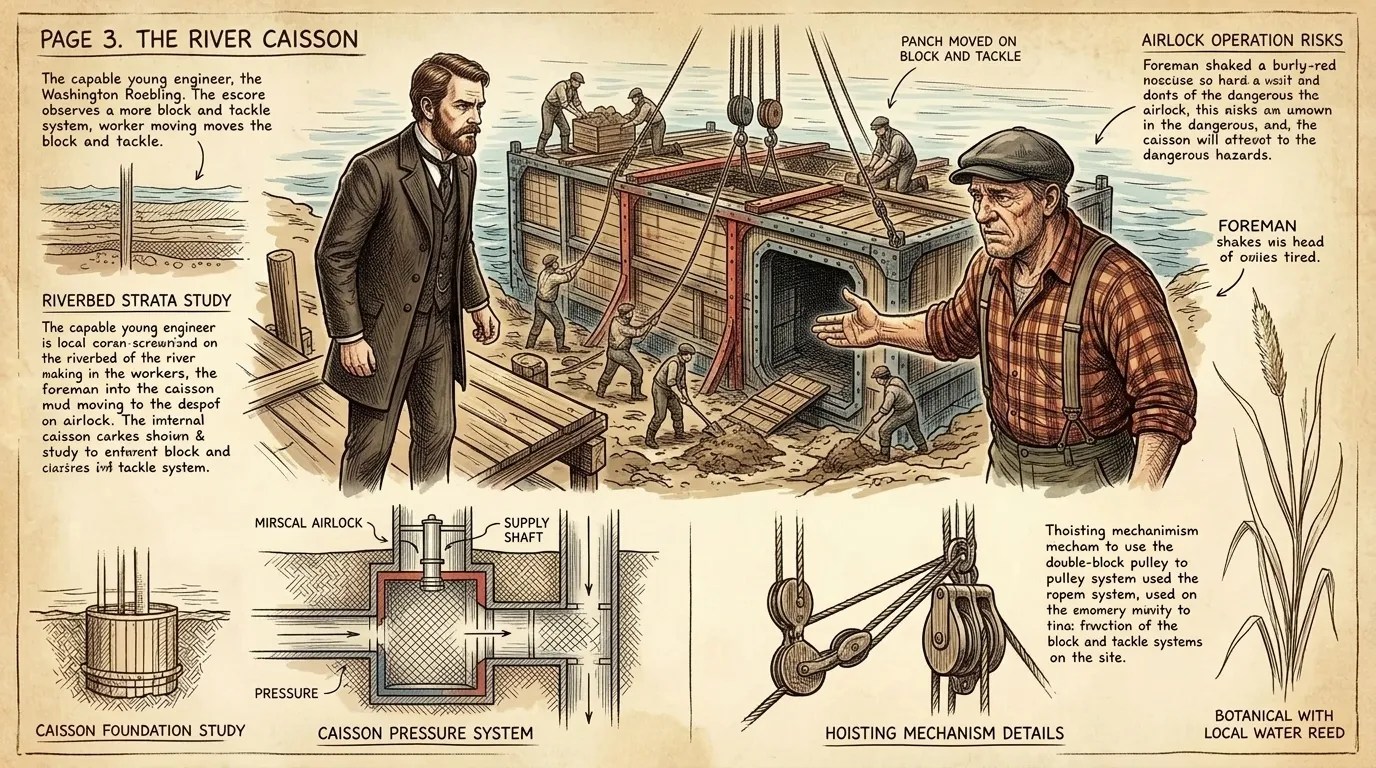
Washington Roebling faced immense pressure. The innovative caissons, massive wooden boxes sunk to the riverbed to create the foundations, were proving dangerous. Workers suffered from 'caisson disease,' or 'the bends,' caused by rapid decompression. Washington, determined, pushed forward, but the risks were mounting.
"A foreman, shaking his head, muttered, "These caissons... they're death traps. Men are getting sick, some are dying...""
Art Fact: The caissons used for the Brooklyn Bridge were groundbreaking but incredibly dangerous.
Page 4
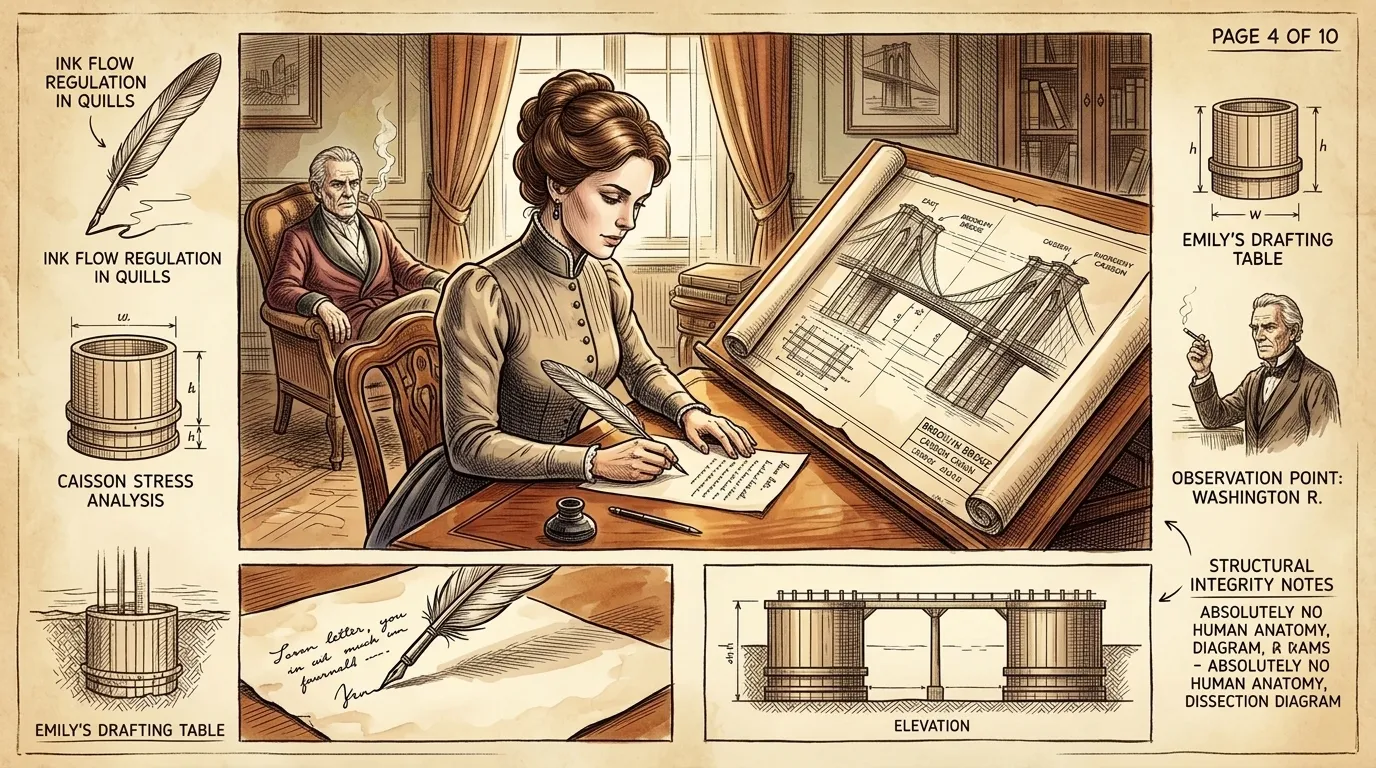
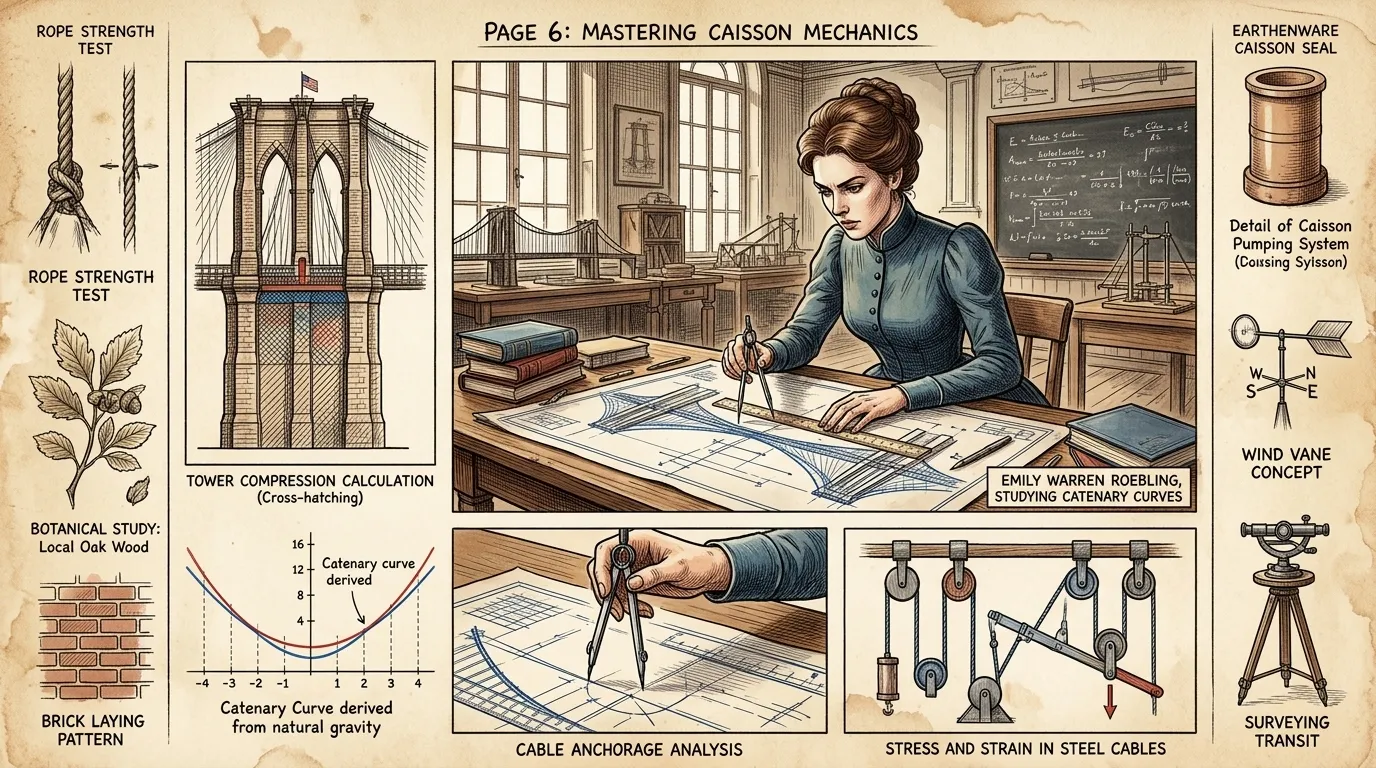
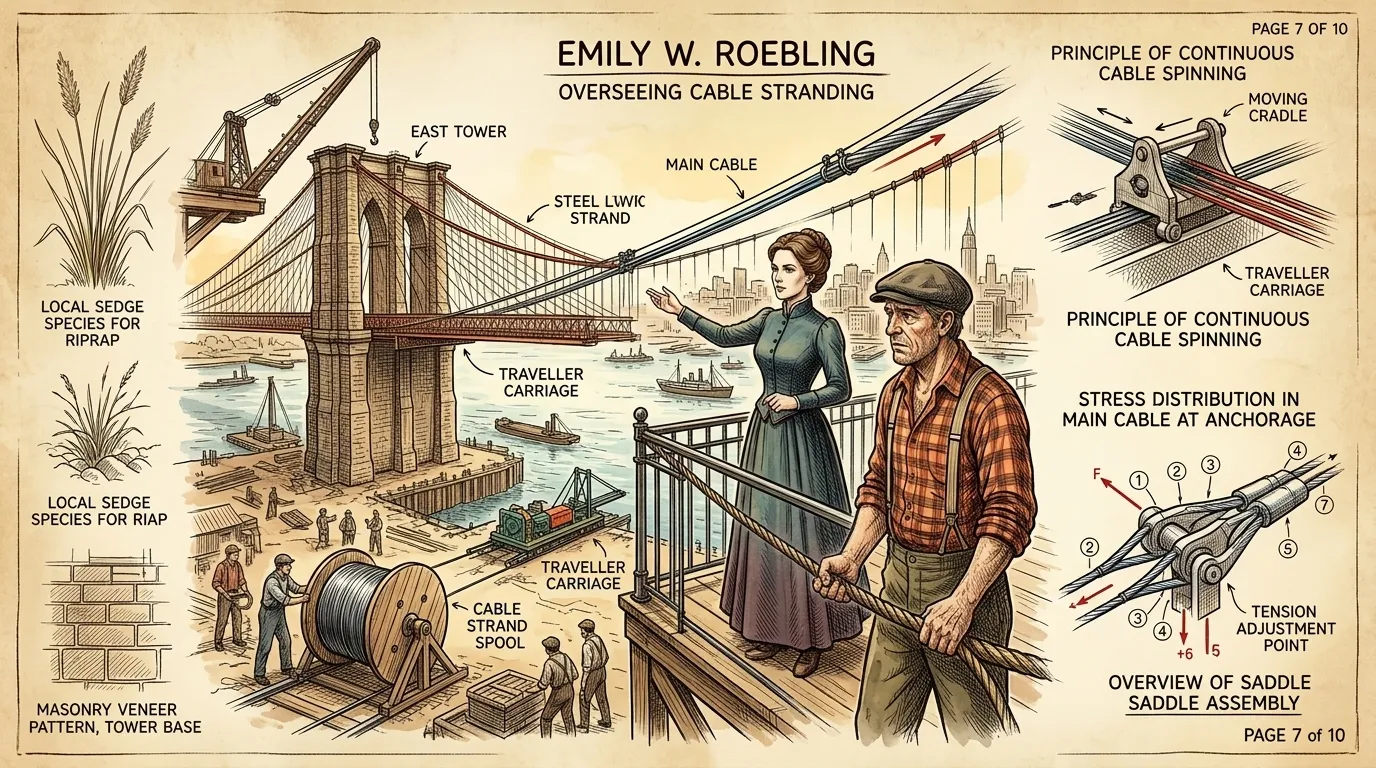
Tragedy struck again. Washington Roebling himself succumbed to caisson disease, leaving him partially paralyzed and unable to visit the construction site. His wife, Emily Warren Roebling, stepped in as his eyes and ears, learning engineering principles and relaying instructions. She became a vital, though often unacknowledged, force behind the bridge's completion.
"Emily Warren Roebling, writing a letter, said, "My dear Washington, I will be your voice, your hands. I will see this bridge finished, for both of us.""
Art Fact: Emily Warren Roebling played a crucial role in the bridge's construction, acting as her husband's proxy and mastering engineering principles.
Page 5
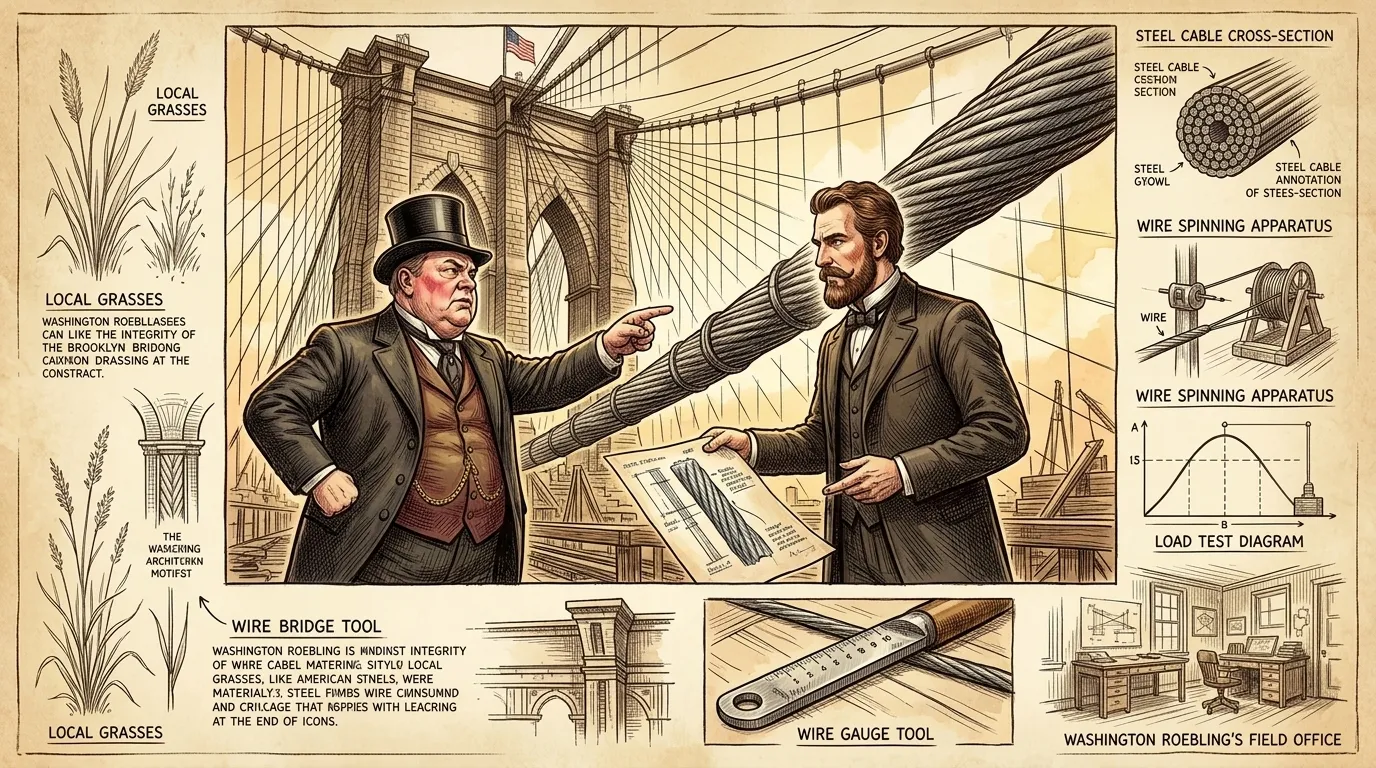
The use of steel in suspension bridges was still a relatively new concept, and Roebling faced skepticism and accusations of using inferior materials. He insisted on rigorous testing and quality control, but the doubts persisted. The public and the city officials remained wary.
"A city official, pointing a finger, accused, "These steel cables... are they truly strong enough? What if the whole thing collapses?""
Art Fact: Roebling faced constant scrutiny and doubt about the safety and reliability of the steel used in the bridge.
Page 6
Page 7
Page 8
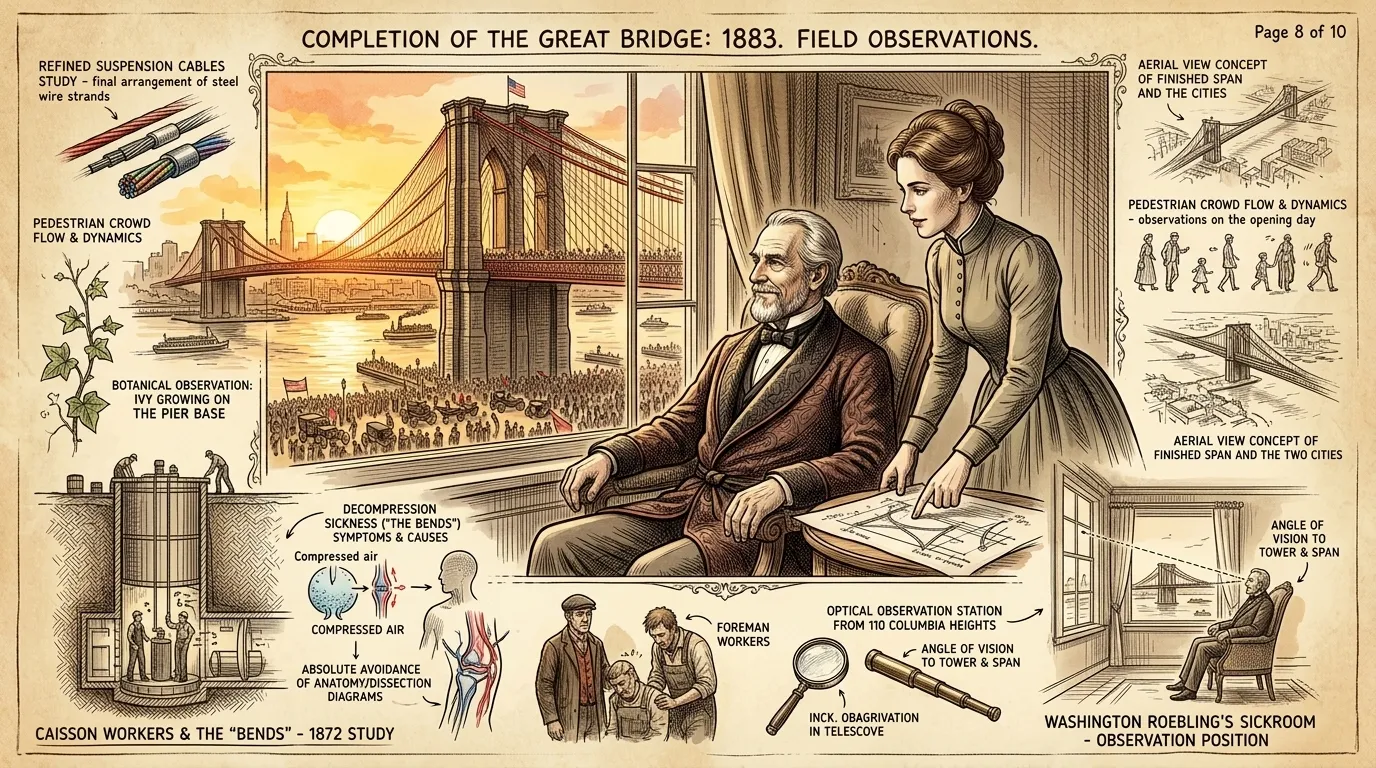
After fourteen years of relentless effort, marked by tragedy and triumph, the Brooklyn Bridge was finally completed in 1883. It was a symbol of resilience, ingenuity, and the enduring power of the human spirit. Crowds flocked to witness its opening, a celebration of engineering achievement and human determination.
"Washington Roebling, watching the crowds from his window, proclaimed, "It is finished! A bridge for the people, built with love and sacrifice!""
Art Fact: The Brooklyn Bridge stood as a testament to the Roeblings' unwavering determination and engineering prowess, a symbol of triumph over adversity.
Page 9
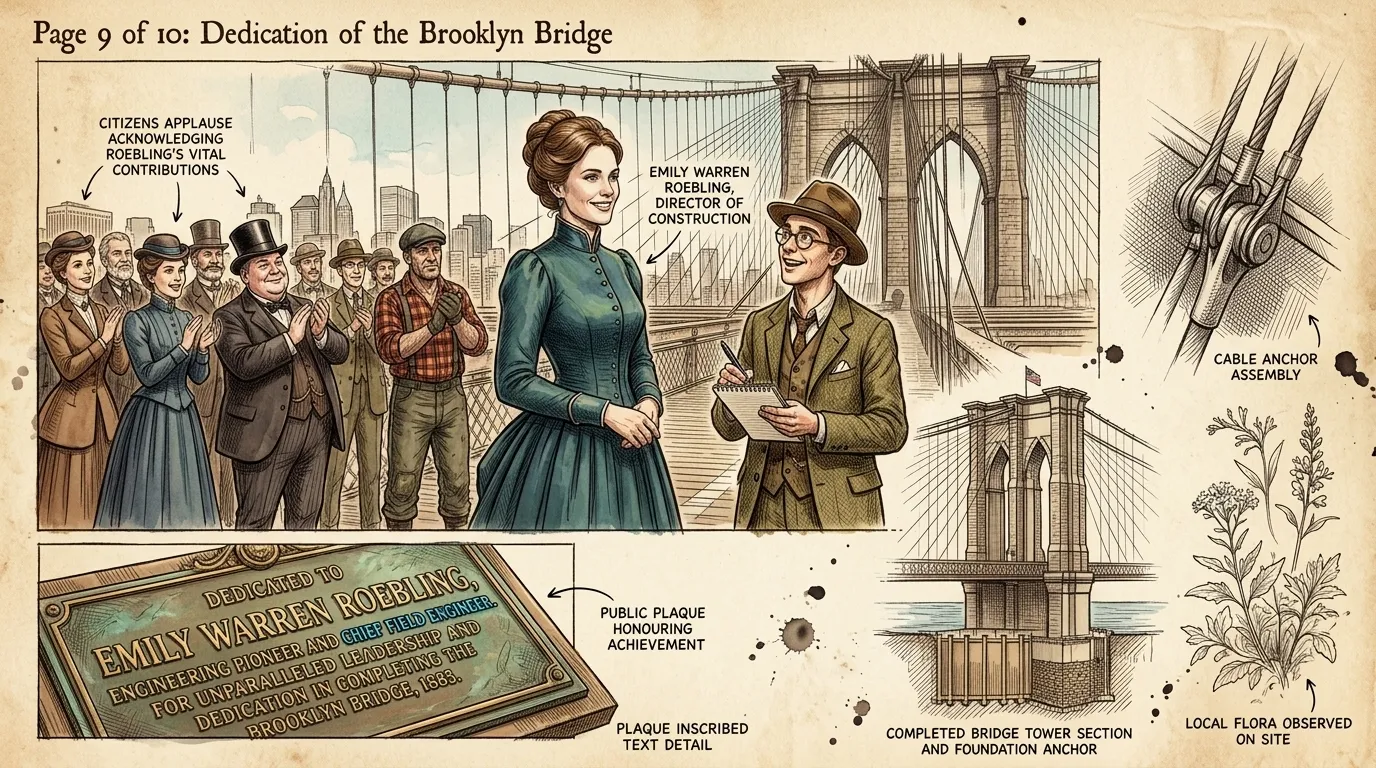
Though her contributions were largely unacknowledged at the time, Emily Warren Roebling received recognition in later years for her vital role in the bridge's construction. A plaque was dedicated in her honor, finally acknowledging her engineering expertise and unwavering dedication. She said, remembering what Seneca once said, "Every new beginning comes from some other beginning's end".
"A reporter declared, "We must recognize the woman who was the true Chief Engineer. Without her, this could not have been built.""
Art Fact: Emily Warren Roebling's contributions were finally recognized, a testament to her engineering expertise and unwavering dedication.
Page 10
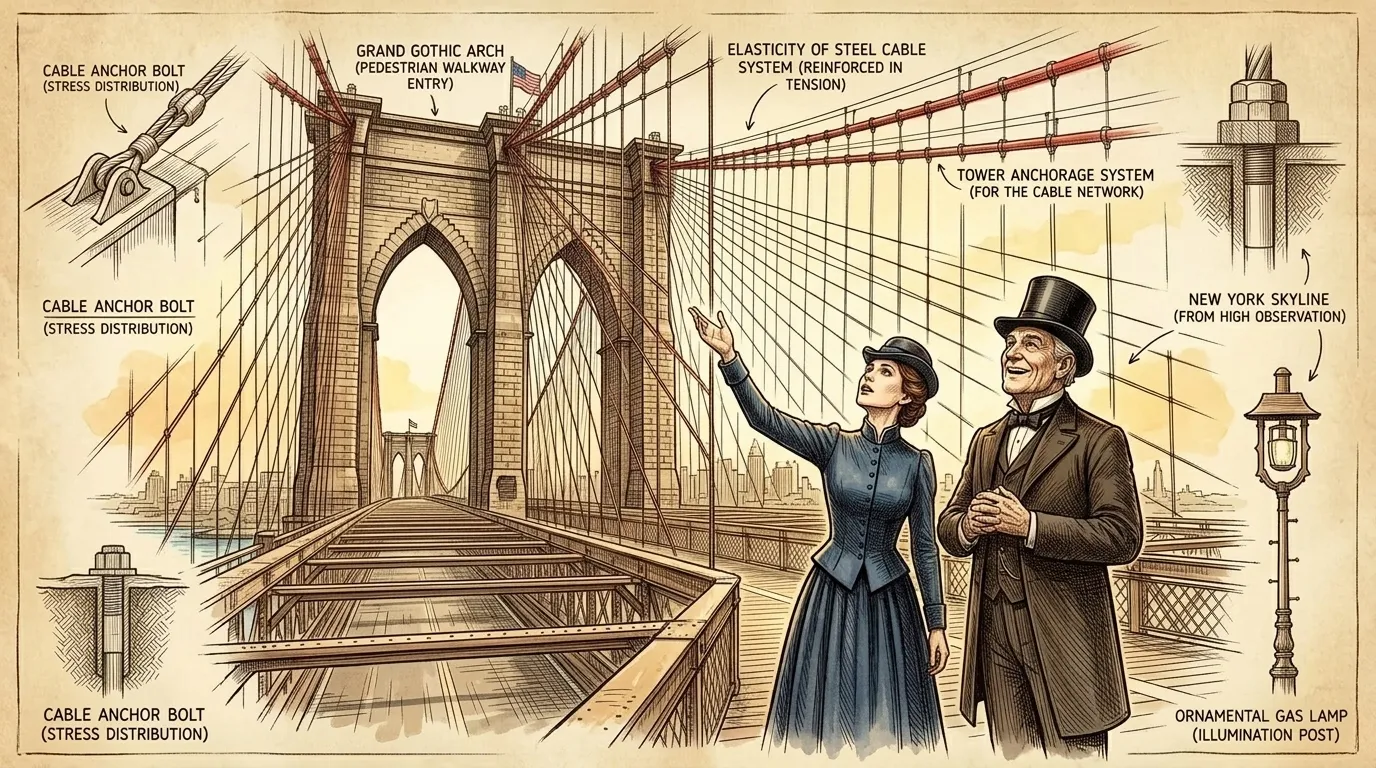
Today, the Brooklyn Bridge remains an iconic landmark, a symbol of New York City and American ingenuity. It continues to inspire awe and wonder, a testament to the vision of John A. Roebling, the resilience of Washington Roebling, and the unsung heroism of Emily Warren Roebling. It is a monument to human perseverance, proving that, as Michelangelo once said, 'I saw the angel in the marble and carved until I set him free'.
"A visitor exclaimed, "Look! It's truly breathtaking! It feels eternal.""
Art Fact: The Brooklyn Bridge endures as a timeless symbol of human ingenuity, resilience, and the Roebling family's unwavering dedication.
About this story
- Location: United States
- Audience: general readers
Questions and answers
Questions and answers about Brooklyn Bridge (New York City, USA — 1883)
Read Wonder Arts on your phone
Wonder Arts is available on Android. Get Wonder Arts on Google Play.