Bust of Nefertiti by Thutmose (Berlin, Germany — c. 1345 BC)
Bust of Nefertiti by Thutmose (Berlin, Germany — c. 1345 BC) — an illustrated arts story, set in Germany. 10 illustrated pages, free to read on Wonder Arts.
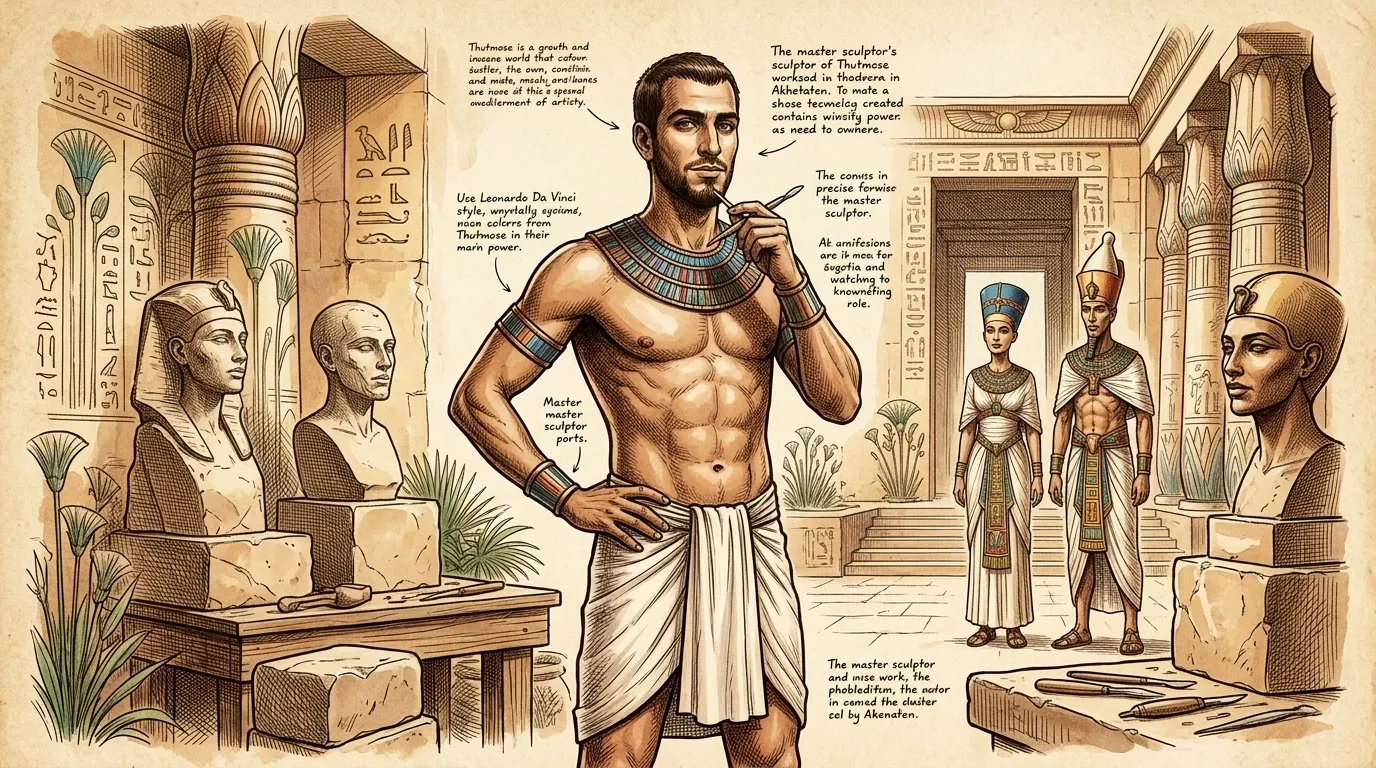
Page 1
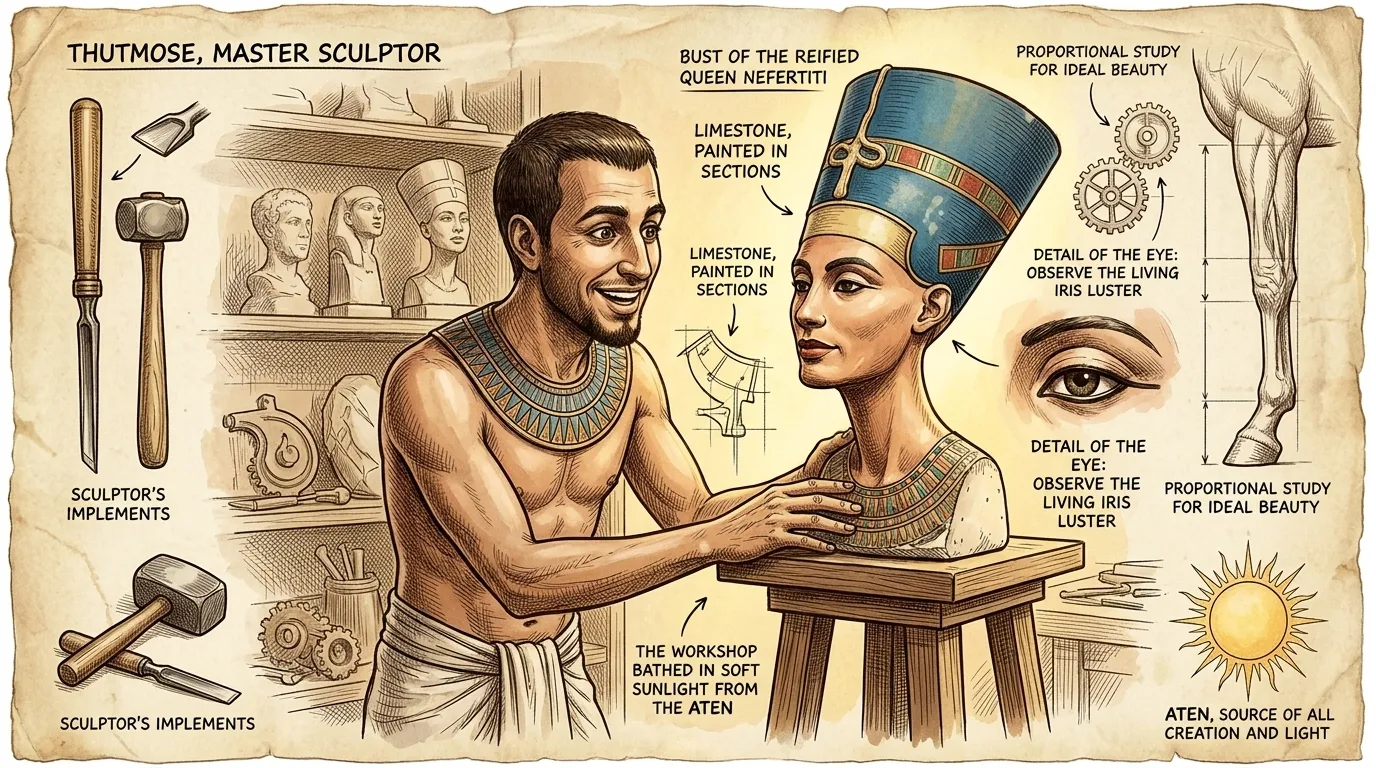
In the ancient city of Akhetaten, now a desolate ruin, stood Thutmose, the royal sculptor. Before him rested his masterpiece, the Bust of Nefertiti, a painted limestone sculpture standing nearly 20 inches tall. Crafted around 1345 BC, it was destined for obscurity until its rediscovery in 1912. Now, it resides in Berlin's Neues Museum, its serene beauty captivating the world.
"Thutmose whispered to himself, admiring his creation, 'May your beauty forever inspire those who gaze upon you, Nefertiti.'"
Art Fact: The Bust of Nefertiti is renowned for its remarkably preserved paint and lifelike detail, particularly its captivating eyes. It remains one of the most iconic symbols of ancient Egypt.
Page 2

A messenger arrived at Thutmose's workshop, bearing the royal seal. Queen Nefertiti herself requested a portrait bust, a symbol of her power and beauty. Thutmose felt a surge of both excitement and trepidation; he was tasked with capturing the essence of a goddess on Earth.
"The messenger, out of breath, said, 'Thutmose, the Queen commands your presence and seeks a lasting image. She expects nothing short of perfection.'"
Art Fact: Royal commissions were highly prestigious, offering artists not only financial security but also the opportunity to create works that would be seen and admired for generations.
Page 3
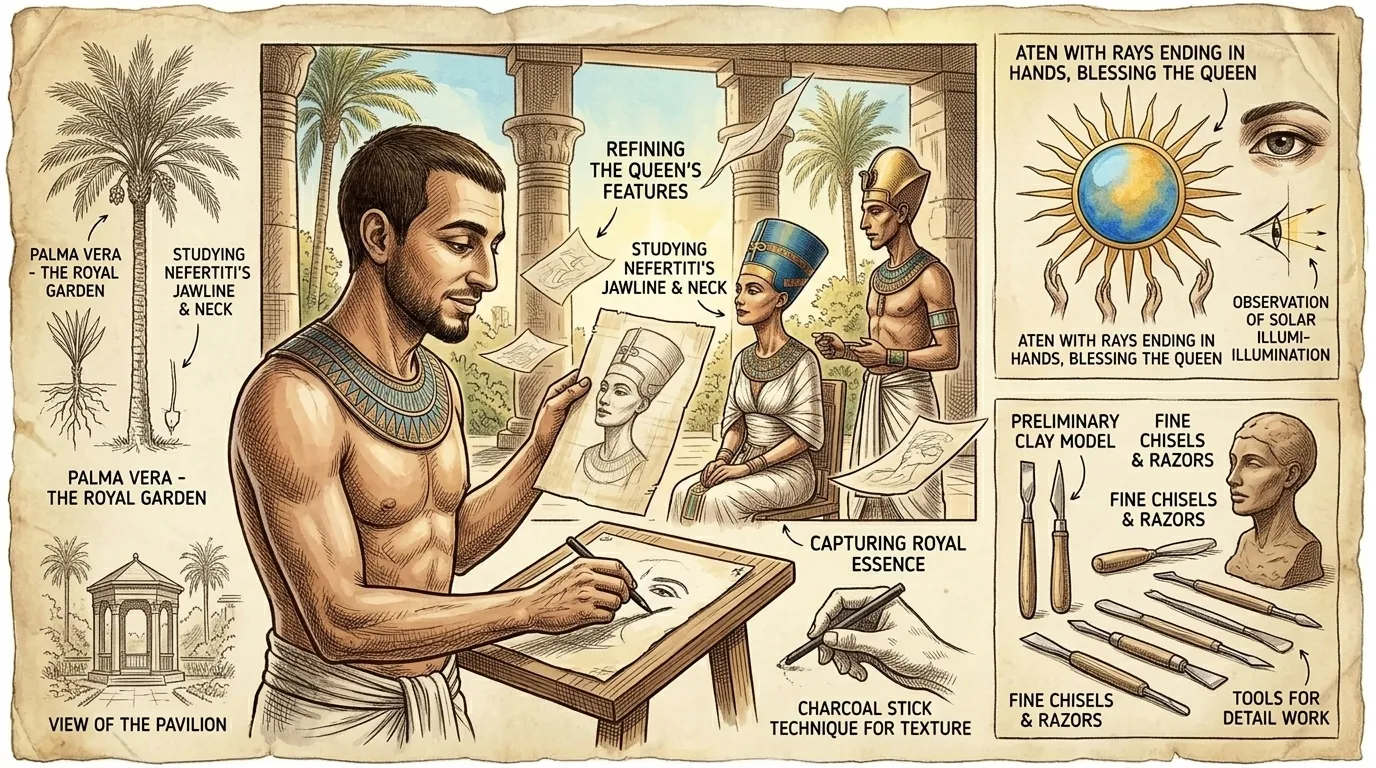
Thutmose began his work with preliminary sketches, meticulously studying Nefertiti's features. He captured her strong jawline, her elegant neck, and her regal bearing. He sought to understand not only her physical form but also the spirit that resided within.
"Looking at his sketch, Thutmose muttered, 'The line of her jaw, the set of her eyes...it must all speak of her strength and grace.'"
Art Fact: Preliminary sketches were crucial to ancient Egyptian sculpture, serving as the foundation for the final three-dimensional form.
Page 4

A block of fine-grained limestone was selected, its surface promising a smooth, even texture. Thutmose began to carve, carefully removing the stone layer by layer. The bust began to emerge, slowly revealing the Queen's divine countenance.
"As he struck the chisel, Thutmose said, 'Each strike brings her closer to the surface. Patience, Thutmose, patience.'"
Art Fact: Limestone was a common material for Egyptian sculpture, prized for its relative softness and smooth texture, allowing for fine detail.
Page 5
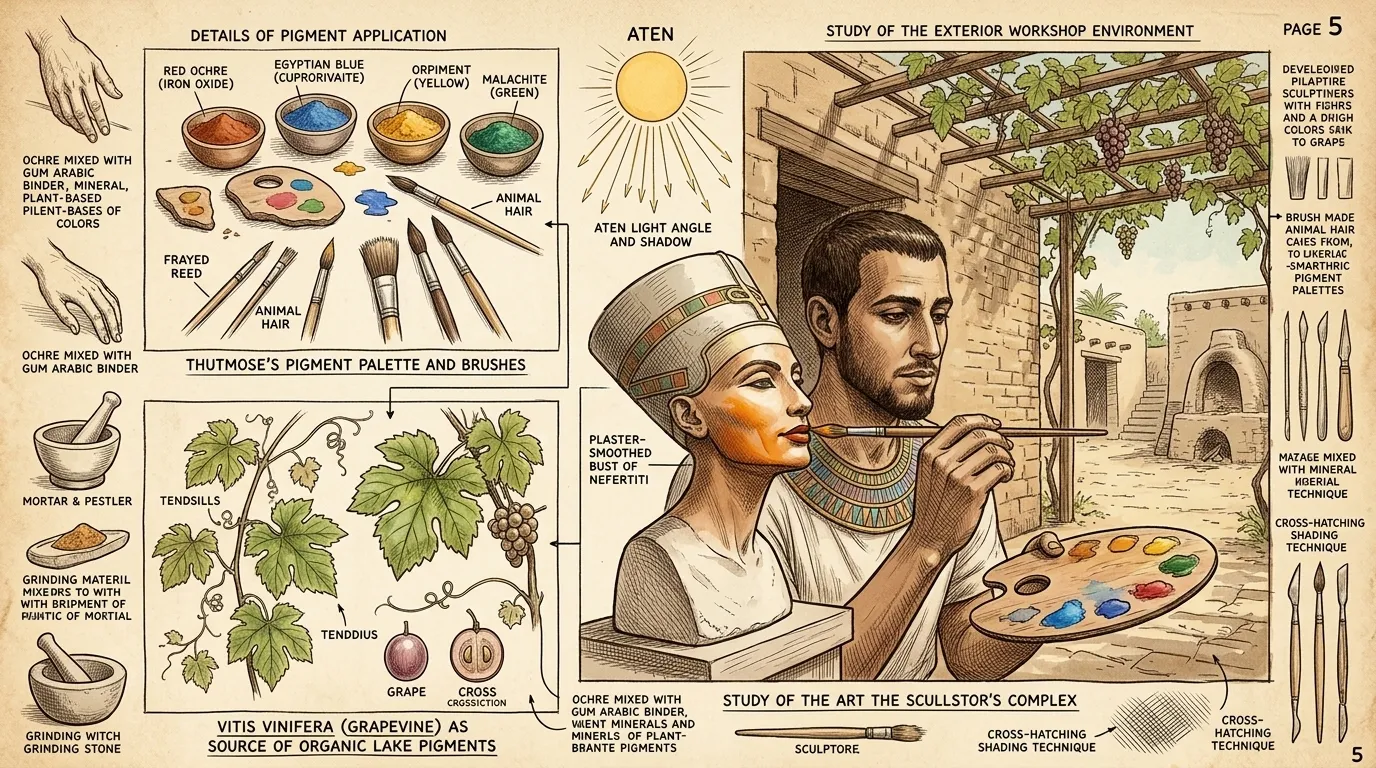
With the limestone core complete, Thutmose applied layers of plaster to create a smooth surface for painting. He mixed pigments from minerals and plants, creating a vibrant palette of colors. The Queen's skin was painted a warm ochre, her lips a delicate red, and her headdress a striking blue and gold.
"Examining the pigments, Thutmose pondered, 'The colors must reflect her vitality and divinity. The red of the setting sun for her lips, the blue of the Nile for her crown.'"
Art Fact: Egyptian artists used natural pigments derived from minerals and plants to create a vibrant range of colors that have remained remarkably preserved over millennia.
Page 6
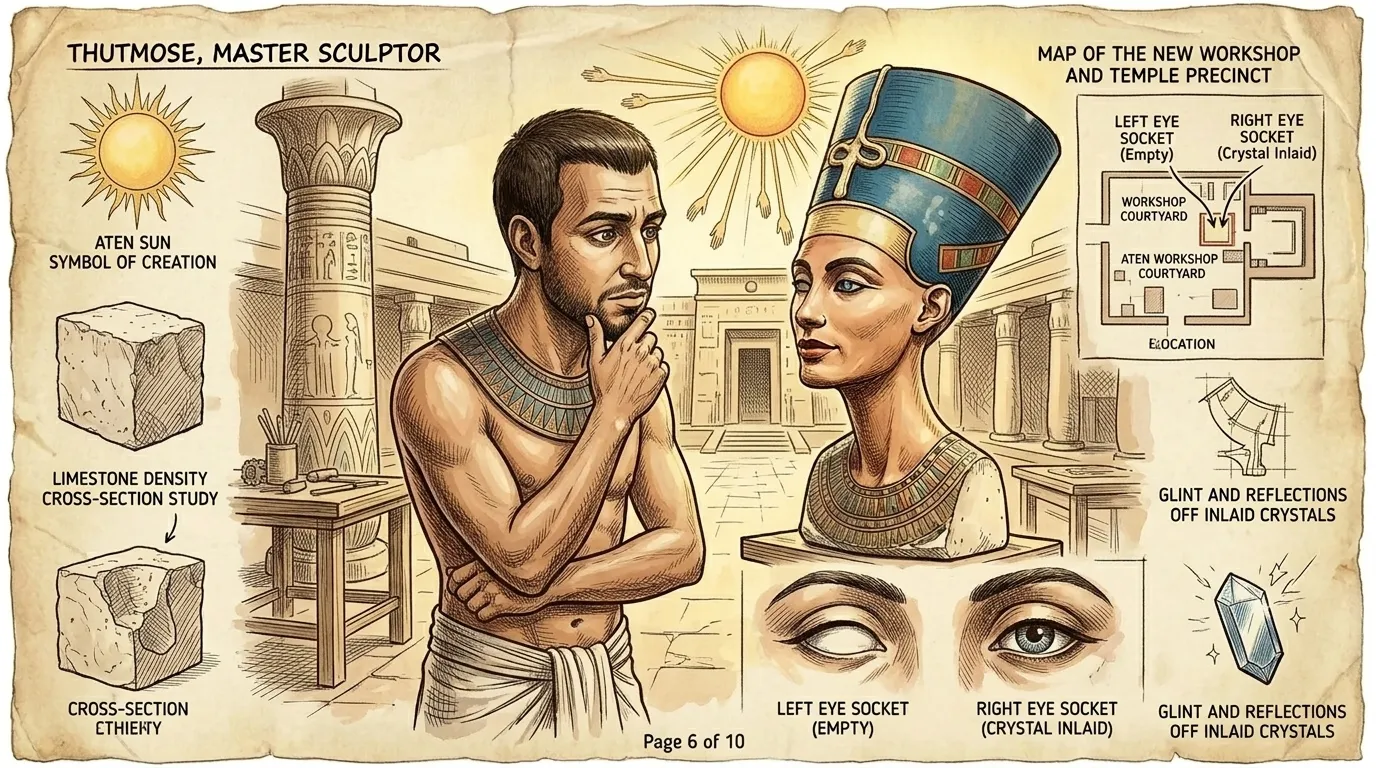
A mystery shrouds the Bust of Nefertiti: one eye lacks an inlaid crystal. Some speculate it was never finished, while others suggest the crystal was lost or intentionally omitted. The asymmetry adds to the bust's enigmatic allure.
"Thutmose paused, contemplating the eye socket. 'Perhaps,' he mused, 'its incompleteness speaks to a deeper truth – that even in beauty, imperfection exists.'"
Art Fact: The missing left eye of the Nefertiti bust has been a topic of intense debate among art historians, with no definitive explanation ever established.
Page 7

The Queen visited Thutmose's workshop to review the completed bust. She was said to be pleased with the likeness, recognizing herself in the serene and powerful image. The bust was a testament to Thutmose's skill and Nefertiti's captivating beauty.
"Nefertiti, gazing at the bust, declared, 'You have captured my essence, Thutmose. My strength, my beauty...my reign will be eternal, just like this image.'"
Art Fact: Nefertiti, whose name means 'the Beautiful One has come forth,' was known for her beauty, power, and influence during the reign of her husband, Akhenaten.
Page 8
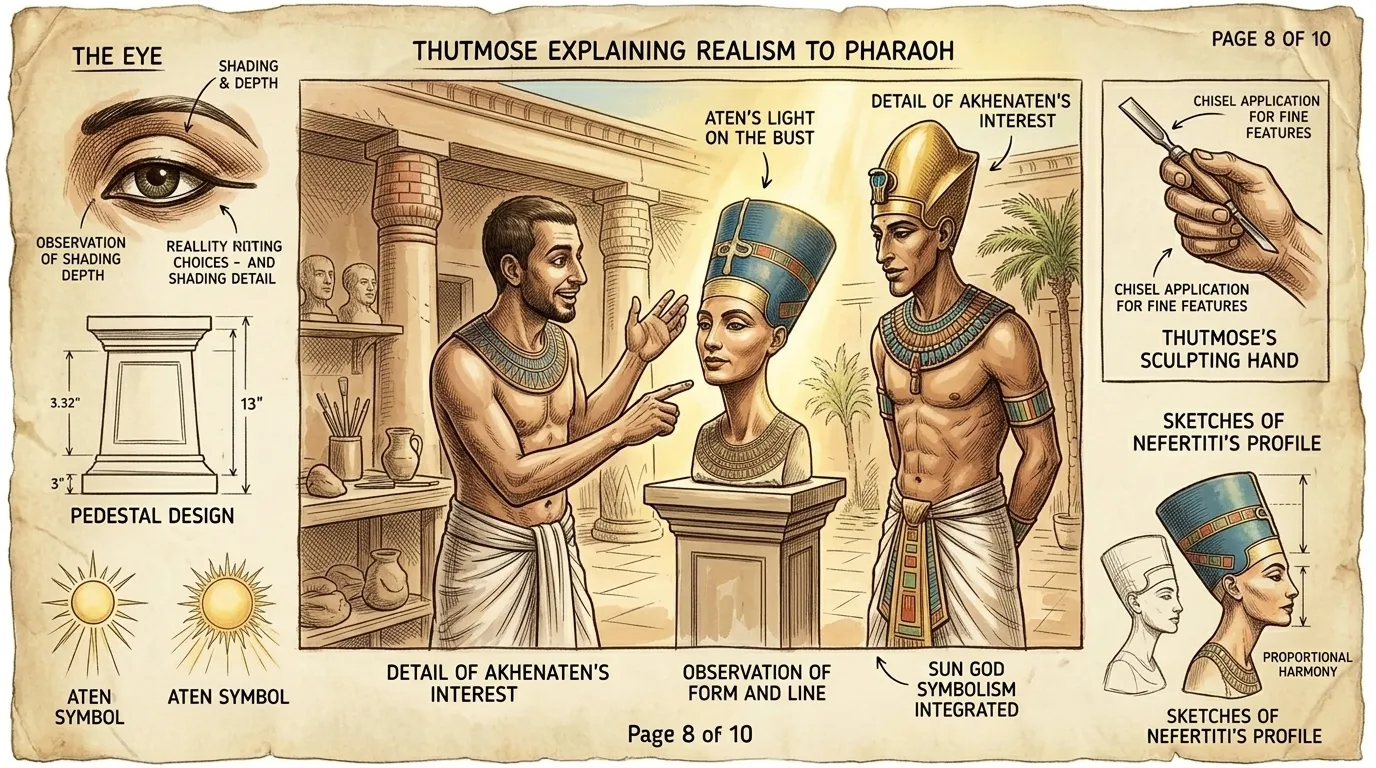
Akhenaten, Nefertiti's husband, initiated a religious revolution, worshipping Aten, the sun disc. Thutmose incorporated Aten's symbolism into his art, subtly reflecting the light and warmth of the sun god in Nefertiti's features.
"Thutmose, explaining his inspiration, said, 'The light of Aten shines through her, Your Majesty. Her skin glows with the divine light of the sun.'"
Art Fact: Akhenaten's religious reforms dramatically influenced Egyptian art, leading to a more naturalistic and expressive style.
Page 9
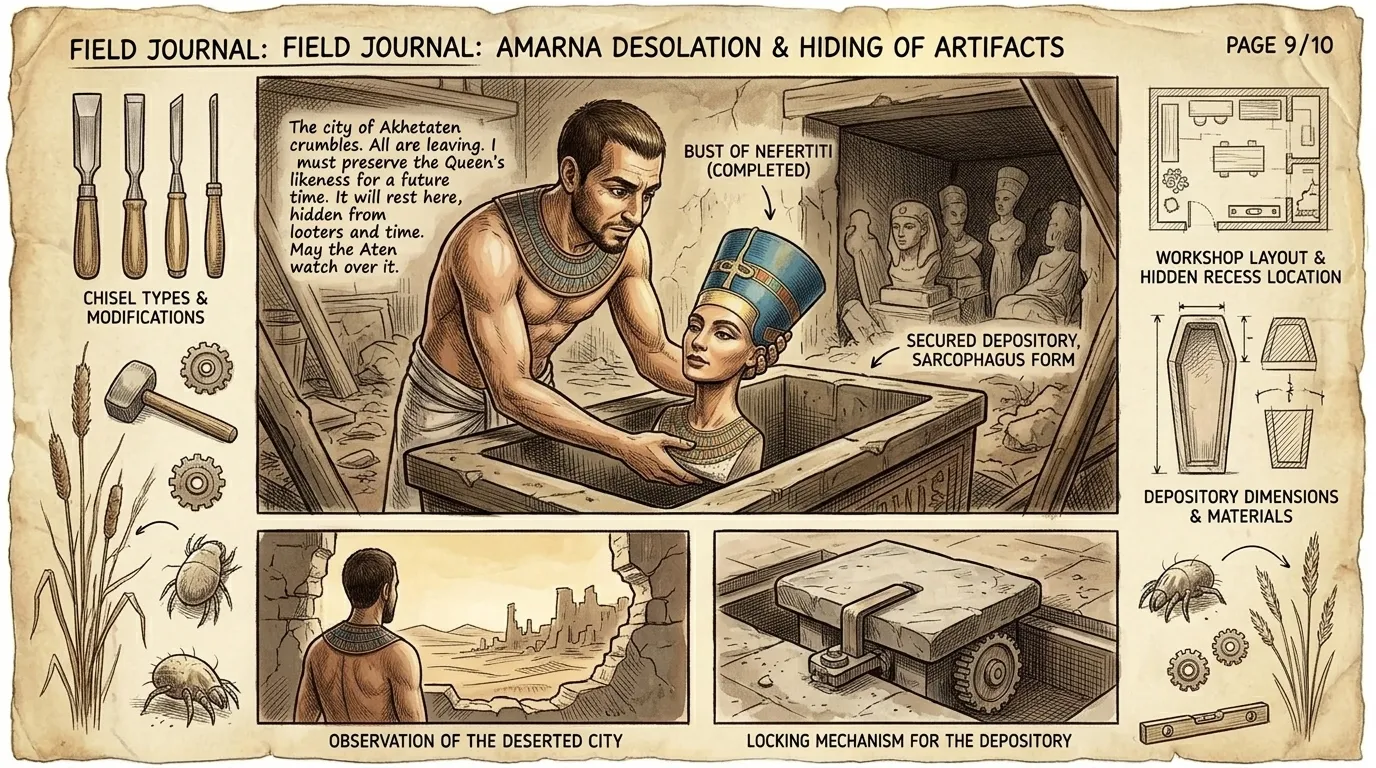
After Akhenaten's death, the worship of Aten was abandoned, and Akhetaten was deserted. The Bust of Nefertiti was buried in Thutmose's workshop, hidden from looters and forgotten for over three thousand years.
"With a heavy heart, Thutmose said, 'We must protect her from the ravages of time and the chaos to come. May she be rediscovered when the world is ready to appreciate her beauty once more.'"
Art Fact: The Amarna Period, marked by Akhenaten's reign, was a brief but significant departure from traditional Egyptian religion and artistic conventions.
Page 10
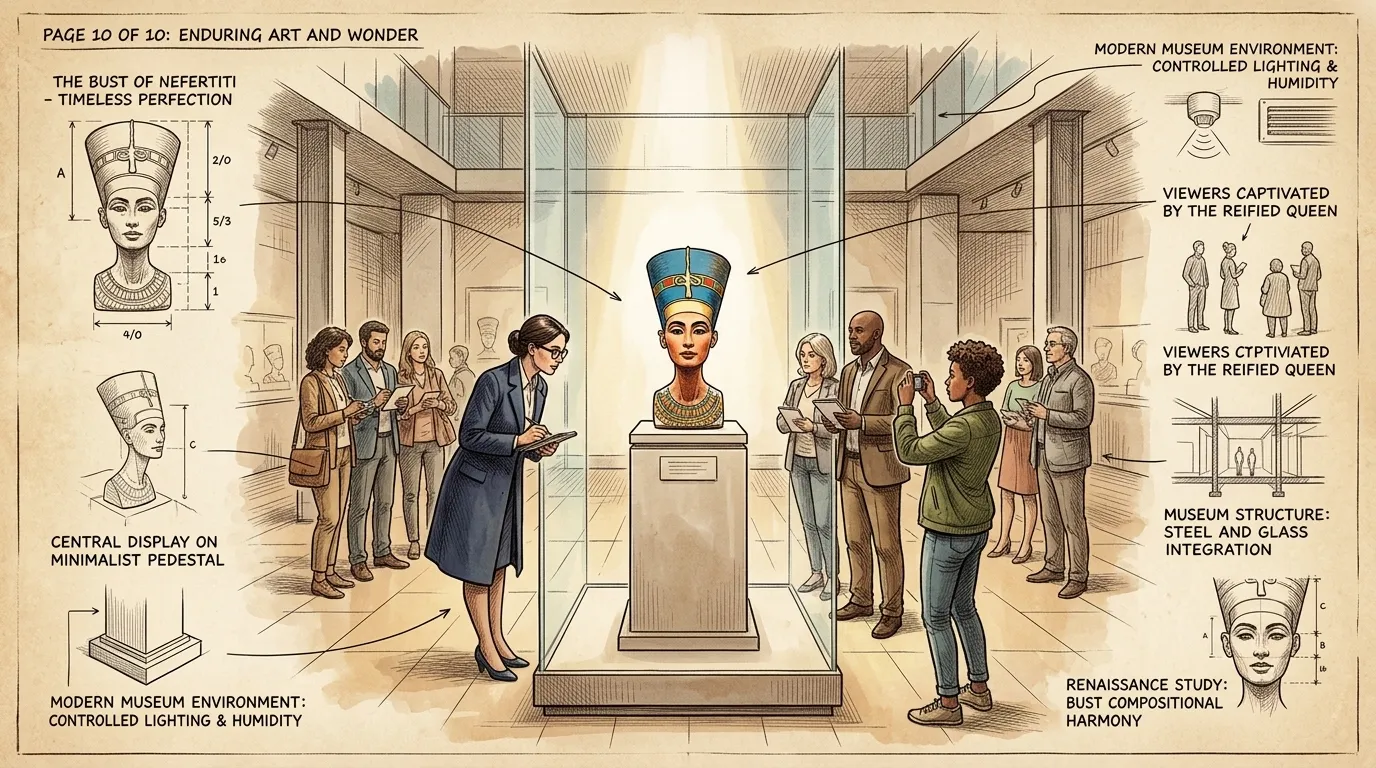
Today, the Bust of Nefertiti stands in the Neues Museum in Berlin, drawing millions of visitors each year. Her serene gaze transcends time, reminding us of the enduring power of beauty and art. As Helen Keller said, 'Beauty is one of the rare things that do not lead to doubt.' Thutmose's masterpiece continues to inspire awe and wonder.
"None."
Art Fact: The Bust of Nefertiti has become a cultural icon, representing ancient Egyptian art and the enduring allure of beauty.
About this story
- Location: Germany
- Audience: general readers
Questions and answers
Questions and answers about Bust of Nefertiti by Thutmose (Berlin, Germany — c. 1345 BC)
Read Wonder Arts on your phone
Wonder Arts is available on Android. Get Wonder Arts on Google Play.