Beata Beatrix by Dante Gabriel Rossetti (London, UK — 1864)
Beata Beatrix by Dante Gabriel Rossetti (London, UK — 1864) — an illustrated arts story, set in United Kingdom. 10 illustrated pages, free to read on Wonder Arts.
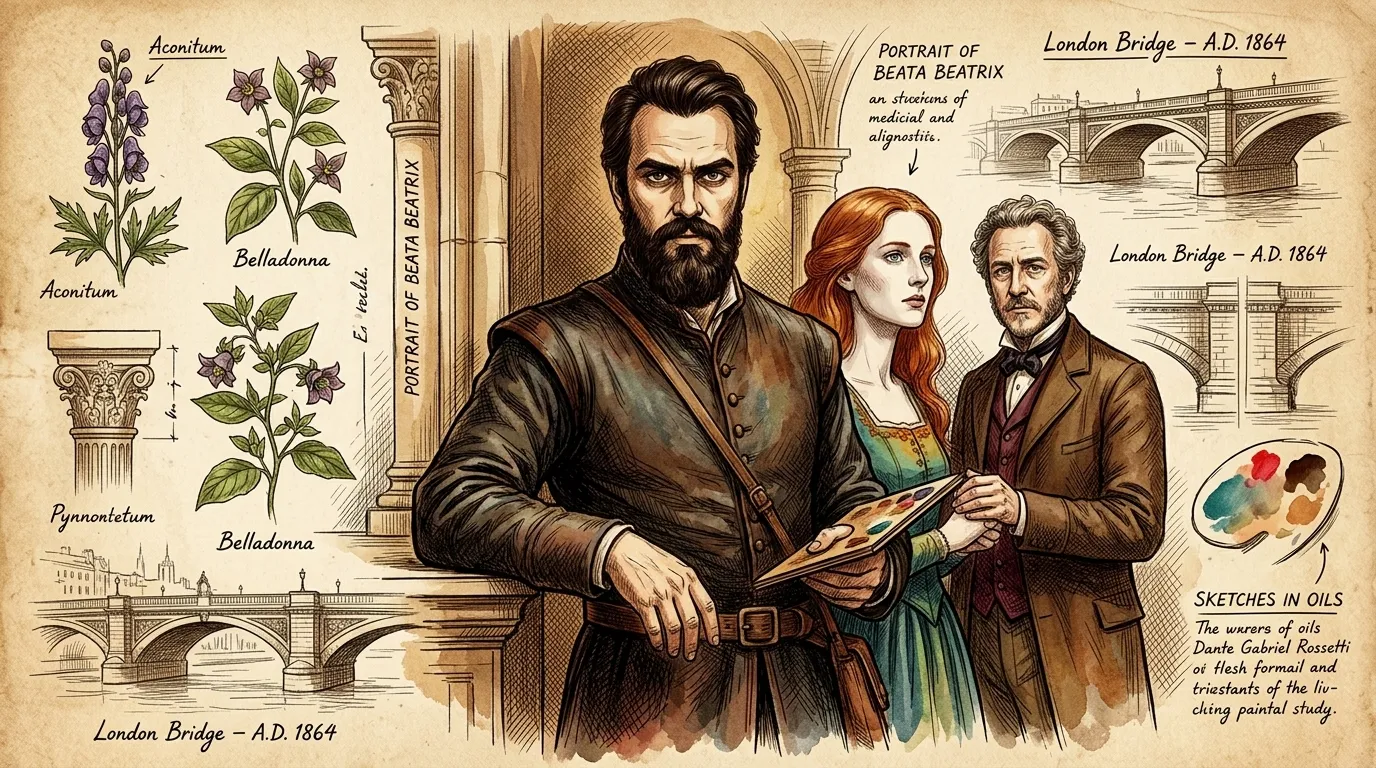
Page 1
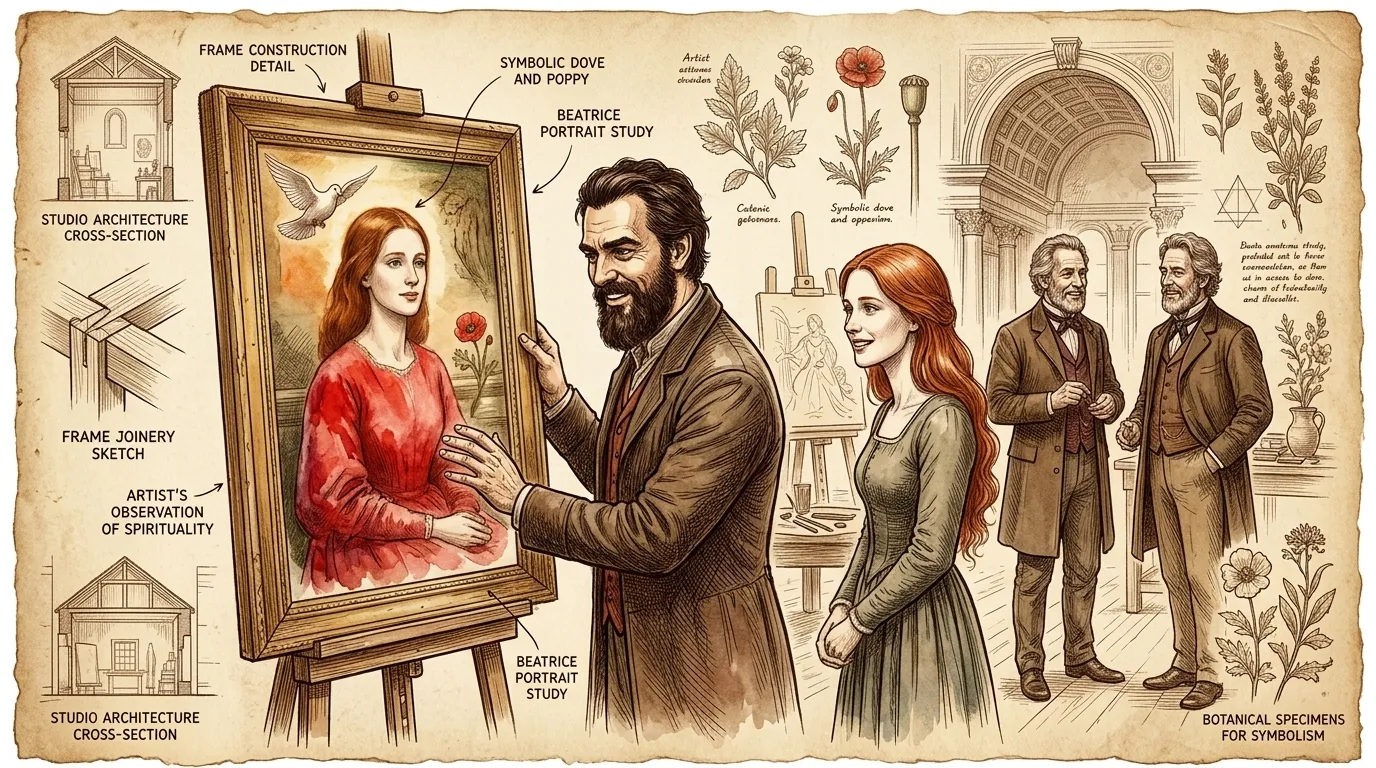
Dante Gabriel Rossetti, a man haunted by beauty and loss, stood before his 'Beata Beatrix.' Completed in 1870, years after the death of his wife Elizabeth Siddal, the painting immortalized her as Dante's Beatrice. The work, measuring 86.4 cm x 66 cm, is a Pre-Raphaelite masterpiece, charged with symbolism and sorrow. It now resides in the Tate Britain, a poignant echo of a love tragically cut short.
"Rossetti (to himself, barely audible): Forever captured, my Lizzie. Though your earthly form is gone, your spirit lives on in every brushstroke."
Art Fact: The poppy represents opium, to which Elizabeth was addicted. The sundial points to the hour of her death, and the doves symbolize love and loss.
Page 2
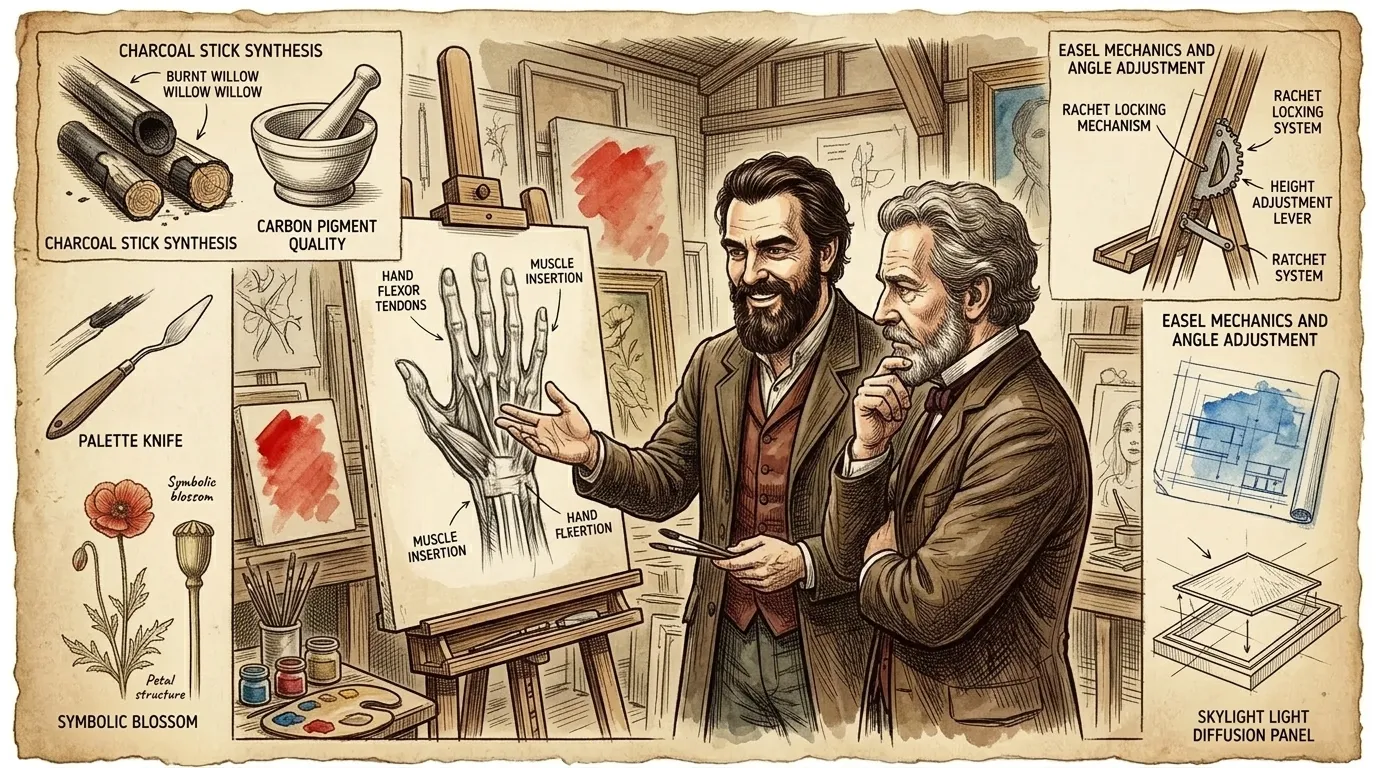
In the early days of the Pre-Raphaelite Brotherhood, Rossetti shared his artistic visions with his mentor, John Everett Millais. Their discussions often took place amidst the bohemian atmosphere of their London studio. Millais, a rising star himself, recognized Rossetti's raw talent and encouraged him to delve deeper into his emotional landscape.
"Millais: Rossetti, you have a gift for capturing the ethereal. But art must also have grounding. Show the emotion, but with reason."
Art Fact: Dante Gabriel Rossetti had a deep friendship and mentorship with artist John Everett Millais, who influenced his art.
Page 3
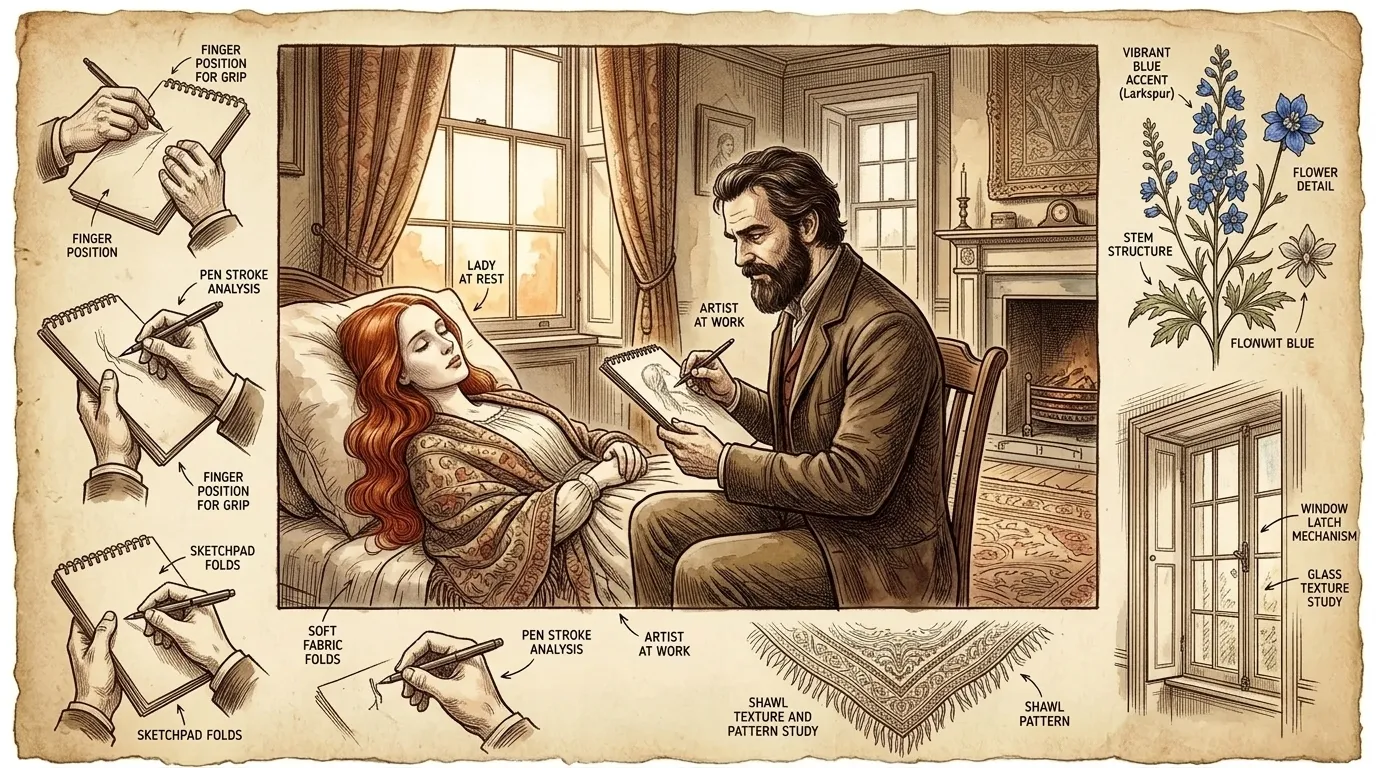
Elizabeth Siddal, Rossetti's muse and eventual wife, lay ill in their shared apartment. Her pale face and flowing red hair became the inspiration for Beatrice. Even in sickness, her beauty captivated him, fueling his artistic vision.
"Rossetti: Lizzie, your beauty transcends earthly form. It is the very essence of Beatrice. Though she was bedridden, she was still very present in his mind."
Art Fact: Elizabeth Siddal's appearance and essence became the inspiration for many of Rossetti's works.
Page 4
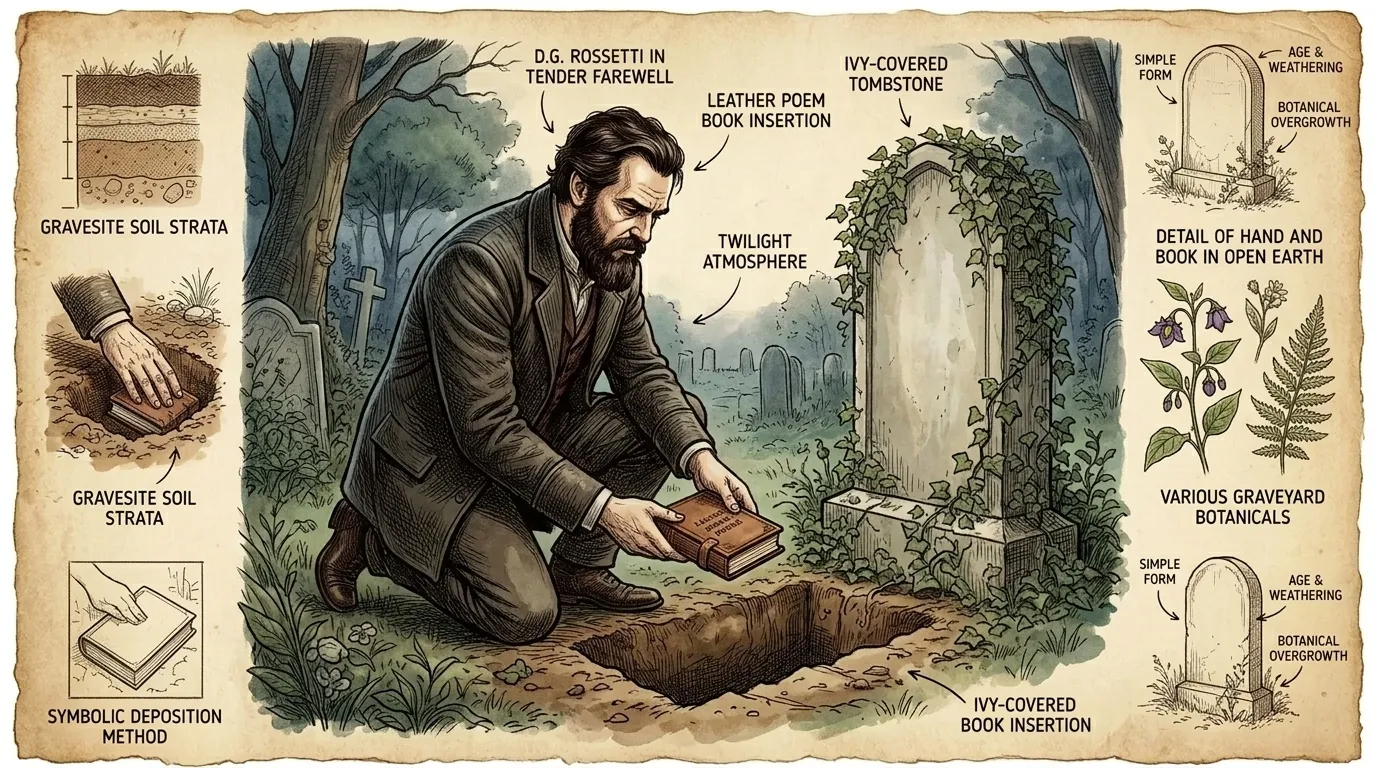
After Elizabeth's tragic death from a laudanum overdose, Rossetti was consumed by grief. He buried a book of his poems with her, a gesture of profound loss and regret. This sorrow permeated his art, deepening the emotional resonance of 'Beata Beatrix'.
"Rossetti: (Whispering, near tears) 'Good-bye, my poems. You were never as lovely as you, Lizzie'"
Art Fact: Rossetti's burial of his poems with Elizabeth Siddal illustrates the depth of his grief and loss.
Page 5
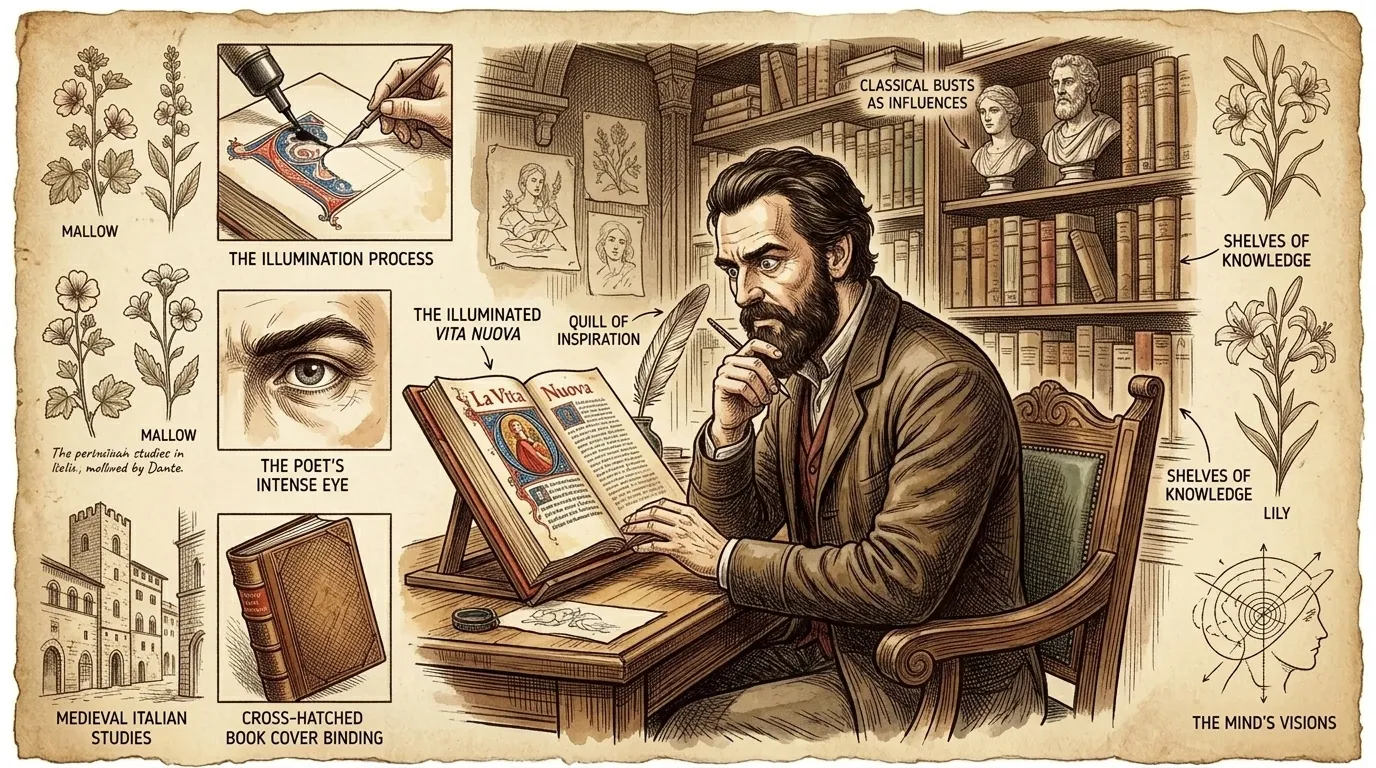
Rossetti drew inspiration from Dante Alighieri's 'La Vita Nuova,' the story of Dante's idealized love for Beatrice. He saw a parallel between Dante's devotion and his own love for Elizabeth. This connection fueled his desire to immortalize her as Beatrice in his painting.
"Rossetti: Dante wrote of his Beatrice with such reverence... I must do the same for Lizzie."
Art Fact: Dante Alighieri's 'La Vita Nuova' heavily influenced Rossetti's 'Beata Beatrix'.
Page 6
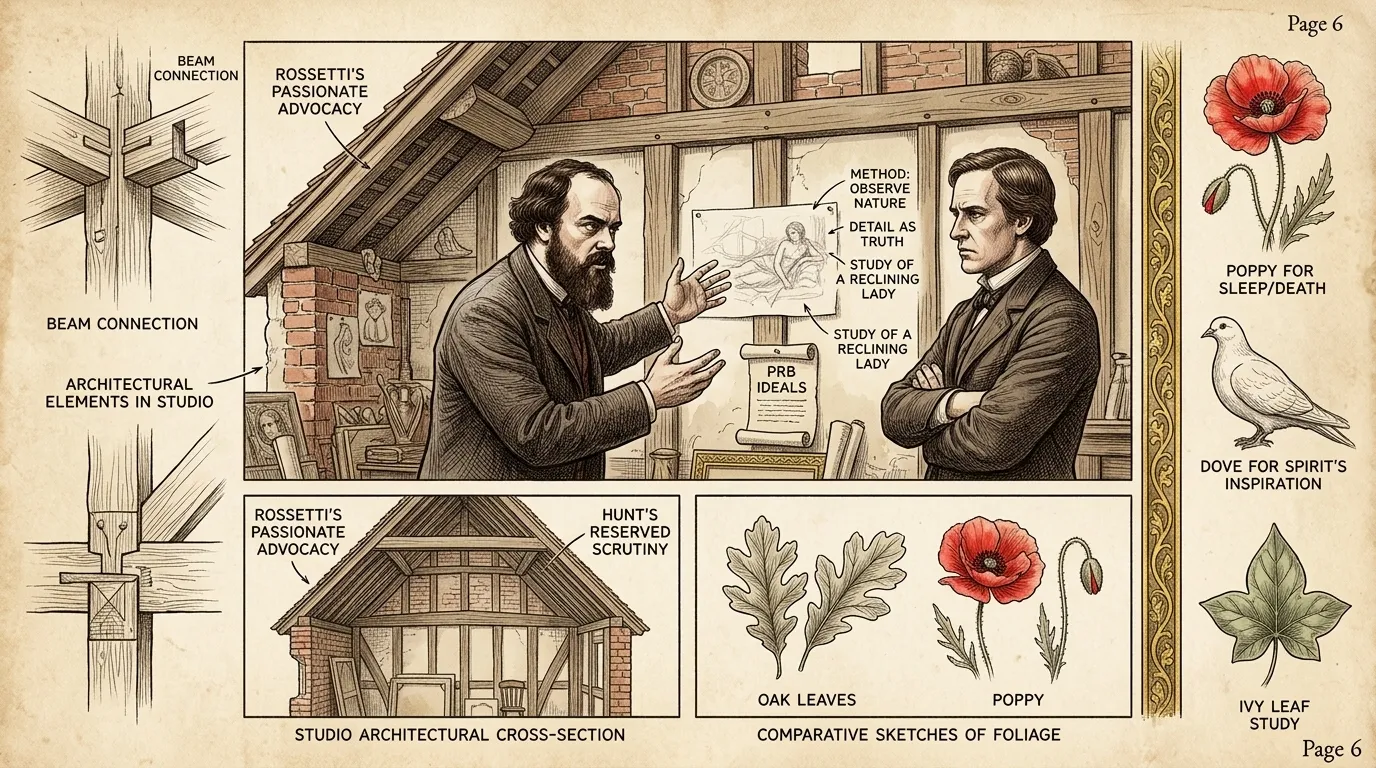
William Holman Hunt, a fellow member of the Pre-Raphaelite Brotherhood, visited Rossetti's studio. They debated the merits of symbolism and realism in art. Hunt's influence pushed Rossetti to infuse 'Beata Beatrix' with deeper layers of meaning.
"Hunt: Rossetti, your art is beautiful, but does it speak to a higher truth? Symbolism elevates art beyond mere representation."
Art Fact: William Holman Hunt's artistic philosophies helped shape Rossetti's 'Beata Beatrix'.
Page 7
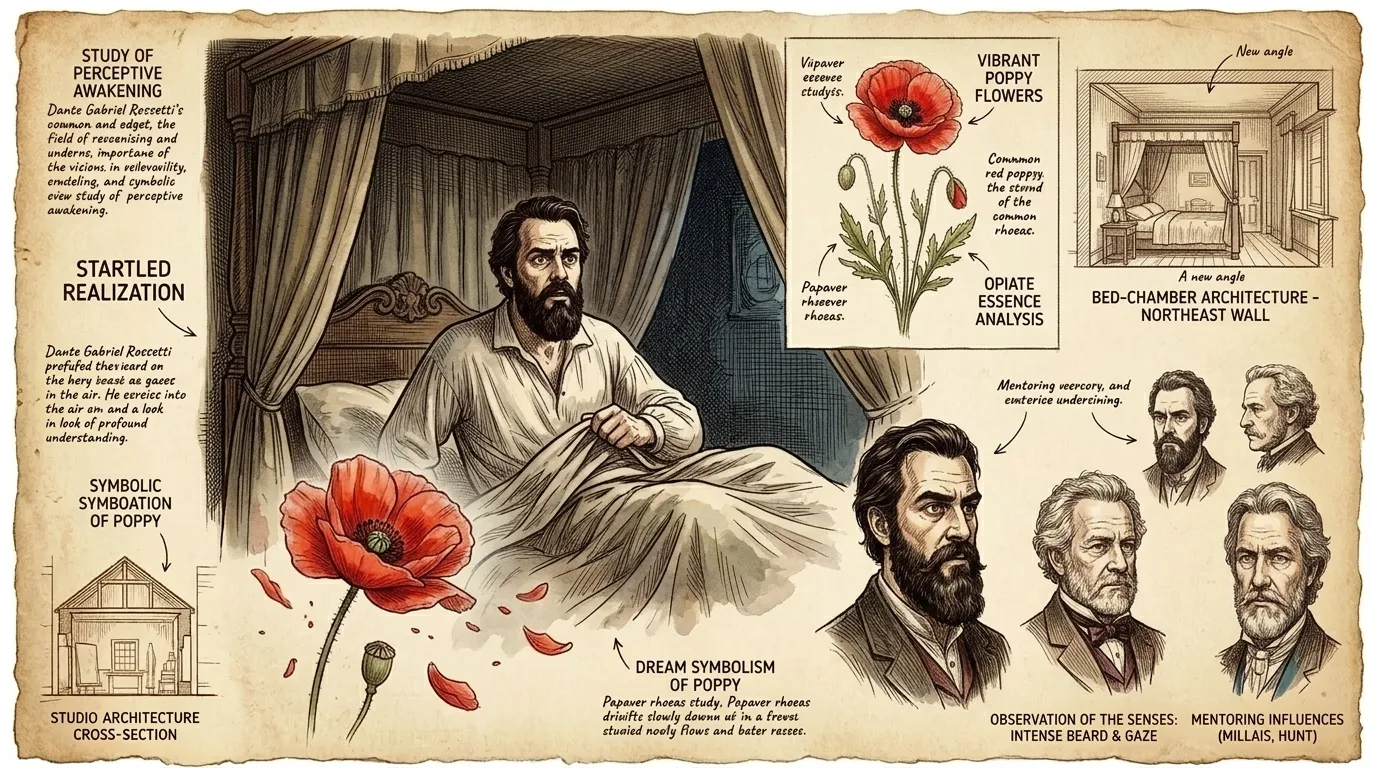
The symbol of the falling poppy came to Rossetti in a dream. He realized it represented Elizabeth's addiction to laudanum, a poignant commentary on her tragic fate. This revelation added a crucial layer of meaning to 'Beata Beatrix'.
"Rossetti: (Startled, awaking from a dream) The poppy! It falls... it signifies her struggle, her passing."
Art Fact: The falling poppy symbolizes Elizabeth Siddal's addiction to laudanum and her tragic death.
Page 8
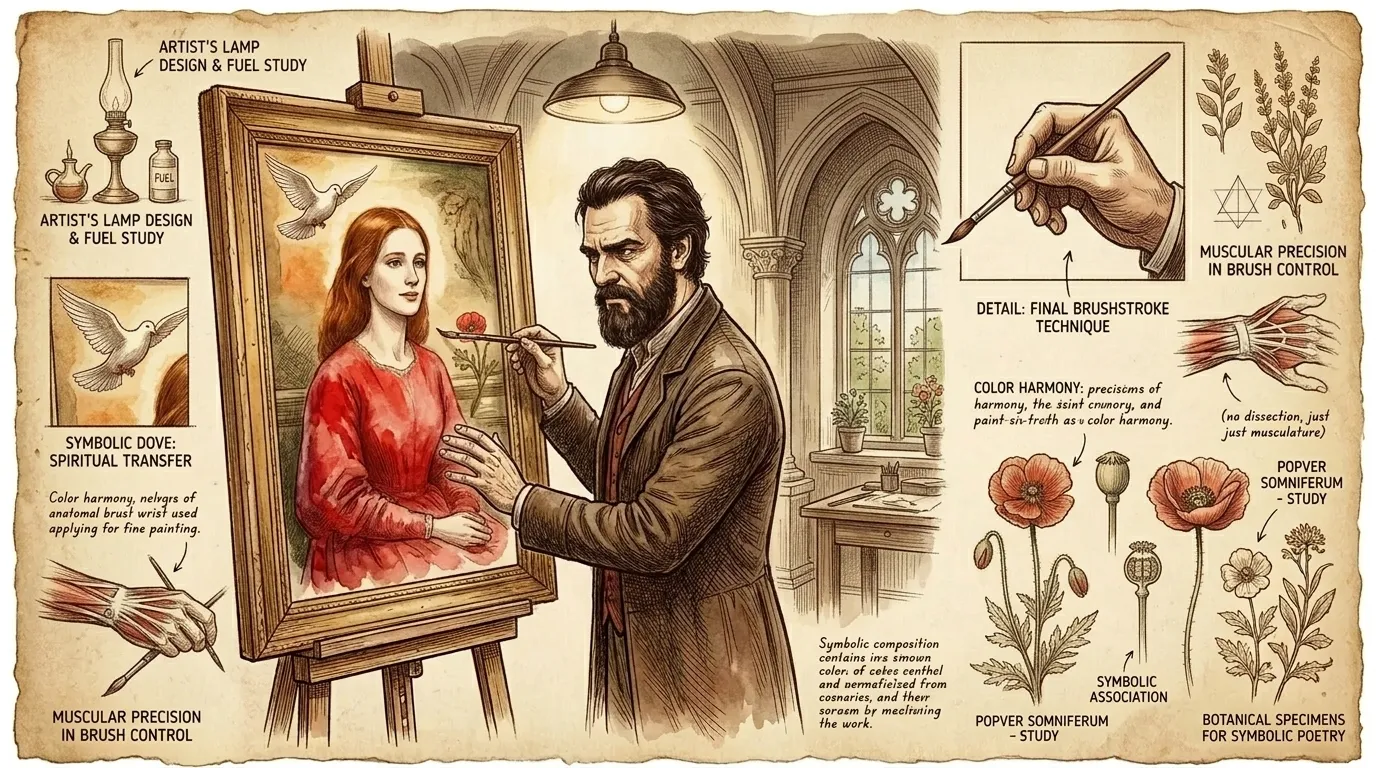
As Rossetti put the finishing touches on 'Beata Beatrix,' he felt a renewed sense of loss. Each brushstroke was a testament to his love for Elizabeth and a lament for her absence. The painting became a conduit for his grief.
"Rossetti (softly, with a sigh): Each color, each line... a memory, a tear."
Art Fact: The final touches to the artwork served as a testament to Rossetti's love and grief over losing Elizabeth Siddal.
Page 9
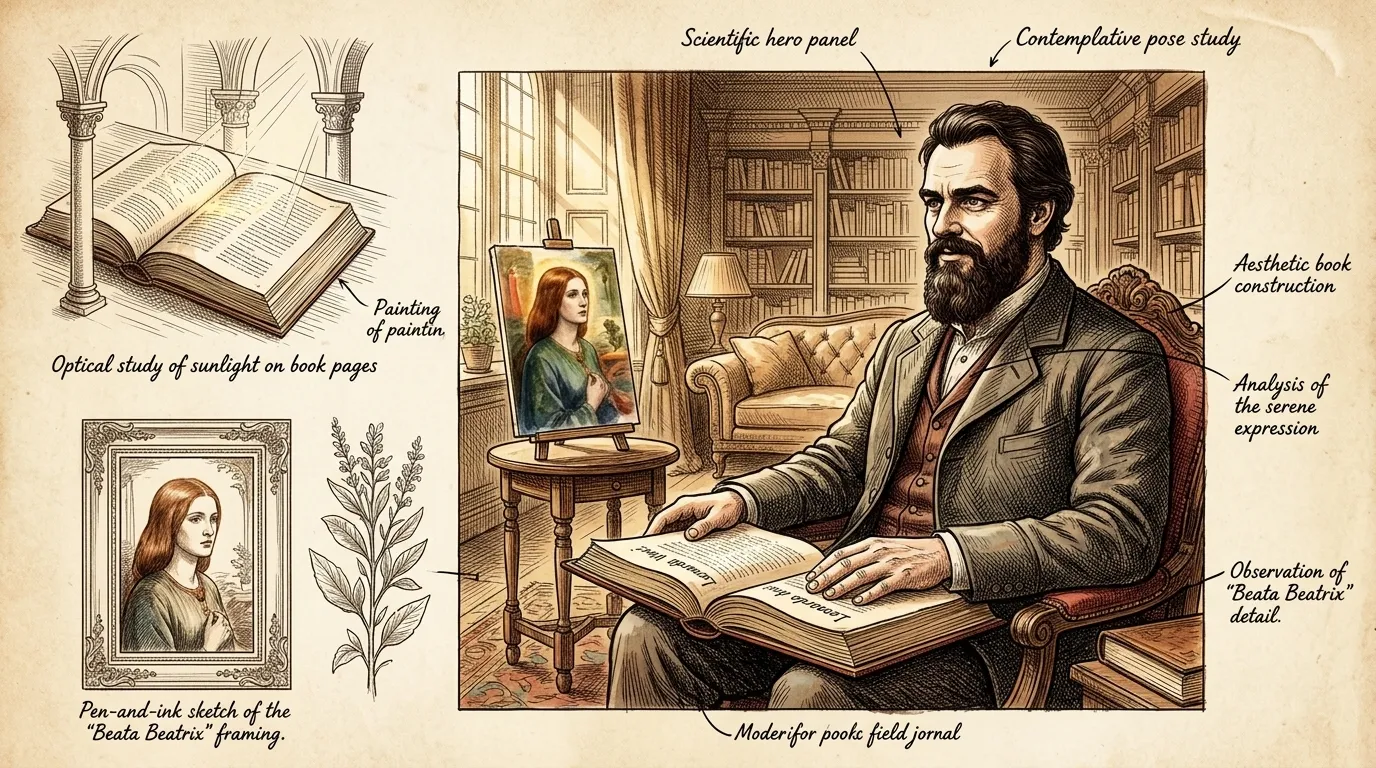
Rossetti reflects on his work, recalling the words of Leonardo da Vinci: 'Painting embraces all the ten functions of the eye; that is to say, darkness, light, body and colour, substance and form, motion and rest, fullness and emptiness, smallness and greatness.' Rossetti knew his painting did that, but also something more—it embraced the entirety of his love for Elizabeth.
"Rossetti: Leonardo da Vinci said that painting must capture darkness, light, form, and substance. But it must also capture the heart. With the essence of Lizzie."
Art Fact: Leonardo da Vinci's quotes help Rossetti find peace with his final creation.
Page 10
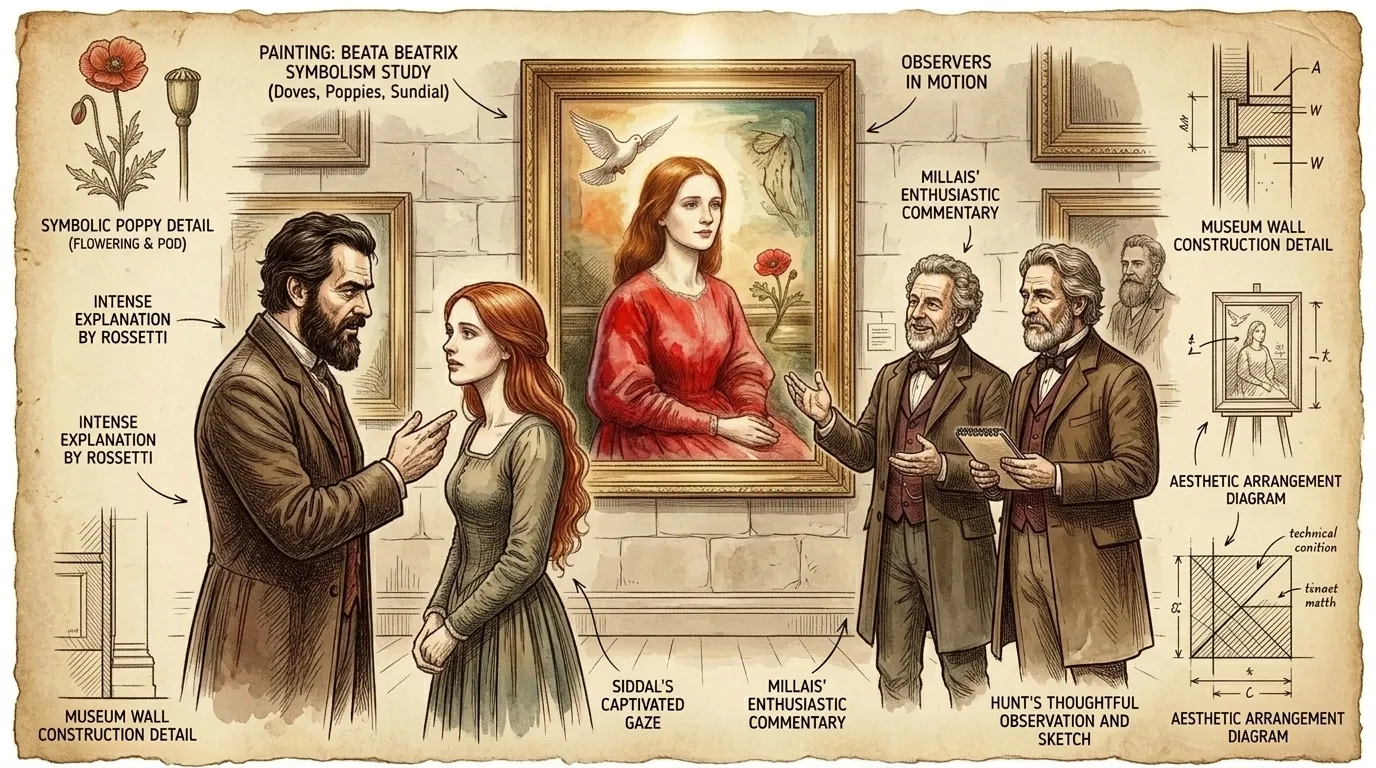
'Beata Beatrix' endures as a symbol of enduring love and profound loss. Its beauty continues to captivate viewers, reminding them of the power of art to transcend grief and immortalize the human spirit. Rossetti's masterpiece survives because it gives voice to the depths of human emotion.
"Narrator (V.O.): Rossetti's art has shown the depths of beauty, love, and pain. It is why 'Beata Beatrix' lives on."
Art Fact: 'Beata Beatrix' resides in the Tate Britain, continuing to inspire viewers with its beauty and sorrow.
About this story
- Location: United Kingdom
- Audience: general readers
Questions and answers
Questions and answers about Beata Beatrix by Dante Gabriel Rossetti (London, UK — 1864)
Read Wonder Arts on your phone
Wonder Arts is available on Android. Get Wonder Arts on Google Play.