British Museum founded (London, UK — 1753)
British Museum founded (London, UK — 1753) — an illustrated arts story, set in United Kingdom. 10 illustrated pages, free to read on Wonder Arts.

Page 1
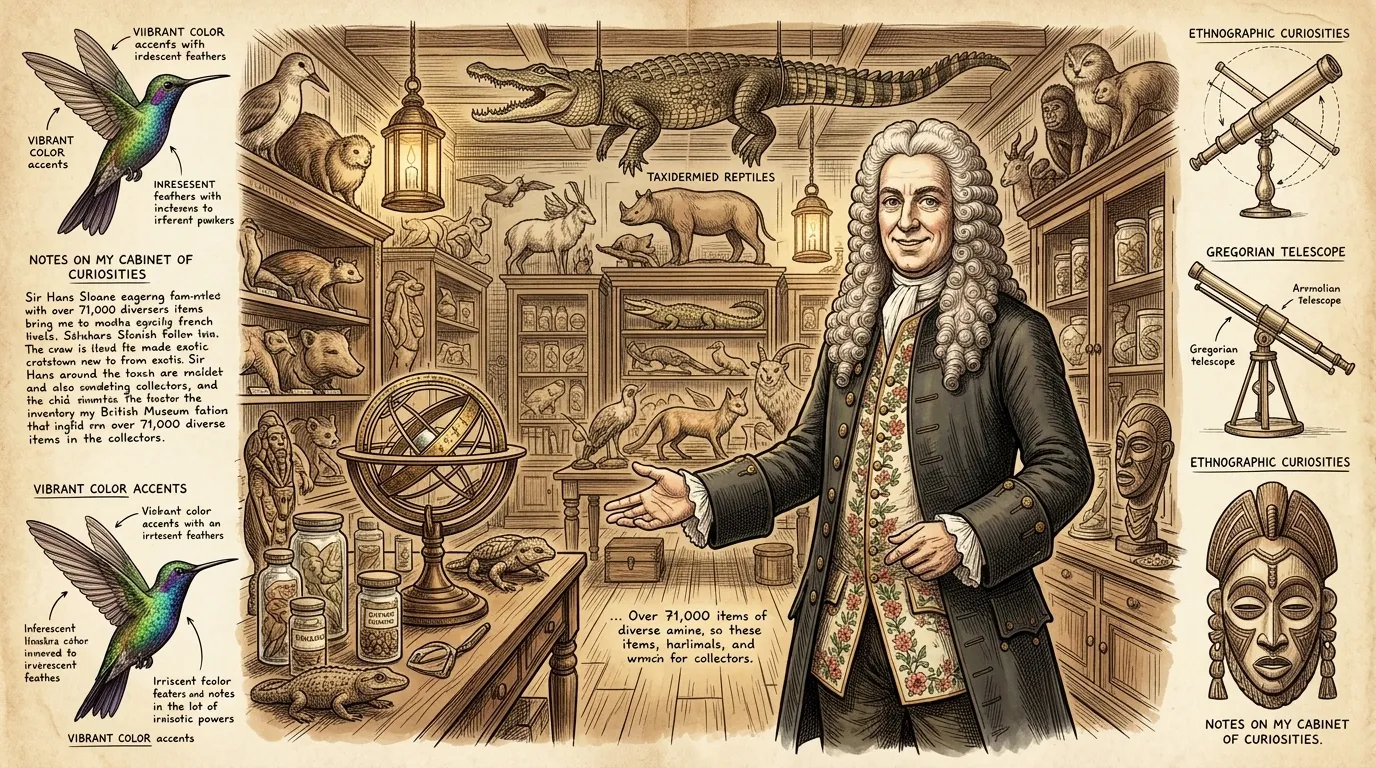
Sir Hans Sloane, physician and collector, stands amidst his vast assortment of natural and artificial curiosities. His collection, comprising over 71,000 items, formed the bedrock of the British Museum. It was 1753, the year Parliament enacted the British Museum Act, securing his legacy.
""This assembly," Sloane declared to a gathering of scholars, his voice echoing in the chamber, "will serve as a beacon of knowledge, a repository for the world's wonders. As Francis Bacon said, 'Knowledge is power,' and it is our duty to harness that power for the enlightenment of all.""
Art Fact: The British Museum was founded in 1753, based on the collection of Sir Hans Sloane. It opened to the public in 1759 at Montagu House, London. Sloane's collection included books, manuscripts, prints, drawings, natural history specimens, and ethnographic material.
Page 2
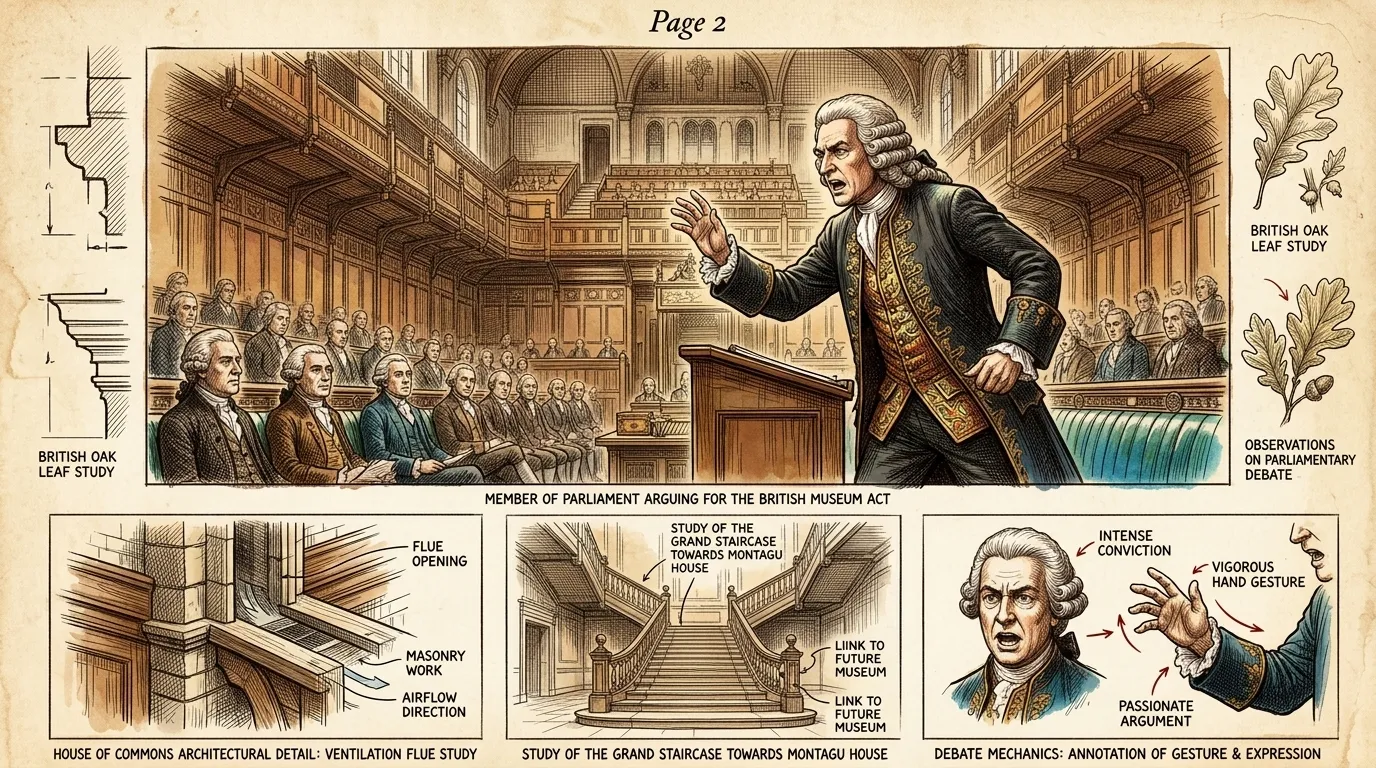
The House of Commons debated the British Museum Act. Concerns were raised about the cost of maintaining such a grand institution. Yet, the promise of public education and national prestige swayed the vote.
"A member of Parliament, addressing the chamber, argued passionately, "This museum will not merely be a collection of dusty relics! It will be a testament to our nation's intellectual ambition, a beacon for scholars, and a source of pride for every citizen. We can create our own wonder market!""
Art Fact: The British Museum Act of 1753 secured the purchase of the Sloane collection and established the museum as a public institution.
Page 3
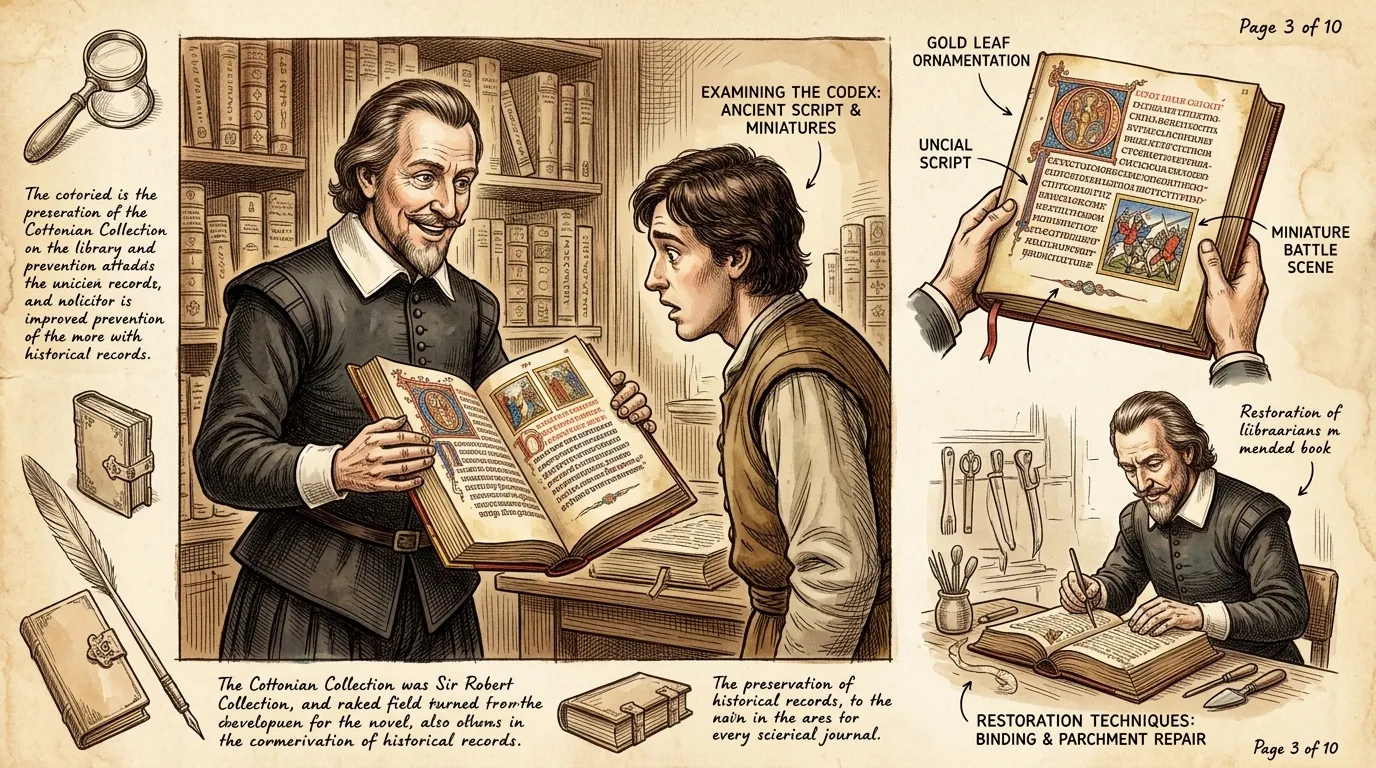
One of the foundational collections incorporated into the British Museum was the Cotton Library. Formed by Sir Robert Cotton, it housed invaluable manuscripts, including Magna Carta. Its inclusion ensured the museum's historical significance.
""Imagine," Cotton's librarian exclaimed, showing an ancient manuscript to a visitor, "the stories held within these pages! This is the very fabric of our nation's history, preserved for generations to come." The visitor gazes in awe, captivated by the ancient script."
Art Fact: The Cotton Library, assembled by Sir Robert Cotton, was another cornerstone of the British Museum's original collection. It contained numerous historically significant manuscripts, including one of the original copies of Magna Carta.
Page 4
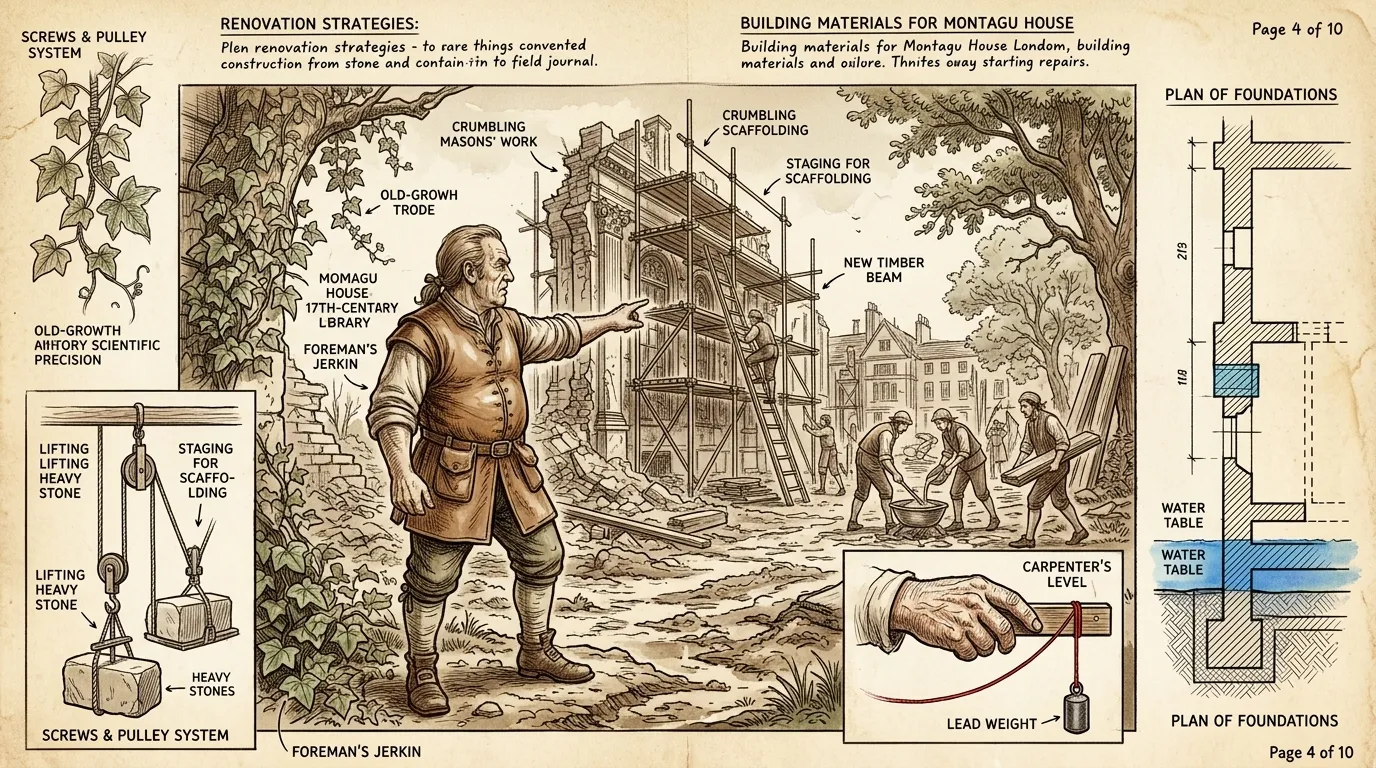
Montagu House, a grand but somewhat dilapidated mansion, was chosen as the British Museum's first home. Its spacious rooms and gardens provided ample space for the growing collection. Repairing the building was the first order of business.
"A construction foreman, inspecting the crumbling facade, remarked to his crew, "This place has seen better days, lads! But with a bit of elbow grease, we'll transform it into a palace of knowledge!""
Art Fact: Montagu House, a 17th-century mansion, was purchased to house the British Museum and its collections. It was chosen for its central location and ample space.
Page 5

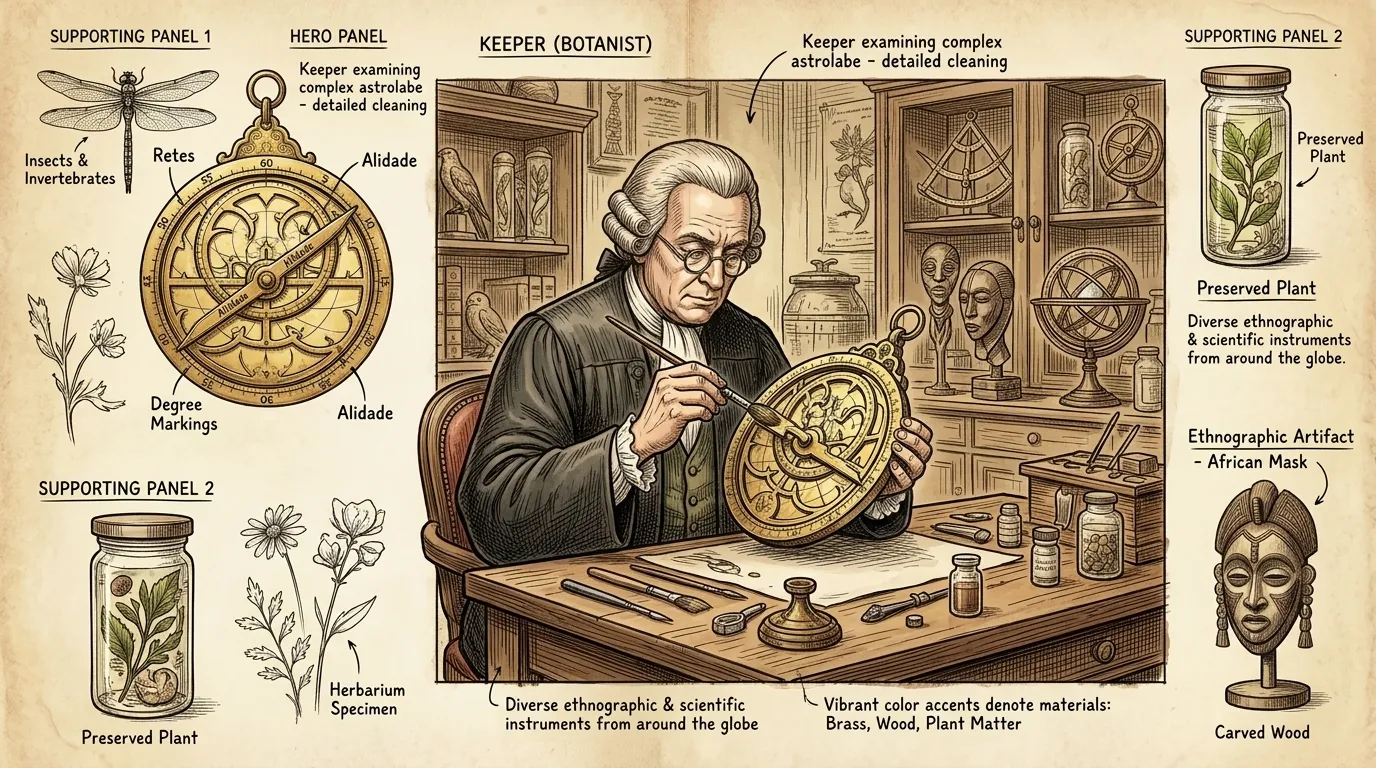
Appointing the first Keepers was a crucial task. These individuals were responsible for organizing, cataloging, and preserving the vast collection. They were scholars, naturalists, and antiquarians, each dedicated to their respective fields.
"One of the Keepers, a botanist, exclaimed, "Imagine, having access to such a wealth of specimens! This will revolutionize our understanding of the natural world!""
Art Fact: The British Museum's first Keepers were appointed to oversee the various collections. They were scholars with expertise in diverse fields such as natural history, antiquities, and manuscripts.
Page 6
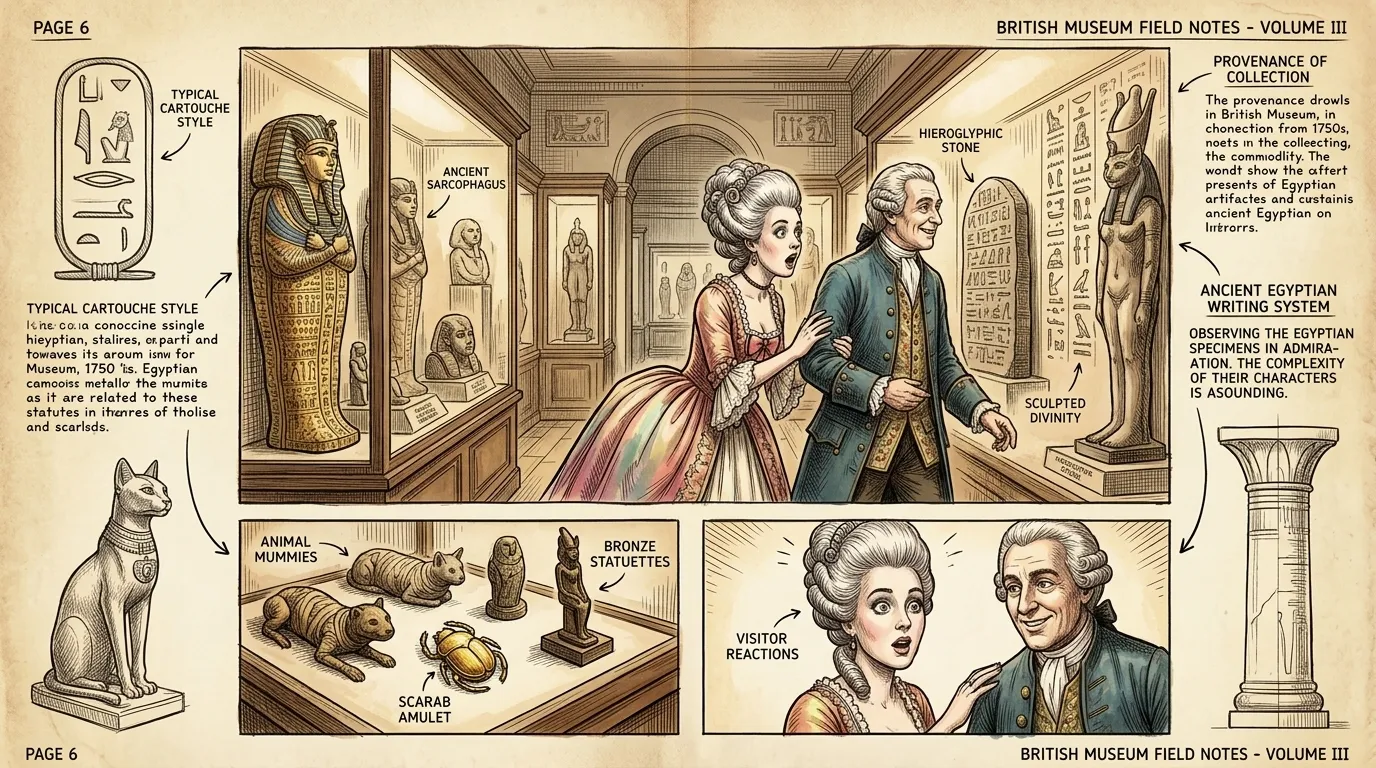
In 1759, the British Museum opened its doors to the public. Admission was free, but access was limited. Visitors had to apply for tickets and were guided through the galleries in small groups.
"A visitor, gazing in wonder at a display of Egyptian artifacts, whispered to her companion, "I can't believe such treasures are available for all to see!""
Art Fact: The British Museum opened to the public on January 15, 1759. Admission was free, but visitors were required to apply for tickets and were guided through the museum in small groups.
Page 7
Page 8
Page 9
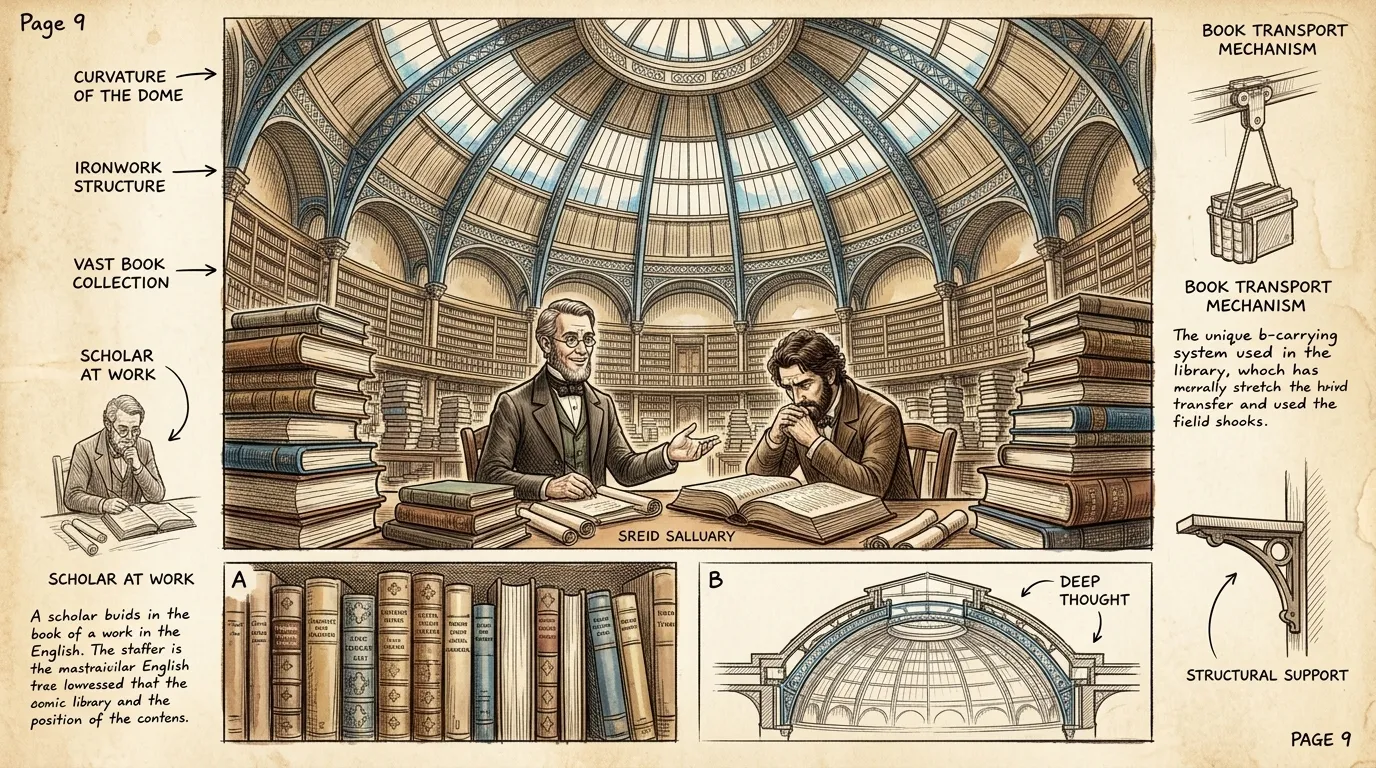
The iconic Round Reading Room, completed in 1857, became a center for research and scholarship. Its domed ceiling and vast collection of books attracted intellectuals from around the world. It became a great place to study.
"A scholar, surrounded by stacks of books, remarked to a colleague, "This room is a sanctuary of knowledge! I could spend a lifetime here!""
Art Fact: The Round Reading Room, designed by Sydney Smirke, opened in 1857. It served as a reading room for the British Library, which was then part of the British Museum.
Page 10
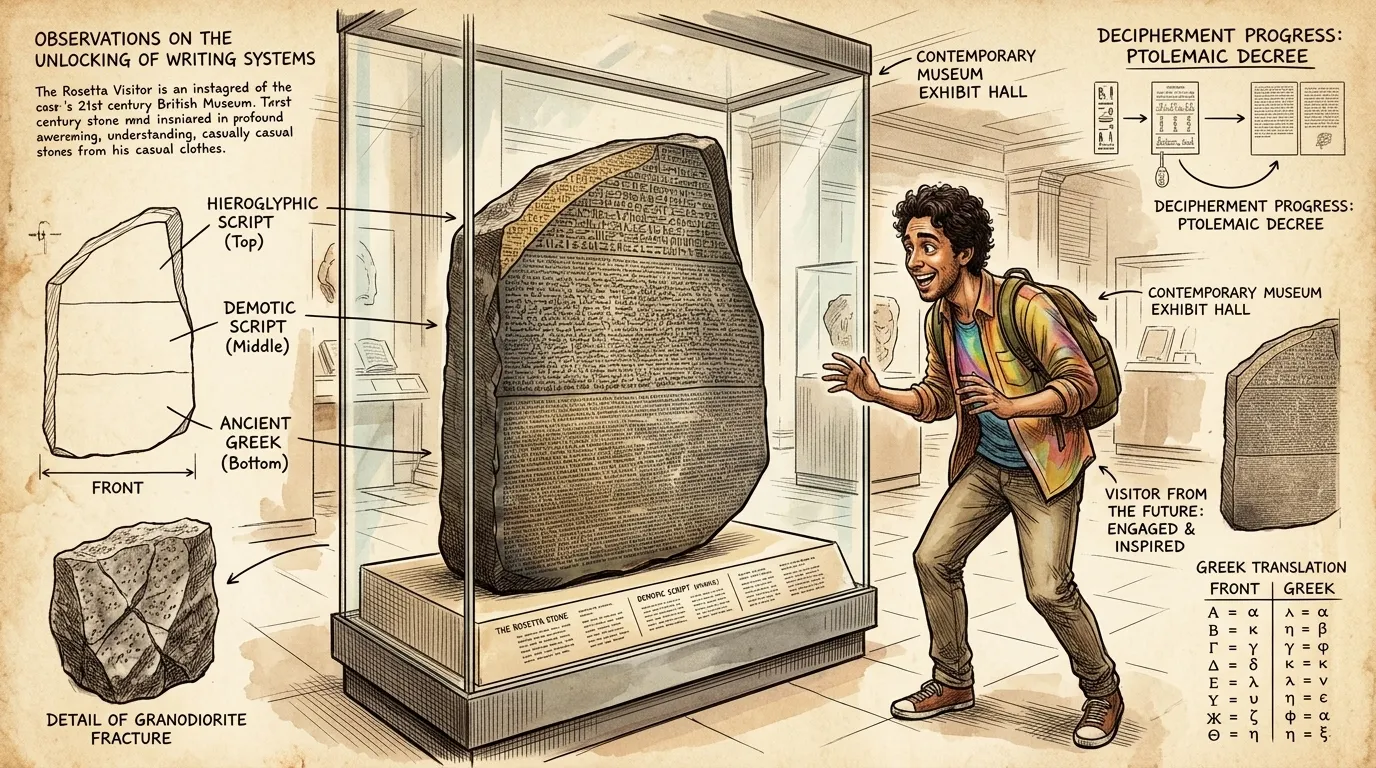
The British Museum stands as a testament to the enduring power of knowledge and curiosity. Its collections continue to inspire and educate millions of visitors each year. Its impact is felt around the world.
"A modern visitor, standing before the Rosetta Stone, exclaimed, "To think that this object unlocked the secrets of an ancient civilization! The founders' vision continues to resonate today.""
Art Fact: Today, the British Museum is one of the world's leading museums, housing a vast collection of art and artifacts from around the globe. Its enduring legacy lies in its commitment to education, research, and cultural preservation. It survives because as Carl Sagan said, 'You have to know the past to understand the present.'
About this story
- Location: United Kingdom
- Audience: general readers
Questions and answers
Questions and answers about British Museum founded (London, UK — 1753)
Read Wonder Arts on your phone
Wonder Arts is available on Android. Get Wonder Arts on Google Play.
More Wonder Arts stories
- Brooklyn Bridge (New York City, USA — 1883)
- Burj Khalifa (Dubai, UAE — 2010)
- Bust of Nefertiti by Thutmose (Berlin, Germany — c. 1345 BC)
- Café Terrace at Night by Vincent van Gogh (Arles, France — 1888)
- Camera Obscura by Ibn al-Haytham (Cairo, Egypt — c. 1000 AD)
- Canterbury Cathedral (Canterbury, UK — 1400)