Brandenburg Concertos by Johann Sebastian Bach (Germany — 1721)
Brandenburg Concertos by Johann Sebastian Bach (Germany — 1721) — an illustrated arts story, set in Germany. 10 illustrated pages, free to read on Wonder Arts.
Page 1
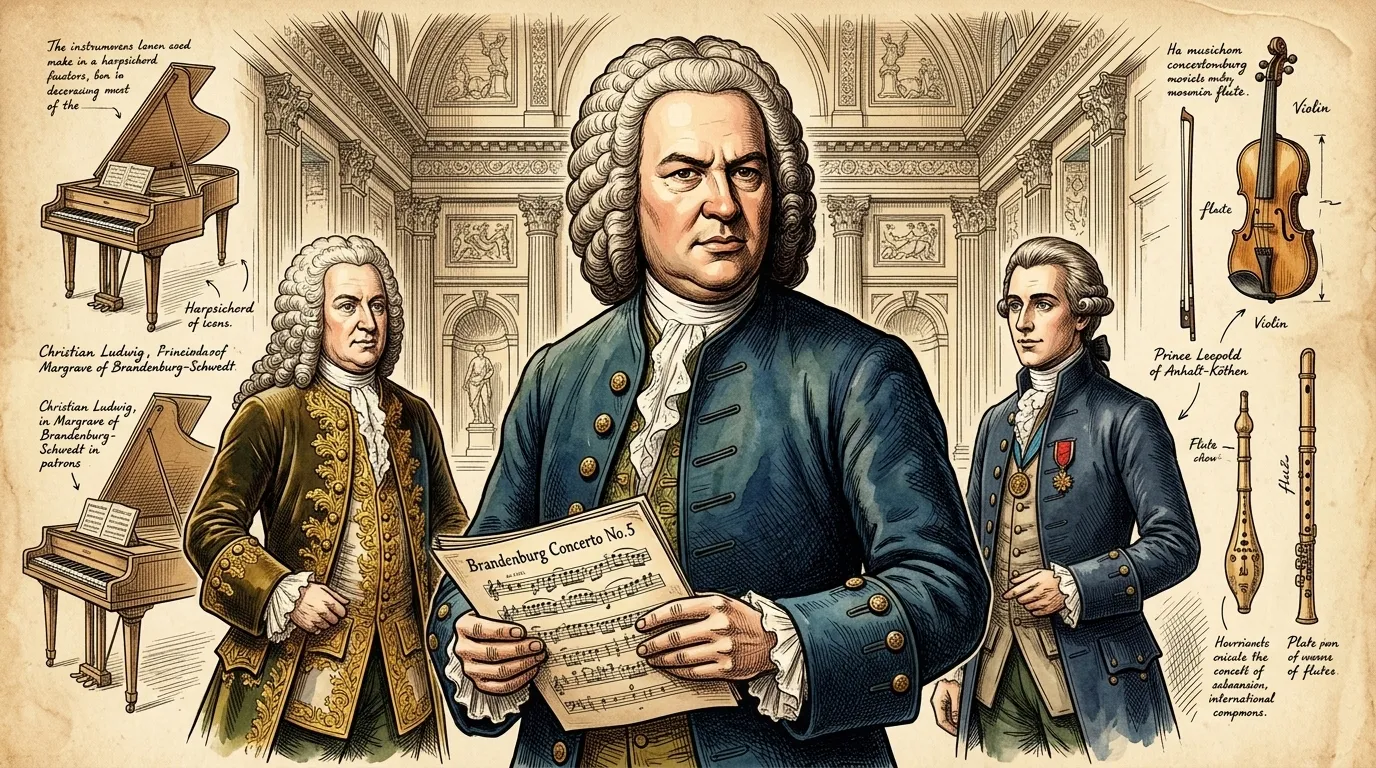
Johann Sebastian Bach, a composer of profound depth, stands before his completed manuscript of the Brandenburg Concertos in 1721. The score, a testament to his genius, is held in his hands. These concertos, later dedicated to Christian Ludwig, Margrave of Brandenburg-Schwedt, showcase a vibrant tapestry of instrumental colors and contrapuntal brilliance. This masterpiece, now residing in the Berlin State Library, represents Bach's innovative spirit and his mastery of the Baroque concerto form.
""These concertos," Bach murmurs, his eyes scanning the intricate notation, "are but a humble offering to His glory, a reflection of the divine harmony that guides my hand.""
Art Fact: The Brandenburg Concertos, BWV 1046–1051, are a collection of six instrumental works presented by Johann Sebastian Bach to Christian Ludwig, Margrave of Brandenburg-Schwedt, in 1721, though they weren't published until 1850.
Page 2
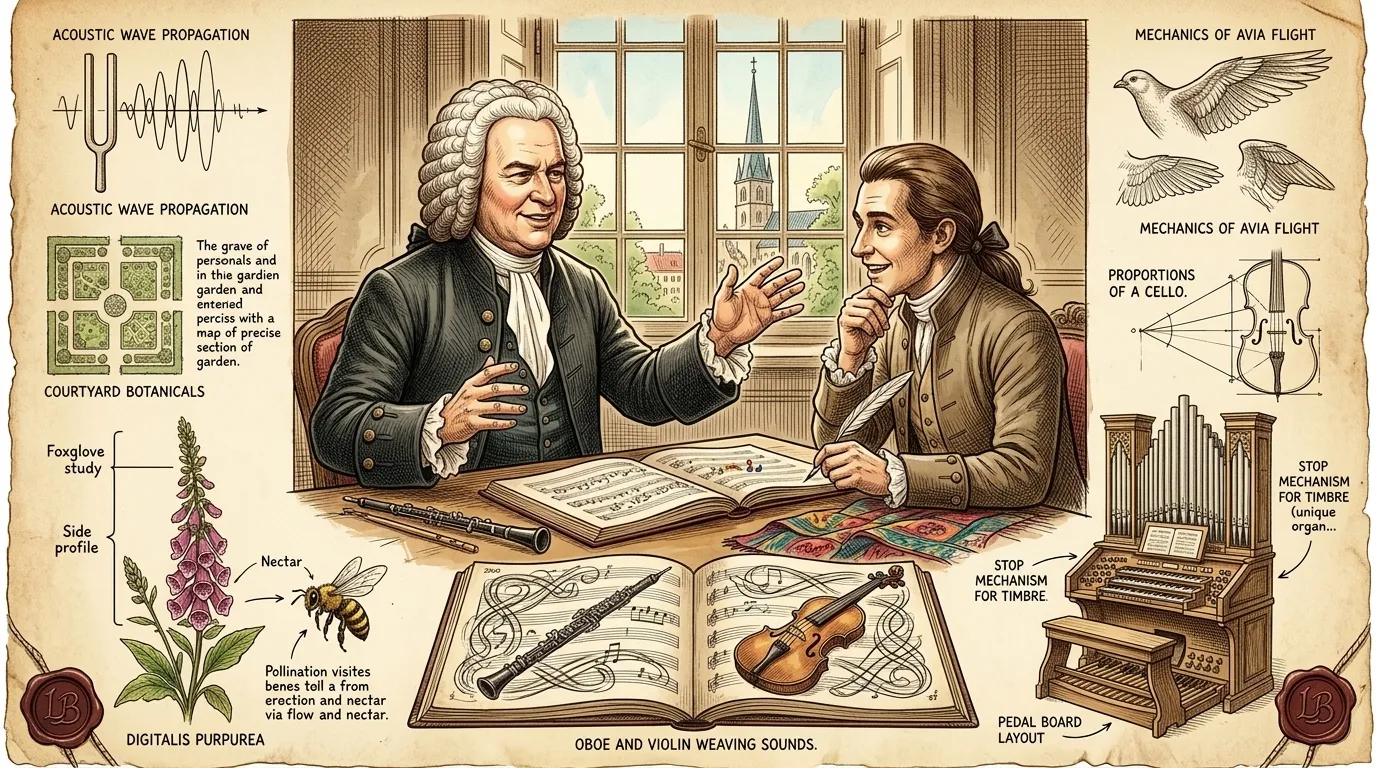
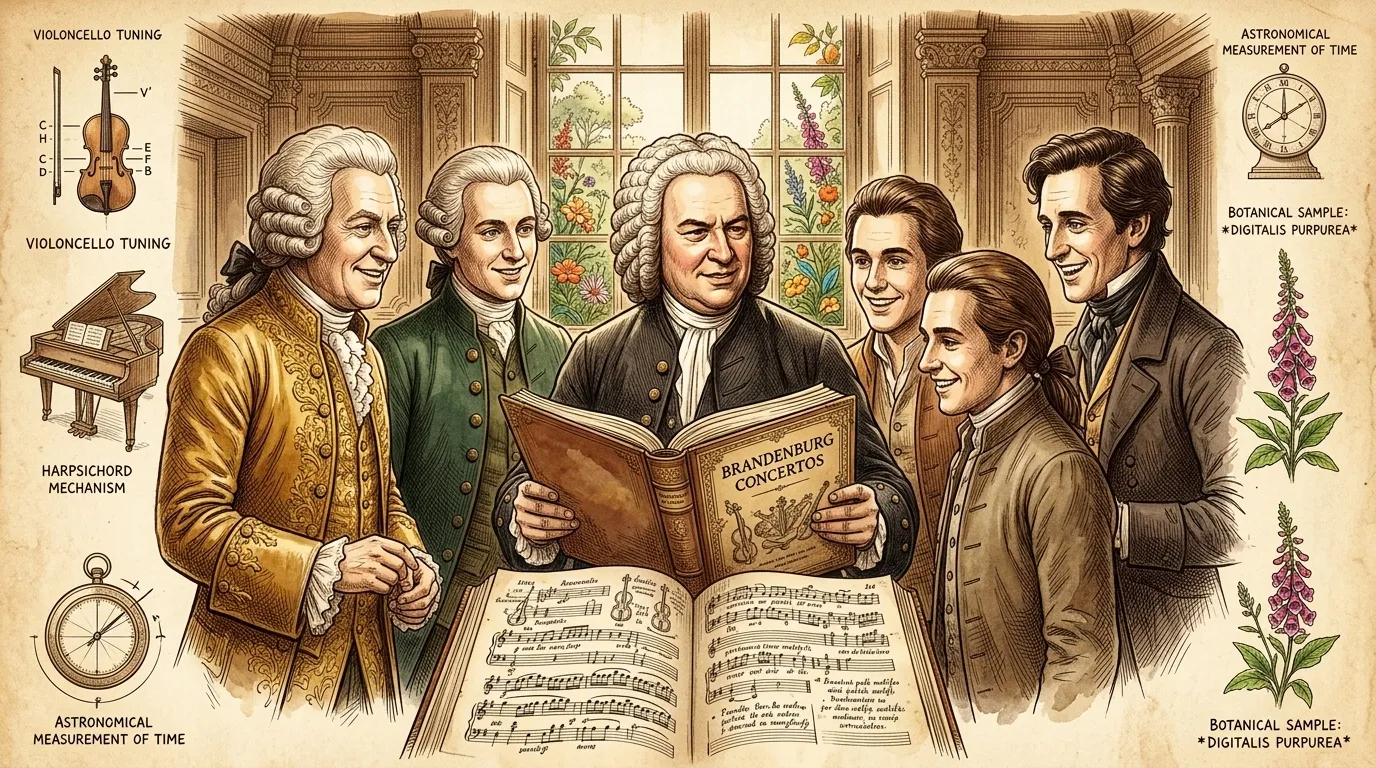
In Weimar, Bach served as court organist and concertmaster. Here, he immersed himself in the Italian concerto style, particularly the works of Vivaldi. This exposure would significantly influence his approach to instrumental composition. During this period, Bach told his cousin Johann Gottfried Walther about the novel concept of weaving different instrument sounds in a conversation.
""Johann," Bach says to Walther, "imagine the oboe and the violin, not merely playing together, but answering each other, like voices in a spirited debate!""
Art Fact: Bach's time in Weimar (1708-1717) marked a significant period of compositional growth, particularly in his exploration of the concerto and organ genres.
Page 3
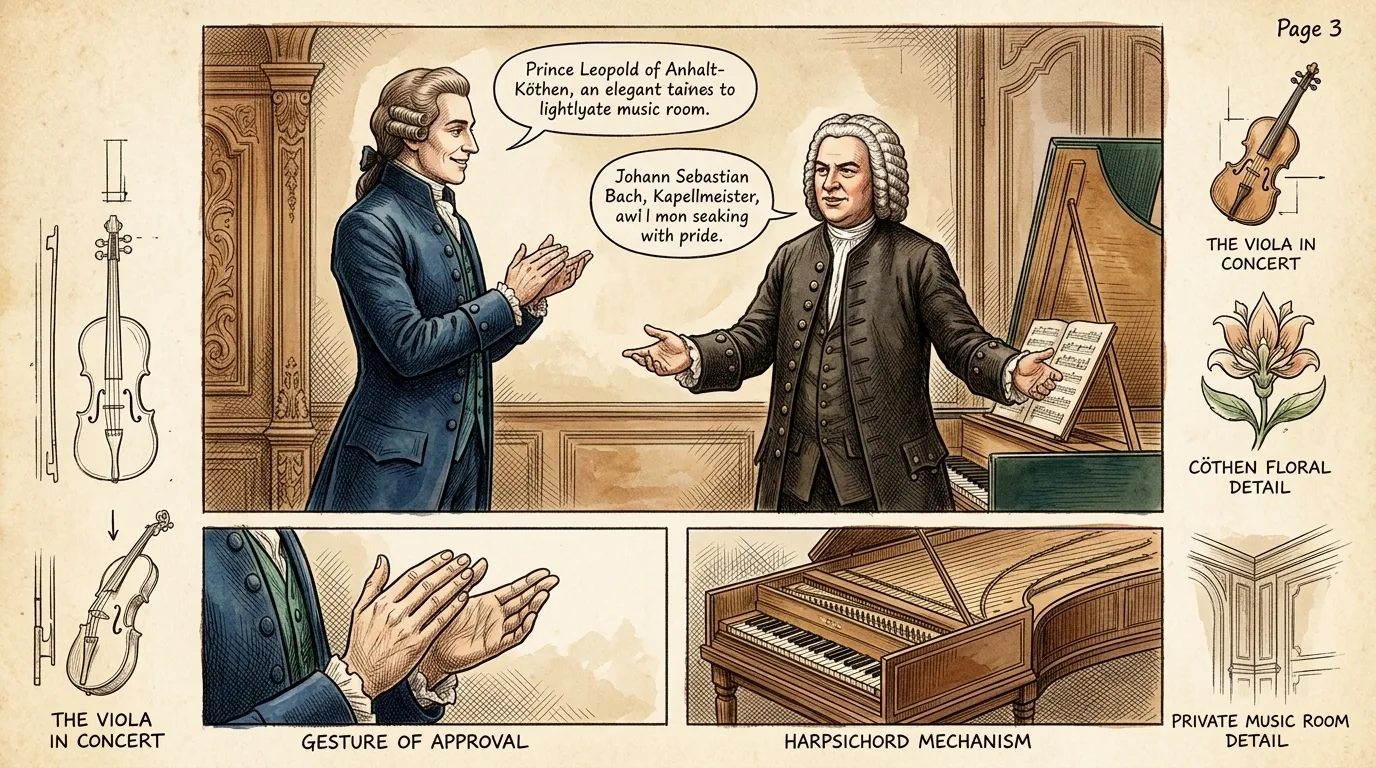
Bach accepted a position as Kapellmeister in Cöthen. Prince Leopold, his new employer, was a music enthusiast. Leopold's Calvinist beliefs restricted elaborate church music. This allowed Bach to focus on instrumental works and chamber music. Prince Leopold remarked one day, "Bach, I've never heard music that dances so joyfully".
""Your Highness," Bach replies to Prince Leopold, "instrumental music allows us to explore the depths of human emotion without the confines of words.""
Art Fact: Bach's tenure in Cöthen (1717-1723) provided a conducive environment for composing instrumental music, free from the demands of elaborate church compositions.
Page 4
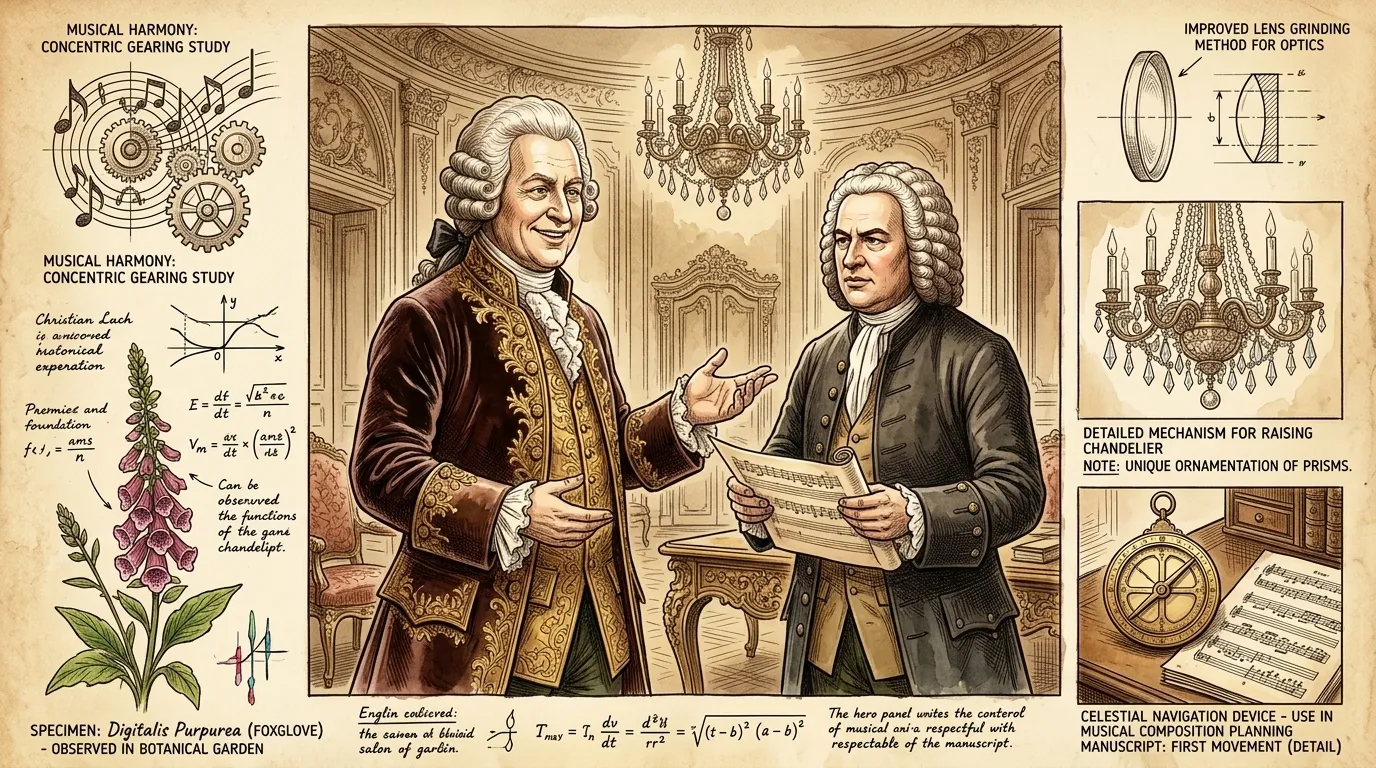
During a visit to Berlin, Bach likely met Christian Ludwig, Margrave of Brandenburg-Schwedt. The Margrave, impressed by Bach's talent, requested some of his compositions. Bach, eager to impress, compiled a set of six concertos, each showcasing different instrumental combinations. The original intent was probably a showcase of Bach's abilities to procure a new position, the dedication a political act.
""Herr Bach," the Margrave says, "your music possesses a quality of...ineffable delight. I would be most honored to have some of your compositions for my collection.""
Art Fact: The commission from the Margrave of Brandenburg-Schwedt prompted Bach to compile the six concertos, each demonstrating his mastery of instrumental writing.
Page 5
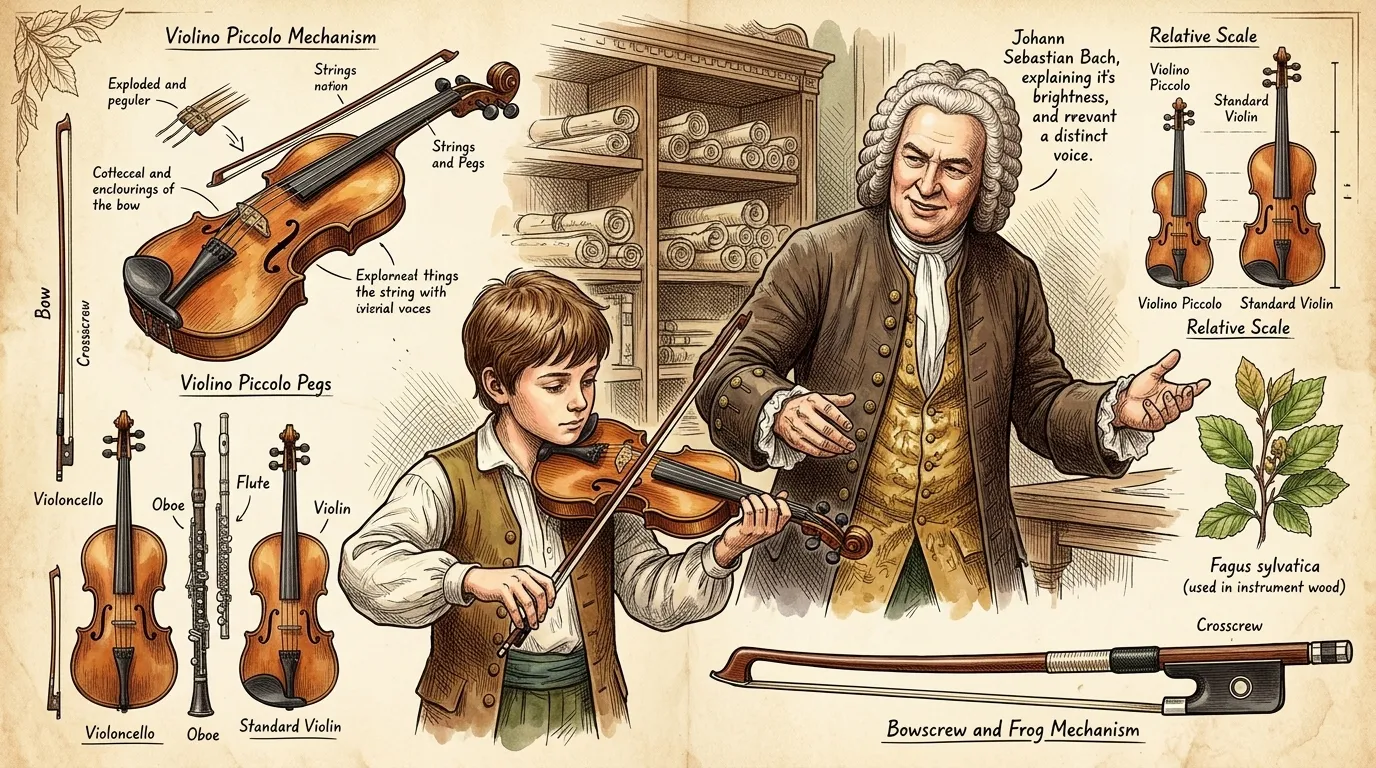
Bach experimented with diverse instrumental groupings in the Brandenburg Concertos. Each concerto features a unique ensemble, showcasing his ingenuity in highlighting the distinct character of each instrument. Bach uses the violino piccolo in the third concerto for the first time.
""The violino piccolo is not merely a smaller violin," Bach instructs a young musician, "it has a brightness, a distinct voice that deserves to be heard.""
Art Fact: The Brandenburg Concertos are characterized by their diverse instrumentation, with Bach exploring different combinations of instruments in each concerto.
Page 6
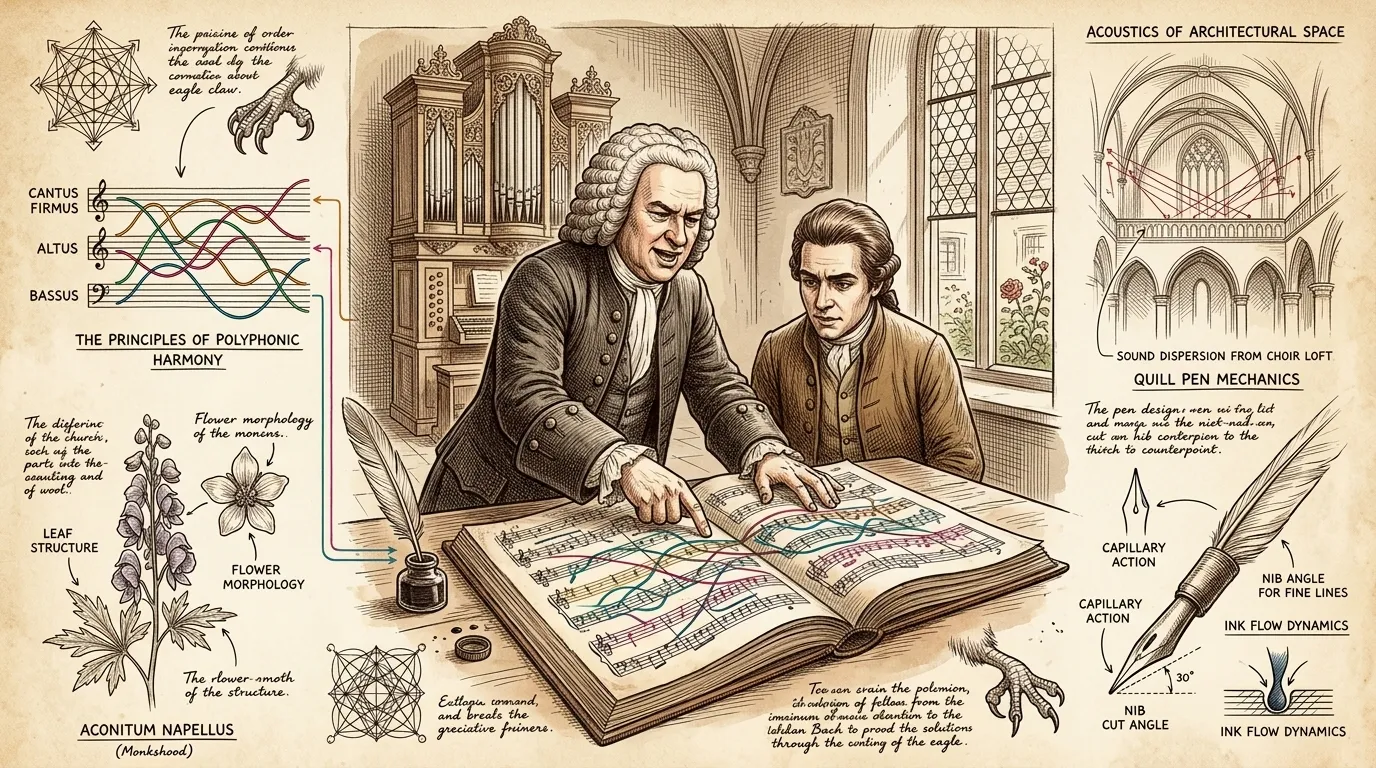
Bach's masterful use of counterpoint is a defining characteristic of the Brandenburg Concertos. He weaves multiple melodic lines together. The music is intricate and harmonious and demonstrates his ability to create complex textures. A music scholar once wrote, 'In Bach's counterpoint, one finds the divine architecture of sound.'
""Counterpoint," Bach explains to a student, "is not merely the art of combining melodies, it's about creating a conversation, a tapestry of voices that intertwine and enrich one another.""
Art Fact: Bach's profound understanding of counterpoint is evident in the Brandenburg Concertos, where multiple melodic lines are interwoven to create rich and complex textures.
Page 7
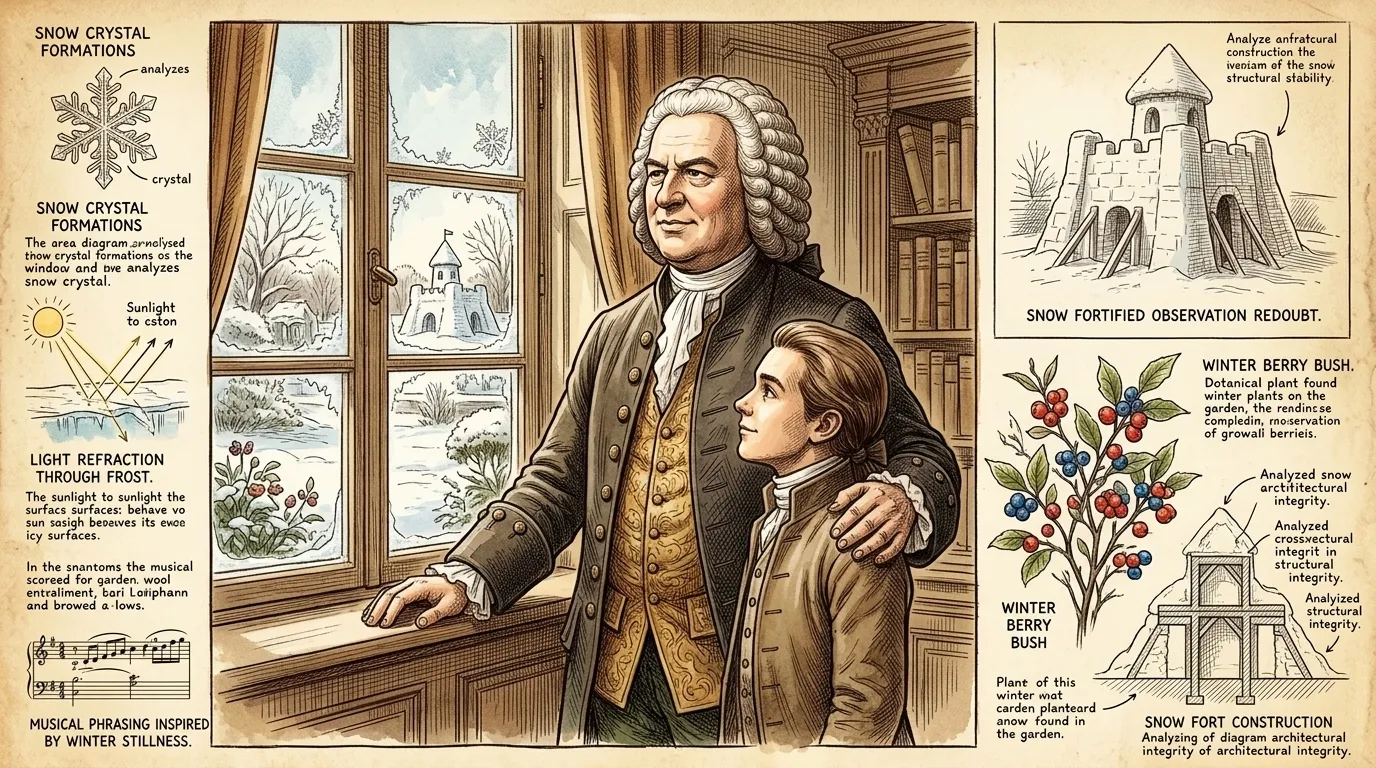
Despite their brilliance, the Brandenburg Concertos were not well-received by the Margrave. The manuscripts remained in his library, largely unperformed during Bach's lifetime. This lack of immediate recognition, however, did not diminish Bach's commitment to his art. In fact, Bach confided in his son one day saying that his work was for the future.
""Father," Bach's son asks, "does it not trouble you that the Margrave does not fully appreciate your work?". Bach replies, "Carl Philipp Emanuel, 'I am building a snow fort; when it melts, I will build another.' as Thoreau once said. I do not create for fleeting praise.""
Art Fact: The Brandenburg Concertos remained largely unappreciated during Bach's lifetime, highlighting the frequent disconnect between artistic genius and immediate recognition.
Page 8
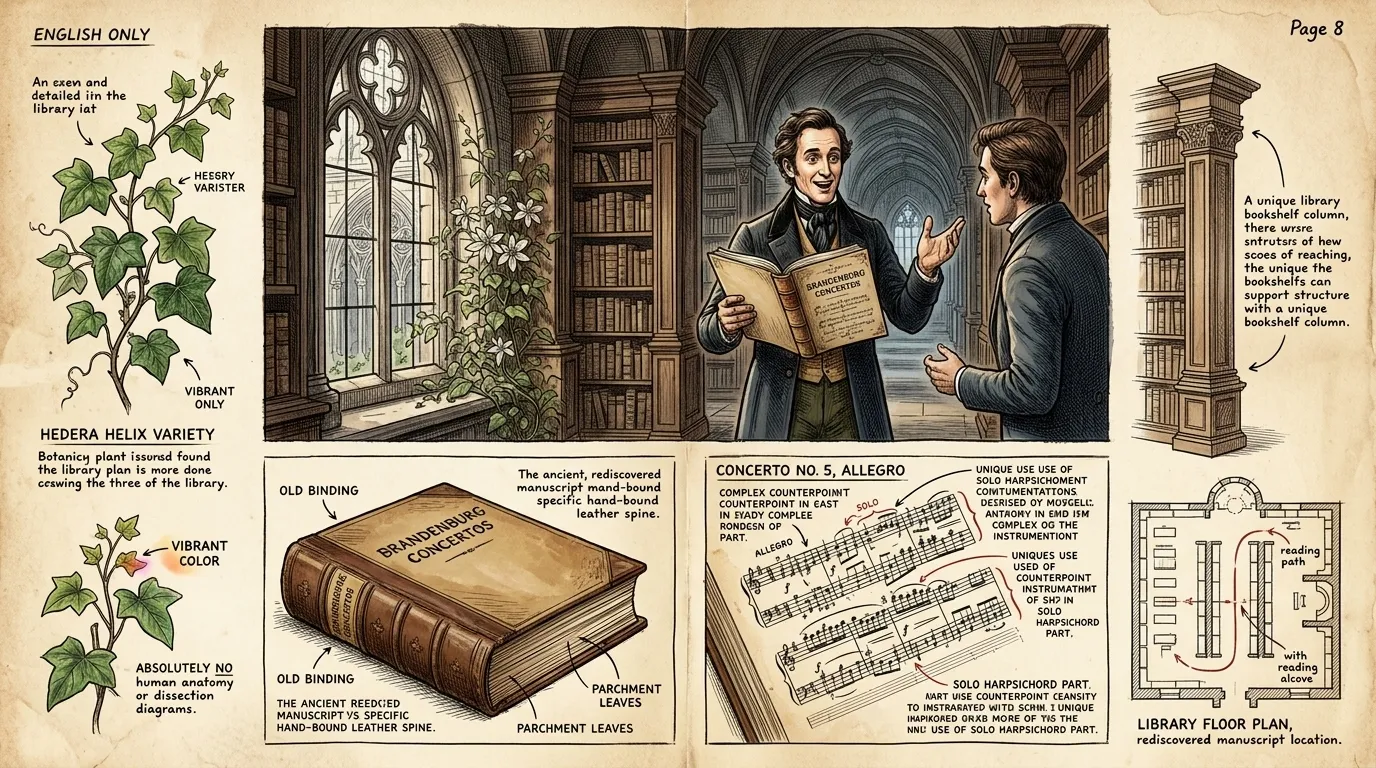
The Brandenburg Concertos were rediscovered in the 19th century. They were hailed as masterpieces of the Baroque era. Composers, musicians, and scholars recognized Bach's unparalleled skill. The concertos became a staple of the classical music repertoire and continue to inspire audiences worldwide.
""Listen!" exclaimed Felix Mendelssohn to a friend, upon discovering the Brandenburg Concertos, "This is Bach at his most sublime! Every note is a testament to his genius.""
Art Fact: The rediscovery of the Brandenburg Concertos in the 19th century marked a turning point, solidifying their place as masterpieces of the Baroque era.
Page 9
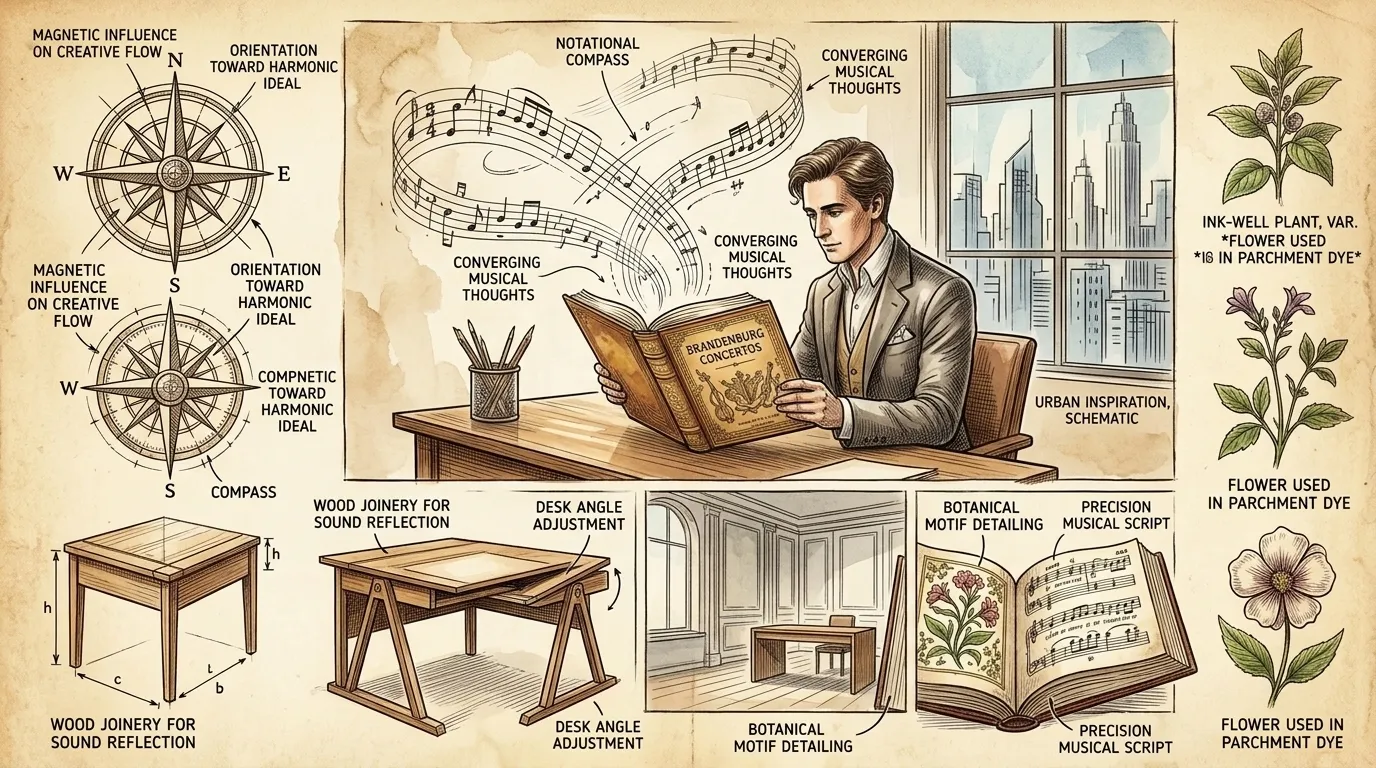
The Brandenburg Concertos continue to influence musicians and composers. Their innovative structures and vibrant instrumental textures inspire new generations. The works remains a testament to Bach's enduring legacy. Composers still look to it for harmony, rhythm, and instrumental techniques.
""When I feel lost in my own composition," a modern composer reflects, "I turn to Bach. His Brandenburg Concertos are a compass, guiding me back to the essence of musical expression.""
Art Fact: The Brandenburg Concertos continue to inspire and influence musicians and composers, serving as a testament to Bach's enduring legacy.
Page 10
About this story
- Location: Germany
- Audience: general readers
Questions and answers
Questions and answers about Brandenburg Concertos by Johann Sebastian Bach (Germany — 1721)
Read Wonder Arts on your phone
Wonder Arts is available on Android. Get Wonder Arts on Google Play.