Ashmolean Museum (Oxford, UK — 1683)
Ashmolean Museum (Oxford, UK — 1683) — an illustrated arts story, set in United Kingdom. 10 illustrated pages, free to read on Wonder Arts.

Page 1
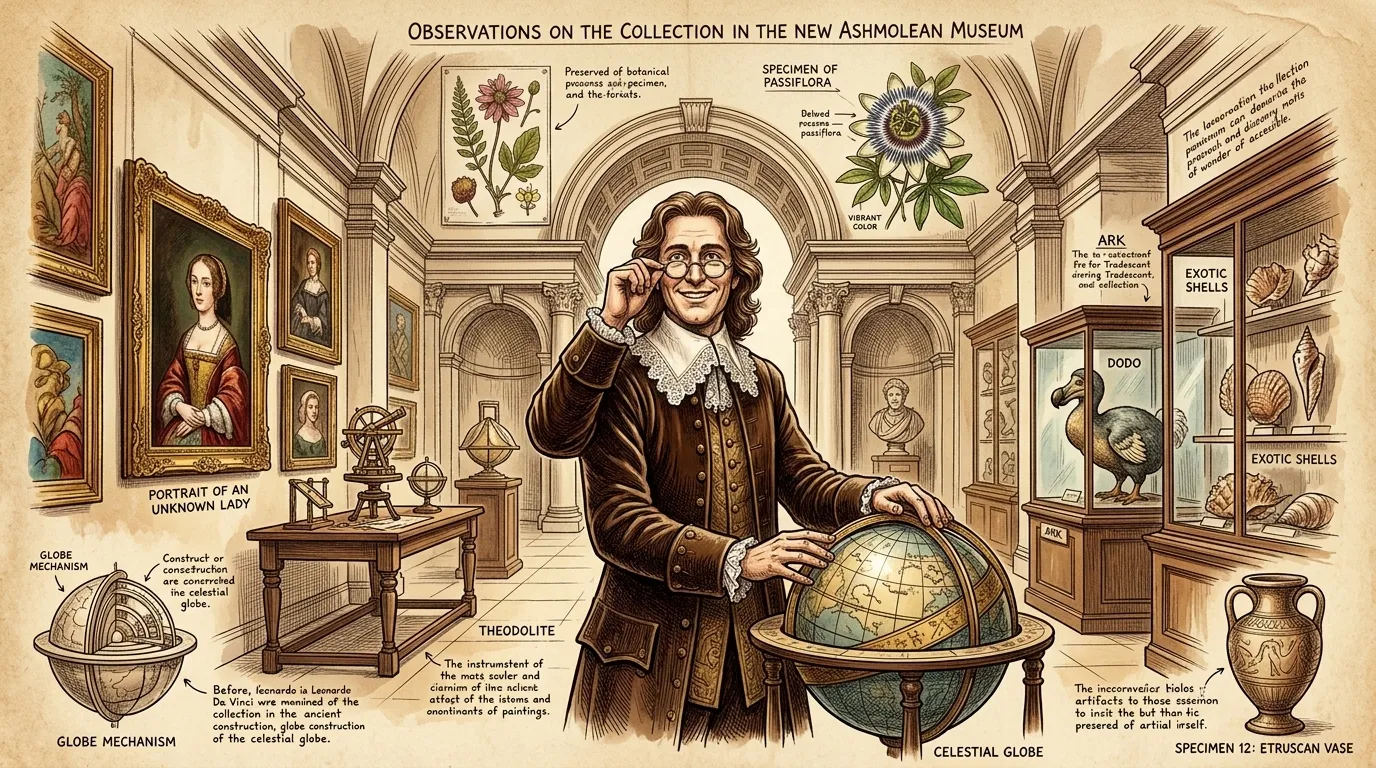
Elias Ashmole, the polymath and antiquarian, stood proudly before his meticulously curated collection. It was 1683, and the Ashmolean Museum in Oxford was about to open its doors, marking a radical new concept: a public museum accessible to all. Among its many treasures, paintings held a special place, each a portal to another world.
""This collection," Ashmole mused, adjusting his spectacles, "is not merely an accumulation of objects. It is a testament to human curiosity, a mirror reflecting the vastness of knowledge." He paused, his gaze sweeping over the assembled artifacts. "As Seneca said, 'Every new beginning comes from some other beginning's end.' This museum is a beginning, born from the end of centuries of accumulated wisdom.""
Art Fact: The Ashmolean Museum, established in 1683, was the world's first university museum. Its diverse collection included natural history specimens, geological samples, ethnographic artifacts, and a significant array of paintings and drawings, all bequeathed by Elias Ashmole.
Page 2
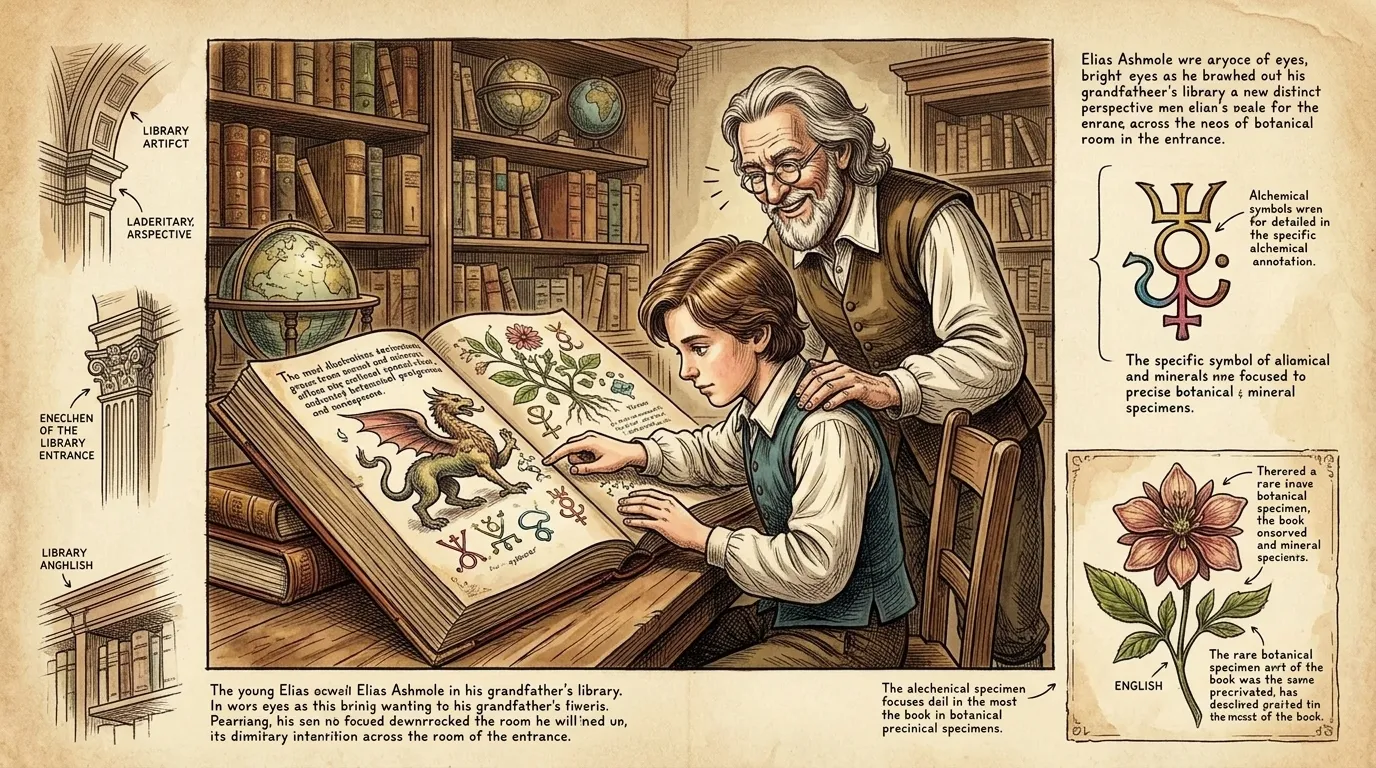
Young Elias, barely a lad, spent hours poring over ancient texts in his grandfather's library. The scent of leather and parchment filled the air as he traced the illustrations of fantastical beasts and alchemical symbols. One book, filled with detailed depictions of plants and minerals, sparked a lifelong fascination with the natural world.
""Elias, what are you reading now?" his grandfather chuckled, peering over his spectacles. "More tales of dragons and mythical herbs?" Elias looked up, his eyes shining. "But grandfather, these herbs are said to possess great power! They can heal the sick and reveal hidden truths.""
Art Fact: Elias Ashmole's early life was marked by a voracious appetite for knowledge, fueled by access to his grandfather's extensive library.
Page 3
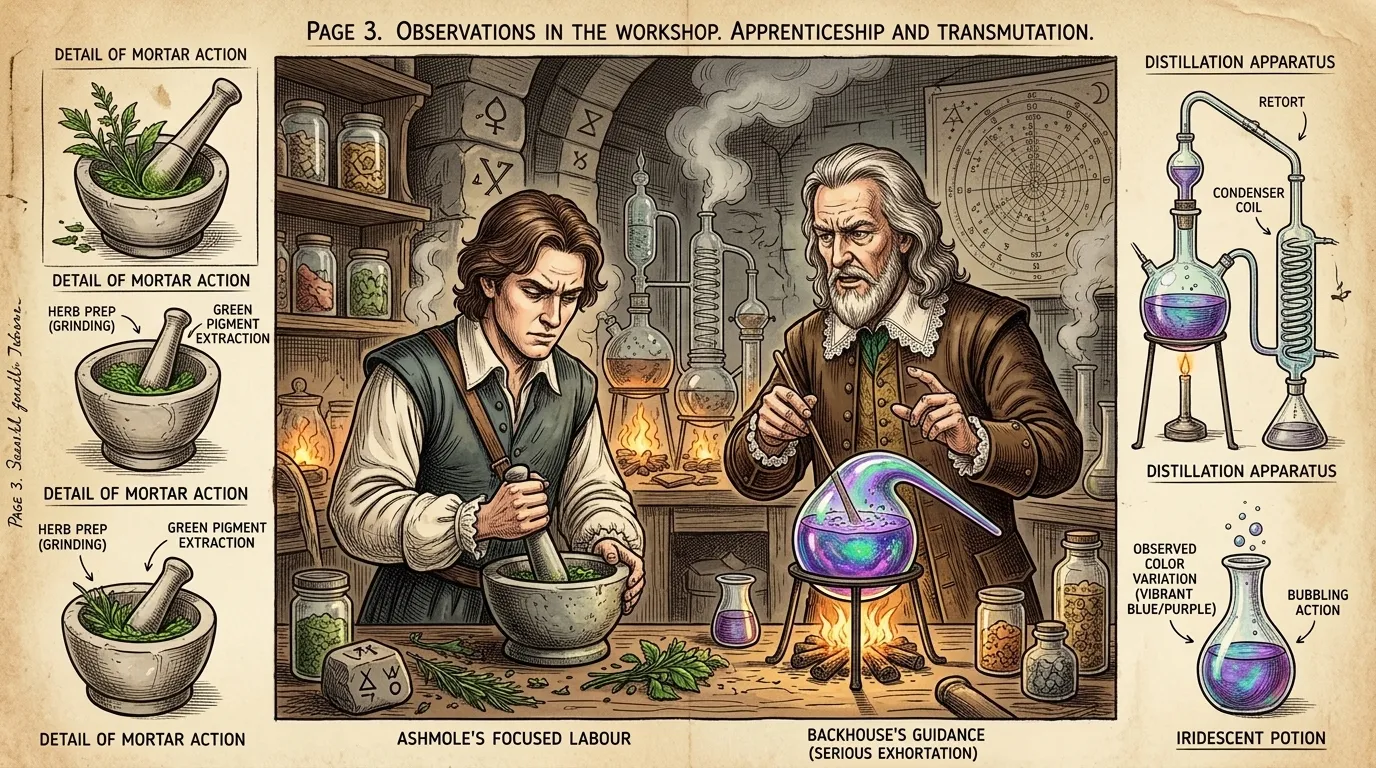
As a young man, Ashmole sought to unravel the mysteries of alchemy. He became an apprentice to William Backhouse, a renowned alchemist. In a smoky workshop filled with bubbling beakers and strange odors, he learned the art of transmutation and the secrets of the Philosopher's Stone.
""Remember, Elias," Backhouse cautioned, stirring a potion, "alchemy is not merely about transforming base metals into gold. It is about transforming oneself, purifying the soul." Ashmole nodded intently, carefully grinding herbs with a mortar and pestle. "Like Sir Isaac Newton said, 'To myself I am only a child playing on the beach, while vast oceans of truth lie undiscovered before me.'"
Art Fact: Alchemy played a significant role in Ashmole's intellectual development, shaping his understanding of the natural world and his approach to collecting.
Page 4
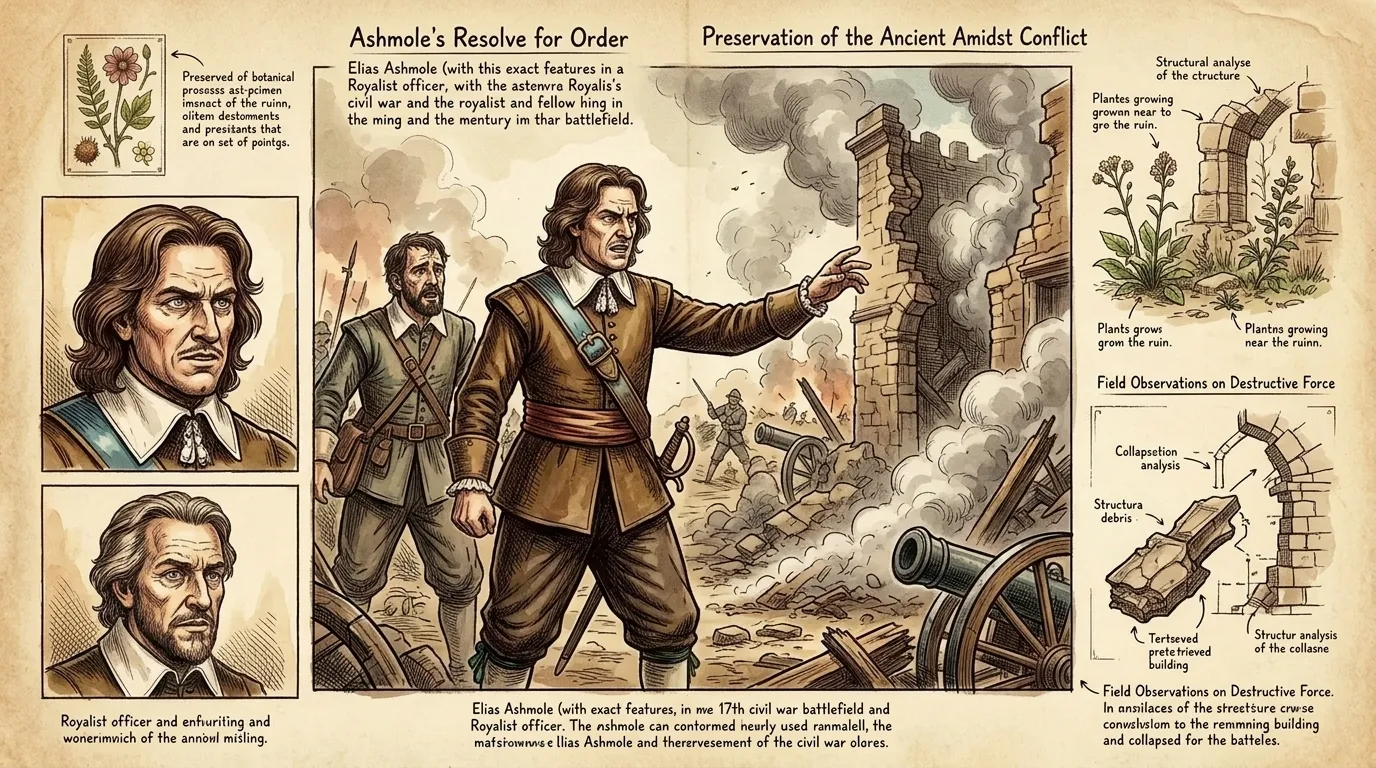
When civil war engulfed England, Ashmole answered the call to defend King Charles I. As an officer in the Royalist army, he faced the horrors of battle, witnessing the destruction of war firsthand. The experience instilled in him a deep appreciation for order and a desire to preserve the past.
""Elias, this war is tearing our nation apart!" a fellow officer exclaimed amidst the chaos of battle. "What will be left when it is over?" Ashmole, his face grim, replied, "We must preserve what we can, for the sake of future generations. The past is our anchor.""
Art Fact: Ashmole's military service during the English Civil War exposed him to the fragility of civilization and the importance of preserving historical artifacts.
Page 5
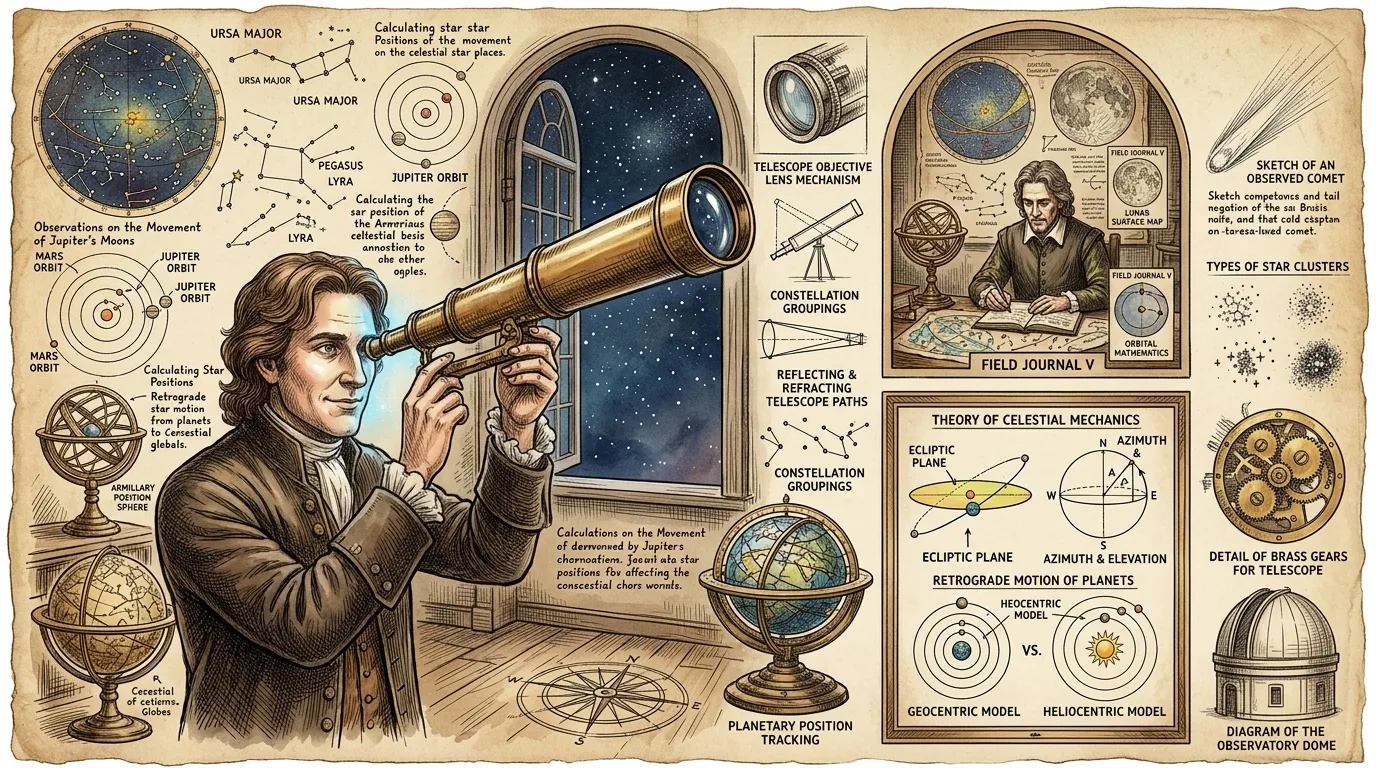
Ashmole, deeply fascinated by astrology, meticulously charted the movements of the stars and planets. He believed that the celestial bodies held the key to understanding human destiny and the course of history. He used astrology to guide his decisions and interpret the events unfolding around him.
""The stars are aligned in a most auspicious manner," Ashmole declared, peering through his telescope. "This is a time for bold action and great undertakings." A skeptical colleague raised an eyebrow. "Elias, do you truly believe that the heavens dictate our fate?" Ashmole smiled enigmatically. "The heavens influence us, but we have the power to shape our own destiny.""
Art Fact: Astrology was a central element of Ashmole's worldview, influencing his intellectual pursuits and his collecting habits.
Page 6
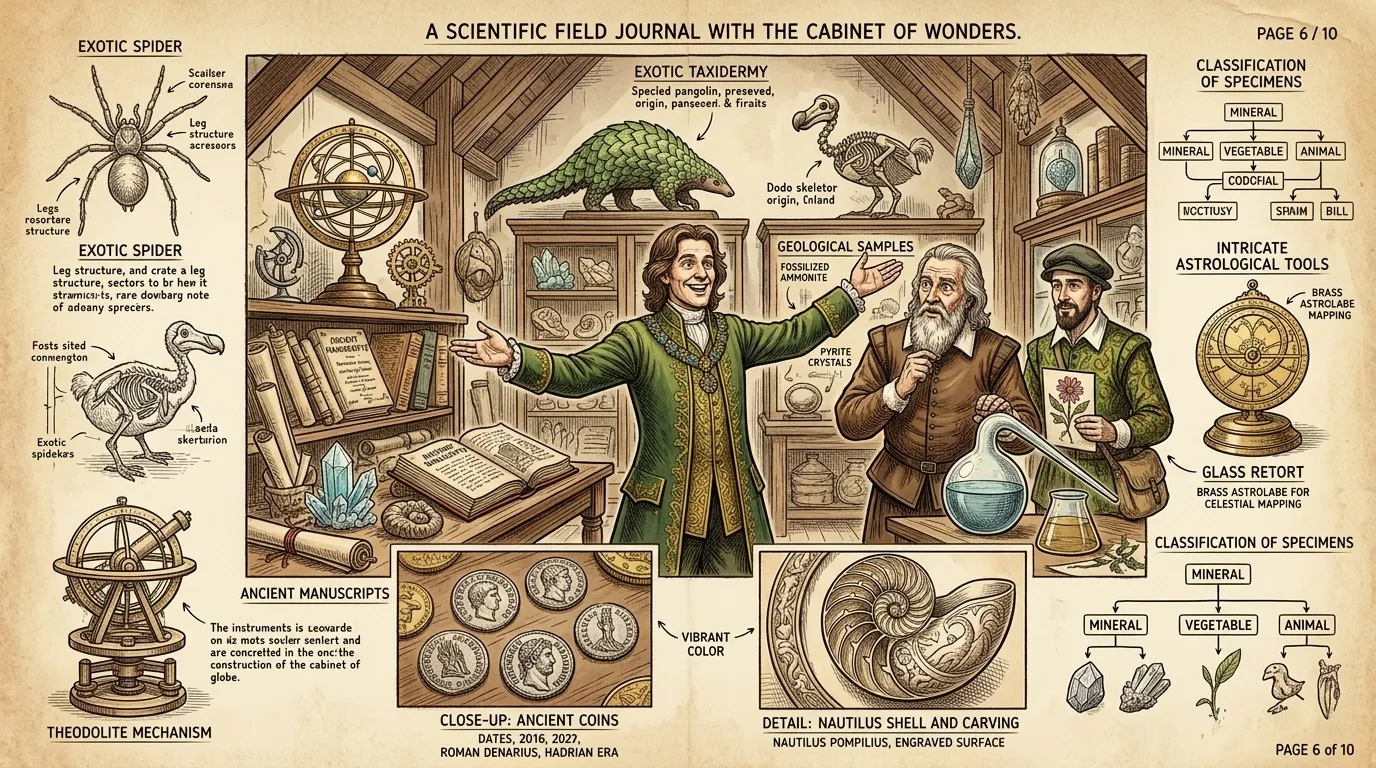
With his fortunes improving, Ashmole began to amass a vast collection of books, manuscripts, scientific instruments, and natural curiosities. He envisioned creating a 'cabinet of wonders,' a microcosm of the world that would inspire awe and wonder in all who beheld it.
""This cabinet," Ashmole declared to a visiting scholar, gesturing to a room filled with artifacts, "is more than just a collection. It is a living encyclopedia, a testament to the boundless creativity of nature and the ingenuity of man." The scholar, impressed by the sheer variety of objects, nodded in agreement. "It is a true treasure trove, Mr. Ashmole.""
Art Fact: Ashmole's collecting activities reflected his encyclopedic interests and his belief in the power of objects to convey knowledge and inspire curiosity.
Page 7
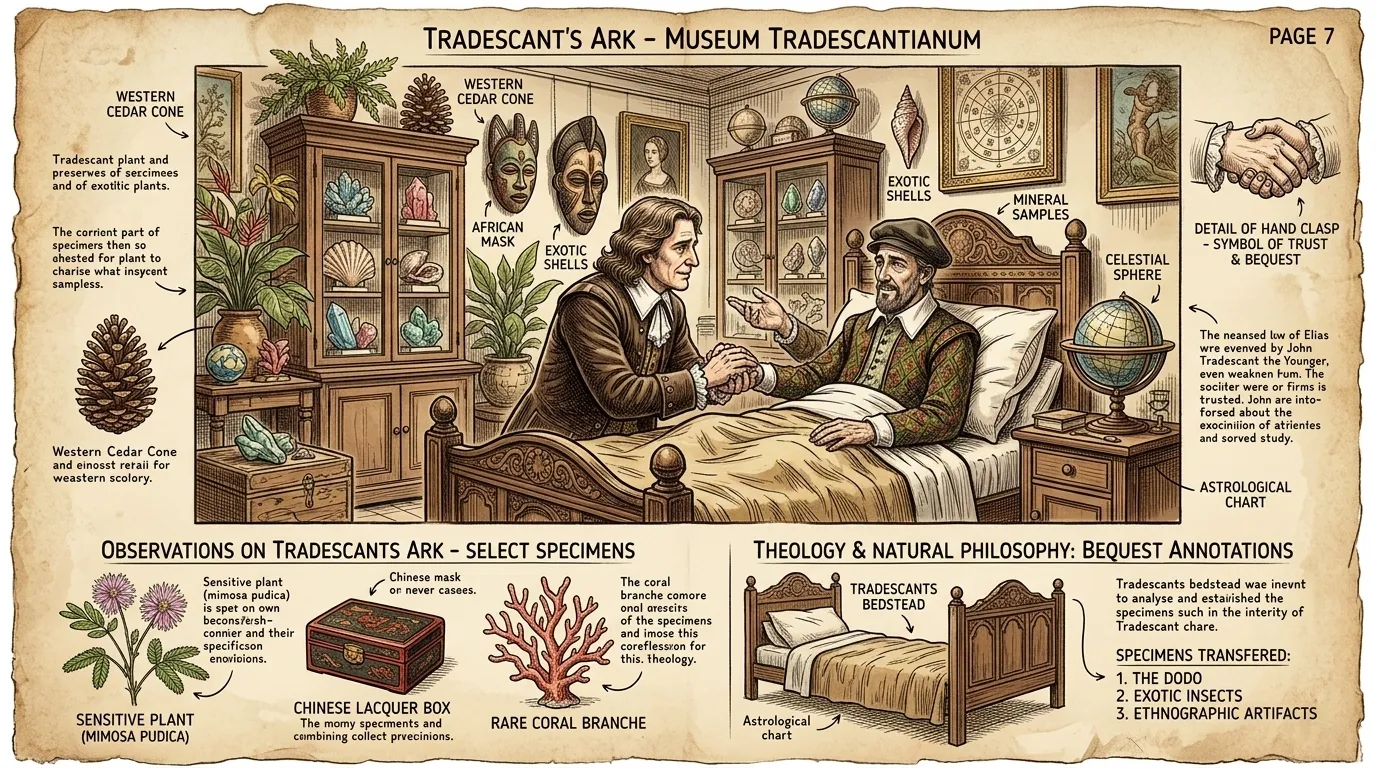
When John Tradescant the Younger, a renowned naturalist and collector, bequeathed his vast collection to Ashmole, it was a turning point. Tradescant's 'Ark,' filled with exotic plants, minerals, and ethnographic artifacts, formed the core of Ashmole's own museum.
""Mr. Ashmole," Tradescant said, his voice weak but firm, "I entrust my Ark to your care. Preserve it, study it, and share it with the world." Ashmole, deeply moved, clasped Tradescant's hand. "I vow to honor your legacy, sir. Your Ark will become a beacon of knowledge and inspiration.""
Art Fact: John Tradescant the Younger's bequest significantly expanded Ashmole's collection and solidified his vision for creating a public museum.
Page 8
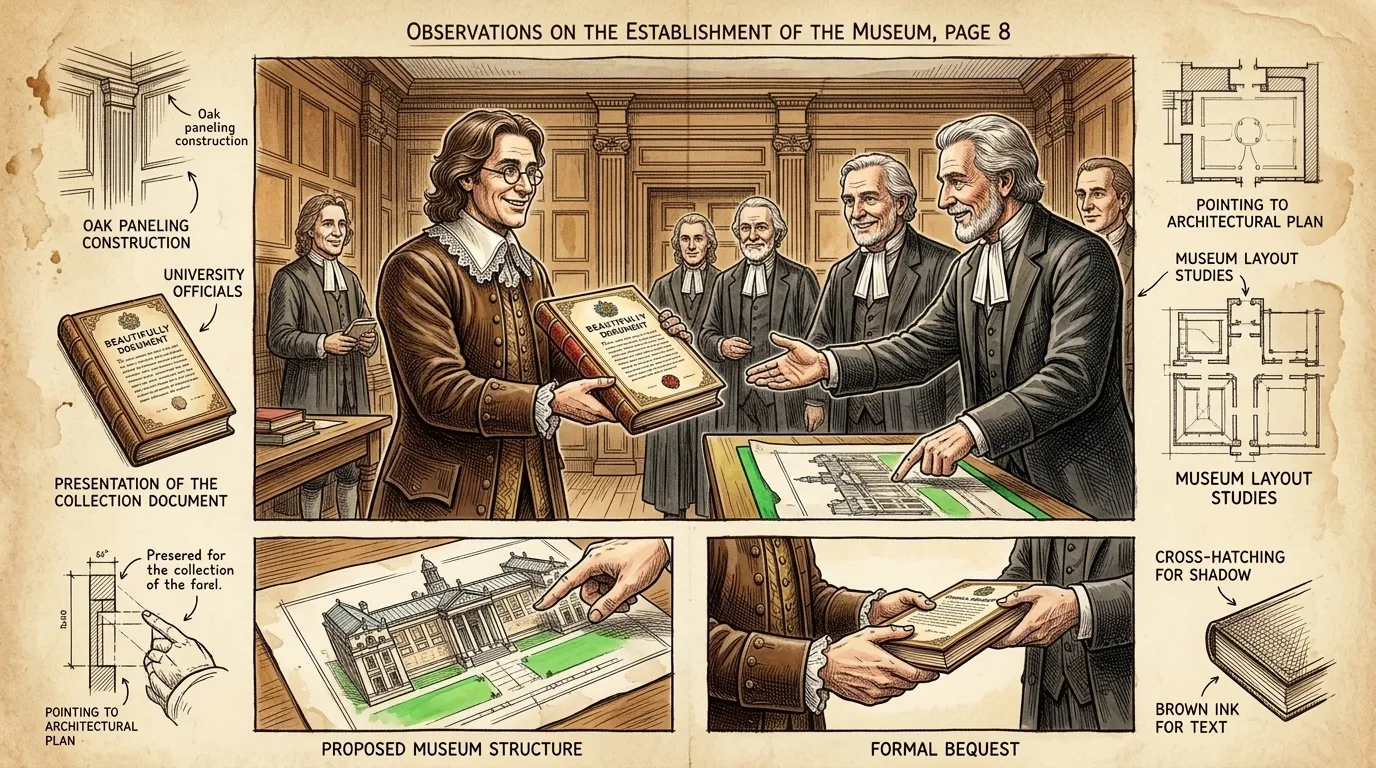
Determined to make his collection accessible to all, Ashmole offered it to the University of Oxford. The university, recognizing the importance of his gift, agreed to build a dedicated museum to house his treasures. The Ashmolean Museum was born, a testament to Ashmole's vision of democratizing knowledge.
""Gentlemen," Ashmole addressed the university officials, "I offer you my collection, not for personal gain, but for the betterment of society. Knowledge should be accessible to all, not just the privileged few." A university official smiled. "Mr. Ashmole, your generosity is deeply appreciated. We shall build a museum worthy of your gift.""
Art Fact: Ashmole's decision to donate his collection to the University of Oxford established the Ashmolean Museum as the world's first public university museum.
Page 9
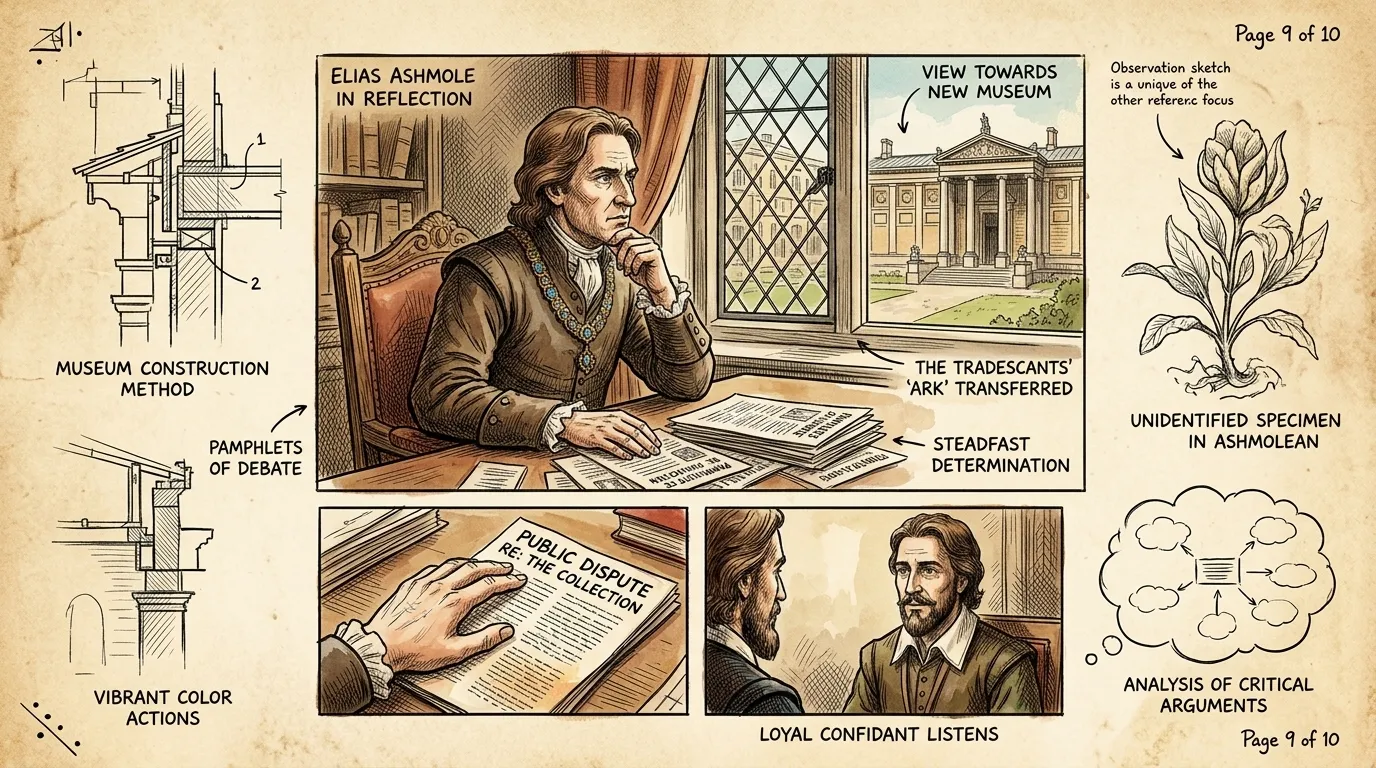
Even as the Ashmolean Museum flourished, it faced criticism. Some questioned the value of Ashmole's collection, dismissing it as a jumble of curiosities. Others argued that a public museum was a dangerous idea, potentially exposing the masses to subversive ideas.
""This museum is a folly!" a critic declared in a pamphlet. "A collection of trinkets and baubles!" Another critic countered, "It is a gateway to knowledge! A beacon of enlightenment!" Ashmole, though stung by the criticism, remained steadfast in his belief. "Time," he said to a friend, "will be the judge of this museum.""
Art Fact: The Ashmolean Museum, like any innovative institution, faced criticism and skepticism in its early years. Its value and purpose were hotly debated.
Page 10
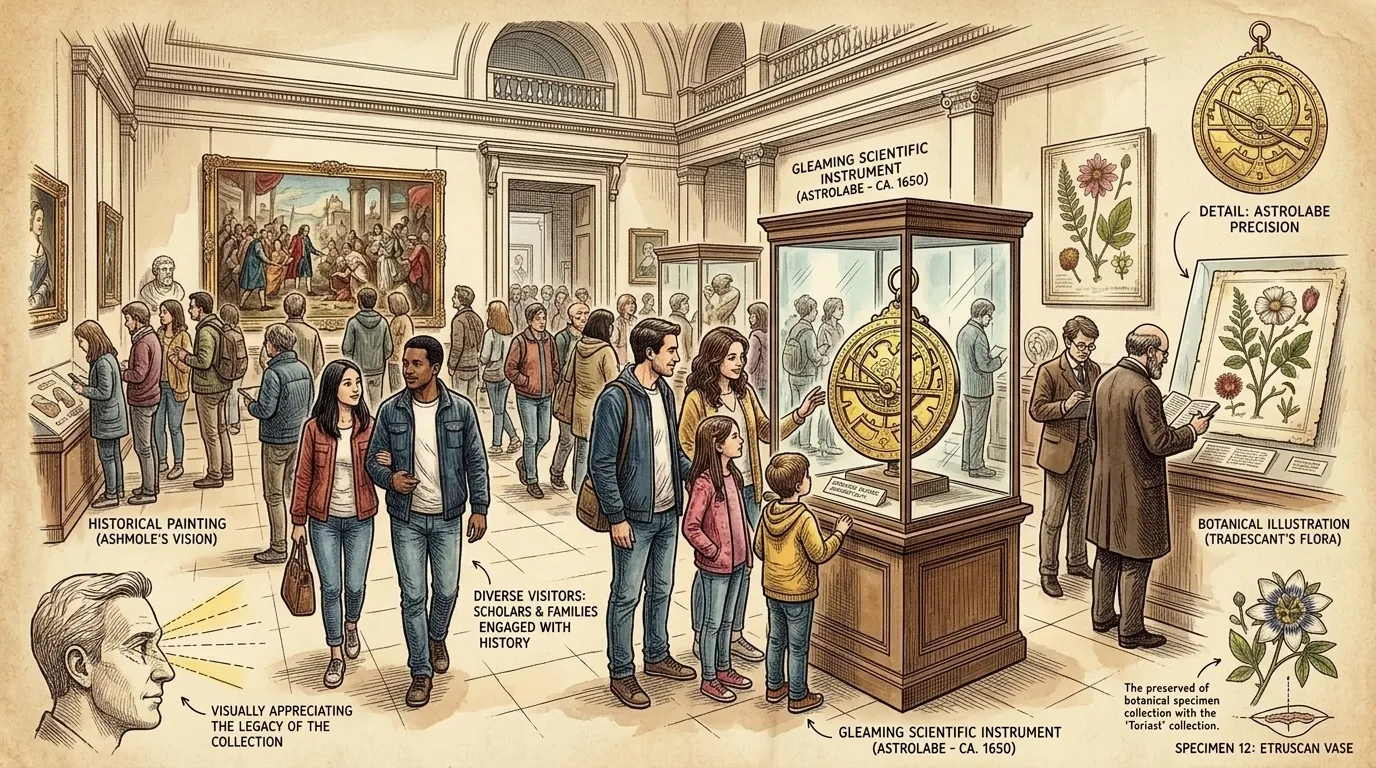
Centuries later, the Ashmolean Museum stands as a testament to Elias Ashmole's vision. It continues to inspire awe and wonder in visitors from around the world, offering a glimpse into the vastness of human knowledge and the beauty of the natural world. Ashmole's legacy lives on, a reminder that curiosity and a thirst for knowledge can shape the course of history.
"The spirit of Elias Ashmole continues to whisper through the halls of the museum he brought to life. His vision of shared knowledge prevails through the ages."
Art Fact: The Ashmolean Museum remains a vibrant center of learning and a testament to the enduring power of curiosity, ensuring that Elias Ashmole's vision survives forever because art connects us to all forms of human history.
About this story
- Location: United Kingdom
- Audience: general readers
Questions and answers
Questions and answers about Ashmolean Museum (Oxford, UK — 1683)
Read Wonder Arts on your phone
Wonder Arts is available on Android. Get Wonder Arts on Google Play.
More Wonder Arts stories
- Bacchus by Michelangelo (Florence, Italy — 1497)
- Bal du moulin de la Galette by Pierre-Auguste Renoir (Paris, France — 1876)
- Barberini Faun by Greek artist (Munich, Germany — c. 220 BC)
- Barbizon School by Rousseau (France — c. 1830)
- Baroque Emerges by Caravaggio (Rome, Italy — c. 1600)
- Beata Beatrix by Dante Gabriel Rossetti (London, UK — 1864)