Arrival of a Train by Lumière Brothers (France — 1895)
Arrival of a Train by Lumière Brothers (France — 1895) — an illustrated arts story, set in France. 10 illustrated pages, free to read on Wonder Arts.
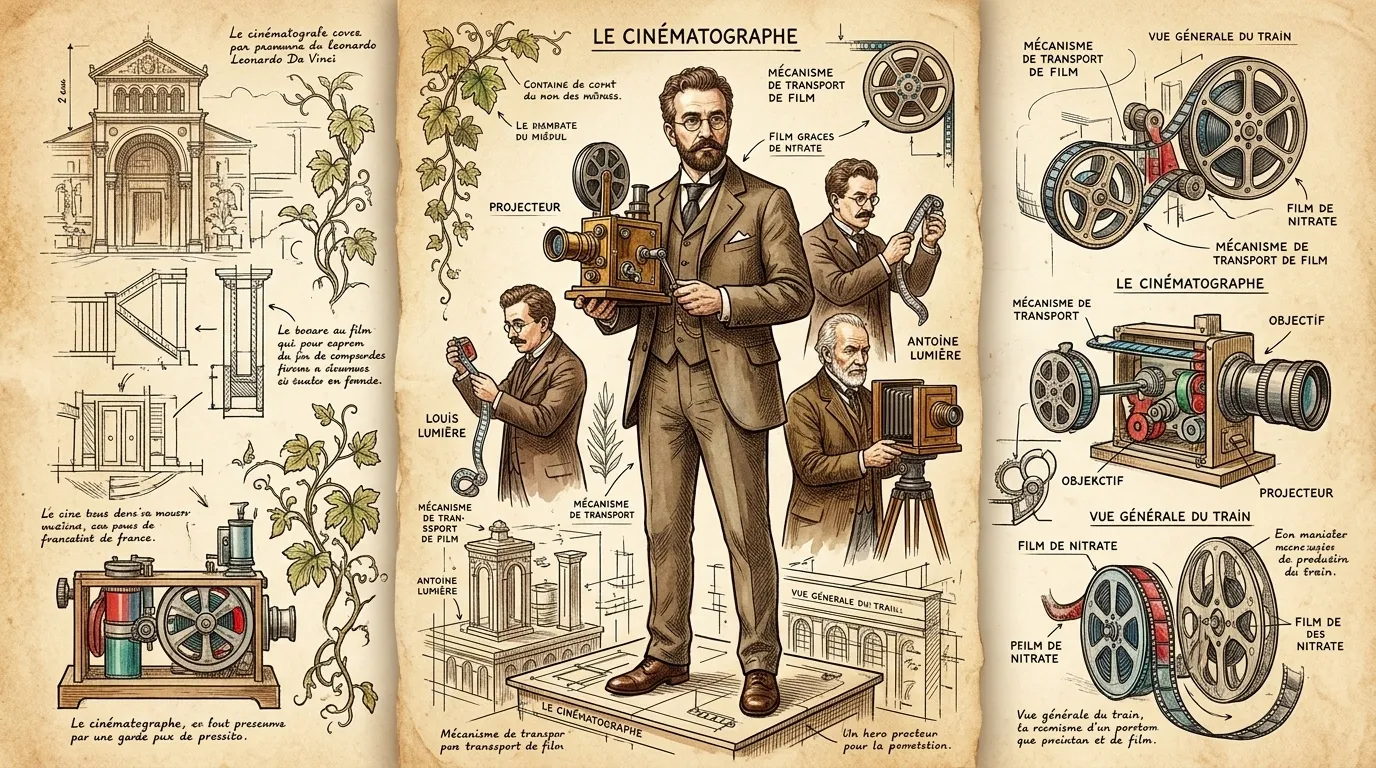
Page 1
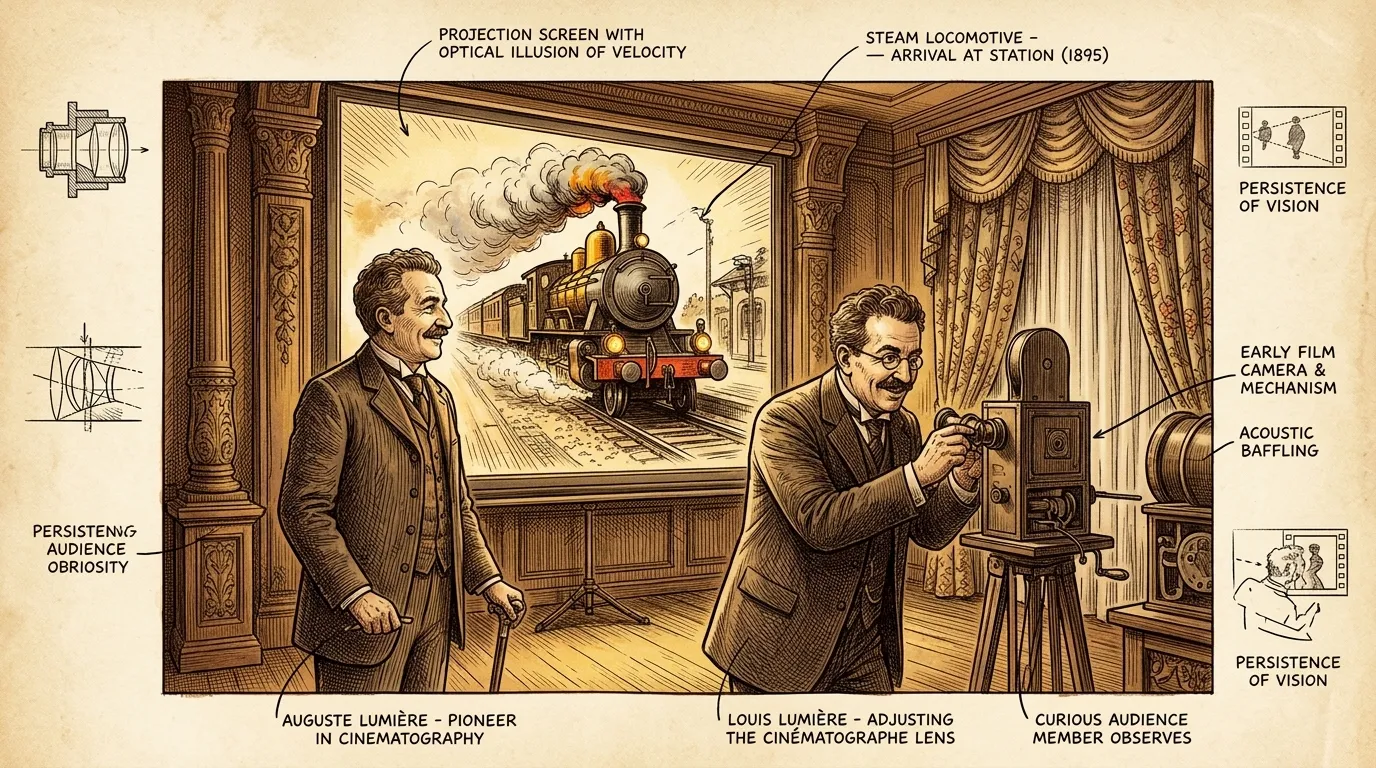
Auguste Lumière stands proudly before his creation, the 'Arrival of a Train at La Ciotat Station.' This silent film, just under a minute long, captured a moment that would forever change how we see the world. Filmed in 1895 in La Ciotat, France, it sparked both fear and wonder, marking the dawn of cinema.
""Imagine, Auguste, capturing life itself!" Louis exclaims, adjusting the camera. Auguste nods, "A new era of storytelling, brother. One frame at a time.""
Art Fact: The initial screenings of 'Arrival of a Train' reportedly caused some audience members to flee, believing the train was about to crash into the theater.
Page 2
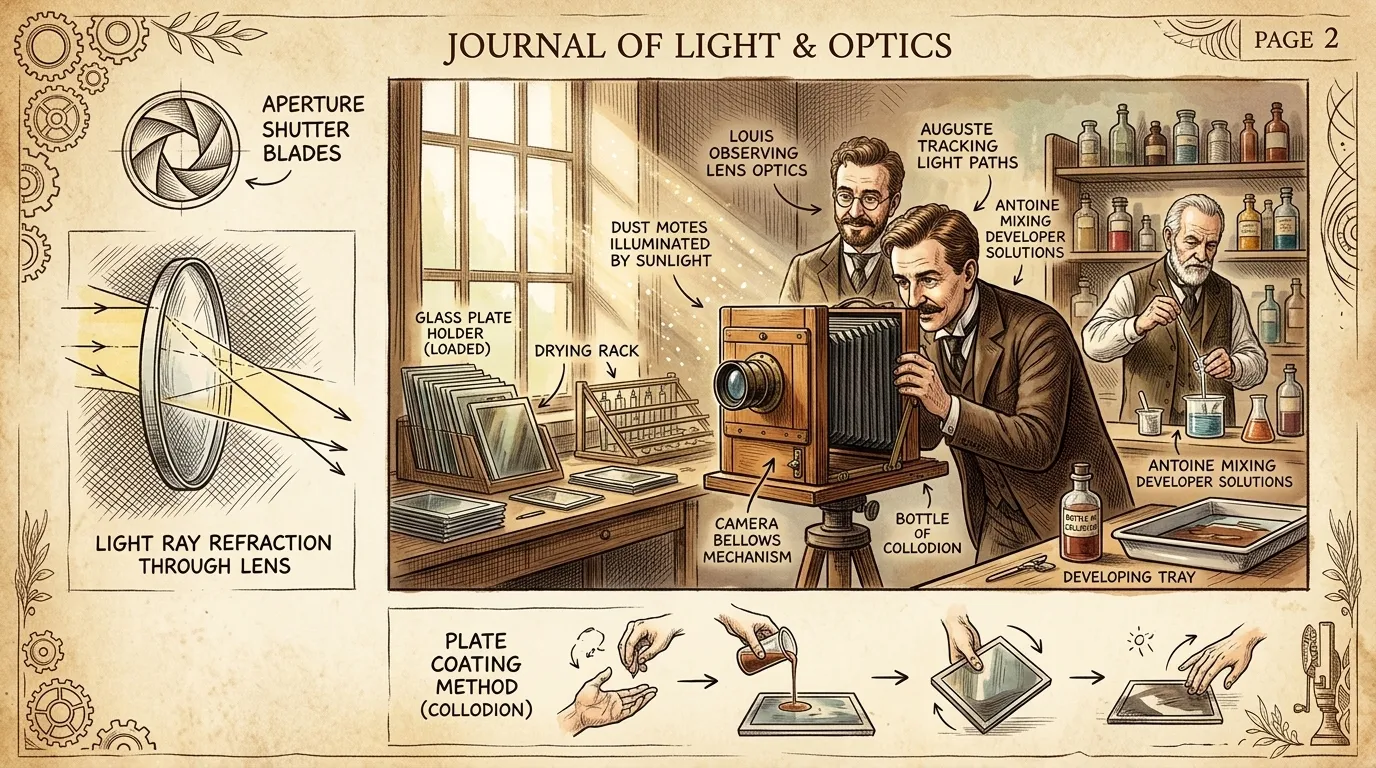
The Lumière brothers grew up surrounded by photography. Their father, Antoine, owned a successful photography studio in Lyon. It was here, amidst chemicals and glass plates, that Auguste and Louis learned the fundamentals of capturing light and motion.
""Look, Auguste, the way the light catches the dust motes in the air," Louis observes, peering through the lens of a camera. Auguste replies, "Father says it's about capturing the truth, Louis, not just a pretty picture.""
Art Fact: Antoine Lumière initially discouraged his sons from pursuing photography as a career, fearing it was a fleeting fad.
Page 3
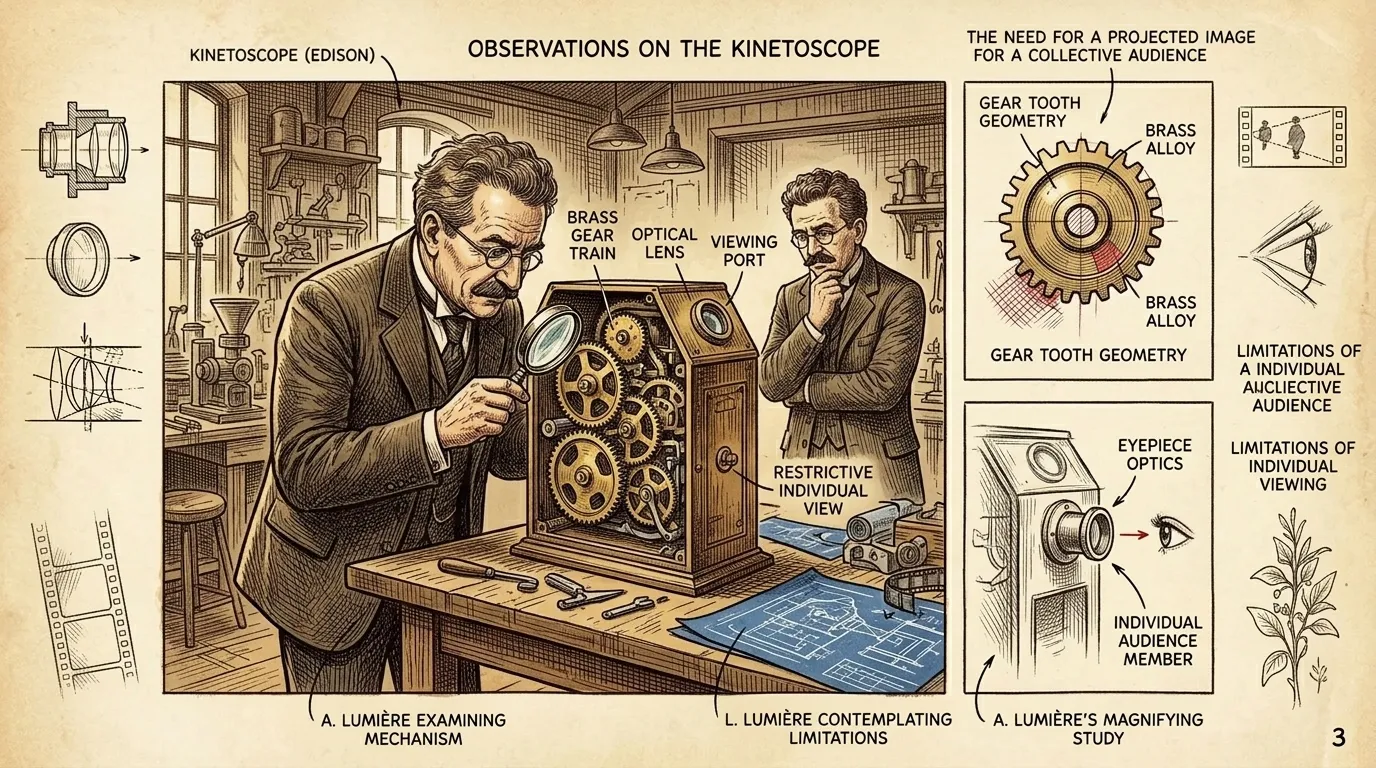
Thomas Edison's Kinétoscope was all the rage, but it only allowed one person at a time to view the moving images. The Lumière brothers saw an opportunity to improve upon this design, aiming for a shared cinematic experience.
""Imagine, Louis, if we could project these images for everyone to see at once!" Auguste exclaims, studying the inner workings of a Kinétoscope. Louis responds thoughtfully, "Edison's device is impressive, but limiting. We need a shared vision, Auguste.""
Art Fact: The Lumière brothers initially focused on improving photographic plates, not filmmaking. It was their success in this field that provided the capital for their cinematic ventures.
Page 4
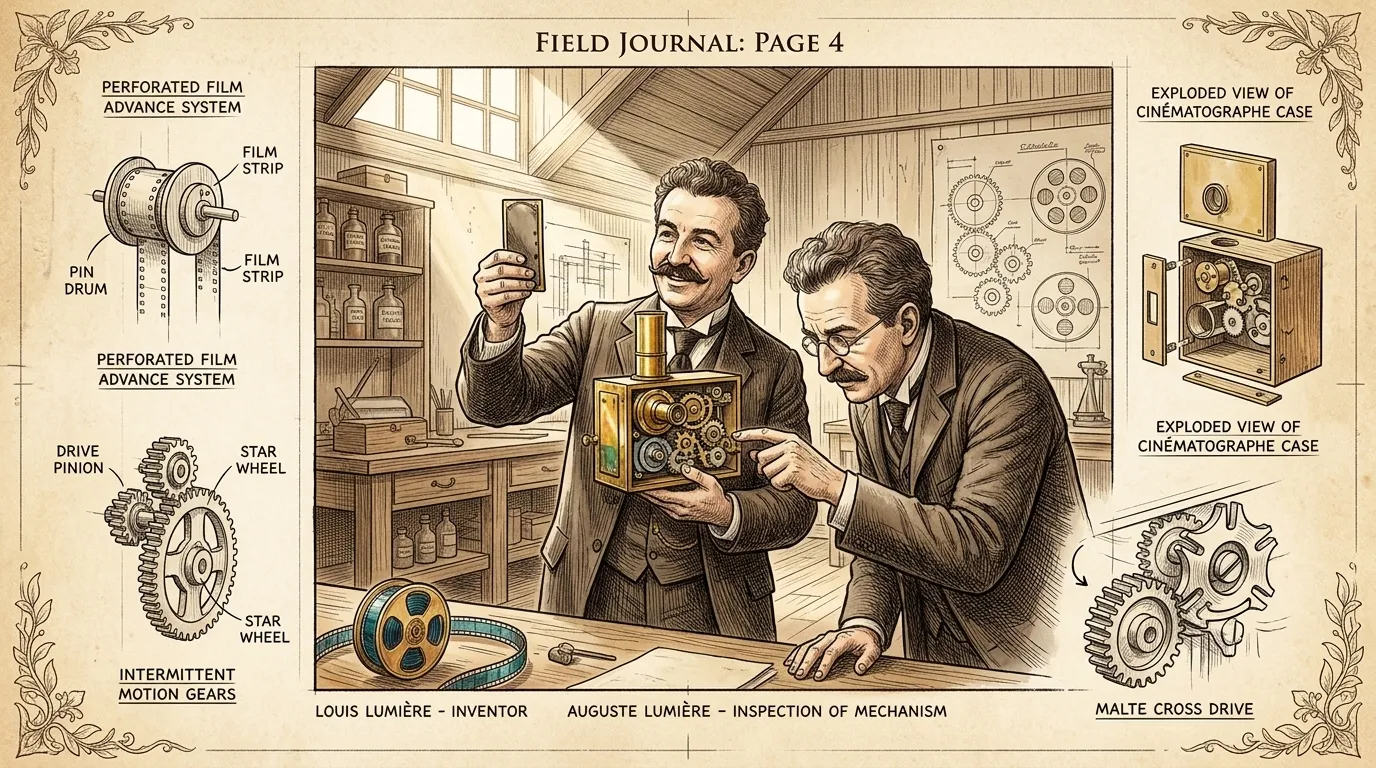
The Cinématographe, a revolutionary invention, was lighter and more versatile than Edison's bulky camera. It could record, develop, and project films, allowing for public screenings.
""This, Auguste, is the key to sharing our vision," Louis declares, holding up the newly constructed Cinématographe. Auguste examines the device with a critical eye, "A camera, a projector, and a printer all in one. Ingenious, brother.""
Art Fact: The Cinématographe used perforated celluloid film, a technology borrowed from the sewing machine industry.
Page 5

December 28, 1895, at the Grand Café in Paris. The Lumière brothers nervously presented their films to a paying audience, unsure if their invention would be accepted. The rest, as they say, is history.
""Are they ready for this, Auguste?" Louis asks, peering anxiously through the curtains at the waiting crowd. Auguste responds with a confident nod, "They will be, Louis. They will be.""
Art Fact: The initial program consisted of ten short films, each lasting less than a minute.
Page 6
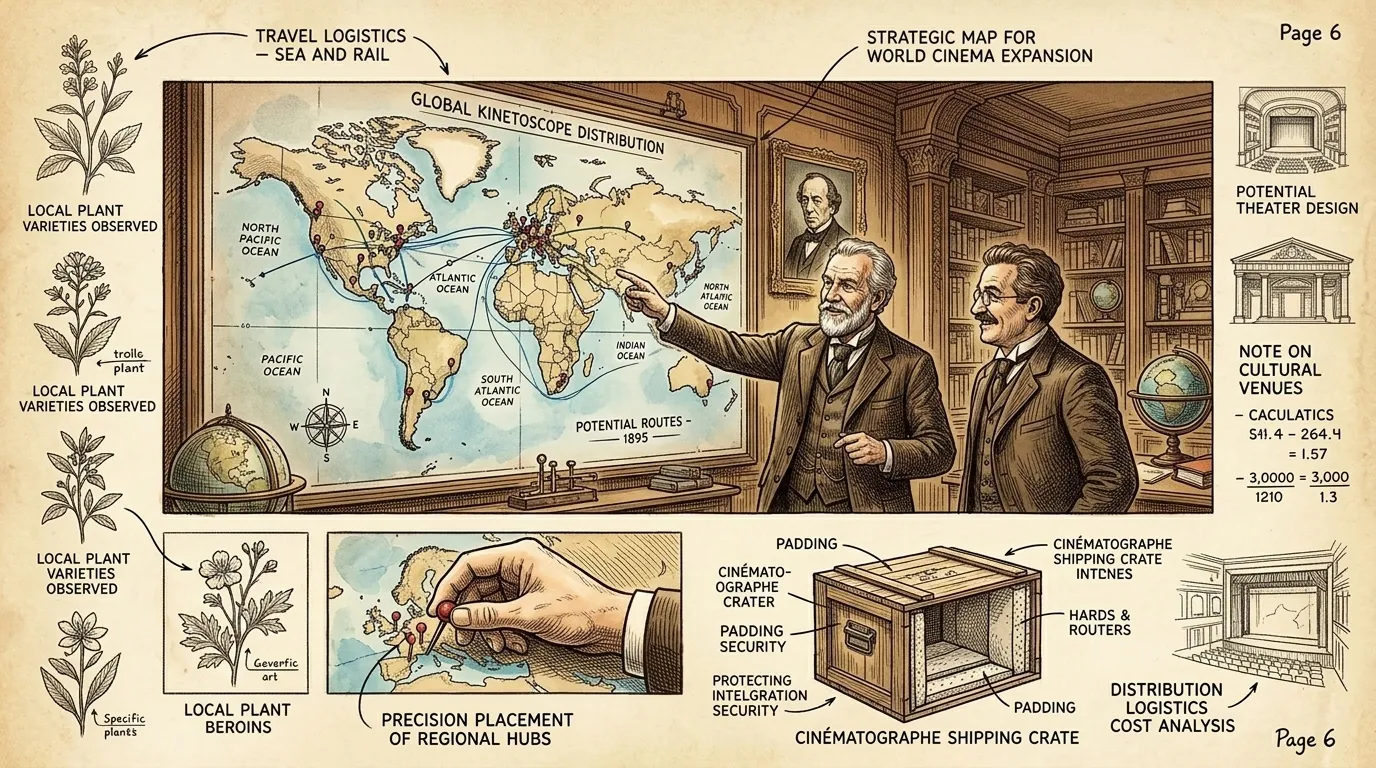
The Lumière brothers sent cameramen across the globe, documenting life in distant lands. This global reach helped spread their cinematic vision, influencing filmmakers worldwide. As the British Prime Minister Benjamin Disraeli once stated, and Auguste reminded his brother, "'The secret of success is constancy to purpose.'"
""The world awaits, Louis," Auguste declares, pointing to a world map covered in pins marking filming locations. Louis adds with a determined glint in his eye, "We will show them the beauty and the wonder, brother.""
Art Fact: The Lumière brothers employed a team of traveling cameramen who filmed subjects ranging from street scenes to royal processions.
Page 7
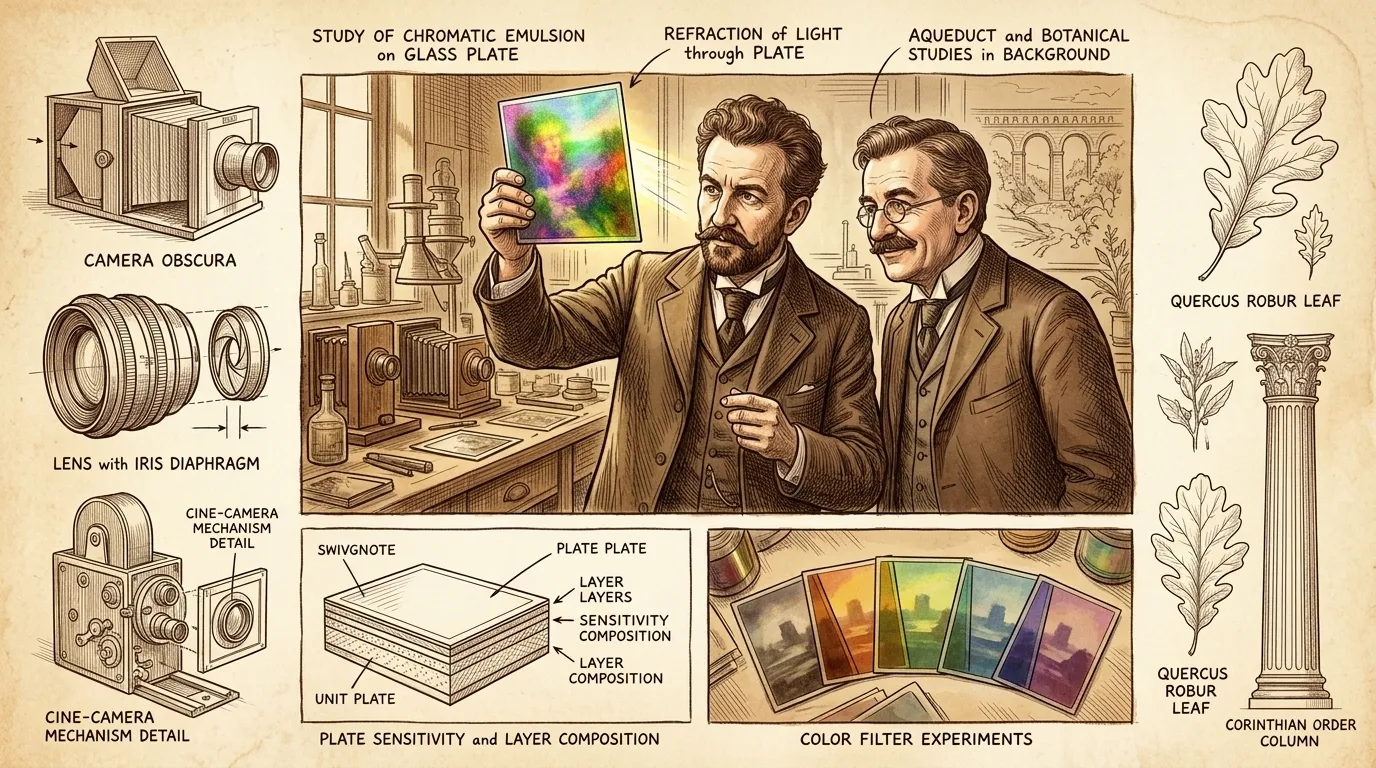
Despite their initial success, the Lumière brothers eventually turned away from filmmaking, focusing on color photography. They believed cinema was a passing fad, a novelty that would soon fade.
""The novelty will wear off, Louis," Auguste says, studying a new color photographic plate. Louis sighs, "Perhaps you're right, Auguste. But it was a glorious ride.""
Art Fact: The Lumière brothers patented numerous inventions related to photography, including the Autochrome process, one of the earliest methods of color photography.
Page 8
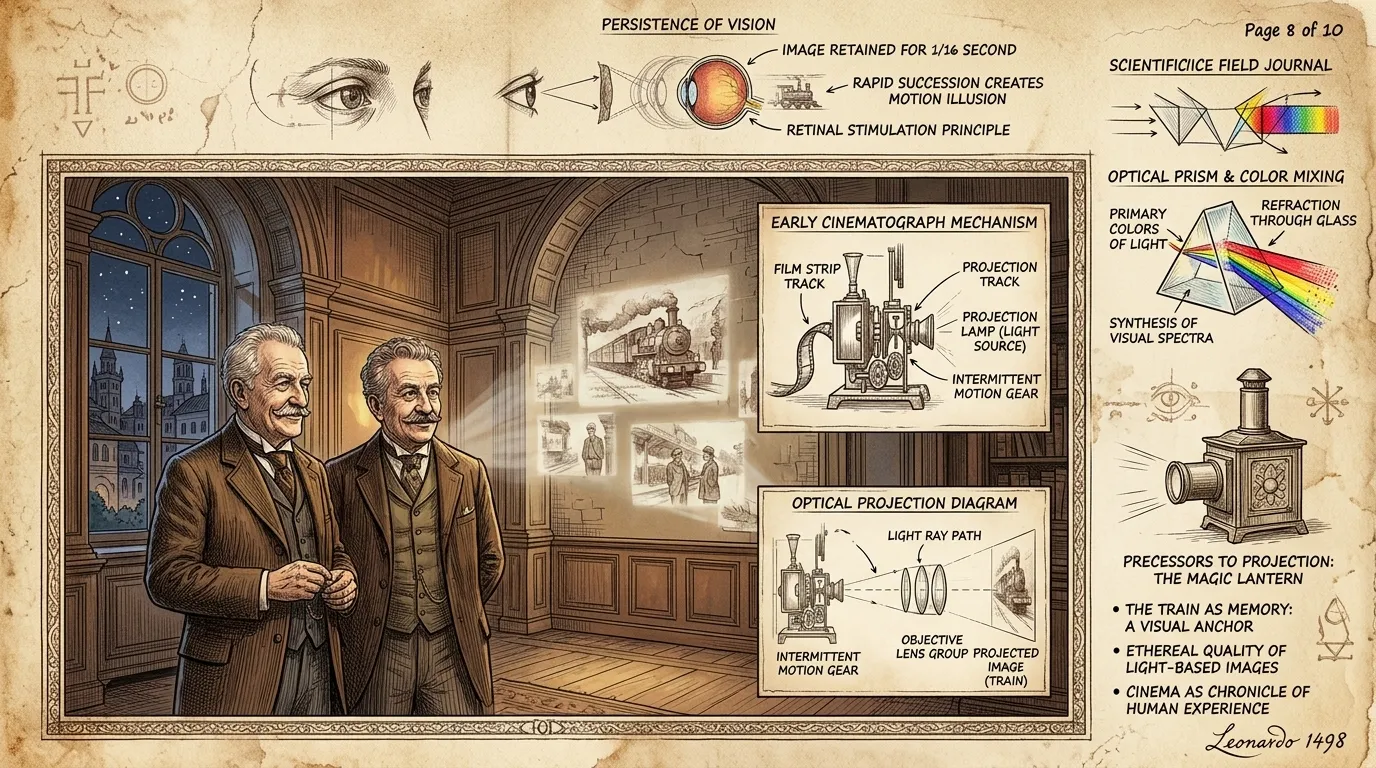
Though they moved on, the Lumière brothers' contribution to cinema remains undeniable. They captured the world in motion, laying the foundation for the art form we know and love today.
""We may have moved on, Auguste," Louis reflects, decades later, "but the images we captured will live on forever.""
Art Fact: Many consider 'Arrival of a Train at La Ciotat Station' to be one of the most important films ever made, due to its historical significance.
Page 9
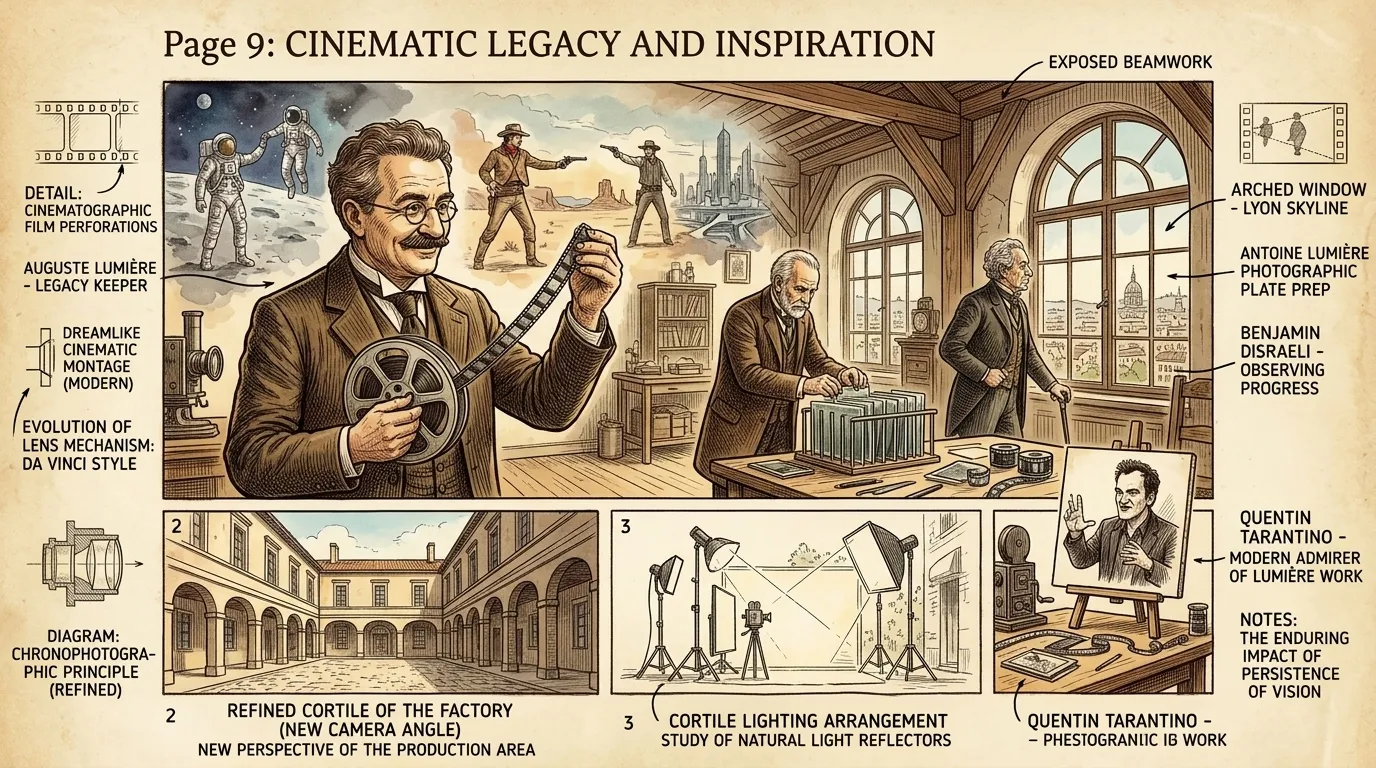
The Lumière brothers are remembered for opening the doors of imagination and storytelling for filmmakers who would follow for centuries to come. What they brought to the public would continue to entertain generations.
""It is very difficult to separate the idea of a film from the ideas that come with it from a lifetime of moviegoing," said Quentin Tarantino of modern cinema in 1994. Auguste smiled, "It seems our work lives on.""
Art Fact: In 1995, Quentin Tarantino dedicated his 'Pulp Fiction' film to the Lumière brothers.
Page 10
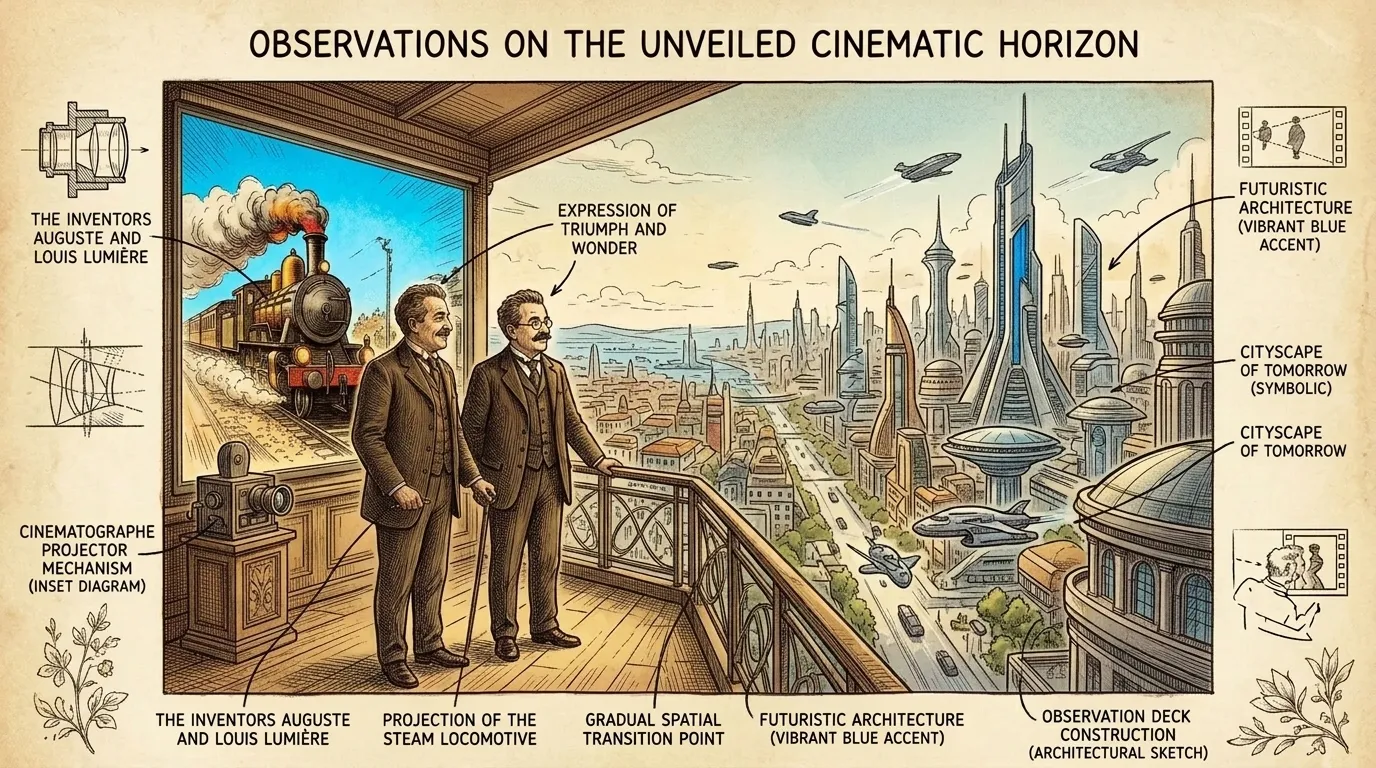
The Lumière brothers' legacy lives on, in every film we watch, every story we see brought to life on the screen. Their vision continues to inspire, proving that the power of cinema is eternal.
"Louis, standing beside his brother, softly states, "We may have just captured a train arriving, but we also captured a new world.""
Art Fact: The Lumière brothers' films are preserved and screened around the world, continuing to inspire and amaze audiences.
About this story
- Location: France
- Audience: general readers
Questions and answers
Questions and answers about Arrival of a Train by Lumière Brothers (France — 1895)
Read Wonder Arts on your phone
Wonder Arts is available on Android. Get Wonder Arts on Google Play.
More Wonder Arts stories
- Art Nouveau by Victor Horta (Brussels, Belgium — 1893)
- Ashmolean Museum (Oxford, UK — 1683)
- Bacchus by Michelangelo (Florence, Italy — 1497)
- Bal du moulin de la Galette by Pierre-Auguste Renoir (Paris, France — 1876)
- Barberini Faun by Greek artist (Munich, Germany — c. 220 BC)
- Barbizon School by Rousseau (France — c. 1830)