Arc de Triomphe (Paris, France — 1806–1836)
Arc de Triomphe (Paris, France — 1806–1836) — an illustrated arts story, set in France. 10 illustrated pages, free to read on Wonder Arts.

Page 1
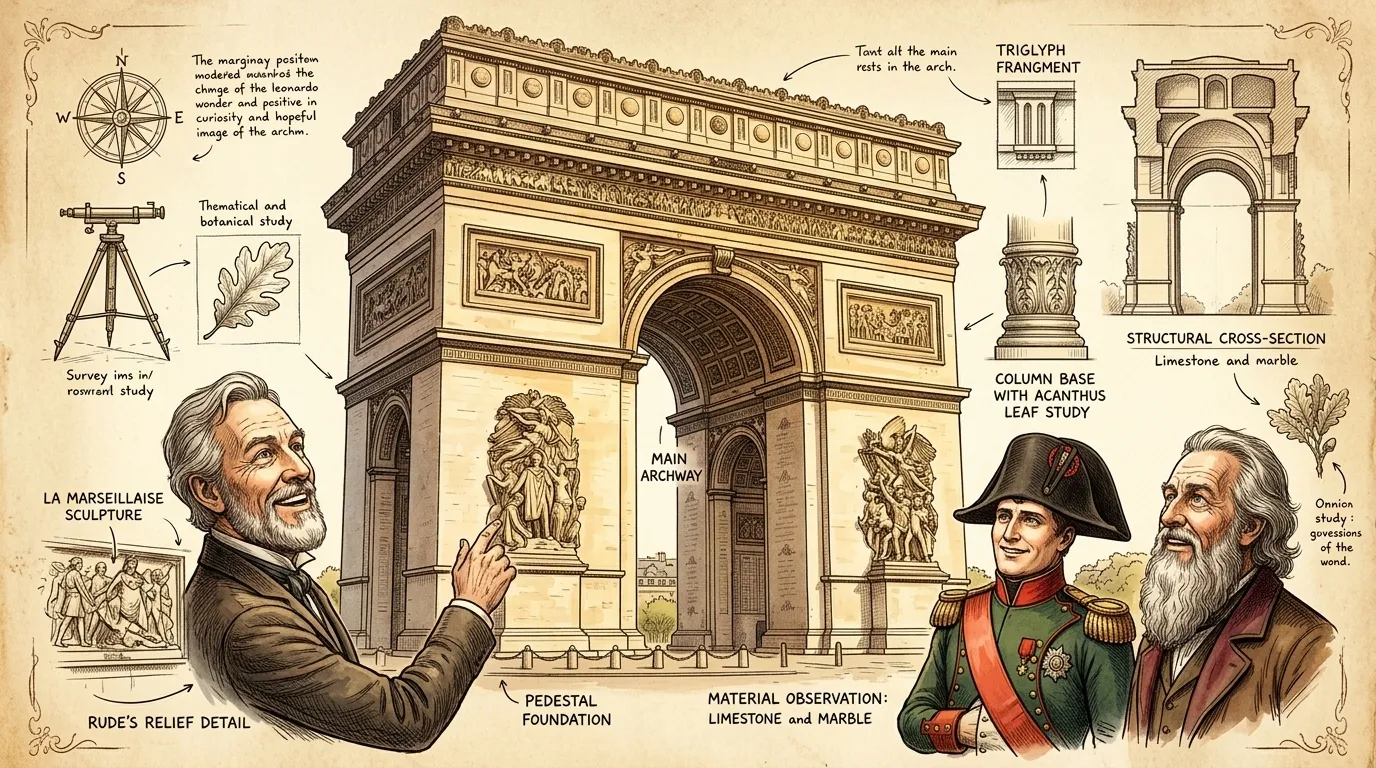
Jean-François Chalgrin, the architect, gazes upon his completed Arc de Triomphe. The year is 1836. Rising 164 feet in the heart of Paris, this colossal monument, inspired by the Arch of Titus, commemorates those who fought for France, particularly during the Napoleonic Wars. What few know is that Chalgrin did not live to see his vision completed, passing away in 1811.
"Chalgrin murmurs, tracing the relief work with his finger, "A testament to valor, a beacon of hope, it is my greatest work.""
Art Fact: The Arc de Triomphe stands at the center of Place Charles de Gaulle, also known as Place de l'Étoile, and is one of the most iconic monuments in Paris, France.
Page 2
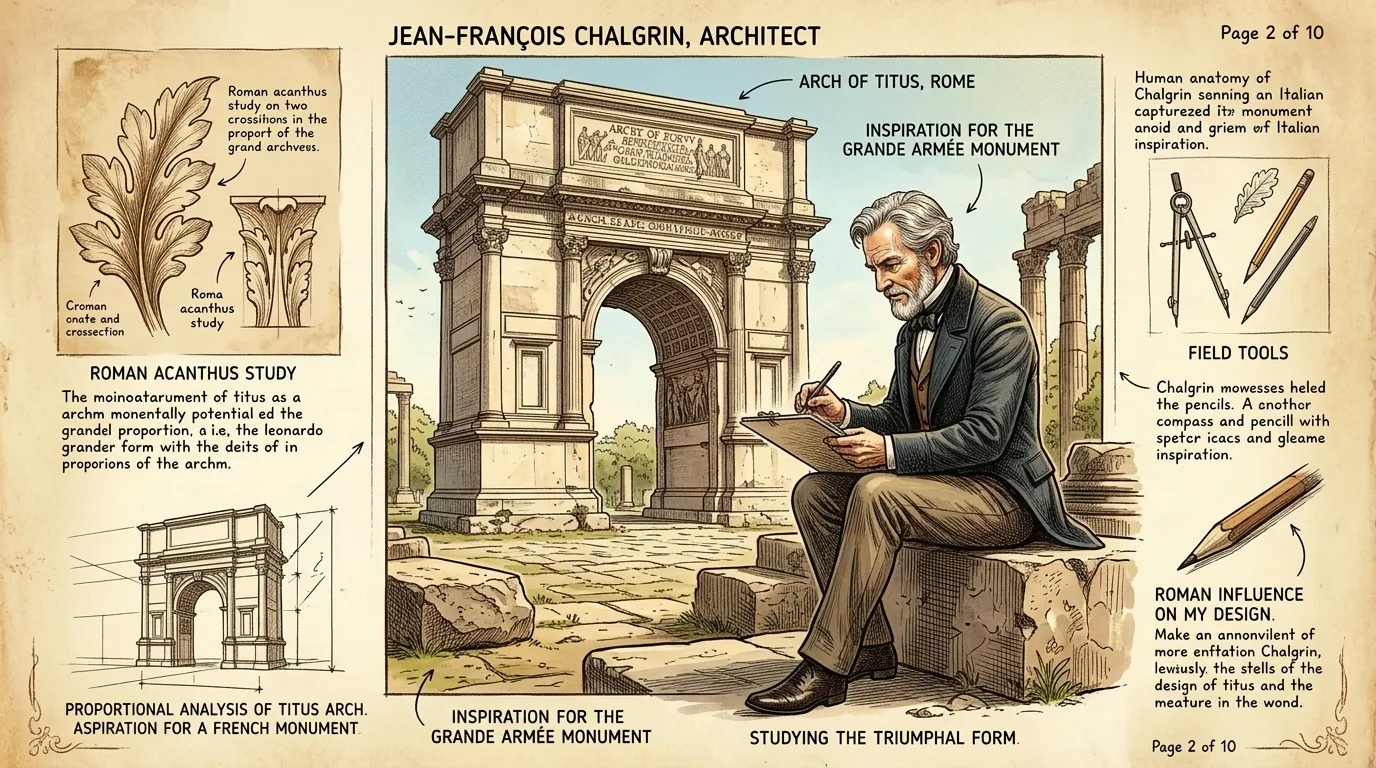
Chalgrin, during his travels in Italy, is struck by the grandeur of ancient Roman architecture. The Arch of Titus, in particular, ignites a fire within him. He sketches furiously, capturing its proportions and details, dreaming of a similar monument to honor French military victories.
"Chalgrin exclaims to himself, "The Arch of Titus! Such strength, such permanence! France deserves a monument of equal magnificence! I must capture this essence, this glory!""
Art Fact: The Arch of Titus, erected in 82 AD, served as a major source of inspiration for the Arc de Triomphe.
Page 3
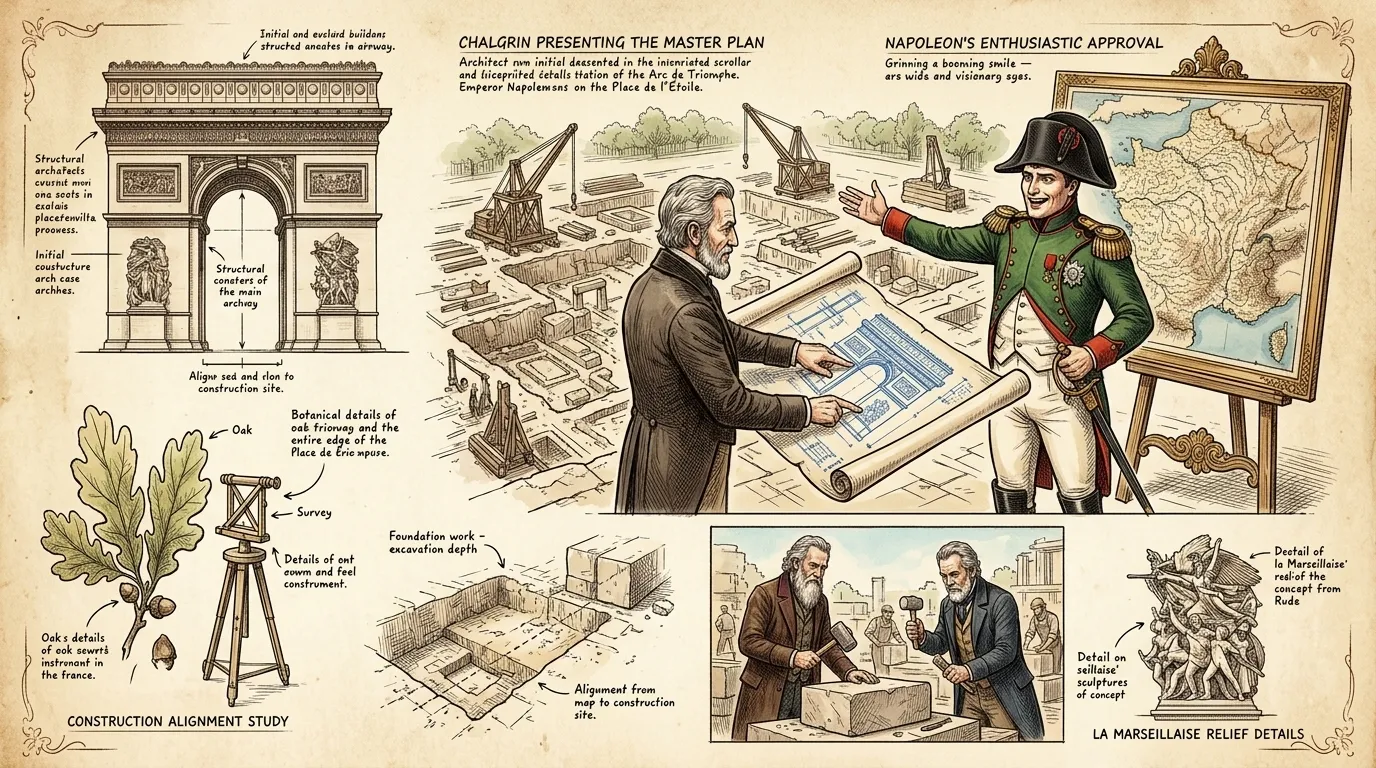
Chalgrin presents his initial designs to Napoleon Bonaparte. The Emperor, envisioning a grand symbol of his imperial power, enthusiastically approves the project. Napoleon declares, "Let it be a monument worthy of the Grande Armée!"
"Napoleon booms, gesturing expansively, "Chalgrin, your vision is bold! This Arc de Triomphe will embody the glory of France and my reign!""
Art Fact: Napoleon Bonaparte commissioned the Arc de Triomphe in 1806 to honor the Grande Armée.
Page 4
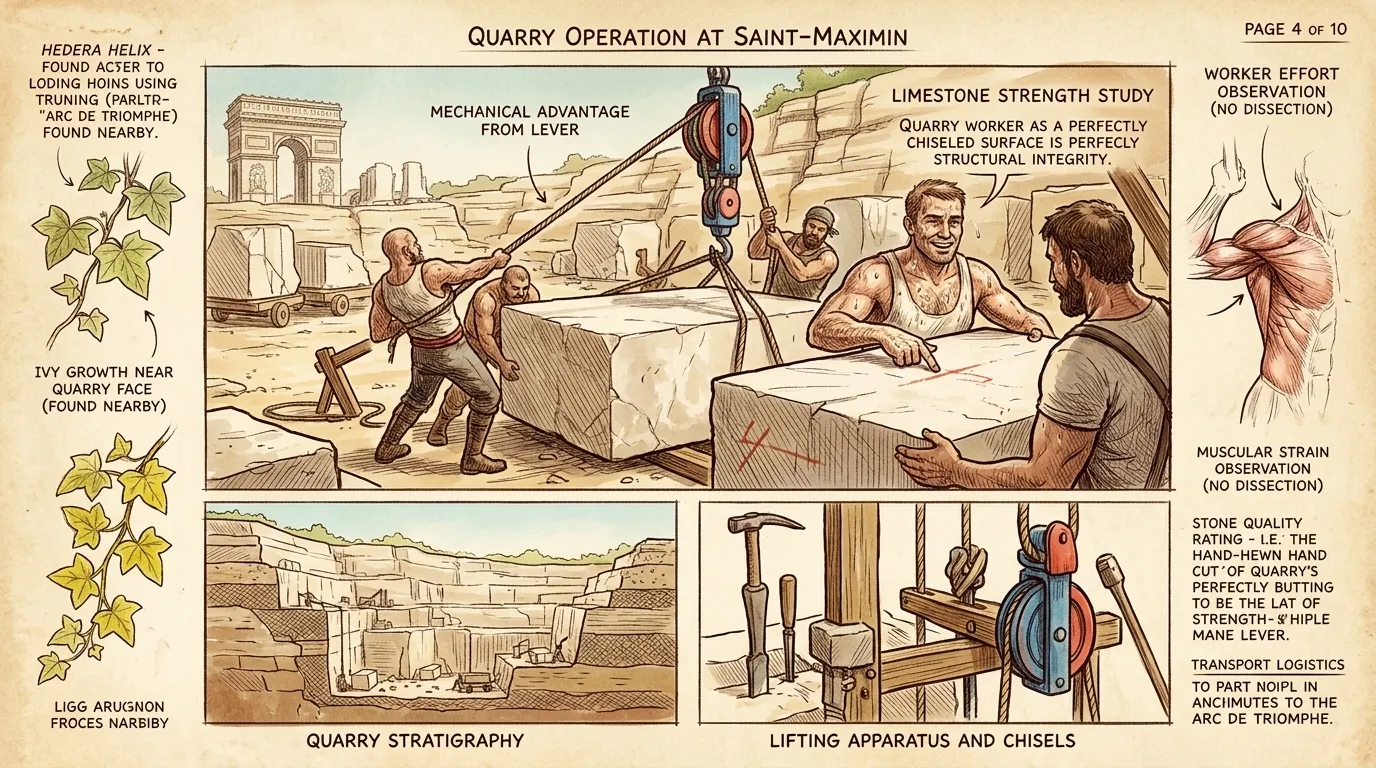
Quarry workers toil tirelessly, extracting massive blocks of stone from the quarries of Saint-Maximin. These stones, destined for the Arc de Triomphe, represent the tangible embodiment of Chalgrin's vision. He knows that every stone must be perfect.
"One worker, sweating and straining, tells another, "These stones will build a legend! Each one must be as strong as the men they honor!""
Art Fact: The stones for the Arc de Triomphe were sourced from the quarries of Saint-Maximin.
Page 5
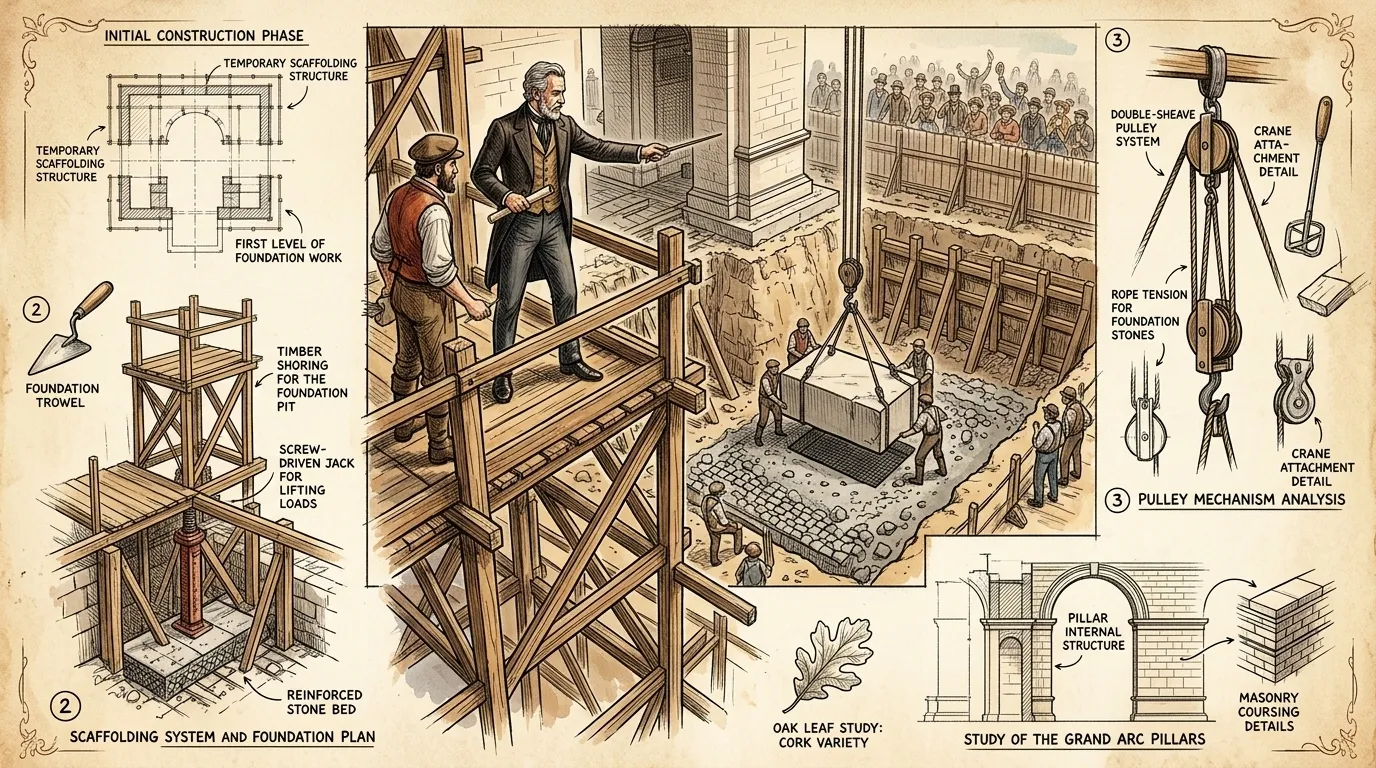
Construction begins. The foundations are laid, and the first stones are set in place. Chalgrin oversees every detail, ensuring the monument rises according to his precise specifications. The people of Paris watch in awe as the massive structure begins to take shape.
"Chalgrin instructs his foreman, "Precision is paramount. Every stone must be perfectly aligned. This monument must stand for eternity!""
Art Fact: The construction of the Arc de Triomphe began in 1806.
Page 6
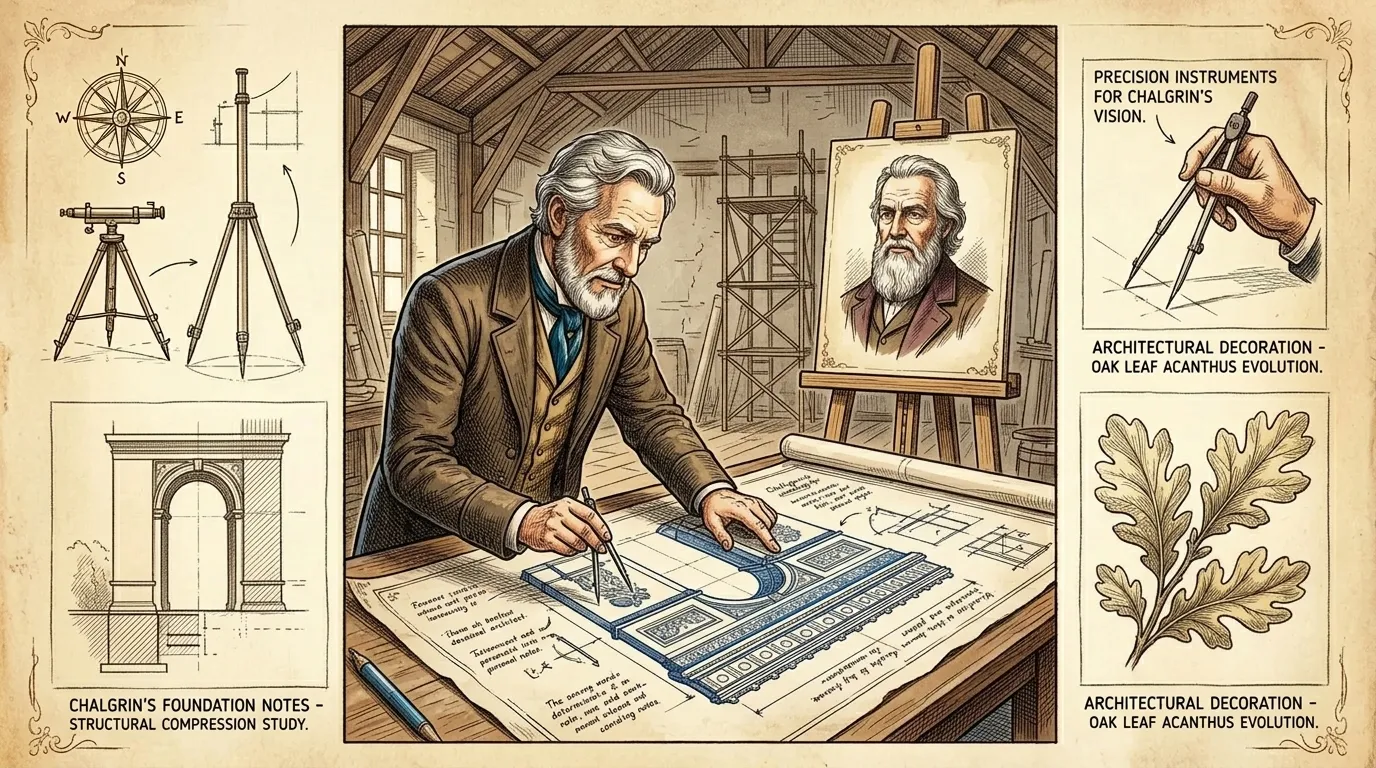
Years pass, but Chalgrin never sees the final masterpiece. He dies in 1811, leaving his grand vision unfinished. Others take up the mantle, continuing his work according to his plans. The city mourns the great architect, whose spirit remains etched in every stone.
"A fellow architect laments, "Chalgrin's vision will live on, even though he is no longer with us. We will honor his memory by completing his dream.""
Art Fact: Jean-François Chalgrin died in 1811, before the Arc de Triomphe was completed.
Page 7

Sculptors, including Jean-Pierre Cortot and François Rude, are commissioned to create the intricate relief sculptures that adorn the Arc. These sculptures depict scenes of French military victories, further solidifying the monument's purpose.
"Sculptor François Rude proclaims, "Each sculpture must capture the spirit of victory! It must inspire future generations!""
Art Fact: Notable sculptors like Jean-Pierre Cortot and François Rude contributed to the Arc de Triomphe's decorative sculptures.
Page 8
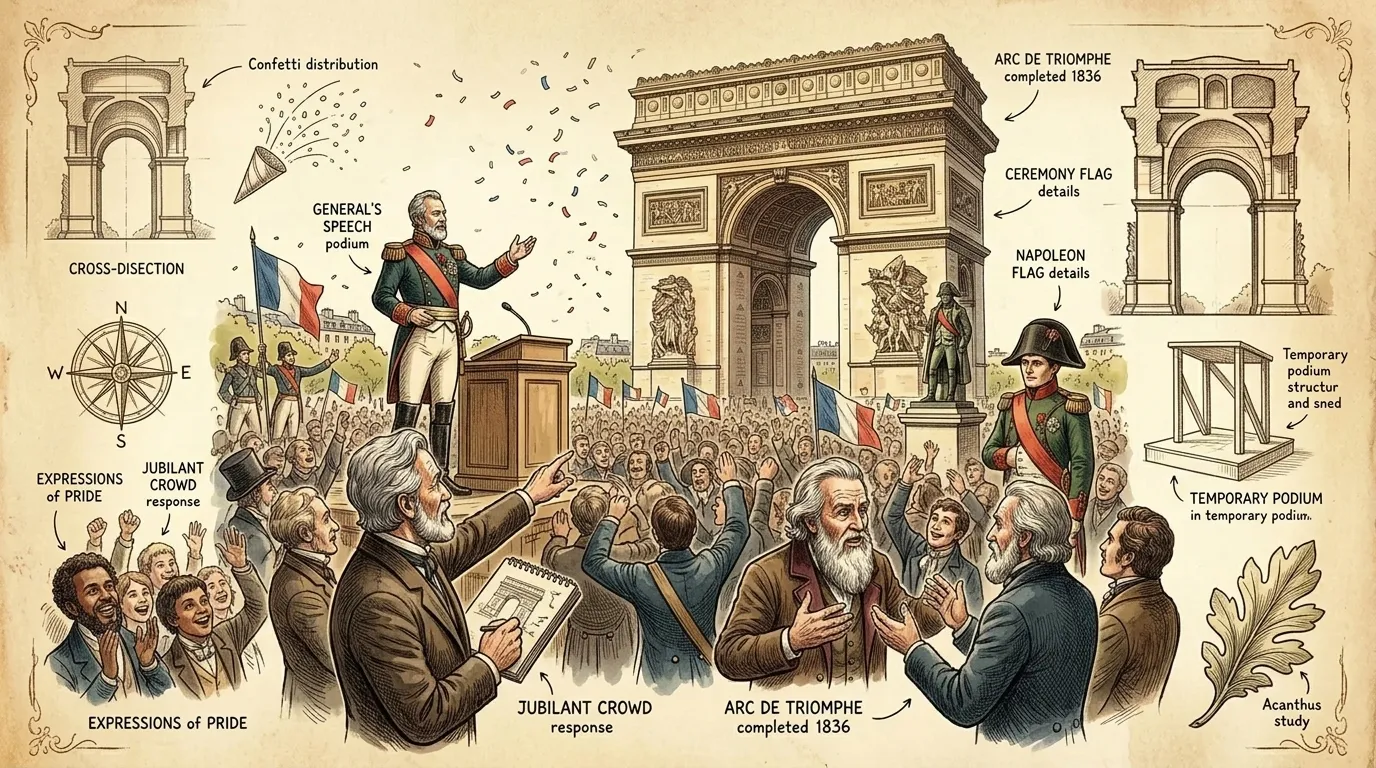
Years after Chalgrin's death, the Arc de Triomphe is finally completed in 1836. A grand ceremony is held to dedicate the monument, honoring the soldiers who fought for France. The city rejoices in the completion of this monumental tribute.
"During the dedication ceremony, a French general declares, "Let this Arc stand as a lasting symbol of our nation's strength and courage!""
Art Fact: The Arc de Triomphe was finally completed in 1836 and dedicated in a grand ceremony.
Page 9
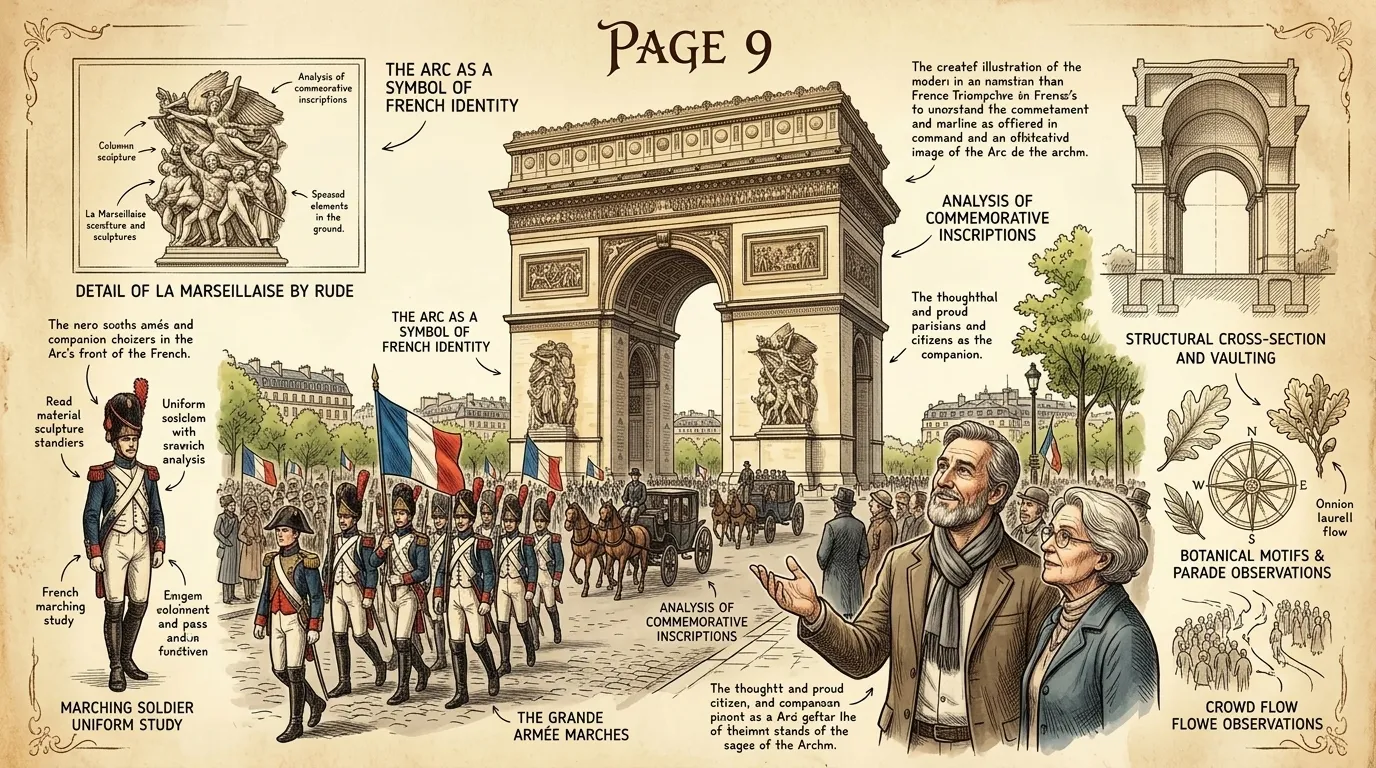
The Arc de Triomphe becomes a symbol of French national identity. It witnesses countless parades, celebrations, and commemorations throughout history. The monument stands as a testament to France's past and a beacon of hope for the future.
"As the years pass, Parisians reflect on the meaning of the Arc. One citizen remarks, "This Arc is more than just stone; it is the heart of France!""
Art Fact: The Arc de Triomphe has become an enduring symbol of French national identity.
Page 10
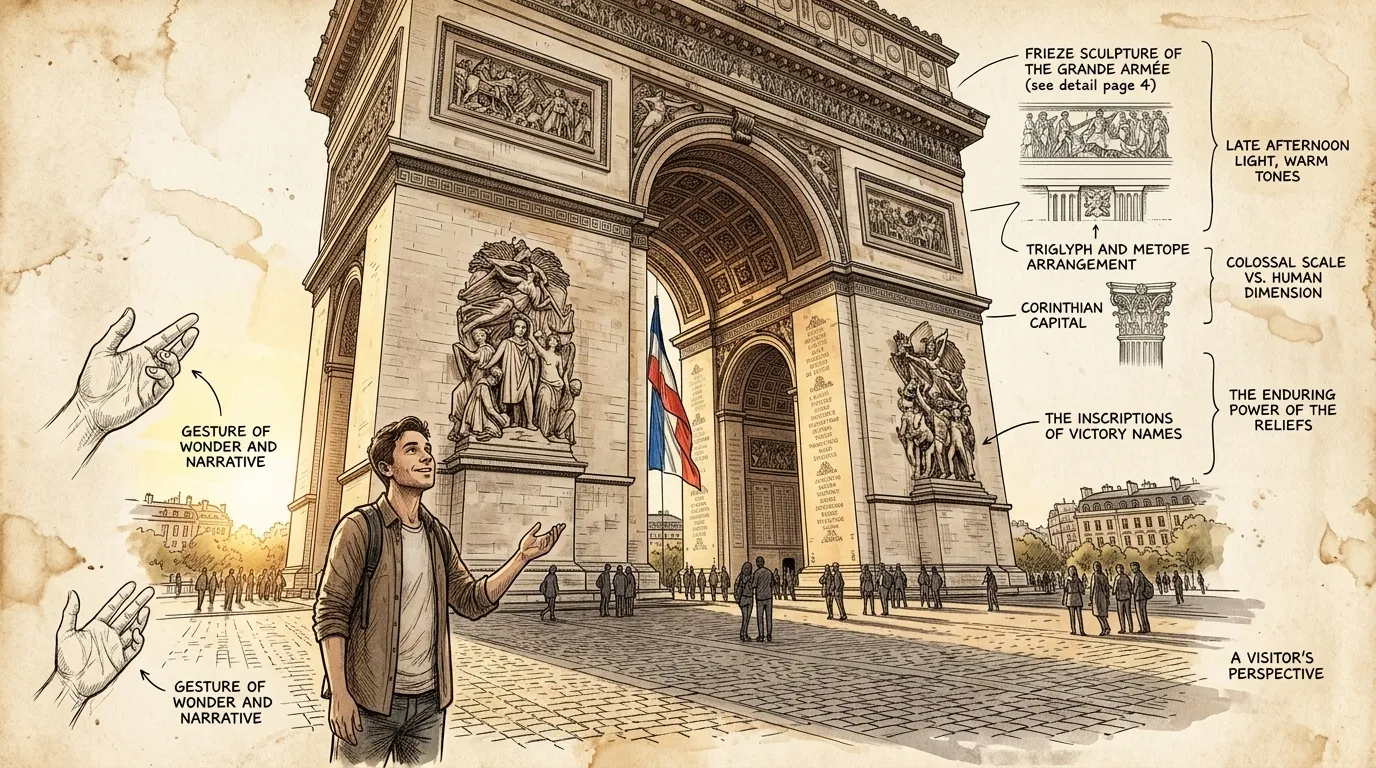
Today, the Arc de Triomphe continues to inspire awe and reverence. It stands as a reminder of the sacrifices made for freedom and a symbol of enduring national pride. As the great Nelson Mandela once said, "I learned that courage was not the absence of fear, but the triumph over it." This monument, a triumph over time, reflects this very sentiment. It is a beacon for all who seek liberty and commemorate those who fought for it.
"A modern visitor, looking up at the Arc, says, "Imagine the stories this monument could tell! It has seen so much history!""
Art Fact: The Arc de Triomphe's enduring legacy ensures that the memory of France's history and valor lives on.
About this story
- Location: France
- Audience: general readers
Questions and answers
Questions and answers about Arc de Triomphe (Paris, France — 1806–1836)
Read Wonder Arts on your phone
Wonder Arts is available on Android. Get Wonder Arts on Google Play.
More Wonder Arts stories
- Arrival of a Train by Lumière Brothers (France — 1895)
- Art Nouveau by Victor Horta (Brussels, Belgium — 1893)
- Ashmolean Museum (Oxford, UK — 1683)
- Bacchus by Michelangelo (Florence, Italy — 1497)
- Bal du moulin de la Galette by Pierre-Auguste Renoir (Paris, France — 1876)
- Barberini Faun by Greek artist (Munich, Germany — c. 220 BC)