Angkor Wat (Cambodia — 1150)
Angkor Wat (Cambodia — 1150) — an illustrated arts story, set in Global. 10 illustrated pages, free to read on Wonder Arts.

Page 1
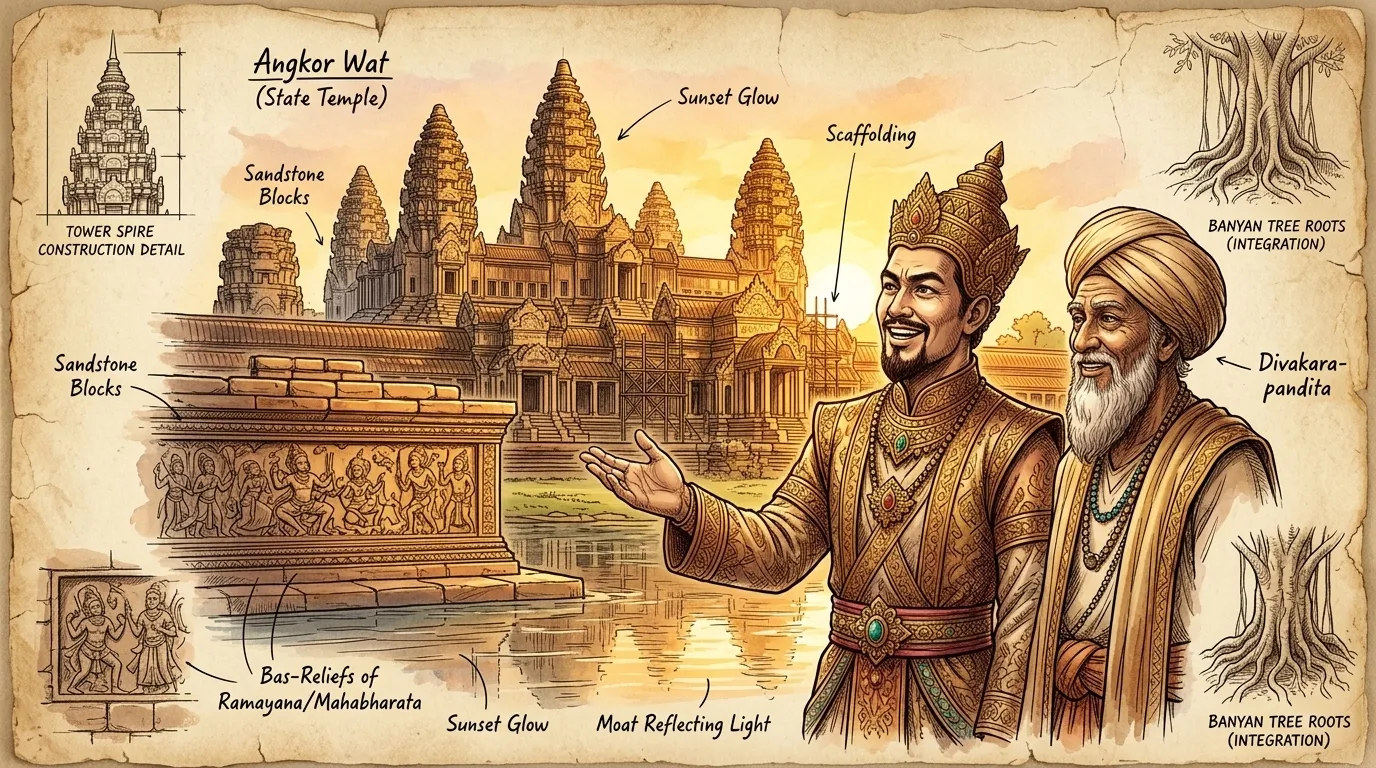
King Suryavarman II, stands proudly before the nearly completed Angkor Wat in 1150 AD. The temple, dedicated to Vishnu, stretches towards the sky, a testament to Khmer artistry and engineering. Its sandstone blocks, meticulously carved, reflect the ambition of an empire at its peak. Angkor Wat, measuring 162.6 hectares, is more than a temple; it is a visual representation of the Hindu cosmos on earth, a monument whose construction nearly bankrupted the kingdom. The temple is known for its bas-relief carvings, depicting scenes from the Ramayana and Mahabharata, a testament to Khmer artistry.
"Suryavarman II: (To his chief architect) 'This is more than stone and mortar. It is the soul of our kingdom, etched for eternity. Let it reflect the glory of the Khmer, so they may remember our reign'."
Art Fact: Angkor Wat, originally dedicated to Vishnu, later transitioned to Buddhist use, showcasing the religious shifts in the Khmer Empire. Its accurate depiction of Mount Meru reflects the advanced astronomical knowledge of the Khmer people.
Page 2
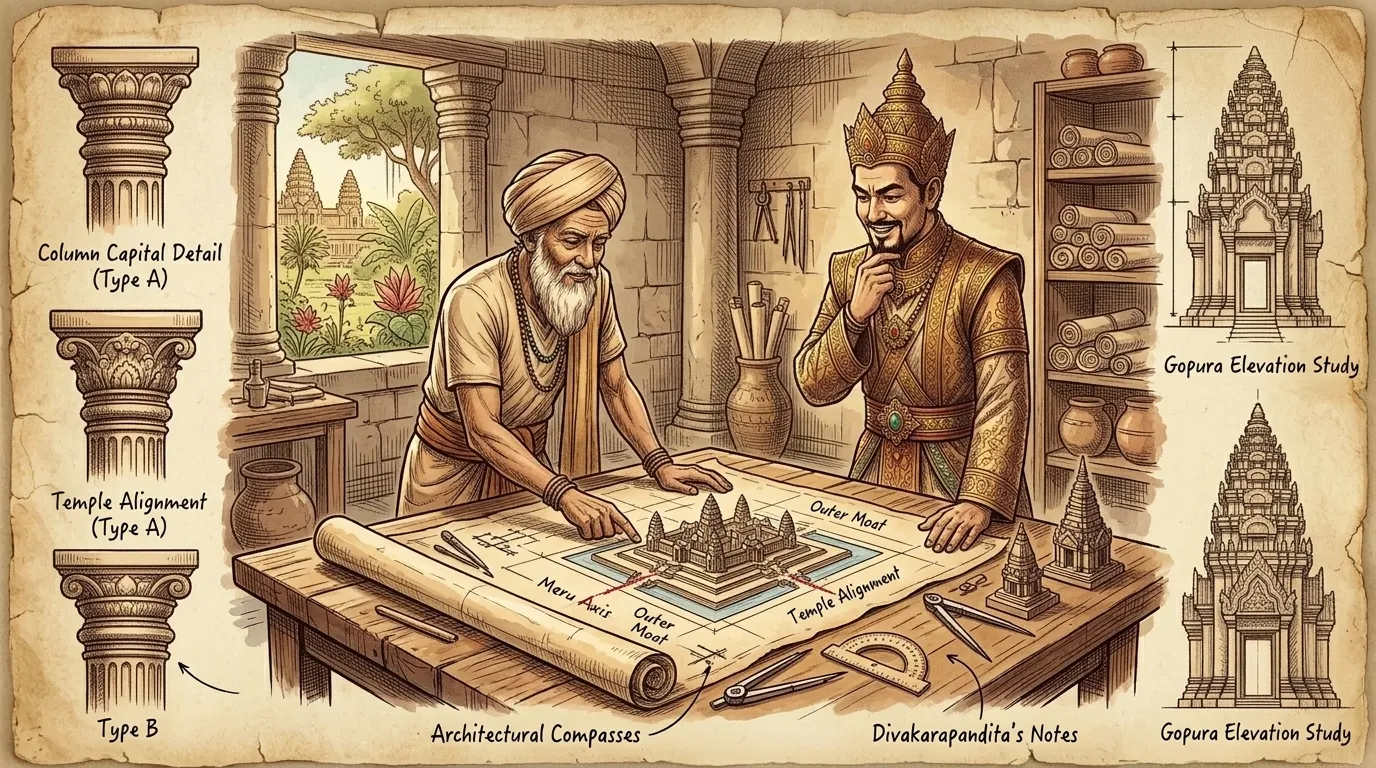
Divakarapandita, the high priest and royal advisor, presents Suryavarman II with the meticulously planned layout of Angkor Wat. He explains the temple's alignment with the cardinal directions and its symbolic representation of Mount Meru, the home of the gods. The king is impressed by the blend of spiritual significance and engineering precision. The construction is based on the principles of Vastu Shastra, an ancient Indian system of architecture.
"Divakarapandita: 'Your Majesty, as Pythagoras said, 'Geometry is knowledge of the eternally existent.' Every line, every angle, every measurement is ordained to capture divine perfection."
Art Fact: The layout of Angkor Wat adheres to the principles of sacred geometry, aligning with celestial events and symbolizing the cosmos. The temple's central tower represents Mount Meru, the mythical home of the gods.
Page 3
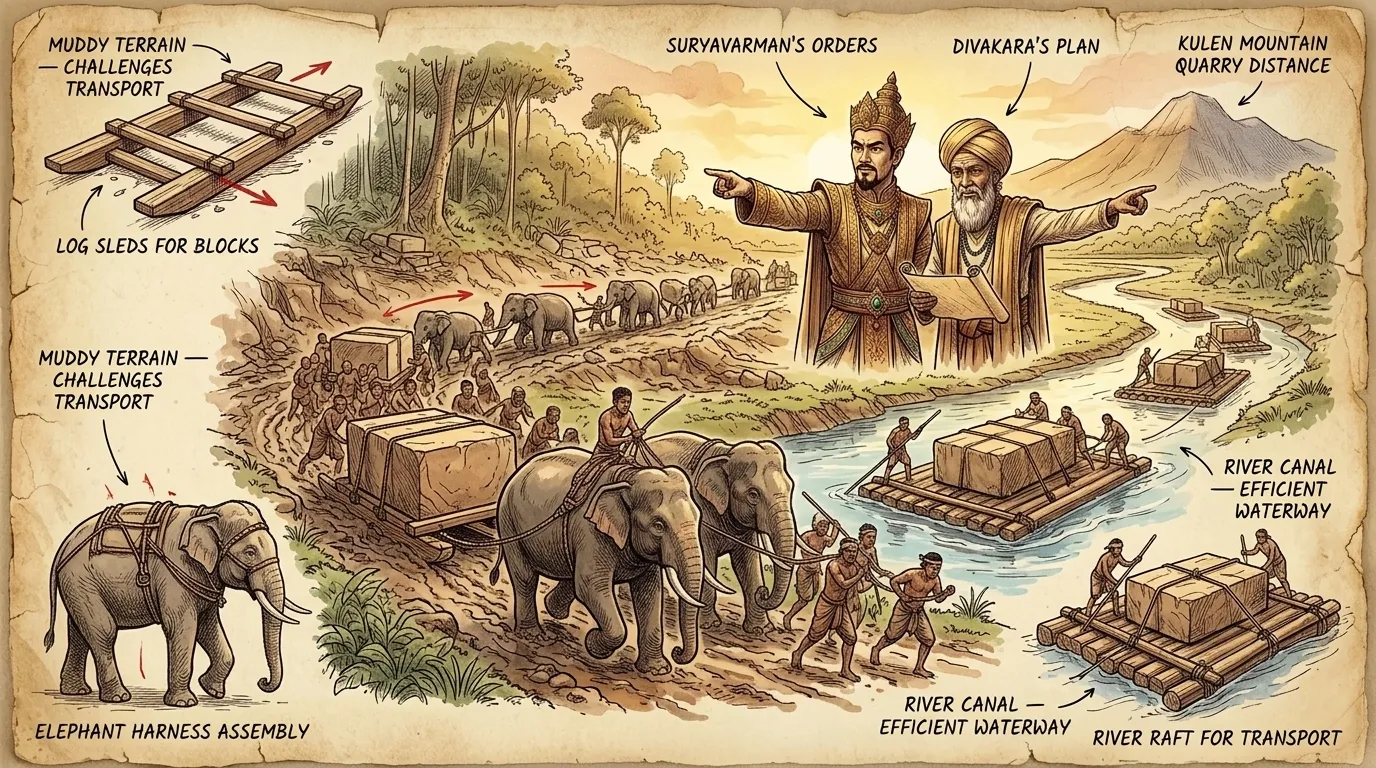
The immense task of transporting sandstone from the quarries of Kulen Mountain, 50 kilometers away, begins. Thousands of workers and hundreds of elephants haul massive blocks across land and water. The logistics are daunting, but the king's vision fuels their determination. The quarries are located in a remote area, making transportation even more challenging.
"Foreman: 'The journey is long and the work is hard, but as Henry Ford said, 'Whether you think you can, or you think you can't – you're right.' We will see this through.'"
Art Fact: The sandstone used to build Angkor Wat came from quarries 50 kilometers away, requiring an extensive transportation network involving elephants, rafts, and thousands of workers.
Page 4
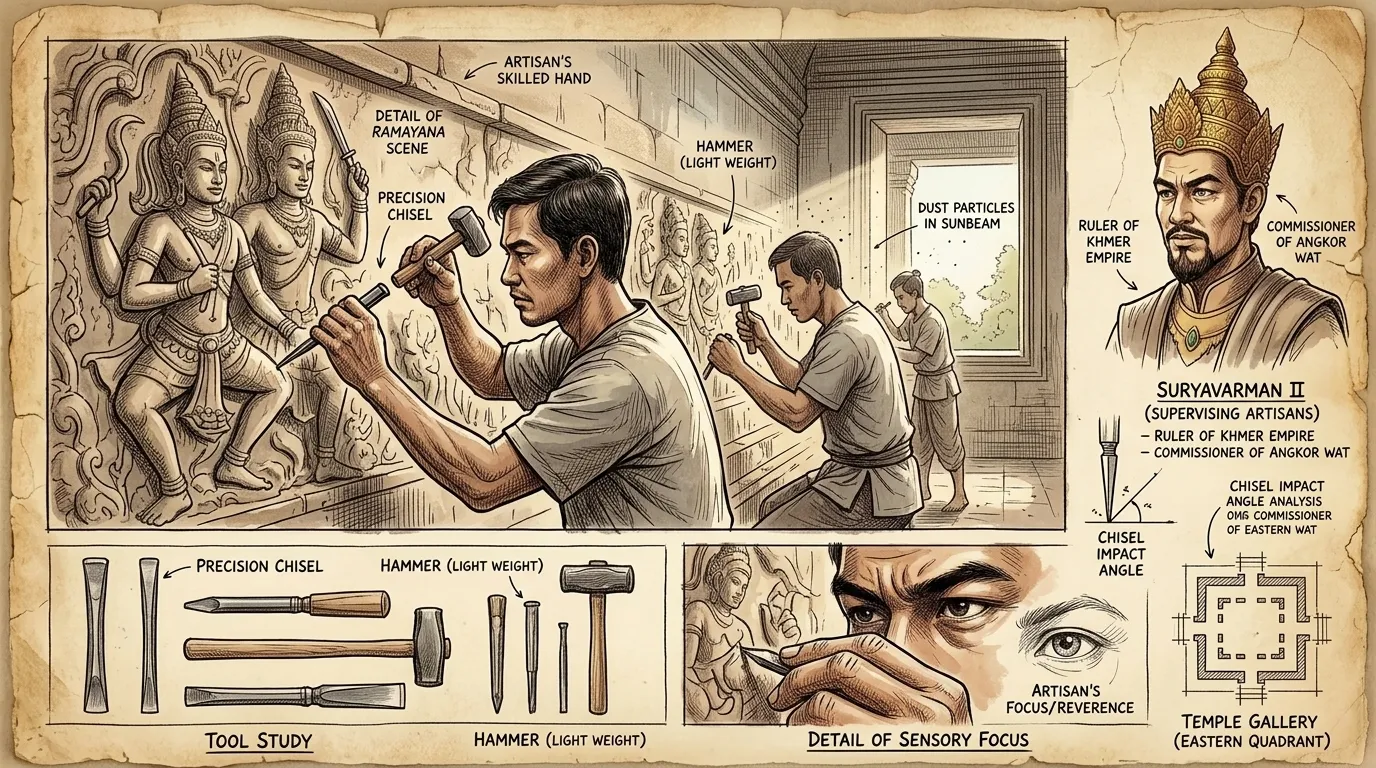
Skilled artisans meticulously carve the bas-reliefs that adorn the temple walls. They depict scenes from Hindu epics, Khmer legends, and the life of Suryavarman II himself. The intricate details showcase the artistic mastery of the Khmer civilization. These carvings are not merely decorative; they are integral to the temple's spiritual narrative.
"Chief Artisan: 'Every chisel stroke brings us closer to the divine. We must carve with reverence and precision, as Leonardo da Vinci said, 'Details make perfection, and perfection is not a detail.'"
Art Fact: The bas-reliefs at Angkor Wat narrate stories from Hindu mythology and Khmer history, providing insights into the beliefs and worldview of the Khmer civilization.
Page 5
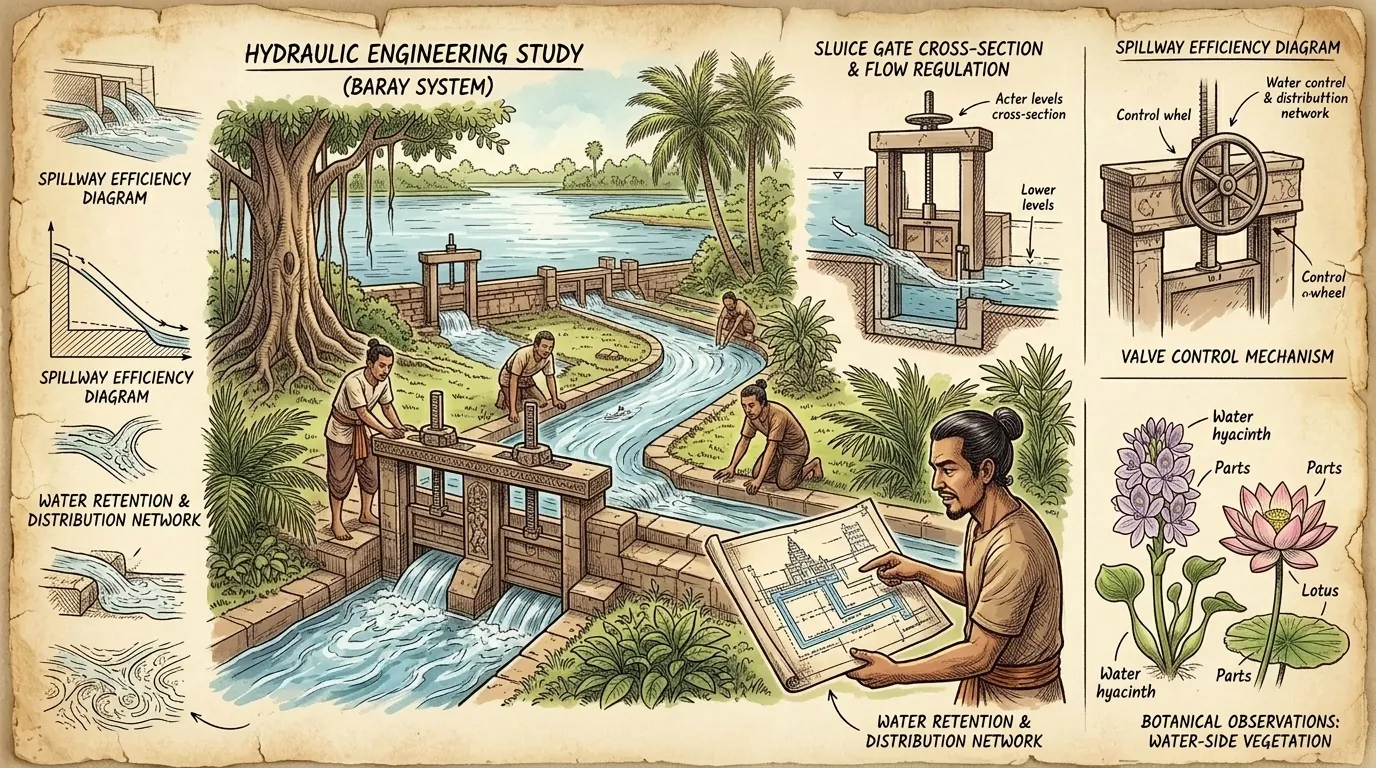
Ingenious hydraulic engineering ensures a steady water supply for the temple and the surrounding city. Reservoirs, canals, and moats control the flow of water, essential for irrigation and transportation. The intricate system reflects the advanced knowledge of Khmer engineers. This sophisticated water management system supported a large population and sustained agricultural productivity.
"Chief Engineer: 'Water is life, and control of it is power. As Benjamin Franklin once said, 'When the well's dry, we know the worth of water.' We must manage this resource wisely.'"
Art Fact: Angkor Wat is surrounded by a moat, which not only served as a defensive measure but also symbolized the cosmic ocean surrounding Mount Meru. The temple's water management system was crucial for irrigation and sustaining the city's population.
Page 6
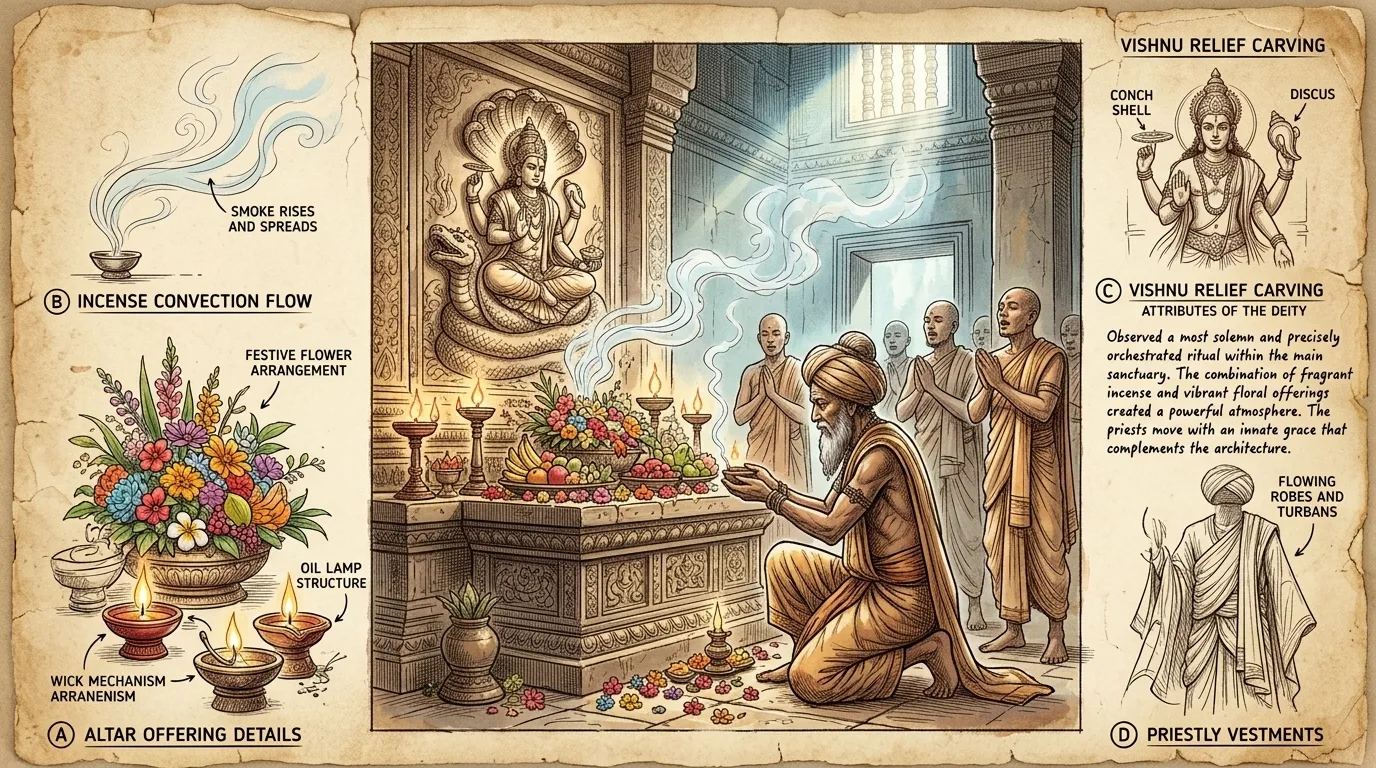
Priests perform daily rituals and ceremonies within the temple complex. Offerings are made to Vishnu, seeking his blessings and protection. The air is filled with the scent of incense and the chanting of mantras. These religious practices reinforce the temple's sacred significance and the king's divine authority.
"High Priest: 'Let these offerings be a testament to our devotion. As Buddha said, 'With our thoughts, we make the world.' Let our thoughts be of peace and prosperity.'"
Art Fact: Angkor Wat served as a center for religious rituals and ceremonies, reinforcing the king's divine authority and the temple's sacred status. Offerings were made to Vishnu, seeking blessings and protection for the kingdom.
Page 7
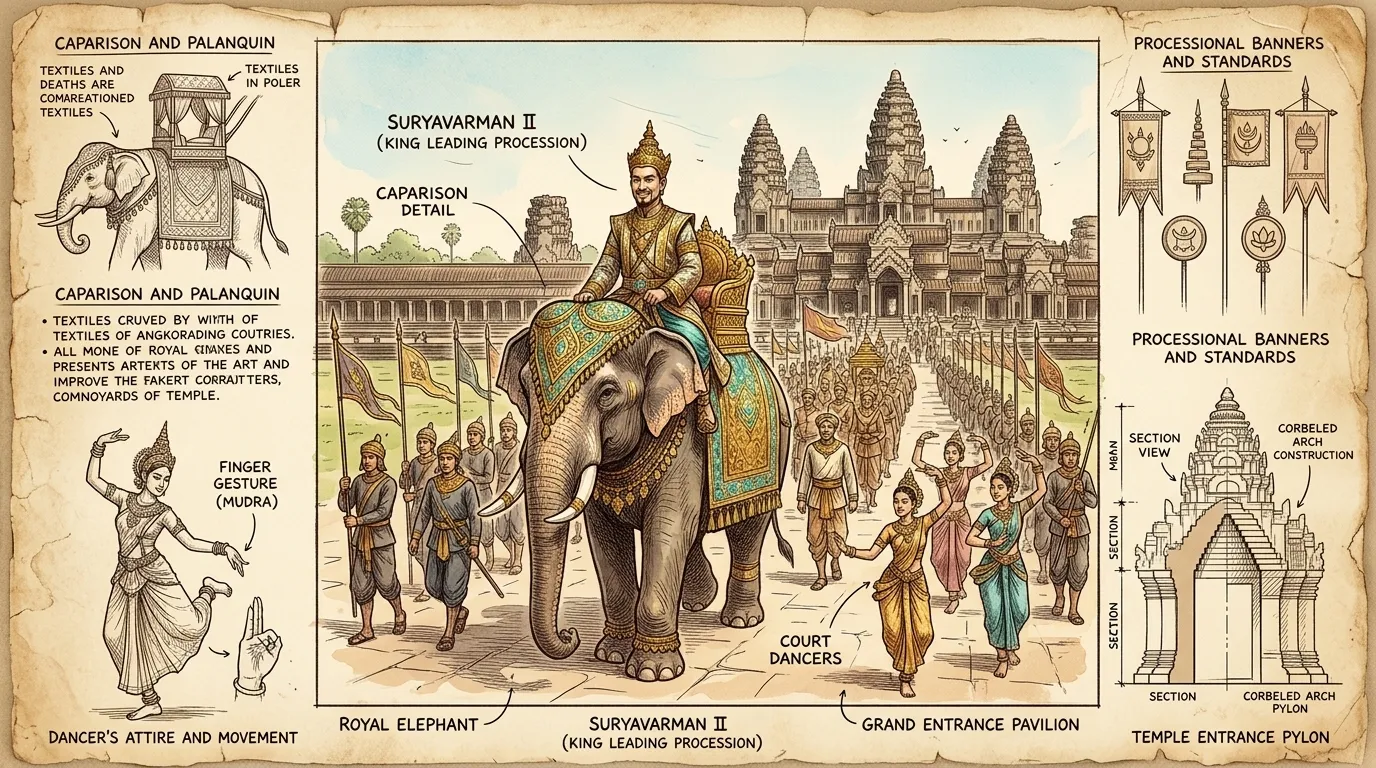
Suryavarman II leads a grand royal procession through the temple grounds. Accompanied by his courtiers, soldiers, and dancers, he reaffirms his power and legitimacy. The spectacle showcases the wealth and splendor of the Khmer empire. The procession is a carefully choreographed display of royal authority and religious devotion.
"Suryavarman II: 'Let our procession be a symbol of our unity and strength. As Julius Caesar declared, 'Veni, vidi, vici – I came, I saw, I conquered.' Let our kingdom conquer all challenges!'"
Art Fact: Royal processions through Angkor Wat were elaborate displays of power, showcasing the king's divine authority and the empire's wealth. These events reinforced the social hierarchy and the importance of religious devotion.
Page 8
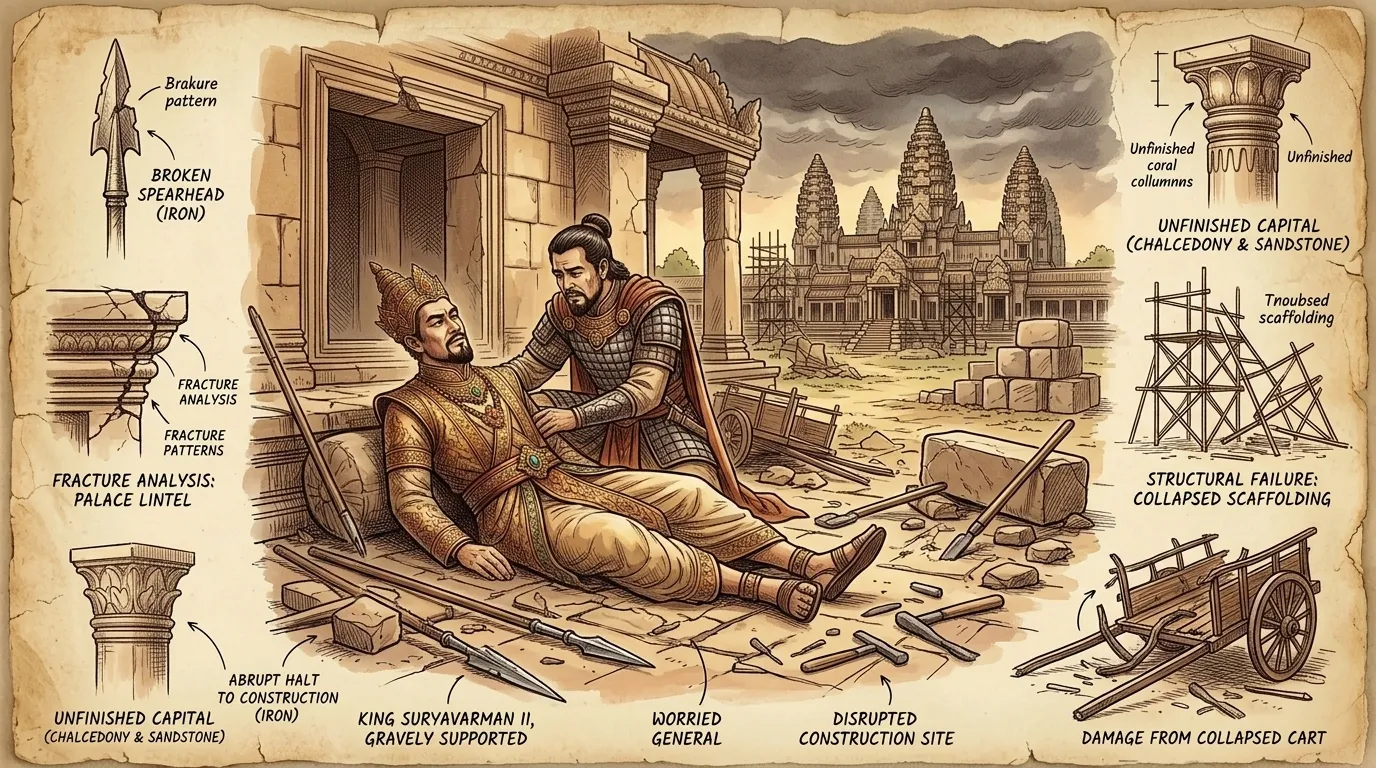
Suryavarman II dies amidst internal conflict and external threats. The kingdom is plunged into turmoil, and the construction of Angkor Wat is interrupted. The king's death marks the beginning of a period of instability and decline for the Khmer empire. The incomplete state of the temple reflects the kingdom's unfinished ambitions.
"General: 'The King is dead! As Sun Tzu said, 'Let your plans be dark and impenetrable as night, and when you move, fall like a thunderbolt.' Let us secure the kingdom!'"
Art Fact: The death of Suryavarman II marked a period of instability and decline for the Khmer empire, interrupting the construction of Angkor Wat and leading to internal conflict and external threats.
Page 9
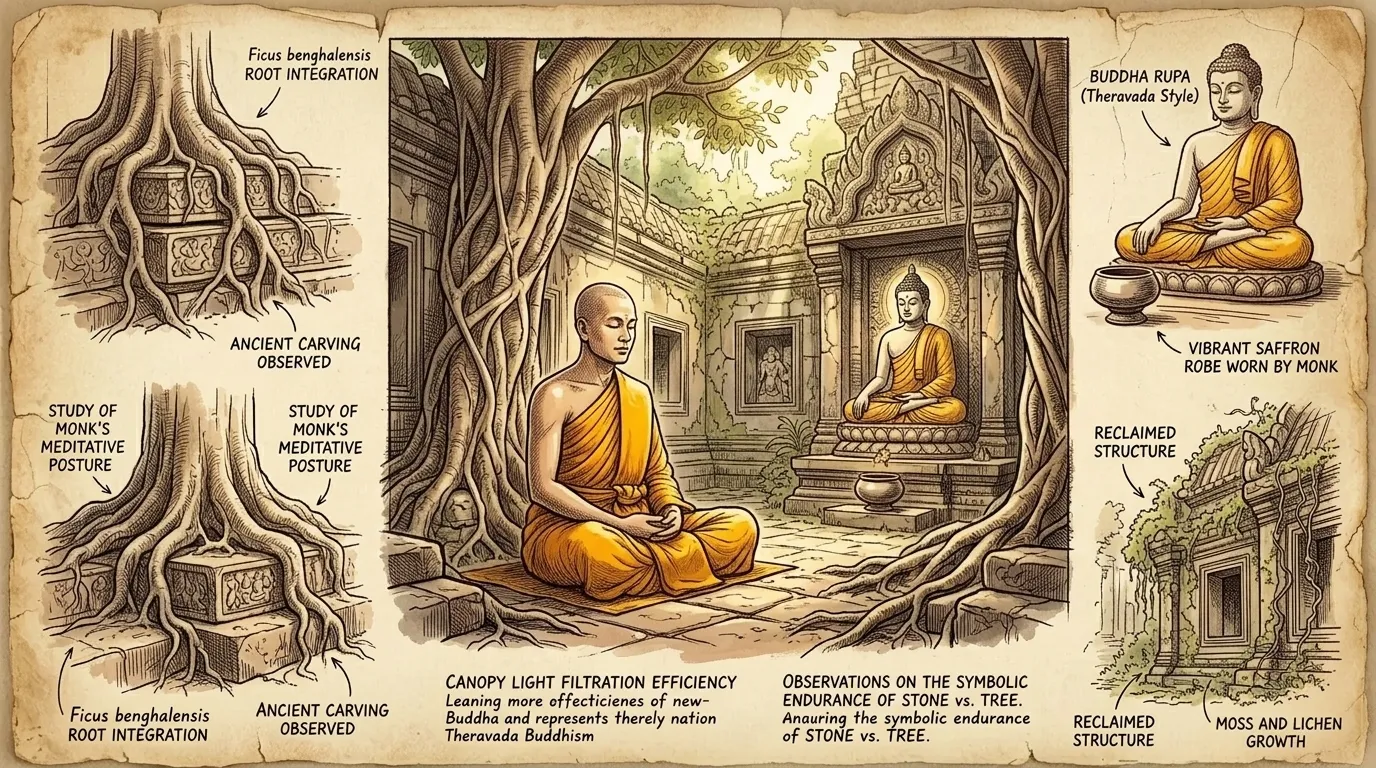
Despite the kingdom's decline and the shift to Theravada Buddhism, Angkor Wat endures as a symbol of Khmer identity and artistic achievement. Its intricate carvings and architectural grandeur continue to inspire awe and wonder. The temple's symbolism transcends its religious origins, representing the resilience and ingenuity of the Khmer people. It is still considered a sacred site by many.
"Buddhist Monk: 'Though empires rise and fall, the spirit of Angkor Wat remains. As the Dhammapada says, 'Better than a hundred years lived foolishly and without concentration is one day lived with wisdom and meditation.'"
Art Fact: Angkor Wat transitioned from a Hindu temple to a Buddhist sanctuary, reflecting the religious shifts in the Khmer Empire. Its enduring symbolism as a masterpiece of Khmer architecture and a sacred site continues to inspire visitors from around the world.
Page 10

Today, Angkor Wat stands as a testament to the Khmer empire's artistic and engineering prowess. The spirit of Suryavarman II and his master artisans lives on in the enduring stone. Centuries after its construction, the temple continues to draw millions of visitors, preserving its secrets and inspiring generations. Angkor Wat remains a UNESCO World Heritage site, preserving a story of majesty and ambition for the ages.
"Guide: 'Look closely at these stones, for, as the saying goes, 'There are no secrets that time does not eventually reveal.''"
Art Fact: Angkor Wat's legacy endures through its intricate carvings, its architectural grandeur, and its symbolic representation of the Khmer civilization. Its preservation as a UNESCO World Heritage site ensures that its story continues to inspire future generations.
About this story
- Location: Global
- Audience: general readers
Questions and answers
Read Wonder Arts on your phone
Wonder Arts is available on Android. Get Wonder Arts on Google Play.