Abbey in the Oakwood by Caspar David Friedrich (Germany — 1810)
Abbey in the Oakwood by Caspar David Friedrich (Germany — 1810) — an illustrated arts story, set in Germany. 10 illustrated pages, free to read on Wonder Arts.

Page 1
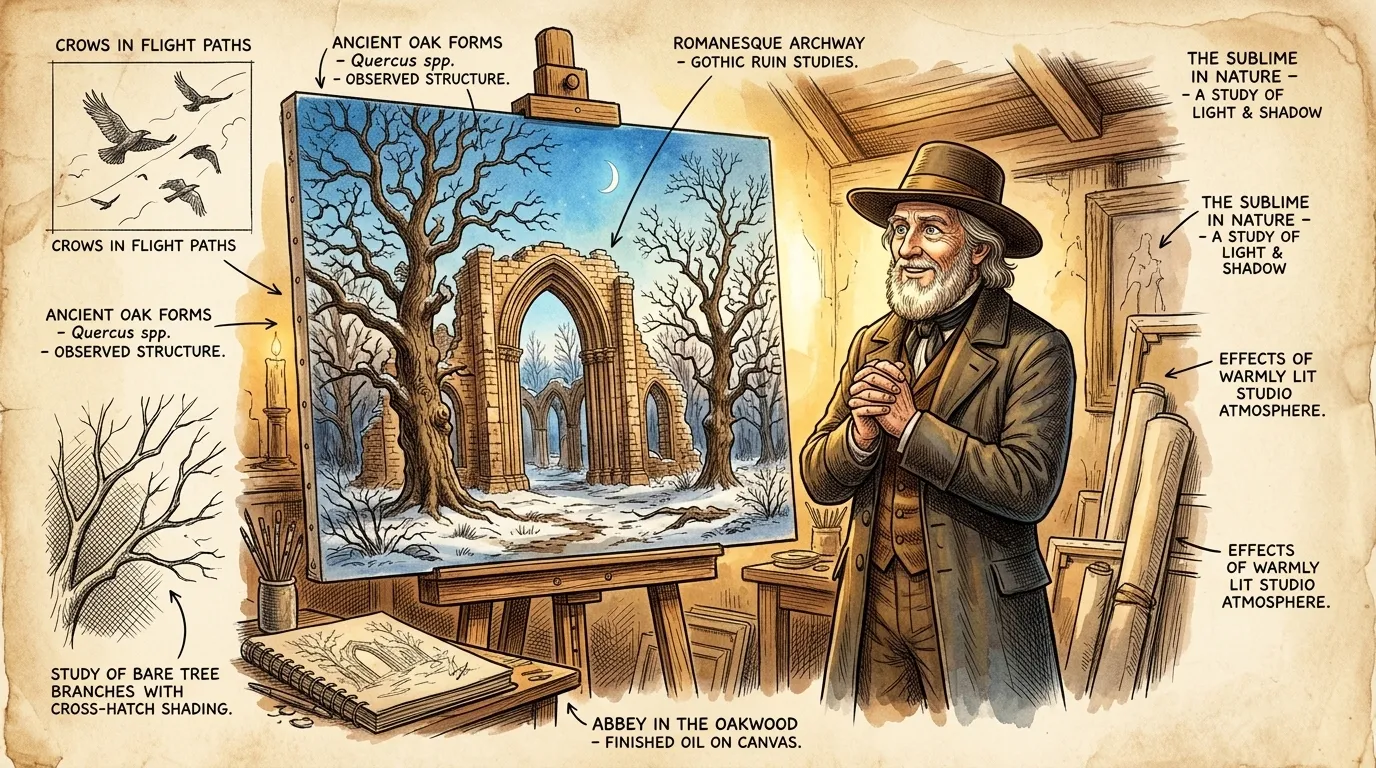
Caspar David Friedrich, standing before his completed masterpiece, 'Abbey in the Oakwood,' in 1810. The painting, measuring 110.4 x 171 cm, is currently housed in the Alte Nationalgalerie in Berlin. The abbey's skeletal remains symbolize mortality, a recurring theme in Friedrich's work. It's said he painted it during a period of deep personal mourning.
"Friedrich murmured, lost in contemplation. He was known to say, 'The artist should paint not only what he sees before him, but also what he sees within him.'"
Art Fact: Abbey in the Oakwood is a visual representation of mortality and the passage of time.
Page 2

Young Caspar spent much of his childhood wandering the shores of the Baltic Sea. He learned to observe nature meticulously, absorbing the stark beauty of the landscape. He often sketched the dramatic sunsets and gnarled trees, elements that would later define his artistic style. This environment instilled in him a deep sense of the sublime, and an interest in the romantic and nostalgic.
"His older brother, Johann, pointed to the setting sun. "Caspar, do you see how the light transforms everything? Remember this, and you will capture the soul of nature.""
Art Fact: The Baltic coast's dramatic landscapes were instrumental in shaping Friedrich's artistic vision.
Page 3

At the age of 13, Caspar suffered a devastating loss. While trying to rescue him from falling through ice, his brother Johann drowned. This event left a deep emotional scar, shaping his understanding of mortality. The trauma fueled his interest in themes of death, loss, and spiritual reflection. A symbol from his past is brought up to haunt him.
"His mother, consumed by grief, often repeated, "Life is fleeting, Caspar. Like a fragile flower, it blooms and fades." Friedrich was devastated by the loss."
Art Fact: The loss of his brother profoundly impacted Friedrich's artistic themes and emotional depth.
Page 4
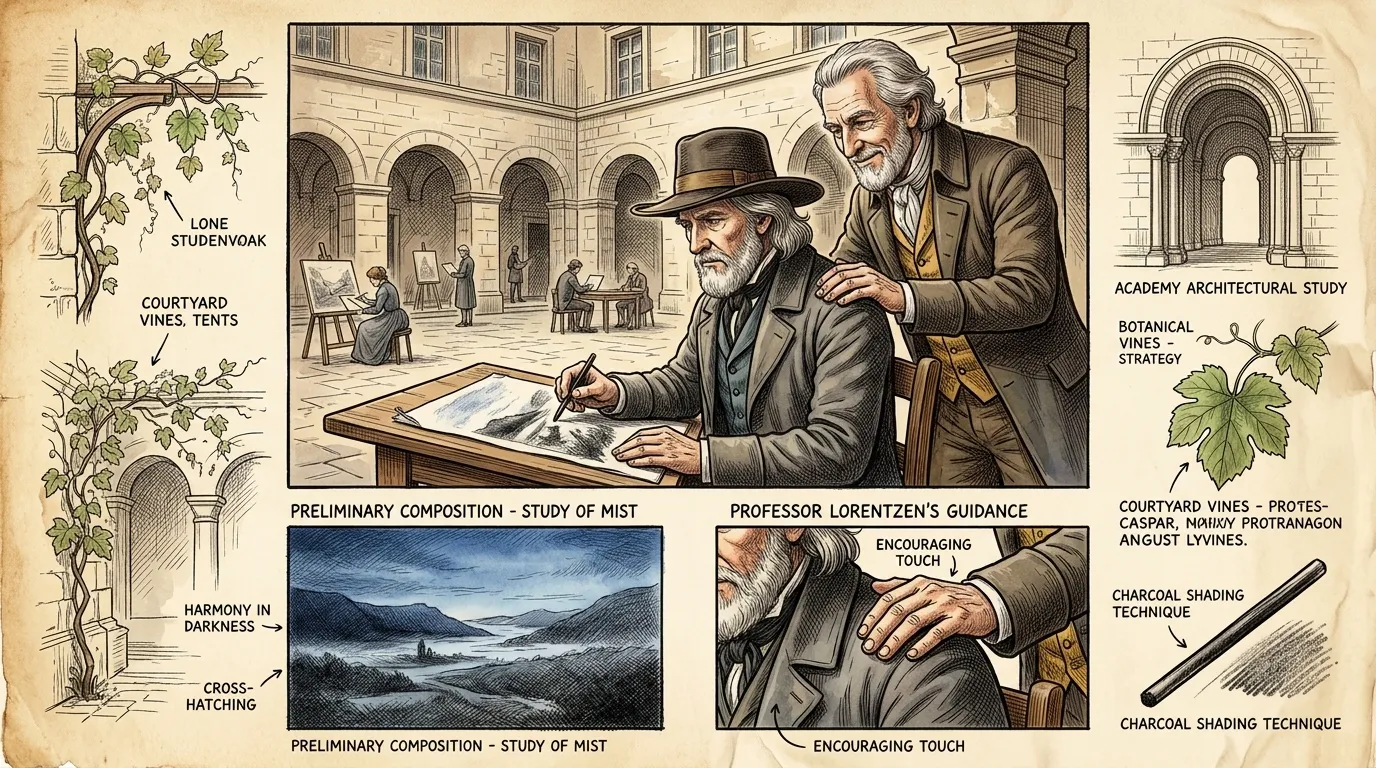
In 1794, Friedrich began his formal art training at the Copenhagen Academy. He studied under influential artists, mastering the techniques of drawing and landscape painting. While he respected academic traditions, he always sought to infuse his work with personal feeling and spiritual depth. He was seen as a bit of a loner, lost in his thoughts.
"Professor Christian August Lorentzen advised him, "Caspar, master the rules, but never let them stifle your own unique voice. Let your emotions guide your brush.""
Art Fact: Friedrich's formal training at the Copenhagen Academy provided him with the technical skills to express his artistic vision.
Page 5

Upon entering adulthood, Friedrich grappled with his own emotions in his work. He was haunted by a deep understanding of humanity, and often incorporated symbols of sadness into his pieces. It was as if his life had no color without the grief that was in him.
""It is strange that you see only despair in my work," Friedrich told a patron, "but perhaps sadness is the color of truth.""
Art Fact: Friedrich's work often reflected his personal struggles and the profound emotional depth of his art.
Page 6
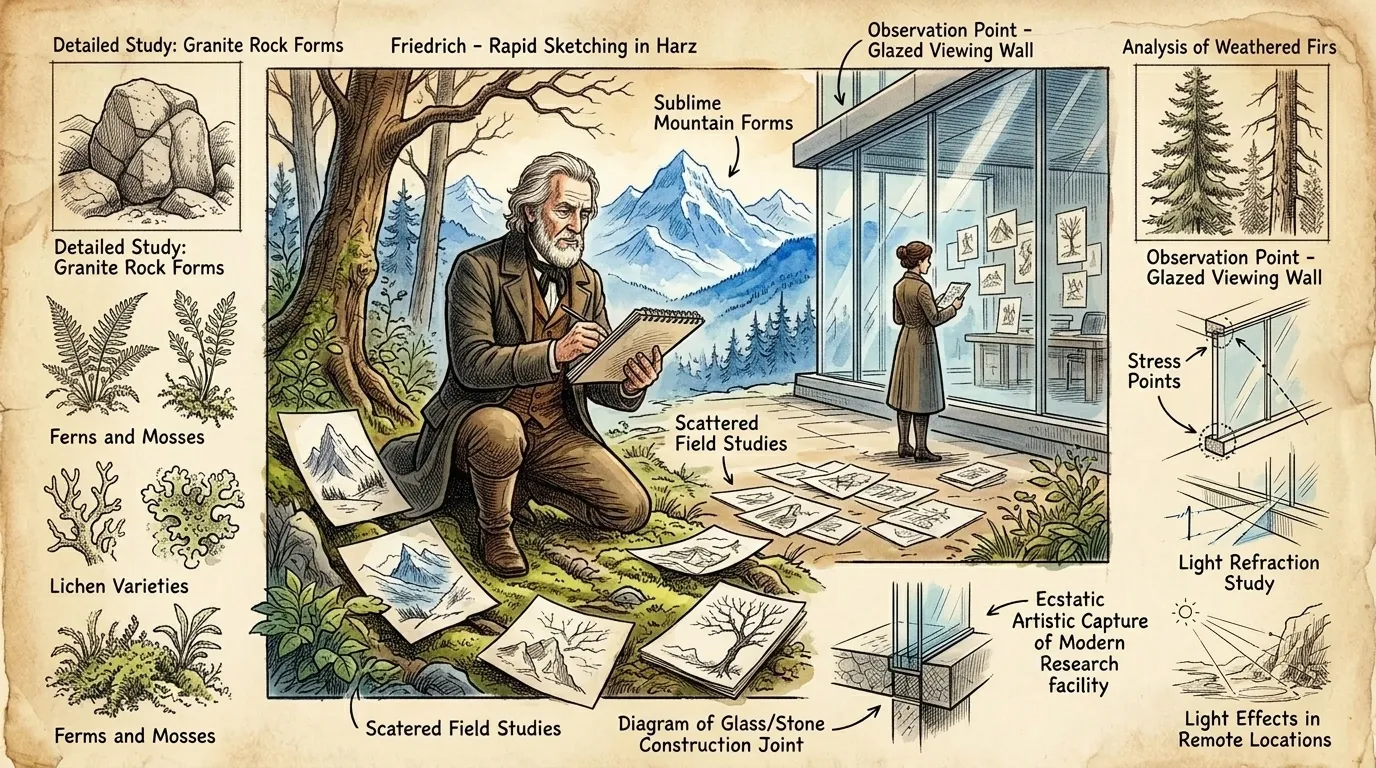
Friedrich traveled to the Harz Mountains in 1805, a journey that deeply impacted his artistic sensibilities. The rugged landscape, ancient forests, and mystical atmosphere resonated with his romantic soul. He sketched the mountains extensively, finding inspiration in their dramatic forms and spiritual presence. His sketches are scattered around him. Luciana examines them through the glass wall.
"Friedrich exclaimed to his companion, "These mountains are cathedrals of nature! Every rock, every tree whispers tales of the sublime!""
Art Fact: The Harz Mountains provided Friedrich with a new source of inspiration and further refined his artistic focus.
Page 7
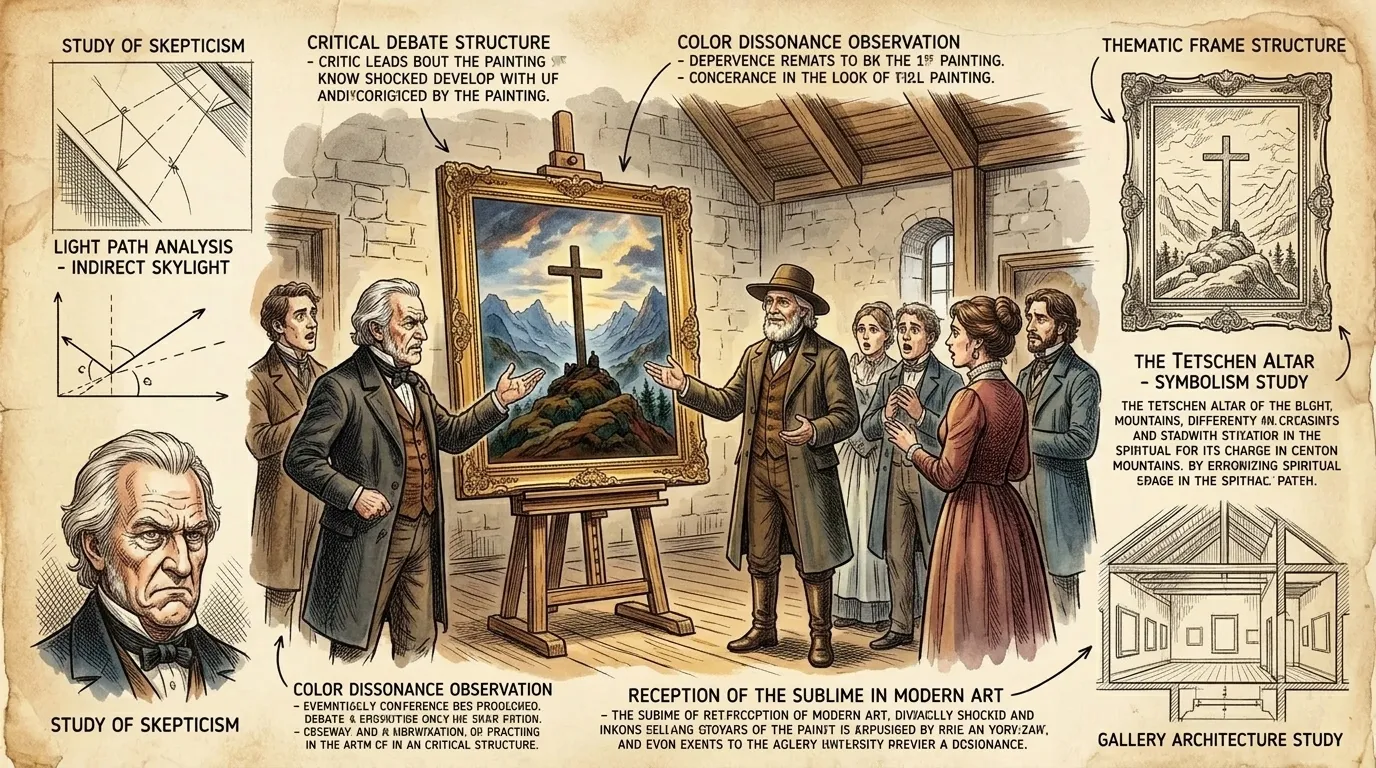
In 1808, Friedrich unveiled his 'Cross in the Mountains,' also known as the 'Tetschen Altar.' The painting sparked a major controversy due to its unconventional religious symbolism. Critics questioned his decision to place the landscape at the center, rather than the traditional figure of Christ. Friedrich defended his artistic choices, asserting the importance of nature as a pathway to spiritual understanding. A lot of discussion and debate ensued.
"A critic scoffed, "Friedrich, you have desecrated religious art! The landscape cannot replace the divine!" Friedrich retorted, "Nature is God's creation, and its beauty is a testament to His glory!""
Art Fact: The 'Tetschen Altar' controversy solidified Friedrich's reputation as a bold and unconventional artist.
Page 8
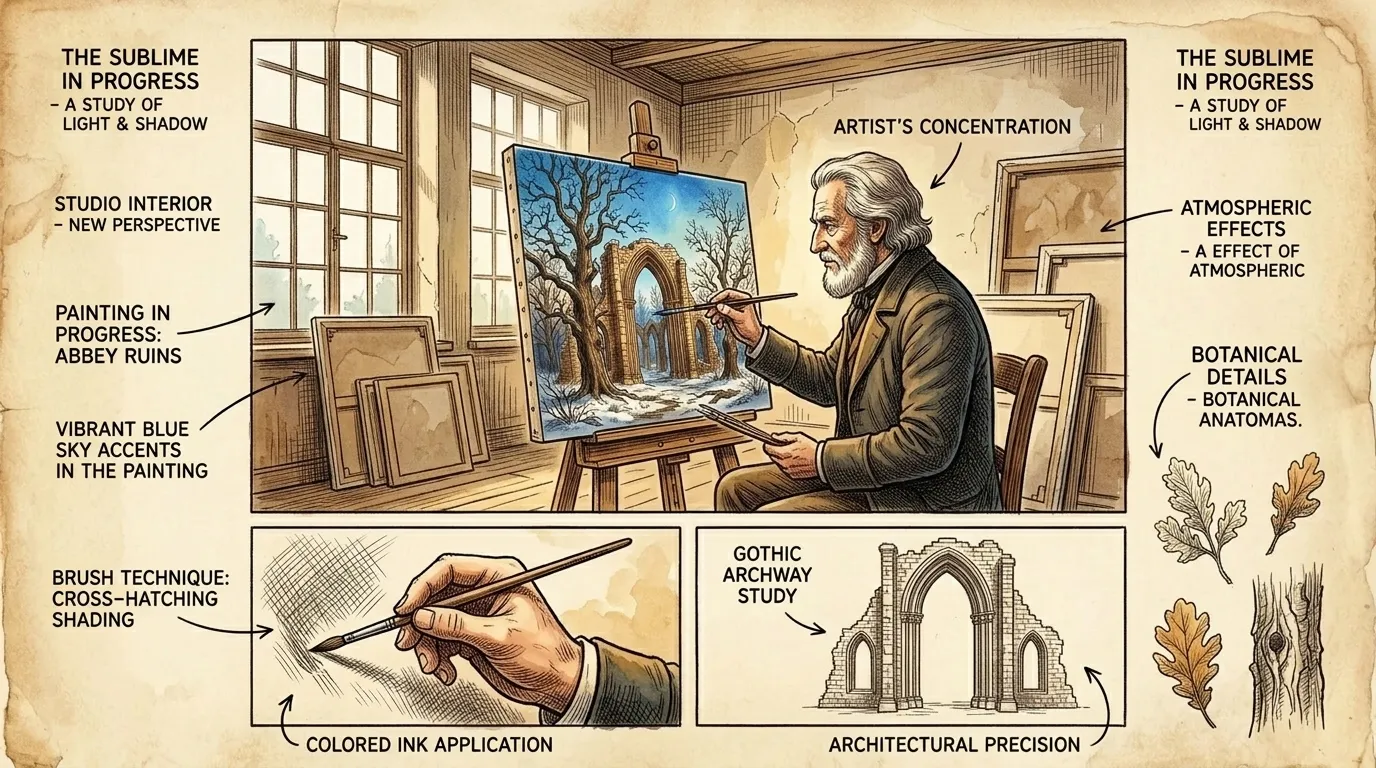
During the creation of 'Abbey in the Oakwood,' Friedrich was grappling with personal grief and a sense of mortality. He channeled these emotions into his art, using the abbey ruins as a symbol of death and decay. He sought solace in nature, finding a spiritual connection to the landscape. His work took on a life of its own, a life that seemed to emulate sadness, but bring it into a world of color.
"Friedrich confided in a friend, "The abbey is a reflection of my soul. It stands as a testament to the inevitable passage of time and the transience of earthly life.""
Art Fact: Friedrich's personal grief and spiritual quest heavily influenced the themes and symbolism of 'Abbey in the Oakwood.'
Page 9

Working late into the night, Friedrich meticulously crafted the details of 'Abbey in the Oakwood.' He used subtle brushstrokes and a limited color palette to create a sense of atmosphere and mood. The moonlight illuminated the canvas, casting long shadows and enhancing the painting's ethereal quality. Adaeze takes a video of his work.
"Friedrich whispered, as he had mentioned to Adaeze earlier in life, "'We are too fond of our own wisdom to harbor another's,' as Mark Twain said. And here I find truth in the moon's reflection, not my own interpretation." He felt that it was impossible to get help from another for his artwork."
Art Fact: Friedrich's meticulous technique and atmospheric lighting contributed to the enduring power of 'Abbey in the Oakwood.'
Page 10
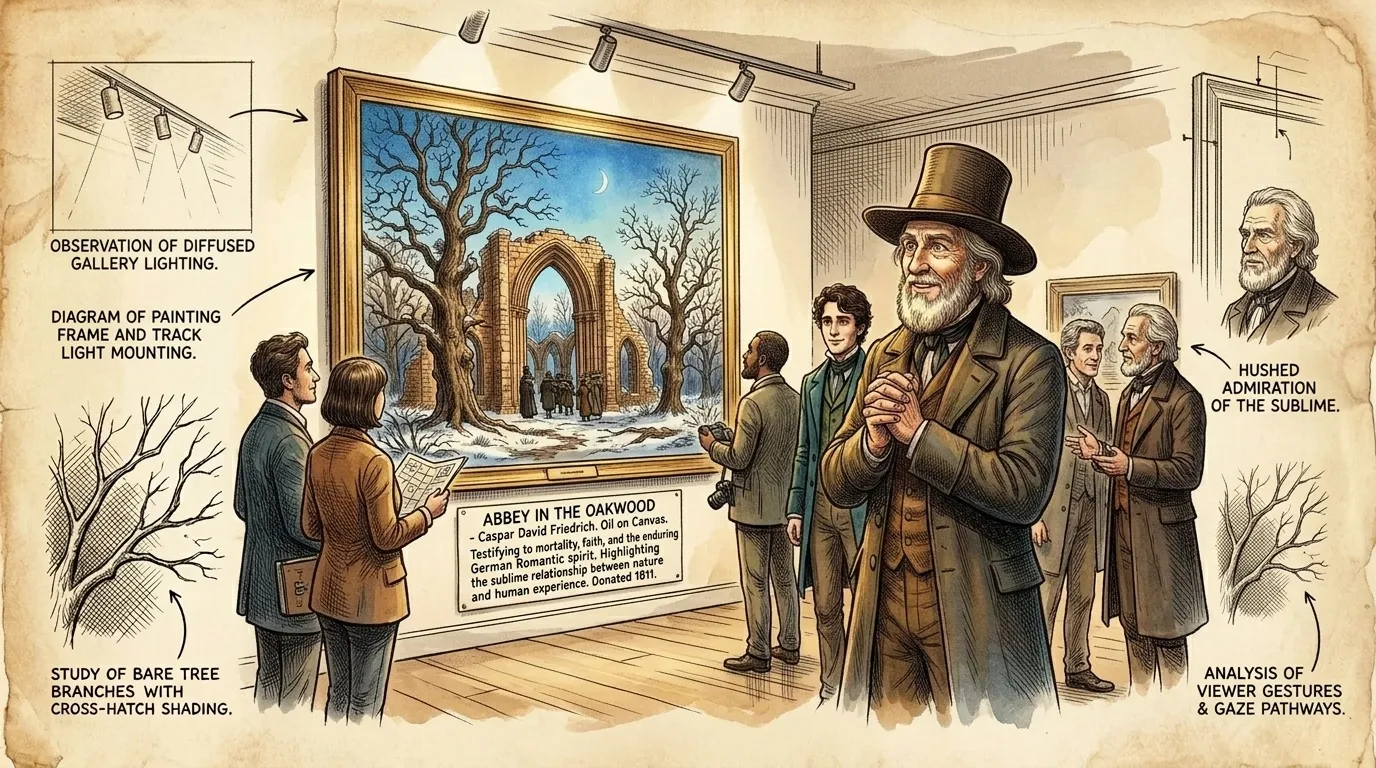
Today, 'Abbey in the Oakwood' stands as a testament to Friedrich's unique artistic vision and his profound understanding of human emotion. His work continues to inspire artists and captivate audiences worldwide. Friedrich's ability to infuse landscape with spiritual meaning ensures his place as a master of the Romantic era. His art survives forever because it speaks to the universal human experience of loss, longing, and the search for meaning in a world of change.
"A modern-day art historian muses, "Friedrich's art is timeless. It resonates with us because it captures the essence of the human condition: our connection to nature, our awareness of mortality, and our yearning for something beyond the physical world.""
Art Fact: 'Abbey in the Oakwood' remains a poignant reminder of mortality and Friedrich's lasting artistic impact.
About this story
- Location: Germany
- Audience: general readers
Questions and answers
Questions and answers about Abbey in the Oakwood by Caspar David Friedrich (Germany — 1810)
Read Wonder Arts on your phone
Wonder Arts is available on Android. Get Wonder Arts on Google Play.