Epic of Gilgamesh by Sumerian authors (Mesopotamia — c. 2100 BC)
Epic of Gilgamesh by Sumerian authors (Mesopotamia — c. 2100 BC) — an illustrated arts story, set in United Kingdom. 10 illustrated pages, free to read on Wonder Arts.
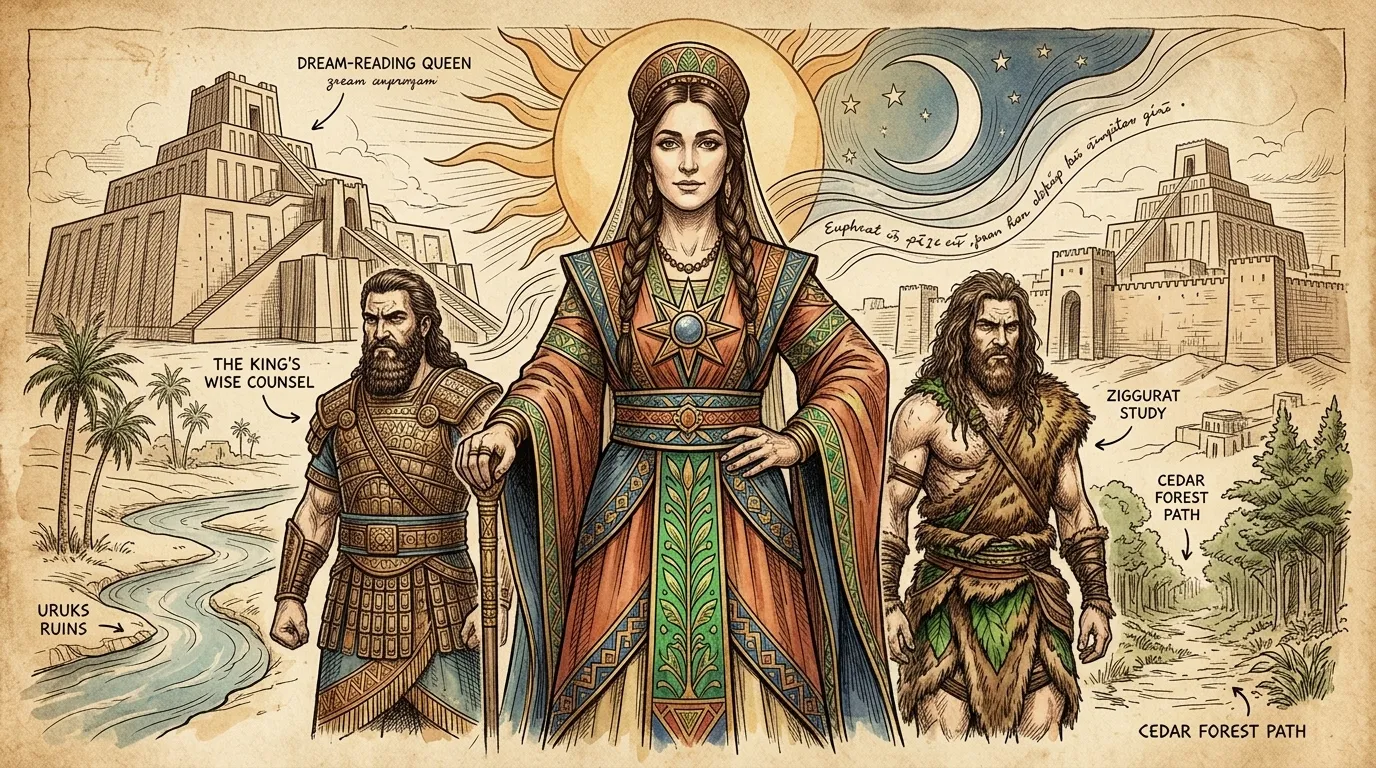
Page 1
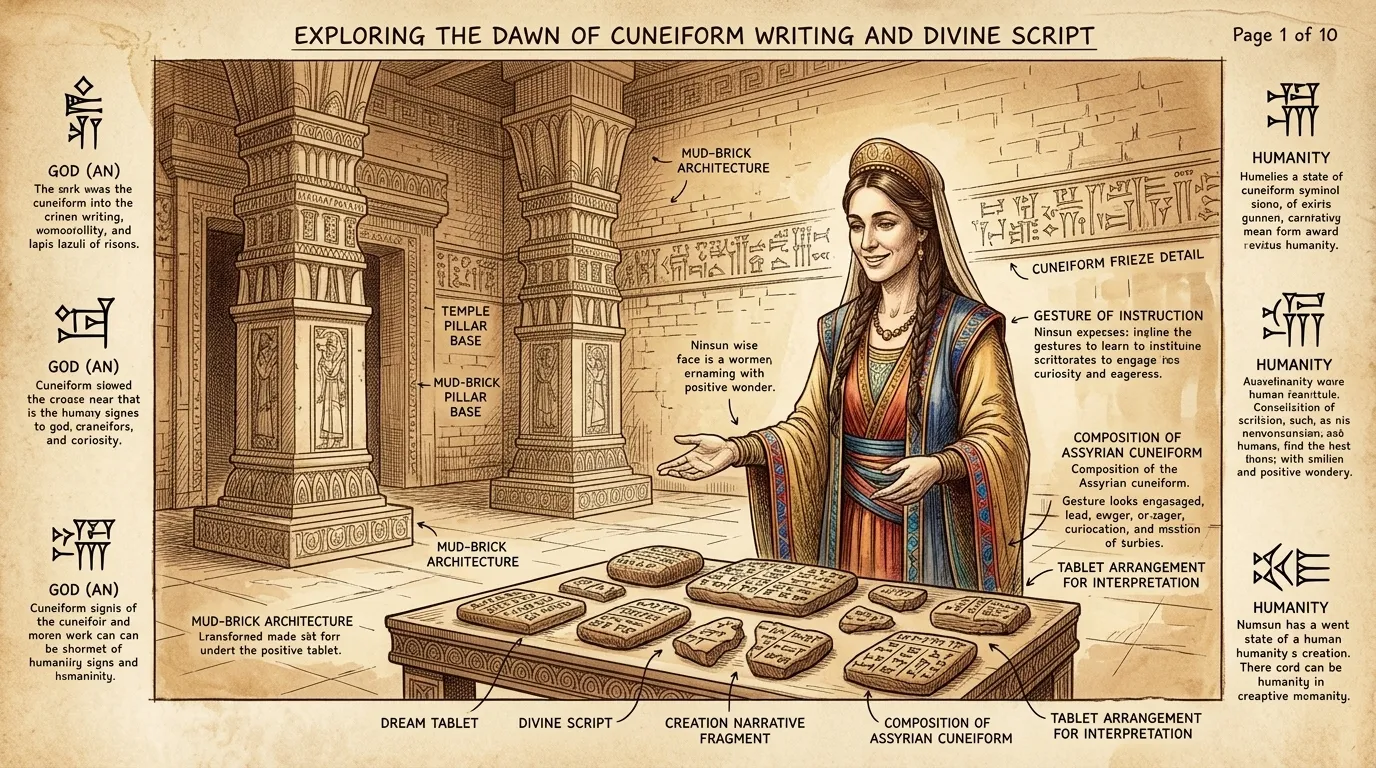
The humid air hangs heavy in Uruk, circa 2100 BC. The high priestess, Ninsun, stands before the newly inscribed clay tablets, the Epic of Gilgamesh. These fragments, etched in cuneiform, hold the stories of a king—part god, part human—and his tumultuous journey. The tablets, some no larger than a hand, others fragments of larger narratives, are a testament to Sumerian literary ingenuity. This foundational work of literature, pieced together over centuries, represents the dawn of storytelling.
""These tales, scribes, must capture Gilgamesh's strength, his flaws, his humanity," Ninsun instructs, her voice resonating in the temple chamber. "Let future generations know of the king who sought immortality, and found something far more precious.""
Art Fact: The Epic of Gilgamesh, dating back to around 2100 BC, is among the earliest known works of literature. Inscribed on clay tablets in cuneiform, these fragments tell the story of Gilgamesh, king of Uruk, and his quest for immortality. The most complete version, discovered in the library of Ashurbanipal at Nineveh, comprises twelve tablets.
Page 2
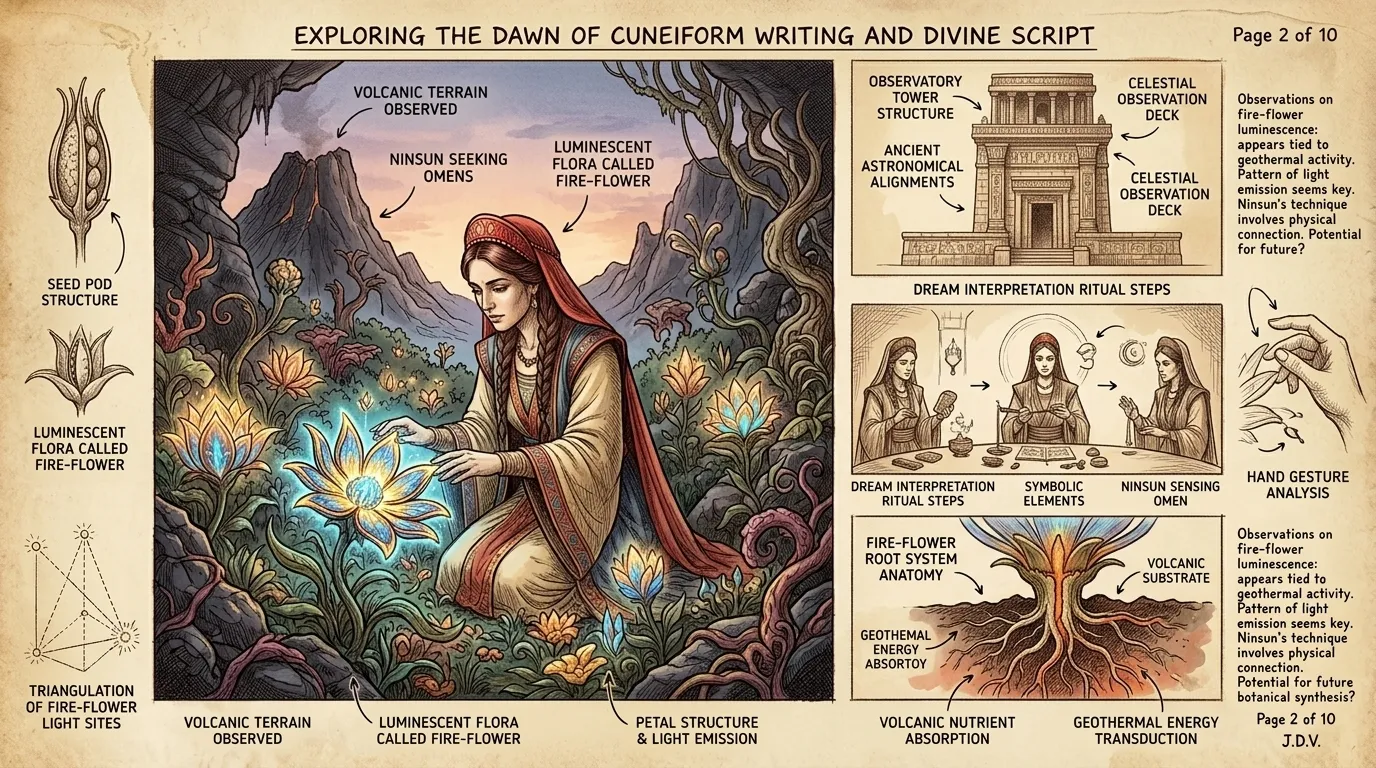
Ninsun seeks guidance from the fire-flowers, their petals glowing with otherworldly light. She studies their patterns, searching for omens to understand Gilgamesh's path. The volcanic gardens hum with latent power. The scent of sulfur mixes with the sweet fragrance of the exotic blossoms.
""Great Shamash, illuminate the path ahead," Ninsun murmurs, her voice barely audible above the crackling sounds of the fire-flowers. "What trials await Gilgamesh, and what must he learn?""
Art Fact: Dreams and omens played a significant role in Mesopotamian culture. Kings and priests alike sought guidance from these supernatural signs, interpreting them as messages from the gods. Ninsun, Gilgamesh's mother, was renowned for her wisdom and ability to interpret dreams.
Page 3
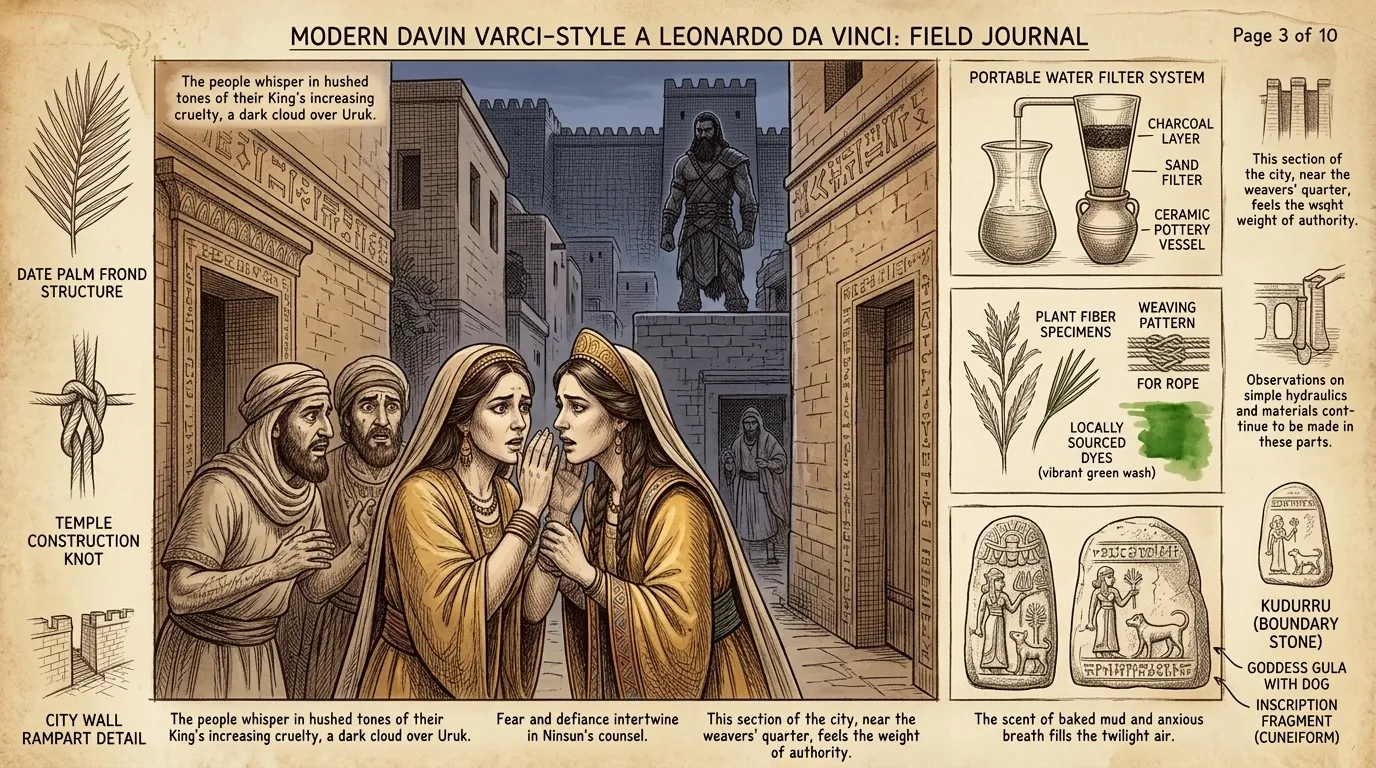
The citizens of Uruk whisper in fear of Gilgamesh. His strength is unmatched, but his arrogance knows no bounds. He demands labor, takes what he desires, and leaves the city trembling. The tablets reflect these dark times.
""He claims to be two-thirds god, yet acts with the heart of a beast," Salma, a woman in her early 50s female, petite but confident, with warm copper-toned skin and fluffy afro-textured black hair with a colorful headband, says, her voice hushed. "Will no one stand against his tyranny?""
Art Fact: Gilgamesh, in his early reign, was depicted as a cruel and oppressive ruler. He exploited his citizens, demanding excessive labor and disregarding their well-being. This tyranny ultimately led to the gods intervening to create Enkidu, a being capable of challenging Gilgamesh.
Page 4
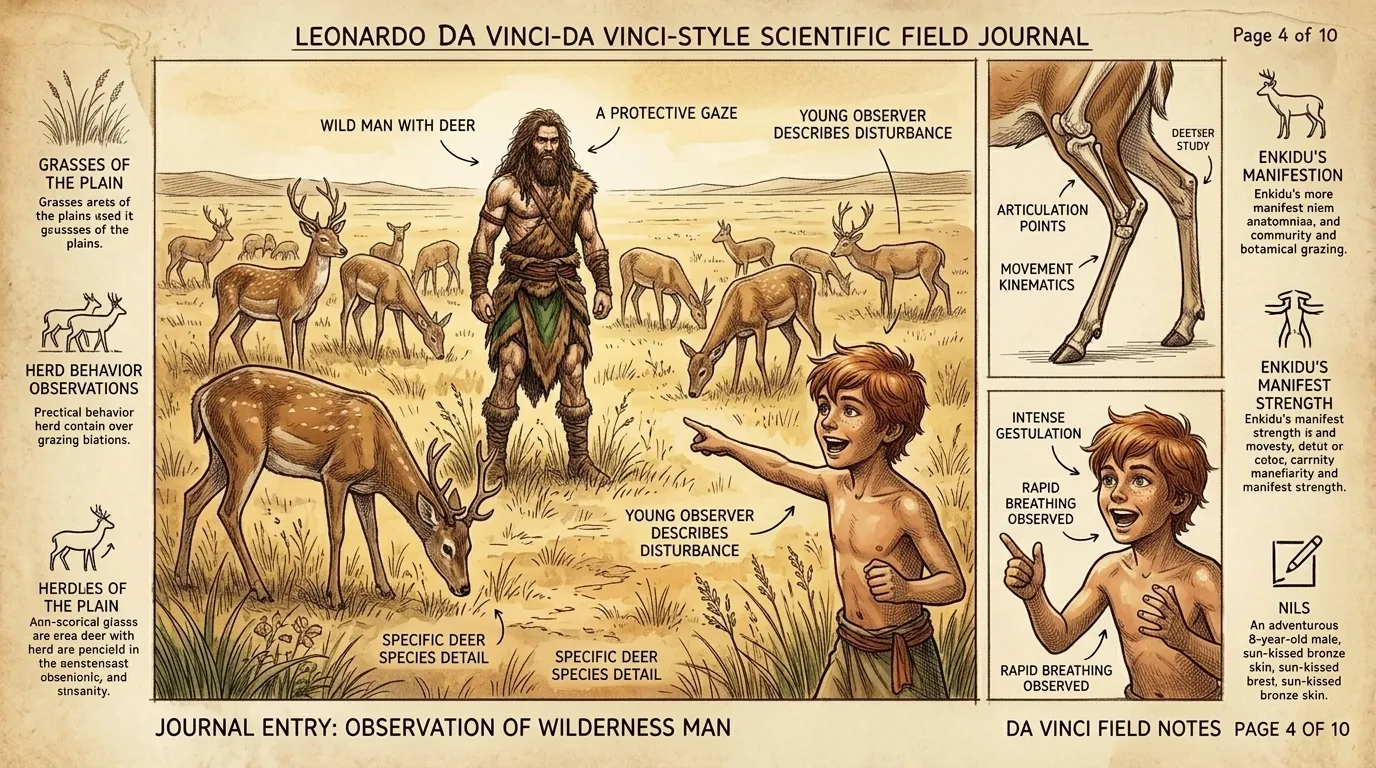
From the wilderness comes Enkidu, a wild man formed from clay and the essence of nature. He roams the plains, disrupting the trappers and challenging the hunter's way of life. The gods have answered Uruk's plea.
""He is like a force of nature itself," Nils, an adventurous 8-year-old male, lean and athletic, with sun-kissed bronze skin and short straight reddish-brown hair with a cowlick, reports, breathless from his travels. "He protects the animals, fills the traps, and cannot be reasoned with!""
Art Fact: Enkidu was created by the goddess Aruru to be Gilgamesh's equal and to curb his tyrannical behavior. He was initially a wild man, living amongst the animals and unfamiliar with human society.
Page 5
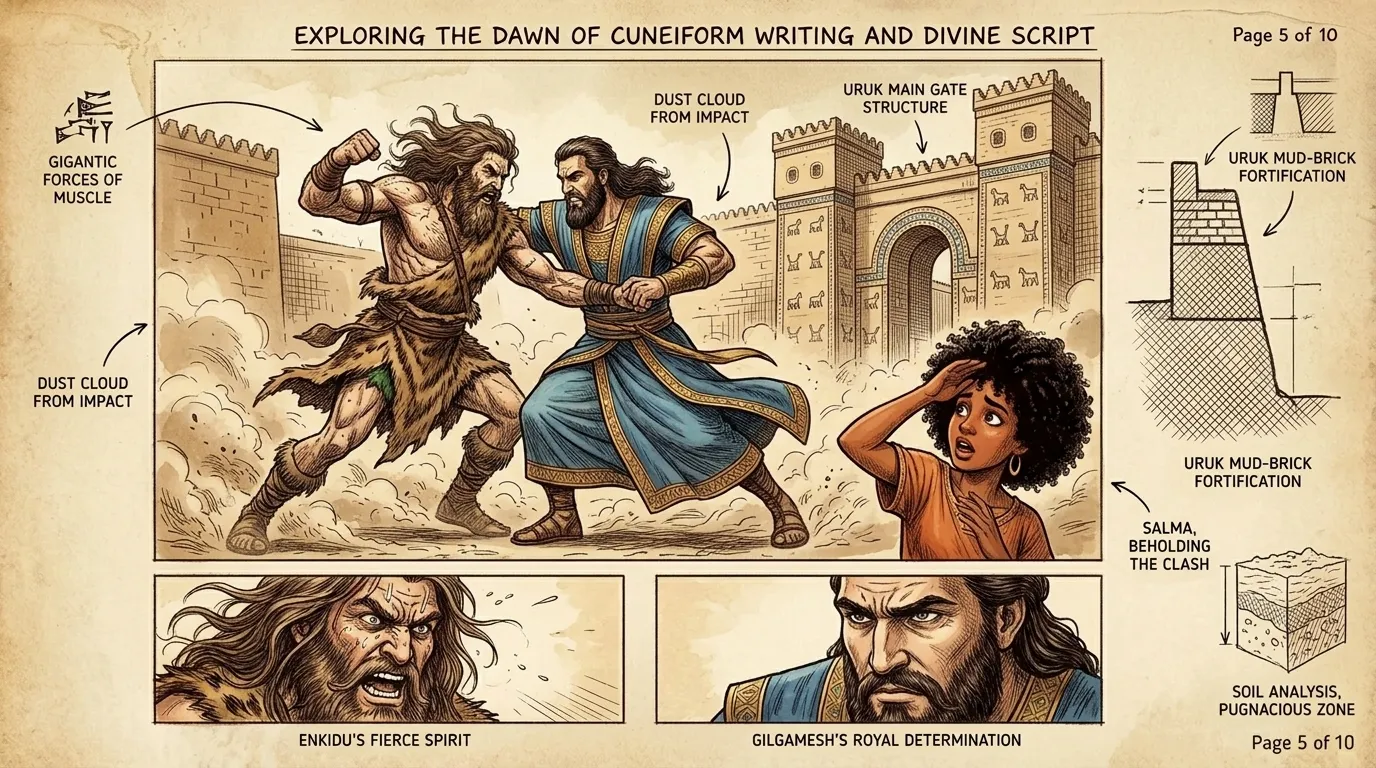
Enkidu arrives in Uruk, challenging Gilgamesh's authority. The two titans meet in a fierce battle, the earth trembling beneath their feet. Their strength is evenly matched, a whirlwind of fury and power.
""The world is shaking!" Salma cries, shielding her eyes from the dust. "Two gods clash before us!""
Art Fact: The initial encounter between Gilgamesh and Enkidu was a fierce battle that shook the city of Uruk. However, after a long and arduous struggle, neither could defeat the other. This mutual respect eventually led to a deep and enduring friendship.
Page 6
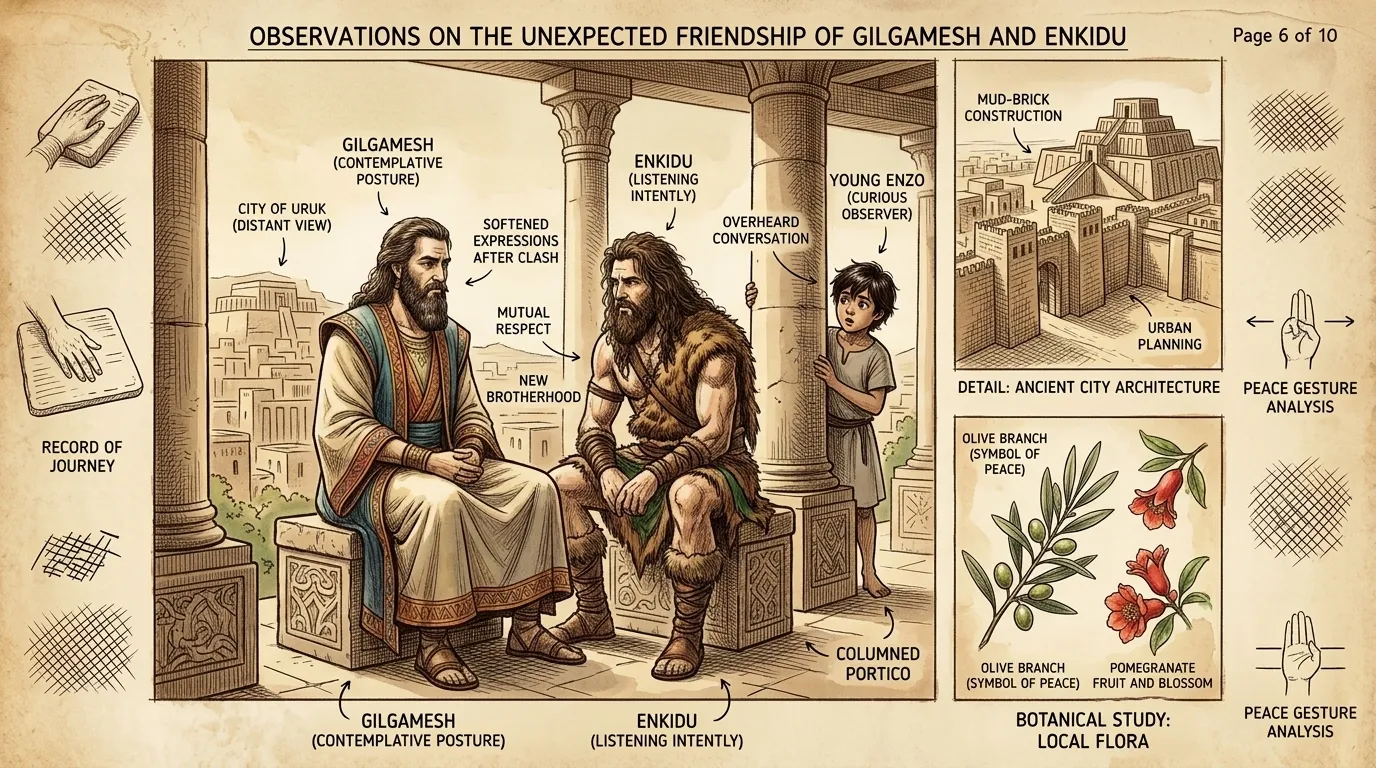
After their epic clash, Gilgamesh and Enkidu find respect, then brotherhood. They share stories, dreams, and a thirst for adventure. Together, they will face challenges beyond Uruk's walls.
""Perhaps," Gilgamesh says, panting, "strength is not about domination, but about standing together." Enzo, an adventurous 8-year-old male, petite with quick movements, overhears the change in tone from his father."
Art Fact: After their battle, Gilgamesh and Enkidu formed a deep and enduring friendship. They recognized in each other a kindred spirit, a strength that transcended mere physical power. This bond would shape the rest of their lives and adventures.
Page 7
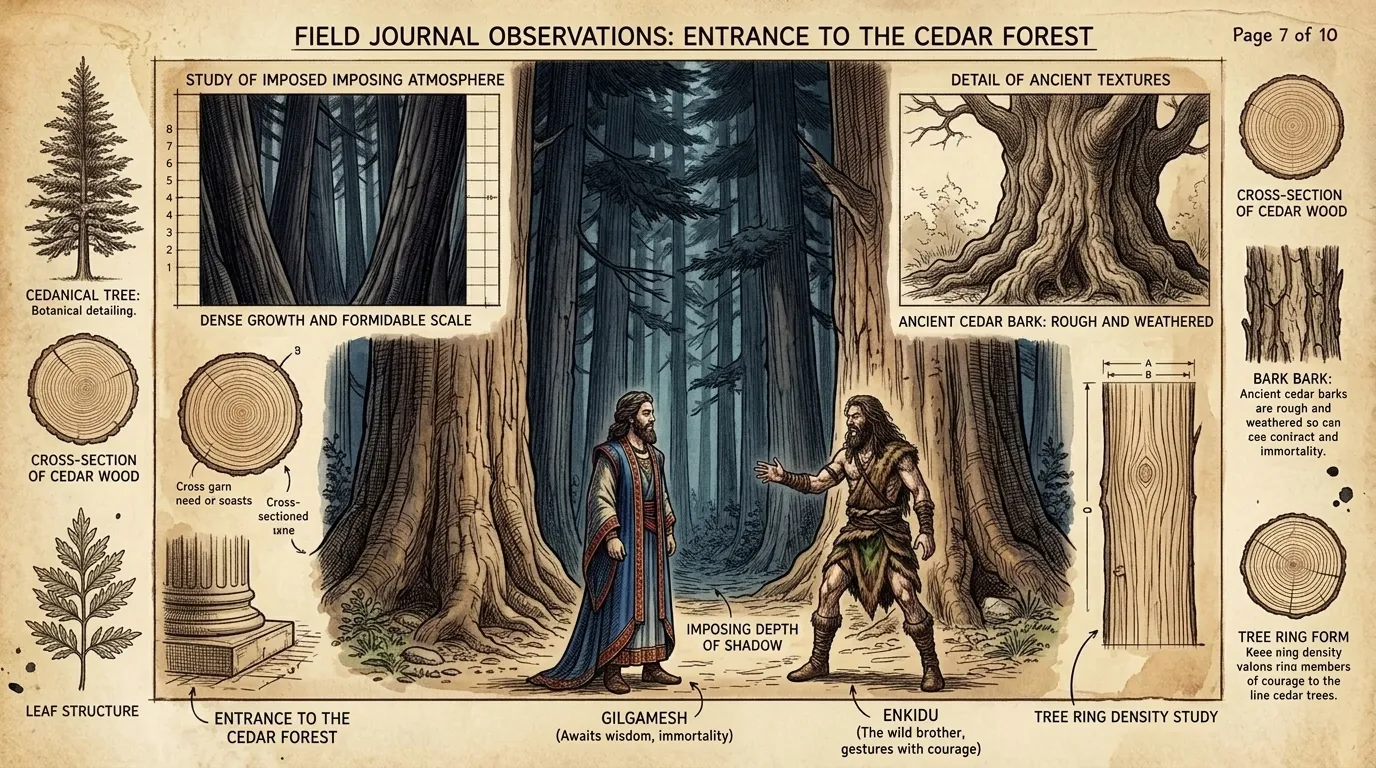
Gilgamesh and Enkidu venture to the Cedar Forest, guarded by the monstrous Humbaba. The air is thick with dread, the forest ancient and imposing. The journey tests their courage and their bond.
""The Roman philosopher Seneca said, 'Every new beginning comes from some other beginning's end,'" Enkidu states, his voice echoing through the trees. "This forest will test us, but it will also forge us anew.""
Art Fact: The Cedar Forest, guarded by the monstrous Humbaba, was a place of immense danger and importance in Sumerian mythology. Cedar was a valuable resource, and venturing into the forest was a perilous undertaking.
Page 8
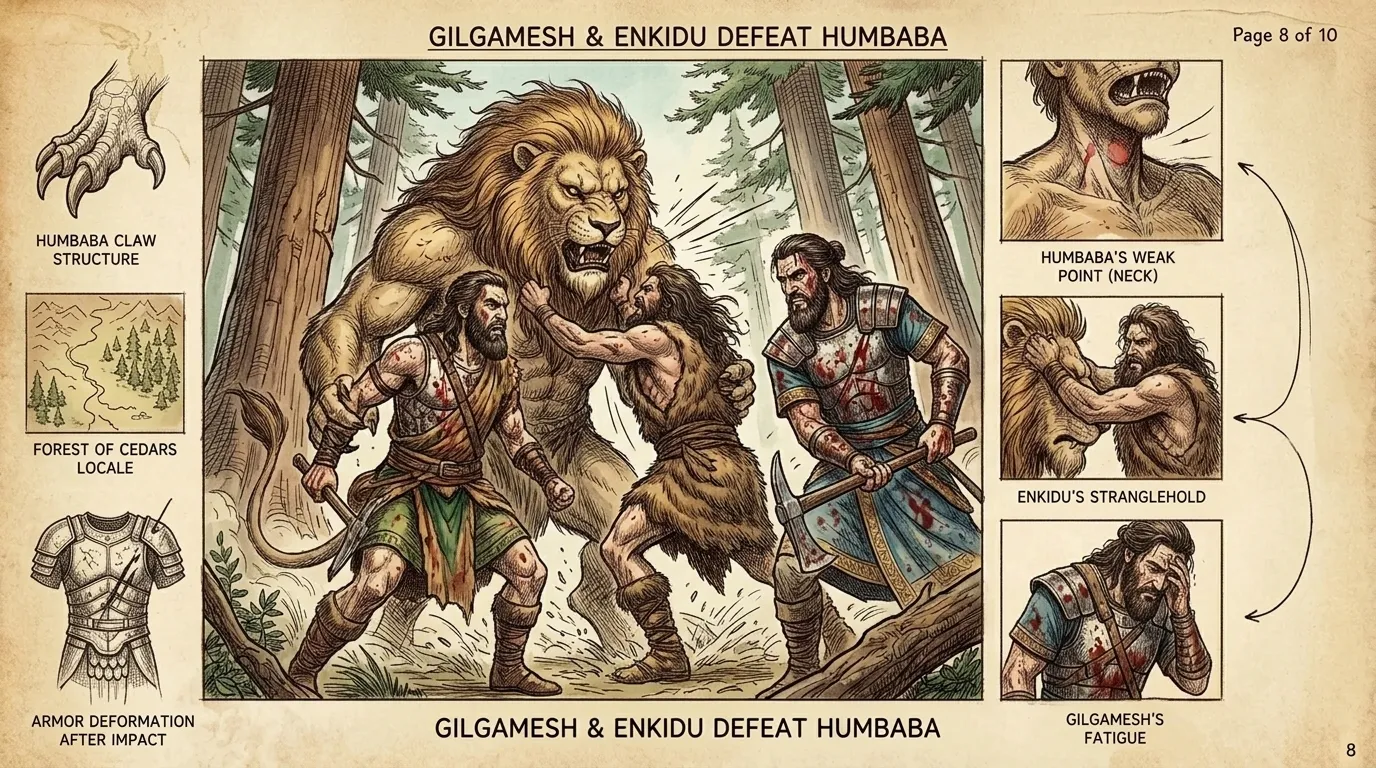
Together, Gilgamesh and Enkidu confront Humbaba, battling the monster amidst the towering cedars. Their combined strength and cunning prevail, but the victory comes at a cost. The forest echoes with the sounds of their struggle.
""We have faced death itself," Gilgamesh declares, his armor stained with blood, "but the gods will curse us for this deed!""
Art Fact: The slaying of Humbaba was a pivotal moment in the Epic of Gilgamesh. While it demonstrated the heroes' strength and courage, it also incurred the wrath of the gods, leading to tragedy and sorrow.
Page 9
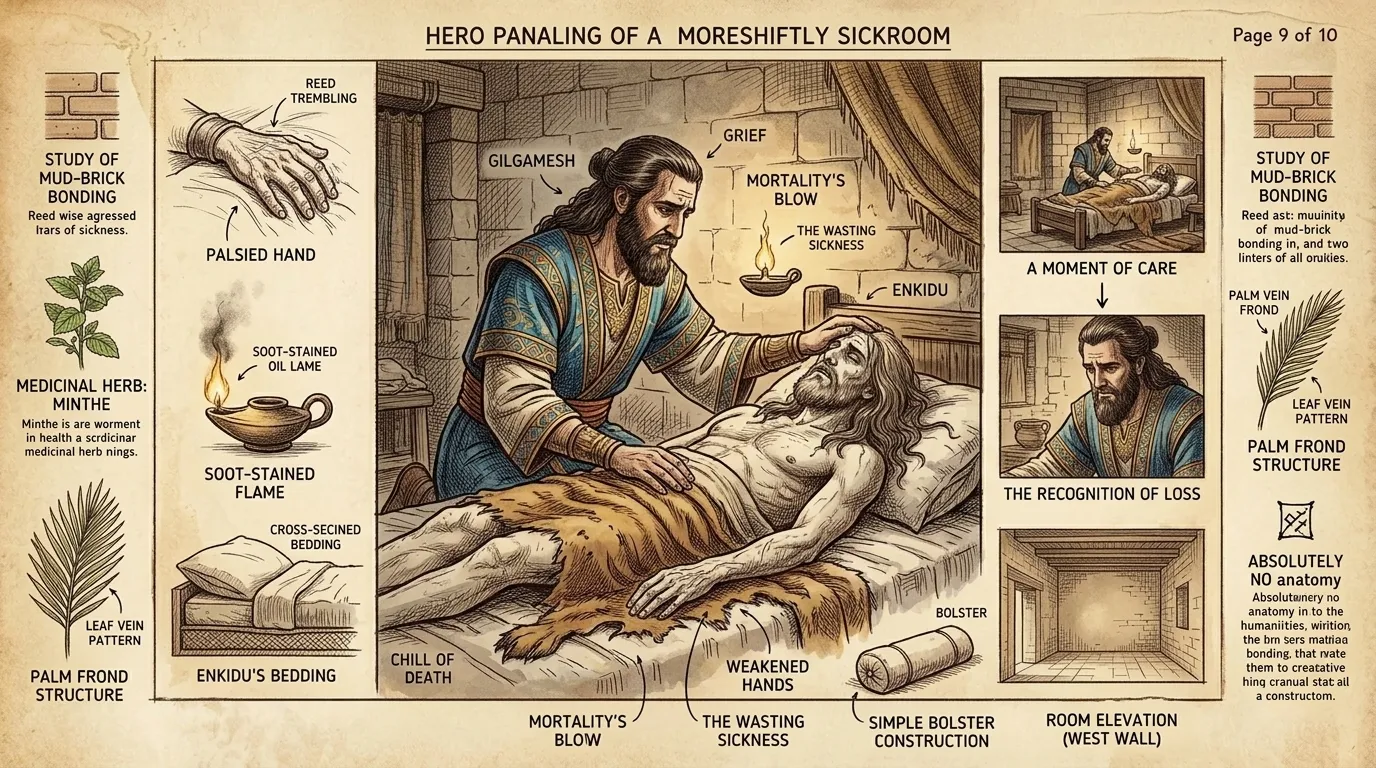
The gods punish Gilgamesh for his hubris, striking down Enkidu with a wasting sickness. Gilgamesh is consumed by grief, witnessing the slow fading of his beloved friend. Mortality strikes a chilling blow.
""Do not leave me, brother," Gilgamesh whispers, his voice choked with tears. "What will I be without you?""
Art Fact: Enkidu's death was a profound tragedy that deeply affected Gilgamesh. It forced him to confront his own mortality and sparked his quest for immortality.
Page 10
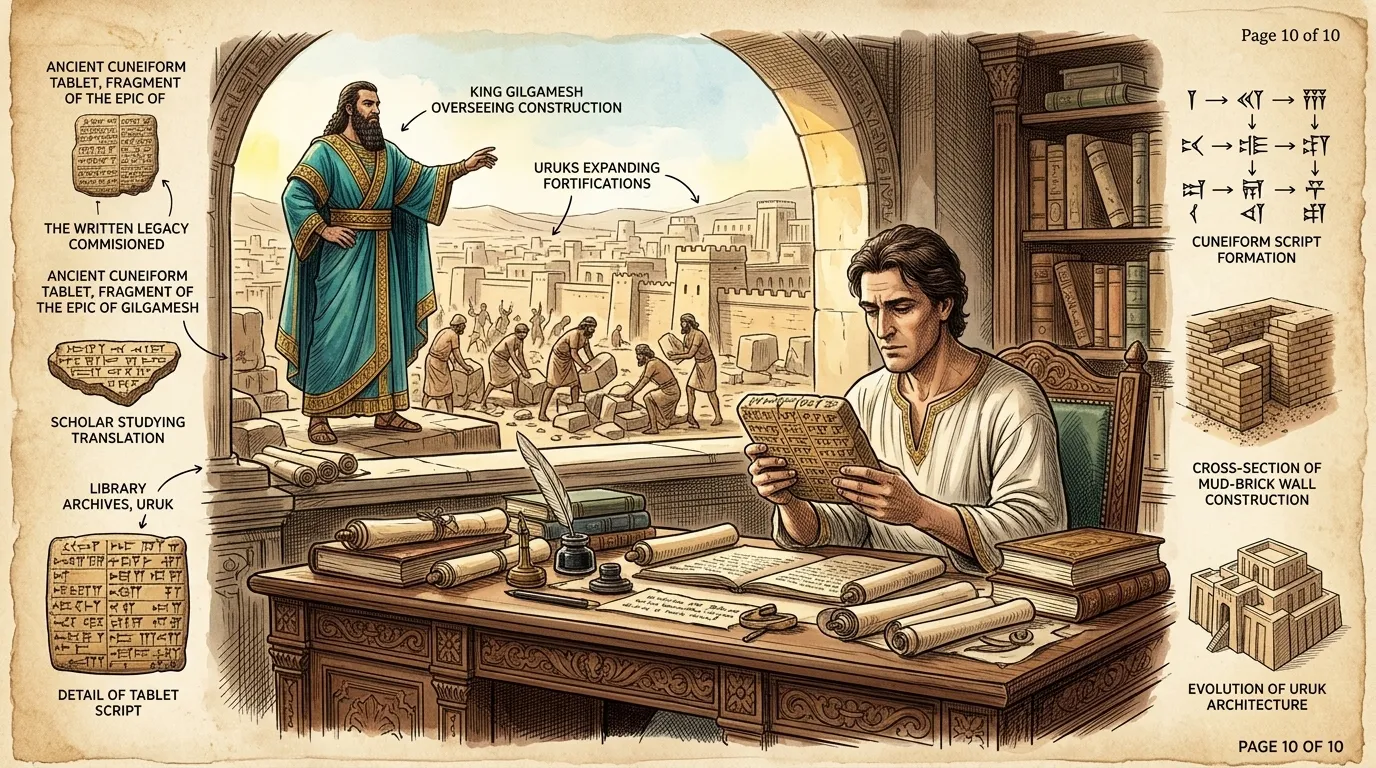
Gilgamesh, forever changed by loss, returns to Uruk. He no longer seeks immortality through conquest, but through wisdom and building. He commissions the writing of the Epic, so his story, and Enkidu's, will never be forgotten. Gilgamesh's reign is now remembered for his leadership and the tale of his search for immortality.
" Centuries later, a scholar gazes at the tablet, whispering, "As Marcus Aurelius said, 'Think of yourself as dead. You have lived your life. Now, take what's left and live it properly.' Gilgamesh learned this in the end.""
Art Fact: The Epic of Gilgamesh remains a cornerstone of world literature, offering insights into ancient Mesopotamian culture, the nature of friendship, and the human quest for meaning in the face of mortality. It resides in the British Museum.
About this story
- Location: United Kingdom
- Audience: general readers
Questions and answers
Questions and answers about Epic of Gilgamesh by Sumerian authors (Mesopotamia — c. 2100 BC)
Read Wonder Arts on your phone
Wonder Arts is available on Android. Get Wonder Arts on Google Play.
More Wonder Arts stories
- Equestrian Statue of Colleoni by Andrea del Verrocchio (Venice, Italy — 1496)
- Farnese Hercules by Glykon (Naples, Italy — 3rd Century AD)
- Fidelio by Ludwig van Beethoven (Vienna, Austria — 1805)
- First Color Photograph by Thomas Sutton and James Clerk Maxwell (London, UK — 1861)
- First Film Screening by Lumière Brothers (Paris, France — 1895)
- First Folio by William Shakespeare (London, UK — 1623)