Equestrian Statue of Colleoni by Andrea del Verrocchio (Venice, Italy — 1496)
Equestrian Statue of Colleoni by Andrea del Verrocchio (Venice, Italy — 1496) — an illustrated arts story, set in Italy. 10 illustrated pages, free to read on Wonder Arts.
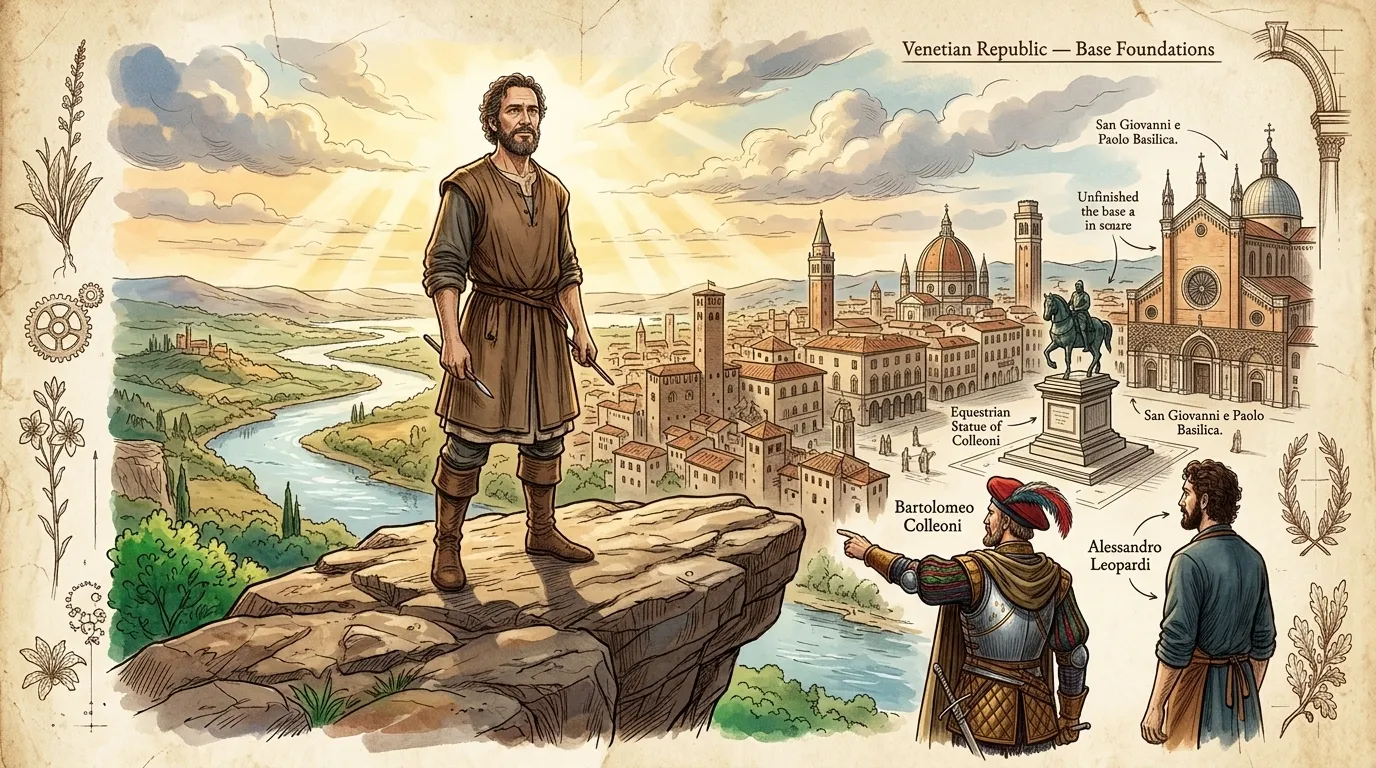
Page 1
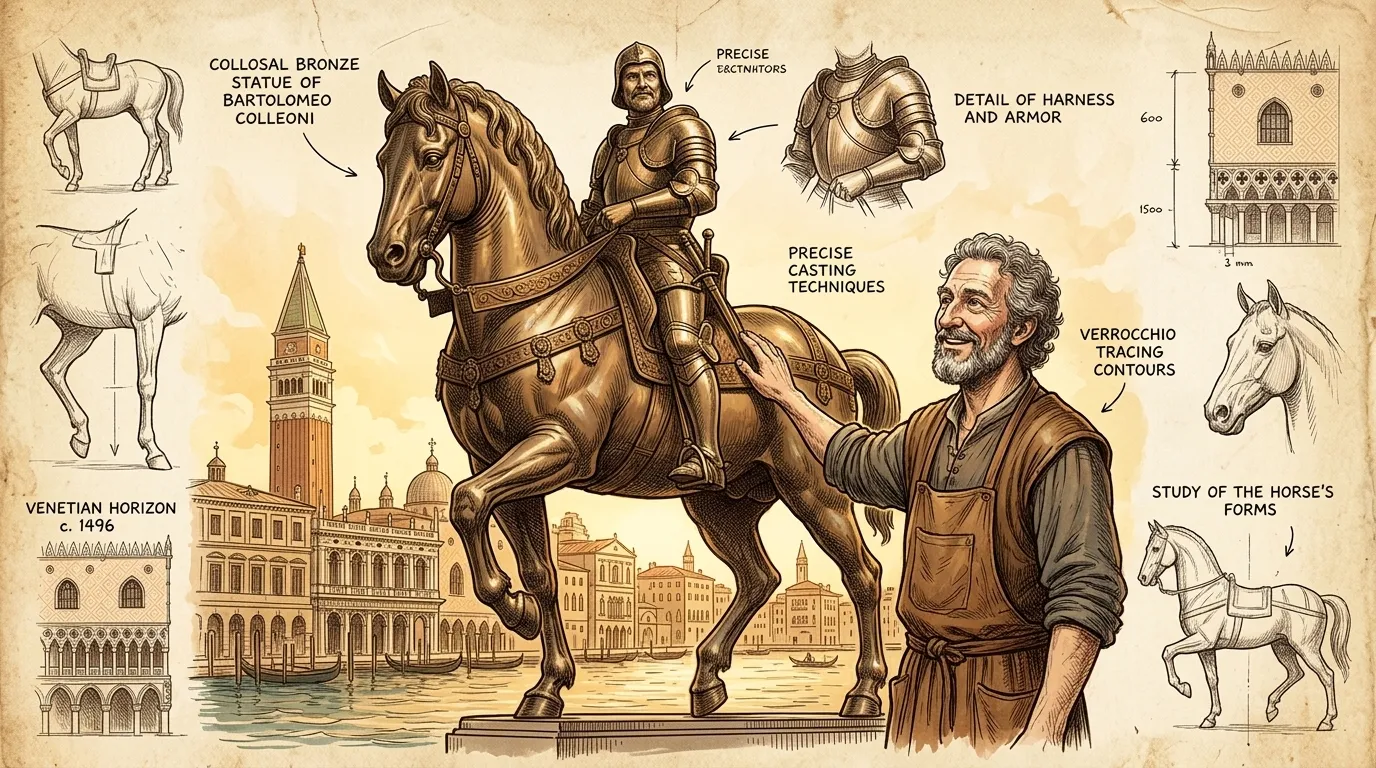
Andrea del Verrocchio, the Florentine master, stood before his creation. The Equestrian Statue of Bartolomeo Colleoni, a powerful condottiero, towered above him in Venice, 1496. This bronze monument, standing over 13 feet tall, immortalized Colleoni, fulfilling his will and shaping the Piazza San Marco's skyline. Its creation was fraught with challenges, from competition with other artists to Verrocchio's own untimely death before its completion.
"Verrocchio murmured, tracing the statue's contours with his gaze. 'It is finished. May it stand as a testament to both Colleoni's strength and my vision.'"
Art Fact: The Equestrian Statue of Bartolomeo Colleoni is located in the Campo San Zanipolo, Venice. It is considered a masterpiece of the early Italian Renaissance, showcasing Verrocchio's skill in bronze casting and dynamic composition. The statue stands 3.9 meters tall and immortalized Colleoni, a famous mercenary captain.
Page 2
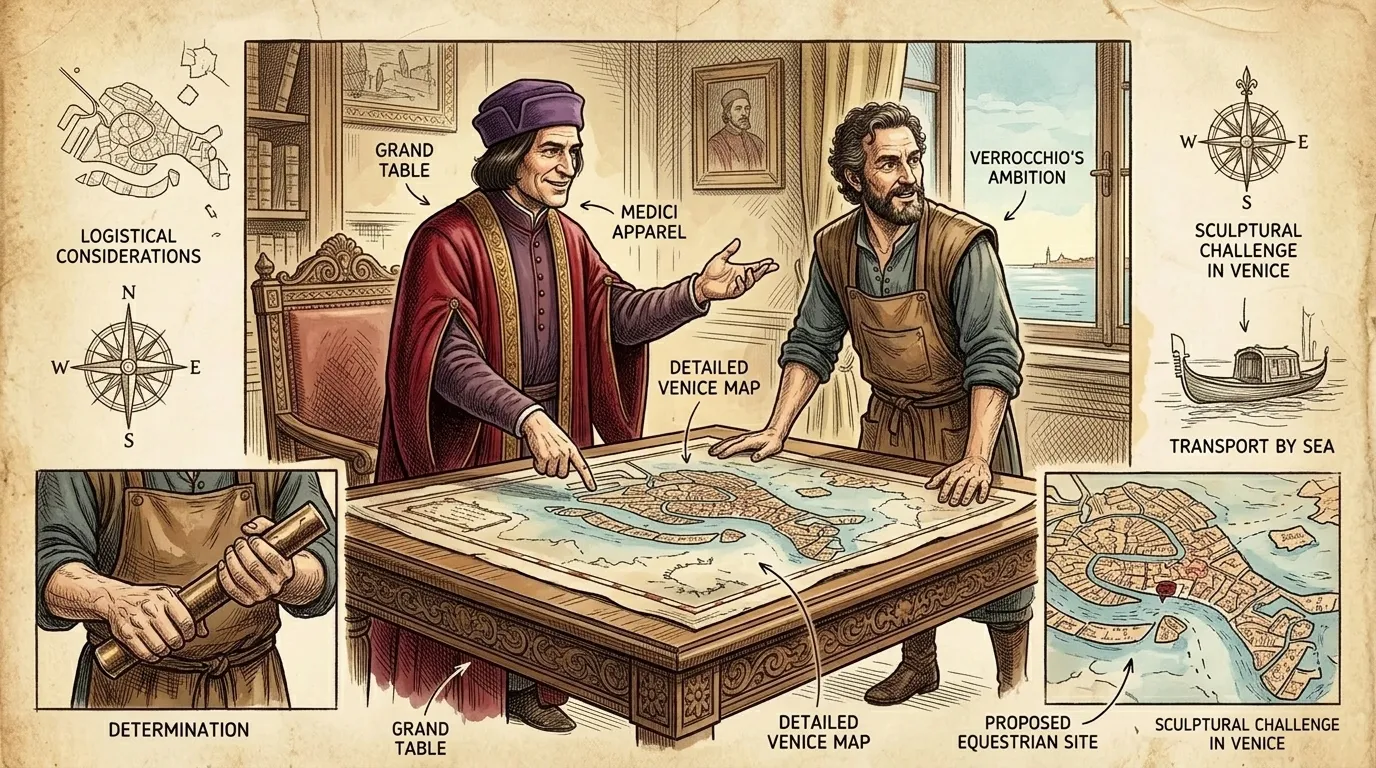
The Venetian Republic announced the competition for the Colleoni monument. Ambitious sculptors flocked to Venice, eager to secure the prestigious commission. Verrocchio, renowned for his skill in Florence, knew this was his chance to prove his mastery on a grand scale. The pressure was immense, the stakes were high.
"Lorenzo de Medici, Verrocchio's patron, said, 'Andrea, this is your opportunity to etch your name in history. Venice awaits your genius.' Verrocchio replied, 'I will not disappoint, Lorenzo. This statue will surpass all expectations.'"
Art Fact: The commission for the Equestrian Statue of Bartolomeo Colleoni was initially offered to several sculptors, including Alessandro Leopardi, before Verrocchio secured it. His initial wooden model won him the commission, but he died before he could cast the bronze statue himself.
Page 3
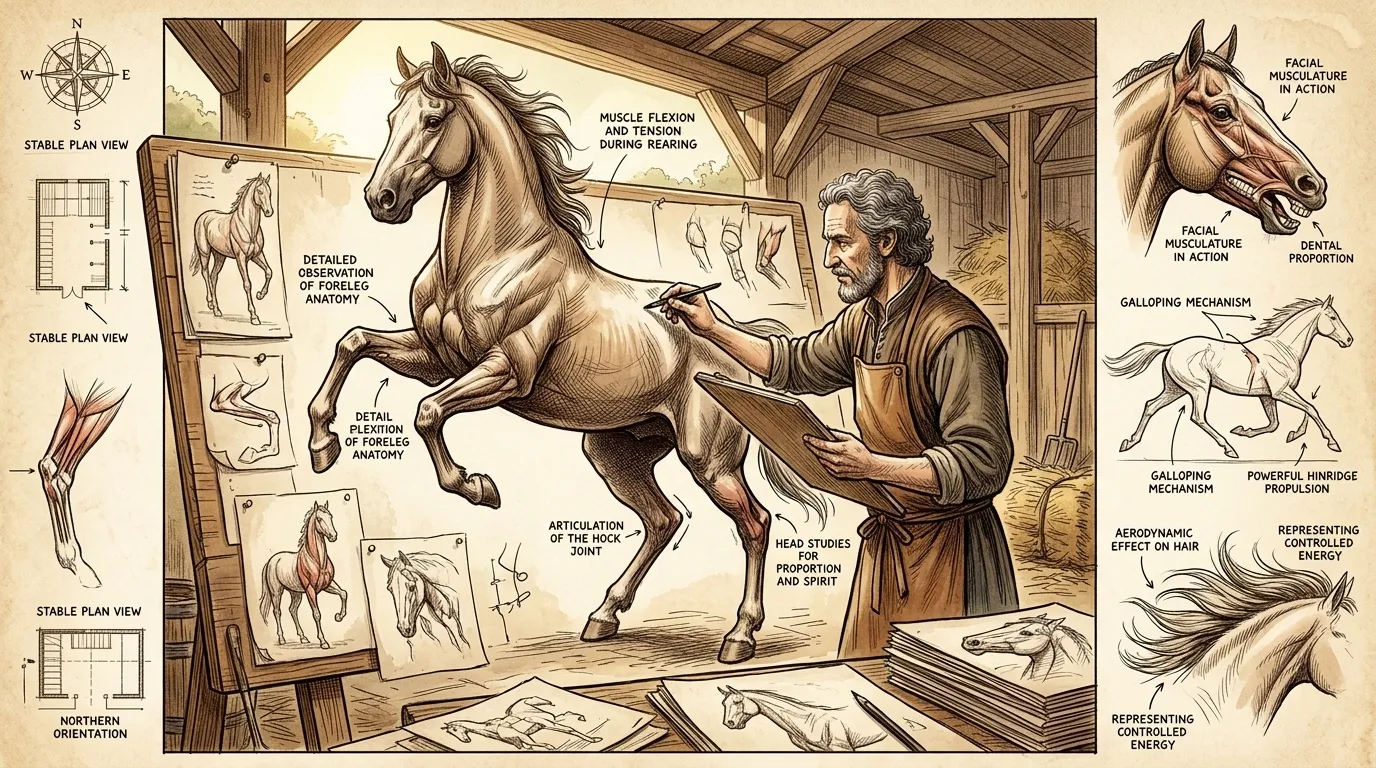
Verrocchio tirelessly sketched and studied horses, capturing their anatomy and power. He visited stables and observed military parades, seeking the perfect pose for Colleoni's mount. He wanted to convey not just strength, but also the controlled energy of a warhorse ready for battle.
"Verrocchio, charcoal in hand, muttered, 'The horse must embody Colleoni's spirit—powerful, yet disciplined. It's as Leonardo da Vinci said, 'Painting embraces all the ten functions of the eye; that is to say, darkness, light, body and colour, shape and location, distance and nearness, motion and rest.' I must make it come to life on paper!'"
Art Fact: Verrocchio was known for his meticulous study of anatomy, evident in his drawings and sculptures. He emphasized realism and dynamic movement, capturing the essence of his subjects.
Page 4
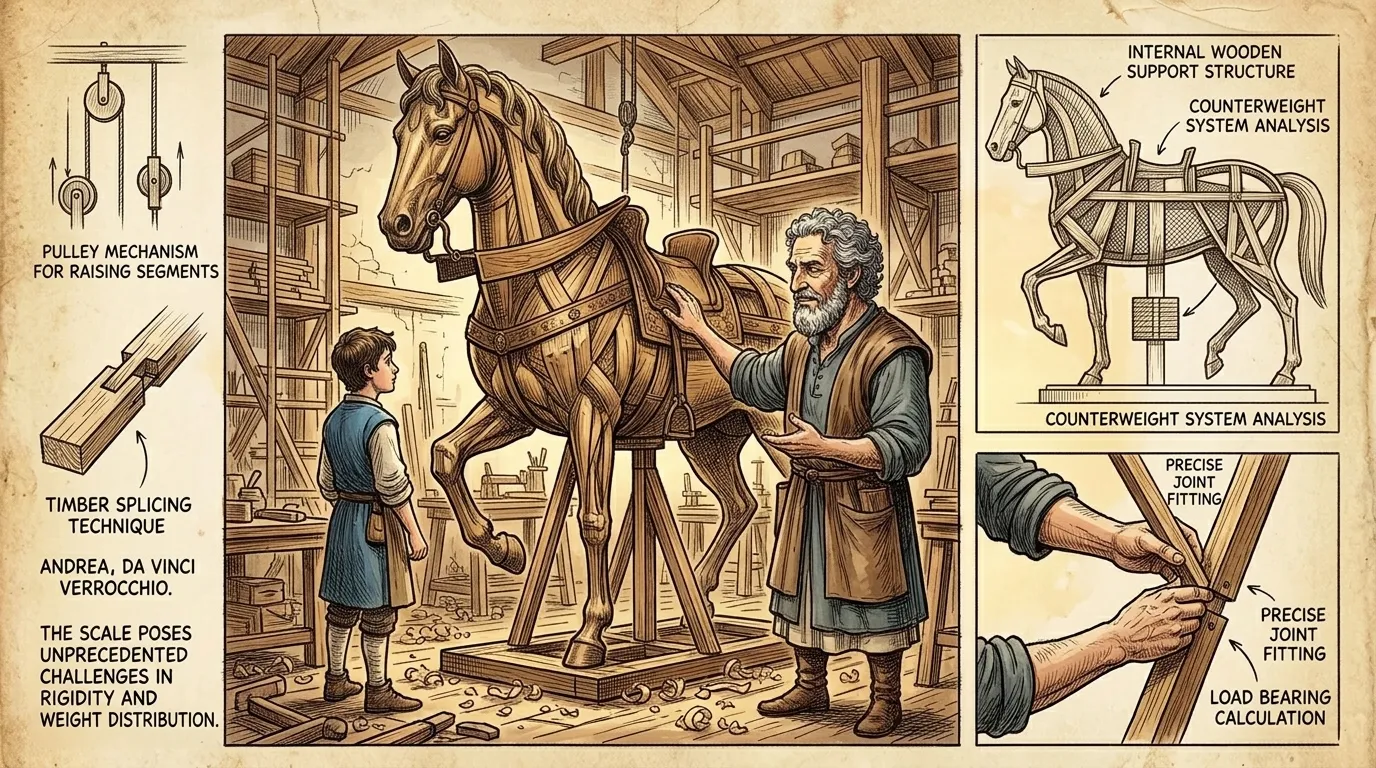
Verrocchio began crafting a full-scale wooden model of the statue. This allowed him to refine the composition and address engineering challenges. The model, though temporary, was a crucial step in realizing his vision in bronze. It was a feat of engineering.
"Marco, Verrocchio's apprentice, asked, 'Master, how will we ensure the bronze can support itself in such a dynamic pose?' Verrocchio replied, 'That is the challenge, Marco! We must carefully distribute the weight and reinforce the structure. The wooden model will guide us.'"
Art Fact: Creating a full-scale model was a common practice for large bronze sculptures. It allowed the artist to test the design and address structural issues before committing to the expensive and time-consuming bronze casting process.
Page 5
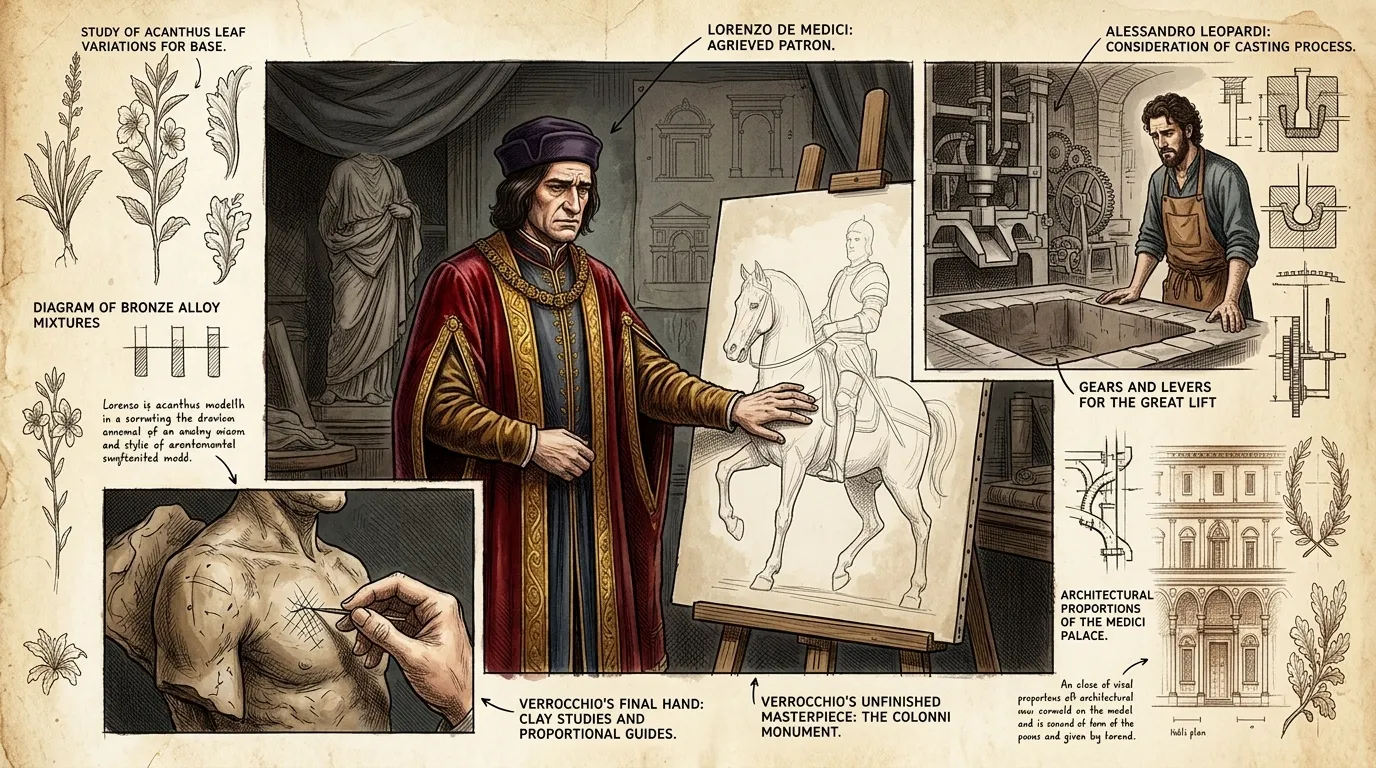
Tragedy struck. Verrocchio fell ill and died in Venice before completing the bronze casting. His death threatened to derail the entire project. The fate of the Colleoni monument hung in the balance. Would his vision ever be realized?
"A distraught Lorenzo de Medici lamented, 'Florence has lost a master. Will Venice ever see his Colleoni rise in bronze?'"
Art Fact: Verrocchio's death in 1488 left the Colleoni monument unfinished. The Venetian Republic then tasked Alessandro Leopardi with completing the bronze casting based on Verrocchio's wooden model.
Page 6
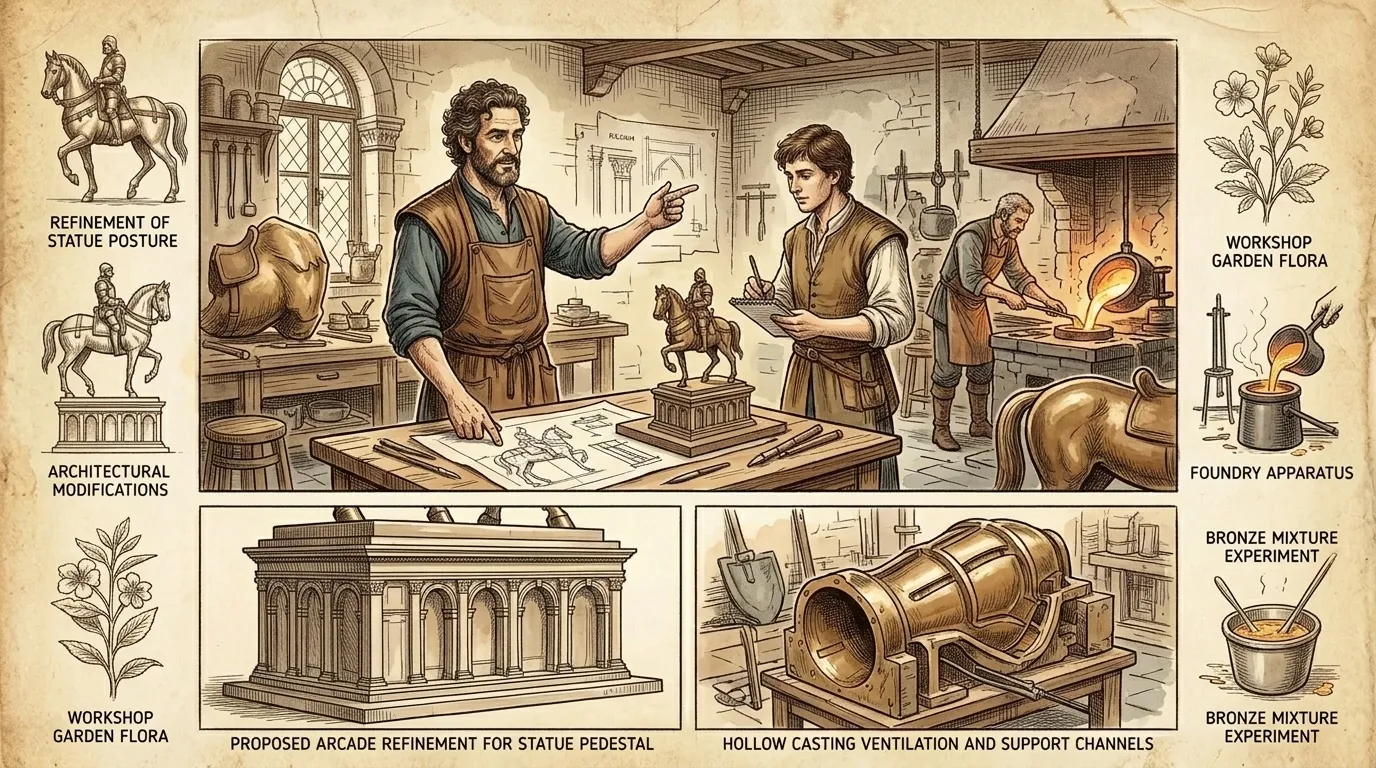
Alessandro Leopardi, a skilled Venetian sculptor, was chosen to cast the bronze statue. He faced the daunting task of interpreting Verrocchio's vision and bringing it to life. Leopardi made subtle modifications to the design, adding his own artistic flair.
"Leopardi confided in his assistant, 'I respect Verrocchio's genius, but I must ensure the casting is flawless. A few adjustments are necessary to enhance the stability and visual impact.'"
Art Fact: Alessandro Leopardi is credited with casting the bronze statue and designing the pedestal. He also added his signature on the horse's girth. His contributions were essential in completing Verrocchio's masterpiece.
Page 7
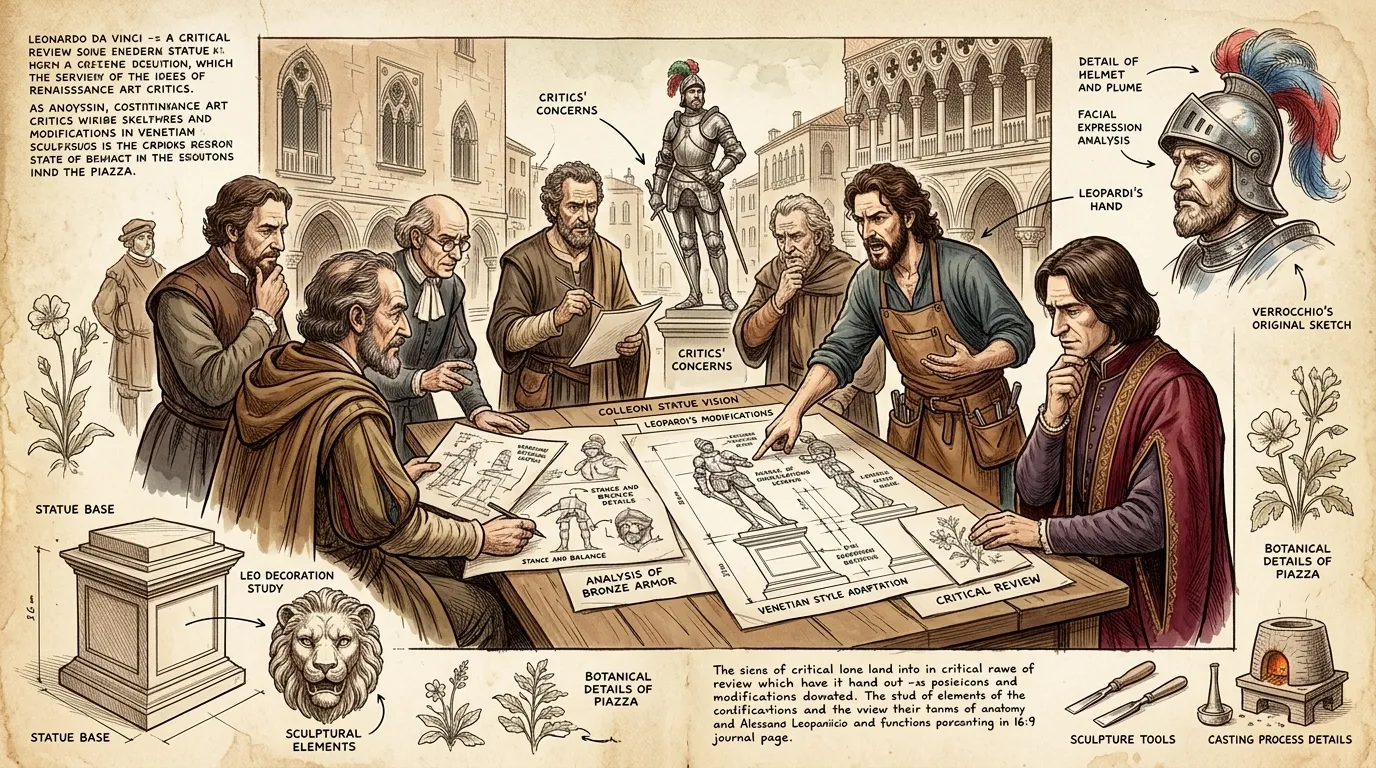
Art critics and scholars debated Leopardi's changes to Verrocchio's design. Some praised his technical skill, while others argued that he had compromised the original vision. The details of the statue became a subject of intense scrutiny.
"Giovanni, a Venetian art critic, said, 'Leopardi's bronze work is technically brilliant, but has he truly captured Verrocchio's spirit? Is it truly Verrocchio's statue?' Another art critic replied, 'One must remember what Aristotle said: 'The aim of art is to represent not the outward appearance of things, but their inward significance.' It reflects both artists. Perhaps a balance has been achieved.'"
Art Fact: The attribution of the statue remains a subject of debate among art historians. While Verrocchio conceived the design, Leopardi's execution significantly shaped its final appearance.
Page 8
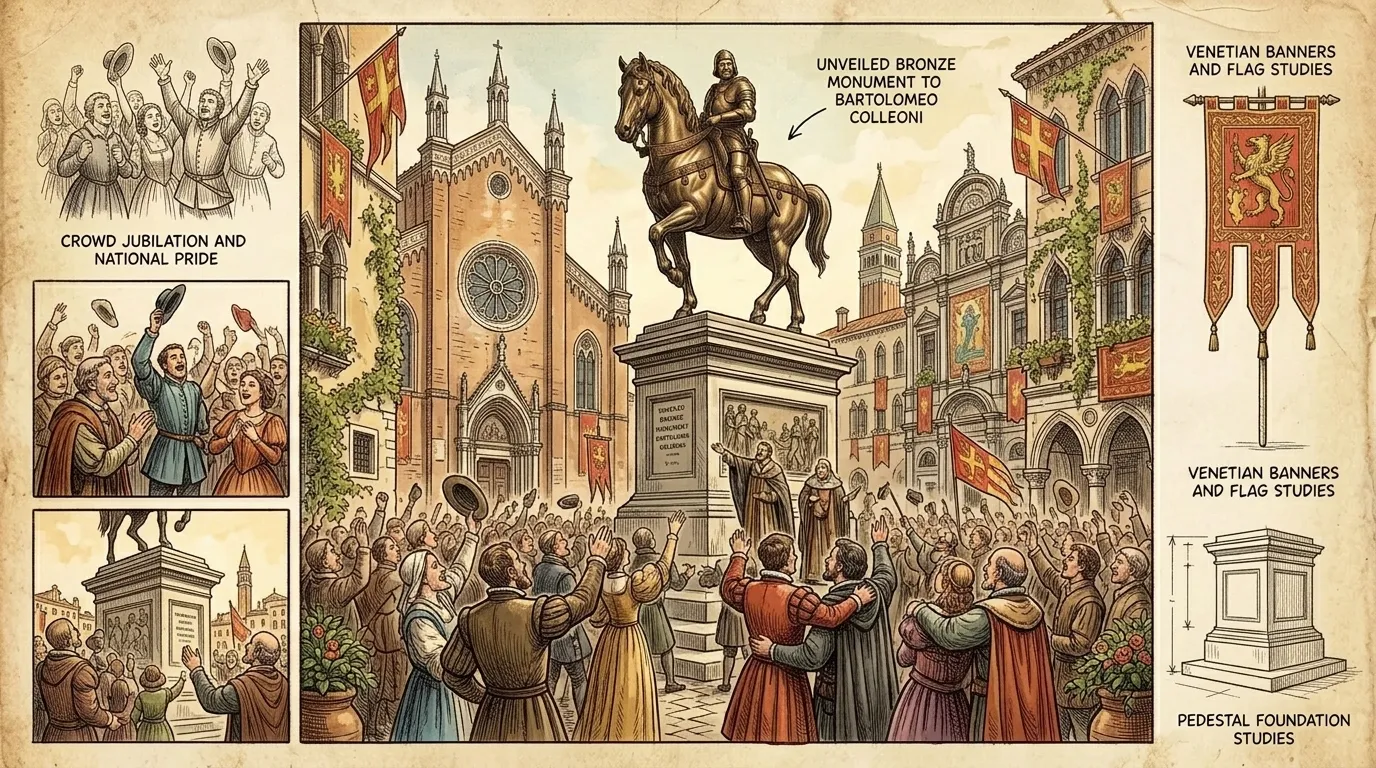
The completed statue was installed in the Campo San Zanipolo. The unveiling was a grand spectacle, attended by dignitaries and citizens. Bartolomeo Colleoni's bronze likeness finally stood tall, a symbol of Venetian power and artistic achievement.
"A Venetian nobleman exclaimed, 'Behold! Colleoni lives again! His spirit will forever watch over Venice.'"
Art Fact: The placement of the statue was initially planned for the Piazza San Marco, but logistical challenges led to its installation in the Campo San Zanipolo.
Page 9
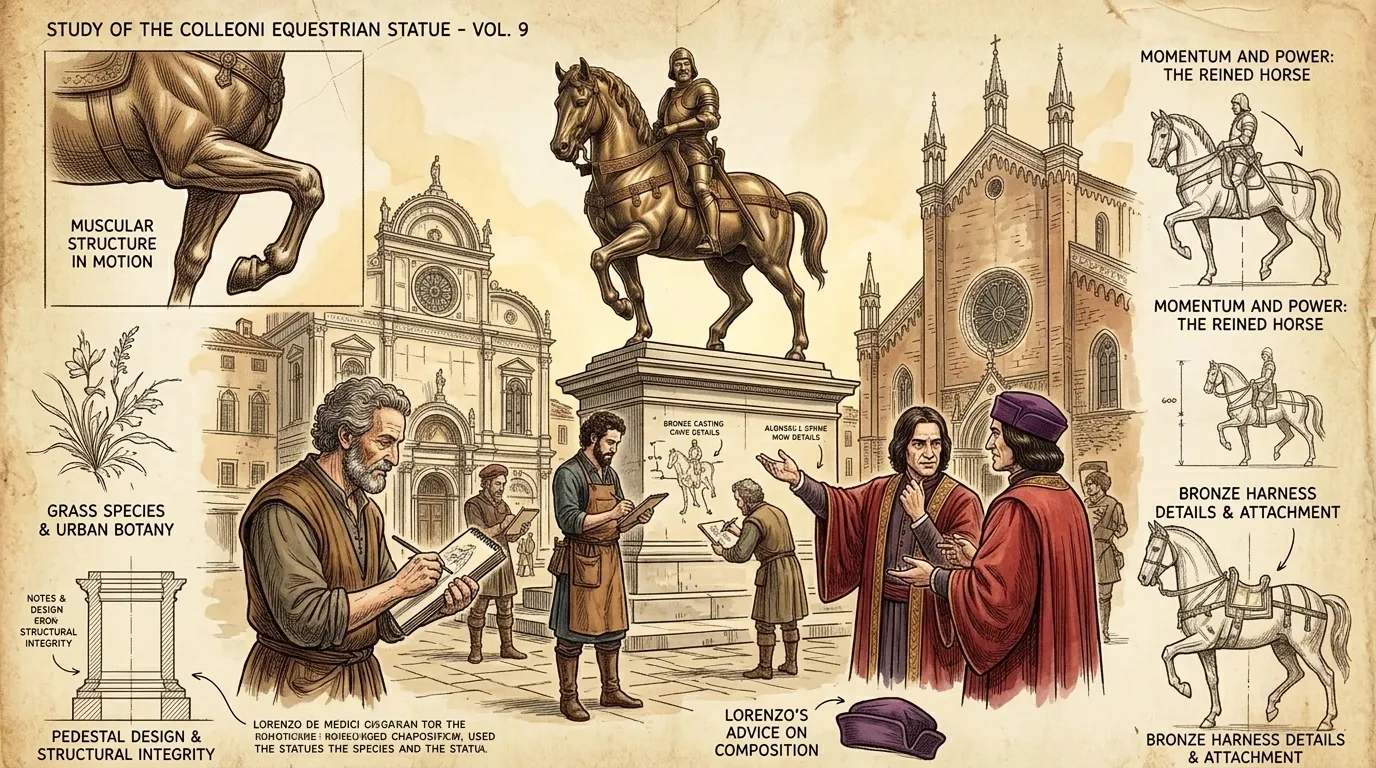
The Equestrian Statue of Bartolomeo Colleoni quickly became a landmark of Venice. It inspired other artists and solidified Verrocchio and Leopardi's reputations. The statue stood as a testament to their combined genius.
"An artist observed, 'The statue's dynamism is breathtaking. It captures the raw power and authority of Colleoni. It's amazing.'"
Art Fact: The Equestrian Statue of Bartolomeo Colleoni remains one of Venice's most iconic monuments. It continues to inspire awe and admiration, attracting visitors from around the world.
Page 10
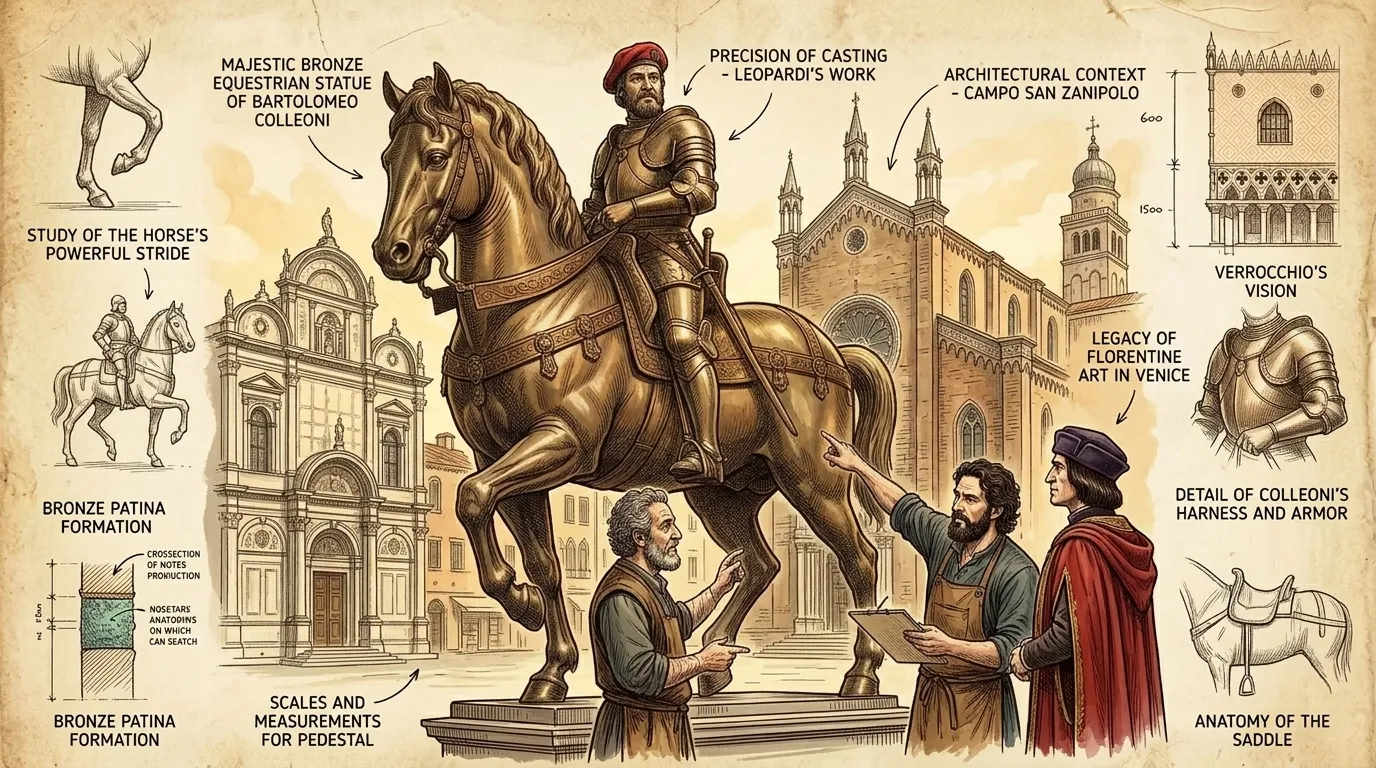
Centuries later, the statue continues to inspire. It stands as a timeless symbol of Venice, a testament to the power of art to immortalize individuals and ideas. Verrocchio's initial vision, completed by Leopardi, endures. The statue stands as Verrocchio's legacy. His works survive forever because they embody skill and vision.
"The statue whispers, 'I will stand tall in Venice forever, a monument to both my strength and the artistry that brought me to life.'"
Art Fact: The Equestrian Statue of Bartolomeo Colleoni is a testament to the collaborative nature of art. It embodies the artistic vision of Verrocchio and the technical skill of Leopardi, creating a lasting legacy for both artists.
About this story
- Location: Italy
- Audience: general readers
Questions and answers
Read Wonder Arts on your phone
Wonder Arts is available on Android. Get Wonder Arts on Google Play.
More Wonder Arts stories
- Farnese Hercules by Glykon (Naples, Italy — 3rd Century AD)
- Fidelio by Ludwig van Beethoven (Vienna, Austria — 1805)
- First Color Photograph by Thomas Sutton and James Clerk Maxwell (London, UK — 1861)
- First Film Screening by Lumière Brothers (Paris, France — 1895)
- First Folio by William Shakespeare (London, UK — 1623)
- First Impressionist Exhibition by Monet and peers (Paris, France — 1874)