First Film Screening by Lumière Brothers (Paris, France — 1895)
First Film Screening by Lumière Brothers (Paris, France — 1895) — an illustrated arts story, set in France. 10 illustrated pages, free to read on Wonder Arts.
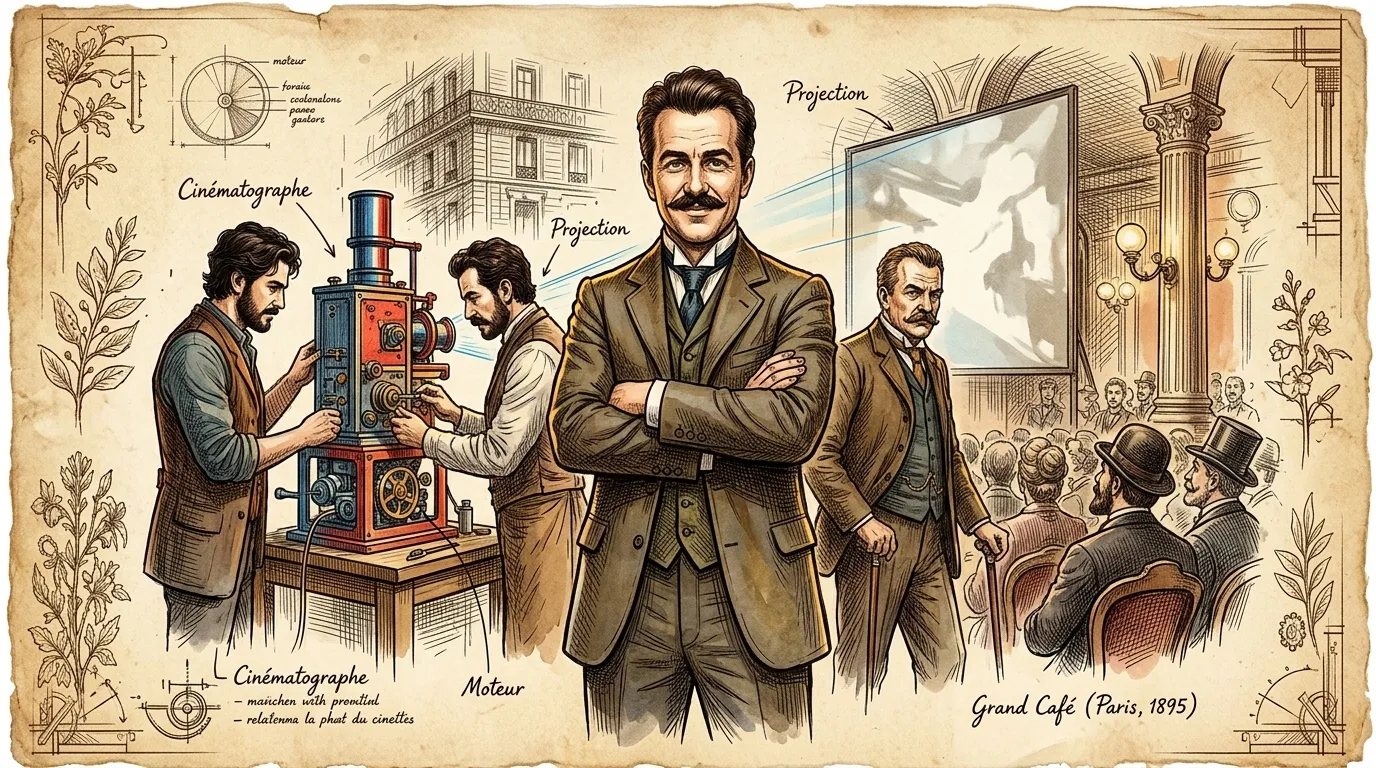
Page 1
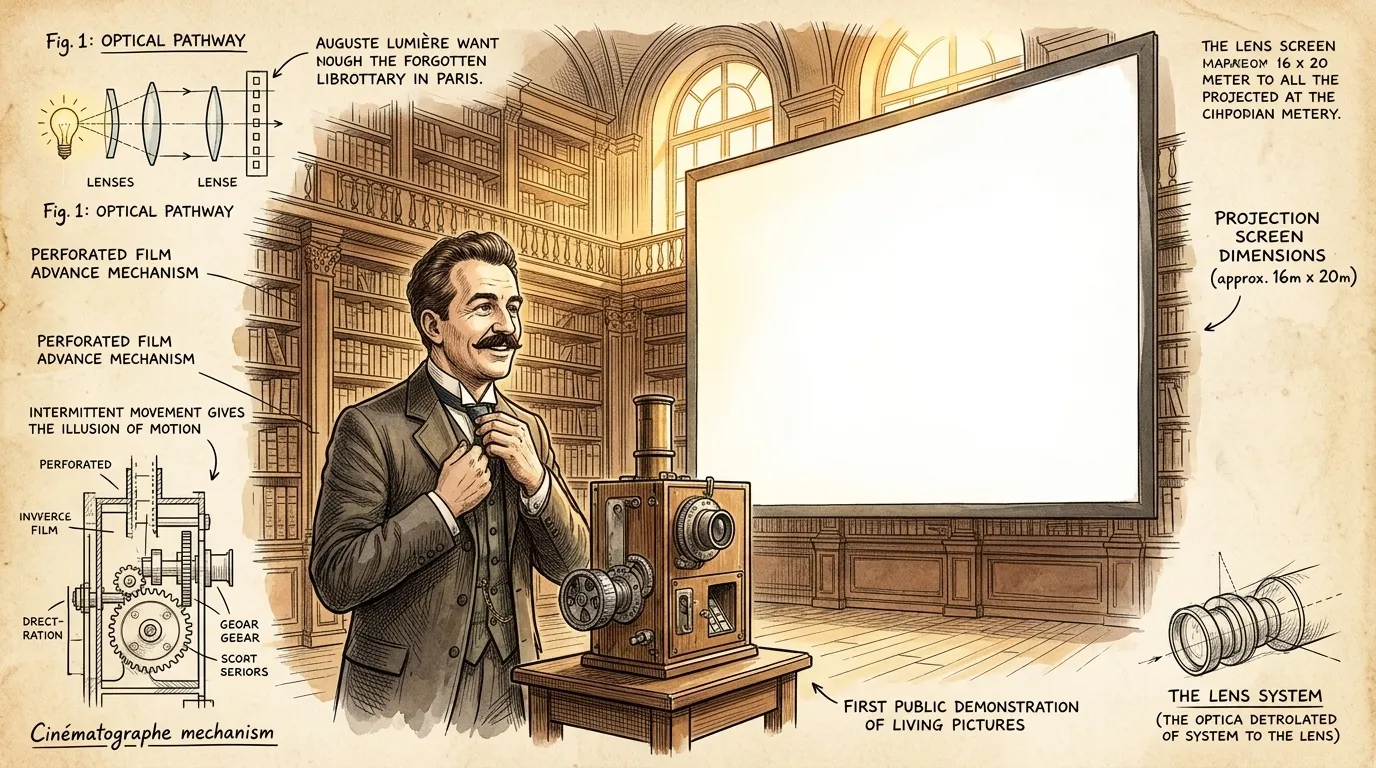
Auguste Lumière stands beside his invention, the Cinématographe, in Paris, 1895. This machine, capable of recording, projecting, and printing film, would soon change the world. The screen behind him awaits its first audience, eager to witness moving images for the first time. It measures approximately 16 by 20 meters. It is held within the forgotten library.
"Auguste whispers to himself, 'Louis, are we truly ready for what's about to unfold?' He adjusts his tie, a mix of anticipation and apprehension swirling within him. 'As Pasteur said, 'Chance favors the prepared mind.' We've prepared, now let chance take its course.'"
Art Fact: The first public film screening took place on December 28, 1895, at the Salon Indien du Grand Café in Paris. The program consisted of ten short films, each approximately 50 seconds long.
Page 2
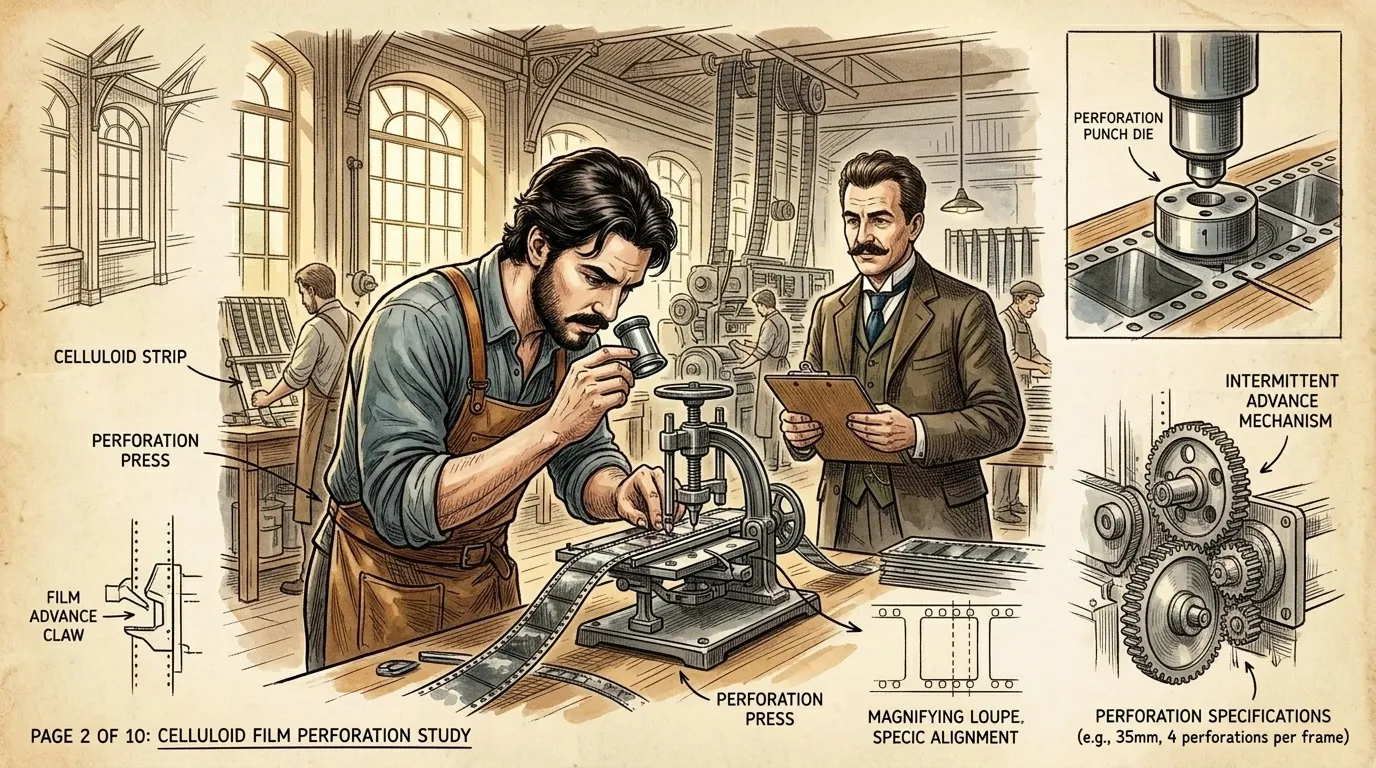
Years before the Grand Café, Auguste and Louis tinkered in their father's photographic factory in Lyon. Louis, the younger brother, meticulously adjusts the perforations on a strip of celluloid film. The air buzzes with the hum of machinery and the scent of chemicals. They discover how to make film.
"Louis, peering through a magnifying glass, says, 'Auguste, the key is precision. If the perforations are not perfect, the film will tear.' Auguste replies, 'Patience, Louis. As Leonardo da Vinci said, 'Art is never finished, only abandoned.' We must strive for perfection, even if we never fully achieve it.'"
Art Fact: The Lumière brothers initially focused on improving photographic plates before turning their attention to motion pictures.
Page 3
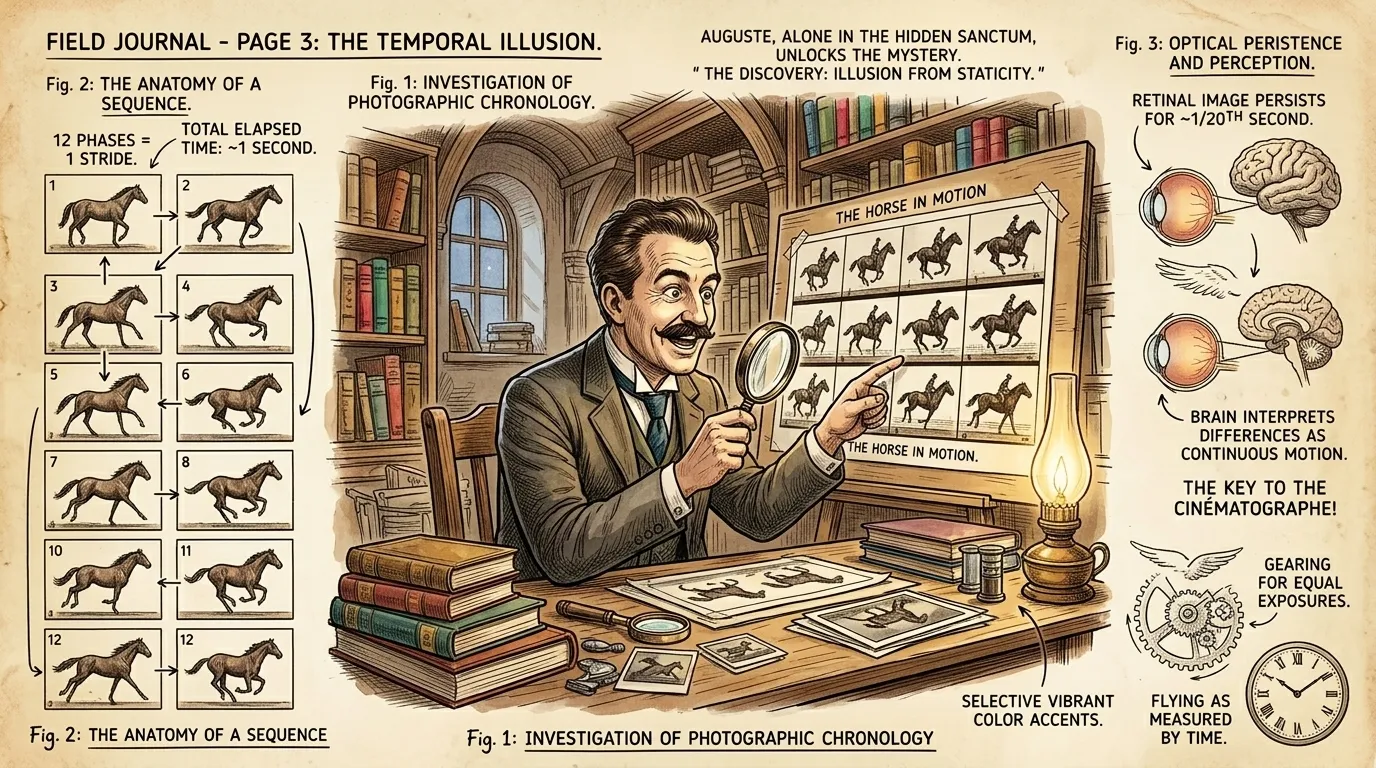
Inspiration struck after seeing Muybridge's 'The Horse in Motion.' Auguste examines a series of sequential photographs, mesmerized by the illusion of movement. He holds a magnifying glass to get a closer look. He is in his secret library.
"Auguste exclaims, 'Louis, look at this! Muybridge has captured the impossible—a horse in full gallop, its hooves leaving the ground!' Louis responds, 'Ingenious, but static. We must bring these images to life. We must turn them to film. Let us bring these images to life!'"
Art Fact: Eadweard Muybridge's sequential photographs of a horse in motion, published in 1878, demonstrated that all four hooves leave the ground at one point during a gallop.
Page 4
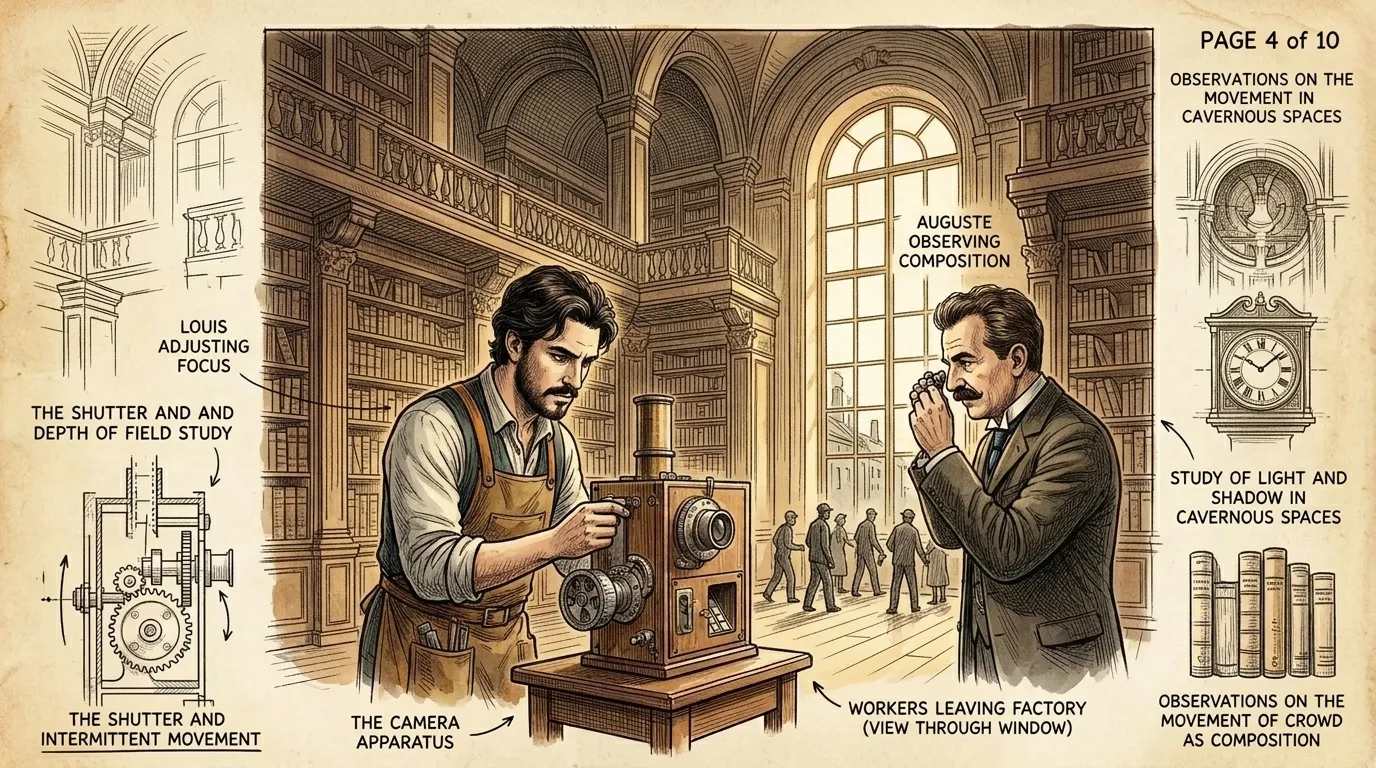
Louis films workers leaving the Lumière factory, capturing a simple scene of everyday life. 'Workers Leaving the Lumière Factory' becomes their first film. The camera is fixed, capturing the scene in a single shot. Louis stands behind it in his dark library.
"Louis, adjusting the camera, instructs, 'Simply walk naturally, as if you're leaving work. Don't look at the camera.' Auguste watches, observing the scene. 'Simple, yet revolutionary,' says Auguste."
Art Fact: 'Workers Leaving the Lumière Factory' (La Sortie de l'usine Lumière à Lyon) is considered the first true motion picture.
Page 5
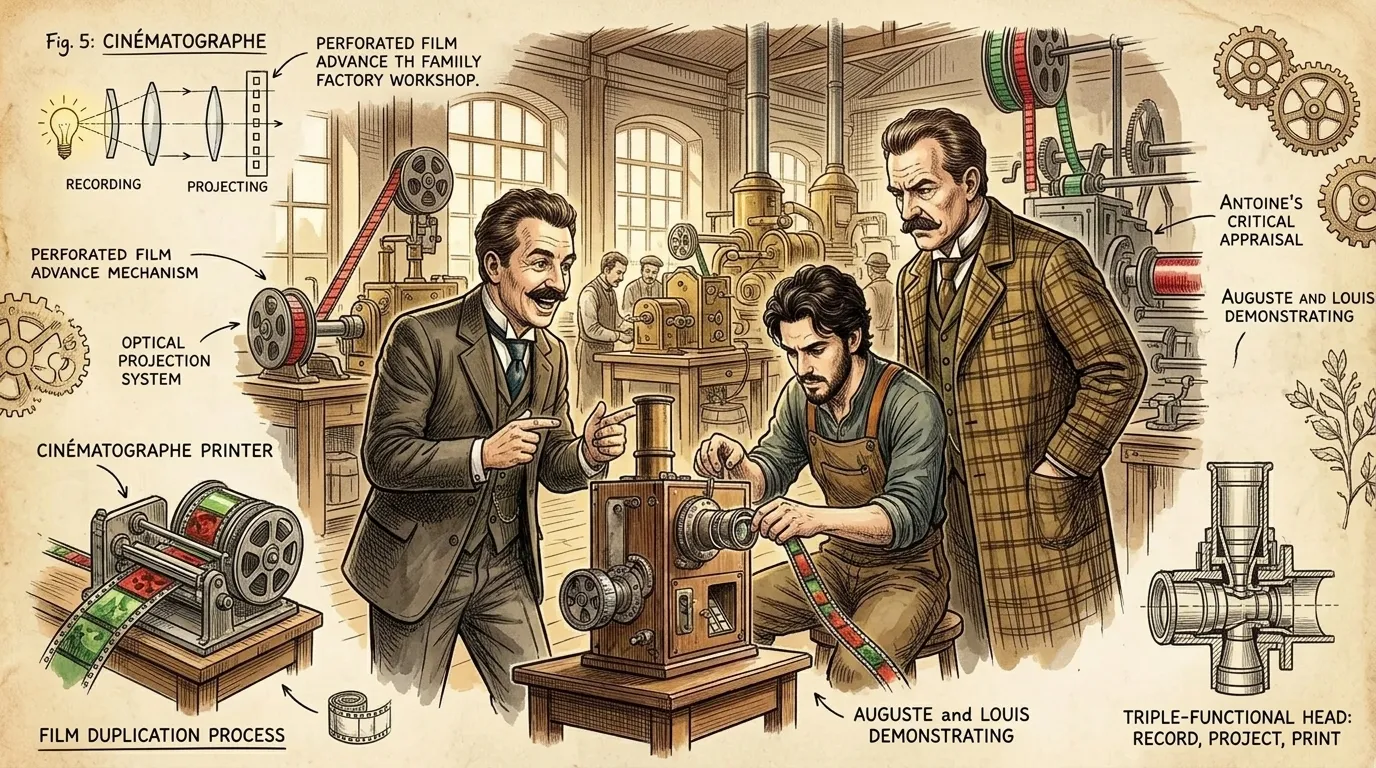
Auguste and Louis perfect the Cinématographe, combining recording, projecting, and printing into one portable device. They demonstrate the machine to their father, Antoine. The library is buzzing.
"Antoine, their father, watches with skepticism. 'Impressive, but will it amount to anything more than a novelty?' Auguste confidently states, 'Father, this is not just a machine; it's a window to the world. As Victor Hugo said, 'Nothing is so powerful as an idea whose time has come.''"
Art Fact: The Cinématographe was lightweight and portable, allowing the Lumière brothers to film and project in a variety of locations.
Page 6
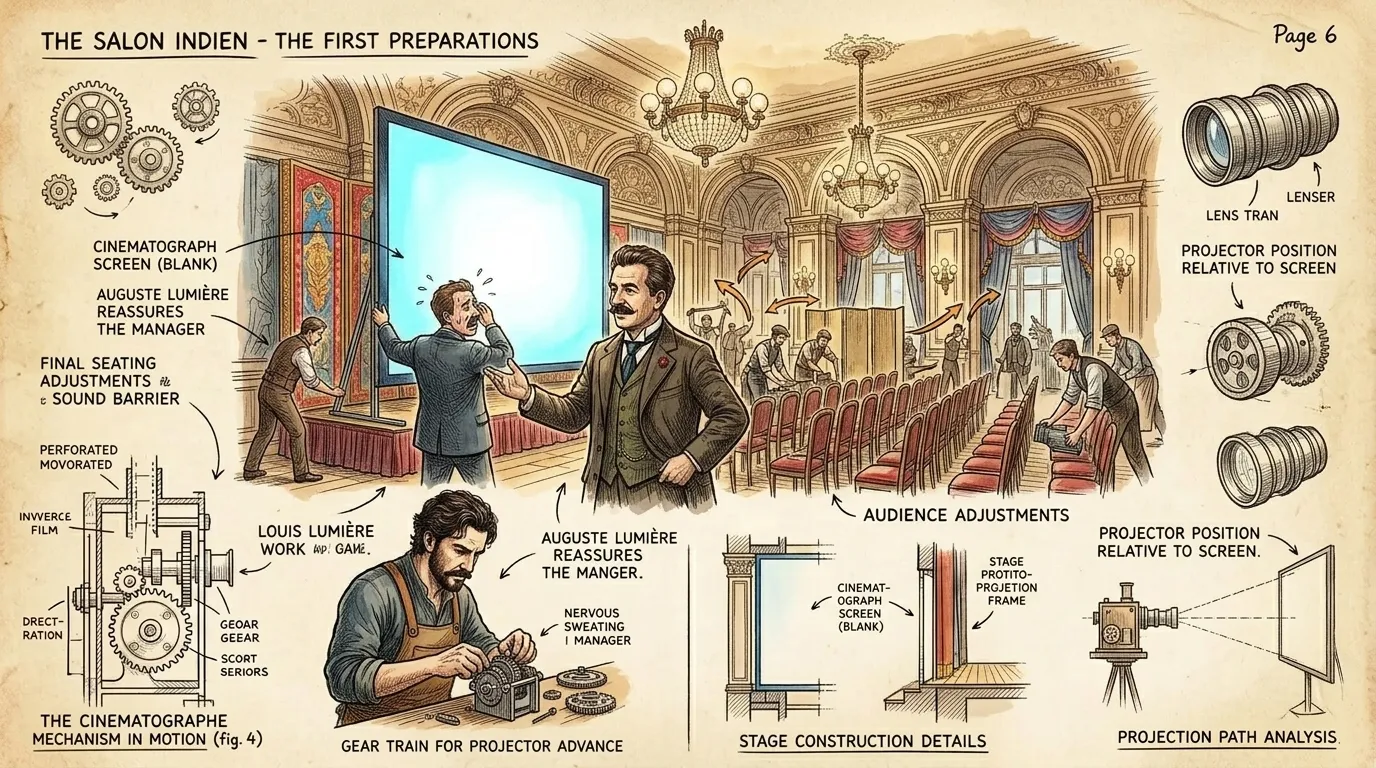
The Salon Indien du Grand Café prepares for its first film screening. Chairs are arranged, and a screen is set up. Anticipation fills the air. The library is being transferred to film.
"The manager of the Salon Indien nervously adjusts the screen. 'Are you sure this is going to work, Monsieur Lumière? My reputation is on the line!' Auguste assures him, 'Have faith. Tonight, history will be made.'"
Art Fact: The Salon Indien du Grand Café, located on the Boulevard des Capucines in Paris, was a popular venue for exhibitions and performances.
Page 7
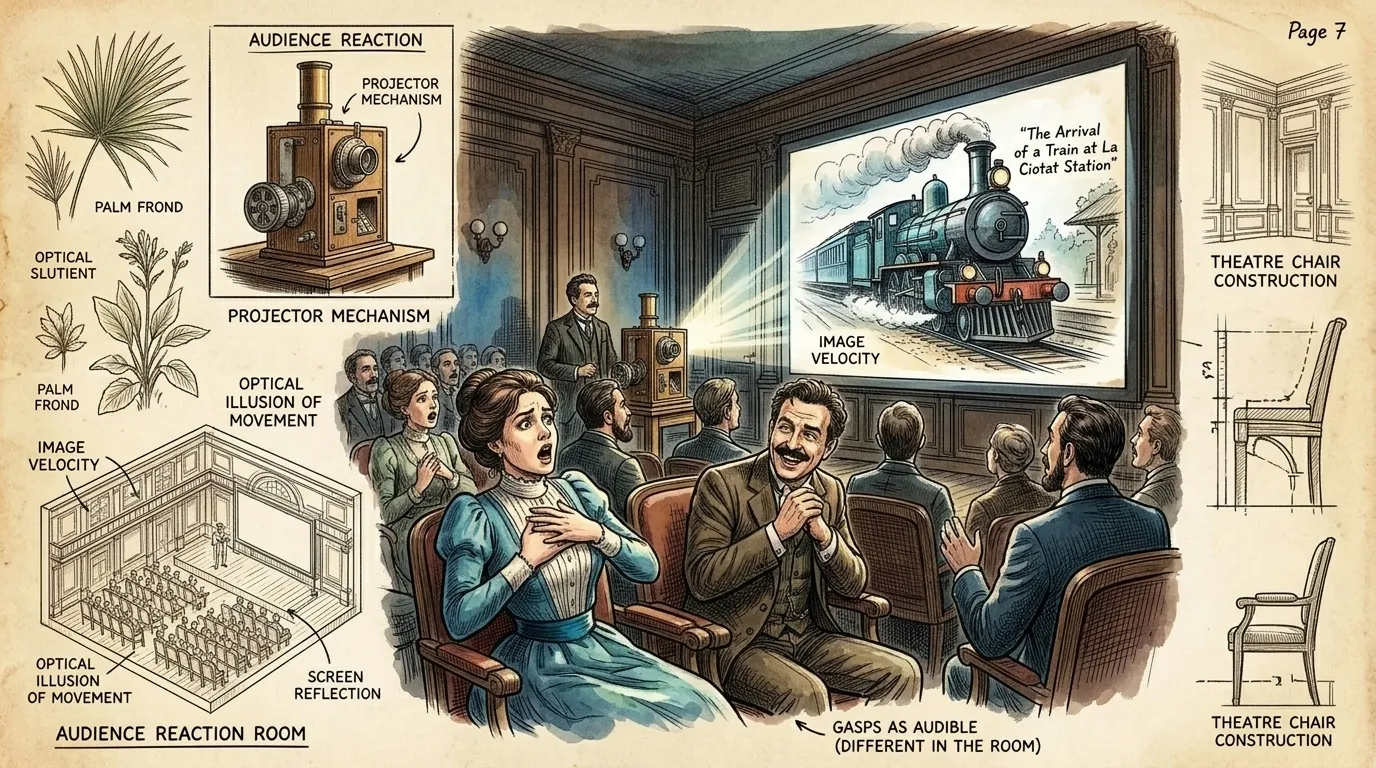
The audience gasps as 'The Arrival of a Train at La Ciotat Station' is projected onto the screen. The image of a train hurtling towards them is shockingly realistic. The library is filled with screams.
"A woman in the audience screams, 'It's coming right at us!' A man next to her laughs nervously. 'It's just an image, my dear, but what an image!'"
Art Fact: 'The Arrival of a Train at La Ciotat Station' (L'Arrivée d'un train en gare de La Ciotat) is one of the Lumière brothers' most famous films, known for its startling realism.
Page 8
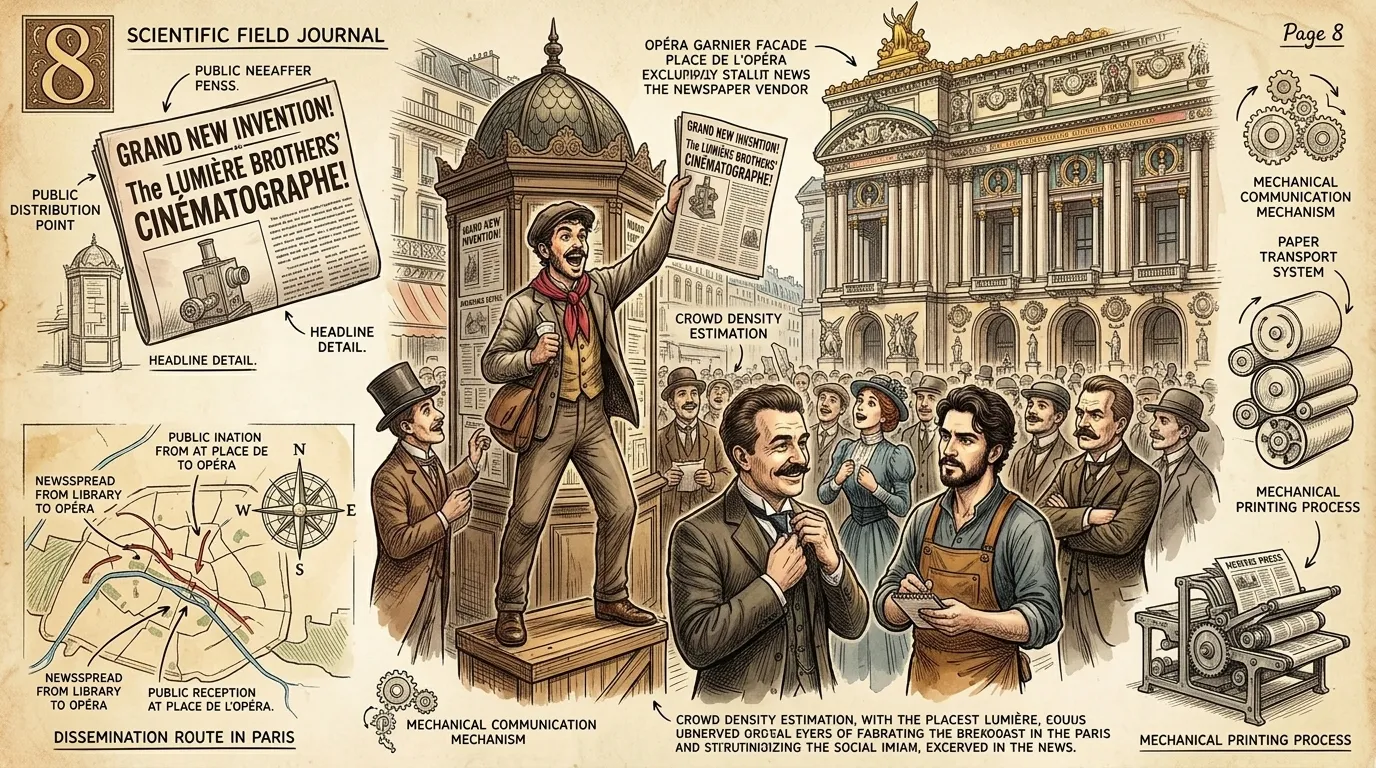
News of the Lumière brothers' invention spreads rapidly. People from all walks of life flock to see the moving pictures. A new era of entertainment has begun. It all started in the library.
"A newspaper vendor shouts, 'Read all about it! The Lumière brothers' Cinématographe! Moving pictures amaze Paris!' People gather around, eager to learn more. The library's secrets are being revealed."
Art Fact: The Lumière brothers' invention quickly captured the public's imagination, leading to the rapid development of the film industry.
Page 9
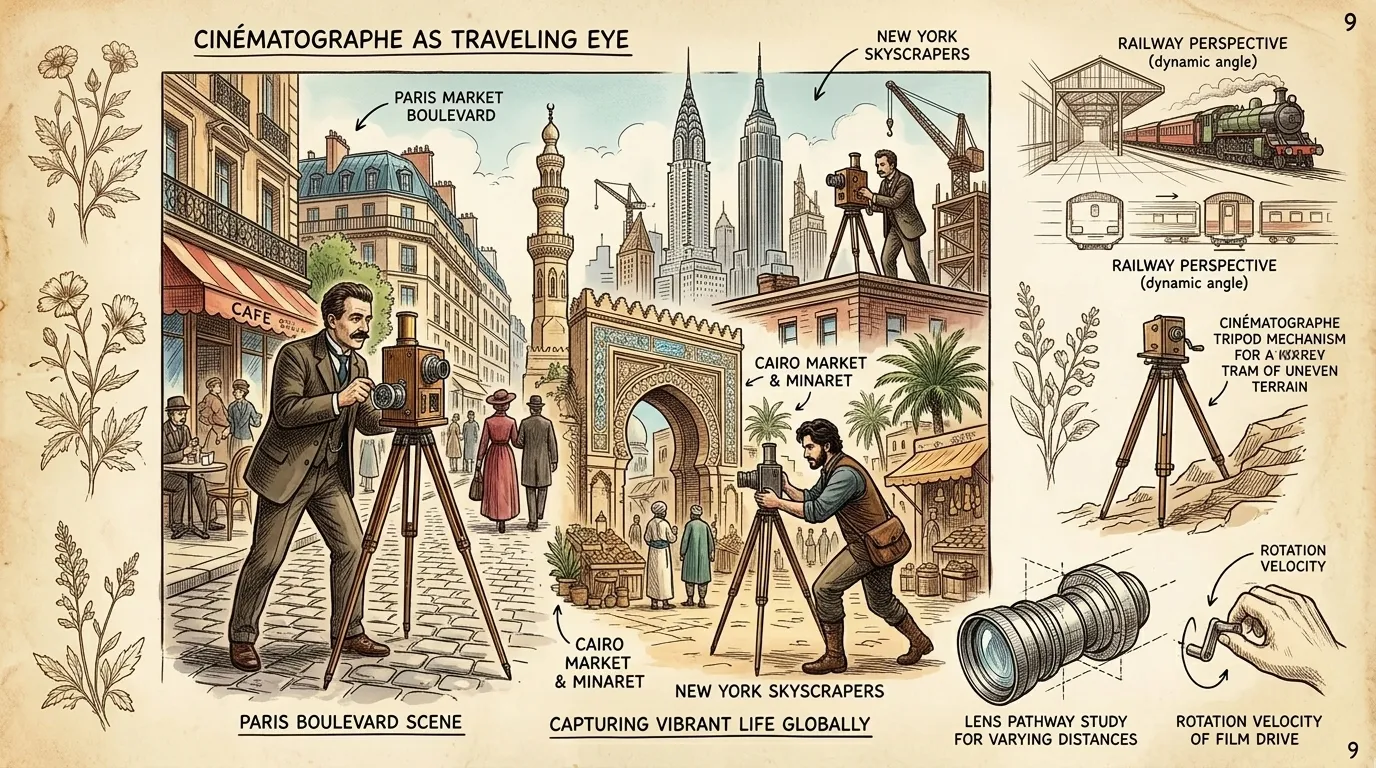
The Lumière brothers take their Cinématographe around the world, filming scenes from different countries and cultures. Their films bring the world to those who cannot travel. The library is at its peak, and it is being seen all over.
"Auguste says, 'The world is our studio, Louis. We must capture it all.' Louis replies, 'From Paris to Cairo, from New York to Tokyo, we will show the world to itself.'"
Art Fact: The Lumière brothers' travels helped to popularize cinema around the world and document different cultures.
Page 10
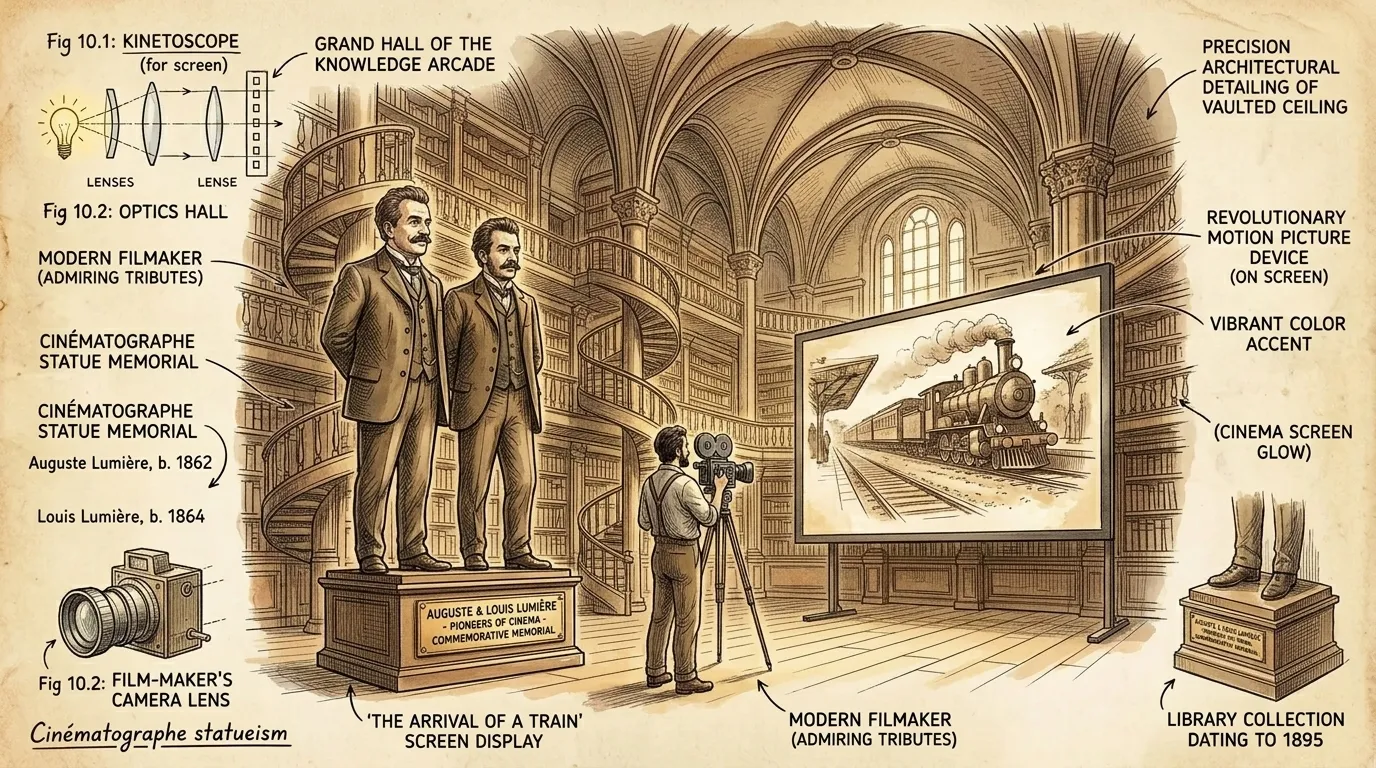
Today, the Lumière brothers' films are preserved and celebrated as a cornerstone of cinema history. Their invention continues to inspire filmmakers and entertain audiences worldwide. Their faces are memorialized in statues in the library.
"A filmmaker watches 'The Arrival of a Train,' his eyes filled with admiration. 'They captured life itself,' he says. 'As Shakespeare wrote, 'We are such stuff as dreams are made on, and our little life is rounded with a sleep.' The Lumières made dreams visible.'"
Art Fact: The Lumière brothers' contribution to cinema ensures their place in history as pioneers of the moving image. Their work survives forever because it captured the essence of life in motion.
About this story
- Location: France
- Audience: general readers
Questions and answers
Questions and answers about First Film Screening by Lumière Brothers (Paris, France — 1895)
Read Wonder Arts on your phone
Wonder Arts is available on Android. Get Wonder Arts on Google Play.
More Wonder Arts stories
- First Folio by William Shakespeare (London, UK — 1623)
- First Impressionist Exhibition by Monet and peers (Paris, France — 1874)
- First Photograph by Nicéphore Niépce (France — 1826)
- First Portrait Photograph by Robert Cornelius (Philadelphia, USA — 1839)
- First Special Effects Film by Alfred Clark (USA — 1895)
- Florence Cathedral (Florence, Italy — 1436)