First Special Effects Film by Alfred Clark (USA — 1895)
First Special Effects Film by Alfred Clark (USA — 1895) — an illustrated arts story, set in United States. 10 illustrated pages, free to read on Wonder Arts.
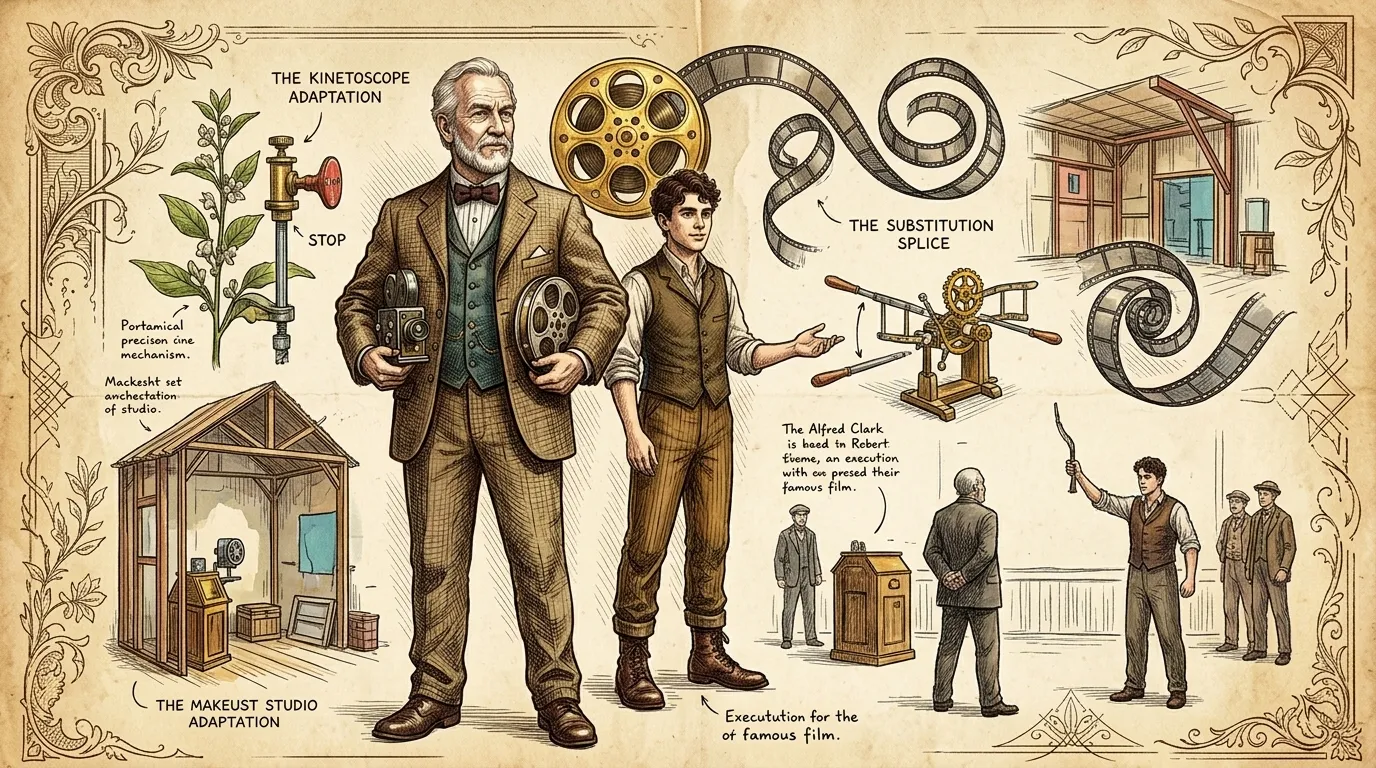
Page 1
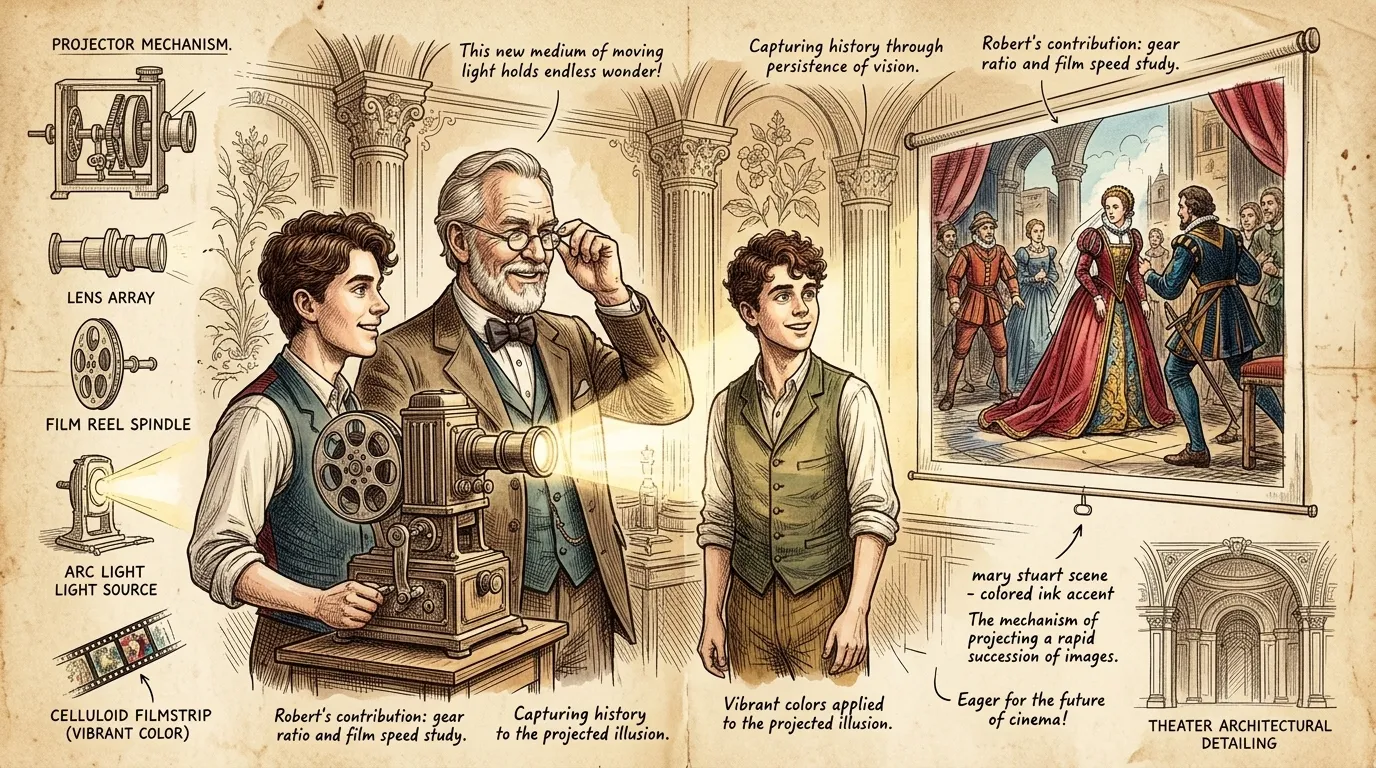
Alfred Clark, a name not widely known today, stands proudly before his creation: The Execution of Mary Stuart, a film groundbreaking for its use of special effects. Completed in 1895, this short film was a mere 18 seconds long, yet it revolutionized filmmaking. Its technique—the stop-motion substitution—allowed for a seemingly impossible act on screen, forever altering cinematic storytelling. The film, now preserved in the US National Film Registry, is a testament to Clark's innovative spirit.
""Tonight, we show them what cinema can truly achieve!" Clark exclaims, adjusting his spectacles, to his assistant."
Art Fact: The original negative of The Execution of Mary Stuart is held by the US National Archives.
Page 2
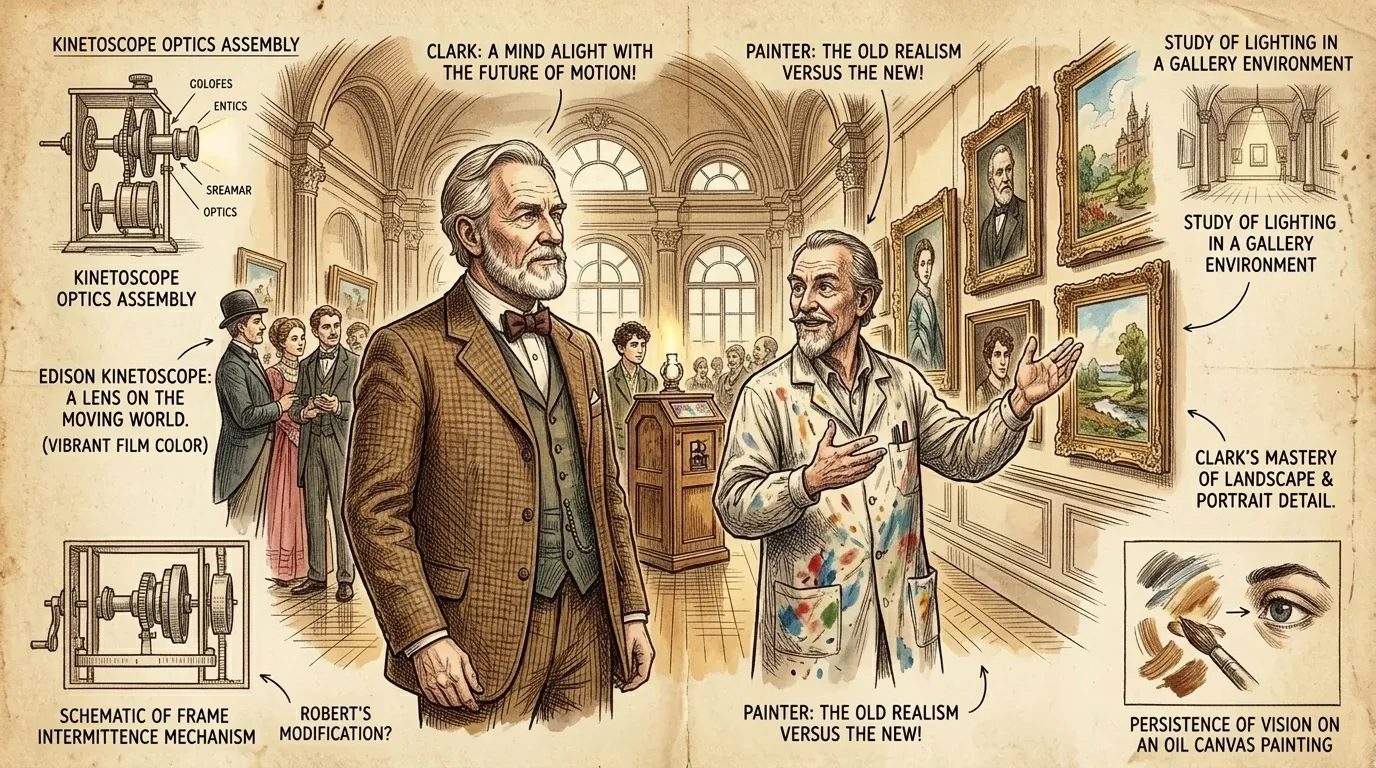
Before his foray into film, Alfred Clark was a painter, honing his skills in realism. He spent hours observing the intricate details of the world around him, a practice that would later inform his cinematic techniques. It was during one of his art exhibitions that he encountered Thomas Edison's kinetoscope. The moving images captivated him and sparked his creative vision, setting him on a new artistic path.
""Painting captures a single moment, Alfred. Cinema, it captures life itself!" a fellow painter remarks, gesturing enthusiastically towards Clark's paintings of portraits. Clark ponders, staring into the distance."
Art Fact: Clark's early paintings were primarily portraits and landscapes, displaying a keen eye for detail and realistic portrayal.
Page 3
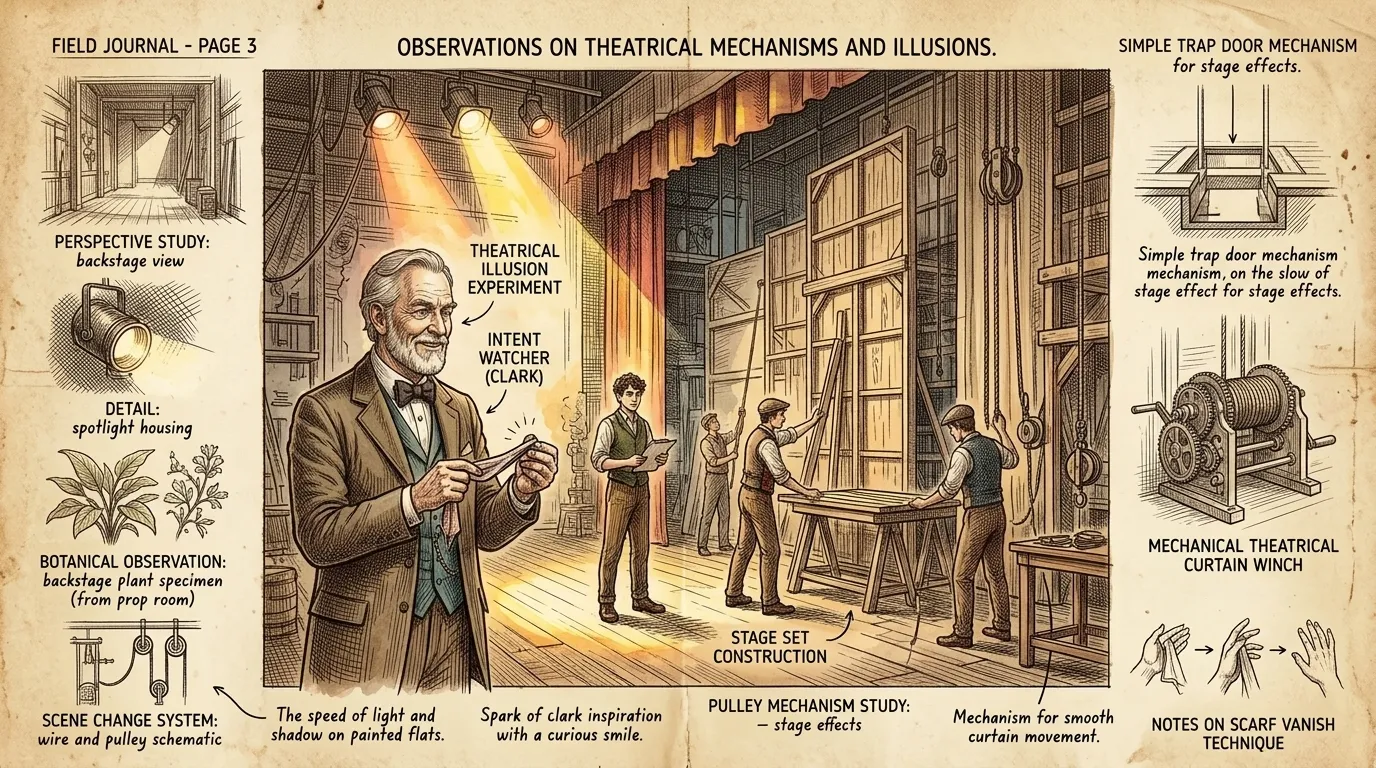
Drawn by the allure of theater, Clark started as a stagehand, learning the secrets of illusion and dramatic presentation. He watched actors transform into different characters and sets shift to create different worlds. Backstage, he experimented with simple tricks, making objects appear and disappear. These experiences laid the groundwork for the special effects he would later pioneer.
""The stage is all the world, and all the men and women merely players," the stage manager bellows, overseeing the construction of a set. Clark watches intently, a spark of inspiration igniting in his eyes. He remembers the words of Shakespeare."
Art Fact: Clark's fascination with stagecraft contributed significantly to his understanding of visual storytelling.
Page 4
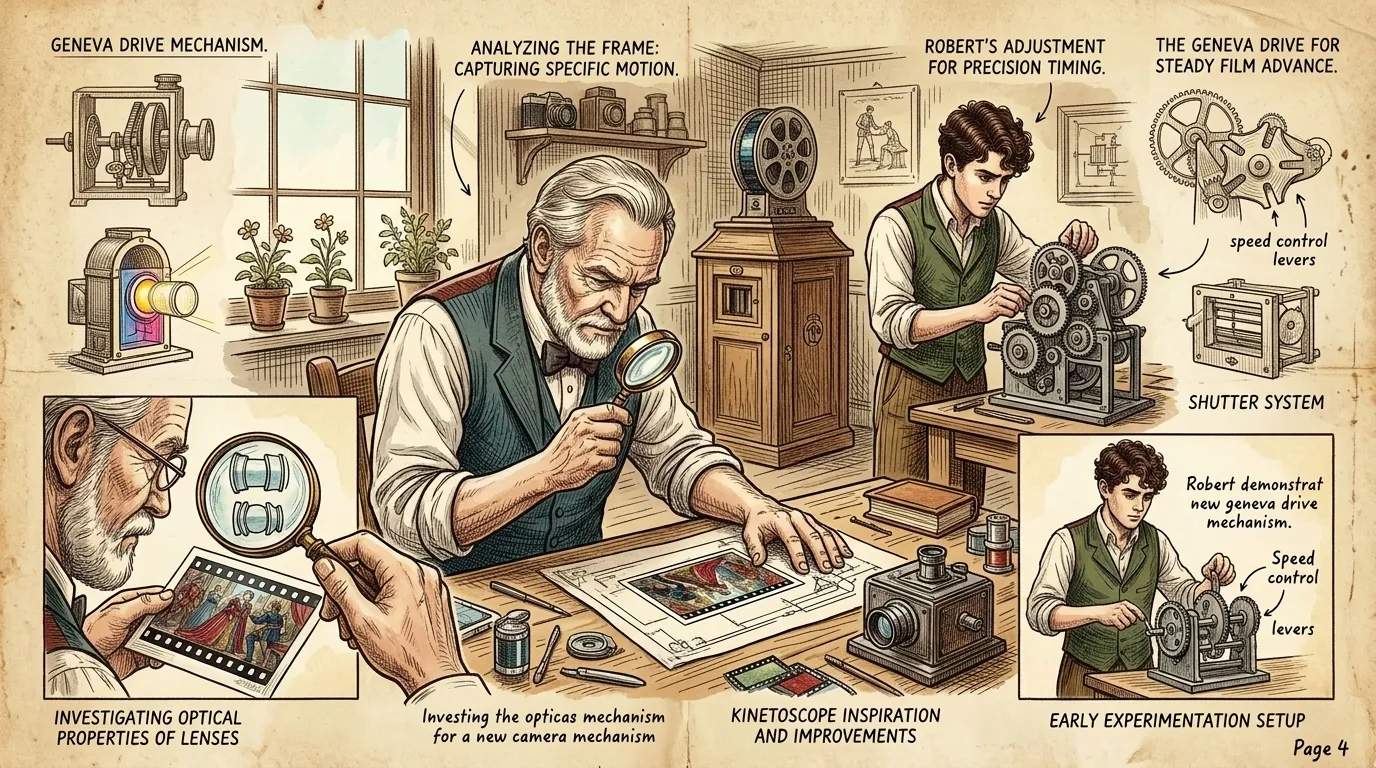
Inspired by Edison's inventions, Clark began to experiment with moving images, using rudimentary equipment. He studied the principles of photography and motion, trying to understand how to capture and reproduce reality. Edison's work was more than an inspiration; it was a call to explore the unknown territories of cinematic expression, Clark reasoned.
""Mr. Edison has shown us the future!" Clark states, examining a photograph under a magnifying glass. "We must build upon his work and create something truly extraordinary!""
Art Fact: Thomas Edison's inventions, particularly the kinetoscope and the motion picture camera, served as a catalyst for Clark's film career.
Page 5
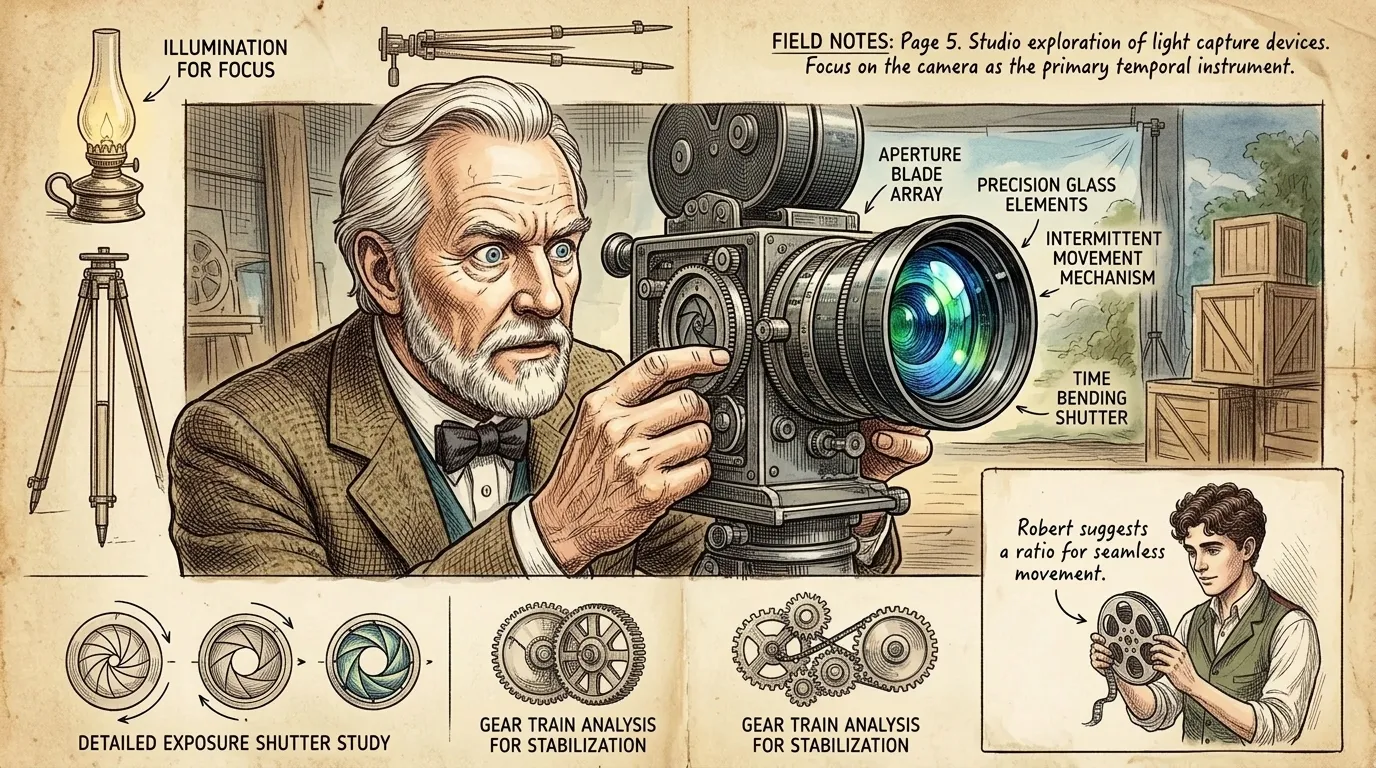
The idea struck Clark one day while filming a simple scene: what if he could stop the camera, change something, and then resume filming? He envisioned a way to make the impossible possible. He realized the potential of stop-motion substitution, the technique that became his signature. This innovation was a leap into the uncharted waters of cinematic special effects.
""What if..." Clark muses, adjusting the lens of his camera, "What if we could bend time itself?""
Art Fact: Stop-motion substitution was a revolutionary technique for its time, enabling filmmakers to create illusions that were previously impossible.
Page 6
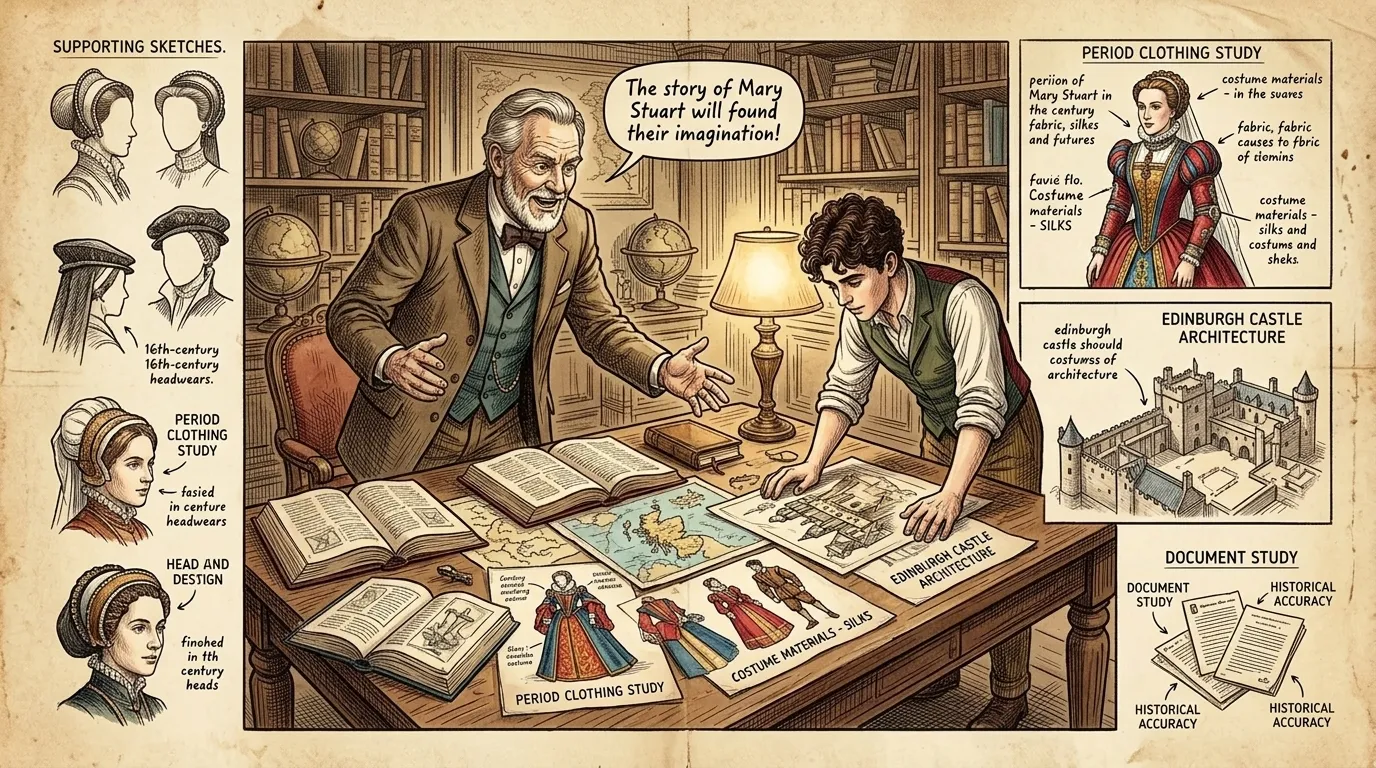
Clark decided to re-enact the execution of Mary Stuart, a dramatic event known to all. He carefully studied historical accounts and illustrations to ensure accuracy. This choice was deliberate, aiming to captivate audiences with a blend of historical drama and cinematic innovation, creating a memorable and impactful visual experience.
""The story of Mary Stuart will capture their imagination!" Clark exclaims, reviewing historical documents with his assistant. "But we must present it in a way they have never seen before!""
Art Fact: The choice of Mary Stuart's execution was strategic, leveraging a well-known historical event to maximize the film's impact.
Page 7
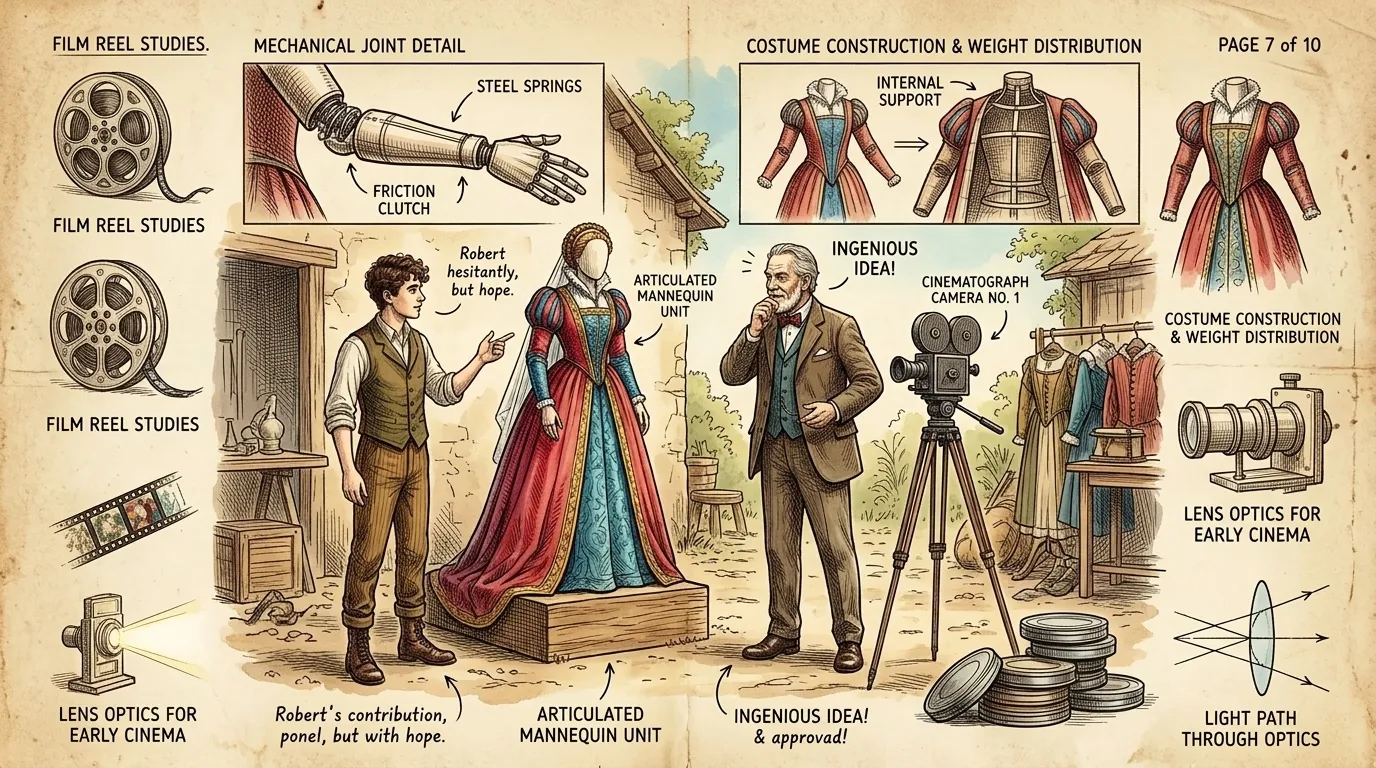
Clark's assistant, a young man named Robert, suggested using a mannequin for the execution scene to avoid any real harm. This practical idea solved a major hurdle in the production. It also enhanced the illusion, making the effect even more convincing and shocking for audiences who were not yet accustomed to such visual trickery.
""Mr. Clark, perhaps we could use a mannequin?" Robert suggests hesitantly. Clark pauses, considering the suggestion. "A mannequin... ingenious!""
Art Fact: The use of a mannequin was a practical solution that also enhanced the overall visual effect of the film.
Page 8
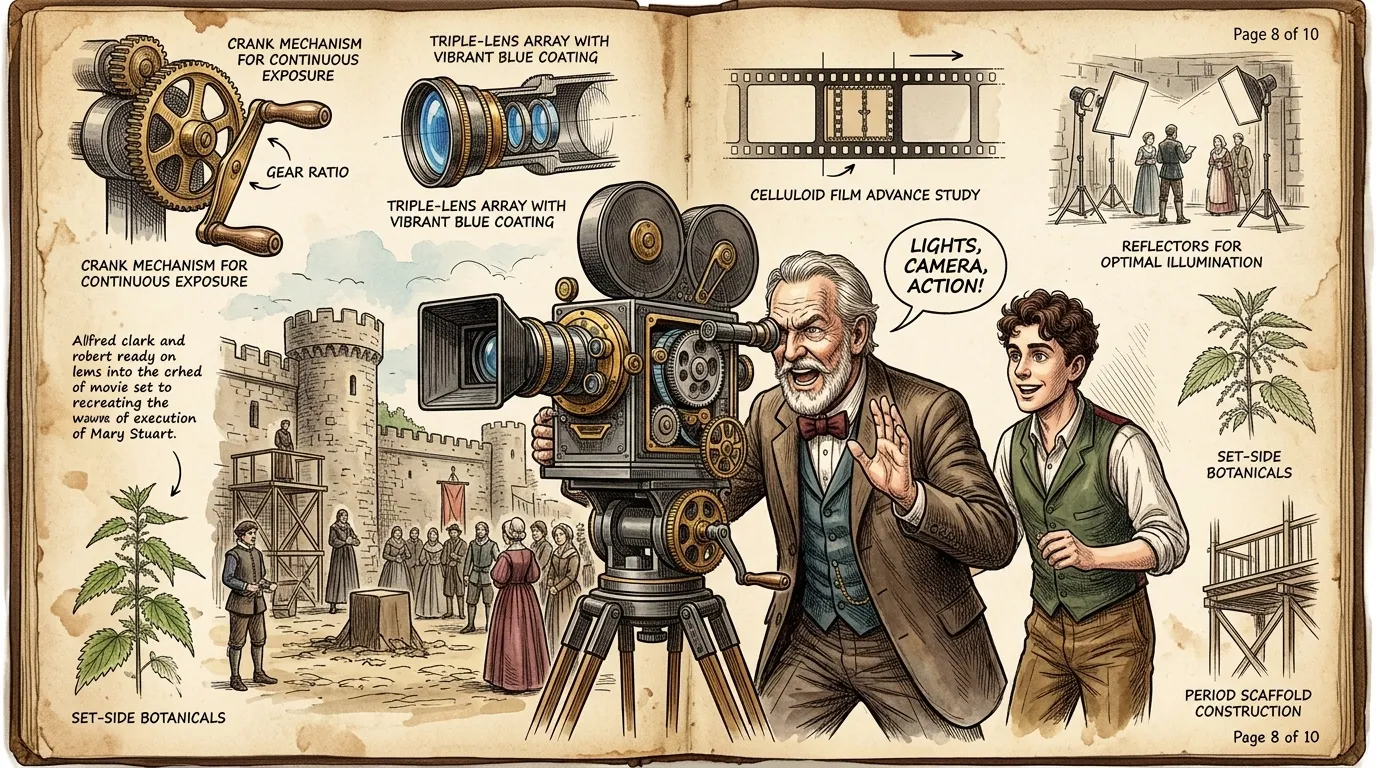
The day of filming arrived. Clark meticulously set up the scene, ensuring every detail was perfect. He gave the signal, the camera rolled, and in just eighteen seconds, history was made. The film, The Execution of Mary Stuart, captivated audiences and forever changed the landscape of cinema, solidifying Clark's place in film history.
""Lights, camera, action!" Clark shouts, peering through the viewfinder. "This is it, Robert!""
Art Fact: The film's brevity belied its impact, proving that even a short film could revolutionize an industry.
Page 9
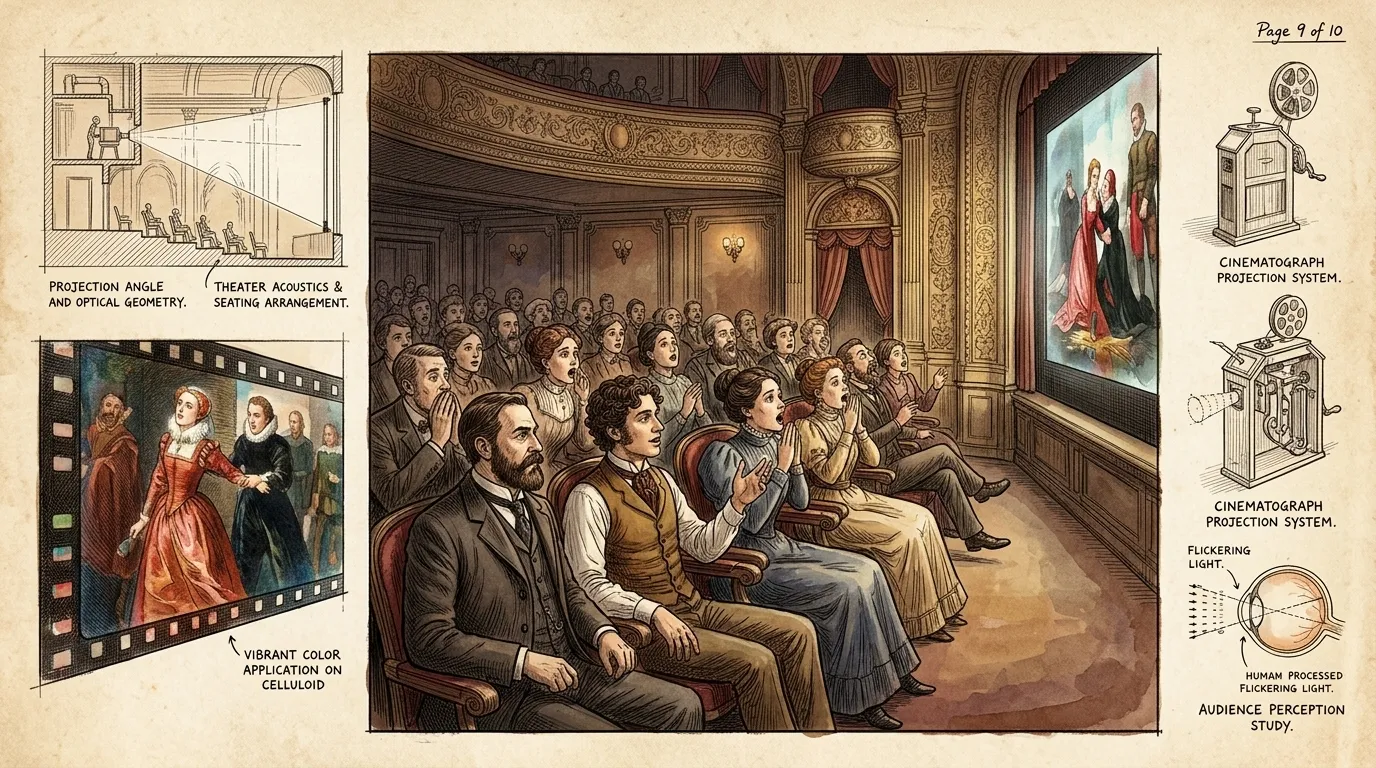
Audiences gasped, screamed, and marveled at the impossible sight of Mary Stuart's beheading. They had never seen anything like it before. The film was a sensation, demonstrating the power of cinema to create illusions and tell stories in new and exciting ways. Clark had proven that cinema could transcend reality.
""Did you see that? I couldn't believe my eyes!" a moviegoer exclaimed after the film. The audience buzzes with excitement and disbelief."
Art Fact: The film's success underscored the potential of special effects to captivate audiences and advance cinematic storytelling.
Page 10
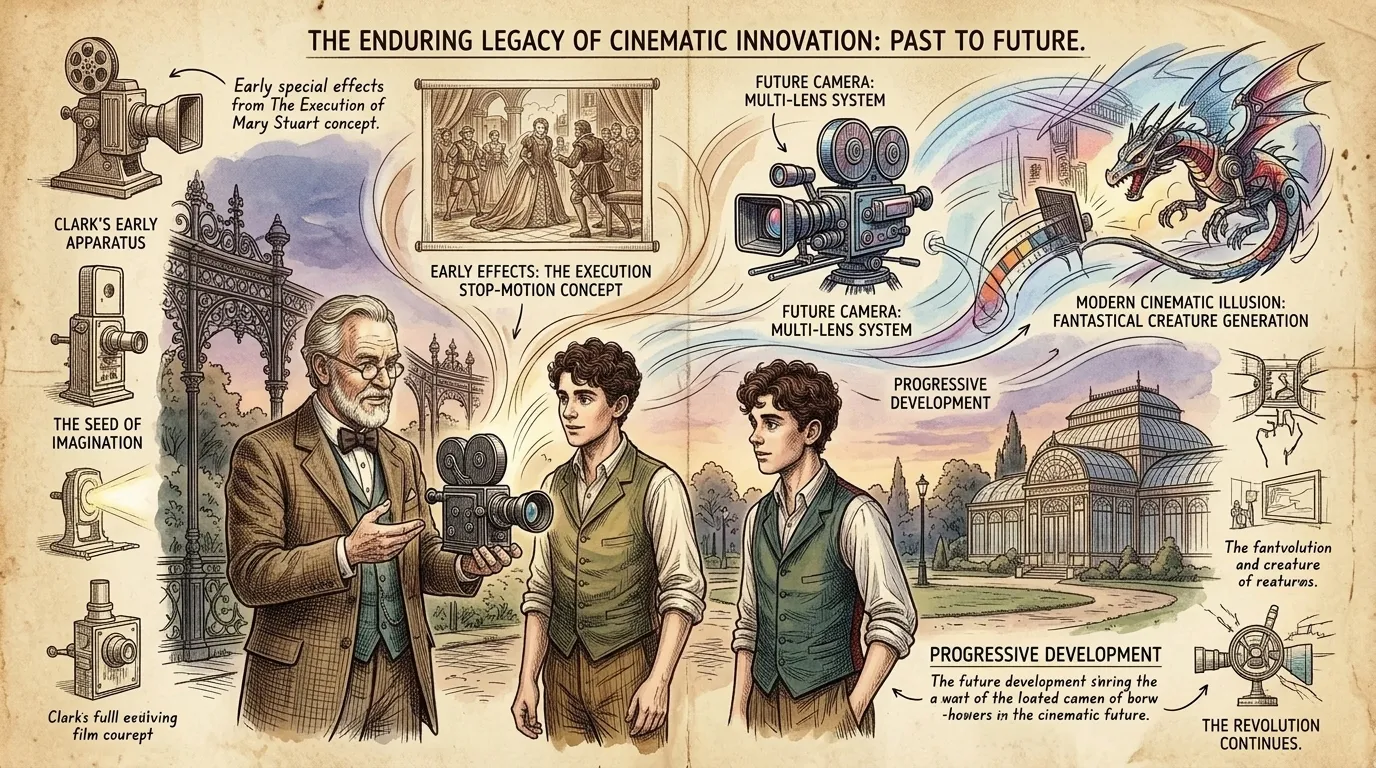
Alfred Clark's contribution to cinema endures. His innovation paved the way for countless special effects that followed, shaping the visual language of film. He may not be a household name, but his legacy lives on every time we witness a cinematic illusion. He understood that 'the only limit to our realization of tomorrow will be our doubts of today,' as Franklin D. Roosevelt once said. Clark's work proves that a single spark of imagination can ignite a revolution.
"None"
Art Fact: Alfred Clark's pioneering work continues to inspire filmmakers and special effects artists, ensuring his legacy endures in the history of cinema.
About this story
- Location: United States
- Audience: general readers
Questions and answers
Questions and answers about First Special Effects Film by Alfred Clark (USA — 1895)
Read Wonder Arts on your phone
Wonder Arts is available on Android. Get Wonder Arts on Google Play.
More Wonder Arts stories
- Florence Cathedral (Florence, Italy — 1436)
- Forbidden City (Beijing, China — 1406–1420)
- Gattamelata by Donatello (Padua, Italy — 1453)
- Girl with a Pearl Earring by Johannes Vermeer (The Hague, Netherlands — 1665)
- Girl with a Pearl Earring — The Hague, Netherlands — 1665
- Grande Odalisque by Jean-Auguste-Dominique Ingres (France — 1814)