Grande Odalisque by Jean-Auguste-Dominique Ingres (France — 1814)
Grande Odalisque by Jean-Auguste-Dominique Ingres (France — 1814) — an illustrated arts story, set in France. 10 illustrated pages, free to read on Wonder Arts.
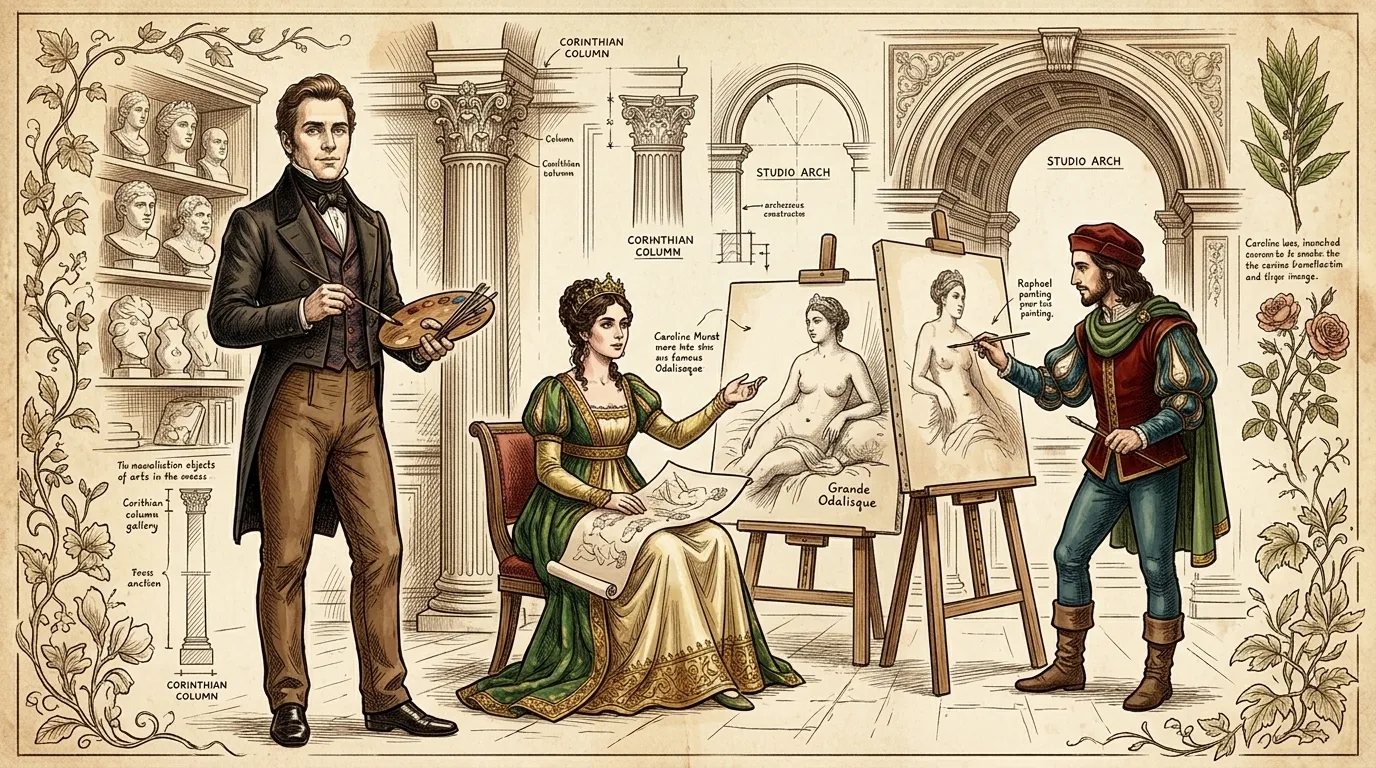
Page 1
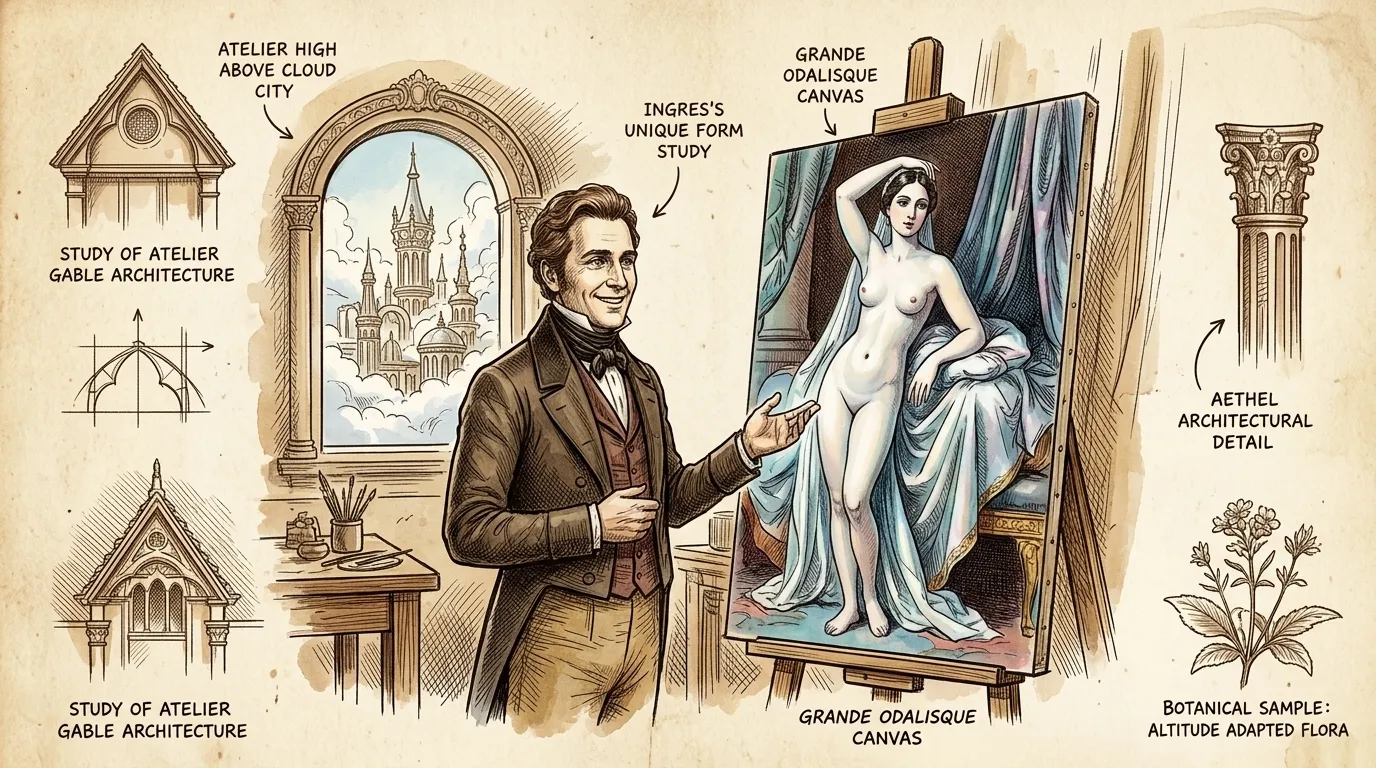
Jean-Auguste-Dominique Ingres stands before his newly completed 'Grande Odalisque' in his cloud-piercing atelier, high above the city of Aethel. The painting, measuring approximately 91 x 162 cm, now hangs in the Louvre Museum, but here, it is a fresh creation, its controversial elongated form and cold, pearly colors a testament to Ingres' unique vision. Whispers of its initial reception, a mix of admiration and criticism, have already begun to swirl among the cloud-borne academies.
"Ingres murmurs to himself, 'Did I capture the essence of her beauty, or merely provoke the eye? Time, as they say, will be the judge.'"
Art Fact: The 'Grande Odalisque,' painted in 1814, is renowned for its deliberate distortions of the human form, a stylistic choice that both fascinated and scandalized contemporary critics.
Page 2
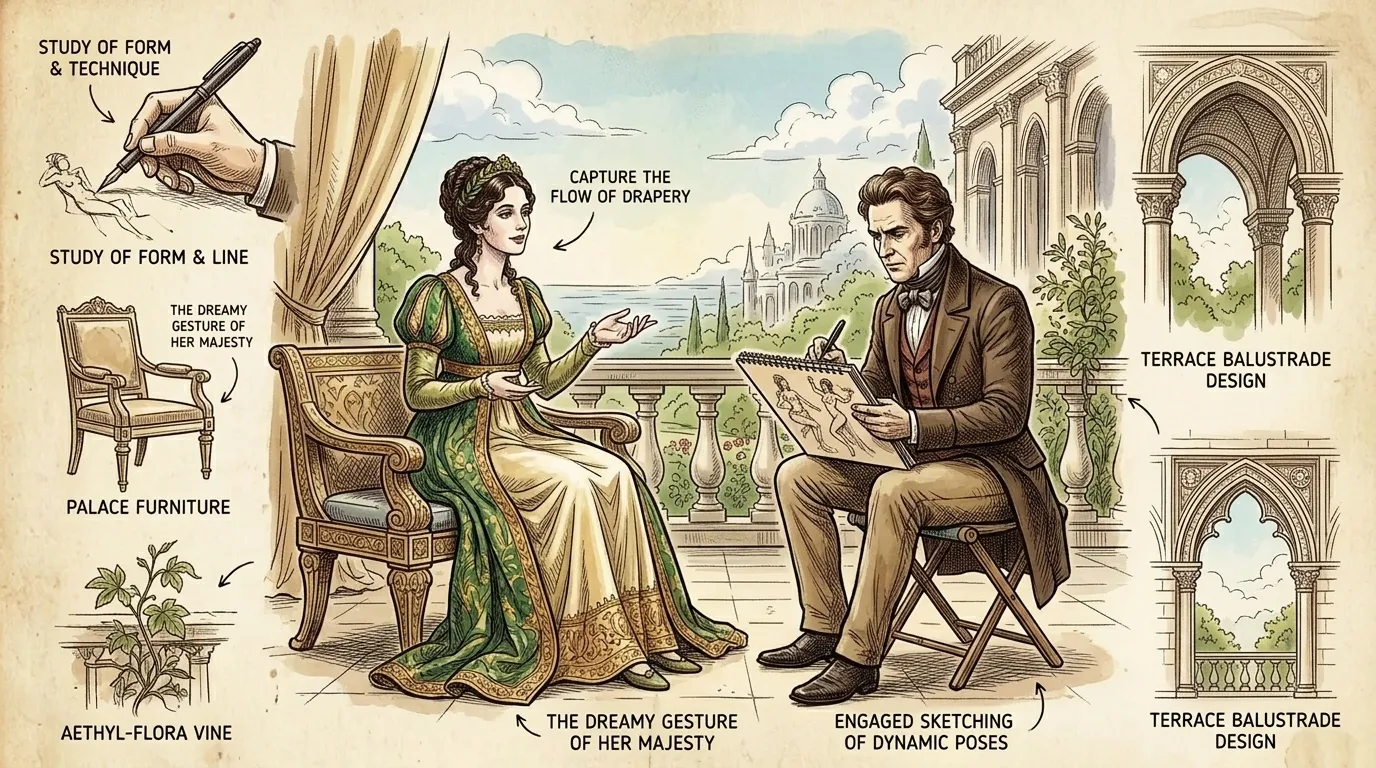
Caroline Murat, Queen of Naples, commissioned Ingres for a painting. The request was clear: she wanted a depiction of sensual beauty, something that would capture the essence of the exotic. Ingres, inspired by this challenge, began sketching figures, exploring poses and forms that would transcend the ordinary. It was from this royal commission that the seed of the 'Odalisque' was sown.
"Queen Caroline remarks, 'Monsieur Ingres, I desire a painting that whispers of distant lands and hidden pleasures. Can you capture such a dream?' Ingres responds, 'Your Majesty, I shall endeavor to paint not just what is seen, but what is felt.'"
Art Fact: Caroline Murat's patronage was crucial in Ingres' early career, providing him with opportunities to explore themes of beauty and exoticism.
Page 3
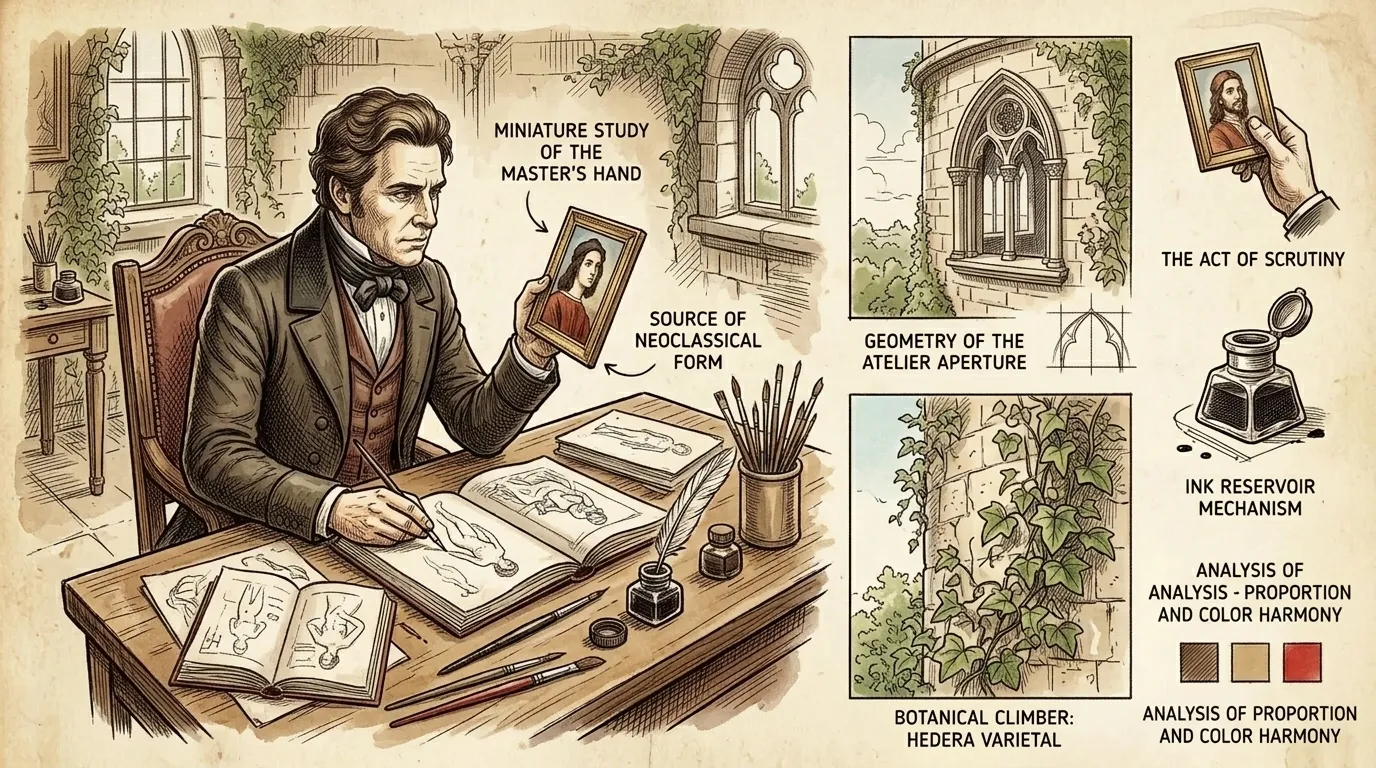
Ingres studied the works of Raphael, particularly his depictions of the female form. He admired Raphael's ability to blend classical ideals with a sense of grace and harmony. Ingres carried with him a miniature portrait of Raphael, turning to it for inspiration and guidance. He knew Raphael was 'The Prince of Painters'.
"Ingres confides, 'Raphael's mastery... it guides my hand even now. It is, as Isaac Newton once said, 'If I have seen further, it is by standing on the shoulders of giants.' I must honor the masters, even as I strive for my own path.'"
Art Fact: Raphael's influence on Ingres is evident in his pursuit of idealized beauty and classical composition.
Page 4
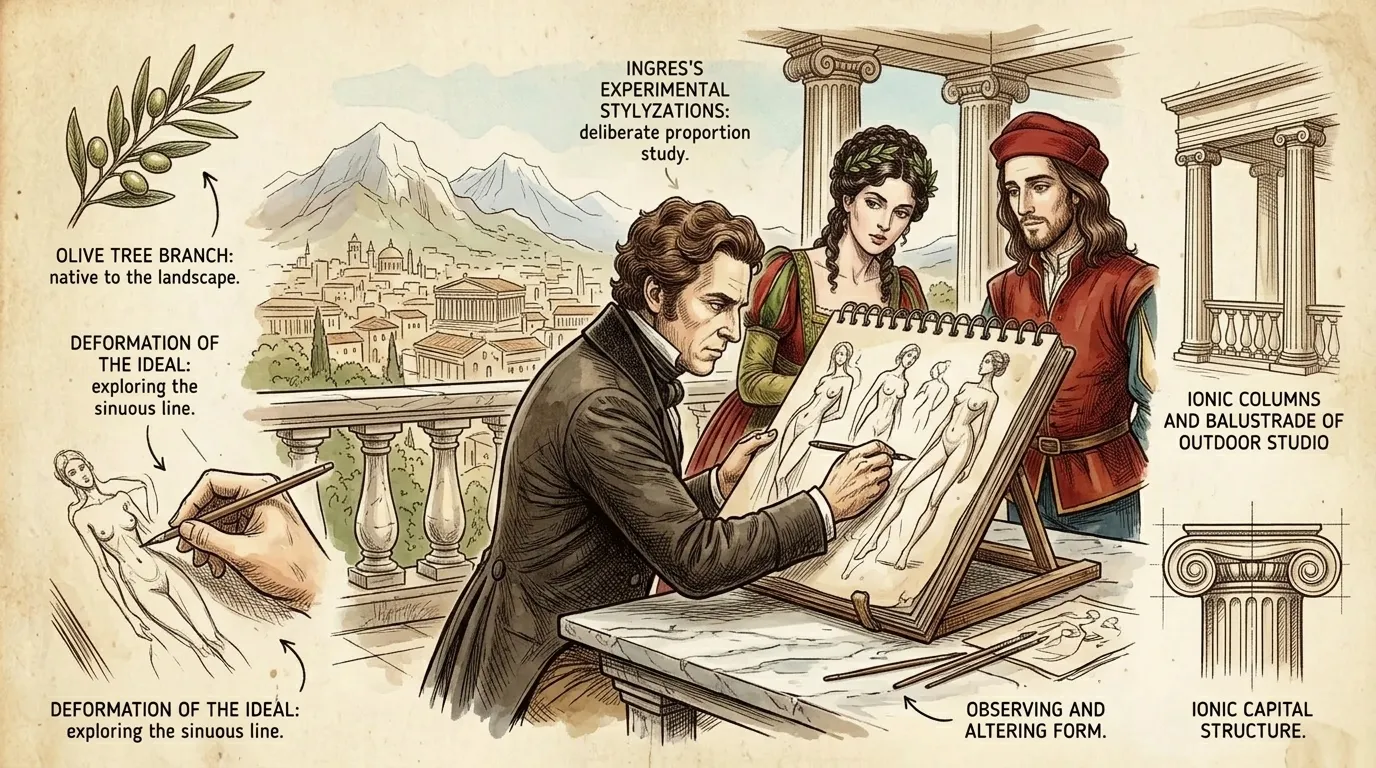
Ingres was meticulous in his study of anatomy, though in 'Grande Odalisque' he deliberately distorted the figure. He believed that beauty often lay in bending the rules, in pushing the boundaries of what was considered 'correct.' He sketched countless figures, each one a study in form and proportion, before arriving at the final pose of the Odalisque.
"Ingres tells his student, 'The body is a landscape, a map of human potential. Understand its contours, its peaks and valleys, and then, dare to reshape it, to find the divine within the imperfect.'"
Art Fact: Ingres' deliberate distortions of anatomy in 'Grande Odalisque' were a conscious artistic choice, not a sign of ignorance.
Page 5
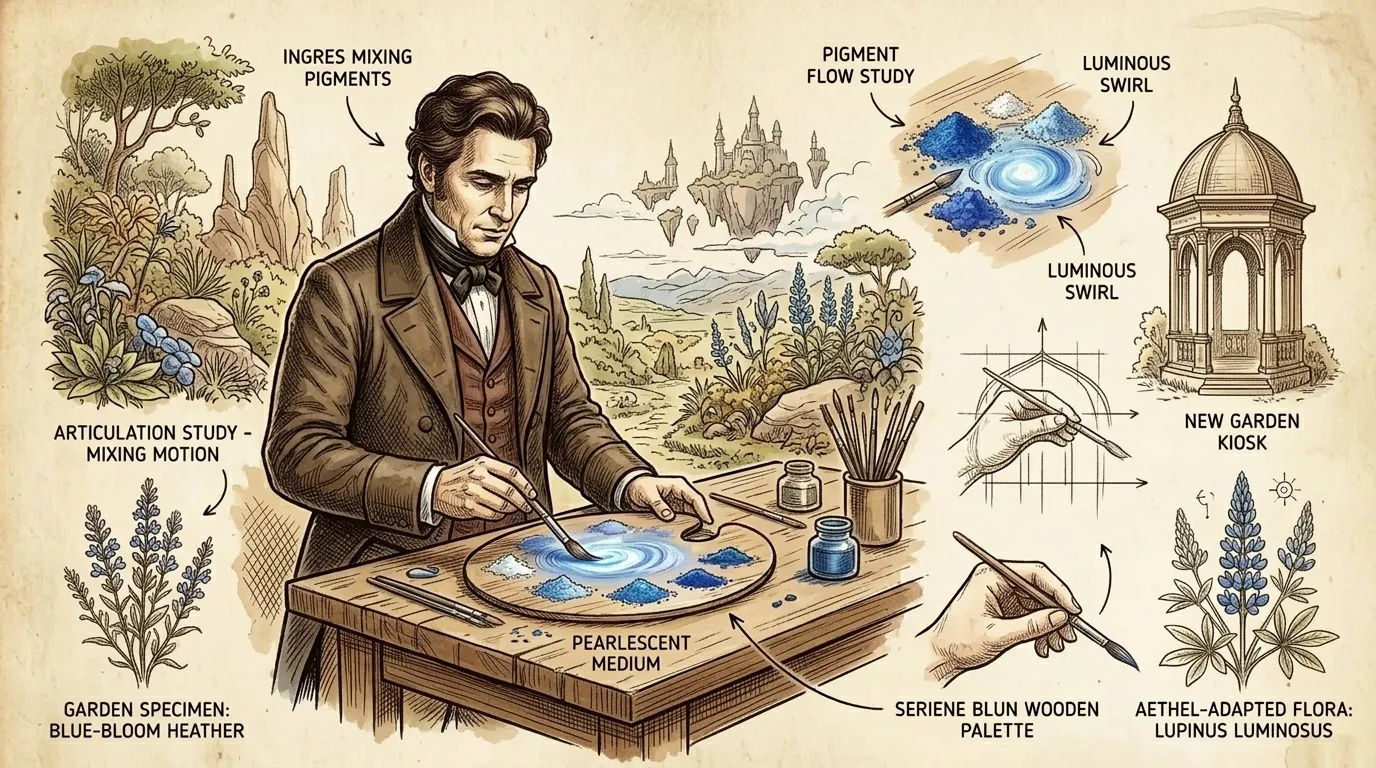
Ingres experimented with colors, seeking a palette that would evoke a sense of serenity and sensuality. He mixed pigments, blending blues and whites to create the cool, pearly tones that would define the Odalisque's skin. He understood that colour can provoke emotional states of being in the observer.
"Ingres tells his apprentice, 'Color is the language of the soul. It can soothe, excite, or disturb. Choose your hues carefully, for they will speak louder than any words.'"
Art Fact: Ingres' color palette in 'Grande Odalisque' is characterized by cool tones and subtle gradations, contributing to the painting's overall sense of serenity.
Page 6
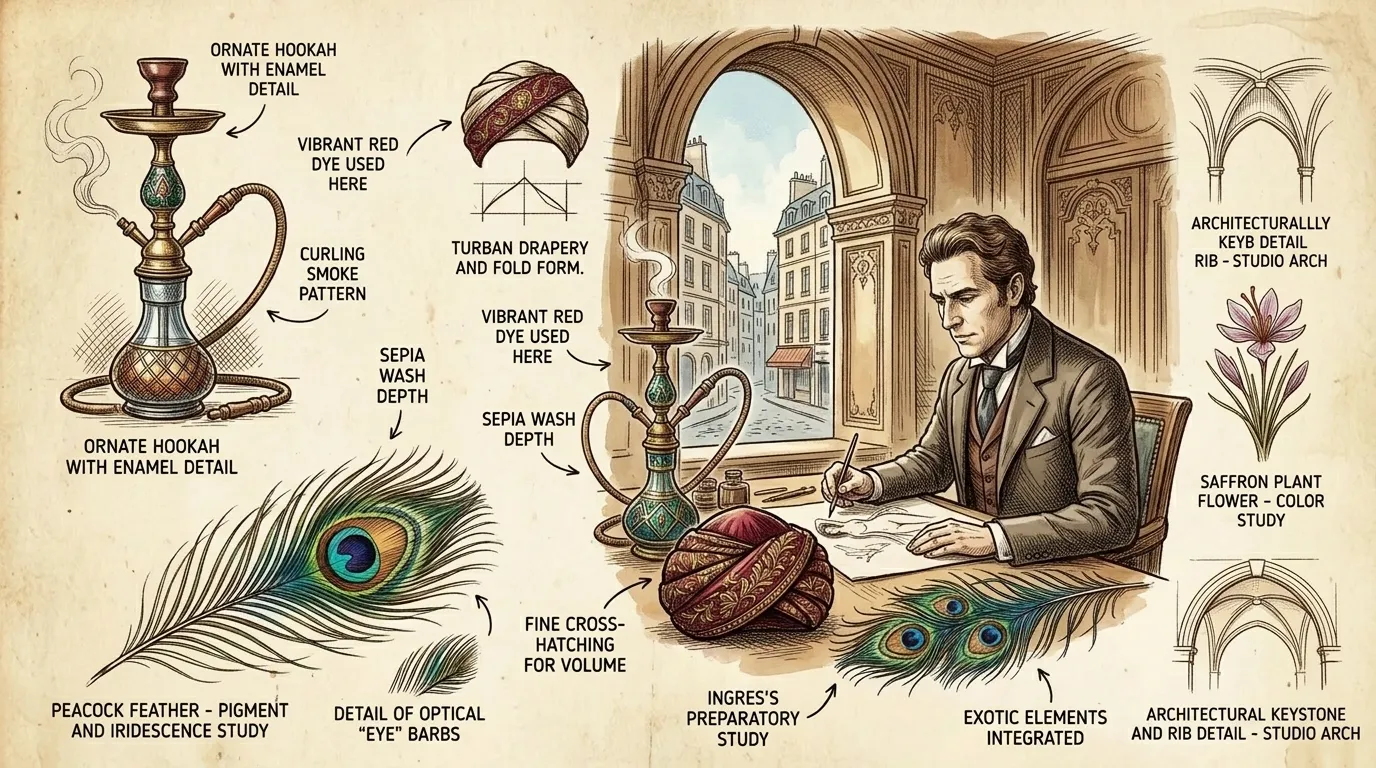
Ingres, like many artists of his time, was fascinated by the 'Orient,' a romanticized and often inaccurate vision of the Middle East and North Africa. He incorporated elements of this imagined Orient into the 'Odalisque,' including the turban, the hookah pipe, and the peacock fan. He sought to represent something other worldly.
"Ingres tells a fellow artist, 'The Orient is a land of dreams, of mystery and allure. I seek to capture that essence, that feeling of being transported to another realm.'"
Art Fact: The 'Orientalist' elements in 'Grande Odalisque' reflect the cultural fascination with the East during the 19th century.
Page 7
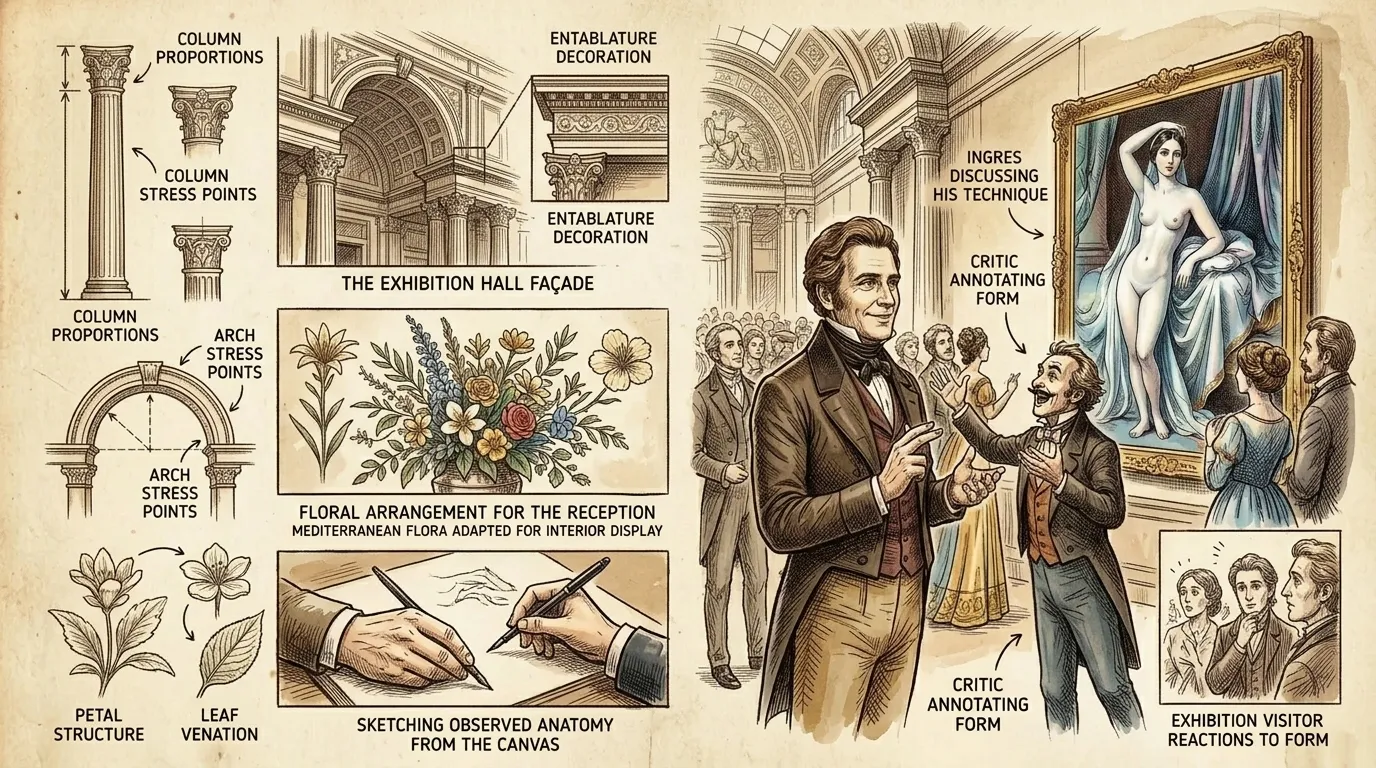
When 'Grande Odalisque' was first exhibited, it was met with mixed reactions. Some praised its beauty and technical skill, while others criticized its distortions and perceived anatomical inaccuracies. The controversy surrounding the painting only added to its notoriety. 'I am not sure he is right here,' one critic would say.
"A critic exclaims, 'Monsieur Ingres, your Odalisque is... unusual. Her spine, it seems to stretch beyond the bounds of nature!' Ingres responds, 'Sir, I seek not to replicate nature, but to elevate it, to find the beauty that lies beyond the merely visible.'"
Art Fact: The 'Grande Odalisque' sparked debate among critics and artists, highlighting the evolving standards of beauty and artistic representation.
Page 8
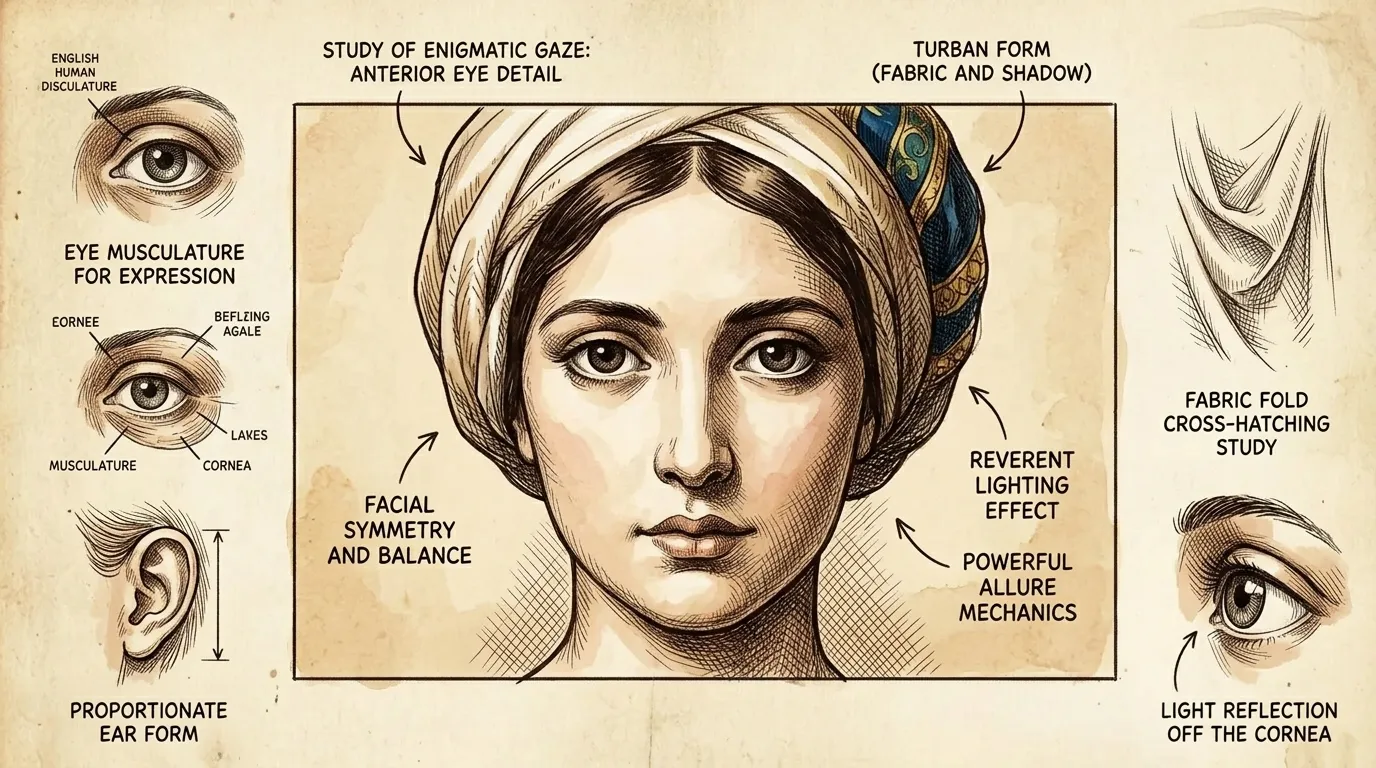
Ingres was aware of the power of the gaze, of the way in which a painting could both invite and challenge the viewer. The 'Odalisque' gazes directly at the viewer, her expression enigmatic, her posture both alluring and distant. This gaze ensures the viewer is a participant.
"Ingres reflects, 'A painting is a mirror, reflecting not just the subject, but the soul of the observer. The gaze, it is the point of connection, the bridge between the artist's vision and the viewer's interpretation.'"
Art Fact: The 'Grande Odalisque's' gaze engages the viewer, inviting them to contemplate the nature of beauty, desire, and representation.
Page 9
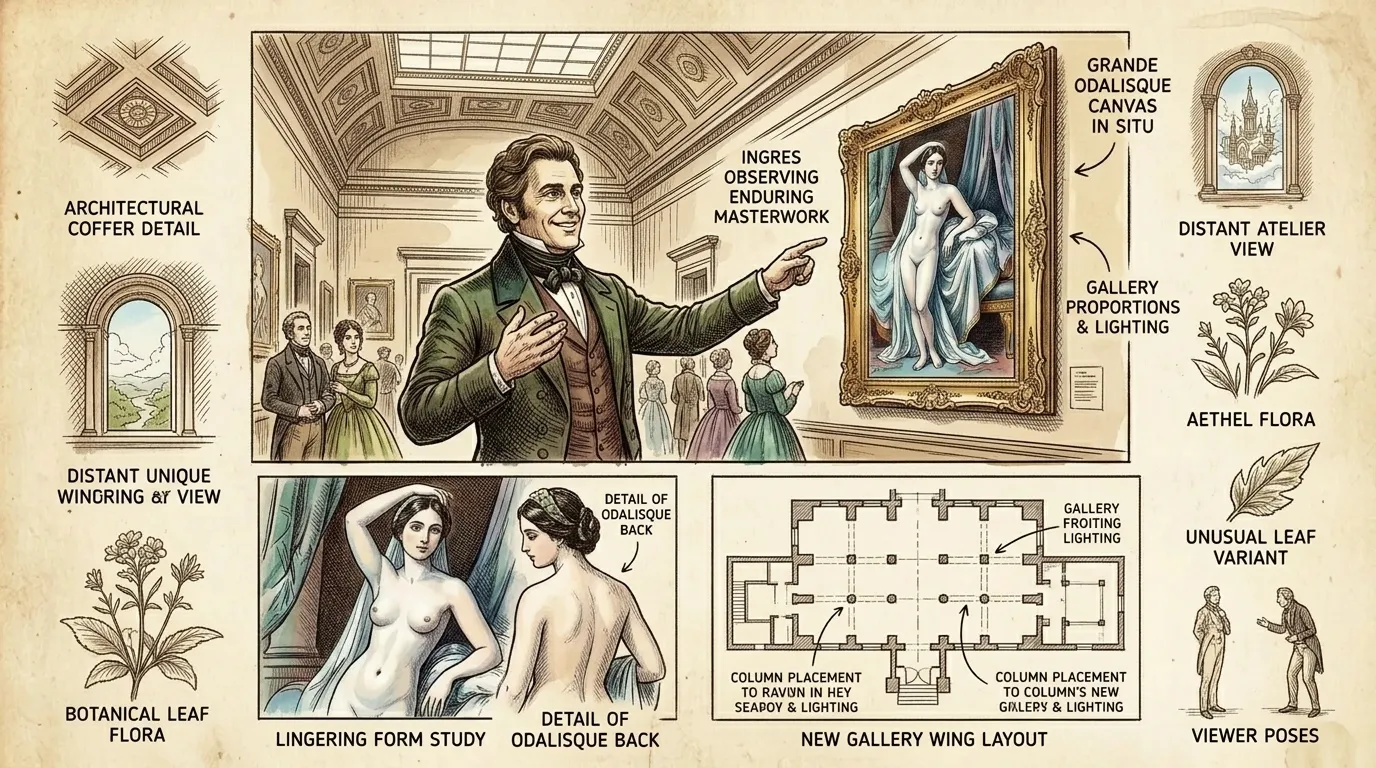
Despite the initial controversy, 'Grande Odalisque' has endured as one of Ingres' most celebrated works. Its unique blend of classical technique and romantic sensibility continues to captivate audiences, its beauty undiminished by time. It now has legions of admirers.
"Ingres, reflecting on his work, states, 'I strive to create not just a painting, but a memory, an echo that will resonate through the ages. If my 'Odalisque' can stir the hearts of those who see her, then I have succeeded.'"
Art Fact: The 'Grande Odalisque' has had a lasting impact on the art world, inspiring artists and influencing the representation of the female form.
Page 10
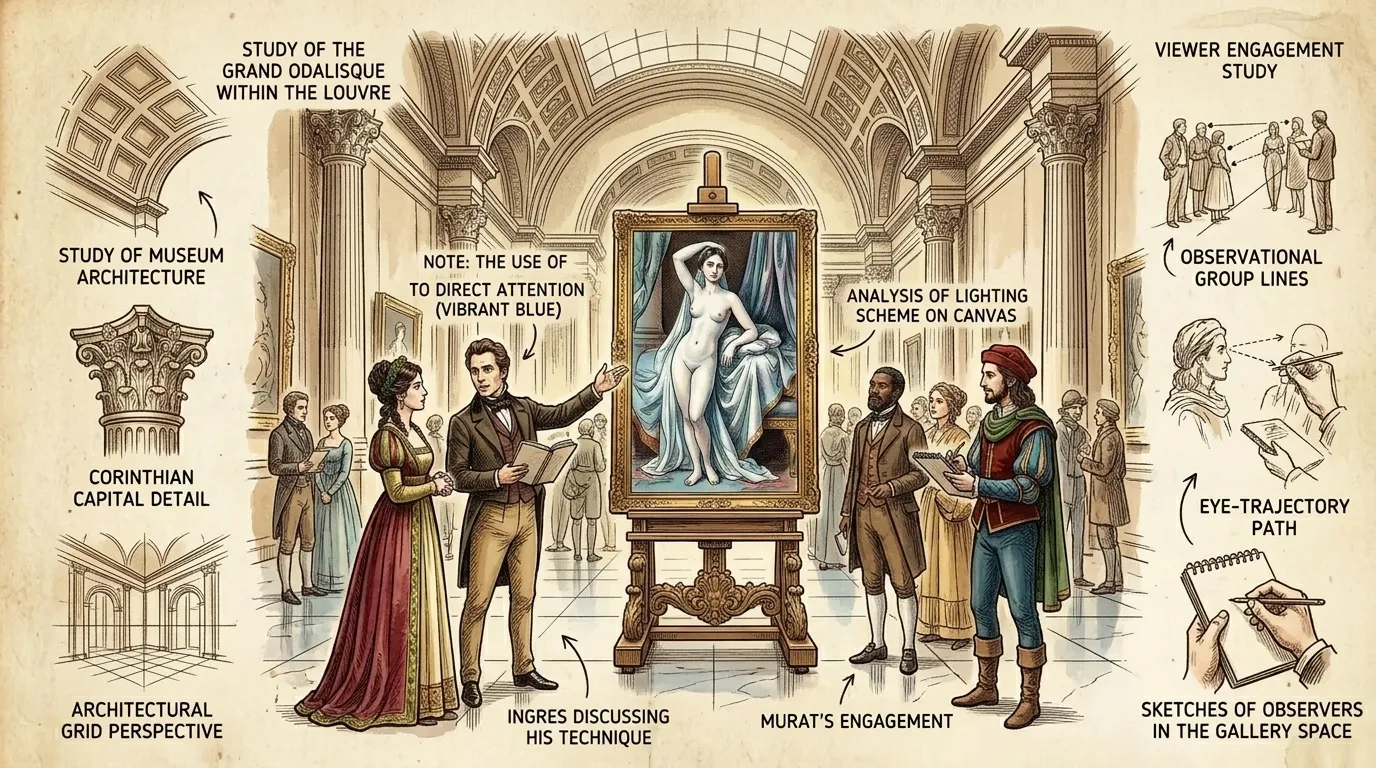
Today, 'Grande Odalisque' hangs in the Louvre Museum, a testament to Ingres' enduring vision. The painting continues to inspire artists and captivate viewers, its controversial beauty defying easy categorization. Ingres' legacy, like the cloud city of Aethel, floats serenely above the world, a testament to the power of art to transcend time and space. As Ingres believed, art is a gift to civilization.
" Ingres' faint voice whispers across time, "Art does not die because it is not eternal, but because it is not reborn.""
Art Fact: The 'Grande Odalisque' remains a central attraction at the Louvre Museum, drawing visitors from around the world to experience its controversial beauty firsthand.
About this story
- Location: France
- Audience: general readers
Questions and answers
Questions and answers about Grande Odalisque by Jean-Auguste-Dominique Ingres (France — 1814)
Read Wonder Arts on your phone
Wonder Arts is available on Android. Get Wonder Arts on Google Play.